Feeds:
Posts
Comments

Posts Tagged ‘books’

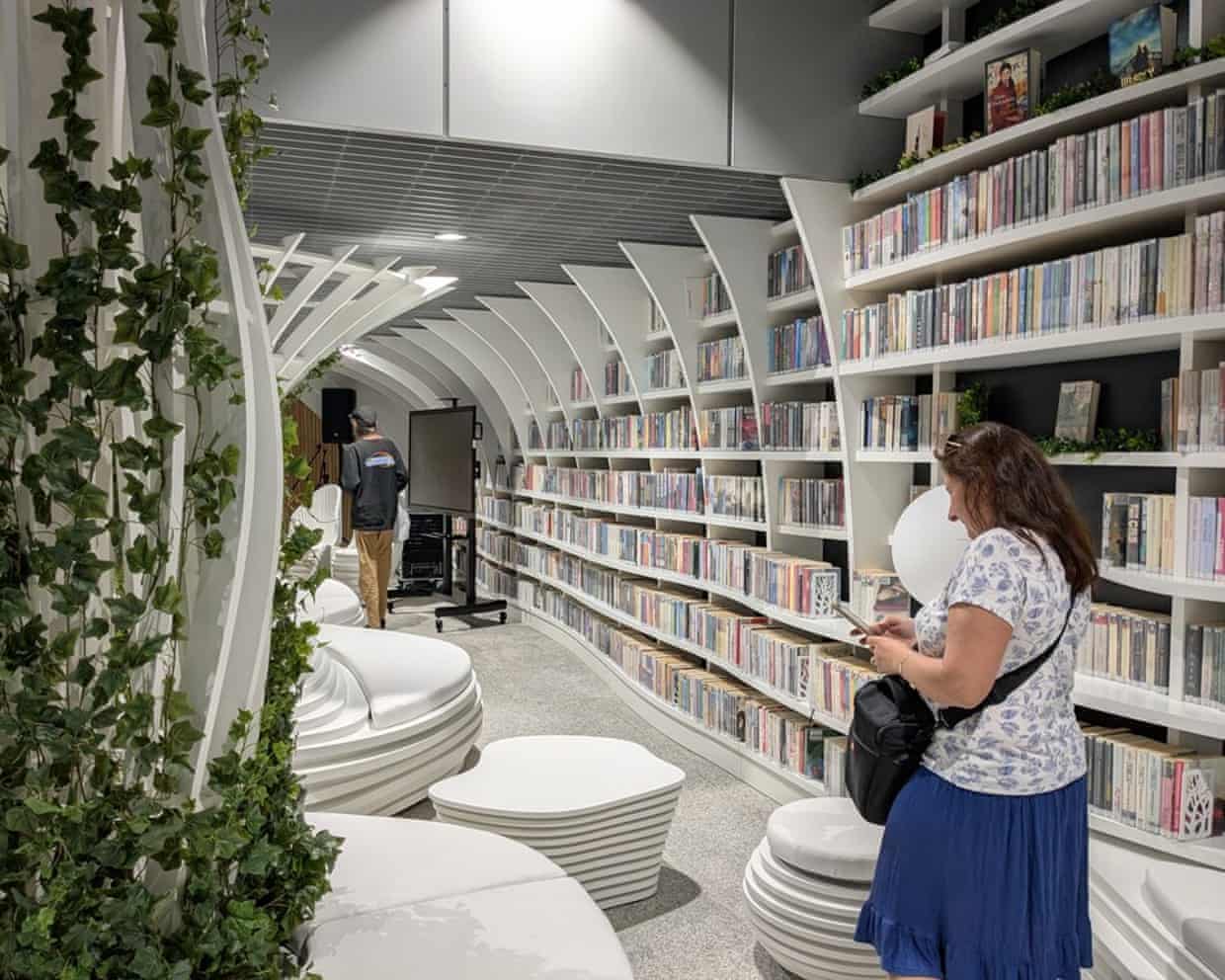
Photo: Biblioteka Publiczna w Dzielnicy Targówek m.st. Warszawy.
A library has opened in a new metro station in Warsaw. 

Fans of libraries know that libraries have a way of popping up in all sorts of unlikely — even inimical — places. If you search on the word at this blog, you will find stories about libraries on horseback, in impoverished countries, in war zones, and wherever people find comfort from reading.

Jakub Krupa reported for the Guardian about a new library in a Polish subway station.

“An ‘express’ library has opened in a new metro station in Warsaw, aiming to provide an appealing cultural space to encourage residents and commuters to forgo smartphones in favor of books and, thanks to fresh herbs growing in a vertical garden, a dash of subterranean greenery too.

“The stylish Metroteka [in] the Kondratowicza M2 line metro station in the Polish capital’s Targówek district offers two reading areas for adults and children, as well as a space for public readings and events.

“About 16,000 books are on offer. … Readers can return them on site or through a street-level parcel locker for books, available 24/7.

“Visitors can study or work in a communal area, borrow a laptop to browse the internet, or simply sit down with a complimentary coffee or hot chocolate to unwind after rush hour travel on the metro. …

” ‘Our dream is for Metroteka to become an educational and cultural centre, and not just a place where you borrow your books from,’ says the deputy director of Targówek library, Grażyna Strzelczak-Batkowska. …

“She says the unique subterranean location brings the library closer to busy commuters, ‘both geographically and in terms of time you need to spend on getting the book.’ …

“More than 400 books were leased on the first day, mostly recommended school readings, as well as travel guides and ‘all sorts of how-to books.’

“The library’s innovative model aims to encourage Poles to read more. The annual survey by the National Library of Poland found that only 41% of respondents had read at least one book in 2024, down from the high 50s in the late 1990s and early 2000s, as people turn to TV, streaming services, and phones for entertainment instead.

“These numbers are higher than in southern Europe, but lower than in the Nordic countries, or even the neighboring Czech Republic, the National Library’s director, Tomasz Makowski, says.

“He says there are historical reasons for it – with Poland losing 70% of libraries in the second world war, ‘we had several generations that did not see their parents or grandparents in front of a wall of books’ – but also cultural as ‘reading is not something associated with adulthood,’ but with ‘schools, teachers, librarians, and usually mothers reading to children.’

“ ‘Opening a library in a metro station is like a dream for us,’ Makowski says, as it challenges that stereotype. ‘Libraries should be beautiful and open; inviting, not intimidating. It’s not a shrine, but a place where you can spend time freely, take part in discussions, public consultations, or meet people,’ he says.

“He says the National Library has also opened a ‘loud’ reading room, breaking with the tradition that such areas need to maintain silence, where ‘no one shushes you or tells you to keep quiet. To our surprise, it’s still pretty quiet, but they also talk, give tutoring, different kinds of lessons.’ ”

Good photos at the Guardian, a free paper, here.

What do you think of the library’s chances? I love the optimism behind this effort but can’t help picturing what the subways I know well are like. Has anyone else commuted to work this way?

Read Full Post »

Photo: Oodihelsinki.
Veera the robot on patrol at $116 million Oodi library in Helsinki, Finland. Last year, the average Finn visited libraries nine times and borrowed 15 books.
Finns really love libraries.

Whenever I write about libraries, I think of blogger Laurie and the young adult fantasy series she wrote called the Great Library Series. Laurie is someone who appreciates the power of books, the magical power of reading.

Apparently the Finns do, too.

Oliver Moody reports at the Times [of London], “In the €100 million [~$115 million] Oodi library, which looms over central Helsinki like a cruise ship from the future, robots called Tatu, Patu and Veera trundle back and forth between the shelves and the reading rooms.

“Against this backdrop, foreign visitors might be surprised to see how many children and teenagers are engaged in an almost unsettlingly archaic activity: reading and borrowing books. …

“Last year the average Finn visited them nine times and borrowed 15 books, resulting in the highest lending figures for 20 years.

“The appetite for children’s and young adults’ literature has risen to a record for the third year in a row, with a total of 38 million loans in 2024. That works out at about 40 books or other pieces of material, such as audiobooks, for each person under the age of 18. …

“Even by the standards of a country that is often ranked as the most literate on the planet, the numbers are remarkable. In Britain, the total number of loans has fallen to less than half of what it was at the turn of the millennium, despite a tentative recovery in the wake of the pandemic, and about 40 libraries a year are closing.

“Visits to German public libraries are still about a fifth lower than they were before the advent of Covid-19 and about one in five of them has shut down over the past decade.

“The most obvious explanation for the phenomenon is that Finland values its libraries and invests accordingly. The state spends about €60 [~$70] per capita on the public library system each year, approximately four times as much as the UK and six times as much as Germany.

“Where other countries rely on corporate skyscrapers or shopping centers for their visions of architectural modernity, Finland often looks to its libraries, such as Oodi and Vallila in Helsinki, the main Metso library in Tampere, or the revered 20th-century designer Alvar Aalto’s projects in Rovaniemi and Seinajoki.

“They have traditionally served as engines of social mobility and integration. Erkki Sevanen, professor of literature at the University of Eastern Finland, grew up in a working-class family in Eura, a thinly populated district of villages 110 miles to the northwest of Helsinki.

“ ‘My parents and relatives did not used to read books, but there was a fine and well-equipped public library in our home village,’ he said. ‘It opened a whole world of classical literature and philosophy for me in the 1960s and 1970s.’

“Sevanen said the public libraries were a significant part of the reason he had ultimately pursued a university career, and that today they perform a similar function for immigrants to Finland. …

“The roots of this culture predate Finland’s independence in 1918. Like large parts of Scandinavia and continental northern Europe, it was profoundly influenced by Lutheran Protestantism and its insistence that each individual should engage with the texts of scripture for themselves.

“ ‘The ability to read was a requirement for everyone who wanted to get married. To demonstrate their reading skills, people were tested at church gatherings,’ said Ulla Richardson, professor of technology-enhanced language learning at the University of Jyvaskyla.

“The movement gathered steam in the 19th century, when Finland was a semi-autonomous duchy in the Russian empire and the new public libraries were focal points for an emerging sense of national identity.

“They remain important hubs for Finnish society, providing a space in which people can be alone and together at the same time. ‘Many Finns tend to consider libraries almost as sanctuaries,’ Richardson said.

“Alongside computers and internet access, they offer board games, video games, musical instruments, sewing machines, seasonal theatre passes and even sports equipment in some cases. These services are particularly valued by families with straitened financial means, who might not otherwise be able to afford school textbooks or other media.

“ ‘The libraries are spaces that children and teens can access freely, especially if they don’t have other places to go,’ said Richardson. ‘These days we also have self-service libraries open when there are no personnel working.’ ” More at the Times, here.

The point about libraries helping immigrants acclimate reminds me that when I was still volunteering onsite instead of online (before Covid), we would take classes of immigrants to the nearest public library in Providence and explain how to get a library card.

Read Full Post »

Photo: University of St Andrews.
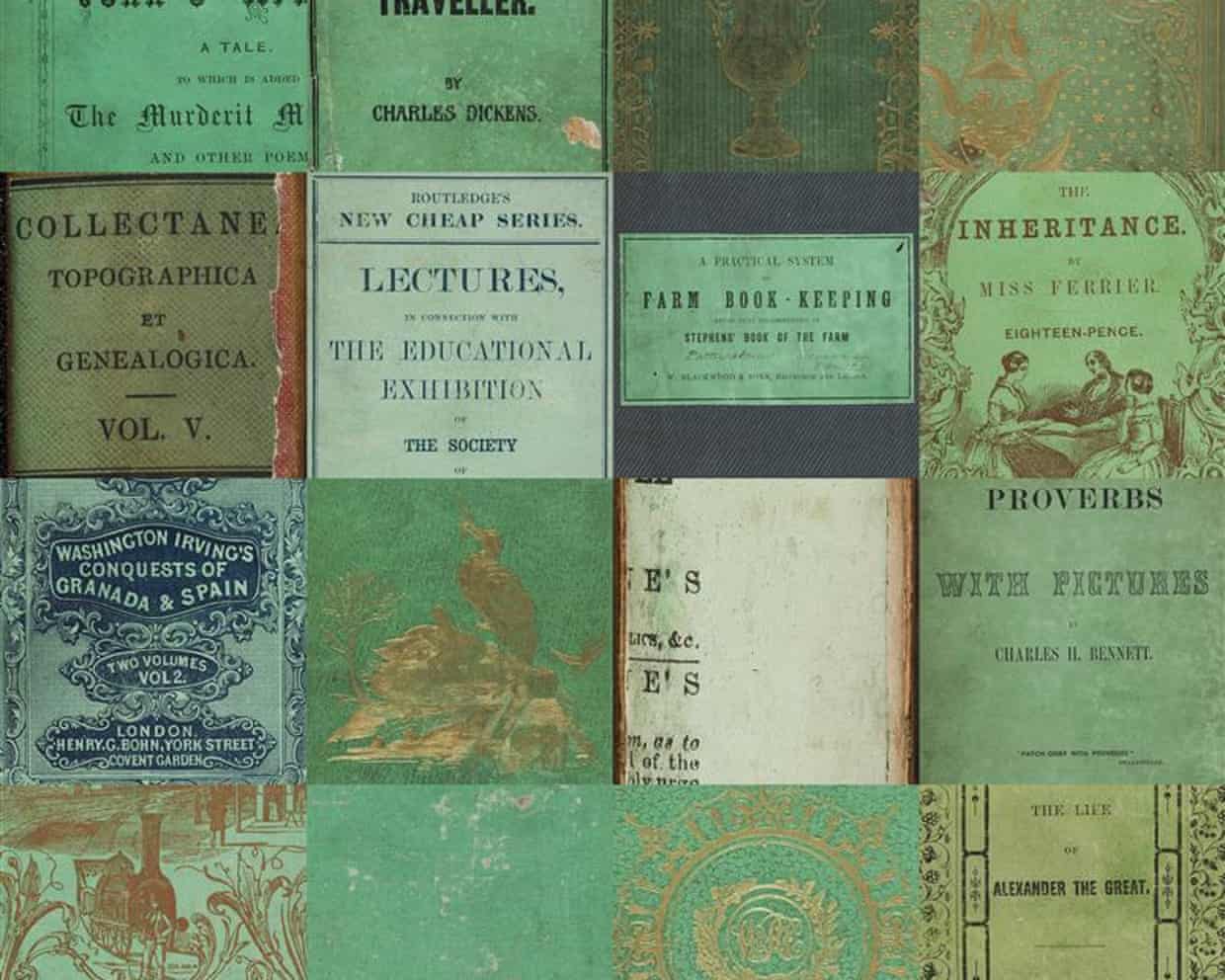
Books bound with potentially toxic green covers. 

With all the benighted book banning going on these days, you would think that the vigilantes had learned the written word would land people in the hospital. But reading is not lethal, and thinking about new ideas won’t kill anyone.

Having said that, I admit there is some reading material that may be dangerous to touch. Ella Creamer reports at the Guardian that “arsenic was historically mixed with copper to create a vivid green for book covers.”

“A new tool to quickly identify books that are poisonous to humans has been developed by the University of St Andrews,” Creamer writes. Historically, publishers used arsenic mixed with copper to achieve a vivid emerald green color for book covers. While the risk to the public is ‘low,’ handling arsenic-containing books regularly can lead to health issues including irritation of the eyes, nose and throat along with more serious side-effects. The toxic pigment in the book bindings can flake off, meaning small pieces can easily be inhaled.

“In recent years, many libraries have prevented access to all suspect green books as a precaution, as testing has until now been costly and time-consuming. … The new device can quickly and cheaply detect the presence of toxic pigment.

“ ‘A device used in the School of Earth Sciences to detect minerals in rocks was the starting point,’ said Pilar Gil, who led the research. ‘The Eureka moment was discovering the unique reflectance pattern from emerald green pigment in the visible spectrum. The idea was then to apply this discovery to an instrument which we could use and share with the sector.’

“Two scientists from the university’s astronomy and physics school, Graham Bruce and Morgan Facchin, developed a portable tool. ‘Our device shines different colors of light on to the book,’ said Facchin. ‘The amount of light reflected at each color is like a fingerprint of the pigment in the book.’ …

“The handheld device can screen books to test for the pigment in a fraction of a second. ‘Our team has been asked to look at thousands of books, of which more than 100 have been identified as containing emerald green pigment,’ said Bruce.

“At St Andrews, emerald green books are stored in Ziploc polythene bags. ‘When the books are used, we check first if there are any other copies available which are not bound in emerald green,’ reads the university’s website. ‘If not, the book is handled with special precautions such as the use of nitrile gloves.’ …

“ ‘The retention of green books from public view is not only a matter of safety, but it also restricts access to the information contained,’ said conservator Erica Kotze, who instigated the project. ‘This means that the books which have been tested and found not to contain the pigment can remain available to users.’

“A free exhibition exploring the project, Poisonous books – Dangers from the past, is running at the Wardlaw Museum in St Andrews until the end of July.”

More at the Guardian, here. No paywall, but please consider donating to support factual news.

Read Full Post »

Photos: The Literary Cat Co.
Since Literary Cat Co. opened in Kansas about a year and a half ago, 32 of the store’s foster cats have been adopted by bookstore customers.

Today’s story is about a business in Kansas that meets two very different goals at the same time — and makes a lot of people in the community happy.

Sydney Page reports at the Washington Post, “At a bookstore in this Kansas town, three cats are on the full-time staff. Hank, a domestic longhaired cat, is the ‘regional manager.’ His job duties involve keeping track of the computer cursor and ‘sleeping in adorable positions 22 hours a day,’ according to the bookstore website.

“ ‘He’s the boss of this place,’ said Jennifer Mowdy, owner of the Literary Cat Co. in Pittsburg, Kansas — a bookstore that doubles as a cat lounge and feline foster home.

“Scarlett Toe’Hara, a black short-haired cat, who is polydactyl — meaning she has extra toes — is the ‘assistant (to the) regional manager.’ She is the front door guard, plant inspector and treat tester.

“Mike Meowski — a domestic longhaired cat with one eye, named after Mike Wazowski in Monster’s Inc. — is ‘assistant (to the assistant to the) regional manager.’ His role involves cuddling guests and quality control for boxes. …

“Mowdy opened the store in 2023 after 17 years as an educator. While teaching, Mowdy volunteered with animal rescues and fostered cats. She also loved bookstores. …

” ‘I decided I could do it; I could create something,’ Mowdy said.

“There are typically about seven cats — in addition to Hank, Scarlett and Mike — who live in the bookstore as foster cats. They’re ‘temporary staff,’ and Mowdy’s goal is for her customers to adopt them.

“ ‘We partner with a rescue, and when they get a cat that they think has a personality that would fit, or they haven’t been successful in adopting a cat through other means,’ she said. ‘If we have the room, we take them in.’ … The cats come from SEK Animal Advocates, a local rescue network. …

“Lori Seiwert and her husband adopted a brother-sister duo from the Literary Cat Co. shortly after it opened. The cats are named Frog and Toad after the picture book. …

“Frog, who is male, and Toad, who is female, turned 2 in February. Seiwert said she and her husband often stop by the store to visit Mowdy and play with the other cats.

“ ‘It’s a nice thing for such a small community,’ she said. ‘It’s very homey.’

“Most cats are adopted within six months of arriving at the bookstore, though some find homes much faster; others have stayed for up to a year. …

“Mowdy looks after the cats with Caitlin Fanning, a bookseller. They also have a volunteer who visits the store on Sundays and Mondays when it is closed to feed the cats and care for them.

“The bookstore is near Pittsburg State University, so college students often bring their own books to study there and snuggle some cats.

“ ‘We’ve got lots of cozy chairs and reading nooks,’ Mowdy said. ‘Lots of people don’t buy anything, they just come and play with the cats. That’s perfectly okay. We need to get the cats socialized, too.’ …

“The bookstore has become an environment for shy or unsocialized cats to get comfortable around people. …

“Before leaving work for the day, ‘we just make sure everybody is fed and watered, and anybody that needs meds gets them,’ Mowdy said. ‘We tell them goodnight and don’t cause any trouble, and we see them in the morning.’ …

“As far as books go, the Literary Cat Co. carries a wide range of authors and genres.”

This bookstore sounds like a place that “shy or unsocialized” humans could make friends, too, but I can’t help wondering how long a bookshop can last if it doesn’t matter that “lots of people don’t buy anything”!

More at the Post, here. Lots of pictures.

Read Full Post »

 Illustration: Eleanor Shakespeare/Bridgeman Images/The Guardian.

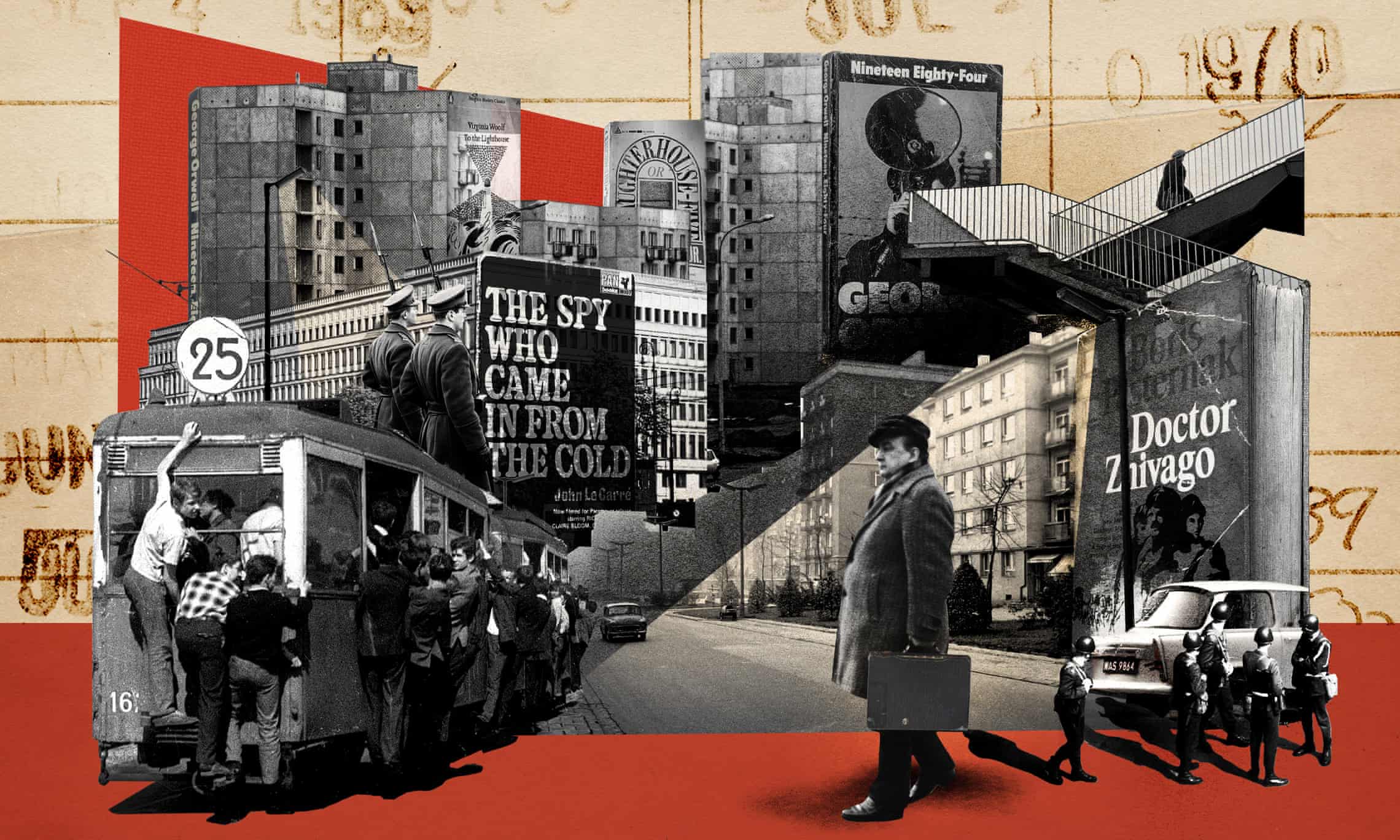
Of course, it couldn’t happen here, right? As we children always said during the time of the Cold War when someone opposed us, “It’s a free country!” And if we had applied that to reading material, we would have known we could read whatever we wanted. No need to smuggle anything in.

Well, what would that be like? In an edited extract from Charlie English’s book about Poland, The Best Kept Secret of the Cold War, the Guardian gives us an idea.

“The volume’s glossy dust jacket shows a 1970s computer room, where high priests of the information age, dressed in kipper ties and flares, tap instructions into the terminals of some ancient mainframe. The only words on the front read ‘Master Operating Station,’ ‘Subsidiary Operating Station’ and ‘Free Standing Display.’ Is any publication less appetizing than an out-of-date technical manual?

“Turn inside, however, and the book reveals a secret. It isn’t a computer manual at all, but a Polish language edition of Nineteen Eighty-Four, George Orwell’s famous anti-totalitarian novel, which was banned for decades by communist censors in the eastern bloc.

“This copy lives now in the library of Warsaw University, but for much of the cold war it belonged to the Polish writer and dissident Teresa Bogucka. It was Teresa’s father, the art critic Janusz Bogucki, who first brought it to Poland. In 1957, during a window of liberalization that opened after Stalin’s death, Janusz picked up the Orwell translation from a Polish bookshop in Paris, smuggled it back through the border and gave it to his daughter. Teresa was only 10 or 11 years old then, but she was a precocious reader, and recognized the ways in which communist Poland mirrored Orwell’s fictional dystopian state. …

“Years later, in 1976, when Bogucka joined the emerging Polish opposition movement, she decided to create a library of books that had bypassed the state censor, and donated her own small collection, including this Nineteen Eighty-Four. The SB security service, Poland’s KGB, kept continual watch on her, eavesdropping on her conversations, arresting her and searching her apartment, so she asked neighbors to store the forbidden books. Much of the time, though, they would be circulating among readers, since this would be a ‘Flying Library,’ which rarely touched the  ground.

“Bogucka’s system of covert lending ran through a network of coordinators, each of whom was responsible for their own tight group of readers. She sorted the books into categories – politics, economics, history, literature – and divided them into packages of 10, before allocating each coordinator a particular day to pick up their parcel, which they carried away in a rucksack. The coordinator would drop the books back the following month at a different address, before picking up a new set.

“The demand for Bogucka’s books was such that soon she needed more, and these could only come from the west. Activist friends passed word to London, where émigré publishers arranged shipments of 30 or 40 volumes at a time, smuggling them through the iron curtain aboard the sleeper trains that shuttled back and forth between Paris and Moscow, stopping in Poland along the way. By 1978, Teresa Bogucka’s Flying Library had a stock of 500 prohibited titles.

“How many people read her copy of Orwell’s book in those crucial cold war years? Hundreds, probably thousands. And this was just one of millions of titles that arrived illegally in Poland at that time. As well as via trains, books arrived by every possible conveyance: aboard yachts; in secret compartments built into vans and trucks; by balloon; in the post. Mini-editions were slipped into the sheet music of touring musicians, or packed into food tins or Tampax boxes. In one instance, a copy of Aleksandr Solzhenitsyn’s The Gulag Archipelago was carried on a flight to Warsaw hidden in a baby’s nappy.

“What some in the east suspected, but very few knew for sure, was that the uncensored literature flooding the country wasn’t reaching Poles by chance. It was sent as part of a decades-long US intelligence operation, known in Washington as the ‘CIA book program,’ designed, in the words of the program’s leader, George Minden, to assault the eastern bloc with an ‘offensive of free, honest thinking.’ Minden believed that ‘truth is contagious,’ and if they could only deliver it to the oppressed peoples of the Soviet zone, it was certain to have an effect.

“From today’s vantage point, when disinformation threatens western liberal democracy as never before, and censorship and book bans are once again turning schools and libraries into ideological battlegrounds, the CIA literary programs appear almost quaint.

Although they had political goals, they must rank among the most highbrow of psychological warfare operations.

“Along with copies of the Manchester Guardian Weekly and the New York Review of Books, the CIA sent works by blacklisted authors such as Boris Pasternak, Czesław Miłosz and Joseph Brodsky, anti-totalitarian writings by Hannah Arendt and Albert Camus, literary fiction from Philip Roth and Kurt Vonnegut, writing advice from Virginia Woolf, the plays of Václav Havel and Bertolt Brecht, and the spy thrillers of John le Carré.

“Later, as well as smuggling books, the CIA would fund and ship presses and printing equipment into Poland, so that the banned titles could be reproduced in huge quantities by underground printers in situ. Few individuals were more central to these latter operations than the dissident publisher Mirosław Chojecki, known to the CIA by the cryptonym QRGUIDE.

“On a Tuesday evening in March 1980, the police came to arrest Chojecki for the 43rd time.”

Exciting stuff! Read more at the Guardian, here. No firewall.

Read Full Post »

Photo: Gerry Hadden/The World.
The town of Libros, in northeastern Spain, has a population of 60.

What are you reading?

Sometimes that question is my way of greeting someone: “Hi. What are your reading?”

Books are so important to me, I make the mistake of assuming they’re important to everyone. Right now I’m reading Fresh Water for Flowers, recommended by Suzanne, who liked the French bestseller (translated) about a woman who was a cemetery caretaker.

Books are important to a town in Spain, too. How could they not be, with a name like Libros? And now the town is now planning to rebuild its economy on the back of books.

Gerry Hadden has the story at Public Radio International’s The World.

“On a typical winter’s day in the village of Libros, in northeastern Spain, about the most exciting thing that happens is the hourly ringing of the church bell, which startles flocks of pigeons living in the belfry. …

“Libros has a population of 60. But once upon a time, some 2,500 people lived here. The majority of residents worked on farms, or in the nearby sulphur mines, which closed in the 1950s. But like lots of villages in the Teruel region, most of the older population has died off over the years, while the young emigrated, said Arana, who is an electrician by trade. …

“To attract newcomers, Arana thinks the key to the town’s salvation is in its name: Libros translates to ‘books,’ and he wants to open the town’s first ever library. 

“The library’s location has yet to be determined, but Arana has already started building its collection. A year ago in June, Arana made a plea for book donations on social media with the hashtag, Libros para Libros, or ‘Books for Books,’ which went viral.

“Since then, over 70,000 volumes — including novels, kids’ books, nonfiction and encyclopedias — have poured in from all over the world — from Argentina to Germany. Twelve boxes alone came in from Mexico.

“At one point, Arana said, the postman was coming by so many times a day that they gave him a key to town hall. Books were piled up all over the building, to the point where Arana could barely reach his office. So, late last year, he worked with volunteers to move a bunch of the books to a warehouse. …

“Adrian Soriano, 37, the town’s handyman, pointed to a big, red shipping container on the edge of town. It was filled to the ceiling with books.

“Arana said that he paid $3,000 for the container, money the tiny town can’t spare. And this is where the success and euphoria of the online book drive meets the economic realities of a small village.

“ ‘Now, we just need the library itself,’ Arana said. ‘The regional government likes the idea. But they say it will cost some $4 million to build it. We don’t have the money, but I am sure we’ll find it.’

“Arana said that they’ll apply for funds from the European Union if need be. His idea is to combine the library with a hotel to pay the salary of a librarian.  

“ ‘The library hotel will generate jobs. People need work, which is why they leave to begin with. If we can bring back just seven or eight families, well, they’d count as villagers.’

“Someone, he said, needs to organize the collection. Arana said that he’s confident because there’s proof that literary tourism can work here.

“For example, bestselling Spanish author Maribel Medina talked to Teruel TV about a project she runs called My Town Reads. It stages literary events in tiny villages, including Libros, inviting famous authors to visit, sign books and spend the night.

“Libros has hosted four events with Medina’s help. Arana said that hundreds of people showed up each time.

“ ‘It seems that because of our little literary boom, folks are starting to fix up the houses here,’ he said. ‘On weekends, more people are returning.’ …

“Libros native Santiago Perez, 81, who lives past a bunch of crumbling homes, pointed to a house with scaffolding around it. ‘One of my boys has set out to fix up that one. He’s making a really nice home for himself.’ “

Is this dream unrealistic? Well, that’s another thing about books — they encourage big dreams. And big dreams are a necessary step for big accomplishments.

More at PRI’s The World, here.

Read Full Post »

Photo: Howard LaFranchi/The Christian Science Monitor.
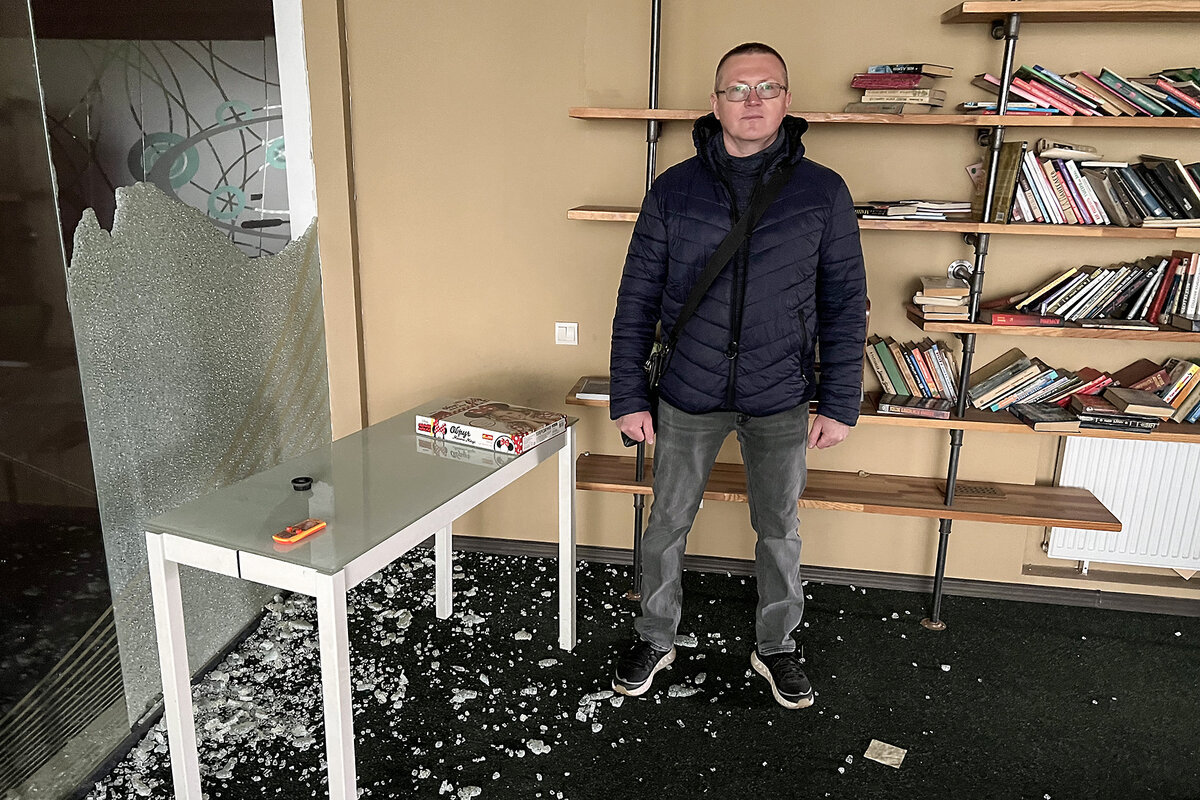
Ihor Pohorielov, commercial director of Ranok Publishing, at the company’s bomb-damaged offices, in Kharkiv, Ukraine, Nov. 4, 2024.

If ants can keep working and rebuilding after we’ve knocked over their anthill, how much more humans in war zones?

Among the many buildings damaged or destroyed by the Russian invasion in Ukraine are publishers of books. But books remain strong and Ukrainians keep reading.

Here’s a story by Howard LaFranchi at the Christian Science Monitor.

“Across Ukraine, but especially in Kharkiv, the country’s publishing capital, Russia’s war has been something of a boon to the nation’s publishing industry. More Ukrainians are seeking solace and distraction in books, and interest in Ukrainian literature and Ukrainian-language books is spiking.

“Many of the country’s publishing houses – from textbook-publishing giants to boutique operations specializing in culture – are keeping busy. And this despite the fact that Russian President Vladimir Putin has made publishing houses a key target of his war on Ukrainian culture.

“Publishers say a combination of their resolve to keep operating and a reawakened enthusiasm for books among a variety of readers is keeping the presses running.

“ ‘The war is reminding Ukrainians that books are an outlet for joy, for culture, for travel, when other outlets are closed to us,’ says Yuliia Orlova, general director of Vivat Publishing.

“ ‘We hear all the time about people rediscovering the joys of books as they spend less time on their computers and phones,’ she says. ‘People want to distract themselves from all the sad and depressing things going on around them, so they turn to fiction and fantasy. It’s their way to escape.’

“One night in November, Ihor Pohorielov was awakened by a Russian bomb blast that nearly shook him out of bed. His thoughts went to the modern offices and cavernous storage facilities where he works as the commercial director for Kharkiv’s Ranok Publishing, and which had already been the target of Russian air strikes. …

” ‘I thought of the orders we need to get out and the clients we need to serve – so I came into work’ the next day. …

“Across Ukraine, but especially in Kharkiv, the country’s publishing capital, Russia’s war has been something of a boon to the book publishing business.

“As more Ukrainians seek solace and distraction in books, and as interest in Ukrainian literature and Ukrainian-language books spikes, many of the country’s publishing houses – from textbook-publishing giants to boutique operations specializing in culture – are keeping busy.

“And this despite the fact that Russian President Vladimir Putin has made publishing and printing houses a key target of his war on Ukrainian culture.

“Kharkiv’s publishing industry was shaken to its core last May when a Russian S-300 missile struck the giant Faktor-Druk, one of Europe’s largest printing houses. The blast destroyed presses, incinerated some 100,000 books, and knocked out the three publishing companies housed there. …

“But the sense of devastation was short-lived. In a show of solidarity, several European publishers offered to print Ukrainian books for distribution to millions of Ukrainian refugees around Europe.

“An American philanthropic organization, the Howard G. Buffett Foundation, quickly agreed to pick up the tab for Faktor-Druk’s reconstruction. …

“ ‘Printing in Kharkiv is hanging on despite the almost daily attacks on the city,’ … says Yuliia Orlova, general director of Vivat Publishing, a division of the Faktor Group. …

“Ms. Orlova does not hide the fact that the war has been devastating for Ukrainian publishing in many ways, especially for the people who work in the sector. ‘The attacks and the destruction in the city have a big impact on the mental health of our workers. People don’t sleep and they are constantly worried for their families,’ she says. …

“Since 2022, the number of registered publishers in Ukraine has plummeted from about 1,600 to 150, Ms. Orlova says. …

“But Ms. Orlova cites another statistic that underscores the bright side of Ukrainian book publishing: Over the same period, the total number of books printed grew by 70%.

“The reasons for that jump are largely related to the war. Russia’s systematic destruction of Ukraine’s infrastructure has meant widespread power outages and spotty access to the internet, Ms. Orlova says. ‘We hear all the time about people rediscovering the joys of books as they spend less time on their computers and phones,’ she says. …

“Mr. Putin’s war on Ukrainian culture – targeting museums, churches, universities, and publishing houses – is feeding a renewed interest in history, language, art, and literature that confirm Ukrainian nationhood, publishers say.

” ‘Interest among Ukrainians in who we are was already starting to grow, but it was the full-scale invasion that really encouraged this desire to know more about our history and culture,’ says Oleksandr Savchuk, whose specialty Kharkiv publishing house carries his name.

“ ‘For many Ukrainians, the picture of who we are was like a puzzle with lost pieces,’ he says. ‘But now people are finding those pieces so we can complete the full picture.’

“To help nurture that process, in 2023 the philosophy professor and publisher opened a facility he calls a ‘Book Strongroom,’ a combination bookstore, event space, and neighborhood bomb shelter adjacent to his publishing operations. …

“Oleksandr Savchuk is a small player who has published about 50 titles over the last decade. … ‘For the 12 years before the invasion I was suffering to try to show people their great history and culture. It was a hard-going process,’ he says. … ‘I see now that I’m being heard.’ “

More at the Monitor, here. No firewall, reasonable subscriptions rates for a paper unusually strong in international news.

Read Full Post »

Photo: The Guardian.
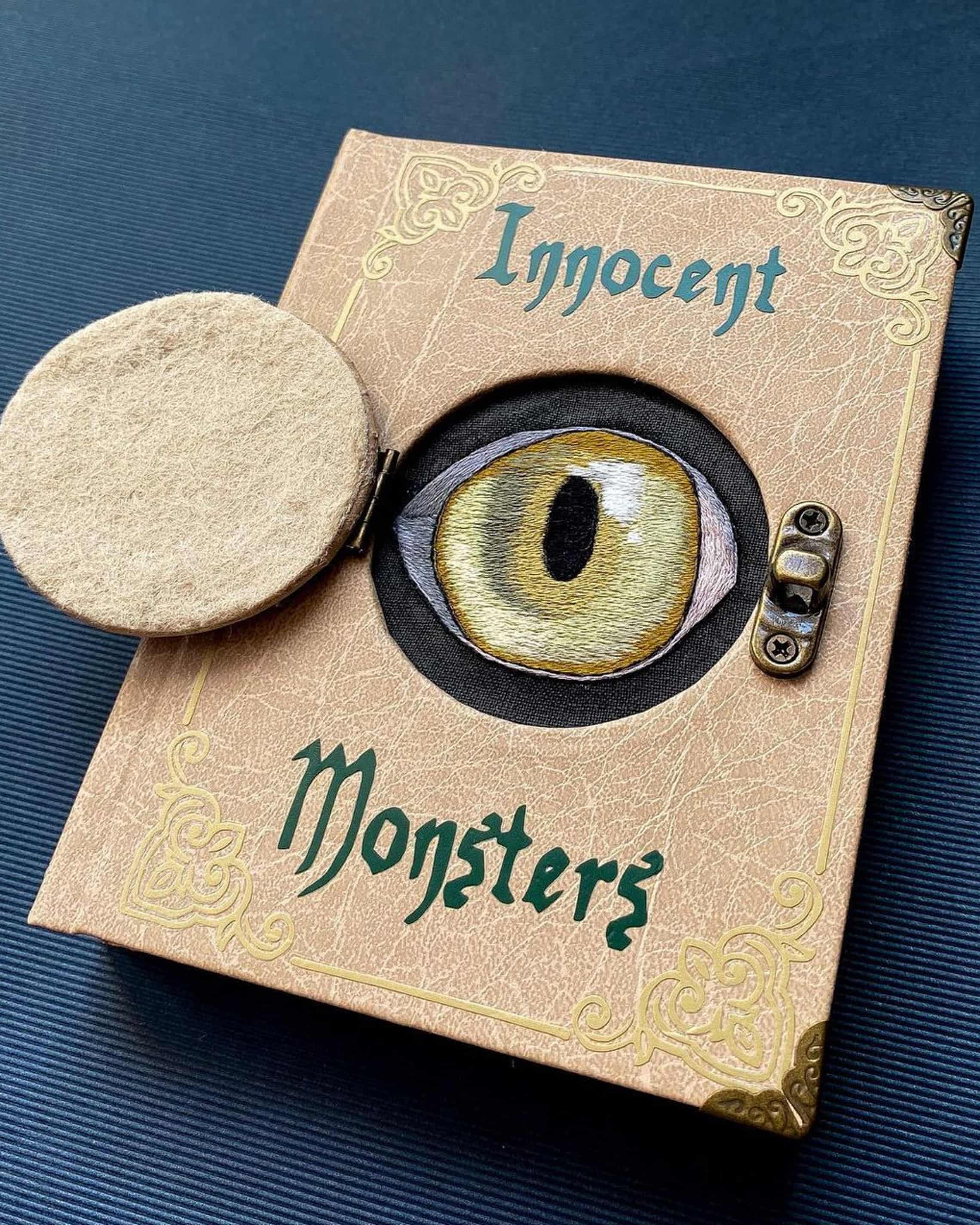
Innocent Monsters is an example of a book bound by Geena of ‘beaudelaireslibrary.’ Bookbinding is attracting interest on TikTok.

TikTok comes in for a lot of criticism these days, not least because people think its Chinese ownership enables the Chinese government to spy on the US. For all I know, that could be a legitimate concern, but some activities on TikTok sure seem innocent. I can’t imagine any government secrets hidden in bookbinding lessons, for example.

David Barrett reports at the Guardian about the curious hobby that has taken hold there.

“The videos often begin with every bibliophile’s nightmare: a person ripping the covers off a book. They are not vandals, however; they are bookbinders, taking part in a growing trend for replacing the covers of favorite works to make unique hardback editions, and posting about their creations on TikTok and Instagram.

“Mylyn McColl, a member of the UK-based Society of Bookbinders, runs their international bookbinding competition. She said: ‘It is great to see people taking on our craft and turning their favourite novels into treasured bindings.’ …

“Emma, 28, posts on social media as The Binary Bookbinder, after discovering the hobby a year ago. ‘I was scrolling through social media and I came across a video of someone doing it and was intrigued,’ she said. …

“After a practice attempt with a few sheets of printer paper and some card-stock, Emma, who lives on the East Coast in the US, graduated to re-binding books from her favorite genre, fantasy. ‘It is deeply satisfying re-binding a book to look like it would belong in the world I’m reading about,’ she said. …

” ‘Overall it is a relaxing hobby, but it still comes with its challenges. I like to use my tech background to integrate 3D printed, laser cut, or electronic parts in the books I rebind and that can be difficult.’ …

“A search for ‘bookbinding’ on TikTok produces more than 60 million results, with high-speed time lapse videos showing a brand new product emerging from a mass-produced paperback. Bookbinding tools and equipment include specialist glues, and vinyl cutters for making silhouettes or cameos on covers, which can cost more than £300 [~$384].

“Emma said interest in bookbinding was being driven in part by BookTok, the TikTok genre that has boosted sales for the publishing industry, and the general increase in reading post-pandemic. … ‘Different parts of the same story will resonate with people, so owning a copy of a book that has your favourite quote, image or symbol from the book on the cover is something special.’

“McColl, of the Society of Bookbinders, said: ‘Historically the society was made up predominantly by older people, often retirees enjoy new free time. But that is changing … on the London committee there are now people in 20s, 30s, 40s.’

“Some bookbinders do it for their own enjoyment, while others sell their creations through platforms like Etsy. Geena, who posts on Instagram as baudelaireslibrary, saw it as an opportunity to give physical form to a genre generally only available online – fan fiction.

“The 33-year-old from Wiltshire said: ‘I started bookbinding nearly a year ago. I had been reading Harry Potter fan fiction for about two years. … I had absolutely previous knowledge on how to create a book – I didn’t know it was possible to do at home without commercial equipment.’

“Geena says bookbinding encompasses ‘four or five hobbies,’ allowing her to use skills from her other pastimes, such as embroidery and crochet. She says, ‘With the rise of screens dominating people’s time, I think that creative hobbies where you use your hands and make something from scratch bring a simple joy that [people] haven’t experienced before. It taps into a part of the brain that can improve mental health, and is a real mood booster.’

“Geena says she has made new friends through the hobby, and is hoping to attend a meet-up of British amateur bookbinders later this year. Emma has attended meet-ups in the US. She said: ‘The community aspect is wonderful, and I’ve really been able to bond with people across the world.’

“Jennifer Büchi of the American Academy of Bookbinding, based in Colorado, said there had been a shift in how people discovered the hobby. …

” ‘We saw a big increase in students who’d started learning to bind books online and through social media after the pandemic. It’s been great for us because there’s a lot more interest in our classes – our introductory courses fill up within hours of being posted. Anything that drives interest in the book ultimately helps more students find us, and more students means more folks carrying the craft forward.’ ”

More at the Guardian, here.

Read Full Post »

Photo: Claudia Wolff/Unsplash.
Do books use too much paper?

Those of us who still prefer a solid book to a pale, digital imitation may sometimes wonder whether we are encouraging the use of too much paper, especially since overstocks can end up in landfills.

Curiously, at least one publisher is thinking along the same lines.

Elizabeth Segran writes at Fast Company, “Over the past three years, HarperCollins’s designers have put their skills toward a new mission: saving paper. In an effort to reduce the carbon footprint of each book, they’re tweaking fonts, layout, and even the ink used. The goal is to pack more into each page, while ensuring that the pages are as readable as ever. And so far, these subtle, imperceptible tweaks have saved 245.6 million pages, equivalent to 5,618 trees.

“HarperCollins’s Christian publishing division, Zondervan Bibles, first came up with the idea of using design to save paper. Bibles have historically used upwards of 2,500 pages. In 2015, Zondervan’s designers determined that if they used different fonts and adjusted the page layout, they could reduce the number of sheets used. It would also cut HarperCollins’s printing costs. They developed a new compact typeface called the NIV Comfort Print. Ultimately, it saved more than 350 pages per bible, resulting in a total savings of 100 million pages in 2017. Stacked up, that would be the equivalent to four times the height of the Empire State Building.

“Tracey Menzies, the VP of creative operations and production at HarperCollins, wanted to see if the company could apply these learnings to other kinds of books. … The team got to work. They tested their theories with a large book in their catalog — more than 600 pages — by creating 50 versions of it using different fonts. HarperCollins uses a wide range of off-the-shelf fonts in its books, rather than custom ones. As the team ran the experiments, they observed that some fonts were more compact, resulting in fewer total pages, while remaining easy to read. So they curated a list of 15 fonts they determined are the most eco-friendly, which will be the preferred fonts from now on.

“In the end, the designers found that clever font selection, coupled with a thoughtful layout design that reduced white space, resulted in more words per page. For instance, in one example, the same text set to Garamond Pro resulted in many more words on the page compared to Bembo. Both fonts are fairly similar, with a classic serif look. And when you place them side by side, the differences are imperceptible. ‘The goal is to make these changes without the reader even seeing the difference,’ says Menzies.

“But there were also many complexities in the process. For instance, they had to consider the heaviness of the font. One font they used frequently is Bodoni, which was first created in 1798, and appears frequently in HarperCollins books. As a very heavy font, they realized they could fit more words on a page, while keeping it readable. But they also found that with very large letters, like subheadings, the ink would bleed through the paper, making it hard to read the words on the next page.

“ ‘The designer is always balancing out not just a single page, but also what’s on the page before and the page after,’ says [Leah Carlson-Stanisic, associate director of design at HarperCollins]. ‘Ultimately, this ended up with finding fonts that used less ink, in addition to less paper, which is also better for the planet.’

“Still, there is complex math involved with cutting pages from books. Printers produce very large sheets, which are then cut and folded into what ultimately becomes segments of 16 pages. When trying to cut pages from the book, designers need to be able to remove multiples of 16 pages. For the book So Fetch, for instance, using a more eco-friendly font saved nearly a million pages in total over the entirety of its print run. ‘We want to make sure our big titles, by prominent authors, are using these eco-fonts,’ says Carlson-Stanisic. ‘It adds up a little bit at a time, saving more and more trees.’ …

” ‘When we experimented with these fonts, we realized they weren’t a limitation at all,’ Menzies says. ‘It was simply a different approach that didn’t sacrifice aesthetics. Now, our designers are constantly questioning how we do things and thinking about ways to make things more sustainable.’

More at Fast Company, here.

Read Full Post »

Photo: Joel Goodman/The Guardian.
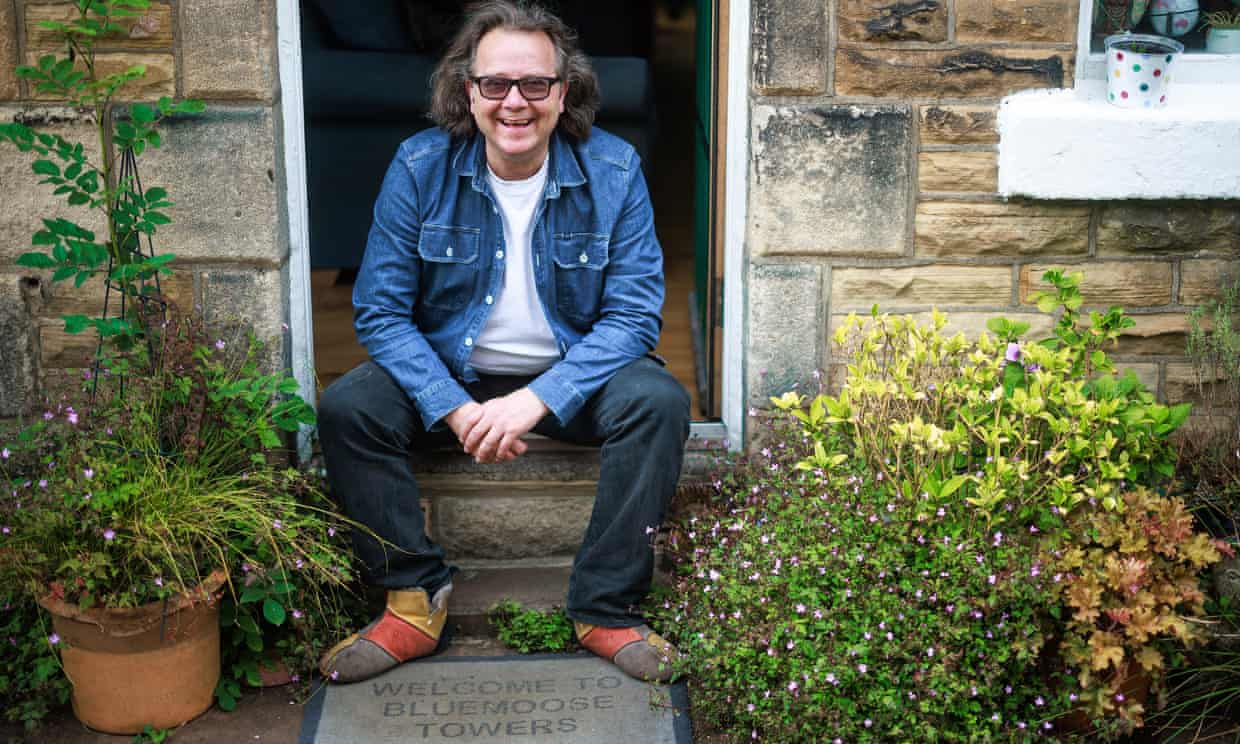
Kevin Duffy has built a publishing business in his home that focuses on ten books a year, many of them prize contenders.

Do you know the Aesop fable in which animal mothers brag about the number of their children? According to MIT Classics, “A controversy prevailed among the beasts of the field as to which of the animals deserved the most credit for producing the greatest number of whelps at a birth. They rushed clamorously into the presence of the Lioness and demanded of her the settlement of the dispute. ‘And you,’ they said, ‘how many sons have you at a birth?’ ”

And the Lioness said, “I have only one. But that one is a lion.”

That is my introduction to a story about a publisher who publishes only ten books a year.

Helen Pidd, North of England editor of the Guardian, writes, “The two-up, two-down terraced house on a cobbled Hebden Bridge street does not look like the headquarters of a multi award-winning publishing house.

“There is no gleaming edifice, no sign and certainly no reception desk. The green front door leads straight into Kevin Duffy’s living room, the nerve centre of Bluemoose books, his independent literary hit factory.

“It is at a cluttered table in the corner that Duffy has built a business with a success rate that billion-pound publishers regard with envy. Each year, Bluemoose puts out no more than 10 titles, but a remarkable number end up in contention for major literary prizes.

“Each author is handpicked by Duffy, 62, a self-confessed ‘control freak’ from Stockport, Greater Manchester, who spent years as a salesperson for big publishers before remortgaging his house to start Bluemoose in 2006. …

“It was Duffy who published Benjamin Myers’ The Gallows Pole, which has been made into a BBC series that was given five stars by the Guardian. …

“In March, Bluemoose won best northern publisher at the Small Press of the Year awards. In April, a Bluemoose title – I Am Not Your Eve, the debut novel by Devika Ponnambalam, which tells the story of Paul Gauguin’s child bride and muse, Teha’amana – was shortlisted for the £25,000 Walter Scott prize for historical fiction. …

“Bluemoose’s current bestselling author is Rónán Hession, a former musician who balances his writing career with being the assistant general secretary of the department of social protection in the Irish government.

“Hession’s 2019 debut Leonard and Hungry Paul, a funny and tender story about kindness, has sold more than 125,000 copies worldwide. A bestseller in Germany, it has also attracted fans in Hollywood – Duffy recalls receiving an email from someone claiming to be Julia Roberts’s agent. …

“ ‘Then her PR person got in touch saying she wanted to get in touch with Rónán because she loved the book. … How wonderful is that? She just wanted to say thank you,’ he said. …

“Another Bluemoose success story with a day job is Stuart Hennigan, a librarian from Leeds. Ghost Signs, an eyewitness account of the impact of the early days of the pandemic on those living in poverty, made the shortlist of the Parliamentary Book awards.

“Duffy shares an anarchic streak with Hennigan, finding it hilarious when he turned up to the Tory-packed ceremony in a T-shirt that said: ‘Still hate Thatcher.’ …

“Duffy remains Bluemoose’s only employee, drawing a ‘tiny’ salary, working with five freelance editors, including his lawyer wife, Hetha.

“He is happy that way. ‘I don’t want to be the next Penguin. I don’t want to be a huge business. I just want to publish eight to 10 books a year, make a bit of a profit and invest it all back into the business to find new writers,’ Duffy said.

“Running Bluemoose is a seven-day-a-week vocation. On an average day, Duffy receives 10-20 unsolicited pitches, usually the first three chapters of a new book, all of which, he insists, he reads. Perhaps four in a month will grab his attention enough for him to ask for the full manuscript.

“Duffy insists that there remains a ‘class ceiling‘ in the publishing of literary fiction. LGBTQ+ writers are being given deals, as well as people of color, he says, but working-class writers are not being heard. …

“ ‘The people making those publishing decisions, because of their educational background and their life background, are not reading books about people in the rest of the country. You know, 93% of the people in this country don’t go to private school. There’s a reading public out there that wants books about themselves and the areas they live in.’

“Myers, he notes, originally signed with Picador, which would not publish Pig Iron, his third novel about a Traveling community in the north-east. ‘Because, they said, “who would be interested in a working-class character from a small northern town?” That small northern town was Durham, theological capital of Europe for 2,500 years.

“ ‘Pig Iron went on to win the inaugural Gordon Burn prize. Ben’s next book, Beastings, won the £10,000 Portico prize. Then The Gallows Pole won the world’s leading prize for historical fiction. Then all the agents were interested,’ he said.”

As a reader who turns to Dickens whenever in doubt, I am surprised to find that I actually have read (and liked) one of these: Leonard and Hungry Paul. That’s because Wendy Greenberg, a prolific UK reader on Goodreads, wrote about it.

More at the Guardian, here.

Read Full Post »

Photo: Nick Migwi/ CNN.
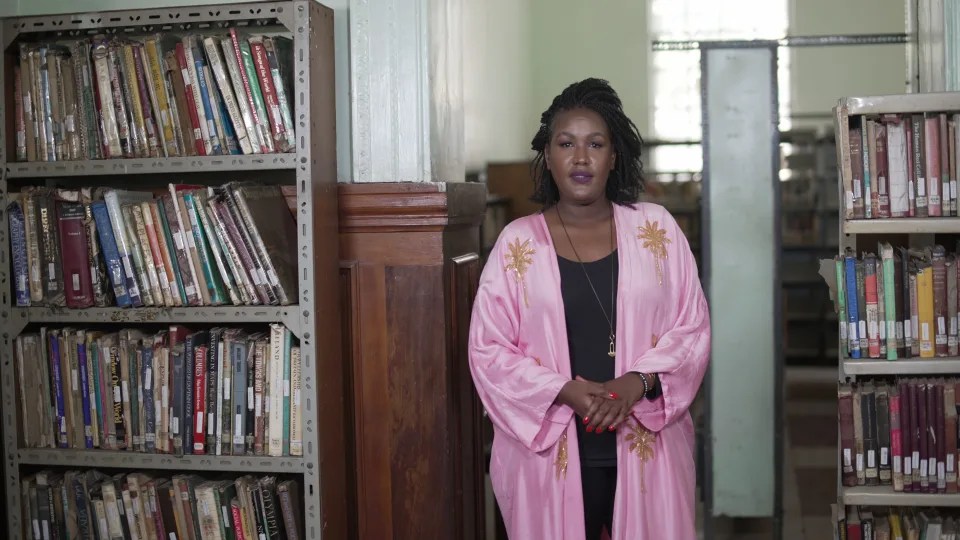
“I think that libraries are great equalizers,” says Book Bunk co-founder Angela Wachuka in Nairobi, Kenya.

Like many of you, I’m a big fan of reading books. In my family, I’ve always been known for gifts of books — books that I nearly always have read first so that I know they are right for the recipient. My aunt said she looked forward to the gifts no one else gave her on her birthday.

When I was a train commuter, I bought lightweight paperbacks to read while traveling, but after retirement, I became a devotee of the library, a place of magic, as blogger Laurie Graves knows more than most.

In recent years, Kenyan fans of libraries have been working to make them as accessible and lovely as possible.

Abdi Latif Dahir writes at the New York Times, “In 1931, the first library in Kenya’s capital, Nairobi, opened its doors — to white patrons only. Nearly a century later, Kenyans dressed in the slinky gowns, flapper headpieces and tweed suits of that era streamed into the now-dilapidated space in a celebration that was part fund-raiser for the remodel of the iconic building, part reclamation of the city’s public libraries as ‘palaces for the people.’

“ ‘Our public libraries can be glamorous spaces of storytelling,’ said Angela Wachuka, a Kenyan publisher. But, she added, ‘we are here to also reclaim history, to occupy its architecture and to subvert its intended use.’

“The restoration of the McMillan Memorial Library and others in the city was the brainchild of Wachuka and the novelist Wanjiru Koinange, who founded Book Bunk, a Kenyan nonprofit, in 2017 to restore and reclaim the city’s public libraries. The aim was to leave behind their excluding past and remake them into inclusive spaces. … Among their goals is to bring more books in African languages to the libraries, and incorporate services catering to those with visual, physical or reading disabilities. …

“As the guests streamed into the gala, in December, organizers urged them to think of themselves as ‘rebellious gate-crashers’ who, while dressed as those in the past, were about to embark on a radically different future in which libraries are an essential public good.

“Nairobi, a fast-growing city of over four million people, has very few bookstores or well-funded libraries. Book Bunk’s work comes amid heated conversations about urban design and about how corruption and colonial systems continue to shape the way public infrastructure and spaces are designed and who gets access to them.

“ ‘In the case of Nairobi, there’s almost an acceptance that certain social divisions should exist across social classes and different societal groups,’ said Constant Cap, an urban planner who has collaborated with Book Bunk in the past.

“Restoring public libraries, he said, could be an opportunity to break those barriers and bring together people from different socio-economic, ethnic, racial and religious backgrounds.

“For Wachuka and Koinange, the journey began a decade ago as they searched for a venue to host an event for the Kwani? [a literary magazine] literary festival. The two thought the McMillan library — built by Lady Lucy McMillan as a memorial to her American husband, Sir Northrup McMillan, and later bequeathed to the Nairobi City Council — would be an ideal venue given its centrality and connection to the city.

“But when they walked in, Wachuka said, they were surprised to see its crumbling state: Its interior neoclassical architecture was fading, its floors and walls were in ruinous condition and its collections were gathering dust.

“While they found another location for the event, the two immediately began researching the history and management structure of the McMillan library, and soon after, left their jobs to focus full time on its restoration.

“One of their earlier discoveries was that the McMillan library was the first of a series of other libraries built in the city. Only two were still open: the Makadara and Kaloleni libraries, in the city’s low-income eastern suburbs.

“After forming a partnership with the Nairobi city administration in 2018, Book Bunk first focused on restoring the two smaller libraries, prioritizing the needs of the communities there.

“The two branches have since reopened, with the Makadara library hosting storytelling sessions, film screenings, music performances and a literary festival. The Kaloleni branch is in a neighborhood built in the 1940s by Italian prisoners of war, and has become a hub for youngsters to do their homework and participate in workshops that help them, for example, learn how to make money using their creative talent.

“Joyce Nyairo, a Kenyan academic and cultural analyst, said that the restored libraries have the chance to be ‘great equalizers,’ particularly for people from disadvantaged backgrounds.”

More at the Times, here. I love the idea of asking Kenyans to envision themselves as “gate crashers” into spaces that should always have been theirs. Makes me think of One-Eyed Connelly, a famous gate crasher whose name my father borrowed for a pigeon that was always walking through our open doors.

Read Full Post »

Supporters Save Bookshop

Book lovers saved an indy shop in Detroit.

When a community really loves a threatened business, people will pull together to help it survive. Where I live, we had a flash mob event that kept one business going several more years. But it’s up to the owners after that.

Sydney Page reports at the Washington Post, “A small bookstore opened in Detroit just over a year ago, and as a locally owned business, 27th Letter Books had to keep a close eye on its finances. The owners were pleased when they started getting large online orders for textbooks from a new customer.

“ ‘The name they provided matched with a professor,’ said Erin Pineda, 31, who co-owns the bookstore with her husband, Drew, and another couple, Jazmine Cooper and Jake Spease. ‘As a new business, we were trying to build a relationship with someone we thought was a customer.’

“The individual placed several different orders, amounting to $35,000 worth of medical and engineering textbooks, each costing between $100 and $200. Then, in late May, staff received a notification from the store’s merchant service provider, flagging a credit card the person used as fraudulent.

“The bookstore co-owners went through the individual’s purchases — all of which were shipped to the same address outside Michigan — and quickly realized that the person had placed every past order using a stolen credit card, as well.

“ ‘That’s when we started to consider closing,’ said Cooper, 28.

“They contacted law enforcement, their insurance provider and different banks, hoping for a reprieve from the serious financial toll they knew the scam would take on their small company. The cost, they were told, would probably fall entirely on them — which would put them out of business.

“ ‘We heard we were unlikely to get any funds back,’ Erin Pineda said, adding that she and the co-owners spent several weeks trying to remedy the situation, but only hit dead ends. …

“The textbooks were shipped outside the state, which further complicated the matter from a legal standpoint.

When merchants are victims of credit card fraud, liability usually falls on the merchant or the credit card company, depending on the circumstance. Often, the merchant is accountable for covering fraudulent online transactions.

“As a relatively new and fragile business, 27th Letter Books was left with only two options: shut down or seek support.

“ ‘We realized we needed to ask for help,’ Erin Pineda said.

The store co-owners started a GoFundMe campaign, and within 10 days, they surpassed their goal of $35,000. They were stunned by the generosity

“ ‘We’re just blown away by how the community responded and lifted us up in a really difficult situation,’ Erin Pineda said. ‘It was incredible.’

“ ‘The response was not only overwhelming because of the amount, but also because it was so quick,’ Cooper said. ‘I felt that the community really wanted us as part of their community. It was just affirming to me that what we’re doing is worth it.’

“The bookstore emphasizes inclusivity and offers a diverse selection of literature. It also hosts events that aim to bring the community together. … The store runs story-time sessions for children on Saturdays, as well as book club meetings and open mic nights. Additionally, local authors and artists showcase their work.

“Nicole Miazgowicz is one such artist. She had a solo show at the bookstore in April.

“ ‘They just bring so much to the community, and I’ve been really impressed by their kindness and openness,’ said Miazgowicz, 38. ‘It’s kind of like a little family that I’ve found in the community here.’ …

“Miazgowicz held an auction of some of her artwork and donated the proceeds — which totaled $425 — to 27th Letter Books….

“Hank Moon, a Detroit resident, is also a fan of the bookstore. When he found out that it could be closing, he contributed to the campaign and spread the word on social media, encouraging others to do the same. …

“ ‘Yes, they are a bookstore, but they’re a lot more than that,’ he said. ‘It is an incredible community space, and they work really hard to bring in books for a diverse audience of people.’

“More than 400 people contributed to the cause, most of whom live locally, the store owners said. Along with the much-needed funds, messages of support poured in, too.

“Our community needs more businesses like yours. Thank you for all that you do,” commented someone who contributed $200.

The store owners said they are touched by their community’s support and more motivated than ever to keep their doors open.

“ ‘It’s wonderful that people are willing to pay it forward because of what they’ve seen us provide to the community,’ Erin Pineda said. ‘It creates a beautiful reciprocity of gratitude between the people there in our neighborhood and us as a business, and a team of four people who care deeply about southwest Detroit.’

“With the help of their community, 27th Letter Books was able to recoup its losses and remain open. The owners are implementing new procedures to prevent future fraudulent activity.

“Beyond further securing their business and staving off scammers, the owners said they learned another valuable lesson.

“ ‘I would tell other small businesses not to be afraid to reach out to their community,’ Cooper said. ‘They will fight for what they want.’ “

More at the Post, here.

Read Full Post »

Photo: Drew Arrieta | Sahan Journal.
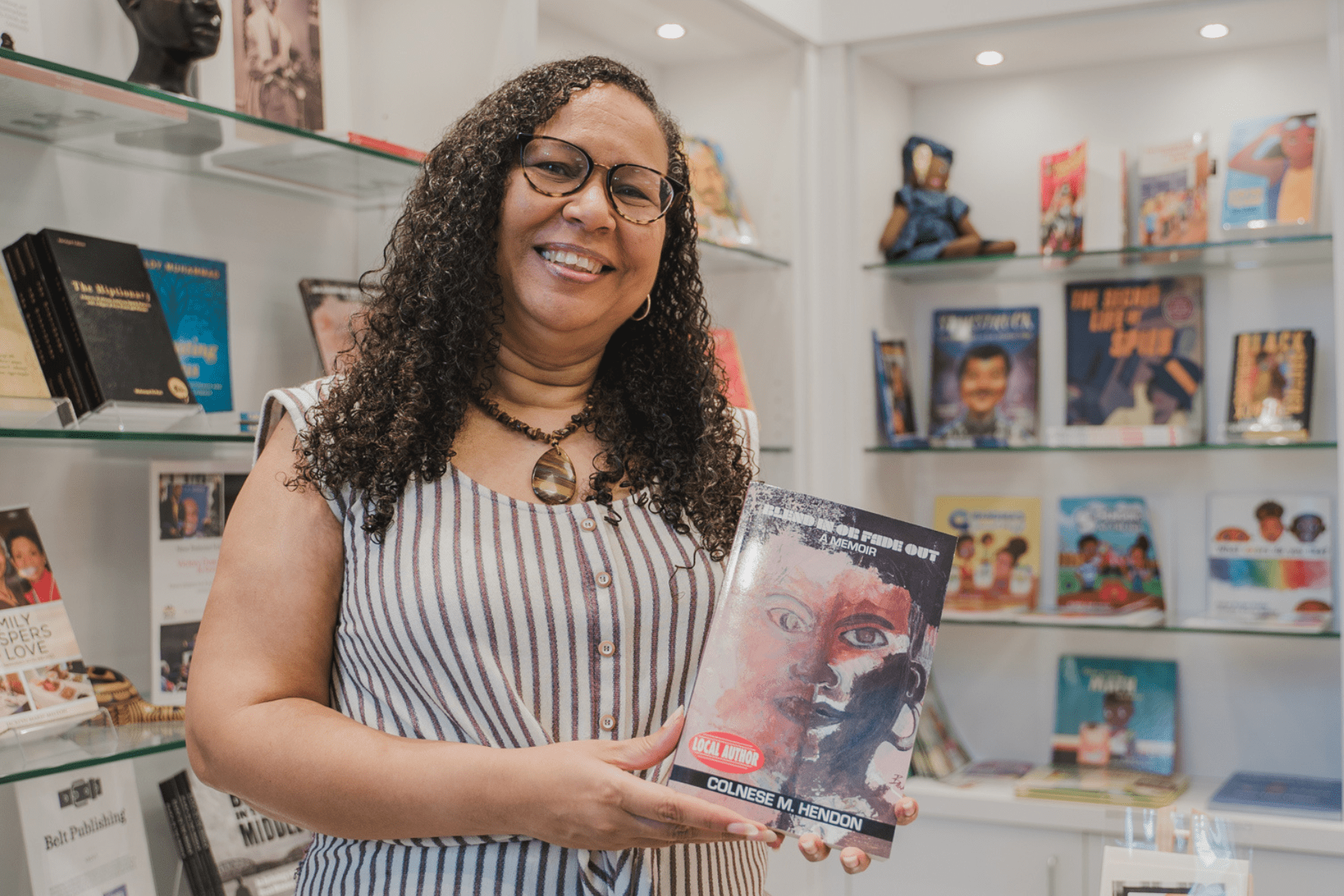
Mary Taris poses with Blended In Or Faded Out, by Colonese M. Hendon, at Strive Bookstore in Minneapolis on July 15, 2022. 

A Black educator and mother in Minneapolis saw a problem. There were few books with characters her students grandchildren could relate to. So she took action. And in the process, helped her own family and many others.

“When Mary Taris was raising her four children in north Minneapolis,” writes Noor Adwan at Sahan Journal, “she knew she needed to give them books more representative of their identity than the ones she’d had as a child. 

“ ‘I always had to spend extra time and money to find books that our Black children could relate to,’ she said. ‘At a certain point, after years of being frustrated, I just decided I needed to do something about it.’ …

“In 2018, Taris founded Strive Community Publishing to carve out space in the publishing world for Black authors. It has published fiction and nonfiction works for adults and children from 20 authors and five illustrators, and recently opened its first store at the IDS Center in downtown Minneapolis.

“Strive Bookstore’s grand opening [July 20 featured] Anthony Walsh, author of Hockey Is for Everybody. …

“ ‘We’re hoping that at the grand opening we can get to know some of the people who live in the downtown community and find out what they would like to see in a bookstore,’ Taris said.

“Taris’ experiences as a reader, educator, and mother all contributed to her aspiration to provide children with culturally relevant books. When she was a child growing up in north Minneapolis, reading was a reprieve from a chaotic home life.

“ ‘I would just be in my room reading anything I could get my hands on,’ Taris, 58, said recently during an interview at Sistah Co-op, the Black-woman focused business collective in the IDS Center where Strive is also located. ‘It was like reading for escape, and wishing I was somewhere else.’

“But she never felt represented in the books she read as a child. … It wasn’t until Taris was in her 20s that she read something that she could see herself in. One of her coworkers, an older Black woman, had stepped in. 

“ ‘Girl, you need to be reading some books by Black folks,’ Taris recalled her coworker saying. She loaned Taris Disappearing Acts, a novel by Terry McMillan. …

“Taris said the straw that broke the camel’s back came during her final few years of teaching. Her school, located in the Robbinsdale school district, had received an arts grant, and she was encouraged to put together an arts-integrated lesson plan.

“At the time, her class of predominantly Black fifth-graders was busy learning about autobiographies and biographies. But there were only a handful of Black biographies in the school’s library.

“To fill that void, Taris planned to have her students pretend to be adults, and write and illustrate their own autobiographies.

She put in a budget request for blank books and markers for her students. Her request was denied.

“ ‘That was it for me,’ Taris said. ‘It’s like, “I’m just gonna start my own business and I’ll spend my money on what I want for our kids.” ‘ … 

“When Taris founded Strive, she was supported by a circle of writers she calls her founding authors.

“ ‘I give them that distinction because they had to go through the learning process with me,’ Taris said. She said she felt fortunate that they trusted her – and Strive – with their stories.

“ ‘One thing that’s key in publishing is to be able to have the trust of the authors, especially authors who are marginalized like Black authors are, because they have been writing their stories for years,’ Taris said. ‘By the time it gets to me, they’re handing over their baby.’

“Donna Gingery, a 61-year-old Black woman and one of Strive’s founding authors, said one of her favorite parts of working with Strive was the support and encouragement she received throughout the writing process.

“ ‘There’s a lot of things I like about Strive Publishing,’ Gingery said. ‘The encouragement of the writer, the respect that you’re getting from the publisher, and not trying to change the narrative of your book. I think that’s really important.’ 

“Taris said that Strive does its best to hire Black editors to look over their books. …

“Taris’ vision for Strive doesn’t end with the IDS Center location. ‘We do have plans for growth and a possible second location,’ she said.

“In the meantime, she wants to focus on serving the downtown community. ‘We’re really striving to connect across cultures,’ she said.

“Part of that, she said, is portraying the Black community and all of its richness and diversity of talent in a positive light. Readers are already responding.

“ ‘This is a cultural exchange,’ Shimelis Wolde, 70, said recently as he browsed the co-op. ‘It’s important for the new generation.’ “

More at Sahan Journal, here. You can also read summaries of five new books available at the bookstore.

Read Full Post »

Photo: Reuters.
An inmate reads the Bible in prison, where she and fellow inmates have access to a small library as part of a La Paz, Bolivia, program to spread literacy and offer the chance to get out of jail earlier.

Sharing stories like today’s, I can see why someone could accuse me of being a Pollyanna. But it’s not that I think people convicted of crimes will be completely transformed if shown a little kindness. It’s more that I see no harm in testing how small kindnesses might add up, especially for people who may have experienced few kindnesses.

In 2017, Philip Reeves at National Public Radio conducted an interview in a Brazil prison about a program that Bolivia is now testing.

“Brazil’s prisons are dangerous places,” Reeves, noted, “blighted by overcrowding and drug gangs. But literacy is offering a way to shorten some inmates’ sentences: Read books, reduce your time behind bars. …

“REEVES: About 30 men are sitting behind desks in a classroom. They’re writing with pens and paper. The teacher is standing up front issuing instructions. … We could be in any school anywhere but for a couple of details. One, a wall of iron bars separates the teacher from her class. Two, the paper each man’s writing could win him a little bit of his life back. … These are inmates in a giant penitentiary in southern Brazil called the Casa de Custodia de Piraquara. …

“MARILDA DE PAULA SOARES: (Through interpreter) I am an educator. I really believe people can change.

“REEVES: Marilda de Paula Soares is the class teacher. Her students are participating in a project pioneered by the southern Brazilian state of Parana. Prisoners get four days lopped off their sentences for each book they read. To get those days of freedom, they must write a short paper about the book. They’re doing that now. Soares says each prisoner’s paper must explain …

“SOARES: (Through interpreter) … what’s caught their eye, a specific character, the language, the theme …

“REEVES: … in sufficient detail to ensure that cheating is … impossible. Douglas Seixas, an inmate here, says it’s true. You really can’t skip the reading. …

“SEIXAS: Because we need to read a book to understand. If you not read the book, no, no way.

“REEVES: Only certain books qualify under the reading program, including foreign and Brazilian classics and kids’ books for prisoners learning to read. Books with very violent themes are banned. … There’s a maximum of 12 books a year. That adds up to a month and a half remission. Admilson Rodrigues is doing 10 years for drug trafficking but is steadily whittling down his sentence by reading. … Rodrigues said he loved Gone With The Wind and also Les Miserables. Les Miserables seems particularly popular here. Rodrigues believes that’s because it’s about an ex-con who’s trying to create a new life on the outside. …

“REEVES: Is this project window dressing by Brazilian officials? Are they trying to put a gloss on a dysfunctional penal system where inmates sometimes wait years before being tried? It’s hard to know. Yet, prisoners here do seem to be benefiting. Edson Reinehr says he’s on his fourth book, which is about the adventures of Mowgli the wolf boy.

“EDSON REINEHR: Helps a lot because to keep the mind — occupied mind inside the cell instead of thinking about other bad things.

“REEVES: Staff here say the project’s about much more than just helping prisoners pass the time and get a little remission. Teacher Agda Ultchak says it’s about fundamentally changing lives.

“AGDA ULTCHAK: (Through interpreter) We hope to create a new perspective on life for them. This is about acquiring knowledge and culture and being able to join another universe.”

Meanwhile, at Reuters, Monica Machicao reports on a version of the program that was launched recently in Bolivia.

“The state program ‘Books Behind Bars’ offers detainees a chance get out of jail days or weeks in advance of their release date.

Bolivia does not have a life sentence or death penalty, but pre-trial detention can last for many years due to a slow judicial system.

“The program has been launched in 47 prisons that do not have resources to pay for education, reintegration or social assistance programs for prisoners, the Andean country’s Ombudsman’s Office says.

“So far, 865 inmates are sifting through prose, improving their reading and writing skills. One of them is Jaqueline, who has already read eight books in a year and has passed four reading tests.

” ‘It is really hard for people like us who have no income and who do not have family outside,’ she said. ‘There are people here, for example, who are just learning how to read and write.’ …

“With a daily salary of 8 bolivianos ($1.18), incarcerated Bolivians are forced to work to be able to eat and pay the high court costs to be released. The country’s prisons and jails have long suffered from overcrowded and unsanitary conditions, with some detainees staging protests over the lack of health care, according to Human Rights Watch. …

“Said Mildred, an inmate at the Obrajes women’s prison in the highland city of La Paz, ‘When I read, I am in contact with the whole universe. The walls and bars disappear.’ “

More on Brazil’s program at NPR, here, and on Bolivia’s at Reuters, here.

Read Full Post »

Photo: Jordan Salama.
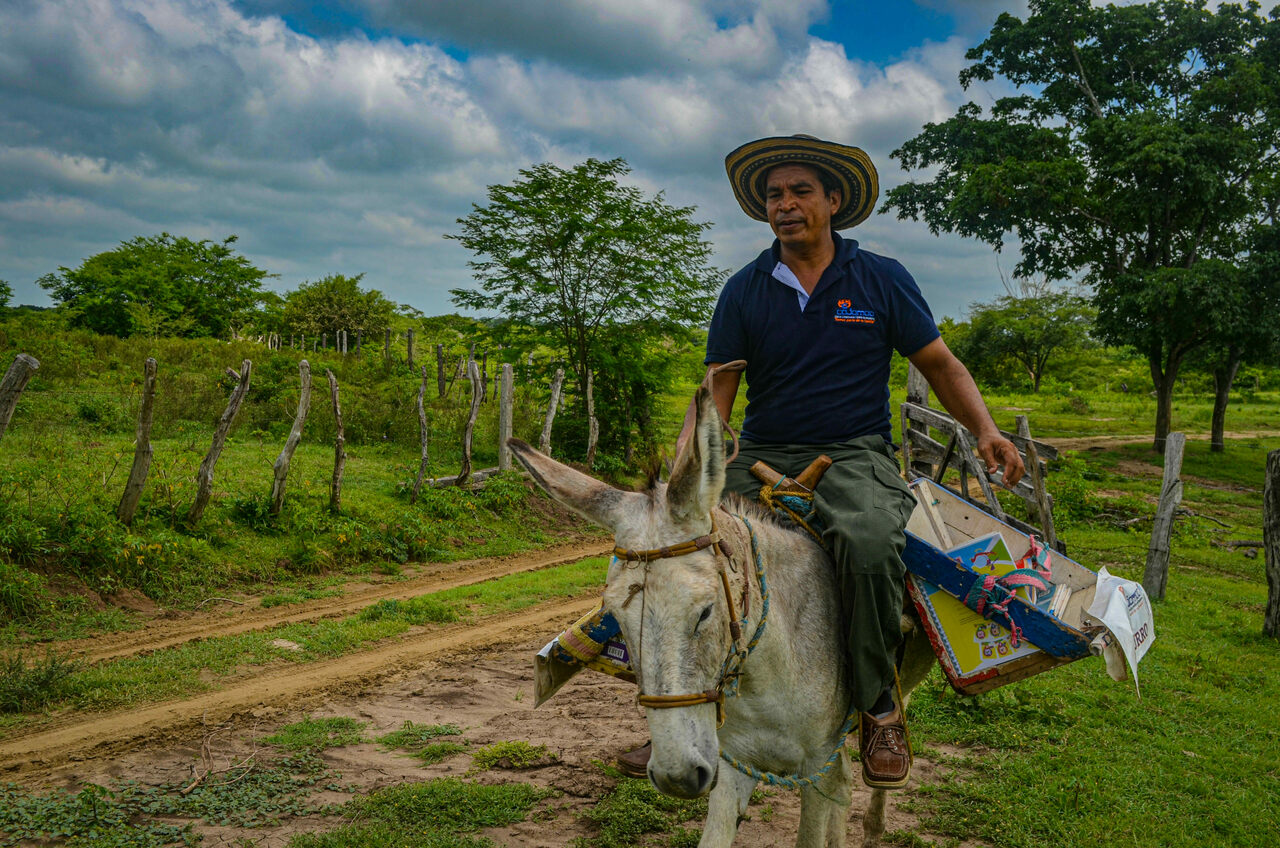
Luis Soriano and Beto, one of his two burros, set out into the Magdalena countryside with books for children who live on isolated farmsteads in Colombia.

Hannah, a friend since preschool, knows I love stories about unusual libraries. (Search on the word “library” at this blog, and see what I mean.)

I love the feeling I get that libraries have a mind of their own, that they reach out to people because we need them. This week Hannah sent me an article about a burro library. Atlas Obscura adapted it from Jordan Salama’s new book, Every Day the River Changes: Four Weeks Down the Magdalena.

“Luis Soriano was born so premature that when he arrived into the world, everyone was sure that he would die. He was born in 1972, in the very same Colombian village of La Gloria (Magdalena Department) where he grew up and made his life. His father was a cattle rancher, and his mother sold fruit and milk on the side of the road. They were hardworking campesino parents who emphasized to their many children the importance of an education over everything else.

“Luis grew up playing in the rolling fields of the Magdalena valley. La Gloria was set inland from the river by about one hour, yet the river wielded great influence upon the town. … It was said that the Magdalena dictated the rains and the floods of the nearby lowlands, which influenced the rains and the floods in La Gloria, and during droughts, the town felt the river’s pain. The river’s beaches and sandy islands yielded the yucca, plantains, and beans of the Caribbean diet — La Gloria is nearly 100 miles from the nearest Caribbean seaside town, but yes, its people will tell you, it is indeed a Caribbean place.

“Raised in the countryside, Luis learned things from the land that people from the city never understood. In the hot, humid afternoons, a line of ants hurrying across the path meant that the skies were about to open and intense rains would fall and freshen the air; at night, the sudden silence of the frogs and the toads meant that another person was approaching in the darkness. From watching the birds, he gathered certain observations about their daily routines, like which of the trees the flocks of red-and-green macaws preferred for their nightly roosts and at what hours of the day the sirirí sang its lonely song. …

“But Colombia’s escalating violence in the 1970s and ’80s meant that Luis would not be able to stay. When the paramilitaries and other criminal groups plagued La Gloria and the surrounding countryside, Luis’s parents sent him and his siblings to live with family in Valledupar, hours away. His life playing among the animals was replaced by the loud, gritty streets of a valley city.

“By the time Luis finished high school and returned to La Gloria, he decided, maybe as a product of all of this learning and absorbing in his own life, that he wanted to become a schoolteacher. He got a job in a small, rural primary school in nearby Nueva Granada, where he taught reading and writing. At the same time, he completed a remote degree from the Universidad del Magdalena.

“None of his students did any of their schoolwork or seemed to make any progress in the first few years, and Luis blamed himself for it. He thought he was a bad teacher [but] he realized that many of the children, living on isolated farmsteads that were several miles along narrow dirt paths from the nearest school, couldn’t practice reading at home because they didn’t have access to books. A teacher with limited resources himself, he decided to do the only thing he could: bring his own books to them.

“And so, before dawn one day in 1997, he took one of his donkeys and a stack of books and set off across the countryside. Covering several miles of difficult terrain, he stopped at the homes of each one of his students and read with them, before lending them the book and telling them he’d be back the next day to pick it up. And in this manner, he returned day after day, in the early hours of morning, well before school started, for he knew from experience that families living in the fields rose with the first song of the sirirí and the crows of roosters in the dark.

“More than 20 years on, he hasn’t stopped.

‘At first, people saw me as nothing more than a half-insane teacher with some books and his donkey,’ Luis liked to say. ‘Without realizing it at the time, I’d created the very same rural traveling library that the world now knows as the Biblioburro.’

“Biblioburro started out with just seventy books, all of them Luis’s own, and only one donkey. He quickly added a second donkey, affixing wooden bookcases to both of their saddles for ease of transport, and named the two animals Alfa and Beto (alfabeto, alphabet in Spanish). He started extending and diversifying each day’s route to reach more children in the area. When the beloved Colombian national radio broadcaster Juan Gossaín got wind of the Biblioburro story in 2003 and shared it with his listeners, book donations from around the world started pouring in — today, Luis boasts a collection of more than 7,000 titles.

“Yet for all the international attention, it remains a humble operation. When Luis sets off on a Biblioburro visit, he does it alone, quietly, with his two trusted donkeys. Often, he won’t encounter another person for hours as he makes his way across the rugged, lonesome terrain — an uncomfortable ride, and an even more arduous walk, beneath the merciless sun. But the children who live in these lonely places await the arrival of the Biblioburro and its stories with great fervor, running wide-eyed toward Alfa and Beto when they spot them on the horizon.

“Perhaps, in the children he serves, Luis Soriano sees some part of himself. He sees that they can beat the odds — for while Luis has easily become the most famous person to ever come from La Gloria, at the moment of his birth, you would have been hard-pressed to find anyone who imagined he would have resurged from his situation as well as he did.

“Except for one person, that is. As the story goes, his parents called upon an older woman, who was very respected in town, to come examine the child and give him her blessing. Minutes after Luis’s birth, she made her way over to the house and stood over him, looking his tiny body up and down, seeming to ponder whether he would be destined to live as long as she had. After several moments, she spoke. ‘This little one, he isn’t going to die’ was what the old woman said (though who knows if she actually believed it herself). ‘He is going to grow up and become a doctor, and he will save this town.’ “

He did not become a doctor, but whether he saved his town, you can decide after reading more at Atlas Obscura, here. P.S. I just noticed I had a short post about the burro librarian in 2015, here!

Read Full Post »

Older Posts »