Feeds:
Posts
Comments

Posts Tagged ‘canoe’

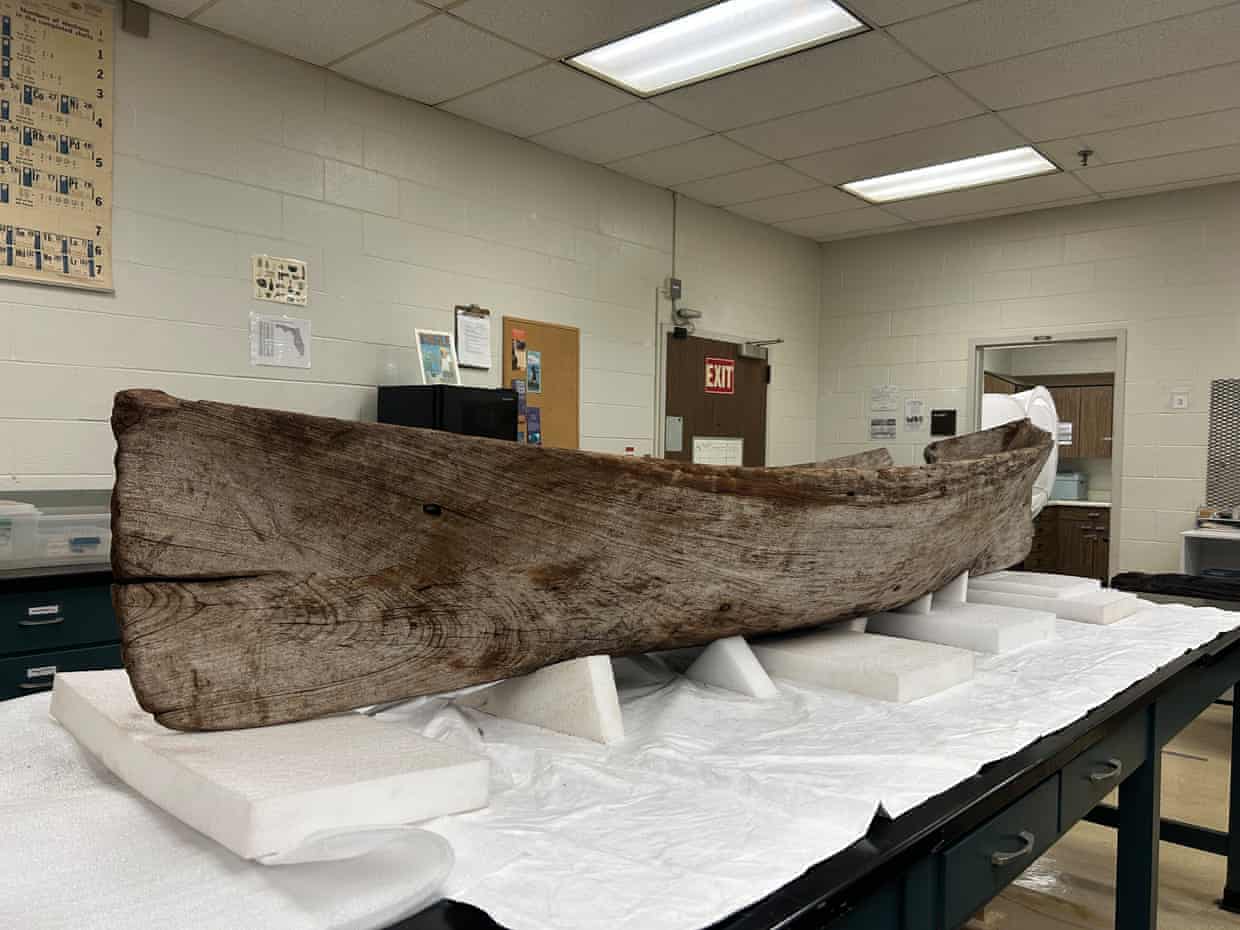
Photo: Florida Division of Historical Resources.
A 16th century canoe was discovered by a resident of Fort Myers, Florida, when Hurricane Ian made landfall in 2022. 

When I was a kid on Fire Island, a big storm always meant there would be treasures on the sand the next day. We would hurry up the sidewalk to the ocean to see how the beach had reshaped itself and what flotsam and jetsam had washed up. Often the shore was littered with shells, jellyfish, or starfish.

Not that we wish for hurricanes, but extra big storms like that can uncover even larger surprises than starfish.

Richard Luscombe notes at the Guardian, “Florida already claims to be the world capital of golf, shark bites and lightning strikes. Now a remarkable discovery following a devastating hurricane has enhanced its position as a global leader in another distinctive field: ancient canoes – some even prehistoric.

“State archeologists have just completed a painstaking preservation of an ancient wooden canoe discovered by a resident of Fort Myers during the cleanup from Hurricane Ian in 2022.

“It joins 450 other log boats or canoes dating back thousands of years recorded or preserved by the Florida division of historical resources. But this one is unusual, officials say, because it is the first they have seen made of mahogany, and probably the first to originate outside Florida, possibly in the Caribbean.

“The age of the fragile 9ft canoe is under analysis through carbon dating and other scientific processes. Investigators are pursuing a theory that it might be a dugout cayuco crafted by Spanish invaders who settled in the region during the 16th century.

“ ‘We compared it to canoes that we have in our collection and previously recorded, and it’s a very unusual form, so that was the first hint it was not necessarily from Florida,’ said Sam Wilford, Florida’s deputy state archeologist. ‘On the surface there’s tool marks made by iron tools, and we know that that is a historical date because that’s when the Europeans introduced iron tools into the Americas.’ …

“ ‘The tree may have died much earlier than when the canoe was constructed from it. It might have been driftwood, or stored somehow before it was made as a canoe.’

Hurricane Ian caused ‘catastrophic’ damage when it slammed into south-west Florida in September 2022 with 150mph winds and a storm surge of 18ft. The canoe is believed to have been pulled from a riverbed and ended up in the yard of a Fort Myers resident, who discovered it as he cleaned up after the storm and alerted state officials.

“ ‘It had been clearly submerged in water; there’s lots of stain marks on it, [but] it was dry when we received it,’ Wilford said, adding that it was then lightly vacuumed and cleaned with soft brushes, and that each stage of its careful conservation was photographed.

“Florida has had more discoveries of old canoes than any other place in the western hemisphere, and more than 200 separate sites have been recorded, officials said. Many of the canoes were made and used by Native American tribes, including the Miccosukee and Seminole tribes, who inhabited large swathes of the state, particularly the wetlands of the Florida Everglades.

“The oldest, Wilford said, is a canoe discovered near Orlando, estimated to come from the middle Archaic period up to 7,000 years ago.

With about one-fifth of Florida covered by water, the prolific use of canoes by its residents throughout history is unsurprising.

“ ‘It’s because of the environment,’ Wilford said. ‘Native Americans and then later on Europeans needed canoes to get around, and then the wet environment also led to preservation.’

“Canoes collected in the state’s historical resources division are stored in what Wilford said was a central archeological collections facility that is not open to the public. But the department operates an artifact loan program, with 26 canoes currently on display at museums across the US.

“ ‘It’s incredibly exciting,’ Wilford said. ‘Every canoe, and every fragment of a canoe, tells a story, and each one is unique.’ ”

More at the Guardian, here. (Although the Guardian has no paywall, I just upped my random donations to an actual subscription as independent journalism seems especially important in these trying times. Even tiny donations are welcome there.)

Read Full Post »

Photos: Avedis Hadjian.
Estonian canoe maker Mr. Ruukel works on his latest dugout canoe outside his barn in Tohera.

Today I want to share a lovely photo essay from the Christian Science Monitor about a canoe maker in Estonia. Be sure to click through and see all the pictures at the Monitor.

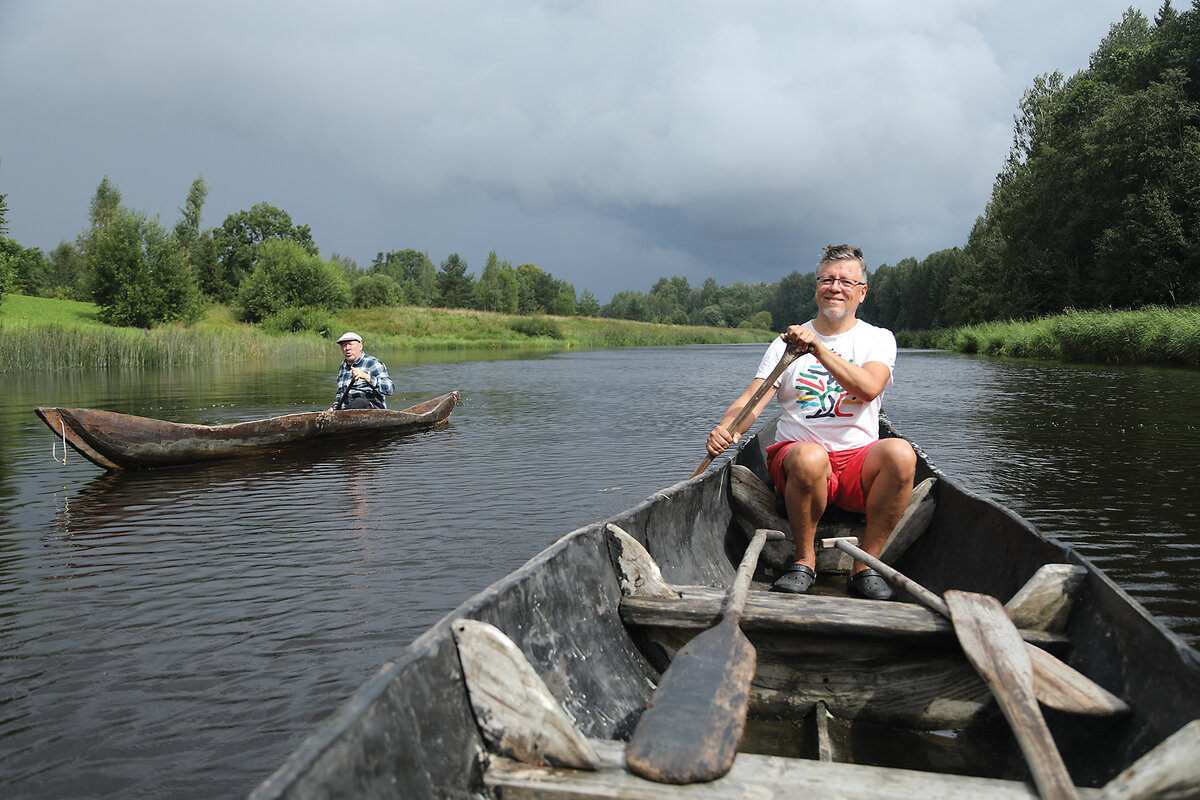
Avedis Hadjian writes, “Aivar Ruukel is one of the last five masters in Estonia who make the Baltic country’s traditional dugout canoe, known as a haabjas. Until the 1960s, it was the conventional means of transportation in the Soomaa, or ‘land of bogs,’ region during the spring floods, locally called the fifth season.

“Mr. Ruukel and Priit-Kalev Parts, another haabjas maker, are the most vocal advocates for preserving the tradition, which is threatened by the making of fiberglass or other modern – often motorized – boats.

“Both Mr. Ruukel and Mr. Parts learned their craft from older masters in the early 1990s, shortly after Estonia gained its independence from the Soviet Union, and are now trying to engage the new generation, training young apprentices in haabjas building. …

“On a gray morning, Aivar Ruukel is scouting for the ideal aspen in the Soomaa, a vast wilderness area in southwestern Estonia. The aspen is the preferred tree for making [the] traditional dugout canoe – an art that is now endangered.

“ ‘The ideal tree should have the shape of a pencil, but every tree is perfect in its own way,’ even if only a few can be used to build the boat, says Mr. Ruukel.

“Some of the trees are covered with black canker, a fungal infection. ‘You can’t make a haabjas out of them, but they are used by woodpeckers to make their nests, so they serve a higher purpose,’ he says.

“Mr. Ruukel is one of the last five masters in the Baltic country who make the canoes. Until the 1960s, it was the conventional means of transportation in the Soomaa [during] the spring floods. …

“Both Mr. Ruukel and Mr. Parts [train] apprentices in haabjas building. A skillful wielding of the axe to hollow out the tree is only part of the required expertise and techniques, which also involve expanding the trunk by filling it with water and then hanging it above a carefully controlled fire.

“What was a necessary means of transportation in the past has now become an Estonian identity marker. In 2021, haabjas building was inscribed on UNESCO’s List of Intangible Cultural Heritage in Need of Urgent Safeguarding.”

More at the Monitor, here.

In the “search” box at this blog, you can find several posts about Estonia, a country that’s interesting in more ways than one. (For example here, here, and here.)

Mr. Ruukel (left) and Jari Hyvönen, his brother-in-law visiting from Finland, paddle in canoes on the Pärnu River.

Read Full Post »

Photo: John Hart/ Wisconsin State Journal.
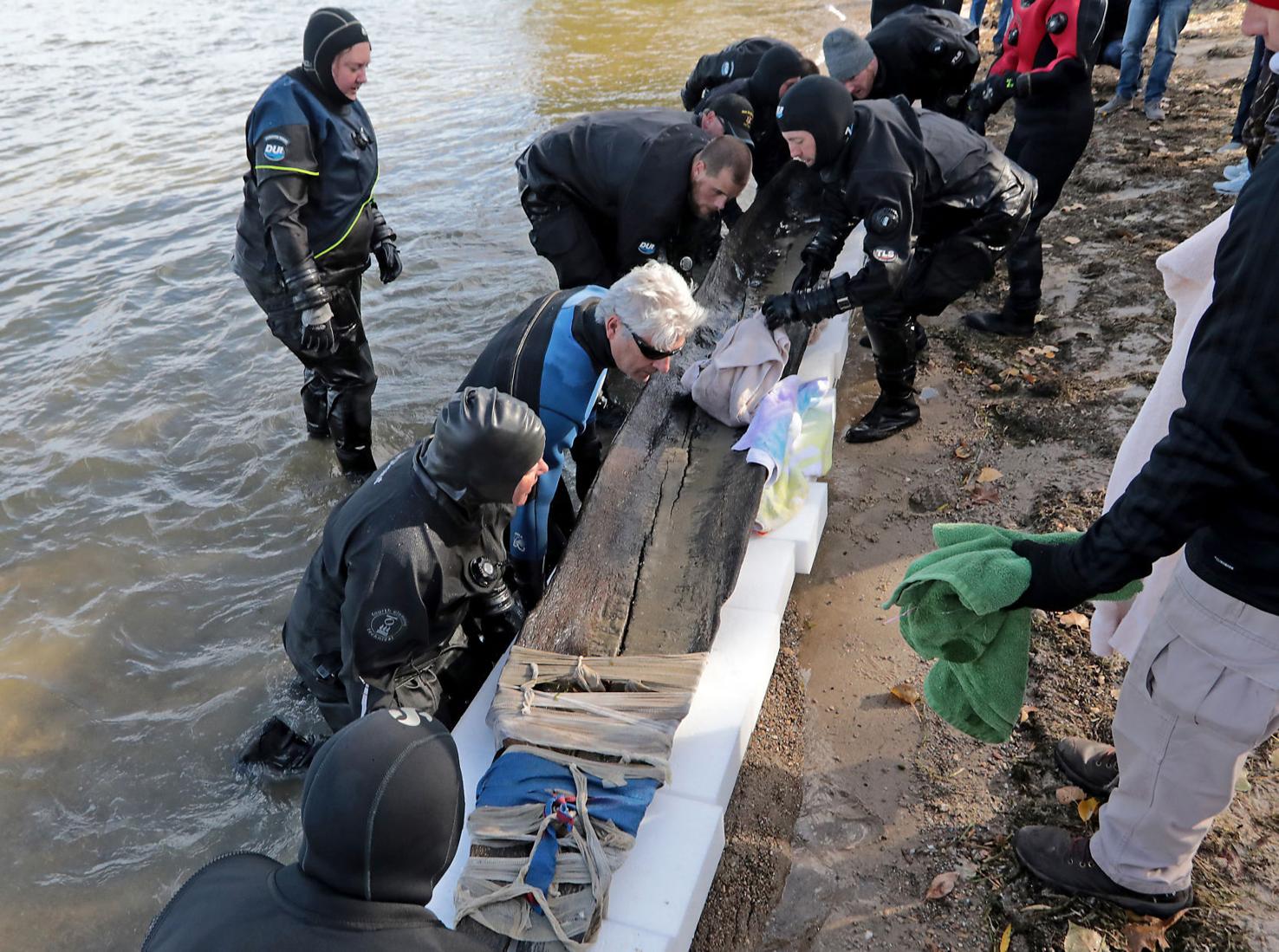
The State Journal reports, “A 1,200-year-old dugout canoe was raised from Lake Mendota [Nov. 2] by the Wisconsin Historical Society. The canoe … is the oldest intact boat ever recovered from Wisconsin waters.”

My Wisconsin brother sent me a cool article recently about the discovery of an ancient canoe. I suspect that blogger Rebecca Cunningham knows all about this as she lives in Madison.

Barry Adams at the Wisconsin State Journal has the story.

“Tamara Thomsen and Mallory Dragt thought they would take a spin under Lake Mendota on a couple of underwater scooters, motorized gadgets that scuba divers use to propel themselves through the water. It was a beautiful Saturday morning in June, and the duo, who work at Diversions Scuba, debated whether they had just seen a log sticking out of the bottom of the 9,781-acre lake or something extremely rare.

“The discovery, on a slope in 27 feet of water near Shorewood Hills, has turned out to be about as historic as it gets.

“After a bit of investigation, it turns out that Thomsen, who is also a maritime archaeologist for the Wisconsin Historical Society, was right in judging that it was more than just a log: It was a dugout canoe. A few weeks later, carbon-14 dating showed that the 15-foot-long vessel was an estimated 1,200 years old, the oldest intact boat ever found in Wisconsin waters.

“On a brisk Tuesday, amid a chop of waves and 50-degree water, the canoe was brought to shore by teams of divers who shared fist bumps and hugs to applause from residents of the Spring Harbor neighborhood who had gathered at the beach to witness the canoe’s return to shore.

“ ‘This is the first time this thing has been out of the water in 1,200 years. And maybe they left from this very beach to go fishing,’ said James Skibo, Wisconsin’s state archaeologist. ‘Not only has it been underwater; it’s been under the ground. The reason it’s so well preserved is that it has not been exposed to the light. So that’s one of the reasons we have to start preserving it.

‘There’s living organisms on it that are chewing away on it as we speak.’

“The canoe will ultimately be displayed in the Historical Society’s proposed new and expanded museum on Capitol Square. But for the next two years, it will undergo a series of treatments. The first, in a 16-foot-long, 3-foot-wide tank at the State Archive Preservation Facility on Madison’s Near East Side, will preserve its liquid environment, although mixed in the water will be a biocide to kill any algae or microorganisms. That’s followed with a treatment of polyethylene glycol designed to replace the water that has saturated the wood.

“The process will make the structure more solid and stable, and prevent further degradation, said Amy Rosebrough, a leading expert on the Effigy Mound builders of Wisconsin, who likely made the canoe and inhabited villages and encampments around Lake Mendota and throughout much of southern Wisconsin. A cache of net sinkers, used to weigh down fishing nets, was also found with the canoe, which could have been made from basswood or a walnut tree, two common woods used for dugouts during that time frame.

“ ‘This is extraordinarily rare,’ said Rosebrough. ‘We really don’t have anything like this from Wisconsin. We have found pieces of dugouts before in various lakes (but) nothing this intact and nothing intact this old.’ …

“The people who built the dugout canoes in what is now Dane County were ancestors of the Ho-Chunk Nation. Typical techniques could have included using a combination of burning the inside of the canoe and using stone tools to scrape out the charred and soften remains. Bill Quackenbush, the Ho-Chunk’s tribal historic preservation officer, was on hand Tuesday to watch the dugout canoe emerge from the lake. The Ho-Chunk are referred to as ‘People of the Big Water.’

“ ‘When it comes to items of this nature, if it’s going to protect and preserve the history and culture of us in this area, we’re all in support of that,’ Quackenbush said of the canoe’s recovery. …

“The recovery effort began last week with divers carefully dredging around the canoe. Once sediment was removed and the boat fully exposed, rods of rebar were stuck into the lake bottom and a web of rope tied over the canoe to keep it in place.

“On Tuesday morning, a small armada of boats made their way to the site. … Thomsen drove [a] boat that included Randy Wallander, a volunteer diver from Manitowoc who has years of experience bringing up large objects from Lake Michigan. His equipment included large yellow floats, diving gear and four 45-pound bags of sand that were placed in the canoe to give it weight as it was towed into shore in a sling supported by the floats at just above idling speed. The 1-mile trip took nearly two hours, after which divers unhooked the canoe from a boat and walked it the last 100 yards or so to shore. …

“ ‘It was a team effort,’ Thomsen said. ‘I’m actually surprised at how smooth it went. You always expect for there to be problems and you anticipate the worst and hope for the best, but it came up faster than we thought. Everybody really danced together to make it come up.’ ”

More at Madison.com, here.

Read Full Post »

Photo: Travel PR.
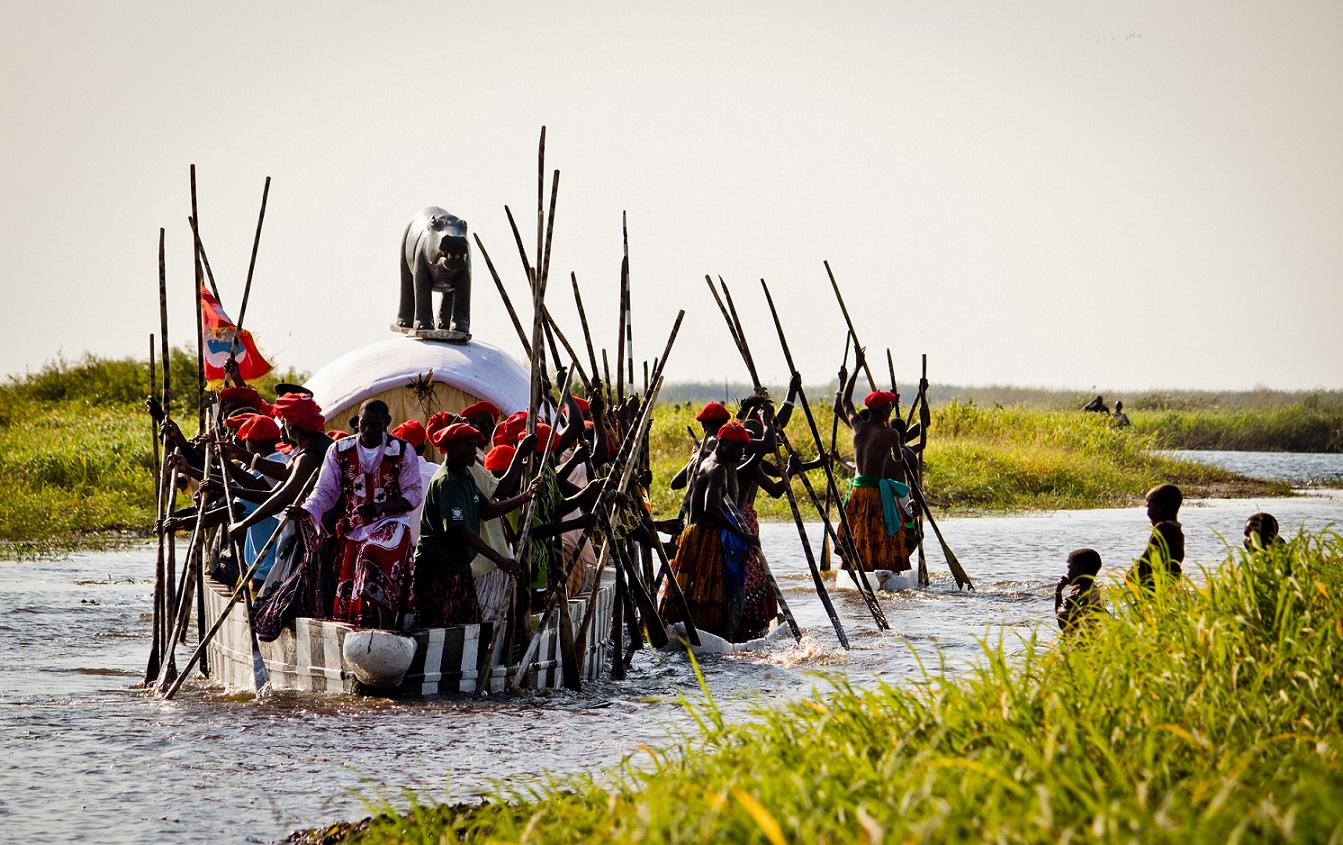
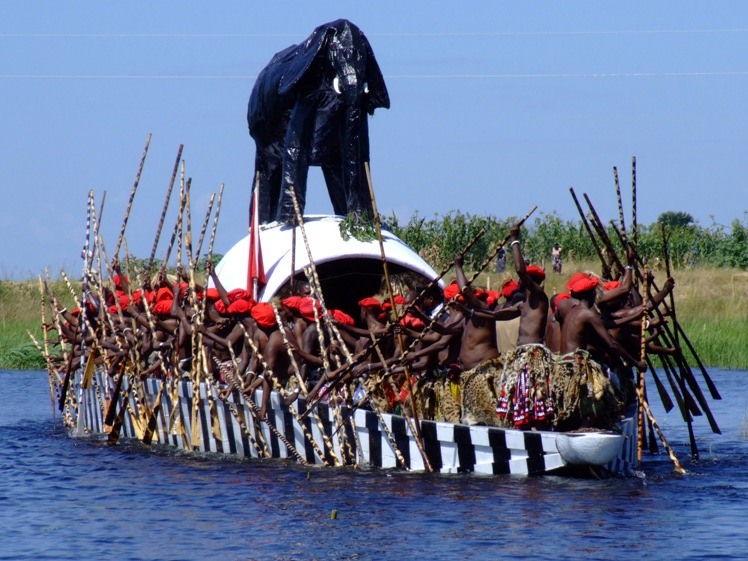
The Kuomboka, celebrated at this time of year if the conditions are right, marks the arrival of the wet season in Zambia. (The elephant’s ears are removable.)

According to my little book of holidays, a celebration called Kuomboka should take place in Zambia today to mark the change of seasons. Several websites, however, say the date is flexible.

GoWhereWhen, which says that coronavirus is an issue this year, describes the event: “This annual procession marks the transition of the Litunga (king) from his summer to winter residence, which is located on higher ground, away from the seasonal flood plains. This ceremony dates back more than 300 years when the Lozi people broke away from the great Lunda Empire to come and settle in the upper regions of the Zambezi.” 

Wikipedia adds, “Kuomboka is a word in the Lozi language; it literally means ‘to get out of water.’ In today’s Zambia it is applied to a traditional ceremony that takes place at the end of the rain season, when the upper Zambezi River floods the plains of the Western Province. …

“Historians claim that before the time of the first known male Lozi chief Mboo, there came a great flood called Meyi-a-Lungwangwa meaning ‘the waters that swallowed everything.’ The vast plain was covered in the deluge, all animals died and every farm was swept away.

“People were afraid to escape the flood in their little dugout canoes. So it was that the high god, Nyambe, ordered a man called Nakambela to build the first great canoe, Nalikwanda, which means ‘for the people,’ to escape the flood. Thus the start of what is known today as the Kuomboka ceremony.

“The ceremony is preceded by heavy drumming of the royal Maoma drums, which echoes around the royal capital the day before Kuomboka, announcing the event. … The ceremony begins with two white scout canoes that are sent to check the depth of the water and for the presence of any enemies. Once the scouts signal the ‘all clear,’ the journey to the highland begins. … The journey to Limulunga normally takes about 6–8 hours. Drums beat throughout to coordinate and energise those paddling the barge. …

“On the barge is a replica of a huge black elephant, the ears of which can be moved from inside the barge. There is also a fire on board, the smoke from which tells the people that the king is alive and well. The Nalikwanda is large enough to carry his possessions, his attendants, his musicians, his 100 paddlers. It is considered a great honour to be one of the hundred or so paddlers on the nalikwanda and each paddler wears a headdress of a scarlet beret with a piece of a lion’s mane and a knee-length skirt of animal skins.

“For his wife there is a second barge. This one has a huge cattle egret (Nalwange) on top. The wings move like the ears of the elephant, up and down.”

Lonely Planet points out that the dates are not fixed: “They’re dependent on the rains. In fact, the Kuomboka does not happen every year and is not infrequently cancelled because of insufficient flood waters; the 2012 ceremony was called off because it’s against Lozi tradition to hold the Kuomboka under a full moon.”

More at GoWhereWhen, here, at Wikipedia, here, and at Lonely Planet, here.

Photo: Dietmar Hatzenbichler
Legend has it that an African god told a man called Nakambela to build a great canoe to escape the floods. The boat was called Nalikwanda.

Read Full Post »

Although I didn’t get to see it in person, I was excited to learn from Timmons Roberts by way of Erik that the indigenous Hawaiian canoe Hōkūleʻa was making a stop in Rhode Island.

Lars Trodson writes at the Block Island Times, “The island welcomed the crew of the Polynesian catamaran Hōkūle‘a [June 21] at a ceremony held at the Block Island Maritime Center in New Harbor. The crew was greeted with songs sung by the students from the Block Island School, as well as greetings and tribal gifts from Loren Spears, an educator and former Council Member of the Narragansett Tribe of Rhode Island. Capt. Kalepa Baybayan of the Hōkūle‘a also offered brief remarks.

“The Hōkūle‘a is traveling around the world to teach about ocean conservation. ‘We live on a blue planet,’said capt. Baybayan. ‘Without the blue there would be no green.’ …

“Block Island is the Hōkūle‘a’s  only stop in Rhode Island.”

From the Hōkūleʻa website: “Our Polynesian voyaging canoes, Hōkūleʻa and Hikianalia, are traveling over 60,000 nautical miles around the earth, bringing people around the world together to set a course for a sustainable future.

“We are sailing like our ancestors have for a thousand years—using wayfinding. On board, there is no compass, sextant, or cellphone, watch, or GPS for direction. In wayfinding, the sun, moon, and stars are a map that surrounds the navigators. When clouds and storms make it impossible to see that map, wave patterns, currents, and animal behavior give a navigator directional clues to find tiny islands in the vast ocean. …

“Everyone can be the navigator our earth needs. Every person on earth can help navigate us to a healthy future where our Island Earth is safe and thriving again. …

“We are asking kids, families, governments, communities, and businesses to share how they mālama honua—take care of our Island Earth.  Please visit our Mālama Honua map, and help us grow the movement by adding stories of hope that can inspire and educate us all. …

“Hōkūleʻa, our Star of Gladness, began as a dream of reviving the legacy of exploration, courage, and ingenuity that brought the first Polynesians to the archipelago of Hawaiʻi. The canoes that brought the first Hawaiians to their island home had disappeared from earth. Cultural extinction felt dangerously close to many Hawaiians when artist Herb Kane dreamed of rebuilding a double-hulled sailing canoe similar to the ones that his ancestors sailed.

“Though more than 600 years had passed since the last of these canoes had been seen, this dream brought together people of diverse backgrounds and professions. Since she was first built and launched in the 1970s, Hōkūle’a continues to bring people together from all walks of life. She is more than a voyaging canoe—she represents the common desire shared by the people of Hawaii, the Pacific, and the World to protect our most cherished values and places from disappearing.”

Lots more at www-dot-hokulea-dot-com.

Photo: Block Island Times

Read Full Post »

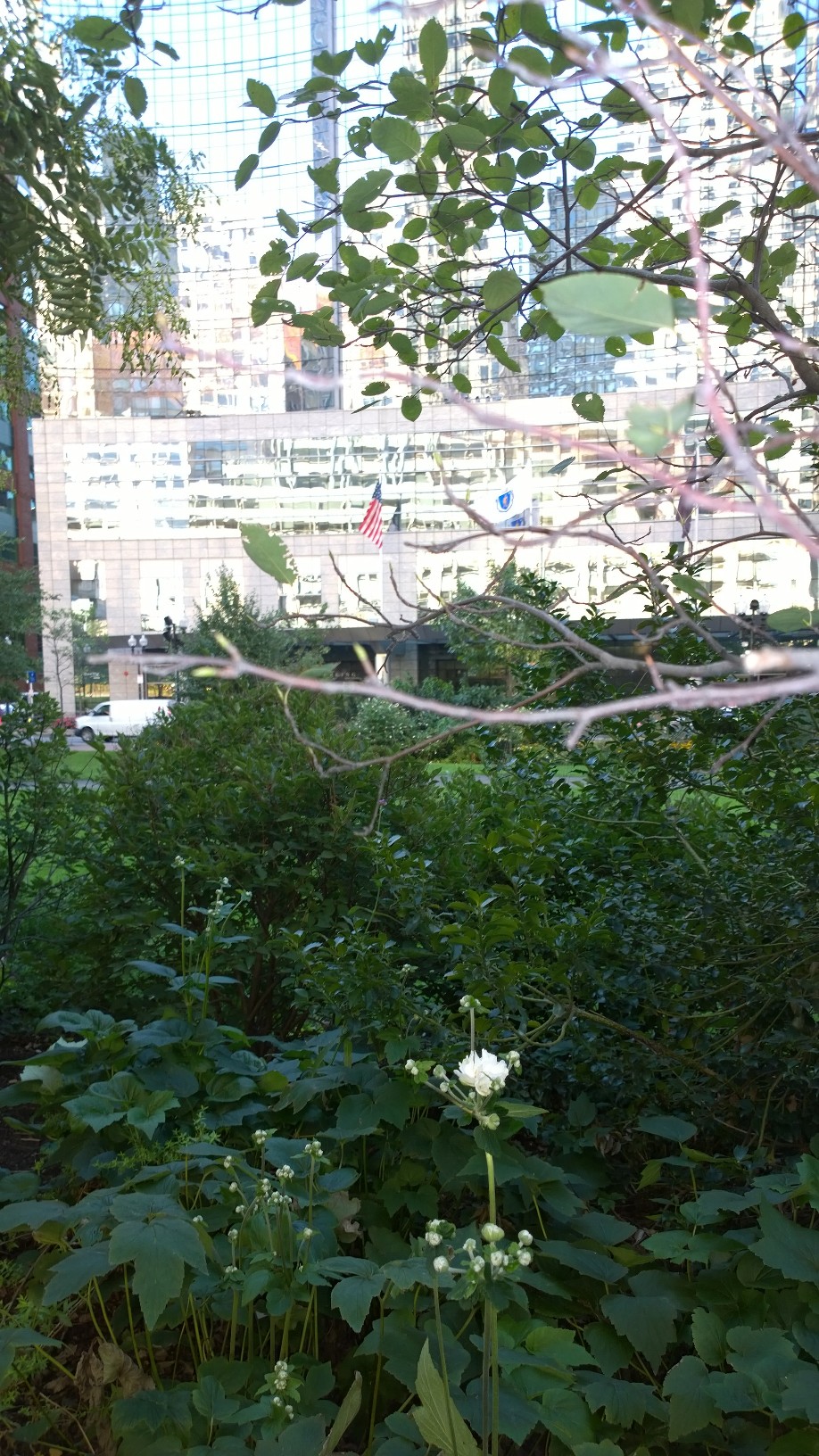
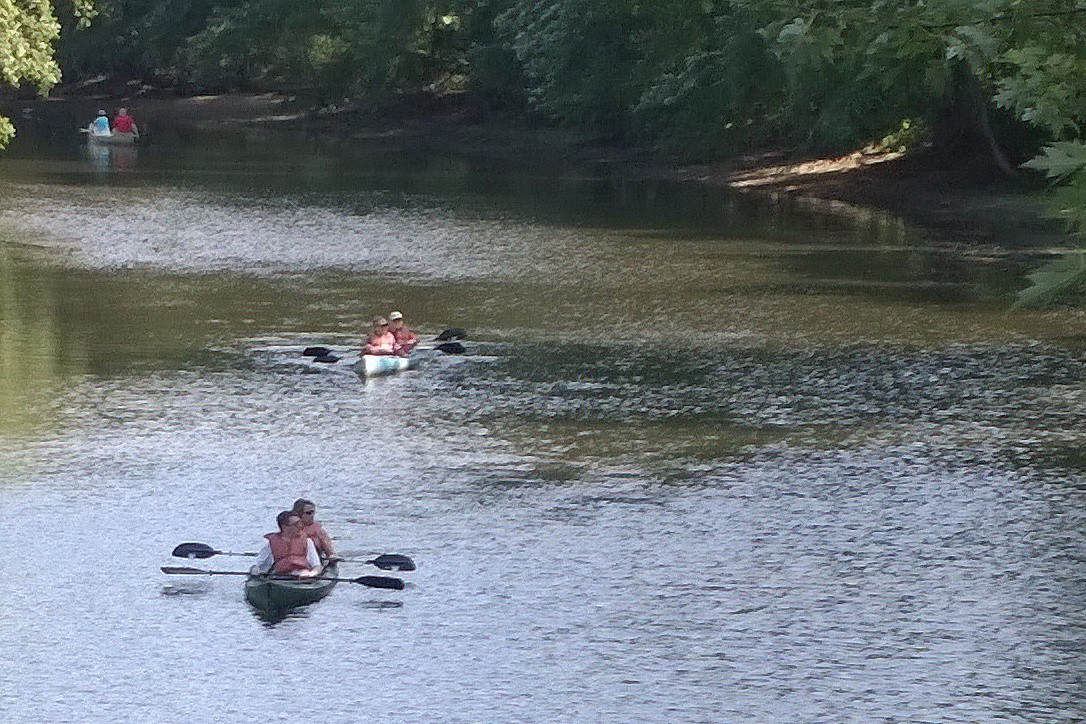
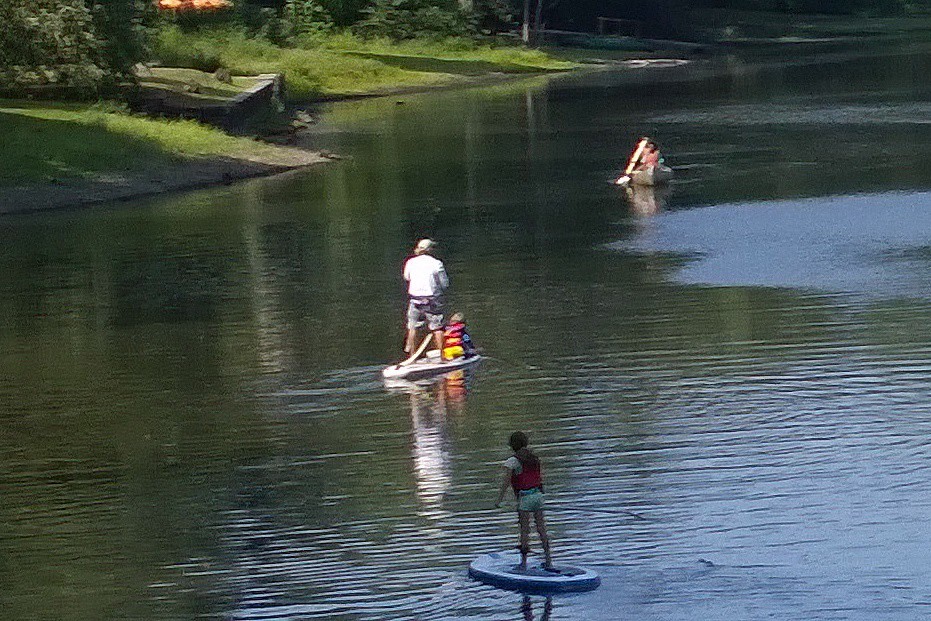
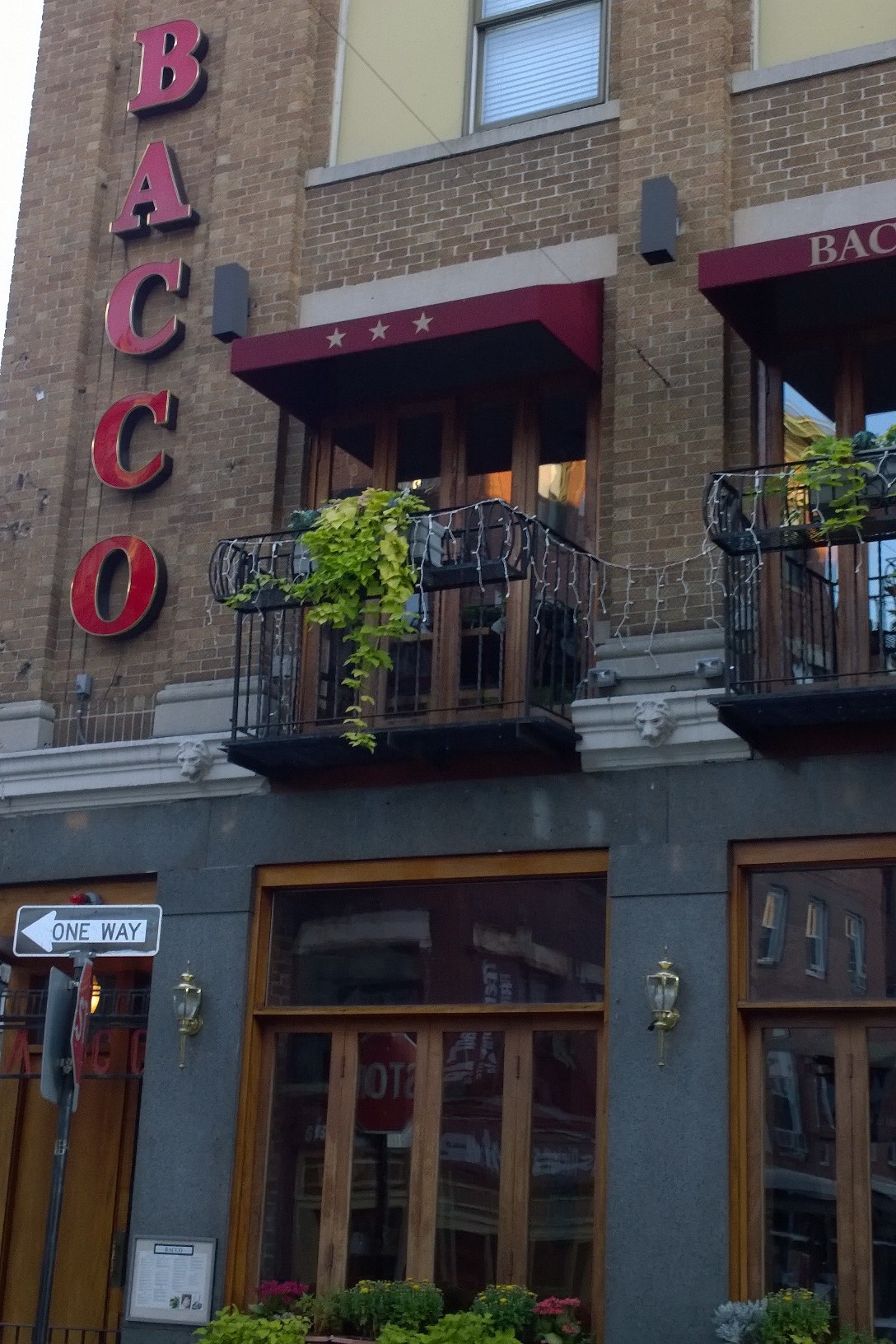
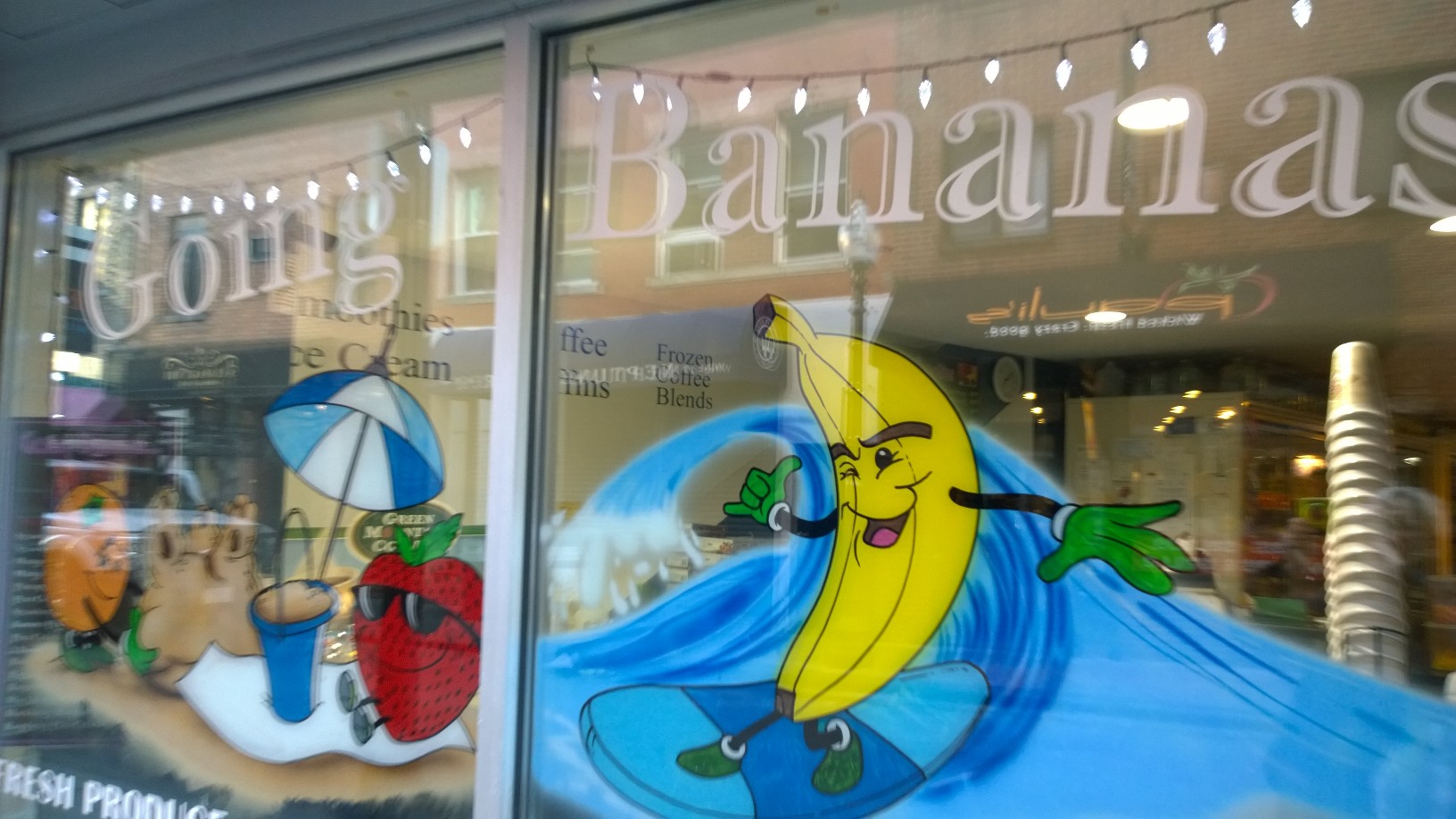
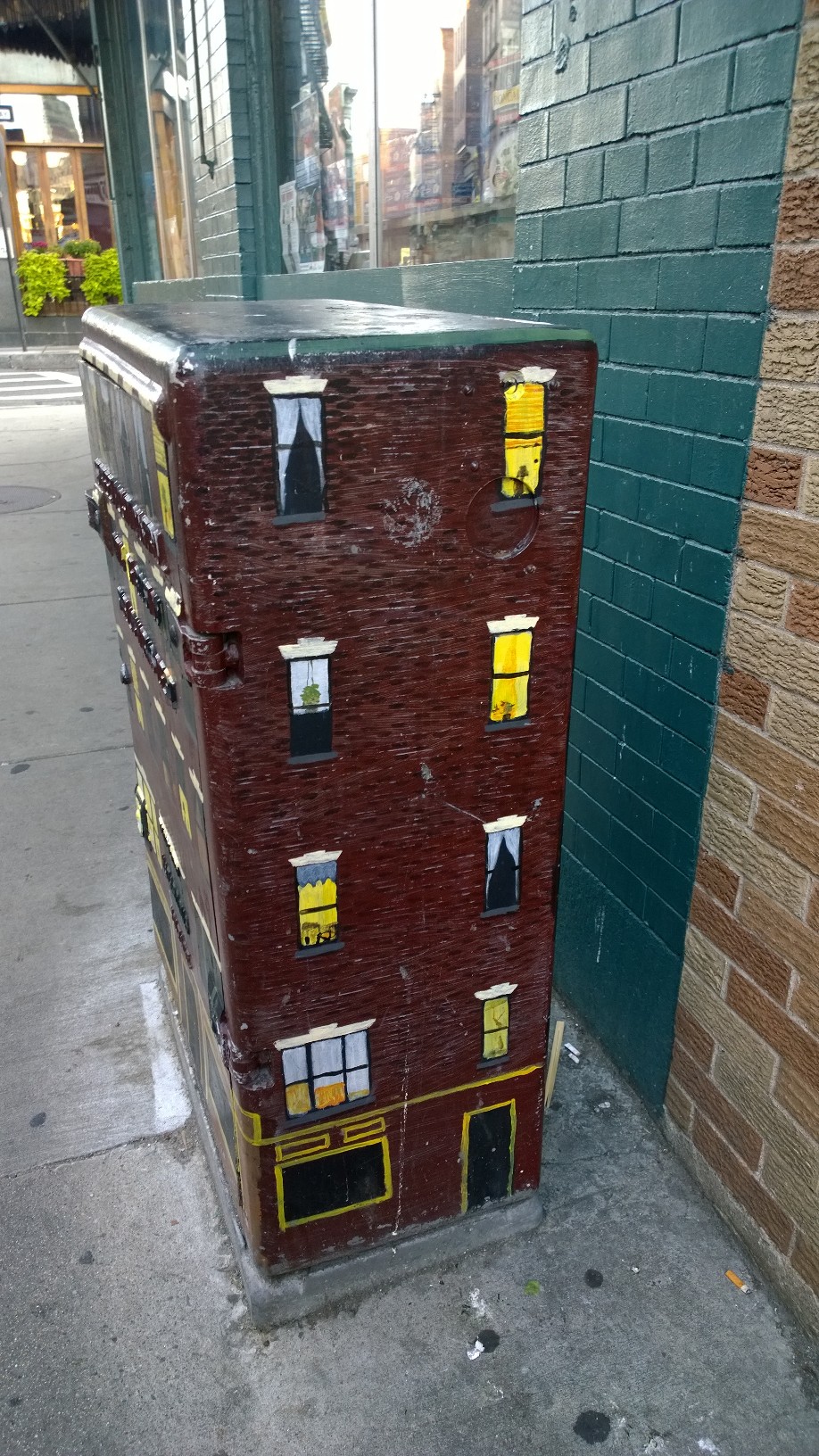
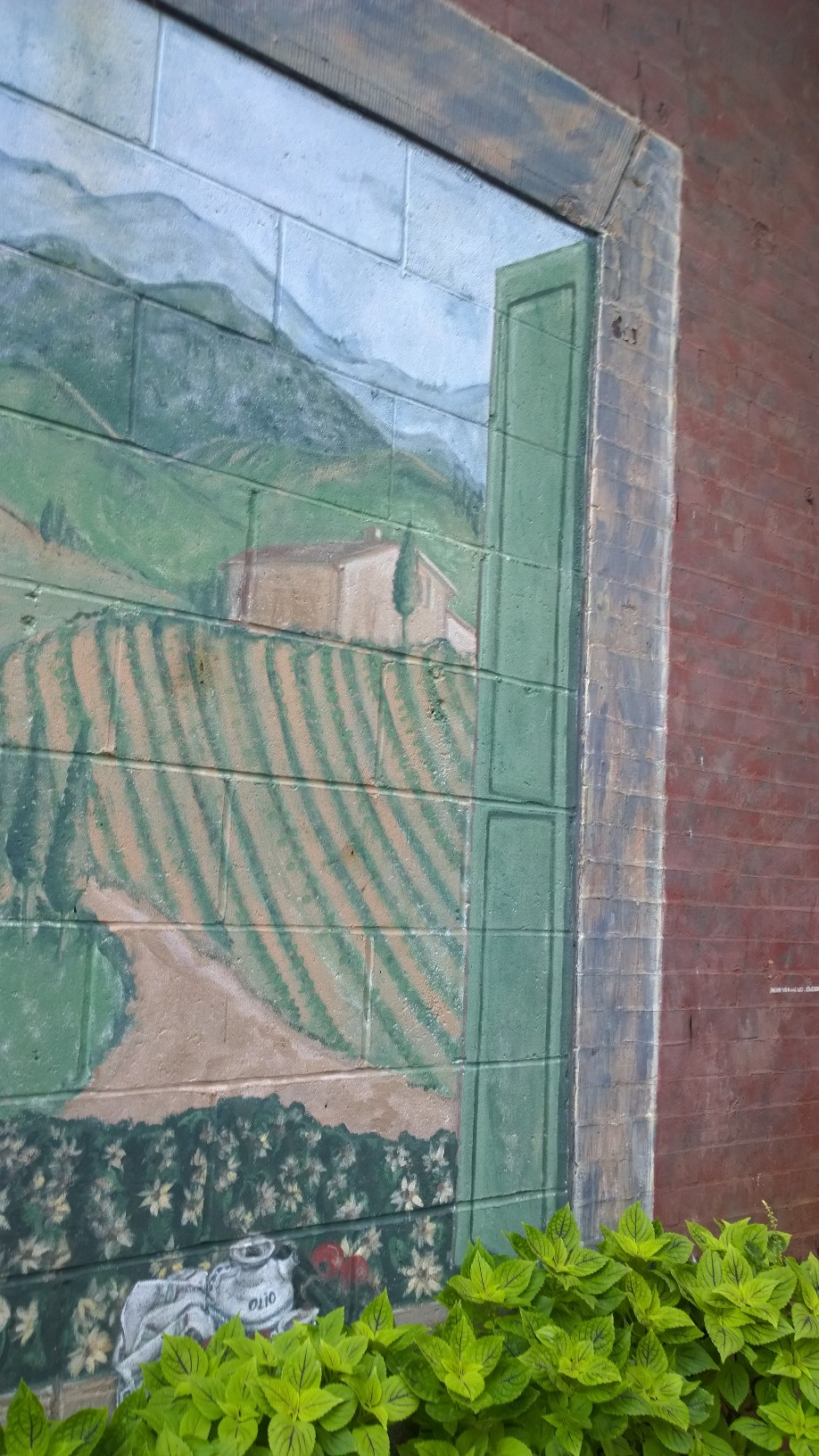
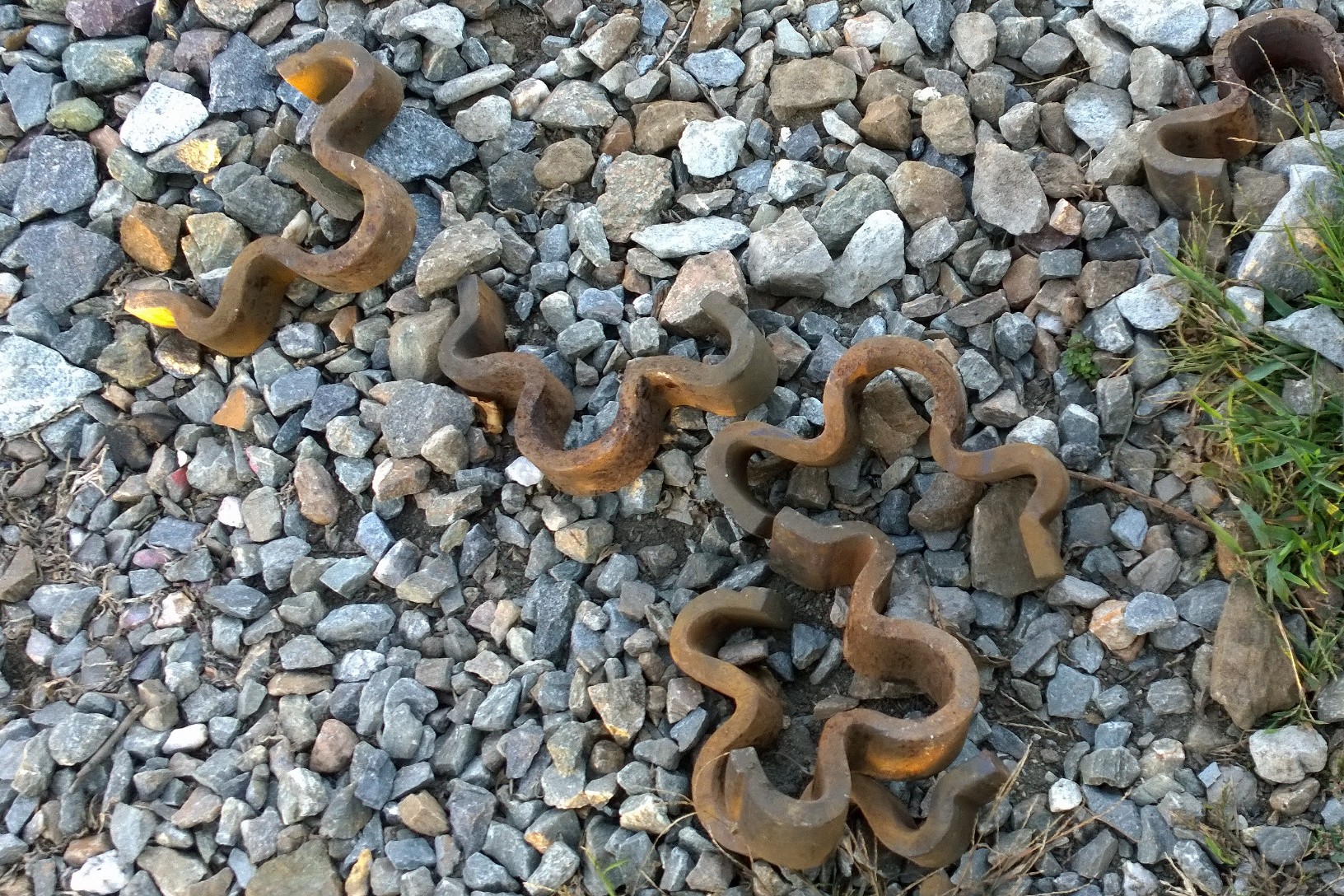
A few recent shots. The beautiful Zakim Bridge, late summer flower in the Greenway, water bugs on the Sudbury River, four scenes from Boston’s North End (which can still feel a bit like stepping into Italy), mysterious “pasta” along the railroad track, and my selfie shadow.

WP_20150924_06_52_11_Pro

091715-greenway

090715-canoes-Sudbury-River

090715-paddleboarding-Sudury-River

092415-North-End-Boston

092415-Going-Bananas-store

092415-North-End-utility-box

092415-North-End-Mural

092315-strange-RR-pasta

091915-shadow-selfie

Read Full Post »

Who can resist a playful idea, especially one that comes from civil engineers, a cohort perhaps given too little credit for creativity.

Corey Kilgannon writes in the NY Times, that a beloved pastime among civil engineers is racing concrete canoes.

“It might sound like an idea that would go over like the proverbial lead balloon, but in September, a group of engineering students at City College of New York began meeting and devising a way to build a concrete canoe.

“ ‘When I heard that, my response was like: “What? A boat made of concrete?” ‘ said Dr. Friso Postma, an expert paddler from Brooklyn, who had not heard of such a thing until he was asked to coach the team this spring, once the canoe was finished.

“Team members reassured him that while they were building the canoe over the winter, in a workshop at City College, they had made certain that the vessel would float. After all, they told Mr. Postma, the primary rule in concrete canoe competitions — yes, there are such events — is paddling a boat that does not sink.

“They also told him that concrete canoeing has a rich tradition among civil engineers, and at City College, whose teams go back to at least the 1970s.

“ ‘It’s a huge thing within the civil engineering program,’ said Juan-Carlos Quintana, 29, a team member. ‘We take it very seriously.’ ”

More here.

Photo: Kirsten Luce for the New York Times
Esther Dornhelm, left, and Fidan Mamedova practice at Paerdegat Basin in Brooklyn for this weekend’s national concrete canoe championships.

Read Full Post »