Feeds:
Posts
Comments

Posts Tagged ‘Chicago’

Photo: Lou Foglia for WBEZ.
Seth Boustead of the nonprofit Access Contemporary Music in Chicago describes the location they chose for their concerts: “The door dings when you walk in, like a 7-Eleven — we left that.”

I love stories about the successful repurposing of eyesore buildings. In today’s article, WBEZ’s Graham Meyer gives an inspiring example from Chicago.

“Not everyone looks at the long-vacant husk of a former convenience store and gets visions of string quartets and piano recitals. But that’s exactly how it happened for Seth Boustead, the head of Access Contemporary Music.

“In February 2023, in a cab traveling on North Clark Street, Boustead saw the familiar sight of the empty store at 4116, once a 7-Eleven, before that a White Hen Pantry. This time, the window had a ‘for rent’ sign. After the cab ride, Boustead zipped back on his bicycle and peered in the dark windows.

“ ‘This would be an amazing chamber music venue,’ he remembers thinking. …

“ ‘It’s pretty unrecognizable [now],’ Boustead said. ‘The door dings when you walk in, like a 7-Eleven — we left that. Behind the bar, there’s still, where the grease trap used to be, a door that goes down into the floor where they used to dump grease. I found a training poster for their employees, and we’re planning to frame it and put it in the bathroom.’

“ACM, now 21 years old, has always done many different things simultaneously. It gives music lessons, has a composer collective and presents concerts, such as the annual Sound of Silent Film Festival, where it commissions and live-performs scores for modern silent films. And once a year, it throws a classical music street festival called Thirsty Ears.

“The CheckOut [aims] to put on two or three chamber concerts a week, mostly self-produced. There are incipient plans for a jazz night on Thursday and for cabaret shows to fill the void left when Davenport’s abruptly canceled all its cabarets in April. …

“Unsurprisingly, a project of this magnitude had obstacles, money chief among them. Boustead said the rent for the CheckOut is close to the three music schools’ combined. And it quickly became clear that in addition to the renovations necessary to convert the space to a music venue, they would have to make up for upkeep that 7-Eleven had inconveniently deferred. …

“Then there were the administrative hurdles. The property was zoned for single-family houses, and the area had a liquor license moratorium. Both the odd zoning and the moratorium had the effect of funneling ACM through 46th Ward Ald. Angela Clay’s office, so that she and the community could weigh in before the project began. Boustead made a presentation to the Graceland West Area Community Association about lessons, rehearsals and concerts for 60 to 100 audience members filling the empty shell.

“ ‘Folks were excited about having this kind of small cultural institution in the neighborhood, but there’s a lot of red tape the city puts up,’ said Jesse Orr, director of infrastructure and development in Clay’s office.

“Boustead started checking boxes. With some hand-holding from Clay’s office, they hacked through the permits, inspections, zoning and other city tasks. And he worked on money. ACM landed a Community Development Grant through the city’s Department of Planning and Development for $250,000. They started a capital campaign, offering naming rights for the stage and chairs. …

“[In August] Boustead assembled a preview crowd and noted the irony that 7-Elevens play classical music to prevent people from loitering. This time, the 7-Eleven left, and the classical music stayed around.

“The Palomar Trio, part of ACM’s long-standing house ensemble, played piano-violin-cello music ranging chronologically from modern Dmitri Shostakovich to the of-the-minute 42-year-old Reena Esmail. With acoustical work still to be done, the room echoed more than would be ideal, and how to manage the sound of the air conditioning against the temperature of the room hasn’t been settled. But the music filled the space nicely, the louds excitingly loud and soft effects detectable. You’d never guess it had once been slinging slushies.” More at WBEZ, here.

If you are interested, Dylan Weinert at New City Music has a review of the opening, here.

Read Full Post »

Photo: John Lykowski.
Alex Gamino of the Chicago Comets takes a turn at bat at the 2024 Beep Baseball World Series in St. Charles, Missouri.

In an unusual story at the Christian Science Monitor, Jay Copp reports that “baseball for the blind” doesn’t mean listening to games on the radio but actually playing baseball in spite of a disability. The sport is called Beep Baseball. It has a ball that beeps, perhaps reminding Harry Potter fans of those airborne snitches with a mind of their own.

“Clad in a stylish red uniform with blue trim, Rich Schultz fiercely swings at the pitch and dashes toward the base. Mr. Schultz, a teacher, is one of more than 100 weekend warriors playing baseball on a recent Saturday morning at a sprawling park in a Chicago suburb. Eight teams from six states competed in the two-day tournament, in its 24th year.

“The Chicago Comets, Mr. Schultz’s team, won two and lost two. The camaraderie was more important than winning. ‘There’s a real sense of community – not only the guys on your team but the other teams,’ says Mr. Schultz. …

“The players are blind. The teams belong to the nationwide 24-team National Beep Baseball Association (NBBA), formed in 1976.

“Beep baseball is a modified version of the national pastime. The 16-inch ball has a noisemaker that beeps. A teammate, a sighted volunteer, serves as the pitcher. There are just two bases, 4-foot-tall padded cylinders. One of them will buzz when the batter strikes the ball. The batter is out if a fielder cleanly grabs the ball before the batter touches the base. Otherwise, a run is tallied.

“The games have the same varied pace of traditional baseball: stretches of inactivity, such as foul balls and swinging strikes, followed by frenetic action, with fielders scrambling and batters sprinting toward the bag. Most of the players grew up as avid baseball fans or played other sports as youths.

“ ‘He’s very competitive,’ says Christina Smerz of Mr. Schultz, her husband, who wrestled in high school, despite his lifelong blindness. ‘He gets a real sense of freedom playing sports.’ …

“Beep baseball has been on a steady upswing, according to Stephen Guerra, NBBA secretary. … The NBBA has 500 members, split about equally between players and volunteers. That’s double the number from two decades ago, according to Mr. Guerra, who is a player for the Minnesota Millers.

“Bob Costas, the Emmy-winning sports broadcaster, has promoted the World Series on both a baseball podcast and a video made for MindsEye, a nonprofit sponsoring the tournament. 

“Beep baseball dates from 1964 when Charles Fairbanks, an engineer at a telephone company, designed the first practical beeping baseball. Mirroring the general societal attitude toward those with disabilities, the sport evolved from a genteel, slow-moving one, in which players were basically coddled, into a highly competitive activity. Fielders dive after balls, and batters fling themselves into the padded bases. …

“Comet Dustin Youngren remembers his debut several years ago with vivid clarity. … ‘I was so nervous. But I hit it, got to the base, and scored a run – in my first at bat,’ says Mr. Youngren. … Beep baseball is a central part of his life. ‘I love my team. I get a lot of support,’ he says. ‘I want to play forever.’ …

“Begun in 1995, the Comets practice every Saturday during the season and play a 20-game schedule. The 12-member roster has fluctuated, but it often has included players as young as teenagers and women as well. Many on the team are either in school or gainfully employed. The current roster includes a rehabilitation therapist and an IT support system engineer.

“On hand at the recent Saturday game is David Smolka, a 60-something former league MVP. Cooper, his Labrador leader dog, lies at his feet. ‘I was pretty good,’ he says with a chuckle. ‘I’d get upset with myself if I didn’t do well. I learned to talk to myself and realize it’s OK to have a bad day, just like you might have a bad day at work.’

“Mr. Smolka coached the Comets when he retired from playing. His players learned much more than how to hit or field. ‘Some had to learn how to get to practice. They had to learn bus routes, how to get equipment,’ he says. ‘My mom never pampered me. I didn’t pamper them.’ …

“Beep players understand, all too well, that off the diamond it’s not an even playing field. ‘People look down on you. They think you should be flipping burgers,’ says Mr. Youngren. ‘I want to break that line of thinking, to show people what I can do.’

“Mr. Schultz teaches young people who are blind as part of his job as a special education teacher. He uses beep baseball to illustrate the possibilities for them. Often it’s their parents who need to be reached. ‘They can have such negative expectations,’ he says.”

At the Monitor, here, you can get more details, including how the play-by-play is narrated by someone who can’t see what’s happening.

Read Full Post »

Photo: Alex Barber/Contemporary Arts Museum Houston/Theaster Gates Studio.
“We Will Save Ourselves” (2024), a painting by Theaster Gates made with roofing materials.

I have blogged before about the unusual urban planner and artist Theaster Gates. Now the New York Times has done a deep dive on the many surprising facets of his work.

Siddhartha Mitter writes, “Theaster Gates is the kind of artist whose work is perpetually on view somewhere in the world. When we met for the first time, in May at his studio in Chicago’s Greater Grand Crossing neighborhood, he had just returned from opening exhibitions at the Mori Art Museum in Tokyo and the Contemporary Arts Museum Houston. …

“He is known for installations that use supplies and furnishings from old buildings, paying tribute to their past lives — as homes, stores, churches. These installations serve double or even triple duty: They are works of art in themselves, but they can also become venues for parties or performances. His sculptures and paintings employ construction materials like wood, rubber and roofing tar. He’s a master ceramist and a musician and singer who performs with his experimental group, the Black Monks, in which he’s known as the Abbot.

“For years, Gates has acquired archives, and he sees their stewardship as integral to his work. Many preserve Black American cultural memory, like the roughly 20,000-volume library that once belonged to the Johnson Publishing Company, publisher of Ebony and Jet, and the 5,000-record vinyl collection of Frankie Knuckles, the Chicago D.J. at whose late ’70s parties house music was born.

“He is currently advising an arts-led redevelopment project in Philadelphia and an initiative to preserve Houston’s Freedmen’s Town, a historically Black district in the city’s Fourth Ward. He chairs the diversity council at Prada, where he runs a mentorship program for designers of color, and he is developing partnerships in Japan with small family-owned businesses to produce incense and sake. …

“In his hometown, Gates is recognized as an entrepreneur who buys and restores properties on Chicago’s South Side. He puts these properties to unusual, sometimes less than practical use. The core of his holdings is a quiet half-mile stretch of South Dorchester Avenue, where he started acquiring run-down houses in 2006. He filled some with archives — thousands of art books purchased from a shuttered bookshop; LPs from a defunct record store. One house became his residence. …

“Salvage from the buildings goes into his art installations; proceeds from his art sales fund his building renovations and community programs. But they also stem from shared soil — his upbringing as the son of a roofer on Chicago’s West Side, his training as an urban planner — and commingle in his projects to the point where it would be artificial to separate them. …

“He rebuffs categories like ‘social practice’ — jargon for participative art with civic goals — but cites predecessors like Donald Judd, who made furniture as well as geometric objects, and the Fluxus movement, with its interest in everyday materials and spontaneous performances. He’s an inheritor of the legacy of Marcel Duchamp and his readymades, mass-produced and utilitarian objects that the French artist displayed as art. …

Gates sees himself as helping Chicago to ‘hold its Black self together.’

“A bureaucrat before he was ever an artist, Gates worked as an art planner for the Chicago Transit Authority from 2000 to 2005. After that, he began investing in Grand Crossing when he moved to the South Side to become an arts administrator at the University of Chicago, where he’s now a professor.

“ ‘The neighborhood had stigma, but the people were great and interesting,’ he said. He recognized the terrain: Black neighborhoods that faced disinvestment and crime but were once self-contained and self-possessed — places where, he said, ‘the Black doctor and lawyer and bus driver and maid were all on the same block, and they all went to the same church.’ By revitalizing these quotidian spaces — homes, a bank, a school, hardware stores that he has bought, often with their contents, when they were going out of business — he is summoning a kind of utopian memory in the service of new functions. … Through his investments in Grand Crossing — even when they take unconventional forms — Gates sees himself as helping Chicago to ‘hold its Black self together.’

“He took me down a side street edged by commuter rail tracks where in 2021 he opened Kenwood Gardens, a sanctuary with lawns, wildflowers and a pavilion that hosts house-music parties in the summer. It occupies 13 lots that were in decline — notorious, he said, for burned-out cars and prostitution. A wall encircling the garden is made partly from bricks that he saved from St. Laurence Catholic Church, a neighborhood anchor that the archdiocese sold and that was razed in 2014.

“ ‘When I built the perimeter wall, I didn’t own the property,’ Gates said. ‘I built the wall to stop the bad stuff.’ He then bought the lots, many loaded with tax arrears. ‘The city was quite happy to help us negotiate the land sales,’ he said, ‘because they would finally have a steward.’ Building his unauthorized wall, Gates said, was a case of tactical urbanism, as citizen initiatives that bypass city bureaucracy or goad it to action are called in the planning business. …

“[Gates] is too obviously sincere, even earnest, to come across as an operator. And yet he has both an aptitude and an appetite for policy and negotiations. In a famous deal, he purchased the former Stony Island State Savings Bank, a 1920s edifice facing demolition, from the city in 2012 for $1 and the commitment to restore it — which he funded in part by selling salvaged marble slabs at Art Basel for $5,000 each. …

“Romi Crawford, 58, a professor of visual and critical studies at the School of the Art Institute of Chicago, described how Gates enfolds transactions into his art as ‘contract aesthetics.’ Gates has fielded periodic criticism that he is too amenable to the rich and powerful. He rejects this. … ‘If you’re talking about protesting, there are people who are better protesters,’ he said. ‘If you’re talking about getting [things] done in the city, I can do it better than most artists. I can do it better than most developers.’ …

“But despite the busy world Gates has built for himself, its center is paradoxically calm. At the studio in Chicago, I’d been struck by the quiet. His operation has downsized, he said — from 65 employees at its peak, around 2016, which he admitted overwhelmed him, to just 15.

“Next to go might be his collection of buildings, though it could take a while. ‘I did not attempt to amass a real estate holdings situation,’ he said. ‘I was simply trying to prove the point that artists can change a place.’ “

For the the rest of the long profile, click here.

Read Full Post »

Photo: Wikimedia Commons.
“Chicago’s ‘Rat Hole’ has become an unofficial city landmark as hundreds have flocked to pay tribute to the unidentified rodent imprint,”
Hyperallergic reports.

Never underestimate the capacity of humans for fun and creativity. And be glad that social media amplifies good things, not just bad.

Rhea Nayyar writes at Hyperallergic, “In less than two whole weeks, the internet has turned a mildly interesting pavement impression on a residential sidewalk slab in Chicago into a viral local tourism site and a wellspring of artistic inspiration.

“The Chicago Rat Hole is exactly what it’s named — an imprint of a rat (or perhaps a squirrel) that fell with some force on a sidewalk panel that hadn’t fully dried yet. Some locals say it’s been there for over 20 years, but all it took was one post on X [site formerly known as Twitter] to turn the Rat Hole into something just short of a national landmark.

There is so much whimsy in going about your daily life here! That’s what I love about the Rat Hole the most

“Since artist and comedian Winslow Dumaine tweeted about his pilgrimage to the Rat Hole [January 2024] hundreds of people have flocked to the city’s Roscoe Village neighborhood to pay tribute to the unidentified rodent and its signature. What began as an innocent meme crept slowly into a small monument as people started leaving loose change and cigarettes and pouring one out over the hole, and then spiraled into something major. Offerings went from coins and smokes to flowers, cards, jewelry, hats, trinkets, toys, posters, and personalized artwork as the site drew more attention on TikTok and X.

“But it didn’t stop there. People built a community around the Rat Hole. Some groups have congregated and started drinking and partying together at the site, one couple got engaged in front of it, and another held a gay wedding there, complete with a balloon arch and everything. …

“Chicago-based artist and Etsy seller Margot la Rue was quick to cement the Rat Hole into the city’s iconography by replacing the stars of the official flag with silhouettes of the imprint and adding it to the label of the locally famous Jeppson’s Malört liquor bottle motif for iron-on patches. La Rue told Hyperallergic that she visited the Hole and chatted with a neighbor who was sitting on her porch at the time.

“ ‘She said over the weekend there was a line down the block to see the rat hole,’ La Rue recounted. … ‘It is very Chicago,’ the artist continued. ‘The city is simultaneously shiny and gritty — turning a rat shape in a sidewalk into a cultural landmark is very on brand.’ …

“Anthony Hall, one half of the Chicago-based design duo Harebrained, shared that people can get their very own Rat Hole t-shirt now. … Nick, a tattoo artist who goes by Inked Skunk on social media, recently moved to Chicago from New England and was really excited by the buzz around the Rat Hole. Enamored by the culture, Nick is offering Rat Hole-inspired tattoos. … ‘Since moving here, I’ve picked up such a different energy from the people and the area itself. There is so much whimsy in going about your daily life here! That’s what I love about the Rat Hole the most — it’s just a silly reminder that life doesn’t have to be so serious.’ …

“A less permanent option for Rat Hole fans who happen to be baddies is local nail technician Jena’s (@nailswithonen) artistic nail set tribute to the landmark. …

“Perhaps the most impressive ode to the Rat Hole is its commemorative plaque commissioned by Riot Fest, Chicago’s annual punk rock music festival. … The plaque has been converted into a t-shirt as well with all proceeds directed toward benefiting the city’s Douglass Park neighborhood and surrounding community via the Riot Fest Foundation. …

“But considering that the Rat Hole sits on a residential street, the loitering, littering, and loud noises have become a nuisance for the locals. One neighbor even took to Reddit to bullet-point out how the Rat Hole frenzy has impacted their life. … To anyone looking to make a pilgrimage to the Rat Hole as its future remains unclear, remember to be respectful of the neighborhood and keep the area clean.”

More at Hyperallergic, here.

Read Full Post »

Photo: Getty Images via New York Post.
Helping recent migrants put a strain on overworked cops in Chicago.

There are no easy stories about migration. Although most people would rather make a good life at home if they could, many launch themselves into the unknown with a vague idea that someplace else will be safer. As a popular destination, however, the US has not been on top of things for a very long time.

In one example, described by Eric Cox and Ted Hesson at Reuters in May, our confused system left “Chicago’s new mayor [grappling] with how to house hundreds of migrants arriving on buses from the U.S.-Mexico border, with some sleeping in police stations and shelters strained after border crossings. …

“Officials in the third-largest U.S. city have said they cannot afford to rent hotel rooms for all arriving migrants and have pressed for more federal funding. Some migrants seeking a safe place to sleep have turned to police stations.

” ‘We’re waiting to see where they’re going to place us,’ said Tomas Orozco, a 55-year-old migrant who arrived at a Chicago shelter on Wednesday with his family after an arduous seven-week journey from his home country, Venezuela.

“The trip took them through the Darien Gap, an inhospitable jungle separating Colombia and Panama, and his family members were still sick from drinking contaminated water, Orozco said. …

“Earlier this month, Texas Governor Greg Abbott [resumed] a campaign of busing migrants to Democratic strongholds further north, including Chicago and New York City. The busing aims to alleviate pressure on border cities and call attention to what Abbott says were overly lenient policies by Biden’s [administration].

“On Thursday, Texas began busing migrants to Denver, where [Mayor] Michael Hancock is already struggling to house new arrivals.

“New York City Mayor Eric Adams … has called on the Biden administration to provide more funding to cities. Adams suspended some of New York’s right-to-shelter rules last week, citing the strain of housing asylum seekers, and is considering using school gyms as shelters.

“Chicago Mayor Brandon Johnson … reaffirmed the city’s commitment to welcoming asylum seekers in his inauguration speech, saying ‘there’s enough room for everyone.’ …

“Dean Wynne, who owns a Chicago building serving as a temporary shelter for nearly 200 migrants, said families were ‘subdued and quiet’ on the first day they arrived.

” ‘By the second day, I could see little kids were playing around, playing catch, kicking the ball and stuff,’ Wynne said. ‘They were just happy.’

More at Reuters, here.

A more recent article, from July, may be read at the Chicago Sun-Times, here. Said one migrant through a translator, “You can rest, but this isn’t life. … I’m happy to work because that’s my goal. Because I want to fight and learn each day a little more than what I knew.”

The immigrants I’ve worked with as a volunteer in ESL classes are often suspicious of police in their home countries. I imagine the Chicago experience is unsettling, but then, maybe not as unsettling as that dangerous trip.

Read Full Post »

Photo: Story Hinckley/The Christian Science Monitor.
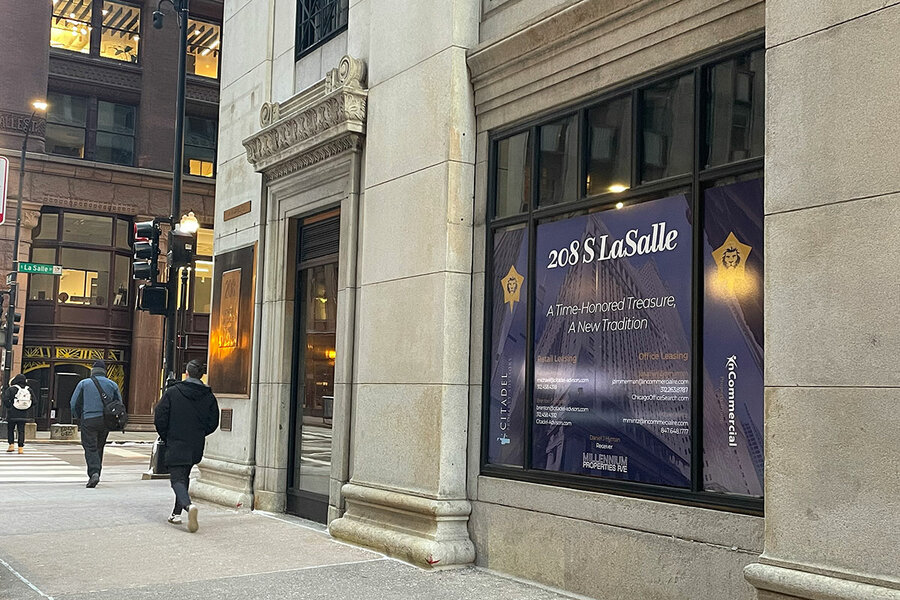
Chicago’s Classical Revival office building at 208 S. LaSalle St. is being converted to residences with 280 planned apartments in the heart of the city’s financial district.

The other day, I was listening to Boston’s Mayor Michelle Wu on Boston Public Radio talking about our region’s severe housing crisis and how she’s working to convert empty office buildings to housing. She aims to make the change incrementally — even a few apartments in each building would make a huge difference.

Boston is not the only city considering this approach.

Laurent Belsie and Story Hinkley report at the Christian Science Monitor, “At the corner of LaSalle and Adams streets in downtown Chicago, the City National Bank and Trust Co. building rises like an elegant monument to the past. Its Doric columns, carved rosettes, and lion’s heads evoke the Classical Revival style popular a century ago. But it’s a deceptive facade.

“The bank, whose name still adorns the front, disappeared in a merger 60 years ago. The building now houses two hotels, offices for professionals and a host of nonprofits, and a British men’s clothing store. And after a city competition to reimagine its financial district, the building will soon change again. The offices will give way to 280 residences: studios, one- and two-bedroom apartments, and amenities like a fitness center and even a private dog run. …

“With fewer workers going to the office, office vacancy rates stand at a 30-year high. Lease revenue is falling, especially in older buildings, and owners are seeing the value of their properties plunge. …

“Developers could upgrade their buildings or convert them to other uses, but in many cases the costs are prohibitive. And a slowing economy, rising interest rates, and tighter lending standards make those conversions even harder. Hanging over them is a cloud of uncertainty: Is the work-from-home movement a permanent change, or just a temporary post-pandemic phenomenon?

“Despite this murky outlook, some cities are charging forward with conversion plans and subsidies. With fewer workers to keep their central business districts vibrant, these cities are hoping to replace them with apartment-dwellers and kick-start a transformation of their downtowns.

“By helping developers convert offices to living units, the mayor of Washington, D.C., hopes to add 15,000 people to the 25,000 or so residents already living downtown. Pittsburgh has cobbled together some $6 million in state and federal funds for its downtown conversion program. Seattle last month put out a ‘call for ideas,’ inviting building owners and architects to come up with new solutions for struggling office buildings.

“Chicago is one of the leaders of the adaptive reuse movement. In March, the city selected the City National Bank building and two other nearby buildings for its LaSalle Street Reimagined project, which aims to revitalize the financial district. Last week, the city chose two more buildings for conversions, which will receive city help and subsidies. In all, the projects will mean more than 1,600 new downtown living apartments in what the city calls one of the largest office-to-residential conversions in the nation.

“ ‘It’s important for the resiliency of downtown,’ says Cindy Chan Roubik, deputy commissioner of the city’s planning and development department. ‘It’s important to have people at different hours of the day and with different uses. You’ll have more people here on the weekends, after work hours, and that provides a vitality.’

“The logic for such conversions makes sense – to a point. … Since the end of 2019, apartment rents have soared around the country while office leasing revenue has slumped by nearly a fifth after adjusting for inflation, according to researchers at New York and Columbia universities

“Also, these averages mask considerable variation. Top-rated office space is holding its own, perhaps because companies want the best amenities to lure their workers back to the office. Less desirable and older office space is seeing much higher vacancy rates.

“And it is precisely these older, smaller office towers that make the best candidates for conversion to apartments. They’re typically easier to reconfigure to meet city codes, such as rules requiring every apartment to have windows. Then there’s the history and architecture, a big draw for some city-dwellers.

“The problems are scale and cost. Even with their recent uptick, the rate of conversions is far too low to solve cities’ office vacancy problem, CBRE says. And the economics are problematic. In a report last month, Moody’s Analytics found that only 35 of the nearly 1,100 office buildings it tracks in the New York City metro area were suitable for conversion. The rest of the buildings are too expensive to make conversions viable, which means either government subsidies or a big drop in office values and rents would be needed.

“Such a drop is precisely what has happened, according to the New York and Columbia researchers. In their analysis of the New York office market, they calculated that the actual value of the city’s office buildings had already fallen by 46% since the pandemic and would edge down to more than 50% by 2029 if the work-from-home trend persists. Those averages include top-rated office space; without that space in the calculation, the declines would be even worse. …

” ‘The unit costs are so high [if you do a conversion, however],’ says Dennis McClendon, a Chicago historian and geographer. For ‘half the cost, you could adapt and build the unit in a walk-up building in an outlying neighborhood.’

“On the brighter side of the ledger, America’s cities have shown remarkable resilience and creativity in keeping up with the times.” 

More at the Monitor, here. No firewall.

Read Full Post »

Photo: Camilla Forte.
Nikkie Bauer sticks social distancing reminders for spectators onto the window of Chicago’s Reckless Records, where she performs her window play.

This story reminds me of being a kid. I had a passion for theater and many impractical ambitions. For instance, I was certain that if I put together a production of “Snow White and Rose Red” from the Brothers Grimm, my friends and I would be welcomed to perform it before a movie at the Lafayette Theatre. The grownups laughed.

In today’s article, frustrated theater people who persevered made surprising things happen.

Camilla Forte writes at American Theatre, “When the pandemic shut down live theatre in March of 2020, the ensemble members behind Chicago’s Stop Motion Plant were in the middle of producing a performance commissioned by Theatre Evolve. With the stages shut down and their play canceled, they found themselves having to pivot.

“As the world adapted to a new reality, the group began meeting virtually to discuss the possibility of producing and performing live theatre in a way that would keep both the performers and the audience safe. Eventually, inspired by Macy’s dioramas [and] Chicago performers who put on ‘porch concerts’ throughout the summer, the concept for Window Plays was born.

“Presented as a ‘walking tour with theatrical displays,’ and running Feb. 19-21, the performance was not a traditional narrative play, but rather a collection of six short individual vignettes performed within the storefronts of six separate businesses in Chicago’s Andersonville neighborhood.

In order to secure each storefront venue, members of Stop Motion Plant went door to door to explain the concept to shop owners.

“After receiving what they described as overwhelming support, the group landed on performing out of the Neo-Futurist Theater, Rattleback Records, Enjoy, Women and Children First, *Play, and Raygun.

“Each two- to five-minute play was acted out on a loop for an hour in its storefront window, allowing audience members to cycle between performances in a way that encouraged social distancing while making the experience accessible to a fairly large number of people. …

“Ensemble member Kevin Michael Wesson … drew on his puppetry background when determining the music and scale for his window play, Badvice. During his two-minute performance, Wesson asked audience members increasingly personal questions through the phone while pressing his hand against theirs through a pane of glass sanitized after every act. After the interaction concluded, he bestowed attendees with an envelope with three pieces of advice —two good and one bad — as a parting gift. …

“[Perry] Hunt placed a cardboard cutout of herself herself behind a screen and illuminated the cutout from behind. She then Facetimed her audience, convincing them the person they were speaking to on the phone was the person whose silhouette they could see in the window, only to reveal she was never actually there. …

“Although the performances were a revival of live theatre, the actors still had to grapple with the challenges of a virtual format throughout the six months it took them to put together the piece. …

“Despite the challenges this format presented, some ensemble members found the innovations born from working around these challenges refreshing. Hunt, for instance, found that working within a more limited format allowed her the freedom to think about theatre in more abstract ways, with this experience being something that will influence her work beyond the pandemic.

“ ‘I think it’s given me permission and space to think about more innovative ways that I can produce art,’ Hunt said. ‘This project has pushed me to be challenged and make challenging things.’ “

More at American Theatre, here.

Read Full Post »

Photo: Zbigniew Bzdak / Chicago Tribune
Rosario Del Real, 70, a paletero at ice cream shop Las Tres Abejas, gets emotional after meeting with Michaelangelo Mosqueda and girlfriend Karen Gonzalez, who posted a TikTok video about buying up his ice pops so he could go home for Father’s Day.

Struggling a bit with what to say about the 4th of July in a time of both upheaval and promise, I decided to share a story that highlights the best side of the American spirit. In this report, a couple bought up a vendor’s ice pops so he could spend Father’s Day with his family. And they didn’t stop there.

Cathy Free shared the story at the Washington Post. “People in Chicago’s Southeast Side are accustomed to the sight of 70-year-old Rosario Del Real pushing his bright yellow cart along the streets, offering up frozen treats on summer days.

“The former carpenter makes a living selling $2 Mexican-style ice pops, or paletas, in a variety of flavors, including pineapple, strawberry, watermelon and cinnamon.

“On Father’s Day, Cynthia Gonzalez was enjoying an alley cookout with her family in the 83-degree heat when Del Real came by and asked if anyone would care to buy a paleta, she said. Gonzalez, along with Michaelangelo Mosqueda and several other family members, decided they could do better than buy just one pop apiece.

“They opened their wallets and bought every paleta in Del Real’s cart — 65 of them, at a cost of $130. Then they recorded a video of Del Real’s joyful reaction and posted it on TikTok.

“Mosqueda’s post quickly racked up more than 5 million views, he said, prompting him and the Gonzalez family to set up a GoFundMe for Del Real in the hope of helping him retire. In about a week, the effort has raised more than $62,000, and comments have poured in from tens of thousands of people:

“ ‘The paleta man was KING to us kids in Chicago!!!!’ wrote one woman. ‘Miss those days. Bless you guys!’ …

“ ‘I cried tears of joy to see his humble reaction,’ added a woman in her 20s. ‘So proud of you for doing this.’ …

” ‘Our local paletero is the sweetest, most polite person ever,’ Gonzalez said. ‘We didn’t want him to be working on such a hot day anymore.’

“As she and the others bought all of the ice pops in his cart, Del Real started crying, she said.

“ ‘You could see the relief in his face,’ Gonzalez said. … ‘He even got on his knees. We offered him some food and something to drink, and he left with the biggest smile on his face.’ ”

For a bit more background, read the article by Laura Rodríguez Presa at the Chicago Tribune: “Don Rosario was born in a rural town in Zacatecas, Mexico. He immigrated to the United States in 1969, crossing the southern border a handful of times before becoming a citizen in 1979, he said.

“ ‘When I first decided to immigrate to the U.S., my only wish was that my family and I could eat once a day, at least,’ Don Rosario said. ‘We were very poor.’ …

“ ‘I’ve had countless jobs,’ Don Rosario said. When he moved to Chicago, he established his family on the Southeast Side, where he was able to buy a home to raise his three children with the help of his wife. In 2015, Don Rosario was able to slow down when he finally finished paying off his house, he said.

“Don Rosario said he has made mistakes in his life, including run-ins with the law, but having to deal with them helped him to become a better person.

“ ‘I was diligent to do everything right to pay for the mistakes that I made,’ he said Thursday. … The first thing Don Rosario plans to do once he returns to Mexico is to visit the Shrine of Our Lady of Guadalupe to thank God for the blessings he has received, he said. …

” ‘He refuses to stop working,’ said Lucero Del Real, one of Don Rosario’s daughters. ‘I’m still in shock and extremely grateful for the family, and all the people that have changed my father’s life from one day to another.’ ”

More at the Washington Post, here, and at the Chicago Tribune, here.

Read Full Post »

73408-semicolonsc-8-44e0ca07

Photo: DS Shin
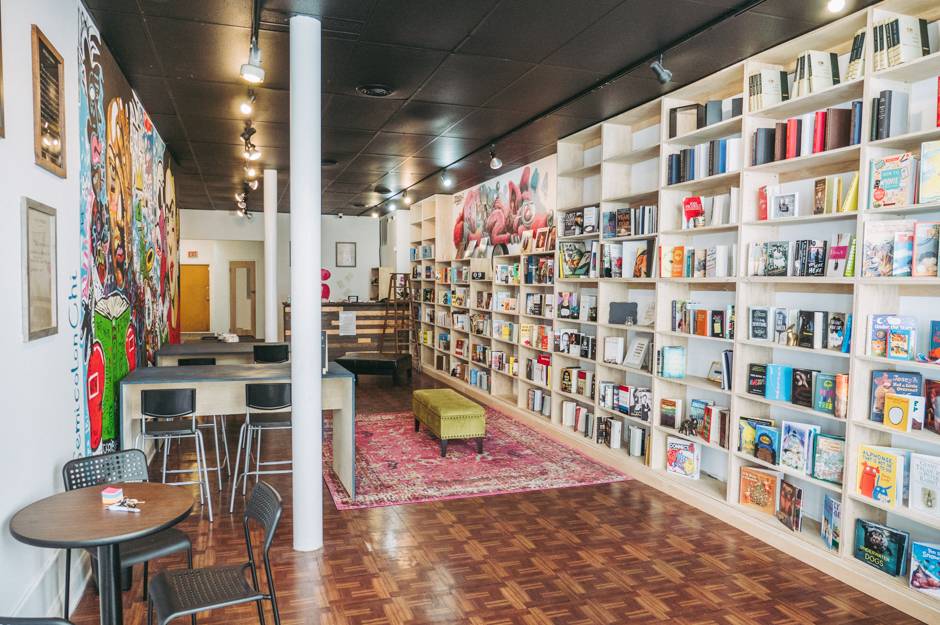
The Chicago bookstore called Semicolon is also an art gallery and community space.

The future of independent bookstores will probably be determined by owners who combine selling books with other services — coffee bars, author events, children’s story hours, community meetings, or art galleries. In Chicago, Semicolon is one example of how to do it.

Taylor Moore writes at Chicago magazine, “At Semicolon, creatives of all stripes can find common ground. Located near the Grand Blue Line stop in West Town, the city’s newest bookstore is also a community space and gallery for Chicago’s street art scene.

“But Semicolon is notable for more than just its unique concept. When it officially opened on Tuesday at 515 North Halsted Street with a party and mural unveiling, it became one of just a handful of woman-owned bookstores in Chicago and its only bookstore owned by a black woman.

“An author and editor with a PhD in literary theory, proprietor DL Mullen first explored the world of art curation through her writing business, which landed her gigs penning exhibition copy for museums like LACMA.

“ ‘Explaining art is really [key] to how people understand it and connect to it,’ she says. ‘It became important to me to bridge art and words.’ …

” ‘[Semicolon] represents the point in a sentence where it could stop, but the author decides to proceed,’ Mullen explains.

“As a curator, Mullen brings an aesthetic sensibility to the bookstore’s interior. Semicolon is filled with lots of small personal touches, from author quotes on the walls to colorful furniture bought and carried from the Salvation Army two blocks away.

“But what might be most visually striking about the space is the art itself, like the mural which dominates the shop’s north wall. Street artist Ahmad Lee painted it in one 11-hour stretch, vividly depicting two of Mullen’s favorite artists: Frida Kahlo and Jean-Michel Basquiat. …

“Mullen plans on featuring different Chicago street artists monthly, in addition to hosting author and artist talks every few weeks.

“As for the books, they’re unconventionally arranged on floor-to-ceiling shelves with their covers facing out, not unlike a gallery. Keeping with Semicolon’s curatorial spirit, Mullen hand-picked all 400 titles, grouping them by association rather than genre. In her ‘Books That Make You Think’ category, for example, you can pick up Erik Larson’s Dead Wake, Stephen King’s 11/22/63, a collection of James Baldwin essays, and biographies of Henri Matisse and Georges Seurat.

“Mullen also wanted the store to be an asset to aspiring and self-published authors. For those looking to print manuscripts on the fly, Semicolon houses an Espresso Book Machine, a printer that can print up to 450 pages in minutes.

“Throughout Semicolon’s creation, Mullen has never lost sight of the fact that the store is currently the city’s sole black woman–owned bookstore.

“ ‘It means everything to me. To be able to create something that I love, as a black woman, that other black women and people can love just as much is a huge deal,’ she says. ‘You don’t get into bookselling looking for money; it’s really hard to build up your career to actually open a bookstore. I feel grateful that I’ve been able to do that.’ ” More here.

Still more at “Because of Them We Can,” here, Melville House, here, Chicago Review of Books, here, and the Literary Hub, here.

Photo: The North Star
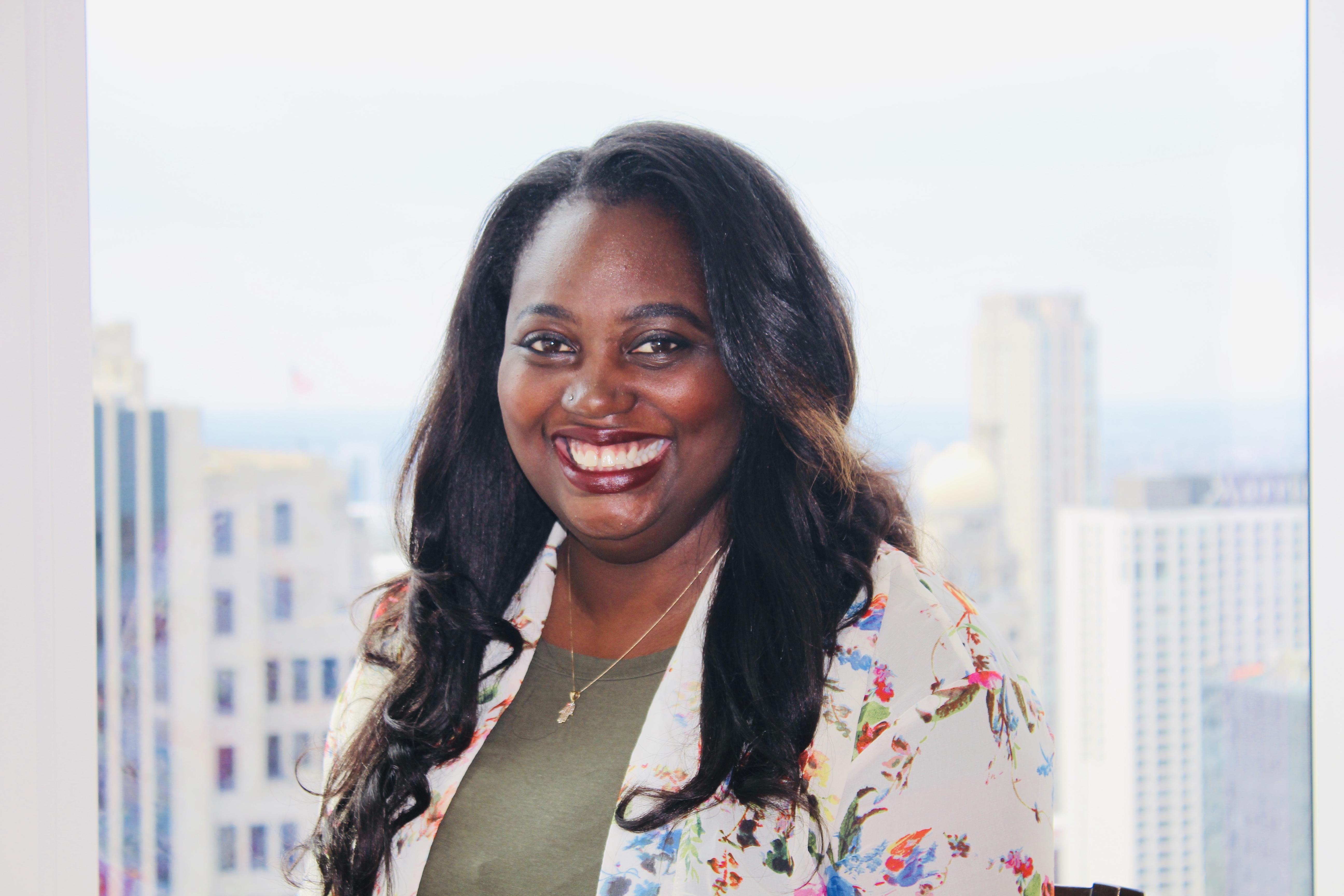
DL Mullen is the founder of the combined bookstore, art gallery, and community space in Chicago’s West Town.

fullsizeoutput_7c8

Read Full Post »

Photo: Chicago Public Library
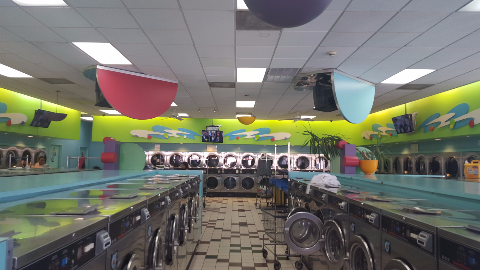
Chicago Public Library STEAM Team First Assistant Librarian Alejandra Santana (left) reads to storytime attendees at Bubbleland laundromat.

Suzanne and Erik’s son went through a period of being utterly enraptured and entranced by washing machines. When his uncle came to visit from Denmark, he made him sit on the floor of the bathroom with him and marvel at the wash cycle. When his sister was born, he pushed her baby bed in front of the washing machine to show her the greatest wonder of life. When my husband babysat him, he insisted on visiting the local laundromat just to watch the machines work. All the staff knew him.

So when I saw this story about the Chicago library system setting up story hours for young children in laundromats, I thought of my grandson. He would have considered library outreach an intrusion on his contemplation (he once sent my husband out of the laundry room because he was in the way), but I think that for other kids, libraries in laundromats would be fantastic.

Anne Ford writes at American Libraries, “Laundry: It’s got to be done. And if you’re in a family with small children and no washer or dryer at home, it’s got to be done at the neighborhood laundromat — probably every week, probably on the same day every week, and probably with those children in tow.

“That’s why, in 1989, Chicago Public Library (CPL) Children’s Librarian Elizabeth McChesney (now CPL’s director of children’s services and family engagement) visited a local laundromat to introduce herself to families. How she responded to what she saw there would help change the landscape of children’s literacy initiatives for decades to come.

“ ‘What I saw was that these were families who, because of a variety of circumstances, were not likely to come to the library for storytime,’ she says. So she went back to the library, threw some books, a couple of puppets, and a tambourine into a laundry basket, walked it back to the laundromat, and held a storytime for the kids there — right on the spot, as the washers whirred.

“McChesney’s not claiming she started the laundry-and-literacy movement. ‘People have done this off and on for the last 25, 30 years,’ she says. Still, thanks to her, CPL continues to hold regular storytimes at laundromats across Chicago. And, she says, the librarians who participate continue to see rewards.

“ ‘Families are now changing their behavior, showing up to do their laundry when the library is going to be there,’ she reports.

‘One little boy just recently said: “Let’s do laundry every day, Mom!” ‘ …

“Can’t these children simply go to a branch library instead? Not necessarily. As a recent paper on book deserts by Susan B. Neuman and Naomi Moland in the journal Urban Education (vol. 54, no. 1, p. 126–147) points out, in some areas, decreased funding for libraries has led to ‘limited hours and curtailed services’ — and in many low-income communities, demand has exceeded capacity or parents are often hesitant to check out books because of potential library fines. …

“Not all laundromat library programs are alike, though most operate with some type of librarian participation, direction, or materials curation.

“Wash Time Is Talk Time, an effort sponsored by [the Clinton Foundation’s Too Small to Fail (TSTF) early-childhood initiative and the Coin Laundry Association’s LaundryCares Foundation (LCF)], distributes posters in English and Spanish that encourage parents to talk, read, and sing with their children while they do laundry; it also provides books to some laundromats to lend out. …

“How effective are these programs, and what kind of impact are they having on children’s literacy? To find out, [the Laundry and Literacy Coalition (LLC)] is working with Neuman. … The first part of that evaluation, conducted last year, found that children in laundromats with literacy resources engaged in 30 times more literacy activities — such as talking with their families, singing songs, drawing, and reading books — than children in laundromats without those resources. The second phase, announced in March, found that librarians in these programs increased child engagement in literacy-related activities.” More here.

cache_13441508

Read Full Post »

Photo: Terrence Antonio James/Chicago Tribune, via Associated Press
Candice Payne, “a regular person,” rented hotel rooms for more than 100 homeless people in Chicago — and strangers followed her lead — as temperatures headed way below freezing.

A Chicago real estate broker, a self-styled “little black girl from the South Side,” had a moment when she just couldn’t bear to see a particular bad thing happen.

The temperature in Chicago was about to go way below zero last week, and Candice Payne started thinking about the people in the city’s homeless camp. Here’s what can result when “a regular person” realizes that empathizing while doing nothing is not an option.

Sandra E. Garcia has the story at the New York Times.

“As temperatures plunged to life-threatening lows this week, more than 100 homeless people in Chicago unexpectedly found themselves with food, fresh clothes and a place to stay after a local real estate broker intervened.

“The broker, Candice Payne, 34, said it was a ‘spur-of-the-moment’ decision to help. ‘It was 50 below, and I knew they were going to be sleeping on ice and I had to do something,’ she said on Saturday.

“Ms. Payne contacted hotels and found 30 rooms available at the Amber Inn for Wednesday night at $70 per room. …

“After Ms. Payne paid for the rooms on a credit card, she asked on her Instagram account for anyone who could help transport the homeless people. Soon she had a caravan of cars, S.U.V.s and vans with volunteer drivers.

“ ‘We met at tent city, where all the homeless people set up tents and live on the side of the expressway,’ Ms. Payne said. … She asked as many people as she could to go with her to the Amber Inn as donations were pouring in to her Cash App account. …

“ ‘We had to accommodate everyone. It was really overwhelming,’ Ms. Payne said. ‘They were so appreciative. They couldn’t wait to get in a bath and lay in a bed.’

“Ms. Payne bought toiletries, food, prenatal vitamins, lotions, deodorants and snacks and made care packages to help make the people feel comfortable. Restaurants donated trays of food, and many people called the inn. …

“ ‘People from the community, they all piggyback off Candice,’ said Robyn Smith, the manager of the Amber Inn. ‘Other people started calling and anonymously paying for rooms,’ she added, and Ms. Smith lowered the price to accommodate more people. What started out as 30 rooms doubled to 60, Ms. Smith said. …

‘I am a regular person,’ Ms. Payne said. ‘It all sounded like a rich person did this, but I’m just a little black girl from the South Side. I thought it was unattainable, but after seeing this and seeing people from all around the world, that just tells me that it’s not that unattainable. We can all do this together. …

“ ‘This was a temporary fix, and it has inspired me to come up with more of a permanent solution.’ ”

Talk about the Power of One! Here’s hoping that the state’s wealthy governor, who called Payne to offer his praise, gets on board with a permanent solution.

More at the New York Times, here.

Read Full Post »

Knitting seems to be coming back in style. I thought I had forgotten everything I learned from knitting sweaters during college lectures, but the basic stitch came back to me when I started tackling scarves as an alternative to doodling in work meetings.

Now I see that knitting is serving many positive social purposes among kids in a poor Chicago neighborhood

Lisa Suhay writes at the Christian Science Monitor, “Students are getting knitty in a gritty urban neighborhood on Chicago‘s west side, as they are learning to craft skeins of yarn into a blanket of calm that is making them more social – and fiscally sound.

“ ‘Three years ago, I started teaching kids here to knit and then I thought, “Let’s see if we could sell what they make at my church and give the kids some pocket money in the process,’ says Dorothea Tobin, a teacher at North Lawndale College Prep, in a phone interview from her classroom where she is surrounded by clicking needles and chatting teens.

“In the ‘BT Lives in the Stitch’ club, according to Ms. Tobin, students price their wares between $10 and $30 per item and reap the rewards of being able to socialize while earning enough profit to pay for prom tickets or sundries they might not otherwise be able to afford. …

“Of the 40 students in Tobin’s club a handful are boys. Asked if there was a difference between what boys and girls prefer to knit she says, ‘Boys prefer to knit scarves because those are good sellers. Girls tend more towards baby hats.’ … She has observed that the simple act of mastering a traditional skill and producing something has a profound effect on her students. …

“ ‘They’re always making fun of my rules, but I have club rules for a reason,’ she says. ‘I don’t want them to isolate themselves in the process.’

“The first rule of Knitting Club, Tobin says, is no headphones. … The second rule is to dance with her on Fridays. The third rule, she says is ‘Greet each other when new members come to join us in a session.’ ”

More here.

Photo: Casey Bayer

Read Full Post »

Since I like to walk everyday, even going round and round indoors for much of this past winter, I was fascinated to hear about walking as a competitive sport in the 19th century.

At his WBUR radio show yesterday, Only a Game, Bill Littlefield talked to Matthew Algeo, author of Pedestrianism: When Watching People Walk Was America’s Favorite Sport.

Here’s Algeo: “Edward Payson Weston was a door-to-door books salesman from Providence, R.I. In the autumn of 1860, he made a bet with a friend on the outcome of that year’s presidential election. Weston bet that Lincoln would lose, and, of course, Weston lost the bet. The loser had to walk from Boston to Washington in 10 days and arrive in time to witness the inauguration of Lincoln on March 4, 1861.

“So Weston set out and made his way south. Of course, this was a very tense time in American history. Southern states began seceding. There wasn’t a lot of good, uplifting news. And the idea that this guy would walk from Boston to Washington in the middle of winter on terrible roads — it really did capture the imagination of the public, especially along the East Coast. Huge crowds would turn out to see him just walk through their town. Weston didn’t make it in time. He was four hours late to the inauguration. He did meet Lincoln a couple of days later and Lincoln offered to pay his rail fare home, but Weston said he would try to walk home. But the Civil War intervened.”

Littlefield then refers to Weston as one half of “the first great rivalry in the annals of American sports” and asks Algeo who the other half was.

“Daniel O’Leary, an Irish immigrant from Chicago,” says the author. “And what happened was Weston, to capitalize on his fame, decided to take his act indoors. He began walking inside roller rinks, and he would try to walk say 100 miles in 24 hours and charge people a dime for the pleasure of watching him walk in circles all day. This proved immensely popular — thousands of people would do it. Naturally competitors rose up and Daniel O’Leary actually walked 100 miles in 22 hours. And so he bested Weston’s record and so that set up the big showdown in 1875 that you mentioned. It was a 500-mile race over six days between Weston and O’Leary. …

“They would draw a dirt track on the floor of an arena. … The competitors would be sent off, and they would walk continuously day and night for six days right up until midnight the following Saturday night. And the rules were pretty simple: whoever walked the farthest was the winner.” Read more here, where you also can listen to the interview and read Littlefield’s book review.


Read Full Post »

Deanna Isaacs has a funny post at the Chicago Reader. It’s about the Storefront Playwright Project.

“Tired of sitting around watching paint dry?” she asks.

“Then get yourself over to 72 E. Randolph, where, thanks to the League of Chicago Theatres and the Department of Cultural Affairs and Special Events, you can watch a real, live writer at work.

“The Storefront Playwright Project is putting 27 authors on exhibit this month in the big front window at Hot Tix/Expo 72.

“Never mind that writing is right up there with sleeping as a potential spectator sport, so stimulating that the writer him- or herself often has to bring the action to a complete stop in order to check e-mail, clean a closet, or book a flight and get the hell out of there. …

“Guessing that dramatists would be more dynamic at work than, say, novelists (readily observed in deep rumination at most any coffee shop), I stopped by last week, when Emilio Williams was on display.

“The playwrights each take a four-hour shift. Williams was a couple hours into his afternoon stint, gamely focused on his laptop, which was perched on a small white table and hooked into a large screen mounted in the window. The big screen faces outward, allowing passersby a look at the creative product the instant it emerges from the writer’s brain. …

“Behind the glass, Williams pursed his lips and crossed his ankles. …

“He leaned his chin on his hand and scrolled through several pages of dialogue that went something like this:

“Mar: Done?

“Ted: Yep.

“Mar: You don’t sound very enthusiastic.

“Williams paused.

“He blinked.

“He scrolled again.

“And then, it happened!

“On the big screen, before my very eyes, the cursor hesitated. It stopped. And it backed up, deleting as it went, wiping out ‘tucitcennoC’ and replacing it with ‘Lake Geneva.’ ” More from Deanna, even funnier.

Readers may recall several posts I wrote on a playwriting class I took the summer before last. (For example, here.) I thought the class got playwriting out of my system. Should I reconsider now that playwrights have the opportunity to sit in storefronts where strangers can watch them think?

Um, maybe not.

Photograph: The Chicago Reader

Read Full Post »

Mark Guarino has a nice story in the Christian Science Monitor about a Chicago woman of great determination.

” ‘Pollinate’ is a word that Brenda Palms Barber likes to throw around when talking to people about her work.

She pollinates jobs for recently released inmates looking for a second chance. She pollinates faith among the people who take a chance in hiring them. She pollinates an upswing in North Lawndale, one of the most impoverished neighborhoods in Chicago, about five miles west of downtown.

“She also pollinates honey. At least that’s the job of the bees she has spent five years raising.

Indeed, Ms. Barber has brought swarms of bees to the city’s West Side, using them to foster job creation among a stigmatized group of people who live on the bottom rung of the economic ladder: black males who exit the state or county prison system with little formal education or job skills….

” ‘We have to be their first employers,’ she says. ‘We have to prove to society that people who did bad things, people who need second chances, can be positive in the workplace, that they will be loyal and hard-working and honest employees.’ “

More here.

Photo: David Harold Ropinksi/Sweet Beginnings
Brenda Palms Barber’s honey-products program has hired 275 ex-offenders since 2007. After 90 days, they shift to the outside workforce.

Read Full Post »

Older Posts »