Feeds:
Posts
Comments

Posts Tagged ‘children’

Photo: Boston Globe.
A headline in the Boston Globe from 1924.

I didn’t get to post this story about a charitable Gothenburg-born Boston immigrant last year, but I think you’ll agree that it’s a bit of Christmas history that will always be fresh.

Jenny Ashcroft wrote about it at Fishwrap, the official blog of Newspapers.com.

“On Christmas Day in 1921, a Swedish immigrant quietly wheeled his hot dog stand to a street corner in Boston’s North End and distributed 500 free hot dogs to hungry children. Axel Bjorklund was no stranger to poverty. He barely made ends meet himself, but he wanted to give back. His cart was soon swamped with hundreds of shivering children wearing tattered clothing that did little to stave off the cold. Their hungry faces beamed when Axel handed them a steaming hot dog. Eventually, the food was gone, but Axel’s determination to repeat the event wasn’t. The Hot Dog Santa tradition was born. Over the next eight years, Axel gave away some 10,000 hot dogs before he died in 1930.

“Born in Gothenburg, Sweden, on August 6, 1869, Axel Bjorklund emigrated to America in 1889, eventually settling in Boston’s North End neighborhood. The area had become a melting pot of immigrants, most of whom were impoverished as they struggled to establish lives in a new country. The Spanish Flu Pandemic hit the North End particularly hard, leaving families even more destitute and many children orphaned.

“The first Christmas hot dog giveaway in 1921 was so successful that Axel decided to expand in 1922 and doubled the number of hot dogs to 1,000. His hot dog giveaway grew with each year until he distributed 3,000 annually. The children loved Axel and nicknamed him ‘Hot Dog Santa.’ …

“Axel’s annual Christmas Day hot dog giveaway eventually moved to New Year’s Day, but it was an event the children anticipated all year. As Axel’s generosity expanded, so did his health challenges. He was plagued with rheumatism, which led to frequent hospitalizations. His finances struggled, too, and he could no longer pay his rent. Not wanting to end the hot dog giveaway, he appealed to the public to help him continue the tradition.

“In December 1928, just before the annual hot dog giveaway, Axel’s landlady kicked him out because he hadn’t paid rent. The Salvation Army stepped in to help, but Axel was broke. The next two years saw Axel skipping between the poor house, the Cambridge Home for the Aged, or obtaining temporary lodging from generous benefactors. Despite his circumstances, in 1929, he participated in his final hot dog giveaway.

“On November 10, 1930, Axel Bjorklund passed away, penniless and alone at a Massachusetts hospital. He had no relatives and was set to be buried in a potter’s field when newspapers published word of his death. Citizens stepped forward, offering to contribute to a fund to give Axel a proper burial. The Swedish Charitable Society coordinated, and Axel was laid to rest in the Cambridge Cemetery.

“If you would like to learn more about the Hot Dog Santa or discover other heartwarming Christmas stories, search Newspapers.com.”

It hurts to think that today there are still plenty of shivering, hungry American children who could use this 1920s Good King Wenceslas.

Read Full Post »

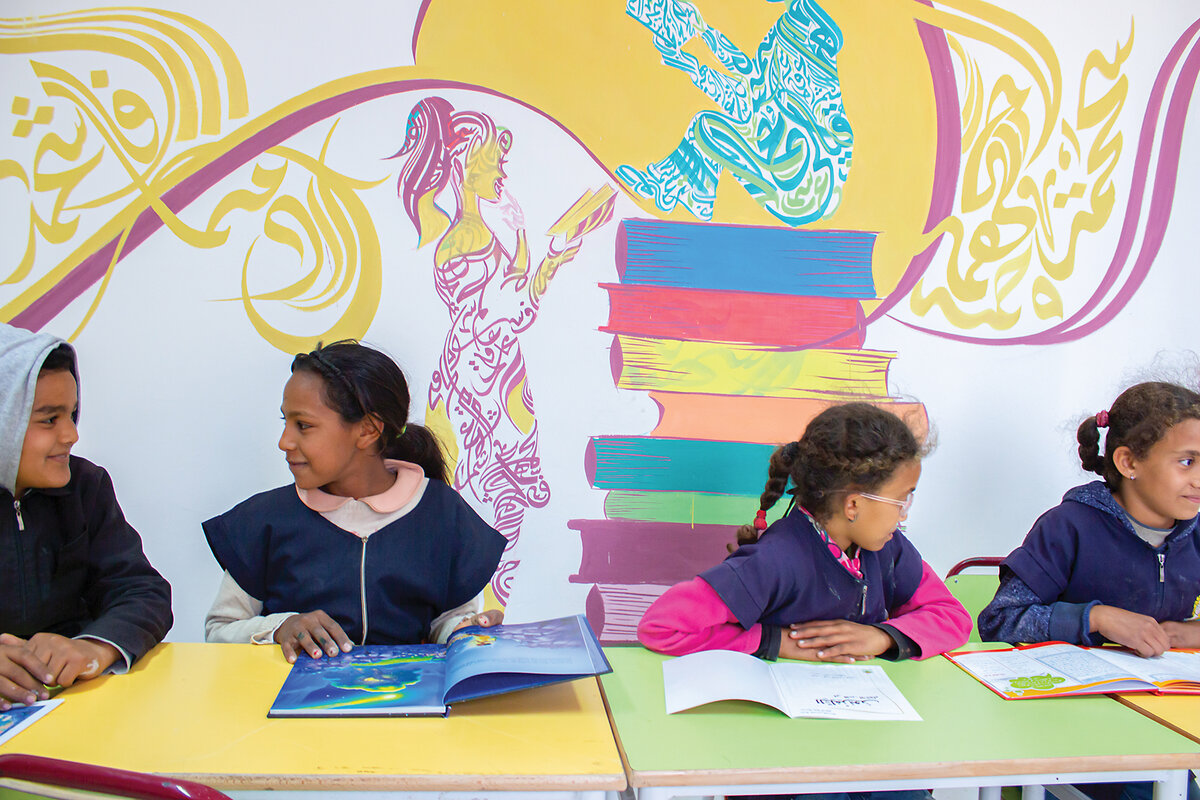
Photo: Meriem Belhiba.
Girls explore colorful storybooks in the newly inaugurated library at Bir El Euch Primary School in Tunisia.

Meriem Belhiba wrote this story for the Christian Science Monitor.

“To children in this hilltop village, their school library is a portal to another world.

“Israa Al Trabelsi and five other 9-year-olds barely stifle their giggles as they weave – wide-eyed with curiosity – through the colorful room. They can plop down into cushioned chairs, look at bright wall art, and, of course, browse shelves bursting with books. The transformative space was built for children to dream in.

“ ‘I’ve learned so much,’ Israa says after taking a seat with a book about faraway lands in her hands. ‘It is also helping me improve my vocabulary and my writing,’ she notes, quickly adding, ‘I want to be a judge.’

“That might seem an unusual ambition for a child in Bir El Euch, a rural community of 1,600 people southwest of Tunisia’s capital, Tunis. But it makes sense when one learns that the man behind the library, Omar Weslati, is himself a judge who knows how precious books can be to children. ‘This project began as a way to reconcile with the child I once was, who had nothing,’ he says.

“Economic inequality has long been a challenge in Tunisia, a country of 12 million people. Widespread poverty in rural areas, high unemployment, and poor infrastructure were key triggers behind the 2011 mass protests that toppled a 23-year dictatorship and touched off the Arab Spring uprisings. …

” ‘I grew up in a rural school without a library, without light, without transportation, and without heating,’ Judge Weslati recalls. ‘As a bookworm, I needed to walk long distances to reach the nearest public library.’

“Launched in 2016, the initiative is led by white-collar professionals, most of whom hail from rural communities. These journalists, writers, judges, and teachers have chipped in funding to create a new library every year. Each one serves hundreds of students and takes thousands of dollars to complete.

“The project’s launch could not have been timed better. The first ‘imagination libraries,’ as they were initially called, were built in the aftermath of the violent extremism that accompanied the Arab Spring. Amid the waves of unrest that ensued across the region, Tunisia has been the biggest contributor of foreign fighters in the world – with Tunisians joining extremist groups in Syria, Libya, Iraq, and elsewhere.

“This was a factor behind the library initiative. ‘Where the book doesn’t reach, the extremist arrives first,’ Judge Weslati says. …

“Besides offering books as a source of inspiration, Judge Weslati’s team began visiting remote schools and sharing members’ personal stories. ‘We wanted to show kids that people from their own soil once dreamed, created, and contributed,’ he says.

‘We never saw this as charity; it’s about cultivation,’ he adds. ‘Planting stories where they hadn’t taken root before.’

“Beyond reading, the initiative led to something more: a writing club for rural youths. Teenagers craft short stories together and publish their work. One of the teens, Molka Hammami, credits her former teacher Jamila Sherif for lighting a spark in her.

“ ‘Reading changed my life,’ Molka says. ‘It pushed me to do more. I was published in the [club’s] collective storybook last year.’ Now she helps run a radio show for the club.

“Ms. Sherif, who has since become a school inspector, emphasizes the stakes. ‘Many kids drop out after primary school,’ she says. … ‘We’re trying to change that – one library, one book at a time.’”’

“Reports have shown that, despite declining school dropout rates across Tunisia, the problem is most acute in rural areas. Donia Smaali Bouhlila, an expert on educational inequality at the University of Tunis El Manar, says inadequate schools and infrastructure in rural areas are among the biggest reasons that students drop out.

“ ‘When learning spaces lack comfort, resources, or consistency, they stop being places of growth and become sources of alienation,’ she says. ‘Every small success – helping a child learn to read, keeping a teenager engaged – represents a meaningful step forward.’

“Safahat, a cultural organization whose name translates to ‘pages’ in Arabic, aimed to serve schools when it was founded in 2020 [but] faced logistical and financial hurdles because of the region’s remoteness. This prompted its team to pivot to a more mobile model: public bookcases. …

“Through its Maktabtena (‘our library’) initiative, the group placed red-and-white boxes of books in hospitals, youth centers, and schools, and on street corners. … Readers are invited to take a book, read freely, and donate their own books if they can. ‘We want to make reading a habit, not a luxury,’ [Khawla Mondhri, a university professor and volunteer leading the initiative] says. ‘If someone takes a book and doesn’t return it, that just means it’s being read somewhere else. ‘And that’s enough for us.” …

“So far, the team has installed 35 bookcases in accessible, safe, and visible spots. To ensure a bookcase is never empty, the team has formed partnerships with municipalities, associations, and individuals.

“ ‘We send books as often as needed. We plant small oaks,’ Ms. Mondhri says. ‘But we dream of forests.’ ”

More at the Monitor, here.

Read Full Post »

Photo: Jeenah Moon/Bloomberg.
An interior courtyard at the Sunnyside Garden Apartments in Queens, New York. Completed in 1928, it remains a beacon of quality of life.

Growing up on the Copeland Estate in a suburb of New York, I would have been quite isolated from humanity if not for a scattering of nearby homes that had children. Having playmates meant so much to me. But for years, US community designers forgot about the importance of human interaction for both children and adults. One way to build it in, especially in cities, is the classic courtyard.

Alexandra Lange notes at Bloomberg CityLab that the shrinking population of children under five across the US “is bad news for the diversity and stability of cities, which are improved by the amenities that families seek — parks, public libraries, safe streets. It’s also discouraging for families who prefer to live in the city or don’t have the option or desire to move to the car-dominated suburbs. Any effort to retain families has to start with housing, their primary expense.

“That one weird trick for making cities more family-friendly? We’ve known it for decades: It’s the courtyard. …

“While Europe can claim centuries-old courts, America dabbled in them for decades, before the suburbs became the dominant housing type of both government subsidy and political propaganda.

“Courtyards don’t have to belong to the past. While textbook examples in brick and stone are lovely — and still home to thriving communities — contemporary architects are making courts in all sorts of materials, and for all types of housing, from apartments to townhomes.

“One of the first influential figures to advance the idea of the courtyard as the ideal urban type for families was Henry Darbishire, the mid-19th century English architect. His first patron, Angela Burdett-Coutts, was inspired by Charles Dickens and his novels of the urban poor to apply her wealth to reformist housing. ‘Nurturing the family and protecting children from the street was a huge part of the logic — turning the city inward,’ says Matthew G. Lasner, housing historian and the author of High Life: Condo Living in the Suburban Century.

“Architects and philanthropists quickly embraced an easily replicable courtyard model, with a single entrance on the street and interior vertical access off a planted court. The concept came to America in the 1870s via developers like Alfred Treadway White, responsible for the Cobble Hill Towers in Brooklyn. In the 1920s, more reformist developers — including everyone from the Rockefellers to communist unions — constructed many more of these courtyard projects.

“As architecture critic John Taylor Boyd wrote in 1920 of the Linden Court complex in Jackson Heights, the courtyard’s ‘benefits are apparent when it is remembered that the streets are the only playground of New York children, including the children of the rich.’ …

“When you’re talking courtyards in America, it’s hard to avoid Sunnyside Gardens. Not only does the Queens community remain one of New York City’s best neighborhoods, but it was home to one of America’s best critics, who made his affection clear.

“Lewis Mumford was one of the first residents of Sunnyside Gardens, completed in 1928, and constantly returned to its balance of private and public space, building and garden, in his analysis of other lesser New York City housing options. In “The Plight of the Prosperous,” published in the New Yorker in 1950, Mumford takes aim at the new white-brick residential buildings ‘that have sprung up since the war in the wealthy and fashionable parts of the city.’ While new low- and middle-income housing projects like his own ‘provide light and air and walks and sometimes even patches of grass and forsythia,’ these other private buildings, clustered in uptown rich neighborhoods, lack multiple exposures, outdoor space, cross-ventilation and quiet. …

Clarence Stein and Henry Wright were the primary architects and planners behind Sunnyside Gardens, with Marjorie Sewell Cautley the landscape architect; all three would subsequently collaborate on Radburn, New Jersey, the ‘town for the motor age’ that in fact applied these communal principles for a result that we would now call transit-oriented development.

“The planners’ primary insight, in both the city and the suburbs, was to prioritize protected, communal open space over private yards or interior amenities. The courts, or courtyards, could be much larger if not subdivided by owner, and even in areas with public parks, having play space (and play companions) directly outside your door was a huge amenity. …

“On the West Coast, the courtyard evolved a little differently: surrounded by lower density, semi-detached houses with, eventually, a swimming pool in the center instead of a lawn. Irving Gill, considered the father of California modernism, designed prototype bungalow court in Santa Monica in the teens, with parking out of sight in the back and doorstep gardens. On tighter sites, U-shaped buildings with Spanish- and Italian-influenced architecture featured tiled fountains at center court. …

“ ‘When people have families with children, the home is important, but equally important are the people who are there with you,’ says Livable Cities president Meredith Wenskoski. “Your neighborhood is crucial. …

Bay State Cohousing, a 30-unit development outside Boston, has common amenities as part of its charter, including a shared kitchen and activity rooms. But the pastel, clapboard complex, intended to blend in with single-family neighbors, also forms a U around a southwest-facing courtyard, with outdoor circulation providing plenty of opportunities for casual run-ins with the neighbors.

“ ‘The courtyard is a nested boundary that allows interaction with other children, and more importantly, with other adults who become a kind of network,’ says Jenny French, whose firm French 2D designed Bay State. ‘In an urban setting, the barrier that the contemporary parent has to letting their child out the door, thinking about the car-dominated city where they are unable to play in the street – the courtyard is a natural alternative.’

“French, who has also been coordinating the housing studio at the Harvard Graduate School of Design for seven years, can’t help but extend these design observations into the cultural and political spheres. Everyone talks about loneliness in America for people of all ages. For teens and seniors alike, French sees a solution. It’s one we’ve had all along: ‘Could a courtyard house actually be the friendship apparatus we need?’ ”

Lots more at Bloomberg, here.

Read Full Post »

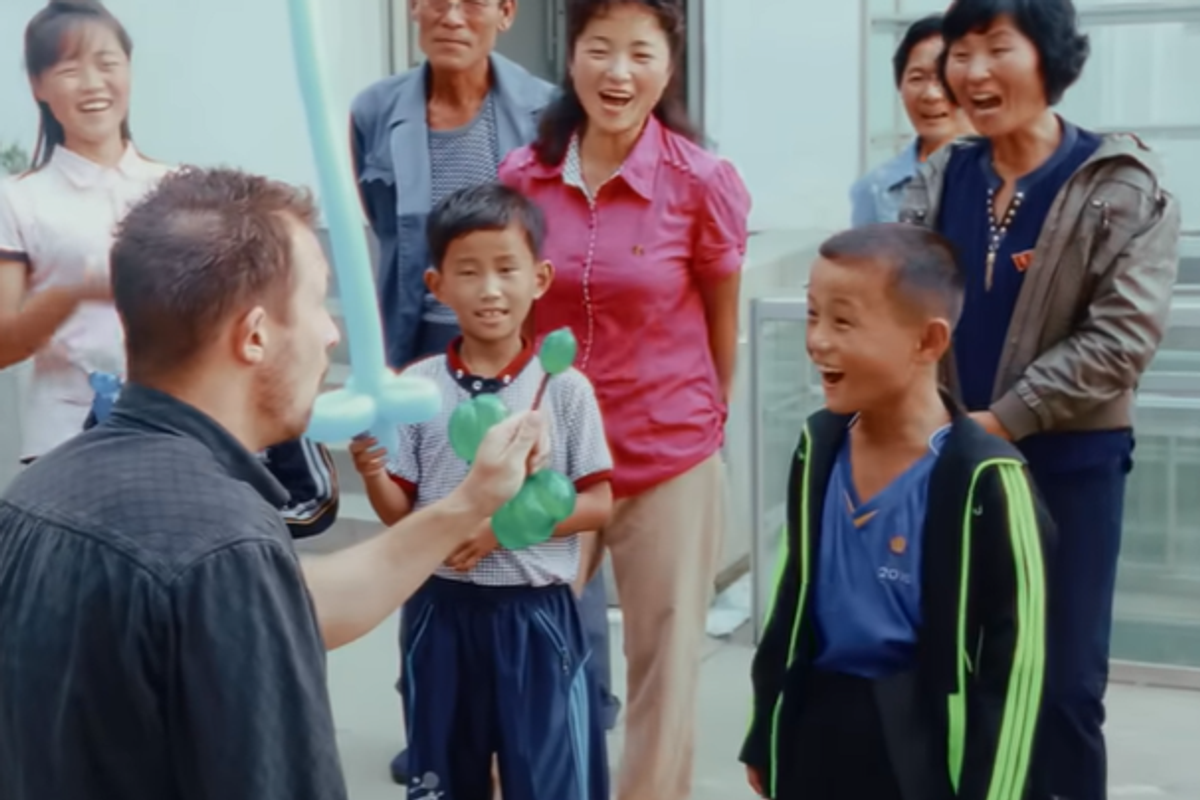
Photo: via Freeport Traveler/YouTube.
Jesper Grønkjær, of Denmark, performs magic for children in North Korea.

What does it take to venture into enemy territory to entertain children? A Danish magician just does it.

Tod Perry writes at Upworthy, “North Korea is the most oppressive place in the world, and its people lack freedom of speech, press, or movement. The government, headed by Kim Jong Un, controls all aspects of its citizens’ lives, and those who stand up against the regime are punished harshly. It’s also hostile to people outside the country for fear that outside ideas could destabilize the regime.

“The country is so isolated from the rest of the world that it just recently opened its border to allow a small number of tourists to visit its Special Economic Zone for the first time since the COVID-19 pandemic. …

“Another of North Korea’s recent visitors was [Danish] magician and adventurer Jesper Grønkjær, who set out to see if he could manage to get a smile from its citizens. ‘I’ve spent my life proving one universal truth: a smile is the shortest distance between all people on Earth,’ Grønkjær said.

” ‘We know you can suppress people, but you can’t suppress a smile. I will investigate that, and where better to do it than in one of the strictest countries in the world?’ he opens his video on the Freeport Traveler YouTube page. When Grønkjær visited North Korea, he was accompanied by two guards wherever he went, and his passport was taken from him. At night, he was locked in his hotel like a jail cell. However, he still elicited huge grins from children and adults alike as he wowed them with magic tricks with animal balloons, a stuffed ferret, red foam balls, card tricks, and much of his joyful brand of Abracadabra.

“While visiting North Korea, Grønkjær watched the country’s ‘Day of the Sun Celebrations‘ at Kim Il-Sung Square in North Korea. Held each year on April 15th, the holiday celebrates the birthday of Kim Il-Sung, the country’s founder, and features dancing, military tests, parades, and concerts. For North Koreans, the holiday is akin to Christmas.

“Grønkjær’s trip to North Korea isn’t the only exotic and potentially dangerous place where he has performed magic. He has also performed for Indigenous people in Peru, the descendants of the Incas in the Andes mountains, and the Masai warriors in Tanzania. The magician of 20 years has also performed for orphanages in Uganda, the jungles of Irian Jaya, the ice caps of Greenland, and the Las Vegas strip.

“Grønkjær uses his adventurous expeditions as subject matter for his various lectures, print articles, and appearances on Danish television. When he’s back home, he performs more than 225 nights a year for family events, circuses, weddings, and corporate parties. …

“Grønkjær’s work shows that no matter where you live on the planet or what language you speak, we all share the same sense of wonder and humor. While nefarious forces in the world work to drive us apart, he proves it takes very little for all of us to realize our shared humanity.”

More at Upworthy, here. Listen to a radio interview at The World, here.

Read Full Post »

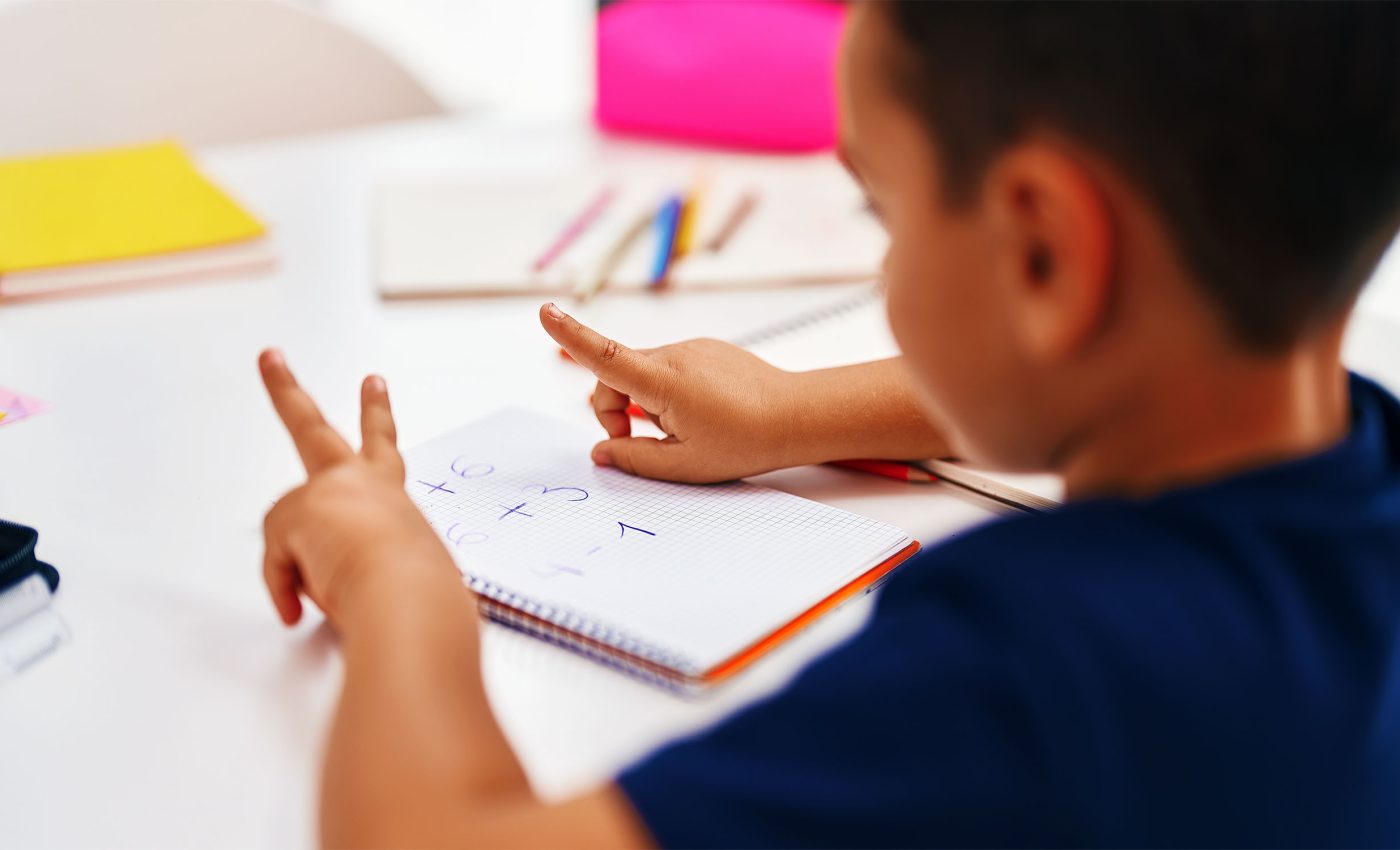
Photo: Earth.com.
In the bad old days, parents were misled about what was good for children. Remember forcing left-handed kids to use their right? Remember that counting on fingers was wrong? Fortunately, humans do learn from mistakes.

Everything old is new again. But you knew that. Here’s new old news from the world of elementary school arithmetic. Stephen Beech wrote the story at TalkerNews and many outlets carried it, including NBC.

“Counting on fingers really does help youngsters improve their math skills, according to a new study. The research is the first to show that children’s performance in arithmetic can show a ‘huge’ improvement through the teaching of a finger-counting method. …

“Swiss and French researchers explored whether finger counting can help primary school-aged children to solve maths problems in a new study, published in the journal Child Development. …

“Young children who use their fingers to solve such problems are recognized as intelligent, probably because they have already reached a level that allows them to understand that a quantity can be represented by different means.

“It is only from the age of eight that using finger counting to solve very simple problems can indicate math difficulties, according to the study.

“The research aimed to determine whether children who don’t count on their fingers can be trained to do so, and whether such training would result in enhanced arithmetic performance.

“The study focused on 328 five- and six-year-old children at kindergarten, mainly living in France, and tested their abilities to solve simple addition problems. Participating children were recruited through their teachers who voluntarily took part in the experiment.

“The study included a pre-test, training held over two weeks, a post-test closely after the training’s end, and a delayed post-test.

“The results showed an ‘important increase’ in performance between pre- and post-test for the trained children who did not count on their fingers originally — from 37% to 77% of correct responses – compared to non-finger users in the control group.

“The research team suggests that since children who use their fingers to help solve math problems outperform those who do not, teaching a finger-counting strategy could help reduce inequity among children in math.

“However, they say whether children who use finger counting are using it as an arithmetic procedure or understand something deeper about numbers will still need to be determined with future research.

“Study leader Dr. Catherine Thevenot said: ‘Our findings are highly valuable because, for the first time, we provide a concrete answer to the long-standing question of whether teachers should explicitly teach children to use their fingers for solving addition problems — especially those who don’t do so naturally. Our study demonstrates that finger calculation training is effective for over 75% of kindergartners.

” ‘The next step is to explore how we can support the remaining 25% of children who didn’t respond as well to the intervention.’

“Dr. Thevenot, of the Institute of Psychology at the University of Lausanne in Switzerland, says the study came about as a result of conversations with primary school teachers.

“She said: ‘They often asked me whether they should encourage or discourage children from using their fingers to solve calculations. Surprisingly, the existing research didn’t offer a clear answer, which left teachers understandably frustrated with my frequent response of “I don’t know.” …

” ‘The best way to provide a meaningful answer was through experimental studies — so that’s exactly what I set out to do.

” ‘When I first saw the results, I was amazed by the huge improvement in performance among children who didn’t initially use their fingers to solve the problems. Before our intervention, these children were only able to solve about one-third of the addition problems at pre-test.

” ‘After training, however, they were solving over three-quarters of them. The difference was striking, especially compared to the control groups, where gains were insignificant. The extent of this improvement truly exceeded my expectations. …

” ‘An important question now is to determine whether what we taught to children goes beyond a mere procedure to solve the problems. In other words, we want to know whether our intervention led to a deeper conceptual understanding of numbers, specifically whether children better grasp how to manipulate the quantities represented by their fingers.

” ‘In fact, we have already started addressing this question and the initial results are very promising. However, we still need to carry out additional experiments to confirm that these improvements are indeed a direct result of our training program.’ “

More at NBC, here, and at Earth.com, here.

Trust those Swiss to figure things out!

Read Full Post »

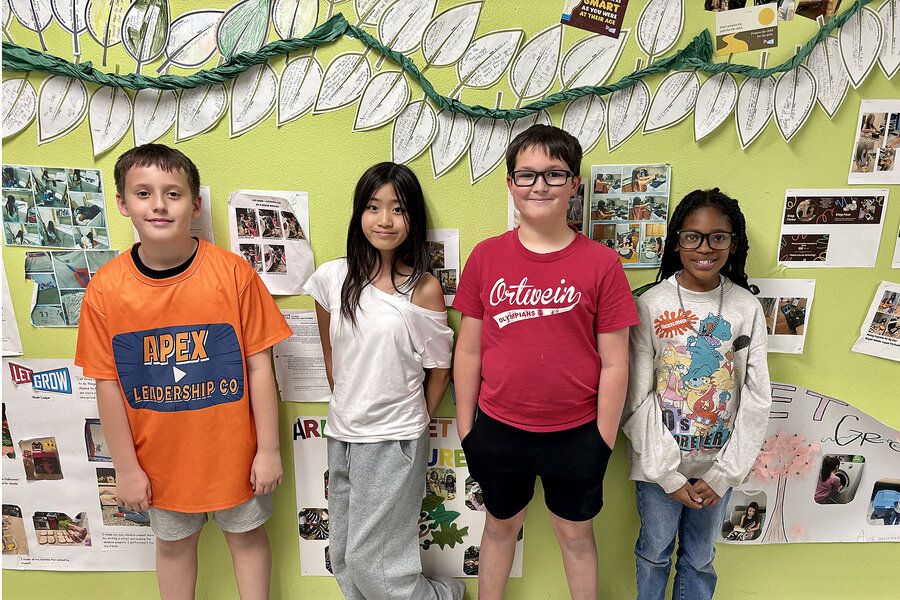
Photo: Jackie Valley/The Christian Science Monitor.
Fifth graders at Dennis Ortwein Elementary School in Las Vegas, Nevada, and their Let Grow posters.

Ultimately, you want your children to grow up able to take care of themselves. Love and convenience give parents plenty of temptation to do things for them beyond the point where the help is beneficial. That’s why a school in Nevada is lending a hand to kids and parents alike to so that fledglings may have a good chance to fledge.

Jackie Valley has the story at the Christian Science Monitor.

“Walking the dog. Wrapping a package. Cooking dinner.

“For adults, these activities often represent mundane to-do list tasks. But for fifth graders in Las Vegas, they offered something different this past school year – a taste of independence. 

“ ‘I can do things by myself more instead of having my dad or my mom do them,’ says Deven Doutis, who learned his dog goes a little nuts when he spots another canine out for a stroll.

The small steps toward greater – and lasting – independence came about in a very intentional way.

“Deven’s teacher, Amy Wolfe, sensed students were entering higher grades with more needs than in past years. Some couldn’t open a water bottle, for instance, or navigate minor conflicts with their peers. So when Ms. Wolfe heard about a program called Let Grow, she decided to pilot it within select classrooms at Dennis Ortwein Elementary School in Las Vegas.

“The program’s premise is simple: When children gain independence, they grow into more confident and capable people. …

“But what, exactly, are kids allowed to do by themselves nowadays? Terms such as ‘helicopter parent’ or ‘overparenting’ have become shorthand to describe adults who are overly involved, sometimes to the detriment of their child’s developmental growth. …

“A poll conducted last year for C.S. Mott Children’s Hospital at the University of Michigan found that three-quarters of parents say they have their children do things for themselves; however, the percentage of parents who report their children do specific activities independently is lower. Only a third of parents, for example, allow their 9-to-11-year-old child to walk or bike to a friend’s house. A similar portion say they encourage their 5-to-8-year-olds to decide how to spend their own gift or allowance money.

“Safety concerns emerged as the top reason those same parents don’t allow their children more free rein. The results did not come as a surprise to Lenore Skenazy, president of Let Grow and author of Free-Range Kids. For years, she has been on a mission to unleash children in a society where they increasingly have little independence in the physical world. …

“She says the backlash stems from a pervasive, heightened sense of danger built by media narratives and litigious tendencies. …

“In a commentary piece published by the Journal of Pediatrics last year, researchers pointed to evidence showing a correlation between children’s dwindling independence and increasing mental health problems over several decades.

” ‘We are not suggesting that a decline in opportunities for independent activity is the sole cause of the decline in young people’s mental well-being over decades, only that it is a cause, possibly a major cause,’ the authors wrote. (The lead author, Peter Gray, is a research professor in psychology at Boston College and a founding member of Let Grow.)

“In Ms. Wolfe’s classroom each month, students chose an independent activity, loosely tied to a theme, and completed it by themselves. Then they reported back to their classmates and teacher about the experience. There were no grades or critiques. If Ms. Wolfe asked any probing questions, it was to suss out how her students felt after, say, baking a cake or pulling weeds. …

“ ‘It’s more about developing the conversations with students to where they see independence … as a value,’ she says. …

“For her first project, Giwan Istefan’s 11-year-old daughter, Aria, decided to make miniature lemon-and-blueberry cheesecakes. Ms. Istefan says it turned into an exercise in parental restraint as well.

“ ‘I was like, “Oh my gosh, I see the disaster happening,” ‘ she says. ‘But I had to step back. It was growth not just for her, but it was growth for also myself.’ “

More at the Monitor, here. What are some of the ways you have encouraged independence in children, not necessarily only as a parent?

Read Full Post »

Photo: Larkin Durey.
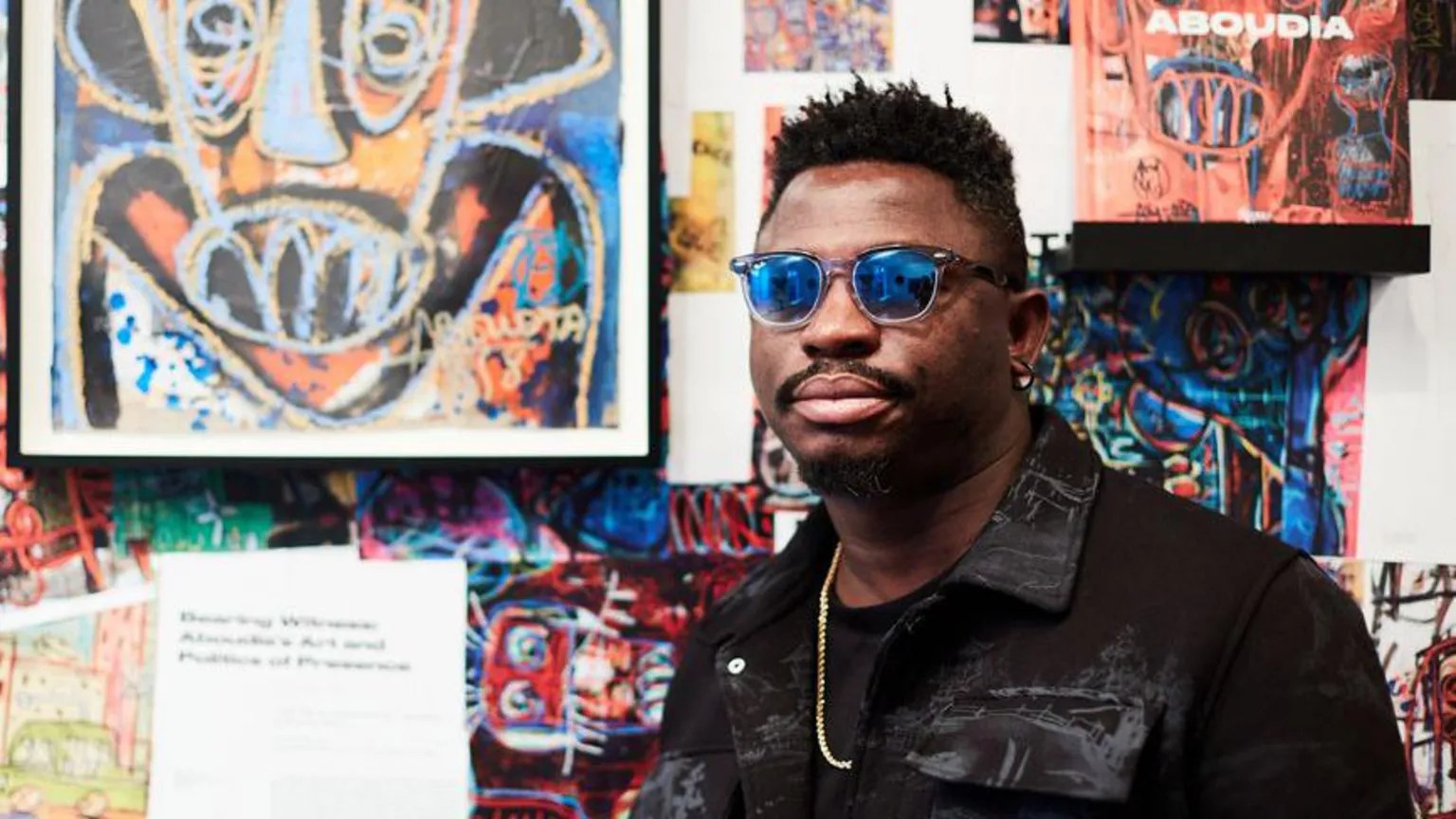
Aboudia’s work has been shown in exhibitions held in Abidjan, London, New York and Tel Aviv
. Hiscox Artist Top 100 says he sold more than even Banksy in one year.

The art world is becoming more international, and that’s a good thing. For too long, people have used their own world’s cultural references to judge the quality of art. And how can only one culture be the only worthy measure?

Wedaeli Chibelushi reports at the BBC about an African that is currently making a big splash internationally.

“Back in September, global art experts were taken aback by the name topping a fresh list of the world’s best-selling artists.

“Aboudia, a graffiti-inspired artist from Ivory Coast, had beaten well-known names, like Damien Hirst and Banksy, to sell the most pieces at auction the previous year.

“According to the Hiscox Artist Top 100, Aboudia, real name Abdoulaye Diarrassouba, had flogged 75 lots. One of these canvasses had gone for £504,000 ($640,000).

“Leading online marketplace Artsy called Aboudia’s triumph ‘striking,’ while The Guardian said market experts were ‘blindsided by the ranking.

“Months later, sitting in a London gallery plastered with his paintings, Aboudia tells me the survey results were no surprise to him. ‘Because if you work hard, the success is going to come,’ he says. …

“Aboudia’s mellow disposition clashes with the art surrounding him – his vividly colored, heavily layered canvases feature a cast of cartoon-like figures plucked from the streets of Abidjan, Ivory Coast’s largest city. Through a blend of oil sticks, acrylic paints and recycled materials like newspapers, Aboudia depicts the hardships of life in downtown Abidjan.

He particularly focuses on the children who live and work on the city’s streets.

“His eyewitness portrayals of Ivory Coast’s 2011 civil war are equally arresting. Figures gaze at the viewer with vacant eyes, while armed soldiers and skulls crank up the intensity. …

“Aboudia was born in 1983, in Abengourou, a small town around [124 miles] from Abidjan. In a 2012 essay, the artist said he was kicked out of his home aged 15 after telling his father he wanted to paint for a living.

“After being cast out, the young Aboudia pressed on and enrolled in art school. Due to a lack of financial support, he slept in his classroom after the other students went home for the day. These uncomfortable nights paid off — after graduating in 2003 the soon-to-be-star was accepted into Ivory Coast’s leading art school, École des Beaux-Arts.

“Abidjan’s École des Beaux-Arts would expose Aboudia to the Ivorian art icons whose influence can be found in his current work. For instance, Aboudia’s focus on his direct surroundings and his use of recycled materials can be traced back to Vohou Vohou, a modernist collective established in the 1970s by artists like Youssouf Bath, Yacouba Touré and Kra N’Guessan.

“Aboudia began to veer away from traditional styles of art, instead using untamed brushstrokes and earthy colors to recreate graffiti produced by Abidjan’s underprivileged children. In Aboudia’s words, these young, de facto street artists ‘draw their dreams on the world.’

“The children are his main influence, he says. …

“After establishing his core style, Aboudia would lug his paintings around the galleries of central Abidjan, hoping for a way in.

” ‘It was very hard. … They’d say: “Are you crazy? What is this work? You better go to London, to United States or Paris, because this work … here it doesn’t make sense,” ‘ Aboudia recalls.

“The adversity did not end there. In 2010, Laurent Gbagbo, the then president of Ivory Coast, refused to step down after losing an election to rival Alassane Ouattara. A civil war broke out, killing 3,000 people and forcing another 500,000 from their homes.

“Throughout the four-month conflict, Aboudia sought refuge in his basement studio, documenting the horrors he saw when venturing above ground.

“The war ended with Mr Gbagbo’s dramatic capture by UN and French-backed troops — and Aboudia emerged from his haven with 21 disconcerting paintings.

“Art-lovers and journalists from Ivory Coast and beyond lauded his work and Aboudia’s ascent to global success began. He was championed by renowned art collectors Charles Saatchi and Jean Pigozzi — and went on to exhibit his work at prestigious venues like Christie’s New York and the Venice Biennale.

“Aboudia’s first solo exhibition was at the setting for this interview, London’s Larkin Durey (then named the Jack Bell gallery). Owner Oliver Durey, who has now known Aboudia for over a decade, tells the BBC: ‘There is something we can all relate to in his paintings; hiding amidst the uncertainty and horror there are balanced moments of strength and beauty.’

“African art expert Henrika Amoafo [notes] reasons for his success … like his ‘authenticity, the really raw emotional power that he’s able to convey, the way that he speaks to urban life, the way that he speaks about conflict and its impact on children.’ …

“Aboudia’s rise also coincides with that of the African art market. In 2021, art analysis firm ArtTactic reported that the auction sales value of contemporary and modern African art surged by 44% to a record high of $72.4m. …

“Aboudia’s rise has led to him splitting his time between his country of birth and New York. When he is back in Ivory Coast, he pours his efforts into the Aboudia Foundation, an organization he launched to support the country’s children and young artists.

“This is yet another example of the star’s drive — but when I ask him if he has any plans lined up for his career, he … says he takes things one day at a time.”

More at the BBC, here. No paywall.

Read Full Post »

Photo: Jennifer Hodges.
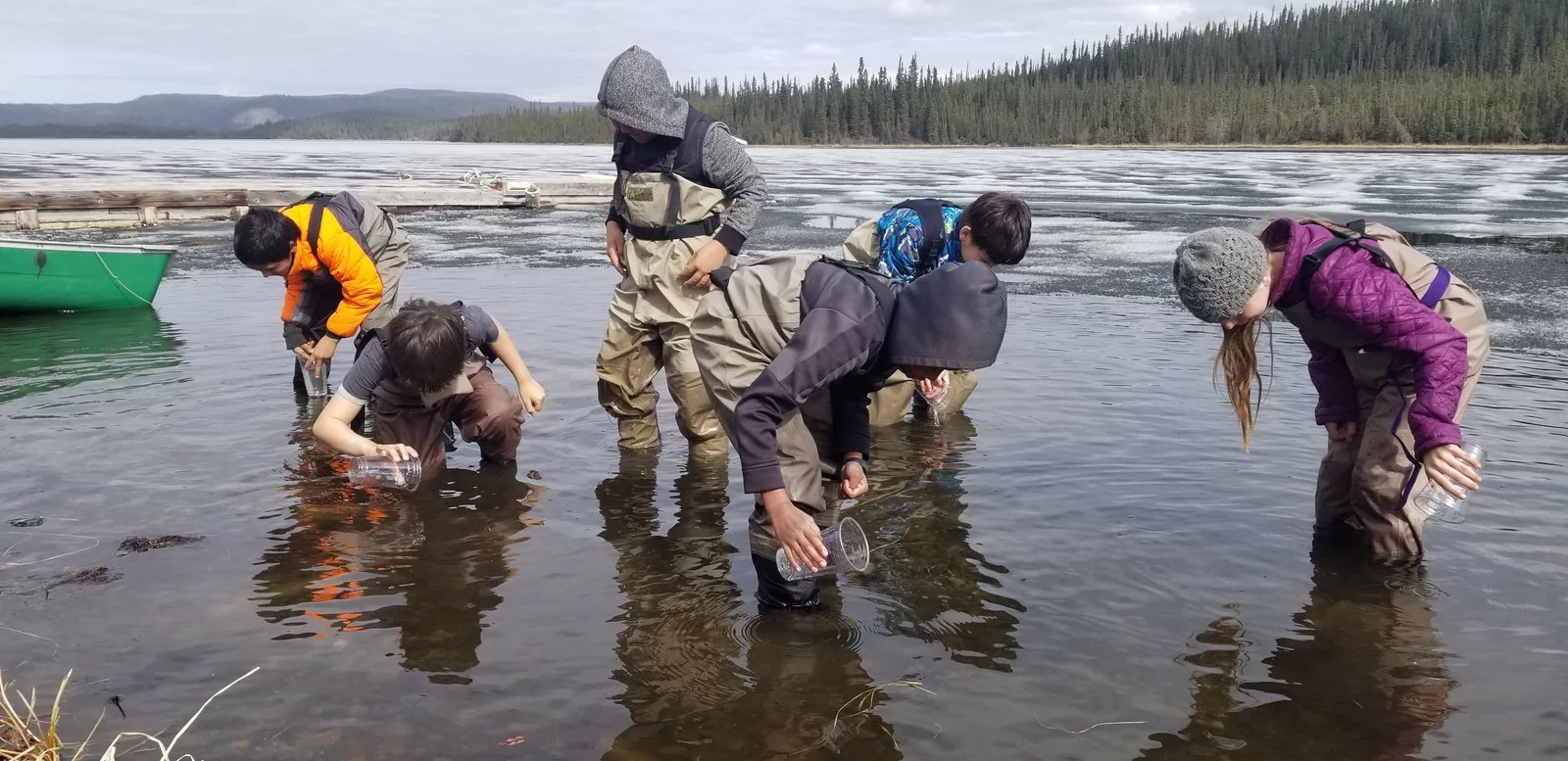
Students releasing salmon into the lake on the Salmon Field Trip in Alaska.

Much of our hope for protecting the planet relies on the education of young children. That’s why this story from Alaska about getting up close and personal with the salmon life cycle is so interesting.

Claire Murashima reports for National Public Radio (NPR), “Kenny Lake School in Copper Center, Alaska, is small, with about 60 students from kindergarten to high school seniors. It’s even smaller in winter when some parents homeschool their children because of the long drives and slick roads.

“Jennifer Hodges is a third, fourth and fifth grade teacher. She says her three-grade class sits only at desks for 20 minutes a day. They do a lot of practical learning, such as raising Coho salmon from egg to Alevin to fry then releasing them into a lake.

“It’s through a program called Salmon in the Classroom, established by the Alaska Department of Fish and Game. Kate Morse, program director for the Copper River Watershed Project, is in charge of implementing the program in six schools throughout Alaska’s Copper River watershed.

“Coho salmon lay eggs in the fall, when many schools start. The eggs remain in the classroom about six months before they are released into lakes. After that, they live for two to four years before they spawn and then die shortly afterwards.

“Every day, about a third of Hodges’ students ride the bus 45 minutes from the Native Village of Chitina. Many students already have experience fishing salmon, which is a staple in Native Alaskan communities.

‘It’s really a delicate balance because we are dealing with traditions and culture of the Native people,’ Hodges says. ‘This is their land, this is their salmon. And so we have to really be part of that.’

“Ahtna, a local tribal association, helped donate the tank in her classroom.

“Though many of her students grow up fishing salmon for food, few have raised them as pets.

” ‘The salmon have turned from being just fish in their backyard that they catch to eat, to fish that they are connecting to,’ says Hodges. ‘With this project, they have a whole different perspective because they know what it takes to actually go through the stages of a salmon.’

“Learning about climate change is more crucial now than ever. In 2022, the Arctic had its sixth-warmest year on record. But these lessons are made concrete to them in raising salmon, which require cold water to survive.

‘We had a failure in our equipment and it brought the temperature up about five degrees,’ says Hodges. ‘Just warming it that much just wiped out our eggs.’

“During the months that the salmon are in the classroom, students like to sit by the tank to observe. ‘When the eggs hatch they have sacs that carry their food,’ says Addy, a student. ‘That way they can hide still and don’t have to look for food. It’s funny because when they try to swim they just end up in circles.’ …

” ‘Putting hand sanitizer on your hands and then putting your fingers in the tank – you’ve polluted the tank,’ Hodges says. ‘That has happened to us before. That year we had seven make it. Normally we have about 180 that make it.’

“Students like to calculate when the salmon will turn from eggs to Alevin to fry based on the temperature of the tank. To them, it’s not practicing math problems: it’s predicting the future. …

“Since Hodges and her students live in such a rural area, there aren’t many field trips. But each year in May, she takes her students on the Salmon Field Trip, where they get to release the salmon they’ve raised in class. …

” ‘The best part is getting to release them after watching them hatch from eggs, grow into fry and take care of them,’ says Fisher, a student. ‘You get to say goodbye.’

“The student put the salmon in a bucket and then secured it with a seatbelt. Students suit up in chest waders, rubber bodysuits to keep them dry when they go into lakes, and then each gets a cup of about ten fish. They put the cup under water and let the fish swim out.”

More at NPR, here. No firewall.

Read Full Post »

Photo: Jim Weber/Santa Fe New Mexican/AP/File.
Fire rages along a ridgeline near the Taos County line as firefighters from all over the country converge on northern New Mexico to battle a fire on May 13, 2022.

An interesting experiment is taking place in New Mexico, where leaders are merging recovery efforts for children who were affected by recent wildfires and floods with recovery efforts for the environment.

At the Christian Science Monitor, Sarah Matusek has the story.

“Sara Villa watches her second grader, Aaron, focus on the task, his jacket hood raised against the November chill. He’s one of several dozen students on a school excursion at a New Mexico ranch. The Villas evacuated their nearby Holman home in the spring due to wildfire, then again in the summer due to floods. Because of water damage, the family went into debt purchasing a new mobile home, says Ms. Villa. Other scars are harder to see.

“Aaron gets ‘scared now when it rains,’ she says. ‘I just try to explain to him that he’s OK.’

“Aaron, shy, offers a snaggletooth smile. The ball in his mud-smeared palms is stuffed with seeds of native grasses. Students can plant these ‘seed bombs’ where they please, such as at home or here at Collins Lake Ranch, where about half of its 300 acres burned last spring in the state’s largest recorded wildfire.

“The activity is part of a school district experiment linking environmental recovery to that of students, whose families lost ranchland, income, freezers full of food, and safe drinking water. This school year, the rural Mora Independent School District (MISD) has tried several ways of harnessing lessons about such disasters to ‘promote the healing,’ says Superintendent Marvin MacAuley. …

“The district hired a second social worker to deal with an upswell of behavioral issues. MISD has also doubled down on logistical preparedness, which includes ongoing food distribution to local families and the drafting of school flood-response plans. …

“Not unlike the weather radio that Mr. MacAuley keeps on his desk, antenna raised at the ready, district staffers have had to broaden their attention to student needs that include not only academics but also resilience.

“ ‘I want them to recover. I want them to succeed,’ says the superintendent. …

“Family trees in Mora County intertwine with Indigenous, Spanish, and Mexican histories; some residents trace back ties to the land through nine generations. The district of around 400 students – most are Hispanic, and nearly all qualify for free or reduced-price lunches. …

“In April, prescribed burning in Santa Fe National Forest botched by the U.S. Forest Service grew into the largest wildfire in recorded New Mexico history. The blaze of over 340,000 acres was fueled by adverse conditions that the government says it underestimated. April set a record dry average for the state in terms of precipitation: five-hundredths of an inch that month. …

“As the fire blazed, Mr. MacAuley, a former wildland firefighter for the U.S. Forest Service, made the call to send students and staff home early. Evacuations followed. After a ‘chaotic’ two weeks, he says displaced teachers resumed lessons through a semblance of virtual learning. Though the district had begun using 1-to-1 computing during the pandemic, not all children evacuated with devices, let alone landed where they had access to Wi-Fi. …

“Summer flooding from thunderstorms was made worse by the wildfire. At the start of the fall semester, flooding cued two early dismissals and the sheltering of students late at school until the roads cleared. …

“Researchers are beginning to understand the impact of climate change on young people, including through self-reporting of ‘climate anxiety.’ In April 2021, a year before the New Mexico blaze, the National Association of School Psychologists adopted a resolution recognizing the importance of mitigating climate-related harms (like air pollution, extreme heat, and wildfire) to the learning and mental health of students. 

“MISD is now equipped with cots, food, and water in case of future needs to shelter students. And the district used American Rescue Plan Act education funding to hire the second social worker based on a spike in social-emotional needs, with a third contracted on an as-needed basis. …

“Senior Casey Benjamin is among those who helped, as a junior firefighter. Sixth grader Ana Crunk, daughter of the teacher, volunteered at an evacuation center in Peñasco.

“Though it was ‘scary’ to flee home, helping out ‘helped me feel better,’ says Ana, whose own family was evacuated for two weeks. …

“Mora’s expeditionary learning, first mentioned in a report by Searchlight New Mexico, is partially meant to address social-emotional needs. Sometimes called experiential or project-based learning, the hands-on learning approach was developed by educators in the 1990s.

“Since the fall semester, several expeditionary learning days, including the seed bomb outing, have taken place at Collins Lake Ranch, a nonprofit serving people with disabilities. In other lessons there, students learned to fly drones for aerial data collection and tested post-fire water quality, in partnership with the New Mexico Forest and Watershed Restoration Institute at New Mexico Highlands University. …

“The district has [also] launched its first team to enter the New Mexico Envirothon, a problem-solving competition that tests student knowledge of natural resources.”

More at the Monitor, here.

Read Full Post »

Photo: Dea Andreea/Unsplash.
When a child is in a play, she can see what it’s like to be someone else for a while.

You don’t really need a reason to justify doing theater with children. It is just so much fun. But if you need a reason, think about what theater-engendered empathy and active listening can do for kids throughout their lives.

Alexandra Moe writes at the Washington Post, “It’s after school, and the tweens are rowdy with angst. Then two of them, Charlotte Williams, 13, and Tally Vogel, 11, face each other. Williams raises an arm, and Vogel raises her arm to follow. They’re practicing ‘the mirror,’ an improv exercise in a theater classroom, and the room suddenly hushes. It’s indistinguishable which girl is leading, and which is following. When the exercise stops, and the teacher asks how they were able to sync up so completely without speaking, Vogel says, ‘I used my eyes.’

“In other words, she used ‘active listening,’ a type of verbal and nonverbal communication skill that promotes mutual understanding.

“Several studies show communication skills are the most essential skills for navigating American adult life. … These skills are often taught through Social Emotional Learning programs, offered in K-12 schools in 27 states. But they are also a by-product of theater class, according to a recent study from George Mason University and the Commonwealth Theatre Center. The study follows children aged 5 to 18 over six years — the longest look at theater’s impact in kids to date — and finds increases in communication skills across age, gender and race.

“ ‘The longer the kids spent in the theater classes, the more they gained in 21st century skills, like communication, creativity, imagination, problem solving, and collaboration,’ says Thalia Goldstein, the study’s co-author and an associate professor of applied developmental psychology at George Mason University. …

“Parents of young children are familiar with pretend play — the couch is suddenly a frog castle, the floor a lake, and unbeknown to you, sharks are circling your ankles. It may seem like pure fantasy, but in fact, pretend play is the foundation for developing empathy, Goldstein says. It helps young children build emotional understanding, regulation and executive function, the foundational skills that later predict empathy levels. Parents can help foster empathy in children by introducing fiction books throughout childhood, with varied characters, settings and authors, which correlates directly to empathy scores in adulthood. They can let them be the drivers of pretend play, authors of their own stories.

“And theater class is yet another way. It’s the social dynamic of theater, the give and take, the volley of listening and responding, that expands kids’ capacity to read cues, think quickly and creatively, work as an ensemble and see things from another perspective. Theater provides an awareness of space, pausing, waiting for somebody else to talk.

“For children with autism, improv techniques increase eye attention and reciprocity of conversation, says Lisa Sherman, co-founder of Act As If, a communications program that specializes in working with autistic youths. And this is where the arts level the playing field for children of different abilities; they can participate in meaningful ways where language is not a requisite skill.

“A study among K-2 children in San Diego showed that participating in activities in drama and creative movement significantly improved English-speaking skills among children from primarily Spanish-speaking homes. Children with the most limited English benefited the most, says the study’s co-author, Christa Greenfader, an assistant professor of child and adolescent studies at California State University at Fullerton. …

“Connecting is ultimately the goal of communication, and it is the reason the actor Alan Alda began using improv exercises with scientists. Scientists are trained to speak methodically, defend their arguments and use niche jargon, a communication style that doesn’t always land with a general audience, says Laura Lindenfeld, executive director of the Alda Center for Communicating Science. Through improv, they are taught to make mistakes and laugh about it, to ‘give ourselves permission to fail and move on.’

“ ‘When scientists come into a room, they’re like, “Oh man, you’re going to put me through improv?” ‘ she says. But after exercises like ‘the mirror,’ looking intently into other people’s eyes, they realize they can’t succeed unless they’re in touch with the other person. Speaking becomes about making a human connection rather than pushing information — and that’s the point. You may have the most wonderful scientific finding, but if no one understands it, what’s the use?

“Sara Williams, mother to Charlotte, cites theater as the foundation for her daughter’s self-awareness. Charlotte began drama classes at age 5. At 13, she is not afraid to speak publicly or join the student council; she listens and has confidence. ‘They go to these classes and come home feeling energized, like they accomplished something,’ Williams says. And not just the outgoing kids — for the shy, theater opens them up. For children with anxiety, like so many children coming out of the pandemic, ‘the least judgmental place you can be is in a theater class.’ You can keep your personality, and unlike in sports, you’re not competing with anyone.

“In the end, theater is about telling stories. It is one of the best ways to help young people get to know themselves, Dawson says. Stories help us make sense of the world and understand another’s experience.”

More at the Post, here.

Read Full Post »

Photo: Bihar Museum.
Tens of thousands of schoolchildren have visited the Bihar Museum in Patna, India, thanks to a government initiative.

I like being exposed to parts of the world I know nothing about. That’s why most of the mystery books I read are set in froreign countries.

Today I’m learning about a region just south of Nepal in India’s northeast, Bihar. In the town of Patna, the government-owned Bihar Museum is working to expand the horizons of its large population of children.

Kabir Jhala writes at the Art Newspaper, “At India’s last census, Bihar was the nation’s youngest state, with 58% of its more than 104 million citizens under 25 years old. The museum hopes, through a unique scheme, [to] create a generation of future art lovers.

“Since 2019 Bihar’s Ministry of Education has pledged to provide 20,000 rupees ($260) to every primary school in the state for museum visits, with the money going towards transport, entry tickets and lunches. While the sum might not seem great, multiplied by the state’s 67,000 eligible schools, it amounts to more than $17.4 million, a considerable sum in a country where most public museums have virtually no engagement programs.

“At the museum, children can explore dedicated sections for young visitors, including works that can be touched, labels at child-friendly heights and workstations in which they can mint their own coins and simulate parts of an archaeological excavation.

“So far the scheme has only been rolled out in the nearest districts to Patna, the state’s capital, and Covid-19 has limited its reach. But from April 2019 to March 2020, the only full year in which the scheme was untouched by the pandemic, 33,000 students from 1,000 schools visited the museum. …

“ ‘I want the children to go back to their communities and rave about their time at the museum,’ says the institution’s director, Anjani Kumar Singh. ‘Through word of mouth, I think we can transform not just this generation into museum-goers, but the whole state, too.’ …

“ ‘Many of these children live in rural areas with parents who can’t read or write [Bihar’s literacy rate is one of the lowest in India] and the concept of museums and art are totally alien,’ Singh says. ‘But despite Bihar being one of the country’s poorest states, I am proud that we have pioneered a scheme that is totally unprecedented in terms of scale in India — no other museum comes close to this level of youth engagement.’ …

“Singh says his next plan is to fill a vehicle with photographs, films and replicas from the collection to create a traveling museum to tour the state.”

More at the Art Newspaper, here.

I went to Wikipedia to learn more. Of the Children’s Gallery, it says, “Its collection of artifacts and exhibit items is divided into six domains: the Orientation Room, the Wildlife Sanctuary, the history sections on Chandragupta Maurya and Sher Shah Suri, the Arts and Culture section and the Discovery Room. Among the exhibits are a simulated the Asian paradise flycatcher, the Indian giant flying squirrel, animals, birds, trees and plants native to the state of Bihar. The gallery’s focus is family learning; most exhibits are designed to be interactive, allowing children and families to actively participate.’

A history gallery boasts “artifacts from the Harappan Civilization, also known as Indus Valley Civilization, the second urbanization and Haryanka. The whole collection of this gallery represents the advanced technology and sophisticated lifestyle of the Harappan people. The gallery has objects from the fourth century BCE to the first century BCE. It has objects spanning three major dynasties of India: the Mauryas, the Nandas and the Shishunagas. The gallery also houses fragments of railings from various ancient Stupas that are carved on with episodes from Buddha‘s and Mahavira’s life.”

And I’ll just add a bit about the Diaspora Gallery, which “provides the historic context of how Biharis were relocated to countries like Mauritius, Bangladesh and beyond. Some were recruited as laborers in the early days of the East India Company, and others explored foreign lands on their own initiative. Activate an interactive map to learn about the origins of Bihari culture, trade routes and how the population has relocated in foreign lands. Aside of the past movements, also discover recent stories of the people of Bihar, their accomplishments and their involvements, to understand the influence Bihar has had around the world.”

Read Full Post »

The biography of a woman who channeled childhood.

Today I decided to share this GoodReads report on a biography I read recently.

“I really liked this biography of the prolific and influential writer for children Margaret Wise Brown.

“Amy Gary is not primarily a biographer. In her earlier jobs, she was head of publishing for Lucasfilms and Pixar. But curiosity led her to a treasure trove of unpublished papers that the sister of Margaret Wise Brown had stored away in the attic after Brown’s death at 42 from an embolism.

“Margaret Wise Brown not only wrote the seminal Goodnight, Moon, which after a slow start sold more that 48 million copies worldwide, but many other titles you might recognize without knowing they were by her. At this time of year, I always pull out Home for a Bunny, for example.

“Brown wrote for a variety of publishers, including Harper, Disney, and Golden Books. But it wasn’t that she was a warm and fuzzy child-loving, motherly type. It was more that she never stopped being a child. She thought like a child. She fit in well with the cutting-edge child-development philosophy of the Bank Street School, one of her first employers in New York, but even before she knew about that, she sensed that books featuring repetition and descriptions of very familiar objects would please young children. And she tested everything on her audience.

“Gary’s access to Brown’s papers makes this a rich biography of a wild and original, nature-loving girl who became a wild and original, nature-loving adult. Despite a life of privilege in both New York and the south (she was a frequent visitor to her cousins’ Manhattan-sized island, Cumberland, which is now a national park), nothing could dampen her ability to see everything around her in terms of a story for kids.

“I think you will be interested in how Brown met some great illustrators and writers and nurtured their talents — and in how she came up with innovations like furry books and records in book pockets. She was valued for her work, which was satisfying, but her love life with both men and women she knew were bad for her kept her from being happy for long.

“I really appreciated Gary’s long epilogue, in which she tied up every possible loose end. And the forward by Brown’s fiance, James Stillman Rockefeller Jr., was a lovely way to capture Brown’s vibrant way of talking about, thinking about, whatever she saw.”

Read Full Post »

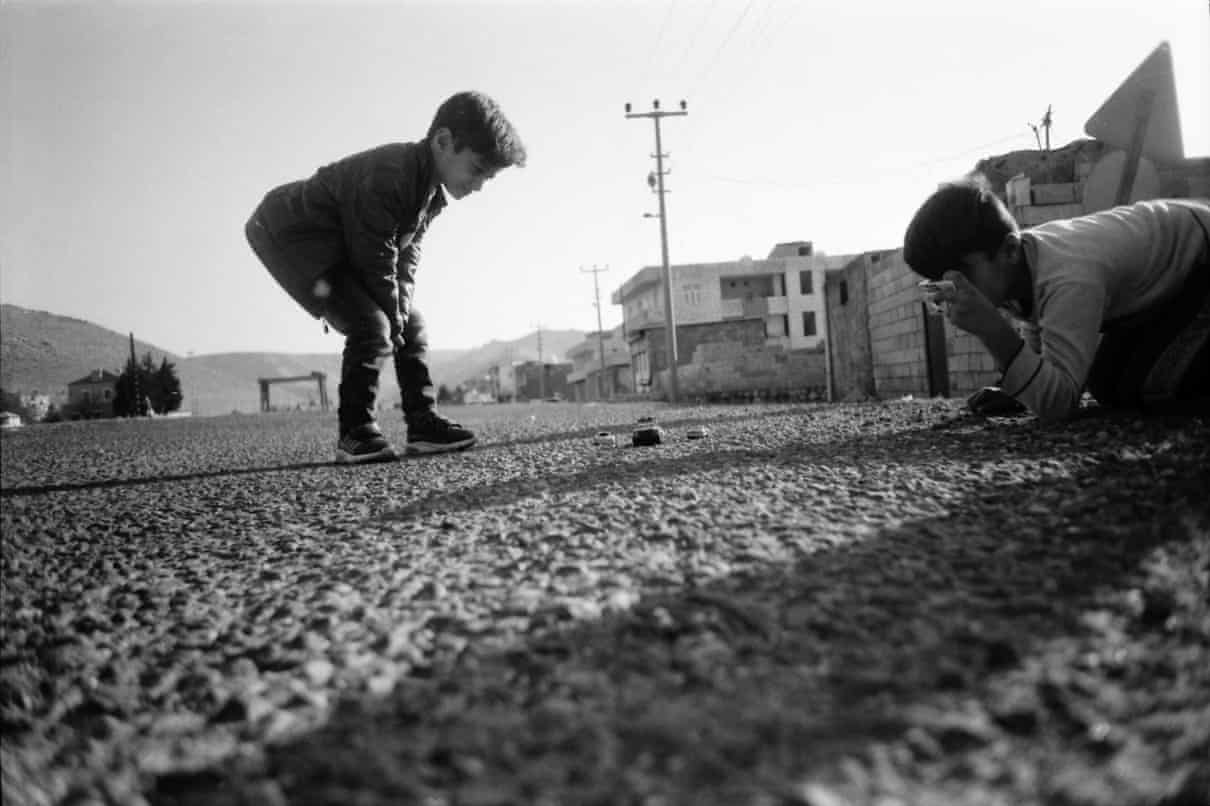
Image: Ibrahim, 13.
The photography of Ibrahim, a Syrian refugee in Turkey, is featured with the work of other boys and girls in the book i saw the air fly, by Sirkhane Darkroom (Mack, 2021). Proceeds go to the Her Yerde Sanat-Sirkhane charity.

Today’s story is about trying to provide some fun for children caught in the failures of a grownup world. Adults of good will can’t fix everything for these youngsters, but whatever they manage to do can mean a lot.

Sean O’Hagan reports at the Guardian, “Serbest Salih studied photography at college in Aleppo, before fleeing Syria with his family in 2014 as Islamic State fighters advanced on his home town of Kobani. He is now one of an estimated 100,000 refugees living in the historic city of Mardin in south-eastern Turkey, just a few miles from the Syrian border. Having initially found work as a photographer for a German NGO, Salih’s life changed dramatically in 2017 when, while wandering with a friend through the city, he discovered a sprawling refugee community living in a group of abandoned government buildings in the working-class Kurdish district of Istayson.

“ ‘It was a place where Turkish Kurds and Syrian Kurds lived as neighbours, but did not communicate,’ he says, ‘They were strangers who spoke the same language. It was at that moment that I thought to use analogue photography as a means to integrate the different communities.’

“Working with Sirkhane, a community organisation, and with initial funding from a German aid organisation, Welthungerhilfe, he began hosting photography workshops using donated cheap analogue cameras. ‘Digital is easier and quicker,’ he tells me, ‘but the analogue process teaches children to look more carefully and also to be patient, because they have to take a picture without seeing the result instantly. For them, there is something therapeutic and healing about the whole process.’

“Salih now runs the Sirkhane Darkroom in Mardin and, since 2019, has travelled to neighbouring towns and villages with the Sirkhane Caravan, a mobile version of the same. Children from the age of seven come to his workshops to learn the traditional skills of shooting on film and processing the results in a darkroom. …

The results, as a new book, i saw the air fly, shows, are often surprising. Rather than reflect the traumas of their displacement, the pictures tend towards the innocent and joyous …

“Family portraits, blurred shots of their friends at play, children jumping, hiding, posing with their friends or tending their animals. Throughout, there are more intricately formal compositions that catch the eye: a cluster of hilltop buildings, the irregular geometry of electricity wires crisscrossing the sky. …

“The book has parallels with Wendy Ewald’s Portraits and Dreams: Photographs and Stories by Children of the Appalachians, also published by Mack, in which she taught practical photography to kids from a poor rural community with often startling results. Like that project, i saw the air fly is a testament to the undimmed imagination of the very young, however impoverished their circumstances, but also to Salih’s faith in the transformative power of analogue photography. …

“As the children progress though the workshops, he tells me, they are given specific subjects to photograph. These can range from the everyday (the garden, the home) to the more socially aware – child labour, child marriage and, tentatively, gender issues. ‘Often, when we begin, the girls don’t think they can be as good as the boys,’ he says. ‘Sadly, that is what the adult world has taught them, but soon they are shooting pictures about their lives and experiences. The camera gives them the confidence to do that.’

“On the Sirkhane website, videos and photographs attest to the sense of wonder the children experience in the darkroom as the images they have shot finally appear. …

“Salih’s plans to ‘expand the caravan workshops so we can go to the most affected places’ have been put on hold since the pandemic began and he has had to teach online. ‘It has been difficult,’ he says, ‘because most of the children do not have smartphones or internet access.’ …

“The publication of i saw the air fly is a singular achievement. It is also, in many ways, a humble book – all the images have been selected by the children themselves, their often low-key charm attesting to the essentially democratic nature of the medium, and its ability to surprise. ‘People think that if you give a refugee child a camera, the results will be sad,’ says Salih, ‘but instead most of these photographs are all about joy. They are small moments of private happiness.’

“All proceeds from the sale of i saw the air fly will go to the Her Yerde Sanat-Sirkhane charity, whose aim is to provide ‘a safe, friendly and embracing environment’ for children caught up in conflicts.”

More at the Guardian, here.

Read Full Post »

Photo: Tara Adhikari/The Christian Science Monitor.
Three Pluma siblings rushed to play the upright that Pianos for People had just brought from a donor in St. Louis.

Not all children take to the piano, but for those that do, cost should never be a barrier. At least, that’s the belief of a relatively new charity in St. Louis, as we learn from Tara Adhikari at the Christian Science Monitor.

“Nose pressed to the window, 2-year-old Mary Pluma is excited, her smile so big it’s visible even from the street. Her four older siblings lean in behind her. Eyes wide, they track the movers outside. …

“Today is the day the Pluma family receives their first piano. 

“The moment the upright is nestled in the corner, three of them beeline for the bench meant for one and tap on the black and white keys. Sometimes the notes sync in harmony, more often they do not, but the room is alive with music and joy. 

“The piano was delivered by Pianos for People, a St. Louis nonprofit that reduces financial barriers to music education by providing donated pianos and free lessons to low-income families. The organization is transforming what was historically a luxury item and symbol of financial success into a tool for growth – accessible beyond the American middle-class family.

‘Our philosophy is that a piano is more than just a piano,’ says Matt Brinkmann, the executive director. ‘We use the piano as a gateway to self-esteem and connection and community.’ 

“Tom Townsend, a St. Louis advertising executive, and his wife, Jeanne Townsend, an attorney, founded Pianos for People in 2012 in memory of their son, Alex. A pianist and artist, Alex died in a car accident while attending college. …

“Their focus on saving pianos – connecting unwanted instruments with recipients who can’t afford their own – expanded to music education more broadly. They opened a piano school, in 2014, at their Cherokee Street headquarters and have since delivered more than 300 donated pianos, opened a second school, and grown lesson enrollment to 129 this past spring.

“Of the families served, 92% have annual income below $25,000. While many recognize the benefits of music education – confidence, discipline, focus – paying the grocery bill takes priority. A good upright used piano can cost upward of $1,000; a new one close to $10,000; and lessons here average $50 an hour. By cutting the costs that make learning an instrument untenable, Pianos for People creates space for self-expression that, for many, wouldn’t exist otherwise. …

“There are far more pianos available for donation than the organization can accept, says Danny Ravensberg, piano donations coordinator. This allows Pianos for People to reject pianos in poor condition and protects recipients from repair costs. 

“Every piano has a history, and donors care where their piano, often a treasured part of family memories, ends up. 

“Jackie Wennemann’s five children enjoyed playing piano when they were growing up in the 1960s – so much so the family bought two, and she’d conduct from the basement door giving cues between the instruments. ‘Sometimes we would have duets and one would get on this piano,’ she says gesturing to one in the entryway, ‘and one on the one downstairs. I would say, “Ready, set, go,” and they’d both play the same song.’

“With her children grown, Ms. Wennemann wanted the pianos to be used again. She donated the one in the best condition to Pianos for People. The organization matched it with the Pluma family, three of whom had been taking free lessons for four years. …

“ ‘When they come [home] from school, they are stressed,’ says their mother Patricia Pluma, adding that the kids speak Spanish at home, which means in school they are having to learn in their second language. But sitting at the piano bench translating the music on the page into sounds on the keys is different. It’s freeing, she says. ‘They start playing the piano and they start smiling.’

“Indeed, the peaceful power of pianos is emblazoned on Pianos for People staff T-shirts: ‘A free piano inspires peace in a child. A peaceful child becomes a peaceful adult. Peaceful adults make a peaceful world.’ “

More at the Monitor, here.

Read Full Post »

Photo: Slum2School.
Slum2School volunteers in Nigeria come from all walks of life and help coordinate enrichment activities for children.

One precept that the pandemic underscored for us all is that children need to be in school. We know how hard the year was for American children who couldn’t go in person, but just imagine what it was like for kids in a poor Nigerian neighborhood with no computers! In fact, the children in today’s article are lucky to have school at all. An idealistic young Nigerian man made it happen.

Shola Lawal writes at the Christian Science Monitor, “It was one of the few times Otto Orondaam was ever tempted to quit.

“The year was 2012 and Mr. Orondaam’s passion project, Slum2School, was off to a bumpy start. Here in Makoko, a low-income neighborhood on the Lagos Lagoon, many fishing families need children to stay home and help with their trade. His brand-new nonprofit aimed to get those kids into school, and for weeks, he’d planned an event, hounding a medical company for mosquito nets to hand out as an incentive.

“But just minutes before, the company called – it could not deliver the nets.

“ ‘I cried horribly,’ the young reformer recalls, laughing, sitting in a well-lit office and sporting a deep-blue turtleneck. ‘The parents were waiting and this was going to be the highlight of the event, the only thing they could take home, but there were no nets. It was a heartbreaking moment for me.’

“But Mr. Orondaam’s upbeat personality soon took over. He quickly called up friends, asking for donations. Two hours later, he zoomed in and out of a market, purchasing and distributing 200 mosquito nets – and ended up enrolling 114 children in existing public primary and high schools that the organization partnered with.

“Fast-forward to 2021, and Slum2School says it has directly sponsored almost 2,000 children. Many are still from Makoko – including Hamdalat Hussein’s grandson, Abdulmalik.

‘What Slum2School is doing for us here is good,’ she says in the local Yoruba language. … ‘I am praying to see him become somebody after he finishes school.’

“Nigeria has one of the world’s highest rates of out-of-school children, according to UNICEF – around one-third – although primary education is free and compulsory. Learning during pandemic shutdowns has been especially challenging, since only around half the population has internet access. … When the pandemic struck, Slum2School launched a virtual class for high schoolers, after distributing hundreds of tablets.

“ ‘I was able to teach myself graphics design and many things like how to make logos and flyers,’ says Habeebat Olatunde. Her siblings had skipped around her, fascinated, as she joined hundreds of children in class from their home in Iwaya, another low-income neighborhood bordering Makoko. Now in her final year of high school, Habeebat says she wants to be a human rights lawyer and fight for vulnerable teenage girls. …

“On a recent afternoon, Mr. Orondaam sat in Slum2School’s headquarters in the upscale Lekki area of Lagos, with outer walls shaped like colorful crayons. He flicked through old photos and chuckled at one of himself, thin and sunburned – one of the first times he went to Makoko, standing beside smiling parents holding nets, with the neighborhood’s wooden shacks as a backdrop.

“Growing up in Port Harcourt, a city in southern Nigeria, Mr. Orondaam studied to be a doctor but pivoted to social work, influenced by his parents. His father was the first doctor from his village and would offer free services. His mother was basically ‘everyone’s mother,’ he says. ‘Our classmates would not have sandals, and my mum would come and take yours and give them. The things I picked up from that was devotion to service, serving with your heart.’ …

“He first encountered Makoko through a documentary. … He felt compelled to visit while completing his National Youth Service Corps in Lagos – a mandatory one-year program for Nigerian university graduates.

“ ‘It was the first time I was seeing that kind of community,’ Mr. Orondaam remembers. ‘There were kids there who had never been in school and had no plans to go. I loved the energy. I knew they were happy, but I thought, “You can be happier with education; if you have an education, you can make better choices.” ‘

“He resigned from his stifling bank job and started weekly visits to Makoko, updating friends via a blog. When he came up with the idea to send 100 children to school, they supported him.” 

Read what happened next at CSM, here.

Read Full Post »

Older Posts »