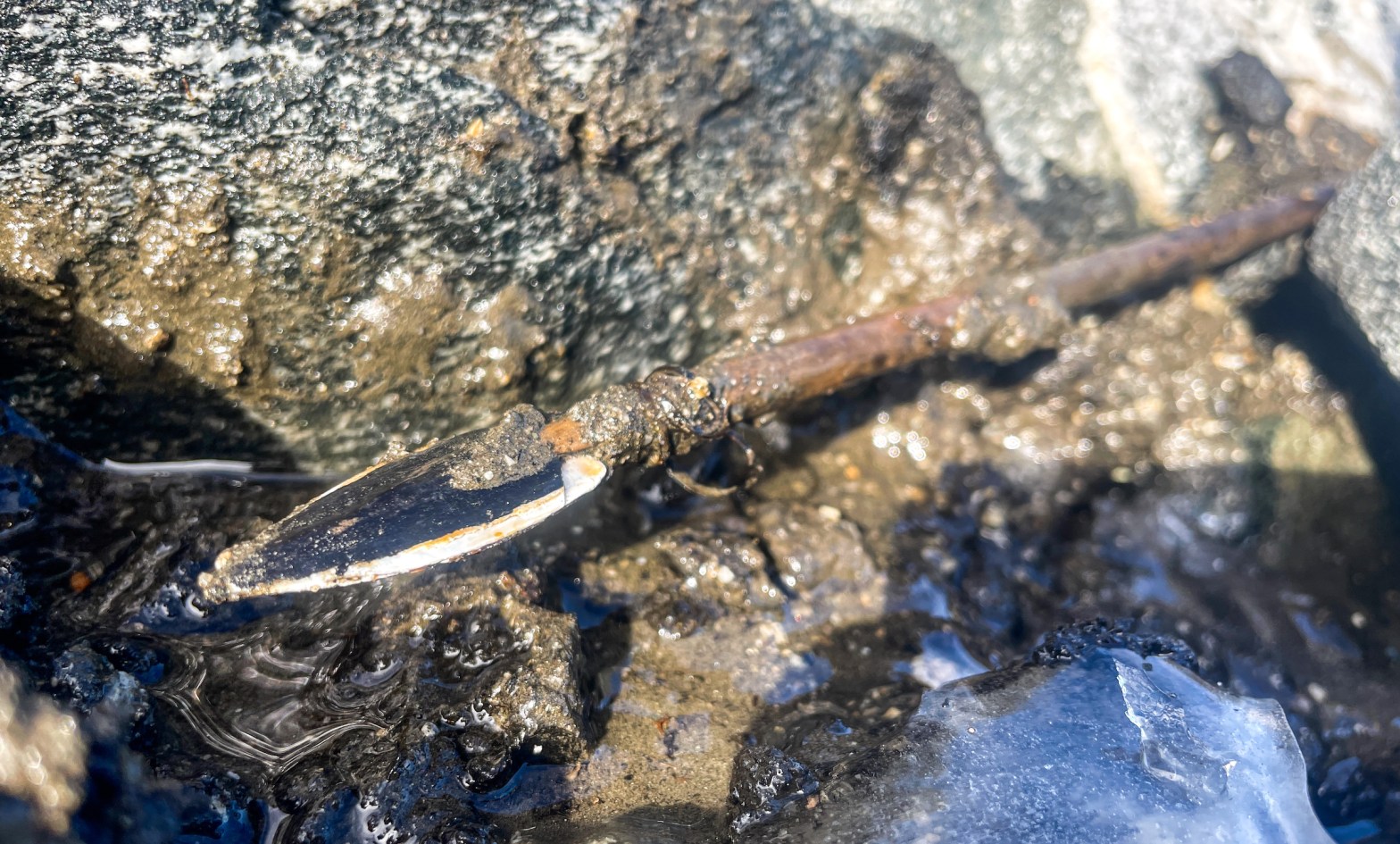
Photo: Espen Finstad/Secrets of the Ice. Melting glaciers are revealing older and older artifacts. Archaeologists discovered the arrow above in Norway’s Jotunheimen Mountains. Made out of freshwater pearl mussel, it’s one of the best preserved findings so far.
I hesitate to say that anything about climate change has an upside, but we might as well enjoy the things that keep being revealed — at least until we reach the more important goal of controlling global warming.
At Hyperallergic, Maya Pontone reports on melting glaciers in Norway and the latest Bronze Age discoveries.
“Archaeologists trekking through the Jotunheimen Mountains in Norway’s Innlandet County,” Pontone writes, “came across a remarkable find — an intact shell arrow dating back to the Early Bronze Age. Fastened with an arrowhead made of freshwater pearl mussel, the well-preserved hunting tool dates back 3,600 years and is one of eight shell arrows that have emerged from melting ice in Norway in recent years.
“On September 13, archaeologist Espen Finstad and his research team came across the artifact while checking a site as part of a routine monitoring job they typically run at the end of the field season. While the discovery of the ancient weapon was an unprecedented surprise that day, it is just one of hundreds that the Secrets of the Ice glacial archaeology team has uncovered over the past decade due to climate change.
“ ‘The glaciers and ice patches are retreating and releasing artifacts that have been frozen in time by the ice,’ Lars Holger Pilø, co-director of the archaeology program, told Hyperallergic. …
“The archaeologists have been continuously rescuing artifacts from Innlandet’s glaciers and ice patches since the fall of 2006, when the first ‘big melt‘ hit the Jotunheimen Mountains, located northwest of Oslo. [It’s the] home of the mythological jötnar, the rock and frost giants in Norse folklore. …
“ ‘Now the artifacts are exposed and deteriorating fast, so we are in a race against time to find and rescue the artifacts,’ Pilø said.
“So far, the Secrets of the Ice research team has mapped 66 ice sites and recovered approximately 4,000 finds including hunting gear and tools, textile remnants, transportation equipment, and clothing materials. The team has also found biological specimens such as antlers, bones, and dung.
“ ‘Arrows with shell arrowheads only became known in Europe when they started melting out of the ice in Norway,’ Pilø explained about the recent discovery. …
“As global warming transforms Norway’s mountainous landscape, Finstad, Pilø and their fellow glacier archaeologists are rushing to collect the exposed artifacts, which continue to get older as the ice continues to melt.
‘Most of the ice here in Norway will be gone in this century,’ Pilø said. ‘You can say that we are melting back in time.’
“ ‘The finds are incredible, but the reason they are melting out is sad,’ Pilø said, explaining how the ice melt will lead to drastic changes in Norway’s landscape, local wildlife, agriculture, tourism, and hydro-electrical power plants dependent on glacial water.
“ ‘It will be a very different world,’ he lamented.”
Feel free to revisit my February post about amateur archaeologists in Norway — the three buddies who under cover of darkness have found hundreds of previously unknown rock-carving sites. Click here.
Unless people are committed to the “ain’t it awful?” worldview, they probably respond in more positive ways to pitches about hopeful progress than pitches describing how dire everything is.
In an opinion piece at Inside Higher Ed,Stephen Porder agrees, noting that climate-change education is more likely to be effective when students learn that there is hope.
Porder writes, “The first year I taught Introduction to Environmental Science was 2007, the year after the release of An Inconvenient Truth. The class was full of eager students, most of whom would have described themselves as environmentalists. … I was there to teach them the science — basically how to use hypothesis testing, data and analysis to convince them the world is going to hell. They didn’t need much convincing.
“The endless description of problems, with little emphasis on solutions, is a hallmark of almost all environmental science and studies textbooks. After 20-plus years teaching in this field, I’ve come to think that our relentless focusing on the negative is, at best, missing an opportunity. … My more recent experiences teaching about solutions, rather than problems, suggests that a healthy dose of positivity even in the face of profound environmental challenges will reach a broader audience, gain more traction and diversify the people working on the admittedly wicked environmental challenges of the 21st century.
“Back in 2007, I walked into the classroom, fresh out of my Ph.D. and postdoc, eager to share the wonders of environmental science. I marveled at the data from the group run by Charles Keeling, who measured rising carbon dioxide in the atmosphere at the observatory on Mauna Loa in Hawai‘i. … I dove into the details of carbon isotopes to demonstrate just how we knew that the rise in carbon dioxide was a result of fossil fuel combustion, as opposed to natural sources. The course was definitely a science course —but looking back I realize each bit of data and analysis was perfused with pessimism. …
“Still, my course evaluations were good. … These good evaluations came from students who were mostly self-selected environmentalists — passionate about ‘saving the planet.’ They were bright, motivated and talented. … Other equally bright, motivated and talented students didn’t take the course. I wondered why.
“Having talked to many such students since, I’ve learned many felt a bit excluded. The environment was a worry for them, as it is for most of us, but it wasn’t their primary worry. They also felt like environmental studies or sciences was not a place where they could explore solutions. They felt that there was a relentless focus on what was wrong, rather than how to put it right. Finally, they felt like the problems we were describing were going to be fixed by people beyond the environmental field.
“I’ve come to agree with them. I, at least, was not doing enough to train problem-solvers. I’d been training people to cleverly document problems. I don’t think I’m the only one in the field who’s fallen into that trap. …
“I handed off Introduction to Environmental Science to a younger professor a few years ago, and from here on out I’m focusing on solutions, not problems. Climate solutions. Agricultural solutions. Deforestation solutions. They exist. They are not perfect and involve hard trade-offs. But their existence should be front and center in our teaching.
“Just putting ‘Climate Solutions’ in a course name dramatically changed my student enrollment. Surprisingly, very few environmental studies and sciences students signed up. Instead, students majoring in economics, political science, engineering, applied math and a variety of humanities fields appeared in my classroom. … Like all my students, they were united by their climate anxiety. But they came for, and responded to, the idea of solutions.
“This eclectic group brought a wealth of different interests, skills and weaknesses to the class and was eager to learn from each other about different approaches to overcoming the 21st century’s biggest environmental (I would argue societal) challenge. They were thrilled at the opportunity to contribute to a better future, even if the environment was not their top priority (for some it became a top priority when they learned there were things they could actually do to make a difference). Many had felt unwelcome in environmental studies/sciences, which often demands a political and philosophical homogeneity of its participants.
“As an example of this, a senior applied math major told me he had been searching for a field where his math could have impact. He had never taken an environmental class before (despite plenty of environmental angst) in part because he didn’t feel welcome or like he fit in with environmentalists. He now works doing data analytics for a solar power company. …
“Solutions are picking up speed. Technological advances in transportation (electric vehicles), space heating (heat pumps) and electricity production (renewables) have made extraordinary leaps since I started teaching. Given that transportation, space heating and electricity generation make up more than 70 percent of all fossil fuel emissions, this is huge news! We should be teaching about it at every level and helping our students gain the skills to push these revolutions forward as engineers, community organizers, investors and so on.
“Already these advances have cooled our future. A decade ago, we were headed for four to five degrees Celsius warming by century’s end. Now three degrees Celsius is more likely. Anyone who studies climate knows that’s still way too much warming to be safe, but it’s also a huge step in the right direction. You may not hear that in most environmental science classes, or in the news, but you should. Even better news is that most of what precludes keeping that number to two degrees Celsius is political, not technological. That wasn’t true when I started teaching, so we need to update our curricula to reflect this remarkable progress.
“I don’t mean to be overly optimistic. The challenges to a stable climate future are enormous. … But by relentlessly beating a drum of negativity in the absence of hope, we’re driving away brilliant young minds that could help make the world a better place.”
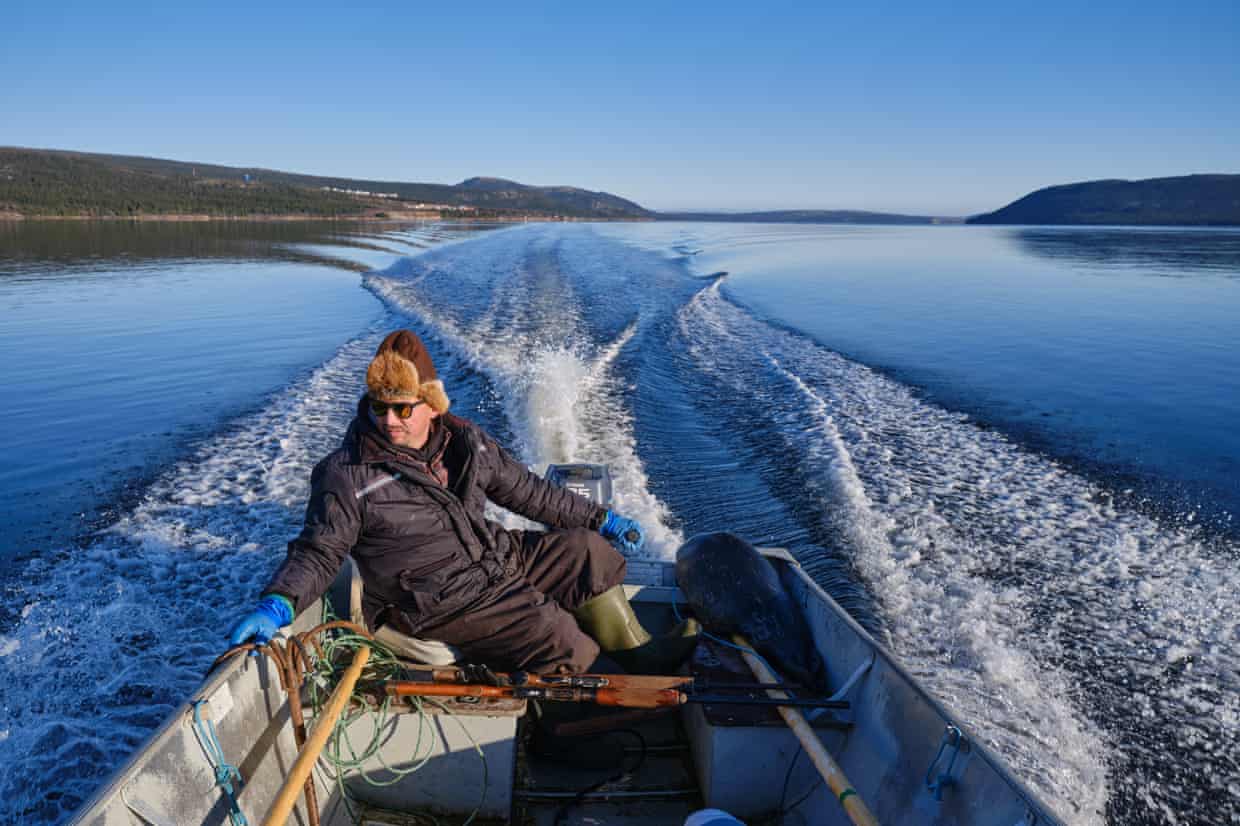
Photo: Eldred Allen. Martin Shiwak, an Inuit, with his hunting rifle in his boat, on Lake Melville, near Rigolet in Nunatsiavut, Canada.
Can you handle another story about how we are finally learning that indigenous ways are better for everyone in a changing climate? I don’t mean we all need to hunt and fish. I’m talking about protecting land and water from resource exploitation.
Ossie Michelin writes at the Guardian that “the environment Inuit have lived in for millennia is changing fast. Canada’s government once ignored Indigenous knowledge of it but now they are jointly creating the Nunatsiavut conservation area. …
“Martin Shiwak accelerates his boat to grab the seal he has shot before the animal sinks out of sight. Shiwak has hunted for years in the waters of Lake Melville, by the Inuit community of Rigolet in Nunatsiavut.
“As he hauls the ringed seal into the vessel, he says he counts himself lucky to have found one so quickly. ‘Sometimes you have to drive around here in the boat nearly all day to find a seal,’ Shiwak says. ‘Nowadays you can’t even afford to – C$60 only gets you five gallons of gas.’
“Nunatsiavut – one of four Inuit homelands in Canada – is where the subarctic becomes the Arctic. An autonomous region of Labrador-Newfoundland province, it is located at the extreme north-east corner of North America.
“Winter temperatures here can average -30C (-22F) with the windchill, as the Labrador current brings Arctic ice floes down along the coast, and a host of marine life from, plankton to polar bears. From November to June, shipping is impossible because sea ice covers the entire 9,320-mile (15,000km) coastline, so all food and supplies must be flown in. In Rigolet, a frozen 1.5kg (3.3lb) chicken will set you back C$25 (£15). Hunting is not just a tradition but a necessity. …
“As a young boy, he learned to hunt and fish with his father and grandfather, who in turn had learned these vital skills from their elders. It is also how Shiwak learned the core Inuit values of taking only what is needed, sharing, sustainability and respect for nature – values he is passing down to his own children. …
“But while traditional knowledge has allowed Inuit to survive in this harsh environment for so long, the climatic conditions they rely on are changing quickly. Since 1950, Nunatsiavut has lost 40 days of ground snow a year. Its sea ice is vanishing faster than anywhere in the Canadian Arctic. …
“There is very little local people can do about that: although the region is roughly the size of the Republic of Ireland, Nunatsiavut’s population is less than 3,000, spread among five small towns. What they can do, however, is work to protect what they have. That’s why Nunatsiavut is partnering with the Canadian government to co-develop the world’s first Inuit Protected Area of this type.
“While there are other Inuit-led marine conservation programs in Canada, this will be the first to bear the title of Inuit Protected Area. … Built on Inuit values and culture, this type of conservation area would allow Indigenous people to continue traditional practices of hunting and fishing.
“That was not always the case. Past conservation policies saw Inuit at best only consulted and at worst completely ignored. Many Inuit hunters and fishers faced fines, had their equipment confiscated and their catches from hunting and fishing taken.
“Despite being granted the power to self-govern in 2005 (after 30 years of negotiations with the Canadian government), Nunatsiavut still lacked the final say over conservation in its waters. Final decisions defaulted to federal or provincial ministers.
“Now, at last, Nunatsiavut can jointly create and co-manage the protected area, based on Inuit priorities, as an equal authority. This will allow Inuit to practice traditional hunting and fishing in the area, while protecting the waters from industry and development.
“ ‘Just because we’re small doesn’t mean we can’t do something,’ says James Goudie, deputy minister of lands and natural resources in the Nunatsiavut government. ‘We can show the world that a small region can protect a massive amount of biodiversity.’
“The Inuit Protected Area would only cover about a third of Nunatsiavut’s nearly 50,000 sq km of offshore waters, but the region is home to important populations of fish such as salmon and Arctic char, the breeding grounds for many migratory birds, and the habitat of Arctic marine mammals including polar bears, beluga whales and seals.
“Establishing a protected area is also a pre-emptive strike against resource exploitation. Significant natural gas deposits have been found offshore along the Labrador shelf, but it has remained largely unexplored because of the ice. As the climate warms, however, the region is becoming more accessible – the Inuit Protected Area would prevent such resource exploration. …
“The borders of the new area have not been finalized, with the feasibility report expected in 2024 or 2025. But [Rodd Laing, Nunatsiavut’s environment director] notes: ‘You don’t need lines on a map to recognize the great work that happened already with Inuit relative to conservation and the management of ecological resources.’
“After all, he says, for countless generations of Inuit, conservation was not an option that could be ignored: it was a way to ensure there would be enough to eat, and enough next time as well.”
More at the Guardian, here. Nice photos. No firewall.
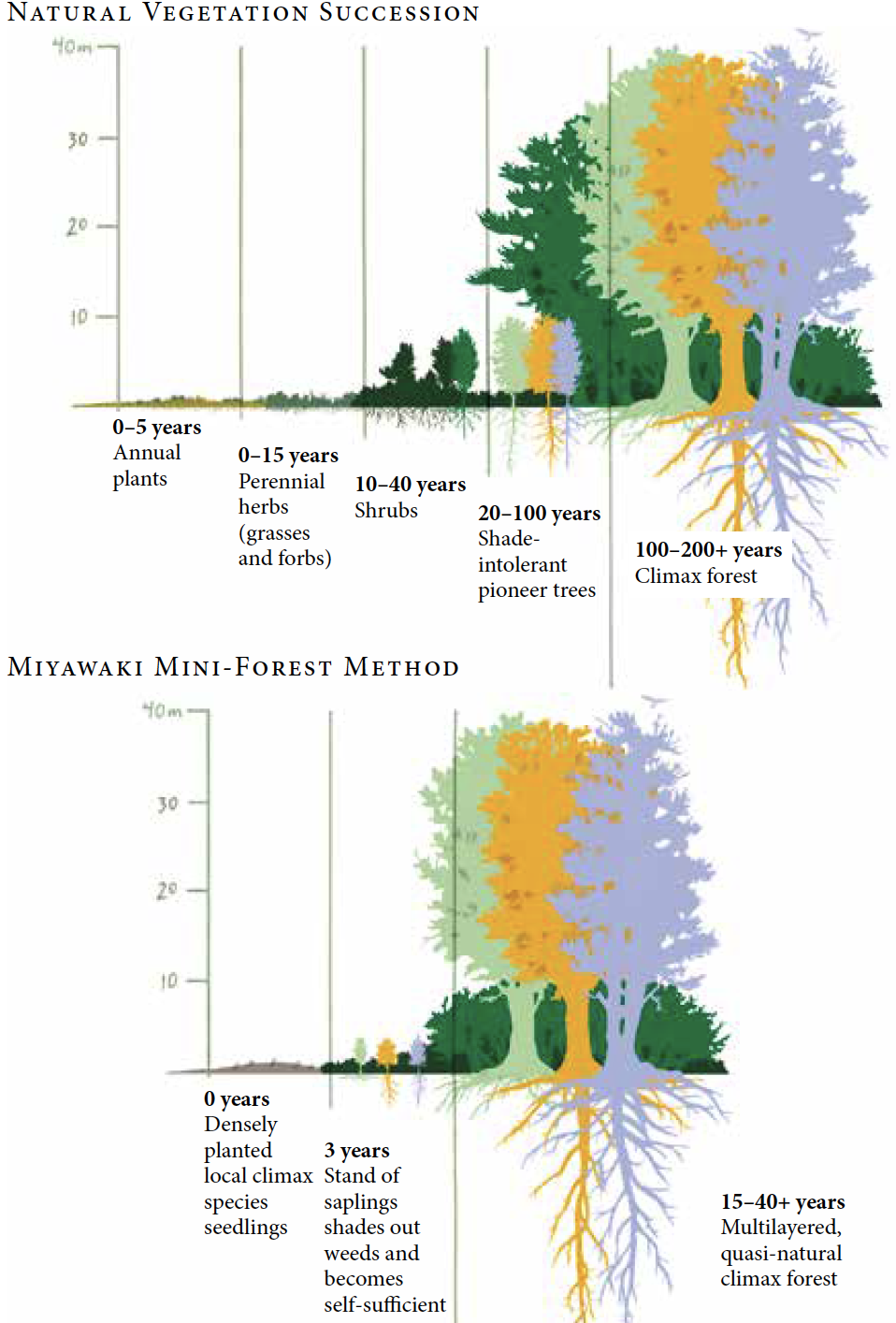
Illustration: Elara Tanguy. The Miyawaki Method (bottom) speeds up the process of natural ecological succession (top) through the planting of “climax species.”
Ideas on combating climate change through the planting of sustainable forests come today from an employee-owned publishing company called Chelsea Green. Here they focus on a book by Hannah Lewis about the Miyawaki Method.
“Author Hannah Lewis is the forest maker transforming empty lots, backyards, and degraded land into mini-forests and restoring biodiversity in our cities and towns to save the planet. …
“Most of us know the term old-growth forest, which refers to natural forests that are still mostly free of human disturbance (though not necessarily free of human presence). These forests have reached maturity and beyond — a process that often takes centuries. As a result, they host incredible biodiversity and sustain a complex array of ecosystem functions.
“The Miyawaki Method is unique in that it re-creates the conditions for a mature natural forest to arise within decades rather than centuries.
At the heart of the method is the identification of a combination of native plant species best suited to the specific conditions at any given planting site.
“As we’ll see, determining this combination of special plants is not always so straightforward.
“More than just the species selection, the Miyawaki Method depends on a small collection of core techniques to ensure the success of each planting. These include improving the site’s soil quality and planting the trees densely to mimic a mature natural forest. It’s also necessary to lightly maintain the site over the first three years — which can include weeding and watering. Amazingly, though, if the simple guidelines are followed, after that point, a Miyawaki-style forest is self-sustaining.
“The trees grow quickly (as much as 3 ft per year), survive at very high rates (upward of 90 percent), and sequester carbon more readily than single-species plantations. The Miyawaki Method is also special for its emphasis on engaging entire communities in the process of dreaming up and planting a forest. Whether you are three years old or eighty-three, chances are you can place a knee-high seedling into a small hole in the ground. At the very least you can appreciate and cherish the return of quasi-wilderness to a space that was once vacant.
“The Miyawaki Method calls for planting native species, but not just any natives. In particular, the method involves a careful investigation of what’s known as potential natural vegetation (PNV). This unusual term refers to the hypothetical ecological potential of a piece of land. Or another way to say it is that potential natural vegetation is ‘the kind of natural vegetation that could become established if human impacts were completely removed from a site’ over an extended period of time. A site’s PNV depends on many factors, including current climate conditions, soil, and topography.
“How is potential natural vegetation different from the plants we see growing around us in towns and cities? For starters, in almost all developed landscapes, many of the plants are not native to the area, and as such may require maintenance to survive or reproduce.
“Given that most of Earth’s land surface is significantly altered by urbanization, agriculture, road construction, mining, and the like, it is far from obvious what the original vegetation of any given location would have been. (Original vegetation and potential natural vegetation are not necessarily exactly the same, but they are closely related.) Unraveling this mystery takes curiosity, patience, and persistence.
“However, thinking about land in terms of its potential natural vegetation is a powerful angle from which to approach ecosystem restoration, because it reveals which species and groups of species are best adapted to a particular environment and therefore more likely to thrive and to support a wider web of wildlife. …
“If left alone, previously forested land can grow back into mature forest via a process known as ecological succession, wherein the biological components of the ecosystem change over time as larger and longer-lived plant communities colonize the land. As mentioned, this process can take centuries to unfold. A foundational aspect of the Miyawaki Method is that it sidesteps the slow and capricious march of natural succession, instead focusing on those plants that mark the theoretical endpoint of succession.
“In nature, the successional process begins when lightweight seeds drift in and germinate on bare ground. Hardy, fast-growing plants — what scientists call pioneer species — such as clover, plantain, and dandelion take advantage of ample sunlight and space. They live short lives, produce a lot of seeds, and shelter the ground in the process. Next to show up are larger perennial herbs and grasses, followed by shrubs and pioneer trees, such as birch, poplar, or pine.
“ ‘Each new group of species arrives because the environmental conditions, especially the soil, have been improved; each new species becomes established because it is more shade tolerant than the previous species and can grow up under their existing foliage,’ Miyawaki wrote. He explains that just when a community of plants appears to be reaching its fullest potential, the seeds of the succeeding community are already germinating in its shade. The species making up each new successional stage tend to be bigger, more shade-tolerant, and longer living than those of the previous stage.
“ ‘The plant community and the physical environment continue to interact,’ Miyawaki explained, ‘until the final community most appropriate for the environment comes into being, one that cannot be replaced by other plant types. In regions with sufficient precipitation and soil, the final community is a forest.’
“Theoretically, this final community of plants, known as the climax community, is not easily superseded. Big trees that are considered climax species in their respective environments live for hundreds or thousands of years, forming canopies that shade the interior of the forest, keeping it cool and moist. Climax species shade out pioneer species and dominate the forest.
“ ‘In the absence of major environmental change, the climax is normally the strongest form of biological society and is stable in the sense that its dynamic changes are constrained within limits,’ Miyawaki wrote. Partly on account of the microclimate they create, such ecosystems tend to be more resistant to external conditions, such as heat or drought.”
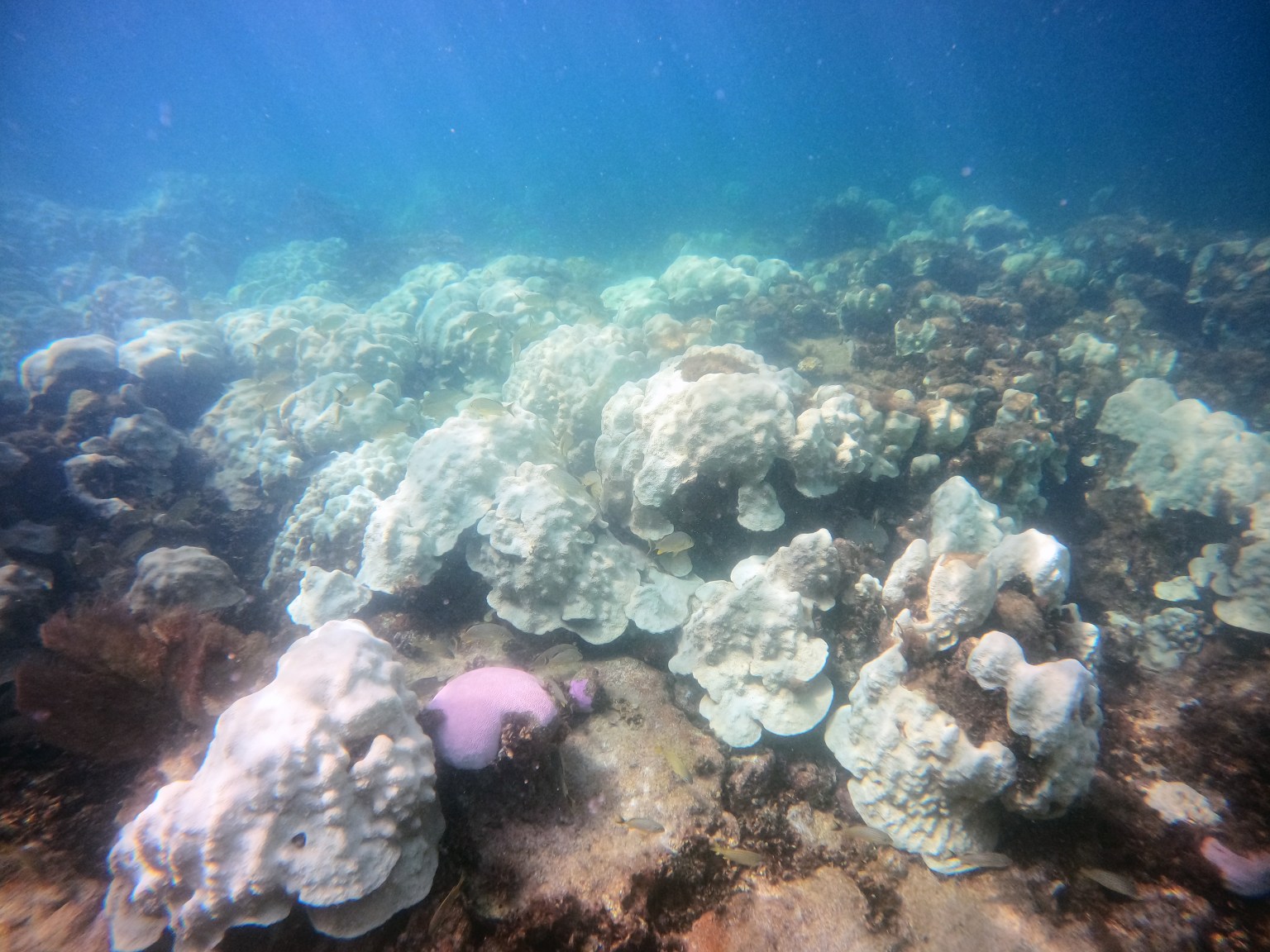
Photo: Coral Restoration Foundation. Severe bleaching and mortality in the Middle Florida Keys. Photo taken on July 24th.
One doesn’t always think of television news as going deep on a serious and complex problem, but I have to give credit to Florida’s WFLA for taking on dying ocean reefs. The sad tale makes me think we humans are like lobsters who don’t notice the water is boiling until it’s too late.
“Once colorful coral cities overflowing with marine life, transforming into ghost towns, or better stated, ‘Ghost reefs’ seemingly overnight.
“ ‘We are surprised by the pace. It is unprecedented what we have seen,’ said Scott Atwell the communications and outreach manager for the Florida Keys National Marine Sanctuary.
“Atwell told WFLA Chief Meteorologist and Climate Specialist Tuesday: ‘We’ve never seen anything like this. Some are not even bleaching, they are going straight to dead.’
“ ‘Straight to dead’ illustrates just how extreme the marine heatwave is and how quickly it’s evolving. When under stress, typically coral bleach first, expelling their symbiotic algae partners which give them their vibrant hues, and turn white. Then sometime later, if the heat persists, the coral can succumb and die.
“But right now in the Florida Keys, there are reports of rapid mortality. Coral is dropping like dominoes across much of the reef tract from Key Largo to Key West – the third largest tract in the world and the only shallow water reef system in the U.S. mainland.
“About 25% of marine life depends on coral reefs during some stage of their life. If coral reefs vanish it will have cascading consequences across ocean ecosystems and the life that it supports. …
“Mission: Iconic Reefs, a large-scale NOAA-led coral restoration initiative reports that the most recent seafloor temperature at Sombrero Key (off Marathon) is 93.4F and at Looe Key (off Big Pine Key) is 89.6F. According to Mission: Iconic Reefs the ‘optimal’ temperature for reef-building corals maxes out at 84 degrees.
“Although tropical corals live in warm water, they are very sensitive to just a couple of degrees Fahrenheit spike in sea surface temperatures, especially if it lasts for too long. NOAA Coral Reef Watch says at four weeks, coral can begin to show signs of stress. If the heat last eight weeks, a bleaching event becomes likely. [In July, we passed] the eight-week mark. …
“Bill Precht is a coral reef scientist in South Florida. In his 45 years studying coral, he’s never been so concerned about the Keys’ iconic reefs, ‘If things progress as they have started … the likelihood of catastrophic levels of mortality are high.’
“As a result of this unprecedented event, NOAA Mission: Iconic Reefs and their partner organizations are racing against the clock to rescue coral from the reefs and bring specimens into the lab where they can buy some time until the ocean cools back down.
“So the natural question is, when the coral die, can they recover? Dr. Katey Lesneski, the Coordinator of NOAA Mission: Iconic Reefs was asked that question by PBS News Hour and here’s what she said, ‘Once they die there are other reef organisms that will settle on that skeleton, take up space, and the coral tissue cannot grow back, unfortunately.’
“So the teams are taking drastic measures to gene bank two fragments from each unique genetic individual of staghorn and elkhorn corals, listed as threatened under the Endangered Species Act. In other words, they are preserving the genetic material so that if much of the coral is lost, there is a way to restore it.”
More at WFLA, here. Startling graphs. No firewall.
Photo: Emily Piper-Vallillo/WBUR. Program mentor Meshell Whyte with students who participated in the 2023 UMass Boston Summer Program in Urban Planning.
Today’s story is not only about addressing troubling effects of climate change in cities but also about encouraging young people in the communities most affected to be part of finding solutions.
Emily Piper-Vallillo reports at WBUR, “Boston students recently wrapped up a month-long study of extreme heat in Roxbury, exploring ways to mitigate the crisis and its impact on residents through the field of urban planning.
“Nearly 30 high school students participated in the University of Massachusetts Boston Summer Program in Urban Planning, which concluded [in July] with a presentation at Roxbury Community College. …
“The program introduces students of color from environmental justice communities like Roxbury and Dorchester to careers in urban planning and design. It’s part of a larger effort to diversify the field of urban planning, which remains overwhelmingly white.
“ ‘Only 5.2% of Boston’s planners are non-white, in a city where just in the city alone, 28% of our population is African American,’ said Ken Reardon, co-founder of the program and chair of UMass Boston’s Department of Urban Planning and Community Development. …
“Built as a working class community at a time when extreme heat was not as common as it is today, Roxbury has densely packed buildings with few trees, according to the students’ presentation. Many spaces are exposed to direct sun. Slides and swings in neighborhood playgrounds were constructed with heat-absorbing materials, making them unusable when temperatures rise.
“In fact, the students found that air temperatures in Roxbury are, on average, 10 degrees warmer than at Boston’s Logan Airport.
“They made this discovery by collecting 135 temperature readings across 38 Roxbury locations to identify the hottest spaces. Readings ranged from 83 to 102 degrees Fahrenheit, with the highest temperatures collected on sidewalks and at bus stops.
“Collecting data was grueling, said Blue Hills Regional Technical student Aidan Luciano. He and his peers hit the streets with remote sensors recording the humidity and heat index during the month of July — when temperatures sometimes rose above 100 degrees.
“ ‘[But] it’s going to pay off in the end because we are going to be helping other people,’ Luciano said. ,,,
“One group designed a new cooling children’s playground on RCC’s campus. Scheduled to open in 2025, the playground will replace a parking lot near the historic Dudley House site. After further community input, the final design will incorporate many ideas from the students themselves, said Ruben Flores, special projects manager at Roxbury Community College.
“Flores was particularly impressed by the inclusion of splash pads and water misters to reduce the temperature of the playground.
“Participating students received college credit from UMass Boston and were paid around $15 an hour.
“Paying students was an important part of making this opportunity accessible to low-income students of color who are less likely to be able to afford unpaid internships, Reardon said.
“Beyond collecting temperature data, students sought to understand how Roxbury residents experience extreme heat, said TechBoston student Neicka Mathias.
“Over the course of July, students interviewed nearly 100 Roxbury residents about coping with rising temperatures. The most common suggestion for improvement they heard was to increase the number of water sources throughout the neighborhood.
“Students also worked with residents to identify public spaces in Roxbury where heat mitigation solutions are most needed. These include areas where people frequently wait for public transit or line up outside favorite local restaurants. …
“ ‘Give a chance to these communities of color that are outside the spaces where decisions have been made and they will show you great work,’ Flores said.”
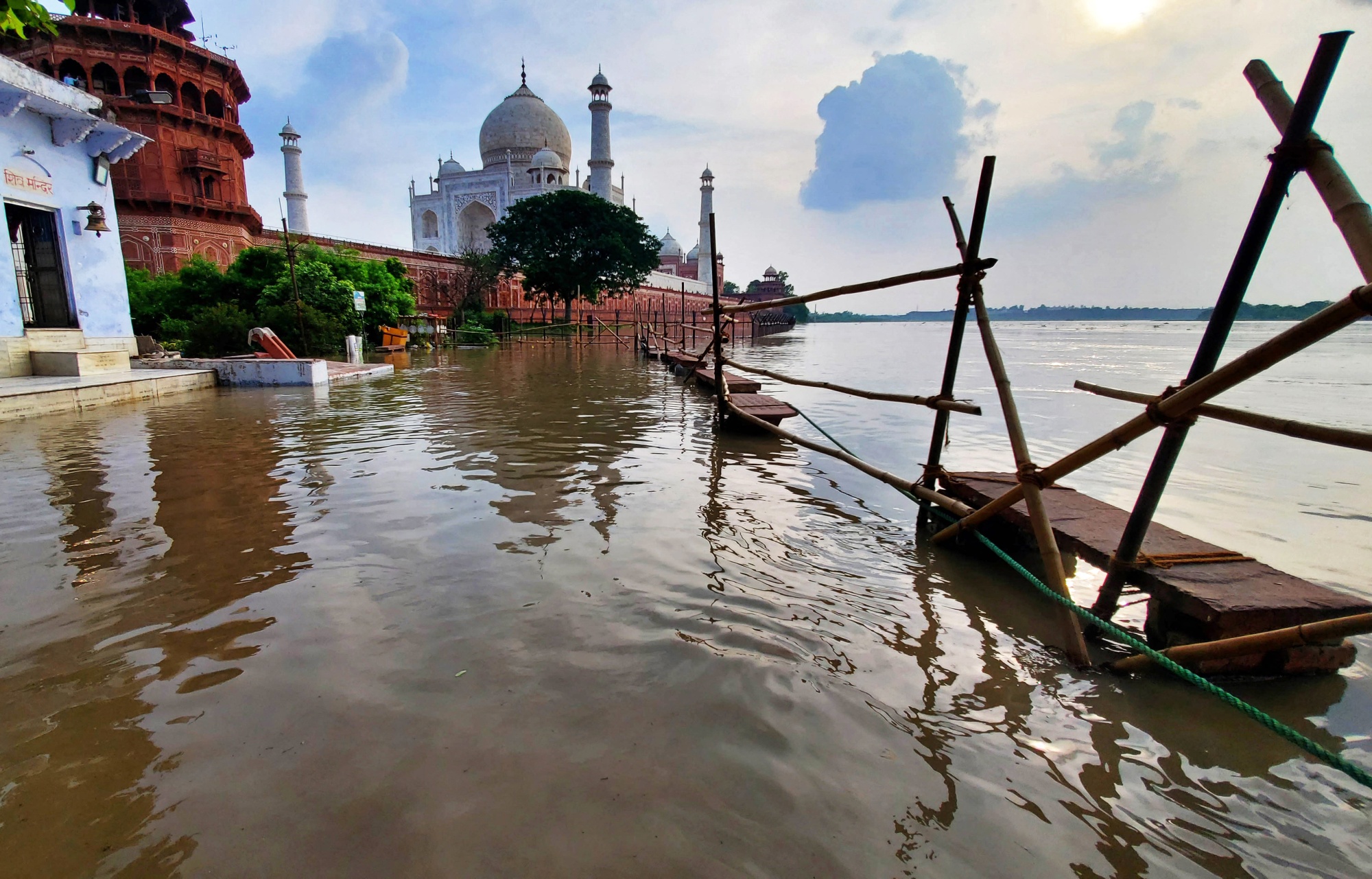
Photo: Pawan Sharma/AFP via Getty Images. The flooded banks of the Yamuna river near the Taj Mahal in Agra, India.
“It’s an ill wind that blows nobody good.” Maybe so, but how can severe flooding ever benefit a landmark?
First, let’s look at the worries about flooding near the Taj Mahal. In a July 20 Nikkei Asiareport, Neeta Lal wrote, “Indians watched with alarm this week as the surging Yamuna River reached the outer walls of the country’s most recognizable landmark — the white-marbled Taj Mahal — for the first time in 45 years, due to heavy monsoon rains that have wreaked havoc and killed scores in the north of the country.
“Apart from highlighting the vulnerability of the 17th-century mausoleum in Agra, into which officials on Wednesday assured media the water was unlikely to enter, flooding has disrupted life across several states in recent weeks. Tens of thousands of people have been displaced, roads have caved in, homes have collapsed, and schools have been forced to close. Waist-deep water at Kaziranga National Park sent rare one-horned rhinos, elephants and deer fleeing to nearby villages, authorities said.
“A State Bank of India report this week made an early estimate of economic damage at nearly $2 billion.
“The crisis comes in a year when many parts of the world are experiencing severe heat waves and other extreme conditions attributed to climate change. Although flooding is nothing new in India, experts warn that global warming means the country can expect more extreme weather and must plan accordingly.
“New Delhi has not been spared. In the capital, nearly 10,000 people were forced into 33 makeshift relief camps arranged by the local Aam Admi Party (AAP) government, according to an official statement last week. Some were still in the shelters this week.
“Residents holed up at a camp in Delhi’s Civil Lines area complained of a lack of amenities. ‘We’ve been here for three days after losing all our belongings in floods but are struggling to get basics like food and water. Mosquitoes are also posing a problem,’ said Rashida Bai, 48, a widow and mother of three. However, her neighbor, Amina Yusuf, praised the government ‘for providing rations and promising 10,000 rupees ($122) per family as financial support.’ “
Meanwhile at Bloomberg CityLab, Sreeja Biswas addresses the Taj Mahal angle. “Extreme weather is a threat to cultural sites all over the world, but northern India’s latest monsoon may turn out to be positive for the Taj Mahal.from the Yamuna river, a major tributary of the Ganges, reached the compound walls of the UNESCO World Heritage Site on July 18, following a period of heavy rain that left thousands displaced in the neighboring state of New Delhi and caused devastating floods around the region. It was the closest Yamuna waters had come to the Taj Mahal in 45 years, flooding the visitor viewing area, according to local media reports.
“The Taj Mahal’s white marble exterior may suffer minimal damage, but the heightened water level will likely raise the moisture content of the structure’s wooden foundation, increasing its life span, said Raj Kumar Patel, superintendent archaeologist for the Archaeological Survey of India, a government agency responsible for archaeological research and preservation of historical monuments.
“The Taj Mahal is supported in part by a base of deodar wood, which becomes stronger when it absorbs water, Patel said. Drainage pipes divert the river water, and deep wells filled with rock, wood and other solid material provide stability to the massive building above.
“A drying Yamuna river has previously been a concern for the Taj Mahal — built in the 17th century by Mughal Emperor Shah Jahan in memory of his queen Mumtaz Mahal — as a lack of moisture shrank the supporting rafters at its base. The building has also suffered years of extreme air pollution and acid rain that has turned the monument yellow-green. …
“The recent flooding in northern India has been far less fortunate for other sites. The Mehtab Bagh, or Moonlight Garden, near the Taj Mahal, was mostly submerged in the recent rains and will likely need new grass, according to Patel.”
Art: Beatrix Potter via the Marginalian. The mighty mushroom.
As the blogger at Spores, Moulds, and Fungi in New Zealand could tell you, mushrooms are important to the efficient functioning of the planet.
Today’s article explains how, if encouraged to do their own thing, fungi can prevent the worst climate-change wildfires. Here are excerpts from Stephen Robert Miller’s report at the Washington Post.
“If you’ve gone walking in the woods out West lately, you might have encountered a pile of sticks. Or perhaps hundreds of them, heaped as high as your head and strewn about the forest like Viking funeral pyres awaiting a flame.
“These slash piles are an increasingly common sight in the American West, as land managers work to thin out unnaturally dense sections of forests. …
“The federal government has committed nearly $5 billion in the Inflation Reduction Act and Bipartisan Infrastructure Law to thinning forests on about 50 million Western acres over the next 10 years. Although this can be accomplished with prescribed burns, the risk of controlled fires getting out of hand has foresters embracing another solution: selectively sawing trees, then stripping the limbs from their trunks and collecting the debris.
“The challenge now is what to do with all those piles of sticks, which create fire hazards of their own. Some environmental scientists believe they have an answer: mushrooms. Fungus has an uncommon knack for transformation. Give it garbage, plastic, even corpses, and it will convert them all into something else — for instance, nutrient-rich soil.
“Down where the Rocky Mountains meet the plains, in pockets of forest west of Denver, mycologists like Zach Hedstrom are harnessing this unique trait to transform fire fuel into a valuable asset for local agriculture.
“For Hedstrom, the idea sprung from an experiment on a local organic vegetable farm. He and the farm owner had introduced a native oyster mushroom to wood chips from a tree that fell in a windstorm.
“ ‘That experiment showed us that the native fungi were helping to accelerate the decomposition really substantially,’ he said. Working with local governments, environmental coalitions and farmers, he is now honing the method. …
“When slash piles are set alight, they burn longer and hotter than most wildfires over a concentrated area. This leaves behind blistered soil where native vegetation struggles for decades to take root. As an alternative, foresters have tried chipping trees on-site and broadcasting the mulch across the forest floor, where it degrades at a snail’s pace in the arid climate. Boulder County also carts some of its slash to biomass heating systems at two public buildings.
“ ‘We’re removing a ton of wood out of forests for fire mitigation,’ Hedstrom said. ‘This is not a super sustainable way of managing it.’ He hopes to show that fungi can do it better.
“Jeffrey Ravage is a forester with the Coalition for the Upper South Platte, which manages protection and restoration of a more-than-million-acre watershed in the mountains southwest of Denver. He describes the action of saprophytes, a type of fungi that feeds off dead organic matter, as ‘cold fire.’ Like a flame, saprophytic fungi break organic material into carbon compounds.
Mycelium, the often unseen, root-like structure of the fungi, secretes digestive enzymes that release nutrients from the substrate it consumes.
“Whereas a flame destroys nearly all organic nitrogen, mycelium can fortify nitrogen where it’s needed in the forest floor. … Standard thinning costs somewhere around $3,000 per acre, about a third of which is spent hauling out or burning the slash. Using mycelium could drastically reduce that cost. With the right kind of fungi, he said, ‘we can do in five years what nature could take 50 years to a century to do: create organic soil.’
“Though the method is new, it’s not untried. At the Balcones Canyonlands Preserve, north of Austin, biologist Lisa O’Donnell deploys mycelium to combat invasive glossy privet [successfully]. … For mycelium to be a truly viable solution to wildfires, however, it would have to work at the scale of the Western landscape. Hedstrom is experimenting with brewing mycelium into a liquid that can be sprayed across hundreds of acres. …
“Ravage doubts it could be so easy. ‘Half the battle is how you target the slash,’ he said. Success stories like Balcones are rare. Ravage has spent a decade cultivating wild saprophytes and perfecting methods of applying them in Colorado’s forests.
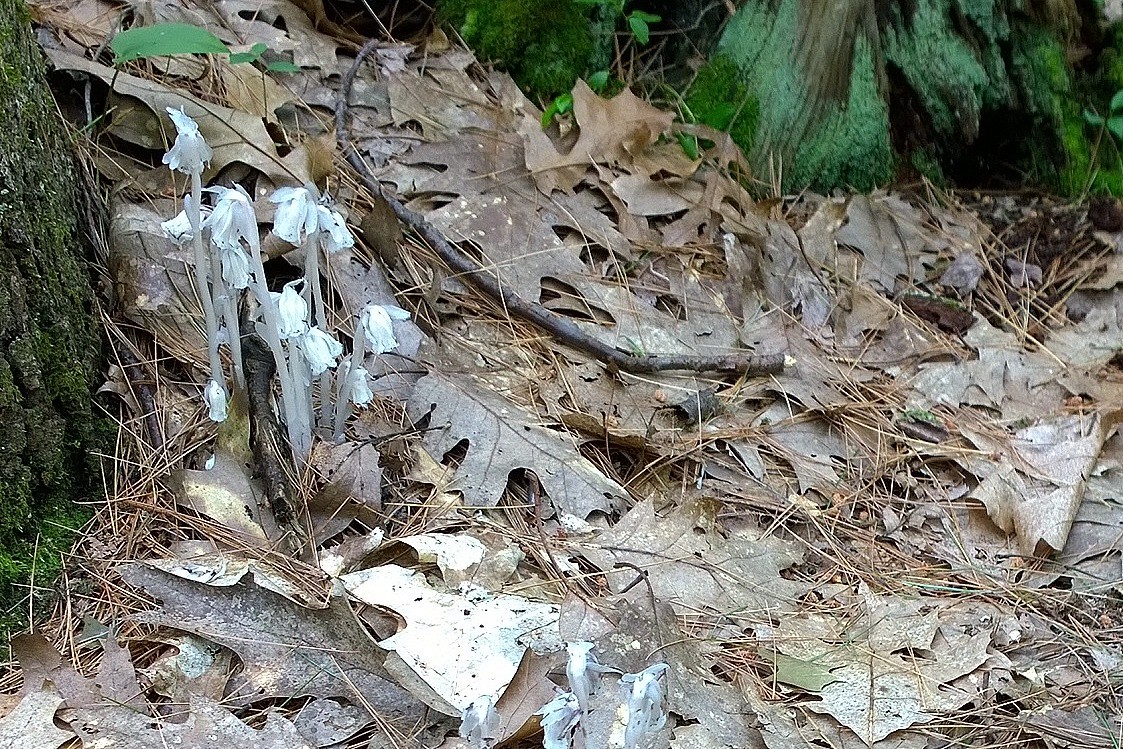
Photo: Suzanne and John’s Mom Indian Pipe is a kind of saprophyte.
“He begins by mulching slash to give his fungi a head start. Then he seeds the mulch with spawn, or spores that have already begun growing on blocks of the same material, and wets them down. Fungi require damp conditions and will survive in the mulch if it is piled deeply enough. Given the changing character of Western forests, however, aridity poses a serious hurdle.
“At his lab in the Rockies, Ravage grows about a ton of spawn annually. To meet the demands of forest-fire mitigation, he wants to produce 12 tons every week. This presents an opportunity for intrepid mushroom farmers, should the government choose to fund them.”
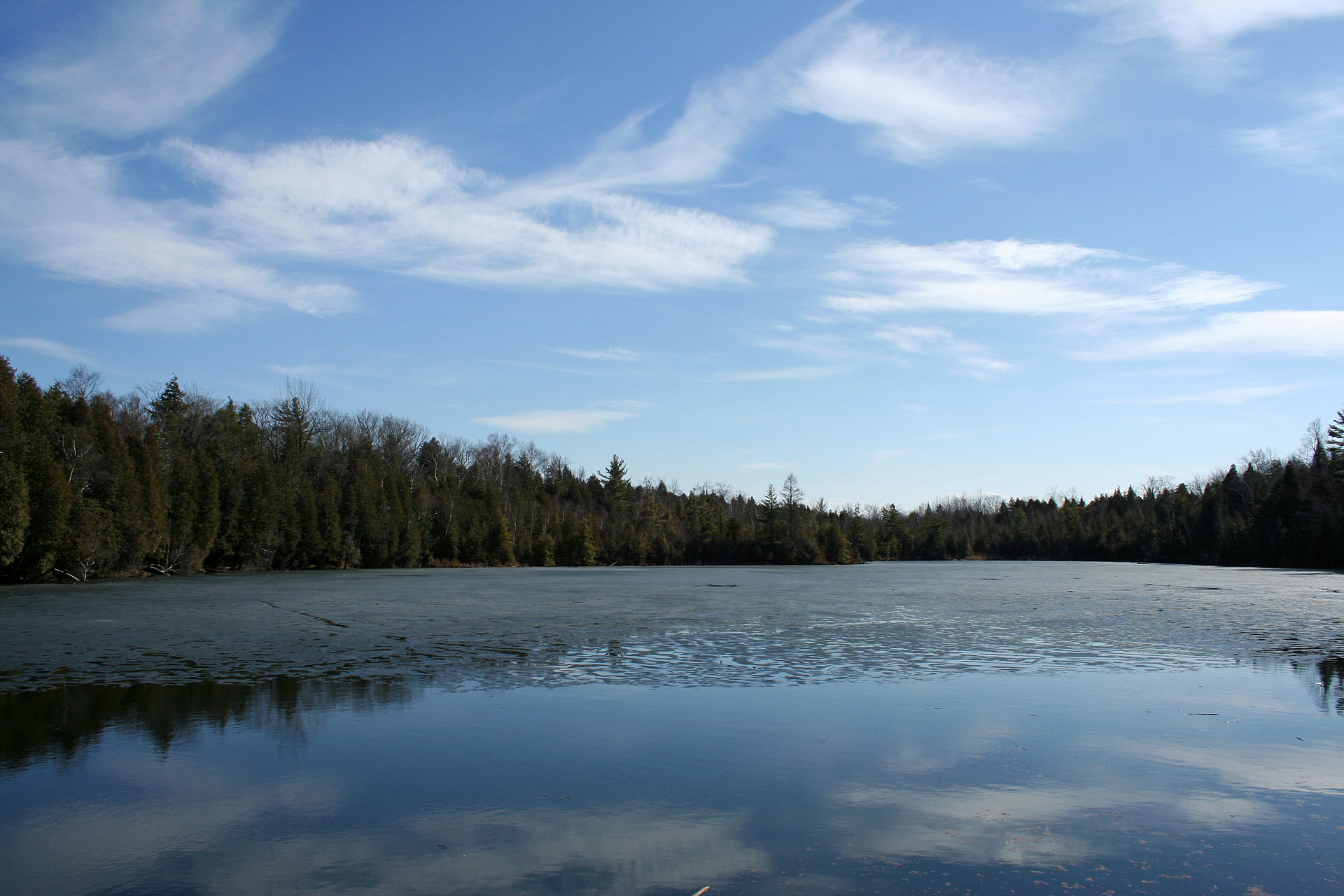
Photo: Whpqat Wikimedia Commons. Crawford Lake in Ontario, Canada, is giving up its secrets to geologists.
There is always something new to learn from the ancient record if we know how to read it. Case in point: the unusual characteristics of a deep lake in Canada are helping geologists understand a bit more about today’s rapid changes to the planet.
Sarah Kaplan, Simon Ducroquet, Bonnie Jo Mount, Frank Hulley-Jones, and Emily Wright each contributed to the story at the Washington Post.
“This summer, researchers will determine whether Crawford Lake should be named the official starting point for [the current] geologic chapter, with pollution-laden sediments from the 1950s marking the transition from the dependable environment of the past to the uncertain new reality humans have created.
“In just seven decades, the scientists say, humans have brought about greater changes than they did in more than seven millennia. Never in Earth’s history has the world changed this much, this fast. Never has a single species had the capacity to wreak so much damage — or the chance to prevent so much harm.
“ ‘It’s a line in the sand,’”’ said Francine McCarthy, a professor of Earth sciences at Brock University in Ontario, who has led research on Crawford Lake. …
“Every new phase of Earth’s history begins with a ‘golden spike‘ — a spot in the geologic record where proof of a global transformation is perfectly preserved.
“An exposed Tunisian cliff face bearing traces of an ancient asteroid impact marks the transition from the age of the dinosaurs to the Cenozoic era. Hydrogen molecules uncovered in Greenland’s ice denote the start of the Holocene — the 11,700-year stretch of stable temperatures that encompasses all of human civilization, up to and including the present day.
“These spikes are like exclamation points in the story of the planet, punctuating a tale of shifting continents, evolving species and temperatures that rose and fell as carbon levels fluctuated in the atmosphere. They mark the starts of epochs — small segments of geologic time. And they have helped scientists interpret the forces that shaped Earth’s past climates, which in turn allows them to forecast the effects of modern warming.
“In 2009, the International Commission on Stratigraphy — an obscure scientific body responsible for defining the phases of Earth’s past — created a new working group to investigate the evidence for the Anthropocene. The group’s mission: to identify a potential ‘golden spike’ site that might convince fellow scientists of the new epoch’s validity.
“Their search spanned from mountain summits to the depths of the ocean, from the Antarctic ice sheet to tropical coral reefs. And, in 2018, it led them to McCarthy’s office door.
“Before that moment, few beyond her field knew of McCarthy’s research studying lake sediments for signs of past climate change. Her outreach work was meaningful, but largely local: advocating for conservation of the Great Lakes, teaching geology to students at her midsize public university.
“Crawford Lake was similarly modest. … Yet McCarthy’s colleague Martin Head, a geologist at Brock who had been involved with the Anthropocene Working Group, was intrigued by the rare chemistry uncovered at Crawford.
“Crawford Lake developed thousands of years ago, as water filled a sinkhole in the limestone cliffs of Southern Ontario. Though tiny, the lake is exceptionally deep — so deep its waters are separated into two distinct layers.
“The upper waters are warmed by the sun and mixed by the wind. The layer below is cold and dark, with barely any life to disturb the sediments that accumulate at the bottom. All year long, a constant stream of dead microbes, animal droppings and other organic debris drifts through the Crawford’s waters to settle on the lake bed.
“But during summer, when the the temperature and acidity levels are just right, the water also produces minerals of a white color called calcite that falls to the lake bed forming a thin white cap. Each annual pair of dark and light sediments is also laced with material from outside the lake — pollen grains, pollution particles — that can serve as indicators of the changing environment.
“No other water body is known to possess this particular combination of attributes, making Crawford Lake a unique bellwether of global change. …
“As she considered her colleague’s proposal, McCarthy thought about the decades she’d spent studying prior planetary upheavals. Her work on lake sediments from the past several million years had shown her how dramatic swings in temperature destabilized ecosystems and drove species to extinction.
“Without drastic action to stave off modern climate change, she said, that history could repeat. …
“First, researchers had to tether a wooden raft in the deepest part of the lake, right over the spot they wanted to sample. To extract the lake’s layered sediments, the team used a tool called a ‘freeze corer.’ … The long aluminum wedge was filled with a mixture of alcohol and dry ice, making it much colder than the surrounding water, soil and air.
“They suspended the freeze corer from a tripod and lowered it through a hole in the raft. Down, down it went, through 75 feet of water, until finally it sank into the squishy mud on the lake bottom. Then they waited. It would take about 40 minutes for the lake sediments to freeze onto the corer’s chilly surface.
“Finally, it was time to pull the corer back up. Clinging to its face was a five-foot slice of mud, cut from the lake bottom like a piece from the center of a cake.
“Back on shore, McCarthy traced a gloved finger over the core’s delicate brown and white stripes — sharper than any other sample she’d seen. … Each sample, she knew, would give her a glimpse into a thousand years of the lake’s history, revealing its deepest responses to the changing world above. Each was like a new page from the diary of the Earth. …
“The archive inside Crawford Lake’s cores shows how human pressures on the lake built up over the centuries like steam inside a kettle, until finally the kettle boiled over.
“But humanity’s influence hasn’t always been so destructive.The first people to make their mark on the lake were Native villagers who built longhouses near the lakeshore. Researchers have counted more than two centuries’ worth of sediments from the lake’s ‘Indigenous period’ containing crop pollen and other evidence of human habitation alongside ancient goose droppings and traces of trees.
“Around the start of the 16th century, all signs of the settlement vanished for reasons still unknown. … Sediments from subsequent eras showed Europeans’ growing influence on the landscape. White pine pollen counts dwindled as people cut down trees. Traces of ragweed marked how different species flourished in the cleared land.
“The impacts piled up throughout the 19th and 20th centuries. Tiny black bits of fly ash — a byproduct of burning coal and oil — drifted into the lake from rapidly industrializing cities. Heavy metals like copper and lead increased in the mud.
“And then, around 1950, the world reached a tipping point.
“ ‘This is when humans essentially overwhelmed the Earth as a functioning system,’ said Head, McCarthy’s collaborator. Crawford Lake — and the rest of the planet — were fundamentally, irrevocably transformed.
“The sharpest sign of change was a surge in radioactive plutonium that started in Crawford Lake’s mud around 1950. … A lighter form of nitrogen — a molecular signature of burning fossil fuels — proliferated. The amount of fly ash increased eightfold in less than five years.”
More at the Post, here. If you have a subscription, you can see very cool graphics showing odds and ends floating downward through water.
Photo: Naomi Antonino/CNET. “As the world warms, non-native species threaten Earth’s last great wilderness,” says Jackson Ryan.
In the interest of identifying a problem in order to do something about it, today I share bad news about Antarctica: the invasion of alien species.
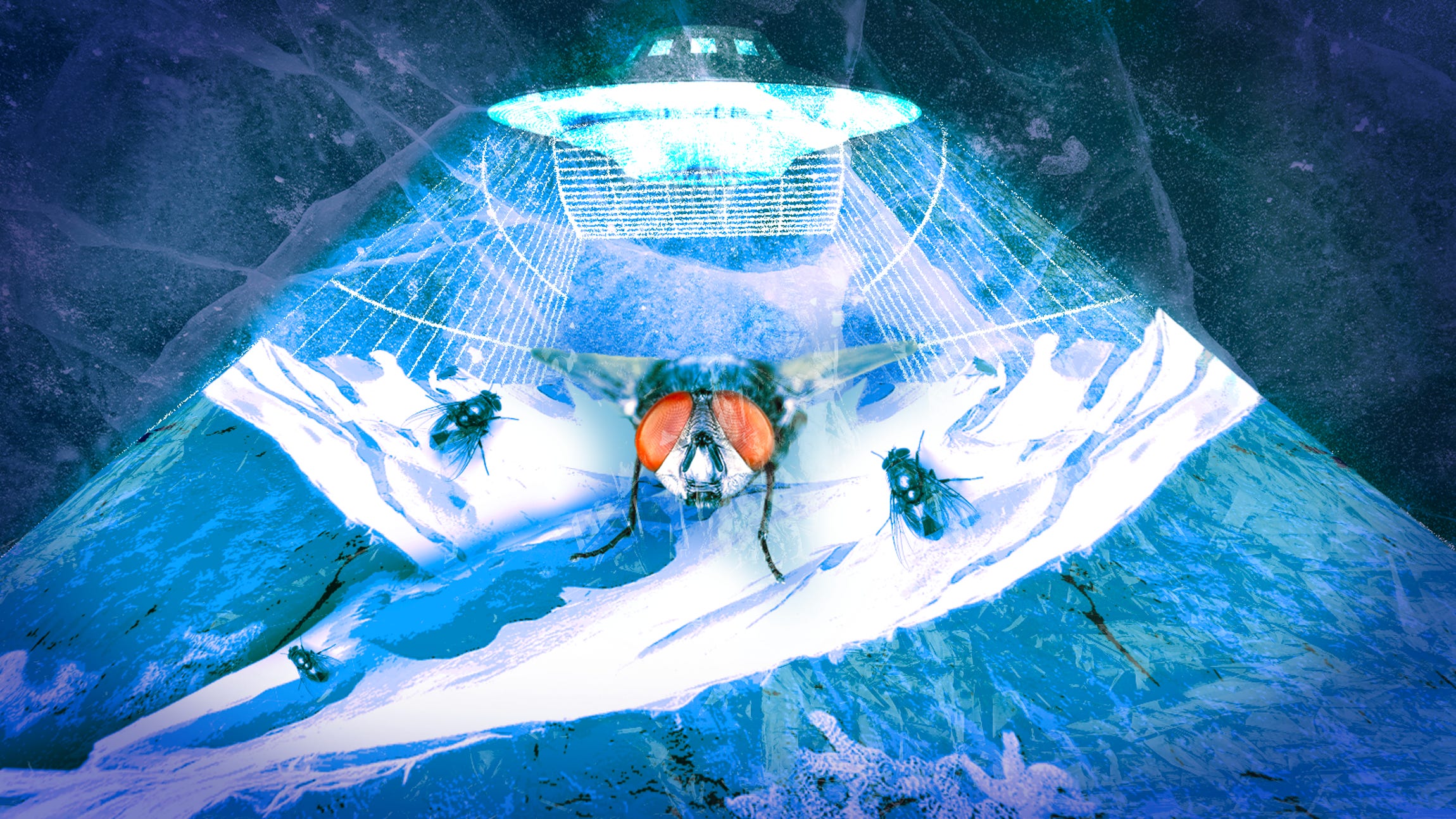
Jackson Ryan reports at CNET Science, “At the bottom of the stairwell leading to deck five, an alien lies upturned on green nonslip flooring. If you get close enough, you can see one of its six legs twitching and one of its translucent wings crushed to pieces. Unlike the throng of Antarctic expeditioners aboard the RSV Nuyina, Australia’s newest icebreaking ship, it hasn’t cleared customs.
“Days after the Nuyina departed its harbor in Hobart, Tasmania, the alien buzzed its way across the Derwent River, slipped through an open door and zipped into the bowels of the ship until this restless, twitching death.
“Scientists call the creature Musca domestica. You likely know it as the housefly.
“Even if it hadn’t been felled by an errant hand or boot, it likely wouldn’t have survived the journey to Antarctica. At temperatures below 14 degrees Fahrenheit, flies move lackadaisically and seem to barely get airborne. I know this because I’ve been watching them as part of the crew onboard the Nuyina as it crosses the Southern Ocean. Surviving flies buzz at the ship’s windows, trying to escape the upper decks.
“If their prison break were to succeed, they’d find themselves facing seemingly endless waters, with nowhere to go. The Southern Ocean provides a formidable barrier to entering Antarctica, a great wall of water and powerful currents that has separated the continent from the rest of the world for about 30 million years. Couple that with freezing temperatures, and the Antarctic provides little hope for a wayward housefly trapped on a ship.
“But Antarctica’s temperature is changing, and dramatically. In March, a French-Italian base in East Antarctica recorded temperatures 70 degrees higher than average for that time of year. That may just be an unprecedented anomaly, but it’s expected the continent’s average temperatures could rise a few degrees by 2050. In particular regions, like the western peninsula, the continent is warming at a rate 10 times faster than the rest of the world. In February 2020, the temperature at Argentina’s Esperanza Base research station reached 18.3 degrees Fahrenheit – an all-time high – providing the kind of conditions a wayward housefly might survive in.
“Historically, it’s been difficult for lost flies to reach the most southern landmass on Earth. As Antarctic explorers aimed to discover and map the continent in the 1800s, humans began providing fleeting opportunities for alien trespass. A handful of nations with a permanent presence across the continent annually resupply research stations that provide permanent outposts for studying the ice and the Antarctic ecosystem. …
” ‘Back-of-the-napkin math, less than a million people in the entire history of human existence have visited Antarctica,’ says Dana Bergstrom, an ecologist at the Australian Antarctic Division.
“But that too is changing. Before the pandemic slowed cruises to a halt, Antarctic tourism was on the rise. In the 2019-20 season, almost 75,000 people visited the continent, according to IAATO, the chief tourist body in the Antarctic. That’s a 35% increase over the previous season.
“Wherever humans go, so too our pests. Signatories to the Antarctic Treaty and the Madrid Protocol, which include protections for the Antarctic environment, must endeavor to limit their effects on the pristine wilderness, and tourist bodies like IAATO and national Antarctic programs go to great lengths to prevent biological invasions. …
“If an alien were to slip in, it could be disastrous for the delicate Antarctic ecosystems hidden from the world for millennia.
” ‘It’s a super special place to understand how the planet works,’ says Bergstrom. ‘And so it’s really worthwhile putting all our efforts to try to keep nature operating without interfering.’
“On the eastern edge of Antarctica … [a] base, called Davis, is Australia’s southernmost presence on the continent. In 2014, its hydroponics facility was the site of an infamous alien invasion.
“In May of that year, expeditioners entered the facility, composed of two gray shipping containers, to pick fresh greens for the chef’s evening meal. … During the vegetable collection, they inspected the facility’s water and noticed a black mat had developed over the surface. ‘When they looked closer, they realized it wasn’t a mat,’ says Andy Sharman, environmental manager at the Australian Antarctic Division, ‘it was thousands of tiny invertebrates.’
“Davis had been invaded by The Thing, a thousand times over. An alien species of arthropod known as Xenylla had snuck into the facility and began multiplying in the warm, wet conditions. The flealike critters, known as collembolans, hadn’t been seen in this region of the Antarctic before but had become established in warmer areas. A crack team of scientists deduced that should they get out, they might threaten the local ecosystem.
Almost immediately, the station went into eradication mode. ‘We had a biohazard response like you might get with a virus or disease,’ notes Sharman.
“The effort was blazingly fast. The response team sprayed alcohol throughout the facility, then bagged and burned everything, including recently harvested vegetables that had already made it to the Davis kitchen. The building was subjected to rigorous freeze-thaw cycling; the heat would trick any leftover eggs into hatching and then the temperatures would drop to minus 11 degrees Celsius, killing the hatchlings.
“The response team also took extreme social distancing measures. ‘We actually lifted the whole building out and parked it on the sea ice and left it there,’ says Sharman. A few months after the discovery and various eradication measures, the containers were shipped back to Australia.
“An investigation into the source of the incursion eventually discovered that the aliens likely got in through plant feed. Subsequent monitoring hasn’t found the collembolan in the area since, but other stations have experienced invasions, too, and protecting the continent from such risks is a constant battle.
“Exterminating The Things at Davis is one of the Australian Antarctic Division’s success stories, but the threat of incursion is constant. Invertebrates are the most widely dispersed non-native species and are known to hide in shoes and bags, while plant seeds can become stuck in Velcro and marine creatures can lurk in ballast tanks on vessels.”
The long, interesting CNET article is, here. No firewall.
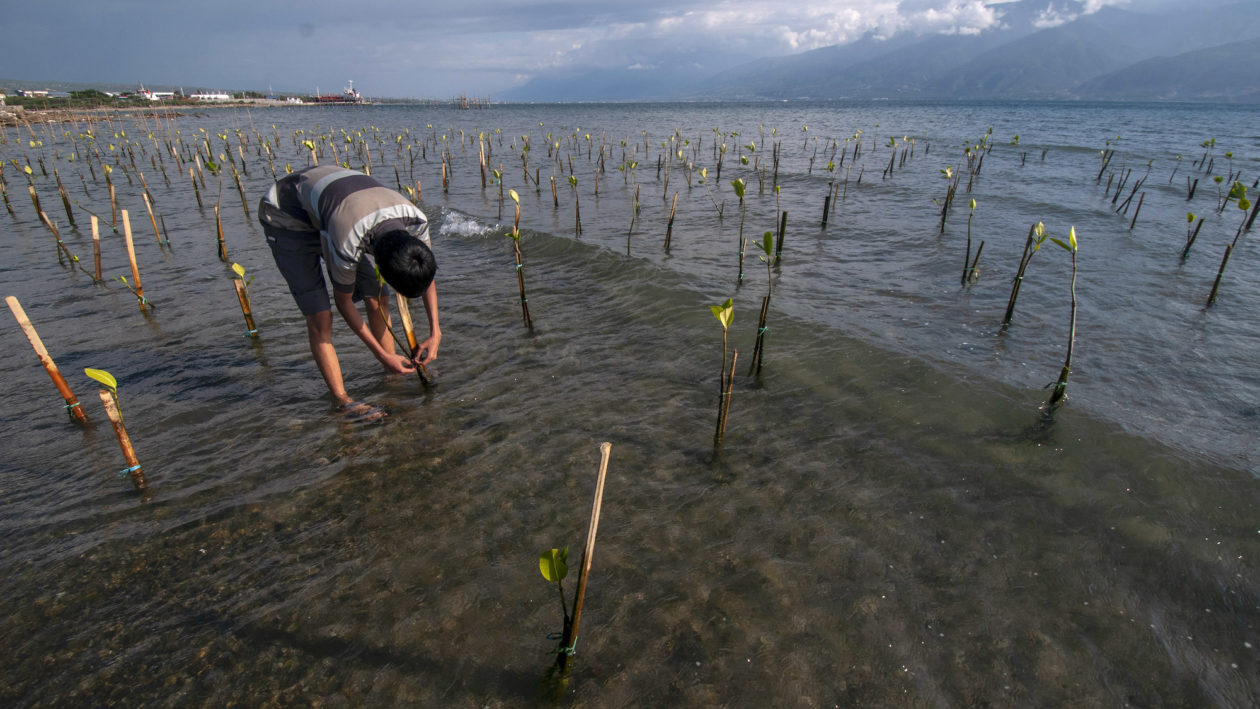
Photo: Basri Marzuki/Nurphoto via Getty Images. A volunteer ties a newly-grown mangrove to a stake on Teluk Palu Beach, Indonesia. A science writer asks, Is international funding shortchanging nature-based climate solutions like this?
Here’s something to think about. As we try to remedy damage to the environment, are we overlooking the power of small steps that add up and instead favoring big-deal engineering approaches?
Fred Pearce at YaleEnvironment360 suggests we are indeed. “On the low-lying northern shore of the Indonesian island of Java,” he writes, “the sea has invaded a kilometer inland in places in recent years, engulfing whole communities and vast expanses of rice paddy. But villagers are fighting back against further advances by erecting brushwood barriers in the mud to help the natural regeneration of mangroves.
“This innovative nature-based response to rising sea levels and worsening storms, sponsored by the Indonesian government and the Dutch-based environmental group Wetlands International, could be scaled up across Asia. Within a decade it could be helping at least 10 million people in similar situations to protect and restore their denuded coastlines — all at a fraction of the cost of sea walls, says Jane Madgwick, CEO of Wetlands International.
“But it can do that only if local projects are developed and the financing secured. And so far, she says, progress has been slow. …
“There are a ‘growing number of analyses and reviews of the effectiveness of habitats as natural defenses,’ writes Siddharth Narayan, now of East Carolina University. Hundreds of local projects to restore ecosystems on coastlines and mountains, in river valleys, forests, and grassy plains, have proved their worth in using restored nature to boost the resilience of millions of people to the ravages of onrushing climate change. Most are cheaper and more effective than any engineering alternatives, with more spinoff benefits for ecosystems and fewer downsides.
But the political will and funding that could turn pilot projects for nature-based climate adaptation into policy norms benefitting hundreds of millions more people are still largely absent.
“Most nature-climate activities ‘are currently not funded,’ says Ebony Holland, climate researcher at the London-based International Institute for Environment and Development. …
“Nature-based climate adaptation remains the poor relation of climate finance. First, that’s because private investors, philanthropists, aid agencies, and development banks are usually happier to pay for climate ‘mitigation’ projects that curb emissions of planet-warming gases than for helping communities adapt to climate change. Overall, adaptation of all kinds has so far attracted less than a quarter, and by some measures only 5 percent, of international climate funding, according to Barbara Buchner of the Climate Policy Initiative, a San Francisco-based think tank.
“And second because policymakers and funders still mostly prefer engineering solutions. Holland found that less than 10 percent of funding for climate adaptation in the least-developed nations — which are usually the most vulnerable — went into projects that harnessed nature. The remaining 90 percent ‘poured concrete.’ …
“Overall, the UN Environment Programme and the Global Commission on Adaptation, an international body set up by the Dutch government, both estimate that about 1 percent of total climate finance has so far gone toward such nature-based adaptation projects.
“Governments in Glasgow promised to close the funding gap between adaptation and mitigation by doubling adaptation funding. [In April] climate finance chiefs from leading funding governments met in Lahti, Finland, to discuss how to achieve this. But official reports of the meeting record little discussion of the need for more nature-based projects. Instead, the main topic was to ‘seek ways to give the private sector a bigger role in adaptation finance.’
“This could be a step back for nature since, in the past, private financiers have been even less keen on nature-based solutions than public-sector donors, says Madgwick.
“The casebook of successful nature-based adaptation is growing fast. Perhaps best documented are the benefits from restoring coastal ecosystems such as mangroves to protect coastal communities from storm waves, tidal surges, and rising sea levels, which are all increasing as climate change gathers pace.
“The world has lost half its mangroves along shorelines, but those that remain are protecting some 18 million people and several tens of billion dollars’ worth of property from flooding every year, says Michael Beck, a marine scientist at the University of California Santa Cruz. Their importance can only grow. Unlike sea walls, mangroves appear to keep pace with rising sea levels, self-seeding inland to maintain their barriers against storms and tidal surges and nurturing marine fisheries.
“The island nations and river deltas of Asia would benefit most from their restoration, but a study by the World Bank and The Nature Conservancy found great potential too in African countries, including Guinea, Mozambique, Sierra Leone, Madagascar, and Guinea-Bissau.
“The restoration of other coastal ecosystems can be equally effective. A review by Narayan of 52 such projects around the world found that salt marshes, sea grasses, and coral reefs all reduced the height of storm waves at typically between a half and one-fifth of the cost of sea walls. Yet scaling up is failing to keep pace with the success of pilot projects. …
“In parts of the Panchase mountain region of Nepal, a favorite with foreign trekkers, the restoration of wetlands and community ponds is protecting local communities against both worsening floods and droughts, while improving soils, revitalizing biodiversity, and encouraging tourism. It is part of a three-nation project known as the Mountain Ecosystems-based Adaptation Program devised over a decade ago by UN agencies and implemented in remote corners of Nepal, Uganda, and Peru.
“But despite ambitious plans for new projects in neighboring Bhutan, Kenya, and Colombia, scaling up remains elusive. Communities in most mountain regions stressed by climate change are plagued by dam projects that extract their water for use downstream, rather than being helped to conserve their water and improve their climate resilience. …
“[Nathalie Seddon of the Nature-Based Solutions Initiative, an interdisciplinary research center at the University of Oxford] says nature-based adaptation can simultaneously help meet the three great challenges of our time: responding to climate change, protecting biodiversity, and ensuring human well-being. But right now, the opportunities for delivering these synergies are still going begging.”
Photo: Francisco Kjolseth/Salt Lake Tribune. Dropping lake levels on the Great Salt Lake, along the north side of Antelope Island, continue to expose more reef-like structures called microbialites on Wednesday, Jan. 4, but the lake benefited from an epic snowfall this past winter.
Good news/bad news on climate change today. Utah’s Great Salt Lake, in danger of disappearing entirely, got recharged after heavy snow in the mountains this past winter. So what does its future look like now?
As Dan Stillman reported at the Washington Post in April, “Just three months ago, scientists issued a report with a dire warning: Utah’s Great Salt Lake, after decades of drying that had only accelerated in recent years, was on track to disappear in five years. Now a record snowpack, fueled by more than 800 inches of snow during the season in some locations, offers a glimmer of hope for the Western Hemisphere’s largest saltwater lake and an important economic driver for the state.
“The Great Salt Lake reached its record low in November when it dipped to 4,188.6 feet above sea level, having lost more than 70 percent of its water since 1850, according to the report published in January by researchers at Brigham Young University. [However] the lake had risen three feet in a little more than five months, primarily because of snow and rain dumped directly into the lake by a season-long series of water-loaded storms. …
“ ‘While we celebrate our progress, we must continue to prioritize water conservation efforts and make sustainable water management decisions for the future of this vital ecosystem and for water users throughout the basin,’ said Candice Hasenyager, director of the Utah Division of Water Resources, in an email.
“This season’s record snowpack promises to push water levels even higher in the coming weeks as warmer temperatures melt the snow and runoff enters the lake. The statewide average snowpack, which is measured by calculating the amount of water contained in the snow, reached 30 inches on Thursday, beating the previous record of 28.8 inches in 1952.
“ ‘This year’s snowpack is nothing short of miraculous. After so many years of drought, this definitely feels like an answer to prayers,’ Brigham Young University ecologist Ben Abbott said in an email. Abbott was the lead author for the January report, which warned of ‘widespread air and water pollution, numerous Endangered Species Act listings, and declines in agriculture, industry, and overall quality of life’ if the lake were to vanish.
“Despite its recent rise, the lake is still six feet below what is considered ‘the minimum acceptable elevation for the lake’s ecological and economic health,’ according to Abbott. … Even if the water level recovers to an ‘acceptable’ level, the longer-term sustainability of the lake will depend on water management decisions and conservation efforts. …
“Historically, management of the Great Salt Lake watershed has prioritized human water usage over the health of the lake, with most of the river and stream water flowing toward the lake diverted for home, business and agricultural use. A February assessment by a team of Utah researchers and state officials found that 67 to 73 percent of the decline in water levels is due to natural and human water use.
“Water levels have been further diminished in recent years by an intense drought, made more likely by climate change, which has only finally started to ease with this winter’s record snowfall. In March 2021, the federal drought monitor showed most of the state in extreme or exceptional drought, the two driest out of five drought categories. In the latest report, [extreme] and exceptional drought have disappeared, with most of the state classified under the two least severe drought categories.
“Reduced inflow of fresh water into the lake results in high salinity levels that have far-reaching consequences including the release of toxic dust, poor air quality, the collapse of food webs and loss of brine shrimp that feed fish and shrimp sold worldwide. …
“More controlled water releases, such as the one coordinated by city and county officials in early March, could not only reduce flood risks this spring but also help restore the lake closer to a healthy water level. Yet regardless of how much improvement comes from spring runoff, Abbott stands by the cuts in water consumption he and his co-authors recommended in their report earlier this year.
“ ‘We’ve got to keep our eye on the conservation ball,’ Abbott said. ‘To replenish Great Salt Lake, we need to reduce our consumptive water use by 30 to 50 percent.’ “
Photo: Wikimedia. Devastation on the island nation Vanuatu (near Australia) after Cyclone Pam in March 2015. Vanuatu is one of the countries most vulnerable to climate change. Already this year it was hit by two Category 4 cyclones, blamed on global warming.
Today’s story by Michael Birnbaum at the Washington Post could be subtitled The Mouse That Roared. That’s because a tiny nation vulnerable to climate change is pushing the world’s highest court to take a stand.
“The small Pacific island nation of Vanuatu won a major victory to advance international climate law [in March] after it persuaded the U.N. General Assembly to ask the world’s highest international court to rule on the obligations of countries to address climate change.
“The request for an advisory ruling from the International Court of Justice is expected to clarify the legal obligations of countries to address climate change — and to create a path for them to be sued if they fail to do so. The U.N. effort was a significant outcome for Vanuatu, an archipelago nation of 320,000 people that is suffering from climate-change-driven natural disasters. In recent weeks, it was hit by two Category 4 cyclones, the severity of which its leaders blamed on global warming. Thousands of people are still living in shelters.
“The country has used its moral authority and ability to stage action at the United Nations to achieve outsize results on climate issues. The U.N. General Assembly approved the measure by acclamation, with neither the United States nor China standing in the way of the effort despite uncertainty in advance whether they would seek a formal up-or-down vote.
“[The] decision was also a measure of how much global attitudes about the urgency of addressing climate change have shifted in recent years. A similar effort in 2011 by two other island nations, Palau and the Marshall Islands, failed at the United Nations. This time, Vanuatu obtained co-sponsorship from more than 120 countries, including Britain, France, Germany and other industrialized nations with a long history of high emissions.
“ ‘It is a matter of basic survival for us,’ Vanuatu Climate Change Minister Ralph Regenvanu said in an interview.
‘We can’t do anything economically and politically because we don’t have any power. What we can use is our sovereignty as a United Nations member state.’ …
“Having the International Court of Justice weigh in creates a ‘pretty clear pathway to recognizing that states have a duty not only not to violate fundamental human rights, but states have a duty to avoid transboundary harm through activities under their control,’ said Carroll Muffett, president of the Center for International Environmental Law, a D.C.-based nonprofit that works to use international law to address ecological issues.
“He compared an advisory ruling to consulting a lawyer while being engaged in behavior that falls in a legal gray zone.
“ ‘It’s like when you send a note to your lawyer, and you get a lawyer’s note back saying what you’re doing is illegal,’ he said. ‘It puts you on notice that you could be held accountable for your actions.’ …
“As Vanuatu gained support for the U.N. action, it was careful to try to build consensus, with its leaders saying they are not suing anyone nor seeking to create new international obligations. Instead, they say, they are seeking to clarify how preexisting international agreements apply to climate change. …
“Neither the United States, which is the world’s largest historical emitter, nor China — which is soon poised to overtake the United States on that count — opposed the measure. The two superpowers have been competing for influence among Pacific island nations as they seek to project power across that ocean, giving the small countries outsize leverage despite their minuscule economies and populations.
“But even as the United States stood aside and allowed the referral to be approved without objection, a U.S. diplomat also said the Biden administration believes diplomacy is a better way to achieve action on climate issues than inside a courtroom.
” ‘Launching a judicial process, especially given the broad scope of the questions, will likely accentuate disagreements and not be conducive to advancing our ongoing diplomatic and other processes. In light of these concerns, the United States disagrees that this initiative is the best approach for achieving our shared goals,’ diplomat Nicholas Hill told the General Assembly after the measure was approved, speaking on behalf of the State Department.
“Vanuatu’s policymakers said they had tried to craft their work in a way that would win broad acceptance.
“ ‘We have deliberately tried to make this as noncontentious as possible,’ Regenvanu said. ‘Once we get the question before the court, then the process of submissions begins, and there might be a slight change of tactic there. Because obviously we want the highest level ambition in that opinion.’
“The effort began four years ago in a classroom at the University of the South Pacific in Fiji. Law students there decided that an advisory opinion from the International Court of Justice could be an effective tool to advance climate justice. They worked to convince their governments to follow suit.
“Vanuatu has also promoted a global fossil fuel nonproliferation treaty, advocating a total phaseout of oil, coal and gas as quickly as possible. And it has been a leader on international efforts to create a system to compensate the worst-hit countries for ‘loss and damage’ from climate change.”
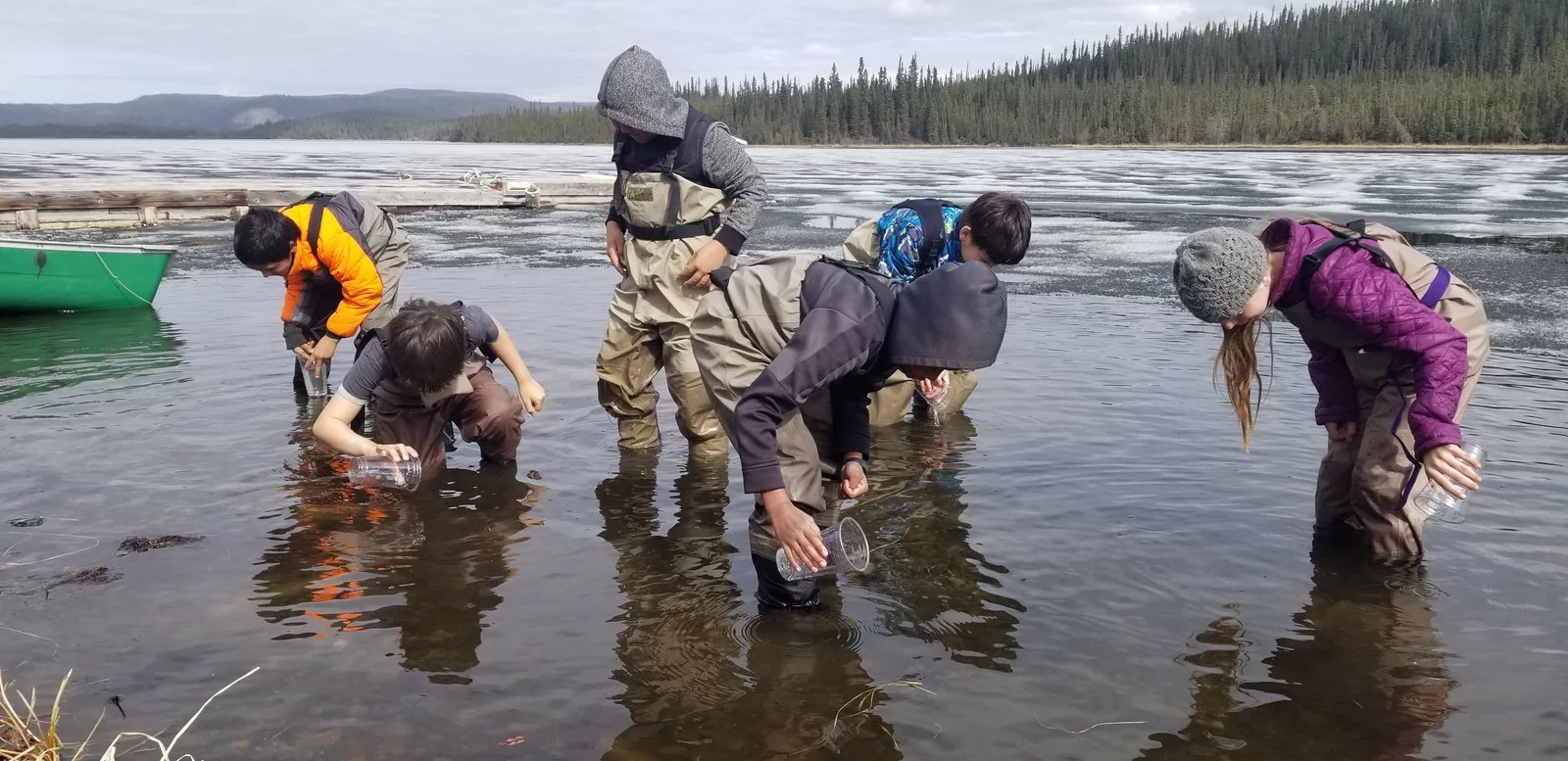
Photo: Jennifer Hodges. Students releasing salmon into the lake on the Salmon Field Trip in Alaska.
Much of our hope for protecting the planet relies on the education of young children. That’s why this story from Alaska about getting up close and personal with the salmon life cycle is so interesting.
Claire Murashima reports for National Public Radio (NPR), “Kenny Lake School in Copper Center, Alaska, is small, with about 60 students from kindergarten to high school seniors. It’s even smaller in winter when some parents homeschool their children because of the long drives and slick roads.
“Jennifer Hodges is a third, fourth and fifth grade teacher. She says her three-grade class sits only at desks for 20 minutes a day. They do a lot of practical learning, such as raising Coho salmon from egg to Alevin to fry then releasing them into a lake.
“It’s through a program called Salmon in the Classroom, established by the Alaska Department of Fish and Game. Kate Morse, program director for the Copper River Watershed Project, is in charge of implementing the program in six schools throughout Alaska’s Copper River watershed.
“Coho salmon lay eggs in the fall, when many schools start. The eggs remain in the classroom about six months before they are released into lakes. After that, they live for two to four years before they spawn and then die shortly afterwards.
“Every day, about a third of Hodges’ students ride the bus 45 minutes from the Native Village of Chitina. Many students already have experience fishing salmon, which is a staple in Native Alaskan communities.
‘It’s really a delicate balance because we are dealing with traditions and culture of the Native people,’ Hodges says. ‘This is their land, this is their salmon. And so we have to really be part of that.’
“Though many of her students grow up fishing salmon for food, few have raised them as pets.
” ‘The salmon have turned from being just fish in their backyard that they catch to eat, to fish that they are connecting to,’ says Hodges. ‘With this project, they have a whole different perspective because they know what it takes to actually go through the stages of a salmon.’
“Learning about climate change is more crucial now than ever. In 2022, the Arctic had its sixth-warmest year on record. But these lessons are made concrete to them in raising salmon, which require cold water to survive.
‘We had a failure in our equipment and it brought the temperature up about five degrees,’ says Hodges. ‘Just warming it that much just wiped out our eggs.’
“During the months that the salmon are in the classroom, students like to sit by the tank to observe. ‘When the eggs hatch they have sacs that carry their food,’ says Addy, a student. ‘That way they can hide still and don’t have to look for food. It’s funny because when they try to swim they just end up in circles.’ …
” ‘Putting hand sanitizer on your hands and then putting your fingers in the tank – you’ve polluted the tank,’ Hodges says. ‘That has happened to us before. That year we had seven make it. Normally we have about 180 that make it.’
“Students like to calculate when the salmon will turn from eggs to Alevin to fry based on the temperature of the tank. To them, it’s not practicing math problems: it’s predicting the future. …
“Since Hodges and her students live in such a rural area, there aren’t many field trips. But each year in May, she takes her students on the Salmon Field Trip, where they get to release the salmon they’ve raised in class. …
” ‘The best part is getting to release them after watching them hatch from eggs, grow into fry and take care of them,’ says Fisher, a student. ‘You get to say goodbye.’
“The student put the salmon in a bucket and then secured it with a seatbelt. Students suit up in chest waders, rubber bodysuits to keep them dry when they go into lakes, and then each gets a cup of about ten fish. They put the cup under water and let the fish swim out.”
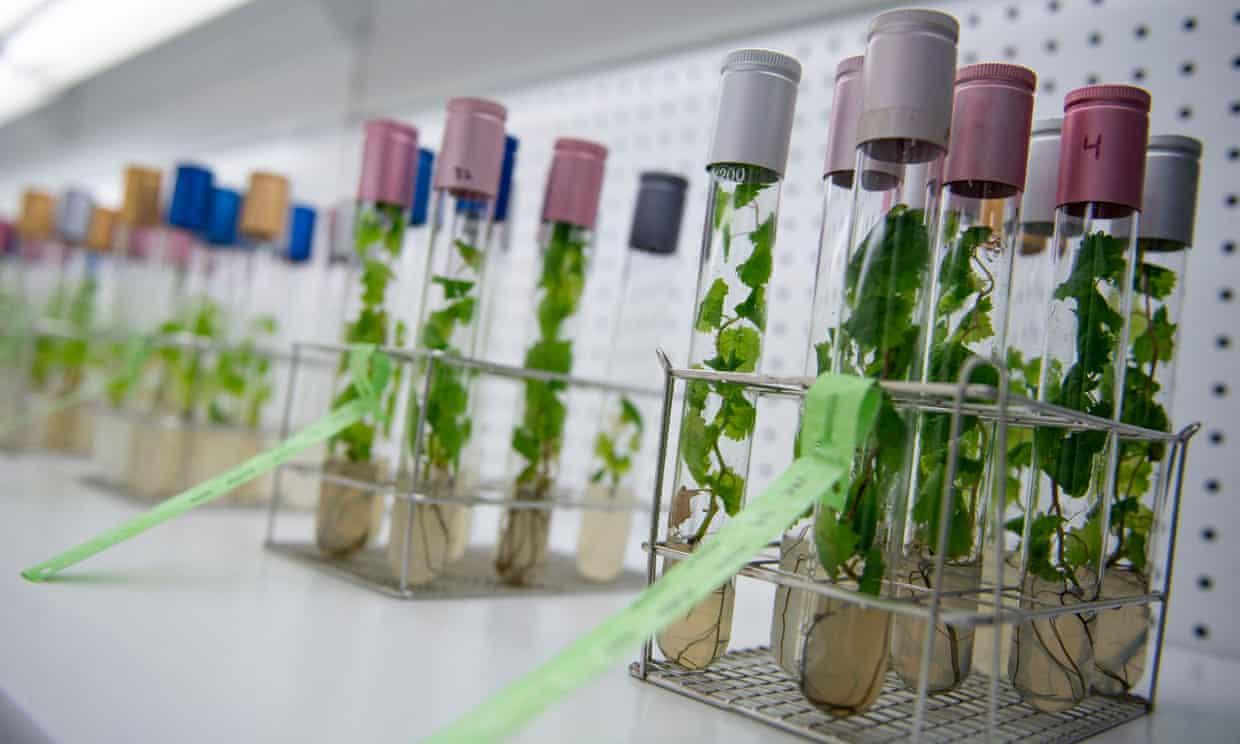
Photo: Josep Lago/AFP/Getty Images. Ancient grape varieties in the laboratory at the Familia Torres vineyard near Barcelona.
Here we go, Humans! More adapting.
Today’s story is about pragmatic grape growers adapting to climate change by seeking out grapes that can handle more heat. Too bad they have to do this, but what they learn may help other growers — and all of us.
Ashifa Kassamcovers the topic for the Guardian: “The ads – tucked in the corners of local newspapers and directed at winemakers – began turning up across Catalonia in the 1980s. ‘If you know where to find any uncommon grape varieties, please get in touch,’ they read.
“Dozens of tips came pouring in, shepherding Miguel A Torres in his search for long-forgotten wine grapes. But it wouldn’t be until a decade later, as the climate crisis began wreaking havoc on vines, that the fourth-generation winemaker realized his foray into the past could play a key role in tackling what lies ahead.
“ ‘I simply wanted to recover the heritage – the ancient traditions and vines – left to us by our ancestors,’ said Torres, the president of Familia Torres winery.
‘And then we realized that some of these varieties take longer to ripen, meaning they might be able to help us in a warming world.’
“It was a glimmer of hope as the wine industry grapples with a changing climate. Extreme weather, drought and steadily rising temperatures have laid bare a crop that is extremely sensitive to change. In Spain, rising temperatures have meant grapes ripening more quickly, leaving winemakers rushing to harvest in hopes of protecting the carefully concocted balance between the fruit’s sugars and acidity.
“ ‘Climate change is the worst threat the sector has ever faced,’ said Torres. …
“In California, vintners are embracing grapes such as mourtaou, a nearly extinct variety from south-western France, to create peppery reds, while some in France’s Cognac region are toppling more than a century of tradition to trial climate-resistant grapes. In Bordeaux, concerns about the climate crisis recently helped to secure the approval of six new grape varieties, including castets, a disease-resistant variety that had been on the brink of disappearing.
“The reasons these grapes fell into disuse varies widely, said José Miguel Martínez Zapater, the director of the Institute of Grapevine and Wine Sciences in La Rioja. Some were abandoned in the late 19th century as the phylloxera plague forced European grape growers to chase efficiency,while others were discarded as winemakers sought to comply with strictly defined appellations or consumer preferences for certain grapes.
“Martínez Zapater’s publicly funded institute is one of several across Spain that have been peering into the past to bolster wine grape diversity – a years-long process that involves identifying the varieties, testing out their characteristics and seeking official approval for their use. … ‘People are finding varieties in different areas that they consider interesting.’
“At the Agrarian Technological Institute of Castilla y Leon, known as ITACyL in Spanish, two decades of research have led to the recovery of more than a dozen varieties of grapes. The list includes estaladiña, a grape whose last recorded reference stretches back to 1914, and cenicienta, a grape close to extinction before it was revived to make fruity reds.
“ ‘The wines they make are very distinct and interesting,’ said José Antonio Rubio Cano, who heads the viticulture and woody crop department at the institute. … He stressed, however, that the embrace of these long-overlooked varieties is just part of the broader efforts needed as the industry adapts to a changing climate. ‘There’s no one solution,’ said Rubio Cano. ‘It has to be a set of things; we have to pay more attention to the vines, be more aware of how their fruits are ripening and we need to develop a deeper understanding of the vineyard and the different varieties.’ …
“The Caserío de Dueñas vineyard is taking the institute’s research to the next level, planting hectares of eight of the recovered varieties to test out how the grapes behave in a real-world scenario.
“ ‘I find it super-interesting,’ said Almudena Alberca [who in 2018 became Spain’s first female master of wine and is] the technical director for Entrecanales Domecq, the vineyard’s owner. ‘The possibilities are endless.’ …
“Four decades after Torres placed his first ad seeking forgotten grapes, Familia Torres has begun releasing small quantities of wines made from the fruits of his quest, such as forcada and pirene. The wines tell a story that is both steeped in the past and nods at the enormous challenge that lies ahead as the climate crisis tightens its grip, said Torres.
“ ‘I’ve always said that the wine sector is the canary in the coal mine,’ he added. ‘The consequences that vineyards are living through right now should make everyone take notice.’ ”
More at the Guardian, here. No firewall; donations encouraged.