Feeds:
Posts
Comments

Posts Tagged ‘colorado’

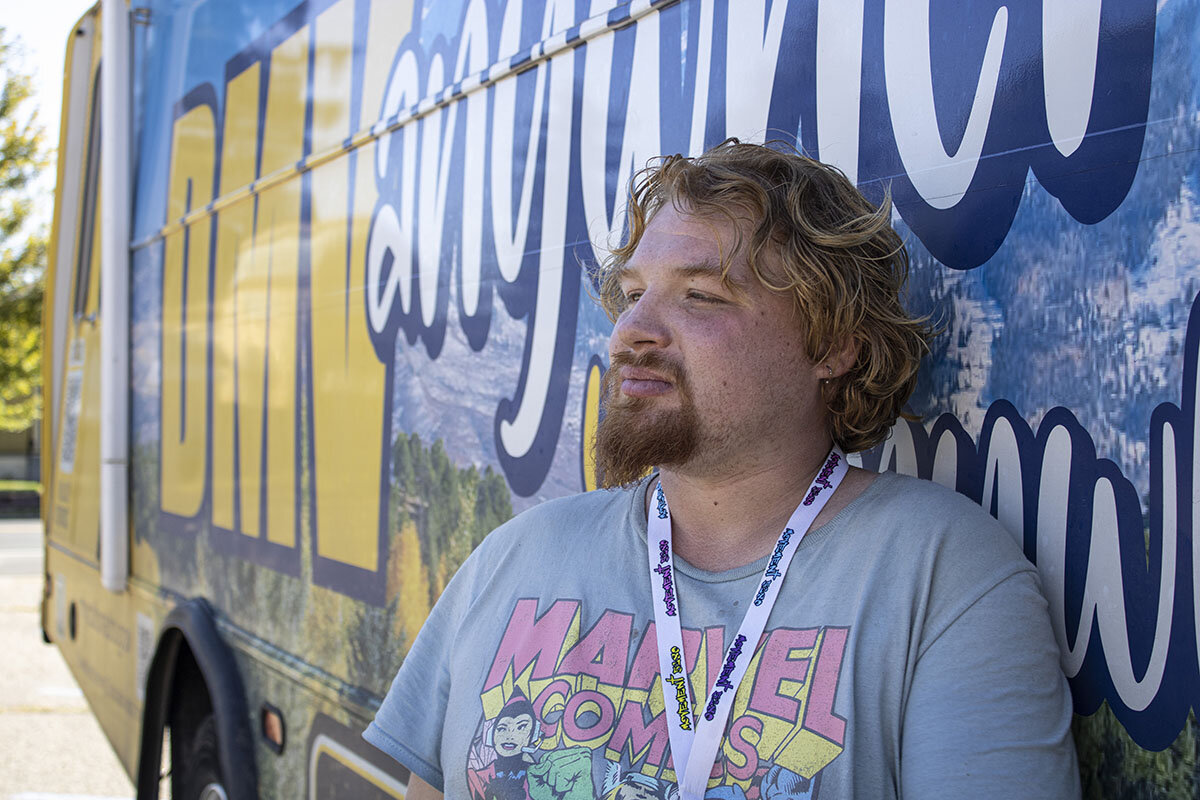
Photo: Caitlin Babcock/Christian Science Monitor.
Tami Graham, executive director of KSUT Public Radio, in her Ignacio, Colorado, headquarters.

It’s inspiring to see ordinary people trying to fill the gaps left by the withdrawal of government funds. But will it be enough? That is the question for the staff of a small but vital public radio station in Colorado.

Caitlin Babcock wrote in September at the Christian Science Monitor, “Crystal Ashike’s reporting for local radio station KSUT made national news when she broke a story on white vans that were showing up on Navajo land and whisking people away. The photojournalist, who is herself Navajo, uncovered how tribal members were being offered access to treatment for substance abuse, only to end up in fraudulent sober living homes.

“KSUT is an NPR-affiliate radio station that serves five counties and four tribes in southwest Colorado and northwest New Mexico, providing local news like Ms. Ashike’s story. And it’s [losing] nearly a fourth of its funding. ….

“Congress passed a rescissions bill this summer, clawing back nearly $1.1 billion in funding for public broadcasting. [The Corporation for Public Broadcasting], established by Congress in the 1960s, provides a small percentage of funding for NPR and PBS [and] also helps fund local radio stations like KSUT, which are affiliated with NPR and air some of its content alongside their own programming tailored to local communities. …

“[For] this station serving small mountain towns, there’s a lot of uncertainty. And for many in the community, it fills an indispensable role.

“ ‘I think we’d really be in a news desert for anything that mattered to us locally, regionally, if it weren’t for KSUT,’ says Carol Fleischer, a longtime listener.

“KSUT is based in Ignacio, a town of about 1,000 people in southwest Colorado that is also the headquarters of the Southern Ute Indian Tribe. The Southern Ute originally founded the station in 1976 to provide community news and traditional Native American music. At the time, it was one of only eight tribal stations in the country.

“After becoming an NPR affiliate in the 1980s, KSUT now runs two separate signals, with one exclusively dedicated to tribal news. The tribal signal broadcasts from 8 a.m. to midnight every weekday. Its programming is a compilation of news affecting local tribes, traditional music, and talk shows like a weekly broadcast on health issues affecting Indian Country.

“The second signal airs a morning regional newscast, a compilation of the station’s own reporting as well as collaborations with other Colorado stations. They also broadcast programming from NPR and BBC News, plus music handpicked by their DJs.

“During the summer – which in southwest Colorado means fire season – KSUT’s morning host puts together a list of updates on any fires that are burning and how effectively they’re being contained. When necessary, the station broadcasts live emergency and evacuation alerts. The fire season this summer has been a pretty intense one, says Tami Graham, the station’s director, with six active fires in the area.

“For some listeners, radio is the primary or only source for this kind of information. In the mountains and canyons of the KSUT broadcast area, cell service is ‘hit-or-miss,’ as one resident describes it. More than 20% of people in La Plata County lack reliable broadband service, meaning radio may be their only way to receive emergency alerts. …

“Like many stations around the country, KSUT has seen an outpouring of support in the weeks since the CPB announced its shutdown. Members have upped their monthly donations, many listeners are sending money for the first time, and the station has even had funds come in from people far across the country. …

“Even though KSUT doesn’t have immediate plans to cut programming, the funding cuts could damage their broadcasting ability. Early this year, KSUT was awarded a $500,000 grant – administered by the Federal Emergency Management Agency through the CPB – to update the technology that enables emergency alerts. But they never received any of the money. After six months of uncertainty regarding the funds because of a separate issue with FEMA, Congress passed a bill rescinding funding for the CPB, which then informed Ms. Graham that KSUT would have to spend any allotted funds by Sept. 30.

“The station paid $46,000 to buy a needed transmitter and other equipment. Three days later, the CPB told the station it would not be able to reimburse them before the shutdown, and warned them not to purchase any new equipment. …

“Priscilla Precious Collins, a member of what’s known as the Ute Mountain Ute Tribe, says KSUT is ‘one of the pillar sources of information in our community.’ She recalls how the radio was ‘crucial’ in spreading information to tribal communities during the pandemic, such as how to keep tribal elders safe. …

“On a baking hot morning in Durango, one of the biggest towns served by KSUT, 20 local listeners assemble in the dining room of a downtown hotel to share their thoughts on local radio.

“ ‘I was a schoolteacher for 37 years, and I listened to KSUT going to school and coming home,’ says Sweetie Marbury, a former mayor who organized the group. ‘It’s a window to the world for us that live in mountain towns.’ …

“On a recent morning, the KSUT broadcast pauses. ‘We have a very sad announcement,’ says Ms. Graham, the executive director. She tells listeners that one of the station’s DJs has unexpectedly passed away. …

“A listener writes in that afternoon. ‘I send my deepest condolences to you and to everyone there at KSUT,’ she writes, ‘as I know it is not just a business.’ In this woman’s 49 years of listening to KSUT, she says the station has been a ‘lifeboat in an angry sea.’ ”

More at the Monitor, here.

Read Full Post »

Photo: Colorado Department of Transportation.
A black bear (black bears are sometimes brown) walks through a wildlife underpass at State Highway 9. 

In parts of the country where people really value their wildlife, there are increasing efforts to prevent roadkill by building safe crossings for animals. They’re expensive, but the passes also save humans from life-threatening collisions.

In an article at the New York Times, reporter Catrin Einhorn learns that the motivation to build pathways crosses political divides.

She writes, “The aim was to protect motorists and wildlife along an especially grisly stretch of highway. Now, it was time to see whether the investment would pay off.

“Aran Johnson, a wildlife biologist for the Southern Ute Indian Tribe in the southwestern part of Colorado, walked up a bank to a newly constructed overpass crossing Route 160. … It was a cool summer morning in 2022, with mist rising from the ground. Mr. Johnson carried trail cameras. Mule deer and elk wouldn’t be showing up in any numbers until later in the year, when they had to cross the highway to reach their wintering grounds. Still, he wanted the cameras ready to capture the earliest evidence possible of any animals using the structure.

“At the top of the overpass, he could barely believe what he saw: a line of hoof prints pressed deep into the fresh mud, stretching from one side to the other. An elk had already found its way across. …

“Since then, it’s been one successful year after another. Entire herds of mule deer and elk use the structures, as well as bears, mountain lions, bobcats, coyotes and foxes.

“Wildlife crossings are growing in popularity across the country, and in recent years, Colorado has emerged as a leader. Since 2015, it has built 28 new large game crossing structures, according to the state Transportation Department.

“The state is rich in wildlife, and many of its species travel from higher elevations in the summer to lower ones in the winter, oftentimes crossing highways at great peril. In 2022, the General Assembly passed a law creating a cash fund for the department to use for animal crossings. Colorado has also evaluated its highways to create a priority list for future projects.

“Wildlife crossings, when combined with long stretches of fencing to funnel animals to the right location, have been found to reduce vehicle collisions with large animals by more than 80 percent.

“They are expensive, but research has shown they can save money when installed on stretches of highway with at least an average of three collisions between motorists and deer per mile per year. For collisions with elk and moose, which are bigger and therefore cause more damage to vehicles and people, that threshold goes down to less than one collision per mile per year.

“Locals had long known they had to pay close attention when driving along that stretch of Route 160, near the Chimney Rock National Monument. … In the early 2000s, Mr. Johnson, the biologist for the Southern Ute, started collaring mule deer to better understand how they moved over the landscape around the reservation. He analyzed his data and superimposed them on state records of wildlife-vehicle collisions. …

“The Colorado Department of Transportation, which covers the vast majority of the cost for wildlife crossings, agreed to put in an underpass on the reservation. But the Southern Ute also wanted to install an overpass, since certain species, particularly elk, seem to greatly prefer them. The tribe came up with $1.3 million from the Bureau of Indian Affairs to make that happen.

“Additional funding for the $12 million project came from the state department of wildlife, nonprofit groups and even a private donor. …

“An added bonus of wildlife crossings is the photos that come from trail cameras, which help to bring attention to the programs, Mr. Lawler said. … [But with cuts in] federal spending, a grant program that helps states and tribes pay for wildlife crossings in collision hot spots is now in doubt, including grants that had already been promised. …

“Wildlife crossings transcend political divisions, said Patricia Cramer, an ecologist who consults with states on wildlife crossings. … Of the two states she sees as national leaders, Wyoming is red and Colorado is blue.”

More at the Times, here, and at Denver7.com, here.

Read Full Post »

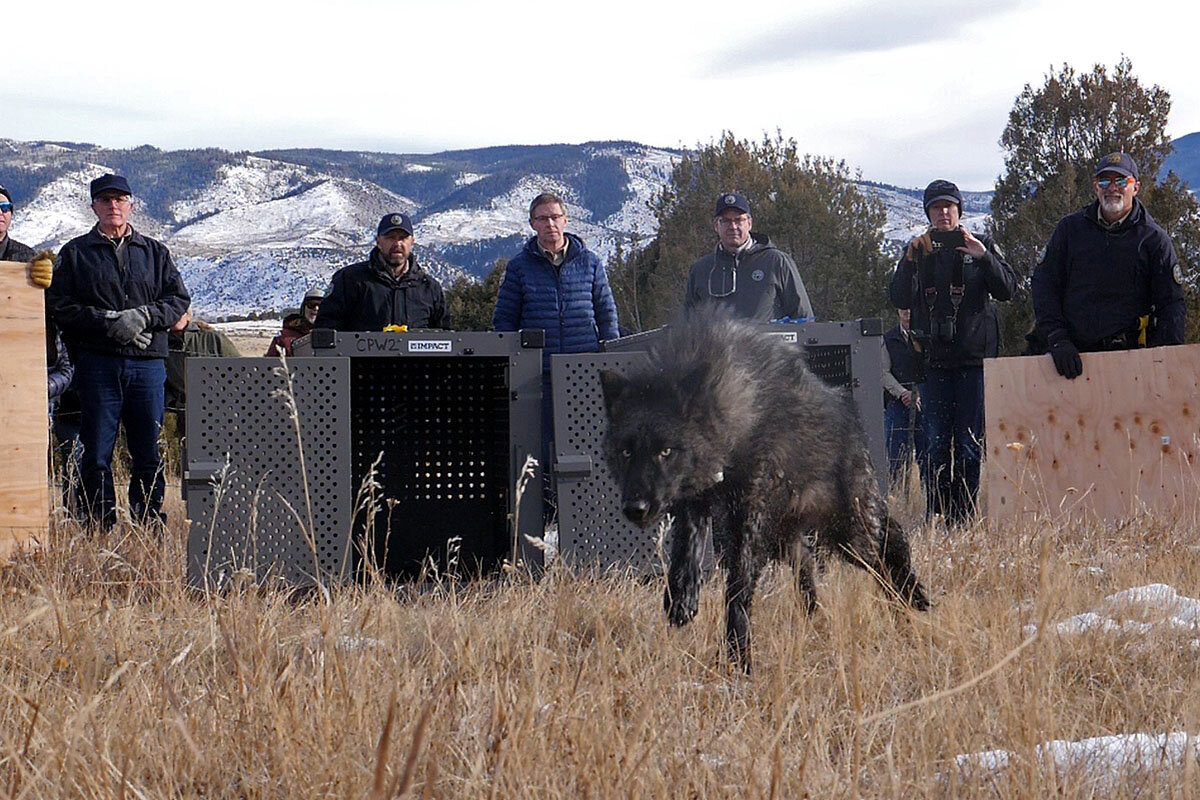
Photo: Jerry Neal/Colorado Parks and Wildlife.
Via Christian Science Monitor: “Wolf 2302-OR runs into the wilderness as Colorado Parks and Wildlife released five gray wolves onto public land in Grand County, Colorado, on Monday, Dec. 18, 2023.”

Rewilding involves trade-offs. That’s why reintroducing the gray wolf with the scary eyes to its old haunts requires taking the needs of many constituencies into account.

As Sarah Matusek reports at the Christian Science Monitor, “A new era dawned in Colorado’s Rocky Mountains [in December] with the release of five gray wolves. 

“The reintroduction of the wild canines to Colorado fulfills a voter-passed plan to begin restoring the endangered species here by the end of 2023. The first batch of furry predators, flown in from Oregon, bounded out of crates in Grand County, Colorado, across an undisclosed meadow. 

“Wolves are contentious in the western United States, with disagreement about the threats they may pose versus their ecological benefit. A judge last week denied a last-minute lawsuit from the Colorado cattle industry seeking to block the release.  

“Despite the culture-war status of wolves, their release has also spurred cooperation. Many ranchers, wolf advocates, scientists, and wildlife officials have engaged in knowledge-sharing and strategizing around conflict reduction. …

“Gray wolves, wildlife experts say, are native to the Centennial State. Killed off in Colorado by the 1940s, some have since migrated here across state lines. Colorado biologists recorded the birth of wild wolf pups in the state’s north in 2021. 

“The animal is subject to a patchwork of protections. Listed as endangered in Colorado, for instance, the gray wolf loses that status once it crosses the northern border into Wyoming. Gray wolves are protected nationally under the federal Endangered Species Act, with exceptions in the northern Rocky Mountains. 

“After the 2020 vote, Colorado got special permission from the U.S. government for its state restoration plan. This generally allows management flexibility in Colorado, such as killing wolves that attack livestock.

“The Colorado cattle industry sued state and federal wildlife agencies last week seeking to block the rollout of the plan. The Gunnison County Stockgrowers’ and Colorado Cattlemen’s associations argued that the U.S. Fish and Wildlife Service failed to produce a certain environmental study on wolf impacts that federal law required.

“On Friday, a U.S. district judge denied the plaintiffs a temporary restraining order. Their arguments, the court found, didn’t merit halting Colorado Parks and Wildlife’s wolf plan, which ‘would be contrary to the public interest.’  

“Thirty to 50 wolves could be reintroduced on Colorado’s Western Slope over the next three to five years, according to the state’s wolf management plan. 

“The Western Slope, a largely rural area, sits west of Denver and several other population centers, which carried the pro-wolf vote. The outcome underscored an urban-rural divide in a Democratic-led state that used to trend more purple.

“Supporters, including environmentalists, argue for restoring a natural balance. ‘Wolves, for millennia, have been one of the primary engines of evolution and the drivers of ecological health throughout the Northern Hemisphere,’ says Rob Edward, strategic adviser at the Rocky Mountain Wolf Project. 

“He cites an example in Colorado’s Rocky Mountain National Park. An abundance of elk there has depleted vegetation ‘in the absence of their primary predator, gray wolves,’ says Mr. Edward,. …

“Critics, including agricultural producers, raise concerns about predation of wild and cultivated animals. ‘There’s obviously the concern with the impacts to our own livestock, both financial and emotional,’ says rancher Greg Peterson, a member of the Gunnison County Stockgrowers’ Association. ‘It’s traumatizing when that animal suffers.’ …

“Wolves may help reduce elk overbrowsing and bolster habitat diversity, [Kevin Crooks, director of the Center for Human-Carnivore Coexistence at Colorado State University] says, based on research in national parks like Yellowstone, which reintroduced gray wolves in 1995. But the science also suggests that ‘wolves were likely not solely responsible’ for ecosystem changes there.

“And while wolves could harm individual livestock, he says, in terms of ranching concerns, research shows that a rebound of wolves is unlikely to have a major economic impact on the cattle industry. Yet that’s cold comfort to one Colorado ranching family that’s already seen several livestock deaths and injuries from wolves since 2021, reports the Washington Post.

“In an effort to bridge trust gaps, Dr. Crooks’ center has compiled peer-reviewed research and crowdsourced funds for nonlethal wolf mitigation, like fencing or guard dogs. The university has also engaged Western Slope stakeholders like Jo Stanko, who runs a ranch with her husband near Steamboat Sp​​rings in northwestern Colorado.

“As a voter, Ms. Stanko says she cast her ballot in 2020 against wolf releases. Though she still has concerns, three years later she holds an attitude of acceptance – and hope for solutions around wolves and ranchers sharing land. Her family continues to train livestock dogs and install new fencing, and Ms. Stanko hosted a dialogue with wolf advocates and other ranchers last year. 

“ ‘We’ve got to learn to have – and relearn how to have – civil conversations with each other,’ she says.”

More at the Monitor, here.

Read Full Post »

Photo: Sarah Matusek/The Christian Science Monitor.
At Colorado’s roving Department of Motor Vehicles — a bus — people experiencing homelessness and others can get an ID.

Some kind of ID is necessary in life — to apply for a job, get a bank account, rent an apartment, and sometimes to vote. That’s why Colorado has decided everyone should be able to get legal identification. The state’s Department of Motor Vehicles (DMV) is making it happen.

Sarah Matusek writes at the Christian Science Monitor, “Radio in hand, Steven Rustemeyer ushers the next person aboard the bus. … This bus has no rows of seats, no driver or destination. This is a project of the Colorado Division of Motor Vehicles – a DMV on wheels. It sits parked with an office inside – complete with computer, printer, fingerprint reader, and vision test chart. 

“ ‘It’s easier that way,’ says Mr. Rustemeyer, who got a new ID from the mobile clinic earlier this year. Homeless for eight years since he aged out of foster care, he says he appreciates not having to pay bus fare to head to the brick-and-mortar office. The bus shows up once a month at a nonprofit whose job readiness program he attends – and where he’s helping out today. The stop is one of several across the state. …

“As it issues IDs and licenses to hard-to-reach Coloradans, the DMV2GO program blunts bureaucracy by saving time and travel to traditional sites. Officially launched last year, the mobile program has issued around 11,000 documents as of September, stopping by incarceration sites, homeless shelters, universities, and rural community hubs. Given how IDs are key to securing housing, work, and other basics, the goal is to ensure equitable access to identity services for all, says Desiree Trostel, the program manager.

‘It’s important to “meet people where they’re at,” ‘ Ms. Trostel says, ‘regardless of circumstance or location.’

“Mobile staff members report more enjoyment on the job, too. Customers on the road are ‘a lot happier to come and see us,’ says Liz Kuhlman, an upbeat licensing technician on the bus.

“In mountainous Archuleta County, where there is no state DMV, Warren Brown says he and his wife saw the problem up close. At their former insurance business, part of the job meant helping older customers navigate license services online. 

“ ‘In my mind, this just didn’t have to be that way,’ says the county commissioner, who contacted the state for help. His constituents were first in line to benefit from the formal rollout of DMV2GO in 2022. …

“Customers can apply for or renew driver’s licenses or ID cards, including out-of-state transfers. The clinic doesn’t offer knowledge tests or print the physical card on-site (those will arrive later by mail), but it does offer temporary ones. …

“The Florida Licensing on Wheels program, or FLOW, has operated since 1988, says David Brown, a FLOW program manager. Beyond making regular stops, it’s also grown to respond to manmade and natural disasters. … ‘In order for you to start the process of rebuilding after a disaster, you need those solid credentials,’ he says.

“Rebuilding can also mean navigating society after incarceration. That’s why DMV2GO’s list of stops includes sites like the Jefferson County jail. …

“Convenience aside, mobile DMVs also aren’t without challenges. Spotty internet access in rural areas, for one, can complicate service. And in Colorado, demand is high for the program that currently involves four licensing technicians and three vehicles. The state says it’s gathering data on DMV2GO’s impact and hopes to expand. 

“That demand is clear at a recent stop at a public library in rural Westcliffe when a dozen people arrive ahead of the clinic’s opening at 10 a.m. Though a couple of locals note the wait, those in line still appreciate the service.

“ ‘This is awesome,’ says John Van Doren, a retiree here for a license renewal. ‘Very convenient.’ “

More at the Monitor, here.

Read Full Post »

Art: Beatrix Potter via the Marginalian.
The mighty mushroom.

As the blogger at Spores, Moulds, and Fungi in New Zealand could tell you, mushrooms are important to the efficient functioning of the planet.

Today’s article explains how, if encouraged to do their own thing, fungi can prevent the worst climate-change wildfires. Here are excerpts from Stephen Robert Miller’s report at the Washington Post.

“If you’ve gone walking in the woods out West lately, you might have encountered a pile of sticks. Or perhaps hundreds of them, heaped as high as your head and strewn about the forest like Viking funeral pyres awaiting a flame.

“These slash piles are an increasingly common sight in the American West, as land managers work to thin out unnaturally dense sections of forests. …

“The federal government has committed nearly $5 billion in the Inflation Reduction Act and Bipartisan Infrastructure Law to thinning forests on about 50 million Western acres over the next 10 years. Although this can be accomplished with prescribed burns, the risk of controlled fires getting out of hand has foresters embracing another solution: selectively sawing trees, then stripping the limbs from their trunks and collecting the debris.

“The challenge now is what to do with all those piles of sticks, which create fire hazards of their own. Some environmental scientists believe they have an answer: mushrooms. Fungus has an uncommon knack for transformation. Give it garbage, plastic, even corpses, and it will convert them all into something else — for instance, nutrient-rich soil.

“Down where the Rocky Mountains meet the plains, in pockets of forest west of Denver, mycologists like Zach Hedstrom are harnessing this unique trait to transform fire fuel into a valuable asset for local agriculture.

“For Hedstrom, the idea sprung from an experiment on a local organic vegetable farm. He and the farm owner had introduced a native oyster mushroom to wood chips from a tree that fell in a windstorm.

“ ‘That experiment showed us that the native fungi were helping to accelerate the decomposition really substantially,’ he said. Working with local governments, environmental coalitions and farmers, he is now honing the method. …

“When slash piles are set alight, they burn longer and hotter than most wildfires over a concentrated area. This leaves behind blistered soil where native vegetation struggles for decades to take root. As an alternative, foresters have tried chipping trees on-site and broadcasting the mulch across the forest floor, where it degrades at a snail’s pace in the arid climate. Boulder County also carts some of its slash to biomass heating systems at two public buildings.

“ ‘We’re removing a ton of wood out of forests for fire mitigation,’ Hedstrom said. ‘This is not a super sustainable way of managing it.’ He hopes to show that fungi can do it better.

“Jeffrey Ravage is a forester with the Coalition for the Upper South Platte, which manages protection and restoration of a more-than-million-acre watershed in the mountains southwest of Denver. He describes the action of saprophytes, a type of fungi that feeds off dead organic matter, as ‘cold fire.’ Like a flame, saprophytic fungi break organic material into carbon compounds.

Mycelium, the often unseen, root-like structure of the fungi, secretes digestive enzymes that release nutrients from the substrate it consumes.

“Whereas a flame destroys nearly all organic nitrogen, mycelium can fortify nitrogen where it’s needed in the forest floor. … Standard thinning costs somewhere around $3,000 per acre, about a third of which is spent hauling out or burning the slash. Using mycelium could drastically reduce that cost. With the right kind of fungi, he said, ‘we can do in five years what nature could take 50 years to a century to do: create organic soil.’

“Though the method is new, it’s not untried. At the Balcones Canyonlands Preserve, north of Austin, biologist Lisa O’Donnell deploys mycelium to combat invasive glossy privet [successfully]. … For mycelium to be a truly viable solution to wildfires, however, it would have to work at the scale of the Western landscape. Hedstrom is experimenting with brewing mycelium into a liquid that can be sprayed across hundreds of acres. …

“Ravage doubts it could be so easy. ‘Half the battle is how you target the slash,’ he said. Success stories like Balcones are rare. Ravage has spent a decade cultivating wild saprophytes and perfecting methods of applying them in Colorado’s forests.

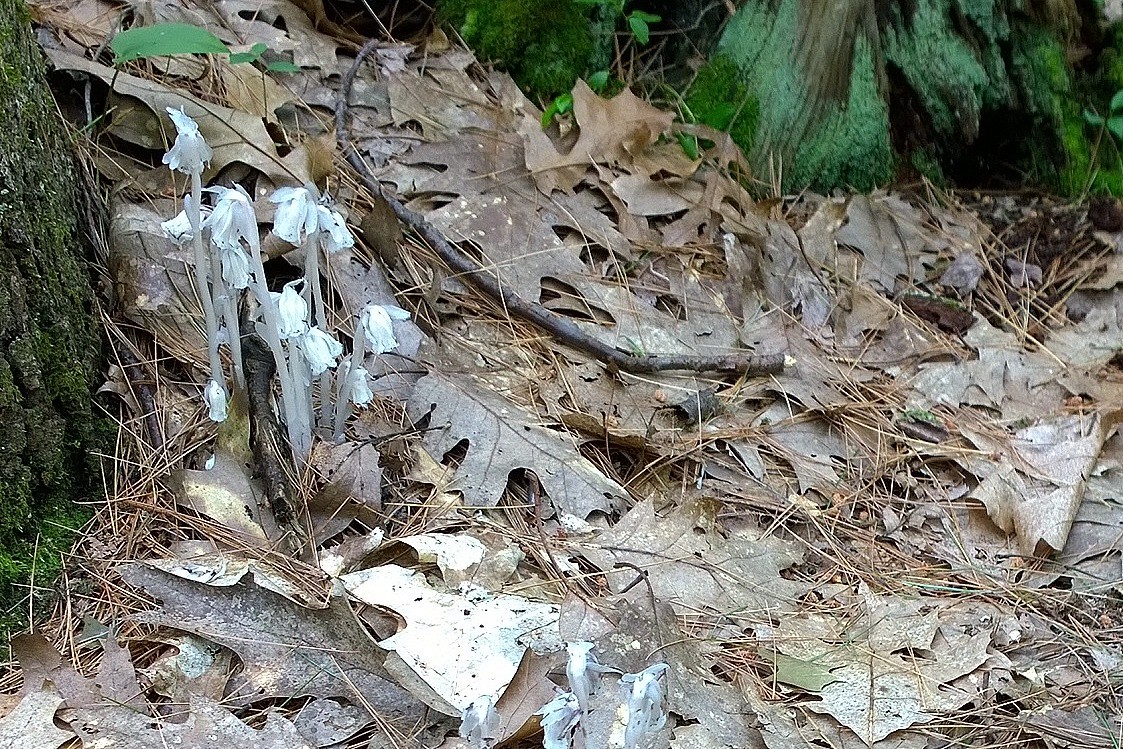
Photo: Suzanne and John’s Mom
Indian Pipe is a kind of saprophyte.

062917-Indian-Pipe-fungus-ConcordMA

“He begins by mulching slash to give his fungi a head start. Then he seeds the mulch with spawn, or spores that have already begun growing on blocks of the same material, and wets them down. Fungi require damp conditions and will survive in the mulch if it is piled deeply enough. Given the changing character of Western forests, however, aridity poses a serious hurdle.

“At his lab in the Rockies, Ravage grows about a ton of spawn annually. To meet the demands of forest-fire mitigation, he wants to produce 12 tons every week. This presents an opportunity for intrepid mushroom farmers, should the government choose to fund them.”

The article was produced in collaboration with the Food & Environment Reporting Network.

More at the Post, here.

Read Full Post »

My friend Di, who is a trustee of our library, caught me going into the building Monday and said she had put a new bench in the Large Print section and asked me to let her know what I thought of it. Little did she know what a kindness I think benches are!

Sydney Page at the Washington Post reports on a kind man who was moved to make a bench for a weary bus rider he’d seen — and was then moved to make another bench and another.

“James Warren rides the public bus a lot in his hometown of Denver. Ever since he went car-free in 2017, he uses buses to get around if he can’t get to his destination on foot or bike. Many of the bus stops, he began to notice, lack seating for riders as they wait.

Then in January, Warren spotted a woman waiting for a bus along a busy road. There was no seating at the stop — and no sidewalk — so she sat in the dirt.

“ ‘For people to have to sit in the dirt while they’re waiting for a bus is just undignified,’ said Warren, 28, who works as a consultant for the Colorado Workforce Development Council. He wanted to do something about it. He decided to build a bench.

“ ‘I just took some scrap wood and went to town,’ Warren said, adding that he hoped this woman — and others seeking a seat — would not need to rest in the dirt again.

“He then realized that one bench was far from enough. There are more than 9,000 Regional Transportation District (RTD) bus stops in the Denver metro area, many of them without seating or shelter.

“Warren decided to contribute what he could. Perhaps, he thought, his homemade bench initiative might get the attention of transit or city officials who would see the need for better bus stops. …

“Since building his first bench in January, he has crafted seven more and placed them at bus stops around Denver — each made from scrap wood he finds in construction dumpsters. As far as design goes, ‘I mostly just wing it,’ Warren said.

“The benches take about three hours to build, and Warren inscribes ‘Be Kind’ on each one — either using a stencil or a wood-burning tool. …

“For Warren, what is most rewarding about his project is knowing his benches are being put to use.

” ‘I get a little giddy when I see someone using a bench,’ he said. ‘They are so thankful. … I met some ladies the other day who were talking about how they used the benches every single day,’ Warren added. ‘It fills me up. It’s air in my tires.’

“Although some of the benches have been vandalized or stolen, Warren said it doesn’t dampen his desire to make them. … ‘It’s not going to stop me,’ he said. ‘I’ll keep doing it. For every bench they steal, I’ll put out two more.’

“Warren said many people have hopped on his bench-making bandwagon, which has motivated him to build more. …

“Aleks Haugom, 32, heard what Warren was doing and was eager to join the effort. They spent an afternoon together building a bench.

“ ‘He showed me how he does it. It’s a pretty simple design, but it seems to work well,’ Haugom said. … ‘This guy has motivation [and not] just a normal amount, huge amounts of motivation. I have never seen anyone quite as motivated as James is to do these things. Hopefully it rubs off on me.’

“Others saw Warren’s work in the local news and decided to take out their tools, too. People also started donating supplies.

“ ‘That puts me over the moon,’ Warren said. ‘That’s the idea. Let’s just all help our neighbors.’ ”

More at the Post, here.

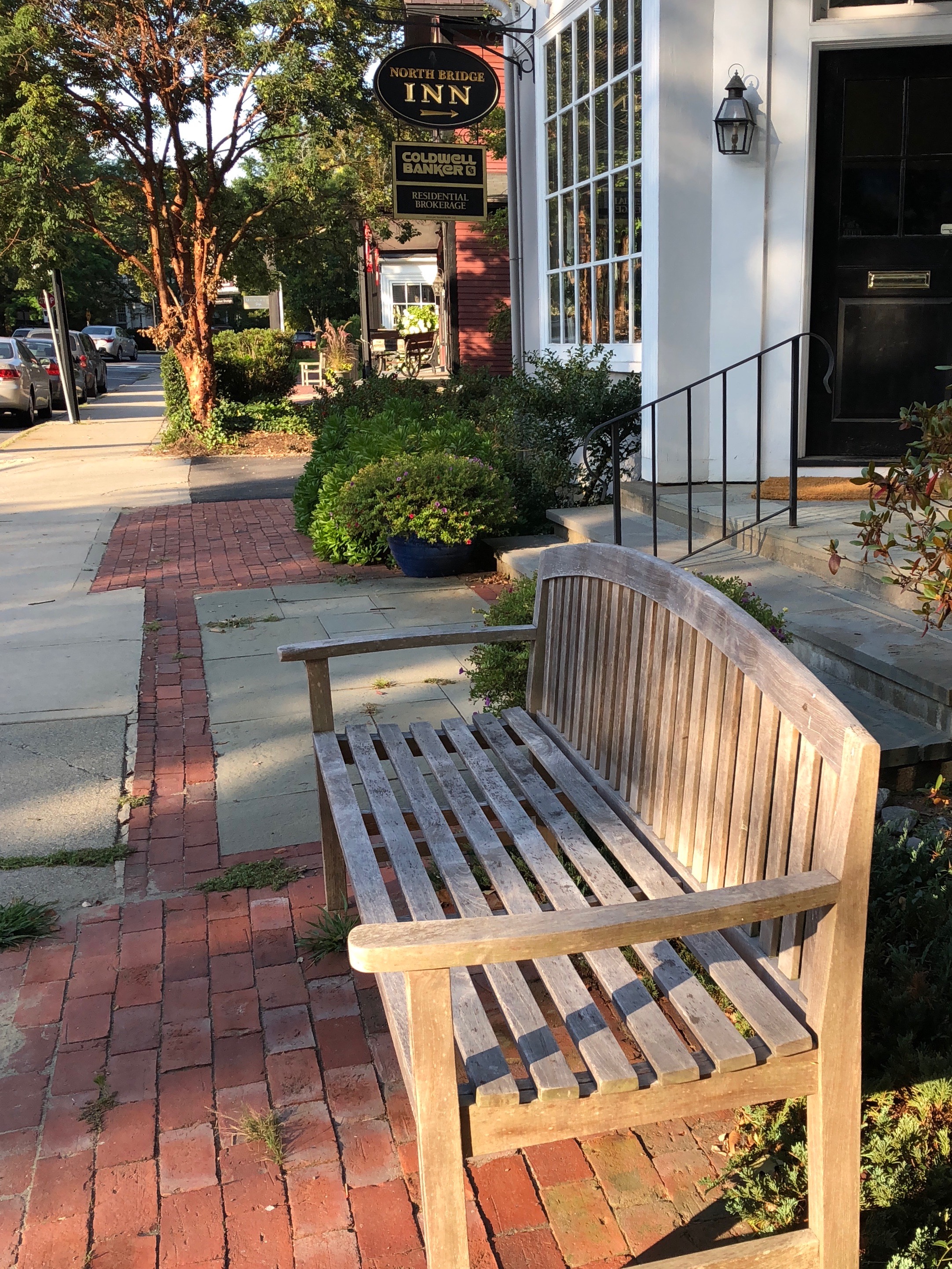
Photo: Suzanne and John’s Mom.
A public bench is a kindness.

Read Full Post »

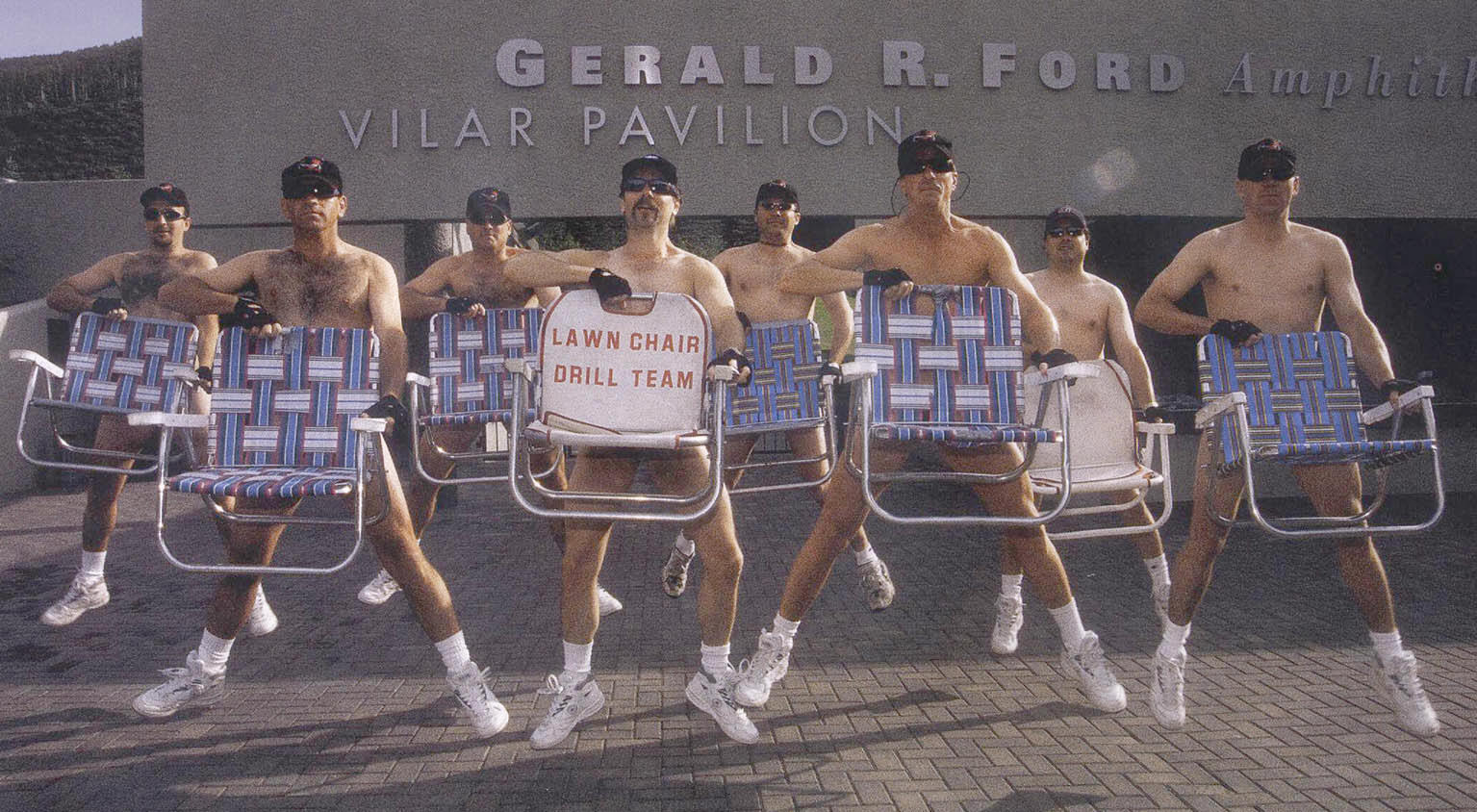
Photo: Vail Lawn Chair Team.
Precision lawn-chair team in Vail, Colorado. It takes commitment to pull off something so unserious this well.

Never doubt the ability of the human brain to amuse itself.

In Vail, Colorado, there’s a group of guys who work long hours to perfect their moves for the next lawn-chair precision-marching event. Randy Wyrick wrote about this unusual group at the Vail Daily.

“Nine guys launched Vail’s Precision Lawn Chair Demonstration 35 years ago. …

“Lawn chair pioneer Richard Carnes said [that] they debuted in Vail’s 1984 July Fourth parade. The crowd went wild, especially when the chair men lobbed water balloons at the crowd and one splashed former President Gerald Ford. …

“One thing led to another, as things often do, and they landed all sorts of gigs. No one had ever seen anything like them. We still haven’t.

“There was a Heath candy bar commercial, multiple performances nationwide for conventions and other special events like NBA halftime shows and even a few NFL and MLB events.

“For the uninitiated, the Vail Precision Lawn Chair Demonstration Team is a bunch of guys and several Banner Babes in Hawaiian attire, shorts and sunglasses and, for [the 2019] Vail America Days parade, 10th Mountain Division baseball caps. Their performance is sort of like a military drill, except they use lawn chairs instead of rifles. …

“Participation faltered a bit in the early 1990’s, but resurrection was close at hand. They represented Colorado in Washington, D.C. for President Bill Clinton’s 1993 Presidential Inauguration. …

“It was 9 a.m. January 20, 1993 and the local chair men owned Pennsylvania Avenue, an eight-lane thoroughfare lined with tens of thousands of spectators, held back by hundreds of D.C’s finest. …

“Maybe it was the buffed aluminum, or the intricate nylon webbing with the strategically placed finger-hole in the back. Or maybe it was their new Hawaiian shirts, sometimes-sponsored shorts, sunglasses and sporadically matching shoes.

“No one knows for sure, but minor TV commercials with major ski resorts led to TV interviews with the likes of Erma Bombeck and Bob Beattie, all leading to the pinnacle of TV fame — a Miller Lite ‘Tastes Great/Less Filling’ commercial.

“They ‘suffered’ through four days of shooting on the beach around the Santa Monica pier, surrounded by bikini-clad women. That’s what it takes to create greatness, and film a 30-second commercial.

“The D.C. Elite decided if the chair men were good enough for Bubba, they were good enough for Bush.

“ ‘For whatever reason, and trust me when I say many were searching for them, we were invited back to Washington D.C. to do it all over again, this time for George Bush’s Inaugural Parade in 2001,’ Carnes said.

“They appeared live on ‘Good Morning America’ with Tony Perkins, followed by a humorous discussion with Charles Gibson and Diane Sawyer. Taped appearances went national. …

“Seventeen radio shows beamed them around the globe from Eugene, Oregon, to Boca Raton, Florida, and all the way to the BBC in London. In fact, three separate divisions within the BBC did three separate interviews; all transmitted live throughout Western Europe.

“They don’t make as many personal appearances as they used to. Some of the original nine — Craig Campbell, Gary Pesso, Will Lewis, Kirk Kennedy, Nick Svoboda, Brian Heslerlee, Jeff Atencio, Gary Howe and Carnes — have passed the torch, and the chairs, to their children.

“ ‘The Vail Fourth of July parade is an annual rite of passage, for the crowds of course, but also for team members and now even their children,’ Carnes said.”

More at the Vail Daily, here. Or watch them perform in the television interview below.

Read Full Post »

Photo: AP.
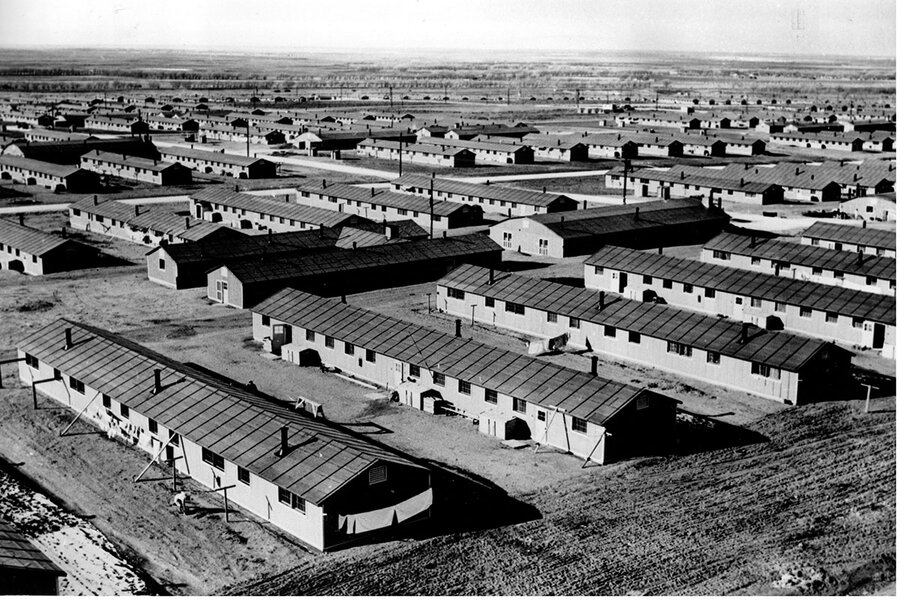
Housing barracks at the Amache internment center near Granada, Colorado, where Japanese Americans were relocated during World War II, June 21, 1943.

Many Americans today are unaware that the country actually set up concentration camps for Japanese Americans in WWII. We weren’t gassing people, but what we did was pretty dark. In today’s story, we learn how a school near one camp decided that facing that dark history was important for healing.

Sarah Matusek reports at the Christian Science Monitor, “The wind sings a wordless song across the Colorado plains, making acres sway. Out of the brush rise concrete remains of a camp that imprisoned over 10,000 people.

“Carlene Tanigoshi Tinker, a toddler during World War II, lived at this Japanese American internment camp, called Amache. She sat atop her father’s shoulders with a scarf around her face – a shield against wind-whipped sand – as they lined up outside for food. Her parents were United States citizens.

“After their release, stigma followed her to Denver, she says, where kids would pelt her with rocks after school. For the rest of her childhood, Amache was ‘a topic that we never discussed,’ remembers Ms. Tinker, a retired biology teacher living in California. …

“[In March], President Joe Biden designated Amache as a national park, but for some it was, in essence, already serving as one. For years, camp survivors and descendants have visited the site that once confined their families, welcomed by a local educator in the nearby town of Granada.

“Over almost 30 years, John Hopper, dean of students at Granada School District RE-1, and hundreds of his pupils have helped preserve the rural site and run a museum in Granada. Their sense of civic responsibility has built bonds across cultures and generations, transcending a dark chapter of American history.

“ ‘It’s taught me a lot about empathy,’ says Bailey Hernandez, a junior. ‘You start to think, well, how would I have reacted if my family was forced into one of these camps?’

“One of his predecessors toured Ms. Tinker around Amache in 2004, her first trip back. She remembers feeling uplifted.

“ ‘These kids are really, really amazing to be so dedicated,’ says Ms. Tinker. ‘They know how important it is and they want to preserve this story.’ 

“Two months after the December 1941 Japanese attack on Pearl Harbor, Franklin Roosevelt signed Executive Order 9066. That led to the forced removal of more than 100,000 people of Japanese ancestry from their homes into internment camps. …

“Amache mostly held American citizens – who were seen as potential enemies and subjected to loyalty questionnaires.

In spite of these conditions, internees beautified their arid captivity by planting trees and gardens, even creating a pond.

“The U.S. government under Ronald Reagan formally apologized in 1988; reparations checks followed. And now with [the] signing of the Amache National Historic Site Act, oversight of the property will transition to the National Park Service. …

“Despite being recognized for his work – including praise from the consul general of Japan in Denver – Mr. Hopper says he prefers to ‘be on the sidelines’ and center his students.

“ ‘It is a heavy, heavy topic, especially when you talk about civil liberties,’ he says. ‘But that’s part of my job I enjoy talking about – needs to be talked about.’

“Mr. Hopper, who does not have Japanese ancestry, first visited Amache as a new Granada high school social studies teacher in 1990. …

“In 1993, some ‘really bright and willing students’ wanted to pursue an Amache project and began interviewing a survivor whom Mr. Hopper’s family knew. That year the teacher established the nonprofit Amache Preservation Society (APS). What began as extracurricular activities eventually formalized into a class. Collaboration with survivors, descendants, and the town, and partnership with groups like the Amache Club and Amache Historical Society, have been key to building trust.

“Over the years, students have divided their time between physical preservation of the site – mowing or renovating a cemetery or other landmarks – and interpretive efforts. APS students present to other schools and groups, and help keep up the Amache Museum, where they double as docents. …

“When Mr. Hopper retires, he plans to pass the mantle of APS leadership to social studies teacher Tanner Grasmick, who joined APS as a high schooler.  The teacher credits his experience as one of Mr. Hopper’s students as the reason he became an educator himself. 

“ ‘You hear what they had to go through, the adversities that they had to face, and for them to come back and just be so grateful [for the preservation efforts] … it’s amazing,’ says Mr. Grasmick.”

More at the Monitor, here.

Be sure to check out Alden Hayashi’s novel Two Nails, One Love, which includes a vivid description of his mother’s experience as an American of Japanese descent during WWII.

Read Full Post »


Photo: Sarah Matusek/
The Christian Science Monitor.
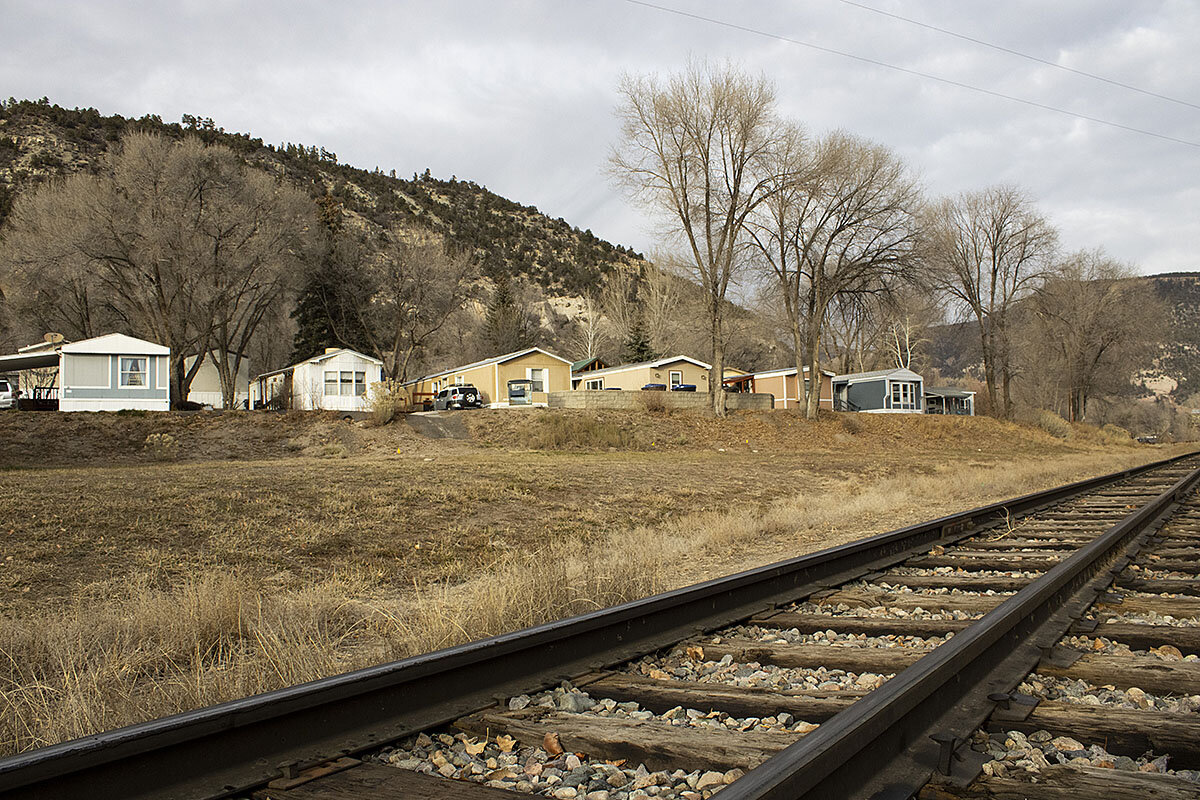
The Animas View MHP Co-op in Durango, Colorado, sits above the Durango and Silverton Narrow Gauge Railroad. It is one of six resident-owned manufactured housing communities in Colorado.

In the world of affordable housing, the trailer park traditionally got no respect. Until now. When residents cooperatively buy the land under them, self-esteem is one of the many benefits.

Sarah Matusek writes at the Christian Science Monitor, “One sunny, cold morning last January, John Egan joined fellow mobile home park residents on a neighbor’s front porch. They needed to organize. But how? 

“ ‘I had to go to the restroom, and when I came back from the restroom, they said, “Hi! You’re president!” ‘ recalls Mr. Egan.

“The half-dozen folks had convened to think through how to buy their Durango, Colorado, park from the private landlord – a move Mr. Egan and others deemed a shot in the dark. But now they at least had a president for what would become an interim board. With guidance from a housing nonprofit and majority support from the community, residents succeeded in purchasing the roughly 15-acre property within five months. They celebrated with a picnic, as the new Animas View MHP Co-op joined some thousand other resident-owned communities countrywide. …

“The resident-owned market constitutes just 2.4% of manufactured housing communities nationwide. Bolstering the health and longevity of mobile home parks is important as they are a critical source of affordable housing, say industry experts. Recent legislation in Colorado offers some provisions for communities like Animas View that hope to secure their future by governing themselves.

‘Everybody sleeps better at night,’ says Steve Boardman, here for 20 years, as he takes out his recycling. ‘We’re in control.’

“River, mountains, grasses bleached blonde in autumn – the Durango mobile homes have a million-dollar view. Largely immobile and costly to move, these factory-built units have been commonly called ‘manufactured homes’ since 1976. They house an estimated 18 million to 22 million people in the United States. …

“The median annual household income of these homeowners – $35,000 – is half that of site-built homeowners, according to Fannie Mae. Manufactured housing fills 6.3% of U.S. housing stock, with more than double that share in rural areas.

“Many residents own their homes but not the underlying land, for which they pay ‘lot rent.’ That model can spur financial precarity: These homeowners are ‘more likely to see their homes depreciate and have fewer protections if they fall behind on payments,’ reports the Consumer Financial Protection Bureau

“Media reports have increasingly shed light on private-sector purchases of these parks that often result in rent increases, which housing advocates deem predatory. 

“Mobile home park investor Frank Rolfe counters: ‘When we buy these properties, they’re often in terrible condition, and [we] bring them back to life. … You can’t bring old properties back to life without raising rents.’

“Mr. Rolfe estimates that he and a partner are the fifth largest owners of U.S. mobile home parks. ‘There is this conception I think out there that park owners are in some way hostile to residents buying their own communities, and that is completely off base,’ says Mr. Rolfe, co-founder of Colorado-based Mobile Home University, which trains investors to purchase parks. Three parks he co-owned have been sold to residents.

“Mr. Egan and his wife, Cate Smock, bought their trailer here in 2012 – an affordable move to Durango so their son could attend a better school. But afterward, they saw their lot rent, which includes utilities, increase annually, if not twice a year. … Animas View residents also complained of the previous owner’s lack of attention to their needs and delayed repairs.

“Shortly before Christmas 2020, residents learned that the latest landlord, Strive Communities, intended to sell. Residents began to organize almost immediately. …

“ ‘We don’t tell people that it’s easy’ to become resident-owned, says Mike Bullard, communications and marketing manager for ROC USA, a New Hampshire nonprofit that, along with its affiliates, reports having helped nearly 300 manufactured housing communities become resident-owned. (ROC stands for resident-owned communities.) …

“In Colorado, the network affiliate Thistle ROC helped the Durango cooperative patch together funding for their purchase. But to afford the financing, the co-op increased lot rent by $80 this fall (rent ranges between $755 and $825). While the uptick may seem counterintuitive, it’s not uncommon, says Mr. Bullard. 

“ ‘These groups are buying not just the real estate, but the business,’ he says, adding that lot rent for new resident-owned communities will typically drop down to market rate or below within five years. …

“ ‘One of the first things that we decided when we met as a board was that we would not allow anybody to be forced out of the park because of an inability to pay the rent,’ says former board president Mr. Egan. …

“To ensure folks can afford to stay, the community is developing a rental assistance fund. In addition to seeking outside funding, some residents plan to donate spare dollars themselves.”

More at the Monitor, here. By the way, this all started with New Hampshire’s Community Loan Development Fund, here. I published several articles from them when I worked at the Boston Fed.

Read Full Post »

Pandemic adaptations have led to many changes we may want to keep. Which isn’t to say I’m not desperate for my turn at the vaccine and more quality time with grandchildren. But I’m grateful for some of the online things that have become part of our lives. Here’s a story about renewed appreciation of the radio play.

Ali Budner writes at Colorado Public Radio (CPR), “One of the casualties of the coronavirus has been the traditional school play. You know, the kind with a stage and a live, in-person audience. But instead of giving it up altogether, some drama teachers have re-imagined the annual student performance.  

“At the Colorado Springs School, a private K-12 college prep school, the fall production morphed into a radio drama. ‘Trap’ is a meta mystery thriller about a school play gone awry and set (somewhat ironically for the circumstances) inside a high school auditorium. 

“When theater director Jonathan Andujar realized the show couldn’t happen in person on a normal stage, his mind spun through other options.

“Could they perform outside? No, too cold. Could they film it? No, too much equipment, and besides, filming on location became impossible when the school went virtual. 

“When he finally landed on the idea of a radio play, Andujar said it felt like an ‘aha’ moment. … He had originally chosen the play because he loves sci-fi and mysteries. However, more than anything he loves a good plot twist. And real life in 2020 has been full of its own plot twists. …

‘A radio drama as its own art form is super exciting because the play lives in a complete world of sound,’ Andujar said. ‘You can be in point A and point B and point C instantaneously. And you don’t have to worry about the set.’

“He did, however, have to worry about how he’d create characters, scenes and plot using sound alone. And that’s where sophomore student Haegen Malone came in. 

“Malone voice-acted several characters in the play. He also helped out with the sound effects like doors opening and footsteps on stairs. And he composed original music for the scenes. Malone refers to himself as a house musician and makes tracks at home on his computer all the time.

“But this was his first time scoring a radio drama. And he happily took on the challenge. …

“Andujar had students’ record their lines straight into their computers or iPhones at home and send them in to be woven into a final mix. 

“ ‘We live in a wondrous age of technology with a bunch of teenagers and they all definitely had a phone,’ he said. ‘So that was super handy.’

“Recording her lines into a phone, and acting without costumes, sets, or props was all new and a little overwhelming for senior Whitney Richardi. Even without a stage to rehearse on, she found ways to develop her character’s persona. She plays a few characters, including a detective. 

“ ‘I found myself pacing around my room or using my hands to express something,’ she said. … ‘You really have to concentrate on how you use different pitches and tones to convey to the audience what the scene is about. And that takes a lot of focus. …

” ‘I’m very extroverted, but the voice portion taught me a lot about just how I can utilize that to best portray my character.’

“Her fingers are crossed that she’ll get to transfer those skills into a role in the spring musical. It’s her senior year, so these are her last high school plays. 

“It’s been bittersweet not to be able to rehearse and perform in person with her castmates, but she’s grateful there was something to do. …

“ ‘I think one of the best parts about theater for me is just being able to go in every day and hang out with my friends, you know, in between scenes or after rehearsal. So it was definitely different. You didn’t get that, you know, physical face-to-face social time.’ …

“Andujar encouraged the students to let their guards down during virtual rehearsals because he knew it could be hard to build that rapport from afar. 

“ ‘I try to make it very clear,’ he said. ‘We can be silly. Let’s do these crazy voices.’ …

“ ‘When I found out that we were going into lockdown, I was just like, Oh my gosh, I didn’t know if I was able to get through it,’ [Malone] said. ‘But when I found out I could get a part in the new upcoming radio play, I thought this is like a perfect opportunity. It just made everything feel like so much more possible.’ ”

More here.

Read Full Post »

Last month, I pondered the challenges presented over time by public art in the form of statues of historical figures. In the past, art that could last through the ages — Michelangelo’s “David,” for example, and the stone lions on the Greek island of Delos — was highly valued. Even painted frescoes were made to last, with pigments worked into plaster.

Nowadays, murals on buildings are proliferating, and I’m thinking that transitory art like that is a good idea. It’s OK for them to be painted over, worn out, or recreated with a new vision.

Today’s story is about a group of artists in Colorado doing just that.

Shanna Lewis reports for KRCC, “Bright colors have blossomed once again on the concrete face of Pueblo’s Arkansas River levee. Paintings are going up in an effort to reclaim a lost public art space and the title of the world’s largest outdoor mural.

“Muralist Valrie Eisemann of LaVeta is among the first of four artists to work on the new levee wall. Using paint donated by a local recycling company, as well as some that she bought herself, she’s creating a colorful mandala. …

“Muralists have to rope up for safety to work on the steeply sloped concrete. But that isn’t slowing any of them down.

“Each artist will bring their own unique vision and ideas to the project. Celeste Velazquez of Pueblo said her imagery is of a native woman that references the Azteca community, as well as Toltec and Olmec cultures.

“ ‘She’s going to have like four arms, almost like a shaman and there’s going to be the spirit Quetzalcoatl in the back of her in her native tent,’ Velazquez said.

“Puebloan Thomas Garbiso’s piece is a mountain view along I-70. … Aurora artist Kalyn Connolly’s design is of a deer with Colorado flora and fauna on its antlers, including columbines, crows and white butterflies.

“All the artists are excited to be among the first brush paint on the levee since construction to repair it started six years ago. … According to [artist and levee mural coordinator Cynthia Ramu], since the 1970s, hundreds of people helped create the murals that once lined the levee.

“ ‘Eventually, it became like a storybook for a lot of people,’ Ramu said. … Some of [the story] is literally underfoot because the concrete with the old murals was torn off during the repair project and then ground up and used to create a walking trail for the top of the levee. …

“She said, ‘I feel so excited at the possibility. It’s kind of like moving forward. It’s just endless possibility.’

Pueblo Arts Alliance director Karen Fogelsong agreed. … ‘One of my favorite things is to see beautiful art go on yucky cement,’ Fogelsong said. ‘So let’s put beauty on top of it. On viaducts on levees, on the sides of buildings, wherever we can make it beautiful.’

“Fogelsong thinks if Pueblo can regain the world record, it’ll draw tourists to the area to see it. The current record is held by a mural in South Korea that’s more than 254,000 square feet — so a lot of art is needed again to beat that.

“It could happen though. More applications for new murals are rolling in and creative energy is flowing along this part of the Arkansas River.”

More here.

Read Full Post »


When residents of Holyoke, Colorado, saw local businesses struggling in the pandemic, they stepped up.

Sometimes it’s hard to know where to start when many problems call for attention at the same time. In one small Colorado town, the almost unimaginable generosity of the community helped neighbors — and built a lifetime bond.

Cathy Free reports at the Washington Post, “Brenda Hernandez Ramirez thought she might have to close the doors of her family’s small-town Mexican restaurant for good when she was temporarily forced to shut down in March because of the coronavirus pandemic.

“With bills piling up and no income, ‘we weren’t prepared for the challenges that covid-19 brought,’ said Ramirez, who owns Taqueria Hernandez in Holyoke, Colo., population 2,313.

“When she and her employees heard in late March that a Help Holyoke campaign had been started to assist small businesses, Ramirez said she felt grateful, thinking she might get a few hundred dollars to help pay her utilities.

“Two months later, when Holyoke Chamber of Commerce Director Holly Ferguson stopped by with a check, Ramirez was shocked to learn that people in her farming community had donated their government stimulus checks and dipped into their bank accounts to raise $93,592 — enough to help every business in town affected by the shutdown.

“In addition to about $2,000 to pay her restaurant bills, Ramirez also received smaller checks for each of her six employees.

‘We were overwhelmed with emotion,’ said Ramirez, 24. ‘Feeling our community’s support during the pandemic gave us the ambition to keep on going. I’m beyond thankful.’

“The Help Holyoke fund came about after Tom Bennett, president of the town’s First Pioneer National Bank, wondered if people might be willing to part with the $1,200 stimulus checks that most had received from the federal government.

“Even during normal times, it’s not easy to run a business in a small town, he said. … ‘Having our restaurants, bars, salons, the gym and movie theater shut down was unprecedented. You start thinking, “What if that was me?” ‘

“Bennett contacted Ferguson, Phillips County Economic Development Director Trisha Herman and Brenda Brandt, publisher of the Holyoke Enterprise, and arranged a meeting at the newspaper’s office to talk about his idea to help save their downtown. …

“The group members quickly developed a plan: They would get the word out about Help Holyoke through the Enterprise, the local radio station and social media, plus enlist high school students to help call everyone in town. Once the donations were collected, they would cut checks based on how many employees each business owner had to lay off. …

“Karen Ortner, a family and consumer sciences teacher at Holyoke High School, rounded up members of the Family Career and Community Leaders of America club she advises and put the teens to work calling every household in Holyoke.

“ ‘We split up the phone book with two other student organizations — the Future Business Leaders of America and the Future Farmers of America,’ she said. ‘Almost everyone the kids called said they’d give what they could.’ …

“ ‘This is a supportive, tightknit town,’ added FCCLA President Amy Mackay, 17. ‘Everybody knows everybody and they knew exactly who that money would be going to in the end.’ …

“ ‘This was the best way we could make a difference,’ said Nancy Colglazier, 67, executive director of Holyoke’s Melissa Memorial Hospital Foundation. … Colglazier and her husband, Harvey Colglazier donated one of their $1,200 checks to the fund after seeing how abandoned their downtown had become, she said. …

“Said chamber director Ferguson, ‘Some gave $10, some gave $100 and little kids came to my office to empty their piggy banks,’ she said. ‘Everyone did what they could and showed overwhelming compassion.’ …

“In addition to receiving about $3,500 from Help Holyoke, Veronica Marroquin, 44, who runs Veronica’s Hair and Nail Salon, also received checks from customers who wanted to pay for the haircuts they missed due to covid-19, she said.

“ ‘I’d been really worried, and I got teary-eyed when I saw everybody’s generosity,’ Marroquin said. ‘I’m close friends with my clients — they’re family. But this took it to a new level,’ she said. ‘None of us will forget their kindness.’ ” More here.

Read Full Post »

nahkofinal2

Photo: Michael Pierce
Nahko & Medicine for the People performs at the Four Corners Folk Festival in 2018. Recently, a local radio station agreed to take ownership of the festival.

There’s an Allen Ginsberg poem I love to the effect that sometimes things mysteriously appear just when they are needed. I thought of that poem when I read about a small radio station in Colorado’s Four Corners area taking on live shows it never imagined it could afford.

Braeden Waddell wrote about this at Current last summer.

“Public radio station KSUT in Ignacio, Colo., will assume ownership of two annual music festivals Sept. 30 as part of an agreement with local nonprofit organization FolkWest.

“No money will change hands as part of the arrangement. KSUT Executive Director Tami Graham said that the transfer of the Four Corners Folk Festival and the Pagosa Folk N’ Bluegrass Festival, both three-day events held in Pagosa Springs, Colo., was ‘an incredible donation’ to the station.

“The organizations had developed a relationship through a partnership of more than two decades, with KSUT sponsoring FolkWest in exchange for live studio sessions featuring artists playing for the festivals.

“ ‘My biggest goal with the acquisition of the festivals is just to maintain a really high level of production quality and a great experience for the musicians as well as the attendees,’ Graham said. …

“The decision was made after FolkWest Executive Director Crista Munro took on a new position heading the Sisters Folk Festival in Sisters, Ore. …

“ ‘It was a bittersweet moment for me, knowing that my chapter at the helm of FolkWest would be ending,’ Munro said in a post on KSUT’s website. ‘KSUT always seemed like a natural choice to take over our events. They do an amazing job with everything they produce, and Tami Graham brings a ton of live music production experience to the table.’ …

“Munro told Current that KSUT ‘believed in the vision’ she and her husband had for the festivals. ‘If it were anyone else taking this on, I would be a lot more nervous,’ she said. …

“In an interview with the Colorado Bluegrass Music Society, Munro said that the Folk N’ Bluegrass festival brings in about 2,000 attendees per day and the Four Corners Folk Festival draws nearly double that. …

“KSUT does not plan to make any ‘significant changes’ to the festivals but does aim to expand FolkWest’s Pagosa Folk N’ Bluegrass Jam Camps, which provide three days of music classes for adults and children.

“ ‘There’s a lot of grant funding available for music education … to support bringing in world-class stringed instrument musicians, for example, that want to want to teach and work with adults and youth,’ said Graham. … ‘This is just a perfect fit.’ ”

More here.

Read Full Post »

Photo: Dani Hemmat
The elongated rocks seen above are called lithophones and are used to make xylophone-like music. Found in Colorado as well as other parts of the world, they are 6,000 years old.

Do you sometimes imagine being a person in a completely different period of history? What would it feel like? One thing I’m pretty sure of: you would behave has if your time period was the only one.

But today, let’s imagine living 6,000 years ago, before the European invasion, in what is now Colorado. Let’s imagine having an urge to make music.

Dani Hemmat writes at the Left Hand Valley Courier, “Colorado has rocks that, well, rock. They are called lithophones, and a local archaeologist who first came across these strangely shaped stones 40 years ago is finally sharing their musical story.

“Longmont archaeologist Marilyn Martorano first laid eyes on the long, baguette-shaped rocks almost four decades ago, as a volunteer at what is now Great Sand Dunes National Park and Preserve in southern Colorado.

“The clearly hand-shaped stones, which had been discovered in the area, were housed in the on-site museum when Martorano first saw them. They were a strange set of artifacts for which no one had yet determined a use. Martorano put them back into their drawer, assuming that someday someone would figure out their purpose.

“Thirty years later, Martorano borrowed the rocks from the museum to study. While many had postulated that the rocks were tools for grinding, the absence of typical marks led Martorano away from that theory. She studied for three years, without success.

“The day before she was to return the rocks to the museum, a friend sent her a video that showed a collection of stones from Paris — stones that looked exactly like those she’d been studying. The rocks, musical stones classified as lithophones, had been found all over the world, but never in Colorado. After watching the video, Martorano started tapping the mysterious stones, and their purpose was suddenly clear. …

“ ‘The rock is very dense, usually volcanic, granite or basalt. In order to be shaped, it can’t be hit too hard or too soft,’ Martorano said.

“She presented some of her findings and artifacts during her open-to-the-public presentation on Nov. 8 at Front Range Community College (FRCC). FRCC instructor and Niwot musician Michael DeLalla had heard about Martorano’s work on public radio, and reached out to her. …

“Martorano demonstrated the different tones achieved by hitting the lithophones with wood, antler and bone. The lithophones produce sounds ranging from the sound of tapping on a crystal glass, to a wooden marimba, to a xylophone.

“ ‘Out of the 22 artifacts we studied, we got a minimum of 57 notes out of them. That’s at least two different notes from each stone,’ Martorano said. …

“While most of the stones Martorano has studied have come from the San Luis Valley area, lithophones have been found in the eastern plains of Colorado and near Salida as well. One Colorado percussionist, Jeff Shook, has found several lithophones while digging post holes.”

More here.

Read Full Post »

Photo: Helen H. Richardson/Denver Post
Denver Performing Arts Complex in 2017. The creative economy in Colorado accounted for 4.3 percent of the state’s gross domestic product in 2015, the most recent year for which data are available.

It can’t be stated too many times that the arts are often an important driver of local economies — and a reason for states and municipalities to help artists be successful. Rhode Island, for example, aims to help artists by not taxing art sales, but the lack of affordable housing in the state remains a big problem.

Joe Rubino writes at the Denver Post about Colorado’s creative economy, noting that anyone who saw a show at the local opera house in 2015, bought a painting or book by a Coloradan, or visited a local museum “contributed to the $13.7 billion arts and culture brought to the state’s economy that year, a figure that outdid both the mining and transportation sectors. …

“The U.S. Bureau of Economic Analysis and the National Endowment for the Arts on [March 7] unveiled their most recent analysis of the economic impact of arts and culture in the U.S. In 2015, the year with the most recent reporting data, goods and services generated by museums, architecture firms, artists and other artistically inclined businesses and agencies accounted for 4.3 percent of the Colorado’s GDP. …

“[Nationwide,] creative industries accounted for a $20 billion trade surplus that year, according to the analysis. Work in arts and culture accounted for 4.9 million U.S. jobs in 2015. Of those, 100,631 were in Colorado. …

“The analysis, collectively known as the Arts and Cultural Production Satellite Account, or ACPSA, looked at 36 industries that contributed to America’s arts and cultural economy. Some of them are considered core contributors — like museums and graphic design firms — and others are viewed as support industries [including] broadcasting. …

“When it comes to comparing states in the American West, arts and culture in Colorado ranked only behind California and Washington in terms of money made.”

More at the Denver Post, here.

Read Full Post »

Older Posts »