Feeds:
Posts
Comments

Posts Tagged ‘denmark’

Photo: Rasmus Hjortshoj.
Dortheavej residence in Copenhagen. Social housing accounts for about 20% of all housing stock in Denmark and is available to anyone, regardless of income.

I’m always interested in housing stories, partly because among the issues that the department I worked in at the Fed addressed was housing. After the mortgage meltdown in 2008, I remember, we had a gigantic event at the Patriots’ football stadium to gather borrowers in danger of foreclosure under one roof with organizations that could help them.

Today’s story looks at new ideas in public housing from around the world. Maddie Thomas reports at the Guardan, “The social housing of last century often calls to mind towering blocks of flats, poorly maintained with dark, pokey and cold units. But alongside a rise in community living, the 21st century has brought quality construction, sustainability, and quality of life to the forefront of social housing design.

“Australia’s commitment to and funding for social housing stock is limited. But by 2037, Australia is estimated to have 1.1 million people seeking social housing. Professor of architecture and head of the University of NSW’s school of the built environment, Philip Oldfield, says that for an investment in social housing to match cosmopolitan cities like Paris or Barcelona, more housing of quality needs to be built.

“ ‘Architects are trained in this … so when they’re given the opportunity to do it well, Australian architects will create as good a housing as anywhere else in the world,’ he says. ‘At the moment, the system, with few exceptions, doesn’t give them that creative opportunity to deliver … the kind of world class social housing we would love to see.’

“While Australian not-for-profits are building design-led affordable housing for low to middle income earners, government-funded social housing for those on waitlists is lacking. Oldfield says organizations like Nightingale Housing are pioneers in built-to-rent housing, with 20% of apartments assigned to community housing providers for those most in need. But examples like Sydney’s Sirius building, previously owned by the state government, show that Australia needs more purpose-built social housing to cater to demand and match international standards.

“ ‘In conventional market-led housing, you build for the people who purchase the house … so you don’t consider as much the energy bills that are going to accumulate over time,’ he says. ‘With social housing, you’re not trying to create a profit so you can consider things like the life cycle costs for housing in a much more significant way.’ …

“Social housing in Denmark is available to anyone, regardless of income. Highly regulated to ensure quality construction, social housing accounts for about 20% of all housing stock in Denmark. In 2013, global architecture firm Bjarke Ingels Group was commissioned by Lejerbo, a Danish organization building housing for those in need, to design ‘Dortheavej’ – a social housing block in Copenhagen.

“Bjarke Ingels’ ‘winding wall’ of social housing has 66 units for low-income citizens, with a small balcony and floor-to-ceiling windows in each.

“ ‘The stacking of prefabricated elements consisting of two kinds of stacked modules, which are repeated to create the characteristic checkered pattern,’ says Kai-Uwe Bergmann, partner at Bjarke Ingels. ‘By gently adjusting the modules, the living areas open more towards the courtyard while curving the linear block away from the street to expand the sidewalk into a public square.’

“The stairwells allow for the units to be filled with daylight, and views of the neighboring green space. Pathways through the site give access to the street. The apartments themselves range from 60 to 115 sq m [~646 to ~1200 square feet], but with open plan designs, space within the units themselves is flexible.”

Read housing stories from Mexico City, Paris, Barcelona, Los Angeles, and Vienna at the Guardian, here; no paywall. You’ll appreciate the variety of approaches around the world and enjoy some great photos.

Making Home Home blog, looking at you!

Read Full Post »

Photo: Adeline Heymann/One Ocean Expeditions.
Candice Pedersen, a guide for One Ocean Expeditions in the Arctic, tells passengers that Inuit women feel empowered reclaiming traditional tattoos for themselves.

I love the radio show called The World because of the international focus. It always has a deeper take on mainstream media stories, and you can hear music you’re unlikely to be exposed to anywhere else. Recently, Joshua Coelda, Sejersdal Dreiager, and Shirsha Chakraborty reported about a tradition that is coming back from the brink: Inuit tattoo art.

“Najannguac Dalgård Christensen, 35, pulled back her sleeve on one forearm to reveal a pair of tattoos shaped like train tracks across her wrists. …

“These are traditional Inuit tattoo patterns that speak to her Indigenous Inuit heritage. The markings, she said, represent Sila, a word that carries many meanings, including ‘breath,’ ‘sky,’ ‘spirit’ and ‘universe.’

“To Christensen, who got the tattoo several years ago, it also means ‘the Greenlandic belief that we should be aware of who we are and what we can be, and that is attached to each other.’

“In precolonial times, Inuit women of Greenland, and across much of the Arctic, would have tattoos on both their bodies and faces, holding important pre-Christian spiritual meaning. Today, some Greenlandic Inuit like Christensen are reclaiming their identity through this long-lost art. 

“She said that she didn’t always embrace her Greenlander identity — because it is often associated with negative stereotypes about the Inuit diaspora living in Denmark, who colonized the North American island three centuries ago.  

“ ‘I felt empowered by getting the tattoos because it was like there was some kind of relief that I didn’t have to be embarrassed about being a Greenlander anymore,’ Christensen said. …

“The custom itself is far from new, but tattoos were some of the first traditions to be discouraged when Danish-Norwegian missionaries started colonizing the island at the beginning of the 18th century. The missionaries found tattooing incompatible with Christian faith, [Randi Sørensen Johansen, intangible cultural heritage curator at the Greenland National Museum and Archives] said. …

“As the custom disappeared, so did much of the knowledge about the tattoos’ meaning. ‘We didn’t have that tradition of writing down,’ Johansen said — Inuit passed knowledge through oral storytelling. …

“Inuit would use amulets to protect them from ‘unwelcome spirits,’ but also to help certain attributes or ensure a successful childbirth, among other things. It is likely, Johansen said, that Inuit tattoos were seen as a kind of amulet, giving strength, help or protection to the women or — in rarer cases — men who had gotten them.

“The tattoos were most often made as linear patterns across the brow and vertical lines on the chin made by using both a puncture or dot technique and a sewing technique. The latter technique consisted of pulling sinew dipped in soot under the skin with a needle made of animal bone, curator Johansen said.

“Maya Sialuk Jacobsen is one of about a dozen Inuit tattoo artists across the globe reviving this traditional art. … It was she who created Christensen’s tattoos. For over six years, she’s been helping Inuit like Christensen who live in Denmark connect with their culture through ink. Like Christensen, she is of both Danish and Greenlandic Inuit descent — a group she describes as an emerging ‘third culture’ in the Scandinavian country.

“The community is fairly small in Denmark and not well-defined demographically. According to StatBank Greenland, there are a little under 17,000 people born in Greenland currently living in Denmark. But community leaders, including from the Greenlandic House of Aalborg, aren’t even sure about the exact number of Inuit in Denmark. The number of self-identifying Inuit could be even higher, due to the presence of third-culture community members, who are partially Inuit. …

“Sialuk Jacobsen said, ‘It’s basically identity work all the time.’  Many come to her with a feeling of sadness, in search of a sense of belonging, she said. ‘They need to talk about these things, and to learn about the culture, they just want to learn.’ …

“While Sialuk Jacobsen said she uses inks and needles approved for tattooing on clients in Denmark, her research into the traditional techniques has included experimental tattooing on herself, and using her own right leg as her test area to reconstruct authentic methods of inking up.

“But in Denmark, finger, hand and face tattoos are prohibited (though it’s not illegal in Greenland). So, Sialuk Jacobsen is limited to tattooing the rest of the body. …

“The legacies of colonialism hang heavy over the community living in Denmark. Greenlanders are overrepresented among Denmark’s homeless population — accounting for 7% of people experiencing homelessness, according to VIVE.

“In recent years, Denmark’s colonial past came under public scrutiny.  For her master’s degree, Christensen looked into a form of ‘modern boarding schools.’ She found that Inuit children in Denmark are more likely than Danish children to be taken away from their families and placed in foster homes, which are almost always Danish families. 

“ ‘They learn to speak Danish, and there isn’t any focus on the Greenlandic language, so they lose their Greenlandic language. And when the parents only speak Greenlandic, they can’t talk to each other without an interpreter.’

“Christensen, who has become an activist through her research, believes the government should make it at least mandatory for Inuit children living in foster care to have lessons on Greenlandic.”

More at PRI’s The World, here, and CNN, here.

Read Full Post »

Photo: International People’s College.
Leisure time at an unusual school in Elsinore, Denmark. Some Ukrainian young people have found new ideas there for a stronger post-war democracy.

In Denmark, a non traditional high school called a “folk high school” is the model for a movement in Ukraine to build the strengths needed for a strong participative democracy. You could say “a folk school with Ukrainian characteristics.”

Amanda Leigh Lichtenstein reports at the radio show the World about work at “the International People’s College, a residential school located on a tree-studded campus in Elsinore, a historic town just an hour by train from the capital. …

“The IPC, one of Denmark’s oldest folk high schools, focuses exclusively on global affairs, and all classes are taught in English.

“[Marta Kostiv], a 23-year-old student from Lviv, said that she heard about the chance to study at the IPC when she was still in Ukraine. 

“ ‘I saw in one of their group chats that IPC is proposing a scholarship for Ukrainian students, so I applied for it, and I’m really glad.’ …

“Since Russia’s full-scale invasion began, 27 students from Ukraine have been accepted to study at various Danish folk high schools across the country as part of a special endowment to encourage young Ukrainians to learn about democratic change and civil society-building — a purpose aligned with the overall history and aim of the Danish folk high school system. 

“Denmark’s 70 folk high schools are residential colleges where young adults come to live and learn together for up to six months with no grades or exams.

These schools embody the concept of bildung — a German word for a learning approach that blends personal, civic and moral development through shared values like cooperation, empathy and dialogue. 

“The idea for the endowment came from a small group of educators in Ukraine with Bildung in Ukraine, a nongovernmental organization that believes that bildung holds the key to the country’s future.

“ ‘A very clear message from [Bildung in Ukraine] was to please open your schools for our youth because they need something meaningful to do while the country’s in a state of war,’ said Sara Skovborg Mortensen, who oversees international partnerships with the Association of Danish Folk High Schools. ‘And we need to prepare and democratize [and] build strong individuals for a time after the war.’

“A 24-week semester at the IPC costs about $6,500, which the special endowment makes free of charge. Students can apply to attend any type of Danish folk high school; they emphasize everything from gymnastics to the arts to spirituality. 

“At the IPC, residents do everything together, sharing meals and cleaning up in the kitchen, working on class projects, attending cultural nights, hanging out in the library and partying together on the weekends. 

“Students and faculty say the school’s emphasis on small-group dialogue and personal storytelling helps them break through cultural barriers and stereotypes.

“ ‘The classes are different, so we have choir, we have intercultural communication, Asian studies, we have all of that, even gardening. And my goal was to try everything I could,’ said Kirill Karuna, a 22-year-old student from Kyiv. ‘You just cannot help but fall in love with this whole concept.’ 

“Karuna originally applied to stay 12 weeks but was convinced to stay the full 24 weeks and said that he does not regret it — he even discovered his love for filmmaking here. 

“ ‘What I’ve learned about myself is that it’s all right to deviate from society and be on your own,’ Karuna added, ‘but don’t go to extremes and don’t leave the [community] for too long.’ … 

“Kostiv admitted that ‘even if you move abroad, you can’t get rid of your problems,’ [adding] that she is eager to return to Ukraine, find meaningful work and continue to build her life there. ‘The thing I will [return with] is curiosity,’ Kostiv said, noting how she was encouraged to explore the arts and try new things. …

“The 19th-century thinker N.F.S. Grundtvig is credited as the creative genius behind the folk high school system. 

“ ‘He was a priest. He was a poet. He was a politician. He was a pedagogical thinker. And he was a philosopher. And basically, Grundtvig’s thought was that we need to educate the Danish population — the sons of farmers — who only had very little education at that time,’ said headmaster Soren Launbjerg. …

“Over time, folk high schools flourished as a fundamental force in the formation of Danish consciousness. Many leaders and activists around the world would later turn to the folk high school system as a working model for civic engagement, nation-building and democracy. 

“Julie Shackleford, an American anthropologist and teacher at the IPC, oversees the school’s archives in a few crowded offices bursting with historical documents, records and relics. …

“ ‘In Denmark, they went from an absolute monarchy to democracy overnight. How do you participate in that when … you’ve never had a voice before? What do you do? So, people needed some training in finding their voice,’ she said. …

“Elena Tochilina, one of the founding members of Bildung in Ukraine, has been in residence at the IPC in Denmark since February to learn more about the folk high school system and find ways to adapt to the Ukraine context. 

“Tochilina said that the need for social change in Ukraine erupted in 2013-2014 with waves of large-scale protests calling for massive political reforms that became known as the revolution of dignity.

“ ‘We were very clear that revolutions sometimes are needed, but it’s better to evolve through self-development, through education,’ Tochilina said. 

“About a year and a half before Russia’s full-scale invasion into Ukraine, the group outlined plans, created a road map, established a nongovernmental organization and purchased land for the school. ‘When the war started, of course, everything stopped,’ Tochilina said. 

“But the war has also crystallized the need for democratic values in Ukraine, she said.  

“ ‘And it seems like we’ve got the key, we’ve got the knowledge of how to educate a critical mass of people who will be voters in the future and will be making more conscious choices,’ Tochilina said.

“The folk high school system offers a blueprint for ‘installing a new mindset’ among Ukrainian youth, Tochilina said, but not everything is directly transferable to a Ukrainian context. For example, Tochilina said the IPC’s habitual morning singing gave her flashbacks to mandatory, Soviet-era Young Pioneer camps she attended as a child. 

“ ‘You always have to be in the group and you have to stay in the group … I can notice some of these socialist traces in Danish society,’ she said, adding that the Ukrainian approach will require far more flexibility — and freedom.”

More at radio show the World, here. No paywall.

Read Full Post »

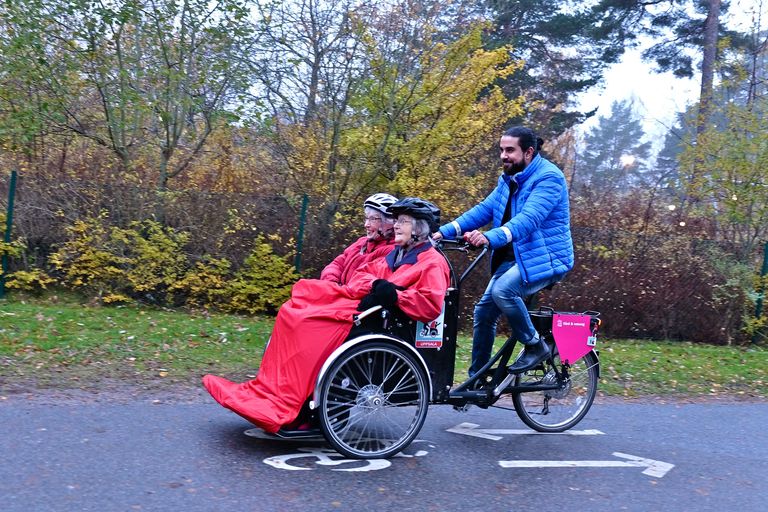
Photo: Cycling Without Age.

Thinking a lot about ageing these days. For one thing, hiding from Covid all the time makes me feel old, and then there are the inevitable health issues.

How does anyone make a plan? There is no way to predict exactly what will happen next. So far my husband and I do everything we always did, but I have felt a need to start looking at “Places,” to use the word of humorist Roz Chast.

Some Places boast activities that look interesting. Today’s story is about an activity that would make a good addition.

Jessica Coulon reports at Bicycling magazine on a clever nonprofit initiative. “Ole Kassow, of Copenhagen, Denmark, was riding his bike to work one morning in 2012 when he noticed an old, disabled man sitting on a bench outside a local nursing home. The man reminded him of his father, who uses a wheelchair.

“Knowing the challenges that come with limited mobility in old age, and thinking about how deeply ingrained bicycling is in Copenhagen culture, a thought occurred to him: The man likely hadn’t ridden a bike in a long time and, Kassow thought, he probably missed it.

‘I couldn’t get that thought out of my head, that I needed to get this man back on a bike,’ Kassow told Bicycling.

“Kassow acted on his idea the very next day by renting a rickshaw and offering rides to seniors at the retirement home. He ended up piloting a woman, who began telling him stories about living in Copenhagen as they rode around. When they returned, the facility’s staff were amazed at the woman’s energizing reaction to the ride.

“These volunteer rides grew into what is now the nonprofit Cycling Without Age. The organization partners with nursing homes and senior care facilities around the world to offer bike rides to the people who live there. Volunteers who sign up can pilot rickshaws, also known as trishaws, which can carry up to two passengers. There are also bikes that can accommodate wheelchairs.

“The primary goal of the program is to improve the lives of seniors by getting them outside and back into the community and bringing them joy through riding a bike. According to Kassow, the program gives its participants a greater ‘sense of belonging.’ It’s also a way for the younger generations who volunteer to connect with and learn from older generations.

“ ‘It quickly became something that the other care homes wanted to do in Copenhagen,’ Pernille Bussone, the global community captain for Cycling Without Age, told Bicycling. From there the program began to spread into neighboring countries, like Sweden and Norway. Now, the organization boasts chapters in more than 45 countries. …

“Their evidence of this was anecdotal at first. But after conducting an impact study in their Singapore chapter, they discovered that these rides have the potential to improve participants’ reported mood and outlook on life by up to 80 percent.

“While the shorter, one-day outings are perhaps the most common type of ride that volunteers offer, some of their volunteers have gotten creative. One chapter in Sweden, for example, began offering ice-fishing trips using the trishaws. …

“They’ve also introduced bike touring in certain chapters, which consist of three or four day outings in large groups, that include family members of the elderly passengers and staff from their nursing homes. They stay at hotels and often have picnics outside. Some of the bike tours have had more than 100 people take part. …

“The organization is now gaining ground in the U.S. where there are currently 418 chapters. ‘I’ve personally witnessed the joy and effects getting seniors back outside brings to their quality of life,’ Shelly Sabourin told Bicycling. Sabourin was the director of nursing at a care facility in Madison, Wisconsin, when she found out about the program in 2016.”

Andrea Morris at CBN News has more.

” ‘I see CWA as a catalyst for better lives by helping socially isolated elders and people with limited mobility gain access to their local communities,’ Kassow told CBN News. ‘We all know that exercise and fresh air is good for us, but not many people know that happiness and longevity are mainly the result of both a few close relationships and access to interact with several people in our daily lives. I see Cycling Without Age play(ing) a key role in making relationships a human right for all elders in all societies.’ “

More at Bicycling, here, and at CBN News, here. No firewalls. And be sure to check out the organization’s website, here.

Read Full Post »

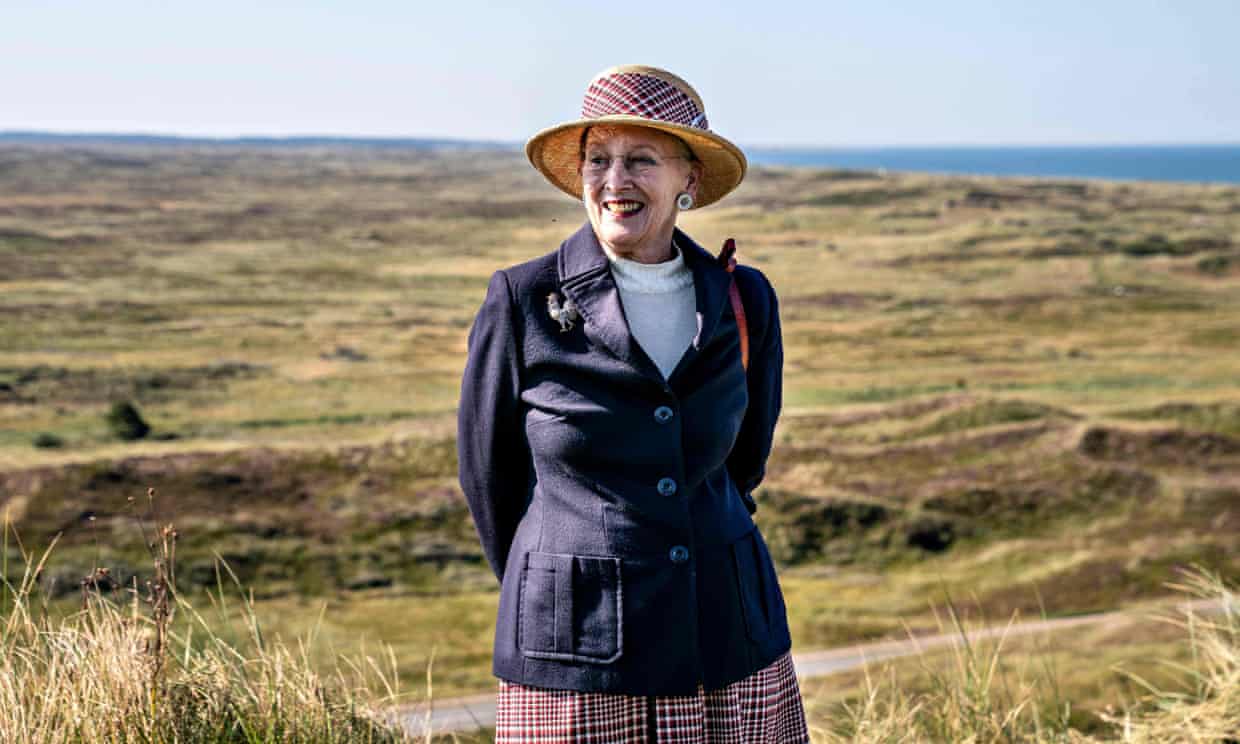
Photo: Henning Bagger/Ritzau Scanpix/AFP/Getty Images.
Queen Margrethe II of Denmark is set designer on a Karen Blixen fantasy movie. So cool! But this is not the queen’s first rodeo.

I didn’t know anything about Denmark’s artist-queen before seeing an article in the Guardian. The report made me want to learn more.

Andrew Pulver wrote, “Queen Margrethe II, reigning monarch of Denmark, is to design the sets for a forthcoming Netflix film adapted from a novel by Karen Blixen. …

“A romantic fantasy set in the fairytale kingdom of Babenhausen, Ehrengard will be directed by Bille August, the veteran Danish director of Pelle the Conqueror (which won both the Palme d’Or and Oscar for best foreign language film in 1988) and The Best Intentions (which won August a second Palme d’Or).

“Margrethe, who ascended to the Danish throne in 1972 and is commander-in-chief of the country’s defence forces, has also had a long career as an artist, including drawing the illustrations for Danish editions of Lord of the Rings, and exhibitions at galleries including the Arken Museum of Modern Art in Ishoj near Copenhagen. She also has screen credits as a production designer on the 2009 [fairy] tale The Wild Swans, and a short film adaptation of Hans Christian Andersen’s The Snow Queen in 2000.

“In a statement, Margrethe said: ‘Karen Blixen’s stories have always fascinated me, with their aesthetic tales, their imagination and their, to me, image-creating worlds – and I’m very happy to be part of this project.’ …

“August added: ‘The Queen has created the most fantastic decoupages for the occasion, and they will be the dominant feature of the film’s overall scenographic expression.’ ” More at the Guardian, here.

In a WordPress blog post from the Danish Home of Chicago, Mia wrote more about the queen: “Bewitching memories came tumbling out when I read about ‘The Fairy-Tale Queen‘ at Amalienborg Museum in Copenhagen. The special exhibit … is the work of Queen Margrethe II, whose artwork is on display. The exhibit shows the queen’s costume designs and scenography for productions of fairy tales, including ThumbelinaThe Steadfast Tin SoldierCinderella and The Nutcracker, that were presented at The Royal Theatre and The Pantomime Theatre. …

“I couldn’t wait to ask our friend Farfar, who lives at the Danish Home, whether he knew about the multi-talented queen of Denmark.[He] always thought of Margrethe as a pretty young thing. Her father, Frederik IX, was the Danish sovereign Farfar grew up revering. He had moved to the U.S. by the time Margrethe became queen in 1972. ‘I remember that she wore a daisy pin on her wedding gown,’ Farfar said, surprising me. ‘Daisy is her nickname, you know.’

“As a resident of The Danish Home, Farfar celebrates Queen Margrethe’s April 16 birthday every year … but he had never heard of her prodigious artistic talent. …

“While still the crown princess, Margrethe had sent J.R.R. Tolkien her own illustrations for his Lord of the Rings book. She used a pseudonym, so Tolkien had no idea the artwork that so charmed him had a royal provenance. The queen’s illustrations were published in a 1977 Danish edition of the Tolkien classic.

“Over the years, Margrethe has not only dreamed up costume designs, scenography and illustrations, but has also designed some of her own clothes and created paintings that have been displayed in some of Denmark’s most popular museums. Some of her watercolors appeared last year on postage stamps of Greenland, which is a constituent country of Denmark.

“She [is] serious enough about her art to clear her schedule every Thursday afternoon in devotion to it.” More.

At the Culture Trip, Aliki Seferou has more on the queen’s illustrations for the Danish version of The Lord of the Rings. “In 1977, five years after Margrethe’s father had died, leaving her the throne of Denmark, the Queen’s illustrations were printed and published in the Danish edition of The Lord of The Rings as well as on a British edition published by the Folio Society. If you’ve seen these editions and wonder how her name slipped your attention, it’s because Queen Margrethe used the pseudonym Ingahild Grathmer. …

“Even though the Queen of Denmark has an impressive academic background with studies in Political Science at Aarhus University, … Archaeology at the University of Cambridge and some years at the London School of Economics, it seems that she’s always been attracted to more creative activities. She’s known for designing her own dresses, ceremonial garments for the Danish bishops as well as costumes for theatrical plays. Among her most popular works are her designs for the movie Wild Swans, which is based on Hans Christian Andersen’s renowned fairy tale, and her costumes for the Royal Danish Ballet’s production of A Folk Tale.” More.

I have to say that my favorite part may be that, by tradition, this woman artist is the commander in chief of her nation’s defense department.

Read Full Post »

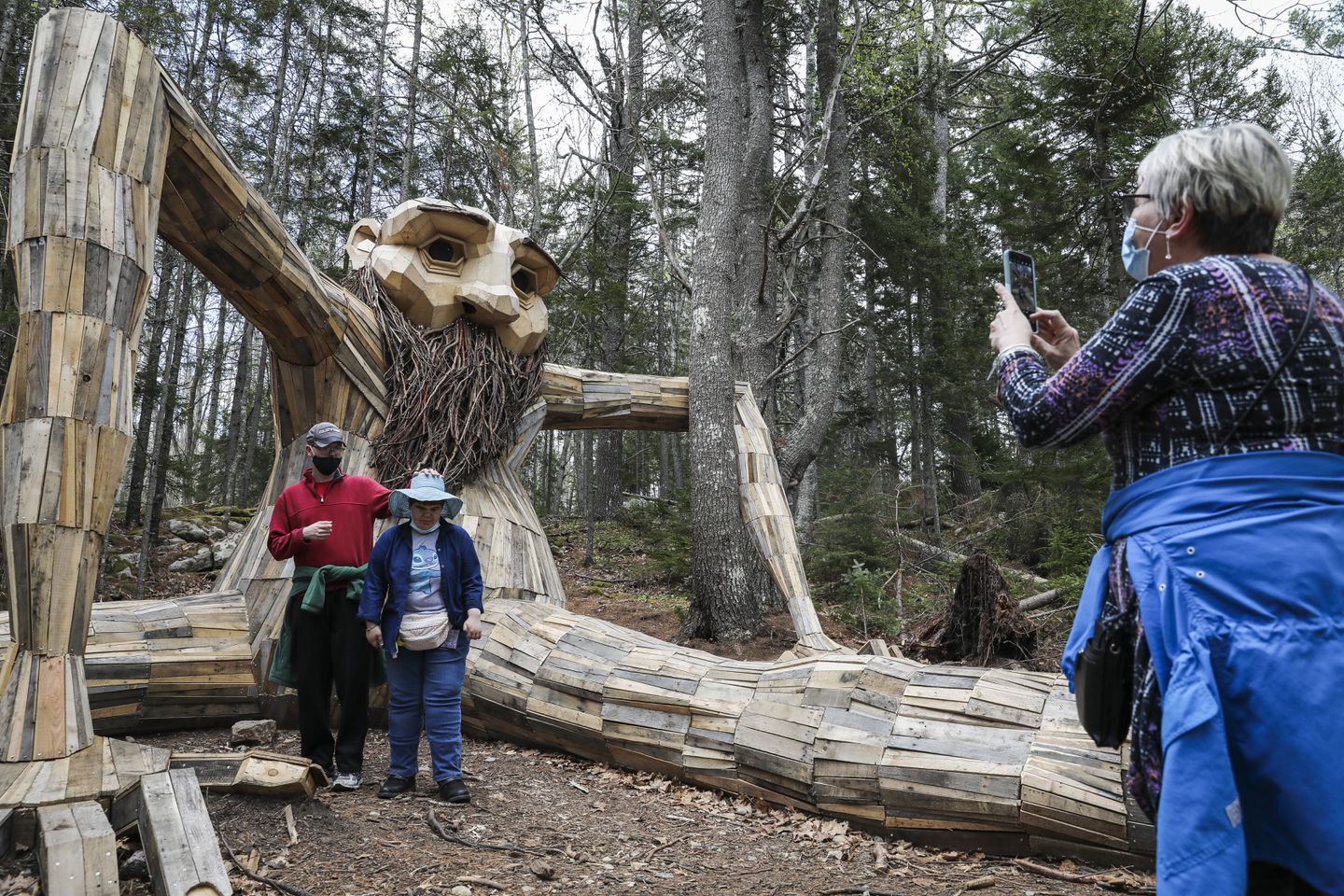
Photo: Erin Clark/Globe Staff.
Visitors pose with Birk, one of five trolls created by artist Thomas Dambo in the Coastal Maine Botanical Gardens in Boothbay, Maine.

Who doesn’t love trolls? Especially big, ol’, harmless trolls amenable to selfies?

Steve Annear, a reporter who gets all the fun assignments at the Boston Globe, recently wrote an article about the Danish trolls that have shown up in Maine.

“These trolls, including one that stands nearly three stories tall, aren’t dastardly by any means. They come in peace, settling in Midcoast Maine to share an urgent message with those who discover them tucked away in the Coastal Maine Botanical Gardens in Boothbay: Please appreciate and take care of the planet, before it’s too late.

“ ‘These are nature’s protectors,’ said Gretchen Ostherr, president and chief executive of the gardens, the largest botanical garden in New England.

“Later this month, visitors to the 323-acre property may discover a series of five giant, whimsical troll sculptures, each immersed in nature and made from reclaimed and recycled wood and other natural materials.

“The exhibit, called ‘Guardians of the Seeds,’ is the work of Copenhagen-based artist Thomas Dambo, and was put together by a team of people, including community volunteers, during the past seven weeks. …

‘I really want it to stir two things,’ Ostherr said. ‘That people have a wonderful, connected, restorative experience, and that they are inspired to take care of their planet’ and become stewards of the woods.

“The Maine display officially opens May 29. While it’s similar to dozens of other eye-popping troll sculptures Dambo has built across the world and part of a shared narrative, the storyline of the Boothbay trolls is unique.

“In the United States, Dambo’s trolls have drawn crowds in Illinois, Florida, and Kentucky, with much fanfare. But the arrival of the mythical creatures to the woods of Maine marks a first for New England.

“Officials from the Coastal Maine Botanical Gardens first reached out to Dambo in 2019 as they discussed ways to have more visitors ‘share the magic of the gardens,’ Ostherr said.

“ ‘We loved the story of the trolls, and Thomas’s focus on the trolls being about biodiversity and taking care of the planet and the forest,’ she said. ‘It perfectly aligns with our mission, which is about connecting people with plants and nature.’ …

“Dambo, 41, said he built the faces and feet in his workshop (a.k.a. ‘troll factory’) in Denmark before they were transported to Maine. But the bulk of the sculptures were constructed on site using several tons of recycled materials, their positions and designs inspired by the precise spot in the woods they call home. …

“It’s the first international project Dambo has done since the coronavirus all but shut down the art world last year. He said he hopes the sculptures will bring people out of their homes to appreciate the great outdoors while also educating them about society’s wasteful habits.

“ ‘My art is about trying to convey the message of the importance of taking care of our natural world, and being better at recycling,’ he said. ‘I try to use the trolls as a medium for being the voice of nature, and how nature perceives us.’ ”

More at the Globe, here. By the way, while we’re on the subject of amazing gardens in New England, be sure to visit Bedrock Gardens in Lee, NH, where my brilliant friend, Jill Nooney, one of the founders, displays her wildly imaginative sculptures made of found objects, mostly metal.

Read Full Post »

The pandemic has hurt my tentative efforts to help the global climate by cutting back on lamb and beef. This sounds lame, but with online ordering, I feel less able to be creative about meatless meals. I need to see the produce up close, not the market’s idealized photo. Guess I better get over that: online shopping looks like being my mode for quite a while yet.

Meanwhile, as Ali Withers reports for the Climate Solutions initiative at the Washington Post, a Danish grocery chain is making it easy for customers to watch their carbon footprint.

A major supermarket chain in Denmark is offering shoppers something extra at checkout: an estimated amount of the carbon dioxide released into the atmosphere from their groceries.

“COOP DK, the Danish cooperative that controls one-third of the country’s grocery market, says it is trying to educate consumers with an eye toward nudging them to cut back on meat and dairy, two categories of food that produce the most greenhouse gasses linked to climate change. …

“Shoppers can use an app that gives them a personalized carbon footprint tracker that displays roughly how much CO2 it took to produce the tomatoes, yogurt or cold cuts in their baskets. The tracker, which rolled out in June, also allows customers to compare their footprint to the average shopper.

“ ‘What people need to understand is just that animal-based products have a higher [climate] impact,’ said Thomas Roland, who leads corporate social responsibility for COOK DK. …

“Animal agriculture is a major source of both carbon dioxide and methane, two greenhouse gasses that are driving the rapid warming of the planet, scientists say. …

“Since the stores stock more than 100,000 items, they took a few shortcuts by selecting a benchmark item — 2.2 pounds of white rice, for example — to be representative of all types of rice because, as Roland explained, the variations in rice production, transportation and packaging are relatively small. Similarly, all pork is counted in the same way, regardless of farming methods. …

“So far, 21 percent of the chain’s 1.2 million app users have checked their carbon footprint, Roland said. …

“When they first discussed the idea of a carbon tracker, top executives at COOP DK were concerned that it could affect the chain’s bottom line. …

“Roland said, ‘Our biggest concern was that we “chased” some customers out of our shops only to find that they buy all their meat at competitors. But that, luckily, doesn’t seem to be the case. Curiosity wins, as customers actually want to see the footprint of their total basket and not “cheat.” ‘

“The average Dane is responsible through his or her food choices for the emission of about 6,614 pounds of CO2, or 18.1 pounds a day, according to COOP DK.

“That’s almost six times the amount recommended by the EAT-Lancet Commission on Food, Planet and Health. The commission’s 2019 peer-reviewed study by 37 scientists found that a person’s nutritional CO2 footprint should be closer to 3.1 pounds per day, if humanity is to prevent the average global temperature from rising more than 1.5 degrees Celsius by 2050. …

Barnemad, a cooking site that displays the CO2 equivalence of a recipe’s ingredients, is among a growing number of ‘climate cookbooks’ that are part of a Danish trend to promote low-carbon eating, organic foods and nutrition. …

“Leading meat and dairy suppliers are cautiously welcoming the footprint tracker, although it could result in a decrease in sales. …

“The pork producer Danish Crown doesn’t oppose climate footprint trackers, its top executive said. ‘It’s early days for these tools,’ said Jais Valeur, CEO of Danish Crown, which also exports meat to China, Japan and Britain. ‘But still, it’s a sign of what’s going to come here on the climate path, and we need to pay attention to this. It’s not like we’re against it. Meat has become so cheap here in Europe and in the Western world, and there you see an overconsumption.’ …

“Both [dairy producer] Arla and Danish Crown are trying to reduce their carbon emissions and position their products as low-carbon.

“Arla is aiming to shrink its CO2 footprint by 30 percent by 2030. And Danish Crown says it will halve CO2 emissions from the 12.5 million pigs it raises and slaughters in Denmark by 2030. The company is setting up baselines and individual climate plans for each of its pig farmers. …

“Farmers, for the most part, are embracing the opportunity to lower their carbon footprint, although, as Valeur notes, there are no financial incentives. …

“Kim Kjær Knudsen is a third-generation pig farmer who is trying to cut carbon emissions from his farm of 100,000 pigs outside Copenhagen. He has invested in biogas projects, reduced the acidity of his slurry, installed new ventilation systems and is buying more local feed.

“ ‘I think this will define my future in the next 10 to 15 years,’ Knudsen said. ‘It’s important to make some steps now [that] will move us in a good direction … if I can put a calculation on my meat to say, “Actually, we can produce meat here in Denmark that is 50 to 80 percent better for the environment than they can do somewhere else in the world.” ‘ “

Gotta love those Danes — ahead of the curve on so many good things! How do they do it? More at the Washington Post, here.

Read Full Post »

Erik’s Swedish/Danish niece and nephews live in Copenhagen and went back to school quite a long time ago. The youngest went first, taking his seat in a classroom full of Covid-19 protections. Meanwhile, in other parts of Denmark, outdoor learning is getting increased attention.

Rick Noack writes at the Washington Post, “On a balmy Monday afternoon earlier this month, Sebastian Lukas, 27, watched from across a clearing as his third- and fourth-grade students whittled branches into spearheads with sharp knives.

“His gaze turned to another group, who were supposed to be working on math problems. Two students, perched on a log, scrambled to produce their textbooks, just in time to look busy.

“Lukas began the year teaching in a classroom like any other, in Samso Frie Skole, a school on the Danish island of Samso. But when the novel coronavirus pandemic struck, the school, like many across the country, embraced a new way to hold certain classes: almost entirely outdoors.

“Instead of sitting at desks, Lukas’s students wander through a rambling woodland, lush with trees and crisscrossed by dirt tracks. …

“Some countries, including Germany, have a tradition of outdoor preschools and kindergartens, which have begun to catch on in the United States as well. The pandemic may drive more countries to experiment with the model for older students. …

“Samso, a sparsely populated, energy self-sufficient and carbon-neutral 44-square-mile island that was once a meeting point for Vikings, is a windy, hour-long trip by ferry from the mainland village of Hou.

“The Samso Frie Skole — a private school funded, like many others in Denmark, in large part through public grants — first pondered the move outdoors long before the pandemic. Coronavirus accelerated those plans.

“The new, forested area, surrounded by grain fields, includes old farmhouses, where students will be able to take shelter in bad weather, according to principal Anna Mattsson.

“ ‘It’s going to be a combination of indoors and outdoors,’ she said. The aim is to have students learn outside several times a week, with fluctuations based on weather.

“No one at the school said they were worried about the impending winter.

“ ‘We’re used to it,’ said Rikke Ulk, the chair of the school’s support association. ‘It’s a matter of dressing well.’

“Until the new buildings are ready, students must walk or bike more than a mile from their old classrooms to their new forest school. Teachers haul some of the younger children in carts affixed to bicycles.

“Milling about before one such shuttle ride on a September morning, Noa, 11, said she liked the new school setup. It’s ‘just so beautiful — it makes me happy,’ she said. …

“Some said they preferred certain aspects of learning inside. ‘Sometimes, it’s better just being in the classroom, so we can focus,’ said Sally, 12.

“Cian, 9, an aspiring cook or robot engineer, disagreed. ‘It’s better to be here,’ he said, holding his math book. ‘It’s cozier.’

“Lukas said outdoor class works better for some students than others. ‘But some kids who have a hard time sitting love to come out here,’ he said, and some students who struggled to focus on math indoors have shown aptitude outside. …

“One of the most commonly accepted Danish arguments in favor of outdoor schooling centers on health benefits, said Mads Bolling, a researcher at the Steno Diabetes Center Copenhagen. Students are able to avoid the adverse affects of sitting still all day.

“But he cautioned that potential disadvantages are not yet fully understood, and some research suggests outdoor schooling appears to provide the most for children who are already highly motivated. …

“Even if outdoor class may not be practical for all schools or in all climates, said Bolling, it is not an all-or-nothing proposition. Samso Frie Skole plans to be flexible about which classes meet outside and which do not.” More here.

Read Full Post »

gettyimages-946840760_wide-e44073efd0e58eae89dd7a6f848e057591f2c7ad-s600-c85

Photo: Stefan Sauer/AFP/Getty Images
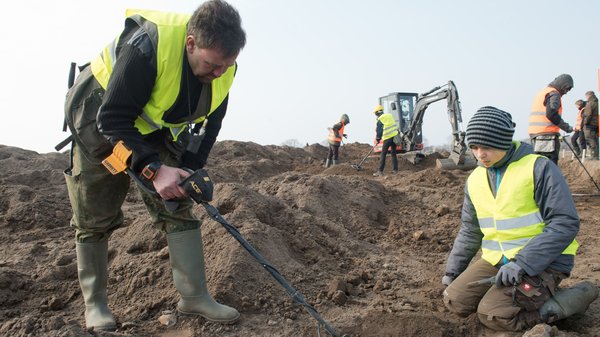
Amateur archaeologist Rene Schoen (left) and 13-year-old student Luca Malaschnichenko looking for treasures in Schaprode, Germany. The boy made a startling discovery in January, then participated in a professional dig that uncovered a larger trove.

In this National Public Radio story, a young boy working with an amateur archaeologist gets to experience the thrill of a significant find, one that underscores the historical connection between Germany and Denmark.

It wasn’t aluminum trash he found. It was a silver coin.

Camila Domonoske reports at NPR, “An amateur archaeologist and a 13-year-old student have uncovered a stash of thousand-year-old coins, rings and pearls on an island in the Baltic Sea in northern Germany, including items that might be tied to Harald Bluetooth, the famous king who united Denmark.

“René Schön and student Luca Malaschnitschenko were searching northern Rügen island with metal detectors when they found something they thought was aluminum but turned out to be silver, Agence France-Presse reports. …

“The two alerted professional archaeologists, and then helped recover of the rest of the trove — more than 600 silver objects dating from the late 10th century. …

“About 100 of the coins are from the reign of King Harald Bluetooth of Denmark: the largest find of such coins in the southern Baltic region, the [archaeology office of Mecklenburg-West Pomerania] office says.

“Harald I — his nickname is believed to come from a dead tooth that may have looked blueish — was a Viking king who united Denmark, conquered Norway and converted to Christianity.

“And based on the date of the stash, the state archaeology office says, it’s possible that the hoard wasn’t just from Bluetooth’s reign, but that it was directly tied to the king himself. …

“In case you were wondering: Yes, King Harald Bluetooth is the namesake for Bluetooth wireless technology. An Intel engineer who worked on the technology, Jim Kardach, was reading about Vikings as the project developed.

“In his words, King Bluetooth ‘was famous for uniting Scandinavia just as we intended to unite the PC and cellular industries with a short-range wireless link.’ The Bluetooth symbol is a runic representation of his initials.”

More here.

Read Full Post »

pme2mifpg4ytlkw7syceccmwga

Photo: Visit Faroe Islands
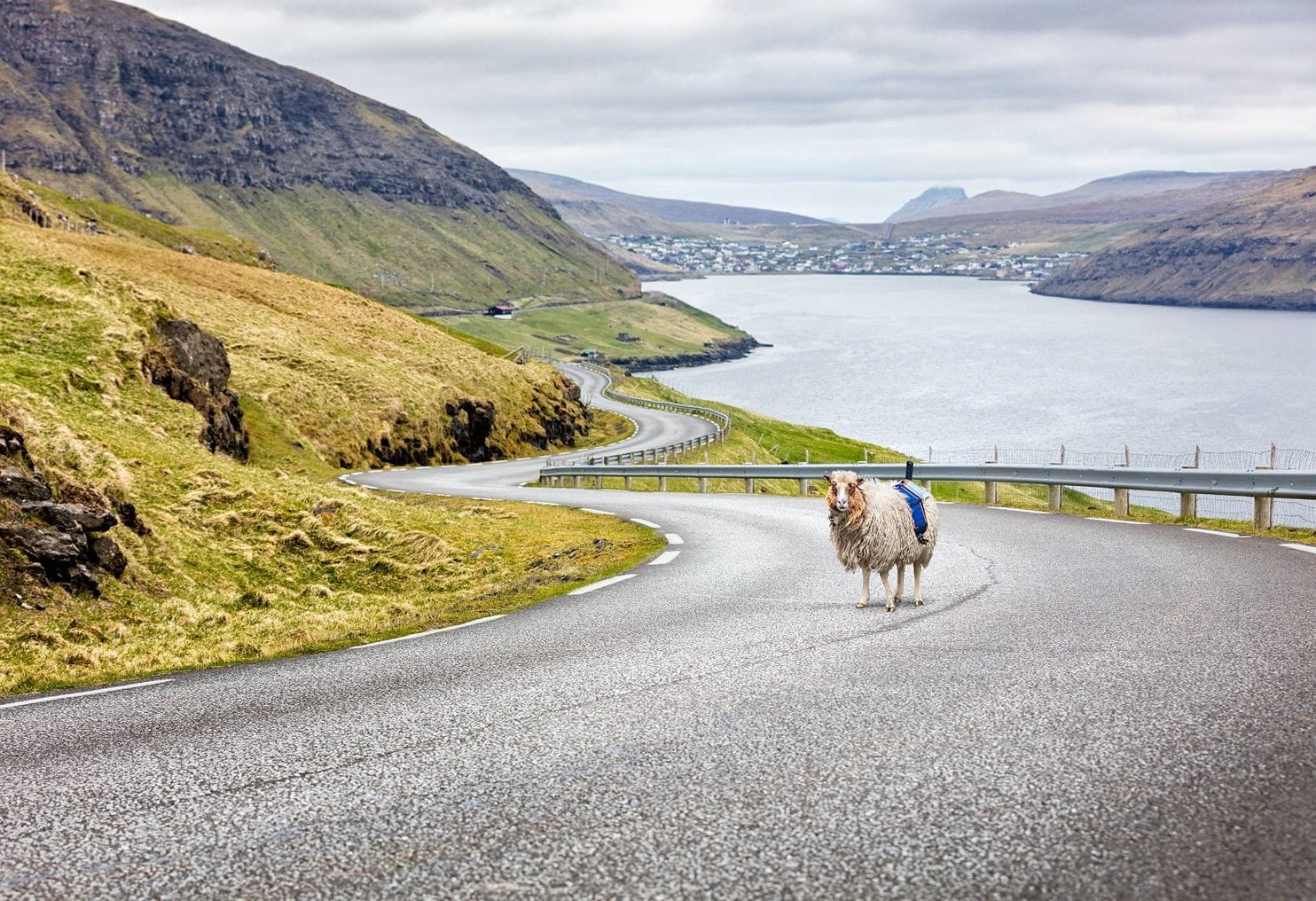
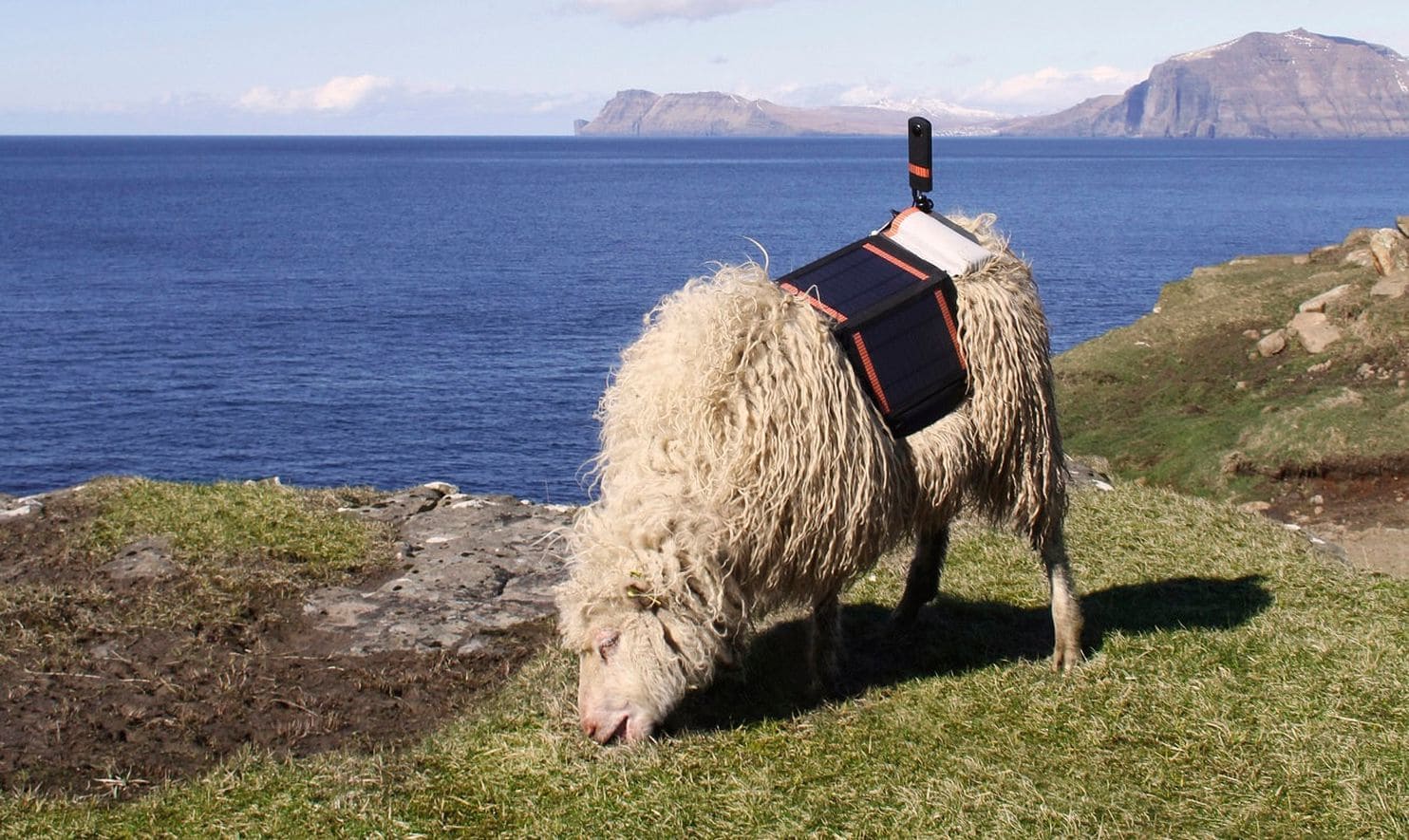
Faroese sheep were strapped with cameras in a bid to get the attention of Google Street View. It worked.

If you were a promising but unknown vacation spot with incredibly picturesque sheep wandering through stunning landscapes, what would you do to attract tourists?

Enlist the sheep, of course.

Karin Brulliard writes at the Washington Post, “The Faroe Islands, a remote archipelago that juts out of the cold seas between Norway and Iceland, doesn’t even appear on some world maps. But as of last [November], the verdant slopes, rocky hiking trails and few roads of the 18 islands are on Google Street View — and a team of camera-toting sheep helped get them there.

“When the islands’ tourism board decided last year that it wanted to get the company’s attention, it knew it would need an unusual pitch. It also knew that its rugged terrain would not be easily traversed by those Google cars that ply city streets worldwide, snapping photos. So it strapped solar-powered, 360-degree cameras onto the backs of a few shaggy Faroese sheep and began uploading the resulting, and very breathtaking, images to Street View itself. …

“Sheep are a big deal in the Faroe Islands, an autonomous nation within the Kingdom of Denmark whose name translates to ‘islands of the sheep.’ The islands’ distinct breed is believed to have been imported by Norse settlers in the 9th century, and today about 80,000 sheep live there, far outnumbering the 50,000 people. …

“Locals and visitors were encouraged to share photos of the Faroe Islands on social media with the hashtags #WeWantGoogleStreetView and #VisitFaroeIslands.

“It didn’t take long for the media-friendly story to make its way to Google, which pronounced it ‘shear brilliance.’ Last summer, the company visited the islands and loaned out one of its eyeball-like Street View Trekkers, as well as some 360-degree cameras for human use. In a blog post, the former tourism board employee who spearheaded the campaign, Durita Dahl Andreassen, explained that those would be handed out to locals and tourists alike and that they would be attached to ‘sheep, bikes, backpacks, ships and even a wheelbarrow.’ …

“The tourism board has moved on to a new, sheep-free effort to get Google Translate to include Faroese, which descends from old Norse.”

More here.

Photo: Visit Faroe Islands
Faroe Islands sheep attracted Google Street View — and tourists.

agdyumy44iyappojembzvk4h6u

Read Full Post »

In Denmark, a beekeeping program is not only beneficial to the environment but a good way for refugee workers to settle in to a new culture.

Jennifer Hattam writes at Take Part about bees atop Copenhagen’s convention center that pollinate crops, produce honey, provide employment, and help flavor a local beer.

“The honey and the beer are the fruits of the innovative project Bybi, named after the Danish word for ‘city bee.’ Its mission: to use urban beekeeping to create a greener Copenhagen, connect residents with the city around them, and bring together and employ people from diverse backgrounds, including refugees and the formerly homeless.

“Syrian beekeeper Aref Haboo is among Bybi’s small staff. He kept dozens of hives back in his home village while also working as a civil servant and agricultural consultant. Like millions of refugees fleeing Syria’s civil war, Haboo made the treacherous journey to Europe, part of it smuggled in the cargo hold of a truck, leaving behind his wife and three children to find a safer place for them all to live. A year ago, he was able to reunite his family in Denmark. …

“Haboo recently helped teach a season-long apiculture course to a mixed group of around 20 Syrians, Africans, and Europeans, who produced 450 kilograms of honey from hives in a Copenhagen park. Graduates who want to continue working with bees will receive support from Bybi, and proceeds from the sale of the first course’s honey will help fund training sessions.

“ ‘A lot of our residents have difficulties getting into the Danish labor market, whether because of language issues, skills gaps, or health problems. Working with Bybi is good for them in terms of getting out to meet people and doing something constructive, something they can be proud of,’ says Simon Christopher Hansen, cultural coordinator for the Copenhagen public housing association 3B. …

“With relatively high rates of winter mortality among honeybees in Denmark, Bybi’s urban hives also help ensure that bee populations stay healthy — along with the green environment they nurture and depend on.

“In a way, [social entrepreneur Oliver Maxwell, who founded Bybi in 2010] sees the hive as a model for Bybi and for humanity. ‘We’re looking at ways we can work together that protect our communities and enrich our environment,’ he says. ‘That’s what bees do: They create bigger apples, richer strawberries; they help everything thrive.’ ”

More here.

Photo: Bybi
Beekeeping in Copenhagen helps refugees and the environment.

Read Full Post »

Maria Popova at Brain Pickings finds the most wonderful books to blog about. In a recent post she extolled the wonders of fairy tale illustrations by Kay Rasmus Nielsen.

I was surprised to learn that’s a man’s name in Denmark. Wikipedia says, “Kay Nielsen was born in Copenhagen into an artistic family; both of his parents were actors – Nielsen’s father, Martinus Nielsen, was the director of Dagmarteater and his mother, Oda Nielsen, was one of the most celebrated actresses of her time, both at the Royal Danish Theater and at the Dagmarteater.

“Kay … received his first English commission from Hodder and Stoughton to illustrate a collection of fairy tales, providing 24 colour plates and more than 15 monotone illustrations for In Powder and Crinoline, Fairy Tales Retold by Sir Arthur Quiller-Couch in 1913. In the same year, Nielsen was also commissioned by The Illustrated London News to produce a set of four illustrations to accompany the tales of Charles Perrault; Nielsen’s illustrations for ‘Sleeping Beauty’, ‘Puss in Boots’, ‘Cinderella’ and ‘Bluebeard’ were published in the 1913 Christmas Edition.”

This is from Maria Popova: “As a lover of illustrated fairy tales and having just returned from Sweden, I was delighted to discover, thanks to the relentlessly wonderful 50 Watts, East of the Sun and West of the Moon: Old Tales from the North … illustrated by Danish artist Kay Rasmus Nielsen (1886-1957), whose work you might recall from [my list of] the all-time greatest illustrations of Brothers Grimm and the fantastic visual history of Arabian Nights. Originally published in 1914, this magnificent tome of 15 stories was recently reissued by Calla Editions, the same Dover imprint that revived Harry Clarke’s magnificent illustrations for Edgar Allan Poe, and features 25 color illustrations, along with a slew of black-and-white ones, in Nielsen’s singular style of haunting whimsy.”

There are more than 20 amazing Nielson illustrations here, at Brain Pickings.

Art: Kay Rasmus Nielsen
The North Wind went over the sea.

Read Full Post »

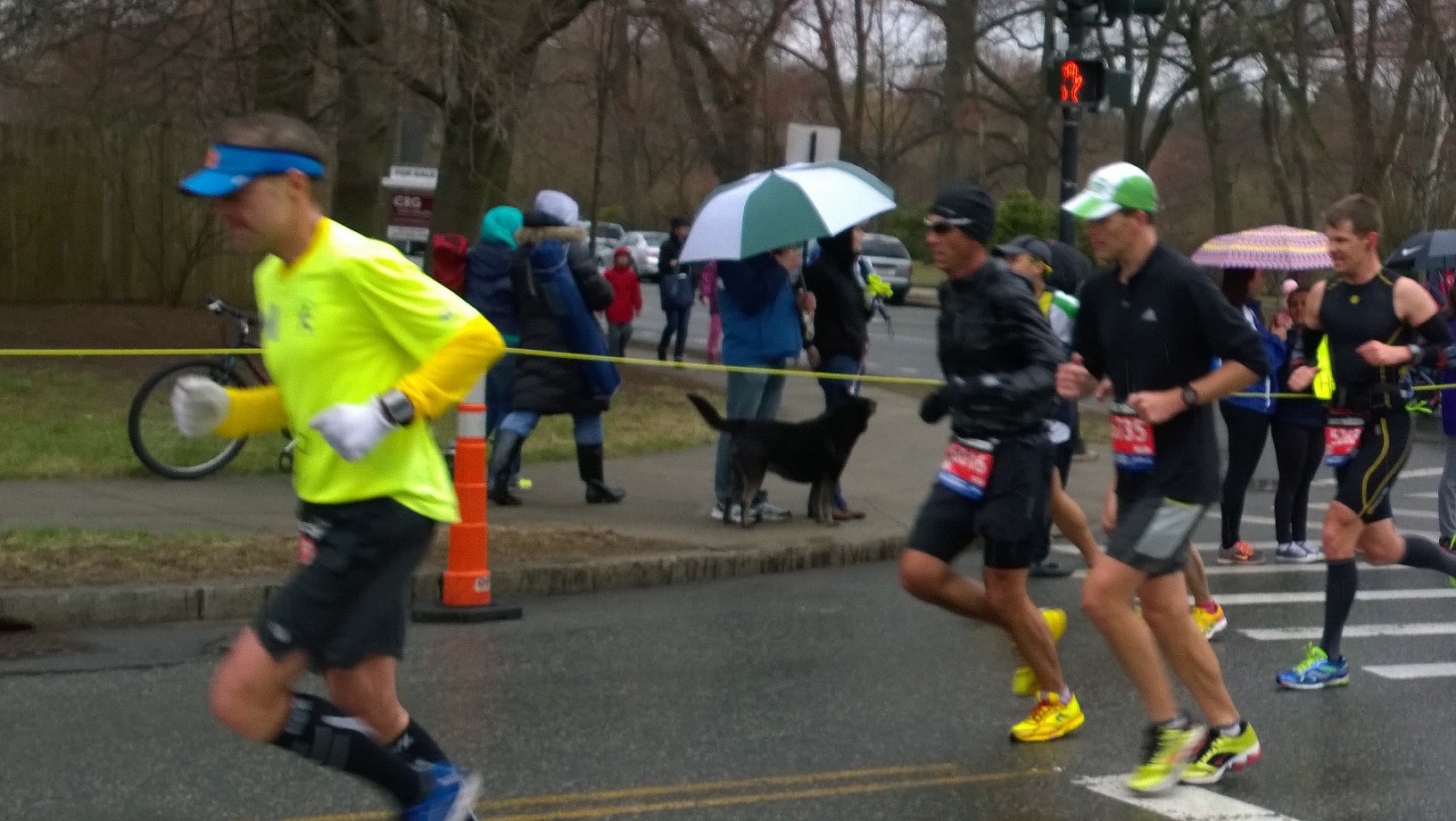
Hours in an icy rain madly cheering family and strangers along with four grandchildren under the age of five. Erik made his best time, coming in under three hours. John looked on the web and found that Erik’s sister was the fourth woman from Denmark to cross the finish line yesterday, and Erik’s cousin was the fourth woman from Sweden. Erik’s mother waved a makeshift Swedish flag, which bled onto everything in the rain but elicited delight from unknown Swedes who also were running in the Boston Marathon.

Mile 19 in Newton was our meeting place, next to the hot-dog vendor. Suzanne got stuck on the wrong side, but the police knew this would happen and had little cards already printed out to tell people how to drive to the other side. She got there in time.

The day was a grand accomplishment for all concerned, not excluding four cold, soggy, cheering children.

runners-042015-Newton

Read Full Post »

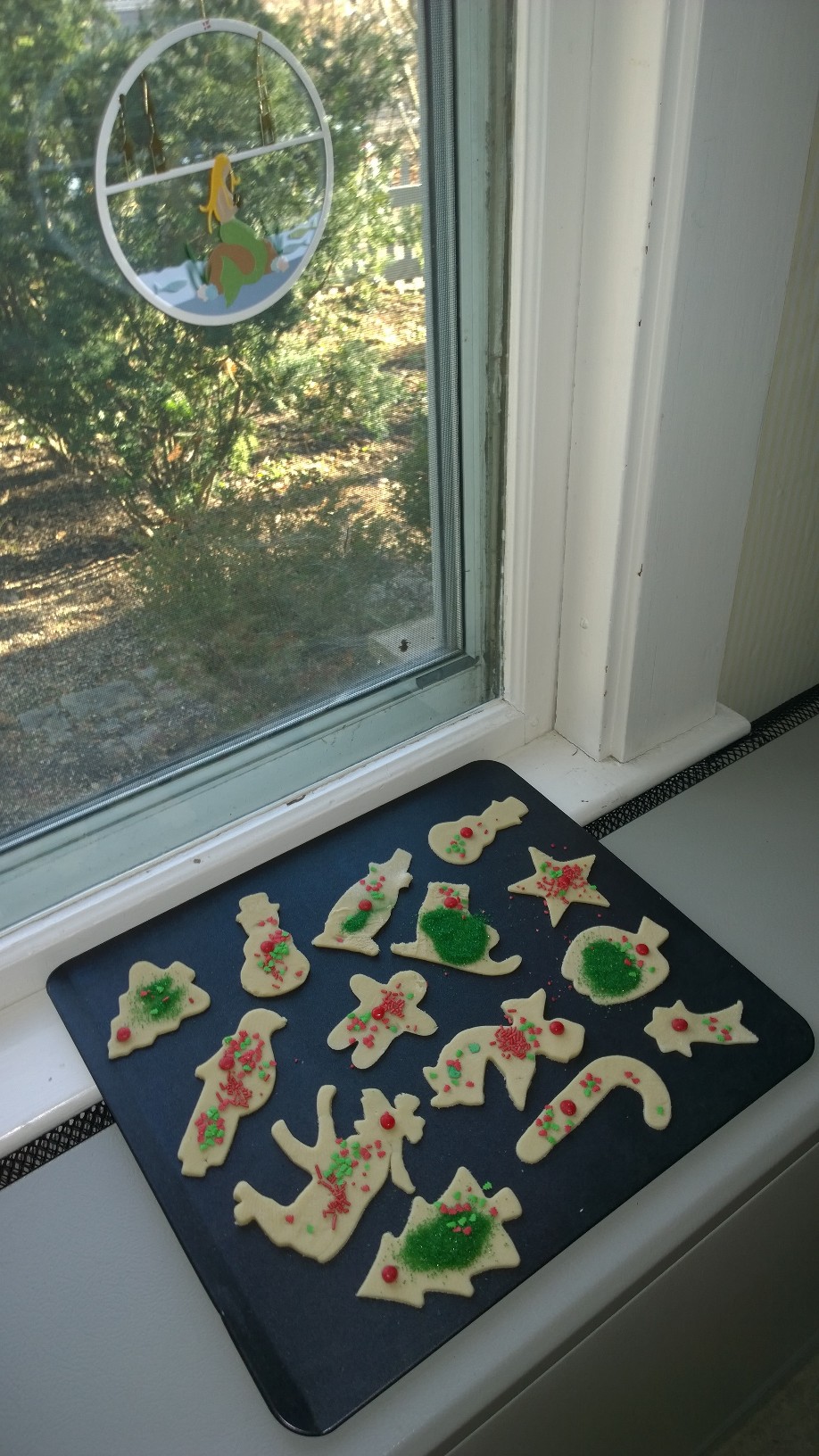
After my older grandson (4-1/2) and older granddaughter (nearly 2) let me play too as they decorated their gingerbread cookies, I went home and pulled out the sugar-cookie recipe from the nursery school cookbook John made in 1975. It’s still the best.

Observation on cookie cutters: Swedes know their moose. I have several moose/reindeer cookie cutters, but the only one that works well is the one from Erik’s mother. It has plump legs and antlers. Why is that important? Because skinny legs and antlers invariably break off.

The grandson, granddaughter, and I have the same abstract aesthetic when it comes to decorating.

The Little Mermaid window ornament is from Erik’s sister, who lives in Denmark.

121414-abstract-Xmas-cookies

Read Full Post »

In the last couple years, my husband and I have seen so many fiction movies about chefs that now Netflix recommends any film related to food.

Not all films about chefs are equally good, though. High in our pantheon are Babette’s Feast, Today’s Special, and The Lunchbox. I’ll refrain from mentioning a couple recent ones that had too many Hollywood memes.

An article in the NY Times this week tells a real-life chef story that seems to imitate fiction. Jeff Gordinier interviews a pastry chef from the Bronx who has just landed a job at a restaurant in Copenhagen that some folks call the “best in the world.” The reporter, hoping to discover the source of chef Malcolm Livingston’s talent, travels with him to meet a great aunt.

“The person who had the answer, it turned out, was Aunt Alice. Aunt Alice is Alice Pulley, an 83-year-old deacon at Friendly Baptist Church and the sister of Mr. Livingston’s paternal grandmother. …

“Mr. Livingston nodded toward the kitchen as memories of poundcake and pecan pie poured forth. ‘This whole counter — she would have a little cake display,’ he said. When he was 5 or 6, he and his playground comrades became passionate advocates for Ms. Pulley’s baking. …

“Her signature dish, and the one that would wind up being pivotal in Mr. Livingston’s life, was a banana pudding filled with alternating layers of sliced bananas and Nilla wafers. She made the custard itself with eggs and milk, instead of relying on a powder from the supermarket, and she achieved the texture she wanted by way of flour, instead of cornstarch.

“ ‘I’m telling you, that banana pudding, really, it’s life-changing,’ Mr. Livingston said.” More here.

Photo: Katie Orlinsky for The New York Times
Malcolm Livingston II, recently hired to work in “the world’s best restaurant,” with his Aunt Alice Pulley, an inspiration.

Read Full Post »

Older Posts »