Feeds:
Posts
Comments

Posts Tagged ‘england’

As the New Yorker magazine was wont to label quirky British news items, “There’ll always be an England.”

Today’s tidbit is from the BBC, courtesy of my web-surfing spouse. Will Gompertz writes about the fierce competition to be crowned Cultural City of 2017.

Hull won. There seems to be a bit of bad blood among the losers.

“Hull has been named the UK’s next City of Culture, beating Leicester, Dundee and Swansea Bay to the right to hold the title in 2017. Hull, known for being the home of poet Philip Larkin, the Ferens gallery and the Truck theatre, will follow the 2013 City of Culture, Londonderry.

“The UK government chooses a new destination every four years, with the aim of helping tourism and the economy. Hull council leader Stephen Brady said winning was ‘a real game-changer.’ …

“TV producer Phil Redmond, who chaired the City of Culture panel, said Hull was the unanimous choice because it put forward ‘the most compelling case based on its theme as “a city coming out of the shadows.” ‘ …

“Swansea’s city council said losing to Hull was a ‘bitter disappointment.’ In an apparent swipe at the winners, council leader David Phillips said the residents of Hull ‘had to have something to look forward to.’ He added his team wouldn’t give up, as ‘there were too many good ideas in the bid, we’re not going to let them slip through our fingers.’

“Leicester’s Mayor Peter Soulsby expressed similar sentiments, saying: ‘We don’t need to wait until 2017 to show ourselves off. We are going to do it now.’

“In Dundee, bid director Stuart Murdoch simply said the city was ‘broken-hearted.’

More.

Almost makes you want to visit the losers to make them feel better.

Photo: http://www.bbc.co.uk
The Hull Truck theatre company’s £14.5m new home, 2009.

Read Full Post »

Photo: Getty Popperfoto
L.S. Lowry, (pictured in 1957), the artist from Manchester, is the subject of a major new show at the Tate Britain gallery.

Some years ago when my husband was in England on business, he acquired a print of workers coming and going outside a factory. The original was by L.S. Lowry, whose paintings of industrial Britain turn out to be very popular in the UK.

Popularity, however, is not a ticket to being shown at the Tate Britain. Belatedly, Lowry will receive a retrospective in 2014.

Oliver Wainwright at the Daily Mail writes, “Clouds of smoke belch from forests of chimneys, while armies of spidery figures scuttle to and fro between narrow terrace houses and imposing factory gates.

“Crowds of fans shiver on the edge of a football field, a fist-fight breaks out, and barefoot children tease a stray cat on the street corner.

“These are the scenes depicted in the haunting paintings of L.S. Lowry who, more than any other artist, managed to capture the strange, bleak beauty of daily life in northern industrial towns.

“His dream-like images captured the popular imagination, adorning chocolate boxes and biscuit tins, tea towels and jigsaws.

“Yet they are scarcely to be found on the walls of our major national galleries. The Tate owns 23 of his works, but has only ever exhibited one on its walls in the past 20 years — and then only briefly. …

“Why has it taken so long?

” ‘He’s a victim of his own fan base,’ said Chris Stephens, Tate Britain’s Head of Displays. ‘What makes Lowry so popular is the same thing which stops him being the subject of serious critical attention. What attracts so many is a sort of sentimentality about him.’

“This is a strangely inverted piece of art world logic,” Wainwright comments, “where the popularity of an artist is seen as an obstacle to showing their work.”

If you’re an artist, be careful to stay off “chocolate boxes and biscuit tins, tea towels and jigsaws” — or wait to be discovered by art experts of a future generation.

More here and here.

 © The estate of L.S. Lowry
L.S. Lowry, Coming out of School, 1927

Read Full Post »

I got this lead from Andrew Sullivan. He wrote a post about a paper sculptor who made the commissioned work below, a kraken destroying a galleon. (I know, the kraken in The Island of the Aunts is a holy, nonthreatening creature, but elsewhere it’s more like a giant squid.)

Justin Rowe is an artist and paper sculptor from Cambridge [England]. After graduating from Norwich School of Art in 1998, he began working for Cambridge University Press as an academic bookseller.”

The BBC says, “Justin Rowe started carving up the pages of old books as a hobby in 2010, using a small rotating-bladed scalpel. …

“Mr Rowe ‘lifts’ illustrations from ‘junk books’ to create scenes and illuminated installations.

“His intricate hobby began when he wanted to create a Christmas window display for the Cambridge University Press bookshop where he works as a senior bookseller.” More.

I wonder if Justin Rowe had anything to do with the stealth art project in U.K. libraries that we blogged about here. Also quite gorgeous.

Photo: Justin Rowe

Read Full Post »

When I saw the headline at Wired, it didn’t really compute.

“Artists Create Portraits on Live Grass.” What? I don’t get it. Did the artists set up easels and paint with oils? Did they paint directly on the grass?

Writer-photographer Jakob Schiller explains.

“It all started, as these things sometimes do, by accident. In 1990, before they worked in photography, [Heather] Ackroyd and [Dan] Harvey created an art installation that covered an entire room with grass. As part of the art piece they had left a ladder leaning against a wall and when they went to remove it they saw that the ubiquitous and fast-growing plant had been imprinted with the shadow. The grass had stayed yellow where the ladder had prevented it from receiving any light.

“ ‘We didn’t know straight away what we were looking at, but we knew that we had observed something important,’ Ackroyd says.

“They began playing with the idea of manipulating the light that hits grass and by the next year were projecting light through an old 35mm Kodak projector onto a swath of grass on the wall.”

What to think as the grass withers and dies? It’s kind of a Dorian Gray scenario.

Read more about the project at Wired‘s Raw File, here.

Photograph: Ackroyd & Harvey.
Myles, Basia, Nath and Alesha, The Big Chill Festival, Eastnor Castle, between the Cotswolds and the Welsh Marches. 2007

Read Full Post »

There is always something new to learn about Stonehenge, a site shrouded in mystery for centuries.

Rossella Lorenzi writes at Discovery News, “Using noninvasive technologies such as ground-penetrating radar and geophysical imaging, a team from the University of Birmingham’s IBM Visual and Spatial Technology Centre, known as VISTA, and the Ludwig Boltzmann Institute for Archaeological Prospection and Virtual Archaeology in Vienna, discovered evidence of two huge pits positioned on a celestial alignment at Stonehenge. …

” ‘This is the first time we have seen anything quite like this at Stonehenge,’ said project leader Vince Gaffney, an archaeologist from the University of Birmingham. ‘When viewed from the Heel Stone, a rather enigmatic stone which stands just outside the entrance to Stonehenge, the pits effectively mark the rising and setting of the sun at midsummer days.’ ”

Read more here.

On YouTube you can find both boring videos about Stonehenge and funny ones. A comedy routine by Eddie Izzard made me laugh, but it’s a bit too naughty for Suzanne’s Mom’s Blog. You can check out a few of Spinal Tap singing “Stonehenge” in the movie This is Spinal Tap. And here is a great scene about Druids from that movie.

Read Full Post »

It’s amazing how much the arts can help people.

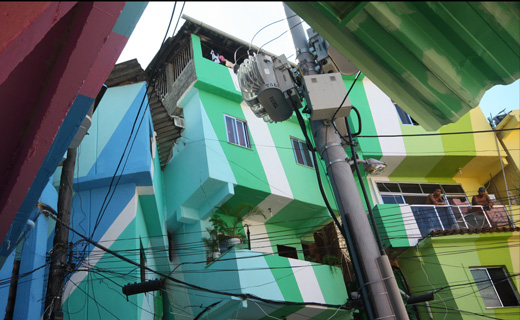
I have blogged about programs that use the arts to turn convicts toward something positive, to build up the self-worth of the homeless, to turn Brazilian slums into more hopeful places. The list goes on.

Recently ArtsJournal.com alerted me to a BBC story on an arts initiative that helps veterans reacclimate to civilian life.

“Many veterans are turning to charities for help. One is using the unlikely weapon of art to help fight the psychological wounds of war, while another organisation is actively encouraging artwork in the army. Outside of the [national health service] the charity Combat Stress is the biggest provider of support to armed forces veterans with conditions such as post-traumatic stress disorder (PTSD), depression and anxiety.

“Art therapy is one of the treatments it uses. Drawing, sculpting and painting are helping patients manage their symptoms with great success.

” ‘Traumatic memories take a different path from our normal memories and tend to be frozen in the body in the central nervous system,’ explains Janice Lobban, who has been a trauma therapist at Combat Stress for the past 10 years. …

“Group sessions typically begin with the therapist giving a one or two word brief to inspire creativity before veterans are given a selection of materials for painting, modelling or writing. After 45 minutes of quick work, the group then get together to talk about and describe what they’ve just created.

” ‘I try to keep a blank mind and just let images and feelings rise out from my unconscious to my hand and things start appearing,’ says Richard Kidgell … who served in the Royal Air Force from 1978 to 1985. ‘What surprises me is that while I’m drawing I don’t know what it is — they’re just images, but by the end of the session I’ve made a complete story. It’s quite enlightening as sometimes I’m not entirely sure what I’ve drawn until I speak to others about it.’ ”

Read more of Genevieve Hassan’s story on arts therapy for veterans here.

Read Full Post »

Remember this post on paper sculptures of dragons and other animals left surreptitiously at libraries in the UK?

Well, I thought you might like this post from WordPress blogger Tokyo Bling. It features paper dragons by Siryu. More pictures here, with explanations for readers who speak Japanese.

And here’s yet another origami artist at work on a dragon.

Read Full Post »

I blogged a while back about a prison arts program that seemed to help some offenders discover a more positive, less antisocial side of themselves. Today I have a similar story, this one from England.

“Allowing prisoners to take part in art [projects] can help cut reoffending rates in half, according to a report commissioned by the Arts Alliance. The group of charities has voiced concern that in tough economic times such projects may be cut.” Nick Higham of the BBC reports in a video clip here.

I admire people who have the faith in human nature to try to reach society’s lost souls with arts or yoga or meditation or any other enrichment.

My second cousin, Alex, went to college in Cambridge, Mass., and did an internship teaching meditation techniques to some serious cases at the Suffolk County jail. She loved it and was inspired to go to graduate school and work with others in trouble.

Her mother tells me her latest internship is with a social services agency an hour and 20 minutes away. “She is managing several extremely challenging cases and spends a lot of time making home visits in dismal housing projects. Her days include fighting for housing for her clients, calling the police when bruised and beaten women answer the door, mediating confrontations between single moms who are managing 3-9 children and school officials who won’t let a child ride the bus due to behavioral issues. Her clients have been victims of domestic and other forms of violence and most have substance abuse issues. Her job is to find resources to rehabilitate troubled families. She is learning fast how to be the ultimate problem solver, confidante and counselor.  Most of all, she is extremely happy and energized by the challenge.”

I am in awe that this tough work makes Alex happy and energized. We are lucky to have people like that on the front lines.


Read Full Post »

In case you just tuned in, this blog was started at the invitation of my daughter, who is the founder of the birthstone-jewelry company Luna & Stella. Sometimes I blog about the jewelry, but Suzanne told me to write about whatever interests me. Already a customer who was previously wary of online purchasing found the blog and wrote Suzanne that it helped her decide that Luna & Stella was good people.

The blog is currently housed at WordPress, which makes life easy for a neophyte like me. One thing that is fun at WordPress is clicking on posts from the other bloggers, posts that are on the Freshly Pressed page or found by clicking on a key word at the Tags page.

Today I got quite interested in an entry from a WordPress blogger in northern England who calls herself Heather Uphillanddowndale. She shows her photographs of a lovely Scottish island and talks about its fight against a major commercial fish farm.

I used to think fish farms made a lot of sense, but lately I have read about possible environmental damage and overcrowding that can spread disease to wild fish.

Heather quotes from a statement by island residents: “Highland Council has recently received an initial application to site a fish farm off the east coast of Eigg, north of Kildonan. The site identified covers an area extending to 20ha (this equates to 28 football pitches) & would consist of 14 x 30m diameter cages which would be serviced by a 10m x 10m permanently sited barge (powered by diesel generator).

“The community has considered this proposal at length. The outcome of the resulting ballot which had an 86% turnout was 97% against the development.

“Eigg lies within the Small Isles National Scenic Area. A large fish farm would have a considerable negative impact on the approach to the island and could also impact negatively on the peace and quiet that visitors seek when they come to the island, as well as on the quality of life of nearby residents.” Read more at Uphilldowndale.

Read Full Post »

Did you read in the NY Times about England’s chewing gum artist?

“Ben Wilson, 47, one of Britain’s best-known outsider artists, has for the last six years or so immersed himself in a peculiar passion all his own: he paints tiny pictures on flattened blobs of discarded chewing gum on the sidewalks of London.” The article is sweet, and it shows that an original concept can delight people in large and small ways.

After he “became friendly with the workers in the discount general store that replaced the Woolworth’s, [he] painted a message of love on behalf of Syed Miah, a cashier there who had had a fight with his girlfriend.

“ ‘She thought maybe I’d stuck a sticker on the ground,’ said Mr. Miah, 32. ‘Then I explained that I’d had an artist come and do it. It was brilliant.’ “

Read Full Post »

Both because of my job and because of the jobs of many friends and family members, I keep hearing about small business. Suzanne’s birthstone jewelry business is one successful example, and you can read more about its history on the Luna & Stella site. Suzanne’s brother is an entrepreneur, too, in the optics field. And where I work, a number of my colleagues collect data on small businesses and work to improve conditions for them.

At lunch, I heard about an English woman who used to work on GIS mapping for environmental groups in Rhode Island, where I am staying this weekend. Today the woman lives with her husband and children in northern England, where she is into a whole new field (one that benefits the environment, but differently from GIS mapping) — she weaves local wool into scarves, blankets, cushions, and throws.

From a UK site called Keep Trade Local, I learn, “Green business ideas that might benefit the Yorkshire Dales National Park are being offered a cash grant to get started. The Yorkshire Dales National Park Authority’s Sustainable Development Fund (SDF) – now in its seventh year of operation – aims to support new business ideas, community schemes and environmental projects that demonstrate ways of living and working in the Dales and that benefit the National Park and its communities.”

The site notes that support was “given to local businesses producing locally-sourced produce, such as the Sedbergh-based Laura’s Looms. With two grants from SDF, Laura has been able to develop and expand her business creating high quality woven ‘Howgill Throws’ using Bluefaced Leicester sheep fleece obtained from farms in [nearby] Garsdale and Dentdale. She is now selling them both locally and on her website at www.laurasloom.co.uk.”

Laura writes, “I create exquisite handwoven silk and wool scarves  and I design and produce The Howgill Range, an exclusive collection of luxurious wool throws and scarves woven from organically processed pure British wool. Beautiful woollen baby blankets and covetable wool cushions can also be found in my online shop, along with the occasional appearance of my one-off, highly textured handwoven throws. I love to weave!”

An aside: Laura’s husband teaches in the international business school where Suzanne met Erik. 🙂

Comments should be sent to suzannesmom@lunaandstella.com. And I wouldn’t mind having a photo of bluefaced sheep I could post. It sounds like something out of a fairytale.

Asakiyume answers the call with a photo she found at theshadowsheep


Read Full Post »

« Newer Posts