Feeds:
Posts
Comments

Posts Tagged ‘exercise’

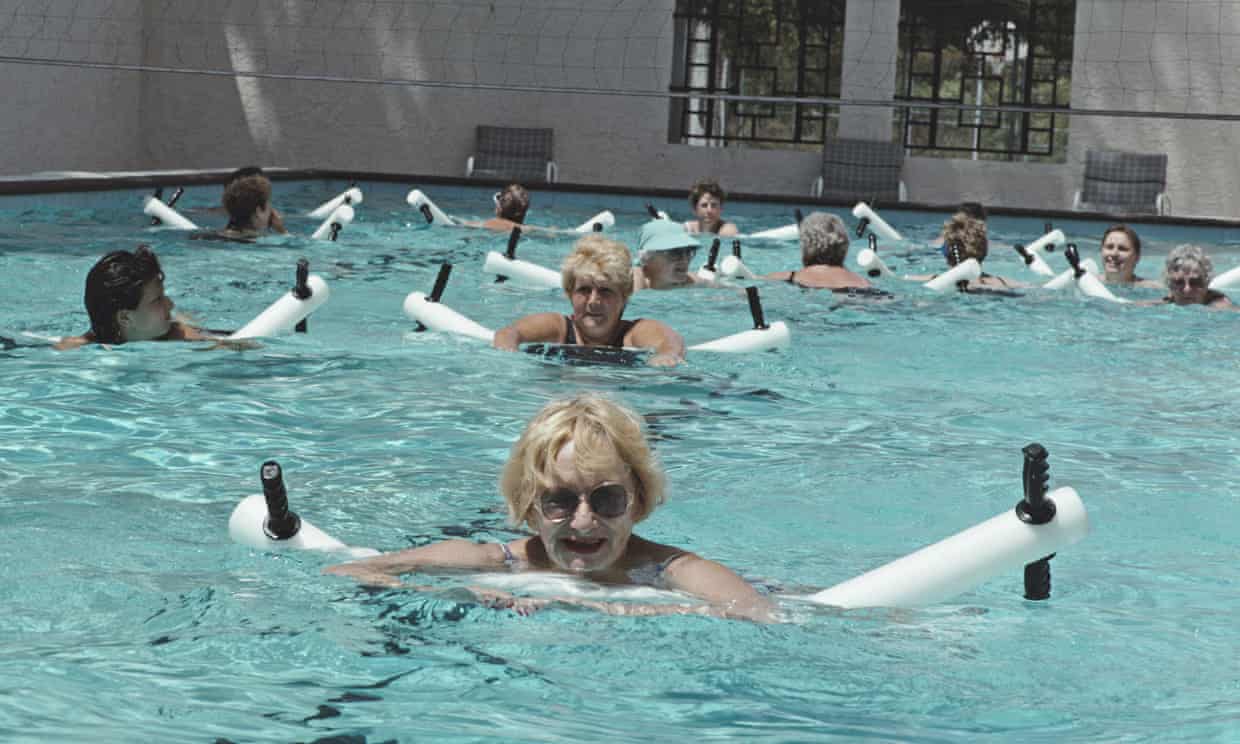
Photo: Barbara Alper/Getty Images.
Aqua aerobics is pitched at those who are ‘young at heart, recovering from pregnancy, or rehabilitating,’ writes Kate Leaver.

Since I moved to a retirement community with many excellent exercise instructors, I’ve been impressed to see how many seniors are really serious about staying in shape — even people close to 100. Today’s story is about a particular kind of class for older people, but not just older people. It comes from Sydney, Australia, via the Guardian.

Kate Leaver writes about her experience with a water aerobics class.

“At my first class, we sang Barbara ‘Happy Birthday.’ She was turning 80, doing fly-kicks underwater with the rest of us. …

“That’s the main demographic for aqua aerobics at the Manly’s Andrew Boy Charlton aquatic center in Sydney: women born in the era of Barbaras, Margarets and Gladyses, many of them wearing a full face of makeup and gold earrings. They keep their faces immaculate by extending their necks and keeping their heads above water (I’ve asked).

“Each week, 30 people turn up for 45 minutes of guided exercise, half-submerged in a heated, chlorinated lap pool. It’s popular: tickets go on sale three days in advance and it’s sold out within hours. …

“Aqua aerobics is pitched at those who are ‘young at heart, recovering from pregnancy, or rehabilitating.’ My mum and I are in that third category: rehab. She, from cancer; me, from long Covid (I contracted the virus at a Harry Styles concert in June 2022 and am yet to fully recover). Having spent a displeasing number of days/months/years lying down, we felt ready for some gentle exercise.

“It’s probably the most fun I’ve ever had in the pursuit of mild fitness. … The vibes are unmatched – it’s all ‘Very nice, Susan’ and ‘Lift those legs, Carol,’ never ‘No pain, no gain.’ One time, a young man with a six-pack walked the length of the pool in Speedos and I watched as a wave of giggles spread across the pool in his wake. …

“It’s a great workout, too, especially for anyone easing back into movement. The buoyancy of the water reduces strain on your joints and makes injuries less likely than routines on dry land. It’s adaptable in that you can glide your limbs for a mobility exercise or you can work up a sweat against the resistance of the water. I have to take it slow, but if you went hell for leather with some of these moves, you could really get your heart pumping.

“We do knee raises, lunges, kicks, punches and bicep curls. We jog back and forth in the water. We hold on to the edge of the pool and kick, kick, kick. We dance underwater to get our heart rates up and alternate between cardio and strengthening. Our leader is a loud, fit, flexible, brilliant middle-aged woman who has a special place in my heart because of the way she speaks to anyone who looks as though they might be struggling with her choreo. ‘You OK there, Maggie?’ she’ll say. ‘Don’t make me come in there and get you.’ She remembers people’s names, gently reminds the gossipers down the shallow end to concentrate, and winks at anyone who needs encouragement.

“She has a Britney microphone and a killer playlist of hits from the 70s and 80s. I don’t think I had truly lived until I’d done a kick-jump-kick sequence underwater while singing ‘There lived a certain man in Russia long ago / He was big and strong, in his eyes a flaming glow’ (Rasputin by Boney M, 1978).

“I will never again take a spin class run by a shouting bodybuilder or think of exercise as punishment. Not when this is an option. It’s a joy from start to finish, a truly adorable mother-daughter activity.” More at the Guardian, here.

I’m zeroing in on the soundtrack. In one of my classes we’ve had the same ’50s-’60s mix twice a week for 10 months. As much as I love music from those decades, would welcome a change to almost anything!

Read Full Post »

Above: In Chinese medicine, massaging different parts of the foot improves the health of body regions thought to correspond.

I’ve been interested in reflexology since 2007, when I ventured behind a Shanghai sandwich board that read “foot massage” and engaged with a young woman who spoke no English. It was a pretty aggressive massage, but I walked on air afterward.

Back in the States, I went to a place called Joyful Feet a couple times, and recently took a short class to learn about the philosophy. That class focused on hand massage, which was interesting but not the same.

Phil Daoust explored the topic of foot care, starting with pedicures, at the Guardian.

“I am in a south London nail bar,” he wrote, “reclining in a motorized armchair, mechanical fingers kneading my back while my feet soak in a little whirlpool bath. Someone has brought me coffee. …

“It has taken me 61 years to have my first-ever pedicure, and the moment I sat down all I could think was: ‘Why did it take me so long?’

“The next 40 minutes are bliss. … I leave Jolie Nails & Spa with a spring in my step, on feet that … well, no, you still wouldn’t call them beautiful – that will take several more sessions (and something to put a shine on my nails; I quite like the look of Boy de Chanel, probably in black) – but at least I’m no longer ashamed to show them to the world.

“This is not about getting beach-ready. … I have belatedly realised that if I want to make it to 100, I’ll have to take care of my feet. Unless I keep them strong, and flexible, and sensitive, more and more activities will slip out of reach. In the worst of all possible worlds, I will have a fall and end up in hospital. …

‘Our feet are literally the foundation for any movement we might make,’ the longevity guru Peter Attia reminds us in his book Outlive.

” ‘Whether we’re lifting something heavy, walking or running, climbing stairs, or standing waiting for a bus, we’re always channelling force through our feet.’

“They’re also crucial to balance. ‘They’re the feedback point for the brain to know where it is in its environment,’ says Asha Melanie, a York-based personal trainer with an interest in longevity. In their natural, unshod state, feet are our main point of contact with the earth. ‘There are hundreds of thousands of sensory receptors in each foot,’ Melanie says. ‘And then we put our clumpy shoes on and stop them from being able to feel anything.’

“More than that, I’d argue: we forget they should feel anything. We wrap them up and it’s out of sight, out of mind. … I’ve only really become aware of mine in the few months since I started yoga. There they were, naked, ugly and surprisingly unstable. Yoga teachers would tell me to spread my toes, or to ground ‘all four corners of my feet’ and I’d think ‘How?’ and ‘All four whats?‘ …

“This pedicure is my way of telling my feet: ‘I see you. I will do better by you.’ …

“Melanie says, now they’re fit for polite company, I must stop hiding them away. ‘Go barefoot as much as possible,’ she advises. … That doesn’t mean I should immediately chuck away my shoes, Melanie says, but I should try to transition towards something less chunky and cushioned, with plenty of room for the toes to spread and wriggle. ‘It has to be a gradual process, so that all your ligaments, tendons and joints can adapt.’

“But this is just the first step. Now I’ve freed my toes, I need to re-educate them, so I can spread them when I need a more stable base, or put my weight precisely where it’s needed. I could start by just splaying them out: simply standing or sitting in bare feet, then willing the toes to separate and spread a little. … I am embarrassed at how hard it is to isolate – or try to isolate – individual toes or groups of toes. … I struggle to move just the two biggies without taking everything with them. …

“How long will it take to make real progress, I ask Melanie. ‘How long is a piece of string?’ she says. ‘The more you put in, the more you’re going to get out of it. But doing a couple of minutes every day, you could see a difference in weeks.’

“I should also keep an eye on my big toes, where any weakness can lead to knee, hip and back pain. ‘It sounds ridiculous,’ Melanie admits, but when you’re walking this is where you push off, so problems here will affect the rest of your body. One way to build strength is to sit on a chair and lift your big toe as far as you can with your index and middle finger. Then, without moving any other muscles, press down with your toe while lifting with your fingers, so that nothing is moving yet both your toe and fingers are trying to. Hold for seven or eight seconds, relax and repeat four or five times.

“What else should be on my to-do list? Improving my ankle mobility, apparently. ‘Everyone should be doing ankle cars [controlled articular rotations],’ says Melanie. This is as simple as sitting down with one leg out in front of you, then keeping the leg immobile while slowly rotating the foot through its full range of motion, five times clockwise, then five times anti-clockwise, before repeating with the other leg.”

Much good advice on soles and arches, too, at the Guardian, here. No paywall.

Read Full Post »

Photo: Jackie Molloy for KFF Health News.
Hilda Jaffe, 102, in her apartment in New York. Jaffe enjoys doing puzzles, reading, volunteering, and attending cultural events.

I have always thought that a city like New York, with many kinds of public transportation and easy walking to whatever you need, is the best kind of place to grow old. The problem for most of us is that we may still need a car to do the simplest things long after we can’t drive.

Here’s a story about a thriving 102-year-old doing her errands without assistance in New York. I’m convinced that part of her good fortune is not having to drive.

Judith Graham writes at the Washington Post, ” ‘The future is here,’ the email announced. Hilda Jaffe, then 88, was letting her children know that she planned to sell the family home in Verona, New Jersey. She’d decided to begin life anew on her own in a one-bedroom apartment in Hell’s Kitchen in Manhattan.

“Fourteen years later, Jaffe, now 102, still lives alone — just a few blocks from the frenetic lights and crowds that course through Times Square.

“She’s the rarest of seniors: a centenarian who is as sharp as a tack, who carries grocery bags in each hand when she walks back from her local market, and who takes city buses to see her physicians or attend a matinee at the Metropolitan Opera.

“Jaffe is an extraordinary example of an older adult living by herself and thriving. She cleans her own house, does her own laundry, manages her own finances, and stays in touch with a far-flung network of family and friends via email, WhatsApp and Zoom. Her 78-year-old son lives in San Jose. Her 75-year-old daughter lives in Tel Aviv.

“I’ve spoken with dozens of seniors this past year for a series of columns on older Americans living alone. Many struggle with health issues. Many are isolated and vulnerable. But a noteworthy slice of this growing group of seniors maintains a high degree of well-being. …

“Sofiya Milman is the director of human longevity studies at the Institute for Aging Research at Albert Einstein College of Medicine. She studies people known as ‘superagers’ age 95 and older. ‘As a group, they have a very positive outlook on life’ and are notably resilient, like Jaffe, she told me.

“Qualities associated with resilience in older adults include optimism, hopefulness, an ability to adapt to changing circumstances, meaningful relationships, community connections and physical activity, according to a growing body of research on this topic.

“Jaffe has those qualities in spades, along with a ‘can-do’ attitude. ‘I never expected to be 102. I’m as surprised as everybody else that I am here.’ …

“She credits her genetic heritage, luck and her commitment to ‘keep moving,’ in that order. … Asked to describe herself, she quickly responded with ‘pragmatic.’ That means having a clear-eyed view of what she can and can’t do and making adjustments as necessary.

“Living alone suits her, she added, because she likes being independent and doing things her way. ‘If a problem comes up, I work it out,’ Jaffe said. …

“There are only some 101,000 centenarians in the United States, according to the most recent Census Bureau data. Of this small group, 15 percent live independently or conduct their lives independently while living with someone, according to Thomas Perls, the founder and director of the New England Centenarian Study, the largest study of centenarians in the world. …

“About 20 percent of centenarians are, like Jaffe, free of physical or cognitive impairments, Perls said. An additional 15 percent have no age-related illnesses, such as arthritis or heart disease. …

“Every day, Jaffe tries to walk 3,000 steps — outside if the weather is good, or inside, making laps in her hallway, if the weather is bad. Her diet is simple: bread, cheese and decaffeinated coffee for breakfast; a sandwich or eggs for lunch; often chicken and a vegetable or restaurant leftovers for dinner. She never smoked, doesn’t drink alcohol and sleeps an average of eight hours each night.

“Even more important, Jaffe remains engaged with other people. She has subscriptions to the Metropolitan Opera, the New York Philharmonic and a chamber music series. She participates in online events and regularly sees new exhibits at four of New York’s premier museums, where she has memberships. She’s in regular contact with family members and friends.

“Jaffe also belongs to a book club at her synagogue on Manhattan’s Upper West Side and serves on the synagogue’s adult education committee. For more than a decade, she has volunteered several times a week as a docent at the New York Public Library’s main branch on Fifth Avenue. …

“When I asked about the future, Jaffe said she doesn’t worry about what comes next. She just lives day to day.

“That change in perspective is common in later life. ‘Focusing on the present and experiencing the here and now becomes more important to older adults,’ said Laura Carstensen, founding director of the Stanford Center on Longevity, who has studied emotional changes that accompany aging for decades. …

“Jaffe certainly understands the value of facing forward and letting go of the past. Losing her husband, Gerald Jaffe, in 2005 after 63 years of marriage was hard, she admitted, but relinquishing her life and most of her belongings in New Jersey five years later was easy. …

“ ‘It was so exciting for me, being in New York,’ she continued. ‘Every day you could do something — or nothing. … In a house in New Jersey, I would be isolated. Here, I look out the window and I see people.’ ”

More at the Post, here.

Read Full Post »

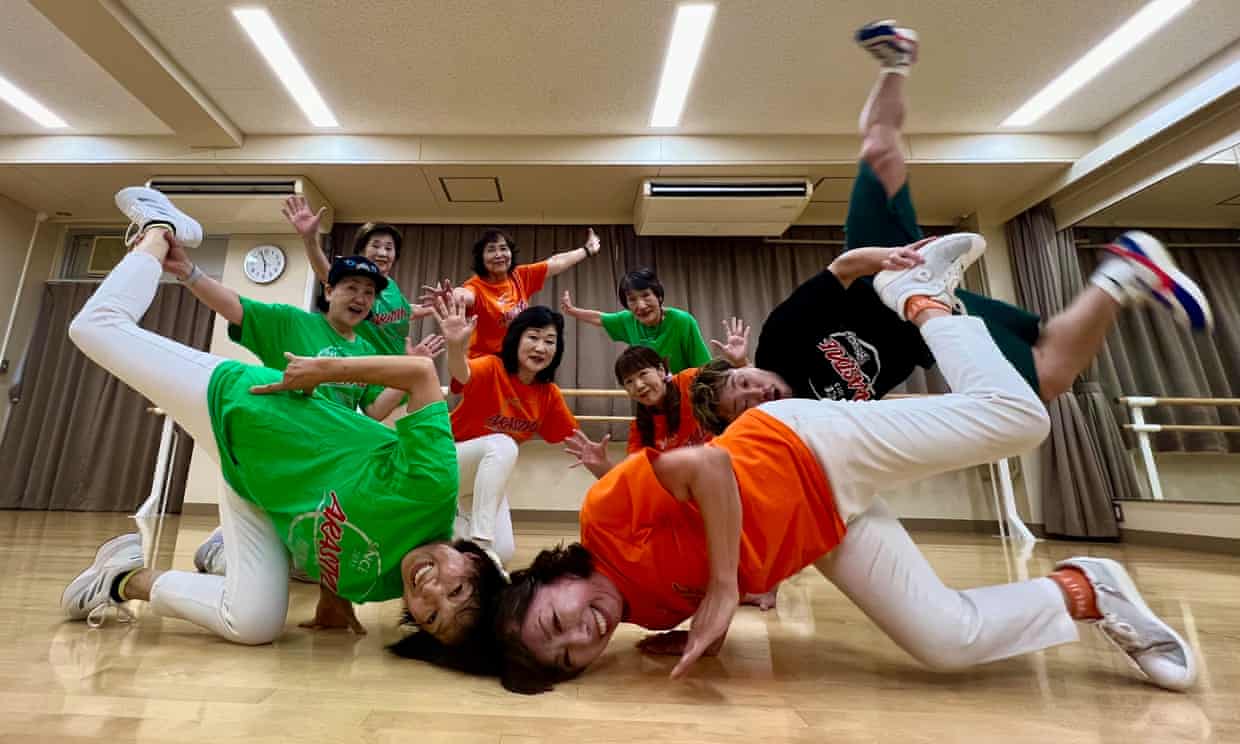
Photo: Justin McCurry/The Guardian.
Members of Ara Style Senior breakdancing club at a recent class in Tokyo, Japan. 

When John was in middle school, he got into breakdancing for a while, an activity that seems manageable for young people. But what about for the elderly? For them, the more recent nomenclature, “breaking,” seems more appropriate.

But not in Japan. Justin McCurry filed another story at the Guardian about that endlessly fascinating country.

“Ten people – wearing bright orange and green T-shirts that mark them out as members of Ara Style Senior – do not belong to the demographic you would normally associate with breakdancing. Their average age hovers just below 70, and the oldest is 74.

“But on a hot afternoon in an eastern Tokyo suburb, amid nervous smiles and initial timing issues, the group ends with a perfectly executed pose the dance’s originators in 1970s New York neighborhoods would probably agree is not too shabby at all.

“Senior breaking is one of a growing category of sports tailored to Japan’s large population of older people who, thanks to the country’s extraordinary longevity statistics, are determined to keep popping and locking for as long as their bodies will allow.

“ ‘At first I thought, there was no way I could breakdance at my age,’ says 69-year-old Hitomi Oda. ‘And of course, we can’t do anything extreme, but it’s fun just to do the easy moves and get your body working.’

“These superannuated b-girls and b-boys, who meet twice a month at a community center in the capital’s Edogawa ward, have the organizers of this summer’s Paris Olympics, and former breaking national champion Yusuke Arai to thank for this novel approach to fitness in their later years.

“ ‘Some of my mother’s friends told her they were interested in learning how to breakdance, and when it was chosen as an Olympic sport, I thought, “Why not give it a go?” ‘ Arai tells the Guardian. …

“The 39-year-old tailors his class to bodies that may not be as supple as the children he has been teaching for almost a decade. ‘You have to lower the hurdles to make it possible for older people to do the moves, so I begin with a focus on easy moves using the top half of the body,’ says Arai. …

“The class is just a few minutes old when the dancers, faces flushed from stretches and warm-up exercises, take the first of several breathers. The genteel approach works: since the classes started last year, not a single dancer has so much as sprained an ankle.

“A few have backgrounds in other forms of dance, but most had never tried breaking until a combination of Olympic excitement and gentle peer pressure brought them through Arai’s door. Now they are converts, practicing together between sessions with the help of YouTube tutorials.

“The class ends with a meticulously rehearsed routine that combines toprocks and floor moves and, as its sign-off, a baby freeze the dancers are asked to re-create multiple times by a visiting Japanese TV crew.

“ ‘The rhythm and the perseverance mean it stimulates your brain as well as your body,’ says Kazuharu Sakuma, the only male dancer, who is here taking a trial class.

“The 71-year-old says he will be back. ‘It’s not like you have to memorize the moves … you just do them two or three times and you realize, “yes, I can actually do this.” That’s when it becomes really enjoyable. It’s also great for general fitness … I’m hoping it will make it easier to walk up stairs.’

“Class regular Takako Mizutani removes her trucker cap and pronounces herself ‘not in the least bit tired. … It doesn’t matter if you’re not very good at it, it’s a lot of fun and a proper workout,’ adds Mizutani, who has a background in jazz dance. ‘I plan to keep breaking for as long as I can.’ ”

More at the Guardian, here. No paywall.

Read Full Post »

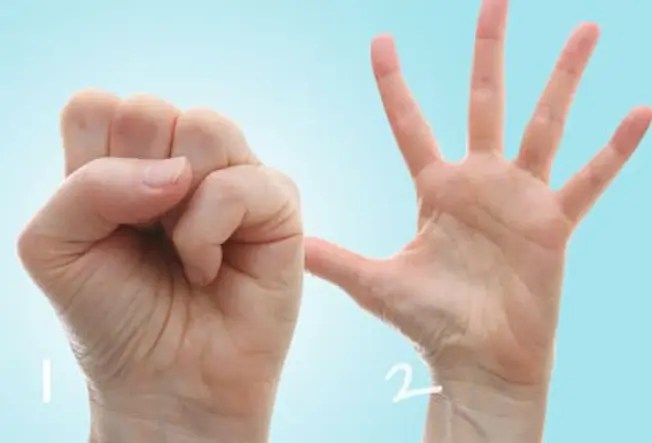
Photo: WedMD.
People who let their handwriting go often need small-motor exercises later. Ideas for working on hands with osteoarthritis may be found at WebMD, here.

It’s always something, isn’t it? We like the convenience of keyboarding — not to mention suggested words popping up in text messaging, saving us strokes — but what if there’s a downside? What if our hands lose their versatility?

At the Washington Post, Gina Rich notes that “Writing by hand may feel difficult for many of us as we engage less in fine motor activities and use devices more. …

“Handwriting is a fine motor skill that isn’t innately learned; it needs to be taught and practiced. It also is a skill that benefits us by stimulating our brain: We remember information better when we write it down by hand, research shows.

“But for many of us, handwriting can feel difficult as we turn to smartphones, other devices and even robots for many of our hand tasks.

“And with cursive dropped from Common Core State Standards in 2010 in the United States, children have few opportunities to learn and practice; for some, handwriting has been relegated to an extracurricular activity.

“The problem isn’t only that we’re practicing less. Technology has changed the way we use our hands. Also, the more time we spend on our devices, the greater the probability of problems with our hands and wrists, such as pain, weakness and nerve changes.

“ ‘It’s like going to the gym,’ said Mellissa Prunty, an occupational therapist at Brunel University London and chair of the National Handwriting Association in the United Kingdom. ‘When you write for long periods of time but you don’t do it often, you are going to feel tired and fatigued.’

“The hand-brain connection is stronger when we write something by hand vs. typing it, said Paula Heinricher, an occupational therapist and national presenter for Learning Without Tears, which trains educators in subjects, including handwriting. Although we might be able to take more notes on a keyboard than by hand, ‘there’s also research that shows when you write by hand, there is a deeper brain connection and a deeper understanding, and you retain that information longer,’ she said. …

“The ability to write quickly and legibly also has a critical link with academic performance. A 2013 study found that children who had good handwriting skills in preschool performed better in reading and math in second grade. And in a 2019 study of 141 first-graders in four schools in Italy, children who were taught cursive developed better reading and writing skills compared with a control group. …

“While there is little hard evidence that fewer students are taking notes or completing assignments by hand now compared with years past, children’s use of devices has increased, especially in the pandemic years, parents said.

There’s no benefit to using one part of the hand so extensively, Inal said, but there are risks.

“But devices aren’t the only culprit. In general, we’re not engaging in as many fine motor activities as in the past, said Ritu Goel, a certified hand therapist at the University of Maryland Medical Center.

“With keyless entry, for instance, many of us no longer turn a key to unlock our car or the front door; instead, we push a button or tap out a code. So the lateral pinch, a fine motor motion, ‘is becoming a little less used in day-to-day activity,’ Goel said. …

“With the repetitive pinching motion of texting, ‘only one muscle is doing really hard work,’ said study author Esra Erkol Inal, associate professor of physical therapy and rehabilitation at Reyap Hospital Istanbul. There’s no benefit to using one part of the hand so extensively, Inal said, but there are risks. …

“A study of neurology patients at a Turkish university found that people diagnosed with carpal tunnel syndrome spent more hours per day on their smartphones than those without hand or wrist complaints. …

“Even as we continue to use technology and devices, we can bolster our handwriting muscles with a few strategies.

Make sure your smartphone isn’t too big. If our smartphone is large relative to our hand, we wind up reaching across it more, which can cause thumb pain, Goel said. You should be able to hold your smartphone comfortably in one hand with a good grasp.

Use devices mindfully: Her teenage patients scoff, but Goel advises texting with the index finger — not thumbs — while holding the smartphone in the other hand. Give yourself cues to take breaks from scrolling, such as by setting alarms on your phone. And don’t forget posture: When working at a desk, Inal stores her phone in a smartphone stand and strives to keep herself vertical, rather than hunched over.

Stretch and strengthen: If your hands are cramping, Goel recommends tendon gliding exercises, movements to bend and straighten different joints. You can also perform what’s called a prayer stretch by bringing your palms together with your elbows out and pointing your fingertips upward for a wrist extension. Reverse the exercise with a wrist flexion, directing your fingertips down so the backs of your hands touch. In addition, Goel suggests rolling your hands across therapeutic putty, Play-Doh or a small rolling pin.

“Completing tasks without assistive devices will help strengthen the small stabilizing muscles in your hands. For instance, using a manual can opener engages your gripping and pinching muscles, Kruse said.”

More at the Post, here.

Read Full Post »

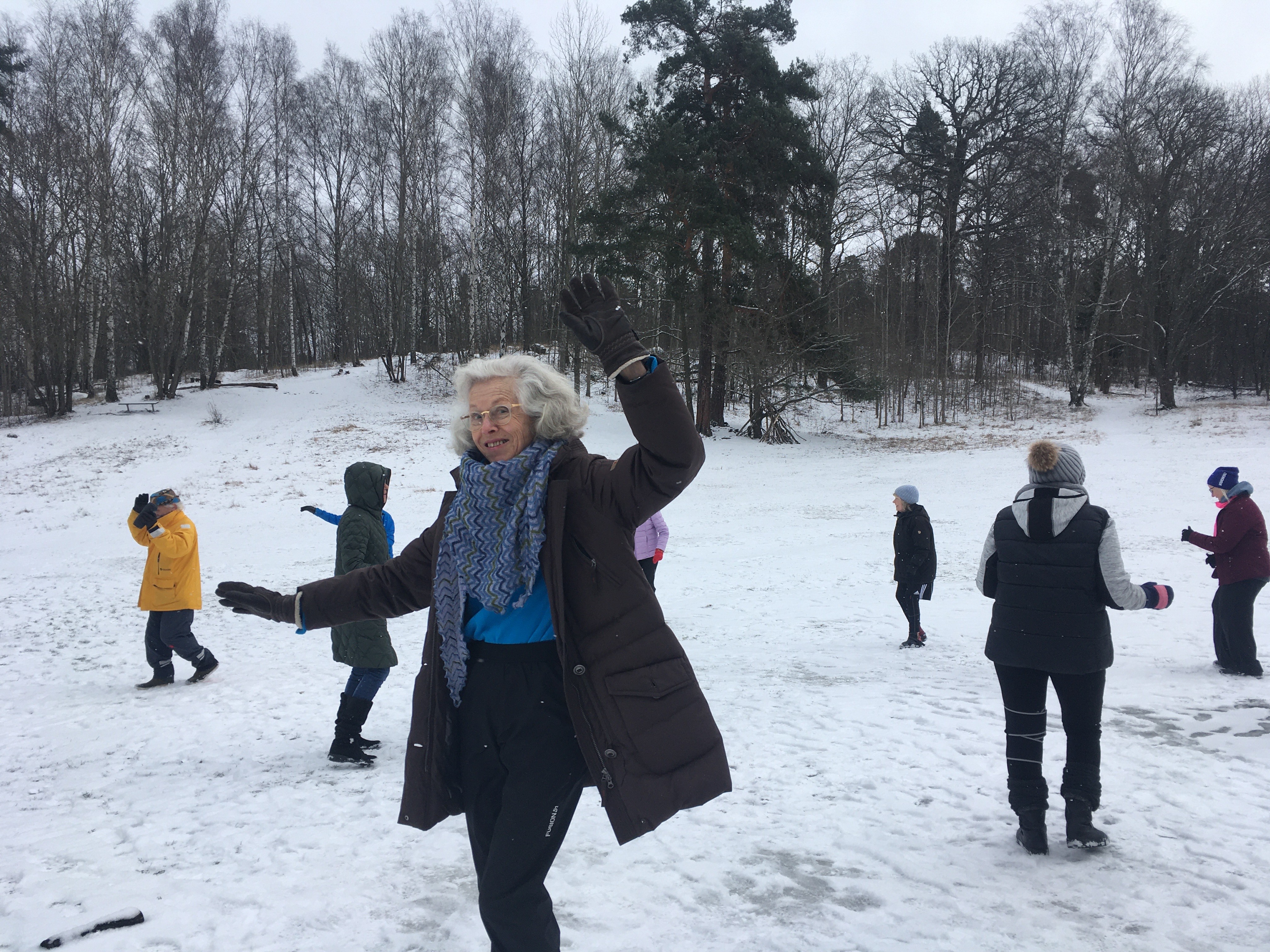
Photo: Stuga40 leading outdoor exercise during the pandemic in Stockholm.

I’ve been looking into the fitness offerings now available to me. There is quite a variety, including an exercise class specifically designed to boost brain health. I hope to try everything, as I keep reading that exercise does a lot more than build muscles.

For example, Gretchen Reynolds wrote at the Washington Post, “New findings from a 350,000-person study make the strongest case yet that exercise improves cognition. 

“To build a better brain, just exercise. That’s the message of two important new studies of how physical activity changes our minds. In one, scientists delved into the lives, DNA and cognition of thousands of people to show that regular exercise leads to much sharper thinking.

“Another study helps explain why exercise is good for the brain. Researchers found that just six minutes of strenuous exertion quintupled production of a neurochemical known to be essential for lifelong brain health. …

“These studies reinforce the idea that ‘absolutely, exercise is one of the best things you can do’ for your brain, said Matthieu Boisgontier, an associate professor at the University of Ottawa, who oversaw one of the studies.

“The first inklings that exercise remodels brains and minds came decades ago in mouse studies. Active, running animals in these experiments scored much higher on rodent intelligence tests than sedentary mice, and their brain tissues teemed with elevated levels of a substance known as brain-derived neurotrophic factor or BDNF, often referred to as ‘Miracle-Gro’ for the brain. BDNF prompts the creation and maturation of new brain cells and synapses. It bulks up brains.

“Studies in people have since established that exercise also raises BDNF levels in our bloodstreams, although it’s harder to look inside our brains and see if it rises there. Multiple, large-scale epidemiological studies, meanwhile, have linked more exercise to better memories and thinking skills and less risk for neurodegenerative diseases, such as Alzheimer’s.

“Qualms have lingered, though, about just how potent exercise really is for our brains. … Many human studies of exercise and cognition have been too small or otherwise limited to show persuasive benefits for brain health from working out.

“The study from Boisgontier and his colleagues, published [in March] in Scientific Reports, uses a novel and complex type of statistical analysis to go beyond traditional observational research and firmly establish that exercise does improve your brain skills.

“They turned to DNA and Mendelian randomization, a recently popularized method of using genetic variations to characterize and sort people. We each are born with or without certain snippets of DNA, some of which are known to contribute to a likelihood of being physically active. From before birth, we are, in effect, randomized by nature to be someone who is or isn’t prone to move. Other gene snippets play a similar role in cognition.

“By cross-checking the cognitive scores of people who have or lack the exercise-promoting snippets against those of people with the gene variants related to cognition, scientists can discern the extent to which exercise contributes to thinking skills. … People with a genetic predisposition to exercise typically did exercise, they found, and scored better on tests of thinking, if their exercise was at least moderate, comparable to jogging.

“And, yes, you can get brain benefits from exercise even if you don’t have the gene snippets. …

“The other new study, although comparatively small, may help explain how exercise keeps your brain healthy.

“In this experiment, 12 healthy, young people rode an exercise bike at a very leisurely pace for 90 minutes, followed by six minutes of intervals consisting of 40 seconds of all-out pedaling interspersed with 20 seconds of rest. Before, during and after each session, researchers tracked BDNF in people’s blood.

“They also measured levels of lactate. Muscles release lactate, often called lactic acid, during exercise, especially if it’s strenuous. It can travel to and be sucked up by the brain as fuel. … During easy riding, lactate levels rose slightly in people’s blood after about 30 minutes, as did the amounts of BDNF in their blood. But during and after the six minutes of hard, fast pedaling, lactate soared and so did BDNF.”

More at the Post, here.

Read Full Post »

What do you do for exercise? I take walks. I also do a bunch of physical therapy exercises I’ve collected over the years for preventing a repeat of various aches and pains.

The kind of exercise in today’s story sounds too energetic for me, but I see that it could be exhilarating. Maybe if I had been doing it since our days in nursery school with the friend who sent me the story, I could handle it today.

The exercise is jumprope. Specifically, Double Dutch.

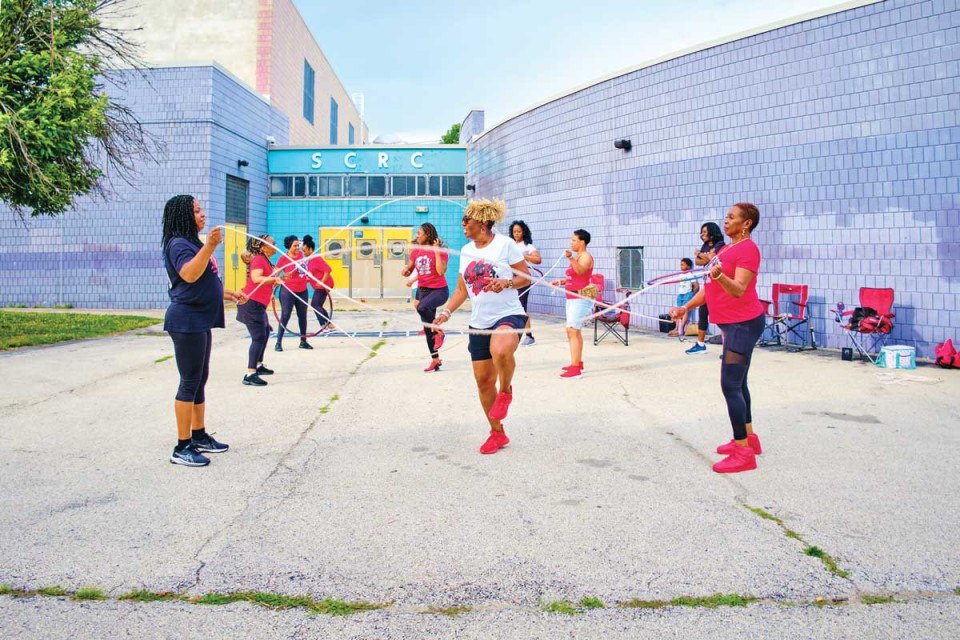
Shaunice Ajiwe at Philadelphia wrote that the magazine’s 2022 “Best Pastime winner, 40+ Double Dutch Club, started from a 2016 gathering of friends in Chicago and is now a nationwide women’s fitness movement. Sharon Hatcher and Iesha Jackson steer the Philly chapter, where a quick visit to observe their footwork turned into much more.

6:00 p.m.

“Earth, Wind & Fire echoes down the halls of a West Oak Lane community center. Inside a multi-purpose room, seven women stand in bright red t-shirts, hula-hooping and chatting about their plans for the summer: graduations, prom send-offs, cookouts, new babies. In the middle of the room, a trio gets to the main event. Two begin turning the ropes while the third dives into the fray, alternating feet at breakneck speed. To a layman, it’s perfect. To these experts, it’s anything but. They stop and ask for a different set of ropes. Hatcher hands them a lighter woven set, and feet start to fly again.

6:08 p.m.

“ ‘It started off with two friends who wanted to do something that was just for them to have fun,’ Hatcher says. ‘They were in their heads about different things — divorces, kids growing up, all that. They thought back to how they jumped rope when they were kids and how much fun they had.’ From that original duo, the club has amassed more than 30,000 members across the country.

6:20 p.m.

“Hatcher took to double Dutch at age five, she says. Many women join the club without having jumped rope in decades; just like riding a bike, they return to the childhood pastime with ease.

6:30 p.m.

“Fun, fitness and fellowship, Hatcher says, is the name of their game. They don’t concern themselves with competition, just with passing down skills, traditions and memories. …

6:45 p.m.

“When I thank Hatcher for her time and turn to leave, she stops me: ‘Oh no, now we’re gonna teach you.’ Prince’s ‘I Wanna Be Your Lover’ is playing. Each time I trip, they offer another tip: Get in when the rope closest to you is raised. Don’t jump in; run in. Don’t be scared. When I get the hang of it, they speed up and have me turn in a circle. When I finish the revolution, they cheer.”

Pretty cute, huh?

There’s more. Matteo Iadonisi interviewed Jackson for ABC television.

” ‘I was scrolling on Facebook one day, you know, just looking for something to do,’ said Iesha Jackson, who is now 44 years old. ‘And I ran across, you know, the 40+ Double Dutch page.’

“The 40+ Double Dutch Club was founded in 2016 in Chicago as a means for women over a certain age to come together, work out, and relive childhood memories. It spread across the country, reaching Philadelphia in 2018 thanks to Jackson. Locally, there are also chapters in Delaware County, Pennsylvania, and South Jersey.

” ‘When I started the group, I was actually going through something really depressing,’ said Jackson, referring to a breakup. ‘And just coming and meeting a bunch of the sisters really just improved my mental health, my physical health, so, it’s just been a complete turnaround for me.’

“What started with about five women in Philadelphia has grown to include dozens, including those who cannot physically jump rope. Other activities such as hop scotch and line dancing keep everyone engaged.

“But the group is also a safe space for prayer, conversation, and camaraderie among women who can mentor and be mentored by one another.

” ‘We all have a lot of things going on with family and work and all of that, and this is a time for us to come together,’ said Philadelphia co-captain Sharon Hatcher, ‘And just have a good time and enjoy some of the things that we did as children.’ “

From the club website: “0+ Double Dutch Club exists to empower women in mental health and physical fitness, all while inspiring them in friendship. fitness, fun, and fellowship. …

” ‘No Sister Left Behind’: Financial assistance for official members in an effort to support our sisters who are experiencing emotional, spiritual and/or financial challenges and showing not only through our words but also our actions that we are our sisters’ keepers.

“We envision communities where women can live out their purpose as they walk in mental and physical health, encouraging and empowering themselves and other women over 40 while inspiring generations to come. “

More at ABC, here, and at Philadelphia magazine, here.

Hat tip: Hannah.

Photo: Jeff Fusco.
40+ Double Dutch Club at Philadelphia’s Simons Community Recreation Center.

Read Full Post »

Photo: Jazeen Hollings via Wikimedia.

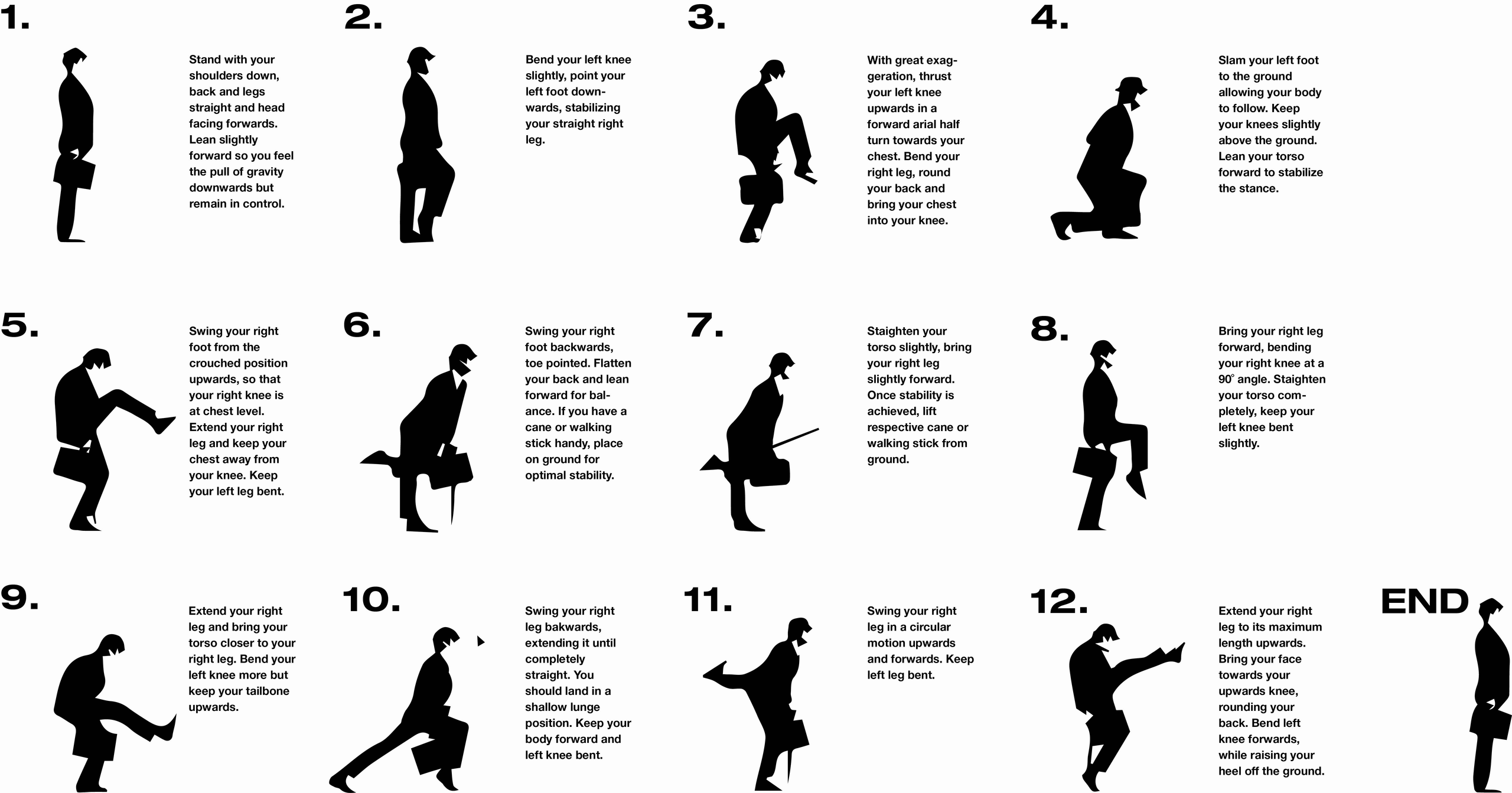
Working at maintaining your health through exercise? Here’s a form of exercise I bet you haven’t tried yet: Monty Python silly walks.

Gretchen Reynolds reports at the Washington Post that “a not-so-serious study discovered that a walking style made famous by the comedy troupe … works, according to an important — or, at least, actual — study published [in] the annual holiday edition of the BMJ, a British medical journal.

“Employing high-tech science and a tittering adolescent’s sensibility, the study’s researchers filmed volunteers perambulating like the ungainly bureaucrats in the Monty Python comedy troupe’s Ministry of Silly Walks sketch, while wearing metabolic monitors.

“Their aim was to determine the physiological effects of ambling around a track in the manner of the actor John Cleese, playing the apparently boneless Mr. Teabag, the head of the Ministry of Silly Walks, or Michael Palin’s Mr. Putey, a wannabe silly walker whose screwball stroll needs work.

“The scientists soberly wondered whether silly-fying people’s walking form would up the intensity and caloric expenditure of their exercise and make an otherwise simple stroll into a serious workout. …

“ ‘What we wanted to know was, how would deliberately inefficient walking affect energy costs?’ said Glenn Gaesser, a professor of exercise physiology at Arizona State University in Phoenix, who led the new study. …

“To find out, Gaesser and his colleagues gathered 13 healthy adults, ages 22 to 71, and had them watch the Ministry of Silly Walks sketch several times.

“For those unfamiliar with the skit, Mr. Teabag leads his ministry by example, moving like an unhinged heron, high-kicking, low-bobbing and randomly whisking up and jiggling his knees with abandon. The more-sedate Mr. Putey merely hitches his left leg out a bit with every other step, a motion the disapproving Mr. Teabag finds ‘not particularly silly.’

“After absorbing the basics of silly walking, the study volunteers donned a facial apparatus to measure their oxygen uptake and started walking around a short track in Gaesser’s lab. First, they walked as themselves, at their preferred pace, for five minutes. Then, they copied Mr. Putey, hooking out their left leg sometimes, for another five minutes. Finally, they went full-on silly, imitating Mr. Teabag’s demented eggbeater strides, for the concluding five minutes, generally giggling throughout, Gaesser said.

“Afterward, the scientists calculated the walkers’ speed and metabolic costs during each form.

“Silly walking like Mr. Teabag proved to be much harder than un-silly walking, requiring about 2.5 times as much energy. Putey-style strolling, meanwhile, was comparable to normal walking in terms of energy expenditure, but slower.

“In practical terms, these findings suggest super-silly walking can be strenuous enough to qualify as ‘vigorous exercise,’ Gaesser said.

If someone adopts a silly walk for at least 11 minutes a day, he continued, they will meet the standard recommendation of at least 75 minutes of vigorous exercise every week, which should meaningfully improve health and aerobic fitness. …

“Said David Raichlen, a professor of human and evolutionary biology at the University of Southern California in Los Angeles, [who] was not involved with this study, ‘Across human evolution, one of our key adaptive advantages was the development of a very economical, bipedal walking gait,’ [so] normal walking barely challenges our hearts and lungs or burns many calories. …

“But we can upset this walking ease ‘through biomechanical tweaks like those seen in the silly walks,’ Raichlen said, increasing the energy expenditure of getting from place to place.

“Gaesser, in fact, believes the utility of silly walking may lie in using it to replace our most quotidian strolls. Heading to the bus stop? Lift your knees, he said. Dip your rump. You’ll burn extra calories and improve your fitness.”

I was unfortunately not able to learn what John Cleese thinks of the study. More at the Post, here.

Note: “Gaesser said he understands walking is an enormous challenge for people with some disabilities, and the study was not meant, in any way, to exclude or mock them.”

Read Full Post »

Did you ever wonder why you have to work so hard at exercise when for millennia, humans did OK with whatever movement was part of their normal day? Some folks say we’ve been overdoing things.

At National Public Radio (NPR), Terry Gross interviewed Daniel Lieberman, a professor in the department of human evolutionary biology at Harvard, about his new book on exercise. The interview relieved me of some preconceptions, but I didn’t see anything about getting the heart beat up.

“For much of history, human beings needed to be physically active every day in order to hunt or gather food — or to avoid becoming food themselves. … a professor in the department of human evolutionary biology at Harvard [says] that the notion of ‘getting exercise’ — movement just for movement’s sake — is a relatively new phenomenon in human history. …

“Lieberman says, ‘When I go to these [remote African tribal] villages, I’m the only person who gets up in the morning and goes for a run. And often they laugh at me.’…

“Lieberman has spent a lot of time with indigenous hunter-gatherers in Africa and Latin America, cataloging how much time they spend walking, running, lifting, carrying and sitting. He writes about his findings, as well as the importance of exercise and the myths surrounding it in his new book, Exercised.

” ‘If you actually look at what our ancestors do, they walk about 5 miles a day, which turns out to be, for most people, about 10,000 steps,’ Lieberman says.

“Lieberman notes that many people are moving less than they did before the pandemic. He says if 10,000 steps feels out of reach, it’s OK to shoot for less — just so long as you’re focused on movement. Even fidgeting can keep your muscles engaged.

‘The more we study physical activity, the more we realize that it doesn’t really matter what you do. You don’t have to do incredible strength training. … It’s all good in different ways.’

Prof. Daniel Lieberman

Interview Highlights
On the demonizing of sitting as “the new smoking”
“When I walk into a village in a remote part of the world where people don’t have chairs or a hunter-gatherer camp, people are always sitting. … Some friends and colleagues of mine actually put some accelerometers on some hunter-gatherers and found that they sit on average about 10 hours a day. …

“It’s not unnatural or strange or weird to sit a lot, but it is problematic if, of course, that’s all you do. As I started to explore the literature more, I was fascinated because most of the data that associates sitting a lot with poor health outcomes turns out to be leisure-time sitting. …Then the numbers get a little bit scary.

On the importance of “interrupted sitting”
“Just getting up every once in a while, every 10 minutes or so — just to go to the bathroom or pet your dog or make yourself a cup of tea — even though you’re not spending a lot of energy, you’re turning on your muscles. … It uses up fats in your bloodstream and sugars in your bloodstream, and it produces molecules that turn down inflammation. So the evidence is that interrupted sitting is really the best way to sit. In hunter-gatherer camps, people are getting up every few minutes, to take care of the fire or take care of a kid or something like that. …

“A seat back essentially makes sitting even more passive than just sitting on a bench or a stool because you lean against the seat back and you’re using even fewer muscles, even less effort to stabilize your upper body. And the result is that we end up having very weak backs. So there are a lot of muscles that we use in our backs to hold up our upper body, and those muscles, if we don’t use them, just like every other muscle in your body, they atrophy. And weak muscles then make us more prone to back pain. …

On the idea that running is bad for your knees
“There’s this kind of general idea out there that running is like driving your car too much, [but] study after study has shown that in terms of ‘wear’ — by which we really mean arthritis, degeneration of the cartilage in your joints — that people who run more are not more likely to get arthritis in their knees. … That said, it’s also true that the most common site of injury for runners is their knees. But a lot of those injuries, I think, are preventable by learning to run properly. …

On becoming frail with age
“One of the most important points about physical activity is that as we age, it becomes not less but more important to be physically active. Muscle atrophy is the perfect example. … We have plenty of evidence that older individuals in America are less physically active and they do fewer activities that involve strength. And one of the really sort of serious negative consequences of that is that our muscles dwindle, they atrophy. … That’s the bad news.

“But the good news is that it doesn’t take a huge amount of physical activity to kind of reverse that, turn it around. Think about Ruth Bader Ginsburg. She was celebrated for her vim and vigor, which meant that a lot of that came from the fact that she kept working out and as she got older, she went to the gym several times a week. Now, she didn’t do crazy. … She did a few rounds of weight training every week and that helped keep her marvelously active and vigorous up until her late 80s. “

Lots more advice at NPR, including how much sleep we actually need, here.

I better stand up now. I’ve been sitting more than 10 minutes.

Read Full Post »

merlin_99210046_e422bfb4-003b-41b1-9127-bf8dc2edb60e-jumbo

Photo: Tom Jamieson for the New York Times
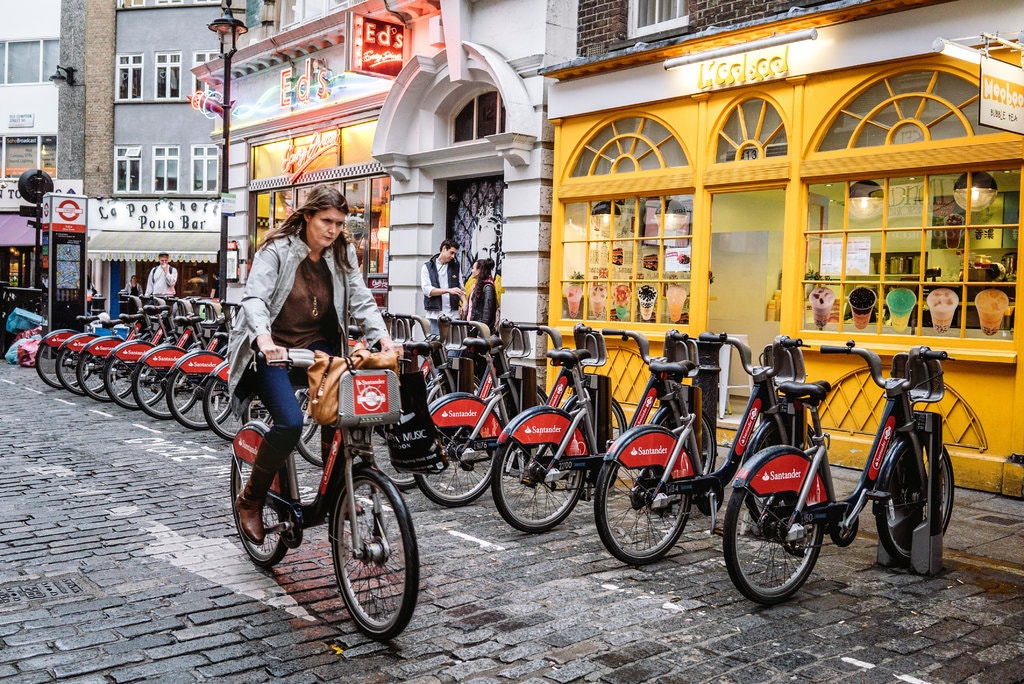
“London’s bike-rental program has proved popular. Now, patients at two medical centers in Cardiff, Wales, will be offered six-month subscriptions to a bike-rental service, with free rides of up to 30 minutes,” reported the
New York Times last year.

Last week, as I watched two grandchildren painstakingly donning piles of bulky ice hockey gear, I remarked that for me, walking is the best exercise because you don’t have to do any prep. You just open the door and go out. My granddaughter, age 7, opined that walking is boring, and I have to admit that ice hockey may be more heart-pumping.

But I am not bored. And after walking every day for many years, I no longer feel surprised that I like to exercise. At first, I was resistant to doing anything. But a friend who was an internist leaned on me about exercising. And I knew if I were going to do anything regularly over a long period of time, it would have to be something I liked. So, walking was it.

Given that I go quite slow, I was surprised that when I told various doctors I just ambled, they didn’t seem bothered. Then I heard one refer to walking as a “weight-bearing activity,” and the penny dropped!

In the United Kingdom, doctors are making it easy for patients to exercise by means of bicycles. And like me, many former non-exercisers are surprised to find that they like it.

The BBC reports, “A cycling-on-prescription scheme trialled in Yorkshire has been so successful it could be rolled out across the UK, the organisers said. The scheme allows health professionals to offer those with long-term conditions 12 weeks of cycle training.

“More than 1,000 people have been referred to the scheme since it launched four years ago, according to the West Yorkshire Combined Authority. Cycle UK said the scheme showed cycling was good for overall wellbeing. …

“The initiative is funded by West Yorkshire Combined Authority, which covers Barnsley, Bradford, Calderdale, Craven, Harrogate, Kirklees, Leeds, Selby, Wakefield and York.

“Figures from 2018/2019 showed people using the scheme reporting a marked increase in feeling more confident and relaxed. …

“At the start of the programme, only 18% of participants were meeting the NHS [National Health Service] activity guidelines of 150 minutes per week — a figure that rose to 73% afterwards.

“Andrea, 47, from Wakefield, was referred as she has suffered from anxiety. ‘I’m more confident. I’m able to be out with other people more than I would normally,’ she said. ‘My fitness has improved, my lung function is a lot better than it has been and now I actually want to go out and do other things, and keep cycling, keep active and really start living my life.’ …

“Cycling UK said the scheme started in Yorkshire, and has since been trialled in areas including Wales, Manchester and London, but is not yet available nationwide.”  More at the BBC, here.

The New York Times, here, talks about the biking-rx trial in Wales, noting, “Nextbike, the company that offers the bicycle service for patients in Cardiff, provides rentals in many other European cities. Mareike Rauchhaus, a spokeswoman for the company, said that it participated in a program called By Bike to Work, which allowed people to claim prizes from their health insurance providers if they cycled to work. …

“Dr. Karen Pardy, a family doctor who is participating in the program in Cardiff, said in the statement [that] she hoped prescriptions would encourage people to ‘have a go at cycling around Cardiff’ and realize how the activity can support their well-being.”

P.S. If you search Suzanne’s Mom’s Blog for the word “prescription,” you’ll find a lot of posts on doctors’ unusual prescriptions to encourage more healthful living, including  biking in Boston, woodland walks, gardening, museum visits, poetry, music, dance, art …

Read Full Post »

henry-danton-today-main-1-190910_26e176561866dbafd4741d502c270891.fit-1240w

Photo: David Sprayberry / Belhaven University
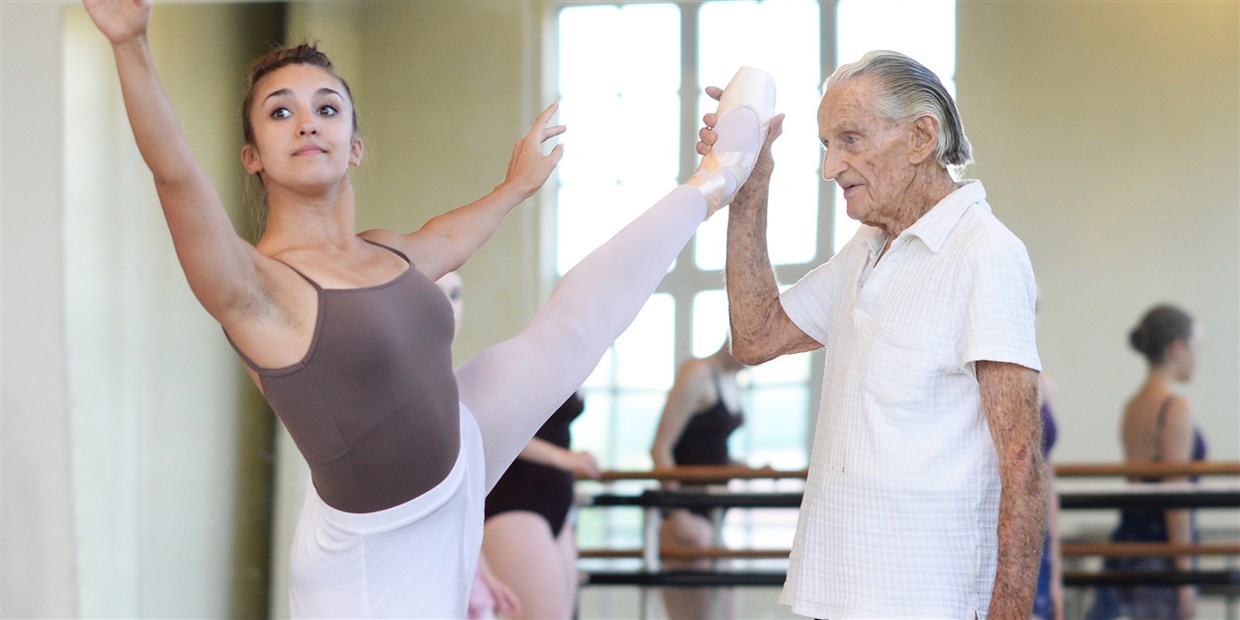
“Henry Danton was born on March 30, 1919. At 100, the former ballet star turned master teacher still drives around Mississippi teaching ballet,” reports NBC.

I’m always impressed by people who enjoy their work so much that they are still doing it at an advanced age. The 100-year-old ballet teacher in this story is a great example. I definitely don’t want to be driving at his age, but I admire him for continuing to make a contribution in the world and having fun while doing it.

A. Pawlowski at Today.com reports, “At 100 years old, Henry Danton is still the center of attention in the ballet studio, now full of students one-fifth his age.

“The former dancer once pirouetted on premier stages around the world, then became a master teacher, training new generations of ballet dancers. He continues to teach today, and says he has no intention of retiring.

“The British-born centenarian said he has a healthy body and mind, lives on his own, loves his smartphone, hasn’t been to the doctor in 10 years and still travels the world. … He recently completed a residency at the Belhaven University Dance Department in Jackson, Mississippi, and teaches ballet around the state. …

“ ‘You have to take care of yourself,’ Danton told TODAY. ‘This body is the only thing you’ve got. You’ve been given this wonderful instrument, you have to look after it. …

‘I see people who retire and they become so bored, they don’t know what to do with themselves,’ Danton said. ‘That’s when their health starts to go down. I love teaching, I don’t want to stop. Children are my vitamin.’ …

“These are the factors Danton credits for his long life and wellness:

“Diet: Danton said he became a vegetarian more than 50 years ago when he was diagnosed with Hodgkin’s lymphoma, the same illness that took his brother’s life. … He stopped eating red meat, fish and poultry at age 49 and hasn’t consumed any animal flesh since, he said.

“Danton likes to ‘live on seeds and nuts,’ enjoys organic vegetables, drinks lots of carrot juice and consumes dairy including cheese and milk. He also occasionally eats chocolate, but stays away from other sweets in his regular diet. He likes beer — ‘like a good Englishman’ — but skips other alcoholic drinks.

“Exercise: Danton credits constant movement as a dancer as one of the main factors that’s kept him healthy and helped him reach the age of 100.

“ ‘I really, absolutely believe exercise is the answer to everything,’ he said. Swimming is the best workout after ballet, Danton said. He still gets some of his exercise from teaching and composing his class for the day. He also has an extensive morning routine centered on a deep tissue massage he gives himself before getting out of bed. Starting with his scalp, then moving down to his neck, shoulders, arms, legs and feet, the one-hour-plus massage stimulates blood circulation, Danton noted.

“ ‘With your thumb, you go as deep as you can into the muscle,’ he said. ‘It works because my body is in incredible condition for my age.’

“Another part of his busy morning routine involves stretching with an elastic resistance band. After all his morning exercises, he said he never eats breakfast before 11 a.m.

“Positive [outlook]: Danton is an optimist, which he called a ‘very important’ factor in his longevity.

“ ‘There’s absolutely no point in making your life miserable,’ he said. ‘Your mood affects you physically, absolutely.’ …

“Danton stays curious about the world and said he is still learning. He has a computer and an iPhone, immediately suggesting that a caller switch to FaceTime during a recent conversation. And he loves his phone’s virtual assistant.

“ ‘Siri amazes me. She answers you immediately,’ he said. …

“Lifestyle: In his whole life, Danton said he has only smoked one cigarette. … Danton hasn’t been to see a doctor in a decade, he said, only running into his primary care physician a few years ago when he was getting a flu shot. The doctor has since retired.”

More at NBC’s Today show, here.

Read Full Post »

Photo: Parish of East Baton Rouge Recreation and Park Commission
Kids in Baton Rouge, Louisiana, compete in a sack race using equipment provided by the local parks and recreation commission. Mobile playgrounds designed to fight childhood obesity are catching on nationwide.

Did you always have some kind of gym class in elementary school? Something that kept kids running around and exercising even if it was only Dodge Ball? I did.

In recent decades, many schools have seen cutbacks in classes that are important for both intellectual growth and overall health — arts, music, gym, and more. Concerned communities are doing whatever they can to make up the difference.

Christine Vestal writes at the Washington Post, “In a state with the fourth-highest rate of youth obesity in the nation, the Baton Rouge parks and recreation agency wanted to lure Louisiana kids away from their screens and into the parks to get moving.

“But the low-income youths who needed exercise the most weren’t showing up at the parks. Officials learned that they didn’t have transportation, and their parents were too busy working to take them. So they decided to take the parks to the kids.

“With money donated in 2012 by corporate sponsors and a portion of their parish budget, the local parks and recreation agency, known as the Baton Rouge Recreation, or BREC, bought a box delivery truck, painted it with bright colors, and filled it with scooters, hula-hoops, balls, slack lines, trampolines, sidewalk chalk, and jump ropes.

” ‘The idea came to us one day while we were watching a bunch of kids turn flips on an old mattress someone had discarded near the office,’ said Diane Drake, who directs BREC’s playground on wheels. ‘We realized it wouldn’t take much to get kids moving if we put it right in front of them.’

“Naming the mobile playground BREC on the Geaux (a Cajun play on words for the word ‘go’), the agency in 2013 started what would become a daily program by holding community events at housing complexes, churches, parks, and schools in low-income neighborhoods.

“If peals of laughter and swarms of activity are any indicator, BREC on the Geaux was an immediate success, Drake said.

‘‘ ‘Once word spread, children would come running out of their apartments as soon as we pulled into the parking lot,’ Drake said. ‘It was all we could do to unload the equipment before they grabbed it and ran off.’

“A year after it began, BREC officials drove the mobile playground to a meeting of the National Recreation and Park Association in Charlotte.

“Since then, BREC has received dozens of e-mails and phone calls from other cities seeking advice on how to start a similar program, Drake said. …

“Transporting the joy and the health benefits of play to kids in underserved neighborhoods isn’t a new idea. A concept called ‘Play Streets,’ in which local volunteers work with police and health officials in urban neighborhoods to temporarily block traffic so kids can play, has been thriving for decades in places like London, Chicago, New York, and San Francisco.

“But the idea is now starting to take root in small- and medium-size cities — and in a handful of rural towns — where low-income children and adults are even more susceptible to obesity than in the nation’s urban centers, according to a June report from the Centers for Disease Control and Prevention. …

‘‘BREC started its mobile playground project with $110,000, half from the Blue Cross Blue Shield of Louisiana Foundation and half from the parish budget. A Play Streets project funded by the Robert Wood Johnson Foundation supported play events in four diverse low-income rural communities last summer — Warrenton, N.C.; Talihina, Okla.; Oakland, Md.; and Cameron, Texas — on a much smaller budget: $6,000 for a handful of community events. …

“In Baton Rouge, Louisiana State University’s Pennington Biomedical Research Center found that similar events sponsored by BREC resulted in children getting about 50 percent more physical activity, as measured in Fitbit steps, compared with weekdays and weekends without Play Street events.”

More here.

Photo: Our Home Louisiana
Baton Rouge Recreation celebrates a new mobile-playground truck with Pennington Biomedical Research Center’s Elizabeth Gollub, an evaluator of the anti-obesity initiative.

Read Full Post »

methode2ftimes2fprod2fweb2fbin2f7bfa7a70-aa3c-11e8-8404-0bee60a6f70d

Photo: James Glossop
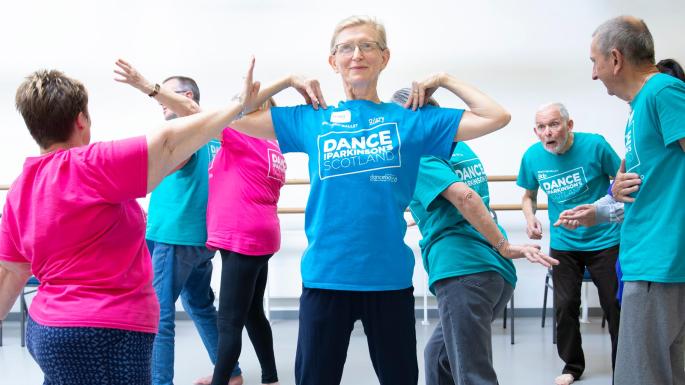
Scottish Ballet expands Dance for Parkinson’s classes to cities across the country.

The class that comes right before my Essentrics stretch class on Thursdays is for people with Parkinson’s. The participants seem to enjoy it. One man, who is said to be over 100, routinely leaves the class with a smile on his face.

Exercise classes for people with Parkinson’s are not new, but there are always new locations offering them and new techniques to help people keep moving. Consider, for example, this report from Scotland, where the Scottish Ballet has a program.

Jeremy Watson writes at the Times, “Research has shown that dance can help people with the degenerative disease physically, mentally and socially. [At the Scottish Ballet,] staff and volunteers help participants develop movement skills with particular emphasis on fluidity, balance, co-ordination and posture. The sessions include activities focused on problem solving, improvisation, vocal skills, memory and multi-tasking.”

The Scottish Ballet website adds background. “Established in 2016, the Dance for Parkinson’s Scotland programme supports those with Parkinson’s to experience the benefits of dance and creativity — improving balance, spatial awareness, confidence and fluidity in movement. Every week, around 75 participants take part in sessions delivered by Scottish Ballet in Glasgow and Dance Base in Edinburgh. …

“The warm and informal Dance for Parkinson’s Scotland classes feature elements of ballet and contemporary dance with a focus on Scottish Ballet’s repertoire. Using the themes and movement from current productions, specially trained Scottish Ballet and Dance Base Dance Artists lead participants to develop movement skills with particular focus on fluidity of movement, balance, coordination, expression, posture and rhythm.”

The Edinburgh Parkinson’s site says that the aims of the classes “are to

* wake up stiff muscles and improve flexibility,
* encourage mind-body connection,
* improve co-ordination and balance, and
* increase self-awareness and self-esteem
* in a supportive and joyful environment

“The social time at the end of each session is a chance to make connections and feel part of the dance community. … The teachers have a wonderful sense of light-heartedness and fun which they bring to the classes. Live music is an essential ingredient, and we have a talented pianist, Robert Briggs, providing the accompaniment, so the music is used flexibly to encourage movement and development of sequences. …

“The original concept, arising from collaboration between the Mark Morris Dance Group and the Brooklyn Parkinson’s Group in New York, is now increasingly practised worldwide among the Parkinson’s community.”

Patients’ partners and caregivers attend the class that I’ve looked in on, and they are welcome to participate and get some exercise, too. The musical selections are great, but unlike in Scotland, there is not a live accompaniment.

Read Full Post »

Photo: Jonathan Wiggs /Globe Staff
Lauren Mayhew was my Essentrics teacher for a year. Here she is leading a class at the Steinberg Wellness Center for Mind and Body. Despite the photo, Essentrics doesn’t have students hold positions.

I was never one for doing exercise for exercise’s sake, but a couple decades ago, my doctor friend Anna insisted I take up something. I’m so glad she did.

I knew that in order to do any exercise regularly, it would have to be something I really enjoyed, so I started walking every day. I don’t walk fast, but I keep the joints moving, and I learned that any sort of walking fulfills that Holy Grail called “weight-bearing activity.” I also love the time to think, and I like taking pictures on my walk.

In addition to walking, I take two exercise classes. I’ve been taking tai chi chuan at Zhen Ren Chuan for more than six years. I like taking tai chi chuan at a martial arts studio because the moves are more clear and understandable than at another place I tried. They are clear because the martial arts people like to tell you the self-defense origins of the moves.

Tai chi chuan is great for balance and moving your body in a seamless way so you don’t stress the joints as you might do when holding a yoga position.

Moving in a seamless way is also the goal of a class I’ve been taking for two years called Essentrics. Essentrics was developed by a former ballerina and aims to strengthen and stretch all the muscles in every session, with beneficial attention to often neglected hands and feet.

Although the tai chi class includes many young people who are also studying martial arts, my midday Essentrics class has mostly retired people, many of whom have had injuries of one kind or another.

What do you do for exercise? Do you take any classes? As a child I took a lot of ballet classes, and ever since then, I’ve had the idea that you make friends in classes. Do you find it works that way with grown-ups? Since starting exercise lessons again as an adult, I find that most grownups keep their heads down and avoid eye contact. I can’t figure out why that is.

Here’s a Boston Globe article that explains how Essentrics helps improve posture. Lauren Mayhew, one of my teachers, is featured in the story.

Photo: Zhen Ren Chuan
The Zhen Ren Chuan website highlights its community garden: “Our families learn horticulture as well as Martial Arts.” Students and teachers keep the school’s corner of the business district neat as a pin.

3-sm

Read Full Post »


Photo: Alamy
Exercise and social activities could help to reduce the risk of developing dementia in later life, according to a new report.

Although there is no cure yet for dementia, lifestyle changes have the potential to reduce new cases by as much as one-third.

Nicola Davis writes at the Guardian about a recent report from the Lancet Commission on dementia prevention, intervention and care. The study suggests that many “dementia cases might be avoided by tackling aspects of lifestyle including education, exercise, blood pressure and hearing. …

“ ‘There are a lot of things that individuals can do, and there are a lot of things that public health and policy can do, to reduce the numbers of people developing dementia,’ said Gill Livingston, professor of psychiatry of older people at University College London and a co-author of the report. …

“ ‘We expect it to be a long-term change that will be needed for exercise; joining a gym for two weeks is probably not going to do it,’ she said.

“Clive Ballard, professor of age-related diseases at the University of Exeter medical school and also a co-author of the report, added that the evidence suggests individuals should also try to follow a Mediterranean diet, maintain a healthy weight and keep an eye on their blood pressure. …

“The results reveal that as many as 35% of dementia cases could, at least in theory, be prevented, with 9% linked to midlife hearing loss, 8% to leaving education before secondary school, 5% to smoking in later life and 4% to later life depression. Social isolation, later life diabetes, midlife high blood pressure, midlife obesity and lack of exercise in later life also contributed to potentially avoidable cases of dementia, the report notes. …

“They admit that the estimate that more than a third of dementia cases could be prevented is a best case scenario, with the figures based on a number of assumptions, including that each factor could be completely tackled. …

“Fiona Matthews, professor of epidemiology at Newcastle University who was not involved in the report, said that interventions for depression and social isolation could still prove valuable. ‘If we could actually resolve some of that issue, even if it is not 100% causal, it is likely we might be able to slow [dementia] progression – even if [an individual] is on a pathway to developing dementia already,’ she said.

“She added that the proposed areas for action could offer myriad health benefits beyond lowering dementia risk. …

“The authors pointed out that an intervention that delayed dementia onset and progression by even a year could decrease the number of people with dementia worldwide in 2050 by nine million.”

More at the Guardian, here.

Read Full Post »

Older Posts »