Feeds:
Posts
Comments

Posts Tagged ‘extinction’

Photo: Ryan Kellman/NPR.
Inside this lab in Hawaii, David Sischo and his team care for 40 species of snails. For some snails, it’s the only place they live, having been brought into captivity to stave off extinction.

If we take care of the least of Earth’s organisms, we ultimately take care of ourselves. That’s one reason why today’s story on some obscure research actually matters, even at a time when humanity seems to have bigger issues on its plate.

Lauren Sommer and Ryan Kellman report at National Public Radio about Hawaii’s “jewels of the forest.”

“When Hurricane Douglas came barreling toward Oahu in 2020, David Sischo quickly packed up and drove to higher ground. But he wasn’t evacuating his family. He was evacuating snails.

“Sischo works with some of the rarest endangered species on the planet, kāhuli — Hawaii’s native tree snails. The colorful, jewel-like snails were once so abundant, it’s said they were like Christmas ornaments covering the trees. Almost all of the 750 different species were found only in Hawaii.

“Today, more than half of those species are gone, the extinctions happening in the span of a human lifetime. Sischo and his team with Hawaii’s Department of Land and Natural Resources have the heavy task of saving what’s left.

“To stave off extinction, 40 species of snails, each about the size of a dime, live in human care inside an unremarkable trailer near Honolulu. For some, it’s the only place they’re found, their wild populations having completely disappeared.

” ‘Most people, when they think endangered species going extinct, they think of pandas and tigers and elephants, but imagine having 40 different panda species that are all as rare as pandas are,’ Sischo says. ‘That’s what this facility is.’

“This winter, one species of snail will inch toward an auspicious milestone. It will be released in a special enclosure in the mountains of Oahu, one that has been painstakingly prepared to give the snails the best chance of survival in their natural environment.

“Still, the outlook for Hawaii’s snails is uncertain, symbolizing a new era in the conservation of endangered species. Around the world, plants and animals are being brought into captivity as a last-ditch effort against extinction. But as the climate heats up and invasive species continue to spread, many have no clear path to return to nature in the near-term. That could mean they stay in human care, isolated in zoos for the imperiled. …

” ‘I don’t think people realize how fast things are changing,’ Sischo says. ‘It’s happening, like right now as I’m talking to you, there’s species blinking out, out in the wild right now.’

“To keep that from happening to Hawaii’s native snails, Sischo never turns off his phone. They rely on life support systems in the Snail Extinction Prevention Program trailer, kept in environmental chambers that control temperature and release mist to simulate their native rainforest habitat. Sensors are set up to detect any problems, alerting Sischo and his team 24 hours a day. …

“Sischo pulls out one with snails the size of a fingernail hiding among the leaves. It’s Achatinella fulgens, a snail with a pale yellow shell and a bold black stripe swirling around it. … Other snails have intricate stripe patterns, almost like they’re sporting a plaid shirt. One snail has a shell like a miniature cinnamon roll. Some are almost iridescent, glowing with golds and greens.

” ‘Our tree snails are known as the jewels of the forest,’ he says. ‘The islands were dripping in snails. They were everywhere.’

“Hawaii’s tree snails play a crucial role in the ecosystem, having evolved over millions of years on the isolated islands. They don’t actually eat leaves, instead eating the fungus that grows on them. That helps keep the native trees clean and recycles nutrients in the forest. The snails also hold an important place in Native Hawaiian culture, their shells used to make lei.

” ‘In Hawaiian tradition, snails sing,’ Sischo says. ‘They represent voice. So they were probably one of the most revered invertebrates in the world.’

“Hawaii’s tree snails were no match for the barrage of changes that humans brought. Rats eat snails, and they arrived on ships, both Polynesian and European. The snails’ habitat disappeared as Hawaii’s forests were cleared for agriculture. But the biggest threat came in the form of another snail.

“In the 1950s, a predatory snail was introduced to Hawaii from Florida. The rosy wolf snail was released to control another invasive snail, but as so many invasive species stories go, it quickly spread. Rosy wolf snails are exceptionally good at eating native snails, hunting them down by following their slime trails and ripping them from their shells.

” ‘When they encounter a slime trail, they know the direction it was going,’ Sischo says. ‘Once they’re locked in on a trail from a native snail, they go right up to it. There’s no getting away.’ “

Oh, gee. That’s exactly what I meant in a recent post about introducing a species to address a problem. What if the fix goes awry and creates new problems?

More at NPR, here. No paywall.
Read Full Post »

Photo: Giacomo Augugliaro/Getty Images.
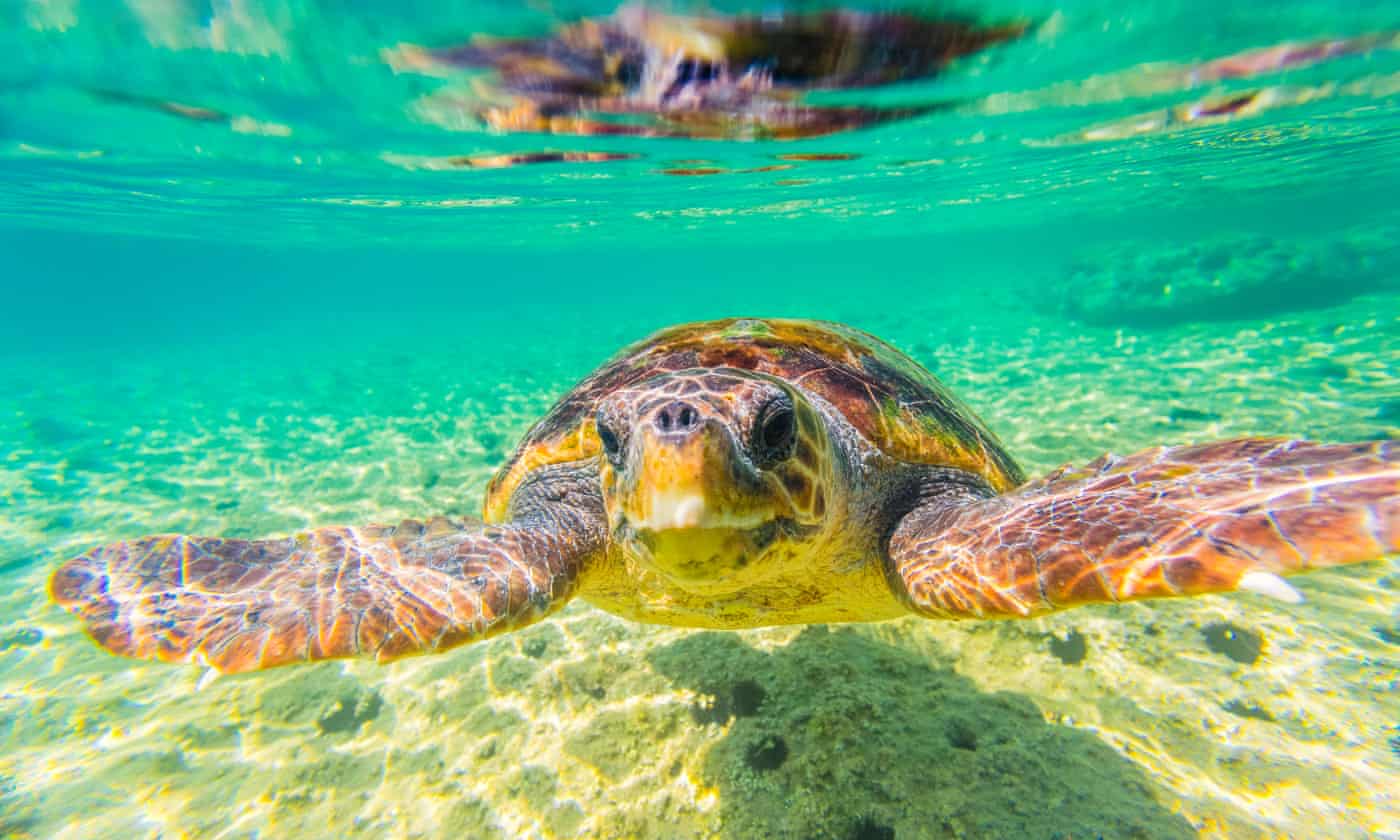
A loggerhead turtle (Caretta caretta) off Elafonissos island in Greece, where the rebound in population has been called “phenomenal.”  

Today’s article is about the resurgence of turtles in Greece. But before I get into it, I need you to indulge my current train of thought about turtles.

There are the chocolate, caramel, and pecan-footed “turtles” that my sister-in-law makes every Christmas, turtles that this week have gotten certain farflung relatives wildly excited.

There are songs about turtles like one I just found out my exercise teacher made for a fundraiser years ago, here.

And there are turtle fans all over the world who are bringing real turtles back from the brink of extinction. Slowly but surely.

Helena Smith writes for the Guardian about that.

“After nearly a quarter of a century observing one of the world’s most famous sea turtle nesting grounds,” she reports, “Charikleia Minotou is convinced of one thing: nature, she says, has a way of ‘sending messages.’

“Along the sandy shores of Sekania, on the Ionian island of Zakynthos, what she has seen both this year and last, has been beyond her wildest dreams. The beach, long described as the Mediterranean’s greatest ‘maternity ward’ for the Caretta caretta loggerhead sea turtle, has become host to not only record numbers of nests, but record numbers of surviving hatchlings as the species makes an extraordinary resurgence.

“ ‘The message sea turtles are sending is very clear,’ said Minotou, who coordinates the WWF program in the protected area. ‘And that is the measures we have taken over the past 25 years to ensure conditions are right for the marine turtles to nest here are working … It’s fantastic.’

“One of the oldest living species, sea turtles are believed to have existed for more than 100m years. Although highly migratory – over a lifetime, the reptiles cross thousands of miles of seas and oceans – female turtles always return as mature adults, about 20 to 25 years later, to the habitat where they were born to lay eggs. It is a reproductive cycle that happens with perfect synchronicity. In Sekania and other nesting grounds in Zakynthos and around Greece, turtles tagged at birth by conservationists a quarter of a century ago are now reappearing to nest.

“ ‘It’s hugely moving,’ says Minotou, a sustainable development expert who highlights the importance of technological advances, including the installation of CCTV cameras, in helping to ward off seagulls, ghost crabs and other predators. ‘This year more than 1,200 nests have been recorded in Sekania, which is one every 50cm [~20 inches] of beach. An amazing number.’

“From Spain in the west to Cyprus in the east, the Mediterranean has witnessed a record rise in sea turtle nesting – testimony to the painstaking efforts of environmentalists determined to save an ancient mariner that not that long ago was on the verge of extinction. Only one in 1,000 turtle hatchlings makes it to adulthood, making the turnaround even more remarkable.

“In Greece, which hosts 60% of Caretta caretta nests, the rebound has been phenomenal: from an average of 5,000 to 7,000 nests per year, since 2023 over 10,000 nests have been recorded annually, according to Archelon, the Sea Turtle Protection Society of Greece. …

“Thirty years ago, before the creation of a state-funded marine park on Zakynthos – the country’s biggest sea turtle nesting ground after the bay of Kyparissia in the Peloponnese – Greek authorities appeared oblivious to the plight of a species whose survival is now widely recognized as vital for marine ecosystems and the region’s ecological biodiversity.

“Few have more vivid memories of the dangers the creatures once faced than Lily Venizelos, who founded the UK-based Mediterranean Association to Save the Sea Turtles (Medasset) in the 1980s.

“The doughty campaigner, now in her 90s, spent years lobbying successive Greek governments to legislate policies to protect Caretta caretta from the then nascent threat of tourism and other perils posed by speedboat propellers, beach furniture and human activity in marine turtle habitats, conservationists say. …

“ ‘It’s been the most wonderful news, at my age, to find out that the Caretta caretta are no longer so threatened, but it’s crucial protective measures continue to be enforced. One false move and everything could be lost.’ ”

Do you have any thoughts on why turtles are so beloved? I think for me it’s their patience, the way they get everything done that they need to do while moving slowly.

More at the Guardian, here. No firewall.

Read Full Post »

Photo: Carlton Ward Jr.
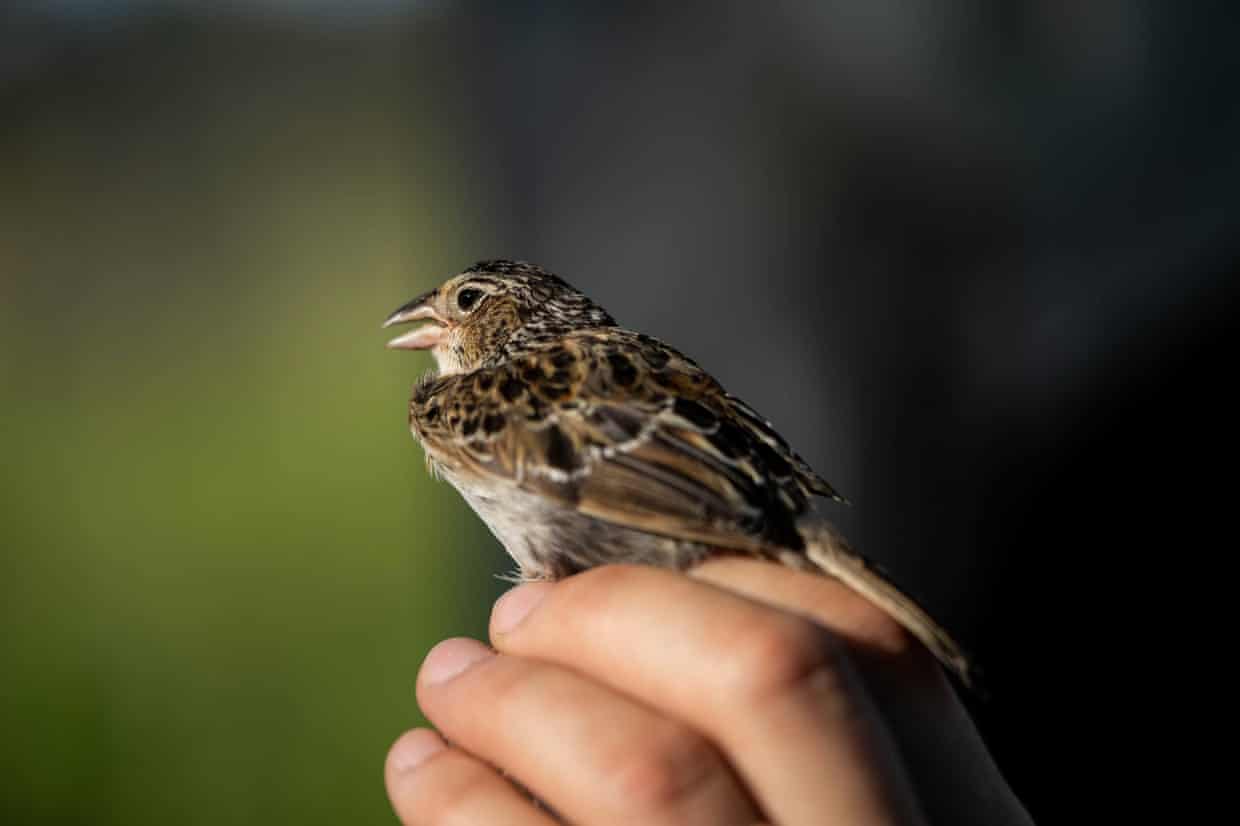
A grasshopper sparrow in Florida. 

Continuing on the subject of endangered birds, let me introduce Florida’s grasshopper sparrow. Now, you may think that with all the troubles in the world, the future of the grasshopper sparrow is the least of your worries.

But I like how the story represents bigger things — how we can make the world better if we try, how there are people who devote their lives to some small area that has big implcations.

Richard Luscombe writes at the Guardian, “Scientists in Florida are hailing the landmark release this week of a tiny bird only 5 inches tall as an oversized success in their fight to save a critically endangered species.

“Numbers of the Florida grasshopper sparrow, seen only in prairies in central regions of the state, dwindled so severely by 2015, mostly through habitat loss, that authorities took the decision to remove remaining breeding pairs into captivity. Their wager was that a controlled repopulation program would be more successful than leaving the birds to their own devices.

“[Their] gamble was rewarded. Partners joined the Florida Fish and Wildlife Conservation Commission (FWC) to release into the wild the 1,000th bird bred under controlled conditions, adding to an increasingly stable population that researchers believe has turned the tide towards the species’ survival.

“ ‘The recovery and release program diverted the extinction of the Florida grasshopper sparrow,’ said Adrienne Fitzwilliam, lead sparrow research scientist at the FWC’s fish and wildlife research institute.

“The fear was we might just be expediting their demise by bringing in proven breeders, so to see these birds making it in the wild, breeding with wild birds and other release birds, and their offspring going on to breed, has just been incredibly rewarding.’ …

‘Releases, which began in 2019, have taken place at three sites, with the newly freed birds monitored by patient teams of observers with binoculars and lawn chairs at two more. Birds are released in batches at about 40 days of age and, Fitzwilliam said, quickly set about setting up their ‘territory.’

“ ‘There’s a lot of sitting and waiting and watching because their nests are incredibly hard to find,’ she said.

“At the Avon Park military range south of Orlando where the milestone release took place this week, researchers have this year recorded 16 nesting pairs and 30 ‘singing’ males looking for a mate.

“At Three Lakes wildlife management area, the program’s first release site where once only 11 pairs were present, the observers found 40 pairs and 68 males, and are hopeful of more with the breeding season still in progress. …

“ ‘These numbers mean released birds successfully survive, breed and raise young in the wild, which is a huge success,’ Fitzwilliam said. ‘It has diverted extinction and allows partners to research possible landscape-level solutions.’

“Grasshopper sparrows, per their name, eat mostly grasshoppers and seed, and according to the FWC, the loss of large areas of prairie habitats to agriculture fields has vastly reduced their range and numbers. … FWC’s program partners, which include Audubon, White Oak Conservation and the Fish and Wildlife Foundation of Florida (FWF), are researching potentially beneficial land management practices such as roller chopping, which prepares land for controlled burns and speedier regeneration of native grasses. …

“News of the recovery of grasshopper sparrow numbers follows an upbeat report by a coalition of prominent universities for the future of Florida’s wildlife, if the climate emergency is mitigated properly.

“Andrew Walker, FWF president and chief executive, said: ‘These little birds represent a big beacon of hope that our commitment, partnership and holistic approach can save vulnerable wildlife from the brink of extinction.’ “

More at the Guardian, here.

Read Full Post »

Photo: Philip Brown/Unsplash.
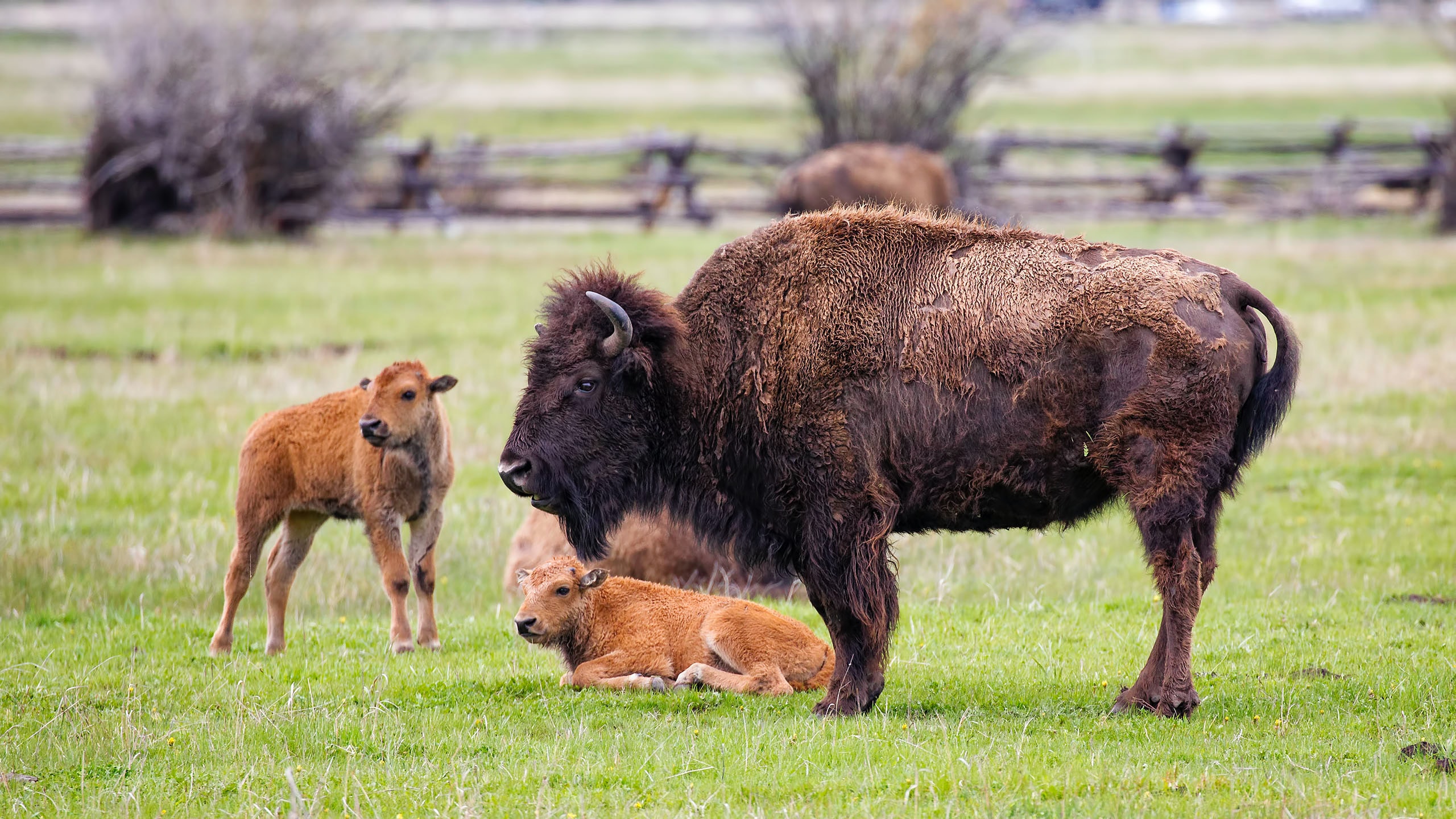
Led by tribes, conservationists are helping bison make a comeback.

Having recently watched an appalling old Annie Get Your Gun film with Betty Hutton (appalling on the subjects of poverty, women, and especially indigenous people), I was relieved to learned from today’s article that attitudes may have evolved into something more promising.

Back in the day, settlers fought natives in underhanded ways. One way was killing bison, a sacred food source. Today European descendants and tribes are actually collaborating to bring the animals back from the edge of extinction.

Jess McHugh reports at the Washington Post, “Miles of prairie stretched out across the Wichita Mountains Wildlife Refuge in southern Oklahoma, acre after acre of brush, grasses and hearty vegetation creeping toward the low-range granite mountains rising in the distance. Like in much of Oklahoma, the road is flat here, but the speed limit remains 30 mph. That’s because of the bison.

“They appeared seemingly out of nowhere: dozens of massive animals lumbering up the shoulder of the road to cross to the fresh vegetation on the other side. The herd moved slowly, their soft, bovine eyes barely registering the stopped cars awaiting their passage. They quickly set to work mowing down the fresh springtime grass.

“The bison’s quiet munching does more than nourish their bodies — it’s one of many things they do to nurture their entire ecosystem, one that is increasingly under threat from climate change. Grazing bison shaving down acres of vegetation leave more than dung behind:

Their aggressive chewing spurs growth of nutritious new plant shoots, and their natural behaviors — the microhabitats they create by rolling in the ground, the many birds that forged symbiotic relationships with them — trickle down the food chain.

“Once bordering on extinction, bison now serve as a great provider for their ecosystems, standing as an example of the ways in which animal conservation and ecological protection can work in tandem.

“ ‘Buffalo is the original climate regulator,’ said Troy Heinert, a member of the Sicangu Lakota (Rosebud Sioux) tribe and executive director of the InterTribal Buffalo Council, a coalition working to restore the animal on tribal lands. ‘Just by how they use the grass, how they graze, how their hoofs are designed, the way they move.’ …

“Tribes are leading the effort to bring back the bison, Heinert says, which in turn allows for the return of other native grasses, animals and insects — all of which will ‘help fight this changing climate.’

“Bison, called buffalo by some Indigenous peoples, are mammoth creatures. Weighing up to 2,000 pounds, they are the largest land mammal in North America. … Two centuries ago, bison dominated much of the continent from Canada to Mexico, when tens of millions roamed North America. They were so numerous that the pounding of their hoofs beating across the land sounded like rolling thunder. For the many tribes of the plains region — the Lakota, the Shoshone, the Arapaho, to name a few — buffalo was a sacred animal that nourished their people and played an important ceremonial role.

“For European colonizers, the bison were both a commodity and a weapon. Americans massacred them by the thousands, selling their pelts and organizing vast sport hunts. As the United States pushed West in the 1800s, bison became a pawn in their quest to wrest Indigenous tribes off their ancestral homes. …

“By the turn-of-the-20th century, millions of bison had been killed. In 1900, fewer than 1,000 — of an estimated 30 to 60 million — remained, many in zoos.

“President Theodore Roosevelt ordered federal bison herds to be put into place (some, such as Custer State Park, were ironically sourced from tribal herds). The bison observed in the Wichita Mountains are descended from 15 animals commandeered from the Bronx Zoo in 1907 and brought to Oklahoma via train car. In the intervening century, federal, tribal and private herds have brought the species back from the brink of extinction. The estimated number of bison nationwide — while far from the millions — now hovers in the low hundreds of thousands.

“Indigenous peoples have been integral to this effort from the start, both by managing herds and by introducing legislation to protect and expand bison territory. In the past few decades, tribal herd numbers have soared: The InterTribal Buffalo Council, which began as a modest coalition of fewer than 10 tribes in the early 1990s, will soon count 76 tribes across 20 states from New York to Hawaii among its members, managing a total of more than 20,000 animals across 32 million acres.

“The return of the bison is a victory not only for the sake of biodiversity but for the entire ecosystem in which they live. As a keystone species, the bison sustain their environment from the top down.

“ ‘They move through, graze everything down. It’s a type of disturbance — like fire would be,’ said Dan McDonald, lead wildlife biologist at the Wichita Mountains Wildlife Refuge. ‘The fresh green [draws] other animals that would feed on it: elk and deer and whatever other type of grazers that would consume some of that new forage.’

“The herd in Oklahoma is approximately 625 animals, but when large herds move synchronously across the land, they create what scientists have dubbed a ‘green wave.’ The bison’s vigorous grazing stimulates plant growth, creating a flood of new vegetation that follows in the bison’s wake to be ‘surfed’ by animals large and small. Green waves can be so dramatic that some — such as the one created by Yellowstone’s bison herd — can be seen from space.”

Read about the extraordinary side benefits of herd restoration at the Post, here.

Read Full Post »

Photo: Melanie Stetson Freeman/Christian Science Monitor.
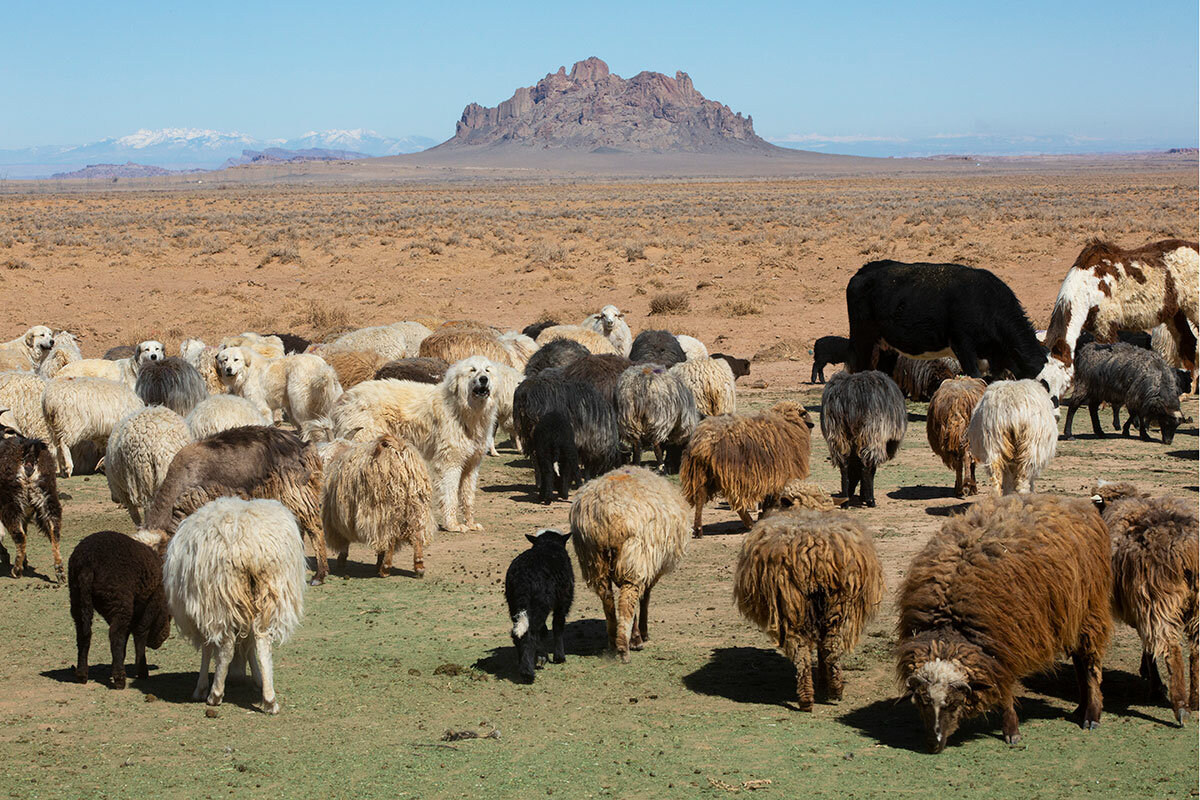
“Great Pyrenees dogs watch over Navajo-Churro sheep … outside Toadlena, New Mexico. … The sheep flourish in the harsh environment,” according to the Monitor.

I like that the Christian Science Monitor has so many stories about the Navajo Nation and other indigenous peoples. Although I’m not a Christian Scientist, I’ve always been impressed by the objective reporting at the Monitor and its steady coverage of underreported topics.

Reporter Henry Gass wrote recently from New Mexico about the resurgence of sheep farming on Navajo land.

“Irene Bennalley steps out into the fierce afternoon sunlight wearing jeans and a maroon sweater, her long gray hair knotted in a braid. Brandishing a long white stick as her crook, she picks her way across her parched desert farm toward the sheep pen. Answering their bleats with firm instructions in Navajo, she shepherds them out onto the dry, dusty range.

“She doesn’t know exactly how many Navajo-Churro sheep she has, but she ballparks it at around 100 head.

It’s bad luck to keep exact counts of your livestock, her father taught her. Don’t boast about your animals, he would say, or they’ll start dropping.

“Out here, ranchers like Ms. Bennalley can’t afford to lose animals. The winters are cold and hard, and the summers are hot and relentless. Water is scarce and feed is expensive. It’s the main reason she has come to love the breed, known colloquially as churros, that she’d grown up only hearing about in stories.

“The Navajo, who refer to themselves as Diné, have long been a pastoral society. Sheep are prominent in their creation myths, and after Spanish colonists first brought the churro sheep to the Southwest, the hardy, adaptable breed became, over centuries, the heart of a self-sufficient economy and vibrant Diné culture.

“But the days of sheep camps and flocks roaming the arid plains and valleys here are long gone. On two separate occasions the churro came close to full extermination. From over 1 million head at one time, by 1977 there were fewer than 500 left in the world.

“Efforts have been gaining momentum in recent years to rebuild the breed and return flocks to the Navajo Nation. Decades of painstaking, sometimes dangerous, work by a handful of committed ranchers and animal scientists have helped restore the population to over 8,000. 

“Now, people on the Navajo Nation are working to bring flocks back to the reservation, to try and fill the economic and cultural void left by their near extinction. 

“ ‘We’re back in a place of reevaluating how we live,’ says Alta Piechowski, whose family has been involved in restoring the Navajo-Churro for decades.

“ ‘When you’re walking the land [with the sheep], there’s a different kind of healing,’ she adds. ‘It heals your heart, and when it heals your heart you’re going to want other people’s hearts to be healed too.’ …

“An ‘unimproved’ breed – meaning one that hasn’t been selectively bred for market – churros are long and lean. … They are resistant to most diseases, and have adapted over the centuries to thrive in the dry, low-forage climate of the Southwest.

“For the Navajo people, the churro were something of a panacea. They provided a healthy and sustainable source of food and income; their many-colored fleece are ideal for weaving iconic Navajo blankets. And culturally, sheep have always been prominent in Navajo spiritual traditions. One of the six sacred mountains that bound the Navajo Nation, Dibé Nitsaa, translates to Big Sheep Mountain.

“But for the best part of a century, Navajo-Churro have been hard to find on the reservation. 

“The official term used by the U.S. government in the 1930s was ‘livestock reduction.’ The Midwest was in the grips of the Dust Bowl, and the Bureau of Indian Affairs, led by commissioner John Collier, concluded that too many livestock were causing land to erode and deteriorate.

“The policy resulted in the slaughter of hundreds of thousands of churros, often on the reservation, and sometimes on the properties of their owners. And it came after the Navajo people had spent over 70 years steadily rebuilding their churro herds. …

“Nearly a century since the stock reduction, the collective memory is still raw. Ms. Bennalley speaks mournfully of what she calls ‘the John Collier days.’ For a long time no one spoke of it at all.

” ‘Some people never really got out of losing their sheep that way,’ says Ms. Bennalley. ‘My family, my dad, nobody really talked about it, because it wasn’t something to be proud of.’ …

“ ‘That connection to the sheep is the connection to the land, which is the connection to the culture, which is the connection to the spirituality of the Diné people,’ says Dr. Piechowski, a career psychologist for reservation schools.

“ ‘If you exterminate the sheep, you’re pretty much eliminating [those] connections,’ she adds. …

“The churro never disappeared from the reservation, but the few that remained stayed hidden in some of the reservation’s most remote corners – so remote that the man who first led efforts to bring the churro from the brink of extinction almost died trying.”

Read more about that at the Monitor, here. Lovely photos. No firewall.

Read Full Post »

720

Photo: Zion National Park
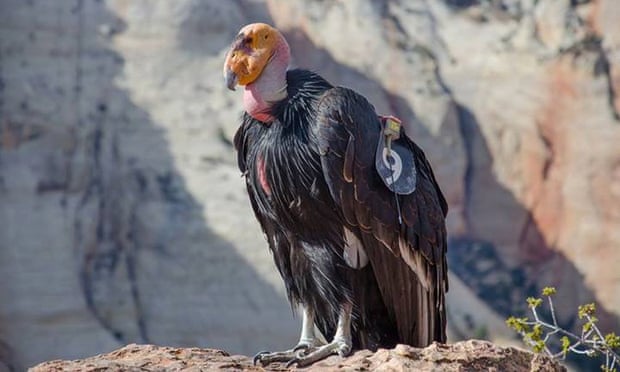
California condor chicks No 1,000 and 1,001 hatched in May this year, signalling a success for the species.

They are ugly and mostly unloved. But today, when so many creatures are going extinct, one can only rejoice to see that these guys are coming back. They are California Condors.

Maanvi Singh writes at the Guardian, “Nestled among the red-rock cliffs of Zion national park and the Grand Canyon, California condor chicks No 1,000 and 1,001 blinked into this world. Their birth signalled success for a decades-long program to bring North America’s largest bird back from the brink of extinction.

“As a result of hunting, diminishing food and dwindling territory, the number of birds in the wild numbered just 22 in the early 1980s. Lead poisoning was also a major killer, caused by inadvertently ingesting bullets that hunters left inside dead animals that the enormous birds, which have a wingspan of 9.5ft and weigh up to 25lb, scavenged for food.

“Facing imminent extinction, the few remaining wild birds were placed into a captive breeding program in 1987 and slowly released back into the wild starting in the early 1990s. Biologists estimate that the 1,000th and 1,001st chicks hatched in May this year, but they were only able to confirm their existence over the past several days, because the raptors build their nests inside caves carved into steep, sometimes inaccessible cliffs. ‘You know, condors can be secretive,’ said Janice Stroud-Settles, a wildlife biologist at Zion National Park in Utah. …

“The 1,000th hatchling’s parents were both born in captivity, and the mother has already lost two chicks. Her firstborn probably died – as many baby condors do – in an initial, unsuccessful attempt to fledge (AKA fly) the nest. …

“ ‘We’re hoping this chick will successfully fledge once it’s old enough to fly – sometime in the fall,’ Stroud-Settles said, noting that the nesting site she chose has a large ‘porch’ area where the growing chick can practice flapping before taking its perilous first flight. …

“But the species is still classified as critically endangered by the IUCN [International Union for the Conservation of Nature] and faces multiple threats, including the ongoing menace of lead poisoning.

“A law that went into effect this month has made it illegal to use lead ammunition to hunt any game in California. In Utah and Arizona, however, conservationists have taken a different approach. Because a straight ban could alienate hunters, conservationists are encouraging locals to reduce their use of lead bullets through a voluntary program. …

“The total living population of California condors now numbers more than 500, with more than half in the wild. The oldest bird being tracked in the condor restoration program is 24, but researchers estimate that California condors can live up to 70 years. They are very gregarious animals who get together in large groups and ‘like humans, tend to mate for life,’ noted Stroud-Settles.”

If this bird can be brought back from the brink of extinction, maybe all sorts of things threatened by human ignorance can be brought back, too. Elephants, butterflies, insects, trees. Maybe even — dare one hope? — our wobbling democracy.

More at the Guardian, here.

Read Full Post »

5109

Photo: David Tipling/Getty Images
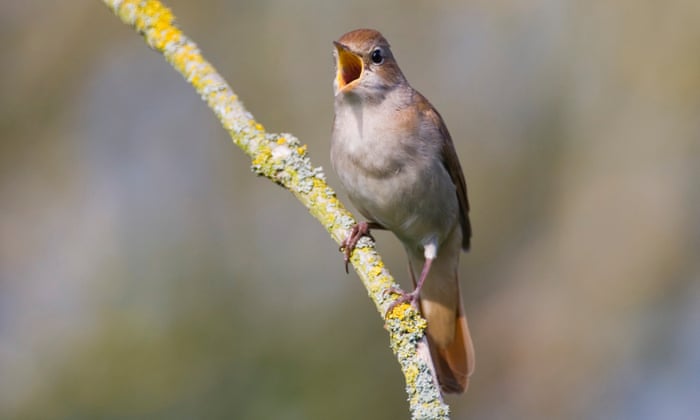
The nightingale’s song has been inspiring writers for more than a thousand years, but today most people have only recordings.

I’m reading one of the Narnia books to my younger grandson (The Horse and His Boy), and naturally some of the cultural references are to author CS Lewis’s England. We turned to our North American bird book when a nightingale was mentioned, and no nightingale was there. I’ll be showing him this story.

Patrick Barkham reports at the Guardian, “The nightingale has virtually disappeared from Britain over the past 50 years, its population plummeting by 93% to fewer than 5,500 pairs. But now a chorus of nightingale events are being arranged by artists, musicians and filmmakers to raise awareness of the plight of one of the country’s most celebrated but endangered birds.

“Birdsong was played on phones [in April] as the street artist ATM spent the day painting a nightingale in a gallery on the square, and more than 750 people attended a concert [of musicians performing] with amplified nightingale song.

Let Nature Sing, a track of pure birdsong including the nightingale, has been released by the RSPB to highlight the loss of more than 40 million birds from the UK in 50 years. …

“Its song was played in Berkeley Square as ATM painted a nightingale on the tailplane of a Wellington bomber at an event organised by the makers of a new documentary, The Last Song of the Nightingale.

“In 1924, the BBC’s first live-to-radio broadcast featured the cellist Beatrice Harrison playing a duet with a nightingale recorded in her garden in Surrey. The BBC continued this annual tradition until 1942, when the broadcast was famously abandoned when microphones picked up the sound of Wellington and Lancaster bombers en route to attack Germany, and the radio engineers realised the sounds could forewarn Hitler. …

“[Folksinger Sam] Lee said the nightingale was the most inspiring of musicians.

“ ‘For me it’s pure song,’ he said. ‘It’s an animal that is so utterly at one with music and the environment and using all the tropes and articulation and emotional capacity of a human musician, in the shape of a tiny brown feathered being.’ …

“Lee will rework the classic song ‘A Nightingale Sang in Berkeley Square’ at a free Extinction Rebellion event in the square, after which the audience will be encouraged to disperse through the streets of London with the nightingales’ song playing on their phones.

“Lee said … ‘At this rate we’re going to lose our nightingales, and so many species are in massive decline. We have to start celebrating these species and the arts are a very important way of brokering awareness and creating an agency for change.’ …

“ATM said he was convinced that nightingales did once sing in Berkeley Square. ‘It’s all about whether there was dense scrub in the square and I wouldn’t be surprised if there was one singing here 150 years ago.

“ ‘I lived in Berlin and the nightingale’s song was a common sound. Unfortunately the modern ethos of park-keeping is lawns and open spaces. People are frightened of the impenetrable places the nightingale needs.’ ”

More.

Read Full Post »

16x9_m

Photo: Clark Mischler
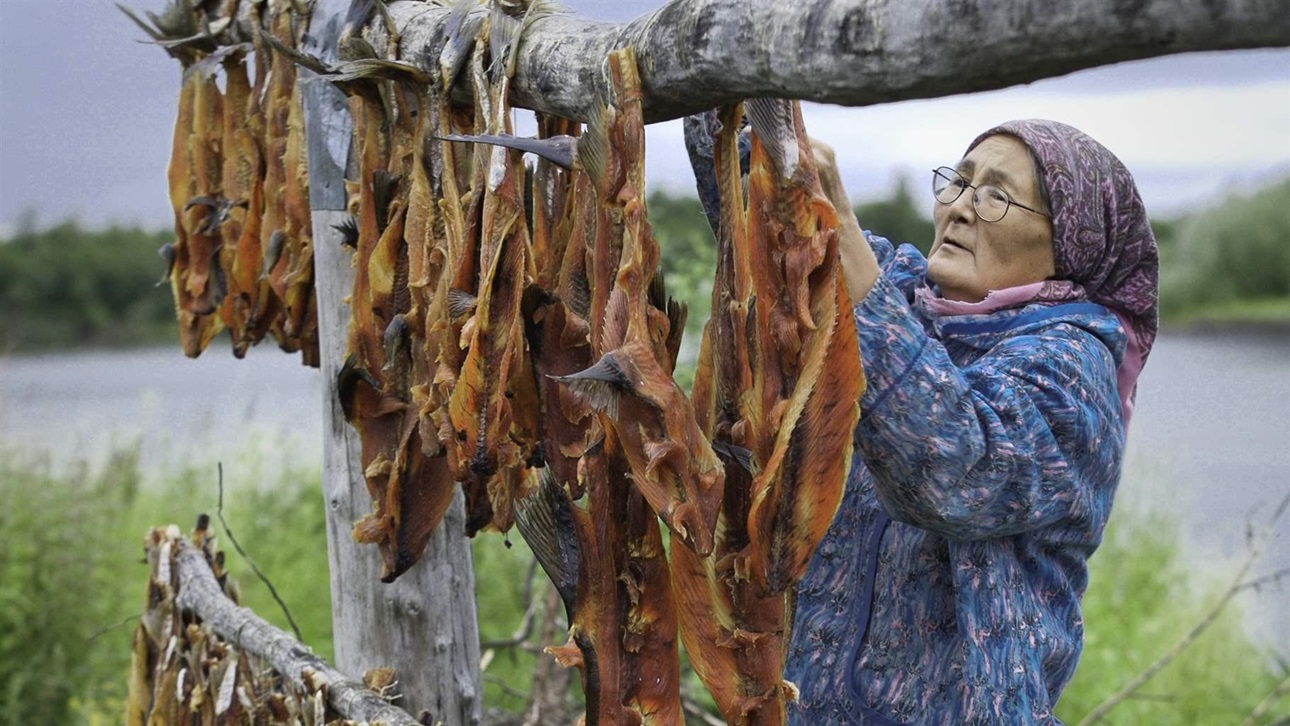
Hanging salmon at a fish camp near Kwethluk, Alaska, in the Yup’ik region, which has extensive coastline on the Bering Sea. The North Pacific Fishery Management Council is tapping the traditional knowledge of indigenous communities as it works toward more-sustainable fishery management.

I was listening to the radio in the car when the United Nations’ dire warning about biodiversity came out. Called the “Global Assessment Report on Biodiversity and Ecosystem Services,” it predicts one million species could be pushed to extinction in the next few years by such things as overbuilding and loss of habitat, global warming, and pesticides and herbicides. (The scientists who did the research provided their services for free. The naysayers are being paid. Ask yourself: Paid by whom?)

One commentator suggested that a road map for preventing loss of species is right under our noses in indigenous communities.

For a window on one way government agencies are starting to collaborate with indigenous communities, consider this Pew Trusts report on the salmon fishery in Alaska.

“The indigenous communities of the Bering Strait region have a vast knowledge of salmon runs, ocean currents, marine mammal behavior, and other ecosystem dynamics — information gathered over millennia and passed down from generation to generation. Now federal fishery managers will use that Traditional Knowledge to help guide management for the Bering Sea.

“The North Pacific Fishery Management Council voted at its December meeting in Anchorage, Alaska, to adopt a new Bering Sea Fishery Ecosystem Plan that lays the groundwork for meaningful incorporation of Traditional Knowledge into decision-making. Social scientists Julie and Brenden Raymond-Yakoubian, a married couple who have worked on the issue for years, say this is a groundbreaking action by the council.

“ ‘Indigenous communities have been living on — and with — the Bering Sea for generations,’ says Julie Raymond-Yakoubian, who is social science program director for Kawerak Inc., the Alaska Native nonprofit tribal consortium for the Bering Strait region. ‘They can see components of the ecosystem, including interconnections and relationships, that fishery managers might miss.’

“ ‘Incorporating indigenous perspectives is crucial for overcoming management challenges,’ adds Brenden Raymond-Yakoubian, who runs Sandhill.Culture.Craft, a social science consulting firm based in Girdwood, Alaska. …

Here are a couple of the nitty gritty matters addressed in the Pew interview.

“Q: What are the greatest challenges to ensuring that Traditional Knowledge informs decision-making?
“Brenden: One is getting recognition for Traditional Knowledge and ensuring there is a desire for it to inform policy and science. Another is getting natural scientists — those working in fisheries or oceanography, for example — to work with social scientists and Traditional Knowledge holders.

“Julie: There are five council meetings a year that each last about 10 days and are held in different places. Gaining a good understanding of how to work within the council’s process can be a full-time job. Most tribes don’t have the resources to do this. But if we want to include Traditional Knowledge and Traditional Knowledge holders in fisheries management, then these issues must be addressed.

“Q: How can Traditional Knowledge help address conflicts between federal fishery management and the subsistence way of life that Bering Sea communities have lived for millennia?
“Brenden: There are many ways. For example, management could include a broader understanding of the impact of commercial fishing on subsistence communities and of millennia-old practices and principles that have connected those communities to fish and the sea and sustained that relationship with the environment.

“Julie: Incorporating Traditional Knowledge will also help federal fishery managers better meet their existing obligations, such as the requirements to use the best scientific information available and consider social and ecological factors in management. It will also help them better implement ecosystem-based fishery management, which calls for managing fisheries at the ecosystem level rather than single-species level. Traditional Knowledge can also help federal fishery management become more adaptive, for example, by providing managers access to information about ecosystem changes they may not otherwise be aware of. This should help fishery managers adjust their policies to adapt to climate change, which would hopefully occur in a manner which ensured the sustainability of fishery resources for subsistence communities into a climate-uncertain future.”

More here.

Read Full Post »

Recently, my husband pointed out an amazing story in the Audubon magazine about birds that were extinct in Central Europe. Today they are being reintroduced and learning where to fly by following a human-powered light aircraft.

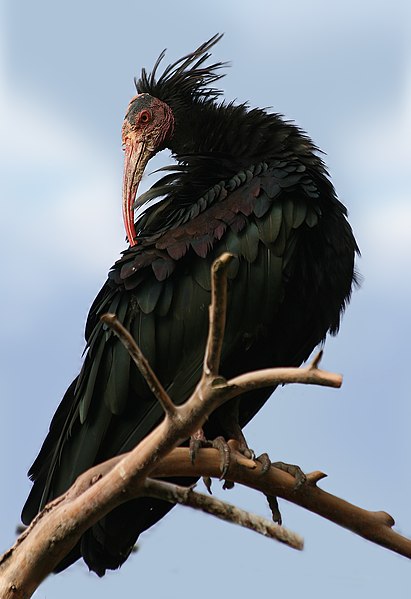
Esther Horvath wrote, “Anne-Gabriela Schmalstieg and Corinna Esterer aren’t your typical foster mothers. For starters, the youngsters they care for aren’t humans — they’re captive-bred Northern Bald Ibises, a species that went extinct in Central Europe more than three centuries ago.

“For six months each year the two 20-somethings dedicate their lives to the birds, living onsite in campers at the Schönbrunn Zoo in Vienna, Austria, and looking after the ibises from sunrise to sunset seven days a week. The entire first month the women must abstain from coffee, alcohol, and cigarettes because they have to spit in the birds’ food to make it easier to digest. The chicks eat as many as 15 times a day, dining on a mash of rat, mouse, and chicken, as well as fresh grasshoppers.

“When the ibises aren’t eating or resting, the foster moms spend as much time as possible bonding with them. …

“From day one, they call over and over: ‘Komm, komm, Waldies, komm, komm’ (‘Come, come, ibis, come, come’). When the chicks are three months old, their caretakers move them from the zoo to an aviary in Seekirchen, where they slowly become accustomed to a microlight aircraft and learn to follow it during training exercises, the women calling all the while. …

“The birds journey between the same breeding grounds their ancestors did centuries ago and a suitable overwintering site. Unlike back then, humans now watch them every flap of the way thanks to GPS tags attached to each bird. (To follow their annual trek, download the Animal Tracker app.)

‘For us it is very emotional,’ Schmalstieg says. ‘The birds follow the aircraft because we are sitting in it.’

If you get the Audubon magazine, you can see the actual craft with the birds following it high in the air. Read the online version here.

Photo: Wikimedia
Adult Northern Bald Ibis

Read Full Post »

Art: Albrecht Dürer
“Virgin and Child With Pear,” at the Uffizi Gallery in Florence.  Heritage fruit archaeologist Isabella Dalla Ragione says it’s not a pear.

I loved reading about this side effect of an Italian woman’s work to preserve heritage fruits: she discovered that a fruit in a famous painting was mislabeled.

Elisabetta Povoledo writes at the NY Times, “On her farm, Isabella Dalla Ragione pursues a personal mission — saving ancient fruit trees from extinction — with a strong sense of urgency. Rescuing vanishing varieties is a race, she says, ‘and lots of times we arrived late.’ …

“To find and collect their forgotten varieties, for decades she and her father chatted up farmers and motley locals in the Umbrian and Tuscan countryside. They gathered branches, and with them the traditions and chronicles tied to the fruits. …

“But because fruit was not always described in detail in written records, she also began to examine the works of Renaissance and Baroque painters working in Umbria and Tuscany at a time when ‘artists had close relations to agriculture’ and were sensitive to the seasons and local varieties, she said. …

“A closer look at Albrecht Dürer’s ‘Virgin and Child With Pear,’ at the Uffizi Gallery in Florence, for example, reveals a clear misnomer, Ms. Dalla Ragione said.

“ ‘If it were a pear, it would show a stalk on top,’ she said. ‘Mary is clearly holding a muso di bue apple.’ …

“Ms. Dalla Ragione created a nonprofit foundation, the Arboreal Archaeology Foundation, in 2014 ‘because it made it easier to give a future to all this,’ she said.”

Read more about her quixotic but intriguing work here.

Photo: Francesco Lastrucci for The New York Times
Isabella Dalla Ragione picking apples on her farmstead in San Lorenzo di Lerchi, Italy.

Read Full Post »

If the five unexpected salmon are a sign of a comeback in the Connecticut River, this could be really exciting.

Nate Schweber writes at Al Jazeera America, “By the fall of 2015, the salmon of the Connecticut River were supposed to be doomed. The silvery fish … went extinct because of dams and industrial pollution in the 1700s that turned the river deadly. In the late 1800s a nascent salmon stocking program failed. Then in 2012, despite nearly a half-century of work and an investment of $25 million, the federal government and three New England states pulled the plug on another attempt to resurrect the prized fish.

“But five Atlantic salmon didn’t get the memo. In November, fisheries biologists found something in the waters of the Farmington River — which pours into the Connecticut River — that historians say had not appeared since the Revolutionary War: three salmon nests full of eggs.

“ ‘It’s a great story,’ said John Burrows, of the Atlantic Salmon Federation, a conservation group, ‘whether it’s the beginning of something great or the beginning of the end.’ …

“The streamlined wild Atlantic salmon, genetically different from their fattened domesticated counterparts, which are mass-produced for human consumption, are so rare that anglers spend small fortunes chasing them across Canada, Iceland and Russia. …

“The stocked salmon continued to die off through the early 1970s. Gradually, scientists began to learn the importance of different strains of salmon and their close relatives, trout. In 1976 the program was able to acquire Atlantic salmon eggs from the Penobscot River in Maine, the closest surviving population both physically and genetically. This strain was still different from the lost native strain of the Connecticut River, but less so than their Canadian cousins, previously stocked there. In 1978, 90 fish from the Maine strain managed to make the two-year, 6,000-mile migration out to the food-rich Labrador Sea off of Greenland and then return to the Connecticut River. …

“As only 54 salmon returned to the Connecticut River in 2012, the U.S. Fish and Wildlife Service pulled out of the restoration program. New Hampshire, Vermont and Massachusetts followed. Connecticut opted to continue stocking a small number of salmon …

“Then in the fall of 2015, biologists found five adult Atlantic salmon swimming past the Rainbow Dam on the lower Farmington River. On a hunch, they searched likely upstream spawning habitat and there found the three nests full of eggs.

In the spring of 2016 they will hatch the first wild salmon into that river in two centuries.”

More here.

Photo: Design Pics Inc / Alamy Stock Photo
In North America, Atlantic salmon migrate up rivers and streams to reach spawning grounds in New England and Canada.

Read Full Post »

I’ve written several posts on the threat to languages that have few speakers — and on the linguistic preservationists racing against time. (Here, for example.)

Why does language extinction matter, you ask? Because language embodies so much about culture. We are poorer in being ignorant of how different people live and in having a chance to learn taken away from us.

Now the last speaker of a rare Scots dialect is gone. Writes the Associated Press, “In a remote fishing town on the tip of Scotland’s Black Isle, the last native speaker of the Cromarty dialect has passed away, taking with him a little fragment of the English linguistic mosaic.

“Academics said [October 3] that Bobby Hogg, who was 92 when he died … was the last person fluent in the dialect once common to the seaside town of Cromarty, 175 miles (280 kilometers) north of Edinburgh.

“ ‘I think that’s a terrible thing,’ said Robert Millar, a linguist at the University of Aberdeen in northern Scotland. ‘The more diversity in terms of nature we have, the healthier we are. It’s the same with language.’ …

“It’s part of a relentless trend toward standardization which has driven many regional dialects and local languages into oblivion. Linguists often debate how to define and differentiate the world’s many dialects, but most agree that urbanization, compulsory education and mass media have conspired to iron out many of the kinks that make rural speech unique.” More.

Photograph: Am Baile-High Life Highland/Associated Press.
Bobby Hogg, who recently passed away aged 92.

Read Full Post »

I’ve been reading Jason Elliot’s book Mirrors of the Unseen, which is about time he spent in Iran (not long before the green revolution of June 20, 2009, was trampled).

He’s a lovely writer if a bit overwhelming with his ability to compress centuries of history. I liked his earlier book, too, on Afghanistan, An Unexpected Light.

In the car on Sunday I read aloud a section of Mirrors that describes Elliot’s extended stay with Louise Firouz, an American who married an Iranian in the 1960s and has lived in Iran ever since — despite stints in prison and twice having all her family’s property confiscated.

The part I read aloud was about how she had researched, rediscovered, and bred a small horse thought to be extinct, one that turned out to have an ancestor going farther back than the Arabian horse. It’s the little Caspian, which was finally found, in pitiful shape, near the Caspian Sea and in Turkmenistan.

Nowadays you can find lots of videos of these horses on YouTube. I thought I would include this video, which is from a Caspian stud farm in Sweden.

Read Full Post »