Feeds:
Posts
Comments

Posts Tagged ‘farm’

Last week when I posted about my visit to start-up incubator Mass Challenge, I said I wanted to learn more about 2012 finalist Bootstrap Compost, a Boston-area composting business.

Jessica Ilyse Kurn, of PRI radio show Living on Earth, recently interviewed Bootstrap Compost founder Andy Brooks.

“KURN: The idea of helping the community was his inspiration, and he had another motivation. A college grad, Brooks was getting frustrated after searching endlessly for jobs.

“BROOKS: After like relying on this cruel economy of applying and cover letters and resumes and interviews, and nothing was going anywhere for like two years, and I was, like, forget it, I gotta do something for myself, and the whole notion of, like, picking myself up.

“KURN: And so Bootstrap Compost was born. Brooks says there are many reasons why he loves helping urbanites compost.

“BROOKS: When people ask me that question, it’s like someone saying, ‘Why do you like Star Wars? Or why are the Beatles good?’ I get dizzy. Like, there’s so many reasons. The way that interests me is like — what are the challenges that we face being a disposable society?

“KURN: Brooks puts on his helmet, and jumps on his souped-up bicycle – complete with a custom-made trailer that tags behind. Such a setup couldn’t have been designed for anything other than a nomadic compost business. …

“BROOKS: When you throw out your banana peels into the trash, that to me is insulting to all the resources that went into growing those things initially. The end product is just treated like refuse, but it shouldn’t be – it still harbors this immense energy to be used for good, and to go back into the cycle of growing.”

More.

Photograph of Andy Brooks: Living on Earth

Read Full Post »

Alice Feiring has an interesting story in Newsweek.

She writes that Kazi Anis Ahmed of Bangladesh, the 41-year-old cofounder and president of a company called Teatulia, was getting his doctorate in comparative literature when his father suggested expanding the family media and construction business into tea farming. The location he had in mind was the barren northwest of the country, not far from India’s tea-growing region.

Kazi Anis Ahmed liked the idea but felt strongly that any farm of his should be organic. Additionally, says Feiring, the family’s “mission was to provide jobs to the region. …

“The lack of agricultural tradition proved a blessing because the land was virginal, not ravaged by the government-supported, synthetic-fertilizer-dominated ‘Green Revolution.’ After reading the poetic One Straw Revolution by the master Japanese farmer, Masanobu Fukuoka, Ahmed went one step beyond organic and tried to do low-intervention farming.

“The tea garden functions on minimal irrigation. They installed a plethora of plants next to the tea plants to feed and aerate the soil. What now exists is a breathtaking vision. The barren area has been transformed into an Eden with a resurgence of wildlife never seen before — recently, a pair of monkeys was spotted. The animals had not been seen in the area for decades.”

Read more at the Daily Beast. (Thanks for alerting me to this lovely story, Asakiyume.)

Photograph: Habibul Haque, Teatulia

Read Full Post »

Did anyone watch the television show Rin Tin Tin as a kid?

I thought of it today when I read this awesome AP story:

“The birth of a white bison, among the rarest of animals, is bringing Native Americans who consider it a sacred event to celebrate at one of the least likely of places, a farm in New England.

“Hundreds of people, including tribal elders from South Dakota, are expected to attend naming ceremonies later this month at the northwestern Connecticut farm of Peter Fay, a fourth-generation Goshen farmer.

“Native Americans in the area have come with gifts of tobacco and colored flags for Fay and the bull calf since it was born there a month ago, and Fay is planning to offer his hay field as a campsite for the expected crowds.

” ‘They say it’s going to bring good things to all people in the world. How can you beat that? That’s the way I look at it,’ Fay said.” More. (There’s a photo there, too.)

I knew I had to blog about it because I loved the Rin Tin Tin episode when young Rusty is in dire straights and is saved by the White Buffalo. I know the song from that episode by heart. It was one of my brother’s records when he was little, although I don’t think it made it into the website with his blues records.

“There’s an old Indian legend that I heard long ago.
“It’s about a special valley and the White Buffalo.

“The legend says you’ll find it if your heart is brave and true
“And you treat all men as brothers no matter what they do.

“I have searched for that valley since I started to grow.
“I won’t stop until I find it — and the White Buffalo.”

Read Full Post »

Years pass, and I forget how delightful Drumlin Farm is and how close. The Audubon Shop there is also a wonder. You find things in the shop that you don’t find anywhere else. All nature related.

It must have been years since I visited, because it looks like the “new” entrance and parking lot have been there a long time.

It’s a good place to go on a day that feels like summer.

Read Full Post »

I’m looking forward to the farmers market season, and I’m not the only one. More and more consumers are demanding really fresh food. Fortunately, farmers are increasingly creative about getting that fresh food to consumers.

Now farmers markets are going online. I learned about this via the Christian Science Monitor, which points to an article by Katherine Gustafson for YES! magazine.

Gustafson writes that small producers are using the Internet more.

“Smart use of the Web,” she writes, “can shift the focus of food retail away from industrial suppliers and toward those in the position to offer on-demand delivery of the freshest food around. …

“One example I found particularly inspiring was the Farmers Fresh Market program run by the Foothills Connect Business and Technology Center in Rutherfordton, N.C.

“The organization created a proprietary online system to allow individuals and businesses in nearby cities to order fresh produce from growers local to Rutherfordton. In many cases, the growers pick the food the same day the buyers receive it.”

What’s not to love? Read more.

Photograph: Jonathan Ernst/Reuters/file

Read Full Post »

I have not been blogging that long for Luna & Stella, but already interesting things have happened. For example, one customer who found the blog decided Suzanne’s Mom was OK and probably Suzanne’s business was, too. She became a Luna & Stella customer.

Another interesting thing occurred after I blogged about an artist I once knew, Lucille Corcos. I had written her up with the goal of creating an entry for her on Wikipedia. (The entry is still to come. I need a good block of time to make the changes Wikipedia asked for.)

Soon I began to notice in my WordPress site statistics that someone was doing Internet searches on “Lucille Corcos.” I wondered if it might be one of her sons. Sure enough, I eventually received an e-mail from artist Joel Corcos Levy, saying, “Who are you and when were you in our house?” So I e-mailed him, and we had a nice back-and-forth. He generously sent me a piece of his mother’s art, an illustration for a children’s book.

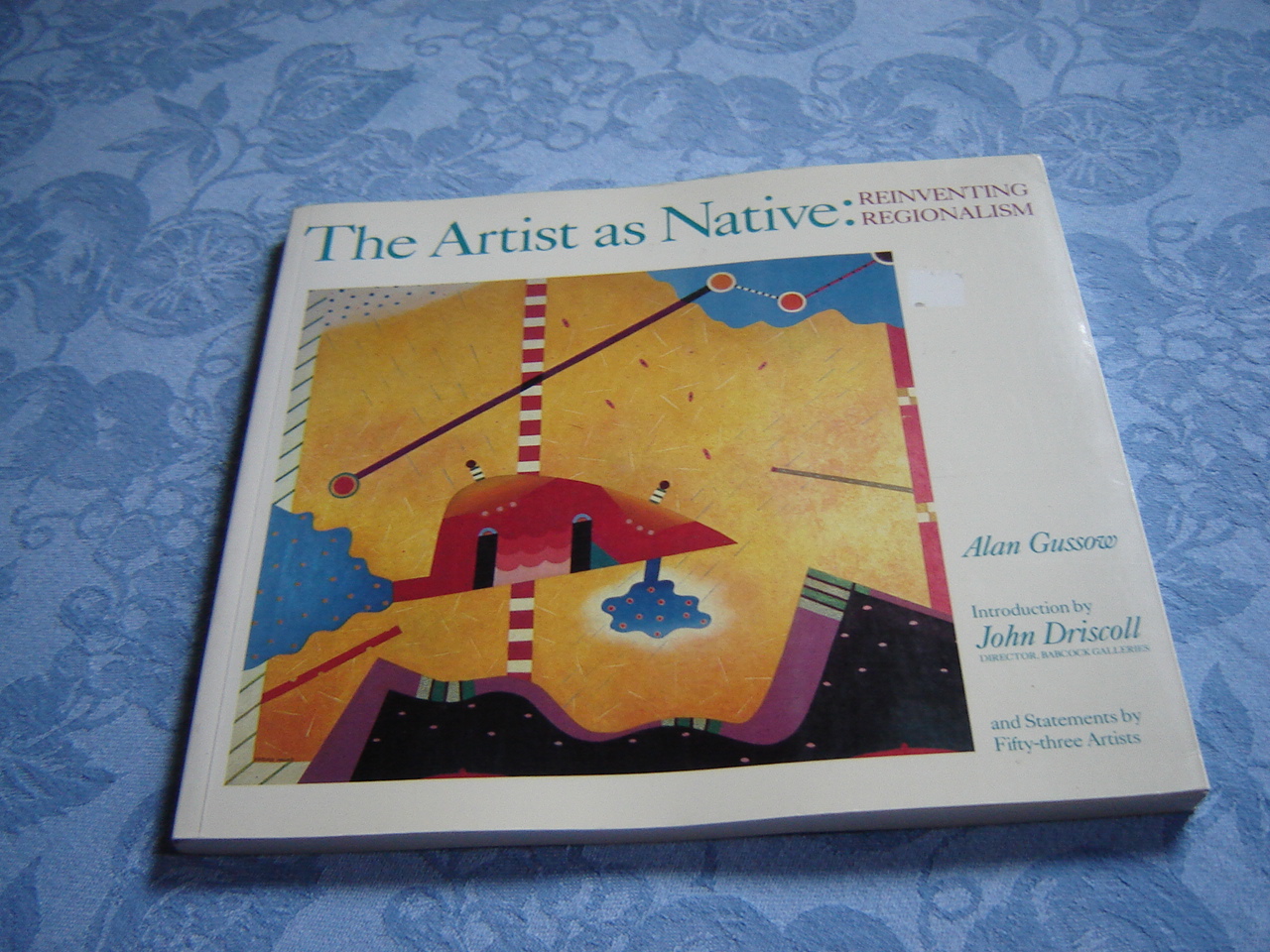
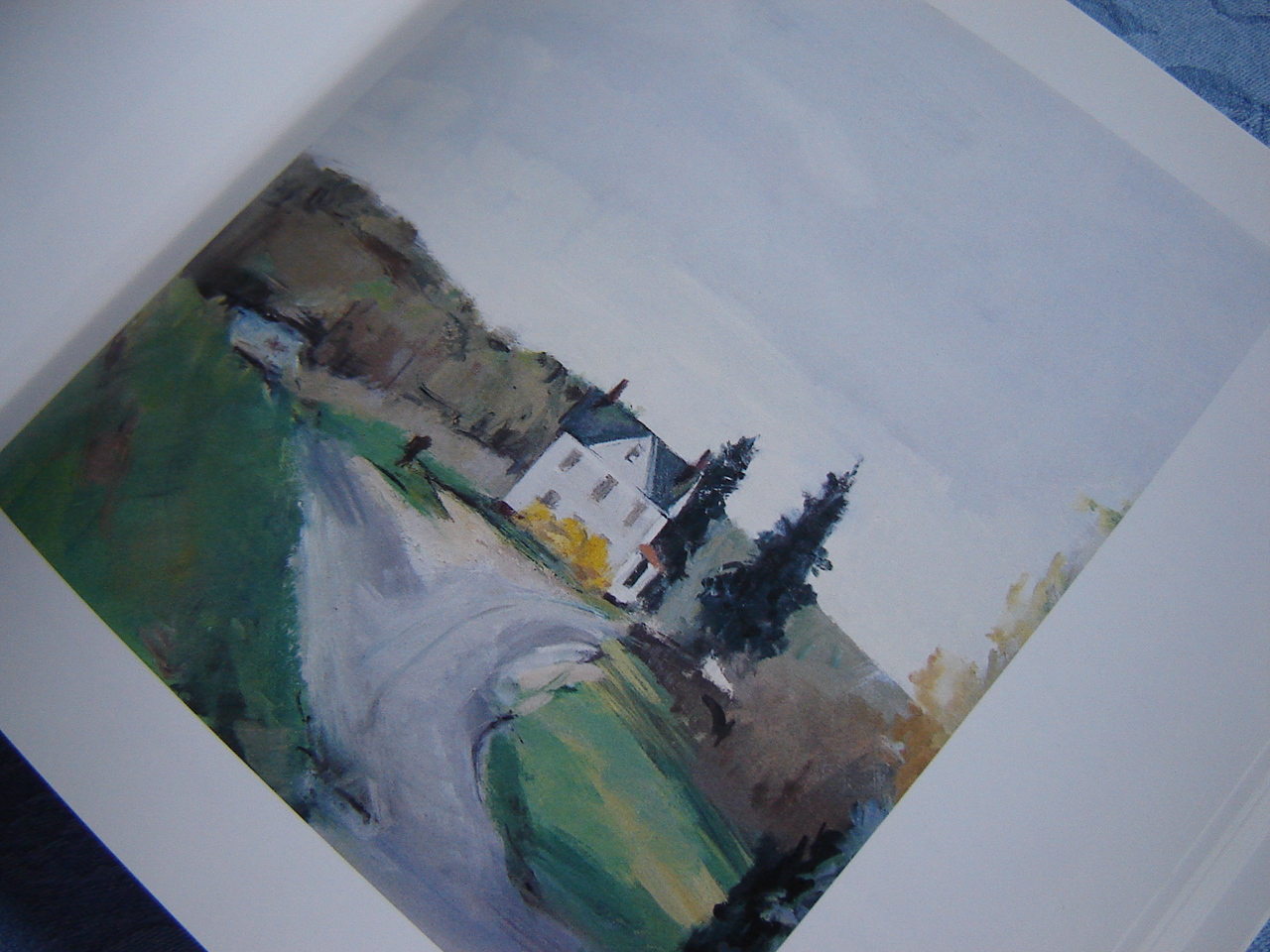
Joel himself appears in an art book called The Artist as Native: Reinventing Regionalism, by Alan Gussow. The book features Joel’s painting of the Davies farmhouse and pine trees. Nice, huh? The other selections are great, too.

Not sure if Joel is OK with having this on the web. I’ll take it down if asked.

Read Full Post »

Check out this story in the Boston Globe. It seems especially timely given the increasing numbers of people growing their own food and the concerns about many others who are struggling.

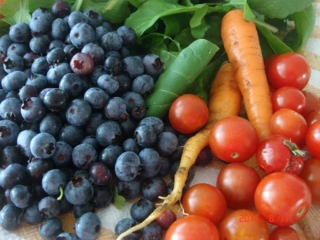
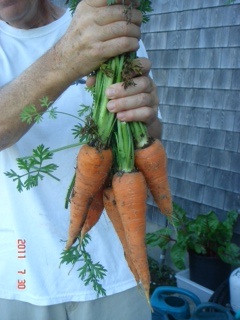
“Every summer, 40 million backyard farmers produce more food than they can use, while people in their communities go hungry. If only they could link up. Enter Gary Oppenheimer, 59, of West Milford, N.J. He was directing a community garden a couple of years ago when inspiration struck. In May 2009, AmpleHarvest.org hit the Internet, connecting food pantries and gardeners. In just 150 days, Rosie’s Place in Boston became the 1,000th pantry on the site, and the growth has continued. As of Labor Day, 4,188 pantries were listed, in all states. Oppenheimer says the nonprofit organization is actively seeking grant funding to sustain what has sprung up.” Read more here.

If you have extra produce from your garden, you can go to AmpleHarvest to find a food pantry near you.

Photographs: Sandra M. Kelly

Read Full Post »

Here’s an interesting thought for harvest time.

In the NY Times, T. Lynne Pixley writes about Kelly Callahan and other Atlanta residents who forage for food among the many neglected, foreclosed properties in their neighborhoods.

Walking her dog in her neighborhood, Callahan saw “plenty of empty, bank-owned properties for sale.”

She also noticed that the “forlorn yards were peppered with overgrown gardens and big fruit trees, all bulging with the kind of bounty that comes from the high heat and afternoon thunderstorms that have defined Atlanta’s summer. So she began picking. First, there was a load of figs, which she intends to make into jam for a cafe that feeds homeless people. Then, for herself, she got five pounds of tomatoes, two kinds of squash and — the real prize — a Sugar Baby watermelon.” Others have joined in. Read more here.

I was interested to learn about “foraging” in Atlanta because I had recently read about a related activity in Vermont, called “gleaning.” Gleaning is a bit more out in the open. Farmers who are finished harvesting their crops give permission to gleaners, usually volunteers, to pick over what’s left and take it to families in need and to food pantries. One group engaged in this effort is the Addison County Gleaning Program. Read about it here.

It turns out that there is a lot of food that would otherwise go to waste. So it seems good that the food benefits someone.

Read Full Post »

« Newer Posts