Feeds:
Posts
Comments

Posts Tagged ‘forest’

The radio show Living on Earth recently reported how negotiations among environmental activists, the timber industry, indigenous people, and the British Columbia government protected 85 percent of a huge Canadian forest.

“Eighty-five percent of the Great Bear Rainforest in British Columbia is now protected … Steve Curwood discusses [the compromise] with reporter Andrew MacLeod of the magazine The Tyee, who explains what’s been protected and what’s open for logging.

MACLEOD: “It’s an area of 6.5 million hectares between the top end of Vancouver Island and the Alaska Panhandle. So it’s an area, about the size of Ireland, and it’s quite remote. There are only about 1,400 people who live there. So much of it has never been logged. This is usually described as the largest intact temperate rainforest in the world, a very lush, mossy, moist year-round ecosystem. … We’re talking trees that five or six people put their arms around. Some of these cedars can be in 20 feet in diameter …

CURWOOD: “Tell me what is the [forest’s] Spirit bear?

MCLEOD: “They are a subspecies of black bear. They are a genetic variant that comes out white, so it’s a white black bear. There are also Grizzly bears there, there are whales, wolves, and just a relatively pristine ecosystem up there.

CURWOOD: “And who calls them Spirit bears? …

MACLEOD: “My understanding is that it goes back through the First Nations, there have always been these genetic variant bears there and they’re seen as special.”

When Curwood asks why the timber industry agreed to the negotiation, MacLeod explains that the campaign to protect the forest helped to avoid extended confrontation.

“Lots of First Nations people will tell you they’ve been on the land for thousands and thousands and thousands of years and it’s been sustainable, it’s been healthy, that it’s really only last 150 years of colonialism where you’ve seen clear-cuts and destruction and species driven to extinction. On the other hand, there are lots of people from First Nations who are working in the logging industry today as well. Over time, First Nations have sort of reestablished their rights. There have been some precedent-setting cases just in the last few years that have recognized aboriginal title does exist.” More here.

Of possible interest: Read how Wabanaki diplomacy smoothed a similar negotiation process in Maine, here.

Photo:  Elsen Poulsen/Animals Asia, Flickr CC BY-NC 2.0
A white Spirit bear fishing

Read Full Post »

I liked this story at TreeHugger on protecting trees and fighting poverty at the same time — especially the part about the importance of women in the effort.

Sami Grover writes, “The old trope that we can either have economic development or environmental protection has been pretty much blown out of the water by this point. …

“Nowhere is this more true than the dry lands of Africa, where desertification, resource depletion, climate disruption and political unrest have all taken their toll on communities’ ability to survive and thrive. There is, however, plenty to be hopeful about too. …

Tree Aid, a charity which works with villagers living in the drylands of Africa, has long been at the forefront of this fight. By working cooperatively with villagers and on-the-ground non-profit partners in Africa, the charity doesn’t just plant trees, but rather increases villagers’ capacity to protect, nurture and utilize trees to protect their soils, increase agricultural yields, and provide a buffer against the drought, floods and failed crops that are predicted to get ever more common with the advance of climate change.

“A new free report from the charity, entitled Building Resilience to Climate Shocks, the charity is seeking to spread the word about how trees can be used to both alleviate poverty and protect the environment at the same time. …

“Previous tree planting efforts in the drylands have often failed because they’ve either focused on the wrong species of trees, or they have failed to take into account the needs, resources and skills of the local population. …

“Unless short-term needs are met, long-term needs are compromised. … Tree Aid has worked with villagers to develop alternatives to ecologically damaging land management practices:

TREE AID provides training for villagers to plan ways to make money in the short-term as well as the long. For example by producing honey from the bees which live on unburnt land and using fallen trees for fuelwood. This gives them enough income to sustain and invest in their futures and environments, as well as preparing themselves for weather extremes. …

“One of the strategies the charity uses to build climate resilience is to establish ‘Tree Banks’ within a community. These banks are essentially mixed-species tree plantings that can provide for a range of needs from fuel wood to animal fodder to fruit or other products. Each community establishes rules and management practices for when and how a Tree Bank may be used. …

“Any successful strategy for regreening these regions must work within those cultures to empower and educate women as caretakers of the environment: When women take part in decision-making there is a long-term positive impact on trees. They become important forest caretakers.”

More at Tree Aid, here ,and at Treehugger, here.

Photo: Tree Aid


Read Full Post »

As a kid of 10 or so, I played in the woods, frequently all alone. It was magical.

As an adult, I wonder if it’s no longer considered safe. I don’t ever hear of children playing in the woods. That’s why I was interested to read about a growing movement called Forest Schools.

Siobhan Starrs writes for the Associated Press, “In the heart of north London lies the ancient Queens Wood, a green forest hidden away in a metropolis of more than 8 million residents. The sounds of the city seem to fade away as a group of children plays in a mud kitchen, pretending to prepare food and saw wood.

“These aren’t toddlers on a play date — it’s an unusual outdoor nursery school, the first of its kind in London, following a trend in Scandinavia, Germany and Scotland. It allows local children to learn, and let their imagination run free, completely surrounded by nature. …

“Each morning a group of children gather at the Queens Wood camp, which the nursery team prepares each morning before the children arrive. A circle of logs provides a place to gather for snacks, stories and songs. The mud kitchen provides an opportunity to make a proper mess and have a sensory experience, a rope swing provides some excitement and a challenge, and several tents are set up for naps and washing up.

“In a clearing in the woods, a fallen tree trunk can be transformed by imagination into a rocket train, calling at the beach and the moon, with leaves for tickets.

“A 2-year-old, Matilda, finds a stick — but in her mind it’s not a stick. It’s a wand. She says she is a magic fairy who can fly. Then suddenly the stick has become a drum stick, and a gnarled tree stump her drum. She taps away contentedly, the rhythm all her own.” Read more here.

Speaking of fallen tree trunks, I particularly remember a big tree that fell in the forest after a storm and the fun a friend and I had making up stories on it.

Photo: Matt Dunham/AP
Forest schools are increasing in popularity in the United Kingdom.

Read Full Post »

A sunny day for outings. First to the fabled Korean grocery, where salmon and pickled radish were cheap — if you don’t count the gas for the trip.

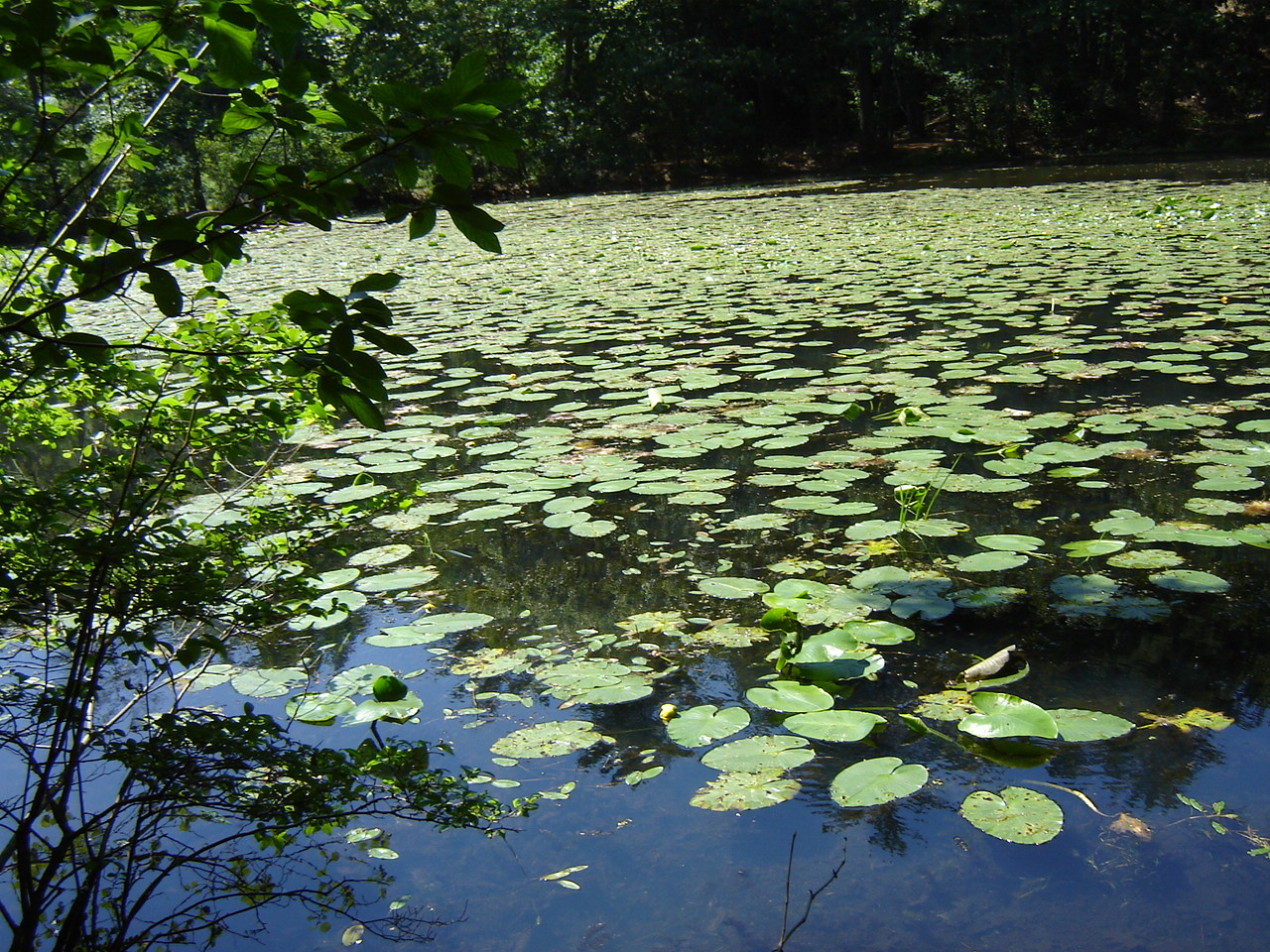
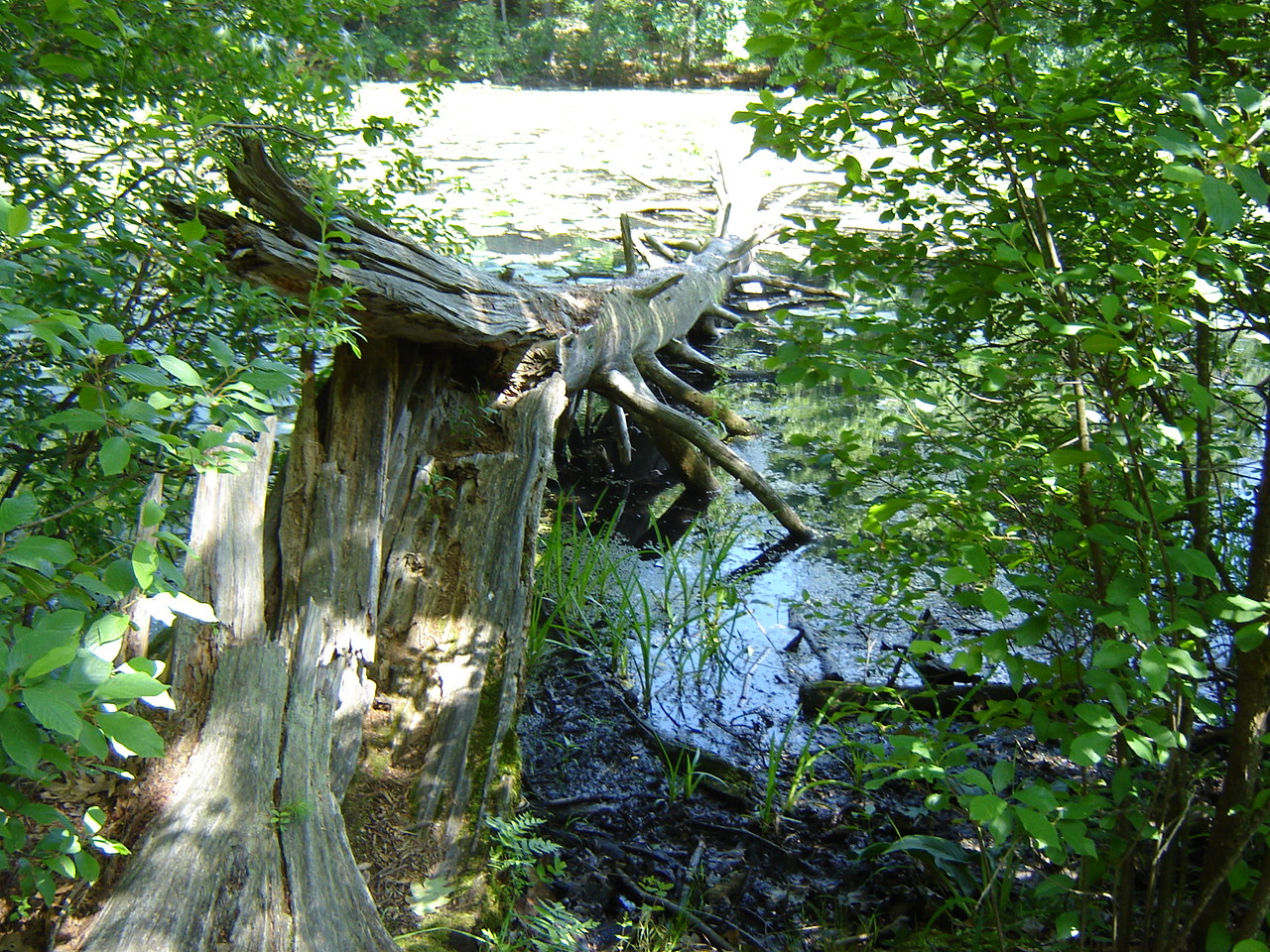
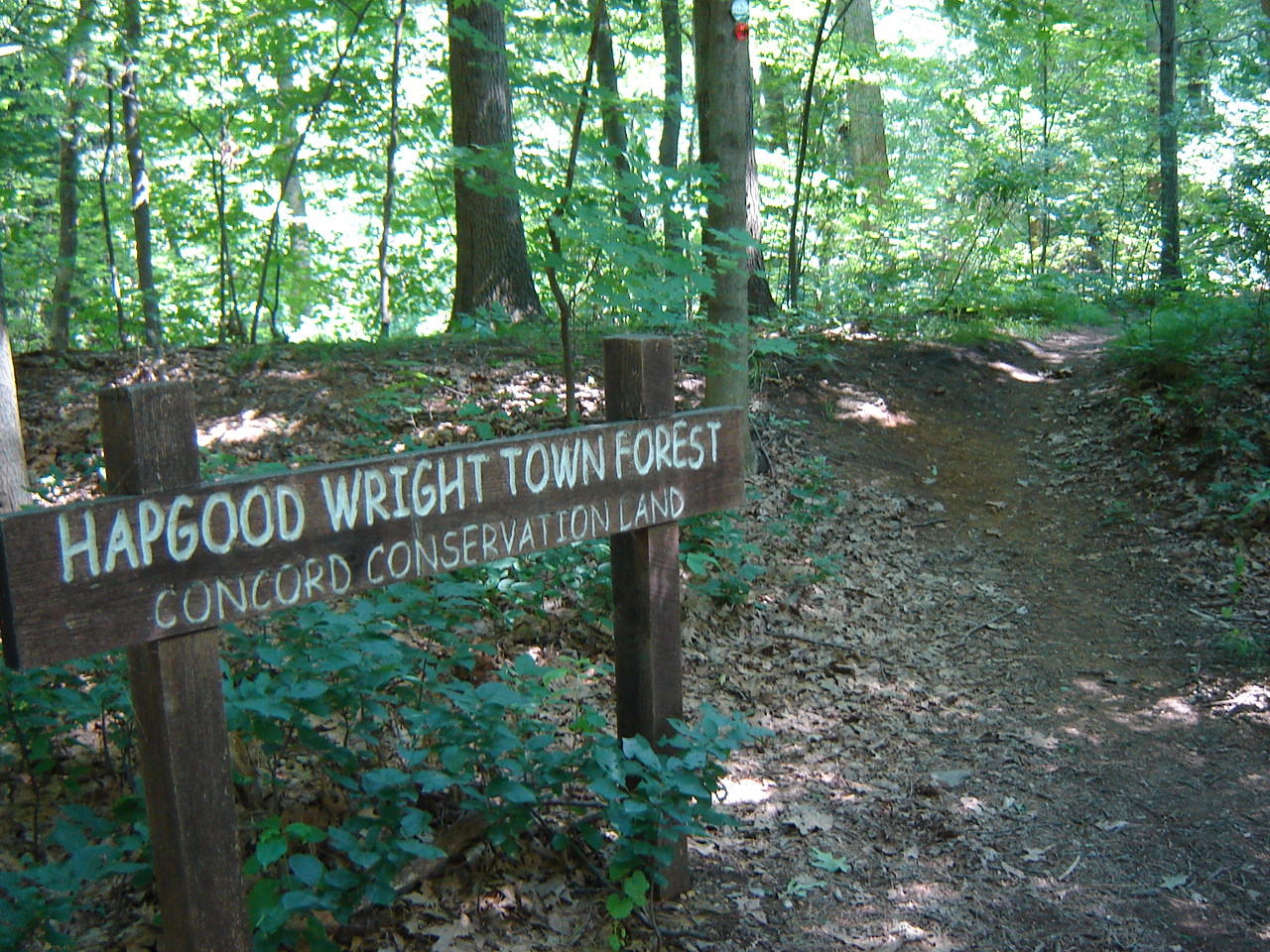
Then to the town forest for a walk with the Father in Chief.

Read Full Post »

« Newer Posts