Feeds:
Posts
Comments

Posts Tagged ‘France’

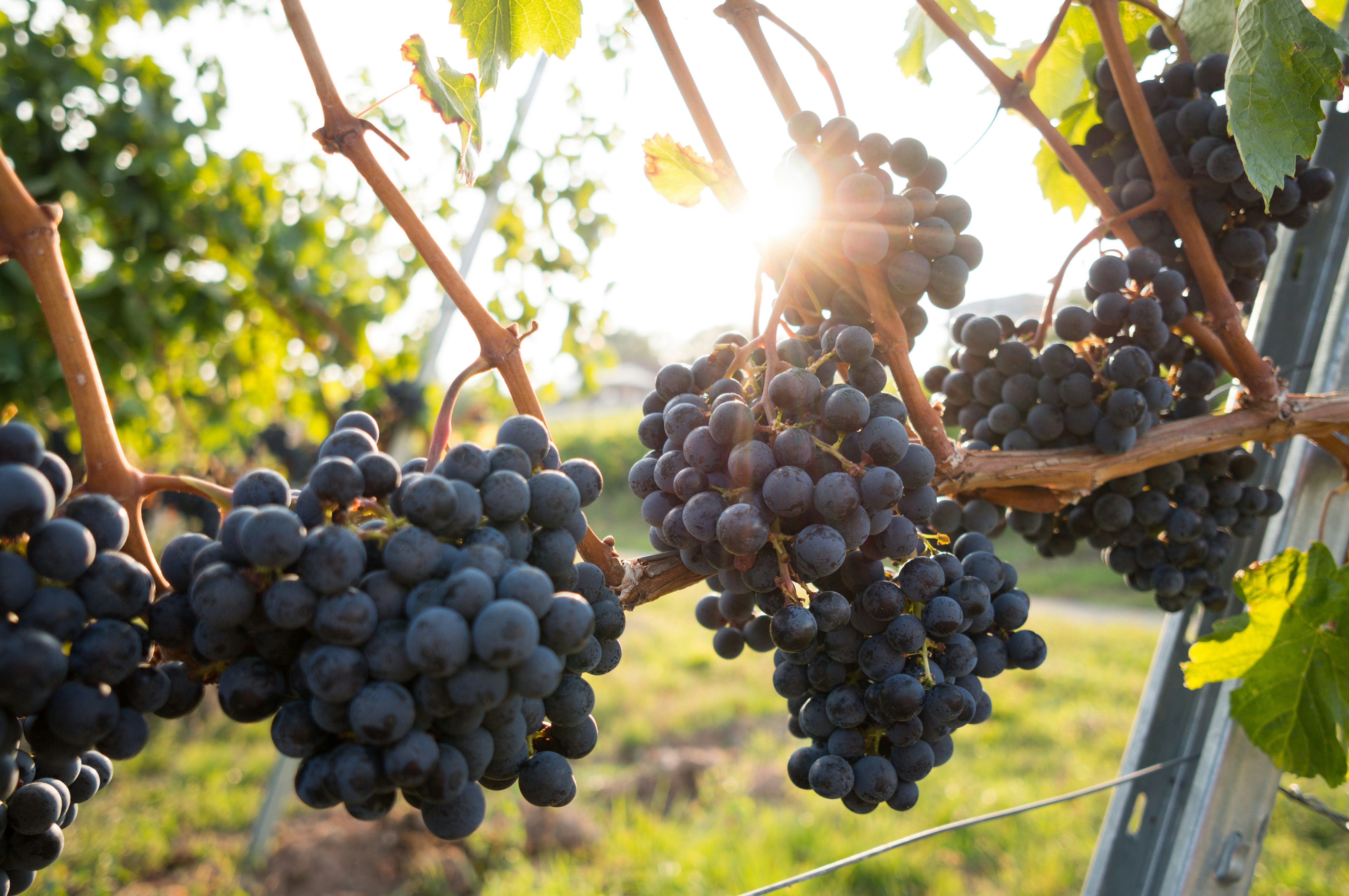
Photo: David Kohler via Unsplash.
Vintners are discovering the importance of bringing back earthworms.

In many parts of the world, growers who have relied on herbicides and pesticides are learning about the benefits of healthier soil, and so they’re getting rid of soil-damaging practices.

In today’s story, we have an example of vintners in the UK who have caught up with recent bio-friendly practices in France. They have not made their changes out of kindness to the planet, although that’s a side effect. They’ve done it to produce a better grape.

Helena Horton writes at the Guardian, “Vineyards are generally the most inhospitable of landscapes for the humble earthworm; the soil beneath vines is usually kept bare and compacted by machinery.

“But scientists and winemakers have been exploring ways to turn vineyards into havens for worms. The bare soil is problematic because worms need vegetation to be broken down by the microorganisms they eat. Pesticides are also highly harmful to the invertebrate, as is the practice of compacting the earth: worms need the soil to be porous so they can move through it.

“Earthworms … aerate soil, and they pull fallen leaves and other organic matter into the earth and recycle them. But their populations have declined by a third in the UK over the past 25 years due to pesticide use and over-tilling of soil.

“Marc-André Selosse, a professor at the National Museum of Natural History in Paris, has been urging vineyards to increase grass and plant cover on their soil, and reduce the amount they till, to save the worms.

“Selosse said: ‘In France, the vineyards are 3% of the agricultural area, and they are using 20% of the chemicals. In vineyards, for the soil there is a lot of treatments, so there’s a lot of compaction, and there is a lot of pesticides used.’ …

“Worms had not yet vanished from the most intensively farmed vineyards, he said, but they did need to be supported with more regenerative practices.

“ ‘I think the worms are at a low level,’ he said. ‘They are just surviving, but they are still there, which means that no one is thinking of buying earthworms for the soil, because they are there. It’s like Sleeping Beauty; they are there at very low level, and we have to wake them. But once again, in soil, we have resilience. It’s one part of biodiversity where they are so numerous that we were not able to kill all of them.’ …

“Selosse said the main thing vineyards could do for worms was to stop tilling the soil – breaking it up and turning it over – even if that means that herbicides such as glyphosate are used instead to remove weeds. … ‘In the future, sooner or later, we’ll have to stop glyphosate also but for now, tilling is the first cause of worm problems.’

“Now some vineyards in the UK are making worm-friendly wine. When Jules and Lucie Phillips, co-owners of Ham Street Wines in Kent, started their vineyard, they were advised to grow conventionally by tilling and using pesticides, but were horrified by the results.

“Jules said: ‘After we did that, we went out and we dug a soil pit immediately after planting, and then also later in the season, and we realized the soil was just dead.’ There were no worms. It was smelling not particularly interesting at all, and the structure was poor.’ …

“The pair had a revelation. ‘We just thought, this is completely the wrong way of farming and we need to do something different. We want life in our soils. And so we began the conversion to organic in that same year, and we’re now certified biodynamic.’

“Rather than using pesticides, they applied herbal teas to the vines to promote plant health, Jules said: ‘For example, horsetail tea has a real high silica content, and that improves the leaf cell wall and means that it’s more resilient.’

“The couple run a no-till system under the vine: ‘We’ve let the cover crop grow really long, and we typically let it grow right up into the canopy up until about flowering, and then we’ll mow it back. And the benefits of that are huge. The cover crop is really growing and really establishing that root structure and getting it to its maximum point. And finally, we put a big mulch on top of the soil that’s going to feed those worms and feed that soil life.’

“This has hugely helped their worm population: ‘We’ve seen our worm counts increase massively from basically none to around 20 or 30 in a spade full. So extrapolate that up to a square metre, and it’s a very decent volume.’

“Rob Poyser, a viticulturist at the regenerative wine consultancy firm Vinescapes, said that growing wildflowers in the vineyards they consult on had also brought great results. ‘We think in between three and five years we can take a bare soil and bring it back to life, into a thriving ecosystem,’ he said. ‘We’ve used things like cover crops to bring this vineyard to life, to build the fertility into this system, and organic matter. We’re bringing life back to these soils we’re using. We’re letting nature do it.’

“Poyser said they allowed wildflowers to grow all over the vineyards, and clients were delighted when clover, for example, sprung up because ‘clovers are great companion plants under the vine for grapevines; they’re also loved by earthworms.’ “

More at the Guardian, here. No paywall.

Read Full Post »

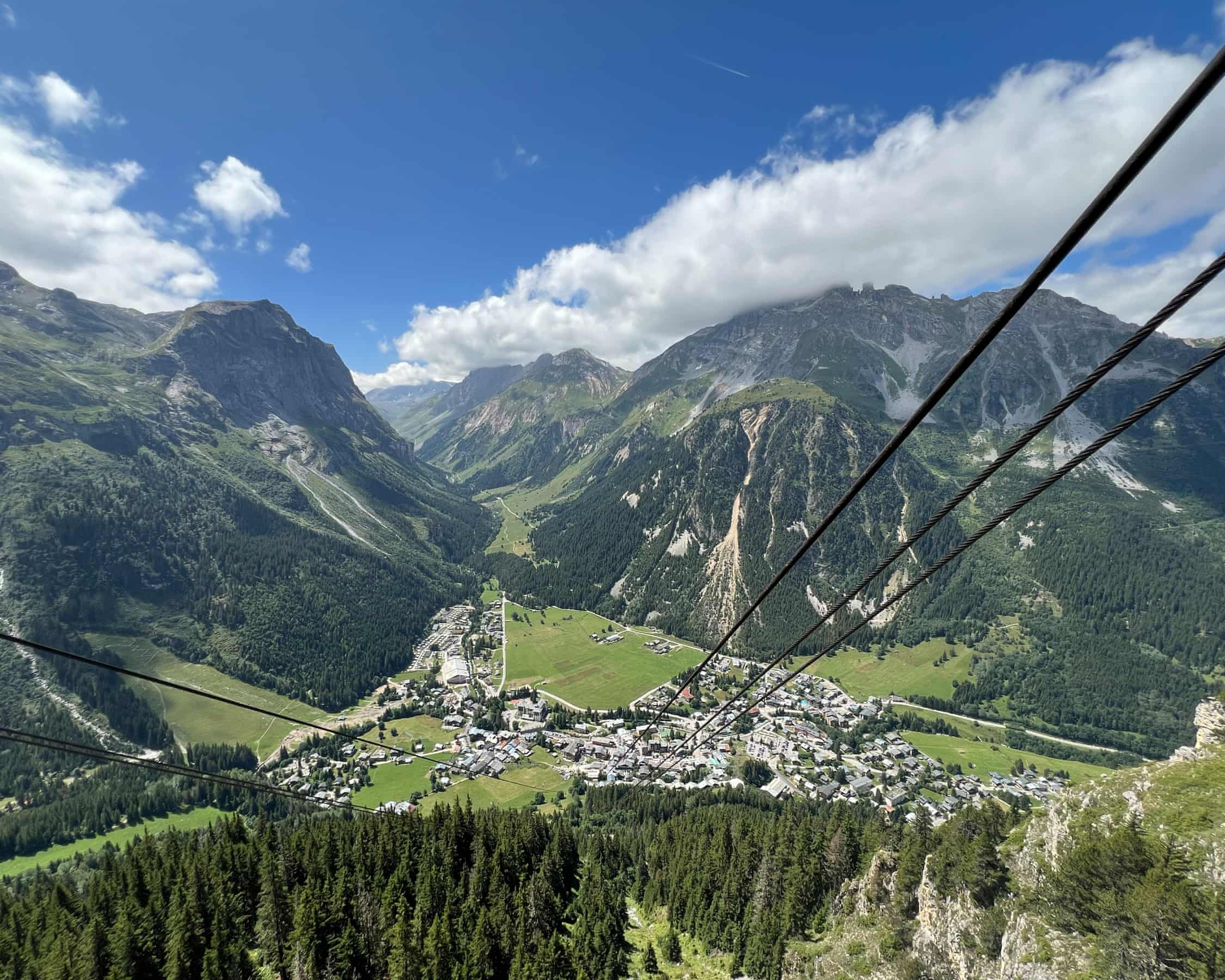
Photo: Kim Willsher/The Guardian.
Pralognan-la-Vanoise in the French Alps is in danger from global warming. An engineering operation to prevent catastrophic flooding will cost about €400,000 ($465,000). 

As discouraging as it is to read another story about global warming, one has to feel a little hopeful that human ingenuity keeps tackling its effects.

Kim Willsher reports at the Guardian about how engineering is fighting back in France. I leave it to you to decide whether putting humans first or the glacier first would be best.

The villagers of Pralognan-la-Vanoise in the French Alps know well the perils posed by the mountains that encircle them. Avalanches, rockfalls, mudslides, sudden crevices and torrents of water are within the living memory of most villagers, and every day the climate emergency throws up new dangers.

“Less than a year ago, an enormous lake formed by a melting glacier was discovered high above Pralognan that experts feared could inundate the village with more than 60,000 cubic metres [15,850,000+ gallons] of icy water. …

“As used to natural hazards as local people are high up in the Alps, they are not, however, an idle threat. The Swiss village of Blatten was wiped out by a rock and ice avalanche in May and last year a mountain lake swollen by heavy rainfall caused torrential flooding in La Bérarde in the Isère, forcing inhabitants to flee the hamlet. They have not returned.

“Today, an engineering operation is under way to prevent such a catastrophic scenario in Pralognan. Three workers have been helicoptered to the Grand Marchet glacier at an altitude of 2,900 metres [1.8 miles] to gouge a [narrow] ‘overflow channel’ in the ice. …

“ ‘The aim is to help the water find its way down the mountain gradually and avoid a rapid emptying of the lake,’ said David Binet, the director of the mountain land restoration service (RTM) for the northern Alps, part of the national forestry commission tasked with identifying and preventing natural hazards.

“ ‘What causes the problems and damage with torrents in the mountains is not the water but the stones, gravel, sand and even large rocks it brings down with it.’

“The glacier blocks the lake from spilling down the mountain but it is shrinking at a rate of 2 to 3 metres [6.6 to 9.8 feet] a year. There is also the risk that that the warmer waters of the lake could form a channel gush from underneath.

“Binet said his agency was examining 300 of the estimated 600 lakes in the Alps and Pyrenees one by one for such hazards. The Pralognan operation will cost about €400,000 [$465,000)]. …

“The idea of taking mechanical shovels to glaciers already shrinking at an alarming rate was deemed the least environmentally damaging option. Olivier Gagliardini, a glacier expert at Grenoble University, described it as ‘unfortunate, but necessary.’

“Martine Blanc, the mayor of Pralognan, said … ‘We asked ourselves could it wait but on the principle that prevention is better than cure we decided to go ahead,’ she said. ‘We decided to anticipate events rather than suffer them. Nature is nature and there’s no such thing as zero risk.’ …

“Local shopkeepers say the number of tourists and hikers this summer is down, possibly because the campsite is closed, but Silvere Bonnet, the director of the tourist office, said he had had very few calls from potential visitors concerned about the lake. …

“On a sunny day, the giant rock faces etched with shimmering cascades that rise almost vertically have a benevolent beauty. An hour later in a rapid change of atmosphere, the peaks are cloaked in dark clouds and loom intimidatingly.

“ ‘They can appear rather menacing at first to visitors because they are so sheer,’ [Bernard Vion, a 66-year-old Alpine guide who has watched the expanse of water grow and the mountain change over his lifetime] said. The 66-year-old knows these mountains ‘like his pocket,’ as the French say. He made his first high-altitude climb aged eight with his father, also a guide. Both his grandfathers were Alpinists.

“Vion first spotted what he describes as ‘a puddle’ of water on the Grand Marchet glacier in 2019. Every year since he has watched it grow; it now measures almost 2.5 acres. …

“ ‘We are on the frontline of climate change here. We know it is happening,’ he said.

“Blanc agreed. … ‘People here are used to natural hazards. We’re used to avalanches, falling rocks, torrential floods and mudslides because we’ve seen them and lived with them since we were young. Local people understand there are things we can control and then those we cannot.’ ”

More at the Guardian, here.

Read Full Post »

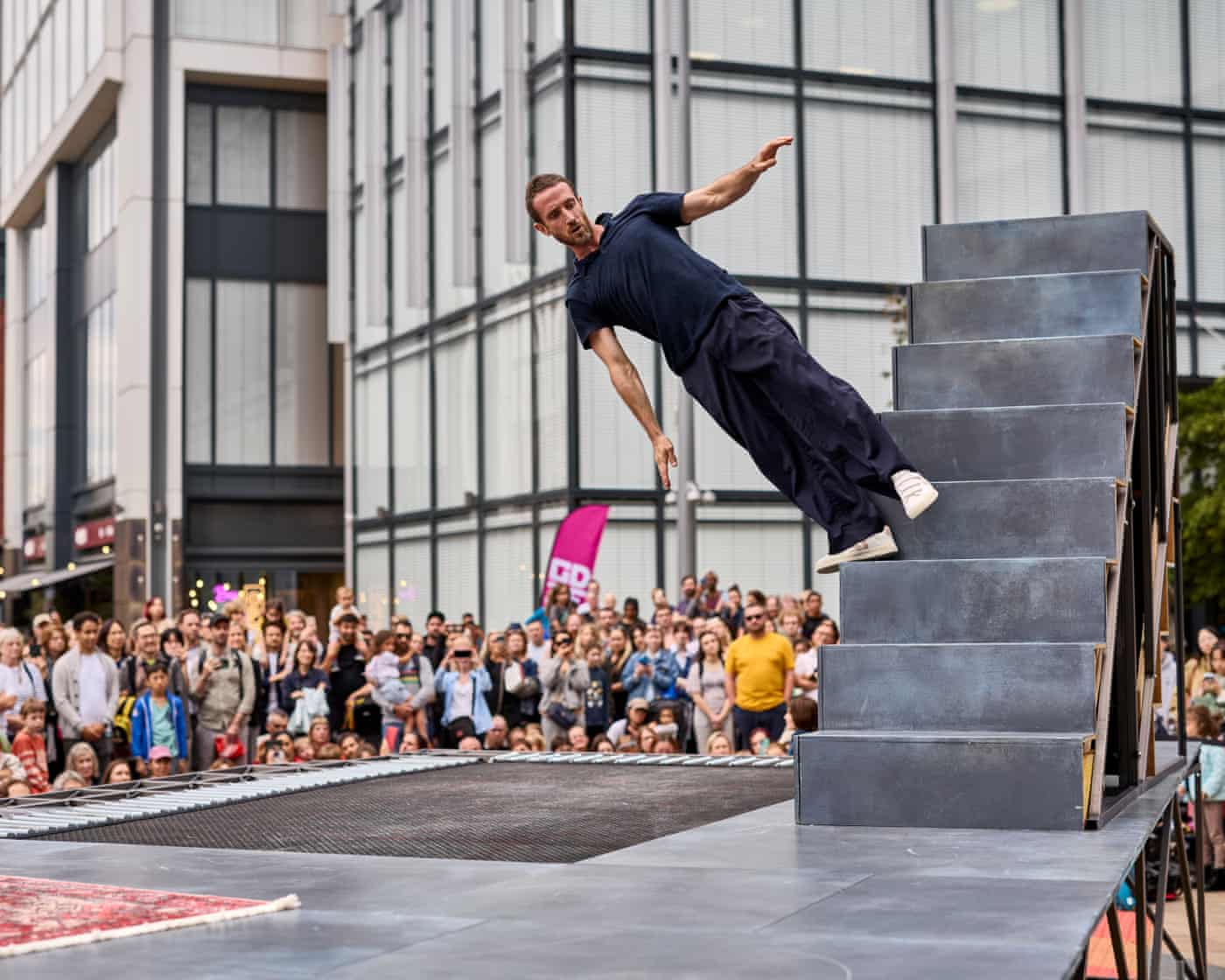
Photo: David Levene/The Guardian.
Olivier Mathieu in Yoann Bourgeois’s “Touch.”

Today’s story is about trampoline choreography, which looks to me a bit like using the flying trapeze without a net.

But who am I to talk? Growing up, we had a trampoline on the porch with no kind of protection. A low, wood ceiling overhead. A concrete floor below. Sometimes I wonder how we managed to grow up at all.

Lyndsey Winship writes at the Guardian, “You may have seen a certain video online of a man climbing some stairs. Actually, he’s repeatedly falling from them but then magically bounces back up, weightless as a moon-walker. Out of sight is a trampoline, which gently catapults his looping, twisting body up the staircase each time he falls, turning a would-be simple journey into an epic, poetic odyssey that has caught the internet’s imagination. Pop star Pink saw it and immediately got on the phone to its creator; Martin Short even made his own version on Only Murders in the Building.

“The act is the work of French choreographer-director Yoann Bourgeois, 43, whose live performances have been touring festivals for years. But the popularity of his videos online has propelled him into new realms. …

“Some people run away to the circus; others have it arrive on their doorstep. Bourgeois’ parents separated when he was growing up in Jura, eastern France, and their house was sold to a circus group, Cirque Plume. Bourgeois was already interested in theatre (and later studied dance) and he began to train with the group. ‘In a way I was looking for a way to get back home,’ he says, via a translator. … ‘I really wanted to continue to be a child. I’ve searched for a life where I can continue to play.’ …

“What Bourgeois plays with are the invisible physical forces that surround us – gravity, tension, suspension – and the interaction between those forces, the performers’ bodies and symbolic ideas. For example in ‘Ellipse,’ the dancers are in costumes like lifesize Weebles with semi-circular bases, rocking and spinning, but never falling. … In ‘Celui Qui Tombe (He Who Falls),’ the performers stand on a wooden platform that rotates, at some speed, then tilts, forcing their bodies to lean at precarious angles to keep their balance. …

“The short piece Bourgeois is bringing to London is called ‘Passage,’ and features a revolving mirrored door and pole dancer Yvonne Smink hanging, swinging, balancing and turning the simple act of crossing a threshold into something of infinite possibilities. Much like the way sculptor Antony Gormley hit upon a universal idea in his use of the body, Bourgeois works with the same kind of directness. …

“Here he is talking about suspension: ‘In physics, suspension means the absence of weight. But if we speak about time, suspension means absolute presence. And I think this cross between absence of weight and absolute presence is like a small window on eternity. That’s what I search for: to catch the present, to intensify the present.’

“Even though Bourgeois seeks to be live in the ephemeral moment, you can see why the recorded versions have gone viral. He admits his work looks good on screen. …

“He’s reaching even more eyeballs now with his pop star collaborations. For the Harry Styles video ‘As It Was,’ Bourgeois designed another revolving platform that saw Styles and his lover being pulled together and apart. ‘Behind the superficial pop veneer of the song, there’s a great sense of despair,’ he says.

“Bourgeois designs his own stage machines, but the revolving floor is, he points out, a very old theatrical device. The question of what’s truly new in art came to the fore when he was accused of plagiarism in a video posted online comparing scenes from his work with scenes from other artists. There are some striking similarities, but Bourgeois is robust in his defense, saying that the works referenced motifs from the history of art, which he considers to be in the public domain. Many circus performers will use the same props. ‘If you use just a frame of a video, it’s easy to make a comparison,’ he says. ‘What is original is the treatment and the creative process.’ …

“What’s certain is that Bourgeois can turn universal ideas into something eye-catching that connects deeply with audiences – imbued with the wonder of circus and the grace of dance.”

More at the Guardian, here.

Read Full Post »

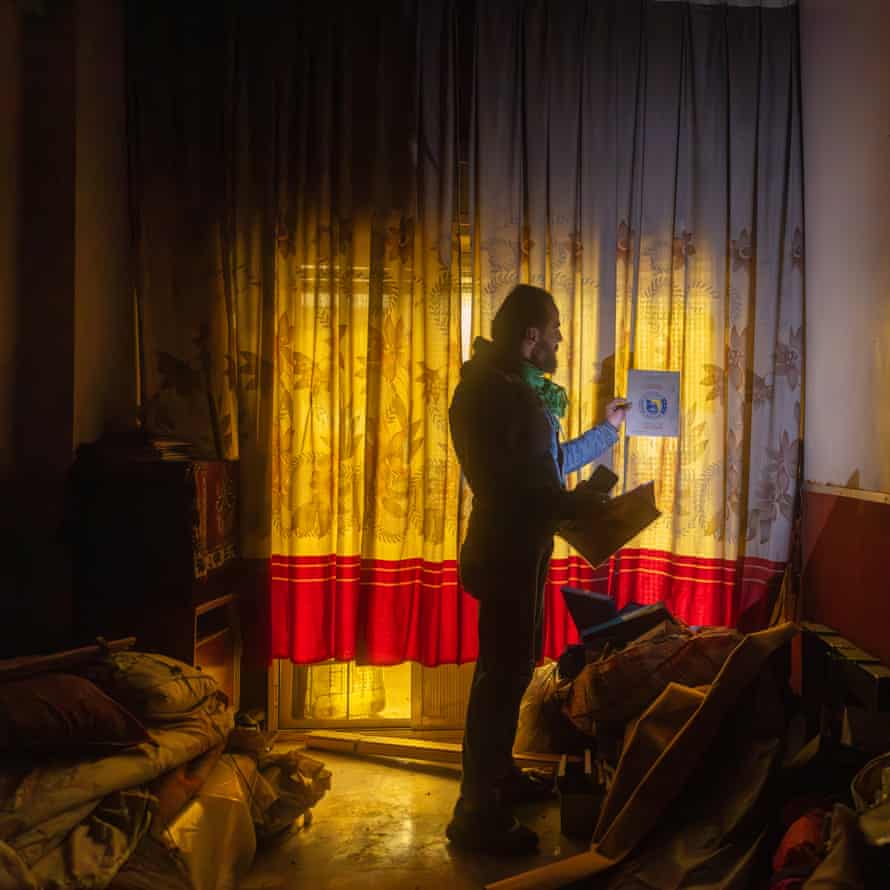
Photo: Alexandra Corcode.
Mohamad searching for memories in a suitcase in Damascus. Their apartment was a stage — until the Assad government arrested them.

In today’s post, we learn more about how people living under repressive regimes keep culture and freedom going.

Andrei Popoviciu writes at the Guardian, “Thick layers of dust shimmer in sunlight as Mohamad and Ahmad Malas sift through old belongings in their Damascus apartment, abandoned for 14 years. …

“On one of the walls portraits of their father and one of their brothers, who have died, hang frozen in time. There’s no electricity so they use their phone torches to light their way as they collect personal artifacts they long forgot about.

“ ‘Looking around brings back so many memories,’ Mohamad says. ‘It’s painful.’

“For the 41-year-old brothers, returning to their flat is bittersweet. Their apartment was more than just a home. It was once a stage, a space where they performed original theatre plays away from the watchful eye of the Bashar al-Assad regime, which tightly controlled and censored artistic expression. In the two years before they left Syria, they performed more than 200 plays in their home.

“But their lives changed in 2011 when they were arrested for participating in the popular movement that started on the heels of the Arab spring and sought to remove Assad from power. Ahmad was wanted by the political police for sharing a revolutionary magazine with a friend, so the day security forces came knocking he fled immediately. Mohamad stayed behind to gather a few belongings before they escaped to Lebanon.

“Life there was uncertain, with Syrians facing the constant threat of deportation. Egypt offered brief stability, despite them feeling they could not continue their work as actors. Europe was where they felt they could freely perform with no censorship or threat. In 2013, they arrived in France as asylum seekers and speaking no French.

“Their first year in France was a struggle, spent moving from city to city, unable to work and battling to learn the language. Eventually, they were granted asylum and settled in Reims, in the country’s north-east. There, they rebuilt their acting careers, landing roles in theatre plays, films, and television.

“As they found their footing, they wrote and performed a play, The Two Refugees, chronicling the experience of refugees in France and inspired by their story. The production was a success and gained international recognition, taking them from Iraq to Japan and Jordan, often with the support of French cultural institutions.

“ ‘France gave us security and a chance to continue our art in a free world,’ said Ahmad. …

“They never imagined they would return to Syria. But as rebel forces were taking city by city, advancing toward Damascus in late 2024, they closely followed events from afar. Mohamad was at a film festival in Jordan; Ahmad was in France.

“On the morning of 8 December, Mohamad sent Ahmad a video. It showed people celebrating in a Damascus square, waving the revolution’s green flag and singing slogans against Assad. Ahmad could hardly believe his eyes. A deep longing stirred within them both. Soon after, Mohamad traveled from Jordan, and Ahmad followed from France.

“ ‘It felt like a dream come true,’ said Mohamad of the moment they entered Syria. ‘We felt like we could fly, it was surreal to walk through the streets and not see Assad’s photos everywhere.’ …

“The brothers knew they had to bring their play home, so they started performing it across the country, from Aleppo in the north to the coastal city of Tartus. They were unsure how an audience that had never left would react to a story of exile.

“ ‘Everyone understood it,’ Mohamad said. ‘I get it now – because even though they never left, they felt trapped in their own country.’ “

More at the Guardian, here. No paywall. Nice pictures.

Read Full Post »

Photo: Altitude.
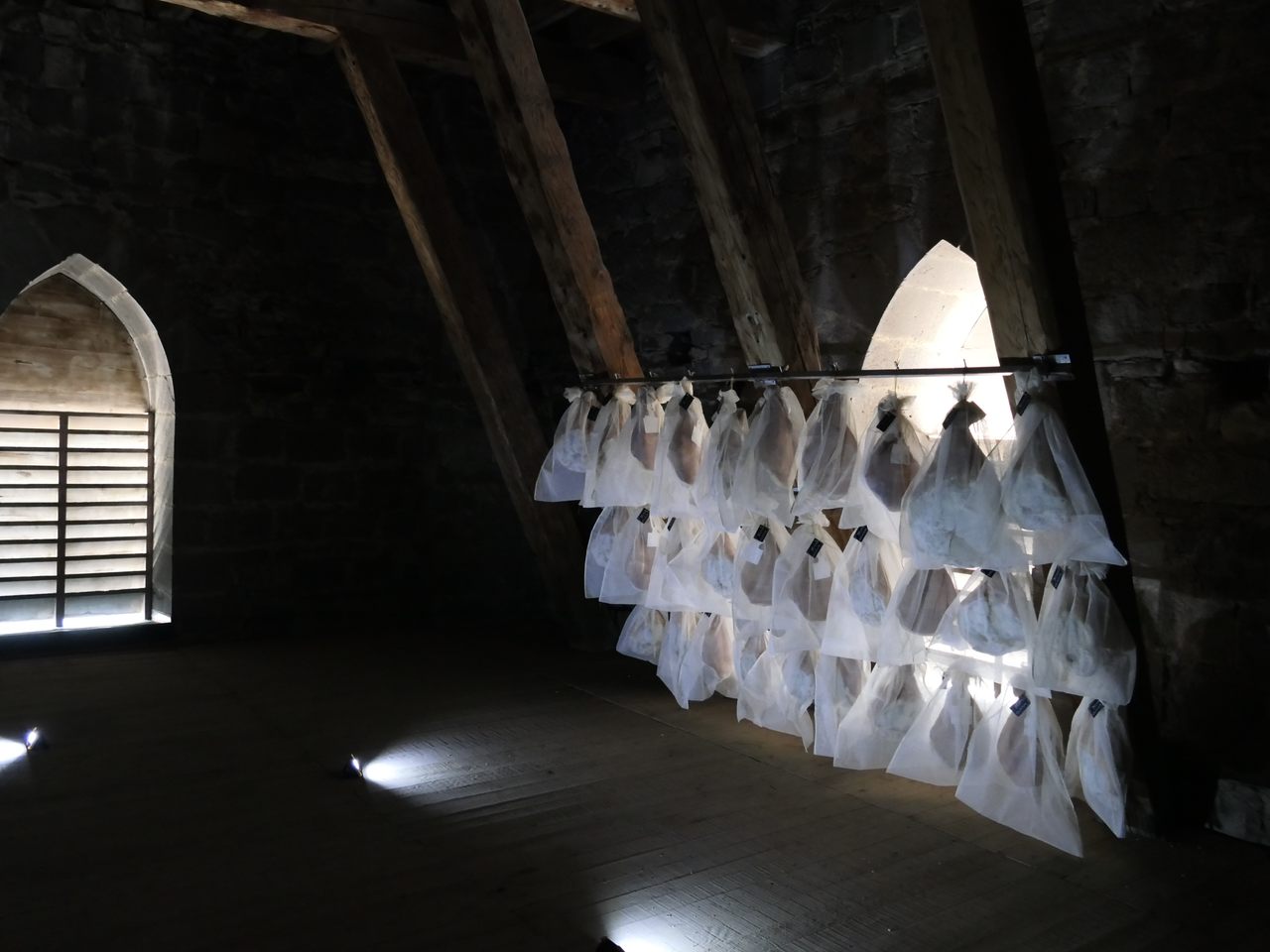
At Saint-Pierre Cathedral in France, winds from the surrounding plateaus create an ideal environment for curing ham in the bell tower. 

I’ve read about decommissioned churches being repurposed for affordable housing or art centers, but today’s story is the first I’ve seen about providing an important service for pig farmers.

Emily Monaco writes at Atlas Obscura, “In Saint-Flour, a town in the Auvergne region of central France, the highest cathedral in Europe perches at 892 meters (nearly 3,000 feet) above sea level. Saint-Pierre sits at the confluence of the dry winds blowing across the surrounding plateaus, making it, surprisingly, the ideal place to age local hams to perfection.

“This church-aged charcuterie was the brainchild of Philippe Boyer, who became rector of Saint-Pierre in 2011. Soon thereafter, he encountered his first challenge: The 600-year-old cathedral was in need of some TLC, specifically for its 19th-century choir organ. Repairs would cost several thousand euros, money no one had. …

“Boyer was undeterred. ‘I said to myself, “Why not make a product in the spirit of the great medieval abbeys, who made their own food, which they sold to survive, to live?” ‘ he says. ‘In this case, it’s not for us to live, but to give new life to heritage.’

“Boyer began by adding beehives to the cathedral roof, and, following the success of the resulting honey, he turned his attention to one of the region’s star products: Jambon d’Auvergne, a ham boasting a protected status similar to Champagne or Roquefort.

Typically aged in drying rooms for eight to 12 months, these hams, Boyer figured, could easily be aged instead in the cathedral’s breezy north tower.

“He mentioned the idea to a reporter from local newspaper La Montagne, and the article caught the attention of farm cooperative Altitude. ‘We thought the idea was pretty original, pretty iconoclastic,’ recalls Altitude communications manager Thierry Bousseau, noting that the group also thought the project would be the ideal way of promoting the work of their farmers and salaisonniers, experts in the art of curing and aging charcuterie like sausages and hams.

“A host of bureaucratic hurdles loomed, including authorizations from French health services and the certifying board granting the hams IGP (Indication Geographique Protégée) status. And of course, the architecte des bâtiments de France, a civil servant devoted to the protection of state-owned buildings, had to be consulted. ‘He gave his OK,’ says Bousseau, and so, in June 2022, Bishop Didier Noblot officially invoked the protection of Saint Antoine, patron of charcutiers, in blessing the first hams.

“Today, hams produced by one of Altitude’s 30 farms are first aged in the cooperative’s aging rooms. Only the best are selected for sale to the Association des Amis de la Cathédrale, whose volunteers meet weekly to replenish the supply, carrying each ten-kilo (around 22 pounds) ham up the 150-odd steps of the spiral staircase to the tower. Here, they’re swaddled in bags and suspended from hooks just beneath the 19th-century bells. About 50 hams hang here at any given time, dry-aged for at least two months under the watchful eye of Patrice Boulard, a member of the Association and an expert salaisonnier with Altitude. The environment, he says, makes for a superlative ham. …

“But after just a few months, the project hit a snag. The new architecte des bâtiments de France noticed grease stains on the floor below the hams, and, Boyer recalls, ‘he started to panic.’ The stains were easily explained by the fact that the bells are greased every six months, but, fueled perhaps by the memory of Notre-Dame’s 2019 conflagration, the architect dubbed the hams a fire hazard. ‘Hams don’t catch fire, just like that,’ protests Boyer. But the group was nevertheless forced through yet another series of bureaucratic hoops. Six months after adopting new protocols, things seemed to have settled, Bousseau recalls. ‘And then in October 2023, we got a letter.’

“By this point, Boyer had been transferred to nearby Aurillac, so it was the new vicar, Jean-Paul Rolland, who received the news: The changes had been deemed insufficient, and effective immediately, the hams had to be removed.

“But Rolland took advantage of the bureaucratic tangle in forming his response. ‘He decided that the diocese, as the renter of the space, was not responsible for what happened in the cathedral,’ says Bousseau. ‘He got the message across that basically, the hams weren’t going anywhere.’

“These days, the status of the project is ‘a bit convoluted,’ admits Bousseau. ‘Officially, aging the hams is illegal, but the reality is that they’re still there.’ And despite their novelty, they’ve become beloved among locals. ‘Saint-Florins have appropriated them,’ he says, ‘as though they had always been.’ …

“According to Bousseau, ‘There’s a contradiction regarding the announcements made by the state. “We can’t finance our heritage.” And then we, at the local level, find solutions, and there’s a civil servant putting a wrench in the works.’ …

“In late October, the Minister of Culture voiced her official support of the hams.”

Wondering what blogger and farmer Deb has to say about all this.

More at AtlasObscura, here.

Read Full Post »

Now is the winter of our discontent.

For some reason, I thought today might be a good day to talk about the women of the French Resistance and the power of flying under the radar.

The Library of Congress research guide on the French Resistance says, “Women had a unique ability to serve as Resistants, in some part due to views among many Nazis that women were harmless and non-threatening. … Women were by default granted much greater latitude in moving around — and when apprehended were much more likely to convince officers or soldiers of their innocence.

“Often overlooked, they served as consummate spies. Often speeding along by bicycle, women devised all manner of ways to hide items in their purses and baskets. They used baby carriages as a sort of camouflage to transport goods. …

“Women were invaluable as messengers and couriers; they carried everything from arms and ammunition to intelligence and Resistance propaganda. They also rescued airmen shot down … and operated what were called ‘escape lines’ that served to usher US and British servicemen into safety. They gathered military intelligence (some of these women even worked with Madames in brothels … where information could be gathered secretly), decoded messages, managed underground publications, ran guns, provided support for strikers, and carried out sabotage of German communications. They [worked] as typists and counterfeiters, and proved themselves brave and extraordinarily wily. …

“Recent scholarship has finally brought women Resistants out from the shadows. Women were often slower than men to write about their experiences, but as decades went on, and in some cases archives opened, more of these stories came to light.

“[One] valuable source of material are the témoignages — statements made by individuals during interviews conducted immediately after the War. Some such interviews were under the auspices of the Comité d’Historie de la Deuxième Guerre Mondiale in Paris. Many of these sources can be found at the Bibliothèque nationale de France or the Bibliothèque Marguerite Durand in Paris. …

“Some accounts of these women and their activities can be found in reports from those U.S. servicemen, which are available in the National Archives, Washington National Records Center in [Maryland]. There are firsthand accounts of downed American airmen who were assisted by Resistants. Many of these accounts talk about being fed, given medical attention and shelter, and even being shepherded to a safehouse. For safety reasons, these women did not usually give their real names, thus they will forever remain anonymous.

“As Margaret L. Rossiter notes in her study, Women in the Resistance, some women that have gained attention for their heroic acts managed to preform them while nonchalantly preforming their day jobs.

“Jeanne Berthomier, who was a civil servant in the Ministry of Public Works in Paris, managed to deliver top-secret information typed on tissue paper to the Alliance chief, Marie Madeleine Fourcade. Mme Paule Letty-Mouroux used her position as a secretary at the Marine de Toulon in order to report the repair status of Axis ships. Mme Marguerite Claeys collected information from agents who posed as customers at the company she owned with her husband — all without his knowledge.

“Simone Michel Lévy used her job in the Postal, Telegraph, and Telephone Service (PTT) to obtain intelligence [that] she managed to send to London under the code name of Emma. These women all took enormous risks and many of them were eventually caught and arrested. …

“Women from a variety of countries, including Britain and the US, served in the French Resistance. Isabel Townsend Pell … was an American socialite who joined the French Resistance during World War II — one of the few women who was part of the Maquis — purportedly due to her good aim. Going by a code name of Fredericka … she was imprisoned twice during the war, and subsequently decorated with the Legion of Honor for her service.

The stories of these women and countless others stand as testaments to the fact that no matter what role you have or where you find yourself, there is often a way to contribute to a larger cause. …

“Eighty years after their Liberation, France continues to commemorate French Resistance fighters and Allied veterans from WWII. … On May 27th, 2024, in the presence of the family of Alice Arteil, a secondary school in Le Mayet-de Montagne, was renamed in honor of French Resistant Alice Arteil. Arteil was one of the only women to command her own Resistance group. Her knowledge of the mountainous and woody terrain was invaluable for the rescue missions and the general activities of the group.” More at LOC, here.

At the website, there are other women, listed alphabetically. I loved reading about Pippa the “knitting spy,” who hid her information within a knitting kit by knotting codes onto silk. Was she thinking about Madame Defarge? What a testament to fiction being as real as real life — and sometimes more influential!

“ ‘En 1940, il n’y avait plus d’hommes. C’étaient des femmes qui ont démarré la Résistance.’ 
-Germaine Tillion, quoted in Femmes de la Résistance: 1940-1945.”

Read Full Post »

Photo: Capucine Gillier/Musée du Fromage.
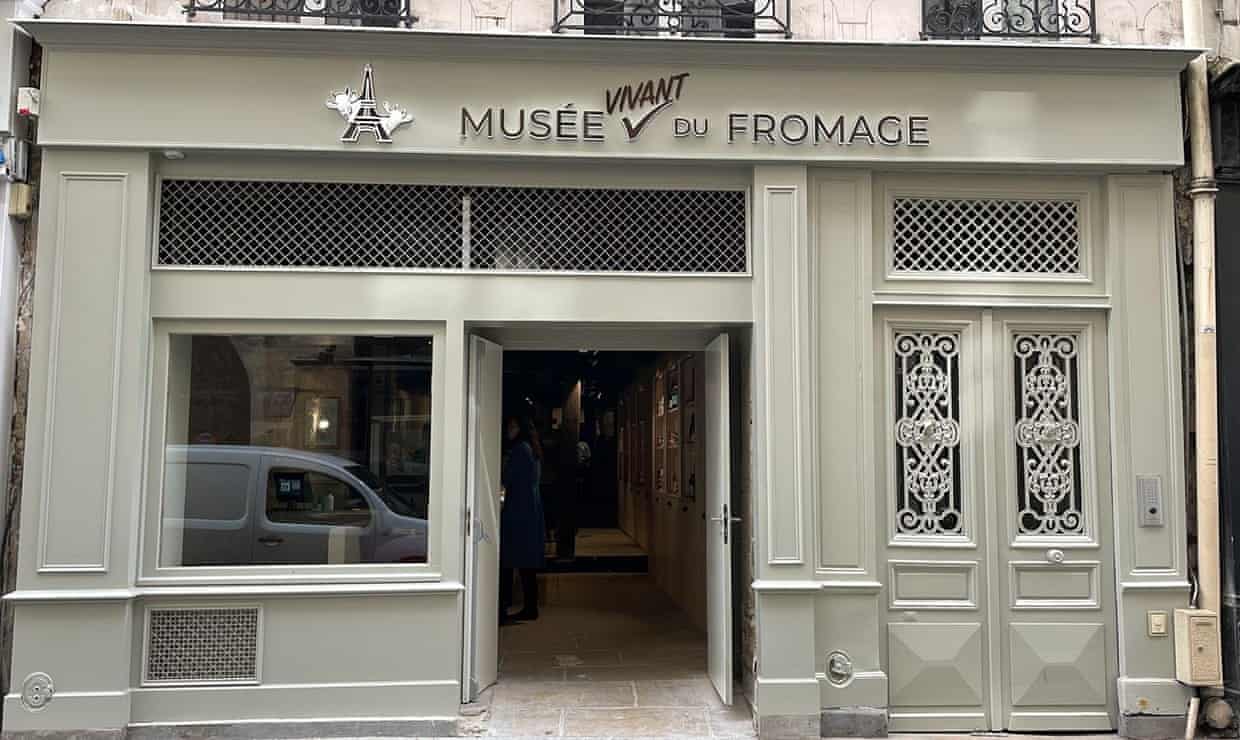
The exterior of the newly-opened Musee du Fromage in Paris. The French are estimated to eat about 44 pounds to 60 pounds of cheese per person annually. 

With the eyes of the world on Paris and the summer Olympics just now, it’s a good time to highlight a museum that could only be in Paris: The Museum of Cheese.

Kim Willsher writes at the Guardian, “Say ‘cheese’ and Pierre Brisson is a happy man. The founder of France’s first cheese museum is passionate about the subject – and not just eating it but passing on the traditional skills of cheesemaking to future generations.

“ ‘It’s not an easy job but a marvelous one and there is a real risk that it could disappear,’ he said. … ‘We hear a lot about wines and how they are made and the subtleties of taste and how they are produced and nothing about cheese. Although people like eating it and the demand for cheese is still high, fewer youngsters want to make a career of it.’ …

“Visitors will be charged [~$20] to watch a demonstration of how various cheeses are made, take part in a tasting and learn the history of cheese and regional varieties through interactive displays.

Farmers and agriculture students will be allowed in for free.

“Brisson, 38, the son of Burgundy winemakers, said his passion for cheese developed as a boy. ‘My father would take me to the cheesemonger every Sunday after Mass.’ …

“After studying at the National Dairy Industries School, Brisson set up Paroles de Fromagers to run courses in cheesemaking for the public and training for professionals.

“He chose to locate the museum, which has been a decade in the planning, in Paris to appeal to the French and tourists and to avoid regional rivalries. A plaque reminds visitors of General de Gaulle’s aphorism: ‘How can one govern a country where there are 258 varieties of cheese?’ …

“Brisson said: ‘When I moved to Paris I realized there were lots of places promoting wine, its culture and how it is made and lots of shops selling cheese, but nothing showing people how it is made.’

“He has recruited half a dozen cheesemakers to help visitors understand the art of producing different varieties from live milk, including the role of bacteria, and the animals and the land on which they graze. …

“Agathe de Saint-Exupéry will be one of the experts explaining the process, including how makers ‘read’ the milk and how small details can affect the final product.

“ ‘It’s a very individual process that depends on so many things, even the humor of the animals whose milk is being used. You can make the same good cheese every day, and every day it will taste different. It just cannot be done industrially,’ she said.

“Guillaume Gaubert, a cheesemaker, said the aim was also to remind the French – particularly those living in towns and cities – of their traditional links with the terroir, an untranslatable concept that covers not only the soil, environment and human interactions with it, but a sense of history and geography, and which is a cornerstone of French gastronomy. …

“France has 56 official cheese appellations – registered regional varieties – which is nine more than Italy and more than three times the number in the UK. … The Campagne de France, a cooperative of milk producers, estimates there could be as many as 1,500 different varieties, not including those produced at home in small quantities. …

“Brisson said the museum would be a ‘little window’ on country life in the heart of the capital.

“ ‘My dream is that in 20 years’ time someone will say they decided to become a cheesemaker after visiting the museum.’ ”

More at the Guardian, here.

Read Full Post »

Photo: Philippe Ruault.
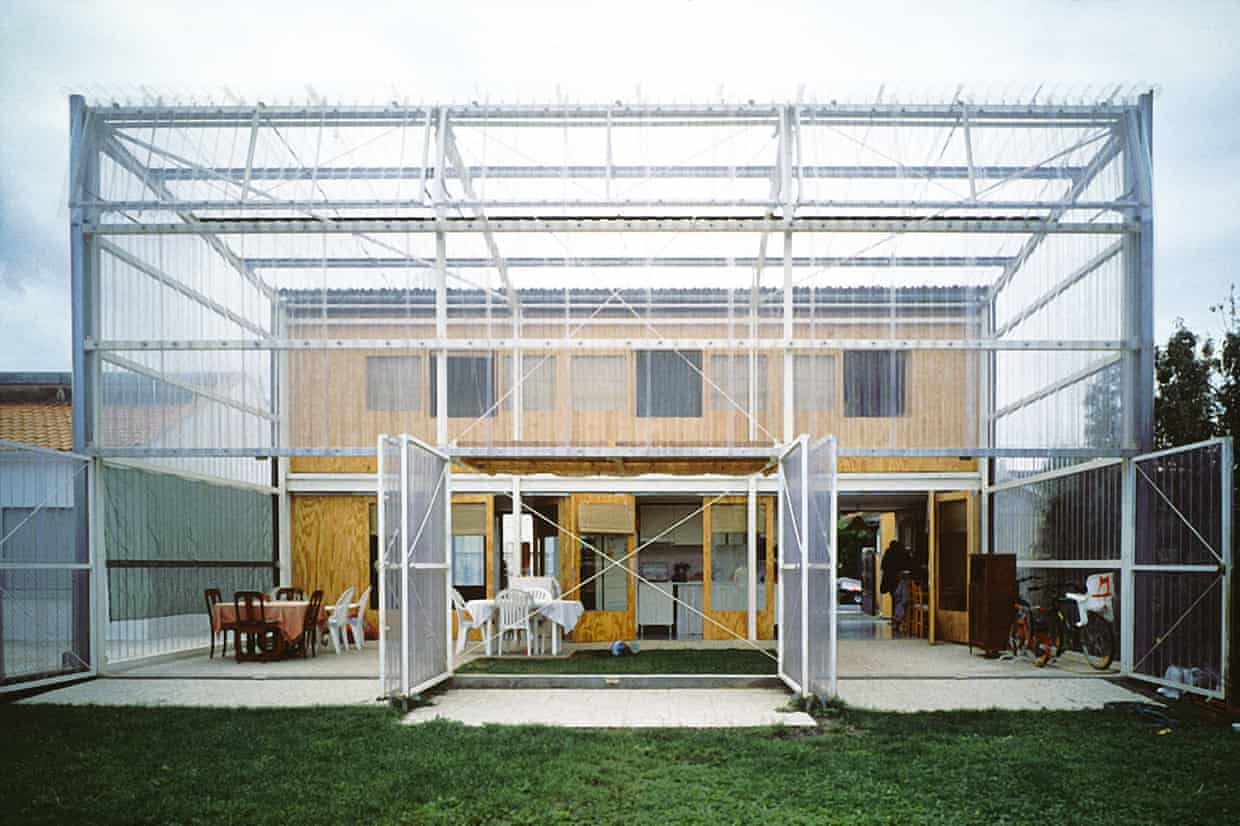
By adding a double-height conservatory at a family home in Floirac, Bordeaux, the architects “doubled the floor area their clients expected, while staying within a very limited budget,” the Guardian reports.

It’s generally considered cheaper and more efficient to tear down a building and build new than to renovate or reuse. Two acclaimed French architects have found the opposite, and their insights are timely. More people are realizing that standard construction practices are unnecessarily wasteful — and damaging to the planet.

Rowan Moore describes the architects’ approach at the Guardian. “The French architects Anne Lacaton and Jean-Philippe Vassal are famous for their belief in keeping existing buildings whenever possible, no matter how unpromising or unloved they may be. They follow, in effect, an architectural version of the Hippocratic oath – ‘first, don’t demolish.’ It’s a message that has never been more pertinent, as it dawns on the construction industry that constant demolition and rebuilding is an environmentally devastating activity.

“The husband-and-wife team have been putting this idea into practice for decades. … Keeping the already-there is not, though, their only concern, nor is it to do with sustainability alone. They like to use words such as ‘generosity,’ ‘kindness’ and, above all, ‘freedom,’ which means that they are always looking to find and create spaces additional to those asked for in a brief, ‘with no utility, no function,’ as Vassal puts it, ‘in which the user will feel the possibility to be inventive for themselves.’ …

“ ‘We really feel enclosed in a brief,’ says Lacaton, ‘that has so many rules, so many recommendations and impositions.’ … They strive against an attitude that ‘in architecture everything must be quantified… everything should be uniform.’ …

“In the early 1990s, they designed a new family house in their home city of Bordeaux, where they doubled the floor area their clients expected, while staying within a very limited budget. Their secret was to erect a double-height conservatory built like a simple greenhouse, which gave a sense of generosity and freedom to the rest of the house, a two-story structure with also basic construction. …

“[They have] a fondness for adapting humble and disregarded ways of building. ‘We found we were conditioned by our education as architects,’ says Lacaton, ‘to say that one way of constructing is the right one and the other one is not good. We discovered that we could use any tool, any material, anything if it’s used in an intelligent way.’ They also developed the idea of reusing the already-there, as with a seaside house in Gironde, south-west France. which was built among 46 pine trees, along with arbutuses and mimosas, without cutting any down. With the Palais de Tokyo in Paris, a 1930s building remodeled as a centre of contemporary art in two phases, in 2001 and 2012, they took pleasure in making only minimal alterations to its damaged interior. …

“Where they differ from other architects is in their attitude to control. In the John Soane museum, every detail and experience is minutely managed and directed. Contemporary practitioners often photograph their works unpopulated, at the precise moment between completion and inhabitation, where the perfection of their idea is most immaculate. For Lacaton and Vassal, it’s important to know when to stop, when to leave it to residents to occupy and embellish their homes. They enjoy and photograph the different things that people do to their spaces.

“Their way is humane and intelligent. It’s also invaluable. In Britain and elsewhere, there’s a desperate need to create more homes without incurring unacceptable bills for carbon emissions and energy consumption. Reuse is an obvious answer.”

More at the Guardian, here.

Read Full Post »

Photo: Philippe Lopez/AFP/Getty Images.
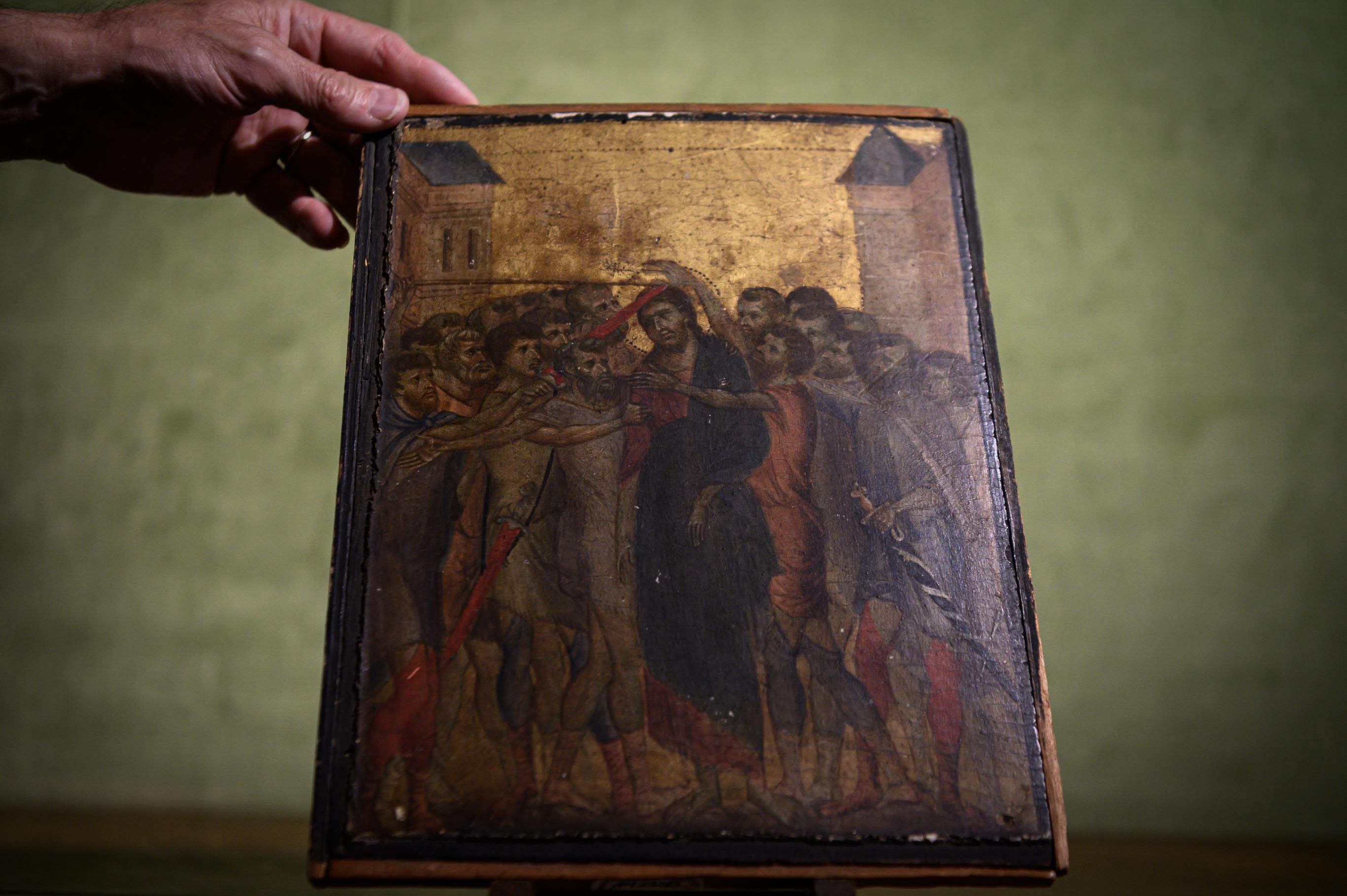
This valuable painting, called “The Mocking of Christ,” is by the 13th century Florentine artist Cimabue. It came close to being thrown away when a house in France was getting cleared out.

When the consignment guy comes to help with your lifetime downsizing, he naturally hopes to uncover some neglected item that turns out to be extremely valuable. That would have been OK with me, but the process went more in the opposite direction. Things I always thought were valuable, we couldn’t even give away for free.

Still, one always enjoys someone else’s discovery, like the one in today’s story. …

“Scott Reyburn reports at the New York Times, “A medieval painting that hung for years near the kitchen of an older Frenchwoman before being recognized as a work by the Italian artist Cimabue was auctioned [in October] in France for $26.8 million.

“The work was bought by the London-based dealer Fabrizio Moretti against competition from at least six other bidders.

” ‘I bought it on behalf of two collectors,’ Mr. Moretti said in an interview immediately after the auction. ‘It’s one of the most important old master discoveries in the last 15 years. Cimabue is the beginning of everything. He started modern art. When I held the picture in my hands, I almost cried.’ …

“The 10-inch-high poplar panel was discovered in June during a valuation of the contents of the house of an older Frenchwoman near Compiègne, north of Paris. Thought by the family to be an icon, the painting hung on a wall next to the kitchen.

“ ‘I had a rare emotion with this little painting, almost indescribable,’ said Philomène Wolf of [auction house] Actéon, who had made the discovery. ‘In our profession, we know that this emotion was the result of a great master.’ …

“Actéon consulted Eric Turquin, the Paris-based art expert on old masters, who collaborated on the sale of the painting. … Mr. Turquin said his research identified the Compiègne panel as ‘the only small-scale work of devotion to have been recently added to the catalog of authentic works by Cimabue.’ It was described as being in ‘excellent general condition.’

“ ‘This was an easy sale,’ Mr. Turquin said, comparing the auction of the Cimabue to the canceled public sale in June of the ‘Judith and Holofernes’ attributed to Caravaggio. ‘I was pleased at 10 million and tremendously happy at 15 million,’ he said of the Cimabue sale. ‘The price was more than I could have dreamed, and there was a contemporary art gallery bidding, which was new for us.’

“According to Mr. Turquin, ‘The Mocking of Christ’ was part of the same late-13th-century altarpiece that once included Cimabue’s similarly sized ‘Flagellation of Christ,’ now in the Frick Collection in New York, and the ‘Madonna and Child Enthroned Between Two Angels,’ now in the National Gallery in London.

“The Frick acquired its Cimabue in 1950. The ‘Madonna and Child’ was scheduled to be auctioned at Sotheby’s in 2000, but was sold to the National Gallery by private treaty for about 7.2 million pounds, about $10.8 million. …

“Traces of the original framing, the style and technique of the gold ornamentation and the pattern of wormholes on the back of the Cimabue panel ‘confirm that these panels made up the left side of the same diptych,’ Mr. Turquin said in a pre-auction statement.

“Cimabue pioneered a more fluent and naturalistic style of figure painting in Italy. … The Florence painter takes up the first biography in Giorgio Vasari’s hugely influential Lives of the Most Excellent Painters, Sculptors and Architects, published in 1550. Vasari describes how Cimabue emancipated himself from the ‘stiff manner’ of Byzantine artists and was ‘the first cause of the revival of painting’ before Giotto ‘overshadowed his renown.’ ”

More at the Times, here. If you enjoy this kind of story, see also the Guardian take on a neglected Botticelli, here.

Read Full Post »

Photo: Cristina Baussan for NPR.
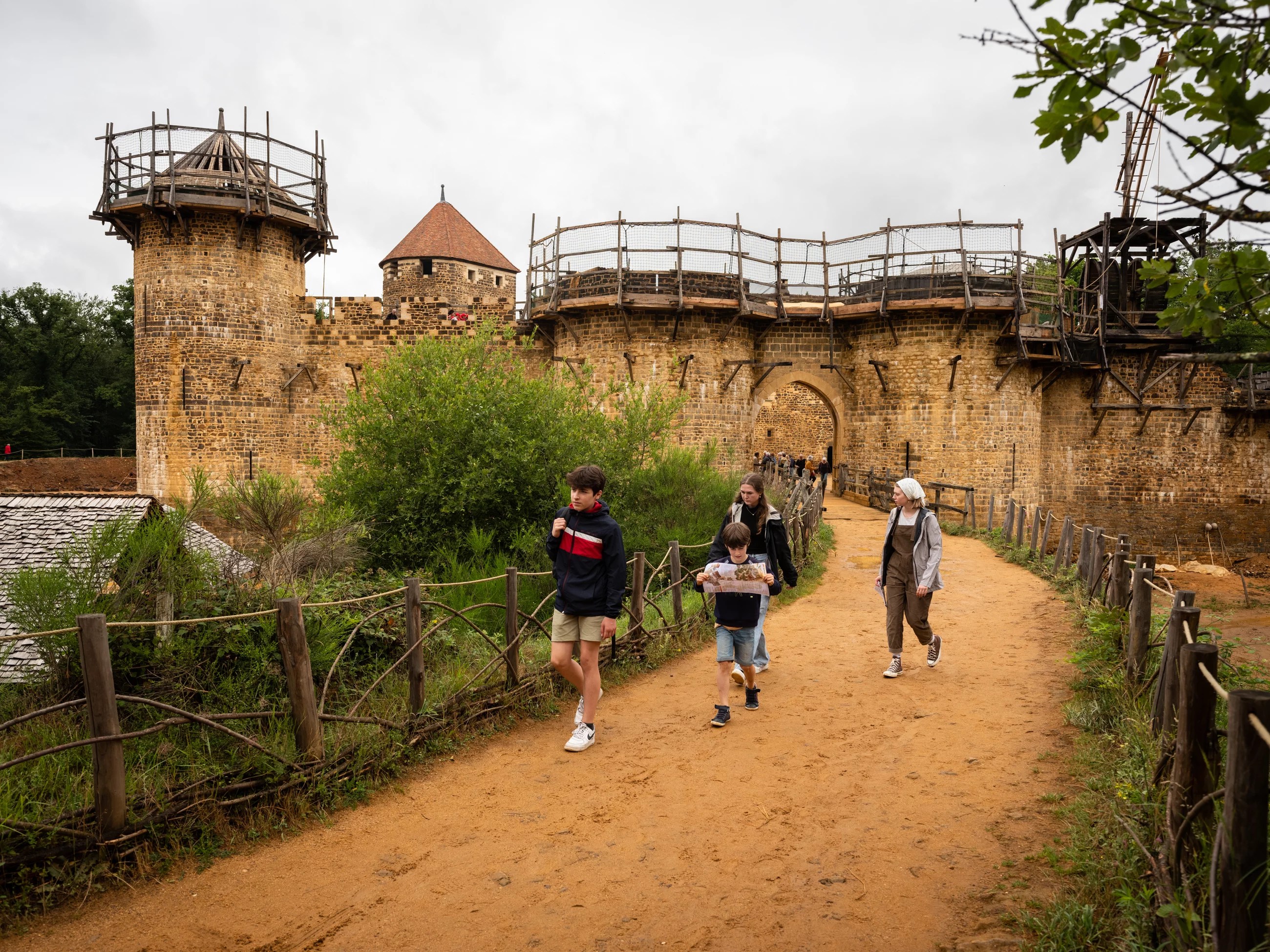
Visitors walk near the construction of Guédelon Castle, dreamed up as an exercise in “experimental archaeology” 25 years ago.

The Plimoth Patuxet Museums in Massachusetts used to be called Plimouth Plantation, and at Thanksgiving lucky visitors got to share in whatever version of the First Thanksgiving was in vogue at the time. Today the history involves the indigenous people in a much more balanced way. But a visit to the site is still a step into another century, a century without cellphones.

Not unlike a visit to a certain castle in France.

Eleanor Beardsley reports at National Public Radio, “Deep in a forest of France’s Burgundy region, a group of enthusiasts is building a medieval castle the old-fashioned way — that is, with tools and methods from the late 13th century.

“Some of those working here are heritage trade craftspeople, others are ardent history buffs, but all say they share a deep respect for nature and the planet, and a desire to return to simpler times.

” ‘This is a place you experience with all your senses,’ says Sarah Preston, communications director and guide of these grounds known as Guédelon Castle. ‘As soon as we walk onto the site you smell the woodsmoke. There’s something so evocative about these sights and sounds.’ …

“Once beyond the entrance barn doors, visitors plunge into a bygone age. There are no mechanical sounds, no motor engines — and cellphones must be turned off. The idea to build Guédelon was born in 1995 among three friends, residents of the area, who are also history buffs and nature lovers. One of the three owned a nearby 17th century château and was involved in work to restore different castles in the area.

” ‘But we thought, how amazing would it be to actually build a castle from scratch?’ Maryline Martin, CEO and a co-founder of Guédelon, told public radio station France Culture last year.

“After finding and purchasing the original 27 acres of land in a forest near a centuries-old abandoned quarry and water (necessary ingredients for any medieval construction site), the co-founders got a construction permit and, in 1997, laid the first stones. …

“Martin said Guédelon is an example of experimental archaeology — which is a way to research how people did things in the past by trying to imitate them. … The builders use the examples of other medieval castles in the area, as well as descriptions in old manuscripts and books.

“The workers are all dressed in medieval clothing, except for sturdy contemporary footwear and sometimes helmets mandated for a modern construction site. The smell of fire and a clanking sound are coming from a nearby blacksmith’s shop. That’s where 20-year-old Matisse Lacroix is forging the tools needed to build the castle. Sparks fly as he pulls a cord that operates a large bellows.

“Lacroix says the furnace temperature is around 2,000 degrees Fahrenheit, ‘so the iron is soft and malleable and I can make these nails.’ He bends and shapes pieces of iron into nails. …

“During NPR’s visit, a group of fourth-graders are at the site. They watch Lacroix pound the glowing red rods. The craftsmen stop their work to explain what they’re doing to visitors as well as train young craftsmen in heritage skills. …

“That learning aspect of Guédelon is one reason its construction is taking so long. The owners say the project is meant to discover and pass along skills and knowledge from a 13th century work site. Workers stop their tasks several times a day to answer questions from visitors — as part of the job. There are six turrets completed as well as a protective wall and inner living castle with a chapel. …

“Preston said they initially financed their work through donations and some European Union funding. Now the château is financed through more than 300,000 visitors a year (paying between 12 and 15 euros each). …

“There are all kinds of projects to recreate the kind of village that would have existed beside a castle like this 800 years ago. A garden grows plants indigenous to the area in the Middle Ages.

” ‘We grow only medieval plants,’ says Antoine Quellen, who works in the garden two days a week. ‘So that means we don’t have tomatoes, we don’t have potatoes, because those came from South America much later.’ He says people ate a lot of grains back then. The indigenous plants are hardier and help preserve the land and soil, as they have a kind of genetic memory of place in their germ cells, he says. …

“Half a dozen stone masons work near the quarry. Tendra Schrauwen, a 29-year-old from Belgium, says Guédelon is one of the few places in the world you can practice this craft using traditional methods and old tools.

” ‘Our job is to cut stones in perfect geometrical shapes,’ he says. ‘For window, doors, chimneys, staircases, stone by stone.’ He says it’s all about teamwork. ‘The stones are very heavy. It’s very dangerous, you can damage your body. So the most important thing is to work in a team.’ …

“To lift the tons of wood and stone needed to finish the castle’s outer walls, two men walk inside a contraption that looks much like a giant hamster wheel. It’s a kind of medieval crane with a central axle and ropes. Known as a treadmill crane, it can pivot and raise or lower materials, depending on which way the workers walk inside it. The only modern addition at Guédelon is a safety brake.”

More at NPR, here. No paywall. Great photos.

Read Full Post »

Photo: Suzanne and John’s Mom.
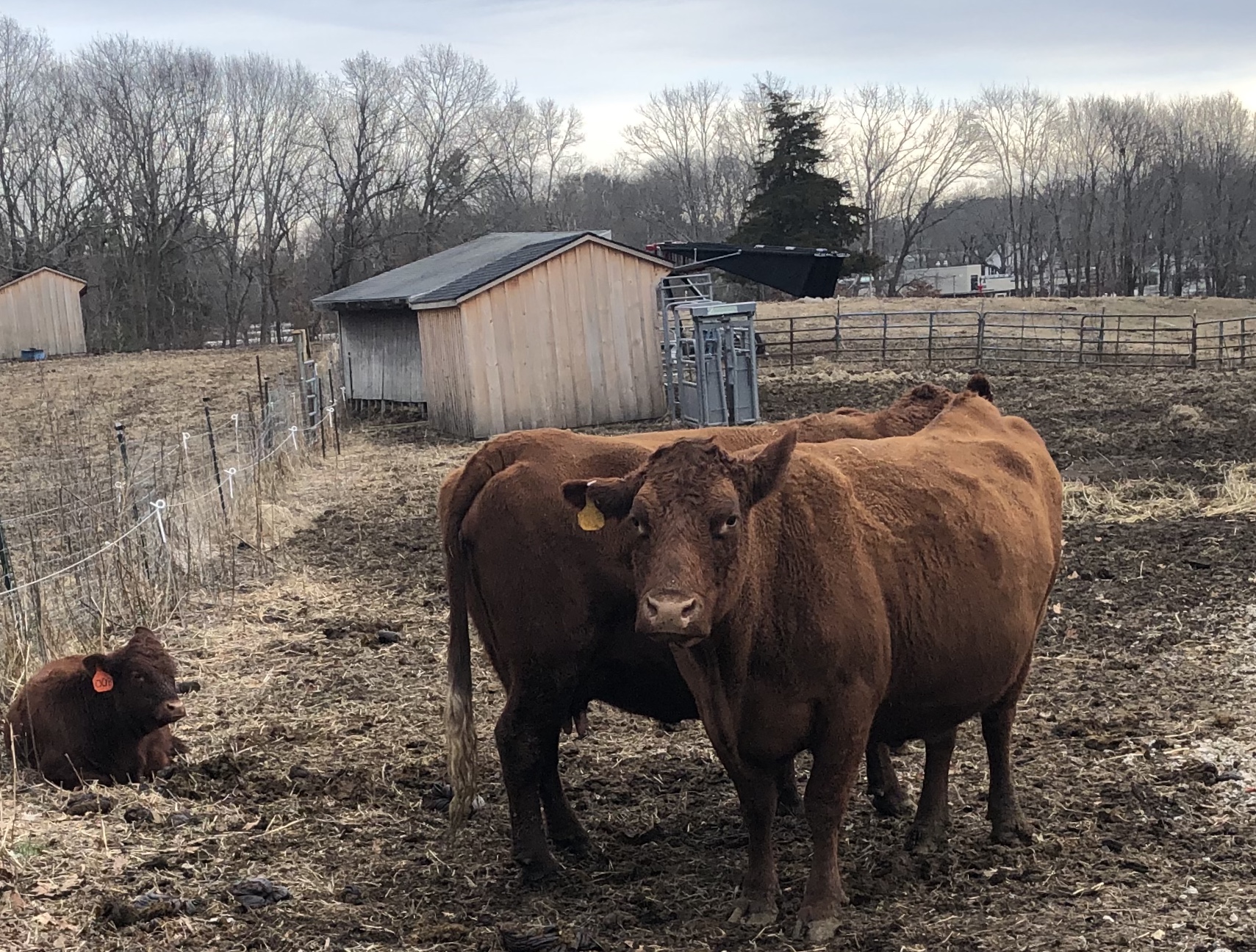
Cattle at Codman Farms, Lincoln, Mass. “Cows are often described as climate change criminals,” says Grist, “because of how much planet-warming methane they burp.” But, Grist adds, raising ruminants can also lead to deforestation, making alternatives to meat doubly important.

The other day at dinner, my husband regaled Sally and me with the latest on Europe’s use of mealworms as alternative proteins. The idea of eating mealworms — straight, no chaser — was not appealing to me even though I know they often sneak into the packaged nut and grain products we buy at the store. Which is why I freeze those products for 24 hours. I suppose I eat frozen mealworms that way, but it’s inevitable.

Grist magazine reported recently on the damage that livestock agribusinesses do to the planet when they cut down trees to graze more animals.

Max Graham says, “To feed the world’s growing appetite for meat, corporations and ranchers are chopping down more forests and trampling more carbon-sequestering grasslands to make room for pastures and fields of hay. … The greenhouse gases unleashed by this deforestation and land degradation mean food systems account for one-third of the world’s human-generated climate pollution.”

At Nature magazine I learned that alternative proteins are gaining traction in France, of all unlikely places. The focus is not on eating insects straight.

Rachael Pells writes at Nature about “the world’s largest vertical insect farm — home to at least 3 trillion mealworm beetles (Tenebrio molitor). The company’s chief executive and co-founder, Antoine Hubert, says that the beetles have a good life, as far as being an insect goes. Each of their stacked plastic trays is kept at an optimal 60% humidity and a balmy 25–27 °C. Nutrition, growth and moisture levels are all recorded for analysis, and human visitors are allowed to inspect the trays only from a distance — to prevent contamination of this prized ecosystem.

“The beetles are raised in this way from larvae to adult, at which point they meet a quick death in steam before being harvested into oil, protein and fertilizer.

“Insects have come under the spotlight over the past few years, as scientists seek alternative sources of protein to feed the rapidly expanding global population. A direct nutritional comparison shows that edible insect species have greater protein potential than do conventional meat products — 100 grams of mealworm larvae produces 25 g of protein, whereas 100 g of beef contains 20 g of protein. Insects also have a high food-conversion ratio when compared with livestock.

“To produce the same amount of protein, for example, crickets require around six times less feed than do cattle, four times less than sheep, and half that of pigs and chickens. But various attempts by companies to market insects as a mainstream food source in Europe and North America have fallen flat and largely been dismissed as a fad. And some researchers have concerns about the effects on the environment, ranging from whether escaped insects might disrupt local ecosystems to the impact of insect ‘factories.’ So why farm insects at all?

” ‘The world is facing a huge food sustainability crisis,’ explains Huber, an environmental engineer. ‘Insect protein is one very realistic and obvious solution to mitigating some of those challenges,’ he says.

“With the global population expected to reach almost 10 billion by 2050, United Nations forecasters have warned that food production will also need to increase by as much as 70%.

“However, because mealworm burgers are, at the moment, unlikely to sell out in your local supermarket, Ÿnsect grows insects for animal feed. This is given to fish, pigs and poultry, taking the pressure off conventional agricultural land use.

“The use of vertical farming has grown rapidly over the past few years, spurred on, in part, by advances in LED lighting, the cost of which fell by 94% between 2008 and 2015. Several start-ups (including Infarm in Berlin and Aerofarms in Newark, New Jersey) use the system to produce vegetables such as lettuce for human consumption. And the global market of the vertical-farming industry is expected to grow from US$3.7 billion in 2021 to $10.5 billion in 2026.

“Meanwhile, sales of plant-based alternatives to meat that are designed to reduce the demand for cattle farming — an industry responsible for 65% of all livestock emissions — seem to be stalling. When meat-substitute company Beyond Meat in El Segundo, California, went public on the stock market in 2019, its share price rose by 163%. But after the initial excitement, sales slowed, and they have remained about the same since 2020.”

As with most innovations, there are caveats. Get the details at Nature, here. And for a report on livestock and deforestation, check out Grist, here. No paywalls for either one.

Read Full Post »

Photo: Jef-Infojef/Wikimedia.
Stéphane Breitwieser stole art between 1995 and 2001. Here he is in the “salon du livre de Colmar,” Haut-Rhin, France.

Today’s true story interests me partly as fan of mysteries, partly as a mom. Did the art thief’s mother kid herself about what her son was up to? How clear-eyed are mothers in general when it comes to a child’s malfeasance?

The New York Times reviews Michael Finkel’s book about “the most successful and prolific art thief who has ever lived.”

Alex Marzano-Lesnevich writes, “At first, Stéphane Breitwieser, the subject of Michael Finkel’s The Art Thief, appears to be having an enviable amount of fun. Twenty-five years old and living with his girlfriend, Anne-Catherine Kleinklaus, in a small set of upstairs rooms in his mother’s home in a ‘hardscrabble’ manufacturing suburb in eastern France, Breitwieser is unburdened by such quotidian concerns as a job, making rent or planning for the future.

“He fancies himself a purer sort of soul, so devoted to beauty he must, in Finkel’s words, ‘gorge on it.’ Over the course of a dizzying 200 pages that are also an effective advertisement for Swiss Army knives (Breitwieser’s only tool), he removes artwork after artwork from museums — a.k.a. ‘prisons for art.’ … He piled all $2 billion worth of artifacts he amassed over eight years into that same attic in his mother Mireille Stengel’s ‘nondescript’ stucco house.

“Finkel includes satisfying evidence of this astounding loot in a color insert that shows a crammed jumble of ‘ethereal’ ivory carvings, shining silver goblets, unctuous oil paintings and more.

All this Breitwieser secreted away in the couple’s lair not to be fenced for money, but for the pair alone to enjoy waking up to in the morning:

“Like George Petel’s 1627 sculpture ‘Adam and Eve’ on the bedside table, next to a 19th-century blown-glass vase and a blue and gold tobacco box ‘commissioned by Napoleon himself.’

“Finkel’s account, based largely on interviews with Breitwieser, is of a romantic hero who disdains practical details as much as security ones, and who is ‘crushed’ when Stengel deigns to buy Ikea furniture. ‘I am like the opposite of everyone,’ he declares … ‘born in the wrong century.’ That Finkel aligns the reader’s sympathies with the point of view of the criminal makes for a heady rush of freudenfreude.

“The romanticized portrait of a complicated male subject is a formula Finkel has found success with before: His best-selling previous book, The Stranger in the Woods, about the Maine hermit Christopher Thomas Knight, was similarly expanded from an article in GQ. Yet despite this book’s slim size, Finkel’s efforts to fill its pages eventually strain, padding them with generic musings on why people make art and head-scratching lines like, ‘Yellow is the hue least harmonious to a banana.’ …

“By the end, we’re left with signs that what we’ve been offered is only a rough sketch, not the more complicated truth. Finkel portrays Breitwieser as a pure aesthete motivated solely by aesthetic passion, but later he’s also arrested for simple shoplifting. [And] in a shocking turn the author brushes past, Kleinklaus says under oath that Breitwieser hit her after learning she’d hid an abortion. ‘He scared me,’ she tells a courtroom; to a detective, she says, ‘I was just an object to him.’

“Finally, did Stengel really never suspect what her son was up to in her home? Was her frenzied ‘attic purge’ — during which she hurled silver pieces into a canal and burned paintings in a forest — really the ‘ultimate expression of maternal love’ Breitwieser interprets it to be? (She herself tells the police, ‘I wanted to hurt my son, to punish him.’) It is by far the most shocking act in the book, but — as with the characters of Stengel and Kleinklaus — Finkel leaves it frustratingly opaque.” More at the Times, here.

To skip the firewall, see what Wikipedia has to say about the art thief, here. You may also enjoy The Art Forger, a novel about the Isabella Stewart Gardner Museum that was fun. I wrote about it here.

Read Full Post »

Photo: Daguerre Val de Loire via the Guardian.
The family thought their painting was a fake, but it turned out to be an authentic work by Pieter Bruegel the Younger, “L’Avocat du village” (“The Village Lawyer”). It sold at auction for $850,000.

It can sometimes happen in families as younger generations come along, new people marry into the family — and those who know the history of a painting on the wall die off — that the importance of a work becomes something no one takes seriously.

I remember the husband of a babysitter John had when he was three scoffing about a painting his wife said was a Turner. I believed the babysitter was better informed. Today I wonder where that painting is.

Jonathan Edwards reports at the Washington Post about a similar situation.

“Malo de Lussac entered the tiny, dimly lit TV room in October, expecting the unremarkable as he assessed the value of the art and artifacts in his new client’s home in northern France. Then, a painting caked in dust and almost entirely hidden by a door caught the auctioneer’s eye.

“Pay it no mind, his client told de Lussac. Yes, the family had long called it ‘The Bruegel,’ but it was an affectionate dig at a painting that was clearly a fake.

“Turns out, the family joke was a hidden masterpiece, a genuine work of Pieter Bruegel the Younger, a 17th-century Flemish artist. Painted more than 400 years ago, ‘L’Avocat du village’ — or ‘The Village Lawyer’ — sold [in March] at auction in Paris for the equivalent of about $850,000 — the result of a discovery that de Lussac described as one of the most thrilling of his career.

“ ‘I was very, very surprised,’ de Lussac said.

“His coup started out as a workaday assignment: Travel from Paris to a client’s home in northern France to estimate how much their artwork and artifacts would sell for at auction. Because of the home’s size, he’d blocked out the entire day to accomplish the job.

“For the first hour, everything went as expected. After a half-hour of chatting and building a rapport with the owner over coffee, they started touring the house by surveying the living room. They then moved to the kitchen. Everything fell within de Lussac’s expectations: furniture, china, some ‘interesting’ but relatively unimportant paintings.

“They moved on to a TV room, where his client directed his attention to some 19th-century paintings they thought would be of the most interest. … Then de Lussac spotted part of a painting covered in dust and mostly obscured by a door. He shut it to get a look at the entire work. The brushstrokes, the colors, the canvas material: It all rang true with de Lussac’s knowledge of Bruegel the Younger. Born in Brussels around 1564, Bruegel was the eldest son of Pieter Bruegel the Elder, one of the most prominent artists of the Flemish Renaissance in Flanders, a Dutch-speaking region of what is now Belgium. …

“ ‘My heart was beating so hard,’ de Lussac said.

“The owners broke the bad news: The painting had long been regarded as a knockoff by the family. Their forebears had purchased it in the late 1800s, and it spent the next century bouncing to different houses as younger generations inherited the work. …

“But acting on his hunch, de Lussac pressed the current owner. Everything he observed jibed with what he knew of Bruegel the Younger, who had painted several works depicting the same scene of a Spanish official collecting taxes from Flemish peasants.

“The owners were skeptical but willing to let de Lussac send the painting to a Bruegel expert in Germany. In December, they got word: It was genuine.

“[DeLussac] said that he believes the original buyer purchased it as a genuine Bruegel, and that knowledge of its authenticity was lost to time.”

More at the Post, here. At the Guardian, there is an earlier version of the story without a firewall, here.

Read Full Post »

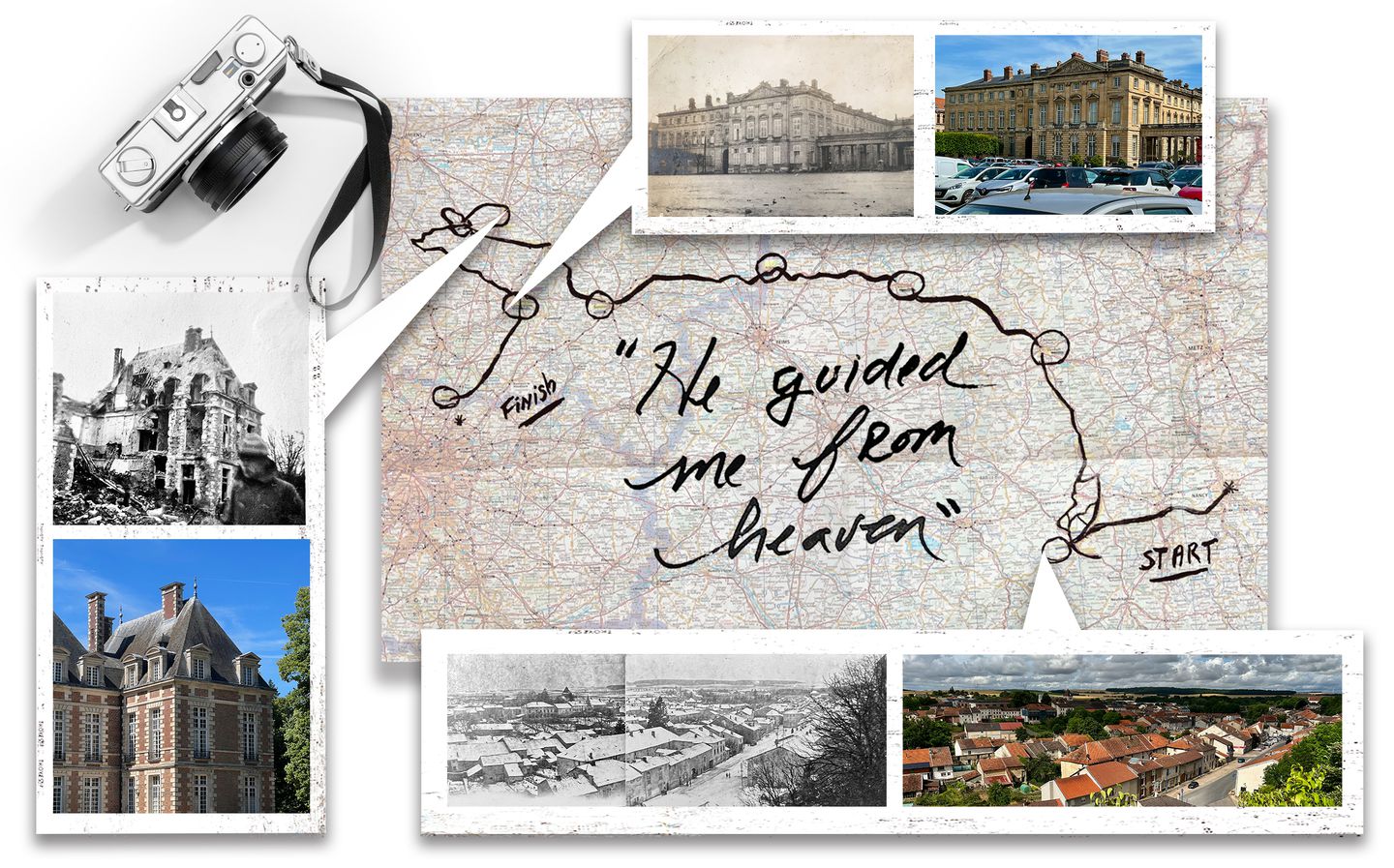
Images: Brett Hawkes photos; Ally Rzesa illustration.

When do people get interested in researching family history? Some people never. Others — like my cousin who has made his genealogy hobby an obsession — very young. In today’s article, a 71-year-old from Massachusetts got the bug when he started going through the photos his grandfather took in France.

Travel writer Christopher Muther reports for the Boston Globe about Brett Hawkes and the stacks of old photos he used to re-create his grandfather’s journeys in WWI.

“For the better part of a century, the boxes and their mostly-forgotten contents collected dust while occupying real estate in attics throughout Massachusetts.

“But for Brett Hawkes … they inspired a once-in-a-lifetime journey that spanned 600 miles across the French countryside.

“Hawkes received the boxes of old photos and letters when his mother passed away in 2013. He said he glanced at them occasionally, but otherwise, they remained stored away, collecting another decade of dust. He came upon them again in the winter of 2022 while cleaning his office, but this time, the more he studied them, the more he was drawn to what he saw.

The pictures, taken in 1917 on the frontlines of the war in France, showed soldiers fighting in trenches, bombed buildings, and previously idyllic fields transformed into hastily-dug cemeteries.

“But his grandfather also took pictures of everyday life in the small towns where he was stationed. There are pictures of friends he made, soldiers playing football in a snowy field, and peaceful streets.

“ ‘I stared at these old photos and thought, “Oh my God, look at these churches bombed to the ground.” I started wondering what they look like now,’ Hawkes said. ‘I happened to find a photo he took of a famous chateau, and I Googled it and saw it was all renovated.’

“That’s when the idea for his trip took root. He devised a plan to find the locations of as many of the photos as possible — thankfully, his grandfather had labeled the towns where pictures were taken — and re-create his grandfather’s 1917 route in France. …

“Alton Hawkes entered the war just months after America’s entry and was sent for further training in Abainville before being stationed in the villages of Warmaise, Chepoix, and Broyes, about 70 miles north of Paris.

“Brett said his grandfather, who studied engineering, was also an avid amateur photographer and collector, which made reconstructing the route easier. He also had letters that his grandfather had written home to his family, outlining some of his more benign activities.

“ ‘What boggled my mind was that he took these photographs of the destruction and fighting that would be classified today,’ he said. ‘The more I learned, the more I became emotionally involved. It’s part of the reason why Ancestry.com and 23andMe are so popular. People want to feel an emotional connection with the past.’

“Hawkes has two skills that made the trip possible. The first was years of cycling experience. When he was 16, his neck was broken in a severe car accident. As a result, the right side of his body was paralyzed. Over time he regained the use of his body, but the former athlete continued walking with a limp. While he could no longer run or play sports, he could cycle, which remains his passion.

“His other skill is the ability to speak French and a general love of French culture. He brushed up on his French before the trip, but he spoke no English for three weeks on the road.

“ ‘Being able to speak French helped form bonds and broke down barriers with the people I met,’ he said. …

“Those meetings with residents are what made his trip a success. He would roll into small farming towns and seek out cafes where he would strike up conversations with locals. If the town was too small for a cafe, he knocked on the doors of houses that his grandfather had photographed, or he would seek out the mayor of a town he was visiting for assistance in finding buildings or bridges.

“ ‘I’m an older guy. I wasn’t threatening. I couldn’t punch myself out of a paper bag,’ he said. ‘I think that helped a lot.’

“When word spread through these tiny towns of the American retracing his grandfather’s WWI route, strangers would show up at bed and breakfasts where Hawkes was staying with information about locations in the photographs and stories about the war that had been handed down. …

“ ‘I started to really go through a transition. It became more than a vacation, it became a passion. It was an incredible experience. It’s hard to explain, but that’s really what happened. I went through a transformation.’

“He found the field where the French government awarded his grandfather the Croix de Guerre for his bravery in battle. In one photo, his grandfather stood on a pile of rubble that had once been a church. Hawkes found the location with a new church in its place. It was the same with historic buildings that had been repaired or rebuilt. Just like his grandfather, the younger Hawkes was there to document it all.

“ ‘He guided me from heaven,’ Hawkes said.”

More at the Globe, here.

Read Full Post »

Photo: Holger Rudolph.
A performance of “La Grande Phrase” by French company Campagnie Didier Théron. The idea is to share the fun of dance and draw in new audiences.

I love reading about serious artists reaching out through humor. But what is going on in the picture above? One kid is watching the playful performance and wearing a big smile. Everyone else is looking in another direction with solemnity. Bad choice of illustration?

Celina Lei reports at Australia’s ArtsHub that the “French dance company Campagnie Didier Théron will soon land in Adelaide to upend expectations of dancers’ bodies with a dash of humor.

” ‘Dance!’ Usually when kids hear this cue,” she writes, “they immediately start wiggling their bottoms and shuffling their feet – circling, hopping and swinging their arms.

“But often as we grow, we grow more hesitant, our movements become more restricted and choreographed in fear of embarrassing ourselves. So what if to dance is to be silly?

“Wearing colorful inflated suits and roaming across streets, parks and city centers, La Grande Phrase (The Big Phrase) is a dance-work series by Montpellier-based Campagnie Didier Théron that explores ways to upend stereotypes of what a dancer should look like or do.

“The self-taught dancer and choreographer Didier Théron tells ArtsHub that the work was born from a journey of experimentation and collaboration with international artists and dance companies, allowing dancers the freedom of movement while wearing suits inflated with air. …

“Théron points to the German artist and choreographer Oskar Schlemmer (1888-1943), as well as Venus figurines of the European Paleolithic period, as inspirations for these dramatic bodily forms. The movement of dance and the flow of air within the suits further activate these forms.

“After touring in cities around Europe and taking out the 2013 Grand Prize of Setouchi Triennale in Japan, the company will bring three dancers to WOMADelaide (SA) this March where ‘any space shared with the audience becomes a performance space.’

“In the same way that contemporary visual artists are continually challenging the notion of a hushed, white-cube gallery, dance with a splash of humor can provide multiple access points for different audiences.

“From the time of Charlie Chaplin, who pulled off every sequence with full comic relief, to more recent contemporary experimentations such as the UK’s New Art Club combining dance with stand-up comedy, there are plenty of examples where humor can support choreographic expression.

“Théron says: ‘This project always surprises me in the reactions of the people and how they receive it. The first time we performed it outside was in a suburb of Montpellier. It was not easy to have a cultural artistic project in this area, but we crossed this line with these characters and everybody was laughing or smiling.’

“Taking this performance [onto] the streets also offers the dancers greater freedom, and the audiences more opportunities to interact, adds Théron. …

“Roving performances were also something that had a great impact on Théron as a child, from the very first time he encountered a ritualistic dance parade in his grandparents’ village in the centre of France.

“He says: ‘That was the first dance I saw and members of my family were also dancing (only men at the time), but it was very powerful and filled with a deep joy. This performance allowed me to reconnect with this memory.’ …

“What the company hopes to bring to the audience is an invitation to think about dance and dancers’ bodies ‘beyond the norm,’ and perhaps at some point share the joy of movement.

‘There is something in being this character that [gives] us permission to do many things. I think it’s a real positive body and filled with possibilities that we can experiment with all the time,’ concludes Théron.”

More at ArtsHub, here. No firewall. Funny pictures.

Read Full Post »

Older Posts »