Feeds:
Posts
Comments

Posts Tagged ‘heat’

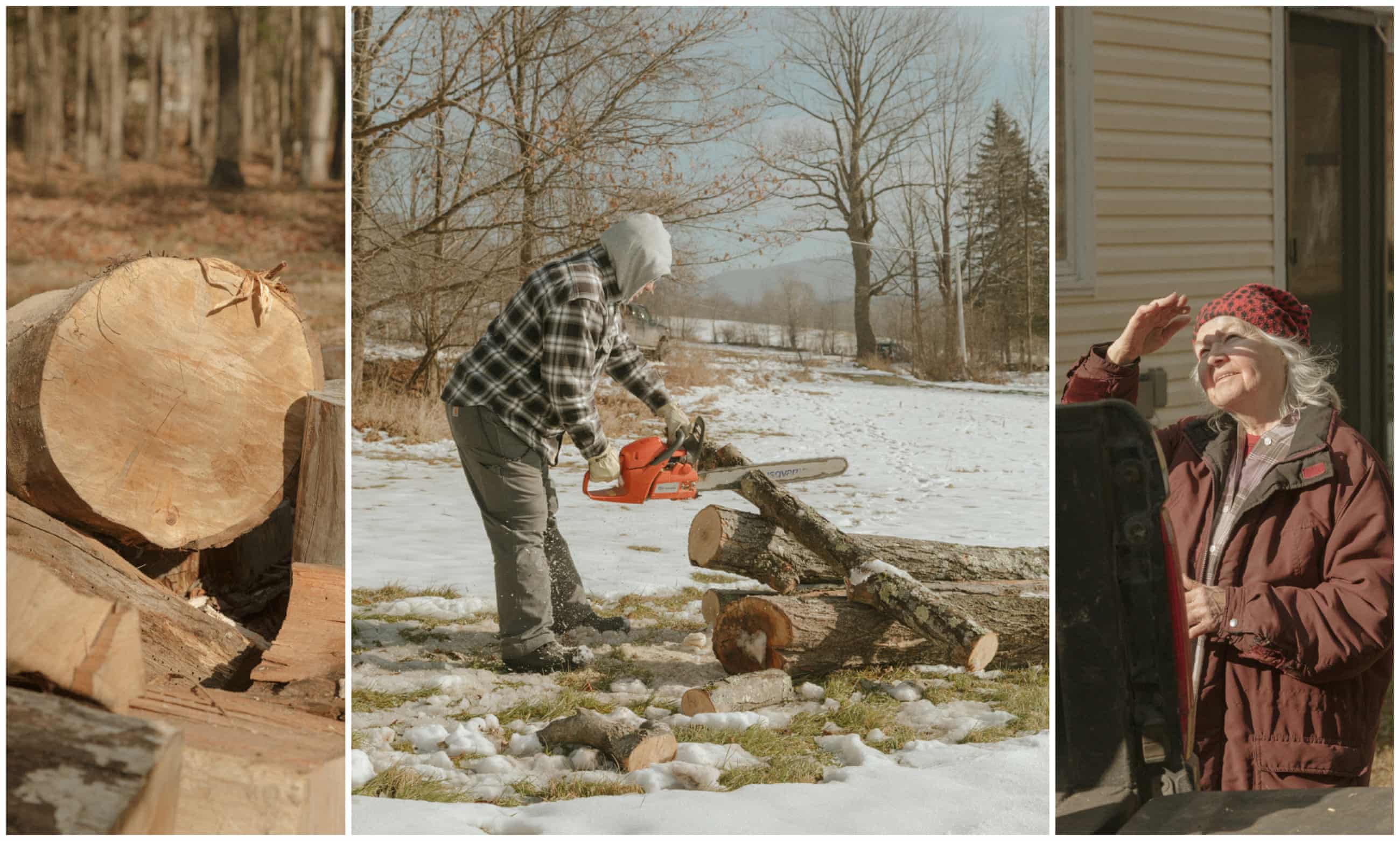
Photo: Landon Speers/Guardian.
A Woodstock, New York, woodsman who prefers to be anonymous, cuts logs in his yard to deliver to neighbors.

Some people do good deeds and seek no credit. At the Guardian, David Wallis wrote early this year about one of those people.

“On a chilly morning in Woodstock, New York, frozen dew turns lawns a glistening white as puffs of smoke from chimneys float across the road.

“ ‘Winter is here,’ declares the woodsman, a broad-shouldered man in a black-and-gray checked wool shirt and navy denim Carhartt overalls as he sharpens his orange chainsaw. … The woodsman, who requested anonymity, is an accomplished director, writer and producer with several popular film and TV credits on his IMDb page. But he now devotes much of his time to supplying his struggling – and sometimes freezing – neighbors with free firewood. …

‘Many people are suffering,’ said the woodsman. ‘So many more than I imagined. Quietly, just secretly, really suffering.’

“The numbers back him up. Almost half of the children in the local public school district are economically disadvantaged, meaning that they or their families receive government anti-poverty aid such as supplemental nutrition assistance program (Snap) or disability funds. Affordable housing is in short supply: there are only a handful of long-term rentals on Zillow in the 12498 zip code with an average price of nearly $4,000 per month.

“A cord (128 cubic feet) of firewood, about enough fuel for a month or two, costs between $250 and $350 in Ulster county – up from about $200 before Covid. … In the world’s wealthiest nation, some people freeze to death inside their homes. … For many Americans, warmth is just another unattainable luxury.

“The woodsman has been an active activist for several years, helping refugees in Mexico stay in safe houses, distributing free masks during Covid and organizing voter registration drives with the Comedy Resistance, a non-profit organization.

“He moved to upstate New York from Los Angeles a few years ago to look after his mother, who had cancer and then Covid. He stocked a paying stand, which operated on the honor system, outside his mother’s house with bundles of wood; she donated the proceeds to local charities. But some of the bundles of wood vanished. The thefts distressed the woodsman, who recalled that a friend ‘suggested that I put a sign out on the stand that says if you if you need wood to heat your home, but you don’t have the resources, just ask me and I will deliver.’

“That conversation sparked the free firewood program. Two local librarians, Hollie Ferrara of the Woodstock Library and Elizabeth Potter of the Phoenicia Library, voluntarily spread the word about the grassroots initiative.

“ ‘Most people who work here can’t afford to live here,’ said Ferrara. ‘But there are still outlying folks who have been in their homes for a long time who basically have just about just enough money to live on and that’s about it.’ She acknowledged that librarians like her routinely act as unofficial social workers. …

“Residuals from the woodsman’s entertainment career defray some of his expenses. But Potter solicits donations for the charity from the community. Some benefactors leave gift cards for gasoline and stash them under a rock on her porch, or drop off oil for chainsaws.

“She first called on the woodsman during a power outage, a regular occurrence in upstate New York, two winters ago. An older couple had burned through their ‘last stick of wood.’ Within hours, the woodsman came to the rescue. ‘They said they and their spouse were huddled under the blankets upstairs, the fire long gone out, freezing cold, when they saw headlights in their drive and the soul-warming sound of wood being thrown on to the gravel. He got them through until the power was restored.’

“The woodsman considers his volunteerism a cheap form of therapy. ‘I’m sort of a quiet guy,’ he said. Giving away wood ‘does draw me out, pushes me out. When you interact with people, and I listen a lot, you do you learn their stories. And I’m moved by every one of them.’

“He often monitors his clients’ firewood reserves and notices that he is receiving requests for help earlier this winter than last, a sign, he believes, of increasing economic struggle. …

“When I visited him, he decided to check in with repeat customers who live about 20 minutes away from his wood lot. When driving on country roads, he eyed passing wood piles and offered reviews at 40 miles per hour. … He inspected a pile of logs strewn on the land to ensure they were not rotted. We then chatted in the house with Tom and Malley Heinlein, who had asked him to cut and split their wood. …

“Tom, the family’s main breadwinner, is gaunt and slowly recovering from Mycobacterium chelonae, a severe bacterial infection, that sapped his strength and swelled his body. ‘We’ve been happily living our independent little quirky life for all this time,’ Malley said wistfully. ‘And then all of a sudden, something trips you up.’ ” More at the Guardian, here. No paywall.

I have to say, I laughed out loud reading that, when the woodsman was a child, his mother boycotted grapes to help the United Farm Workers. I did that, too. Don’t know if there’s a direct connection, but both Suzanne and John do various kinds of good works now.
Read Full Post »

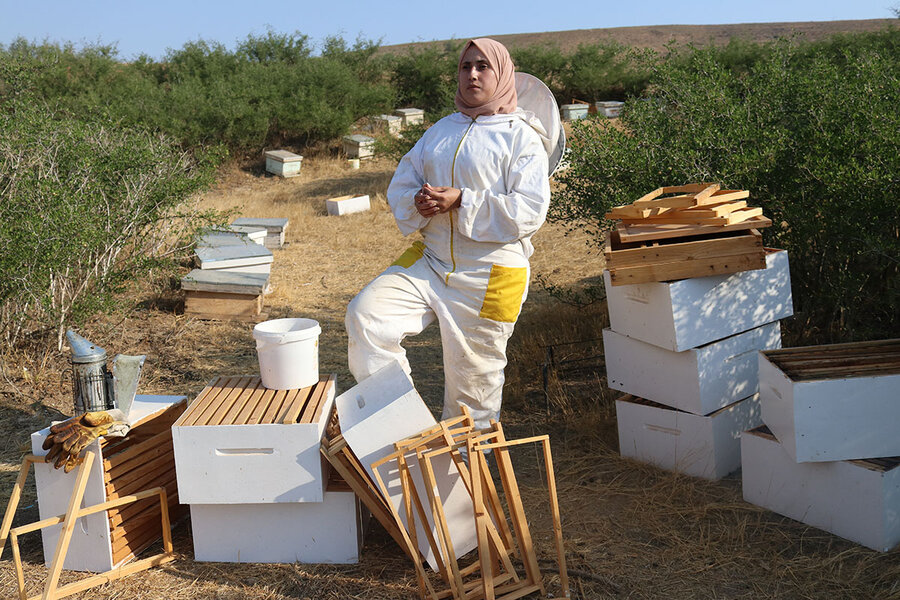
Photo: Taylor Luck.
Apiarist and entrepreneur Hela Boubaker stands next to one of her collections of beehives on a farm in Bizerte, Tunisia.

There are two news outlets I especially love for their focus on parts of the world most US media ignores until there’s a disaster. One is the weekday radio show The World. The other is the Christian Science Monitor. These organizations interview people on the ground in foreign countries, voices we seldom hear with perspectives we know nothing about.

In today’s example, Taylor Luck reports at the Monitor on what extreme heat is doing to beekeeping in Tunisia and how beekeepers are adapting to the warming trends that affect us all.

“Tunisian beekeeper Hela Boubaker keeps a firm smile as she inspects an empty hive box, the 20th hive she has lost due to heat or wildfires this year. Hives are carefully placed in the shade on this farm 40 miles north of the capital, Tunis. At 10 a.m. on a late-August Tuesday, it is already 95 degrees.

“Thirsty bees dive-bomb a bucket of water, drowning for a drink before she can place a sponge as a landing pad.

‘It’s not easy,’ she says as she slides an empty honeycomb frame back into its box, ‘but at the same time, we are not easy: We won’t give up.’

“In this North African country, where nearly 40% of citizens and entire communities rely on farming for their livelihoods, bees are a big business. And to protect their beehives against extreme weather, the nation’s apiarists are turning to innovative solutions. …

“Some 13,000 Tunisians work as full-time beekeepers, according to local farming unions, in addition to thousands more who rely on apiary work as another source of income, producing a combined 280,000 metric tons of honey per year. Yet for those new to beekeeping in Tunisia, the past two years have been no honeymoon.

“Tunisia has seen record-setting scorching temperatures, including dayslong 115-plus-degree heat waves and record 120-degree temperatures in its tree-lined temperate north – the nation’s beekeeping hub – that sparked devastating wildfires in 2022 and again this July. This year the country has also struggled with a record drought, leaving regions without water for weeks at a time.

“According to researchers and apiarists, the extreme weather has nearly halved honey production, from an average of 8 kilos (17 pounds) of honey per hive to 4 to 5 kilos per hive in 2023.

“Ms. Boubaker, an entrepreneur in her late 20s, is finding ways to keep her bees alive. She has developed a patented device and nonlethal method to extract bee venom from her honeybees, drawing exactly 0.01 grams of apitoxin per bee to be used in medical treatments and beauty products. …

“To adapt to a changing climate, Ms. Boubaker is working with other apiarists to better cultivate the rented or borrowed plots of farmers’ land where they place their hives. Increasingly, they rely on drought-resistant and hearty plants such as lemon trees, thyme, and marjoram to ensure year-round nectar and food sources for hives, as more delicate flowers and plants wilt in increasingly hot temperatures.

“Like many apiarists, she rotates her beehives through geographic locations with varying topographies – the mountainous pine-treed north, the more arid south, and the rich fertile farmland around Bizerte.

“Ms. Boubaker’s commute to check on her dispersed 82 colonies is a six-hour, 200-mile round trip that she takes every two days. Yet the geographic dispersal of apiarists’ beehives has led to another, emerging threat to Tunisia’s honey-makers: crime. Specifically, theft. …

“ ‘Only a beekeeper would have the knowledge and equipment to be able to pick up hives and transport them,’ says Ms. Boubaker, who rents fields in gated farms to minimize theft. ‘Unfortunately, people are desperate. When you lose the source of your livelihood, you are desperate to rebuild it. Some may be tempted to steal money. Others steal bees.’

“To help Tunisian beekeepers confront 21st-century challenges, innovators are putting constantly updated apiary data in an app. …

“Says Khaled Bouchoucha, a Tunisian engineer who has grappled with solving Tunisia’s plummeting bee numbers, ‘All the knowledge beekeepers have accumulated for decades and generations is no longer applicable’ in a rapidly changing climate.

“In 2021, Mr. Bouchoucha developed and launched SmartBee, a device and app that provides beekeepers with real-time data on hive temperature, humidity, weight, and mortality rates. …

“With the data, advance warnings, and advice sent to beekeepers’ phones, apiarists are informed when to move overheated hives to cooler areas and when isolated hives have become too cold, or they’re alerted to provide sugar solutions to boost weak bees – a critical service when hives are often dozens of miles away. SmartBee is also an anti-theft device.” 

More at the Monitor, here. No firewall. Subscription price is reasonable.

Read Full Post »

Photo: Josep Lago/AFP/Getty Images.
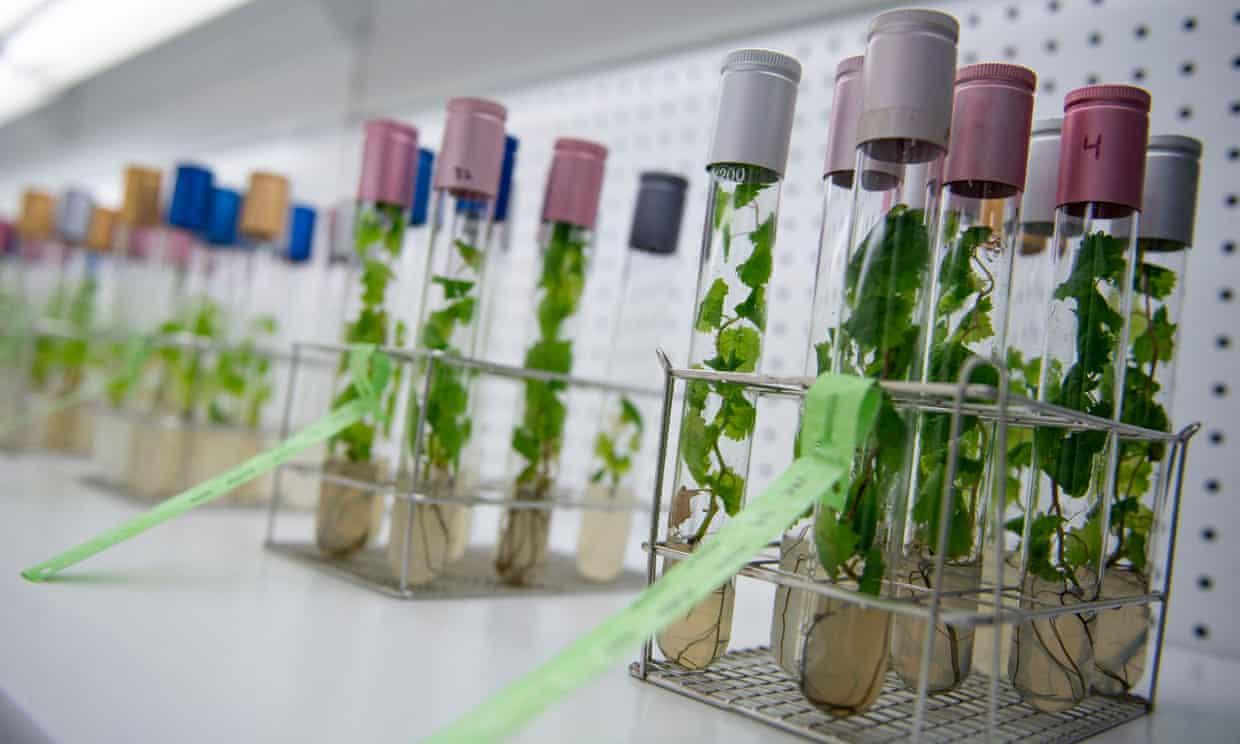
Ancient grape varieties in the laboratory at the Familia Torres vineyard near Barcelona. 

Here we go, Humans! More adapting.

Today’s story is about pragmatic grape growers adapting to climate change by seeking out grapes that can handle more heat. Too bad they have to do this, but what they learn may help other growers — and all of us.

Ashifa Kassam covers the topic for the Guardian: “The ads – tucked in the corners of local newspapers and directed at winemakers – began turning up across Catalonia in the 1980s. ‘If you know where to find any uncommon grape varieties, please get in touch,’ they read.

“Dozens of tips came pouring in, shepherding Miguel A Torres in his search for long-forgotten wine grapes. But it wouldn’t be until a decade later, as the climate crisis began wreaking havoc on vines, that the fourth-generation winemaker realized his foray into the past could play a key role in tackling what lies ahead.

“ ‘I simply wanted to recover the heritage – the ancient traditions and vines – left to us by our ancestors,’ said Torres, the president of Familia Torres winery.

‘And then we realized that some of these varieties take longer to ripen, meaning they might be able to help us in a warming world.’

“It was a glimmer of hope as the wine industry grapples with a changing climate. Extreme weather, drought and steadily rising temperatures have laid bare a crop that is extremely sensitive to change. In Spain, rising temperatures have meant grapes ripening more quickly, leaving winemakers rushing to harvest in hopes of protecting the carefully concocted balance between the fruit’s sugars and acidity.

“ ‘Climate change is the worst threat the sector has ever faced,’ said Torres. …

“In California, vintners are embracing grapes such as mourtaou, a nearly extinct variety from south-western France, to create peppery reds, while some in France’s Cognac region are toppling more than a century of tradition to trial climate-resistant grapes. In Bordeaux, concerns about the climate crisis recently helped to secure the approval of six new grape varieties, including castets, a disease-resistant variety that had been on the brink of disappearing.

“The reasons these grapes fell into disuse varies widely, said José Miguel Martínez Zapater, the director of the Institute of Grapevine and Wine Sciences in La Rioja. Some were abandoned in the late 19th century as the phylloxera plague forced European grape growers to chase efficiency, while others were discarded as winemakers sought to comply with strictly defined appellations or consumer preferences for certain grapes.

“Martínez Zapater’s publicly funded institute is one of several across Spain that have been peering into the past to bolster wine grape diversity – a years-long process that involves identifying the varieties, testing out their characteristics and seeking official approval for their use. … ‘People are finding varieties in different areas that they consider interesting.’

“In Spain – home to a €5bn-a-year wine production industry [$5,390,000,000] whose production outpaced all other EU countries in 2021 – much is on the line. Last year, the country experienced its hottest year since record-keeping began; since 2015 the country has sweltered through four of its hottest years on record.

“At the Agrarian Technological Institute of Castilla y Leon, known as ITACyL in Spanish, two decades of research have led to the recovery of more than a dozen varieties of grapes. The list includes estaladiña, a grape whose last recorded reference stretches back to 1914, and cenicienta, a grape close to extinction before it was revived to make fruity reds.

“ ‘The wines they make are very distinct and interesting,’ said José Antonio Rubio Cano, who heads the viticulture and woody crop department at the institute. … He stressed, however, that the embrace of these long-overlooked varieties is just part of the broader efforts needed as the industry adapts to a changing climate. ‘There’s no one solution,’ said Rubio Cano. ‘It has to be a set of things; we have to pay more attention to the vines, be more aware of how their fruits are ripening and we need to develop a deeper understanding of the vineyard and the different varieties.’ …

“The Caserío de Dueñas vineyard is taking the institute’s research to the next level, planting hectares of eight of the recovered varieties to test out how the grapes behave in a real-world scenario.

“ ‘I find it super-interesting,’ said Almudena Alberca [who in 2018 became Spain’s first female master of wine and is] the technical director for Entrecanales Domecq, the vineyard’s owner. ‘The possibilities are endless.’ …

“Four decades after Torres placed his first ad seeking forgotten grapes, Familia Torres has begun releasing small quantities of wines made from the fruits of his quest, such as forcada and pirene. The wines tell a story that is both steeped in the past and nods at the enormous challenge that lies ahead as the climate crisis tightens its grip, said Torres.

“ ‘I’ve always said that the wine sector is the canary in the coal mine,’ he added. ‘The consequences that vineyards are living through right now should make everyone take notice.’ ”

More at the Guardian, here. No firewall; donations encouraged.

Read Full Post »

Permission to Stay Warm

Photo: Henry Nicholls/Reuters.
Residents take shelter inside London’s Roehampton Library, Dec. 14, 2022. The library is being used as a “warm bank,” according to CSM, welcoming members of the community to spend time there in the winter months as an alternative to heating their homes amid increased energy costs.

After Russia invaded Ukraine a year ago, oil prices and heating costs went up for everyone. And rather than help people out, oil companies gave their windfall profits back to themselves. In the long run, that can only help to spur alternative energy development. But meanwhile, folks are just trying to keep warm.

Natasha Khullar Relph writes at the Christian Science Monitor, “String lights, boxes full of postcards to share a story, or a sign on the door that lists the top five David Bowie songs with the message, ‘Come in and argue’: There are many ways to make people happy to come out of the cold and into a public warm space, says Maff Potts. The key, he adds, is to make sure they feel welcome and not judged.

“ ‘What gets people in is that it’s not a church. It’s not a charity,’ says Mr. Potts, who founded Camerados, a social movement that’s been opening public living rooms in communities across the United Kingdom since 2015. ‘There’s no fixing, no answer. There’s just permission.’ …

“While the U.K. Health Security Agency is encouraging people to warm their homes to at least 18 degrees Celsius (64.4 F), more than 3 million low-income households cannot afford to heed this advice.

According to analysis by the Joseph Rowntree Foundation, around 710,000 households across the U.K. cannot pay for warm clothing, heating, and food, with approximately 2.5 million households – a fifth of all low-income households – going without both food and heating.

“And with power prices hitting record levels and energy costs double what they were last year, warm spaces have popped up all over the country. To avoid any potential stigma, they’re being presented as communal spaces where people can come to chat rather than charitable offerings of heat or food. While the main reason someone would go to a warm space or public living room is most likely to be warmth, it’s the camaraderie and conversation that keeps people there. …

“Britain’s poor people face the worst winter in living memory, tweeted former Prime Minister Gordon Brown in December. ‘A year ago we talked about people having to choose between heating and eating, now many can’t afford either,’ he wrote. Two-thirds of the country will be in fuel poverty come April, which includes 70% of pensioners [retirees] and 96% of single-parent families with two or more kids, he noted. …

“If you’re struggling to pay to heat your home, you only really have three options, says Matt Copeland, NEA’s head of policy: You could rack up debt with your energy supplier, ration your energy and use less than you need to stay warm, or simply turn off the heating, the impact of which can be significant. Research shows that more people die from cold homes than they do from alcohol’s short- and long-term effects, Parkinson’s disease, or traffic accidents.

“ ‘We know of households with prepayment meters who just can’t afford to top them up at all,’ says Mr. Copeland. ‘They’re going days, weeks, and sometimes months without access to energy.’ …

“Where the government is failing, communities are stepping up. ‘It is completely absurd that one of the 10 richest countries in the world can’t put a sufficient priority on things and make the right choices so that we have somewhere to keep people warm,’ says Mr. Potts of Camerados, whose public living rooms are now being used as templates for warm spaces around the country. After almost 30 years of working with people at the margins, Mr. Potts says he doesn’t have faith that the solution lies in the civil service. …

“An LGBTQ+ community space in Brighton. A bakery in North Yorkshire. A gaming cafe and ‘geek culture’ store in Ipswich. A vegetarian restaurant in Tunbridge Wells. A brewery in Devon. A former shoe store in Worcestershire. Warm spaces are popping up all around the country, in all manner of ways, in a community effort that started organically, from the grassroots, without a central organizer.

“In addition to community halls and churches, hotels, hairdressers, and cricket clubs are opening up their doors for anyone who needs some warmth, some company, and perhaps even a drink. Even legendary soccer club Manchester United has gotten in on the action and is offering Old Trafford, the club’s stadium, as a free warm hub, with its restaurant, the Red Café, opening its doors on Monday and Wednesday evenings ‘to help those facing difficult months ahead.’

“The Warm Welcome campaign, an organization that has encouraged thousands of faith groups, charities, and businesses to provide such public spaces, said they’d seen 80,000 people use their facilities during December’s cold snap. The campaign notes that there are now warm spaces in every town and city in the country, and lists over 3,200 venues on their website, which include spaces run by local authorities, charities, and businesses. …

“ ‘What we have in Brighton and Hove is a tremendous community-mindedness among residents. Despite the stark reality facing residents this winter, people have stuck together and they’ve really helped each other through some of the starkest problems,’ says Brighton and Hove City Council Leader Phélim Mac Cafferty, who notes there are more than 40 warm spaces available to the public across the city. …

“This nationwide response to the energy crisis is unique in how much of a community effort it is. The effort to create warm spaces was neither government- nor council-led, nor the work of any one particular organization. As the need became obvious, first volunteers, then organizations, and later local councils jumped in feet first.”

More at the Monitor, here. No firewall.

Read Full Post »

Summer heat means taking walks earlier and earlier.

Today I’m sharing a bunch of my recent photos, plus three from friends. It’s great that so many self-isolating people are sending pictures to each other now. Have you noticed?

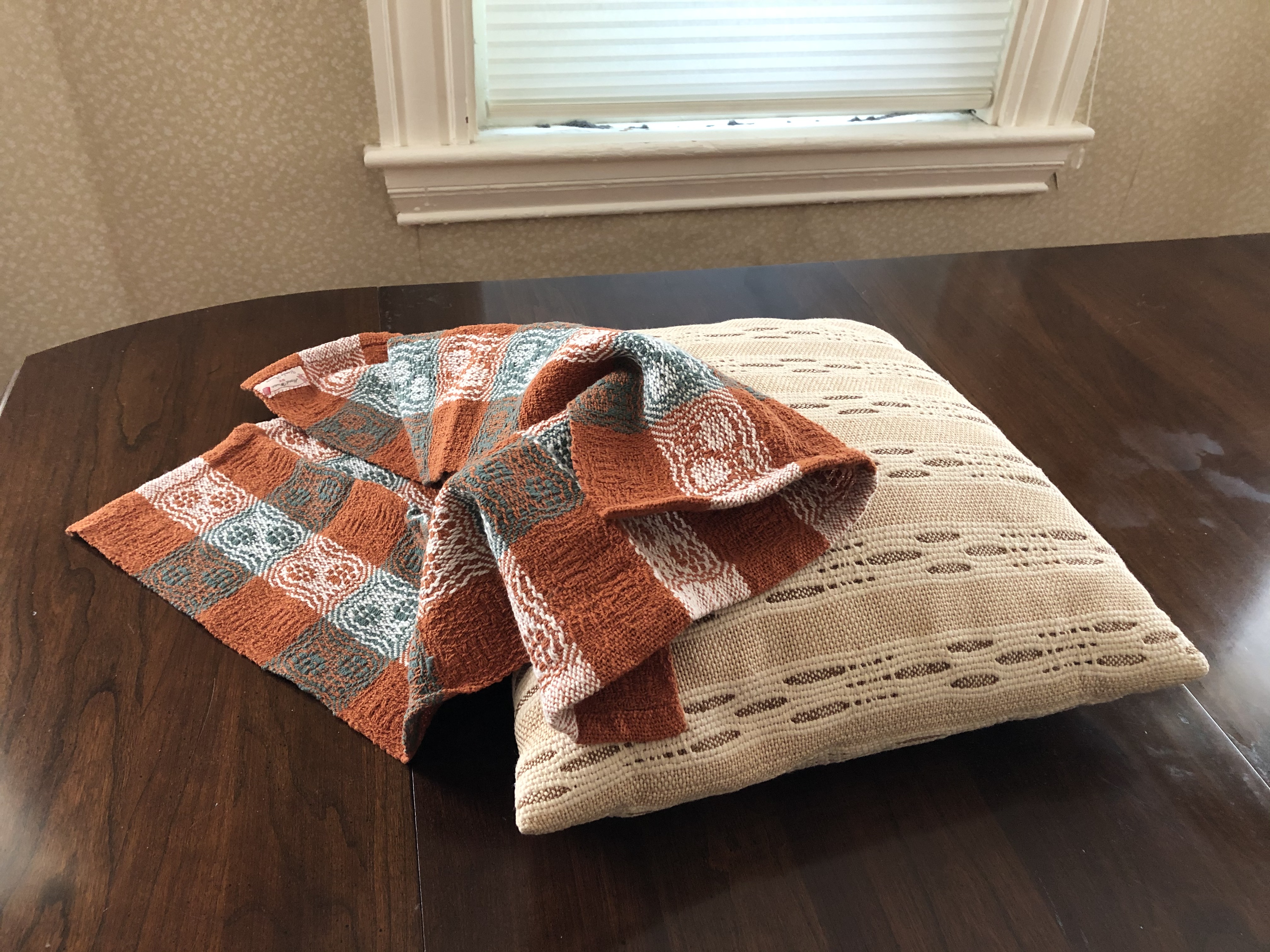
Kristina sent the red flower below, which I believe is a Chinese Hibiscus. She lives in my town, but we don’t get to see each other as regularly as before Covid. The next two photos are from Melita, who is currently living in Madrid. Spain was hit hard by the virus, and Melita says she’s grateful for the relative safety of the gardens she can walk tThe rest of the photos are mine. For weaving bloggers, I took a picture of the handsome dishtowel a childhood friend made and sent me out of the blue. I positioned it on top of a pillow cover her parents wove many years ago. She carries on the traditional craft.

My local community garden is coming along beautifully and providing a temptation to more than birds. Hence the sign.

Funny to be regarding as art the commuter train that was part of my working life for decades.

Louisa’s grave in Sleepy Hollow Cemetery is never short of writing utensils. I love checking it out. And every day that I take a walk near there, I see more gravestones I want to photograph. Shadowed ones for example.

The next four photos show art on the Bruce Freeman Rail Trail, courtesy of Umbrella Art Center artists. The painted doors are by Sophy Tuttle, and the woodland shelving is by Rebecca Tuck.

The various lilies belong to neighbors, and the bright pink flower is, according to the app PictureThis, a rose mallow, apparently a relative of Kristina’s flower.

The last three photos are from New Shoreham and include the historic home where the song “Smilin’ Through” was written — a fact, I fear, that only an islander would consider worthy of note.

072220-weaving-by-Ursula-and-parents

Read Full Post »

Photo: Story Hinckley
By following strict “passive house” standards, a multifamily affordable-housing complex in  Portland, Maine, slashes heating costs.
“Sometimes we turn off the heater because we feel so good,” says one resident.

The modern tendency to look at the old ways of doing things as some sort of backward stage of human development is being proved misguided again and again. In this story, heating and cooling costs are slashed by using an approach that, in part, taps the wisdom of first century BC.

Story Hinckley writes at the Christian Science Monitor, “Cities like Portland, Maine, have realized this energy-efficient design for the affordable housing sector – for residents who can really benefit from lower heating costs.

“Passive house-certified buildings are slightly more expensive to build upfront, but the heat and electricity bills are less than half of what it typically costs to heat a similar building in Portland.

“Passive house design is more than just an architectural novelty, says the team behind Bayside Anchor. It is also a necessary tool for residents or homeowners who care about long-term affordability. As the need for affordable housing grows across the United States, proponents say cities should move beyond building low-income housing as cheaply as possible. …

“Says Greg Payne, director of the Maine Affordable Housing Coalition and development officer at Avesta Housing, the nonprofit affordable housing provider that manages Bayside Anchor, ‘We have to promise that [the building] will be affordable for 45 years.’

“Before moving to Bayside Anchor two years ago, MD Islam, his wife, and their two young children lived in a home without heat.

“ ‘We had to suffer a lot,’ says Mr. Islam, who works at a local recycling plant. ‘Now my family – everybody – is happy. We feel very comfortable.’

“A high-tech ventilation system exchanges indoor air with fresh air from outside, all while retaining the temperature of the indoor air. Thick walls (with 10 inches of insulation, in Bayside Anchor’s case) and triple-pane windows keep the building airtight so very little heat escapes. Instead of a central heating system, each apartment has a small electric baseboard heater. …

“ ‘Sometimes we turn off the heater because we feel so good,’ says Mr. Islam. …

“Property manager Lucy Cayard [says] the passive house design has helped her build a deeper connection with the residents. Since much of the building takes care of itself, the building’s staff can put their time and resources elsewhere.

“ ‘We get to focus more on people’s needs and not the building’s needs,’ says Ms. Cayard. …

“The concept of passively heating and cooling a building is probably as old as architecture itself. Writing in the first century B.C., the Roman architect and military engineer Vitruvius observed that buildings in warmer climates tended to have northern exposures, with windows facing away from the sun, while those in cooler climates had southern exposures. Modern passive house techniques trace some of their history to energy-efficiency efforts in the U.S. during the OPEC oil embargo. The principles underlying Bayside Anchor’s design are further based on techniques honed by scientists in Europe in the 1980s and 1990s. …

“But with a national shortage of 3.7 million affordable rental homes, according to a recent report from the National Low Income Housing Coalition, new building approaches need to be explored. For example, says Mr. Payne, almost 600 households are currently on the waitlist for one of Bayside Anchor’s 36 affordable units.

“ ‘We are watching it happen all across the country,’ says Jesse Thompson, the Portland-based architect behind Bayside Anchor. ‘What’s different about Maine is that it’s the affordable housing folks who are the most progressive, who are moving the most quickly.’ ”

More here.

Read Full Post »

031318-tall-bushes-bent-over-2

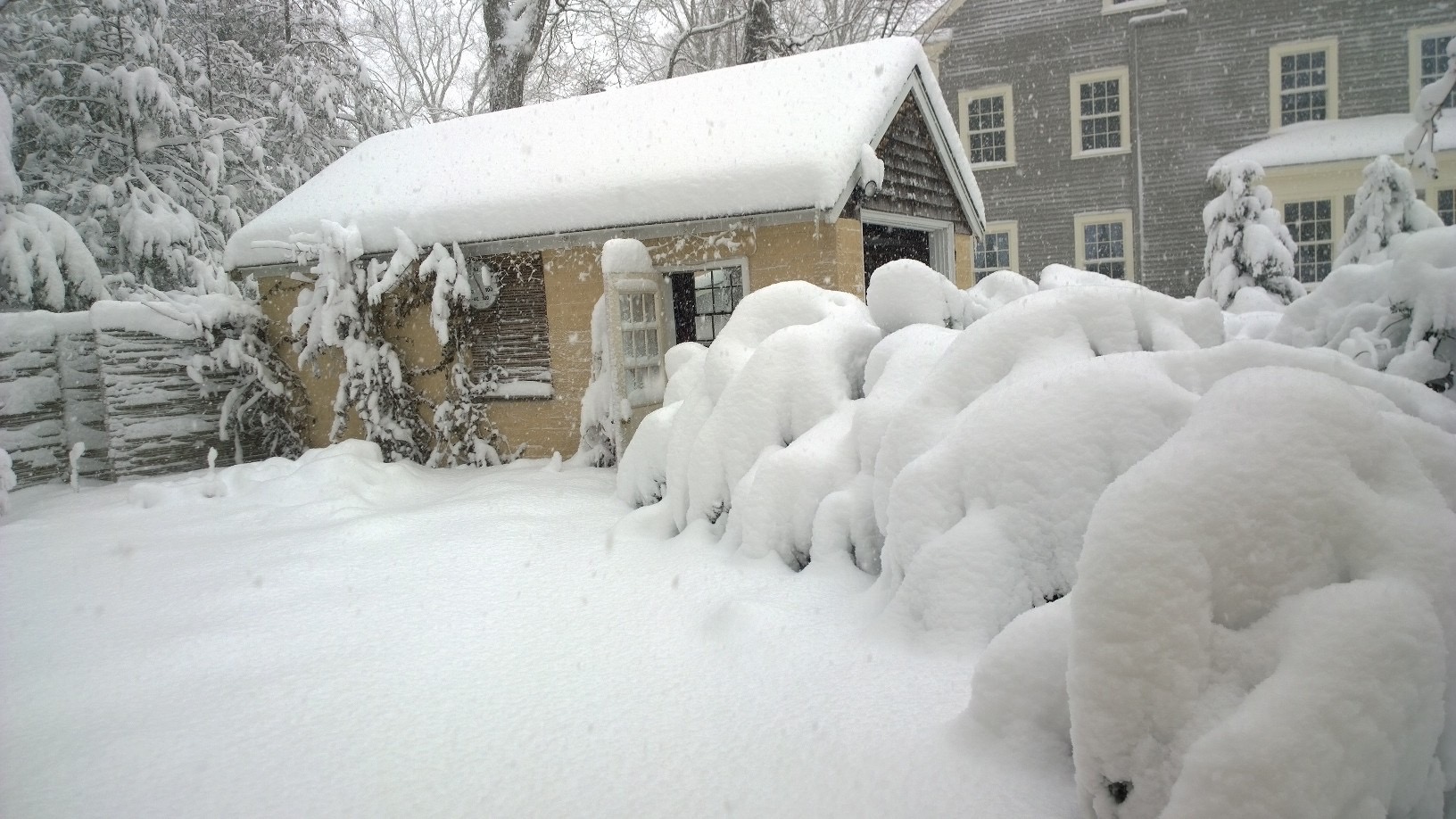
Back in March, when I was complaining about a series of heavy spring snows in New England, Deb said, “Save a picture for August, when we really need it.” I think the time has come.

Folks in the Northeast are not used to having temperatures day after day in the 90s combined with crazy-high humidity. Friends my age seem to find it totally enervating. If we can’t get to a bit of shade or find a breeze, we just sit like lumps — or move ve-ery slowly. Not all houses have air conditioning. In the past, it was seldom needed.

So it’s time to stop complaining about the heat and remember how I complained about the cold in March. Deb was right. One’s perspective changes. The picture above was taken on March 13 when I really would have preferred to see spring flowers coming up. Looks quite pleasant to me now.

I also have a few summer pictures to share. The tiny bird on what appears to be a telephone pole is actually a very large, fierce bird called an osprey. Towns along the New England coast construct special nesting platforms to keep osprey from building on telephone poles. You may see many such platforms if you take Amtrak through Connecticut. At this time of year, there may be several young ones — no longer babies — perfecting their new fishing skills.

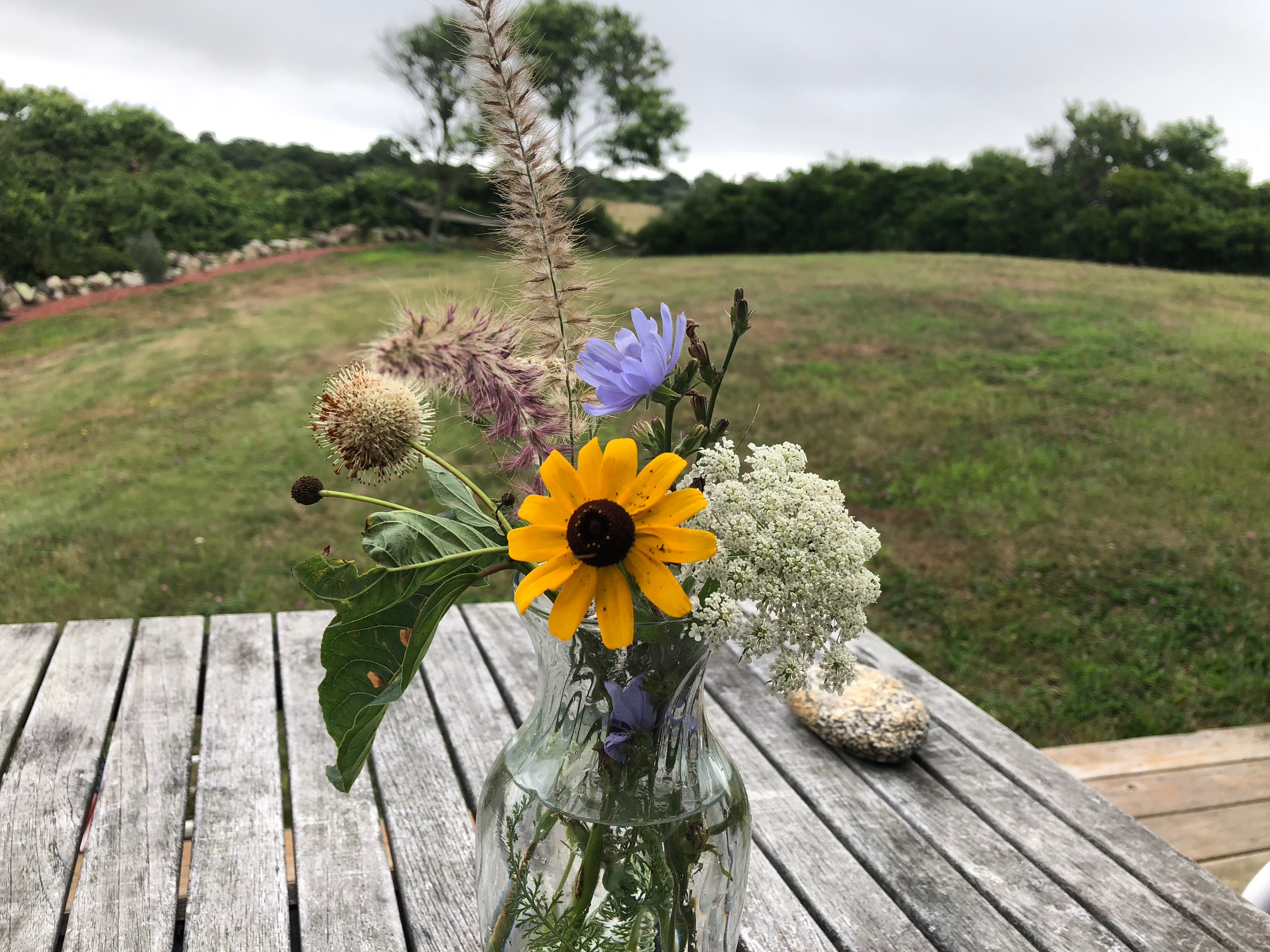
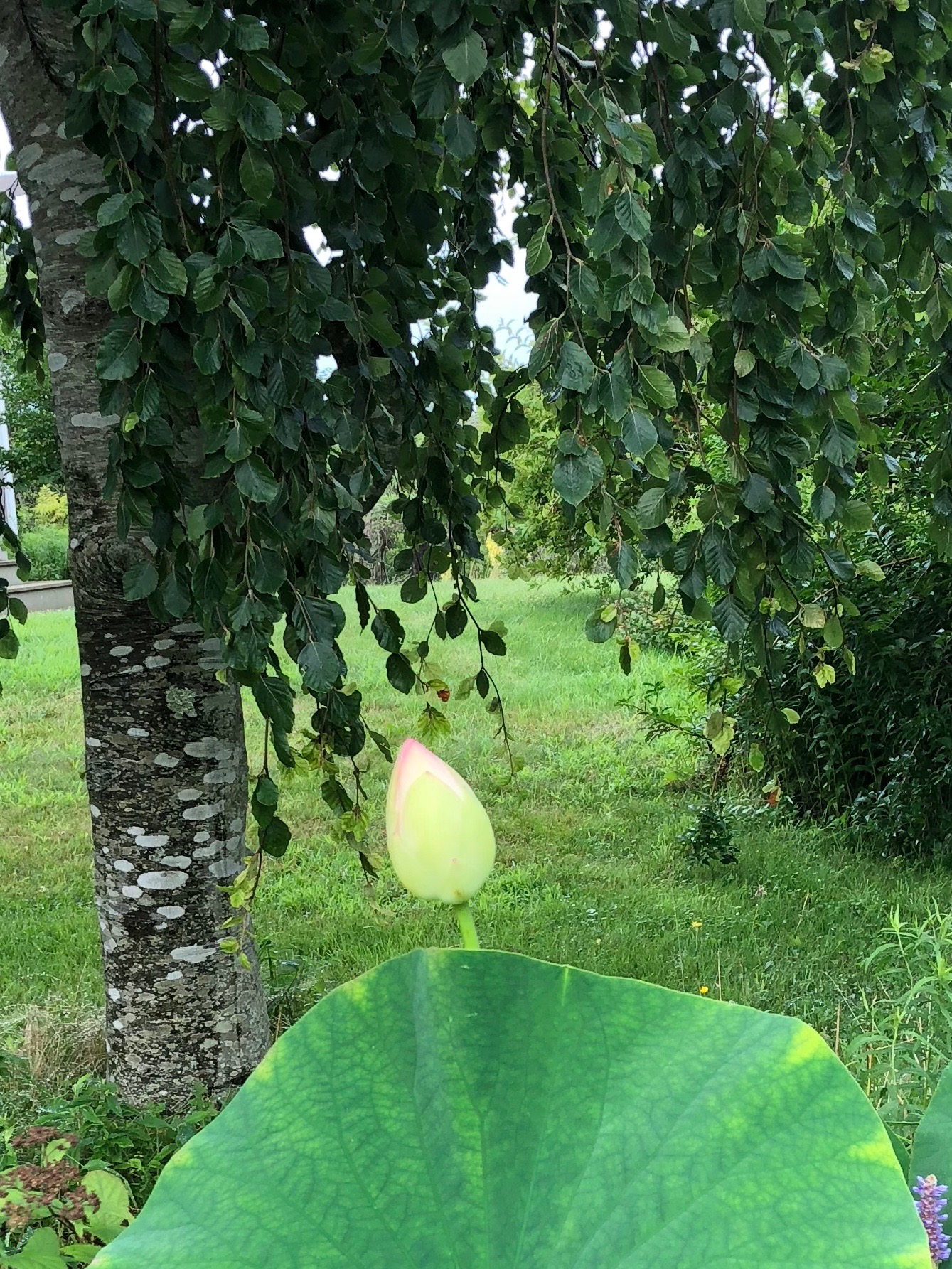
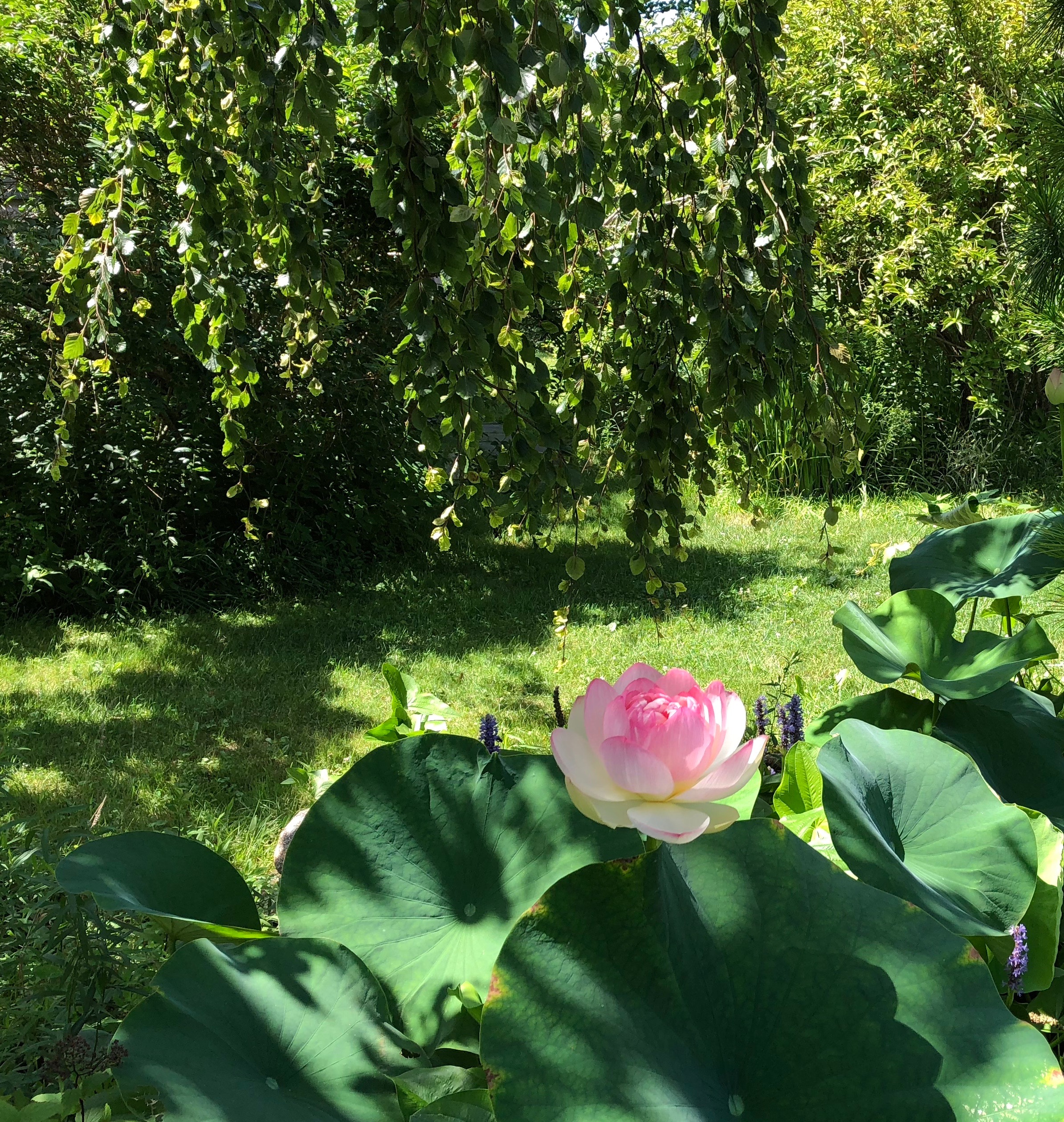
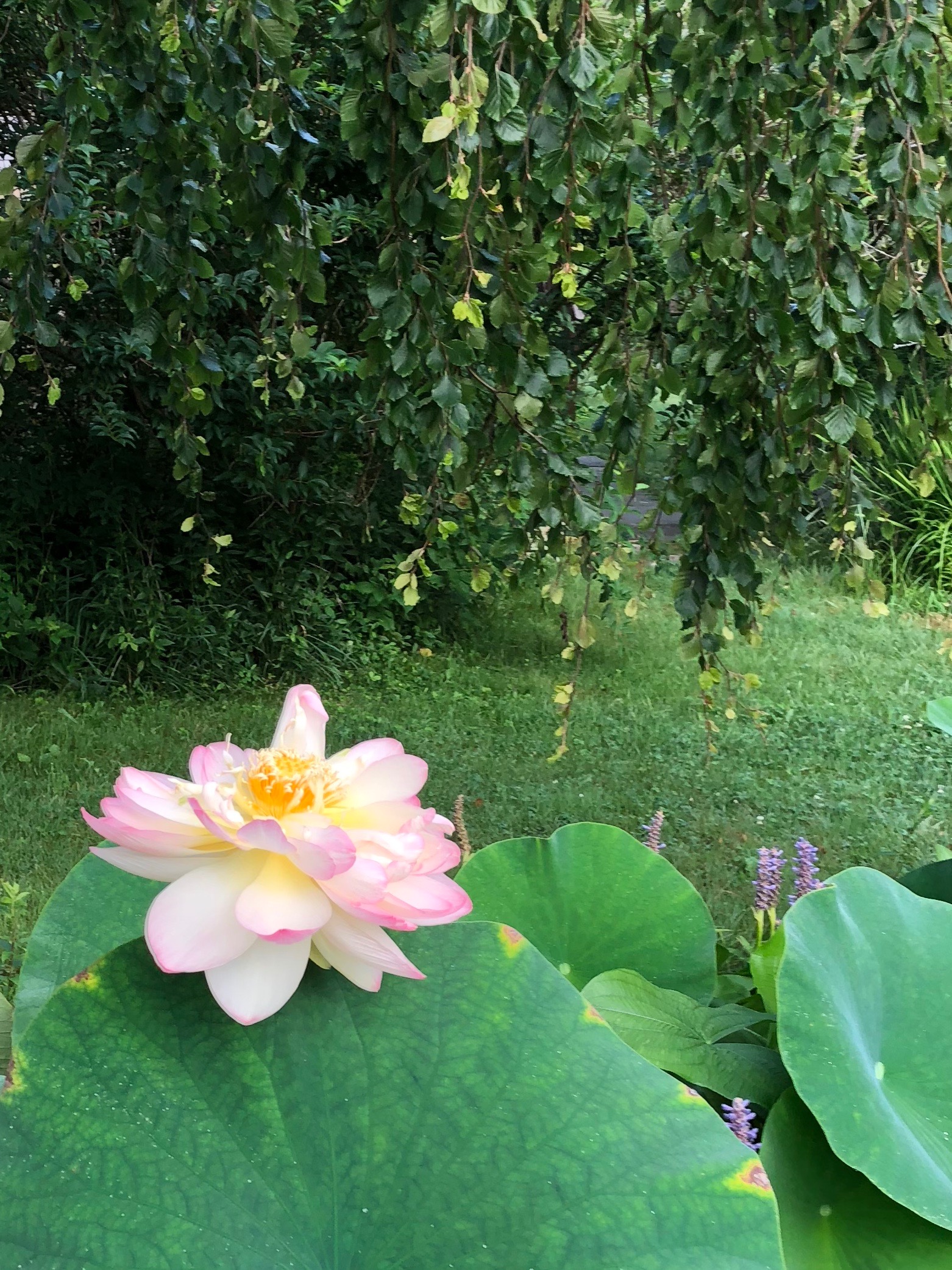
And I include a bouquet of local wildflowers, the boats in New Shoreham’s Great Salt Pond, and four photos demonstrating how the lotus at a neighbor’s house looks as it opens. I have recorded this other years, but every year, it’s a miracle.

I can’t help noting that even the lotus seemed to take the sweltering summer rather hard. Several blossoms simply bowed over, hiding their faces somewhere among their roots in the pond. I know how they feel.

73118-osprey-Pt-Judith

080118-anniversary-wildflowers

080218-New-Harbor-boats

080118-pink-tip-of-lotus

080418-ready-to-bloom

080318-lotus-Lakeside-Dr

080418-windblown-lotus


Read Full Post »

As I was driving home today, I heard a radio commentator say that the cost of solar has gone way down. John has solar now and can actually sell some of the energy produced back to the utility.

Nevertheless, the typical solar infrastructure is beyond the reach of many low-income people.

In Kenya, however, solar energy is being produced without the intermediary of the panels you may be picturing.

Derek Markham writes at TreeHugger, “Solar energy promises to be one of the backbones of our clean energy future, and its most well-known application is probably solar photovoltaic (PV) arrays, which can produce low-carbon electricity for homes and businesses alike. However, even as solar PV efficiencies rise, and costs drop, solar electricity is still out of reach for many people, as it requires a considerable up-front investment, as well as knowledgeable designers, manufacturers, and installers.

“In the developing world, small-scale solar, which can be used for lighting and charging mobile devices, is one of the solar technologies within reach of low-income residents, and while it can certainly fill some of the energy needs of people (such as a clean light source to replace kerosene, and to keep cell phones charged up), it’s only one piece of the energy puzzle.

“Another larger energy demand is for producing heat, whether it’s for cooking or water sterilization, which is often met by using electricity (at the risk of regular blackouts and high costs) or wood (which contributes to deforestation and indoor air pollution), but there is a viable and sustainable alternative solution in the form of solar thermal technology.

“Using the sun’s rays directly, without the need for expensive and complex components, is a perfect fit for quite a bit of the developing world’s energy needs, as well as being an appropriate technology even in First World countries. …

GoSol is demonstrating what is possible with several pilot projects, including a solar bakery and a peanut butter cooperative in Kenya, and is offering up plans for its solar concentrator at a very reasonable cost. …

“The GoSol Sol4 uses 4 square meters of mirrors to produce an estimated solar thermal output of 2 kW (said to be roughly equal to a standard gas stove) at a construction cost of between $350 and $500 USD (depending on whether recycled or new materials are used), and can pay for itself in the developing world within a year.” More here.

Simple and smart. Makes me think of Boy Scouts learning to start a fire with a magnifying glass that focuses the sun’s rays. GoSol sounds creative.

Photo: GoSol

Read Full Post »

I saved up this one until it was cool enough outside to talk about heating systems.

Liz Stinson writes at Wired, “Commercial buildings account for 20 percent of the national energy consumption—a big number on its own, but stunning when you consider that often, those buildings are half empty.

“A new project from MIT’s Senseable City Lab is looking to decrease the amount of wasted energy by creating hyper-localized beams of heat. Called Local Warming, the prototype system uses LED bulbs to beam direct rays of infrared light onto people. This is in direct contrast to HVAC systems, which blanket entire spaces with hot or cool air, regardless of how many people are present.

“MIT’s system is rigged to the ceiling, like highly-efficient track lighting. Using a WiFi-enabled tracking system, the lights can sense when a human is present and will beam infrared heat down like a spotlight. ‘It’s almost like having a your personal sun,’ says Carlo Ratti, a professor in the Senseable City Lab.

“The current prototype is on display at the Venice Architecture Biennale until November. It features a large infrared bulb surrounded by rotating mirrors that can direct the light in a focused beam. It’s bulky—hardly the type of thing you’d like in your home—but Ratti envisions future prototypes will use smaller LEDs for a more compact aesthetic.”

Read more at Wired

Read Full Post »