Feeds:
Posts
Comments

Posts Tagged ‘hope’

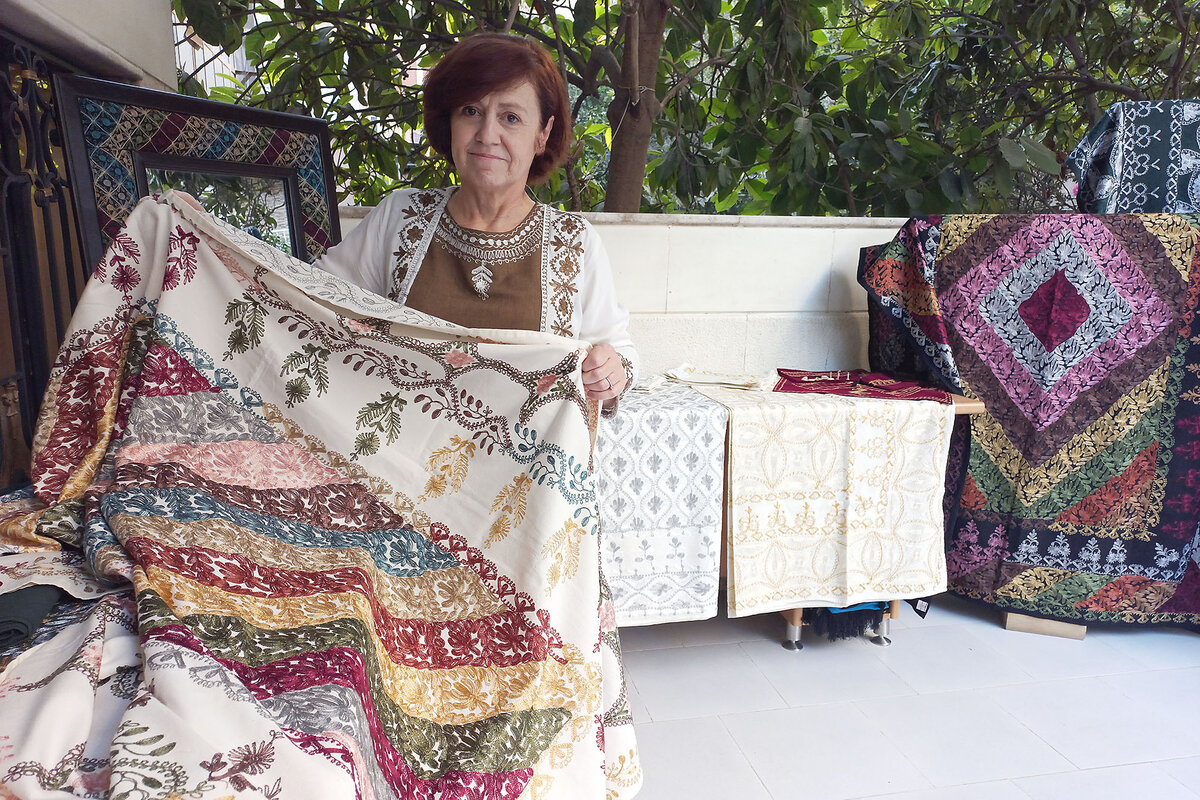
Photo: Walaa Buaidani.
Mona Araghili showcases aghabani embroidery at the Threads of Hope exhibition in Damascus, Syria. Post-Assad, she sees an opportunity for serious investment in traditional crafts.

“Threads of Hope” is a phrase that seems to cover a lot of what is going on in the world. Hopes may be hanging by threads, but every day they can strengthen. In today’s article from the Christian Science Monitor, the words are applied to the reemergence of traditional Syrian embroidery after the fall of the Assad regime.

Dominique Soguel writes, “By the time Ameera al-Hammouri was 10, her hands were dancing across the taut fabric beneath her grandmother’s aghabani embroidery machine. She was too short to sit, so she stood, working the foot pedal to coax floral patterns from metallic thread and her own memory.

“Decades later, in a rundown apartment building on the outskirts of Damascus, her machine now runs on an erratic supply of electricity. The building’s elevator no longer works and many of its windows are broken, but inside the sanctity of Ms. Hammouri’s spotless home, the artistry lives on. ‘Working on the embroidery machine for me is like drawing on paper,’ she says. … ‘Whatever I imagine, I bring to life with my hands.’

“Aghabani embroidery originated in Damascus more than 150 years ago, blending Ottoman, Arabic, and Persian design influences. Traditionally, patterns were hand-printed in Damascus onto fabrics that were then sent to Douma, about 8 miles from the capital, where women embroidered them at home. Their work, displayed on tablecloths and other household items, became a hallmark of Syrian hospitality.

“Today, the survival – indeed, the revival – of this craft tradition rests in the hands of women from Douma, a city synonymous with both resistance and ruin. The women behind these works are not only artisans. They are mothers, widows, and survivors of siege, displacement, and economic collapse.

“Ms. Hammouri herself endured all of it. Her husband and eldest son were arrested in 2012 and never returned. Douma was subjected to a five-year siege, when government forces surrounded the city, cutting it off from food, medicine, and fuel. Ms. Hammouri’s house was destroyed. As the bombs fell, she moved her children from house to house, basement to basement.

“The siege ended in 2018. With no income and no husband, Ms. Hammouri turned to the one thing that had always grounded her: her original aghabani machine, bought in 1988 with money she scraped together by selling her wedding gold and other treasures. It still stands in a corner of her bedroom, alongside a newer model.

“ ‘I talk to this machine,’ confides Ms. Hammouri, who is known in the community as Umm Meriee. ‘It holds my secrets. I’ve cried over it.’

“At first, she worked quietly from home, taking orders from traders who remembered her family’s reputation and bought pieces for export. Over time, she began training other women.

“If Syria’s current political opening brings more trade and tourism, she says, crafts like aghabani could once again become a source of stable income rather than just a means of survival.

“Now, twice a week, her apartment fills with the chatter and laughter of industrious women. … This gathering of women is not a formal enterprise. There is no signboard or registration, no website to market their work. But family reputations endure in a country where word of mouth is the norm.

“ ‘They know my name in the market,’ says Umm Meriee, recalling how she revived ties with shopkeepers in the Al-Hariqa market, in Damascus’ old city, because her aunts and grandmother had put the family name on the map. …

“For Mona al-Masri, a Tuesday regular, embroidery is her identity. … While her colorful pieces earn heartfelt ‘wows’ from her daughters, it is next to impossible to eke a living from this craft. In a good week, working three hours a day in between bouts of housework, Ms. Masri earns just over $6. … Despite the skill and time aghabani requires – a single detailed motif can take hours, and a full tablecloth might take a week or more to complete – handmade aghabani cannot compete with cheaper, machine-made imitations that dominate the local market, such as those imported from China.

“ ‘Right now, aghabani has no future,’ says Ms. Masri. But with government support, she feels that future could ‘be a very bright one.’

“Mona Araghili shares that optimism. … More than a decade ago, Ms. Araghili set up Threads of Hope – Aghabani with little more than a social media page and materials she borrowed from friends. With her college friend Basheera Baghdadi, who had grown up in Douma, she smuggled fabric and thread into the besieged city, using tunnels and roundabout routes through the countryside. …

“Ms. Araghili never shut down her group’s Facebook page, she says. ‘I always hoped that we could restart someday.’ ”

More at the Monitor, here.

Read Full Post »

Photo: Shirin Jaafari/The World.
Moayyed al-Kharrat, whose family has been performing the Sema in Syria for decades, described the dance as a sort of prayer.

As recently as June, when radio show The World filed this story about whirling dervishes, hope seemed to be the main emotion in Syria. The brutal Assad regime was gone, and victorious rebels were promising diversity and justice. Today sectarian violence has erupted.

But I think there are still reasons for hope — and for diverse groups to flourish. Like the Sufis.

This post shares what Shirin Jaafari wrote about the famous Sufi dance and the performers’ hopes.

“In the heart of Damascus, a group of men and boys dressed in long, white robes and tall headpieces stood in a semicircle. Their chants filled the courtyard of a traditional Damascene house that was turned into a hotel. …

“As the melody built up momentum, several of the men and boys began to twirl, their white skirts flaring out like blooming flowers. The dancers’ synchronized rotations make them trance-like, seemingly detached from everything around them.

“The al-Kharrats say they are the only family in Syria who have continuously performed the Sema, as the dance is known. It was introduced to the country in the 14th century and first popularized by the Persian poet Rumi in Turkey.

“Through years of war, repression and threats from extremist groups like ISIS, the family has still been able to pass the ritual on to younger generations.

Now, they say they are hopeful about new opportunities under the new Syrian government.

“Moayyed al-Kharrat, one of the two brothers who oversee the dancers, said their great-uncle learned the Sufi dance and taught it to others in the family. …

“ ‘The spinning represents pilgrims moving around the Kaaba in Mecca,’ Kharrat said, referring to the ritual performed by Muslims. ‘It’s also reminiscent of the planets moving around the sun.’

‘During the ritual, one hand is extended upward, palm facing the sky, he went on to explain, which symbolizes receiving divine blessing. The other one is turned downward, palm facing the earth, to pass the blessings to the world.

“Mahmoud al-Kharrat learned the Sema when he was 4 years old. He said that keeping the tradition alive in Syria hasn’t been easy.

“Sufism is a mystical branch of Islam focused on spiritual closeness to God. It has long faced suspicion from extremists, who consider Sufis to be non-believers. ISIS fighters have attacked their shrines and killed and imprisoned the descendants of the saints and personalities they represent.

“The regime of ousted President Bashar al-Assad didn’t prohibit the Kharrat family from performing, the brothers said. But it did make it difficult for them to get the right permissions. The Assad regime used the arts to paint a more positive image of itself to the world, they explained. For example, when foreign dignitaries visited, they asked the family to perform for them.

“As the civil war ravaged Syria, countries stopped issuing visas for Syrians to travel. The family found it almost impossible to take its performances to international audiences as it had done before. One time, they managed to go to the US, but upon returning, Mahmoud was questioned by a border guard about why he hadn’t yet completed Syria’s mandatory military service, which all men had to complete at the time.

“Mahmoud estimated that he ended up paying around $7,000 in bribes so he wouldn’t get sent to the frontlines. …

“At the Damascene home-turned-hotel, the first part of the performance wrapped up, and the two brothers discussed with the younger members what they could improve on. …

“After some discussion, they got ready for the next part of the performance — their long, white skirts sweeping the ground as they moved around.

“ ‘The best way to keep this tradition alive,’ Moayad al-Kharrat explained, ‘is to pass it on to the younger generation [making] sure they learn the chants, and the full meaning of what this dance represents.’ …

“ ‘When I dance, I feel like I’m flying,’ Mahmoud added. ‘I feel like a child who has just been given a birthday present.’ ”

More at The World, here.

Read Full Post »

Photo: Dominique Soguel.
Rua, a Damascus university student, poses for a photo wrapped in the Syrian flag while celebrating the anniversary of the revolution that led to the toppling of Bashar al-Assad, in Damascus, Syria, March 15, 2025.

Although we can’t know where Syria is headed in the long run — or how many powerful countries will interfere with what everyday people want — I think we’re allowed a moment of hope at this this time. Certainly, that is what many astonished Syrians felt when the regime of the tyrant Bashar al-Assad was overthrown in a “sudden” uprising that was many years in the making.

Dominique Sequol of the Christian Science Monitor wrote an article in March about what Syrians were feeling. While it focuses on a new freedom to worship, worship is only one example of the change there.

“Alaa al-Saadi, like many Syrian men of his generation,” she says, “once fought to overthrow longtime dictator Bashar al-Assad. Now Mr. Saadi is savoring his first ‘free’ Ramadan in his hometown of Qaboun, a low-income neighborhood and former rebel stronghold on the outskirts of Damascus.

“At sunset, when Muslims rush home to break the fast with the iftar meal, the business owner stands on a street corner pouring out licorice juice from a giant metal pot. …

“Damascus is observing its first Ramadan since the fall of Mr. Assad, who cast himself as a protector of Syria’s many minorities while ruling them all with an iron fist. The Muslim holy month – one of heightened spirituality, and marked by the pursuit of good deeds to help those in need – is observed in Syria and across the Middle East.

“Mr. Saadi, who spent several years in Libya before returning to Syria in 2019, recalls hiding during previous Ramadans to avoid being conscripted into the Syrian army. Now, he is grateful to be in the position to help his community. …

“Families displaced by the conflict are trickling back to Qaboun, although much of it remains reduced to rubble after years of siege and bombardment.

“ ‘This Ramadan, our loved ones have returned,’ says Mr. Saadi, fielding greetings outside his car-painting workshop. ‘We are reunited. Friends, loved ones, and young men are all back. Things will gradually improve.’

“Indeed, Damascus seems to be inching toward greater functionality, with uniformed traffic police on the streets and a steadier electricity supply. The mood in the capital is one of cautious optimism under President Ahmed al-Sharaa, who broke ties with Al Qaeda and led the military effort that toppled Mr. Assad in December.  

“This has been a month of prayer but also mixed-gender celebrations that continue late into the night under the glitter of Ramadan light installations. Women in all kinds of Islamic dress – from the niqab to the veil – converged on central Ommayad Square for the March 15 marking of the anniversary of the 2011 Arab Spring-inspired revolution. So did women with no veil. …

“There has been no shortage of individual and collective volunteer efforts inspired by the month of fasting.

“In Douma, another war-ravaged suburb of Damascus, Osama Massaya leads the volunteer group Mulham. Boasting 40 participants, age 14 and up, it focuses on cleaning mosques and distributing meals to worshipers. Such ideas are not new – but the possibility of executing them this freely is.

“In 2024, Mr. Massaya, a history student at Damascus University, tried to obtain a license for a volunteer team to clean up mosques. The request never received the green light from the Ministry of the Endowment. ‘At the time, there was no interest in mosques,’ he explains.

“ ‘The mosques were very neglected,’ adds Mr. Massaya, whose team has helped to clean up a handful in Douma already. …

“The Mulham volunteers aim to distribute 4,000 meals throughout Ramadan. Such efforts are financed by individual donations made by local residents, including some who resettled in Europe and the Middle East during the war and remain abroad. Most donations – including a recent batch of 300 kilograms (660 pounds) of dates – are made anonymously. …

“The activities of mosques were closely monitored in the past. In 2011, they were a springboard for post-Friday prayer protests against the Syrian regime, and long were treated as potential hubs of dissent.

“Rua, a university student in Damascus who gave only one name and whose father died in the notorious Sadnaya prison, reports a similar newfound sense of freedom.

“ ‘It’s the difference between day and night,’ she says of this Ramadan, recalling past years when ‘people prayed quietly and left mosques quickly,’ to avoid regime informants.” More at the Monitor, here.

We don’t choose what country we are born into, and perhaps watching the news since 2011, many of us were glad we weren’t born in a country like Syria. But I think that to witness such a moment of hope after despair is something precious.

Read Full Post »

Photo: Francine Kiefer/The Christian Science Monitor.
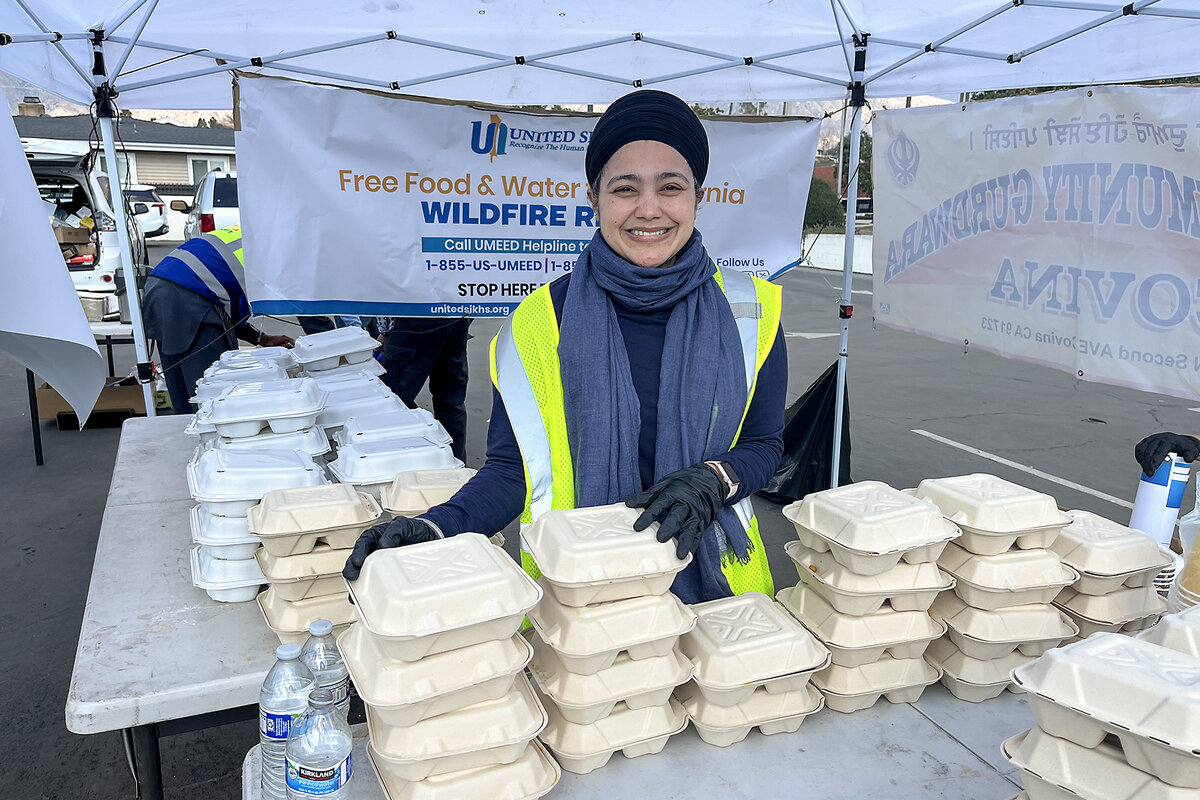
Meetan Kaur, of United Sikhs, stands with hot meals of basmati rice and chickpea curry for fire evacuees at the Pasadena Church East Campus donation center, Jan. 17, 2025.

Despite the loss of many houses of worship in the recent Southern California fires, faith communities are rising up to help others. And helping others others is helping the volunteers themselves begin to feel hopeful. (Scientologists? Why not? We are all human beings in a disaster.)

Francine Kiefer and Sophie Hills write at the Christian Science Monitor, “Cars pull into the Pasadena Church parking lot, waved forward by a couple of Scientologists. Christian volunteers hand out groceries and diapers. Orange, yellow, and black turbans dot the crowded lot, as Sikh volunteers dish out hot chickpea curry and basmati rice and cups of steaming chai.

“The line of cars stretches around the lot. Volunteers pass meals through car windows and load back seats with pet food, toiletries, and paper goods. Some Sikhs traveled from as far as New York and Canada to cook and serve meals to people displaced by the wildfires. The chai, especially, gets five-star reviews from volunteers and evacuees alike.

“ ‘That’s what we’re really hoping to do here – it’s really offering solace, offering comfort, in this absolutely crazy time,’ says Meetan Kaur, an organizer with United Sikhs, an international aid organization.

“The Eaton Fire destroyed thousands of homes, schools, restaurants, and businesses. Houses of worship burned, too. But their congregations are still here, gathering to pray in borrowed spaces and distributing food and clothing. …

“Organized religion provides space for worship and spiritual study, but it can be especially helpful when disasters strike because there’s already ‘a built-in system of caring,’ says Cynthia Eriksson, a dean at Fuller Theological Seminary, who specializes in the intersection of faith and mental health. …

“At the Pasadena Church, Chanel Jackson is loading up SUV after SUV with free groceries. She attends the Faithful Central Bible Church in Inglewood, clear across Los Angeles. But she’s driven to this donation and distribution center by both her faith and her roots.

“Ms. Jackson grew up in Altadena, so like several other volunteers, she says this is personal. Two of her schools burned. She knows some of the people in line. Sporting a ‘Dena’ T-shirt – that’s what folks call the Altadena-Pasadena area – she talks about the imperative from Scriptures to help the poor.

“ ‘A lot of people – their faith is shaken,’ she says. ‘They’re questioning God – “Why me?” – which I completely understand and empathize with. But God is in the people; God is in the angels. God is in the people that are here at this relief center, trying to help families in need.’ …

“The tragedies and hardship calls on a core aspect of faith: community. ‘It’s about the connection to something bigger than ourselves,’ says Rabbi Joshua Levine Grater, the director of Friends in Deed, a local interfaith nonprofit. His family lost its house in the Eaton Fire, as well as its synagogue, where he was once head rabbi and is now a congregant. …

“But leaders rescued 13 Torah scrolls before the building burned. When the fire died, one wall remained, etched with a mural that members didn’t know was hiding behind drywall. It depicts people and animals in the desert, beneath a single palm tree. …

“Founded 130 years ago, Friends in Deed focuses on the most needy people, operating a food pantry and providing housing assistance and case management. Since the fires, the requests for help have only increased. But so have the donations and volunteers.

“Despite the uncertainty his family and so many others face, there’s only one choice, says Rabbi Grater. ‘We have to find the courage to rebuild a step at a time.’ … The teachings and stories of the Torah are there as ‘reminders that there’s still an immense amount of love in the world.’

“In Altadena, at least five different places of worship succumbed to the wildfire. … First Church of Christ, Scientist, Altadena, whose edifice was spared, says it plans to share its space with nearby congregations once it’s safe to return. …

“For some, that generosity is central to their faith. A gurdwara is not just a place of worship, but also a place to coordinate and supply aid, says Gurvinder Singh, international humanitarian aid director for United Sikhs.

Seva, which translates to ‘selfless service,’ is a call to action, says Mr. Singh. That goes hand-in-hand with the tradition of langar, a community meal.

“ ‘It’s really the basis of humanity,’ says Ms. Kaur at the Pasadena Church. ‘It’s bonding through food.’ ”

More at the Monitor, here. Also, see how LA libraries are helping, here. No paywall.
Read Full Post »

Photo: FeelBeit.
FeelBeit is a cultural center for Israelis and Palestinians on the border of East and West Jerusalem.

Today’s story, published at Public Radio International’s The World on April 12, 2024, is one of those beauties one hopes is still true two months later. It’s about a group of Jewish and Palestinian artists who have provided a safe space for different cultures to be together in Jerusalem. It’s called FeelBeit.

Host Marco Werman reported, “For years, isolated pockets of quiet resistance in Jerusalem have tried to bring together people from both sides of the conflict, but the Oct. 7 attacks seem to have put a lot of that resistance on indefinite hold.

“But since then, one place is trying again to establish common ground between Israelis and Palestinians: FeelBeit, an event space and bar in Jerusalem.

“Located on the seam line between east and west Jerusalem, FeelBeit is an Israeli-Palestinian arts house and incubator, according to one of its managers, Karen Brunwasser. Each Wednesday night, the venue gives audiences a few hours of escape from the latest news engulfing the lives of Israelis and Palestinians.

“The venue intentionally sits on the line that divides Arab East Jerusalem and Israeli West Jerusalem. In both Arabic and Hebrew, bayt or beit means ‘home,’ so ‘FeelBeit’ literally means ‘feel at home.’ …

“ ‘This is our sort of sacred refuge,’ Brunwasser said.

“FeelBeit is an offshoot of Jerusalem Season of Culture, another organization that runs a summer festival in the city. The festival calls itself a laboratory for connection between people of different backgrounds, but it has struggled in the past against deeply entrenched opinions about the conflict.

“But Brunwasser and [Riman Barakat, a fellow manager] felt like they had a responsibility to continue hosting events amid the increased tension after Oct. 7.

“ ‘We understood how scared people are because we, ourselves, were afraid in the beginning,’ Brunwasser said. … ‘We understood that people were terrified to talk.’

That’s where they got the idea to call this evening of the arts ‘No Words,’ a stealth tool to bring people together.

“There have been eight or nine ‘No Words’ shows since the Israel-Hamas war began.

“According to Barakat, the audience every week is a mix of Israelis, Palestinians and people from other international backgrounds. And every show features Israeli and Palestinian artists alongside one another on stage. In fact, Barakat said it has actually been easier to coordinate joint performances with Israeli and Palestinian artists since the war began.

“ ‘And that’s something that has blown our mind,’ she said. …

“Zudhi Naguib is another FeelBeit member who started working on communications for the group about five years ago. He said he felt instantly at ease, partly because of the violence experienced growing up as a Palestinian in Jerusalem.

“He described the nature of this violence: ‘Eh, getting attacked by extremist Jewish Israelis, by being attacked by extremist Palestinians. Like I was attacked from both sides.’ Naguib said FeelBeit gave him a home.

“ ‘It actually shows me that Jerusalem is really much bigger than what I thought before. It shows me that there’s space for everyone. It was the trust that we succeeded to build with the people who come to FeelBeit, it really was what rescued us after the seventh of October,’ he said.

“After Oct. 7, Naguib felt too scared to leave his house. He didn’t speak to anyone for five days. It was the FeelBeit community that finally helped him. Naguib drove to the home of his boss at FeelBeit, who wanted him to join her at a kibbutz — an Israeli commune — where the parents of their mutual friend Oz had been killed in the attacks. … Naguib recounted Oz’s response to his condolences: ‘It’s not my sorry, it’s ours.’

“ ‘And he told me, “I don’t want anyone to use my mom and dad’s blood for revenge,” ‘ Naguib added.”

More at The World, here. No firewall. Donations encouraged.

Read Full Post »

Photo: Fernando Cortes via Inside Higher Ed.

Unless people are committed to the “ain’t it awful?” worldview, they probably respond in more positive ways to pitches about hopeful progress than pitches describing how dire everything is.

In an opinion piece at Inside Higher Ed, Stephen Porder agrees, noting that climate-change education is more likely to be effective when students learn that there is hope.

Porder writes, “The first year I taught Introduction to Environmental Science was 2007, the year after the release of An Inconvenient Truth. The class was full of eager students, most of whom would have described themselves as environmentalists. … I was there to teach them the science — basically how to use hypothesis testing, data and analysis to convince them the world is going to hell. They didn’t need much convincing.

“The endless description of problems, with little emphasis on solutions, is a hallmark of almost all environmental science and studies textbooks. After 20-plus years teaching in this field, I’ve come to think that our relentless focusing on the negative is, at best, missing an opportunity. … My more recent experiences teaching about solutions, rather than problems, suggests that a healthy dose of positivity even in the face of profound environmental challenges will reach a broader audience, gain more traction and diversify the people working on the admittedly wicked environmental challenges of the 21st century.

“Back in 2007, I walked into the classroom, fresh out of my Ph.D. and postdoc, eager to share the wonders of environmental science. I marveled at the data from the group run by Charles Keeling, who measured rising carbon dioxide in the atmosphere at the observatory on Mauna Loa in Hawai‘i. … I dove into the details of carbon isotopes to demonstrate just how we knew that the rise in carbon dioxide was a result of fossil fuel combustion, as opposed to natural sources. The course was definitely a science course —but looking back I realize each bit of data and analysis was perfused with pessimism. …

“Still, my course evaluations were good. … These good evaluations came from students who were mostly self-selected environmentalists — passionate about ‘saving the planet.’ They were bright, motivated and talented. … Other equally bright, motivated and talented students didn’t take the course. I wondered why.

“Having talked to many such students since, I’ve learned many felt a bit excluded. The environment was a worry for them, as it is for most of us, but it wasn’t their primary worry. They also felt like environmental studies or sciences was not a place where they could explore solutions. They felt that there was a relentless focus on what was wrong, rather than how to put it right. Finally, they felt like the problems we were describing were going to be fixed by people beyond the environmental field.

“I’ve come to agree with them. I, at least, was not doing enough to train problem-solvers. I’d been training people to cleverly document problems. I don’t think I’m the only one in the field who’s fallen into that trap. …

“I handed off Introduction to Environmental Science to a younger professor a few years ago, and from here on out I’m focusing on solutions, not problems. Climate solutions. Agricultural solutions. Deforestation solutions. They exist. They are not perfect and involve hard trade-offs. But their existence should be front and center in our teaching.

“Just putting ‘Climate Solutions’ in a course name dramatically changed my student enrollment. Surprisingly, very few environmental studies and sciences students signed up. Instead, students majoring in economics, political science, engineering, applied math and a variety of humanities fields appeared in my classroom. … Like all my students, they were united by their climate anxiety. But they came for, and responded to, the idea of solutions.

“This eclectic group brought a wealth of different interests, skills and weaknesses to the class and was eager to learn from each other about different approaches to overcoming the 21st century’s biggest environmental (I would argue societal) challenge. They were thrilled at the opportunity to contribute to a better future, even if the environment was not their top priority (for some it became a top priority when they learned there were things they could actually do to make a difference). Many had felt unwelcome in environmental studies/sciences, which often demands a political and philosophical homogeneity of its participants.

“As an example of this, a senior applied math major told me he had been searching for a field where his math could have impact. He had never taken an environmental class before (despite plenty of environmental angst) in part because he didn’t feel welcome or like he fit in with environmentalists. He now works doing data analytics for a solar power company. …

“Solutions are picking up speed. Technological advances in transportation (electric vehicles), space heating (heat pumps) and electricity production (renewables) have made extraordinary leaps since I started teaching. Given that transportation, space heating and electricity generation make up more than 70 percent of all fossil fuel emissions, this is huge news! We should be teaching about it at every level and helping our students gain the skills to push these revolutions forward as engineers, community organizers, investors and so on.

“Already these advances have cooled our future. A decade ago, we were headed for four to five degrees Celsius warming by century’s end. Now three degrees Celsius is more likely. Anyone who studies climate knows that’s still way too much warming to be safe, but it’s also a huge step in the right direction. You may not hear that in most environmental science classes, or in the news, but you should. Even better news is that most of what precludes keeping that number to two degrees Celsius is political, not technological. That wasn’t true when I started teaching, so we need to update our curricula to reflect this remarkable progress.

“I don’t mean to be overly optimistic. The challenges to a stable climate future are enormous. … But by relentlessly beating a drum of negativity in the absence of hope, we’re driving away brilliant young minds that could help make the world a better place.”

More at Inside Higher Ed, here. No paywall.

Read Full Post »

Photo: Brandon Harris.
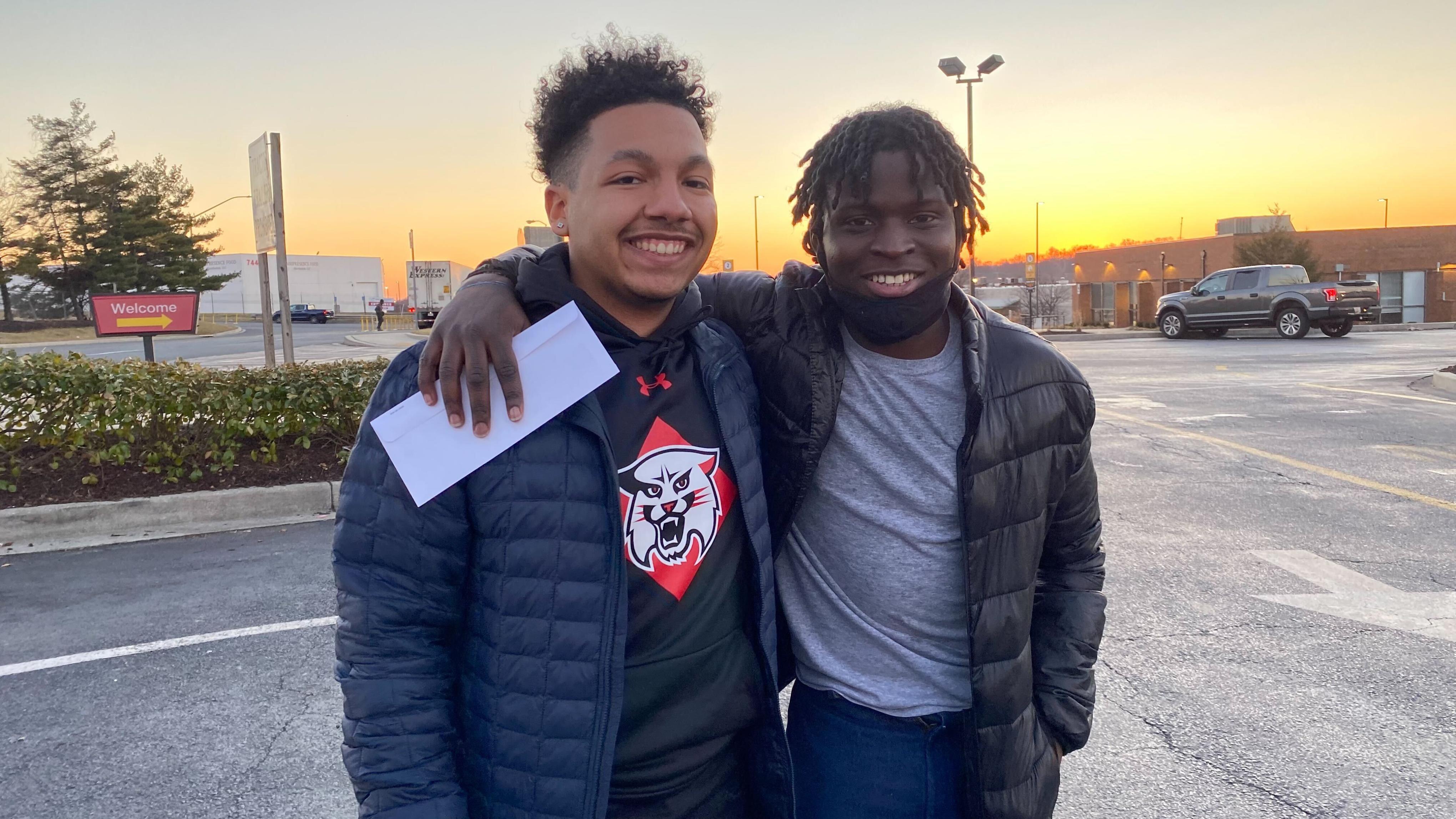
Brandon Harris (left) and Sura Sohna after Sohna’s release from the Patuxent Institute Feb. 8. Harris’s work on a Davidson College project figured into the court’s decision to release Sohna more than a decade before the end of his 14-year sentence.

Your childhood friends may know you better than anyone else. In today’s story, Brandon Harris knew that a disadvantaged friend who had gotten in trouble with the law was a good person at heart and deserved a second chance. Getting him out of jail took a college research project and people willing to listen.

Sydney Page reports at the Washington Post, “Brandon Harris sat anxiously in an Annapolis courtroom, his head buried in his hands. He took an audible breath as the judge prepared to read the ruling.

“The 22-year-old college student didn’t fear his own fate. He was concerned for Sura Sohna, his childhood friend, whose 15-year prison sentence for first-degree burglary was being reconsidered that morning.

“ ‘Being in that moment was completely surreal,’ said Harris, a senior at Davidson College in North Carolina. It was his independent-study project that was part of what compelled the court to reassess the case [of] Sohna, 23, who had been in the Patuxent Institution, a correctional facility in Jessup, Md., since he was 20. …

“Sohna’s friendship with Harris began at Hillsmere Elementary School in Annapolis, when they were in the same fourth-grade class.

“ ‘We had a lot of great times,’ Sohna recalled. ‘We were close as kids.’ … They remained close as they moved on to Annapolis Middle School.

“ ‘But towards the end of that, we started drifting apart,’ Harris said.

“As teenagers, they were on opposite paths. While Harris got an academic scholarship to a prestigious private high school, Indian Creek School, Sohna was living in an affordable-housing community, witnessing acts of violence with little guidance or stability in his life.

“ ‘We had bad circumstances,’ Sohna said, explaining that he felt responsible for looking after his mother and brother. ‘I felt like I had to be the one to support us, and I went into criminal activity because of that.’ He broke into several houses when people weren’t there and stole property. He would then sell the items for money.

“Sohna got caught and was first incarcerated at age 17 after being charged as an adult with 25 counts, including burglary, theft and multiple gun-related offenses. Many of the charges were dropped in a plea deal, but he still ended up behind bars. When he was released, he continued committing crimes and was again arrested. On Jan. 14, 2020, he was sentenced to 15 years in prison for one count of first-degree burglary, which he had committed while on probation.

“ ‘The judge gave him a really hefty sentence,’ said Keith Showstack, Sohna’s lawyer, who thinks the tough sentence was due to ‘a track record of Sura committing a lot of burglaries, and the judge thought enough was enough.’

“At that time, Harris and Sohna had lost touch. Harris remembers seeing Sohna’s mug shot in the local news more than once over the years. ‘I was very scared for him,’ Harris said. ‘That hurt.’

“Harris knew his friend was a good person at his core and believed he had committed those crimes as a response to poverty and desperation. ‘The thought that went through my head was that if our life circumstances were flipped, I might also be behind bars,’ Harris said.

“While they weren’t in contact, Sohna stayed on Harris’s mind, particularly during his college classes that covered social justice. ‘It just made me think a lot about him,’ Harris said.

“But it wasn’t until June 2020, when Harris read about how the coronavirus pandemic was worsening already poor prison conditions, that he decided to write a letter to his childhood friend to check in. Sohna was stunned to receive it.

“ ‘It was so shocking to me,’ he said. ‘I saw it said, “Brandon Harris,” and that made me feel warm inside.’ [He added] that when you’re in prison, ‘you don’t have people on your side.’

“Harris’s letter was mostly filled with life updates, as well as motivational messages. … Before long, their childhood bond was restored.

“Sohna shared with Harris what life was like in prison. ‘It was miserable. It was shameful. It was angering,’ Sohna explained. ‘I felt like that place was going to define me and make the worst of me.’ When Harris resurfaced in his life, he added, it was ‘at a time when I really needed it.’

“Corresponding with Sohna was meaningful for Harris, too. … He was inspired to start an independent-study project through the school’s Communication Studies department. … Sohna was enthusiastically onboard. It offered him a sense of purpose, and for the first time in a while, allowed him to see himself as more than an inmate.

“As part of the semesterlong assignment that started last January, Harris conducted interviews with Sohna, as well as some of the victims of Sohna’s crimes, prosecutors, law enforcement officers and Sohna’s family.

“Harris learned that Sohna’s father was mostly uninvolved in his upbringing, and that his family struggled with homelessness at one point. He also came to understand the violence that Sohna had seen while living in Robinwood, an affordable-housing community in Annapolis, where even this week, two youths were shota boy, 15, and a girl, 11.

‘He had to be willing to listen to good things about Sura but also things that were not all that flattering in order for him to actually have the full story, which is not always easy,’ said Ike Bailey, a journalist and professor at Davidson College, who mentored Harris through the project. …

“Harris contacted Maryland Gov. Larry Hogan (R), who gave permission for Sohna to participate in a public interview from prison, which the facility initially had prohibited. It turned into a live Zoom conversation that was publicly broadcast.

“Sohna’s lawyer, Showstack, participated in the discussion — which was promoted by the school and featured in local media — along with hundreds of members of the Davidson community and others. Sohna could feel the support, he said.

“His lawyer said the Zoom was helpful, as it ‘opened his eyes to the realization that there are a lot of good people who are willing to help,’ Showstack said. … In December, Showstack decided to try to get Sohna’s sentence reevaluated. … The judge granted the request. …

“By the end of the month, Sohna was granted a hearing. While Showstack was optimistic, Sohna was less confident. ‘I just had really no hope,’ he said.

“At the Feb. 8 hearing, though, he poured out his heart to the judge, owning his actions and explaining why he was worthy of being back in society. He said he wanted to contribute to his community rather than take from it.

“ ‘It was an amazing speech. I was proud,’ Harris said. … Harris also took the stand, outlining the findings from his project, including Sohna’s unstable situation at home and his family’s financial struggles. He reinforced that Sohna’s behavior was a series of bad choices he made rather than who he was as a person — or who he would be in the future.

“ ‘I talked about the progress I’ve witnessed since working with him’ [and added] that Sohna’s father is back in his life, he speaks regularly with a therapist and, because of the project, he has many prospective mentors in the Annapolis community and beyond.

“At one point, Maryland Circuit Court Judge William Mulford II — the same judge who sentenced Sohna in 2020 — asked everyone in the gallery to raise their hand if they had come to support Sohna that morning, and everyone did.

“Then, in a moment Harris and Sohna described as dreamlike, the judge said: ‘You’re going home today.’ “

More at the Post, here.

Read Full Post »

Photo: Ann Hermes/CSM.
Najari Smith, who founded the bike shop co-op and nonprofit Rich City Rides, stands in front of a mural depicting him on April 9, 2021, in Richmond, California, a town across the bay from San Francisco.

There’s something liberating about riding a bike, as my youngest grandchild learned after taking an REI class in Cranston. She used to be afraid of falling. Now she’s a biking dervish. Today’s post is about another biking enthusiast, who’s been liberating a poor city and making it rich.

Erika Page writes at the Christian Science Monitor, “Najari Smith was down in the dumps the night he first heard the bicycles below his window. He was new to California, lonely, and felt he lacked purpose. On the street below, a costumed parade of cyclists rolled by blasting music. By the time Mr. Smith rushed downstairs to join the party, they were gone.

“Mr. Smith’s journey, though, was just beginning. After that night in 2010, he began riding his bike everywhere and joined every community biking event around. Slowly, his spirits lifted.

‘Shoot, bicycles kind of saved my life,’ he says. He became part of the Bicycle and Pedestrian Advisory Committee of Richmond, California, which improves bicycle infrastructure in the city. During a routine committee meeting, he got his big idea.

“ ‘I thought to myself, “We’re building this infrastructure, but, you know, who are we building it for? Who’s going to use it?” ‘ he recalls. How would he get his community – the Black community – excited about using the bike lanes he was advocating for? And how would he break down the stereotype that Black people don’t bike? He started small – fixing up bikes at the park with local mechanics and giving them out to anyone who wanted one.

“Today, Mr. Smith runs Rich City Rides: a worker-owned cooperative bike shop as well as a bicycle advocacy nonprofit. These two spokes of the organization are distinct, but both serve Mr. Smith’s vision of using bicycles to ‘bring people together for healthy civic change’ in Richmond. Just like the bikes he fixes at the shop, Mr. Smith believes that no one, no matter what they’ve been through, is ever broken beyond repair.

“ ‘He’s the type of leader that seeks out the strength that an individual may have, rather than identifying their weaknesses. … He’ll sit down with folks and try to figure out how to get them involved, no matter what,’ says Robin D. López, who volunteers as a photographer for Rich City Rides and thinks of Richmond as ‘a community of untapped potential.’

“Roshni McGee, the program manager at Rich City Rides and co-founder of the bike shop, agrees. ‘He always tries to, you know, put a little bit of extra pressure on people and make them really be that diamond in the rough,’ he says.

“Rich City Rides is situated on a busy corner of Macdonald Avenue in a neighborhood that locals call the Iron Triangle, notorious for high crime rates and gun violence. Even though they live just across the bay from tony gentrified neighborhoods of San Francisco, many residents struggle to make ends meet. …

“ ‘He leads with love. … He shows that this is what we can do as Black people. We can revitalize our downtown, and we don’t have to be afraid of each other,’ says Jovanka Beckles, a mental health specialist who served on Richmond’s City Council from 2010 to 2018. She says Rich City Rides’ success has inspired other small businesses to open too, helping put the neighborhood on a long-awaited upswing. …

“[The nonprofit arm] plans social and wellness rides, youth programs, and community outreach. Since the nonprofit began in 2012, it has given away more than 1,000 bikes, led hundreds of social bike rides with thousands of participants, and conducted countless youth bicycle workshops. And during the pandemic, Rich City Rides has been distributing grab-and-go meals to families in need – an idea suggested by one of the high schoolers who works at the shop.

“In fact, Mr. Smith says other members of the team, and especially young people, make most of the important decisions. ‘I’m just a connector,’ he says.

“Cameren Howard-Simons is one of those young people who has found purpose through the organization. When he first met the crew at Rich City Rides, he was in middle school, and his mother didn’t want him hanging out in the area because of its reputation.

“Now Cam, a junior in high school, spends most of his free time working at the shop. ‘It’s hard to keep me away from people like this,’ he says with a wide smile, as he tries to get a derailleur to behave on the pink bike that’s hanging from his repair stand. Rich City Rides has kept him out of trouble, he says, adding that it’s one of the few places where kids can be completely themselves, without judgment.

“ ‘You’re wheelieing next to somebody, and they’re clapping, they’re recording you [on their phones], and they’re showing you love – showing you that they actually care about what you do,’ he says. …

“The notion that Richmond is not poor – but rich – guides Rich City Rides. ‘We’re a community that’s really rich in creativity and capacity and ingenuity,’ says Mr. Smith.”

More at the Monitor, here.

Read Full Post »

110620ebola_congo20nurse

Photo: Kudra Maliro
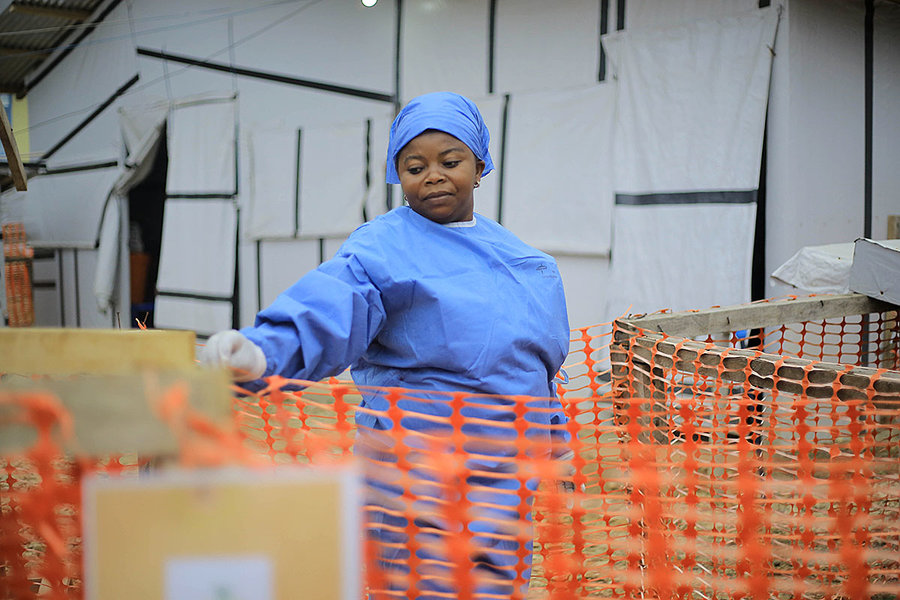
Regina works at the Ebola treatment center in Beni, Congo, where she was once a patient. She often tells other patients, “I had this horrible thing, too, and look at me now. You can’t give up.”

When people recover from a natural disaster or a disease that loved ones did not survive, rather than feeling elated to be alive, they may feel only darkness about their losses. Some have learned to try healing their spirits a bit by helping others in similar situations.

Ryan Lenora Brown writes at the Christian Science Monitor, “When Regina Kavira Mbangamuke’s toddler son fell sick late last year, she did what any mother would. She pressed his feverish body to hers. She wiped away his tears and his sweat. She whispered tiny comforts in his ear. Don’t be afraid, my baby.

“And when he died, she fell into a sadness so deep and physical it took a week for her to realize there might be something else wrong.

“Ebola can be like that, Ms. Mbangamuke knows now. First it tries to take the people you love most in the world. And then it tries to kill you too.

“But as she tells her story to her patients at the Ebola treatment center in this city in eastern Congo, where she now works as a nursing assistant, it has a more hopeful postscript.

‘I say, my brother, my sister, I had this horrible thing too, and look at me now,’ she says. ‘You cannot give up.’

“Like nearly every one of the 1,000 people who have survived Ebola in eastern Congo in the past 15 months, Ms. Mbangamuke’s survival is interlaced with profound loss.

“But Ebola also affords les guéris – the cured – with an unusual opportunity. They are considered likely immune to the disease, and so also to the cruel distance it demands. They don’t need to wear the spacesuit-like protective gear that other Ebola responders don to avoid touching the sick. They can hold hands and rock babies. They can hug and clean and console. And in a place where trust in outsiders is in short supply, the hundreds of survivors who now work in the Ebola response provide something else: familiarity.

“ ‘This work helps the response, but it also helps the people doing it,’ says Solange Kahambu Kamuha, a psychologist with UNICEF, the U.N. children’s agency, in Beni. …

“[A] young man in bed shakes his head weakly. No, he says, he won’t go. He heard that everyone who goes into an Ebola treatment center dies. From the outside, rumors like this can sound fanciful. The disease was invented by the rich to make money. The disease was brought in to kill the political opposition. Hospitals inject their patients with Ebola to keep the outbreak going.

“But each outlandish-seeming rumor contains a kernel of truth. … Even the idea that patients are being infected in hospitals is rooted in the truth that many have gotten sick after visiting one. …

“There is simply little reason to believe that outsiders ever have their best interests at heart, says [Dr. Maurice Kakule Mutsunga, the chair of the local Ebola survivors organization]. ‘All around, people see tanks and U.N. soldiers, and still our war doesn’t end,’ he points out, referring to the decades of civil war that have roiled this part of Congo. Why should Ebola, and its new army of outsiders, be any different?

“Ms. Mbangamuke sees the skepticism, and to her too, it makes sense. Ebola has broken all of society’s rules.

“ ‘Here in the Congo, to take care of people is the normal thing, but in times of Ebola people cannot do the normal thing’ for their own families, she says.

“For her, it is still nearly impossible to make sense of a world that would take her child and spare her. The camaraderie she feels with her colleagues, their unspoken understanding, the easy laughter that passes between them as they mix sugary cups of tea in the break area, none of it gives meaning to her son’s death. But it is a way for her to try to restore some measure of balance.

“ ‘Every old woman I see [in the treatment center], she becomes like my own mother. Every baby, it’s like my own baby.’ ”

More at the Christian Science Monitor, here.

Read Full Post »

Photo: Katherine Taylor for the Boston Globe
Eureka Ensemble, whose mission is to nurture social change, launched a Women’s Chorus that welcomes women experiencing severe poverty and homelessness.

How does one write a headline for a story like this? It’s not exactly about music giving homeless people hope. It’s more that focusing on music — music performed for you and music you make — activates a positive side of who you are. It’s that positive things can lead to other positive things.

During the 2018 Christmas season, there was quite a bit of comfort and joy being spread by music in the Greater Boston homeless community. Zoë Madonna wrote about it at the Boston Globe.

“The CASPAR homeless shelter, a low-slung brick building, crouches on Albany Street in Cambridge. When percussionist Jennie Dorris wheels her marimba through the front door, half of a large central room has been cleared, and a line of grizzled men sits at a long row of tables, watching. An enthusiastic older man in a Boston Strong T-shirt marches up, introducing himself as Danny. ‘Finally, the marimba’s here!’ he exclaims, grinning. ‘I wait all year for this.’…

” ‘What compels me is to take music where it’s needed and treat everyone with respect,’ says founder Julie Leven, a violinist. This year, its eighth, Shelter Music Boston has mounted scores of concerts in shelters throughout the Greater Boston area, including a full schedule in the days leading up to Christmas.

“It’s not the only music group focusing on the homeless around Boston. Eureka Ensemble, whose mission is to nurture social change, launched a Women’s Chorus that welcomes women experiencing severe poverty and homelessness. …

“Eureka’s most ambitious project, according to cofounder and conductor Kristo Kondakci, was a commissioned composition, Stephanie Ann Boyd’s ‘Sheltering Voices.’ Auditions for choral fellowships for women were held at Pine Street Inn and Women’s Lunch Place, says Kondakci, a recent graduate of New England Conservatory who has worked with the homeless since his student days at Boston College High School. Around 15 took part.

“Carrie Jaynes and Rottisha Mewborn are friends who met at Pine Street Inn. When they saw the audition sign-up sheet, they were initially skeptical, they say — they’re used to well-meaning outsiders putting in a few hours and then disappearing. But they went to the audition in March, in a room where the heater was going haywire. To cool it down, Kondakci threw open the door of a nearby freezer.

“And that, Mewborn says, put them at ease. … As Eureka Fellows, Jaynes and Mewborn rehearsed weekly with Kondakci, learning ‘Sheltering Voices.’ They were never treated as anything less than important and independent, they say.

“ ‘We became so desensitized at Pine Street that we forgot how we can be treated like a normal person,’ says Jaynes. At the rehearsals, she says, ‘we knew that we were in this together. We knew that we were all right . . . we could be human again. We could show emotion and not be judged if we cried, or laughed, or showed a softer side of us.’ …

“Shelter staff say that after Shelter Music Boston concerts, the atmosphere is more peaceful, and nights are more restful, notes Leven, who also plays with Handel and Haydn Society and the Boston Pops Esplanade Orchestra. …

“As for the Eureka fellowships, Jaynes and Mewborn say their experiences were powerful. ‘Having Kristo say “We’ll get you there no matter what” built up our trust and our safety,’ Mewborn says. Because Pine Street Inn has a daily lottery, she explains, she never knows if she’ll have a bed to sleep in each night. There’s little in her life she can truly count on. ‘So just having this little safety — even if things are going crazy out here, we can get there — it’s amazing.’ ”

More here.

Read Full Post »

americanchaffseed2

Photo: Masswildlife
American chaffseed has been found in Massachusetts after 50 years, and nature-lovers are cheering.

Maybe finding a plant that was thought to be extinct in Massachusetts doesn’t rate high with you amid all the distressing things happening in our world, but I will take good cheer where I can find it. And botanists are certainly excited.

Steve Annear reports at the Boston Globe, “State wildlife officials and local botanists are sprouting smiles after the ‘Holy Grail’ of plants was discovered this summer, a ‘jaw-dropping’ find that puts to rest a decades-long search in Massachusetts.

“According to the Massachusetts Division of Fisheries and Wildlife, in July, Rhode Island botanist Doug McGrady located an abundance of the plant ‘American chaffseed’ growing on a relatively small patch of land on Cape Cod.

“The discovery is particularly exciting because American chaffseed has been listed as a federally endangered species since 1992 — and it hasn’t been seen in Massachusetts in more than five decades, officials said. …

“ ‘There are historic records of American chaffseed along coastal plains from Massachusetts to Louisiana,’ they said. ‘But populations declined over time due to habitat loss and fire suppression.’

“After McGrady found the plant, MassWildlife staff visited the site to further confirm that it was, indeed, American chaffseed. While there, they counted over 2,600 stems, officials said. …

“The plant is currently listed as growing in New Jersey, North Carolina, South Carolina, Georgia, Florida, Alabama, and Louisiana, according to the US Fish and Wildlife Service. …

“In a video posted on MassWildlife’s Facebook page … State Botanist Bob Wernerehl can be seen crouching down in front of a patch of American chaffseed, as he explains the significance of the plant.

“ ‘In Massachusetts this rare plant is so rare it has never been seen since 1965, despite numerous attempts to search for it,’ Wernerehl says. ‘So this is a brand new find of this very rare and special plant.’ …

“He said when botanists went out to the site where the plant was found — an area he can’t divulge because it’s endangered — the population was ‘really good.’

“ ‘It wasn’t just a meek little population hiding out. It was pretty big,’ he said. ‘They look healthy, and they should theoretically reproduce and continue good solid population numbers over time.’ ”

More at the Boston Globe, here. Next up for lost species: How about the Ivory-billed Woodpecker? Stranger things have happened.

Read Full Post »

Waiting

I went to the five-hanky Amahl and the Night Visitors again this year — so moving for so many reasons. I’m moved by the Italian composer’s last-minute inspiration to use the three kings of his childhood as the basis for the opera commissioned for a live television broadcast, the love between the mother and child, their extreme poverty, young Amahl’s optimism, the miracle, and numerous lines — “the keys to his kingdom belong to the poor,” “for such a king, I have waited all my life.”

Waited. Waiting.

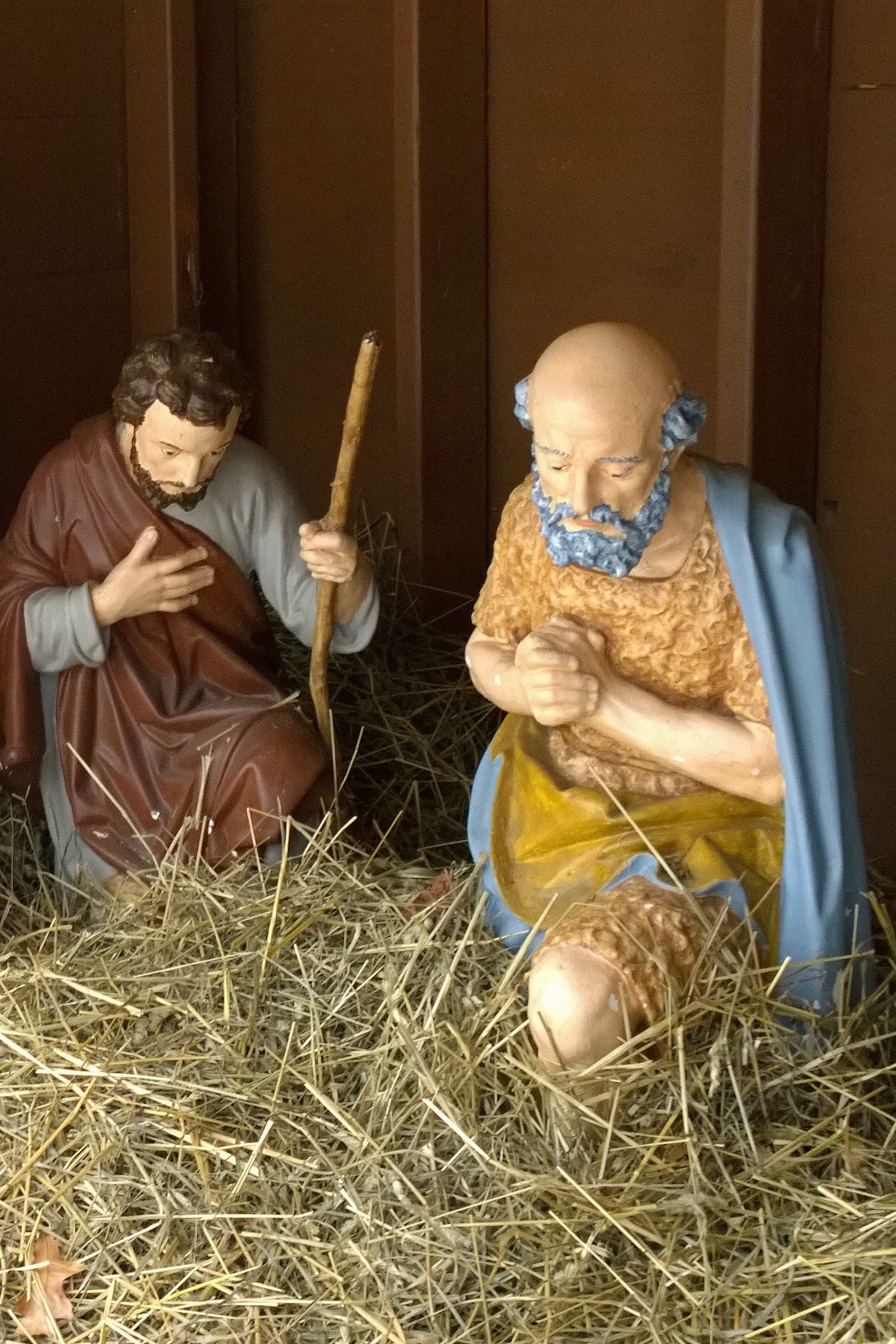
The Catholic church in Concord sets up a crêche outside the parish hall every year. They don’t complete it and place the baby in the manger until Christmas Eve.

I like to think of the kneeling figures as waiting, although once the tableau is complete, they are seen as worshiping.

I see them as waiting and believing that a reason to be hopeful is coming. And I think their belief plays a role in making it come true.

122216-waiting-for-a-reason-to-hope

Read Full Post »

Laura Bliss at the Atlantic‘s City Lab has a story on young people you may have seen performing in a New York subway car. She reports that in the film We Live This, the teens’ hopes seem hemmed in by poverty.

“ ‘Showtime’ dancing is a hallmark of the New York City transit scene,” writes Bliss. “Hoping for donations, crews of young black and Latino men perform exuberant choreographies for subway passengers, twisting and leaping from pole to pole with artful ‘lite-feet‘ dancing in between—and never before shouting, ‘It’s showtime!’

“Who are these dancers scraping by on their earnings? A new, short cinéma vérité documentary, We Live This, shines a light on the world of one crew, whose four young members perform on the J train. They are talented, hardworking, committed, and full of dreams, the film shows. But for some, the obstacles are high, and the alternatives slim. …

“Forty, is homeless.

‘As I’m dancing on the train, I’m thinking about where am I sleeping at night,’ he says. ‘Who should I call? Who is going to pick up? What if they don’t answer?’

“Showtime is the best way he he knows to a better life, a way into a community, he says. …

“Of course, the subway is no simple launchpad to success. While some passengers love the dancing, many others avoid eye contact, and some even yell at crews to switch cars. …

“ ‘I hope people will watch this and look at these young men as human beings,’ the film’s director, James Burns, tells CityLab. ‘And see the last vestiges of a culture that may be dying out.’ ”

More.

WE LIVE THIS – OFFICIAL TRAILER from HAYDEN 5 on Vimeo.

Read Full Post »

Try to Praise the Mutilated World

By Adam Zagajewski
Translated By Clare Cavanagh

Try to praise the mutilated world.
Remember June’s long days,
and wild strawberries, drops of rosé wine.
The nettles that methodically overgrow
the abandoned homesteads of exiles.
You must praise the mutilated world.
You watched the stylish yachts and ships;
one of them had a long trip ahead of it,
while salty oblivion awaited others.
You’ve seen the refugees going nowhere,
you’ve heard the executioners sing joyfully.
You should praise the mutilated world.
Remember the moments when we were together
in a white room and the curtain fluttered.
Return in thought to the concert where music flared.
You gathered acorns in the park in autumn
and leaves eddied over the earth’s scars.
Praise the mutilated world
and the gray feather a thrush lost,
and the gentle light that strays and vanishes
and returns.

082015-flower-in-Greenway-for-DS

Adam Zagajewski, “Try to Praise the Mutilated World” from Without End: New and Selected Poems. Copyright © 2002 by Adam Zagajewski.

Read Full Post »

Alden wrote on Facebook that he was going to cut off all access to the outside world last night and just listen his Ella Fitzgerald album. It sounded like a good idea to me.

Where do you look for healing? People have their ways. Getting lost in a book, attending a Handel’s “Messiah” (“Comfort ye, My people”), playing with a child too young to understand, breathing deeply in a florist shop, creating a self-imposed news blackout.

Once you turn your face to things that are beautiful and good, once you feel able to stand upright, you may be up for action. Donating to an organization that can help, volunteering, writing to your congressmen, composing a poem or a requiem. Take your time.

Read Full Post »

Older Posts »