Feeds:
Posts
Comments

Posts Tagged ‘indigenous’

5472

Photo: Daniel Boud
“It’s in our Indigenous DNA to use oral stories … to carry culture,” says Stephen Page of Bangarra, a dance company in Australia.

When the new has practically obliterated the old, it’s not a bad idea to co-opt the new and use it for your own purposes. That’s what some indigenous people in Australia are doing as they test the possibilities of virtual reality for passing along oral traditions.

As Clarissa Sebag-Montefiore writes at the Guardian, “When Brett Leavy recently showcased his digital renditions of pre-colonial landscapes in Australia, one Aboriginal man in the audience started to cry.

“ ‘I get tears [from the Indigenous audience] because they feel a sense of loss. … And then there’s also anger,’ he says. Leavy is a Kooma man and founder of Brisbane-based Virtual Songlines: a First Nations interactive design agency whose output ranges from video games to virtual reality.

‘I’m doing this in a fun way – it’s a bit gamefied – but the question I’m asking is: who are the sovereign custodians of the land?’

“For millennia, Indigenous Australian communities have been passing down histories, knowledge, language and customs, largely through oral storytelling. But in a world of digital addiction, where even the most remote parts of the country are being infiltrated by smartphones, telling stories via screens is the new necessary: a way to both preserve tradition and reach out to the young. …

“ ‘There is massive intellectual capital in our community. There is this whole untapped resource,’ Mikaela Jade, founder of the Indigenous augmented reality app Indigital Storytelling, said at a talk in Sydney in 2017. ‘Don’t wait for it to be built and then be given it to us.’

“Stephen Page, creative director of Indigenous dance company Bangarra, is taking this idea seriously. [To] celebrate its 30th anniversary, Bangarra [opened] a free immersive installation, Knowledge Ground: 30 Years of Sixty-Five Thousand [and launched] the company’s new digital archive site of the same name, which contains interviews, photographs, videos and essays about Bangarra’s productions and processes. …

“Of course simply putting content up online – or placing it on a screen in an art show – does not mean it will automatically make an impact, or find an audience.

“Torres Strait Islander filmmaker John Harvey, 44, sees this harsh truth every day at home on the Sunshine Coast with his two children, aged four and 13. Kids, he sighs, are brutally honest. If online content doesn’t ‘feel authentic to them in a way that they can relate to, they will stop straight away. It doesn’t matter if it’s been made by an Indigenous person or not – they will just stop.’

“Harvey is in the process of creating a work for the new permanent exhibition at ACMI [Austrailian Centre for the Moving Image], which opens in Melbourne in May 2020. Inspiration came from seeing the first-ever footage of Indigenous people in Australia: a four-and-a-half minute sequence shot by British zoologist AC Haddon during a Cambridge University expedition to the Torres Strait in 1898. Locals were portrayed as anthropological subjects.

“In his artwork, Harvey wants to counteract this by filming intimate moments at home. Rather than white rich outsiders holding the camera, he’s using his own phone to capture his own people as he sees them, from the inside. It is, as he says, about ‘democratisation of stories and storytelling.’ …

“Virtual reality was not an obvious tool to tell the story. But many of the senior women observed young people ‘increasingly engaging with screens and technology, and so wanted to capture their attention and interest,’ [Angela Lynch, manager of the Ngangkari program at NPY [Ngaanyatjarra, Pitjantjatjara and Yankunytjatjara] Women’s Council] says. ‘They strongly believe that traditional culture and Anangu law holds the answers to the issues and problems of contemporary life in remote communities.’ ”

More here. PS. Please look at the wonderful photoat the NPY Women’s Council Page. It’s protected, and I can’t copy it for you. Made me smile.
Read Full Post »

joannaviyukkane

Photo: Library Loan
I enjoyed hearing Native Alaskan Joan Naviyuk Kane read her poems and talk about her life at the Poetry at the Library series.

Our library has enabled me to hear all sorts of wonderful poets over the years. The woman in charge of the poetry series is good at bringing in poets you can sort of understand even at first reading. And the poets’ books are available to buy if you want to dig in later.

Last fall, I was intrigued by poet Joan Naviyuk Kane — both by her poems and her explanations between poems of what life is like for indigenous people in Alaska. To share some of that experience with you, I poked around on the web and came up with links.

The first link is from the library, here. “Multiple award-winning poet Joan Naviyuk Kane will read from and discuss her work that explores themes of adaptation and resilience, motherhood, marriage, extended family and its geographical context in her rapidly changing Arctic homeland.”

From the Poetry Foundation, here, we learn that “she earned a BA at Harvard University and an MFA at Columbia University. Kane’s spare, lyric poems are rooted in her Arctic homeland and concerned with movement: enlarging, thawing, accruing, crossing, even at times transforming. She considers themes of ecological, domestic, and historical shifts. Kane contends with biological, cultural, and political threats to her ancestral community, including climate change, language death, and the diaspora prompted by the Bureau of Indian Affairs’ forcible relocation of King Island residents in the mid-twentieth century.

” ‘Yet as a mother and a daughter, an educator and an artist, Kane brings to these subjects a singular, sonorous voice and a lyric sensibility as alternatingly austere and lush as the land of her ancestral home,’ observed Maggie Millner in a 2014 ZYZZYVA review of Hyperboreal.” More from the Poetry Foundation.

You might also like an interview conducted over e-mail by Anastasia Nikolis in winter 2018 for the Library of Congress, here:

“The stereotype about writers is that they are solitary and isolated, but your work is so connected to your family, to your ancestral heritage, and to the Inupiaq community. …
“I’m so fortunate to have been raised with a family that insists upon connection, however difficult. When I am trying to structure the life of my children so that they remain connected — not just to our ancestral heritage, but to each other and our relatives, to the replenishing aspects of the human intellect that words afford, to our present and traditional lands — I remain connected to the fact that my ancestral heritage is not just a thing of the past, but a gift and responsibility whose urgency and vitality is carried forward in the present and future. …

“I’m not alone in this. My close contemporaries in the Native literary community — Sherwin Bitsui, Terese Mailhot, M.L. Smoker, Eden Robinson, Abigail Chabitnoy, Cathy Tagnak Rexford, and Tommy Orange, for instance — bring this to bear in their writing and discussions, in their families, in their lives as teachers. … Closer to home, I was raised with books and essays and poems by Joseph Senungetuk, Susie Silook, and William Oquilluk. My mother and father are voracious readers: they made it possible for me to see that you can read to establish and inform your sovereignty, and to remind me that their best words connect people through time.

“My uncles (as I was growing up and as I raise my children), too, all world-class artists (carvers of walrus ivory), modeled one way of being independent yet joined in with the work that Inuit have done and will do as long as humanity exists. …

“The poems in Milk Black Carbon work out the profound and complicated, but also dynamic and changeable, ways the body, the land, and language relate to one another. … Could you elaborate on that interaction?
“This is not an on-trend platitude: the land, water, and ice give Inuit everything we need to survive, and it’s been that way for millennia. It’s been something to live through and witness firsthand the astonishing rate of climate change in the arctic and sub-arctic, to feel in my bones some of the most drastic environmental turns.

“My relatives — Uyuguluk in particular — told me how much more of the King Island dialect I would understand once I’d been to the island. It’s among the most challenging and generative sites of human inhabitation on the planet. It requires and bestows a highly-specialized and precise command of language. I think I have some difficulty answering this question because my family had its relationship with our ancestral lands extinguished by the United States government.”

And there’s the Harvard Magazine angle, here, “ ‘We ended up going by crab tender,’ says Joan Naviyuk Kane ’00, of her latest work trip. ‘It’s not lavish, or glamorous, riding a crab tender out, 90 miles, 12 hours across the Bering Sea.’

“Kane’s choice of transportation — a small boat used alongside larger vessels in crabbing — is perhaps even more surprising given her choice of career. [She] has three books of poetry to her name: The Cormorant Hunter’s Wife, Hyperboreal, and an untitled collection just sent to her publisher. ‘I thought I was going to be pre-med,’ she says, but a gap year after high school and a fall semester in Porter University Professor Helen Vendler’s freshman seminar, reading poetry closely, changed all that. …

“But back to the Bering Sea. The crab tender was headed to King Island, a tiny, rocky landmass between Russia and Alaska. Now uninhabited, the island was home until the early 1960s to a small indigenous hunting and fishing community that included Kane’s mother and grandparents. Eventually, under the Bureau of Indian Affairs’ assimilation policy, they were pressured to leave.

“Though Kane was born after they left the island, she describes a childhood filled with stories of its landscape. … So this past summer, after a successful crowd-funding campaign, she and a small group of fellow King Island women returned. It was the first time she had set foot there.

“ ‘It’s one thing to hear; it was another thing entirely to go,’ she says of the trip’s hazards.” More.

Read Full Post »

nativestories_turtles

Photo: Lukas Vermeer, Flickr
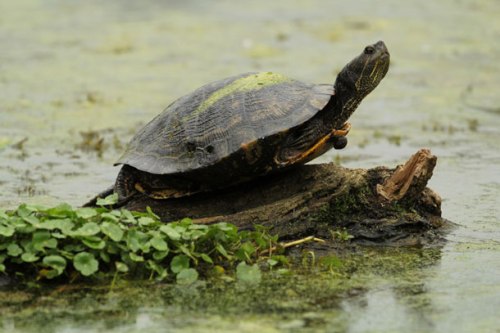
There’s a strong connection with the turtle and the story of creation in indigenous traditions. Native American tales told recently on Public Radio International include tales associated with winter and tales tied to the gradual return of life.

Most indigenous people have oral traditions about the seasons, the origins of life, and the duty to protect the Earth. Recently I heard some Native American winter stories on the radio and learned that when tales are not written down, it’s important to include the name of the person who first passed the story to you.

What follows is part of a discussion that Steve Curwood at PRI’s “Living on Earth” had with Joe Bruchac, a storyteller from the Nulhegan Abenaki tribe in Vermont’s Northeast Kingdom. The radio show covered traditional winter tales and Native Americans’ respect for the Earth.

“CURWOOD: Years ago, I went to visit the Menominee and I met their forester, [who] explained to me that the Menominee only cut the trees that are too old or ill and that as a forester, he was cutting trees that had been designated by the foresters before him that they had been prepared, they would be mature, and that he was going ahead to make preparations for what would be cut in later generations. …

“The Menominee were forced to give up their land, along [Lake] Michigan. But they were permitted in negotiations to keep a couple hundred thousand acres of forest land inside. And they decided that this was their legacy forever. And they started with an estimated billion and a half board feet of timber. Over the years, they’ve harvested over a billion board feet and they have more than what they started with today, because they’ve only cut with what’s too old or too ill to keep growing. It’s amazing. …

“JOE BRUCHAC: It was Stephen Marvin Askinet, who was the elder who told me that story when I was visiting Menominee. He since passed on but he was a wonderful tradition bearer. And one thing I always try to do is to remember to acknowledge those people who shared those stories with me. For example, that rabbit snow dance story can be traced back through people such as Arthur Parker, who was a Seneca storyteller and writer who recorded many of the traditions of his people. …

“CURWOOD: [Do you have a tale about] the solstice, the changing of the season, then getting dark and getting cold? …

“JOE BRUCHAC: Well, there is a tradition among the Abenaki people which has gone back for a long time, called the New Year’s greeting. And it is this when the new year comes, everyone goes from house to house, and they say …

[HE SINGS THE ABENAKI GREETING SONG]

“Which means, ‘Forgive me for any wrong I may have done to you, including wrong that I may not realize I have done to you.’ For it is important to realize that the things you do affect others around you. And sometimes you may not even know that you’ve caused an offense or hurt someone’s feelings. But at the start of the year, beginning again with those words, were able to have a clean slate. …

“As a friend of mine who is a Cheyenne elder [told me], if you carry guilt, it’s like carrying bad water in a cup. You can never fill it again with good water. Instead, pour that guilt out and then do better so that you do not accumulate more of that guilt and you can have fresh water to drink or to share. And that again, is an idea for the beginning of the new year. …

“CURWOOD: This is the time of year when we celebrate life. … Perhaps you could tell us along those lines?

“BRUCHAC: One of the traditions that I have learned over the years, my Mohawk and other Haudenosaunee, Iroquois, elders who are friends of mine, such as Tom Porter, a Mohawk elder, is that the first person who came to this earth was a woman.

“That long ago there was a land in the sky, and that a woman fell from that sky land, holding in her hand, the seeds of the flowers and plants. The birds flew up to catch her on their back, and then the great turtle swam up from below the surface of the water for only water was here. And animals began to dive down to bring up Earth.

“The one who succeeded the one who made it was the little muskrat. She brought up a paw full of Earth and put it on the back of the turtle. And then that woman stepped from the backs of the birds and began to dance in a circle with slow, small steps as women dance today in the Haudenosaunee tradition.

“The earth got bigger and bigger, and where her feet stepped and made footprints, she dropped the seeds, the flowers and the trees and the other plants. So life came to be on earth through the agency of sky woman, who is always remembered among the Haudenosaunee people as a Mother, the first Mother of us all. …

[HE TAPS A DRUM]

Which drum do we hear first? We hear the heartbeat of our mother, even before we are born. We’re listening to the music of life and dancing in that water within our mother’s body. So when we are born, we’re listening for the sound of the drum. …

“[We] say the drumbeat is the heartbeat of Mother Earth, and that we as human beings must always remember it when we hear the drum to respect our mothers and respect our Mother Earth.”

More good stories here, including the one about the rabbit who loved snow a little too much.


Read Full Post »

wampanoag_nation_singers_and_dancers

Photo: Wampanoag Nation Singers and Dancers
Many indigenous people refuse to celebrate Thanksgiving. Others use it as a chance to raise consciousness about American mythologies or just to be with extended family and give thanks.

The other day, I was asking my British neighbors if they celebrate Thanksgiving. After all, the traditional story of the First Thanksgiving is about being grateful for freedom from Britain. Why would they? They said they love the holiday and always invite a lot of expat Brits living in the area to eat turkey with them.

Just as language evolves and individuals use words in their own ways, so do customs. At Smithsonian magazine I recently learned that among indigenous Americans there are as many attitudes toward Thanksgiving as there are unique individuals.

Read Dennis Zotigh’s great piece “Do American Indians celebrate Thanksgiving?”

“In thinking about my earliest memories of elementary school, I remember being asked to bring a brown paper sack to class so that it could be decorated and worn as part of the Indian costume used to celebrate Thanksgiving. I was also instructed to make a less-than-authentic headband with Indian designs and feathers to complete this outfit. Looking back, I now know this was wrong.

“The Thanksgiving Indian costume that all the other children and I made in my elementary classroom trivialized and degraded the descendants of the proud Wampanoags, whose ancestors attended the first Thanksgiving popularized in American culture. The costumes we wore bore no resemblance to Wampanoag clothing of that time period. Among the Wampanoag, and other American Indians, the wearing of feathers has significance. The feathers we wore were simply mockery, an educator’s interpretation of what an American Indian is supposed to look like. …

“When children are young, they are often exposed to antiquated images of American Indians through cartoons, books, and movies. But Thanksgiving re-enactments may be their most active personal encounter with Indian America, however poorly imagined, and many American children associate Thanksgiving actions and images with Indian culture for the rest of their lives. … While I agree that elementary-school children who celebrate the first Thanksgiving in their classrooms are too young to hear the truth, educators need to share Thanksgiving facts in all American schools sometime before high school graduation.”

Here, for adult readers, Zotigh goes into the tragedy, which I hope you’ll make time to read. Next, he quotes an array of opinions of actual Native Americans, noting, for example, that “the United American Indians of New England meet each year at Plymouth Rock on Cole’s Hill for a Day of Mourning. …

“I turn to the Internet to find out what Native people think of Thanksgiving. A few of the responses I have received over the years, beginning with the most recent: …

“Exeter, California: ‘Being the only Native American classroom teacher at a public school, raised mostly in an urban setting steeped heavy in traditional American holidays, and around many other native people on weekends while traveling to dance, this has always been a challenging question for me that I cannot claim to know the answer for. I see many other teachers I work with who are not native struggle with knowing how to address the issue comfortably. I have to say, I have fear that if we avoid the issue altogether, Native people will be forgotten about.

” ‘I have seen some teachers decide to stop teaching about Native Americans for fear of offending. I personally get sad when I see that happen. I know Thanksgiving is a controversial subject, and there are so many viewpoints. I share the modern theme of Thanksgiving, which I think has good intentions — family and community. I have also chosen to teach about Native American culture, even more heavily in November because of Thanksgiving, even though it is no longer a part of the curriculum. I have found ways to integrate it while teaching something that I think is important. I do an assembly for the students in which we dance, and I emphasize how it is not possible to teach everything there is to know about Native Americans in just one assembly. I emphasize the diversity among native people.’

“Sevierville, Tennessee: ‘Regardless of all the political views of Thanksgiving, we can all find something to be thankful for!’

“San Antonio, Texas: ‘Except for the last four years, the twenty years before that I spent 95 percent of my Thanksgivings at the table of my brother-in-law. Our gatherings were about giving thanks for what we had. As for Native American history being left out of teaching, it is an outrage. Educate our fellow educators on how to teach it. …

“Edmonton, Alberta: ‘We have family members with addiction issues. The kids get to eat, which my mom loves. And we are thankful not only to survive colonization, but also grateful to feed family.

Norman, Oklahoma: ‘We celebrate and give thanks for our loved ones’ being able to be together again. But when my daughter was young and the realization hit, as it does all young American Indians, she said to me , “Do you think we should have helped them?” There will be extra prayers for Standing Rock at our table.

“Hydro, Oklahoma: ‘Could we just start over and go forward? We can’t change the past, but we can work for peace and unity in the future. History needs to be taught correctly in our schools—that is what needs to happen. My daughter had to write a paper about Big Tree, Satank, and Satanta. She interviewed Satanta’s great-grandson, who was in his 90s, and told the story as he told it to her, including their transport from Fort Sill and how the feather was turned into a knife as they passed the giant tree, causing the soldiers to shoot and kill Satank. She got an AAA+ from her teacher.’ …

“Santa Fe, New Mexico: ‘My family and I celebrate Thanksgiving, not so much in the way that the “Pilgrims” may have done with the Indians. We give pause, and acknowledge all of the blessings that we received in the past year. We think of family and friends; of the homeless; of those away from family in hospitals, elders in nursing homes, those incarcerated, the soldier men and women overseas, around the world, standing watch and guarding our freedom. We think of those in mourning, whose family have gone ahead of them. We also think of those in school, no matter what age. And, finally, we pray for traveling mercies said for folks traveling home. We are thankful each day for Creator’s gifts but on Thanksgiving, it seems we focus and are concentrated in our thoughts about these blessings.’ …

“For more on Thanksgiving, see the 2017 post Everyone’s history matters. The Wampanoag Indian Thanksgiving story deserves to be known.”

Read more of the fascinating comments at Smithsonian, here. It’s a real lesson in not painting any community with one brush. When we say, “Native Americans think [fill in the blank],” we need to remind ourselves that any group of people is full of unique individuals with individual thoughts.

Read Full Post »

5d9d139035e5e.image_


Teenage indigenous rights activist Tokata Iron Eyes stands beside Swedish climate activist Greta Thunberg in the high school gym in Fort Yates, N.D., on the Standing Rock Sioux Reservation. (Fun to see Greta’s father came, too!)

The teenage Swedish climate activist Greta Thunberg is getting a lot of flack these days from vested interests terrified of her influence, but she shoulders on as new and old climate activists give her encouragement. In this story, indigenous people recognize a girl after their own hearts.

Natasha Rausch Forum News Service reports, “Nearly 500 Indigenous students stood in a circle surrounding two 16-year-old climate activists and their fathers Tuesday morning, Oct. 8, in the Standing Rock High School gym.

“A medicine man blessed the girls — Tokata Iron Eyes and Greta Thunberg — in what’s known as a smudging ceremony. Then, a circle of men played the drum as everyone in the gym slowly turned to face the four sacred directions.

“One of the drummers, Hans Young Bird Bradley, of the Standing Rock Environmental Protection Agency, said the tribe has ‘no choice but to support them, hold them up’ on their mission to spread awareness about climate change.

“ ‘We shouldn’t leave it on the back of two little girls to do this,’ he said. ‘It’s too much weight to carry for them. It should be all of us doing our part.’

“Thunberg … told the crowd of Indigenous students she was honored to be speaking at ‘this symbolic place of resistance’ where just three years earlier thousands of Indigenous and non-Indigenous people gathered to protest the Dakota Access oil pipeline. Though the line was eventually installed, the tribe has continued to fight it in court as others from the Standing Rock Sioux Nation have built on momentum from the protest to create a more sustainable future.

“Thunberg met Tokata Iron Eyes — one of the Standing Rock citizens who helped garner support for the Dakota Access oil pipeline protests in 2016 through the Rezpect Our Water campaign — at a September event at George Washington University. …

To see two teenagers take the stage in the Standing Rock High School gym, ‘it’s inspirational,’ said 13-year-old Chante Baker, who sat in the bleachers with her classmates. …

” ‘It took two youth to get us all together,’ said Cody Two Bears, the head of nonprofit Indigenized Energy which opened a solar farm last month near the site of the Dakota Access Pipeline protests. … We all need clean water and clean air and a safe place to call home. As Indigenous people, our culture and way of life is inherently tied to the environment.’

“Tyrel Iron Eyes, a 23-year-old from Standing Rock, said he’s proud of his cousin Tokata, and of Thunberg for getting people to listen to them.

” ‘They inspire,’ he said. ‘And at the end of the day that’s what we need is people to be inspired to make changes in their lives.’

“[Thunberg said,] ‘We need local solutions to this global problem, and of course global solutions as well.’ …

“In a closing ceremony, former Standing Rock Chairman Jay Taken Alive gifted Thunberg with a Lakota name: Maphiyata echiyatan hin win, meaning ‘woman who came from the heavens.’

“ ‘Only somebody like that can wake up the world,’ he said. “We stand with you. We appreciate you. We love you as a relative.’ ” More at the Billings Gazette, here.

And while we’re on the subject of sustainability influencers, you can see they’re having an effect in Europe, where this past summer increasing numbers of people decided to take the train instead of flying. Read about that at the Guardian, here.

By the way, does anyone know how Greta is getting home? She can’t very well take an wind-powered yacht across the Atlantic in winter.

Read Full Post »

636166463531642168-img-5494

Photo: Lex Talamo
Houma artist Lora Ann Chaisson works on palmetto stitch basketry at the Native American Crafts day at Northwestern University. Crafts using palmetto are threatened by climate change.

A recent interview conducted by Tegan Wendland on National Public Radio (NPR) provided new-to-me information on how climate change is jeopardizing an indigenous culture.

Lulu Garcia-Navarro introduced the story thus: “When storms like Hurricane Barry batter Louisiana’s coast and water replaces marshland, people move away. And that puts at risk a unique cultural mix — Europeans, Africans and Native Americans all living off Louisiana’s land and water. As Tegan Wendland of member station WWNO reports, the state is trying to preserve some of their traditions before they disappear.

“WENDLAND: Janie Luster walks through crunchy oak leaves in the humid Louisiana air to a stand of green palmetto in the shade. She reaches her arm deep down into the stems and starts hacking.

“JANIE LUSTER: Takes a sharp knife, pointed knife. And this is where you have to be careful, a little spider there. There’s also ants.

“WENDLAND: She pulls out a stem and unfolds it like a giant fan. … We’re in Houma, about an hour southwest of New Orleans. Luster will dry the leaves out and tear them into strips and use them to weave baskets — not just any basket — the Native American Houma half-hitch.

“LUSTER: We were the only tribe in the whole country to make this type of basket.

“WENDLAND: The art of the half-hitch has already been lost once before, generations ago, when tribal members were forced to assimilate. But Luster researched it and brought it back in the ’90s. Today, she’s brought a big stack of dried palmetto into a classroom in the offices of the United Houma Nation, where about 15 students of all ages are gathered around a table. … It’s a laborious process. It can take several days just to weave one basket. Pretty much everyone’s struggling. But 15-year-old Rhett Williams’ fingers dart fast. … He’s attended a few of these classes. Now his mom gets mad when she catches him weaving instead of doing his homework.

“RHETT: Growing up, you know, you’re not in touch with your elders. Now that I’m getting in more within the tribe and, like, learning culture and tradition, I’ve realized, like, I was, like, deprived of, like, the true tradition and culture.

“WENDLAND: Many in Williams’ family have moved north over the years, joining the exodus after every devastating coastal storm. Some areas have lost more than 40 percent of their population over the past several decades. Hurricanes and saltwater intrusion from rising seas are also killing off the palmetto and other plants sacred to the Houma. That worries Maida Owens, director of the Louisiana Folklife Program.

“MAIDA OWENS: When people move, you know, some things get left behind. And one of the things that frequently is left behind is something that relies on natural materials. … If it doesn’t move with the people, then the tradition may not continue.

“WENDLAND: The state estimates that thousands more will have to migrate as the coastal erodes. But Owens is happy to see that some young people, like Rhett Williams, are embracing these folk traditions.”

More at NPR here and at the Shreveport Times, here.

Read Full Post »

molly_approved_custom-4fd4462a2c5abefc308739f14d767a277e2b1d4c-s600-c85

Photo: WGBH Educational Foundation
In the PBS program
Molly of Denali, Alaska Native Molly Mabray helps her mom run a trading post in an Alaskan village.

In the old days, TV shows meant to educate children tended to be dry and clunky. Sesame Street began to move the bar, and now my grandkids and other children are learning a lot from shows that are fun, like Wild Kratts and the Octonauts. They amaze me with the facts they produce to correct my misperceptions about nature.

Now they are giving a thumbs up to a new show about indigenous people in Alaska.

Mandalit del Barco wrote about it at National Public Radio (NPR), “For decades, animated children’s stories included negative stereotypes of Indigenous people. …

“More recently, Disney and Pixar got kudos for more authentic representations of Native people in the films Moana and Coco. Now, TV networks and streaming services are reaching children with realistic portrayals on the small screen — where they consume most of their media.

“The new PBS show Molly of Denali is the first nationally distributed children’s series to feature an Alaska Native lead character. She’s 10 years old; her heritage is Gwich’in, Koyukon and Dena’ina Athabascan. She lives in the fictional village of Qyah, population 94. She goes fishing and hunting, and also looks up information on the Internet and on her smartphone.

“Molly is computer-savvy,’ says the show’s creative producer, Princess Daazhraii Johnson. ‘I think it’s really important for us to show that, because we are modern, living people that are not relegated to the past. That stereotype, that romanticized notion of who we are as Native people, is rampant.’

“Johnson says when she travels, she still meets people who assume all Alaskans live in igloos and are Eskimos — ‘which isn’t a term that people really even use anymore up here,’ she says. ‘We have 229 federally recognized tribes in Alaska; we have 20 officially recognized Alaska Native languages here. We are so diverse and dynamic.’ …

“In one episode, Molly learns that her grandfather stopped drumming and singing as a child when he was taken away to a Bureau of Indian Affairs boarding school. ‘At the school we weren’t allowed to sing the songs from our people,’ an elder tells her. ‘We were made to feel bad about who we were.’

“Johnson says this storyline really happened to one of the elders on the show’s advisory board. It’s a kid’s show, so it has a happy ending: Molly and her grandfather sing together.

” ‘We’re just over the moon about Molly of Denali, because this is exactly the type of thing that can really began to shift perceptions in this country,’ [Crystal Echo Hawk, CEO of the media watchdog group IllumiNative] says.

“Echo Hawk says that for years, Hollywood didn’t produce stories about or by Native people because it didn’t think a market existed for them. But that, she says, was shortsighted. Her organization polled more than 13,000 Americans, and found that nearly 80% of them said they want to learn more about Native peoples. …

“For several decades, the Australian and Canadian Broadcasting Corporations have spotlighted shows by and about their indigenous populations. Now, Netflix is partnering with three Indigenous cultural organizations to develop the next generation of First Nation creators across Canada.

“And in the U.S. and in Latin America, Netflix is running the animated film Pachamama. The story centers on a 10-year-old boy in an Andean village who dreams of becoming a shaman. His people suffer under both the Spanish conquest and the Incan Empire.

” ‘It’s told from the point of view of the Indigenous people,’ says Juan Antin, who wrote and directed the film. … Antin, who is from Argentina, says he was inspired by his travels with his anthropologist wife in Bolivia and Peru. ‘There, I fell in love with the culture of Pachamama, which is how the indigenous people call Mother Earth, having respect, love to the Earth,’ he says.

“The Cartoon Network series Victor and Valentino features two half-brothers in a fictitious Mesoamerican village, exploring myths that come to life. For example, they follow the dog Achi into the land of the dead, where they encounter a chupacabra and other legends.

“Animator Diego Molano, whose heritage is Mexican, Colombian and Cuban, … says it’s about time networks began showing cartoons with Indigenous characters and themes. He just hopes it’s not just a fad.”

More at NPR, here, and at the New York Times, here.


Read Full Post »

1jeremydutcherheader

Photo: Matt Barnes
Jeremy Dutcher is a First Nations tenor and pianist who is getting a lot of attention in Canada and beyond.

Bit by bit we’re all learning more about the people around us, people who may have very different lives and who in the past we knew nothing about. Even those we thought we knew well sometimes have lives that are veiled to us, as I learned this summer when our niece sent me her story, a heartbreaking tale of a childhood that I had only perceived on the surface. You just can’t know what is going on behind someone’s eyes.

Among the kinds of people I am learning more about are indigenous people, both in the United States and elsewhere. This story is about a young tenor who belongs to a Canadian tribe.

Jeff Kaliss writes at San Francisco Classical Voice, “Interviews with Jeremy Dutcher figure among the new demands on a Canadian First Nations (indigenous) singer-pianist who’s risen rapidly to international attention. The 28-year-old Toronto resident needs now and then to take a break from the clamor, to return to something like the pastoral pace of his raising in the Maritime province of New Brunswick, as a member of the Wolastoqiyik [pronounced Wuh-last-o-key-yik] tribe.

“I first witnessed Dutcher a year ago, at the Festival International de Jazz de Montréal, performing on piano and singing in his tribe’s native Wolastoq language (the word denotes ‘the beautiful river’; renamed by the colonizers of New Brunswick as the St. John), in the basement of a church, a beautiful historical landmark. He hadn’t yet won Canada’s prestigious Polaris Prize, nor its Grammy-equivalent Juno Awards. Both of these wins would recognize his debut self-produced album, Wolastoqiyik Lintuwakonawa, translated as Songs of the People of the Beautiful River. …

“Dutcher incorporates in his live and recorded music an unusual and affecting act of legacy, playing transcribed wax recordings from 1911 by an early anthropologist of a tribal elder singing and speaking, and following the melodies with his own heldentenor voice and mellifluous keyboard compositions. The method and quality of his approach derive from his training, including classical voice with Marcia Swanston at Dalhousie University in Halifax, Nova Scotia.

“Two semesters before completing his music degree, Dutcher enrolled in a class in Social Anthropology, and decided to stick around Dalhousie for an additional year, completing a second major and an honors thesis on the subject of Traditional Music in a Contemporary Moment: Musical Pan-Indigeneity as Revitalization in the Wabanaki Region. The region is a confederacy of five indigenous nations including the Wolastoq and extending across the current provinces of New Brunswick, Nova Scotia, Prince Edward Island, and Quebec, and the state of Maine. The thesis title took the form of a mission statement for Dutcher, who was led to the wax recordings by a living tribal elder, sweat lodge keeper, and First Nations ambassador, Maggie Paul.

“ ‘I made my way to Ottawa [the site of the Canadian Museum of History] and went down into the basement archives there and threw on some headphones and started a journey,’ Dutcher recalled for an NPR presentation last year.

“ ‘To not just hear the songs, but also to hear the background noise and to hear them laughing and telling jokes — there was a sense of entering into that space through these voices. And that was something that changed my life.’

“The Dalhousie anthropology faculty have declared in writing their admiration for where their alumnus has taken his education and his life. … ‘Dutcher honors intergenerational connections, his voice singing on with the voices of his elders … It disrupts widespread expectations of indigenous music as a thing of the past, and shows instead how it lives in the present, fully capable of working and remixing in contemporary idioms. This has a decolonizing effect, in that it unsettles public conceptions that all too often primordialize and essentialize indigenous art forms.’ ”

I love the idea of a decolonizing effect. I never thought about that — about not only promoting healthier relations between indigenous people and others going forward but actually starting to undo harm that was done in the past. How great if we could apply that idea to all kinds of wrongs the world has seen!

More at San Francisco Classical Voice, here.

Read Full Post »

broken20treaty20quilt20performance

Photo: Portland (Maine) Museum of Art
The quilts of artist Gina Adams tell the tale of broken treaties.

Lately, I’ve been reading books that have given me a deeper, more disturbing understanding of American history. Of course I knew about slavery and broken Indian treaties and adventurism abroad, but I tended to slink away from knowing too many details. You can hide only so long. Two books I would recommend are the novel Underground Railroad and the history Ramp Hollow.

Artist Gina Adams found her metier in quilts about broken treaties. There are no shortage of those, she says. This article by Indian County Today recounts the evolution of her work “Broken Treaties Quilts.”

“Gina Adams’ journey to becoming a political artist began as she probed deeper into her Native roots. Trained as a painter and printmaker, Gina Adams made apolitical art for many years. …

“While studying the effects of post-Colonial trauma and assimilation at the University of Kansas, Adams identified feelings of remorse and grief in her own life, stemming from her Ojibwe-Lakota grandfather’s forced boarding at the Carlisle Indian Industrial School in Pennsylvania. Her art began to change.

“ ‘I realized how powerful it was to be able to speak about all of those feelings,’ said Adams, who lives in Longmont, Colorado. …

“ ‘Broken Treaties Quilts,’ involves sewing text from Indian treaties onto antique quilts. … Sewing the words of injustice, letter by letter, onto objects of comfort and beauty represents the turmoil that Indians have suffered. …

“Adams, 52, recently finished quilts about both the 1851 and 1868 Fort Laramie treaties, which she made in response to the Dakota Access Pipeline standoff at Standing Rock. She has made 18 quilts so far, and shown them from Maine to the Midwest. Wherever she shows her work, she makes a new quilt that’s relevant to the treaty history of that geographic area.

Her goal is to create a quilt for every U.S. state.

“There’s no shortage of broken treaties, she said, and all were populated with twisting, confusing language that purposefully misled people and subjected the treaties to misunderstanding and different interpretations.

“Adams has spent most of the past three years reading the treaties, word for word.

” ‘In cutting up these letters and reading and re-reading these treaties, you begin to realize how the language was meant to be confusing when they were written. They are still confusing today. They’re very duplicitous in their meaning,’ she said. ‘You can understand why the misunderstandings happened. …

“In Native cultures, the quilt transcends modern timekeeping. It’s been around forever, serving as a source of warmth and comfort, as well as a feeling of home and family. Quilting is also thoroughly American, she notes, and both the quilt and quilting bees symbolize community and the idea of working together. …

“Adams begins with antique quilts that she finds at flea markets and elsewhere. Many people also give them to her. She prefers quilts that are a century old or older, so they reflect the general vintage of the treaties she represents. …

“The process of making the quilts is time-consuming and labor intensive, and enjoyable, Adams said.

“ ‘It’s very contemplative. It’s very mindful,’ she said. ‘I so look forward to every single aspect of it, even when I am doing the detailed stitching on the quilt. It’s a really focused time. I am lost in my thoughts and just focusing on the work itself. I find it to be so rewarding.’

“Adams … descended from indigenous and colonial Americans. Her grandfather was Ojibwe and Lakota, and Adams has always identified with her Native roots. ‘I remember being 3 and 4 years old and going on hikes with my grandfather. He would talk to me and introduce me to plants and animals and things in nature in the Ojibwe language,’ she said. ‘He would tell me everything in Ojibwe and then translate it. It was a wonderful connecting point that stuck in my heart and soul and has been there my whole entire life.’

“Adams, who is not an enrolled tribal member, plans to take Ojibwe language classes this fall, to deepen her cultural immersion.”

Read about Adams’s quilting process here.

Hat tip: @WomensArt1 on twitter.


Read Full Post »

Photo: Minot Daily News
Norma Baker-Flying Horse is owner of Red Berry Woman, a fashion designing business that was accepted into Paris Fashion Week.

Yesterday I mentioned that APiermanSister was a blogger whose writing I admired. She says she is shy, but as far as I can tell, one of her personal characteristics is fearlessness.

As a regular visitor to and connoisseur of Paris, she had always wanted to attend Fashion Week. In a recent post, she describes how she wrangled an invitation — finding a publication back in the US that would take an article and help to justify her admission to the show as a writer.

This is from Alison’s February Minot Daily News report on designer Red Berry Woman, an enrolled member of the Mandan Hidatsa Arikara (MHA) Nation and member of the Dakota Sioux and Assiniboine tribes.

“Norma Baker-Flying Horse has been having a whirlwind of fashion success.

“ ‘I recently had a dress walk the red carpet at the Grammy’s earlier this month and I’m also preparing to show in France,’ said Baker-Flying Horse of Mandaree, Oklahoma.

“Baker-Flying Horse said she will be the only Native American who will be showing in a show for the opening of Paris Fashion Week. …

“Baker-Flying Horse’s fashion line, Red Berry Woman, incorporates Native American traditional garment styles into contemporary couture garments for both men and women. She also creates different types of Native American traditional-style garments,’ according to her Red Berry Woman website at redberrywoman.com. …

“Baker-Flying Horse also was an invited designer for the international fashion showing in Vancouver, British Columbia, during Vancouver Fashion Week this past September.

“Another event in past months includes being the designer for a fashion show in Cornwall, Ontario, where actor Adam Beach was a guest. His wife, Summer, was Baker-Flying Horse’s guest runway model. One of Baker-Flying Horse’s creations also was worn by Alice Brownotter, an activist from the Standing Rock Reservation, for an event held by actress Jane Fonda who invited young people to participate who have had leadership rolls in their community. …

“Last March Baker-Flying Horse had the special honor of having one of her fashion designs worn at the Academy Awards show, the Oscars. She was the first contemporary Native American fashion designer to have a gown worn at the Oscars.”

More on Red Berry Woman at the Minot Daily News, here, and at the Smithsonian, here. But the most fun piece to read is Alison’s blog post about crashing Paris Fashion Week, here.

Photo: kfyrtv.com
The 2018 Native American Cultural Celebration closed with a Red Berry Woman Fashion Show.

Read Full Post »

refugee-chocolate-hiring-20190216

Photo: Andrew Vaughan / The Canadian Press
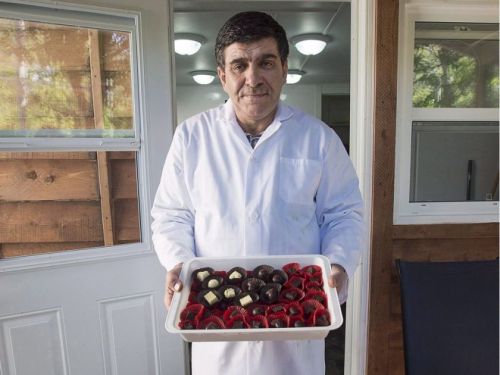
A former refugee who founded the Nova Scotia chocolate company Peace by Chocolate has committed to hiring 50 refugees by 2022 and to mentor 10 refugee-run start-ups over the next few years.

Refugees that a country takes in are often the most grateful people on the planet. Most are highly motivated to succeed and not be a burden. Some start their own businesses, and then, as soon as they get established, look for ways to give back to others.

The Canadian Press reports on one example. “A one-time Syrian refugee who founded a thriving Nova Scotia chocolate company has announced plans to hire and mentor other refugees. Peace by Chocolate of Antigonish, N.S., has committed to hiring 50 refugees by 2022, and to mentor 10 refugee-run start-ups over the next few years.

“The now-famous company was founded by the Hadhad family, who fled their home in war-torn Damascus in 2012. They arrived in Nova Scotia with next to nothing in 2016. …

“Tareq Hadhad, CEO of the company, said Peace by Chocolate aims to give back to the country that welcomed his family when so many nations were closing their borders to the Syrian plight. Now he plans to expand on that vision by giving back to other refugees looking to start new lives — as Canadians did for his family when they needed it most. …

“Hadhad said in an interview, ‘Being a refugee is not a choice, it’s not a decision, it’s not a life goal. These people are fleeing their homes because of war, because of persecution.’ …

“Hadhad’s father, Assam, ran a chocolate business in Damascus for decades but it was destroyed in a 2012 bombing.”

Another article, by Fadila Chater at the National Post, notes that the “chocolate company founded by Syrian refugees has produced its first chocolate bar — and given it an Indigenous name. [Its] new milk chocolate and hazelnut bar is to be called Wantaqo’ti (pronounced Wan-tahk-oo-di), the Mi’kmaq word for peace. …

“Founder Tareq Hadhad said via email … it is his company’s mission to translate the family’s concept of peace to all Canadians, starting with the Mi’kmaq of his home province. … Other versions of the bar will be sold using the Arabic, French and Mandarin words for peace.

‘Peace is beautiful in every language,’ Hadhad said. …

“ ‘When we came here as newcomers to this country, we really wanted to support this country to grow and prosper,’ he said.”

The Peace by Chocolate bars are available online, here.

Read more at the National Post, here and at the Canadian Press, here.

Read Full Post »

Photo: Annie Tritt for the New York Times
Muriel Miguel, a founder of the feminist Native American collective Spiderwoman Theater, is considered a grandmother of the Indigenous theater movement in the United States and Canada.

I’ve been interested to read how indigenous peoples around the world are reaching out to one another and starting to benefit from the strength of numbers. One result has been the emergence of international festivals staking out a place for native people in the arts world. I’m late with this story, but I wanted you to know about one such festival. It took place in January in New York City.

Siobhan Burke at the New York Times noted in particular that a grandmother of the Indigenous theater movement in the United States and Canada, Brooklyn-born playwright Muriel Miguel, was scheduled to be “among the 30 or so artists participating in this year’s First Nations Dialogues New York/Lenapehoking. (Lenapehoking is the homeland of the Lenape, the original inhabitants of the area encompassing New York City.) Taking place at multiple downtown theaters, the Dialogues bring together Indigenous performing artists from Australia, Canada and the United States for a week of performances, discussions and other gatherings, beginning Jan. 5. …

“In drawing attention to the breadth of contemporary Indigenous performance — with works spanning dance, theater, performance art and genres in between — the Dialogues are something rare for New York, if not unprecedented. Describing what to expect is not easy and not intended to be. In deciding what to program, the chief organizers — [Merindah Donnelly, an organizer of the series and the executive producer of BlakDance in Australia], the choreographer Emily Johnson, and Vallejo Gantner, the former director of Performance Space — set out to challenge a notion they often come across, that Indigenous performance fits any single description. …

“Ms. Donnelly said. ‘The people making it are Indigenous, but Indigenous is not a genre.’ …

The offerings here — many of which deal with themes of trauma, grief and healing — include Ms. Miguel’s Pulling Threads Fabric Workshop, in which storytelling and quilting serve as tools for mending old wounds. …

“While the tone may be somber at times, there is also much to celebrate. SJ Norman, an Australian artist of Wiradjuri and Wonnaruah heritage, said in an email that the opportunity to gather in New York ‘feels like an honoring of the continued existence of our peoples in the big city, as well as the dynamism and globalism of our peoples, which is absolutely vast.’ …

“A Native Alaskan artist of Yupik ancestry, Ms. Johnson has been working tirelessly to counter what she calls ‘the perceived invisibility’ of Indigenous performing artists, particularly in the United States. …

“One approach to bringing the United States up to speed is an ambitious pilot program, the Global First Nations Performance Network, which will be in development during this year’s Dialogues. … The network also requires, of each presenter, a commitment to undergoing what Mr. Gantner calls ‘a kind of decolonization process.’ …

“Ms. Johnson sees this year’s Dialogues as a microcosm of what the network may eventually accomplish, including opening up international exchange. For the Australian choreographer Mariaa Randall, whose ‘Footwork/Technique,’ [explores] the footwork of Aboriginal dances, a highlight of the Dialogues is the chance to simply talk and listen with peers from around the world.

“ ‘In our countries we can become kind of siloed,’ she said. ‘I want to be able to sit with and see and hear from other First Nations females: what their struggles are, their achievements, and how they continue to keep their culture and their practice together, to keep moving forward, because sometimes it is really hard.’ ”

More at the New York Times, here.

Read Full Post »

indigenous-grocery-language

Photo: CBC News
Canadian grocery stores and art galleries are starting to include indigenous languages on their labels. North West Company, which has grocery stores in more than 120 communities across northern Canada, embraced the idea after it was piloted by a 2015 school project. Snapping QR codes lets you hear word pronunciation, too.

Yesterday, for the first time, Native American women were elected to Congress: in Kansas, a Ho-Chunk, and in New Mexico, a member of the Laguna Pueblo tribe. Of course, it’s about time, but it also seems to be part of a trend bringing more visibility to indigenous people. Very belated, but good.

Canada is actually farther along in trying to address and rectify transgressions against First Nations. The following story covers one aspect of that effort.

Judith H. Dobrzynski writes at the Art Newspaper, “Canada Day, 1 July, [ushered] in a new era for the presentation of Modern and contemporary Canadian art at the Art Gallery of Ontario (AGO) in Toronto. The 13,000 sq ft J.S. McLean Centre for Indigenous and Canadian Art — which added the ‘Indigenous’ to its name last year when the museum established a Department of Canadian and Indigenous Art — [has] reimagined galleries that give primacy to First Nations and Inuit art for the first time.

“In each McLean gallery, ‘contemporary indigenous art starts the conversation with Canadian art.’ says Wanda Nanibush, who became the AGO’s first curator of indigenous art in 2016. Nanibush and Georgiana Uhlyarik, the AGO’s curator of Canadian art, have designed the centre’s display of 75 works around six themes: origins, self, land, water, transformations and ‘indigenous2indigenous.’ …

“Works by Canadian artists such as Emily Carr and Florence Carlyle are hung in dialogue with works by indigenous artists including Carl Beam and Rebecca Belmore … For instance, in the ‘self’ gallery, Belmore’s ‘Rising to the Occasion’ (1987-91), a dress that the Anishinaabe-kwe artist wore in a performance responding to a royal visit to Ontario, is paired with Joanne Tod’s painting ‘Chapeau Entaillé’ (1989) of a woman in a similar dress. … Labels in the McLean Centre are now written in indigenous languages (either the local Anishinaabemowin language or Inuktitut), as well as English and French.”

More at the Art Newspaper, here.

Art: Rebecca Belmore
Belmore’s “Rising to the Occasion” (1987-91) is a dress that the Anishinaabe-kwe artist wore in a performance responding to a royal visit to Ontario. It was recently displayed at the Art Gallery of Ontario in Toronto.

303_mu_jd_ago_01_rebecca_belmore

Read Full Post »

tribesonthebrink

Photo: The Explorers Club

You remember the great marine explorer Jacques Cousteau? Well, his granddaughter has grown up to be an explorer of vanishing cultures, and recently she made a movie about endangered tribes in the Amazon.

The film by Céline S. Cousteau is called Tribes on the Edge, and according to its website, it’s “more than a narrative of tribal reality in the Amazon [as it] suggests the universal story of our human tribe and how our future is interwoven with each other and with nature. This is a story that invokes the critical importance of respect and care – for land, culture, and humanity. …

“[The film] explores the timely topics of land threats, health crises, and human rights issues of indigenous peoples, expanding the view to how this is relevant to our world. More than a film, it has grown into a movement driven by a passionate effort to enact tangible impact in the Javari [Valley of Brazil] through education, advocacy, and activism. …

“Spanning more than 85,000 km2 (an area the size of Portugal), the Vale do Javari is the second largest indigenous territory in Brazil and is home to 5000 indigenous peoples from 6 tribes as well as the largest population of people living without any contact with the outside world in the entire Amazon and some say the world.

“Though the Javari has been designated for the tribes living there, there is looming pressure to increase harmful resource extraction which in other parts of the Amazon has led to environmental degradation. … It is estimated that the Amazon produces 20% the world’s oxygen and releases 55 gallons of water into the Atlantic ocean every second.”

Read more at the website, here, about what the International Union for Conservation of Nature calls “one of the irreplaceable areas of our planet.” And at the website for New York’s Explorers Club, which screened the film this past April, you can also can read about speaker Beto Marubo. A Marubo Indian, he has served with the national Indian foundation of Brazil, FUNAI, an initiative threatened by the likely election of someone Wikipedia calls “a polarizing and controversial politician” to the country’s presidency.

The movie is more timely than ever.

beto_250

Read Full Post »

05lenape2-superjumbo

Photo: Dolly Faibyshev for The New York Times
In a ceremony at the Abrons Arts Center in New York, Emily Johnson acknowledges the Lenape tribe, which inhabited Manhattan before Europeans arrived. The bonfire event is part of an initiative by artists called “land acknowledgment.”

It’s interesting to me that at the same time that nationalism and harsh attitudes about migration are sweeping the Western world, some very different movements are gaining traction. One is the increased acknowledgment in some English-speaking countries that Europeans were once interlopers, too.

Siobhan Burke writes at the New York Times about arts groups starting to pay attention to first residents.

“On an evening in early June, before the sun had gone down, a bonfire blazed outside Abrons Arts Center on the Lower East Side. Handmade quilts lined the steps of the outdoor amphitheater. Anyone walking down Grand Street could come in and take a seat. As a group of singers arranged themselves around a large cylindrical drum, the choreographer Emily Johnson stood up to speak a few careful, welcoming words.

“ ‘I’d like to acknowledge and pay my deep respect to Lenape people and elders and ancestors — past, present and future,’ she said. She gestured toward the ground and in the direction of the East River. ‘I acknowledge and offer deep gratitude to this Lenape land and water that supports us, as we’re gathered here right now together, and I invite you to join me in that acknowledgment, that respect and that gratitude.’

“In recognizing Manhattan’s original inhabitants — the Lenape (pronounced len-AH-pay) — and their ancestral homeland, Lenapehoking, Ms. Johnson was taking part in a ritual that, with her guidance, has become increasingly common at New York performing arts spaces in the past year.

“Routine at public gatherings in Australia, New Zealand and Canada, the custom of Indigenous land acknowledgment, or acknowledgment of country, has only recently started to gain traction in the United States outside of tribal nations. In New York City the practice is sporadic but growing, occasionally heard at high-profile cultural and educational institutions like the Whitney Museum of American Art and New York University. …

“Ms. Johnson, 42, a Native Alaskan artist of Yupik descent, has been the catalyst for much of that progress in the city’s dance scene. … Wherever she tours, she publicly honors — and engages with — the Indigenous people of that place.

“And behind the scenes she has been working to strengthen relationships between predominantly white institutions and Indigenous communities, to ensure that more Indigenous voices are heard at all organizational levels, from the artists onstage to the board of directors. That process, she said, begins with institutions recognizing where they are: on land taken from Indigenous peoples. …

“For the inexperienced, speaking an acknowledgment can be awkward at first. Hadrien Coumans, a co-founder of the Lenape Center, said false starts were to be expected. …

“While land acknowledgment might be a mere formality in some contexts, Mr. Coumans emphasized that he sees it as something much greater, an invitation to consider and appreciate where, really, you are standing.

“ ‘We’re part of a living being,’ he said. ‘Earth is a living entity, so in acknowledging land, what we’re really doing is acknowledging life. Not nationalism, not patriotism. Life.’ ”

More at the New York Times, here.

Read Full Post »

« Newer Posts - Older Posts »