Feeds:
Posts
Comments

Posts Tagged ‘maryland’

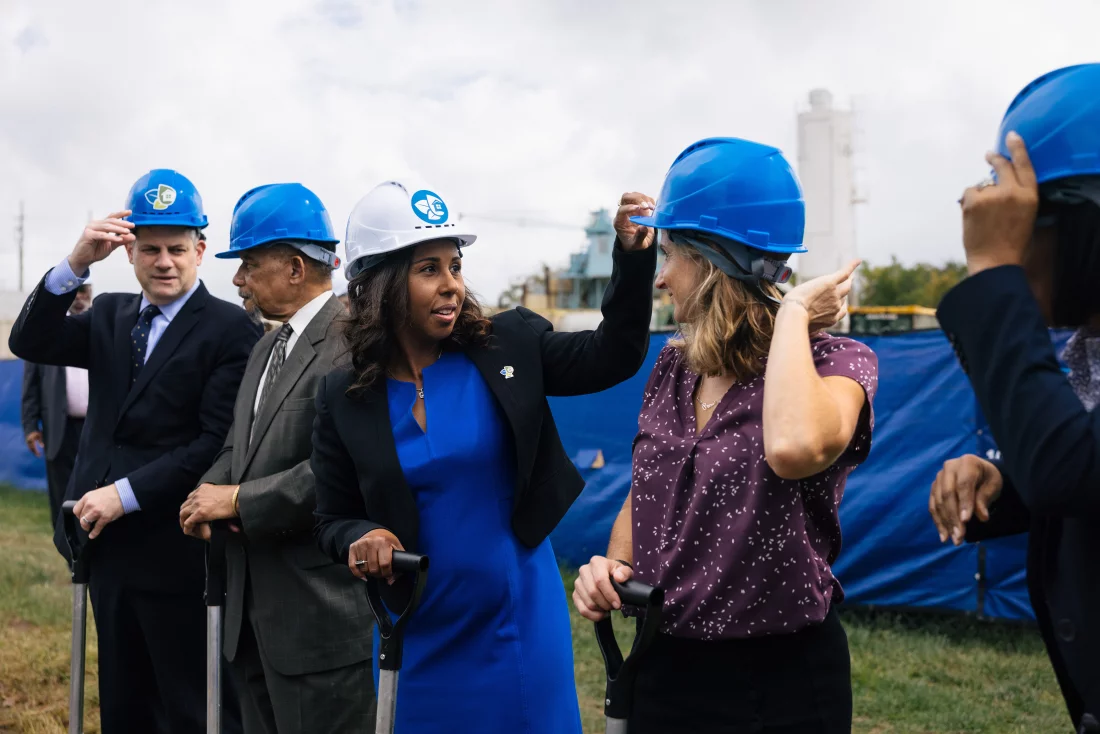
Photo: Alyssa Schukar/for NPR.
Chelsea Andrews (white hat), president and executive director of Montgomery County’s Housing Opportunities Commission (HOC), at groundbreaking for the Hillandale Gateway housing development in Maryland. The HOC owns 9,400+ home rental properties and provides subsidized housing for 9,300+ households.

Here’s how communities can build enough housing for residents: Don’t wait for the the feds.

Jennifer Ludden writes at National Public Radio, “A few miles outside Washington, D.C., a large dirt and gravel lot dotted with construction equipment was the site of a recent celebration. … It marked the kickoff for construction of Hillandale Gateway: 463 new mixed-income apartments that will be majority owned by Maryland’s Montgomery County.

“It’s public housing. Although this is a far different model than traditional, federally funded housing for only the very poor. …

“Montgomery County is a wealthy community, and it’s long focused on housing for lower-earning families. Still, it hasn’t built nearly enough to keep up with demand, and the gap is growing. So a few years ago, it took an unusual step: It created a $100 million revolving fund to dramatically ramp up construction.

“That means it can develop and finance its own projects ‘instead of waiting for Congress to give us a whole bunch more money,’ says Zachary Marks, the senior vice president for real estate with the county’s Housing Opportunities Commission. The public agency owns the controlling stake in these apartments.

“Congress has moved away from funding public housing for decades. And while there are federal incentives to help the private market build lower-cost apartments, ‘we’re using them all up every year and it’s not enough,’ Marks says.

“Now, by financing its own construction, the county doesn’t have to rely on private investors, either. Marks and others say that’s a major advantage in a boom-and-bust industry where volatility can stall financing for new projects. With the new housing production fund, he says, the amount of local money needed for a project is pretty small. And the county offers cheaper financing with a lower rate of return than private investors would demand.

“But the mixed-income model is what makes this all work in the long run. The market rate rents ‘come to us instead of flowing out to the private sector,’ says Marks, allowing other tenants to pay less. …

” ‘The people who will be living here are my seniors, my kids, my middle-aged adults, the workforce,’ says Chelsea Andrews, HOC’s president and executive director. ‘This is a community that will be inclusive on all economic levels but also in terms of our diverse communities.’ …

“Hillandale is the second project financed by the county’s fund. The first apartments, The Laureate, opened last year about a half hour’s drive away. …

“The building looks nothing like the image of U.S. public housing, most of which is generations old and severely underfunded. Among other amenities, there’s a full gym with yoga studio, a pet washing room and a courtyard pool.

“[Christina] Cooley says she immediately noticed the pool has a lift at one corner, to lower people with a disability safely into the water. … She says she has a traumatic brain injury and one side of her body is partially paralyzed.

” ‘Living here has changed my life,’ she says.

“Cooley is 43 and works part time as a teacher’s aide, but her main income is from disability. …

“Rents at The Laureate range from about $1,335 for a smaller one-bedroom — far below the county median — to $3,885 for a larger two-bedroom.

“A quarter of the units are for people making up to 50% of the area median income. In Montgomery County, that’s $77,350 for a family of four. An additional 5% of the units are called ‘workforce’ housing, for those who make up to 120% of area median income.

Importantly, says Marks at the housing commission, these apartments will be affordable permanently.

“By contrast, federal tax credits expire and lower-rent housing built with them can revert to market rate after 15 or 30 years.

” ‘There’s been a lot of uptake and interest for this model from jurisdictions of all shapes and sizes around the country,’ says Paul Williams, who heads the Center for Public Enterprise. He founded the group to push for more public development generally, including mixed-income housing financed at the local level. These projects are profitable, he says, and don’t use up other, scarce federal funding. …

“Other places that have considered or taken up the idea — sometimes called social housing, as it’s referred to in Europe — include New York and Massachusetts, as well as Chicago and Chattanooga, Tenn.”

More at NPR, here.

Read Full Post »

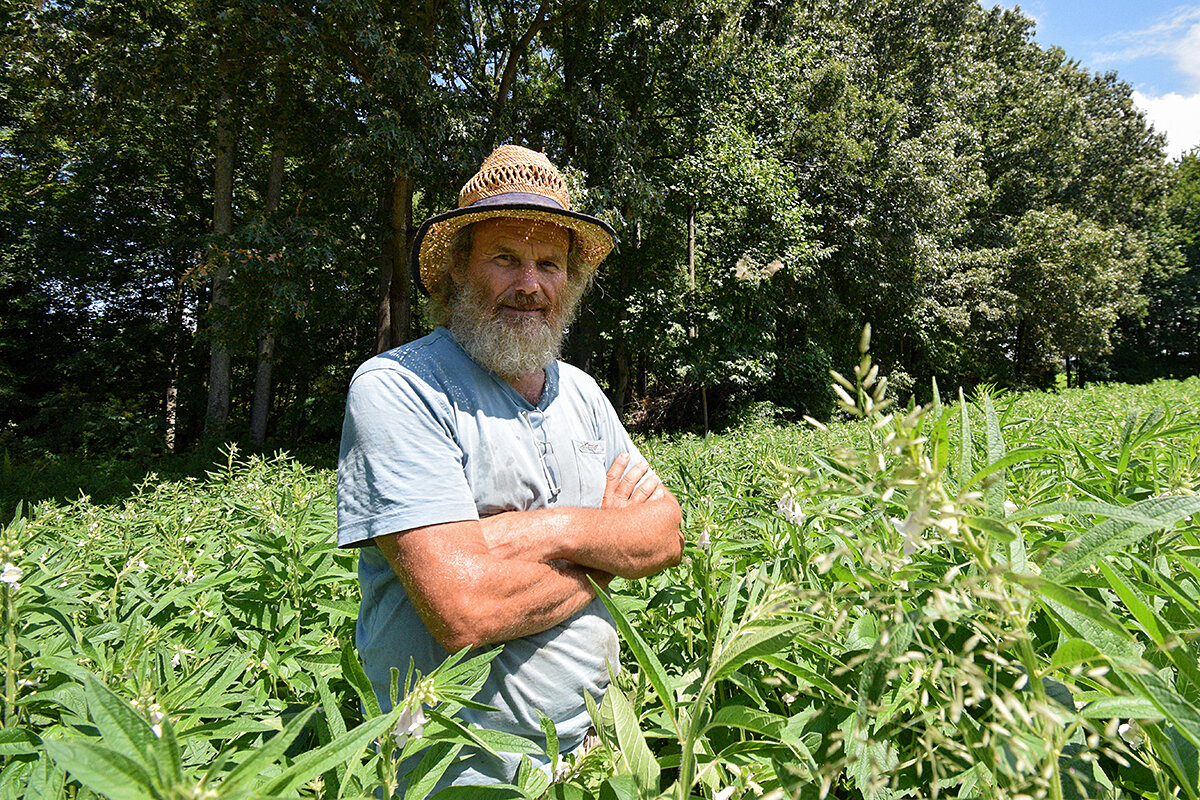
Photo: Sophie Hills/The Christian Science Monitor.
Heinz Thomet stands in a field of sesame on his farm in Newburg, Maryland, Aug. 17. Mr. Thomet tries to grow nearly everything he eats.

I love the first line of today’s story about “one of only two commercial rice farmers in Maryland.” Because who knew there were rice farmers anywhere in the US? Don’t you think of rice farmers as being almost entirely in places like Japan and Vietnam?

Sophie Hills writes at the Christian Science Monitor, “Heinz Thomet is one of only two commercial rice farmers in Maryland. The other is Nazirahk Amen of Purple Mountain Organics. Not one to accept the status quo, Mr. Thomet grows six varieties of rice on his farm in southern Maryland, where most fields are planted with soybeans and corn. Mr. Thomet didn’t start growing rice until sometime during the past decade. His explanation for why he added the crop is simple: ‘I eat rice.’ …

He is the sort of person who has utter faith in natural processes but none in institutions.

“He’s always been a farmer, from growing up on a farm in Switzerland to working on a famed biodynamic farm in the United States as a young man. Since 2000, he’s farmed in Newburg, Maryland. There, in addition to the rice, he grows barley, Sichuan peppers, bananas, grapes, bitter lemons, oats, kiwis, sesame seeds, figs, and more, depending on the season. 

“It’s difficult to make a profit on rice in Maryland. Farm-to-table was a natural concept for Mr. Thomet even before the movement expanded out of California in the early 2000s.

And though small-scale, direct-to-consumer farming is difficult to justify commercially, Mr. Thomet’s main concern remains the quality of the food he grows and stewardship of his land.

“In this case, that means successfully producing rice – a crop grown by few others on the East Coast. ‘Nothing of what I do makes sense for a cheap food system, but if you recognize a decentralized food system as food security, then I start to make sense,’ says Mr. Thomet. ‘If you look at diversified farms as part of the resilience towards a global weather pattern change, then I start to make change.’

“In an era of climate disruptions that are changing where everything from coffee and cacao to mustard and olives can be successfully grown, a decentralized food supply – like the one Mr. Thomet espouses – is getting a second look.

“After decades of factory farming and reliance on a global food chain that sends bananas, grapes, mangoes, and avocados thousands of miles to stores, returning to the idea that food should be grown where it is eaten is no easy task. And rice-growing is a useful case study.

“It’s unusual to find rice farmers anywhere on the East Coast, says Raghupathy Karthikeyan, Newman endowed chair of natural resources engineering at Clemson University in South Carolina. Rice production in the U.S. now takes place mainly on commercial farms in the Midwest and the South. But Mr. Thomet and fellow farmer Mr. Amen are holding on, despite the tight profit margin for small-scale, organic farmers.

“Both Mr. Thomet and Mr. Amen grow upland rice, a method that doesn’t use water for weed control, instead requiring labor-intensive weeding. While both sell their rice, neither grows enough to register on the U.S. Department of Agriculture census. Historically, Maryland farms mainly grew tobacco, and South Carolina was rice country. But the end of slavery and changing weather patterns made rice-farming less profitable. At one time, about 225,000 acres in South Carolina were planted with rice. Today, it’s somewhere between 25 and 50 acres. In Maryland, it’s 2.

“Agriculture in Maryland, as in most of the U.S., doesn’t supply much of the produce purchased in the state. Maryland farms produce more grain than other crops, and most of that is used for livestock feed and seed. 

“Mr. Thomet’s interest is in locally grown crops for food, and he has a loyal base of customers, including restaurants. 

“For Mr. Thomet, it’s not just about protecting the locavore movement. It’s also about stewardship. He quotes the motto of his family’s farm, Next Step Produce: ‘Committed to growing nourishing food in harmony with nature.’ …

“He eats what he grows and tries to grow whatever he wants to eat. In fact, Mr. Thomet has a nearly complete food system growing on the 30 acres he cultivates. The one thing he can’t grow is sugar cane, so he grows sweet sorghum instead, which is made into molasses. 

“Day length, sun exposure, and night temperature in Maryland are all sufficient for rice to thrive, he says. Next Step Produce starts the rice in a greenhouse and then transplants it, allowing for more growing days so the farm can grow higher-yield varieties.

“Whether upland or lowland, rice is no longer profitable to grow in South Carolina – the historical center of U.S. rice-farming – unless it’s grown as a hobby, says Dr. Karthikeyan, who’s leading a study on climate-resilient rice production. The remaining commercial rice farms he’s aware of in the U.S. all grow lowland rice in paddy fields.

“Rice is a labor-intensive crop, even if you flood it, says Dr. Karthikeyan. The yield gap between upland and lowland rice is large, making it hard to turn a profit growing commercial varieties upland. That extra labor limits how many acres of rice Mr. Thomet plants, since they’re weeded by hand. It’s also reflected in the price, he says.

“Still, in his eyes, everything comes down to priorities and societal values. There’s no good reason everyone shouldn’t have access to nutritious, locally grown food, he says. Next Step Produce, which he runs with his wife and daughters, was certified organic for two decades until last year, when a red-tape snarl was the last straw for Mr. Thomet. But his customers don’t care about the label at this point, he says. They know his growing practices. …

“Benjamin Lambert, the executive chef at Modena, a restaurant in Washington, D.C., has bought from Mr. Thomet since 2007, when he met him at a local farmers market. ‘As a chef, you look for good ingredients,’ he says, standing in the restaurant, a James Beard Award hanging just behind him.”

More at the Monitor, here. No firewall. Subscriptions solicited.

Read Full Post »

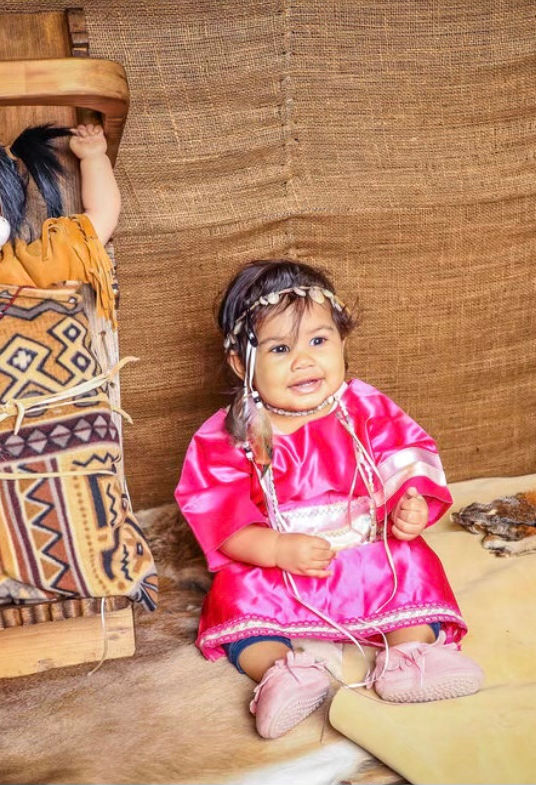
Photo: Piscataway Indians.

Our history with indigenous tribes is dark, and reconciliation must start with facing facts. In this endeavor, archaeology can help.

From St. Clement’s Island, Maryland, Dana Hedgpeth writes for the Washington Post on recent discoveries about a tribe’s long-ago presence.

“The small pieces of oyster shells and ceramic shards in the palm of archaeologist Julia King don’t look like much. But her team’s discoveries of roughly 1,500 pounds of shells and 200 pieces of ceramics bring new and more concrete evidence of the dominance of Native Americans who once lived at St. Clement’s Island and along the surrounding Potomac River shoreline in Southern Maryland. Native American leaders said their archaeological findings shed fresh light on their tribes’ historic presence in the state — which continues to this day but is often unknown, forgotten and ignored.

“ ‘This work is showing a reclamation of the long history of Native Americans in that area and what it means to our people,’ said Gabrielle Tayac. Tayac is a historian and member of the Piscataway Indian Nation, which considers the area its tribal homelands. ‘There’s been a willful and problematic negligence in the record about us.’

“St. Clement’s Island — an uninhabited 40-acre plot of land only accessible by boat — sits where the Potomac and Wicomico rivers meet, about half-mile off the shoreline of St. Mary’s County. There are roughly 4,500 Native Americans who are part of two state-recognized tribes — the Piscataway Conoy Tribe and the Piscataway Indian Nation — who trace their roots to the area. Piscataway means ‘the people who live where the waters meet’ in the Algonquian language.

“To many, St. Clement’s Island is best-known as the spot where roughly 150 European colonists arrived on March 25, 1634, and held the first Roman Catholic Mass in the British American colonies. …

“Few people had explored the sandy shores and grassy lands of the island until King’s research team spent several months this summer carefully digging up grass and sifting through dirt. … They found scores of Native American artifacts at the site and in collections of area residents and of a small museum on the mainland. The items included stone tools, tobacco pipes, ceramics and oyster shells, along with bits of copper, polished tubes and stone beads. All of it is evidence, said King, an archaeologist with St. Mary’s College of Maryland, of the ‘extensive exchange and network of trade’ between Piscataways and tribes from areas now known as Virginia, New York and as far away as Ohio andWest Virginia — centuries before Europeans came. …

“For Native American leaders in Southern Maryland, King’s work is a validation of their long history and continued presence in the area that’s rarely highlighted.

‘History was not written for us — or about us,’ said Francis Gray, chairman of the Piscataway Conoy Tribe. …

“Archaeological records show Native Americans were in the St. Clement’s Island area as far back as 3500 B.C., according to King. The island itself was once 400 acres, but erosion shrank it. Historians say there were an estimated 5,000 Piscataways living in the Potomac Valley area in the 1600s. …

“Rico Newman, an elder in the Choptico Band of Piscataways, said he remembers when growing up that he heard oral histories from his elders of how Piscataways followed the shad and herring runs along the nearby Wicomico River and went to St. Clement’s Island. Native Americans called it Heron Island after the bird that is fond of nesting in the area.

“ ‘There was no better place to live off the water and the land than there,’ Newman said. He recalled how his grandfather used to tell him, ‘if the heron isn’t fishing, then you weren’t fishing.’ It meant there was ‘something wrong with the fish or the water that day.’ …

“In the early 1600s, Piscataways traded with Europeans from the sister colony in Jamestown, Va. For the Piscataways, the trade meant protection for their homeland from Iroquois. English copper, beads and metal tools ‘made the newcomers useful that they need not be killed or left to starve,’ according to Piscataway leaders and historians.

“The Piscataways’ homeland changed dramatically when in March 1634, two ships — the Ark and the Dove — arrived with colonists looking to create a settlement. To celebrate their arrival, the colonists held the first Catholic Mass in the New World.

“The colonists knew of the disagreements and slayings between Native Americans and settlers at Jamestown, so they planned a different approach. The Calvert family, who founded Maryland as a colony, ‘didn’t want to pay for the costly kinds of wars experienced in Virginia,’ King said, ‘so they made the decision to forge diplomatic relationships with the Indians.’

“They went from St. Clement’s upriver to see the Piscataway tayac — the word for leader in the Algonquian language. They told Wannas, the Piscataway tayac at the time, they’d ‘come not to make war, but out of good will toward them,’ according to records at the St. Clement’s Island museum.

“Wannas, the tayac, cautiously responded to them, saying the Native Americans did not welcome the colonists, but also was not going to force them to leave. The colonists decided St. Clement’s was too small and well-established as ‘Indian country,’ so they returned and went down the river to what would become St. Mary’s City, where they bought land from the Yaocomicos and set up the first English settlement in Maryland.

“By 1650, more colonists moved to the area, and they created a reservation for the Piscataways, but eventually, King said, the Native Americans were pushed out as colonists took over. Some Piscataways went north to what’s now Frederick. Others went to Virginia. And some stayed, but they were ‘no longer considered a sovereign nation,’ King said. …

“Karen Stone, the executive director of the St. Clement’s Island museum, said a major renovation will start early next year with new exhibits that will tell Maryland’s history from the points of view of the colonists and the Piscataways. She said local Native American leaders are involved in designing the materials and exhibits for the new museum to give a more complete story and more accurate history of the Piscataways.”

More at the Post, here.

Read Full Post »

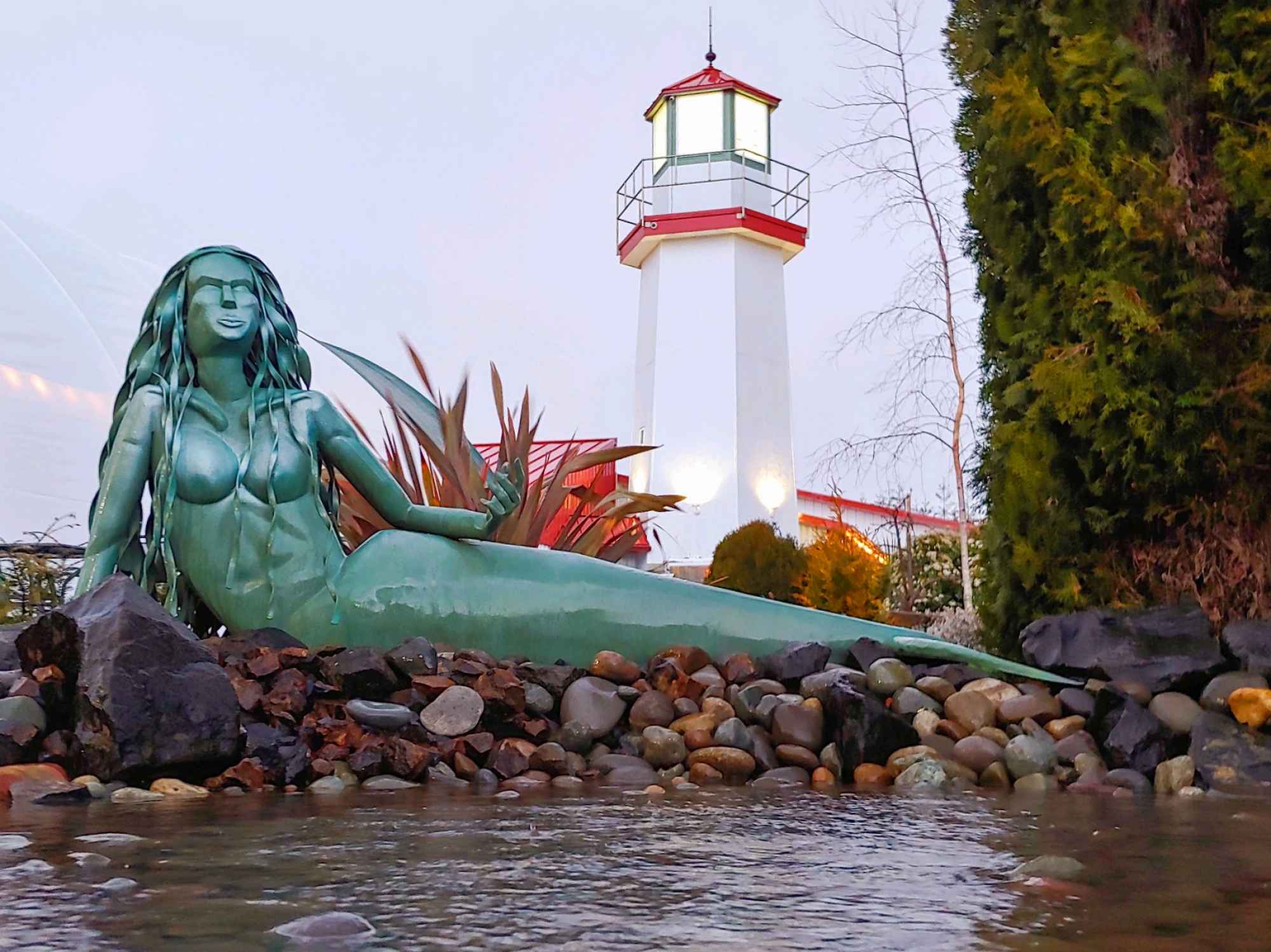
Photo: International Mermaid Museum.
This mermaid museum is in Washington State. It opened about the same time as one in Maryland.

I have a granddaughter who is into mermaids big time. And my friend Asakiyume has done considerable research on people who give expression to their inner mermaid on a regular basis. (See Asakiyume’s interview with a “mer-tail maker,” here.)

So I’m not as surprised as some folks might be that the interest in mermaids is enough to support two museums in the US, at least for now.

Hakim Bishara reports at Hyperallergic, “A curious, almost mystical coincidence occurred earlier this year when two separate mermaid-themed museums debuted almost simultaneously on opposite ends of the United States. First, it was the Mermaid Museum in the town of Berlin, Maryland, which opened its doors on March 27. Days later, on March 29, the International Mermaid Museum started welcoming visitors outside the coastal town of Aberdeen in Washington state.

“So, how can we explain this coast-to-coast siren call in the span of one week last spring? According to the respective founders of the two museums, Alyssa Maloof and Kim Roberts, they were just as surprised as anyone at the concomitance of their mermaid-centric projects. …

“Variations of the myth of fish-tailed people, first appearing in Mesopotamian art from the Old Babylonian Period, exist in nearly every oceanic culture, from Europe and the Americas to the Near East and Asia. Their magic endures, as evidenced by the stories behind these two new American mermaid museums.

“Both museums are self-funded, women-led projects that hold personal importance to their founders. And both happen to be located about nine miles from the ocean.

“Maloof, a visual artist and photographer, lived between Philadelphia and Berlin, Maryland, since 2018, until she eventually permanently settled in the small seaside town with her 7-year-old. She rented a studio space and prepared for a new chapter of her life and career, but then COVID-19 happened, forcing her to conjure up a new plan.

“It’s around then that the second floor of a 1906 building — built by the secret society of the International Order of Odd Fellows, as a wall insignia testifies — became available. Maloof used her savings to purchase the 2,200-square-foot space and started conducting research and collecting items for the museum.

“ ‘I thought of it as re-feminizing the space,’ she told Hyperallergic in a phone conversation, explaining that the project was a long-held dream driven by her ‘love of the feminine and the water.’

“Accrued from thrift shops and internet sites like eBay, the museum’s collection spans dozens of mermaid-related artifacts, most prominently a Fiji Mermaid, a mythical half monkey-half fish said to have been caught off the coast of Fiji. …

“The museum also features a timeline of mermaid sightings by sailors and pirates from the first century CE to as recently as 2017. It also offers activities for children, including a scavenger hunt and an opportunity to dress up like a mermaid. The Mermaid Museum’s gift shop sells aquatic paraphernalia crafted by local artists. …

“Thousands of miles away, on the other side of the country, the International Mermaid Museum is a nonprofit created with an educational mission to teach ocean ecology ‘from seashore to seafloor’ through mermaid mythology. According to Roberts, the museum is currently developing a curriculum for school children and will soon launch a scholarship program for individuals who wish to work in the marine industry. The museum’s board of directors is comprised entirely of local women leaders with an interest in ocean preservation.

“Roberts is an architect, author, and local entrepreneur who runs several businesses in Aberdeen with her husband Blain, an underwater photographer. … Roberts, a pioneering boat captain, has also authored three mystery novels set on Maui, where she and her husband formerly owned the island’s largest scuba charter.

“Roberts is also a venerated member of the West Coast mermaid community. In July, she received the 2021 Mermazing Citizen Award from the Portlandia Mermaid Parade and Festival. …

“Portland, Oregon, is home to one of the biggest modern-day mermaid societies in the country. Other groups are active in Seattle, California, Florida, and New York. They are part of a global community of merpeople (or ‘mers’) of all genders, who commune to swim together in mermaid costumes and tails. … They have a vibrant online community and local pods and meetup groups that organize conventions, festivals, and competitions. …

“The idea of creating a mermaid museum occurred to Roberts when a friend sent her a shipment of special seashells, among them a single ‘mermaid comb,’ also known as the Venus Comb murex. ‘That’s when it’s all clicked,’ she said. The museum was set to open in March of 2020, but because of the COVID-19 lockdown, the official opening was postponed to March 29 this year, which marks the annual International Mermaid Day.”

More at Hyperallergic, here. And if you have a middle grade reader who likes mer people, there are a few in Eva Ibbotson’s wonderful children’s fantasy Island of the Aunts, which has a not exactly hidden theme about protecting the sea.

Read Full Post »

A bullied homeowner in a homeowners association won the right to have natural landscaping. The governor is expected to sign a bill that affects every gardener in Maryland.

Jean is my go-to source for information on saving the planet by protecting insects, planting native species, and getting rid of yard chemicals.

Yesterday she sent me a cool article about a tyrannical homeowners association that bit off more than it could chew when it told one couple what to plant.

Nancy Lawson wrote at Human Gardener, “If you live in a community governed by a homeowners association [HOA] in Maryland, your HOA will soon no longer be allowed to require you to grow turfgrass. It can no longer prohibit you from planting native plants and creating wildlife habitat. The Maryland General Assembly has spoken, quietly and firmly, joining a growing number of states last week by passing House Bill 322, the low-impact landscaping legislation that specifically codifies your right to be wildlife-friendly, plant-friendly, and environmentally conscious.

“You can thank my sister, Janet Crouch, for that. … Three and a half years ago, Janet and her husband Jeff began receiving demands from the Beech Creek Homeowners Association in Howard County that they convert their beautiful 15-year-old pollinator gardens to turfgrass. In a series of bullying and nonsensical letters, the HOA’s contracted law firm, Nagle & Zaller, wrote that a garden ‘without the use of pesticides in which they have maintained “native plants” to provide food for birds, bees, and other insects and animals’ is ‘completely contrary to the overall design scheme for the Association, which is a planned development.’ … Attorney Sean Suhar used quotes around words and concepts he apparently viewed as suspicious, such as ‘garden,’ and wrote disparagingly of the Crouches’ ‘environmentally sensitive agenda.’

The law firm’s letters displayed a seemingly boundless ignorance by trying to demonize my sister and her husband for adding ‘plantings which grow back every year.’

“Throughout this process, there was virtually no opposition from politicians, and even the national association representing HOAs supported the legislation. When we testified for the bill the first time at last year’s hearing, the curmudgeonly delegate who’d voted against other environmental proposals that day surprised us all by asking, ‘Who wouldn’t support pollinator gardens?’

“His question was more than rhetorical for my sister. Janet’s HOA board was so unsupportive of pollinator gardens that it paid the law firm of Nagle & Zaller about $100,000 of the community’s money — made up entirely of homeowners’ dues — to try to get rid of the one in my sister’s  yard. …

“The entire case against the Crouches was built on the complaints of one neighbor, who grows Japanese barberries in front of his house and fills his lawn with blue chemicals that I have filmed running down toward the wooded and stream-filled park during rainstorms. He also hires pesticide sprayers routinely and accused the Crouches’ of attracting mosquitoes, even though his eroded lawn pools with standing water and provides perfect mosquito habitat. One of the most ludicrous complaints of all from this man — whose property and entire neighborhood abuts forest where owls, foxes, squirrels, chipmunks and many other animals live — was repeated in illogical screeds from the lawyers proclaiming that ‘numerous squirrels are being attracted to the subject property. The neighbor fear [sic] this will affect their property.’

“Claims of squirrel takeovers may sound laughable, but since 2017, it has been no laughing matter for Janet, who poured her heart into saving the garden that has offered so much solace to her family and so much habitat to the community’s birds and other wildlife. …

“In preparation for a ‘hearing’ process in 2018, we prepared many documents and photos, only to arrive and discover it was all a sham. Suhar, the HOA lawyer, immediately told my sister to ‘shut up’ when she tried to speak and yelled at me to ‘be quiet.’ …

“Unfortunately there was no law against such abusive behaviors, nothing to prohibit HOAs from acting in a kind of Wild West, arbitrary fashion toward gardens and nature and the people who love them. Until now. …

“We will be eternally grateful to wildlife biologist John Hadidian, native nursery expert Rob Jenkins, and realtor Kristi Neidhardt for their wisdom, insight and bravery in signing on to help with the case. Most of all, Jeff Kahntroff and Matt Skipper of Skipper Law took on what most lawyers consider to be an unwinnable issue. …

“It’s easy to become overwhelmed by the forces against nature, but my sister has taught me that you can change those tides by becoming a force of nature. ‘I’m a shy person,’ she told me last week, ‘and I don’t usually put myself out there like this.’ But she’s never countenanced bullies and has defended me from them since I was a little girl. This time, she was defending the plants and animals and her family, who felt attacked in their own home of 20 years. … Thanks in large part to the bravery and fortitude of Janet Crouch, many more people in my home state will now be allowed to nurture the bees, butterflies and other wildlife in their own backyards.

“The bill is waiting for the governor’s signature and is set to become law in October.”

More here. Hat tip: Jean at Meadowmaking.

Read Full Post »

shmds7f6uui6rb4spbyzc5zfb4

Photo: Katherine Frey/The Washington Post
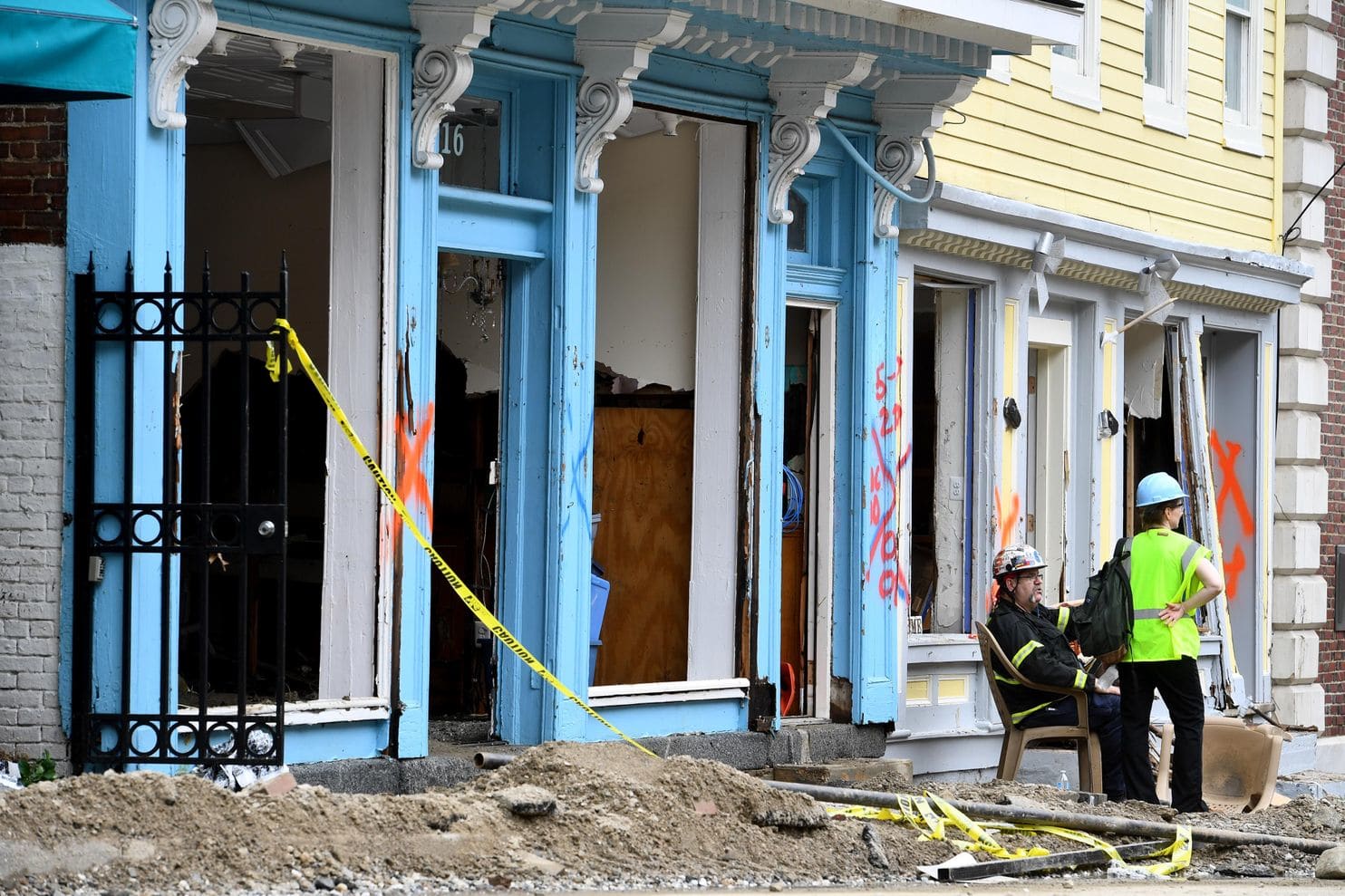
Stores along Main Street in the refugee-welcoming town of Ellicott City sustained severe damage after flooding in May. Grateful refugees were determined to help out after all the kindness shown them.

Not only do refugees contribute to both the US economy and the budget, but many are eager to return kindnesses shown to them when they were first finding their way in an unfamiliar land. In this article, Syrians did some fund raising for a small, flooded town that had welcomed them. Terrence McCoy reported the story for the Washington Post.

“The first time Majd AlGhatrif saw this historic mill town of colonial buildings at the confluence of the Patapsco and Tiber rivers [in Maryland], he thought of Syria.

“The structures, built of gray stone, and the history they evoked, reminded him of the timelessness and architecture of his hometown, Sweida, in southern Syria. He soon bought a house here, in 2013, then opened Syriana Cafe & Gallery, in 2016, and came to view everything about Ellicott City’s people — their kindness and decency — as an antidote to the fear others were expressing over Syrian immigrants like him.

“So when floods again ripped through here in May, killing a Maryland National Guardsman, closing businesses up and down its historic district and producing images of destruction recalling the floods of 2016, he vowed to do anything he could to help a community that had become his own.

“The result of that vow came to fruition [September 22] at Syriana, where he presented the city with a check for $10,000, which he had raised from Syrian Americans from all over the country who had seen the destruction and wanted to show their gratitude not just to Ellicott, but also to the United States for accepting them.

We wanted this to be a payback from Syrian Americans to a generous America,’ said AlGhatrif, a physician at Johns Hopkins Bayview Medical Center, handing an oversize check to community leaders.

“The check was a rare bit of good news in a city that has survived 246 years but is now reckoning with its own mortality — one more town grappling with existential questions, as the globe warms and natural disasters increase in frequency and ferocity. …

“The community is considering a sweeping $50 million plan to mollify future damage from flooding, but it would require the demolishment of as many as 19 buildings, cleaving out a piece of history in a city whose livelihood to a large degree depends on that very history.

“What we have to realize is that if we don’t do something, the town will die,” said Howard County Executive Allan Kittleman (R). … After the last flood, he said, ‘the calculus changed.’

“AlGhatrif witnessed that firsthand. … He knew that the community meant a lot not just to him, but also to other Syrian immigrants and refugees. His cafe employed several who, after years of fear during the Syrian war, had come to feel safe in Ellicott City.

“One was Safa Alfares, 17. She was born in Aleppo, whose scenes of war and bodies still dominate her thoughts. [She] had arrived expecting to face Islamaphobia. …

“But as she learned English, in which she became fluent in less than two years, and after she found a job at Syriana, her sense of foreboding gave way to something she had not experienced since the beginning of the war: calm.”

This is such a touching story. Read more here.

Hat tip: @bostonmigration ‏on twitter.


Read Full Post »

Catch this story on National Public Radio today?

Jake Scott, a math teacher and wrestling coach in Silver Spring, Maryland, draws students in with clever ways to memorize formulas.

“Keeping control of the class is one thing, but holding their attention through complicated calculations and theorems is another challenge altogether. So Scott gets a little extra help from his alter ego, 2 Pi.

“About three years ago, Scott started infusing rap into his lessons.”

He describes to NPR’s David Greene his early lack of success in school, his time on the streets, the help he received from taking up wrestling, and the reasons he eventually got into math.

” ‘You know, when my dad lost his sight, I started doing accounting for him, and math was the one area that I was able to succeed in,’ Scott says. ‘Because of my time in the streets, my vocabulary wasn’t very extensive, and so I shied away from English. I was bored to death by history. Math, on the other hand — I didn’t need to know how to speak well in order to do well in math, so that was very helpful, when I look back. It helped me to grow in my appreciation for numbers.’

“Scott says that one of his most important goals as a teacher is to make meaningful connections with his students. This drive to connect with the kids in his classroom influenced him to begin rapping as 2 Pi.

” ‘I mean, I think that we can preach to kids until they turn blue and we turn blue, but if there’s no connection, then there’s no response,’ Scott says. ‘I mean, I constantly search for ways to connect with students — with the language, with conversations, music.” Read more here.


Read Full Post »

Having blogged about the troubling documentary “Waiting for Superman” here, I thought you might be interested in hearing about a school district that has found one way to overcome a significant barrier to quality education.

The documentary’s critique of U.S. public education centers on the inadequacy of teacher evaluation and the near impossibility of firing bad teachers.

Montgomery County (MD) doesn’t have that problem. Can you guess why?

Deep, broad collaboration. Critical constituencies are in on the evaluation and the decisions about coaching and firing.

A June 5 NY Times story by Michael Winerip, “Helping Teachers Help Themselves,” explains.

“The Montgomery County Public Schools system here has a highly regarded program for evaluating teachers, providing them extra support if they are performing poorly and getting rid of those who do not improve. The program, Peer Assistance and Review — known as PAR — uses several hundred senior teachers to mentor both newcomers and struggling veterans. If the mentoring does not work, the PAR panel — made up of eight teachers and eight principals — can vote to fire the teacher. … In the 11 years since PAR began, the panels have voted to fire 200 teachers, and 300 more have left rather than go through the PAR process, said Jerry D. Weast, the superintendent of the Montgomery County system, which enrolls 145,000 students, one-third of them from low-income families. In the 10 years before PAR, he said, five teachers were fired. ‘It took three to five years to build the trust to get PAR in place,’ he explained.”  Read more here.

Having started out my work life as a teacher, I feel pretty strongly that teachers have been given a bad rap lately and that most are experienced, creative, and deeply dedicated (and overworked and underpaid). My daughter-in-law is also a teacher.

But there is no doubt that the bad apples are hard to fire and that every year that they get away with bad teaching turns thousands of children off the whole idea of education, to the lasting detriment of the nation. So I hope everyone will think about the PAR program described in the Times and how they might help influence school policy.

I will post comments sent to suzannesmom@lunaandstella.com.

Read Full Post »