Feeds:
Posts
Comments

Posts Tagged ‘massachusetts’

In a sign of moving with the times, the 54-year-old Littleton, Mass., Country Gardeners now call themselves a flash mob when they descend on public spaces to pull weeds and trim bushes.

Writes Grant Welker of the Sun, “The club of 34 active members — ranging in age from 30s to 90s, and all women — might not turn as many heads as a flash mob that quickly forms in a public setting, and there’s surely no dancing or singing involved. But it does serve more of a purpose.

“This group plans its mobs, shows up at the arranged time, works its gardening magic, and then disappears again, leaving a beautified space in its wake. …

“On a recent Saturday at 1 p.m., a group of five assembled at the Littleton Cemetery at the intersection of King Street and New Estate Road, fixed up a butterfly garden and, within about an hour, was gone, with some of the same members on to the next project. There were three mob-gardening sessions that day: at the cemetery, and then at Littleton Cafe at 3 p.m., and Common Convenience on Littleton Common at 5 that afternoon.” More.

Now, without calling these cheerful efforts at all staid, I can’t help thinking that a little singing and dancing wouldn’t hurt. I wonder if anyone has ever thought of pulling a flash mob on a flash mob?

You could find out when the gardening flash mob was scheduled, then show up with a brass band and baton twirlers to encourage the workers in the town common.

Or what about something around Halloween, with the surprise mob descending on the cemetery clean-up wearing costumes and handing out candied apples while “Monster Mash” plays on someone’s iPod?

Read Full Post »

Today we joined forces with our son, daughter-in-law, and two-year-old grandson for a lovely, low-key apple-picking adventure in Harvard, Massachusetts.

Carlson Orchards has many varieties of apples. Small painted signs tell you which ones grow in which part of the farm. The trees have been pruned so as not to grow too tall, and they are loaded with fruit. The purplish ones are Empire. I had never seen Empire apples that looked purple. We picked Empire, Cortland, Mac, and Pink Gala.

A friend from the office told me about the farm. She likes to go pick peaches in summer.

The little general store had hot cider and donuts, pumpkins and a nice variety of apple products and jams.


Read Full Post »

Thomas Daigle, an optician in Milford, Massachusetts, is a thrifty guy.

Writes Martine Powers in the Boston Globe, “Daigle, 60, has finally fulfilled the goal he set for himself decades ago: Arriving at the Milford Federal Savings and Loan Association in April with two 200-pound steel boxes, Daigle paid off the couple’s final mortgage payment with the contents — more than 62,000 pennies.

“That day was also the couple’s 35th wedding anniversary. Daigle hopes his story, first reported Wednesday in the Milford Daily News, will teach others the value of good old-fashioned long-term commitment.

“ ‘One of my sons always tells me, “Dad, you’re stuck in the ’50s,” ‘ Daigle said. ‘But it’s how you’re brought up, and it comes down to values.’ …

“It took the bank two days to count the coins, Daigle said, but it turned out his tally was exactly correct — to the cent. The sum was a little more than what Daigle owed, he said, but he did not ask for the surplus.

“ ‘I just wanted the pennies out of my house.’ ”

Wouldn’t you have liked to see the customers’ reactions when the 400 pounds of rolled up coins were delivered? But good for him. I value pennies, too.

Read more.

Photograph: Essdras M. Suarez/Globe

Thomas Daigle paid his last mortgage payment in pennies.


Read Full Post »
I’ve been enjoying the album “On the Road from Appomattox,” the latest release of outstanding local bluegrass band Southern Rail.

I’ve also been asking myself what makes a song on the album, “Mr. Beford’s Barn,” so moving.

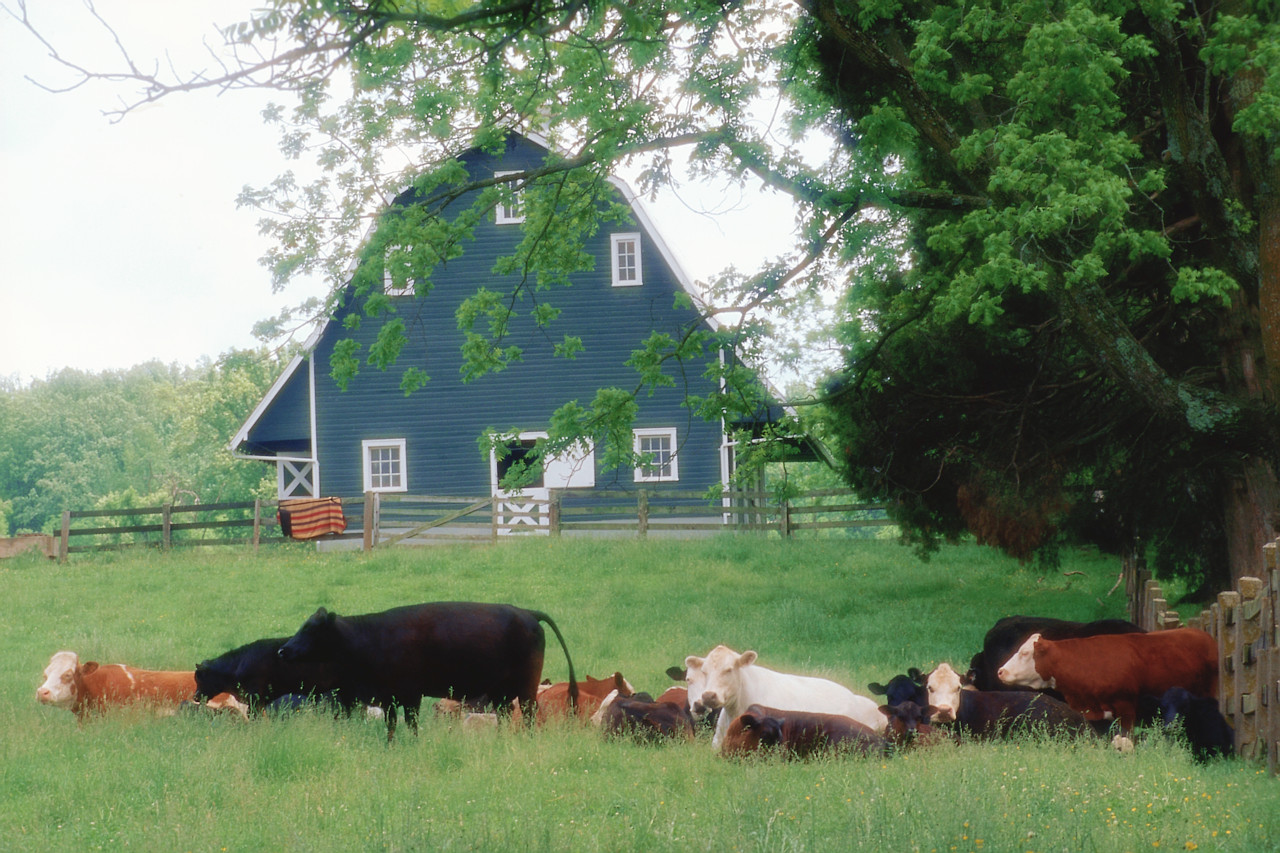
An old man comes to the narrator’s farm and says he wants to see the barn he helped his daddy build years ago. The barn is very solidly constructed, nearly 100 years old now, and the refrain says it will probably last another hundred years.

It makes a person think about how fine it is to make something that lasts hundreds of years. But the more I thought about it, the more I wondered if maybe the hundred-year-ness is not what’s moving.

The old man will not be there for hundreds of years and will not be enjoying the fact that the barn lasted so long. The reason he wants to see it is that he knows he helped make something that’s very fine. It’s the well-built-ness that is valuable. The hundreds of years are merely a feature of the value.

I think you will like the song. Although it is not on YouTube, the band lists its YouTube songs here, and you might want to listen to a few if you are thinking of buying Appomattox.

http://www.southernrail.com/

Read Full Post »
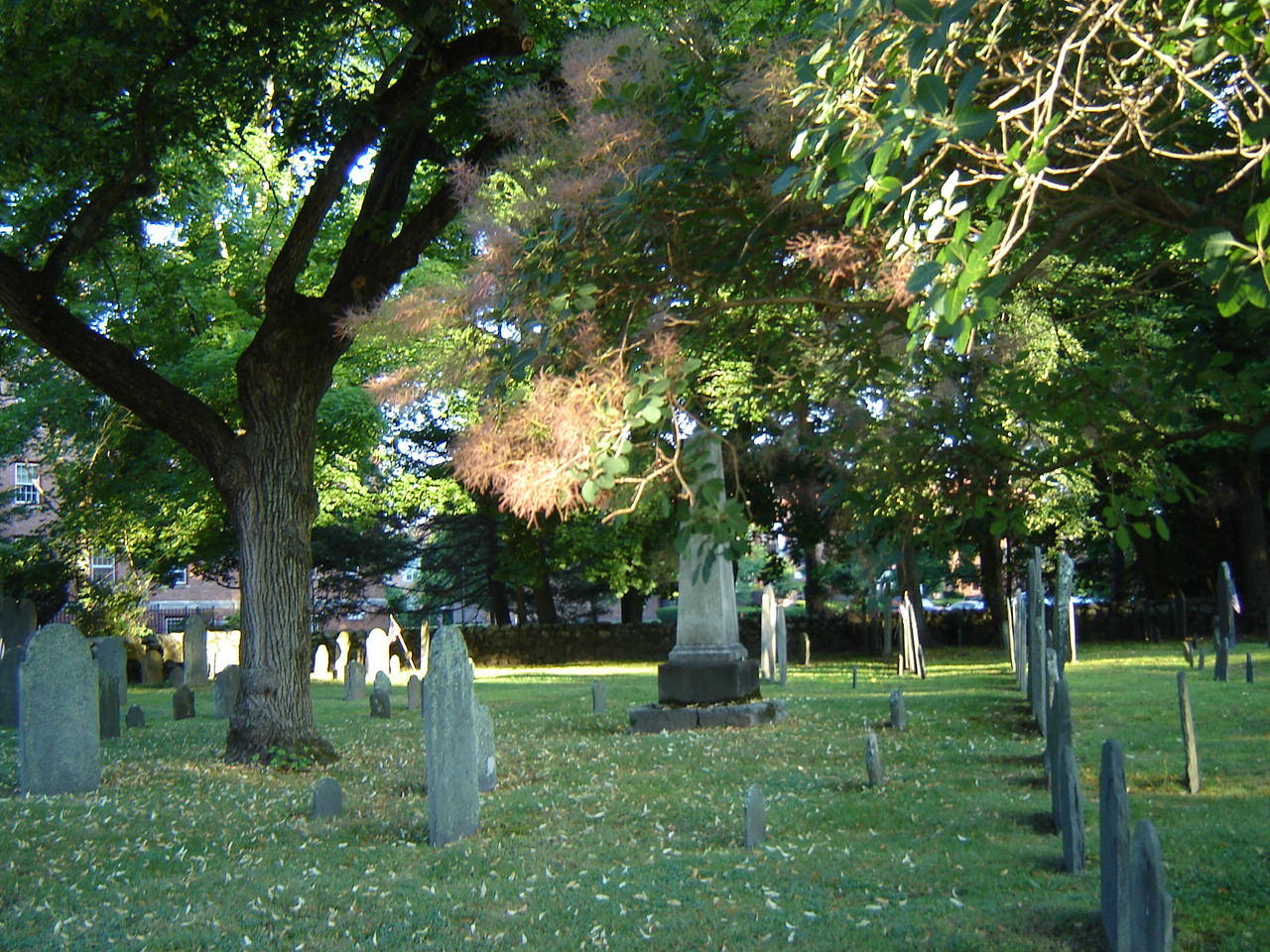
I was pumping gas, and a guy with California plates who was filling the tank for his wife commented that our town seems incredibly pretty and quiet. I said it’s quiet because everyone leaves in summer. That surprised him. He thought it would be busy in summer because it’s so beautiful.

Made me think. Why are we always looking for someplace else to be?


Read Full Post »

I haven’t been to Concord’s homey celebration in years, and yesterday was a good day to see it at its best. Please note the “burning building” with fake flames, which the fire department repeatedly doused, cooling off the children watching at a safe distance.


Read Full Post »

First there were ghost leaves embedded in the sidewalks. And then … mystery messages.


Read Full Post »

A new $100 bill is in the works. For security, it will have half a million tiny lenses in a special strip, and the lenses will create a particular optical effect as you tip the bill this way and that.  Kind of like a hologram, is my understanding. There will be even more tiny lenses on the Liberty Bell and the numeral 100, and as you tip the bill, the one will turn into the other, thanks to the lenses.

This rather surprising information I learned from a speaker today — Doug Crane, vice president of the family company that has been making America’s currency and some other nations’ currencies since 1801. He makes paper only from cotton (80%) and linen (20%).

There are a lot of interesting old documents about the history of Crane & Co. — and how it overlapped with key events and players in American history — at this blog on WordPress.

More information is on the regular website of the company, which is based in Dalton, Massachusetts, and employs 850 people locally. Among them are the people who make print so tiny you could “print the Bible twice on a dime.” They also employ optical engineers who create the micro lenses and are responsible for Crane’s 80 patents.

Other employees work in Tumba, Sweden, ever since Sweden asked Crane to take over its currency making. At the Tumba site, Crane makes currencies for additional countries.

A paper-making enterprise requires a lot of energy, so Crane is working with numerous alternatives as it moves toward its goal of 100% sustainability. It has   already drastically cut its oil use in a partnership with a steam-producing landfill enterprise. Hydroelectric is proving trickier because there are so many jurisdictions on the Housatonic River to give permission to remove waterfalls.

Perhaps the river could become a Blueway and get everyone working together. (See yesterday’s post.)

Postcard from cranesbond.com

Read Full Post »

You probably think of the Connecticut River as being in Connecticut. And so it is. But it flows through most of the New England states, so protecting it results in protecting a large chunk of the Northeast. Its 7.2 million acre watershed runs through Connecticut, Massachusetts, New Hampshire, and Vermont.

The Christian Science Monitor recently added to its Change Agent series an article on the U.S. Interior Department’s May 24 designation of the Connecticut River as the first National Blueway.

Correspondent Cathryn J. Prince writes, “Between 40 and 50 local and state entities, both public and private, from four states will work together to preserve the 410-mile-long Connecticut River and its watershed. …

“It took the cooperation of between 40 and 50 local and state, public and private, organizations from four states to make the designation possible. While it doesn’t mean more federal funding, it does mean better coordination between these groups to promote best practices, information sharing, and stewardship.

“National Blueway is more than a label, says Andy Fisk, executive director of the Connecticut River Watershed Council.

“ ‘There are no turf wars here, but there are a lot of folks on the dance floor,’ Mr. Fisk says. ‘It’s important to recognize that this is a new way in how you get things done. It’s not one entity that will get things done, it’s diversity.’ ” Read more here.

Photograph: John Nordell, Christian Science Monitor

The Connecticut River, as photographed from the French King Bridge in Gill, Mass. The river and its watershed have been named the first National Blueway, an effort to coordinate the work of nonprofit groups and governments to protect and wisely use the entire 410-mile river and its 7.2 million acre watershed.

Read Full Post »
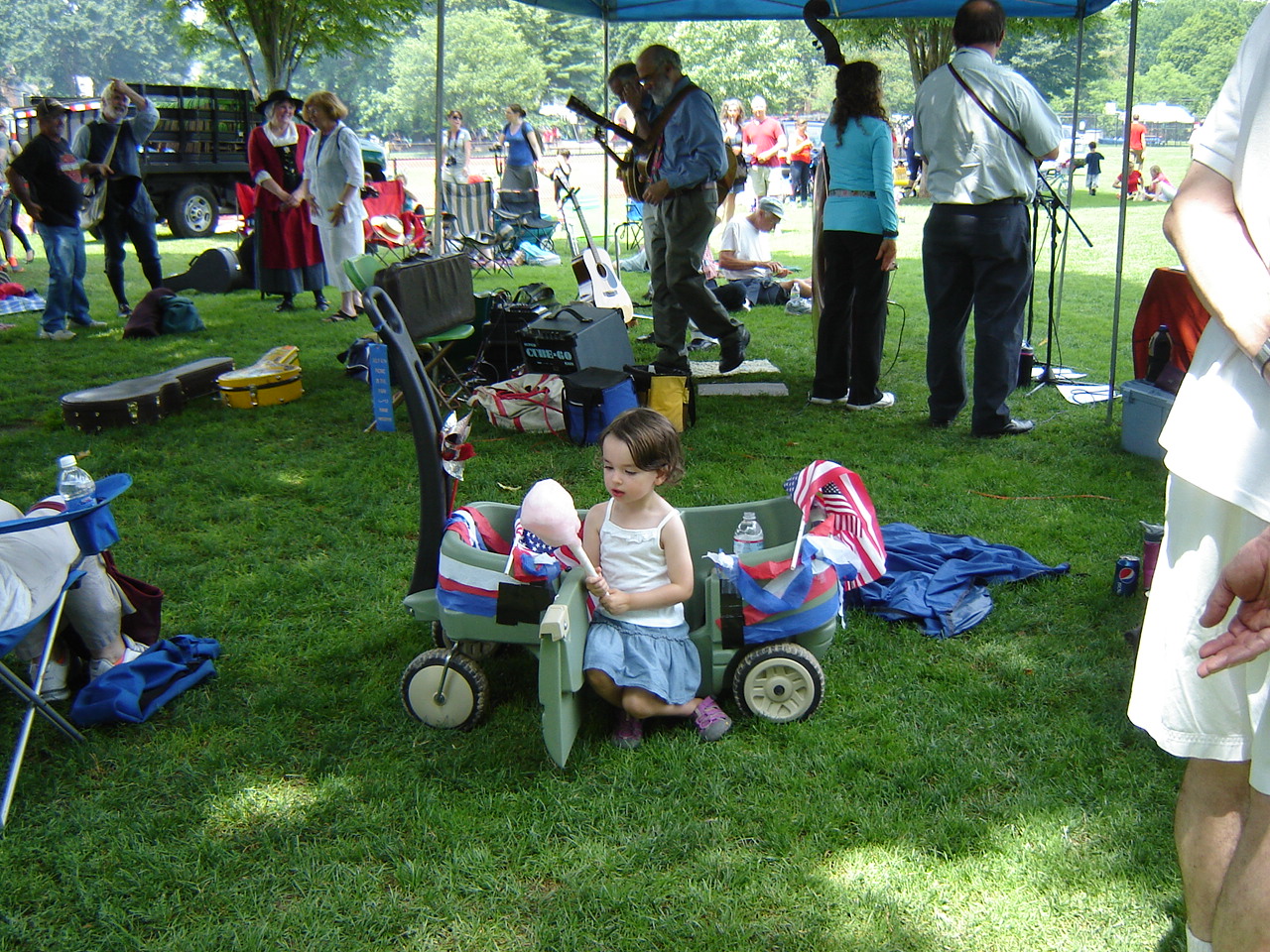
Years pass, and I forget how delightful Drumlin Farm is and how close. The Audubon Shop there is also a wonder. You find things in the shop that you don’t find anywhere else. All nature related.

It must have been years since I visited, because it looks like the “new” entrance and parking lot have been there a long time.

It’s a good place to go on a day that feels like summer.

Read Full Post »

Still the best sugar cookie recipe comes from the cookbook John made in nursery school, age three.

Read Full Post »

Miller-McCune.com tweeted today that the National Endowment for the Arts has new data on where artists are finding work.

Four of the six New England states are among the states with the most arts jobs: Vermont, Rhode Island, Massachusetts, and Connecticut.

“The report on artists in the workforce supplements and expands upon a 2008 paper, which found about two million Americans list a job in the arts as their primary source of employment. That comes out to 1.4 percent of American workers.

“New York heads the newly released state-by-state list, with artists making up 2.3 percent of its labor force. California, home to the film and television industry, places second with 2.0 percent.

“Not far behind are Oregon and Vermont, each of which has a workforce in which 1.7 percent of workers are artists. That means they exceed the national average by a substantial 20 percent.

“ ‘Writers and authors are especially prominent [in Oregon and Vermont],’ the NEA report notes.

“Also exceeding the national average: Colorado and Connecticut (where artists make up 1.6 of the labor force), and Hawaii, Rhode Island, Massachusetts, Maryland, Washington, Nevada, and Minnesota (at 1.5 percent).”

Although there likely to be different perceptions of what kind of work constitutes arts employment, I find the report interesting. And since I know anecdotally that there are arts jobs in Maine and New Hampshire (the two New England states not among the top few), I can’t help hoping that some organization will do an in-depth study of the region. Unfortunately, ornery New Englanders don’t often think regionally.

And more generally, what are the reasons some states have more arts jobs? Public policies? Landscape? Accident?

Read more here.

Read Full Post »

We had already bought tickets for the new version of Porgy and Bess at the American Repertory Theater when Stephen Sondheim weighed in with an angry letter to the NY Times. He had not seen the show, but he apparently resented the tone of an article’s quotes from A.R.T. He may have thought director Diane Paulus and writer Suzan-Lori Parks were implying that they were better than the show’s original creators.

After the opening, Ben Brantley of the NY Times raved about Audra McDonald’s Bess while giving a mostly lukewarm review to everything else. Meanwhile, the student D.J. at Emerson College’s radio station kept reading promos for the show and pronouncing Porgy as “Porjy.” (He will always be Porjy to me now).

By the time our matinee rolled around, the day was almost too beautiful to be in a dark theater for three hours, and our initial anticipation had been reduced to mild curiosity.

So I’m happy to say we really liked A.R.T.’s Porgy — pretty much everything about it.

I admit that I am not intimate with the whole score and therefore was not always able to tell when new material had been inserted. (One line, about saving to send the baby to college, did come across with a loud, anachronistic clunk — but now a blog reader tells me it was in the original!) But the beauty of the songs, the dancing, the characters making the best of no-options, the love story! I cried pretty much the whole way through. And I’m still singing.

The only other Porgy and Bess I’d seen was directed by Bobby McFerrin in Minneapolis. It was long and kind of confusing, but I accepted that that’s the way opera often is. The A.R.T. may have presented a rejiggered story that was not true to the original, but it was a story that I could follow.

As I said to my husband on the way out, “Well, it worked for me.”

He said, “Sondheim should rethink his position.”

P.S. Audra McDonald was breathtaking.

Read Full Post »

Concord’s main business street, sometimes called the Milldam because it was built over a dam, got blocked to traffic this morning, and farmers set up booths. Concord doesn’t do this often because most farmers around town have their own stands. I bought a small yellow watermelon, corn, lettuce, green beans, and a tomato. Because I was on foot I resisted buying more, but the raspberries looked wonderful as did some seasoned salt, pots of flowers, dried hydrangeas, and homemade soaps.

Among the farms represented were Verrill Farm (where we went for Mothers Day brunch this year),  Pete & Jen’s Backyard Birds, Frank Scimone Farm, and Hutchins Farm (pictured).

Last year we attended the Concord farms’ annual Stone Soup dinner, a benefit organized by the town’s Agricultural Committee — quite elaborate and delicious. A scholarship was awarded that night to a young local farmer as part of the campaign to encourage the next generation to pursue or stay in agriculture. I was surprised to learn that there are 18 farms in Concord. Read more here.

Read Full Post »
Do you rent movies? If you haven’t seen “Young at Heart,” try to get it.

It’s about a group of seniors in Central Massachusetts and a choral director with a wild imagination. These guys go on tour — and pack the house. If you’ve never heard an 80-year-old on oxygen sing Coldplay’s “Fix You,” get ready for … deeper meaning.

“When you try your best but you don’t succeed

“When you get what you want but not what you need

“When you feel so tired but you can’t sleep

“Stuck in reverse …


“Lights will guide you home

“And ignite your bones

“And I will try to fix you.” More here.


And while we’re on the subject of music, here’s Shaimus, a young group with songs that are sometimes pretty mature. I like this line, “Do you ever wish you could rewind” from “Slow Down” on their album Paper Sun.


Here’s the official Shaimus video.


Read Full Post »
« Newer Posts