Feeds:
Posts
Comments

Posts Tagged ‘ocean’

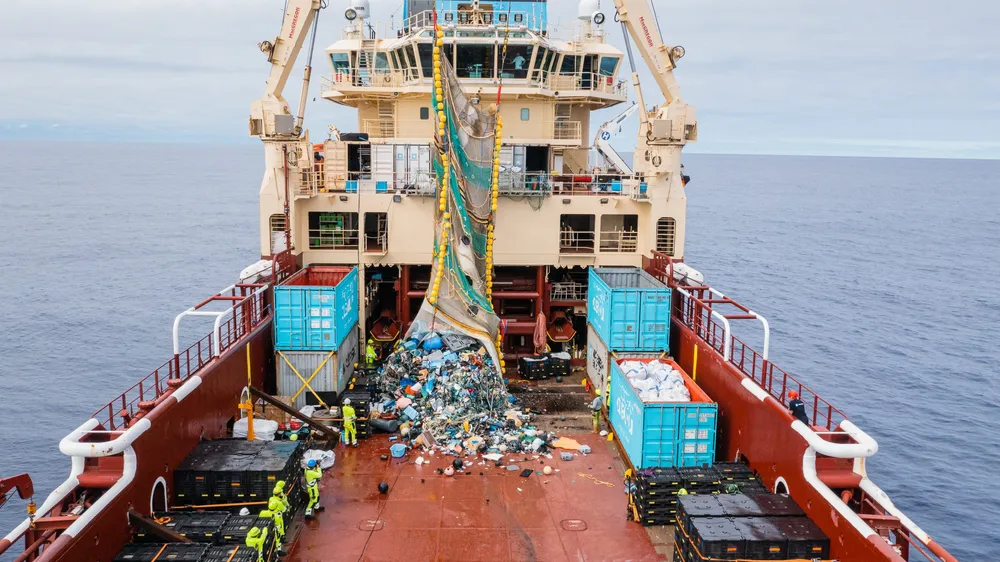
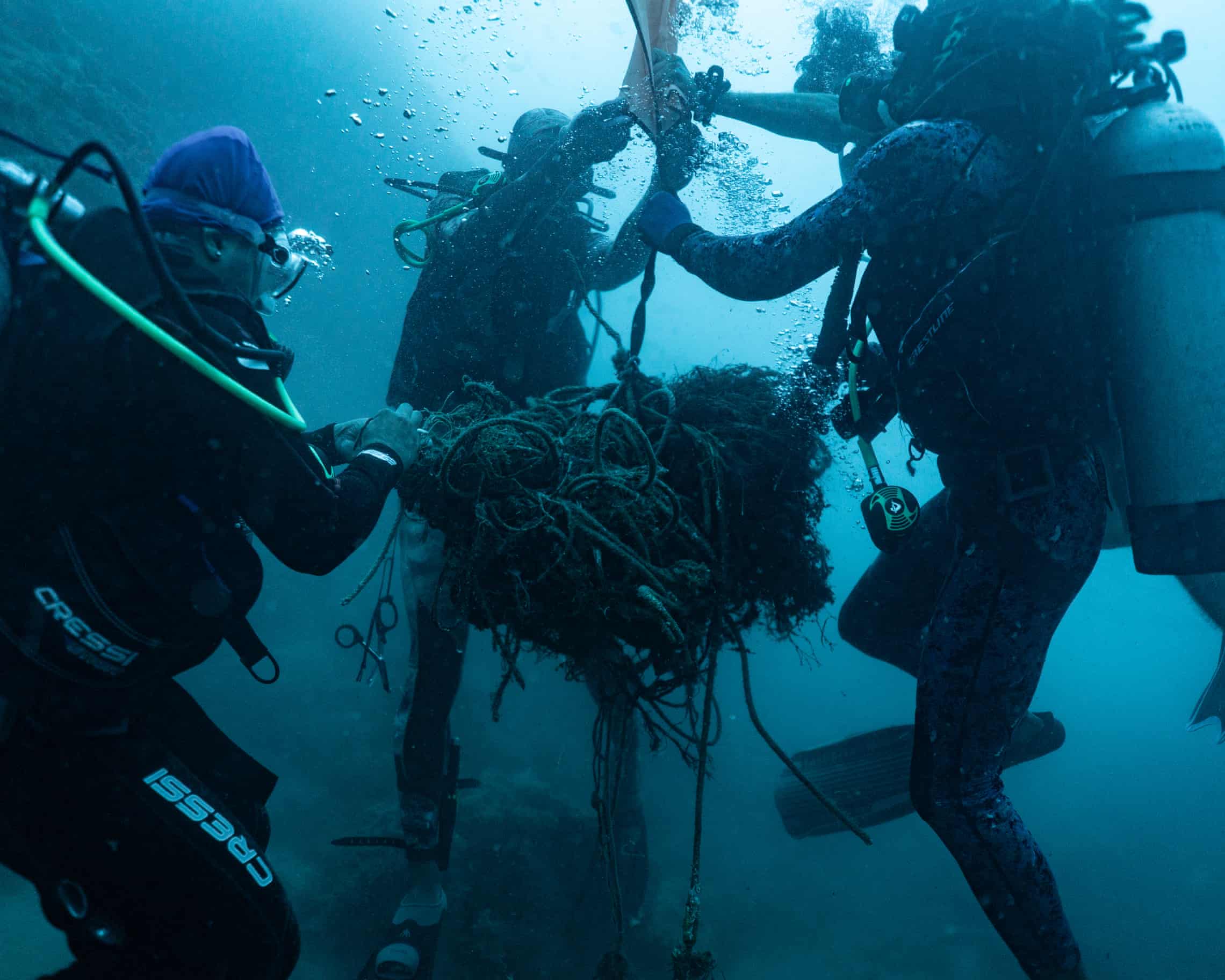
Photo: Danielle Khan Da Silva.
Divers risk their lives to protect whales from “ghost nets”
abandoned by fishermen.

Today’s article presents one of those impossible challenges pitting the environment against the need to make a living. In this case, it involves the ocean, specifically marine animals.

Danielle Khan da Silva has the story at the Guardian.

“After a day of scuba diving, Luis Antonio ‘Toño’ Lloreda was exhausted. Then a friend brought urgent news. ‘Toño, man, there’s a whale caught in a net out there.’ Lloreda, 43, had freed other, smaller wildlife from fishing nets but this would be his first marine animal of such size.

“The four- to five-meters-long juvenile humpback, accompanied by its mother, had a net studded with hooks wrapped around its fin and mouth. One wrong move could have been fatal for Lloreda or the whale.

‘To connect with the whale, I used what we call intuitive interspecies communication,’ says Lloreda, explaining that this involves non-verbal, energetic communication.

“ ‘I asked the mother for permission – energetically,’ he says. ‘At first, she didn’t want our help. But when I showed her we meant no harm, she let us in.

“ ‘She positioned herself below us. Then I asked the calf. When the calf became very still, I reached into her mouth and removed the net.’ The mother and calf swam for 50 meters before pausing to rest.

“Lloreda is one of nine Guardianes del Mar (Guardians of the Sea), a grassroots African-Colombian collective from six coastal communities around Colombia’s Gulf of Tribugá, a biodiversity hotspot on the Pacific coast that spans 600,000 hectares of ocean, forest and mangroves. The region, where dense Chocó rainforest meets the ocean, is a Unesco biosphere reserve and is designated a ‘hope spot‘ by the nonprofit organization Mission Blue for its ecological significance.

“Scuba diving is crucial for identifying and removing ghost fishing gear – lost or abandoned commercial nets made mostly of near-indestructible plastics – but it is prohibitively expensive. With sponsorship from Ecomares and Conservation International, Lloreda and his colleagues have trained not only in diving, but in removing fishing gear from coral with quick, precise and safe techniques.

“Many guardians double as coral gardeners and reef surveyors, collecting data for both their communities and scientific partners. Three, including Lloreda, are trained to free marine animals.

“According to WWF, 50,000 tons of fishing gear are lost or abandoned in the oceans globally each year. These ‘ghost nets’ drift across borders, ensnaring coral, turtles, sharks – and whales. In the Gulf of Tribugá alone, Guardianes del Mar estimates that 3-4 humpback whales become entangled each year. …

Guardianes del Mar is working to certify more local divers so they can have a greater impact. But it faces mounting logistical and financial hurdles.

” ‘We used to send the nets to Buenaventura for recycling, but fuel costs are too high,’ says Benjamin Gonzales, 53, one of the senior guardians. There are no roads – the communities are connected mainly by boat – so any rubbish or recycling must be transported out by boat or plane.

“Today, the nets are repurposed into bracelets and sold in Germany and locally in Nuquí, the main coastal municipality. Lead weights are melted down into new dive weights for the local shop, run by Guardianes del Mar advocate Liliana Arango.

“The spirit of mutual care between people and nature runs deep in Tribugá, where the population numbers about 7,000. African-Colombian communities here are descended from formerly enslaved people who escaped Spanish rule and crossed the jungle to reach the coast. They were welcomed by the Indigenous Emberá, and today co-govern the region through a state-recognized model of local autonomy. …

“Says Camilo Morante, 25, the youngest guardian and the group’s legal representative … ‘Everyone in this community fishes, so we can’t tell anyone to stop using nets. … The most important thing is that we raise consciousness locally so that we understand the consequences of our actions.’ “

More at the Guardian, here.

Read Full Post »

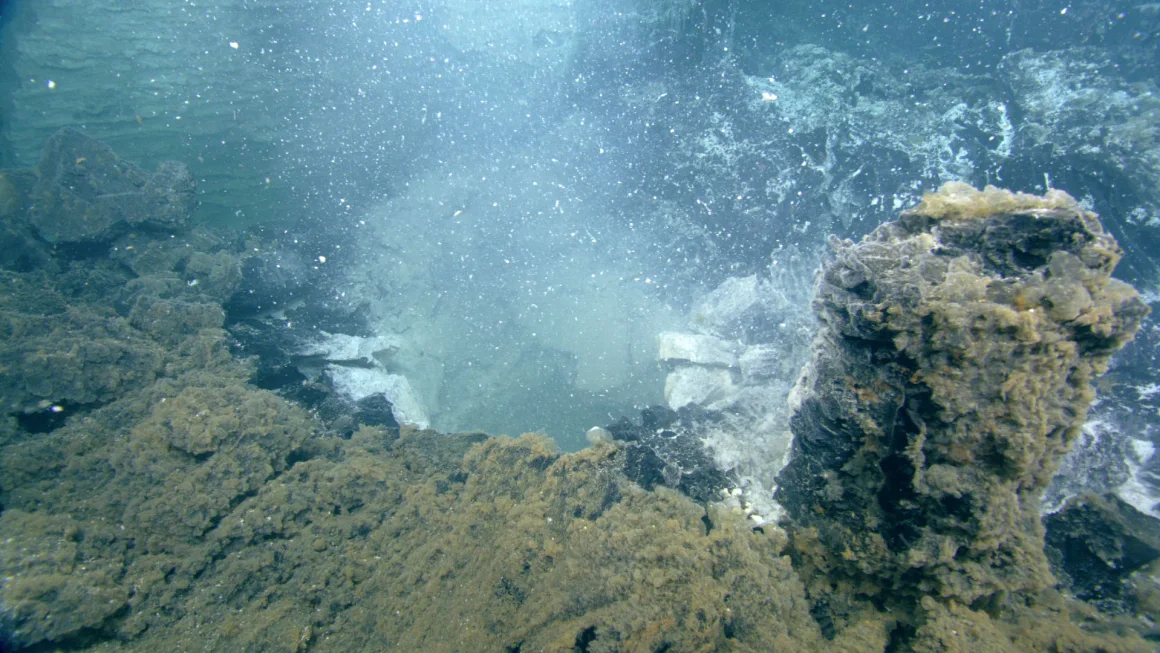
Photo: UW/NSF-OOI/CSSF-ROPOS via CNN Science.
White clouds of microbial waste billow from the seafloor — the result of a volcanic eruption. 

Rachel Carson thought it would be hard for humans to pollute the oceans because they were so vast. I guess she was wrong about that, but the oceans’ vastness does make them likely to remain a source of wonder and discovery — mysterious no matter how much we study them.

Today’s example of deep-sea wonder comes from the New York Times, where Maya Wei-Haas reports that scientists have witnessed a volcanic eruption that had never been experienced in person.

“Andrew Wozniak, a chemical oceanographer at the University of Delaware,” she writes, “struggled to process what his eyes were taking in. Dr. Wozniak was parked on the bottom of the Pacific Ocean beneath nearly 1.6 miles of water in Alvin, a research submersible. As far as he could see lay a mostly barren expanse of jet-black rock.

“Just a day before, at this same spot, a vibrant ecosystem had thrived in the sweltering waters of the Tica hydrothermal vent, about 1,300 miles west of Costa Rica. Creatures inhabited every inch of the rocky seafloor, writhing in a patchwork of life. The crimson tips of giant tube worms waggled in the current, tangling around clusters of mussels. Buglike crustaceans scuttled through the scene while ghostly white fish languidly prowled for their next kill.

“Now, only a single cluster of tube worms remained in the blackened terrain, all dead. A haze of particulates filled the water as glints of bright orange lava flickered among the rocks.

“ ‘My brain was trying to understand what was going on,’ Dr. Wozniak said. ‘Where did things go?’

“Eventually it clicked: He and the sub’s other passengers were witnessing the tail end of a submarine volcanic eruption that had entombed the flourishing ecosystem under fresh lava rock.

“This was the first time scientists had witnessed a clearly active eruption along the mid-ocean ridge, a volcanic mountain chain that stretches about 40,000 miles around the globe, like the seams of a baseball. The ridge marks the edges of tectonic plates as they pull apart, driving volcanic eruptions and creating fresh crust, or the layer of the Earth we live on, beneath the sea. About 80 percent of Earth’s volcanism happens on the seafloor, with the vast majority occurring along the mid-ocean ridge. …

“Observing such an event live offers a unique opportunity for scientists to study one of our planet’s most fundamental processes: the birth of new seafloor, and its dynamic effects on ocean chemistry, ecosystems, microbial life and more.

“ ‘Being there in real time is just this absolutely phenomenal gift — I’m really jealous,’ said Deborah Kelley, a marine geologist at the University of Washington who was not part of the research team.

“Dr. Wozniak and colleagues sailed on a ship, the R/V Atlantis, before setting out in the Alvin sub. Their original goal was to study carbon flowing from the Tica vent, funded by the National Science Foundation. Hydrothermal vents are like a planetary plumbing system, expelling seawater that’s heated as it seeps through the ocean floor. The process transports both heat and chemicals from Earth’s interior, helping regulate ocean chemistry and feeding a unique community of deep marine life.

“The dive on [on that May] Tuesday morning started like any other. Alyssa Wentzel, an undergraduate at the University of Delaware who joined Dr. Wozniak aboard Alvin, described the enchantment of sinking into the darkness of the ocean depths on the 70-minute journey to the seafloor. As the light vanished, bioluminescent jellies and tiny zooplankton drifted by.

“ ‘It was magical,’ she said. ‘It really takes your words away.’

“But as they approached the site, a darker magic set in as temperatures slowly ticked upward and particles filled the water. The usual dull gray-brown of the seafloor was capped by tendrils of inky rock that glimmered with an abundance of glass — the result of rapid quenching when lava hits chilly water.

“As particulates clouded the view from Alvin, Kaitlyn Beardshear of the Woods Hole Oceanographic Institution, the pilot in command of the day’s journey, slowed the sub, keeping close watch on the temperatures. As they ticked up, so too did concerns for safety of the submersible and the crew. Eventually, the pilot made the call to retreat. …

“The team learned after returning to the ship that sensitive microphones, called hydrophones, aboard the Atlantis had detected the volcanic eruption earlier in the day. It registered as a series of low frequency booms and campfire-like crackle.

“This was the third known eruption at the Tica vent since its discovery in the 1980s. Over the decades, Dan Fornari, a marine geologist at Woods Hole, and his colleagues have closely monitored the site, tracking changes in temperature, water chemistry and more. …

“In 1991, he and his colleagues had arrived at Tica within days of an eruption’s start. It might even have still been active, he said, but they saw no flashes of lava to confirm. This time, he said, there’s no doubt of what the Alvin crew saw. ‘This has been the closest that we ever come to witnessing the initiation of an eruption’ along the mid-ocean ridge, he said.

“The team is continuing to study the volcanic activity. Given safety concerns, they’re collecting data and taking photographs remotely from the Atlantis.

“The data will help researchers unravel the mysteries of deep-sea volcanism and the role it plays in marine ecosystems. ‘All of this has to do with understanding this holistic system that is Earth and ocean,’ Dr. Fornari said. ‘It’s so intertwined, and it’s both complex and beautiful.’ ”

More at the Times, here.

Read Full Post »

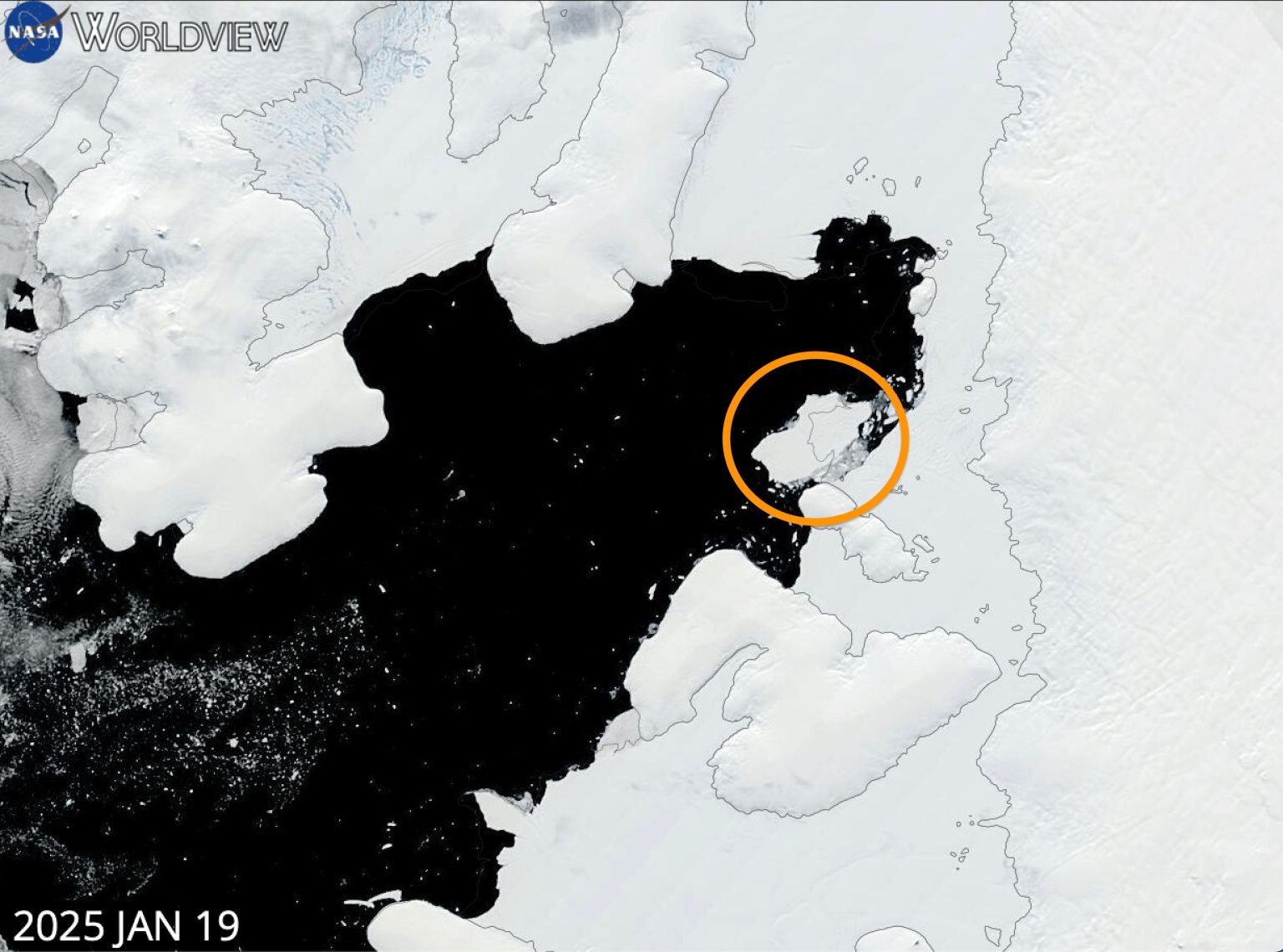
Photo: NASA Worldview, NASA Earth Science Data and Information System.
Satellite imagery showing the iceberg calved from George VI Ice Shelf in the Bellingshausen Sea, Antarctica, on 19 January 2025.

Not much of a recompense for ruining our planet, but it’s true that global warming is giving scientists a chance to study previously unknown places.

At Schmidt Ocean Institute, we learn about some unexpectedly vibrant communities of ancient corals and sponges in Antarctica.

“An international team on board Schmidt Ocean Institute’s R/V Falkor (too) working in the Bellingshausen Sea rapidly pivoted their research plans to study an area that was, until last month, covered by ice. On January 13, 2025, an iceberg the size of Chicago, named A-84, broke away from the George VI Ice Shelf, one of the massive floating glaciers attached to the Antarctic Peninsula ice sheet.  The team reached the newly exposed seafloor on January 25 and became the first to investigate an area that had never before been accessible to humans.

“The expedition was the first detailed, comprehensive, and interdisciplinary study of the geology, physical oceanography, and biology beneath such a large area once covered by a floating ice shelf. The ice that calved was approximately 510 square kilometers (209 square miles), revealing an equivalent area of seafloor.

“ ‘We seized upon the moment, changed our expedition plan, and went for it so we could look at what was happening in the depths below,’ said expedition co-chief scientist Dr. Patricia Esquete of the Centre for Environmental and Marine Studies (CESAM) and the Department of Biology (DBio) at the University of Aveiro, Portugal. ‘We didn’t expect to find such a beautiful, thriving ecosystem. Based on the size of the animals, the communities we observed have been there for decades, maybe even hundreds of years.’

“Using Schmidt Ocean Institute’s remotely operated vehicle, ROV SuBastian, the team observed the deep seafloor for eight days and found flourishing ecosystems at depths as great as 1300 meters. Their observations include large corals and sponges supporting an array of animal life, including icefish, giant sea spiders, and octopus. The discovery offers new insights into how ecosystems function beneath floating sections of the Antarctic ice sheet. …

“The team was surprised by the significant biomass and biodiversity of the ecosystems and suspect they have discovered several new species.

“Deep-sea ecosystems typically rely on nutrients from the surface slowly raining down to the seafloor. However, these Antarctic ecosystems have been covered by 150-meter-thick (almost 500 feet) ice for centuries, completely cut off from surface nutrients. Ocean currents also move nutrients, and the team hypothesizes that currents are a possible mechanism for sustaining life beneath the ice sheet. The precise mechanism fueling these ecosystems is not yet understood.

“The newly exposed Antarctic seafloor also allowed the international team, with scientists from Portugal, the United Kingdom, Chile, Germany, Norway, New Zealand, and the United States, to gather critical data on the past behavior of the larger Antarctic ice sheet. The ice sheet has been shrinking and losing mass over the last few decades due to climate change.

“ ‘The ice loss from the Antarctic Ice Sheet is a major contributor to sea level rise worldwide,’ said expedition co-chief scientist Sasha Montelli of University College London (UCL), United Kingdom, also a 2019 Schmidt Science Fellow. ‘Our work is critical for providing longer-term context of these recent changes, improving our ability to make projections of future change — projections that can inform actionable policies. We will undoubtedly make new discoveries as we continue to analyze this vital data.’

“In addition to collecting biological and geological samples, the science team deployed autonomous underwater vehicles called gliders to study the impacts of glacial meltwater on the physical and chemical properties of the region. Preliminary data suggest high biological productivity and a strong meltwater flow from the George IV ice shelf. …

“ ‘The science team was originally in this remote region to study the seafloor and ecosystem at the interface between ice and sea,’ said Schmidt Ocean Institute Executive Director, Dr. Jyotika Virmani. ‘Being right there when this iceberg calved from the ice shelf presented a rare scientific opportunity. Serendipitous moments are part of the excitement of research at sea – they offer the chance to be the first to witness the untouched beauty of our world.’ ”

More at Schmidt Ocean Institute, here, and at radio show The World, here. No firewalls.

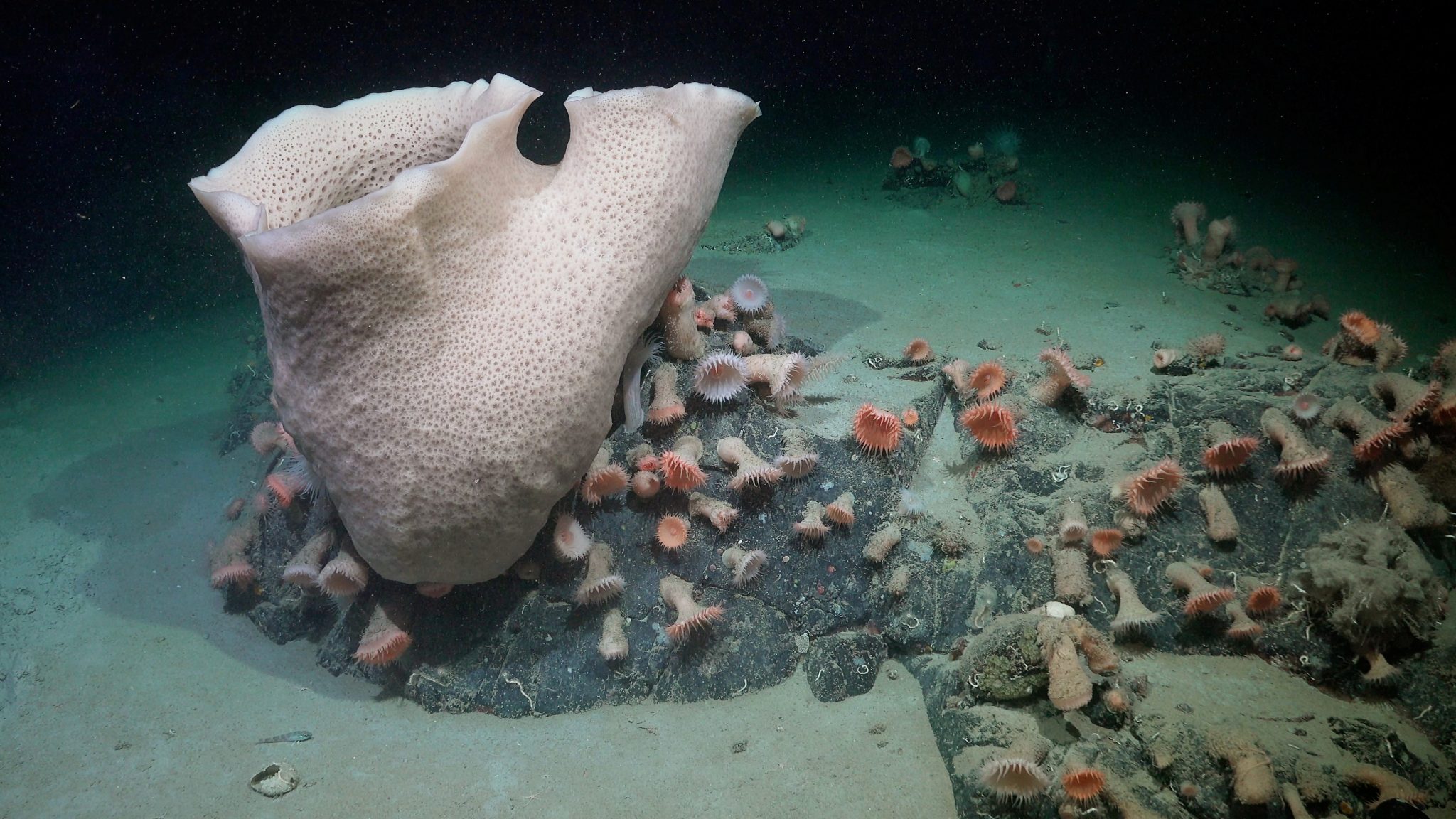
Photo :A large sponge, a cluster of anemones, and other life is seen nearly 230 meters deep at an area of the seabed. Sponges can grow very slowly, and the size of this specimen suggests this community has been active for decades, perhaps even hundreds of years.

Read Full Post »

Photo: National Science Foundation/Wikimedia.
A 5-foot-wide flange, or ledge, on the side of a chimney in the Lost City Field is topped with dendritic carbonate growths that form when mineral-rich vent fluids seep through the flange and come into contact with the cold seawater.

I’ve always loved legends about the Lost Continent of Atlantis and really wanted to believe the theory propounded in Looking for Dilmun, by Geoffrey Bibby. But my roommate after college was an archaeology major and told me it was all fantasy.

Fortunately, there’s a kind of Lost City to spark the imagination in the Atlantic.

William J. Broad writes at the New York Times, “Researchers have long argued that regions deep in the Earth’s oceans may harbor sites from which all terrestrial life sprung. In the Atlantic, they gave the name ‘Lost City’ to a jagged landscape of eerie spires under which they proposed that the life-preceding chemistry may have churned. …

“A report in the journal Science on Thursday tells of a 30-person team drilling deep into a region of the Mid-Atlantic seabed and pulling up nearly a mile of extremely rare rocky material. Never before has a sample so massive and from such a great depth come to light. …

“ ‘We did it,’ said Frieder Klein, an expedition team member at the Woods Hole Oceanographic Institution on Cape Cod in Massachusetts. ‘We now have a treasure trove of rocks that will let us systematically study the processes that people believe are relevant to the emergence of life on the planet.’

“The drilled region sits alongside one of the volcanic rifts that crisscross the global seabed like the seams of a baseball. Known as midocean ridges, the abyssal sites feature hot springs whose shimmering waters shed minerals into the icy seawater, slowly building up strange mounds and spires that sometimes host riots of bizarre creatures. …

“ ‘A lot of people did lab work and paper studies and modeling on the origin of life,’ said Deborah Kelley, an oceanographer at the University of Washington. … The new research, she said, ‘is really important. … It lays a foundation for new understanding.’

“Early last year, the expedition … drilled deep into the rocky seabed adjacent to one of the largest known springs — a mid-Atlantic site some 1,400 miles east of Bermuda known as Lost City, which Dr. Kelley helped uncover in 2000. Its tallest spire rivals a 20-story building.

“The core retrieved nearby has a length of 1,268 meters, or some four-fifths of a mile, far deeper and more substantial than any comparable sample from beneath the undersea springs. The operation has brought into scientists’ labs the first long section of rocks originating in the mantle — the inner layers between Earth’s crust on which we live and the planetary core. It is the largest region of the planet, but its inaccessibility makes it poorly understood. Over eons, hot mantle rocks flow like extraordinarily thick fluids that slowly rearrange the cool planetary crust, lifting mountains, moving continents and causing earthquakes. …

“The mantle breakthrough was part of the International Ocean Discovery Program, a research consortium of more than 20 countries using a giant ship to drill into the ocean floor and retrieve rocky samples that bare Earth’s secrets. The ship is a modified oil exploration platform, 470 feet long and with a 200-foot derrick that lowers a hollow drill that bores into the seabed and retrieves cylindrical samples of rocks and other deep materials.

“ ‘We were astounded’ at how easily the rocky samples came to light,’ [C. Johan Lissenberg, the first author of the Science paper and a petrologist at Cardiff University in Wales] said. …

“The discovery raised waves of excitement in the community that studies life precursors because Michael J. Russell, a geochemist at NASA’s Jet Propulsion Laboratory in California, had predicted the existence of such cooler springs. He saw them as ideal for nurturing life.”

More at the Times, here. Cool photos.

Read Full Post »

Photo: Carolyn Cole/Los Angeles Times via Getty Images.
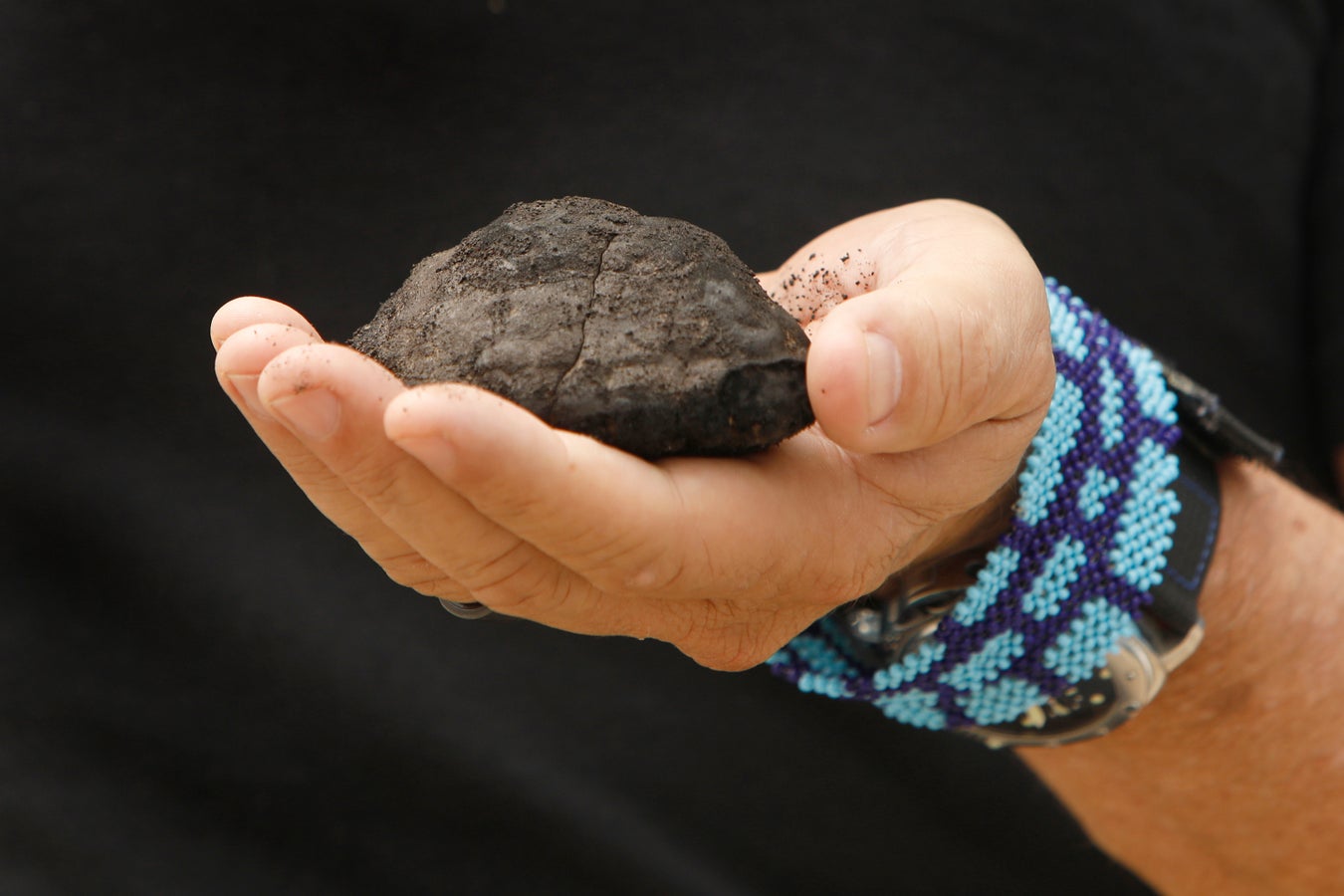
Metal deposited over millions of years forms these nodules, which can somehow generate oxygen.

Sometimes it seems like scientists have all the fun. In today’s story, certain researchers of the deep ocean thought their instruments were at fault and complained to the manufacturer. Then one day, ironically, an ad from a deep-sea mining company struck a chord in one scientist and led to some creative thinking.

Allison Parshall writes at Scientific American that some rocklike mineral deposits in the deep sea may have more to them than meets the eye.

“The dark seabed of the Pacific Ocean’s Clarion-Clipperton Zone (CCZ) is littered with what look like hunks of charcoal. These unassuming metal deposits, called polymetallic nodules, contain metals such as manganese and cobalt used to produce batteries, marking them as targets for deep-sea mining companies.

“Now researchers have discovered that the valuable nodules do something remarkable: they produce oxygen and do so without sunlight. ‘This is a totally new and unexpected finding,’ says Lisa Levin, an emeritus professor of biological oceanography at the Scripps Institution of Oceanography, who was not involved in the current research.

“According to Boston University microbiologist Jeffrey Marlow, the idea that some of Earth’s oxygen gas may come not from photosynthesizing organisms but from inanimate minerals in total darkness ‘really strongly goes against what we traditionally think of as where oxygen is made and how it’s made.’ Marlow is a co-author of the new study, which was published in Nature Geoscience.

“The story of discovery goes back to 2013, when deep-sea ecologist Andrew Sweetman was facing a frustrating problem. His team had been trying to measure how much oxygen the organisms on the CCZ seafloor consumed. The researchers sent landers down more than 13,000 feet and created enclosed chambers on the seabed to track how oxygen levels in the water fell over time.

“But oxygen levels did not fall. Instead they rose significantly. Thinking the sensors were broken, Sweetman sent the instruments back to the manufacturer. ‘This happened four or five times’ over the course of five years, says Sweetman, who studies sea­floor ecology and biogeochemistry at the Scottish Association for Marine Science. …

“Then, in 2021, he returned to the CCZ on a survey expedition sponsored by the Metals Company, a deep-sea mining firm. Again, his team used landers to make enclosed chambers on the seafloor and monitor oxygen levels. They used a different technique to measure oxygen this time but observed the same strange results: oxygen levels increased dramatically. …

“The researchers initially thought deep-sea microbes were producing the oxygen. That idea once might have seemed far-fetched, but scientists had recently discovered that some microbes can generate ‘dark oxygen‘ in the absence of sunlight.

In laboratory tests that reproduced conditions on the seafloor, Sweetman and his colleagues poisoned seawater with mercury chloride to kill off the microbes. Yet oxygen levels still increased.

“If this dark oxygen didn’t come from a biological process, then it must have come from a geological one, the scientists reasoned. They tested a few possible hypotheses — such as that radioactivity in the nodules was decomposing seawater molecules to make oxygen or that something was pulling oxygen from the nodules’ manganese oxide — but ultimately ruled them out.

“Then, one day in 2022, Sweetman was watching a video about deep-sea mining when he heard the nodules referred to as ‘a battery in a rock.’ That bit of marketing was only a metaphor, but it led him to wonder whether the nodules could somehow be acting as natural geobatteries. If they were electrically charged, they could potentially split seawater into hydrogen and oxygen through a process called seawater electrolysis. (A battery dropped in salt water produces a similar effect.)

“ ‘Amazingly, there was almost a volt [of electric charge] on the surface of these nodules,’ Sweetman says; for comparison, an AA battery carries about 1.5 volts. The nodules may become charged as they grow, as different metals are deposited irregularly over the course of millions of years and a gradient of charge develops between each layer. Seawater electrolysis is currently the researchers’ leading theory for dark oxygen production, and they plan to test it further.”

More at Scientific American, here. No firewall.

Read Full Post »

Photo: Tom Waddington via Times Now.
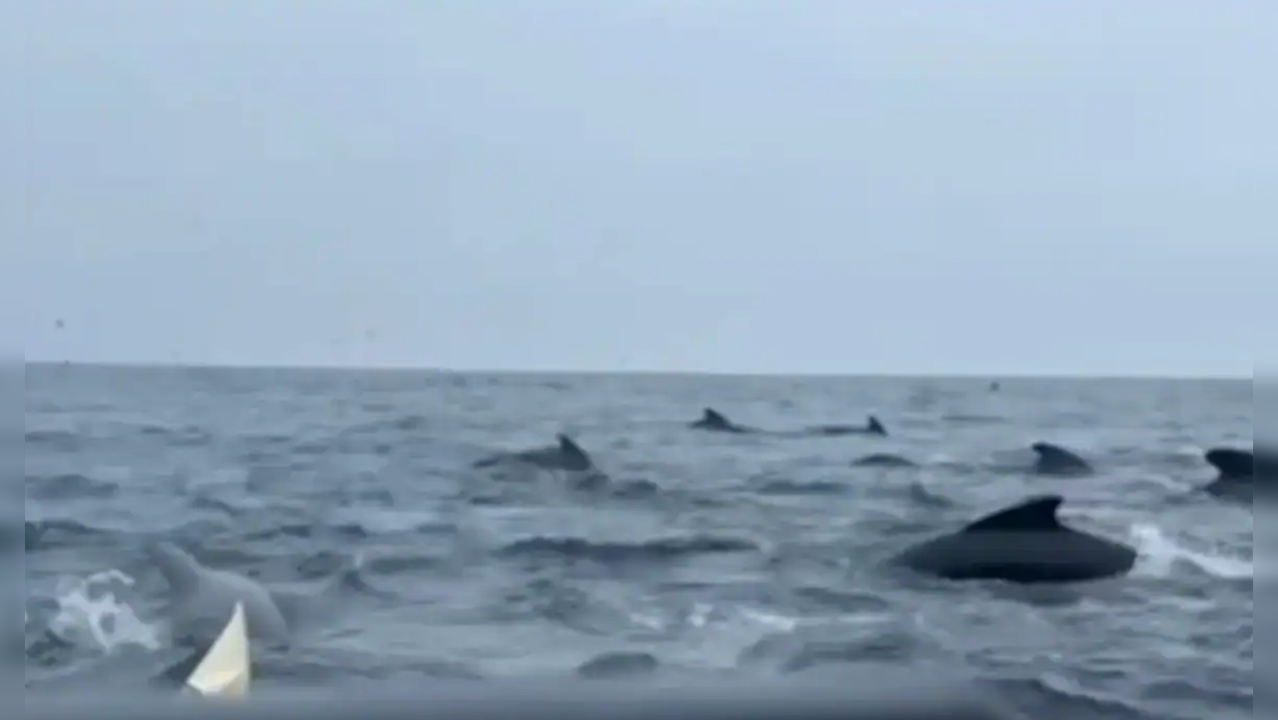
Tom Waddington was surrounded by pilot whales as he rowed solo from Newfoundland to England.

I’ve been on a couple whale watches with family members, and I think there are few things more exciting than seeing whales in their natural environment. In today’s story, a man who sought excitement by rowing from Newfoundland to England may have gotten a little too much from some curious pilot whales.

Bill Chappell reports at NPR, “Tom Waddington is on a quest to row across the Atlantic Ocean all by himself — but [in July], he found plenty of company at sea, when a pod of pilot whales thronged around him. They followed him for hours, growing from a few playful animals to hundreds of large creatures. …

“The whales popped their heads above the surface and seemed to play together — a gam of whales, gadding about — as Waddington, who is rowing some 2,000 nautical miles from the Newfoundland coast to Penzance, in the United Kingdom, watched in amazement.

“ ‘This is so cool,’ Waddington said as he took a video of the whales’ antics. With a laugh, he added, ‘I love it, but I’m scared they’re gonna hit my rudder.’

“Waddington emerged unscathed — but a little shaken by the risks mammals weighing thousands of pounds can pose to his boat and equipment on an unsupported solo trip.

“ ‘They were just playing and going under the boat and I was taking videos,’ he said on Facebook and Instagram, describing hundreds of whales around him. Then one of the whales slammed into the side of his light boat.

“ ‘And I was like, Oh my God. And suddenly it turned from David Attenborough into Moby Dick. And I was really scared.’

“Waddington’s team on land believes the playful mammals are long-finned pilot whales, which the National Oceanic and Atmospheric Administration says are known to live in the North Atlantic and ‘are very social, living in large schools of hundreds of animals separated into close-knit pods of 10 to 20 individuals.’ …

“When it came time to take leave of his visitors, Waddington says he wasn’t sure how to do that. He tried shouting a bit, and splashed his oars. He veered north — but the whales followed, and for more than two hours, it seemed more whales kept showing up.

“Waddington, who works as a ski instructor, is rowing across the ocean for a fundraiser benefiting Mind, the British mental health charity led by the actor Stephen Fry. Waddington estimates that more than 1,000 whales swam with him. For advice, he called his coach, Charlie Pitcher (who has himself rowed across the Atlantic).

“ ‘He was like, the best thing to do is, be quiet and still — which is exactly the opposite of what I did’ earlier, he said.”

Check out the map of Waddington’s transatlantic journey at NPR, here.

Read Full Post »

Photo: Minden Pictures/Alamy.
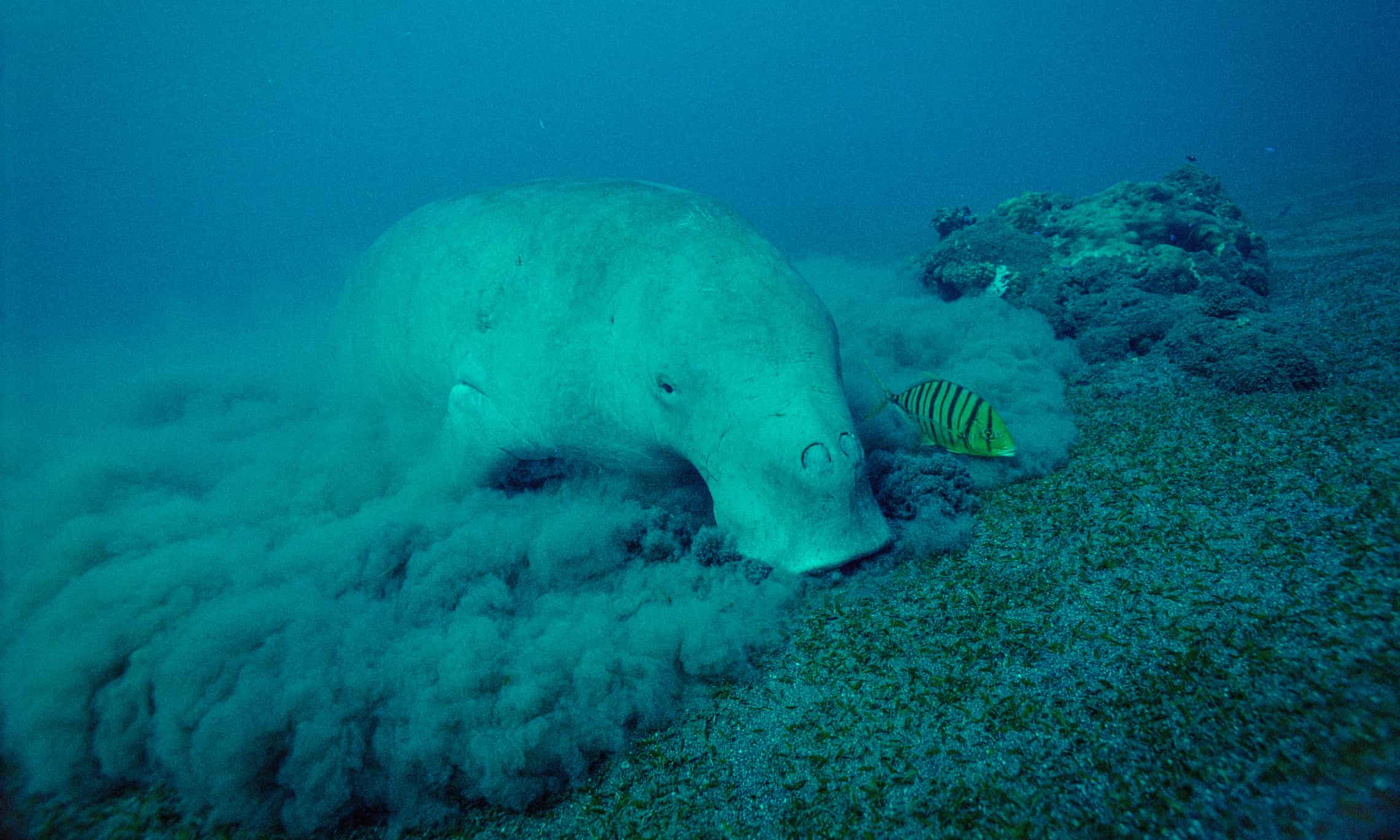
The rare sight of a dugong feeding on a seagrass meadow in Vanuatu. The gentle giants were once a common sight around the Melanesian archipelago.

Here’s an interesting story about a saltwater cousin of the shy freshwater manatee. It eats seagrass, and like most other living things in the ocean, it’s negatively affected by warming trends.

Rebecca Root writes at the Guardian, “In a bright spring day, the sun dances over the water of Havannah Bay on the island of Efate in Vanuatu. Below the surface, pockets of seagrass that can just about be seen from the shoreline, sway in the current. It’s here, if they are lucky, that onlookers may spot a dugong bobbing in the shallow water, orbiting the seagrass meadows they feed on.

“ ‘It’s wonderful seeing them swimming by and grazing off the seagrass in front of the resort,’ says Greg Pechan, the owner of a local hotel, the Havannah, which sits at the tip of the bay. Pointing out beyond the jetty that stretches into the Pacific Ocean, he says Vanuatu’s sea life is a big attraction for visitors to the Melanesian country.

“Light grey in color, dugongs, sometimes known as ‘sea cows’ and whose closest relatives are freshwater manatees, can grow up to four metres long and weigh up to 400kg (900lb). They are a ‘friendly species’ and respected by islanders, says Heidi Joy, a marine science student from Efate.

“A few years ago, it would not be unusual for Joy, who lives close to Havannah Bay, to spot a dugong in the morning and then again at sunset. That has since changed, she says. ‘We rarely see them now.’

“Dugongs are considered vulnerable to extinction by the International Union for Conservation of Nature. The exact number roaming Vanuatu’s waters is, however, unknown and this uncertainty is hindering conservation efforts, experts say.

“ ‘A lot of studies have been done where you’ve got large populations of dugongs in large seagrass meadows [such as] Australia or Abu Dhabi, but we’ve got a different dugong population. We’ve got small groups or individuals,’ says Christina Shaw, the CEO of the Vanuatu Environmental Science Society. She says that a national assessment of dugongs and seagrass in Vanuatu is urgently needed. …

“In 2023, the status of neighboring New Caledonia’s population was downgraded to ‘endangered‘ while east African dugongs have become ‘critically endangered.’ …

“In Vanuatu, however, only one aerial survey – in 1987 – has been carried out to assess the national distribution, abundance, cultural importance and threats, according to Helene Marsh, an emeritus professor in environmental science at James Cook University.

“Dugongs globally are threatened by gill-net fishing, boat traffic, coastal development and hunting. In Vanuatu, dugong meat used to be considered a source of protein, their oil used for cooking and other parts whittled into handicrafts.

“But since the 1980s, certain islands have introduced local prohibitions known as tabu, which mandates their protection. In 2010 the government also signed the Convention on Migratory Species’ dugong memorandum of understanding, committing it to protecting the sea cows and the seagrass they eat. This means hunting is now rare, says Shaw.

“Instead, another predator threatens the dugong: the climate crisis. On a spring evening in Efate, rain hammers relentlessly until nightfall, rendering the ocean a murky green. It’s downpours such as this, becoming more common, alongside storms and cyclones, that damage the seagrass so vital to the dugongs.

“Vanuatu sits in the Pacific ‘Ring of Fire,’ a tectonic belt of volcanoes and earthquakes, and a tropical cyclone region, making it prone to disasters. When these batter the bays and beaches of Vanuatu, the seagrass is swept up by the heavy winds, while the rain and debris creates sediment on the water surface, smothering the seagrass from the sunlight it needs to thrive. …

“Richard Leck, head of oceans at WWF Australia, says: ‘When that happens dugongs have no choice but to get on the move and sometimes they have to go into deeper water, expend much more effort to graze seagrass and when that happens they often get emaciated and lose condition really quickly.’ …

“As with dugongs, there is limited data on the prevalence and condition of seagrass in Vanuatu. This makes it hard, says Shaw, to advocate for investment in conservation. ‘Funders don’t like paying for studies,’ she says. ‘But how do we do [conservation] if we don’t know what’s there?’ ”

More at the Guardian, here.

Read Full Post »

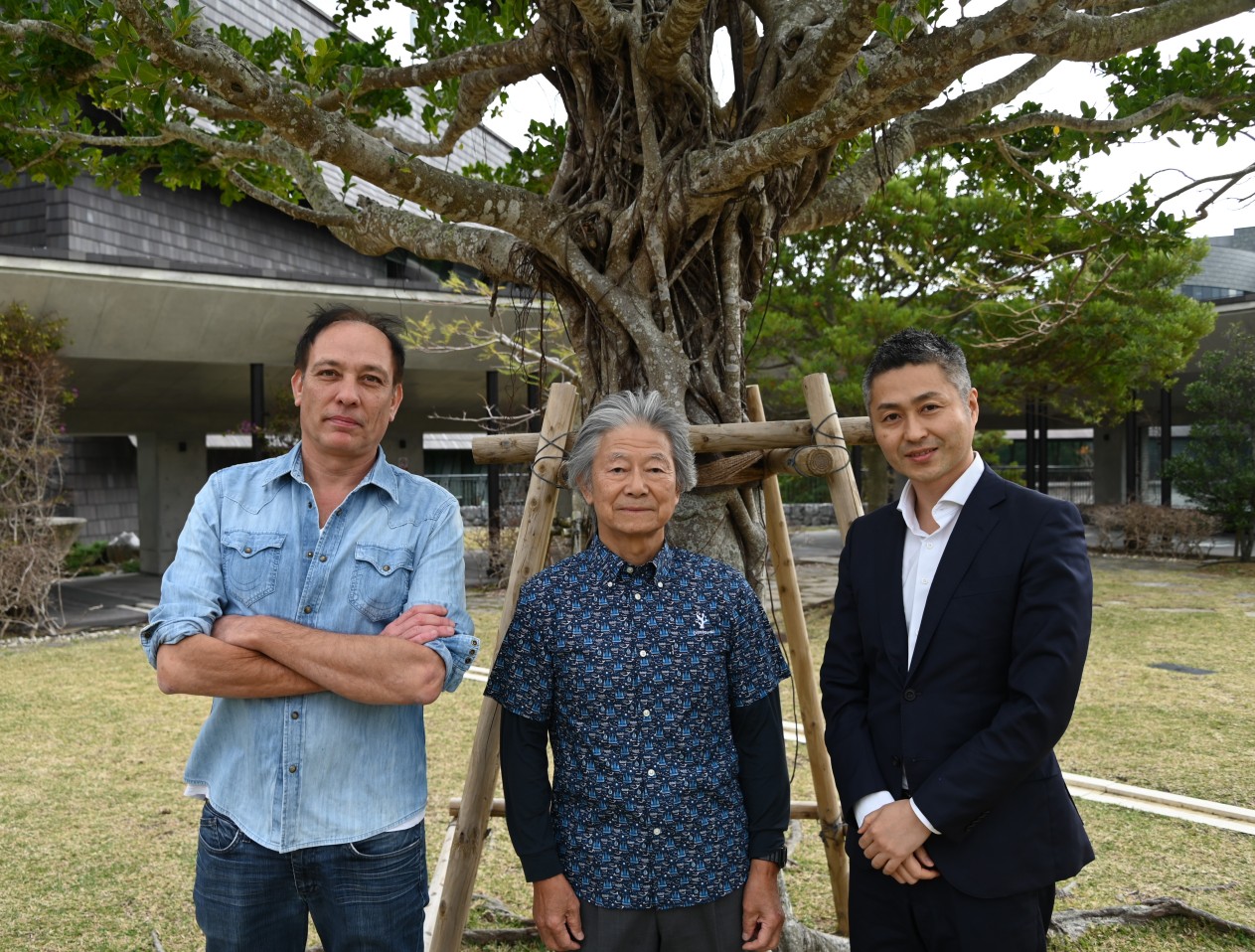
Photo: Okinawa Institute of Science and Technology.
Prof. Timothy Ravasi, Prof. Noriyuki Satoh, and Shimon Sato (L-R) lead the Coral Project at OIST, a nonprofit initiative helping conserve coral biodiversity in Okinawa. 

It is now generally known that corals are important for ocean biodiversity but are in danger from climate change. If you search on “coral” at this blog, you will find a variety of stories about what people are trying to do to help.

Today we look at an organization in Japan that merges the work of local people to that of scientists.

The website of the Okinawa Institute of Science and Technology (OIST) says, “Unlike many global reef locations requiring a boat ride, Okinawa’s reefs are accessible directly from the beach — a simple walk to a nearby beach, a quick dip into the crystal-clear waters, and within moments, you are immersed in a lively ocean community. 

“Yet elders in Okinawa remember a time when coral-filled waters were more abundant, a contrast to the significant coral decline observed in recent years, especially near shorelines. Worldwide, human activities have resulted in an alarming decrease in coral populations in the last decade. Consequently, efforts to plant corals are gaining momentum. 

“The OIST Coral Project, an initiative focused on studying and preserving coral biodiversity in Okinawa, was launched in July 2023 at the Okinawa Institute of Science and Technology (OIST). To date, the project has successfully enlisted the support of 20 companies in Okinawa and mainland Japan. …

“In January 2023, Prof. Noriyuki Satoh, head of OIST’s Marine Genomics Unit, sat down with Shimon Sato, an experienced fundraiser and Advancement Officer at OIST. They came up with an ambitious idea: to use knowledge of genomics and eDNA in a new project to plant and conserve coral in Okinawa. This was the start of an innovative effort to protect local marine life by connecting with locals and companies in Okinawa and Tokyo to establish potential collaborations. 

“Prof. Satoh and his team at the Marine Genomics Unit achieved groundbreaking milestones by decoding the genomes of corals in 2011, zooxanthellae (symbiotic organisms that coexist with corals) in 2013, and the crown-of-thorns starfish (known for devouring corals) in 2017. …

“Using this knowledge, Prof. Satoh identified the best types of coral that can be planted at specific sites in Okinawa. … Permission was granted by Okinawa Prefecture and planting is done by professional vendors, following Japan’s strict coral planting regulations.

Each planting site is overseen by a different fishermen’s organization, each with its own unique team and structure.

“Before planting, Prof. Satoh engages in negotiations with the fishermen’s organizations, explaining the project’s objectives and benefits. These fishermen, who have a deep understanding and respect for the sea, are important allies. …

“Yet this project is not just about planting corals — scientists also conduct eDNA monitoring of corals and study the fish that arrive after the planting, observing which species are on the rise or decline. …

“Cause-related marketing is one of the unique aspects of this project. This is an approach where businesses associate themselves with societal issues or values by working with non-profit organizations to promote a specific cause. …

“ ‘We began with 8 companies, including Japan’s largest mobile company NTT Docomo in Tokyo and several others in Okinawa.’ … Supporting companies can use the project’s [logo]. Ryukyu Cement Co., Ltd., the largest cement company in Okinawa, displays the logo on their cement bags and donates a portion of their cement sales to the project. Another notable supporter is Majun, the leading Kariyushi wear company in Japan. Majun has created an original 100% cotton Kariyushi t-shirt embroidered with the Coral Project logo. …

“In 2018 Onna Village, where OIST is located, was declared a ‘coral village’ or ‘sango no mura’ in Japanese, and in 2019 the Government of Japan declared the village a ‘Sustainable Development Goals Future City.’ Impressively, the practice of coral planting in Onna Village began two decades ago. In 2004, a local organization, Team Churasango, was established by community members with participation from both local and mainland companies. On average, they plant 1,000 corals annually, in response to the observed decline in coral numbers. …

“The project team has recently welcomed a third person – Prof. Timothy Ravasi, leader of the Marine Climate Change Unit at OIST. Prof. Ravasi’s unit uses the latest methods in genomics to study how marine organisms adjust to warmer and more acidic oceans. …

“Shimon attributes the success of the project to two main factors. First, Prof. Satoh’s expert knowledge of corals and excellent people skills. Second, the project has secured the support of numerous stakeholders. … ‘Okinawan people value coral, and they want to return the coral reefs to their previous beautiful and healthy state. We want to support those hopes using the power of science,’ he said.”

More at the Okinawa Institute of Science and Technology, here. And you can click here to read about how OIST got the Isawa Award for this work.

Read Full Post »

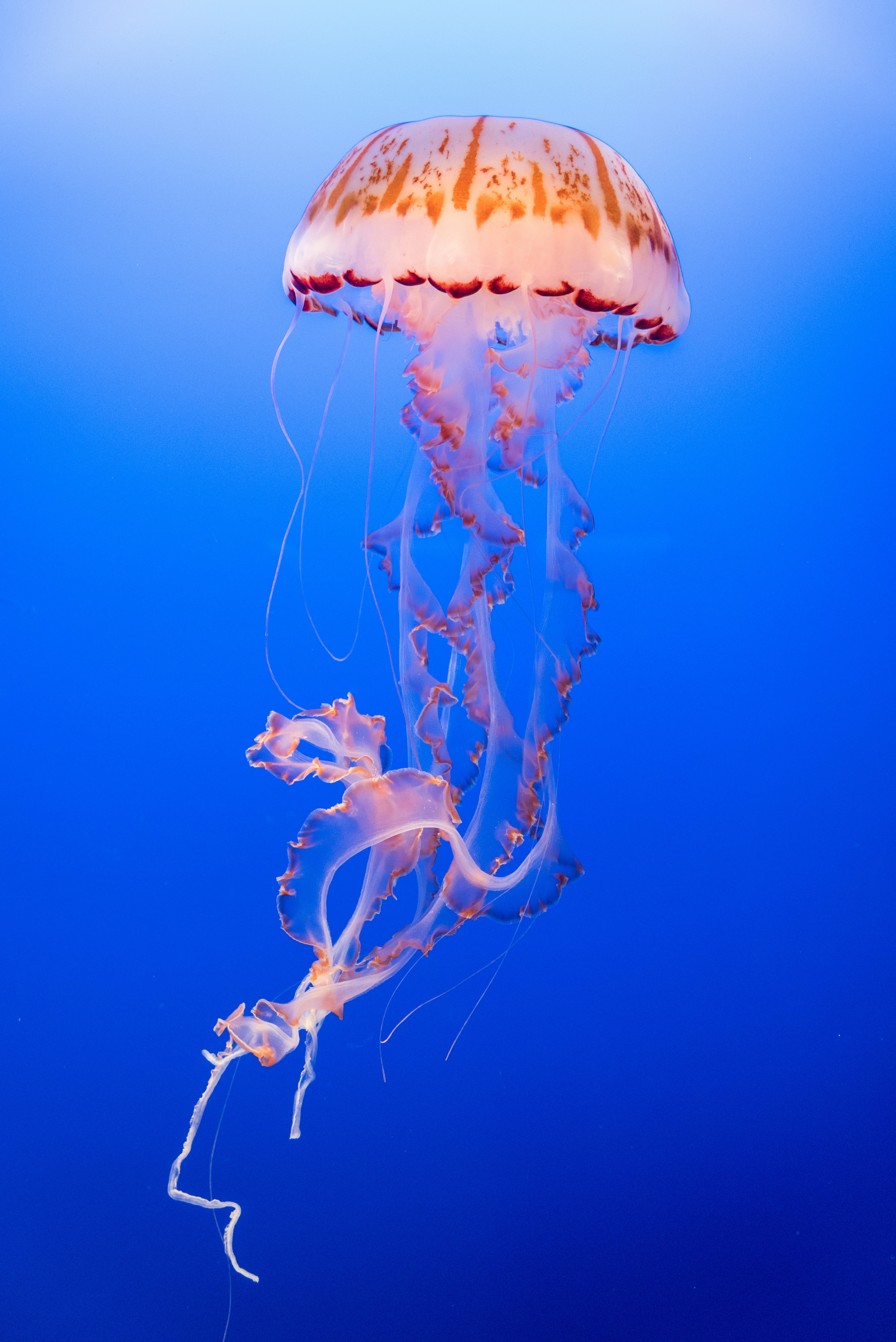
Photo: Kumar Ganapathy via Unsplash.

When I think of jellyfish, I remember a little marine scene I made in a shell when I was 13. As a see-through cover for the display, I used a dead jellyfish I’d found — the common kind of jellyfish that doesn’t sting.

It eventually evaporated.

James Bradley writes at the Guardian that scientists are only beginning to give jellyfish and other creatures that float on the surface the attention they deserve.

“In the summer months, north-easterly winds frequently herald the arrival of bluebottles on beaches along Australia’s east coast. But while bluebottles – or to give them their more formal name, the Pacific man-of-war – are a common sight on Australian shores, they are not native to coastal waters. Instead, they spend most of their lives on the open ocean, drifting with the winds and the currents.

“Bluebottles are just one of a collection of organisms that have made their home at the ocean’s surface. Some of these animals are hydrozoans like the bluebottle. There is the by-the-wind sailor, Velella velella, which has a stiff, transparent, oval sail about five centimeters [~two inches] attached to its bright blue float, and Porpita porpita, sometimes known as the blue button, which is shaped like a disc about three centimeters in diameter surrounded by stinging polyps. But there is also the strikingly beautiful sea dragon; crustaceans such as shrimp, buoy barnacles and tiny swimming copepods; and even mollusks such as the violet snail and Recluzia.

“Known collectively as the neuston, these creatures are not tied to any one place. Instead, they move with the wind and the water. Sometimes they gather into huge drifts, living islands of velella and bluebottles. … At other times they clump together around drifting debris or spread out sparsely over hundreds or even thousands of square kilometers.

“Despite its ubiquity, the neuston remains comparatively poorly understood and critically understudied. … Marine ecologist Associate Prof Kerrie Swadling, from the University of Tasmania, puts it bluntly. ‘“’We know more about deep sea vents than we know about the neuston.’

“The reasons for this ignorance are partly historical. Although several important studies of the neuston were published during the 20th century, they were written in Russian by scientists from the Soviet Union and were largely ignored outside the Eastern Bloc. But for the most part, the lack of research into the neuston is a consequence of the practical challenges involved in observing organisms that are scattered unevenly across the immensity of the open ocean. …

“In recent years, however, there has been an uptick in interest in the neustonNew research is revealing not just its importance to the health of ocean ecosystems as disparate as coral reefs and the deep ocean, but also important gaps in our understanding of how it will be affected by changes in the ocean environment.

‘The person most responsible for the increased visibility of the neuston is Dr Rebecca Helm. Now an assistant professor at Georgetown University in the United States, Helm was scrolling Twitter in 2018 when she came across a tweet about The Ocean Cleanup’s plans to remove plastic from the oceans by sweeping a floating net across the surface.

“Helm says she immediately wondered about the potential impact of this technology on the neuston, and so began to investigate. …

“[During the pandemic] she was locked out of her lab for several months. ‘I suddenly had all of this nebulous time to start looking into this more deeply, and became really fascinated. …

“Survival in the neuston [requires] animals to find some way to remain at the surface. For free-swimming species such as copepods and zooplankton, this is easy. But for other organisms it requires special adaptations.

“Hydrozoans like the bluebottle and velella employ gas-filled floats, while the buoy barnacle extrudes air into the cement that it would otherwise use to attach itself to ships and rocks, creating a substance a bit like pumice that it uses as a float. Similarly, violet snails suspend themselves beneath rafts constructed out of hardened bubbles of mucus. There is even a form of free-floating sea anemone that hangs upside down from the surface with the aid of a float in their pedal disc.

“Fascinatingly, this need for a float helps explain one of the more surprising discoveries to have come out of Helm’s research, which is that many of the animals that inhabit the neuston are not particularly closely related to other free-swimming species. Instead, they are descended from species that usually exist attached to the bottom of the sea that have migrated upwards, meaning that the neuston is, in a very real sense, what Helm dubs ‘an inverted sea floor’ clinging to the ocean’s surface.”

More at the Guardian, here. No firewall. Donations encouraged.

Read Full Post »

Photo: Mikkel Rolighed.
A bucket set made from sugarcane is an improvement on bioplastics, though the ocean won’t thank you if this is lost at sea – it won’t safely biodegrade (ditto recycled plastic toys). 

Now that we know that plastics have been found in the human brain, are we motivated to fight harder or are we despairing? Michelle O, you know, exhorts us to “do something” and not give in to despair, so here’s a place to start: the beach.

Fleur Britten at the Guardian has put together an impressive list of plastic substitutes you might take to the beach.

She writes, “Pre-1950, we just didn’t take plastic to the beach. Now it’s virtually impossible not to, even if it’s just you and your swimmers.

” ‘If you’re looking for plastic-free nirvana, you may never find it,’ says Anne-Marie Soulsby, aka the Sustainable Lifecoach. Matters are improving – though there’s usually a premium to pay if you want to minus cheap plastic from the mix. So why not borrow the plastic that already exists from friends, family or your local Library of Things. And don’t forget your reusable cutlery and containers for eating and drinking à la plage. If you can’t track down beach essentials from these sources, these are the other best ways to avoid seaside plastic pollution.

“ ‘The most sustainable swimwear is what you already own,’ says Soulsby. If you’re in need of new togs, they’ll most likely contain plastic. However, some brands are minimizing that: Italian label Isole & Vulcani’s swimwear for women and kids uses 93% GOTS-certified organic cotton jersey, with 7% elastane (which is fossil fuel-derived). …

“Inflatables and body boards: ‘Inflatables are a nightmare,’ says Lucy Johnson, founder of the Green Salon consultancy. ‘There isn’t a solution.’ According to one study, UK holidaymakers abandoned around 3 million [pool floats] in 2018. Even the genius Inflatable Amnesty is at capacity and can’t accept any more broken pool toys (though you can still buy its upcycled accessories). So borrow, or look after what you have. … 

“If you do need new toys, she advises silicon: ‘You can squish it into your bag and it doesn’t go brittle or rust’ (Johnson recommends Liewood’s silicon beach set from Kidly). Bioplastic toys are an improvement on regular plastic – for example, Dantoy’s bucket set made from sugarcane.”

As for sun screens, “ ‘There is no perfect solution,’ says Jen Gale, author of The Sustainable(ish) Living Guide. If you want to be absolutely plastic-free – including those pervasive nano-plastics – then your safest option is a zinc oxide-based formulation. …

“It is actually possible to find plastic-free eyewear, provided that you are one very careful person, because we’re talking glass lenses. The Marylebone-based brand Monc’s sunglasses feature wire and bio-acetate frames (made from wood pulp) and mineral glass lenses. …

“Flipflop pollution is real. Hardly surprising, given that about 3 billion are produced annually. According to the charity Ocean Sole, 90 tonnes of flipflops wash up annually on East Africa’s beaches alone. One alternative, suggests [Wendy Graham of the blog Moral Fibres], is Waves Flipflops, made from FSC-certified natural rubber. They also take back old Waves flipflops for recycling into, for example, children’s playground matting, and offer a free TerraCycle recycling programme for plastic flipflops from any brand.”

There’s lots more, including information on dry robes and wetsuits, at the Guardian, here. No paywall. Donations encouraged.

Read Full Post »

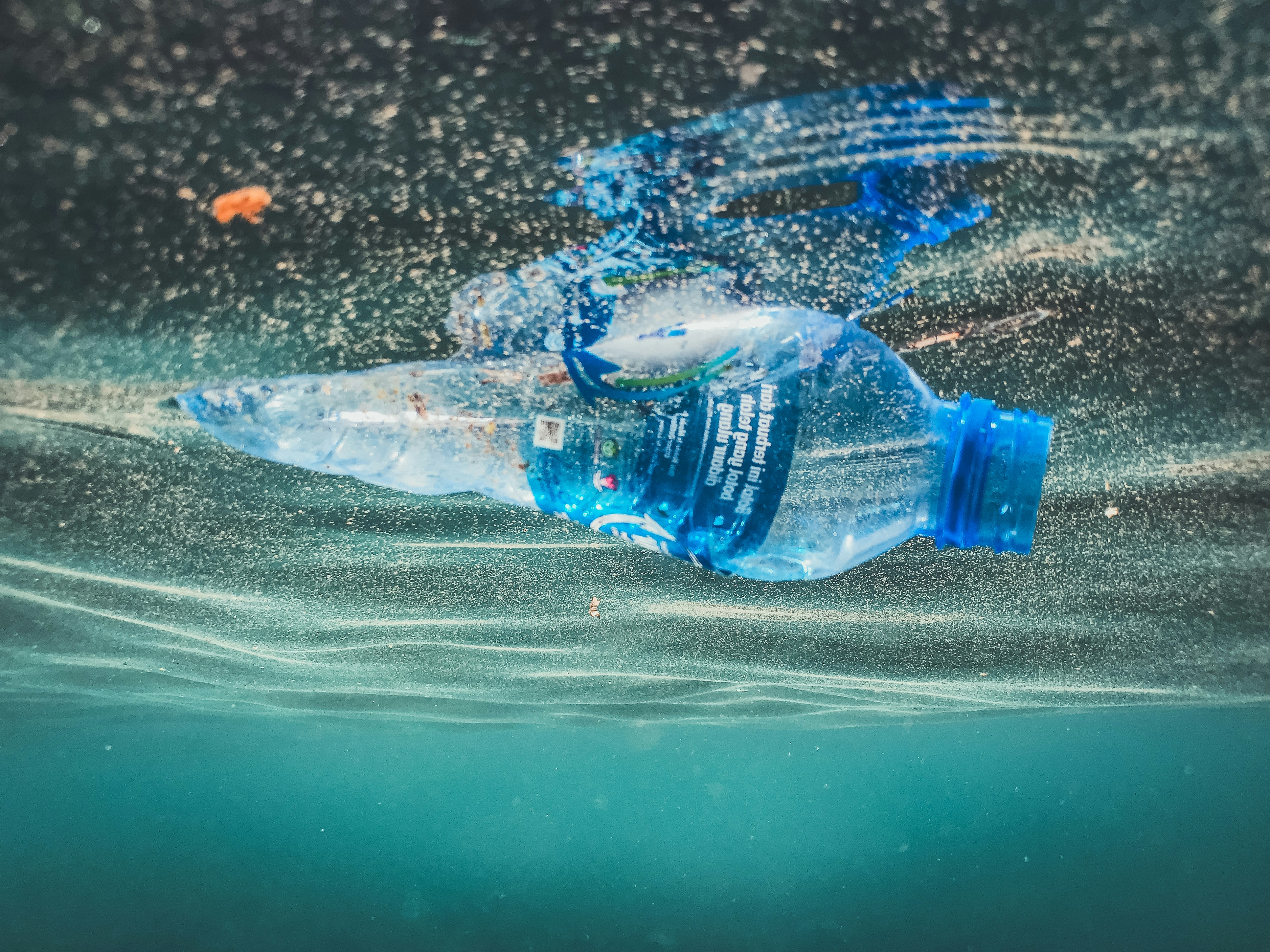
Photo: Naja Bertolt Jensen/Unsplash.
Can we ever escape plastic?

When I think about all the plastic we have created and put into our landfills and oceans, I am close to despair about ever cleaning it up.

Still, there are always people willing to fight the odds. Consider the initiative called Plastic Free July. Jacob Fenston has the story at the Washington Post.

“The idea took root in Australia more than a decade ago, and in recent years it has been gaining popularity in the United States. It all began when Rebecca Prince-Ruiz visited her local recycling sorting center in Perth, Australia, in 2011. She had always thought of herself as being eco-conscious, but after looking around at the heavy machinery sorting an endless stream of bottles, tubs, jars, cans and boxes, she had an aha moment.

“ ‘I suddenly realized that filling my recycling bin each fortnight didn’t make me the great green citizen I thought I was,’ Prince-Ruiz says. ‘The most important thing I should be doing was actually reducing my waste in the first place.’

“She decided to try to avoid single-use plastic for an entire month. The next month happened to be July. So Plastic Free July was born.

“Since then, the idea has spread around the globe. According to the Plastic Free Foundation, the nonprofit that Prince-Ruiz founded, 89 million people in 190 countries pledged to reduce their plastic use during July last year. The countries with the most participants are China and India.

“Over the last five years, participants have avoided more than 1.5 million tons of plastic waste, according to the campaign. That’s enough to fill about 80,000 garbage trucks. …

“Sending anything to the landfill or incinerator has a negative impact on the environment. But plastic is particularly problematic, experts say.

“ ‘Plastics are one of the greatest threats facing our planet today,’ says Melissa Valliant, a spokesperson for Beyond Plastics, a plastic-pollution-fighting nonprofit. … ‘We are not going to recycle our way out of this problem,’ Valliant says.

“Plastic waste chokes oceans and the creatures who live there. And plastic production is a major contributor to climate change: The industry emits four times the planet-warming emissions as the airline industry, according to a recent U.S. Energy Department report.

“But from the beginning, the Plastic Free July campaign has focused on solutions rather than the problem. In fact, the campaign’s website contains almost nothing about the harms of plastic, other than its sea turtle logo — a reference to one of the animals most at risk from ocean plastic.

The website offers ideas for plastic-free beginners — small changes like using reusable shopping bags. There are also suggestions for those further along the journey, including making your own toothpaste, sans plastic tube.

“Prince-Ruiz says that first plastic-free month was harder than she’d thought it would be. … Her best advice for newbies: Don’t try to quit plastic cold turkey. Instead, start with a quick inventory of your plastic use — go through your fridge and pantry and trash — and choose one or two places to work on eliminating or reducing your consumption. …

“Freweyni Asress, a D.C. resident who has written about living a zero-waste lifestyle, recommends finding a buddy or two to do the plastic-free challenge with.

“ ‘When there’s a community of people participating in something like Plastic Free July, it really reinvigorates you,’ Asress says. …

“Of course, going plastic-free can be more challenging depending on your circumstances. In the Midwest, for example, store clerks are not always receptive to the idea of skipping plastic bags, Harper says. On one shopping trip where he was only buying a few things and didn’t need a bag, the checker forced one on him, citing concerns about shoplifting.

“ ‘She would not let me leave without a bag,’ Harper says.

“When Asress started her zero-waste journey in 2016, she was working at a food co-op that had a large bulk section and many plastic-free products. But she found not all plastic-free products worked for her.

“ ‘A lot of the hair products that were sustainably packaged or provided in bulk bins were specifically for White people’s hair,’ says Asress, who is Black. … ‘It has to be practical, and we have to be able to figure out ways to be able to include everybody.’ …

“Valliant says the key is to move away from disposable containers and packages and go with materials that can be used over and over. Refundable deposit systems can make this economical.

“Travel to Latin America, Africa or Asia, for example, and you’ll find refillable soda and beer bottles are still common — each one can be filled, purchased and returned as many as 30 times before it breaks or is worn out.”

More at the Post, here.

Read Full Post »

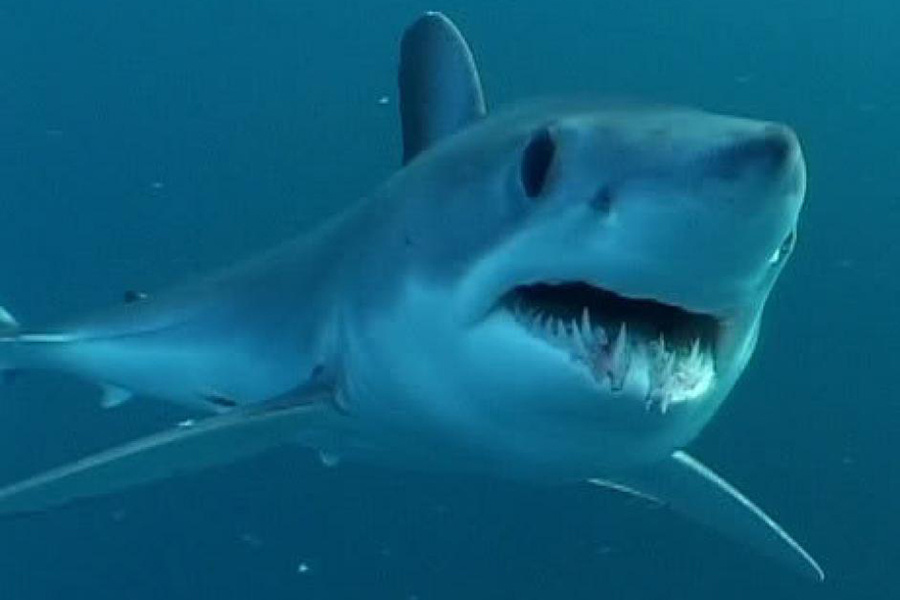
Photo: NOAA Fisheries.
Mako sharks are part of a study involving acoustic tags.

You have to move fast to get a tag on a shark, and you have to throw the shark back, even if you’re not done, if it starts showing any sign of weakness. Frank Carini has the story at ecoRI News.

“A South Kingstown-based nonprofit co-founded by a lifelong Rhode Islander [attaches tags to sharks].

Jon Dodd, the Atlantic Shark Institute’s executive director, said getting an acoustic tag, or any tag, for that matter, onto a shark works like a ‘NASCAR pit stop.’ A crew of four, sometimes six, has a maximum of 12 minutes to get a tag attached and take a blood sample and measurements. If a sharks begins to look lethargic, Dodd said the animal is immediately placed back in the sea, even if all the data hasn’t been collected or the tag fastened.

“A hose is put in the shark’s mouth to flush salt water through its gills, and a towel is often placed over the eyes to keep the animal calm.

“The Atlantic Shark Institute, an all-volunteer nonprofit, partners with other shark scientists and researchers, which allows collaboration to play a critical role in the research, management, and conservation of large predatory sharks in the northwest Atlantic Ocean, according to Dodd.

“ ‘We have to spend wisely to advance science,’ he said. The institute’s budget gets a helping hand from 20 local boat captains who provide their vessels and fuel free of charge for tagging research.

“Dodd noted tagging allows researchers and scientists to track where sharks go and when. … Given the vulnerability of most of the shark species they are tagging, studying, and tracking, Dodd said, they abide by strict protocols regarding the way the sharks are handled when they are being caught, tagged, and measured. He noted that traditional J hooks, which can fatally puncture an organ, have been replaced by circle hooks, which are more likely to lodge in the corner of a shark’s jaw, making removal easier. Fishery regulations also require hooks to be composed of corrodible metals which, unlike stainless steel, degrade faster and increase the chance of a shark’s survival if a hook can’t be removed.

“The type of tag used is determined by the species caught and the study being conducted, according to Dodd.

“The least expensive are national fisheries tags — an index card in a plastic tube attached to the base of the dorsal fin. These cards are provided by NOAA Fisheries for free. A shark swims around and ‘if somebody caught it someday, they say please unscrew the cap and the card rolls out and it says please call the National Fishery Service and tell us where you caught this shark, what size it was, et cetera.’ …

“Acoustic tags, which cost $425 and last about a decade, track a shark’s movement via signals picked up by acoustic receivers, which cost $2,500 each, that have been placed up and down the East Coast. Both the Atlantic Shark Institute and the Rhode Island Department of Environmental Management have placed receivers in local waters.

“Pop-up satellite archival tags — each with a price tag of up to $4,000 — provide even more detailed data beyond location, such as water depth and temperature. They last about two years before the battery dies and the tag corrodes and falls off the shark. …

“The Atlantic Shark Institute’s … mission, and that of its science partners, is ‘to do the highest quality shark research to help manage and conserve these magnificent animals.’ …

“During a recent conversation with ecoRI News, Dodd often used the words ‘beautiful’ or ‘awesome’ to describe a shark species — well, maybe not spiny dogfish.

“Dodd has spent much of the past 45 years, even while working full-time in a totally different field, thinking about, learning about, and studying sharks. He has caught, released, and tagged some 1,000 sharks for various research projects during the past four-plus decades. …

“ ‘When I saw my first shark, I was fascinated, and it just kept rolling,’ Dodd said. ‘But it quickly went from fascination to concern. It was just this realization that Man will take a lot of things out of an ecosystem, and it didn’t feel right.’

“His concern about the species grew during the 1980s and ’90s, especially as he watched the popularity of shark tournaments grow, the number massacred for their fins increase, and the amount killed in bycatch rise.

“ ‘We take over 100 million out of the ocean every year. It’s just too many,’ said the 62-year-old Dodd. ‘And the big problem is that a lot of these sharks are very slow growing and slow maturing. I’ll give you a perfect example. … It takes the female great white 33 years before she’s sexually mature. So we’re talking right now and it’s March 21, 2024, so if a white shark is born while we’re chatting that shark will finally reproduce when I’m 95 years old.

“ ‘For the first time she can finally replace herself, but what’s the chance that her pup [litter sizes range from 4-12 individuals] survives? A lot of things can eat you, you can bite the wrong hook, you can sit on a longline and die because you’ll basically suffocate. You can get dragged up somewhere. You can get caught by a recreational guy that poses with it too long and kills it. What’s the chance that you survived 33 years so you can reproduce?’ …

“Since 1975 the world’s shark populations have declined by 71%, according to the Save Our Seas Foundation. It’s a disturbing trend that Dodd said has major implications beyond the marine environment.

“He likes to tell people, ‘Shark health is ocean health and ocean health is our health. Sharks are the apex predator, and they regulate everything underneath them.’ “

More at ecoRI News, here. No firewall.

Read Full Post »

Photo: Brett Stanley.
The Ocean State’s Jesse Jewels as a mermaid.

Some readers may remember reading in a 2021 post (here) that the US has not one but two mermaid museums! Through that article, I myself learned that spending your free time as a mermaid or merman is a real thing. And quite an industry for waterproof-costume makers.

Today we hear from Emily Olson at ecoRI News, that there’s a mermaid in Rhode Island who’s a serious activist for the ocean.

“When she was young, Jessie Jewels imagined herself a mermaid, moving effortlessly beneath the waves, hair billowing in the current as she played with her ocean friends. But too soon she outgrew her imaginary mermaid tail and contented herself — at least for a while — with exploring the sea on two legs. …

“Jewels is a free diver certified by the National Association of Underwater Instructors, a SCUBA diver, a kayaker, and a Save The Bay beach captain, a role that tasks her with organizing beach cleanups. And in 2021, she revisited the ocean of her childhood imagination when the siren song of mermaiding reached her ears.

“ ‘I found out there’s a culture of mermaids and mermen and mertheys who approach mermaiding as a hobby and athletic sport, and it called to me,’ said Jewel, who willingly succumbed to temptation and donned — or grew, as she’d say — a tail of her own.

“She slowly became more immersed in the culture and decided to test her skills by entering the Miss Mermaid USA pageant, which is similar to Miss USA, but with a twist. ‘You wear the dresses and do all the glam and answer all the questions, but we also do underwater modeling and swimming to show our grace, poise, and distance abilities,’ she said.

“Breath holding is also part of the competition and Jewel can hold hers for 2 minutes, which may sound like a lot to a landlubber, but is a mere fraction of what some professional aquarium mermaids can do.

“Jewels won the Miss Mermaid USA state competition in 2021, 2022, and 2023. She uses her platform to advocate for the importance of clean waterways and draw attention to her work with Save The Bay.

“ ‘I am constantly on Narragansett Bay, and I have seen how things have changed,’ she said. ‘There is a lot of debris floating on the surface, and underwater, there’s a big problem with algae and bacteria, exacerbated by overfishing. I’m in that water, so I see the problems. We’re losing our wild places.’

“She also believes in keeping Rhode Island waters accessible, a value she shares with Save The Bay. …

“When Mermaid Jessie Jewels appears at children’s birthday parties, she encourages them to be stewards of the sea and protect aquatic life. She’s also a mixed-media artist, and a portion of every piece of mermaid-related art she sells goes to Save The Bay. …

“For those who want to join the merfolk community, Jewels hosts mermaid makeovers and photo shoots at her art studio, but she recommends that anyone who wants to learn to swim like a mermaid take a swimming class with a focus on safety. And she stresses the importance of always having a swim buddy.

“And Jewels is really strong, partly due to her months of training last year that led her to the merlympics — an athletic competition for mermaids. The competition requires athletes to don their tails and swim lengths in a pool and navigate an underwater obstacle course. … ‘It was a very, very challenging competition, but super fun,’ she said.

“To learn about Jessie Jewels’ classes and entertainment, visit jessiejewelsart.com. To join her at a Save The Bay beach cleanup, visit savethebay.org.”

More at ecoRI News, here. No paywall.

Read Full Post »

Beach Cottage

Photos: Suzanne and John’s Mom.
Beach cottage artifacts.

I like to see how other people decorate beach cottages. I’ve noticed a lot of ocean paintings and photos of sea-going ships. A lot of shells, seaglass, and driftwood.

Here are photos of artifacts we have in our place — some beach-y, others just lighthearted.

Read Full Post »

Photo: Wikipedia.

There are so many things on this beautiful planet that we’ve never given much thought — things that turn out to be important for our future. Insects, for example, fungi, seagrass.

Allyson Chiu , with Michaella Sallu contributing from Sierra Leone, has written about seagrass research for the Washington Post.

“From the deck of a small blue-and-white boat, Bashiru Bangura leaned forward and peered into the ocean, his gaze trained on a large dark patch just beneath the jade-green waves.

“ ‘It’s here! It’s here! It’s here!’ crowed a local fisherman, who led Bangura to this spot roughly 60 miles off the coast of Freetown. ‘It looks black!’

“Bangura, who works for Sierra Leone’s Environment Protection Agency, tempered his excitement. After two unsuccessful attempts to find seagrass in this group of islands, he questioned whether the shadowy blotches were meadows of the critical underwater greenery he and other researchers have spent the past several years trying to locate along the coast of West Africa.

“It was only once he was standing in the waist-high water, marveling at the tuft of scraggly hair-like strands he’d uprooted to collect as a sample, that he allowed himself to smile.

“The wet, reedy plants Bangura held in his hands were unmistakably seagrass, and the green blades stretched past the plastic 12-inch ruler he’d been using to measure specimens. His grin grew even wider.

“The dense grass swaying in the current appeared to be healthy, and the water teemed with schools of small, silvery fish, making it the best site researchers have documented in these islands since the existence of seagrass was first confirmed in Sierra Leone in 2019. …

“Seagrasses — which range from stubby sprout-like vegetation to elongated plants with flat, ribbon-like leaves — are one of the world’s most productive underwater ecosystems. The meadows are vital habitats for a variety of aquatic wildlife.

Sometimes described as ‘the lungs of the sea,’ the grasses produce large amounts of oxygen essential for fish in shallow coastal waters.

“But, long overlooked, these critical ecosystems are vanishing. In fact, researchers don’t know exactly how many exist or have been lost. One recent study estimated that since 1880, about 19 percent of the world’s surveyed seagrass meadows have disappeared — an area larger than Rhode Island — partly as a result of development and fishing.

“ ‘When you lose foundation species like seagrasses … then you lose fisheries really quickly,’ said Jessie Jarvis, a marine ecologist who, until recently, headed the World Seagrass Association. …

“But locating grasses in the world’s vast oceans is a formidable task. While some researchers are using drones and satellite imaging, in countries such as Sierra Leone, where resources are scarce, the search is painstaking and tedious.

“Without these efforts, though, seagrasses would probably be disappearing even faster.

“ ‘What we don’t know, we can’t protect,’ said Marco Vinaccia, a climate change expert with GRID-Arendal, an environmental nonprofit that helped put together West Africa’s first seagrass atlas. …

“Similar to terrestrial plants, seagrasses have roots, leaves, flowers and seeds. Seagrasses have been discovered in the waters off more than 150 countries on six continents. The meadows are estimated to cover more than 300,000 square kilometers, an area the size of Germany. Along with mangroves, kelp forests and coral reefs, these grasses play a vital role in maintaining healthy oceans, Jarvis said. But unlike those other ecosystems, she notes, the meadows can exist in a wider range of ocean environments and tend to be more resilient than most species of seaweed.

“Critters, such as sea horses, crabs and shrimp, along with juvenile fish — some of which are critical species for fishing — often lurk within the thick meadows, seeking refuge beneath the underwater canopy. Other creatures, including sponges, clams and sea anemones, can be found nestled between the blades of grass or in the murky sediment at the base of the plants. And much as mosses coat trees, many species of algae grow directly on the leaves.

“Seagrass beds can in turn attract larger animals, including turtles and manatees, that stop by to munch on the leaves and stems. …

“From the leaves down to the roots, these unassuming plants work as ‘ecosystem engineers.’ Through photosynthesis, they help fill the surrounding water with oxygen. The leaves also absorb nutrients, including those in runoff from land, while their roots stabilize sediment, which helps to reduce erosion and protect coastlines during storms.

“Seagrasses also have the potential to play a significant role in combating climate change. Just as trees pull carbon from the air, seagrasses do the same underwater. Then, as the carbon-filled parts of the plants die, they can wind up buried in the sediment on the seafloor. Over time, this can help create sizable carbon deposits that could remain for millennia.

“But the grasses aren’t showy like coral reefs or immediately recognizable like mangroves, and they’ve become one of the least protected coastal ecosystems.”

Read more about what is being done here, at the Post.

Read Full Post »

Older Posts »