Feeds:
Posts
Comments

Posts Tagged ‘research’

Photo: Ning Zeng.
An ancient log excavated and likely buried naturally, cleaned and dried, with the lower end sawed off for lab analysis.

And while we’re on the subject of reducing carbon in the atmosphere, consider an ancient process that works without our help. You may find it a little weird, however, especially as intentionally pursuing this natural approach merely postpones carbon escape for a few thousand years!

Dino Grandoni writes at the Washington Post, “On the outside, its rust-red bark had peeled. Its sweet, distinct cedar smell had disappeared. But at its core, it’s still as hard as a tabletop — and may just contain a way of slowing down rapidly rising temperatures.

“A 3,775-year-old log unintentionally discovered under a farm in Canada may point to a deceptively simple method of locking climate-warming carbon out of the atmosphere for thousands of years, according to a study published [in September].

“ ‘This accidental discovery really gave a critical data point,’ said Ning Zeng, a University of Maryland climate scientist whose team unearthed the ancient chunk of wood. ‘It’s a single data point,’ he added, but it ‘provides the data point we need to really say under what conditions we can preserve wood for a thousand years or longer.’

“Figuring out ways of sequestering carbon may be crucial to meeting the world’s goal of halting warming beyond 2 degrees Celsius above pre-industrial levels. … Doing something as simple as burying wood underground in the right spot, these researchers say, may be a cheap and scalable way of doing just that.

“Forests are Earth’s lungs, sucking up six times the amount of carbon dioxide (CO2) that people pump into the atmosphere every year by burning coal and other fossil fuels. But much of that carbon quickly makes its way back into the air once insects, fungi and bacteria chew through leaves and other plant material. …

“What if that decay could be delayed? Under the right conditions, tons of wood could be buried underground in wood vaults, locking in a portion of human-generated CO2 for potentially thousands of years. While other carbon-capture technologies rely on expensive and energy-intensive machines to extract CO2, the tools for putting wood underground are simple: a tractor and a backhoe.

“Finding the right conditions to impede decomposition over millennia is the tough part. To test the idea, Zeng worked with colleagues in Quebec to entomb wood under clay soil on a crop field about 30 miles east of Montreal.

“ ‘We were trying to do a small pilot project at first,’ said Ghislain Poisson, an agronomist with Quebec’s Agricultural Ministry who worked with Zeng. … But when the scientists went digging in 2013, they uncovered something unexpected: A piece of wood already buried about 6½ feet underground. The craggy, waterlogged piece of eastern red cedar appeared remarkably well preserved. …

“Radiocarbon dating revealed the log to be 3,775 years old, give or take a few decades. Comparing the old chunk of wood to a freshly cut piece of cedar showed the ancient log lost less than 5 percent of its carbon over the millennia.

“The log was surrounded by stagnant, oxygen-deprived groundwater and covered by an impermeable layer of clay, preventing fungi and insects from consuming the wood. Lignin, a tough material that gives trees their strength, protected the wood’s carbohydrates from subterranean bacteria. The team wrote up their results in a paper in the journal Science. …

“Said Daniel L. Sanchez, an assistant professor at the University of California at Berkeley who was not involved in the study, ‘Scientists and entrepreneurs have long contemplated burying wood as a climate solution.’

“The next step is to find prehistoric logs in other locations, to see how well other types of soil preserve wood. … The researchers estimate buried wood can sequester up 10 billion tons of CO2 per year, which is more than a quarter of annual global emissions from energy, according to the International Energy Agency.

“One of the biggest challenges isn’t so much the supply of wood but rather the cost of transporting it to the right spots, Poisson said. ‘There’s probably a lot of unmerchantable wood right now that doesn’t have any market or doesn’t have any purpose.’ “

Hmmm. What do you think? Transporting wood to a burial site wouldn’t just be costly, it would cause more emissions. Not sure the scientists have thought this through. More at the Post, here.

Read Full Post »

Photo: Melanie Stetson Freeman/CSM.
A heifer stands inside a methane chamber at Cornell University, June 7, 2024, in Ithaca, New York. Researchers are studying how to reduce methane emissions from dairy cows.

When he was only 11, one of my grandsons gave up eating beef after learning in school about the effects of cows’ methane emissions on global warming.

I guess it’s fortunate that there are people researching ways to make cows “less gassy.” But some of the research sounds like it’s not much fun for the cow.

Stephanie Hanes of the Christian Science Monitor reported recently on work at Cornell.

“On the campus of Cornell University, within an intricately monitored and carefully sealed chamber, there is a cow. Scientists carefully record what this cow eats and what she drinks. They open the chamber only once a day, so as to limit disturbances to her environment. Every breath she takes – or more crucially, exhales – is also measured to its molecular level. There is hydrogen. There is carbon, recorded down to its isotopic composition. There is oxygen. And, most important to this state-of-the-art study, there is methane.

“Methane is a naturally occurring gas that comes from a variety of biological and industrial sources, from oil- and gas-well leaks to decomposing garbage to, well, cow burps. It is also one of the world’s most potent greenhouse gases – far more heat-trapping than carbon dioxide. …

“ ‘There is growing awareness amongst environmental advocates, policymakers, that reducing methane emissions is the fastest way to reduce warming,’ says Dan Blaustein-Rejto, director of food and agriculture at the nonprofit Breakthrough Institute. …

“Although exact percentages are difficult to determine, researchers estimate that cows are responsible for around 30% of U.S. methane emissions. This is largely because cattle, like goats or sheep, are ruminants: animals with four-chambered stomachs that ferment grass and other vegetation into consumable food. And a natural by-product of rumination is methane. …

“According to the U.S. Department of Agriculture, there are 28.2 million beef cattle in the U.S., along with 9.36 million dairy cows and 33.6 million calves. And those numbers pale in comparison to countries such as India, which has an estimated 61 million milk cows, or Brazil, with around 234 million beef cattle. 

“With growing pressures from policymakers and climate advocates, then, agribusiness and scientists are trying to figure out how to make individual dairy cows more productive, which could lead to smaller herds, while at the same time trying to find ways to make cow burps — the body function that produces the most methane — less gassy.

“The first step to doing that, says Cornell associate professor Joseph McFadden, is to get good measurements of bovine methane in the first place. …

“ ‘The challenge comes in capturing the methane,’ says Joe Rudek, lead senior scientist at the Environmental Defense Fund. ‘Cows are breathing out this methane. You’ve got them walking around in a pasture, how do you capture that methane that’s coming out of the cows’ mouth and nostrils?’

“So instead of individually measuring each cow, scientists are trying to build up a robust sample size of measurements that would let them statistically predict methane emissions, both broadly and specifically. One contraption they use now is called the GreenFeed – basically a high-tech box with cow treats. When the cow puts her head into it to eat, the box measures methane and other gases. These instruments are portable, so theoretically farmers can use them in different locations.

“But, Dr. McFadden says, those measurements are not always exact. That’s why his respiration chambers are important. Because the pods are highly accurate, closed systems, they can calibrate other machines. … The chambers can help him monitor other inputs and outputs that can give clues about animal health and well-being, and about how the animal uses energy – as well as about other greenhouse gases, such as nitrous oxide. …

“Across the country, at the University of California, Davis, professor Ermias Kebreab is also working with dairy cows, and has his eye on some solutions. In addition to feed additives, he is measuring what happens when cows eat local agricultural by-products, such as the grape residue from winemaking. GreenFeed measurements are finding some promising initial results, he says.   

“ ‘We found a 10% to 12% reduction in emissions,’ he says. ‘Animals were happy to eat it … and it avoids the emissions from putting it into a landfill.’ Not only that, he says, but grape pomace — the fruit’s leftover skin, seeds, or stems — seems to improve milk quality. 

“ ‘It’s a win-win kind of situation,’ he says.”

More at the Monitor, here.

Read Full Post »

Photo: National Science Foundation/Wikimedia.
A 5-foot-wide flange, or ledge, on the side of a chimney in the Lost City Field is topped with dendritic carbonate growths that form when mineral-rich vent fluids seep through the flange and come into contact with the cold seawater.

I’ve always loved legends about the Lost Continent of Atlantis and really wanted to believe the theory propounded in Looking for Dilmun, by Geoffrey Bibby. But my roommate after college was an archaeology major and told me it was all fantasy.

Fortunately, there’s a kind of Lost City to spark the imagination in the Atlantic.

William J. Broad writes at the New York Times, “Researchers have long argued that regions deep in the Earth’s oceans may harbor sites from which all terrestrial life sprung. In the Atlantic, they gave the name ‘Lost City’ to a jagged landscape of eerie spires under which they proposed that the life-preceding chemistry may have churned. …

“A report in the journal Science on Thursday tells of a 30-person team drilling deep into a region of the Mid-Atlantic seabed and pulling up nearly a mile of extremely rare rocky material. Never before has a sample so massive and from such a great depth come to light. …

“ ‘We did it,’ said Frieder Klein, an expedition team member at the Woods Hole Oceanographic Institution on Cape Cod in Massachusetts. ‘We now have a treasure trove of rocks that will let us systematically study the processes that people believe are relevant to the emergence of life on the planet.’

“The drilled region sits alongside one of the volcanic rifts that crisscross the global seabed like the seams of a baseball. Known as midocean ridges, the abyssal sites feature hot springs whose shimmering waters shed minerals into the icy seawater, slowly building up strange mounds and spires that sometimes host riots of bizarre creatures. …

“ ‘A lot of people did lab work and paper studies and modeling on the origin of life,’ said Deborah Kelley, an oceanographer at the University of Washington. … The new research, she said, ‘is really important. … It lays a foundation for new understanding.’

“Early last year, the expedition … drilled deep into the rocky seabed adjacent to one of the largest known springs — a mid-Atlantic site some 1,400 miles east of Bermuda known as Lost City, which Dr. Kelley helped uncover in 2000. Its tallest spire rivals a 20-story building.

“The core retrieved nearby has a length of 1,268 meters, or some four-fifths of a mile, far deeper and more substantial than any comparable sample from beneath the undersea springs. The operation has brought into scientists’ labs the first long section of rocks originating in the mantle — the inner layers between Earth’s crust on which we live and the planetary core. It is the largest region of the planet, but its inaccessibility makes it poorly understood. Over eons, hot mantle rocks flow like extraordinarily thick fluids that slowly rearrange the cool planetary crust, lifting mountains, moving continents and causing earthquakes. …

“The mantle breakthrough was part of the International Ocean Discovery Program, a research consortium of more than 20 countries using a giant ship to drill into the ocean floor and retrieve rocky samples that bare Earth’s secrets. The ship is a modified oil exploration platform, 470 feet long and with a 200-foot derrick that lowers a hollow drill that bores into the seabed and retrieves cylindrical samples of rocks and other deep materials.

“ ‘We were astounded’ at how easily the rocky samples came to light,’ [C. Johan Lissenberg, the first author of the Science paper and a petrologist at Cardiff University in Wales] said. …

“The discovery raised waves of excitement in the community that studies life precursors because Michael J. Russell, a geochemist at NASA’s Jet Propulsion Laboratory in California, had predicted the existence of such cooler springs. He saw them as ideal for nurturing life.”

More at the Times, here. Cool photos.

Read Full Post »

Photo: Carolyn Cole/Los Angeles Times via Getty Images.
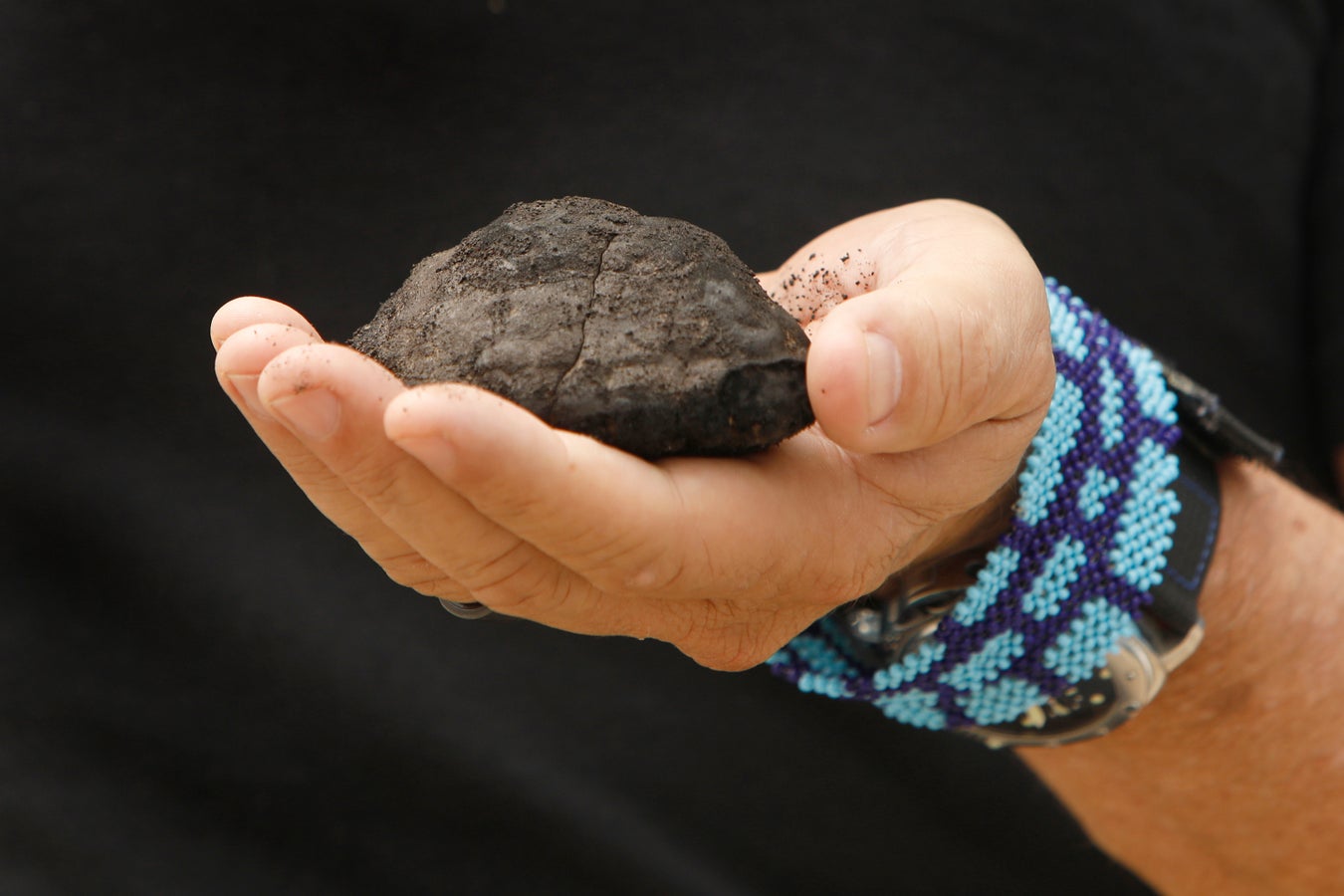
Metal deposited over millions of years forms these nodules, which can somehow generate oxygen.

Sometimes it seems like scientists have all the fun. In today’s story, certain researchers of the deep ocean thought their instruments were at fault and complained to the manufacturer. Then one day, ironically, an ad from a deep-sea mining company struck a chord in one scientist and led to some creative thinking.

Allison Parshall writes at Scientific American that some rocklike mineral deposits in the deep sea may have more to them than meets the eye.

“The dark seabed of the Pacific Ocean’s Clarion-Clipperton Zone (CCZ) is littered with what look like hunks of charcoal. These unassuming metal deposits, called polymetallic nodules, contain metals such as manganese and cobalt used to produce batteries, marking them as targets for deep-sea mining companies.

“Now researchers have discovered that the valuable nodules do something remarkable: they produce oxygen and do so without sunlight. ‘This is a totally new and unexpected finding,’ says Lisa Levin, an emeritus professor of biological oceanography at the Scripps Institution of Oceanography, who was not involved in the current research.

“According to Boston University microbiologist Jeffrey Marlow, the idea that some of Earth’s oxygen gas may come not from photosynthesizing organisms but from inanimate minerals in total darkness ‘really strongly goes against what we traditionally think of as where oxygen is made and how it’s made.’ Marlow is a co-author of the new study, which was published in Nature Geoscience.

“The story of discovery goes back to 2013, when deep-sea ecologist Andrew Sweetman was facing a frustrating problem. His team had been trying to measure how much oxygen the organisms on the CCZ seafloor consumed. The researchers sent landers down more than 13,000 feet and created enclosed chambers on the seabed to track how oxygen levels in the water fell over time.

“But oxygen levels did not fall. Instead they rose significantly. Thinking the sensors were broken, Sweetman sent the instruments back to the manufacturer. ‘This happened four or five times’ over the course of five years, says Sweetman, who studies sea­floor ecology and biogeochemistry at the Scottish Association for Marine Science. …

“Then, in 2021, he returned to the CCZ on a survey expedition sponsored by the Metals Company, a deep-sea mining firm. Again, his team used landers to make enclosed chambers on the seafloor and monitor oxygen levels. They used a different technique to measure oxygen this time but observed the same strange results: oxygen levels increased dramatically. …

“The researchers initially thought deep-sea microbes were producing the oxygen. That idea once might have seemed far-fetched, but scientists had recently discovered that some microbes can generate ‘dark oxygen‘ in the absence of sunlight.

In laboratory tests that reproduced conditions on the seafloor, Sweetman and his colleagues poisoned seawater with mercury chloride to kill off the microbes. Yet oxygen levels still increased.

“If this dark oxygen didn’t come from a biological process, then it must have come from a geological one, the scientists reasoned. They tested a few possible hypotheses — such as that radioactivity in the nodules was decomposing seawater molecules to make oxygen or that something was pulling oxygen from the nodules’ manganese oxide — but ultimately ruled them out.

“Then, one day in 2022, Sweetman was watching a video about deep-sea mining when he heard the nodules referred to as ‘a battery in a rock.’ That bit of marketing was only a metaphor, but it led him to wonder whether the nodules could somehow be acting as natural geobatteries. If they were electrically charged, they could potentially split seawater into hydrogen and oxygen through a process called seawater electrolysis. (A battery dropped in salt water produces a similar effect.)

“ ‘Amazingly, there was almost a volt [of electric charge] on the surface of these nodules,’ Sweetman says; for comparison, an AA battery carries about 1.5 volts. The nodules may become charged as they grow, as different metals are deposited irregularly over the course of millions of years and a gradient of charge develops between each layer. Seawater electrolysis is currently the researchers’ leading theory for dark oxygen production, and they plan to test it further.”

More at Scientific American, here. No firewall.

Read Full Post »

Photo:  Patrick T. Fallon/AFP via Getty Images.
Researcher Danielle Stevenson digs up California buckwheat grown at a brownfield site in Los Angeles.

Given the mess we humans make of the environment, I have to be grateful that we can learn ways to clean things up. And to be fair, we don’t always realize we’re making a mess until it’s too late.

Richard Schiffman at Yale Environment 360, explains one new technique for cleaning things up: harnessing the power of fungus.

“The United States is dotted with up to a million brownfields — industrial and commercial properties polluted with hazardous substances. These sites are disproportionally concentrated near low-income communities and communities of color, according to the Environmental Protection Agency, and researchers predict that heavy rains and flooding due to climate change are likely to both spread and increase exposure to these contaminants.

“For more than 15 years, Danielle Stevenson, who holds a PhD in environmental toxicology from the University of California, Riverside, has been pioneering a nature-based technique for restoring contaminated land, using fungi and native plants to break down toxins like petroleum, plastics, and pesticides into less toxic chemicals.

“The usual way of dealing with tainted soil is to dig it up and cart it off to distant landfills. But that method is expensive and simply moves the problem somewhere else, Stevenson says in an interview with Yale Environment 360, ‘typically to another state with less restrictive dumping laws.’

“In a recent pilot project funded by the city of Los Angeles, Stevenson, 37, working with a team of UC Riverside students and other volunteers, significantly reduced petrochemical pollutants and heavy metals at an abandoned railyard and other industrial sites in Los Angeles. While her research is still in its early stages, Stevenson says she believes her bioremediation methods can be scaled up to clean polluted landscapes worldwide.

Yale Environment 360: I understand that you grew up on the shores of Lake Erie in a highly polluted area.

Danielle Stevenson: The Cuyahoga River, near Lake Erie, used to catch on fire from oil spills. There’s a huge amount of industrial agricultural runoff that leads to toxic algae blooms. The second-largest floating plastic island of the Great Lakes is in Lake Erie.

“But I was surprised to see abandoned oil refineries and factories with trees, plants, and mushrooms growing. I mean, they’ve found fungi growing in Chernobyl in a melted down nuclear reactor. I’ve been on sites that look so desolate and bleak, where the air smells like diesel. It looks like nothing could possibly live there. But when we sample the soil, we always find life, and we especially find fungi that are really resilient and have found a way to live in those conditions and get some sort of food from the pollution.

e360: So you became interested in fungi, eventually founding your own mycoremediation company, D.I.Y. Fungi. What are fungi?

Stevenson: They are their own kingdom of life. They are not bacteria, not a type of plant or animal. Some fungi form mushrooms [as their fruiting bodies], like the ones we like to eat. Other fungi do not form mushrooms but create these beautiful dynamic networks throughout forests and grasslands that connect to the roots of plants. Fungi are largely overlooked, but it is a really important kingdom without which we wouldn’t have soil or the carbon cycle or so many other really important functions in our ecosystems.

e360: How do fungi help restore contaminated soil?

Stevenson: Decomposer fungi can degrade petrochemicals the same way they would break down a dead tree. And in doing so, they reduce the toxicity of these petrochemicals and create soil that no longer has these contaminants or has much reduced concentrations of it. They can also eat plastic and other things made out of oil, like agrochemicals. …

e360: You worked at industrial sites in Los Angeles that were highly contaminated with heavy metals: How did the fungus help there?

Stevenson: Unfortunately, most metals don’t break down because they’re not carbon-based. In nature, it’s actually plants that pull metals out of soil. And so there are fungi, they’re called arbuscular mycorrhizal fungi, that can help plants do that better. And so on Taylor Yard [the Los Angeles railyard] and other sites, I’ve worked with a combination of decomposer fungi, arbuscular mycorrhizal fungi, and plants that we previously found to be able to pull metals like lead and arsenic out of the soil into their aboveground parts. These plants can then be removed from the site without having to remove all of that contaminated soil.

e360: How did the sites look different after the work that you did on them?

Stevenson: They became basically beautiful meadows of native plants that were flowering, and now there are bees and birds and all sorts of life coming through. We had a very high success rate. In three months we saw a more than 50 percent reduction in all [petrochemical] pollutants. And then by the 12-month period, they were pretty much not detectable.”

The rest of this article — on reusing some metals, on working with tribes — is fascinating. Read at e360, here. No paywall.

Read Full Post »

Photo: Fine Art Images/Heritage Images/Getty Images.
Relief depicting two scribes from Saqqara, Old Kingdom, 5th Dynasty, in the collection of the Egyptian Museum, Cairo.

I went for a massage the other day, and the masseuse noted that the muscles in my shoulders and neck were really tight. “Have you been working at the computer a lot?” she asked.

Writing on computers is the usual culprit these days, but back in Ancient Egypt, research suggests, writing on papyrus did even more damage.

Adnan Qiblawi wrote at ArtNet, “According to a new study published in Scientific Reports, scribes were suffering with similar issues back in the days of the pyramids.

“A team of archaeologists examined dozens of adult males’ skeletons from the necropolis at Abusir, Egypt, which was used between 2700 and 2180 B.C.E. Written evidence indicates that 30 of the studied males lived as scribes. These high ranking dignitaries enjoyed privileged lives with an elevated social status thanks to their literacy, at a time when only one percent of ancient Egypt could read and write.

“Records indicate that influential families sent their sons to the royal court for education and training. Eventually, they became scribes who served a similar societal role to contemporary government workers. 

“ ‘These people belonged to the elite of the time and formed the backbone of the state administration,’ explained Veronika Dulíková, an Egyptologist and member of the archaeology team. ‘Literate people worked in important government offices such as the treasury (today’s Ministry of Finance), the granary (today’s Ministry of Agriculture). They also played an important role in the collection of taxes.’ …

“While Egyptian scribes’ lives have been studied in detail, their archaeological remains have never before been examined for anomalies. The study’s lead author, Petra Brukner Havelková, is an anthropologist at the National Museum in Prague who has specialized in identifying activity-induced bone markers for nearly two decades.

“When comparing the remains of scribes to non-scribes, the former were found to suffer from osteoarthritis, a breakdown of the joint tissue. The condition was found in joints connecting the lower jaw to the skull, the right collarbone, the upper right arm bone connected to the shoulder, the bottom of the thigh, right thumb bones, and throughout the spine. 

“Just as modern-day government workers suffer neck and spinal injuries from sitting at desks and arching forward to stare at screens, ancient Egyptian scribes endured comparable physical stresses from hunching over papyrus for prolonged sessions.

It is theorized that scribes often squatted on their right legs, which may explain why significant damage was found on the skeleton’s right sides, with particular degeneration in their right knees.

“Historical sculptures, such as The Seated Scribe, corroborate that scribes frequently knelt or sat cross-legged while writing. They recorded their notes on sheets of papyrus, pottery notepads called ostraca, or wooden boards. Scribes generally wrote in hieratic cursive, a simpler script more practical for everyday note-taking, rather than using the elaborate hieroglyphs carved on monuments by specialists.

“Researchers were most surprised to discover damage in the scribes’ jaws, which is explained as a consequence of chewing on rush stems to make brush-like heads. They used these rush pens, and later reed pens, to write their notes, pinching the utensils between the index and thumb fingers of their right hands.

“Looking to the future, the study’s scientists are seeking to collaborate with other research groups to analyze scribes’ remains across other ancient Egyptian cemeteries.”

More at Artnet, here. No word yet on whether scribes had access to a massage.

Read Full Post »

Photo: David Matos via Unsplash.

I take naps pretty regularly. Not just because I am tired but because my brain needs a rest. And I’m a big believer in letting the sleeping, unconscious brain sort out things that have me going around in circles when awake. That’s why I was impressed with the presidential candidate who wanted to “sleep on it” before choosing a running mate. To me, that was really smart. Often when you “sleep on it,” vibes you have unconsciously picked up when awake become more clear to you.

Now let’s look at some research on letting your brain take rests.

Jamie Friedlander Serrano writes at the Washington Post, “Downtime is a necessary part of life. Science shows it helps us to be healthier, more focused, more productive and more creative. Yet, somehow, we often lose sight of this.

“ ‘Downtime is important for our health and our body, but also for our minds,’ says Elissa Epel, a professor in the psychiatry department at the School of Medicine at the University of California at San Francisco.

“Epel and others acknowledge that many of us feel as though we’re wasting time if we aren’t getting things done, but research points to the costs of always being ‘on’ and the importance of giving our brains a break. Our brains aren’t built to handle constant activity.

“Even the briefest moments of idle time, or pauses, are important, says Robert Poynton, author of Do Pause: You Are Not a To-Do List.

“Short pauses — whether you take a few breaths before entering a room or walk through the woods for 10 minutes — can lead to necessary self-reflection.

“ ‘I think we feel that we need to be getting on with things,’ says Poynton, who is an associate fellow at the University of Oxford in England. But ‘if we’re always getting on with things, we haven’t taken any time to decide or examine whether what we’re getting on with is the most interesting, important, fruitful, delightful, pleasurable or healthy thing.’ …

“Well-established research has shown that low-level daily stress can create such intense wear and tear on our body’s physiological systems that we see accelerated aging in our cells, says Epel, who co-wrote the book The Telomere Effect. Epel added: ‘Mindfulness-based interventions can slow biological aging by interrupting chronic stress, giving us freedom to deal with difficult situations without the wear and tear — and giving our bodies a break.’ …

“One small study published in the journal Cognition found that those who took short breaks had better focus on a task when compared with those who didn’t take a break. [And a 2022 meta-analysis published in the journal PLOS One looked at how ‘micro-breaks’ can affect well-being. The review found that breaks as short as 10 minutes can boost vigor and reduce fatigue. …

“In 2021, when many Americans were working remotely all the time, Microsoft conducted a study that followed two groups of people: The first had back-to-back Zoom meetings, and the other group took 10-minute meditation breaks between meetings. Microsoft monitored brain activity of 14 participants in the study using an electroencephalogram (EEG).

“In the first group, ‘what you see is a brain that’s filled with cortisol and adrenaline,’ says Celeste Headlee, a journalist and author of Do Nothing: How to Break Away From Overworking, Overdoing, and Underliving. ‘It’s tired, it’s stressed, it’s probably more irritable, and it’s probably less compassionate.’ The other group? ‘You can see in brilliant color what a difference [the breaks] make,’ she says. ‘Those are brains that are relaxed.’ …

“New research has begun showing the negative effects our cellphones can have on our health. Smartphone addiction (which [James Danckert, a professor of cognitive neuroscience at the University of Waterloo in Ontario, Canada, and co-author of Out of My Skull: The Psychology of Boredom] says afflicts 4 to 8 percent of people) is becoming increasingly common worldwide.

“It has been linked to physical health problems, such as digital eyestrain and cervical disc degeneration, as well as anxiety and depression. Some recent research also suggests it can affect the structure of our brains: Two studies found smartphone addiction was correlated with lower white matter integrity and lower gray matter volume in the brain. …

“Most Americans think of downtime as something that is extra or indulgent — a treat that has to be earned only after we’ve done all of our productive tasks, says Amber Childs, a psychologist and associate professor at Yale School of Medicine’s Department of Psychiatry. But research would suggest the opposite: Downtime is a basic human need.”

More at the Post, here.

Read Full Post »

Photo: Valkyrie Pierce/Unsplash.
Citizen scientists are helping us learn more about seahorses.

For all its shortcomings, social media has enabled us to work together on meaningful projects if we so choose. Consider the citizen scientists who are expanding our knowledge of the natural world.

Erin Blakemore has a story at the Washington Post about the latest research on seahorses — and how you can help study them.

“Members of the public are helping to advance research on sea horses, the tiny fish that can be found in coral reefs, shallow waters and estuaries around the world, according to a study.

“When researchers looked at the results of public contributions to the iSeahorse science project between 2013 and 2022, they found the community effort enabled scientific advances in the field.

“Citizen contributions provided new information on 10 of 17 sea horse species with data once considered deficient and helped update knowledge about the geographic distribution of nine species, researchers wrote in the Journal of Fish Biology. Some of the observations even helped scientists better understand when and how sea horses breed. … According to the project website, iSeahorse has amassed about 11,000 observations from more than 1,900 contributors to date.

“Overall, the researchers were able to validate 7,794 of the observations from 96 countries and 35 sea horse species. The volunteer observers even noted rare species that traditional monitoring probably would not detect, they write.

“ ‘Seahorses are very much the sort of fascinating species that benefit from community science, as they are cryptic enough to make even formal research challenging,’ Heather Koldewey, the project’s co-founder and the lead on the Bertarelli Foundation’s marine science program, said in a news release. …

“Want to get involved? Visit https://projectseahorse.org/iseahorse/ to learn more. More at the Post, here.

And check out this page from the Journal of Ethnobiology and Ethnomedicine, here. It reads, in part, “Seahorses are endangered teleost fishes under increasing human pressures worldwide. In Brazil, marine conservationists and policy-makers are thus often skeptical about the viability of sustainable human-seahorse interactions.

“This study focuses on local ecological knowledge on seahorses and the implications of their non-lethal touristic use by a coastal community in northeastern Brazil. Community-based seahorse-watching activities have been carried out in Maracaípe village since 1999, but remained uninvestigated until the present study. …

“We interviewed 32 informants through semi-structured questionnaires to assess their socioeconomic profile, their knowledge on seahorse natural history traits, human uses, threats and abundance trends.

“Seahorse-watching has high socioeconomic relevance, being the primary income source for all respondents. Interviewees elicited a body of knowledge on seahorse biology largely consistent with up-to-date research literature. Most informants (65.5 %) perceived no change in seahorse abundance. Their empirical knowledge often surpassed scientific reports, i.e. through remarks on trophic ecology; reproductive aspects, such as, behavior and breeding season; spatial and temporal distribution, suggesting seahorse migration related to environmental parameters.

“Seahorse-watching operators were aware of seahorse biological and ecological aspects. Despite the gaps remaining on biological data about certain seahorse traits, the respondents provided reliable information on all questions, adding ethnoecological remarks not yet assessed by conventional scientific surveys. We provide novel ethnobiological insight on non-extractive modes of human-seahorse interaction, eliciting environmental policies to integrate seahorse conservation with local ecological knowledge and innovative ideas for seahorse sustainable use. Our study resonates with calls for more active engagement with communities and their local ecologies if marine conservation and development are to be reconciled.”

Read Full Post »

Photo: Jace Downs/AMC via AP.
A scene from the show The Walking Dead. Producers of season two of Walking Dead: Dead City are looking for extras in Boston. Click here.

Despite research from the Federal Reserve and others showing that film tax credits hurt the finances of states more than they help, they remain enormously popular.

Jon Campbell writes at the Gothamist about a recent New York study that is skeptical about this kind of tax credit. He also reports that many people just want to believe.

“New York’s $700 million-a-year tax break for film and TV productions isn’t providing taxpayers with a good return on investment, according to a new analysis commissioned by the state itself.

“The state Department of Taxation and Finance quietly released a 359-page report late last month analyzing New York’s major tax incentive programs, which are meant to attract and retain businesses. The analysis, authored by consultant PFM Group, was required by lawmakers two years ago.

“The results show a decidedly mixed bag, with some tax breaks — including the state’s marquee Excelsior Jobs Program — performing well, the report found. But the return for the state’s Film Tax Credit, which Gov. Kathy Hochul and lawmakers boosted by $280 million annually last year, was not nearly as positive.

‘Based on an objective weighing of the costs and benefits, the film production credit is at best a break-even proposition and more likely a net cost to the state,’ according to the report.

“For every dollar the state gave in tax breaks from 2018 through 2022, the Film Tax Credit drew an estimated 15 cents in direct tax revenue, the analysis found. …

“The state’s biggest industry-specific tax break belongs to the film industry, which gets $700 million a year to film or do post-production work in the Empire State. Hochul and legislative leaders are big supporters of the program, which has helped lure hundreds of productions over the years.

“The tax break can be considerable. It covers up to 30% of a film’s qualified production costs, with another 10% available if productions are filmed in certain counties north of New York City. The credit is also refundable, meaning the state pays out the excess money if it exceeds a film production’s tax bill. …

“Beyond the lackluster return on investment, PFM’s report surmised that much of the filming that occurred in New York would have happened regardless of the tax credit. … When adding indirect and induced jobs — employees who don’t work directly on production but whose employment stems from it — that return rises to 31 cents. …

“[A] prior state analysis, crafted by Regional Economic Models Inc., estimated the Film Tax Credit generated $1.70 in state and local tax revenue for every dollar the state gave up in 2021 and 2022.

E.J. McMahon, founder of the Empire Center, a fiscally conservative think tank, argued that the prior analysis was too simplistic and assumed the film industry wouldn’t have created any jobs without the tax breaks. PFM’s analysis, he wrote, was ‘meatier’ and ‘less credulous.’ …

“PFM estimated the Excelsior program has a return of $5.25 in tax revenue for every $1 the state forgoes, when including indirect and induced jobs.

“[State Sen. James Skoufis, a Hudson Valley Democrat who pushed for the new report in the state budget] said the report’s findings on the Film Tax Credit fell in line with his expectations.

“ ‘There are some of us, myself included, that believe that the Film Tax Credit and the associated entertainment tax credits are such a bad deal that they ought to be repealed,’ he said. ‘But the politics is the politics in the state Legislature, and that continues to remain an uphill climb.’ …

“Josh Levin, vice president for state government affairs for the Motion Picture Association’s Northeast Region, said New York’s Film Tax Credit is ‘essential’ for ensuring the state ‘retains its position as a top hub for production activity and union jobs.’ …

“Lawmakers extended the Film Tax Credit for an additional 10 years. It’s scheduled to run through 2034.” More at Gothamist, here.

Maybe constituents’ delight in seeing movies being filmed in their neighborhoods is what motivates lawmakers. In that case, how about accounting for it differently — as a state expense for resident entertainment?

Read Full Post »

Photo: Classical-Music.com.
Playing piano four-hands.

Where I live now, we think a lot about brain health. We know that parts of our brains are not working as well as they used to. It takes longer to remember a word. Sometimes a memory is completely gone, and then we worry.

I like to think of a young man I know whose father helped him use other parts of his brain for daily functioning after he was born without a cerebral cortex. This young man now lives independently, has a job in the city to which he takes a train, and is the subject of study by amazed doctors. He’s my hero these days. Brains can learn new tricks.

BBC health reporter Aurelia Foster wrote recently about one way to teach your brain new tricks, and that’s through music.

She wrote, “Playing a musical instrument or singing could help keep the brain healthy in older age, UK researchers suggest. Practicing and reading music may help sustain good memory and the ability to solve complex tasks, their study says. In their report, published in the International Journal of Geriatric Psychiatry, they say music should be considered as part of a lifestyle approach to maintain the brain.

“More than 1,100 people aged over 40, with a mean age of 68, were studied. Scientists at the University of Exeter observed their brain function data as part of a wider study that has been finding out how brains age, and why people develop dementia.

“They looked at the effects of playing an instrument, singing, reading and listening to music, and musical ability.

“The researchers compared the cognitive data of those in the study who engaged in music in some way in their lives, with those who never had. Their results showed that people who played musical instruments benefitted the most, which may be because of the ‘multiple cognitive demands’ of the activity.

“Playing the piano or keyboard appeared to be particularly beneficial, while brass and woodwind instruments were good too. Simply listening to music did not appear to help cognitive health. The benefit seen with singing might be partly because of the known social aspects of being in a choir or group, the researchers say.

” ‘Because we have such sensitive brain tests for this study, we are able to look at individual aspects of the brain function, such as short-term memory, long-term memory, and problem-solving and how engaging music effects that,’ lead author Prof Anne Corbett told the BBC. …

” ‘Playing an instrument has a particularly big effect, and people who continue to play into an older age saw an additional benefit,’ she said. In the study, people who read music regularly had better numerical memory.

“Prof Corbett said: ‘Our brain is a muscle like anything else and it needs to be exercised, and learning to read music is a bit like learning a new language, it’s challenging.’

“Researchers did not test potential benefits of taking up a musical hobby for the first time later in life, but Prof Corbett said she believed, based on current evidence, it would be ‘very beneficial. …

” ‘The message is around how people can proactively reduce their risk of cognitive decline or dementia, and really thinking about engaging with music as a way of doing that.’ … However, she said: ‘It would be naïve to think taking up a musical instrument would mean you won’t develop dementia. It’s not as simple as that.’ “

More at the BBC, here.

Read Full Post »

Photo: Thibaut Roger/NCCR PlanetS/PA.
The planets surrounding the HD110076 star orbit it in neat ratios depending on their closeness to it. 

Where I went to high school, we memorized Bible verses every week. I always liked the words from this time of year: “The star, which they saw in the east, went before them till it came and stood over where the young child was.” So I’m going to say that today’s post on stars is a seasonal post.

At the Guardian, Nicola Davis delves into new star research from the journal Nature.

“Six planets that orbit their star in a coordinated dance have been discovered by scientists, who say the finding could help shed light on why planets in our own solar system move to their own beat.

“The newly discovered planets orbit a star that sits about 100 light years away in the constellation Coma Berenices, with a mass about 20% smaller than our Sun.

“Not only is their makeup different from planets within our solar system, but their movements appear to be tied together: the team said the time it takes one planet to travel around the star was related to that of the next planet by a neat ratio.

“ ‘This system has this very delicate resonant configuration,’ [said] Dr Rafael Luque, co-author of the research from the University of Chicago. The team said such ‘resonance’ should be common within planetary systems, arising from gravitational interactions between planets that begin as they form.

Astronomer Hugh Osborn, a co-author from the University of Bern, converted the resonance among these planets’ orbits into music.

“However, in reality only about 1% of observed planetary systems show resonance – and even fewer involve as many as six planets moving in a coordinated fashion. …

“The team added that the newly discovered planets sit close to their star, with temperatures of 170-650C, and have diameters two to three times that of Earth but smaller than Neptune, making them ‘sub-Neptunes.’ The masses of the planets and their densities were elucidated using ground-based measurements. …

“ ‘Even though we have found so many planets like these ones outside of the solar system, we do not know much about them,’ said Luque.

“Luque added that with six sub-Neptunes of varying sizes, temperatures and masses around the same, bright star, astronomers now had a way to explore how and why such planets differed. …

“Data from [Nasa’s Transiting Exoplanet Survey Satellite] has revealed that one planet had a nine-day orbit while another took 13 days to orbit the star. Subsequent data from the European Space Agency’s Characterizing Exoplanet Satellite (Cheops), suggested yet another planet took 20.5 days to orbit the star.

“The team realized these orbits formed neat ratios: the first planet from the star makes three orbits in the time it takes the second planet to make two orbits, and the second planet makes three orbits in the time it takes the third planet to make two orbits.

“The discovery led the team to propose that the orbits of the other three planets in the system also would be related by simple ratios. Further observations confirmed they were right.”

More at the Guardian, here. You should know that Dr Hugh Osborn, a co-author from the University of Bern, converted the resonance among these planets’ orbits into music. Listen to that music in an audio clip of about 2-1/2 minutes at Public Radio International’s The World, here. Very special.

Read Full Post »

Photo: Laura Chouette/Unsplash.
A study by McGill University in Montreal, Canada, asked participants to listen to different types of music and rate how it affected their pain levels.

The other day on the radio I heard a doctor talk about treating pain in the age of the opioid crisis. His ideas sounded risky and seemed based on a study of one — himself. Having been in recovery from opioid addiction for 15 years, he found he could handle a lot of opioids when he broke his leg. He didn’t get addicted again.

Can every recovering addict do that? Seems like there ought to be better ways. So far, opioids are the only thing that works for severe pain. Today’s story talks about a way to reduce suffering, but only a little.

Nicola Davis writes at the Guardian, “If you are heading to the dentist, you may want to turn up a rousing Adele ballad. Researchers say our preferred tunes can not only prove to be powerful painkillers, but that moving music may be particularly potent.

“Music has long been found to relieve pain, with recent research suggesting the effect may even occur in babies and other studies revealing that people’s preferred tunes could have a stronger painkilling effect than the relaxing music selected for them.

“Now, researchers say there is evidence that the emotional responses generated by the music also matter.

“ ‘We can approximate that favorite music reduced pain by about one point on a 10-point scale, which is at least as strong as an over-the-counter painkiller like Advil [ibuprofen] under the same conditions. Moving music may have an even stronger effect,’ said Darius Valevicius, the first author of the research from McGill University in Montreal, Canada.

Writing in the journal Frontiers in Pain Research, Valevicius and colleagues report how they asked 63 healthy participants to attend the Roy pain laboratory on the McGill campus, where researchers used a probe device to heat an area on their left arm – a sensation akin to a hot cup of coffee being held against the skin.

“While undergoing the process, the participants [listened] to two of their favorite tracks, relaxing music selected for them, scrambled music, or silence.

“As the music, sound or silence continued, the participants were asked to rate the intensity and unpleasantness of the pain. …

“When the auditory period ended, participants were asked to rate the music’s pleasantness, their emotional arousal, and the number of ‘chills’ they experienced – a phenomenon linked to sudden emotions or heightened attention, that can be felt as tingling, shivers or goosebumps.

“The results reveal participants rated the pain as less intense by about four points on a 100-point scale, and less unpleasant by about nine points, when listening to their favorite tracks compared with silence or scrambled sound. Relaxing music selected for them did not produce such an effect. …

“Further work revealed music that produced more chills was associated with lower pain intensity and pain unpleasantness, with lower scores for the latter also associated with music rated more pleasant.

“ ‘The difference in effect on pain intensity implies two mechanisms – chills may have a physiological sensory-gating effect, blocking ascending pain signals, while pleasantness may affect the emotional value of pain without affecting the sensation, so more at a cognitive-emotional level involving prefrontal brain areas,’ said Valevicius, although he cautioned more work is needed to test these ideas. …

“The researchers say it is not yet known if moving music would have a similar chill-creating effect in those who do not favor it, or if people who favor such music are simply more prone to musical chills.

“What’s more, they say the size of the study might mean some relationships cannot be detected, while the relaxing music may not have been played for long enough for an effect to have been seen.”

More at the Guardian, here. No paywall. Guardian readers voluntarily donate to support the news.

Read Full Post »

Art: Asher Durand.
Nineteenth-century paintings of old growth forests are helping ecologists learn about what we have lost. Asher Durand, for example, understood the way that beech trees fit into their forest habitats. A) “In the Woods” (1855); B) “Woodland Interior” (c. 1854), oil on canvas; C) “A Brook in the Woods” (c. 1854), graphite, gouache, and white lead on paper.

Call me retro, but I’ll always love the Hudson River School paintings of a long-gone majestic American wilderness. So do ecologists, as it turns out.

Elaine Velie reports at Hyperallergic on a new study showing that the 19th-century paintings have a value beyond the aesthetic.

“The Hudson River School movement is an enduringly popular slice of 19th-century American art history,” Velie writes, “but as beloved as it is, its paintings of bucolic hills drenched in golden light are not particularly known for their adherence to reality. In a recently published study, a team of ecologists and art historians set out to determine just how true to life these works really were.

“Using onsite sketches and historical writings, the team determined that some of these paintings were true to life. … 

Some were so detailed that they could even help scientists today learn about the centuries-old forests that were destroyed before the advent of color photography.

“Dana Warren and Harper Loeb of Oregon State University published their findings last month in the academic journal Ecosphere along with scholars Peter Betjemann, Isabel Munck, William Keeton, David Shaw, and Eleanor Harvey.

“ ‘I have been interested in understanding older forests and old growth forest systems in the Northeast for a while,’ Warren told Hyperallergic. … ‘I was interested in these 19th-century paintings, but I had always thought that issues of artistic license removed the potential for any of these images to be used in a rigorous quantitative way.’ She paired up with art historians to investigate.

“The interdisciplinary team focused on Hudson River School paintings completed between 1830 and 1880, when Northeastern forests were being cleared for farms but more remote regions still remained untouched by European colonizers. Blights and invasive species had yet to arrive, and trees like the chestnut, ash, and elm still shaded the woodland floor. …

“In the early 1800s, American painters began working en plein air. Portable oil paints had come into fashion, and growing infrastructure made it easier to venture upstate. A fascination with ‘wilderness’ in literature and art emerged alongside the dark underpinnings of ‘manifest destiny‘ and colonial expansion. 

“As creators emphasized nature, they were acutely aware of the changing landscapes around them.

“ ‘The beauty of [untouched] landscapes is quickly passing away,’ Thomas Cole, the painter credited with founding the Hudson River School movement, wrote in 1836. ‘The ravages of the axe are daily increasing — the most noble scenes are made desolate.’

“While painters like Cole crafted dramatic allegorical renderings of the forests disappearing around them … other artists adhered to observational truth. 

“Warren and her team used the interior forest scenes of prominent Hudson River School painter Asher Durand (1796–1886) as a case study, examining his onsite sketches, writings, and oil paintings to establish the veracity of his finished works. …

“Durand explicitly stated his emphasis on depicting the natural world just as he saw it. Like other artists, Durand had been familiarized with the specimen-based botany that had been available in published form since the 1700s. 

“The scholars examined an 1855 Durand painting of the Catskills titled ‘In the Woods’ — a calm depiction of a shady stream lined with beech trees. Notably, an 1854 painting of the same scene excludes these plants, but an onsite sketch of a similar setting includes them, signifying that the artist added the trees into his final painting from a real sketch. …

“Warren said her recent study is a ‘proof of concept,’ and that she thinks the team’s exploration of Durand’s paintings can extend to the work of other artists. For now, Hudson River School depictions of microhabitats — groupings of flora like mushrooms on tree trunks and mats of moss on bark — can help ecologists learn about what old growth forests were really like. 

“With an interdisciplinary approach to ecology and art history, the scholars think paintings of the American West could help scientists learn about long-melted glaciers and plowed prairie biomes, and artworks showing the coast could help researchers study lost marsh habitats.”

Today we have lots of color photography, but if any of you artists out there want to help the scientists of the future, you know the way.

Check out the art at the Hyperallergic, here. No firewall, but subscriptions solicited.

Read Full Post »

Photo: Tom Pumford/Unsplash.

New research has come out to support something you probably always knew. Sad music can make you feel great.

Oliver Whang says at the New York Times, “This is the paradox of sad music: We generally don’t enjoy being sad in real life, but we do enjoy art that makes us feel that way. Countless scholars since Aristotle have tried to account for it. …

“[Joshua Knobe is] an experimental philosopher and psychologist at Yale University. … In a new study, published in the Journal of Aesthetic Education, he and some colleagues sought to tackle this paradox by asking what sad music is all about.

“Over the years, Dr. Knobe’s research has found that people often form two conceptions of the same thing, one concrete and one abstract. For example, people could be considered artists if they display a concrete set of features, like being technically gifted with a brush. But if they do not exhibit certain abstract values — if, say, they lack creativity, curiosity or passion and simply recreate old masterpieces for quick profit — one could say that, in another sense, they are not artists. Maybe sad songs have a similarly dual nature, thought Dr. Knobe and his former student, Tara Venkatesan, a cognitive scientist and operatic soprano.

“Certainly, research has found that our emotional response to music is multidimensional; you’re not just happy when you listen to a beautiful song, nor simply made sad by a sad one. In 2016, a survey of 363 listeners found that emotional responses to sad songs fell roughly into three categories: grief, including powerful negative feelings like anger, terror and despair; melancholia, a gentle sadness, longing or self-pity; and sweet sorrow, a pleasant pang of consolation or appreciation. Many respondents described a mix of the three. (The researchers called their study ‘Fifty Shades of Blue.’) …

“Some psychologists have examined how certain aspects of music — mode, tempo, rhythm, timbre — relate to the emotions listeners feel. Studies have found that certain forms of song serve nearly universal functions: Across countries and cultures, for instance, lullabies tend to share similar acoustic features that imbue infants and adults alike with a sense of safety.

“ ‘All our lives we’ve learned to map the relationships between our emotions and what we sound like,’ said Tuomas Eerola, a musicologist at Durham University in England and a researcher on the ‘Fifty Shades’ study. …

“Other scientists, including Patrik Juslin, a music psychologist at Uppsala University in Sweden, argue that such findings clarify little about the value of sad music. He wrote in a paper, ‘They simply move the burden of explanation from one level, “Why does the second movement of Beethoven’s Eroica symphony arouse sadness?” to another level, “Why does a slow tempo arouse sadness?” ‘

“Instead, Dr. Juslin and others have proposed that there are cognitive mechanisms through which sadness can be induced in listeners. Unconscious reflexes in the brain stem; the synchronization of rhythm to some internal cadence, such as a heartbeat; conditioned responses to particular sounds; triggered memories; emotional contagion; a reflective evaluation of the music — all seem to play some role. Maybe, because sadness is such an intense emotion, its presence can prompt a positive empathic reaction: Feeling someone’s sadness can move you in some prosocial way.

‘You’re feeling just alone, you feel isolated,’ Dr. Knobe said. ‘And then there’s this experience where you listen to some music, or you pick up a book, and you feel like you’re not so alone.’

“To test that hypothesis, he, Dr. Venkatesan and George Newman, a psychologist at the Rotman School of Management, set up a two-part experiment. In the first part, they gave one of four song descriptions to more than 400 subjects. One description was of a song that ‘conveys deep and complex emotions’ but was also ‘technically very flawed.’ Another described a ‘technically flawless’ song that ‘does not convey deep or complex emotions.’ The third song was described as deeply emotional and technically flawless, and the fourth as technically flawed and unemotional.

“The subjects were asked to indicate, on a seven-point scale, whether their song ’embodies what music is all about.’ … On the whole, subjects reported that deeply emotional but technically flawed songs best reflected the essence of music; emotional expression was a more salient value than technical proficiency.

” ‘In the second part of the experiment, involving 450 new subjects, the researchers gave each participant 72 descriptions of emotional songs, which expressed feelings including ‘contempt,’ ‘narcissism,’ ‘inspiration’ and ‘lustfulness.’ For comparison, they also gave participants prompts that described a conversational interaction in which someone expressed their feelings. (For example: ‘An acquaintance is talking to you about their week and expresses feelings of wistfulness.’) On the whole, the emotions that subjects felt were deeply rooted to ‘what music is all about’ were also those that made people feel more connected to one another in conversation: love, joy, loneliness, sadness, ecstasy, calmness, sorrow.

“Mario Attie-Picker, a philosopher at Loyola University Chicago who helped lead the research, found the results compelling. After considering the data, he proposed a relatively simple idea: Maybe we listen to music not for an emotional reaction — many subjects reported that sad music, albeit artistic, was not particularly enjoyable — but for the sense of connection to others. Applied to the paradox of sad music: Our love of the music is not a direct appreciation of sadness, it’s an appreciation of connection.”

More at the Times, here.

Read Full Post »

Photo: Stuga40 leading outdoor exercise during the pandemic in Stockholm.

I’ve been looking into the fitness offerings now available to me. There is quite a variety, including an exercise class specifically designed to boost brain health. I hope to try everything, as I keep reading that exercise does a lot more than build muscles.

For example, Gretchen Reynolds wrote at the Washington Post, “New findings from a 350,000-person study make the strongest case yet that exercise improves cognition. 

“To build a better brain, just exercise. That’s the message of two important new studies of how physical activity changes our minds. In one, scientists delved into the lives, DNA and cognition of thousands of people to show that regular exercise leads to much sharper thinking.

“Another study helps explain why exercise is good for the brain. Researchers found that just six minutes of strenuous exertion quintupled production of a neurochemical known to be essential for lifelong brain health. …

“These studies reinforce the idea that ‘absolutely, exercise is one of the best things you can do’ for your brain, said Matthieu Boisgontier, an associate professor at the University of Ottawa, who oversaw one of the studies.

“The first inklings that exercise remodels brains and minds came decades ago in mouse studies. Active, running animals in these experiments scored much higher on rodent intelligence tests than sedentary mice, and their brain tissues teemed with elevated levels of a substance known as brain-derived neurotrophic factor or BDNF, often referred to as ‘Miracle-Gro’ for the brain. BDNF prompts the creation and maturation of new brain cells and synapses. It bulks up brains.

“Studies in people have since established that exercise also raises BDNF levels in our bloodstreams, although it’s harder to look inside our brains and see if it rises there. Multiple, large-scale epidemiological studies, meanwhile, have linked more exercise to better memories and thinking skills and less risk for neurodegenerative diseases, such as Alzheimer’s.

“Qualms have lingered, though, about just how potent exercise really is for our brains. … Many human studies of exercise and cognition have been too small or otherwise limited to show persuasive benefits for brain health from working out.

“The study from Boisgontier and his colleagues, published [in March] in Scientific Reports, uses a novel and complex type of statistical analysis to go beyond traditional observational research and firmly establish that exercise does improve your brain skills.

“They turned to DNA and Mendelian randomization, a recently popularized method of using genetic variations to characterize and sort people. We each are born with or without certain snippets of DNA, some of which are known to contribute to a likelihood of being physically active. From before birth, we are, in effect, randomized by nature to be someone who is or isn’t prone to move. Other gene snippets play a similar role in cognition.

“By cross-checking the cognitive scores of people who have or lack the exercise-promoting snippets against those of people with the gene variants related to cognition, scientists can discern the extent to which exercise contributes to thinking skills. … People with a genetic predisposition to exercise typically did exercise, they found, and scored better on tests of thinking, if their exercise was at least moderate, comparable to jogging.

“And, yes, you can get brain benefits from exercise even if you don’t have the gene snippets. …

“The other new study, although comparatively small, may help explain how exercise keeps your brain healthy.

“In this experiment, 12 healthy, young people rode an exercise bike at a very leisurely pace for 90 minutes, followed by six minutes of intervals consisting of 40 seconds of all-out pedaling interspersed with 20 seconds of rest. Before, during and after each session, researchers tracked BDNF in people’s blood.

“They also measured levels of lactate. Muscles release lactate, often called lactic acid, during exercise, especially if it’s strenuous. It can travel to and be sucked up by the brain as fuel. … During easy riding, lactate levels rose slightly in people’s blood after about 30 minutes, as did the amounts of BDNF in their blood. But during and after the six minutes of hard, fast pedaling, lactate soared and so did BDNF.”

More at the Post, here.

Read Full Post »

« Newer Posts - Older Posts »