Feeds:
Posts
Comments

Posts Tagged ‘rhode island’

Photo: Alfredo Sosa/CSM.
Community MusicWorks, a program that allows students to use stringed instruments at no cost, is shown presenting its end-of-year gala in Providence, Rhode Island.

When I was visiting Nancy on Thursday, we talked about an amazing new music hall and school in our area and how it provides free noontime concerts to all comers. My husband and I had just attended one where some of the jazz teachers performed new compositions.

Looking at the huge crowd reminded me what music means to people, and how the word “free” in connection with “music” can make a real difference in people’s lives.

Troy Aidan Sambajon reports at the Christian Science Monitor about how it can make a difference for low-income children.

“The melodies drifting from Community MusicWorks’ spacious building are more than just the sounds of young musicians practicing. They are the heartbeat of the neighborhood.

“For 28 years, an after-school program run by the Providence, Rhode Island-based nonprofit has been reimagining what access to classical music education looks like. Community MusicWorks operates in areas of the state where K-12 students might not otherwise be able to afford to play stringed instruments. The program allows students to use instruments at no cost, offers mentorship, and hosts free concerts and workshops for the wider community to attend.
“Eli Arrecis, 10, is starting his fourth season in CMW this fall. On the last day of summer camp in late July, he and his fellow campers are performing original songs for their parents, using violins, violas, cellos – and shakers they crafted out of cardboard.

“Since joining the program, Eli listens to music with a newfound appreciation and even picks up sheet music at home to read for fun. His parents hope to enroll Eli’s siblings in the program. …

“In an era when many schools’ arts budgets are dwindling, CMW offers something increasingly rare: a space where young people find joy, purpose, and camaraderie through music.

“CMW’s beginnings were modest. In 1997, while he was a senior at Brown University, Sebastian Ruth launched the program with a $10,000 grant and a vision for what he termed ‘musicianship working for positive social change.’

“Mr. Ruth grew up in Ithaca, New York, and was first inspired by a high school violin teacher, who encouraged him to think about the social and spiritual impact of music on people. He and a small team rented a tiny storefront in Providence’s West End neighborhood – one of the city’s most diverse but also most economically disadvantaged areas – and began offering free violin lessons. …

“Within a few years, CMW expanded to the building next door to accommodate its growing after-school program. Hundreds of students later, CMW has cemented its place in the neighborhood with a new state-of-the-art facility, which opened in September 2024. …
“The three-story building has a performing arts center, group practice rooms, an instrument repair workshop, and plenty of space for lessons. Financing for the $15 million project came from state and local funds, as well as individual donations.

“AlexisMarie Nelson started her CMW journey in the sixth grade in 2006. It led her to study violin and viola and to eventually graduate from the Boston Conservatory at Berklee College of Music. Now a program coordinator at CMW, she says … ‘The connections that we’re making are so important.’

“Inside the building, teens such as Cesar Mendez shuffle in and out of lessons and jam sessions. They engage in soul-searching discussions about music and identity.

“ ‘This place feels like home,’ says Mr. Mendez, an 18-year-old violist who joined the program nearly a decade ago. ‘It’s just full of life.’

“But the real impact goes beyond mastering scales. ‘The arts aren’t just about skill-building or learning to play an instrument,’ Mr. Ruth says. ‘It’s a different way of being with other people. Many communities, particularly urban communities, are just doing a disservice to the children by not having adequate opportunities to learn the arts.’ …

“Notes Cecil Adderley, chair of music education at Berklee College of Music and president of the National Association for Music Education. ‘It’s a way to model how to excel at something artistic.’

“Even if students never go pro, he adds, they’re using their creativity as well as fostering collaboration and a sense of belonging. ‘You’re learning not just how to be a musician – but how to be a better neighbor.’ …

” ‘A lot of the time, we talk just so we don’t feel alone in the questions we have,’ says Mr. Mendez, who will study biomedical engineering at the University of Rhode Island this fall.”

More at the Monitor, here.

Read Full Post »

Photo: Colleen Cronin/ecoRI News.
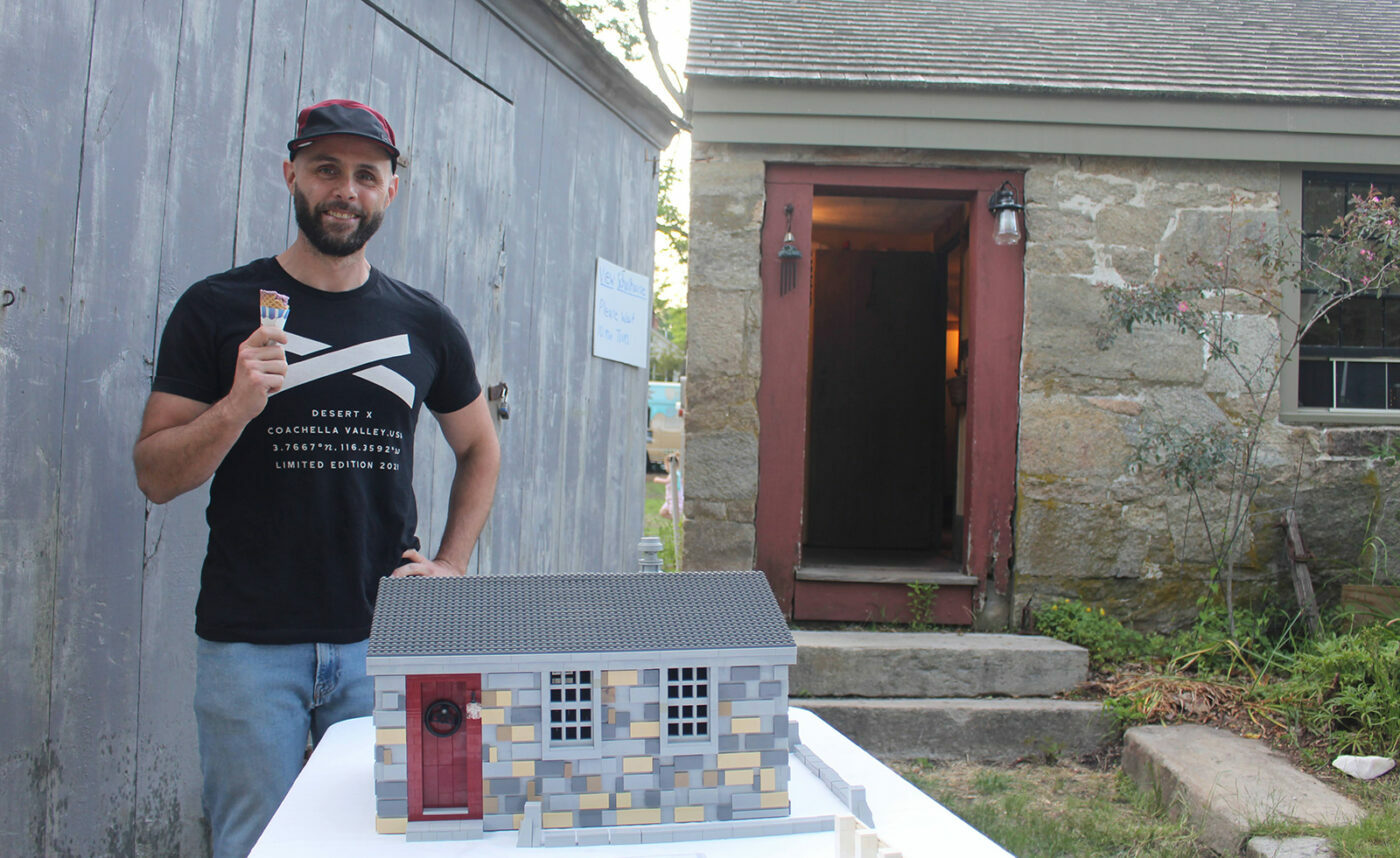
Lego artist Andrew Grover stands with his creation and the schoolhouse its modeled after in Burrillville, Rhode Island.

Today’s story about preserving an old schoolhouse reminds me of a teacher I used to work with. She received her training in what was called a normal school. It was a long time ago. Like the schoolhouse in the article, her first school was heated by a wood stove. She had to arrive very early to start the fire and get the little school heated up enough for students.

In Burrillville, Rhode Island, there’s a little schoolhouse like that on a lovely piece of land, and local preservation advocates are using a conservation easement to protect it in perpetuity. To promote the idea of conservation easements in general, they have enlisted the help of a locally renowned Lego builder.

“Bright red doors, low-pitched roofs, masterful craftsmanship all describe two local houses,” Cronin reports. “Neither have bathrooms or full-time occupants, but they share a simple elegance and a story.

“One is the work of Pascoag masons nearly 200 years ago, and the other is the creation of Rhode Island Lego artist Andrew Grover this spring.

“Grover built a model of the former, what was once known as the Eagle Peak Schoolhouse, for the Burrillville Land Trust. The artwork is a part of an effort to bring awareness to a land conservation mechanism known as a conservation easement — a deed restriction that was placed on the old schoolhouse property by its owners to keep the building and the 25 or so acres surrounding it preserved in perpetuity.

“The conservation easement ‘is something that will ride with the land forever,’ Burrillville Land Trust president Paul Roselli told ecoRI News.

“Unlike selling or donating the land to a trust, municipality or the state, the owners still own the property when they place it in a conservation easement. They can sell it, pass it on to relatives or donate it, but based on the condition of the easement, they and any future owners must maintain the historic structure on the property and cannot further develop the land.

“The role of the Lego model, which was funded by the Rhode Island State Council on the Arts, is to get a conversation going about the property and how it is being saved for future generations. …

“Grover, known for his Lego models of some of Rhode Island’s most grandiose architecture, said the schoolhouse is the smallest structure he has recreated. The small size actually made his job a little harder than usual, because he had to make sure it’s simple beauty translated in the Lego medium and avoided making the model look like a box.

“He added texture to the mock stone façade to create depth and built a partial stone wall around the building. Grover said the construction was done over the course of several weeks, and consists of more than 1,000 pieces. …

“Grover got involved with the project and the land trust through his love of hiking. To the lifelong Rhode Islander, Burrillville is one of those rare parts of the state that still has rural charm, and hiking through it frequently, he started to realize how much of the town isn’t protected against development.

“ ‘There’s so much development pressure in the state that when you find an area like that it has to be treated like a gem,’ Grover said. …

“Carol Murphy and Roberta Lacey, the married couple who bought and rehabbed the schoolhouse, agree that the natural world needs protection, which was why they purchased the property in the first place. …

“Although they have made a few updates, including replacing the knob and tube electrical work that is a fire hazard and insurance nuisance, the couple has tried their best to return the building that once hosted the children of 19th-century quarry workers and farmers to its old glory.

“A wood stove sits at the center of the room, in front of one of the desks from the 1800s that belonged to the space when it was a classroom. The original blackboard sits in the little kitchen, which doesn’t have any appliances besides a sink.

“It was built in 1824 and its original use isn’t clear, according to Lacey, who is a member of the land trust. In the 1850s, it was donated for use as a school and operated as one until the Bridgeton School opened in the 1890s. …

“ ‘It’s a land that’s so precious to us,’ said Murphy, noting that every time she visits the old schoolhouse it takes her breath away.

“There are only a few outlets in the house and an outhouse in the back, so Lacey and Murphy don’t live there but enjoy it for recreational purposes. The Conservation Commission and Burrillville Land Trust have also held a few meetings there.

“Lacey said, ‘It’s like the honor of my life actually to be able to do this and try to preserve this property.’ ”

In New Shoreham, Rhode Island, an old house called Smilin’ Through (in remembrance of a song written there) has similar protection, but people can live in it. In my opinion, it’s a little dark inside for comfortable living, but the land around it is breathtaking.

More at ecoRI News, here.

Read Full Post »

Photos: Suzanne’s Mom.

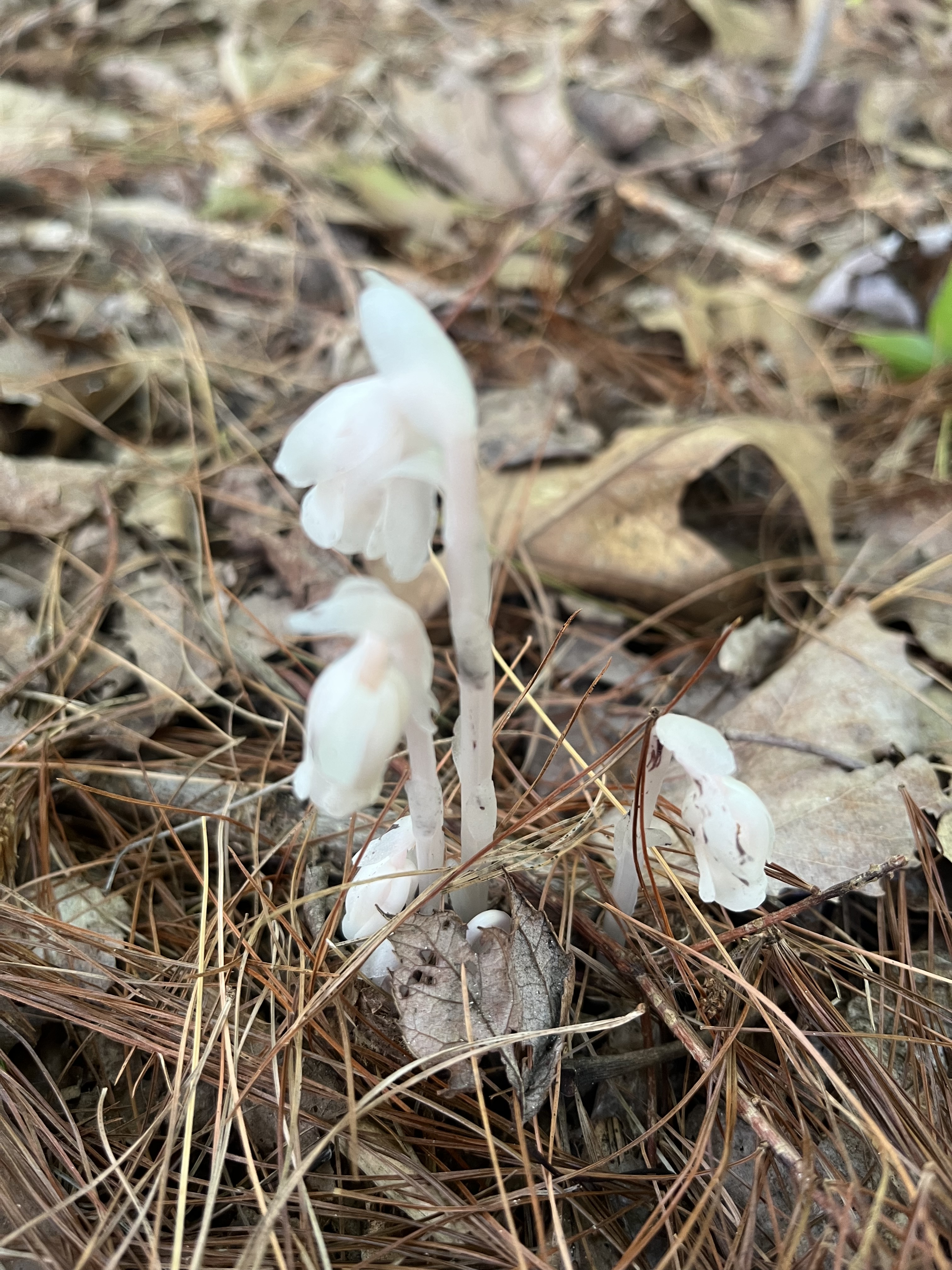
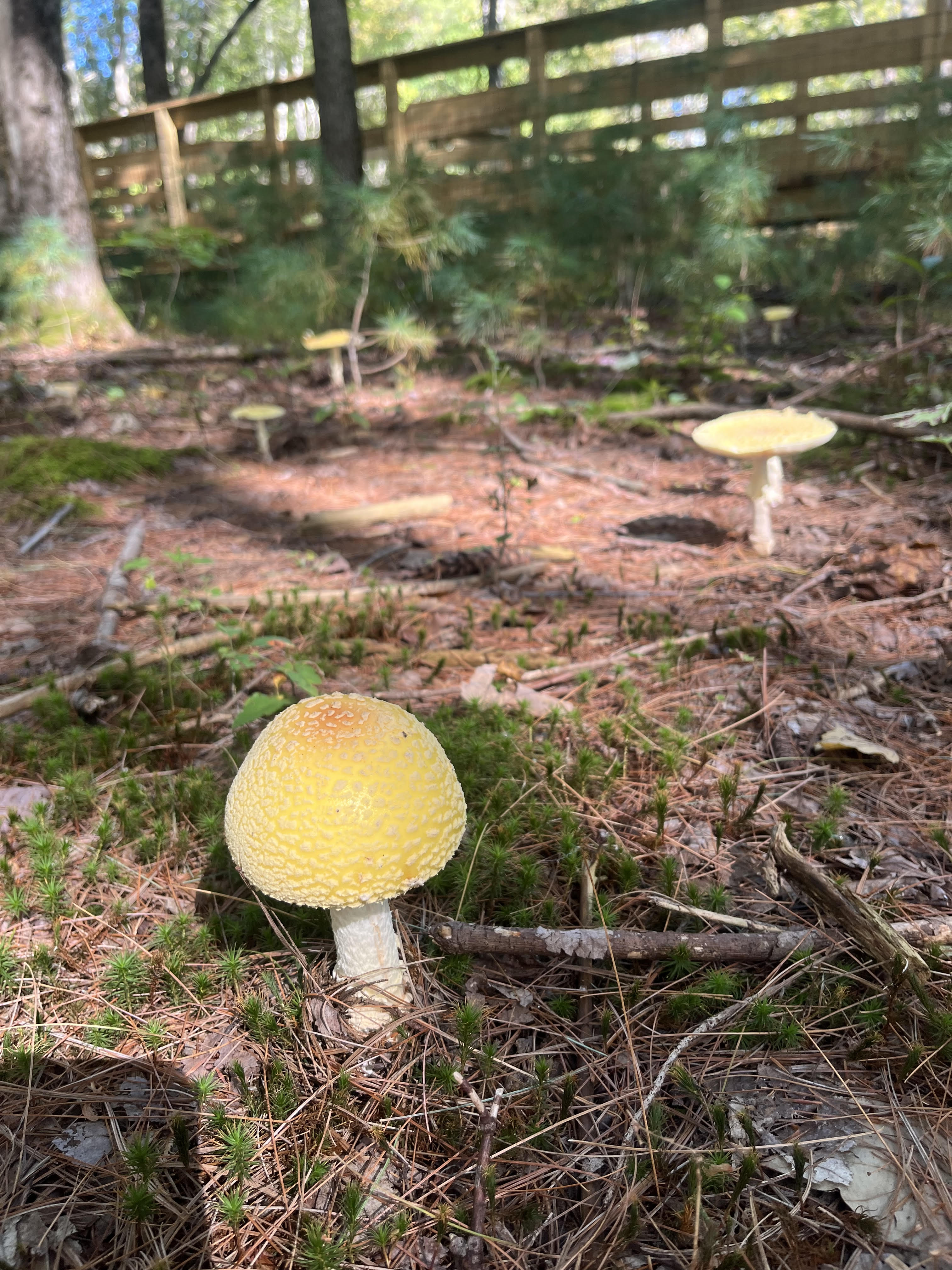
After an unexpected visit from mushroom hunters in September, I’ve started paying attention to what pops up after rain. It’s not that I want to eat wild mushrooms, but I would like to know something about them. Their names for example. I do know the one above. It used to be called Indian pipe, but nowadays, it’s called Ghost pipe, a name that works for me. [Late note: See naturalist Kim Gaffett’s helpful corrections in the comments below.]

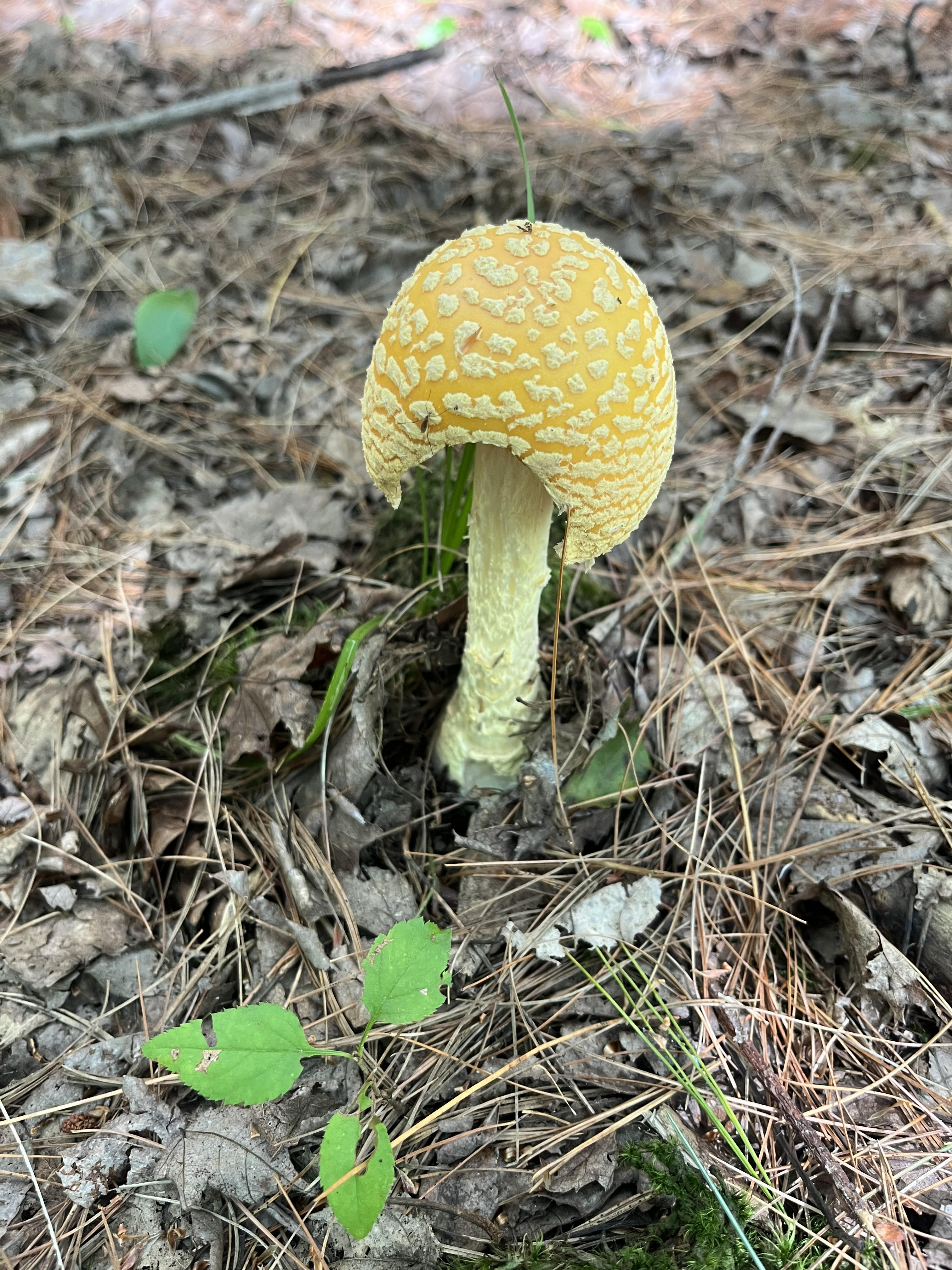
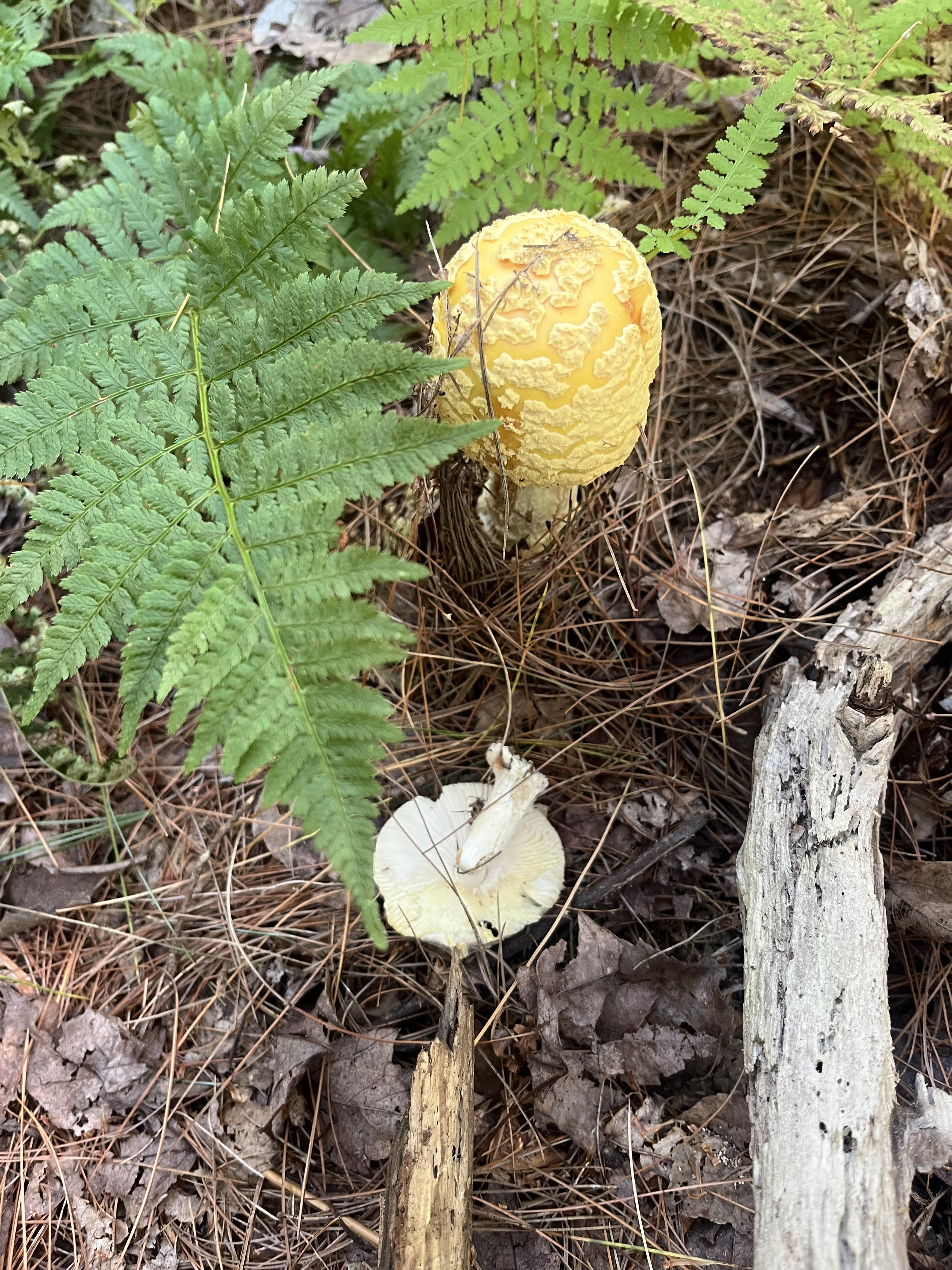
Just from noticing a little more, I’ve realized that the round yellow ones with the white dots flatten out after a few days. I haven’t decided if I want to pay for the mushroom-identifier app, so if you’re a micologist, maybe you could tell me the little guy’s name.

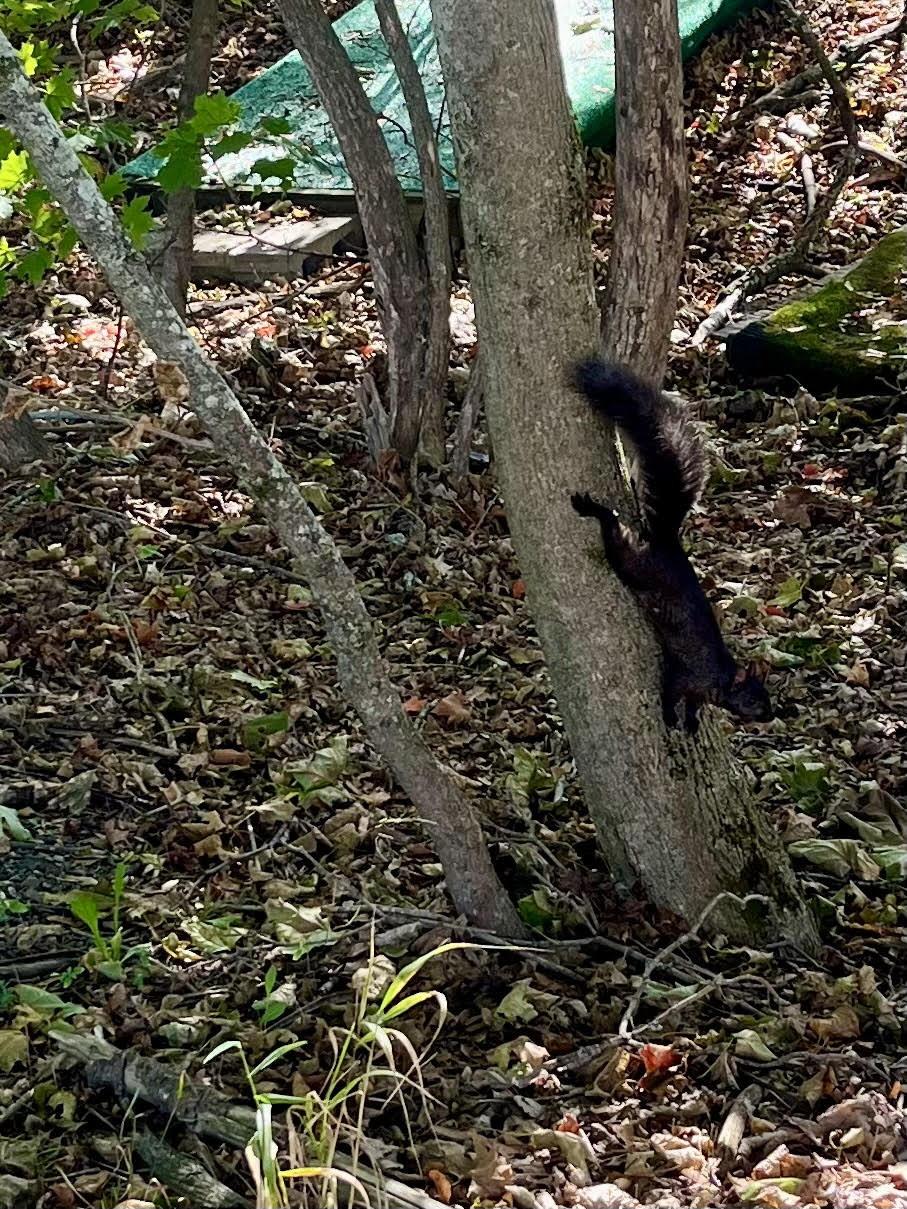
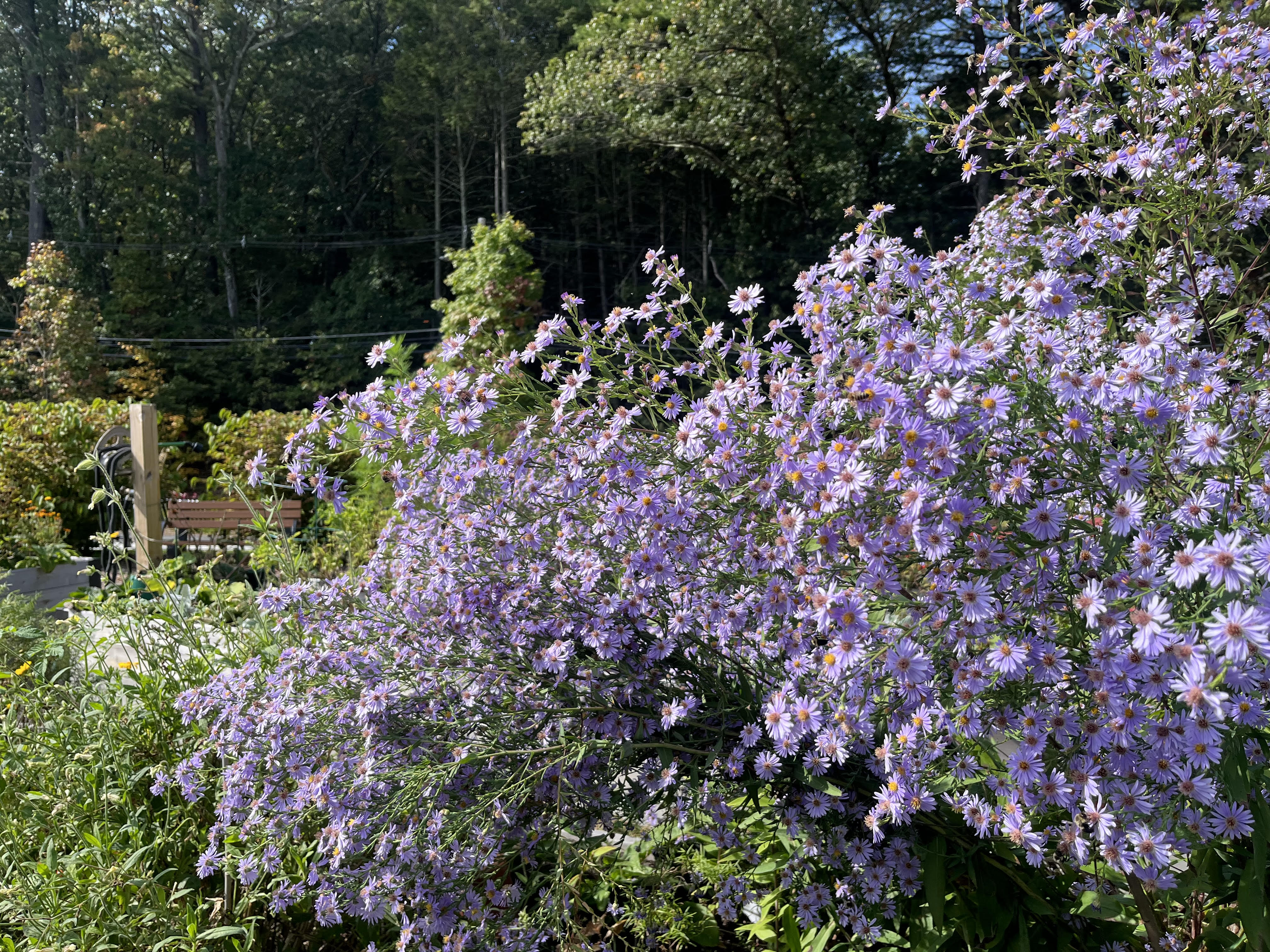
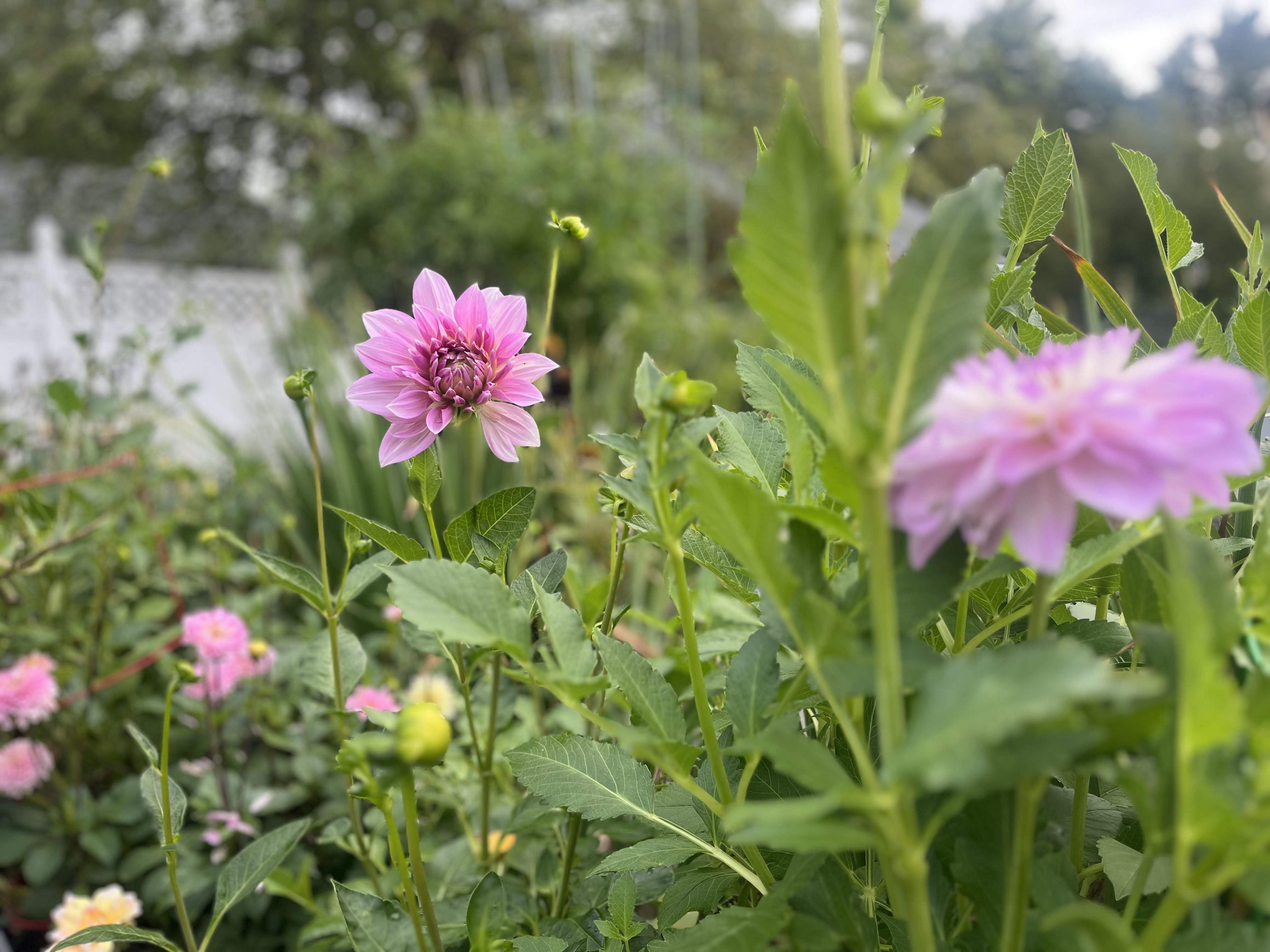
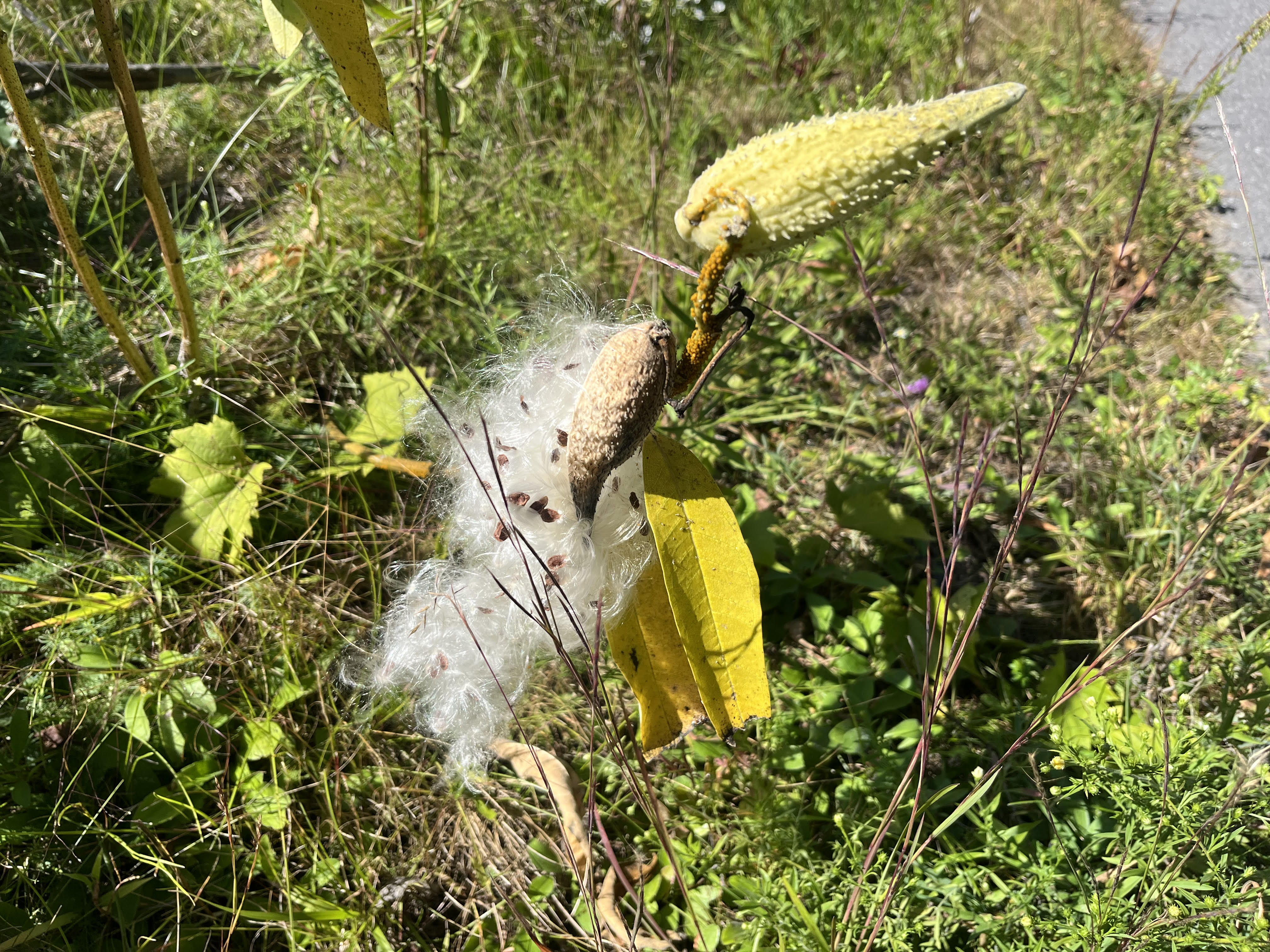
From my walks in Massachusetts: there’s a black squirrel who lives along the bike path, unusual around here. Kathleen’s garden box features a gigantic aster practically dancing with buzzing pollinators. Pat’s garden box has late-blooming dahlias. The milkweed announces fall.

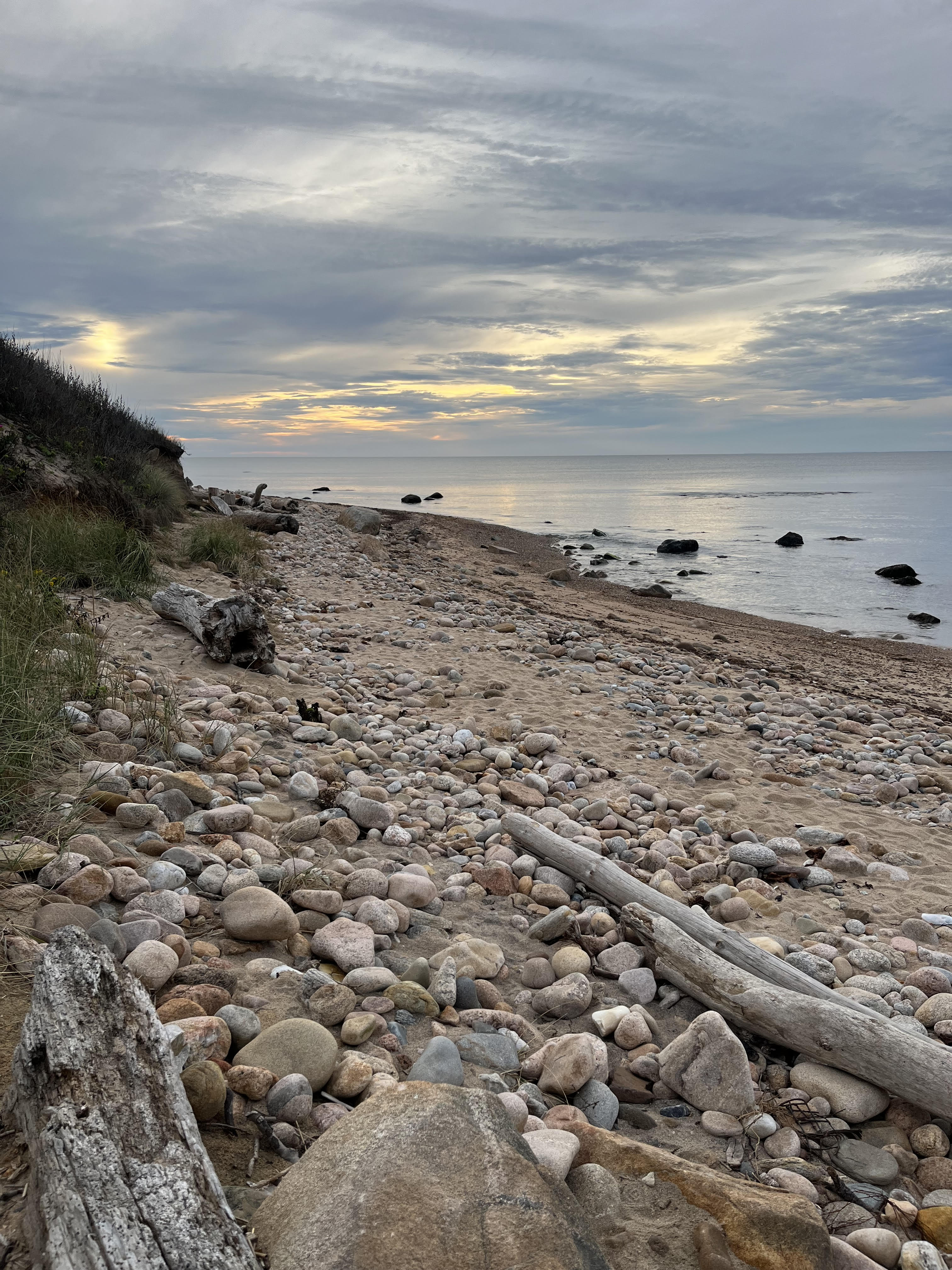
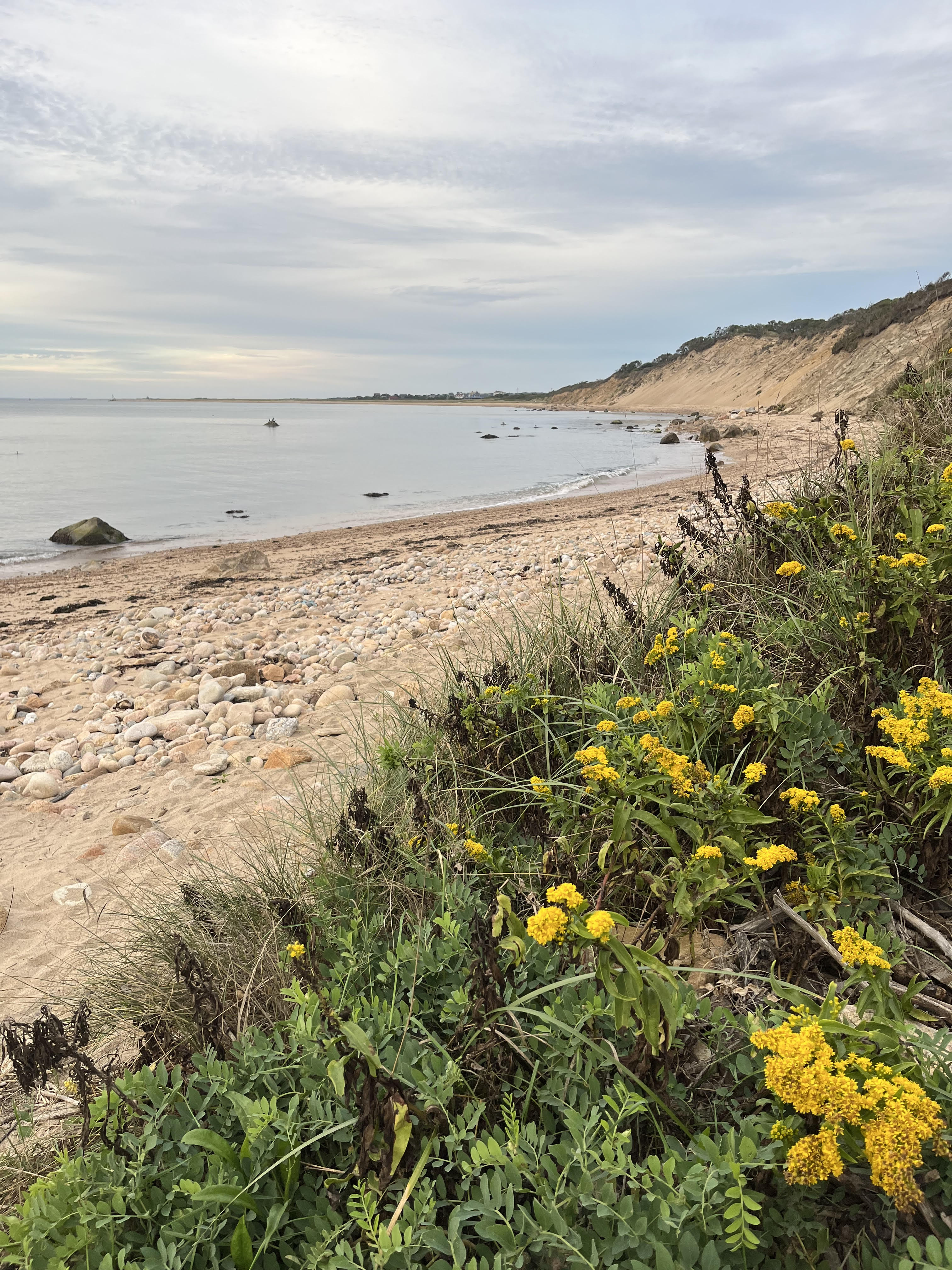
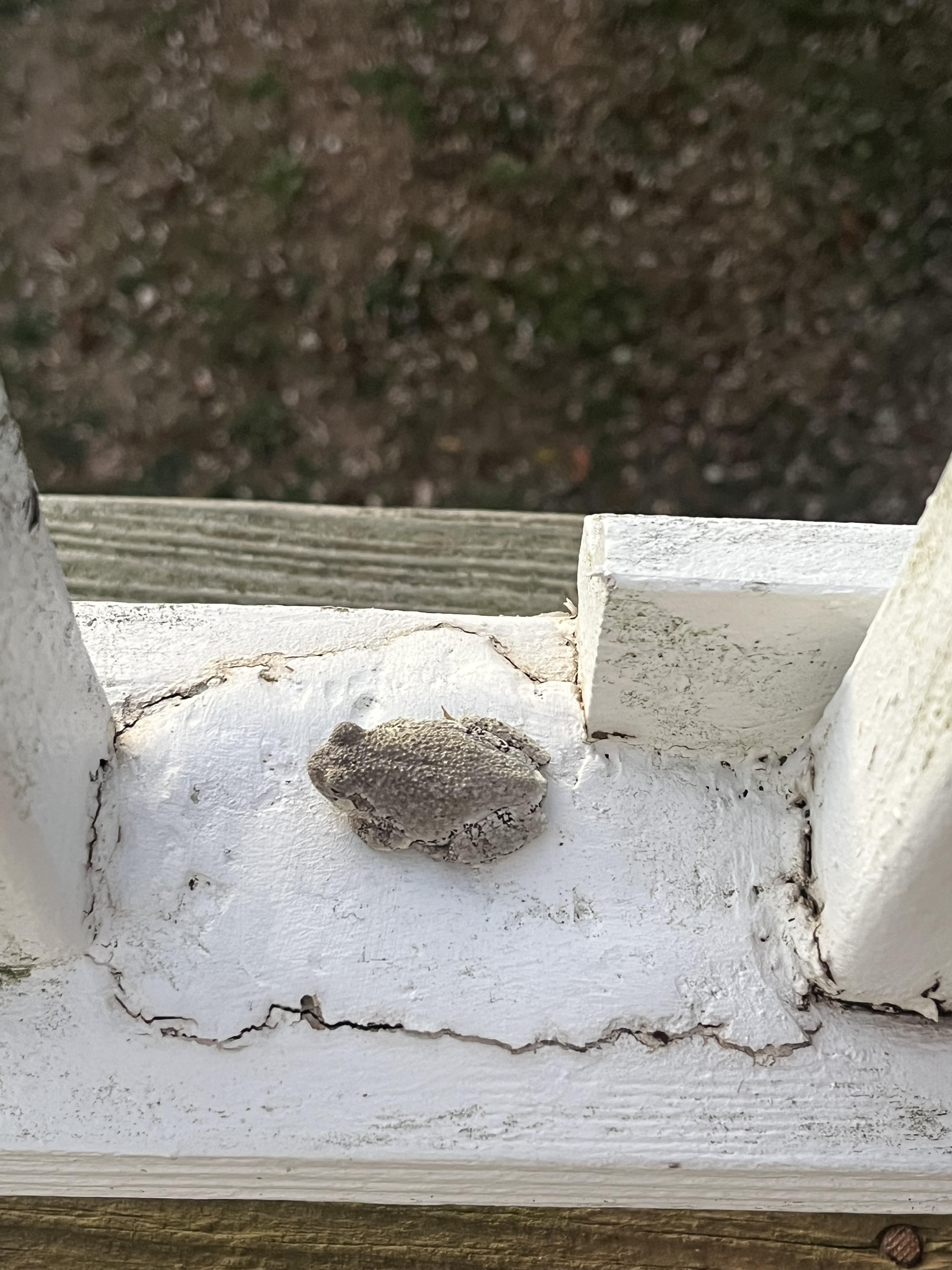
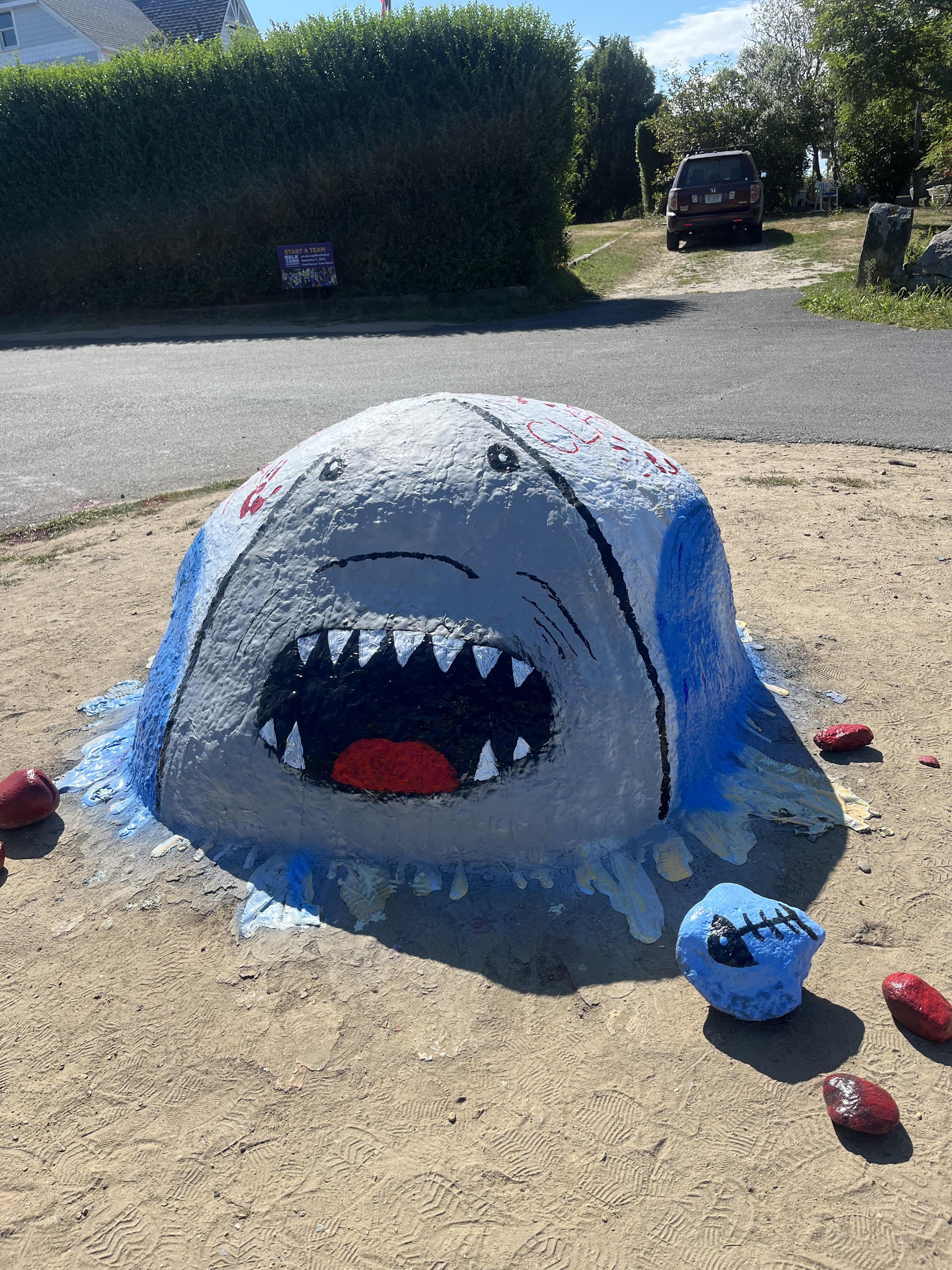
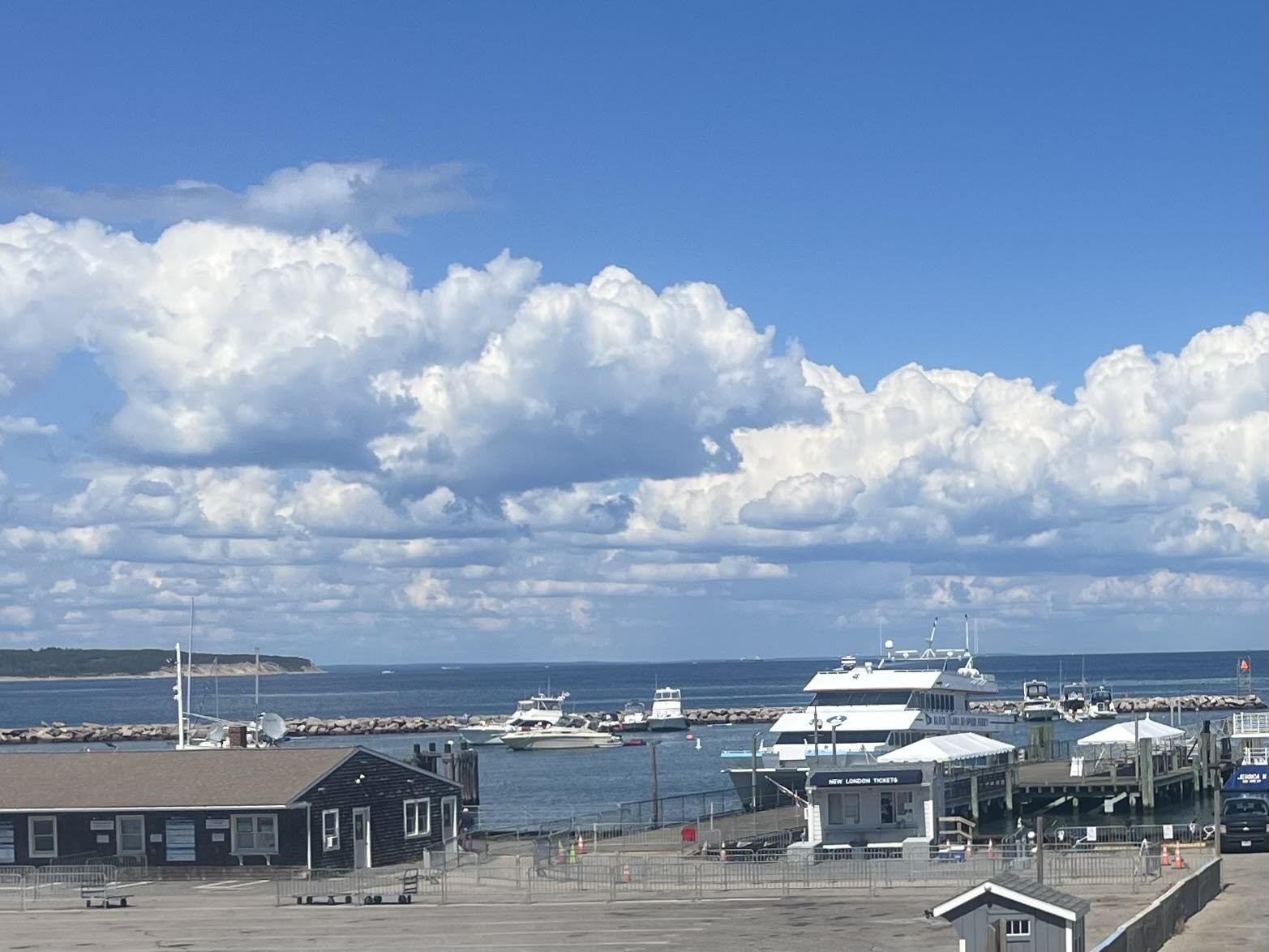
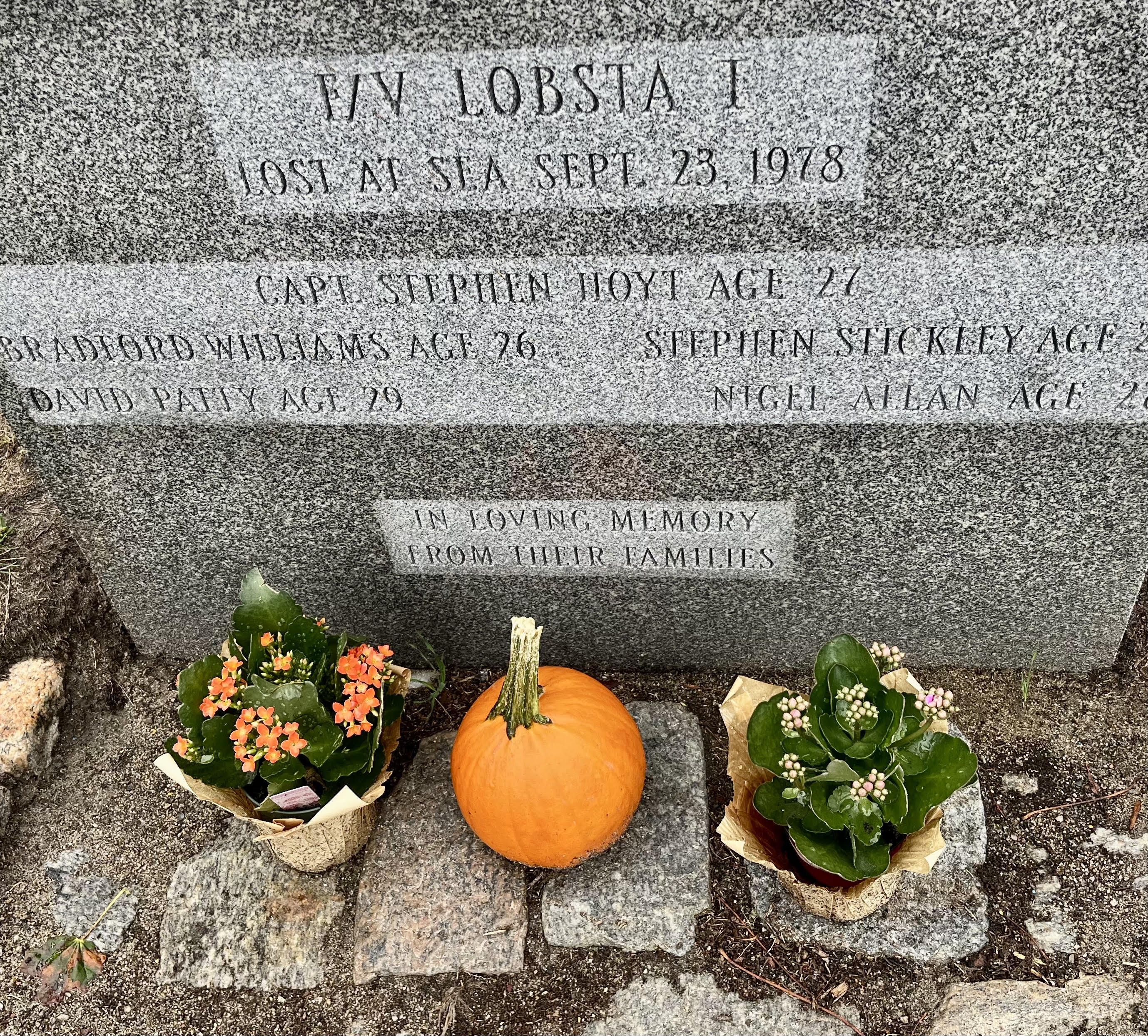
From my walks in Rhode Island: New Shoreham’s West Side beaches are quiet in the evening. One view shows the goldenrod that covers the island at this time of year. The tiny frog is, I think, a peeper, normally seen in spring. The shark on the rock celebrates a big anniversary for a famous movie that gave white sharks a bad name. The cloud photo shows the sea at its most benign. The one after that shows its dark side, a tombstone for fishermen whose bodies will never be found.

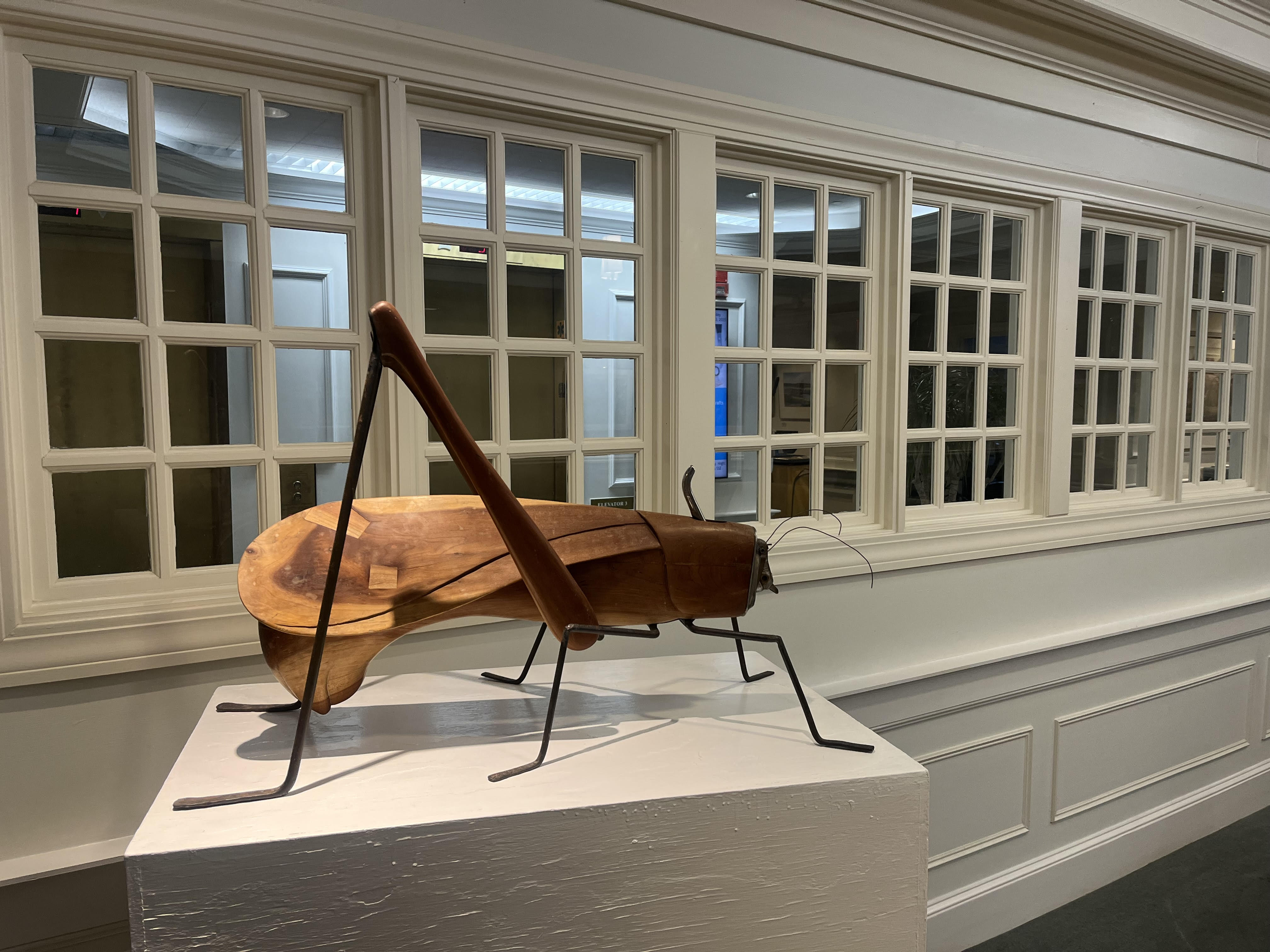
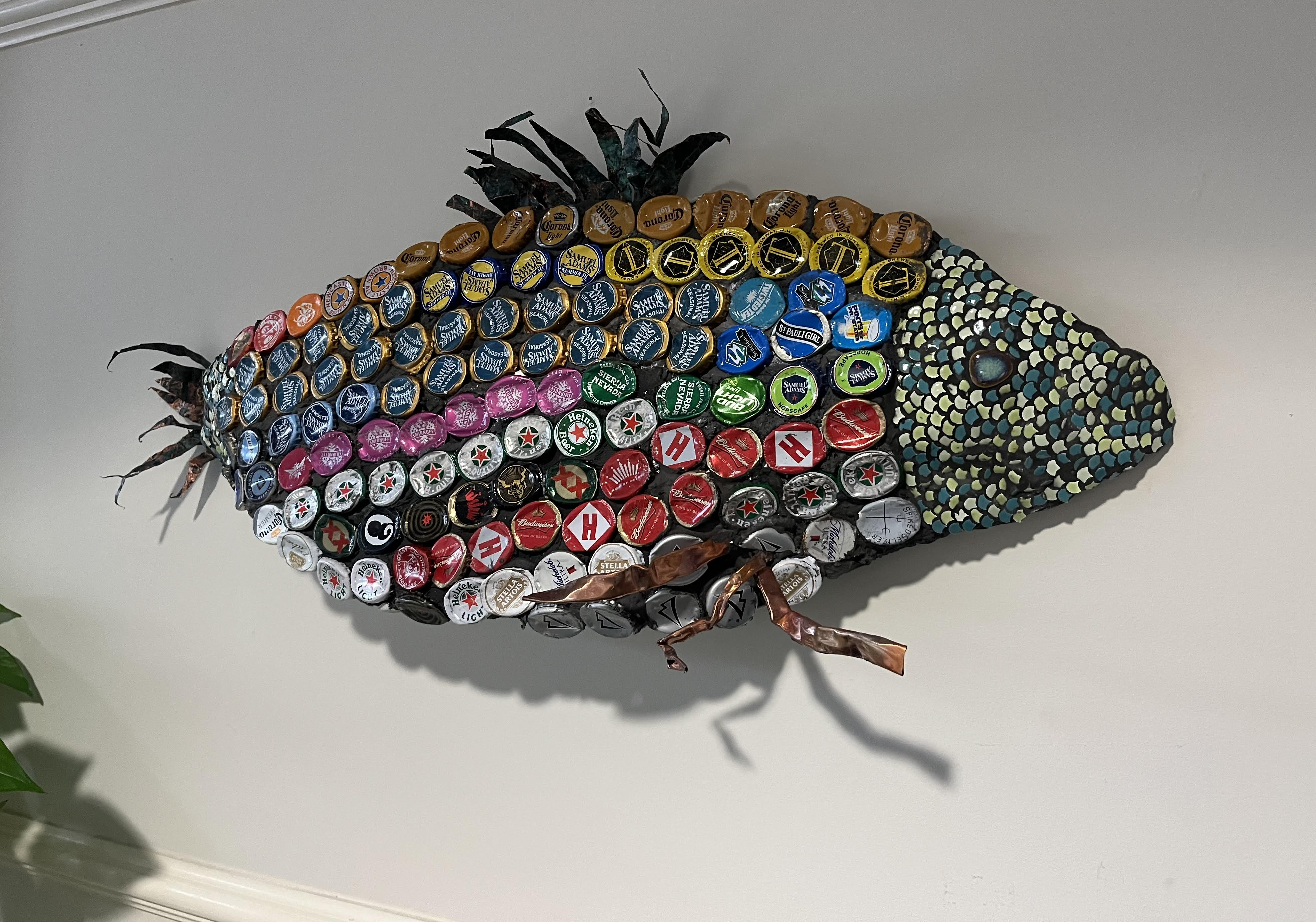
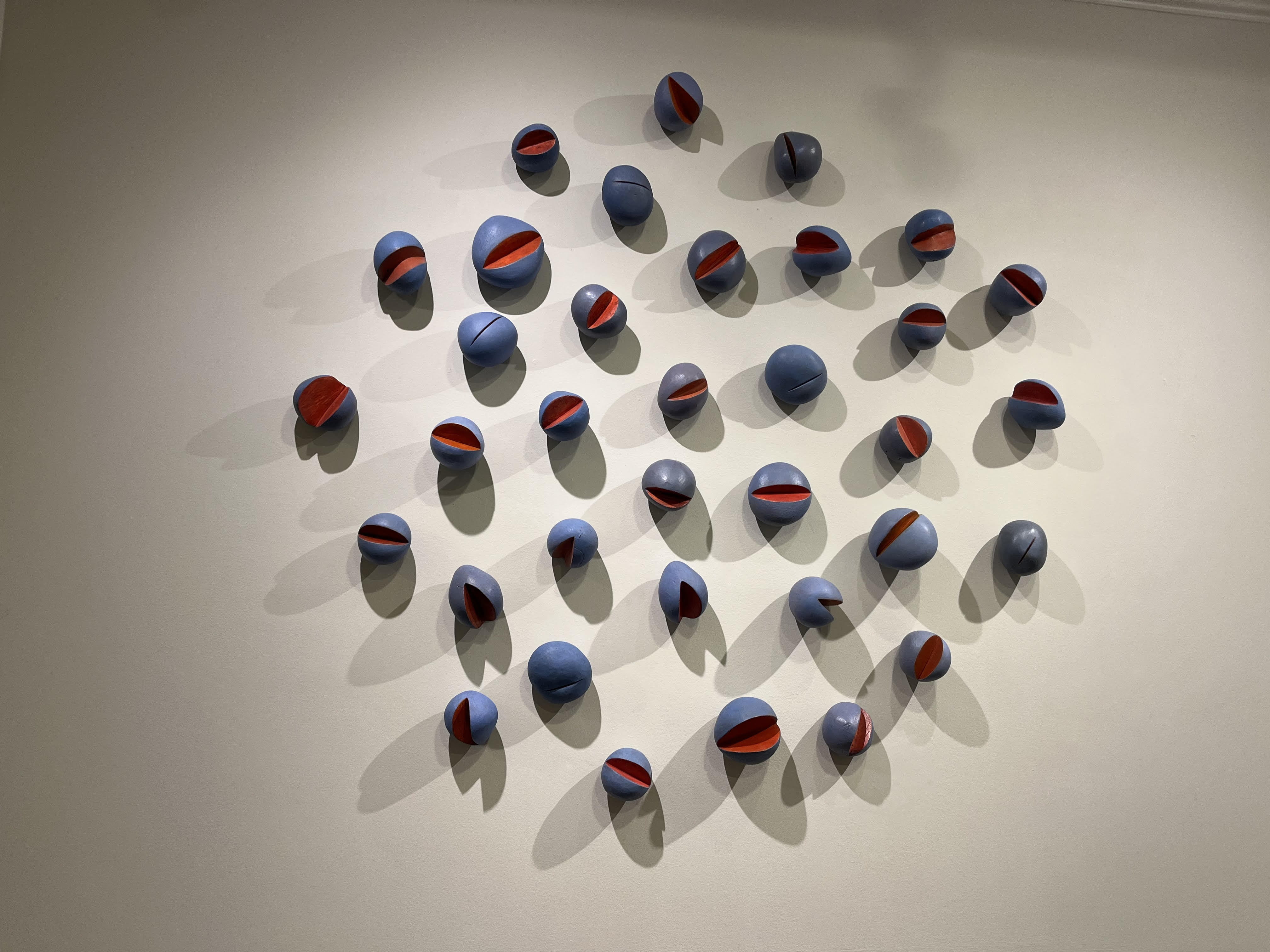
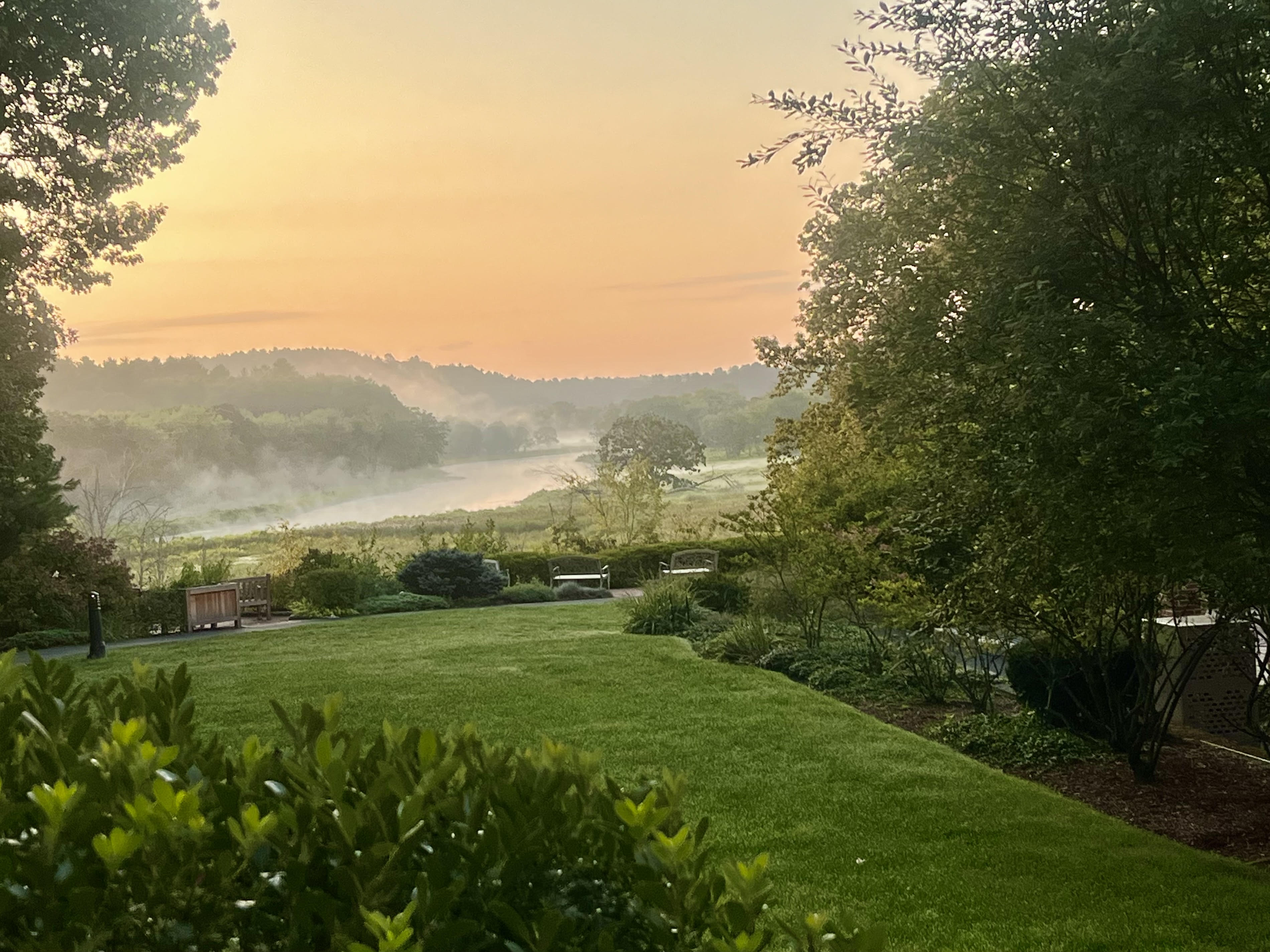
From where I live now: artwork that includes a metal fish by Cassie Doyon and Muppet-like shapes by Joan Mullen. Finally, an early morning view of the Sudbury River from our fitness center.

Read Full Post »

Photo: Nancy’s nephew Andrew.
Beautiful poison.
The moon is clothed in smoke from a distant wildfire.

Here are recent photos in no particular order. They cover Massachusetts, Rhode Island, and Pennsylvania, where we attended my brother-in-law’s funeral.

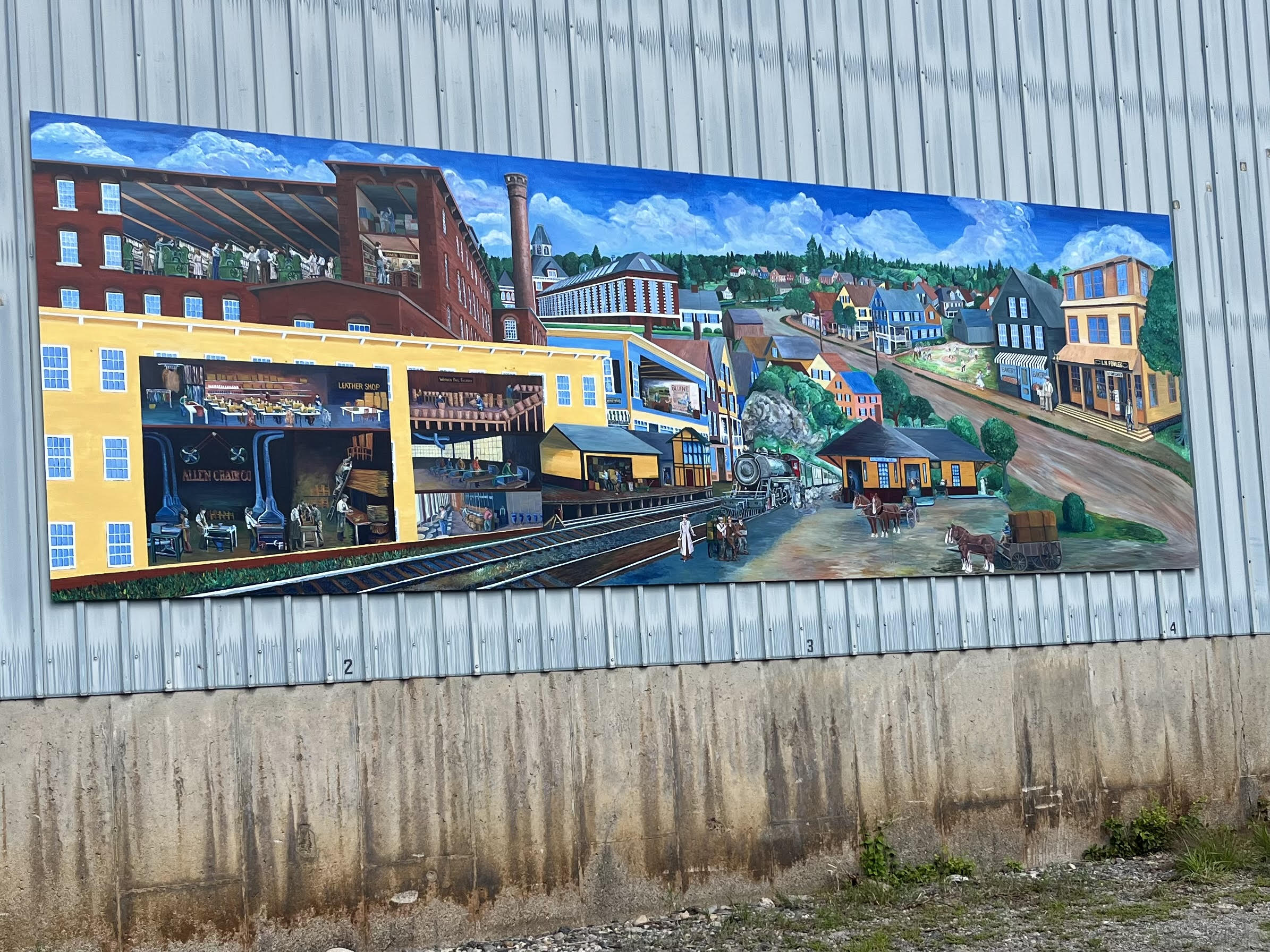
I start off below with an ambitious dog on the rail trail. His owner told me firmly, “He’s not taking that one home.” Then I have a photo of the nearby mural depicting our town in the 19th century.

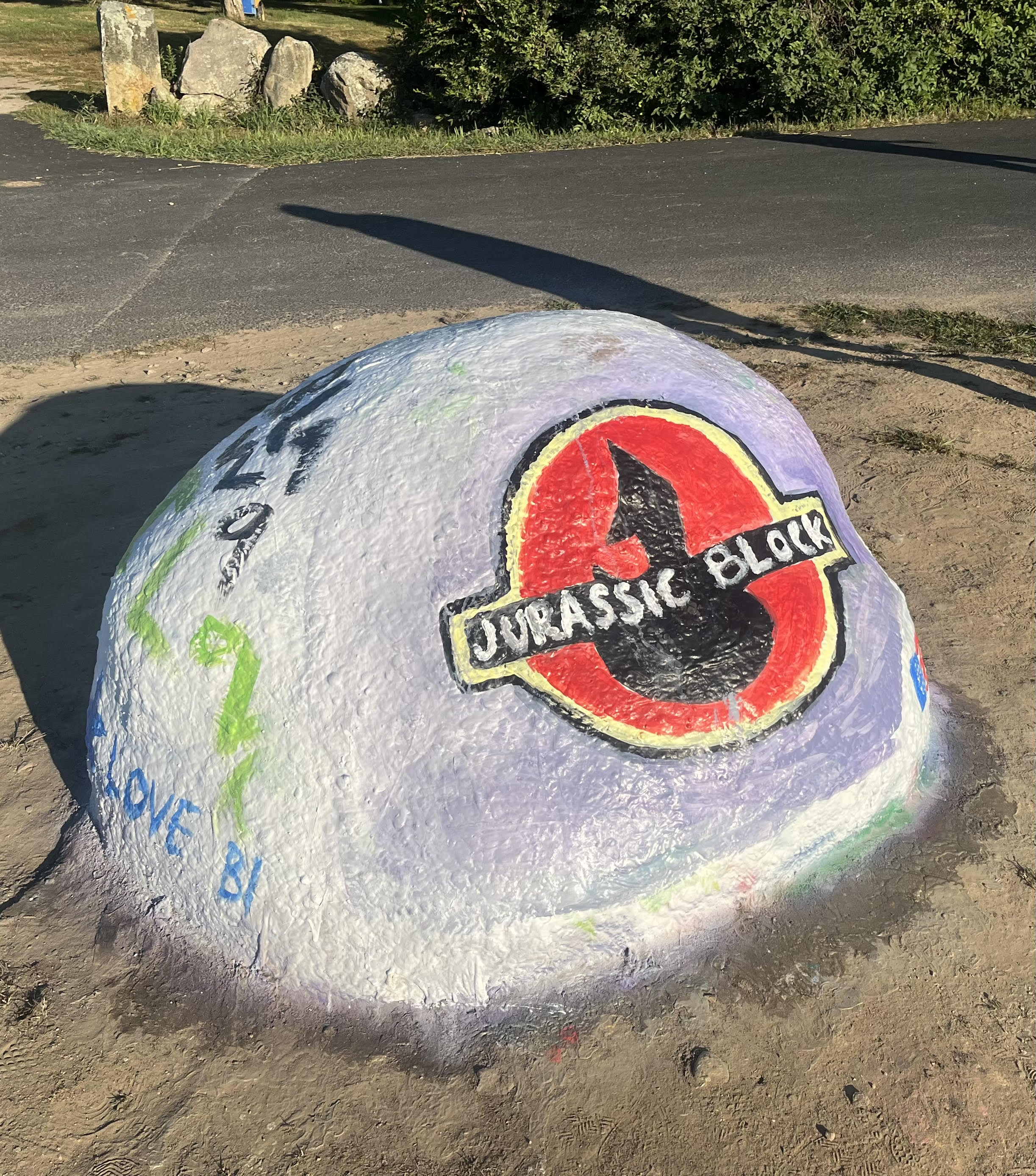
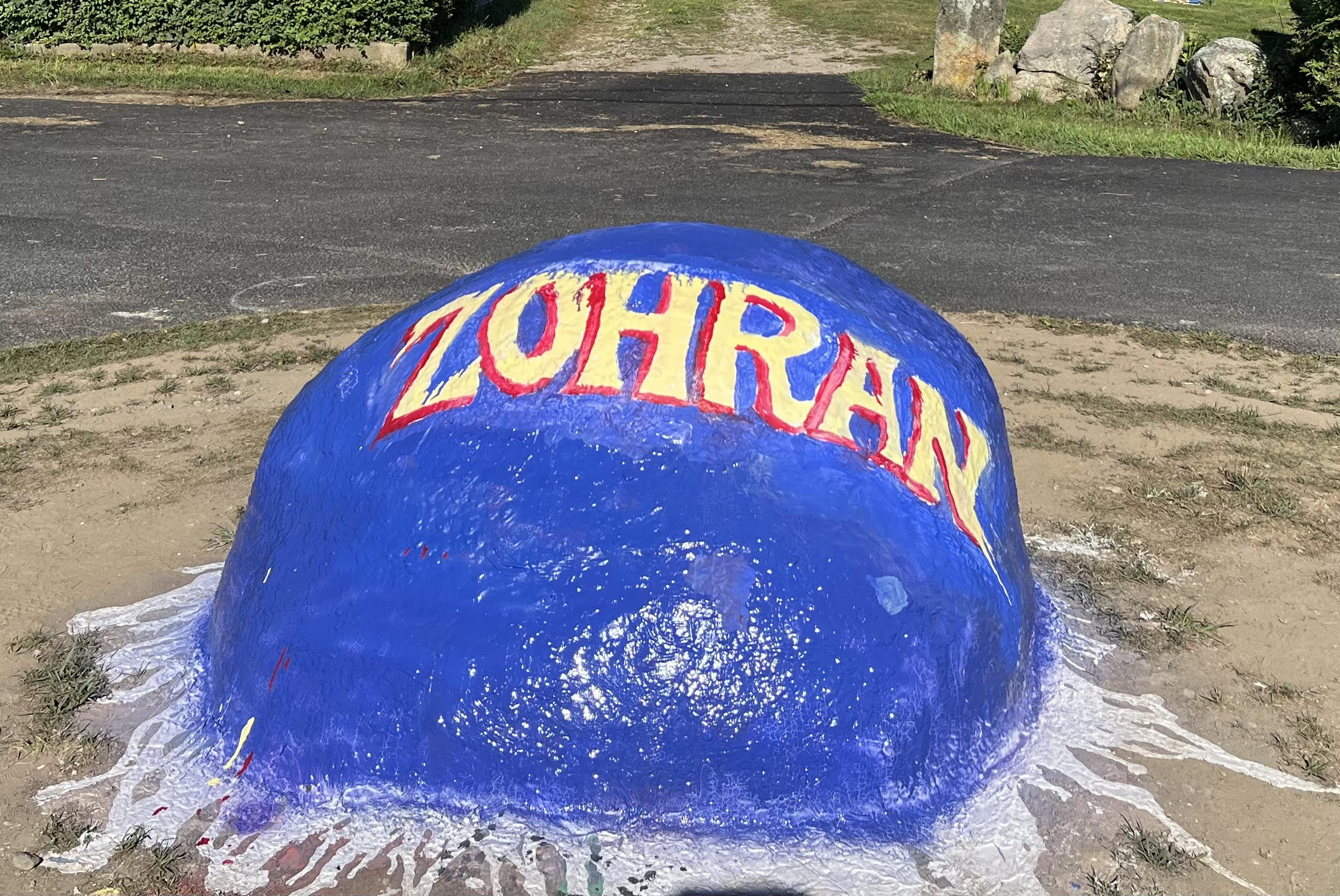
A couple of painted rock offerings come next. (Someone is a fan of the New York City mayoral candidate who won his primary.)

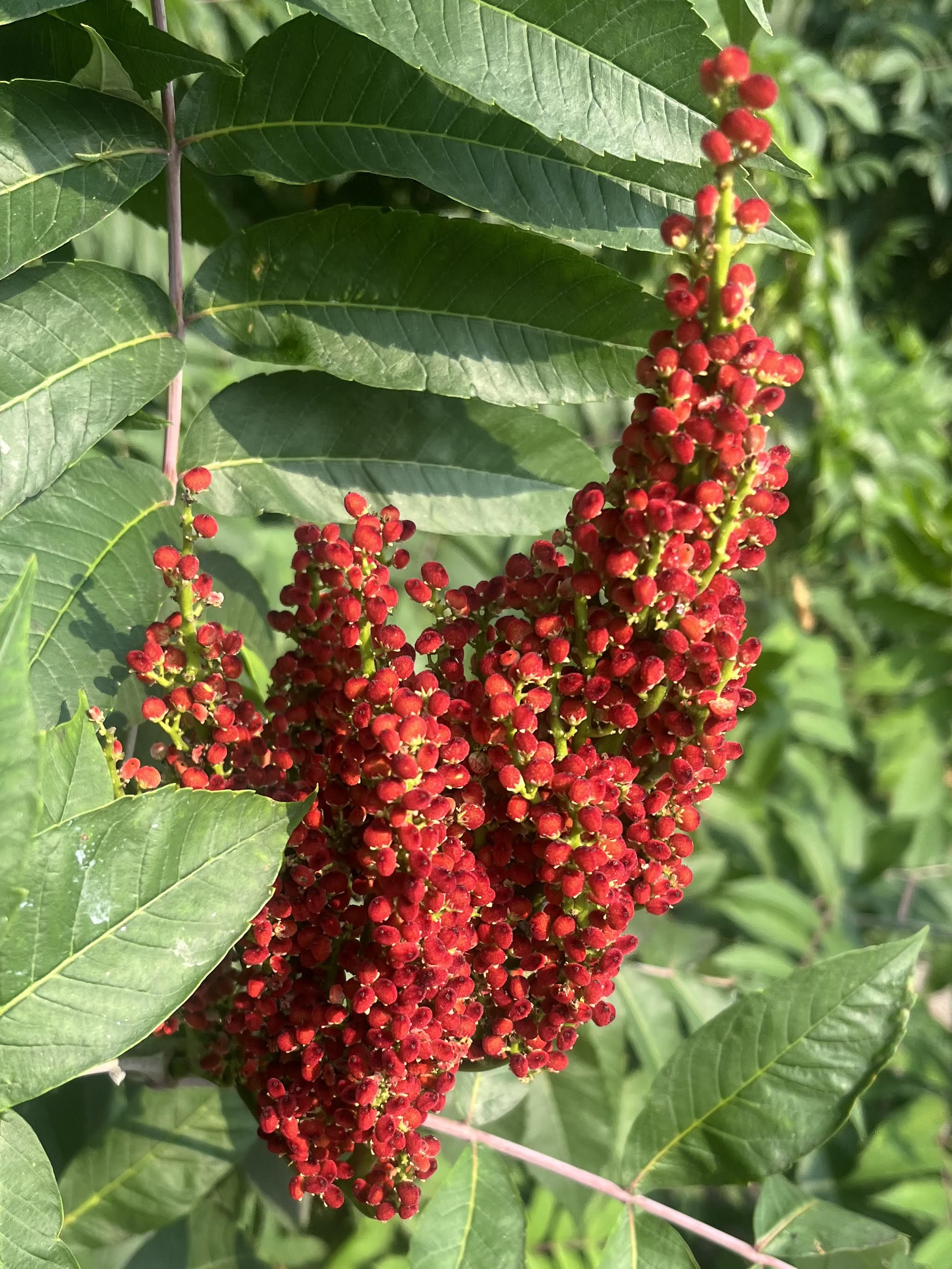
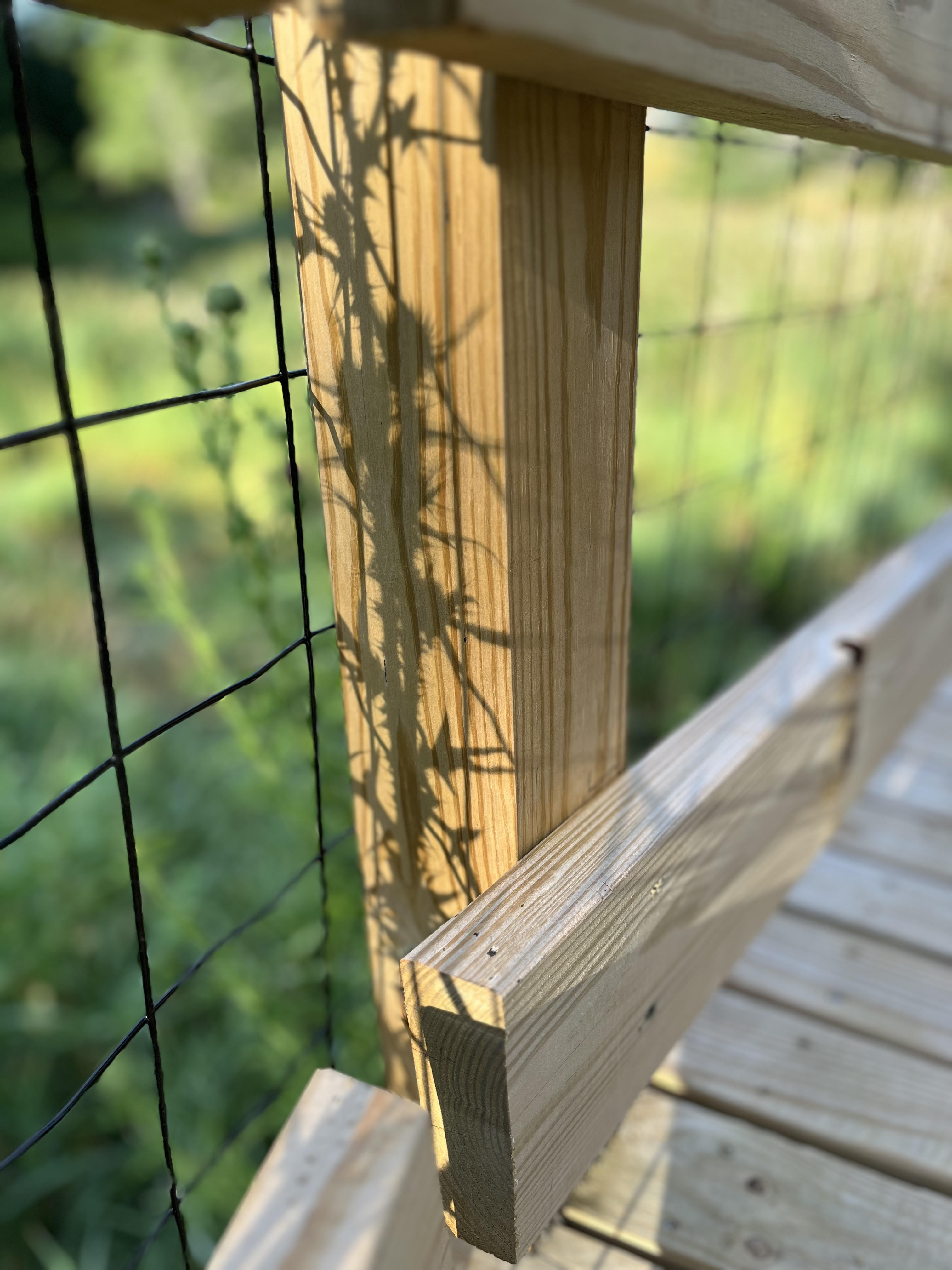
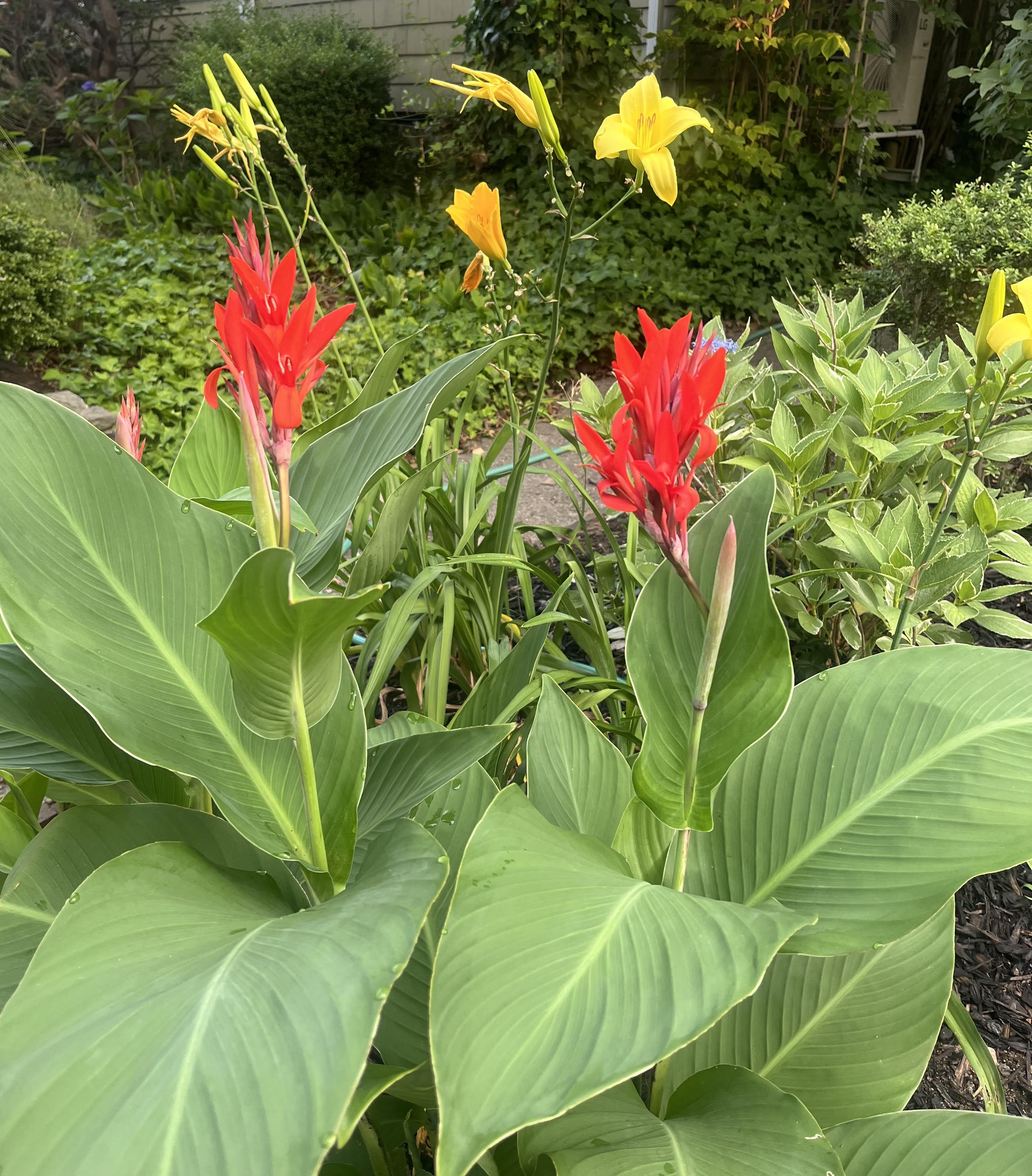
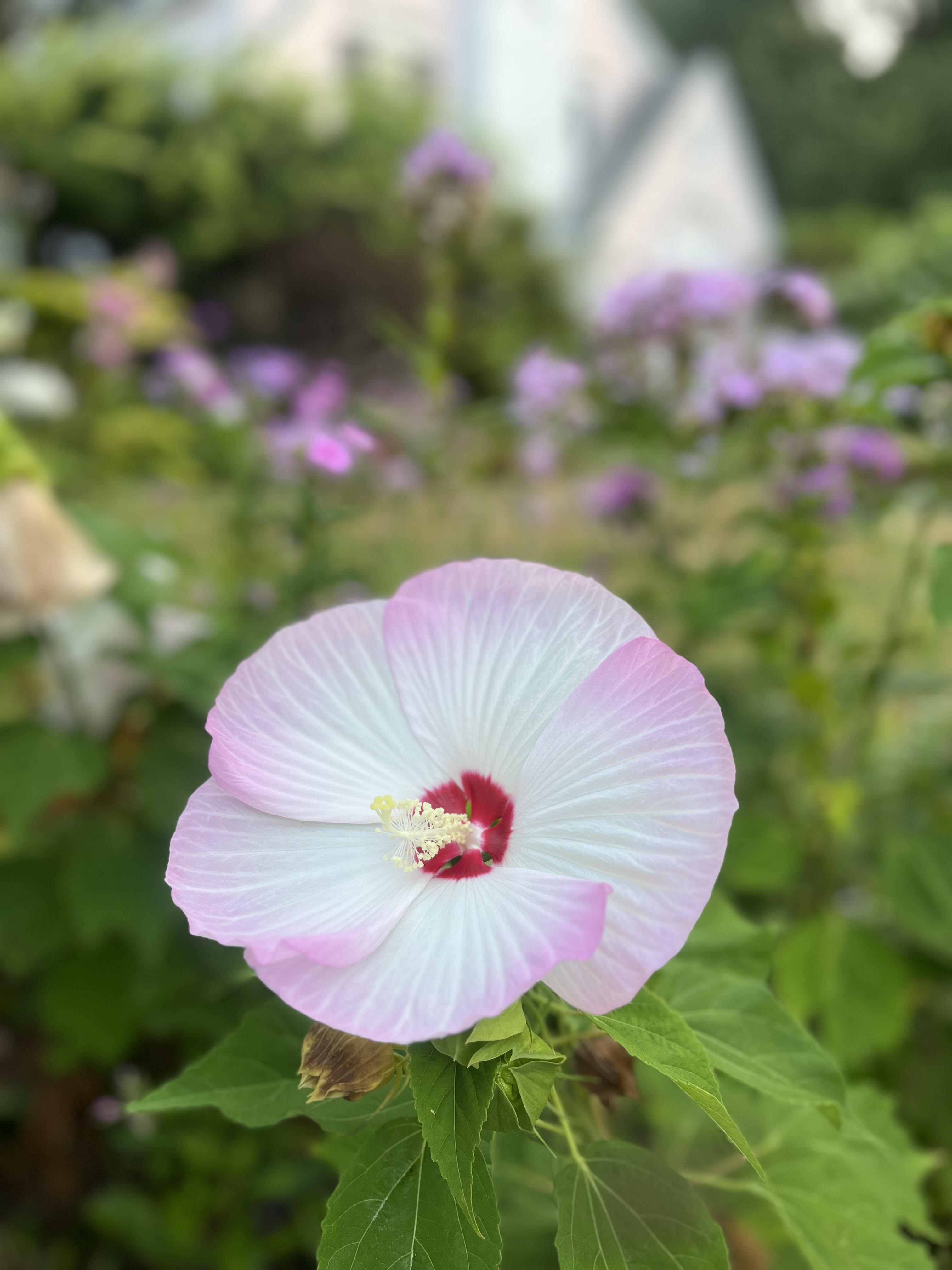
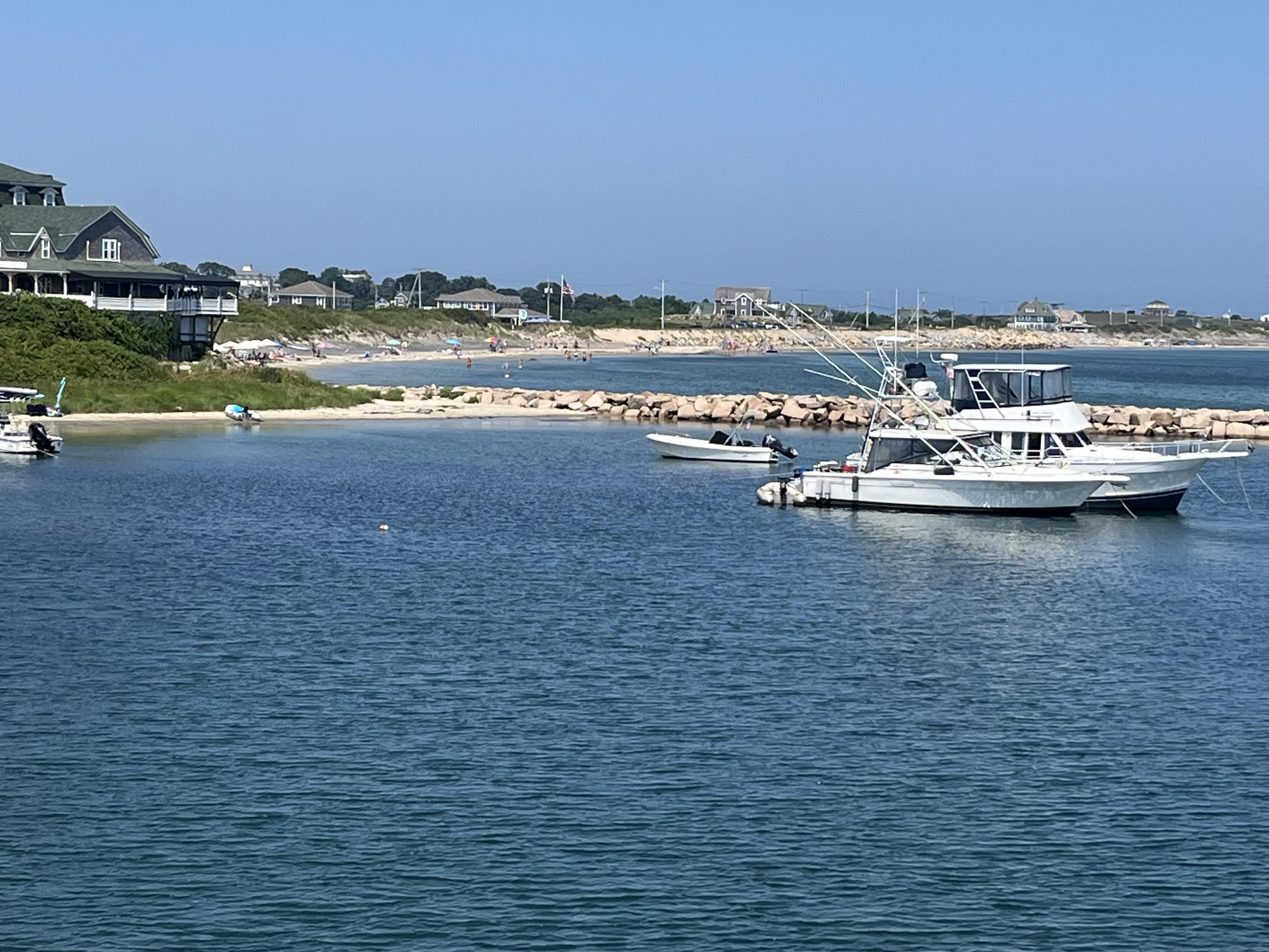
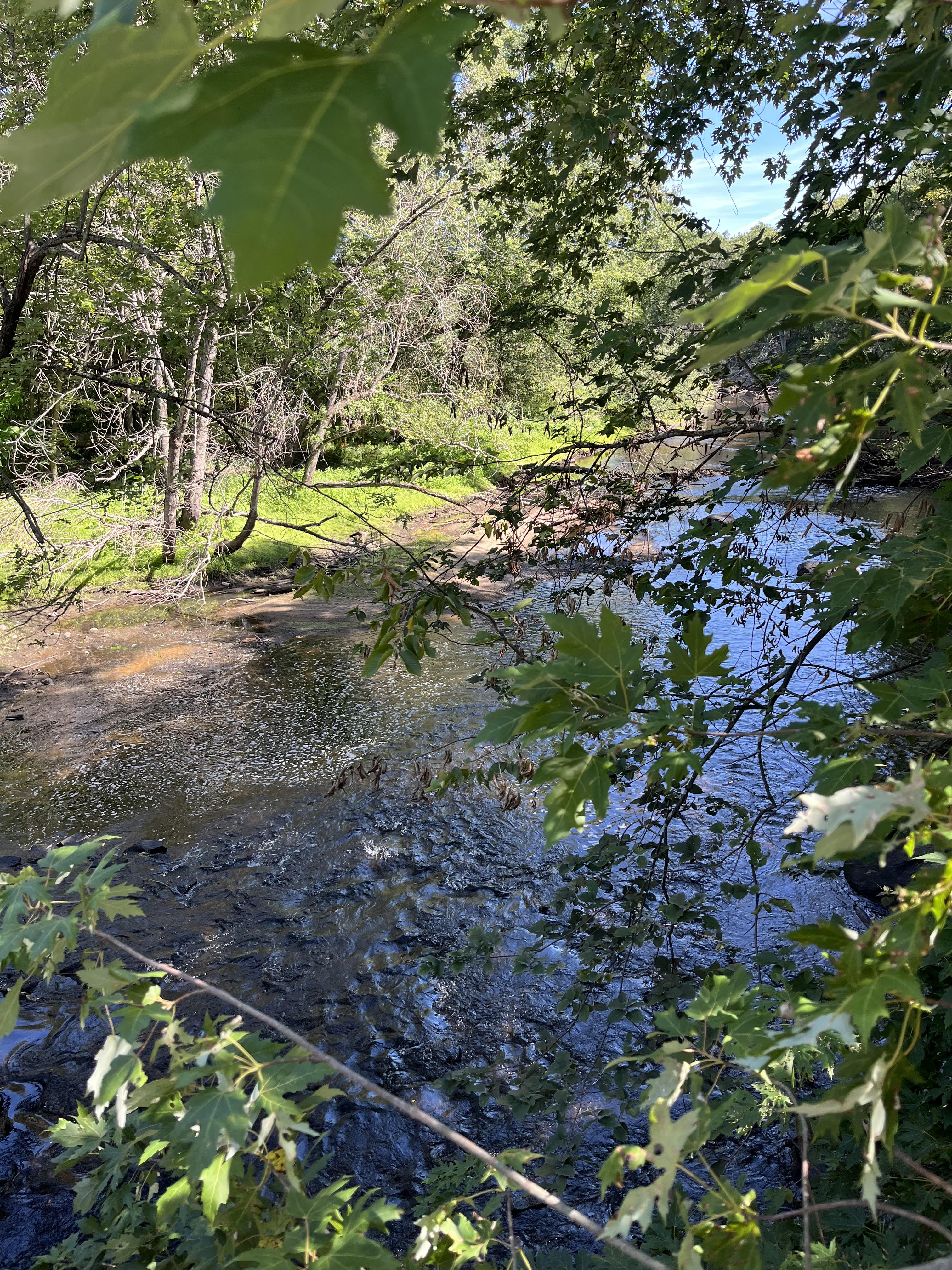
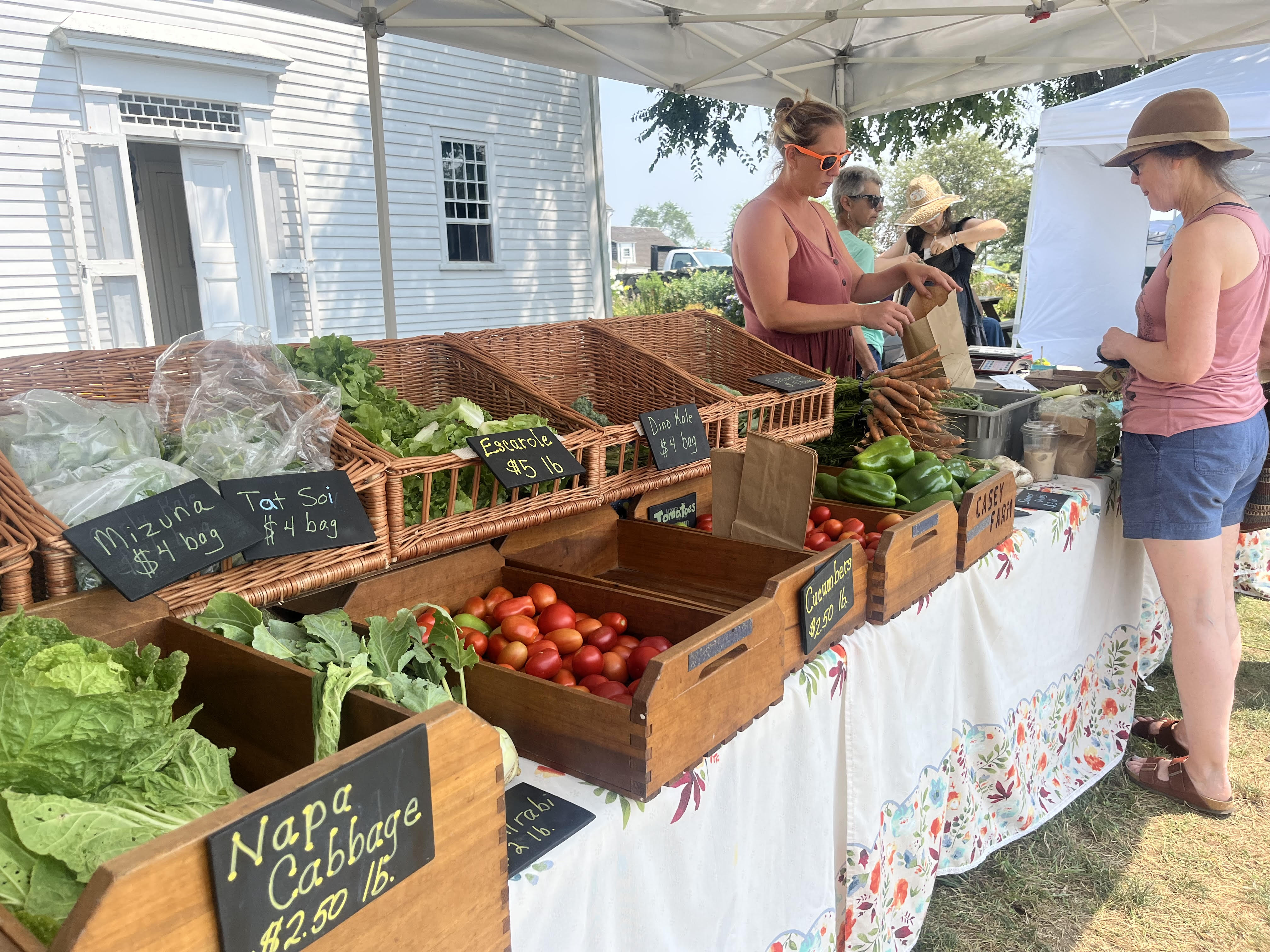
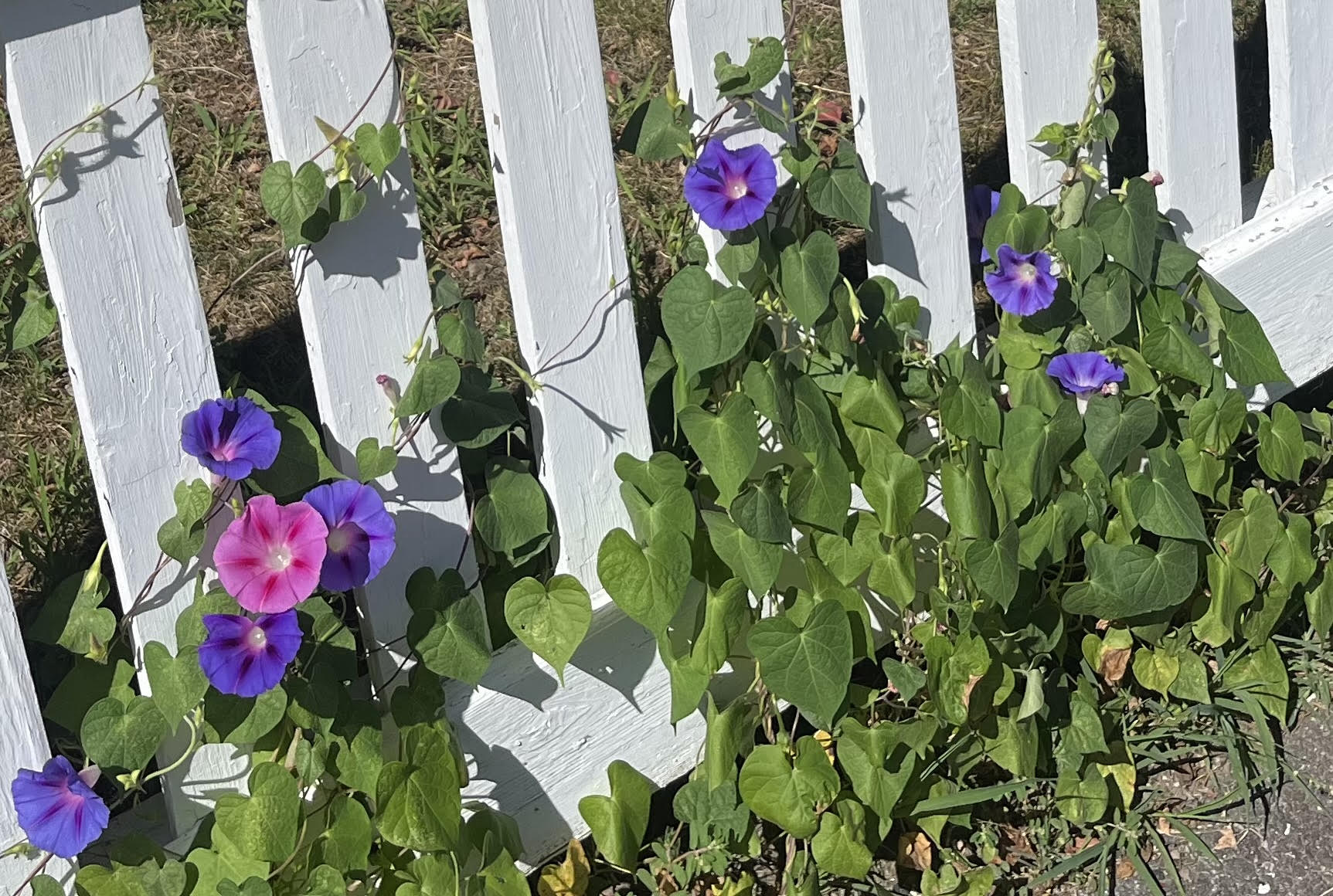
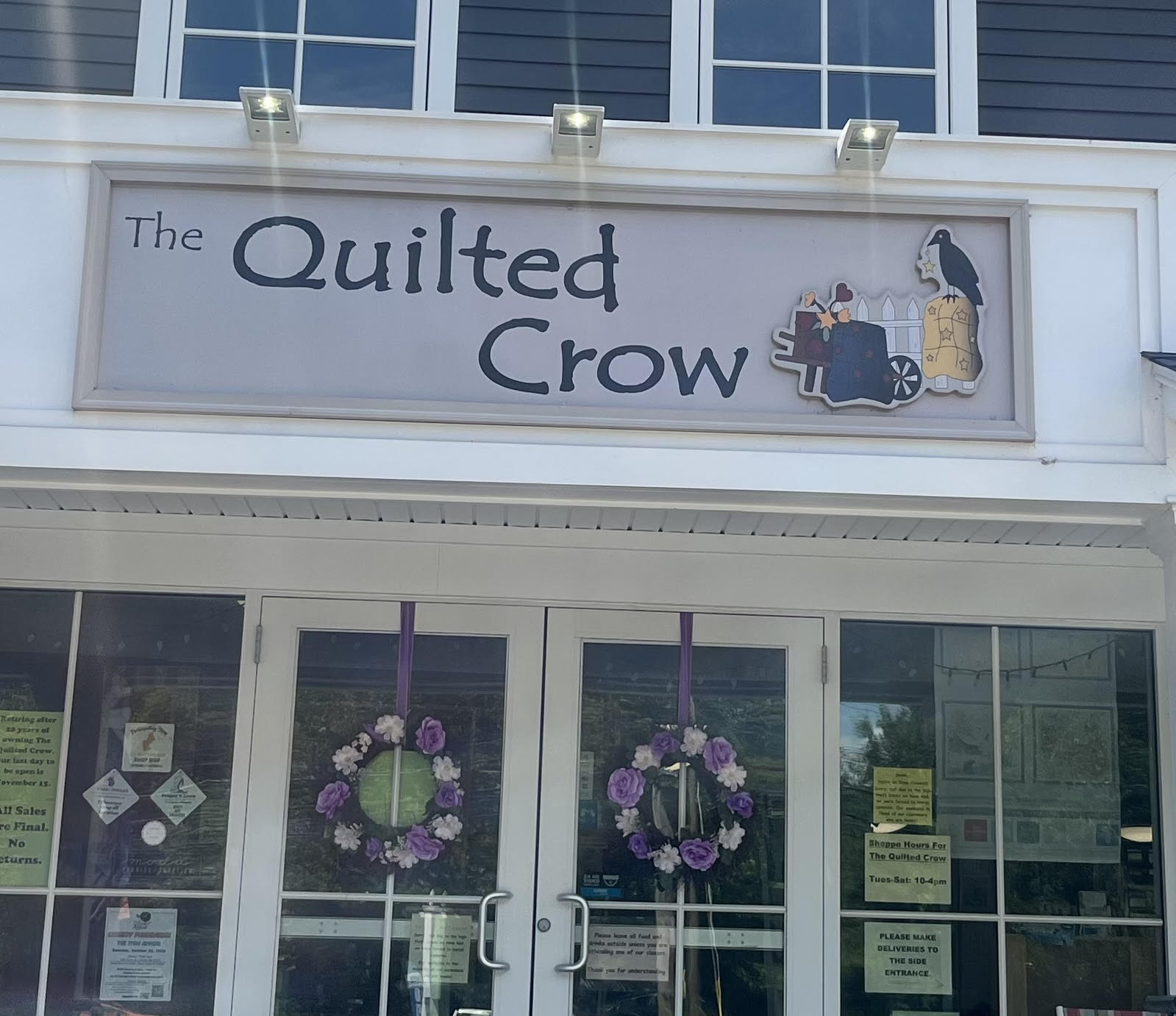
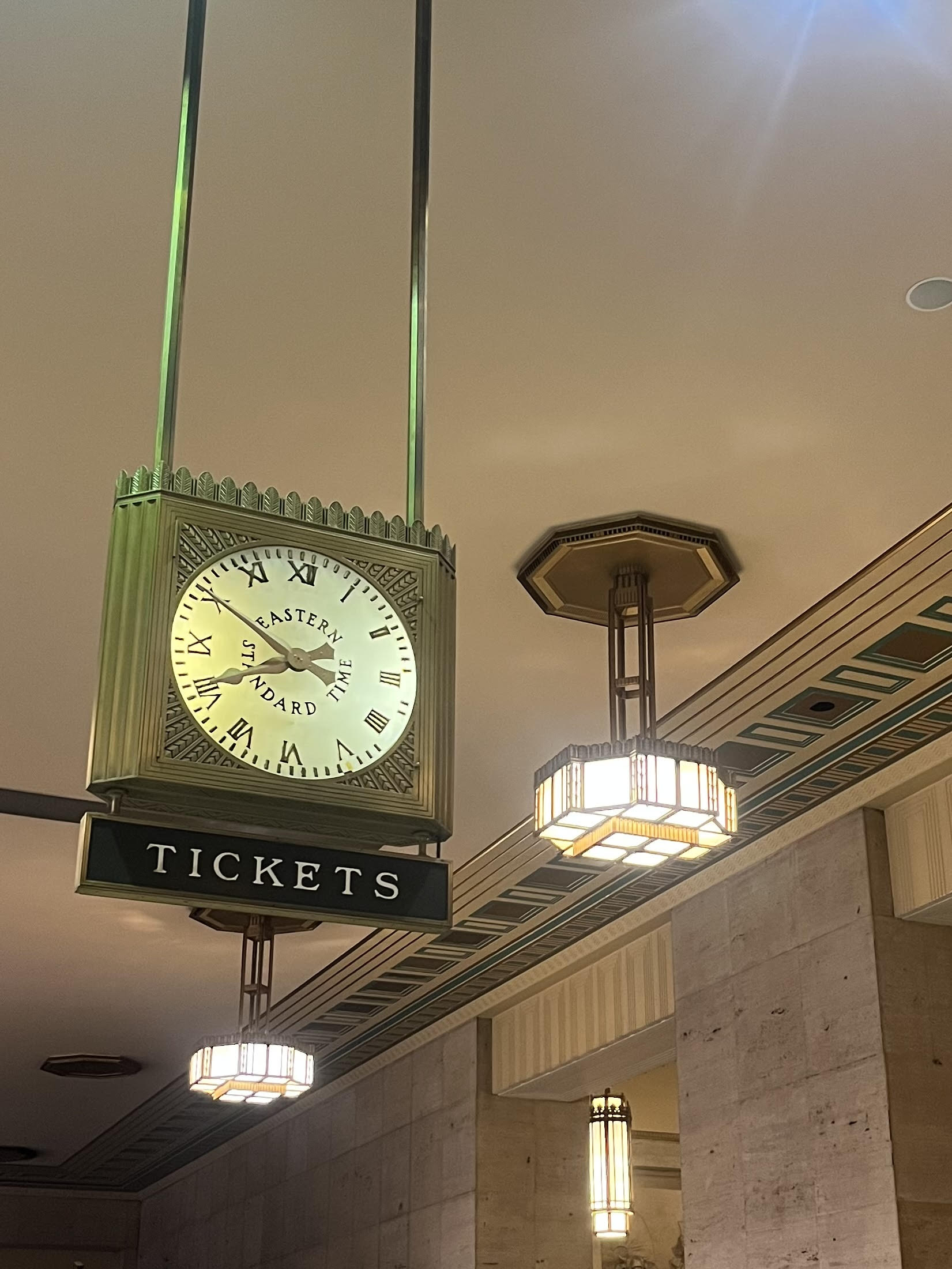
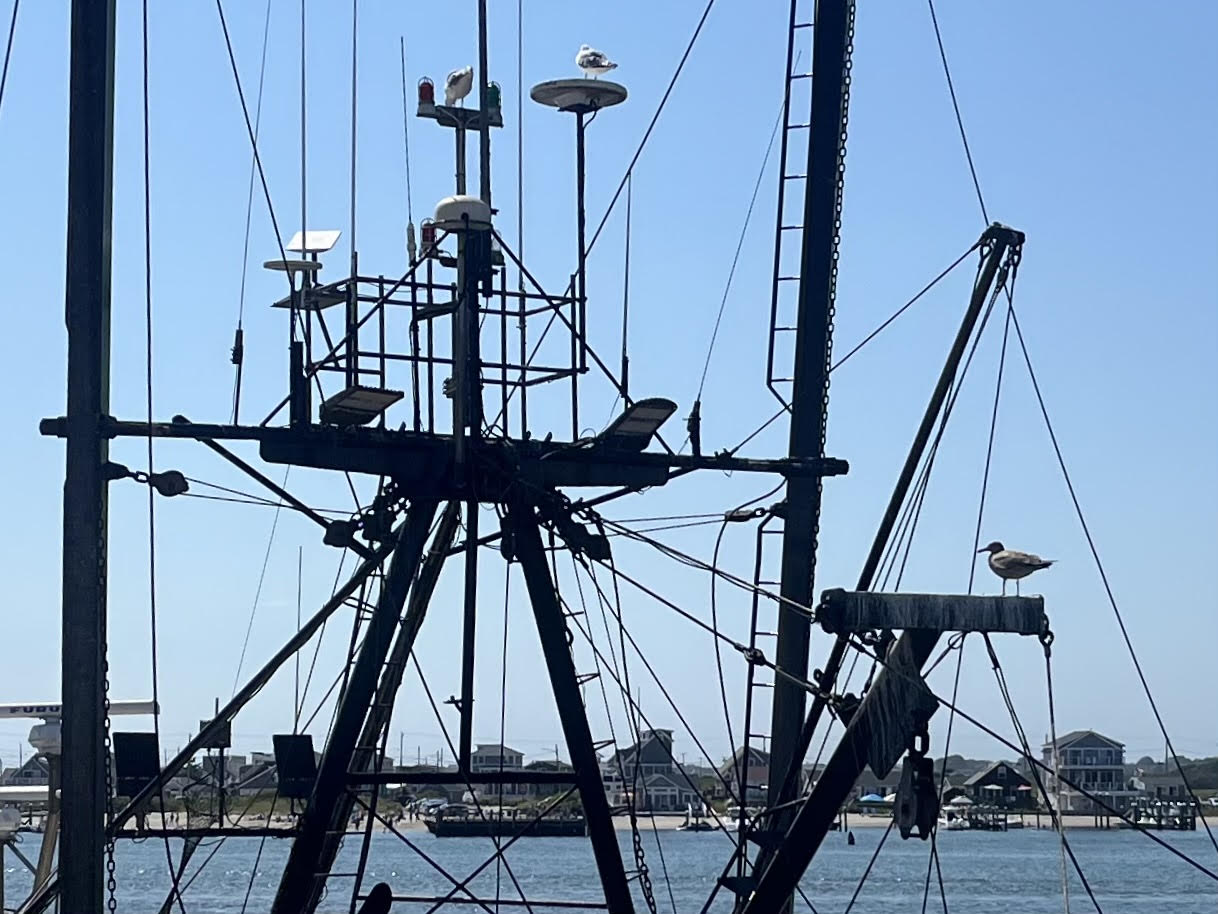
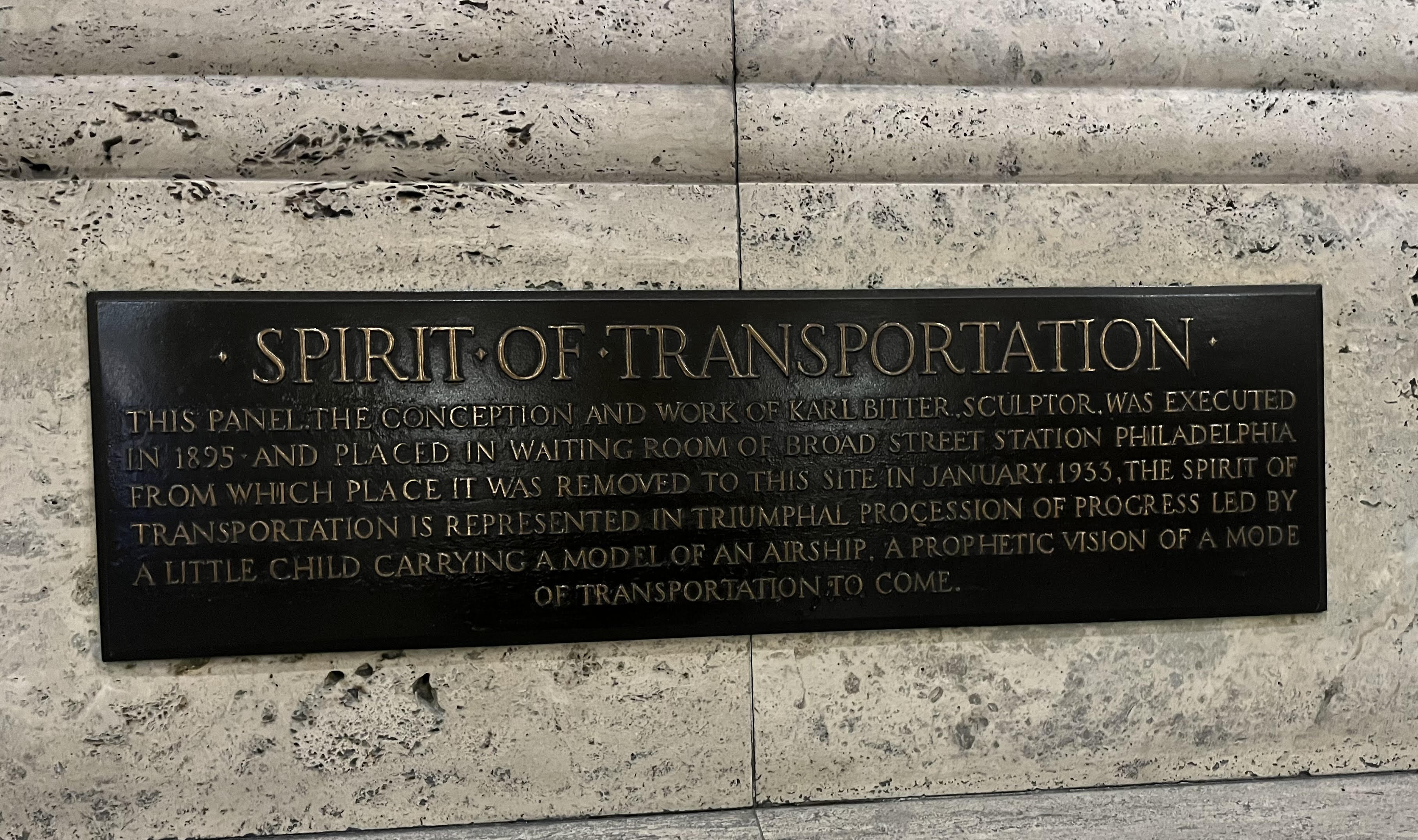
Staghorn sumac, thistle shadows, a blooming August yard, swamp rose mallow, New Shoreham’s Old Harbor, the Assabet River, a swallowtail butterfly holding still for photographer Sandra M Kelly, Casey Farm, Morning glories or bindweed (not sure which), the shop where I got my 100-year-old quilt repaired, the 30th Street Amtrak station in Philadelphia, and gulls on a fishing vessel in Galilee.

Read Full Post »

Photo: Brett Phelps for the Boston Globe.
At her new studio space in Providence, Felicia Neuhof holds a bag of shells she gathered at her sister’s wedding to create new products sustainably.

Today’s story is about a designer who looked around for a way to do her work using more-sustainable materials and found them almost under her nose.

Alexa Gagosz writes at the Boston Globe, “After spending seven years as an art director in New York City working for Fortune 500 brands, Felicia Neuhof grew increasingly frustrated with the unsustainable materials of her industry. She was constantly surrounded by plastic with a single-use lifecycle that would later become landfill waste.

“When she moved to Providence to earn her master’s degree at the Rhode Island School of Design, she started eating a ton of shellfish and wondered what would eventually happen to the discarded shells, which were typically thrown away. That‘s when she set out on a mission. She started by experimenting with the shells being tossed into dumpsters behind her favorite restaurants, and began molding them into building materials.

“Neuhof is now the founder and chief executive officer of Shellf Life, a Providence startup that transforms discarded seafood shells into innovative building materials. She’s also received international praise, winning the Terra Carta Design Lab, a global competition where she was able to place her material into the hands of King Charles III.

“What is Shellf Life and how does it work?
“Shellf Life transforms discarded seafood shells into innovative building materials through a process I developed on my kitchen stove. We take what restaurants throw away — oyster, mussel, clam, crab, and scallop shells — and create architectural surfaces, furniture, and lighting with properties ranging from rigid to flexible to translucent. Since winning the Terra Carta Design Lab competition, I’ve been scaling operations at our 50 Sims [incubator] facility in Providence.

“[We turn] waste into valuable building materials through processes accessible to people from all backgrounds and skill levels.

“How much seafood waste is there in New England?
“The numbers are staggering. One Rhode Island shellfish processor alone generates 7 tons of shell waste weekly — that’s 728,000 pounds annually, enough material for 30,000 square feet of tiling. When combined with restaurant waste across New England, we’re looking at a tremendous resource: Rhode Island could produce enough material for 3,000 kitchen backsplashes annually, Massachusetts enough for 5,000 bathroom floors, Maine sufficient for 20,000 serving bowls that return to the restaurants supplying the shells, Connecticut enough for 1,500 countertops, New Hampshire enough for 1,000 shower surrounds, and even my home state of Vermont contributes. …

“What kind of materials are you creating? Furniture and fixtures? Raw materials?
“Both. I create three product lines: furniture for residential and commercial settings, homeware like bowls and lighting, and architectural materials including tiles and surfaces. I’m also developing specialized applications for marine environments — working with City Island Oyster Reef to create alternatives to concrete currently used in aquaculture farms and coastal defense. …

“Walk me through the process.
“I collect shells from restaurant partners, clean and sanitize them, then crush them into a calibrated material. This is blended with my proprietary binder — much like following a recipe — and molded into form. During curing, the material actually captures CO2. At my facility at 50 Sims [Ave.] in Providence, I’ve scaled this process from my kitchen to a manufacturing microlab. I’ve secured a provisional patent on both the material composition and manufacturing method, which was an important step for commercialization. My goal has been to develop a system so refined that making a tile is as easy as flipping burgers. …

“What kind of seafood waste are you using?
“I primarily use oyster, mussel, clam, and scallop shells — any bivalve shells typically tossed in restaurant dumpsters. Each brings unique qualities: oysters provide strength and texture, mussels offer beautiful color and luminosity, clams contribute creamy hues with flecks of purple, and scallops add structural pattern variability. Like a chef selecting ingredients, I blend these shells in various ratios to customize the material for specific applications.

“What was it like to meet King Charles, and develop Shellf Life as part of the Terra Carta Design Lab?
“Meeting King Charles III was transformative. … He asked thoughtful questions, revealing someone who truly understood the potential, calling the idea ‘genius.’ What struck me most was seeing how Shellf Life made intuitive sense to everyone — from farmers and chefs to a King.

“How can restaurants, consumers, and others direct seafood waste to Shellf Life?
“I’ve made it as simple as recycling. For restaurants, I provide collection buckets and regular pickup that fits into their existing workflow. … For individual consumers, I’m looking to establish community collection points. My goal is to make shell recycling as normal as glass or paper recycling.

“Do you have any investors?
The Terra Carta award has funded my initial development. Now I’m seeking additional investment to support my two-year growth plan as I move from R&D into commercial production. I’m looking for partners who understand both the environmental opportunity and the social impact — investors who recognize the value of creating accessible manufacturing jobs while addressing environmental challenges.”

More at the Globe, here.

Read Full Post »

Photo: Joanna Detz/ecoRI News.
Tess Feigenbaum and Brendan Baba in the hot-composting room at their Providence facility.

At my retirement community, there’s a handful of people who are serious about composting both garden waste and food waste. We have Black Earth bins available for anyone hardy enough to trek to the garden area.

Massachusetts, meanwhile, passed a law that the kitchens of institutions our size must also compost food waste. But no one seems to be enforcing it. Here, the powers that be say it’s too complicated and expensive to reconfigure kitchen processes. Maybe they’d have to knock down a wall to build out the space.

Still, the idea of composting is catching on slowly in New England generally, and more restaurants and institutions are finding it can save a lot in trash-pickup fees.

In a story supported by 11th Hour Racing (get it — we are at the 11th hour with climate), Frank Carini of ecoRI News writes about a particularly dedicated composting couple in Rhode Island.

“Their journey, so far, has been epic, from Pawtucket to Los Angeles and back to Rhode Island. They left for the City of Angels with an idea borrowed from ecoRI News and returned with a business model to help the Ocean State get out from under all its food waste.

“Tess Feigenbaum and Brendan Baba co-founded Epic Renewal soon after landing in Los Angeles in late August 2016. They left three years later, but not before keeping some 23,000 pounds (11.5 tons) of L.A. food scrap from being landfilled or incinerated.

“Their for-profit operation, now run out of a 3,000-square-foot space on Acorn Street [Providence], provides low-cost composting services for events, businesses, and homes. Epic Renewal also offers zero-waste consulting services, products such as vermicompost and red wiggler worms, and software that helps other composting businesses track the amount of organic matter they are keeping out of the waste stream.

“ ‘Our big focus area is zero-waste events,’ Feigenbaum said. ‘We do a little bit of commercial and residential, but we very intentionally lean out of residential because of the density there … we’re not interested in competing with all of our friends. The events are really our fun place. They also let us reach a ton of people who otherwise might not really care about it.’

“Feigenbaum and Baba are part of an unofficial composting collaborative that Michael Merner, founder of Earth Care Farm in Charlestown and godfather of Rhode Island composting, unknowingly started in the mid-1980s. For years, Earth Care Farm went at it alone.

“Now, four decades later, about a dozen composting operations, including Epic Renewal, are helping Earth Care Farm take a bite out of the amount of food scrap being unnecessarily wasted.

“ ‘We had three generations of Merners at the last compost fund bill hearing,’ Feigenbaum said. ‘It was awesome.’

“The bill (H5195) would create a compost fund that would award composting and waste-diversion grants to help reduce the amount of material being sent to the getting-crowded Central Landfill in Johnston. …

“Baba said, ‘We need every single solution at the table, but what we really firmly believe in is hyper local, many sites that are smaller, especially knowing we have the most expensive farmland in the country, and we want those to be farms. It’s pretty critical when we’re thinking about urban spaces and creating a resilient network that we create more sites, not just one or two big ones.’ …

“In November 2024, they experienced a life- and career-changing event: they moved their composting operation from a Central Falls basement — Feigenbaum called the space ‘depressing’ — to a roomy, industrial space in Providence’s Valley neighborhood. Epic Renewal was born in an extra bedroom in the couple’s Los Angeles apartment.

“Their newish Acorn Street workspace includes room to store the operation’s 300 or so containers of various sizes, hot-composting boxes made of wood, and parking for their biodiesel-powered truck, a van, and two trailers. …

“Baba, with help from LA Compost founder Michael Martinez, replicated something similar to ecoRI Earth. By the time the duo left Los Angeles, Epic Renewal had 200 residential and 16 commercial customers. …

“When the couple isn’t collecting food scrap and other organic material and making compost with it, Feigenbaum works part-time at the Social Enterprise Greenhouse in Davol Square and Baba works full-time as a financial technology consultant. He wrote the material-tracking software Epic Renewal is sharing with other composting business for free while he works on putting the final touches on the tech. …

“Epic Renewal diverts about three-quarters of a ton of organic matter monthly from the waste stream. Since 2022, the operation has diverted 35.6 tons. Feigenbaum and Baba work with offices, food service and retail businesses, gyms, cosmetic producers, weddings, marathons, and festivals to reduce their waste.

“All of Epic Renewal’s magic is done indoors, thanks to bokashi composting. This anaerobic process, using a culture of bacteria that thrive in an oxygen-free environment, doesn’t produce off-gassing and is ‘ideal for indoor composting.’

“Feigenbaum noted this method requires less space, offers more input options, and is better suited for an urban environment or anywhere with limited green space. There is no runoff. The little liquid that is produced is recycled back into the process, which avoids the need to add tap water. …

“ ‘The biggest thing is demystifying it for people,’ Feigenbaum said of getting folks to compost. ‘We just need to get people exposed to it.’ ”

This story is part of a series “Black Gold Rush: The Race to Reduce Food Waste and Save Soil.”

More at ecoRI News, here.

Read Full Post »

Photo: Southside Community Land Trust.
Southside Community Land Trust high school interns making pizza. SCLT has numerous programs to ensure that locally grown produce gets to community members.  

Today’s story is about regular folks doing good things. It isn’t news. It’s common. As I scroll through all my feeds, I like to remind myself that it’s actually common.

Brooke Warner wrote at the Providence Eye about a neighborhood I know.

“The term ‘produce aggregation’ may not conjure up an image of healthy kids and families and farmers bringing good food to communities facing food insecurity. But Southside Community Land Trust’s Produce Aggregation Program is working to do just that. It’s a way to connect urban farmers to their neighbors with healthy food while at the same time connecting their small farms to new markets.

“It ‘gets fresh local food into the local community,’ said Amelia Lopez, food access associate at Southside Community Land Trust (SCLT), who works on the Produce Aggregation Program.

“Small-scale farmers typically face numerous challenges to access wholesale markets: they lack the capacity to grow large quantities; may not have access to processing facilities; and must manage the complexities of logistics and distribution required to fulfill wholesale orders.

“The Produce Aggregation Program addresses these challenges by acting as a wholesale buyer that combines the harvest of numerous urban farmers to distribute in larger quantities. The program has its own farm-to-market processing center to collect and process crops grown by the farmers and manages the logistics and distribution of the produce, making it possible for small farms to increase the scale of their businesses.

“Twenty-seven farmers regularly sell their produce through the program. Most of the farmers are refugees, immigrants, or part of other marginalized communities. More than half of the farmers who participate have plots at SCLT’s Urban Edge Farm or Good Earth Farm properties, where farmers are able to farm on larger plots of land.

“As their businesses expand and they run out of space, many farm on numerous plots in multiple community gardens and farms. Most of the farmers in the program also sell at farmers markets, but income from farmers markets can be unpredictable and unsteady, Lopez said. The aggregation program gives them another, more reliable, outlet to sell their produce. In addition, there are many years of experience among the farmers, and they are able to share this knowledge with the high school students who take part in the SCLT’s paid internship program. ..

“ ‘Sometimes there are moments when we have an abundance of some products and the program helps us to sell them,’ said Margarita Martinez, translating her husband’s comment from Spanish. Teo Martinez, a farmer from the Dominican Republic, and Margarita are commercial growers based at Urban Edge Farm. …

“Marcel De Los Santos, SCLT’s grants and communications manager, said, ‘The fight against food insecurity faces several significant obstacles that threaten its sustainability. Reducing crucial funding sources, such as the expiration of ARPA [American Rescue Plan Act] funds, has left many food assistance programs needing help to maintain their service levels. Land acquisition for food production and community gardens has become increasingly difficult as urban development drives up property costs and reduces available space.’

“Additionally, rising food and transportation costs and persistent supply chain disruptions strain food banks’ operational capacities. These challenges are compounded by the growing demand for food assistance services, climate change impacts on agricultural production, and the need for consistent volunteer engagement. …

“The [aggregation] program runs two distribution cycles each week during the growing season. SCLT orders different products in various quantities from different participating farmers and notifies them in advance of each cycle what they will be purchasing. Farmers deliver their produce to the food hub, where it is processed and packed into bags with other farmers’ produce. Each bag contains about $20 worth of fresh produce, sourced from different farmers, and is ready to be distributed … through numerous community partners that in turn give it out to their participants at no cost. Distribution partners include organizations such as health clinics, day care programs, and recreation centers. Health clinic partners … give out the produce through the VeggieRx program, where doctors give patients a ‘prescription’ of produce. …

“[As of this writing] the program us funded primarily by the USDA’s Local Food Purchase Assistance Cooperative Agreement program (LFPA), which began during the pandemic to expand access to local, healthy food and increase economic opportunities for underserved farmers. [The] program has a new home in the SCLT’s new Healthy Food Hub. …

“SCLT’s mission is to help local urban farmers by providing land access, agricultural resources, and agriculture and business training. The nonprofit supports the operation of 60 community gardens in Providence, Pawtucket, and Central Falls, including 20 land trust-owned properties.

“The Produce Aggregation Program is one of many that the SCLT runs or partners with to address food insecurity in the Providence area. Farmers markets, gardens, education programs, and internships are among further examples of the SCLT’s mission. All of these activities, like the Produce Aggregation Program, help increase access to fresh, healthy, and culturally relevant food for these urban communities and feed roughly 1,200 families annually.

“Although the growing season typically ends at Thanksgiving, the work of the SCLT continues year-round, along with its partner organizations and local businesses, farmers, volunteers, students, families, and the local community.”

Not being sure that USDA will still fund programs like those, I suspect this could be another worthy cause that will have to rely on private fund raising.

More from the Providence Eye via ecoRI News, here.

Read Full Post »

Photo: Rhode Island School Recycling Club via ecoRI News.
The nonprofit’s mission is to help reduce school food waste.

My Rhode Island grandson has inhaled environmental lessons at home and in school to the point that he requests only such clothes as are made of recycled material and eschews beef. He’s in charge of composting the family’s fruits and vegetables, at least when the bin isn’t frozen solid.

Today I’m sharing news on a composting story involving both public and private Rhode Island schools.

Veteran environmental reporter Frank Carini writes at ecoRI News, “Rhode Island’s 450 or so public and private schools generate a lot of food waste, nearly 28,000 pounds every school day, according to more than a dozen food-waste audits conducted by a local nonprofit.

“Among the food wasted daily is some 4,000 pounds of milk, fruit, granola bars, yogurt, baby carrots, and other sustenance that is unopened and perfectly edible.

Here are some other findings from the Rhode Island School Recycling Project’s 15 lunch audits:

  • “About 5 million pounds, some 2,500 tons, of school food scrap is sent to the Central landfill in Johnston every year. Of that, some 750,000 pounds is edible.
  • “Each high school student generates an average of 0.23 pounds of food waste daily, and 41 pounds every school year.
  • “Each middle school student generates an average of 0.39 pounds of food waste daily, and 70 pounds every school year.
  • “Each elementary school student generates an average of 0.48 pounds of food waste daily, and 86 pounds every school year.

“The Rhode Island School Recycling Project was co-founded in 2001 by James Corwin, in partnership with the Rhode Island Resource Recovery Corporation (RIRRC) and the state Department of Environmental Management, to improve school recycling.

At that time, the number of schools recycling properly was 18%, which was among the lowest in New England. Today, it is close to 70%.

“The nonprofit quickly incorporated diverting cafeteria food from the state’s waste stream into its work. That’s where much of the Project’s focus is now centered. … The nonprofit’s mission is to reduce, recover, and recycle to help protect the environment and develop the next generation of environmentalists through project-based learning, according to Corwin.

“Currently, there are 21 schools participating in the Project’s waste-reduction efforts. Since its inception, the program has diverted nearly 150 tons of food and food scrap from the Central Landfill, according to Corwin.

“The cost per school is about $5,000 annually. The Project pays for the first year, and buys participating schools a refrigerator to store recovered food. Students can take food from the refrigerator when they are hungry.

“ ‘So we’re saying to custodians, listen, when you see that that dumpster is only half full let’s talk to the facilities director about reducing the amount of pickups to, you know, instead of one a day, one every other day, so that you can offset the cost of the organics hauling,’ Corwin said. …

“The Project’s program starts with an educational presentation by RIRRC, which operates the Central Landfill, about the many problems associated with food waste. Corwin and Warren Heyman, the nonprofit’s organizing director, then visit the participating school to discuss what the students learned during the RIRRC presentation and start training them, and staff, on a new waste-sorting system.

“Participating students — in groups called Green Teams in middle school and Cafeteria Rangers in elementary school — go to lunch early so they can spend the last 8 minutes of the period managing the station and making sure everything is sorted correctly. There’s usually four to five students working a sorting station. …

“Each station features a ‘share table’ that repurposes uneaten food. On the table is a cooler where students place leftover perishable items such as milk and yogurt. There’s a basket for leftover fruit. These provisions are then moved to the refrigerator.

“A 5-gallon bucket is where students pour out leftover milk. There’s a compost bin for food scrap and a recycling bin for milk cartons and plastic bottles. A landfill bin holds the trash that can’t be eaten, composted, or recycled. The compostable material is picked up weekly by one of two local composting outfits — Black Earth Compost or Bootstrap Compost. …

“Heyman noted that after Richmond Elementary School implemented the Project’s waste-reduction system, cafeteria trashed was reduced from eight bags a day to one. He also noted that the state Department of Education has been a supportive advocate of the Project’s work.

“Nearly 1 in 3 Rhode Island households can’t afford adequate food, according to the Rhode Island Community Food Bank. … About 40% of U.S. food is wasted, either buried or incinerated. In schools, the amount of wasted food increases. A 2019 study of school cafeteria waste found that 27% to 53% of the food served was thrown away. Another study has estimated that U.S. schools waste some 530,000 tons of food annually — about 39 pounds of food and 29 cartons of milk per student per year — costing $1.7 billion nationally.”

More at ecoRI News, here.

Read Full Post »

Photos: Suzanne and John’s Mom.

It’s starting to feel like winter is around the corner, so I’ll just post a few photos from my New England autumn before the snow falls.

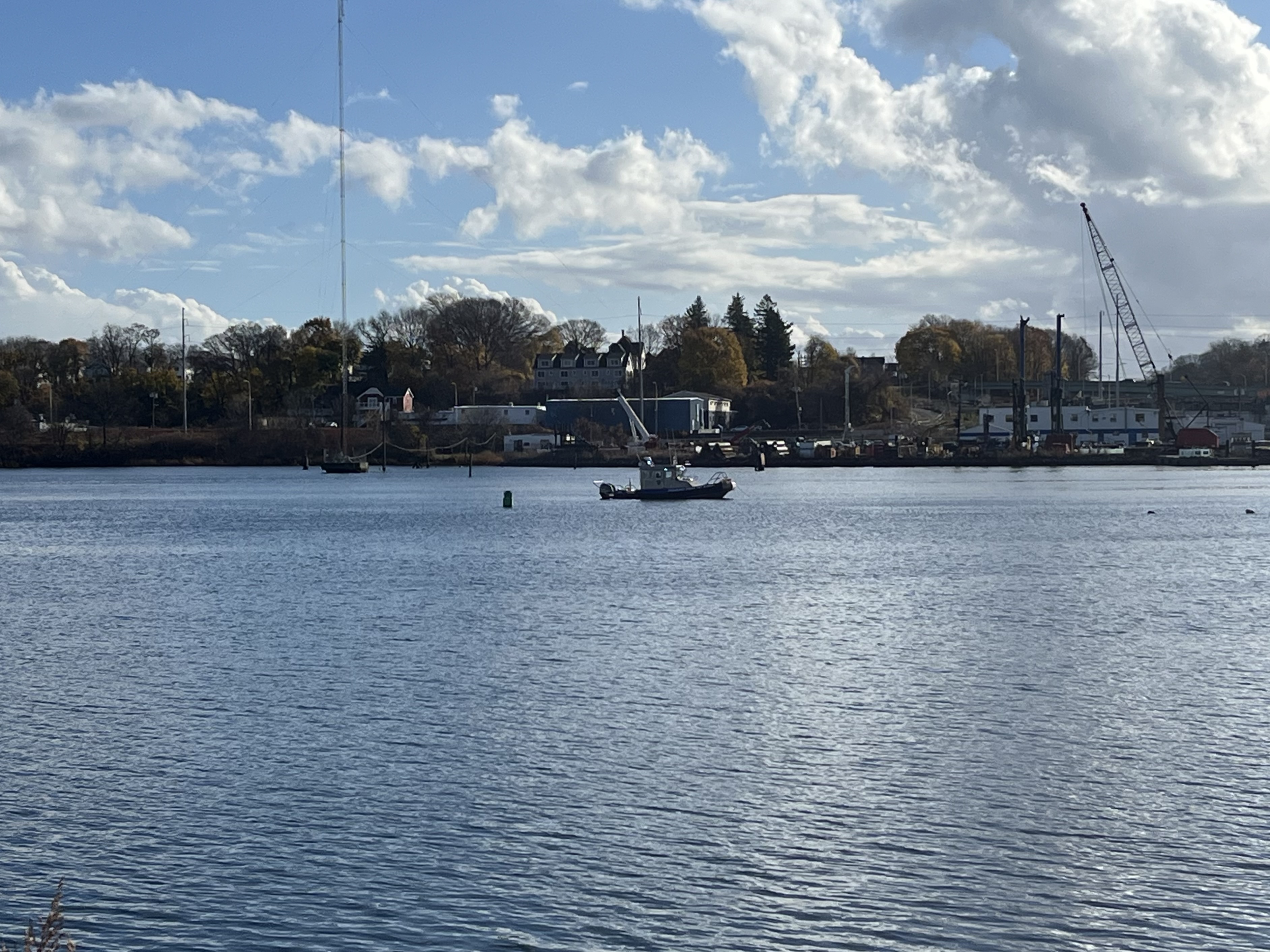
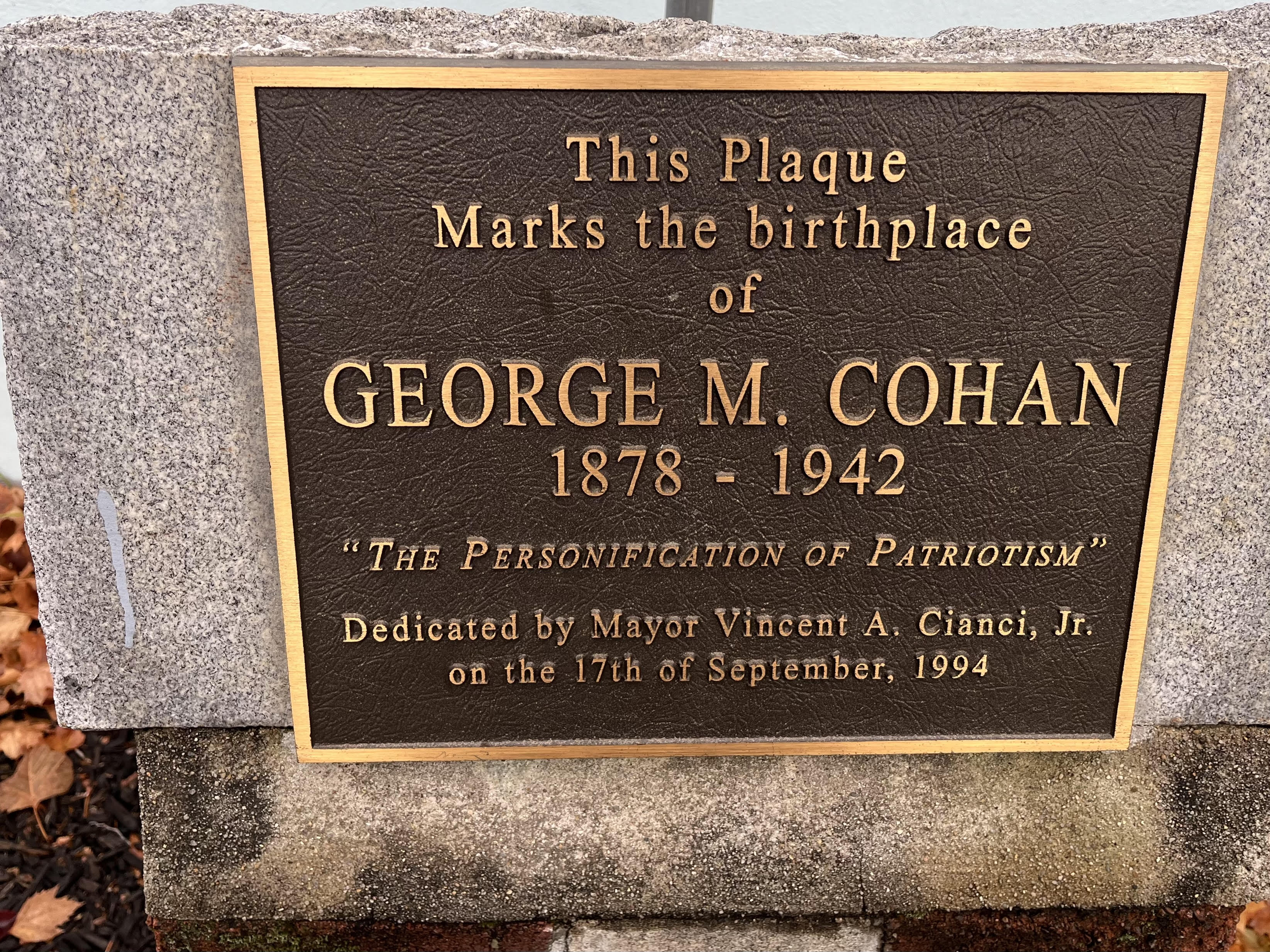
Below, clouds over the Seekonk River in Providence, Rhode Island, and chess-playing foxes in Fox Point. Also in Fox Point, the notorious Mayor Cianci’s plaque honoring both composer George M. Cohan — and Cianci himself.

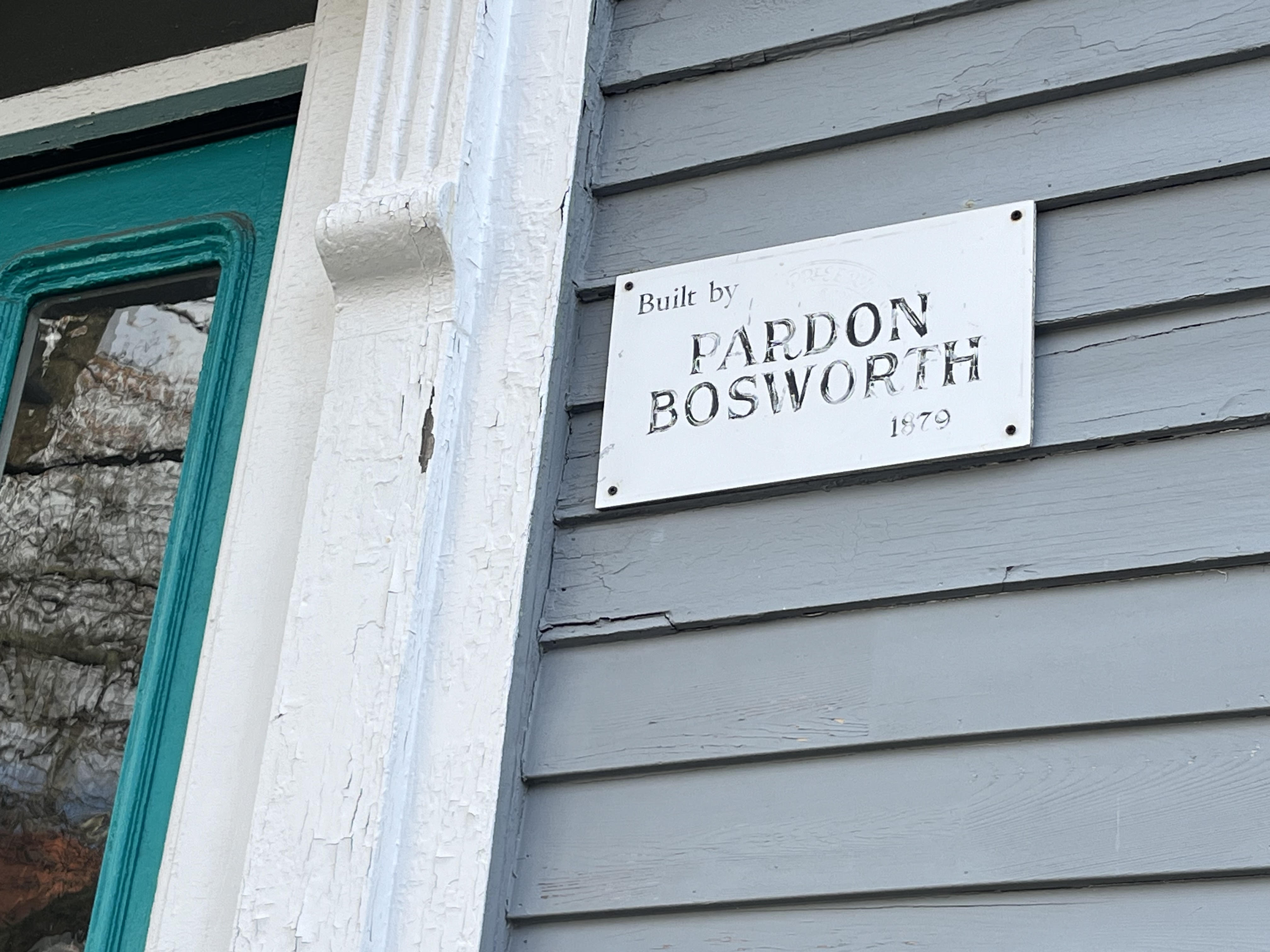
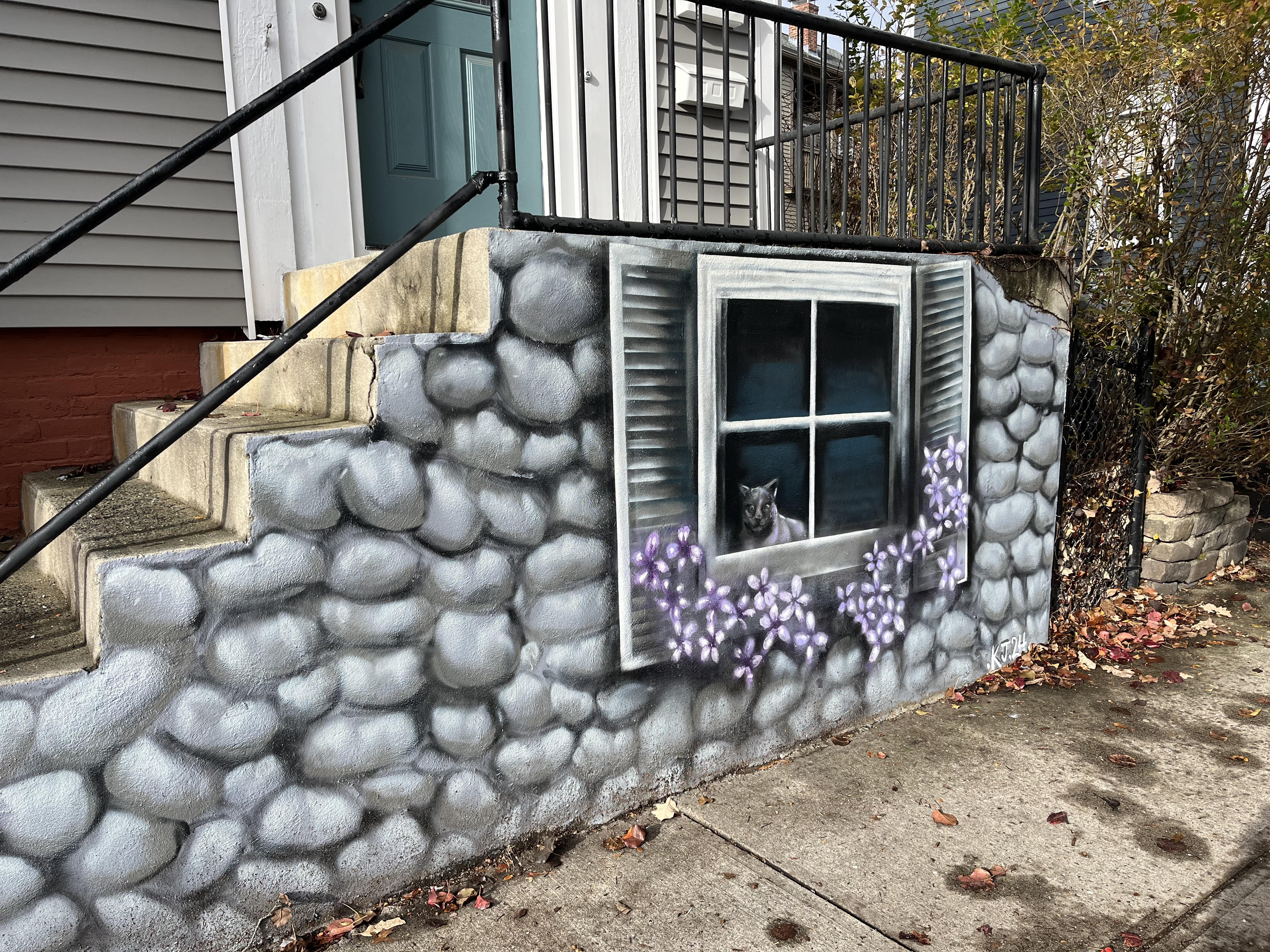
In the same neighborhood, I got a kick out of the name of a 19th century homeowner. And a jazzed-up staircase across the street.

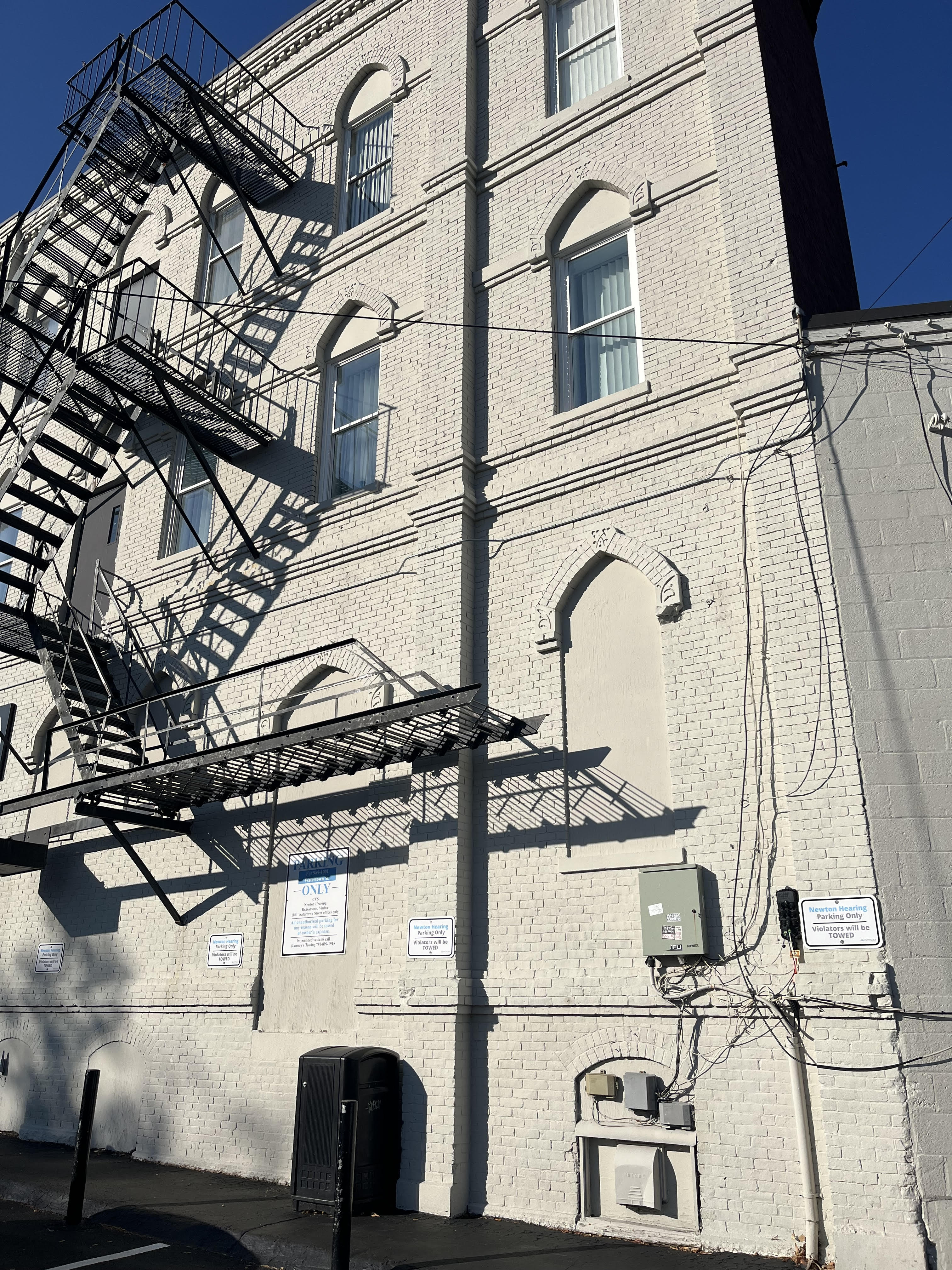
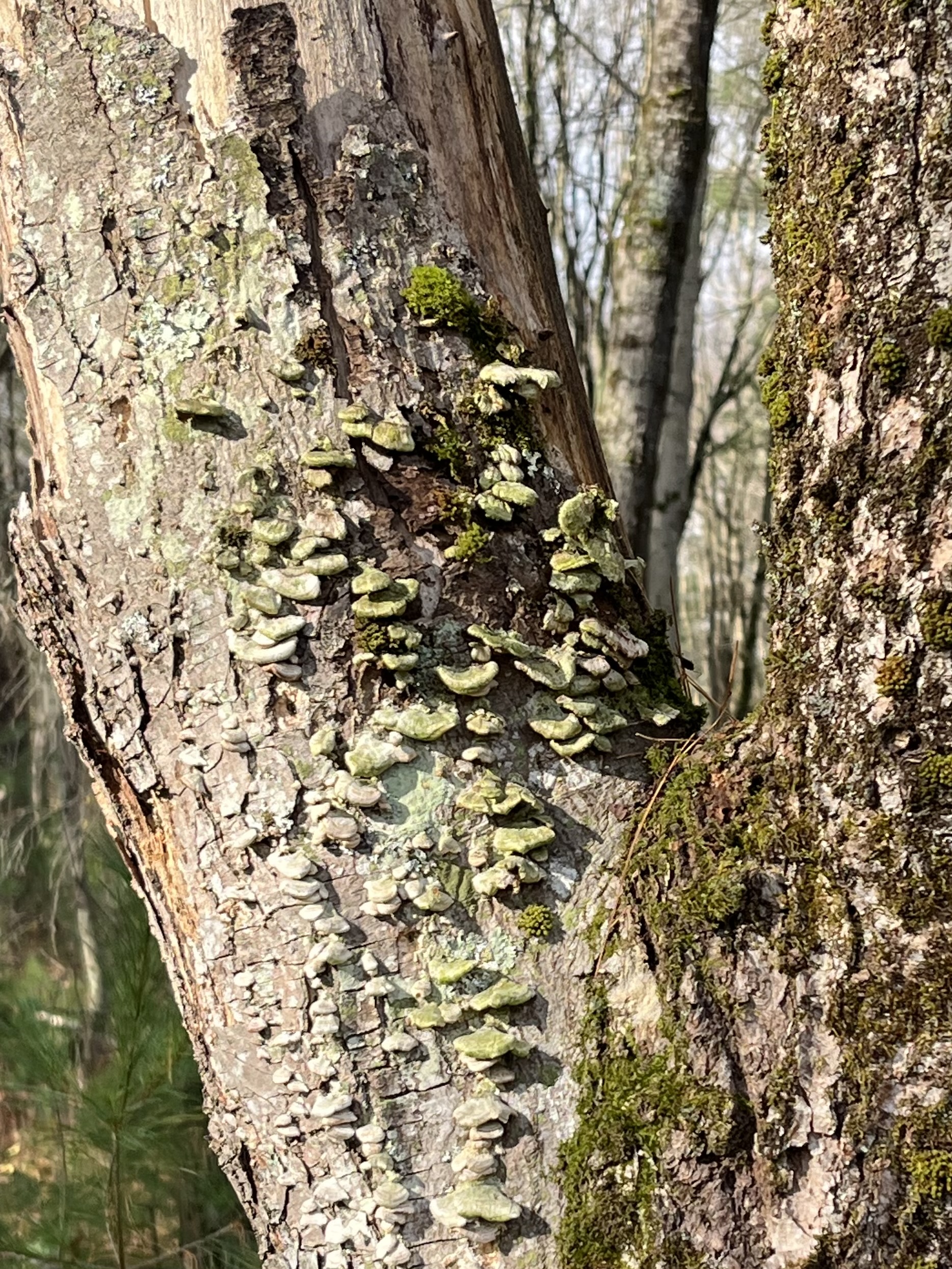
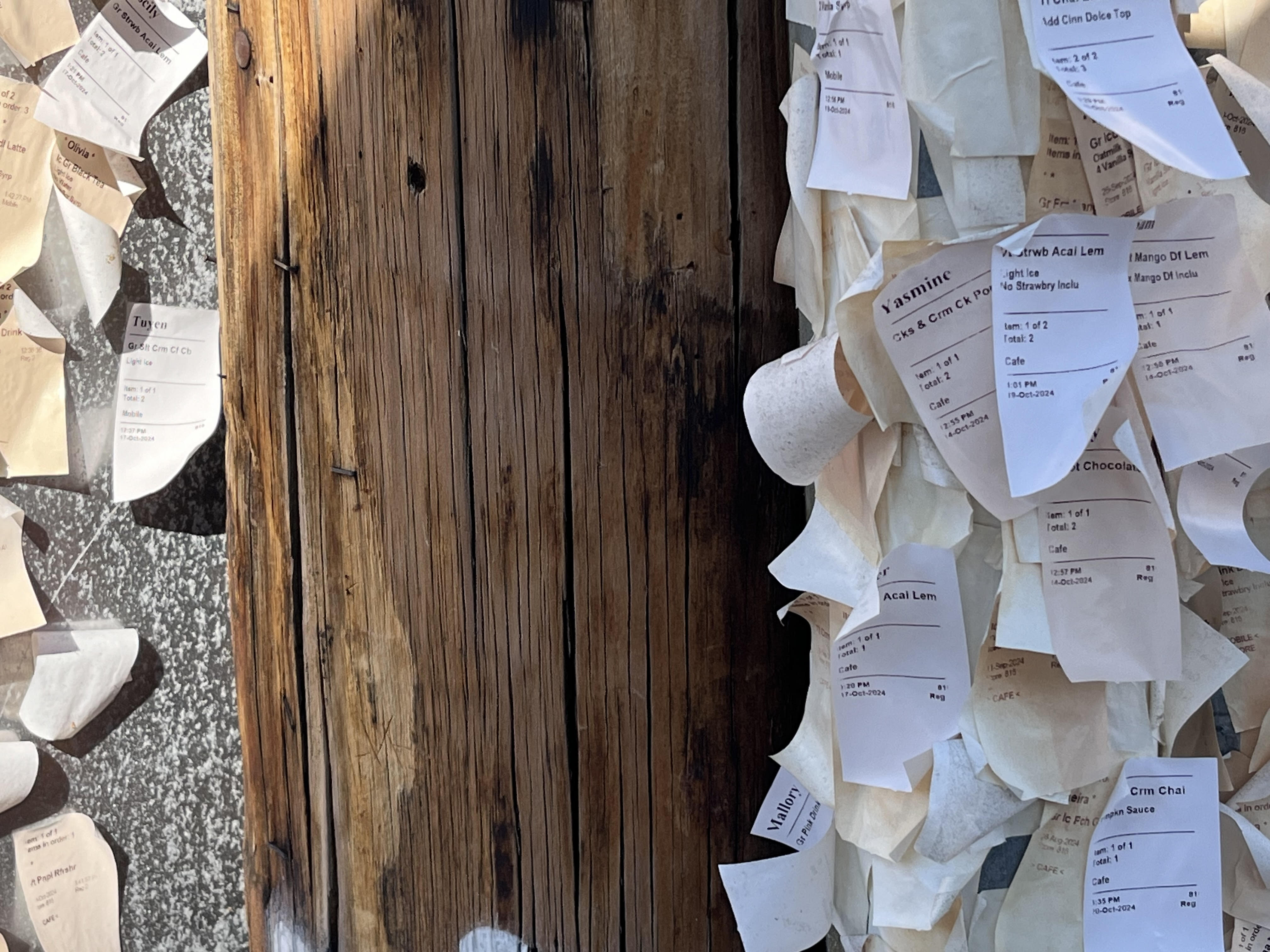
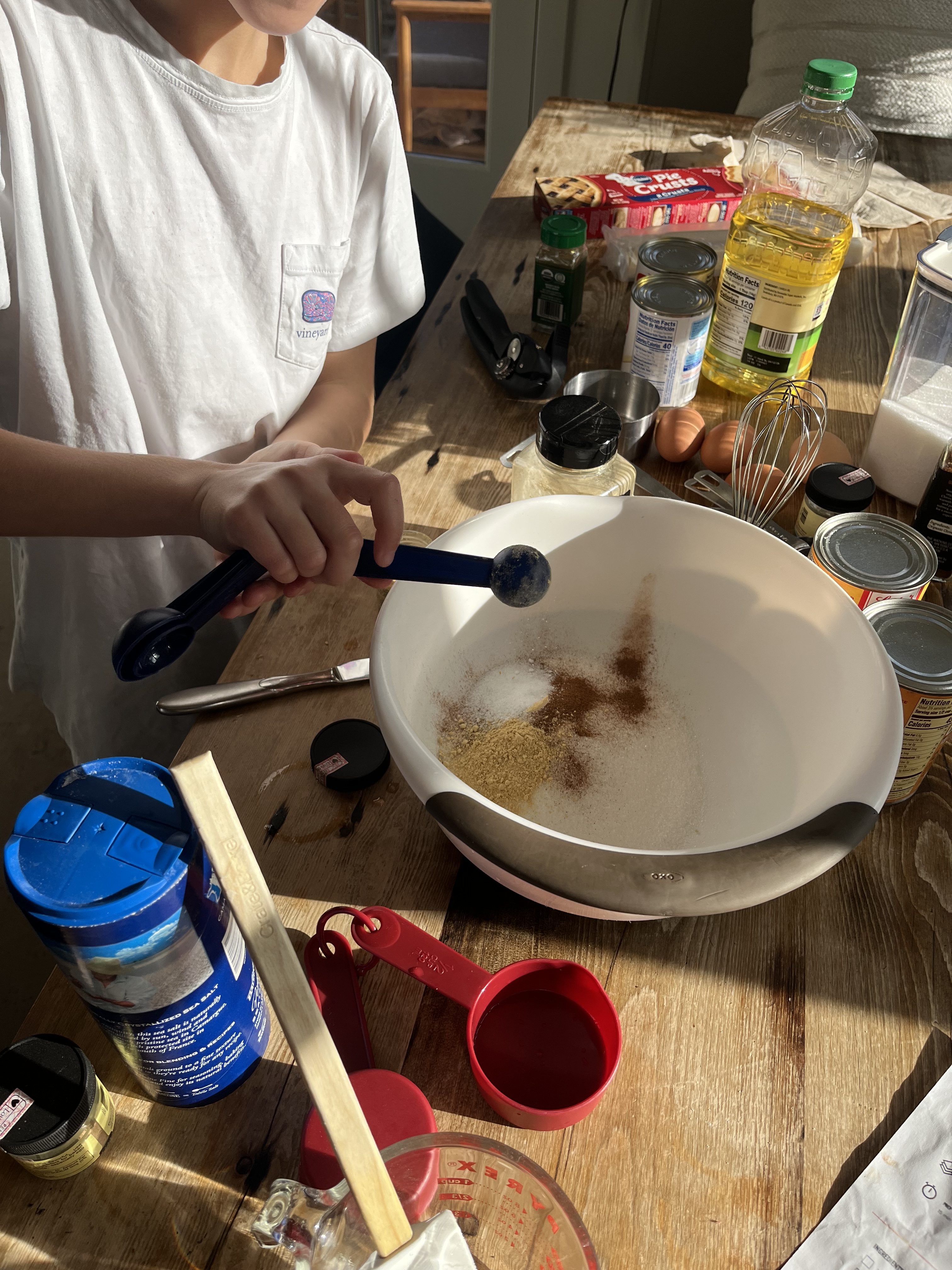
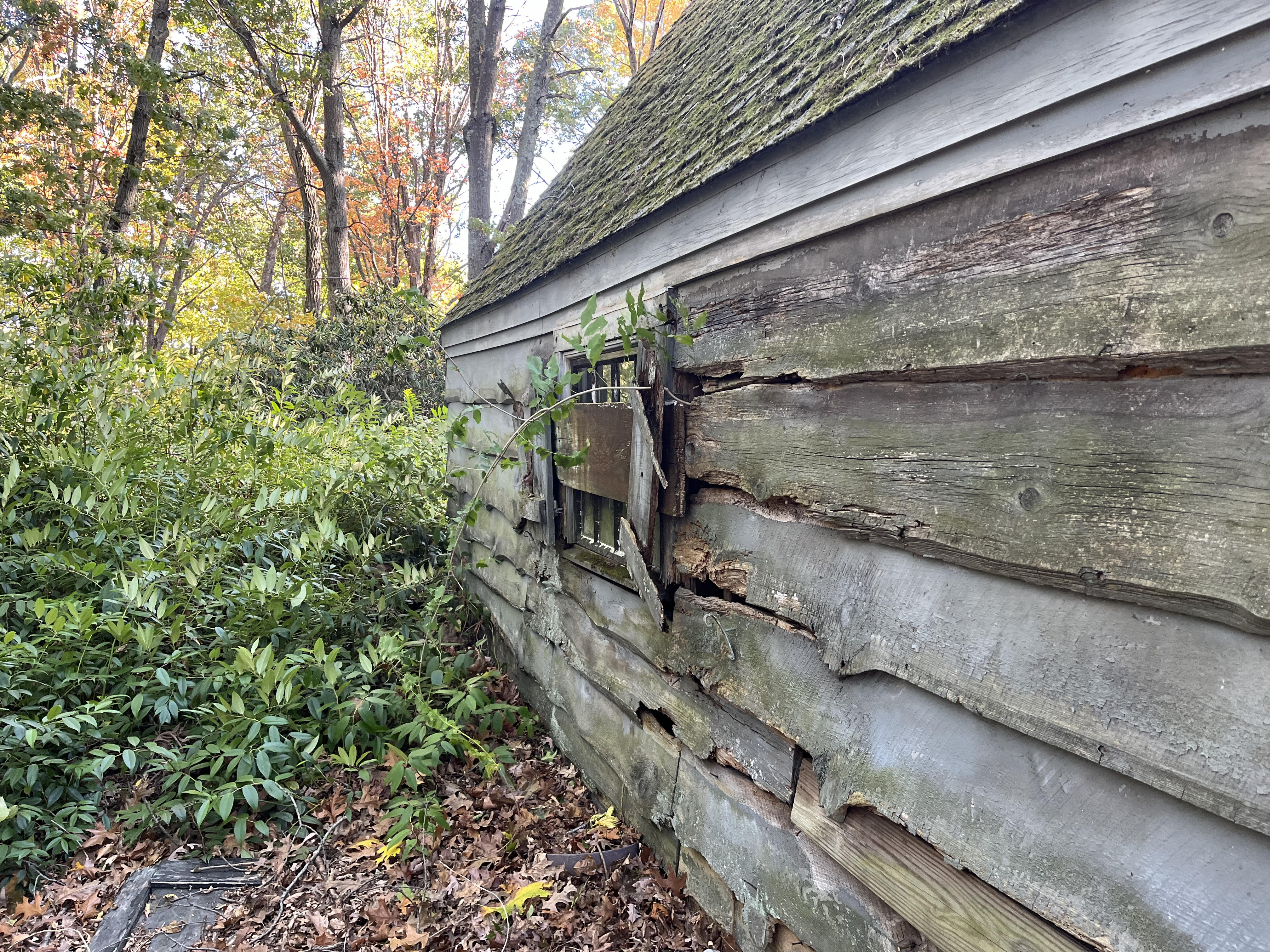
Back in Massachusetts, I found a nice shot of a different kind of staircase (jazzed up by light and shadow), then two fungus photos (one flower-like) and Starbucks receipts decorating a telephone pole. The pastry chef, age 11, has more baking experience than most adults.

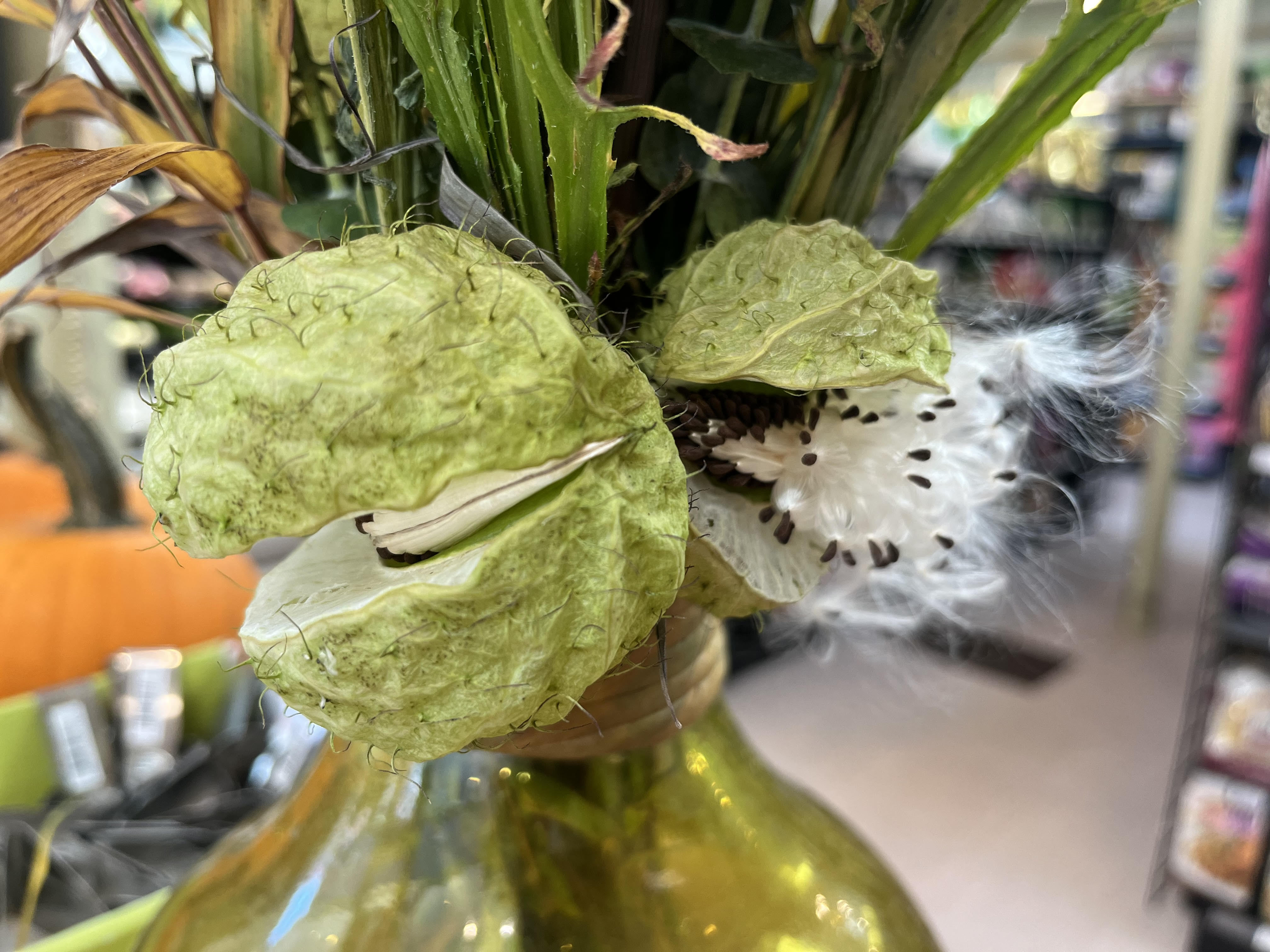
In the what-the-heck-is-it department, there’s a decorative plant at Debra’s Natural Gourmet that is not milkweed but looks sort of like it. Any ideas?

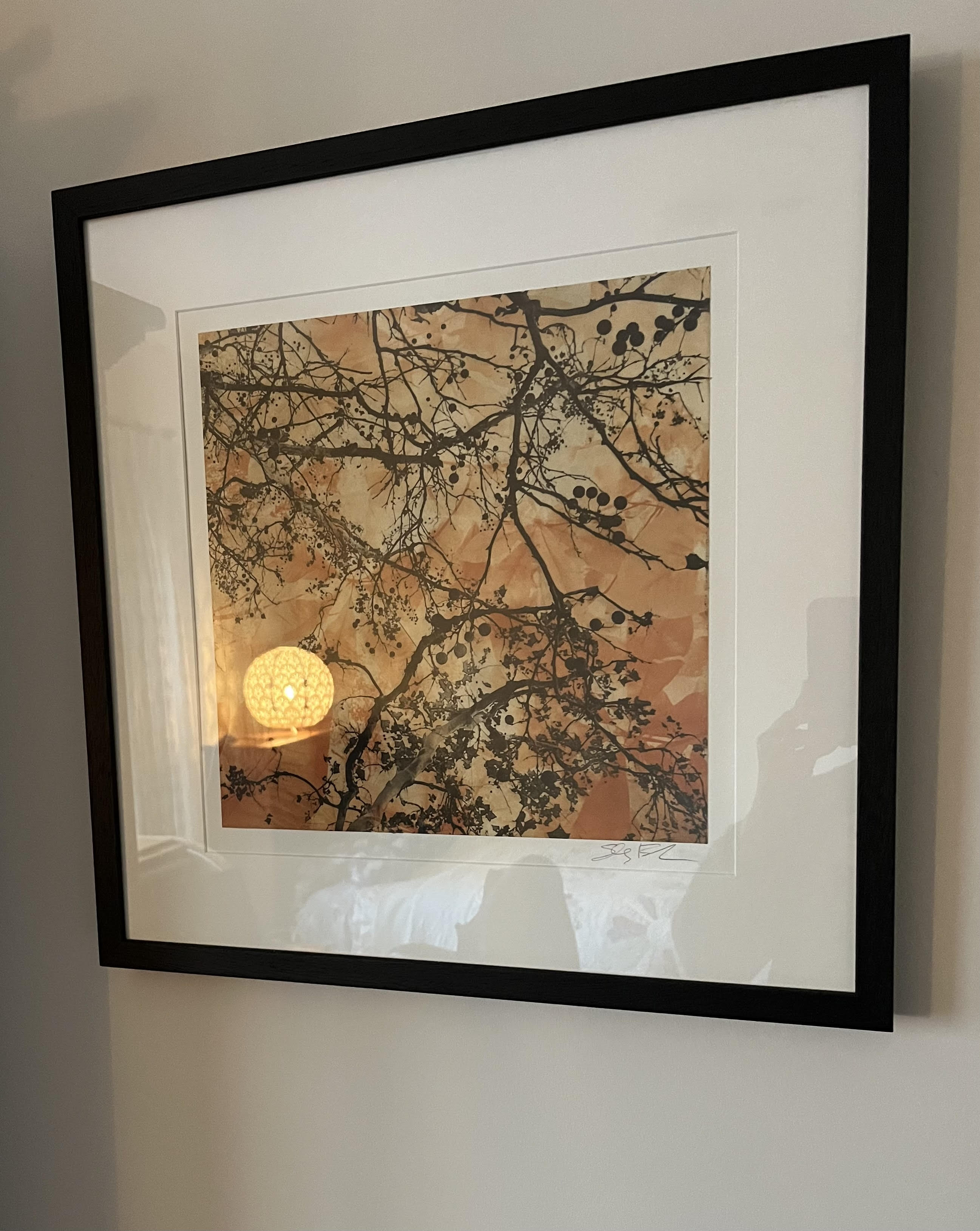
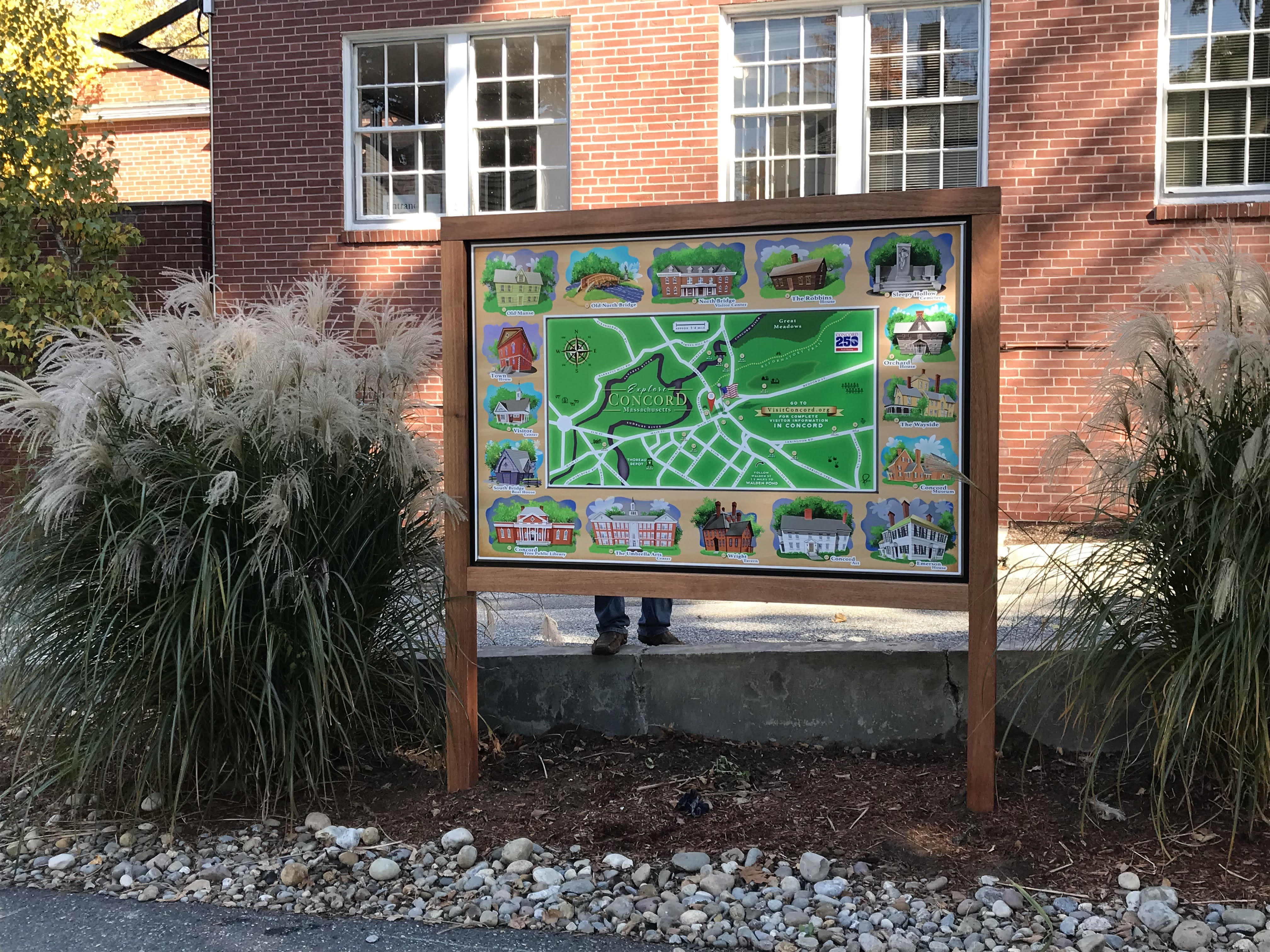
Next comes Sally Frank’s magnificent Black Sycamore print in a frame reflecting my table lamp. Then a derelict house waiting for the land developer’s bulldozer, and a special map for the town’s 250th anniversary in 2025. Did you know the Revolution started at the North Bridge? Not with the Declaration of Independence, as significant as that was.

Read Full Post »

Photo: EcoForge.
Startup EcoForge’s lead scientist, Jiale Han, working on making sustainable building products.

Sometimes the Boston Globe features interviews with founders of startup companies. This company is in Rhode Island, and it makes alternative building products for a greener future.

Alexa Gagosz has the story.

“Brown University graduates Rongyu Na and Myung Bender are the founders of EcoForge, a startup that is developing local and sustainable building materials from agricultural residues and plants.

Alexa Gagosz: How does EcoForge work?
“Rongyu Na: We start by providing our solutions, such as material binding agents and fire-resistant agents, to materials like hemp — a bio-based material that’s carbon-negative — to interested companies and manufacturers.

“Unlike traditional materials that harm both people and the planet, our materials significantly improve sustainability and ensure material health. EcoForge’s bio-based building products help construction projects secure permits, reduce carbon emissions by up to 40 percent, and save on future energy costs, estimated at more than 15 percent on heating and cooling.

“AG: How does EcoForge fit into both of your experiences?
“RN: With my extensive experience in industrial design at NASA and at Subaru, Nissan, and Amazon, I’ve worked on future clean mobility concepts and innovative products like the Kindle, and led global initiatives focused on sustainable materials. My passion for sustainability is complemented by a strong background in innovation and design excellence.

“My cofounder, Myung Bender, is a seasoned entrepreneur. Her startup was acquired by Apple, and as the former head of product at Bumble, she brings strong business acumen and operational expertise. We’ve both developed numerous products, and we are now focusing on products that significantly impact our health and the planet.

“AG: What kinds of ‘agricultural residues’ are you using? And what kinds of building materials can they be transformed into?
“RN: Our technology is highly compatible with various plants, allowing us to form building products by leveraging their natural material structures.

Agricultural residues like hemp/cannabis waste, sunflower husks, sugarcane waste, corncobs, and invasive plants like Arundo donax [giant reed] are of particular interest to us.

“We’re currently focusing on creating solutions such as zero-VOC [no volatile organic compounds], 95 percent bio-based binders, and highly compatible sustainable fire-resistant technology that work with hemp and cannabis waste. We’re looking to collaborate with interested companies and manufacturers to transform these faster-growing plants and agricultural residues into various building products.

“AG: Who are your customers?
“RN: Our primary customers are large manufacturers seeking innovation and reduced carbon footprints through selling or licensing our ecologically safe material solutions. Secondary customers include corporate owners and real estate firms who renovate frequently to meet ESG [Environmental, Social, and Governance] goals.

“AG: Who or what is your greatest competition? How do you plan on breaking into the market?
“RN: Our greatest competition comes from traditional material solution suppliers using petroleum-based materials that employ green-washing strategies and lack transparency. These companies are also energy-intensive and cause harm to both the planet and human health. They still have a strong influence in the market, with established market presence, customer bases, and industry equipment tuned for their specifications, making it challenging for new entrants.

“To break into the market, we plan to leverage our unique value propositions. … Our hemp recipes tackle cost, supply, fire safety, performance, recyclability, or degradability issues. Our adaptable products are compatible with existing manufacturing lines and can be used for various building products like ceiling tiles, drywall, insulation panels, and flooring. …

“AG: What challenges are you facing currently, and how do you plan to overcome them?
“RN: One of the biggest challenges has been overcoming the industry’s struggle with greenwashing and false claims. Many companies claim to be sustainable but fall short in practice. This makes it difficult for genuinely sustainable products to stand out and gain trust. … We’re committed to maintaining maximum transparency and conducting rigorous testing to ensure our materials are genuinely sustainable and healthy.”

Read about the cost of their products and their funding sources at the Globe, here.

Read Full Post »

Photo: Lil Rhody Clam Cake Crawl.
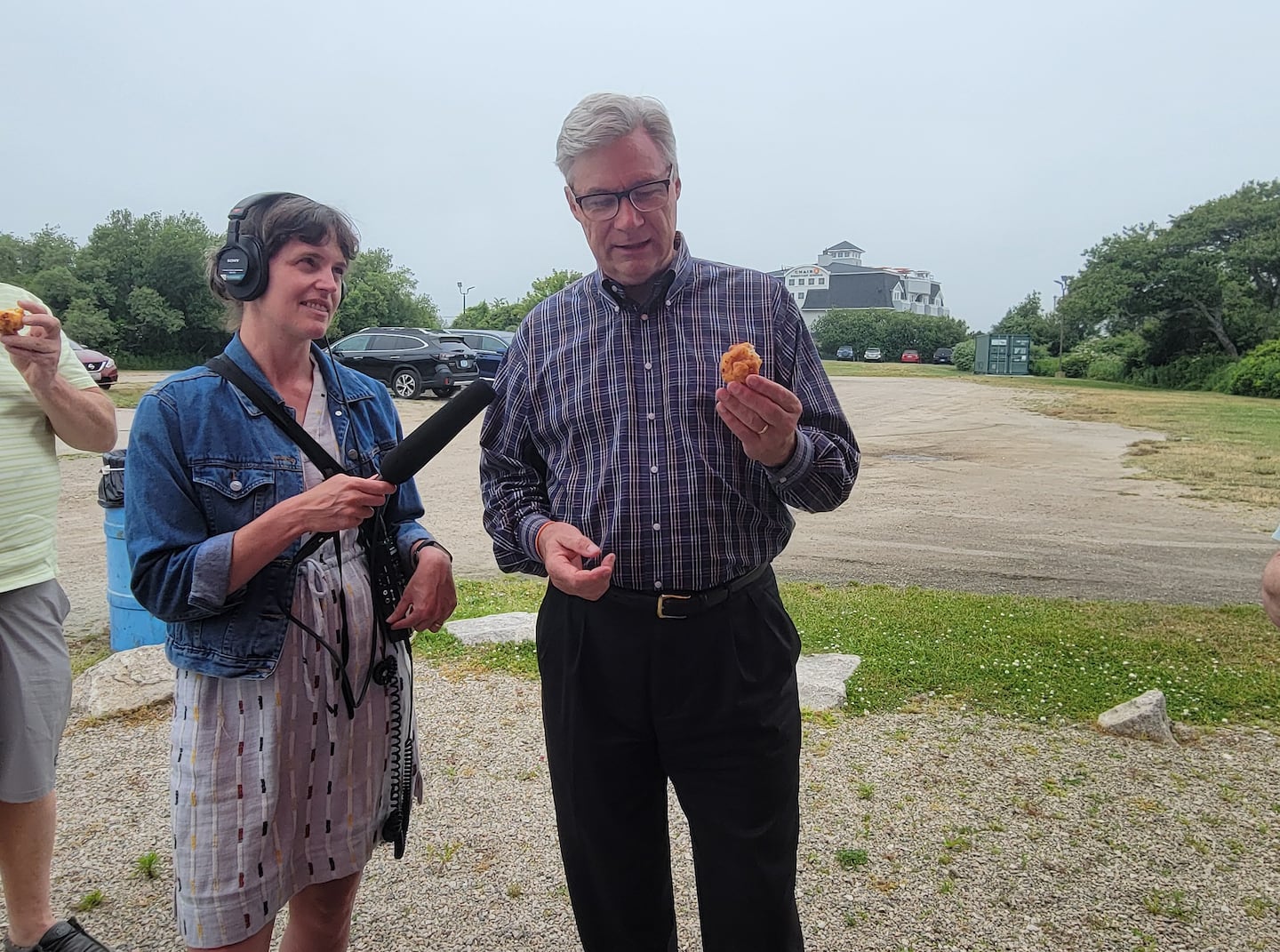
Megan Hall, left, producer of the Rhode Island Report podcast, listens as US Senator Sheldon Whitehouse analyzes a clam cake as part of the 10th Lil Rhody Clam Cake Crawl.

Rhode Island is justly proud of its clam cakes, which is why local enthusiasts launched an annual hunt for the very best.

At the Boston Globe, Ed Fitzpatrick wrote about one distinguished guest who lent his opinions to fellow Rhode Island “Clamarati” during the 10th Lil Rhody Clam Cake Crawl.

“As they stood outside Aunt Carrie’s Restaurant,” Fitzpatrick wrote, “Renee Bessette asked US Senator Sheldon Whitehouse why he had agreed to join the 10th Lil Rhody Clam Clake Crawl.

“ ‘A momentary lapse in judgment,’ Whitehouse replied with a laugh.

“But the Senate Judiciary Committee member grew serious when it came time to judge Rhode Island clam cakes using a rigorous seven-point rubric that includes ‘clam-to-cake ratio’ (does it have a lot of clams?), ‘clambiance’ (as an overall experience, would you go here again?), and ‘nubbins’ (Does it have protrusions, often clams, that can also be used as a handle as you eat?).

“ ‘Less on crispy. Smaller. More on tenderosity,’ Whitehouse said as he contrasted an Iggy’s clam cake with an Aunt Carrie’s clam cake.” Read all of the Senator’s insights at the Globe, here

Blogger Hunter Gather Cook also has a Rhode Island clam cake post, which includes a recipe that recommends using freshly ground clams if at all possible.

“Think clam beignet, or donut hole,” writes Hunter Gather Cook. “Only savory. Crispy, golden brown on the outside, pillowy and light on the inside. Steam rises from the first bite. The slightest aroma of brine surrounds you. Tiny chunks of clam nestle themselves in the folds of the pillow, offering surprising bites of chewy meatiness as you down one of these little glories after another. And another.

“With the possible exception of the Pacific Northwest, no region can boast mastery of the humble clam like New England. And within New England, it is Rhode Island that does it best. I have never seen these clam cakes any other place. They are a masterpiece of street food. …

“They are to me the gateway food of Block Island, which is the place I learned to forage and the place whose natural beauty I still hold closest to my heart. My fondest wish is to die an old man in a little cottage on that island. But not just yet.

“I am 3,100 miles from Block Island right now, a long way from Galilee and Rhody clam cakes. A few days ago, as I drove home from Bodega Bay, laden with clams, I realized that this was my first real chance to make clam cakes with fresh clams I had caught since I’d moved West years ago.

“I looked at my bucket of horseneck clams, dug an hour before. While they are certainly not the glorious quahog of my youth, they would do just fine in a clam cake — after all, you grind the clams anyway. …

“My recipe has no corn. More clams than the typical fritter, cake flour instead of all-purpose, and a touch of maple syrup. Maple syrup? Trust me. You need it.

“Now normally Rhode Island clam cakes are served with Tabasco and tartar sauce. … I am more of a Tabasco man. But I could not keep thinking about how much these were like New Orleans beignets. So I decided to break from Rhode Island tradition and add a little bit of the Big Easy to this recipe: Remoulade.

“If I thought I loved clam cakes before this, I may now be a clam cake junkie. … The recipe I made was way too much for Holly and I to eat at one sitting, but I decided to make them all anyway. We gorged ourselves on clam cakes until we were about to burst. I put the leftover cakes in the fridge.

“And you know something? They fried up almost as good the next day. Popped back in the deep fryer for 2-3 minutes, they came out fine.”

Any clam cake recipe including remoulade will horrify RI clamarati, but here goes. It starts with “canola or other vegetable oil for frying, 3 beaten eggs, 1/2 cup buttermilk, 1/2 cup clam broth, 1/2 cup cold beer, 2 teaspoons maple syrup, 1 1/2 cups chopped or ground clams, 1 teaspoon salt, 2 1/2 teaspoons baking powder, and 3 1/2 cups cake flour, or all-purpose flour.”

More at Hunter Gather, here.

Read Full Post »

Photo: Lane Turner/Boston Globe.
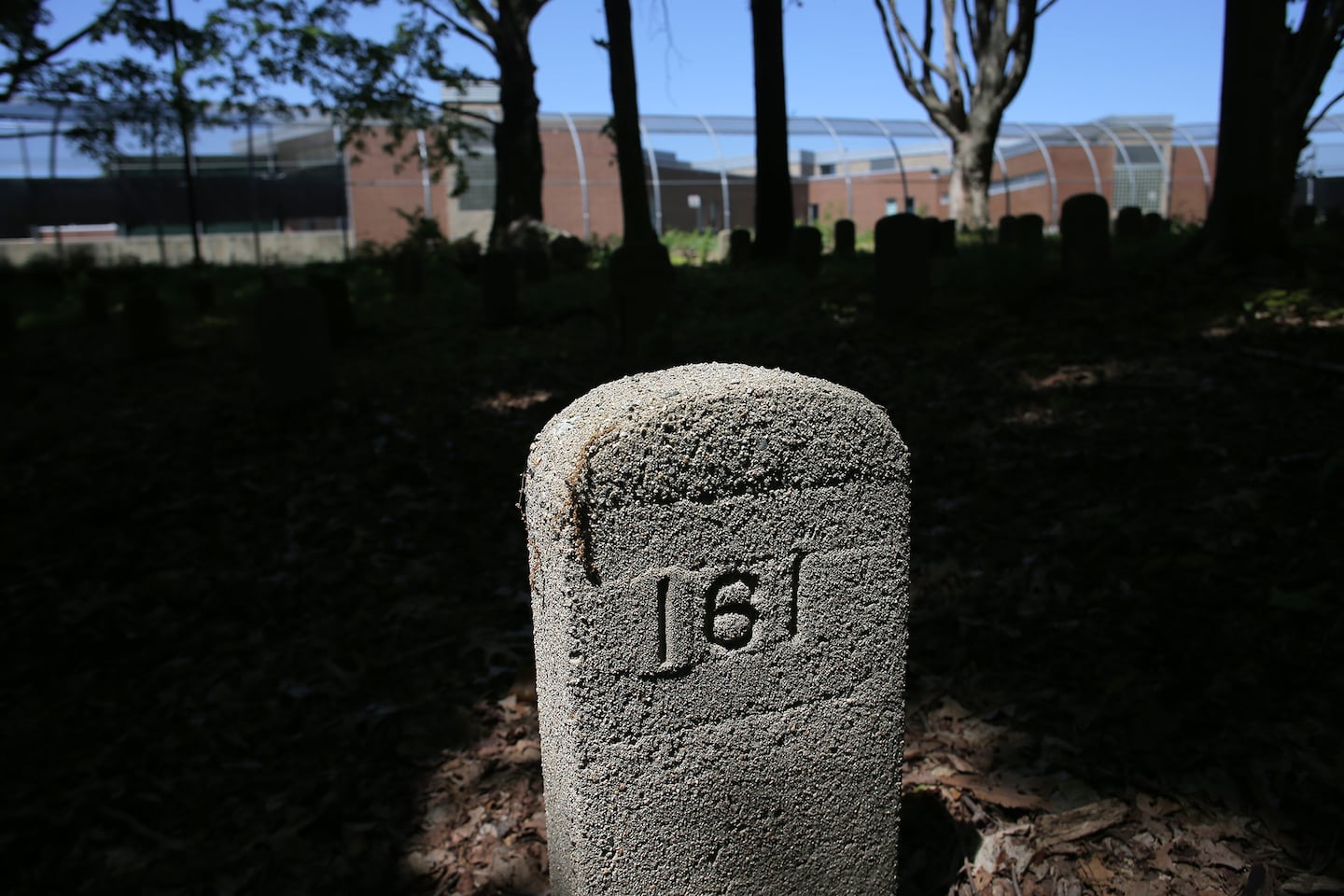
A numbered grave just outside the Rhode Island Training School Thomas C. Slater Youth Development Center in Cranston, Rhode Island. Teens incarcerated at the facility helped bring the paupers’ graveyard to light, writing obituaries for the forgotten.

Recently, I read a Victorian novel (The Three Clerks, Anthony Trollope) in which the notorious Dickens villain Bill Sykes was favorably compared to a villain who was born with every opportunity to live an upright life. Trollope’s point was that for a pauper raised in poverty with no access to education or higher things it might be considered understandable that he went bad and died in ignominy.

I’m thinking about this in connection with today’s story about how paupers’ graves raised the consciousness of some youths in trouble with the law today.

Amanda Milkovits wrote at the Boston Globe, “Sometimes, as they played basketball outside at the Rhode Island Training School, the teens would glance through the security fence to the woods and brush that shrouded rows of small stones.

“ ‘What are they?’ A 16-year-old boy incarcerated at the Training School remembered asking one of the staff members.

“Graves, he was told. The plain, numbered concrete headstones marked the burial sites of 1,049 people who died a century ago.

“Some had been residents of the state asylum. Some were teenagers who lived at the former Sockanosset Boys Training School. Some had spent their last years in the state poorhouse. Some were stillborn infants who were never given names, factory workers who fell on hard times, immigrants who sought a better life, only to die far from home.

“What they all had in common was poverty and no one to claim their bodies. From around 1915 until 1933, the state gave them a simple burial in this place, known as the State Farm Cemetery Annex, or Cranston Historical Cemetery No. 107. Prisoners made the concrete headstones, which were engraved with numbers instead of the names of those buried 6 feet below.

“ ‘I thought it was just a regular grave site, but I’d never seen a grave with a number before,’ another boy told the Globe. … ‘It’s sad. No one should just be a number.’

“For decades, the cemetery has been a lonely, quiet place, cut off from public access because it’s bordered by the state’s maximum security prison, Route 37, and the Training School. …

“John Scott, a senior community development training specialist at the Training School, had been interested in the cemetery since he first caught a glimpse of it in the 1990s. The teens’ curiosity made him wonder whether those on probation or who needed to perform community service could help restore the cemetery, even if only by clearing some of the brush.

“But Theresa Moore, president of T-Time Productions, saw potential for more. Her company designs educational curriculums with the goal of shining light on untold or little-known stories, and was already working with the Training School on its educational programs for incarcerated youths. …

“ ‘I’ve always looked for projects to enhance their lives,’ Moore said, ‘so when John mentioned it, I thought, “Why don’t we make it happen?” ‘

She called the project: ‘They Were More Than A Number.’

“Moore reached out to the leaders of the Rhode Island and Cranston historical cemeteries commissions, who were delighted to share their knowledge — they’d wanted to restore that cemetery for years, but could never get access. She contacted Secretary of State Gregg Amore, who assisted with resources at the state archives, giving the teens access to records from the state infirmary that include doctors’ notes, reports from the state institutions … and burial records. …

“The students started their research. Records and documents from the state archives, the drone footage, and other resources were used to help them put the history into context. Some materials, such as a video of Lorén Spears, executive director of the Tomaquag Museum, explaining the ‘pencil genocide’ of Indigenous people, were scanned into a Google drive for about 50 students and their teachers. …

” ‘At first, I didn’t really care,’ admitted one 16-year-old boy, ‘but I wouldn’t like it if I was just a number.’ …

“A 16-year-old boy said he chose No. 500, and learned it was the grave of a man named John Holland, who died in 1915. When he wrote Holland’s obituary, ‘It made me feel bad that they didn’t have names,’ he said. …

“One day in late May, the teens and the adults involved with the cemetery project met in person along the security fence at the Training School. The view through the fence was clear now. Brush and saplings and debris had been hauled away, and there were two new signs, marking the site as a state and city historical cemetery. The cemetery was serene, shaded by the old silver maples.

“As the teens in their dark blue uniforms listened, accompanied by their teachers, Scott, Moore, and volunteers from the Cranston Historical Cemeteries Commission thanked them for their work and told them it had meaning.

“John Hill, chairman of the Cranston Historical Cemeteries Commission, had read some of the obituaries written by the students.

“ ‘You’re giving them their names back,’ Hill told them. ‘You are making them human beings again.’ …

“Scott knew why the teens incarcerated at the Training School could relate. ‘If anyone can understand what it means to be a number,’ he said, ‘it’s our students.’”

Read this long, beautiful article at the Globe, here.

Read Full Post »

Photo: Boston Globe.
Teenage phenom and pastry chef Piper McAloon.

Some folks are still figuring out their calling when they are on Social Security. Others, like this chef in Bristol, Rhode Island, discover it when they are 11 years old.

Andrea E. McHugh has the inspiring story at the Boston Globe, “When she was a little girl, Piper McAloon had a natural curiosity when it came to baking, and was influenced by popular pastry-centric reality television shows. In her family kitchen, her parents Robin and Patrick encouraged her culinary creativity. What was once an 11-year-old’s lighthearted hobby morphed into the now 17-year-old’s career path.

“The high schooler, who lives in Bristol with her parents and sister, maintains a vegan dietShe applied for a job at Foglia when the plant-based restaurant opened in the summer of 2022, hoping she’d land a server position. But when chef/owner — and fellow vegan — Peter Carvelli, who was just named a semifinalist for 2024 Best Chef Northeast by the James Beard Foundation, saw her self-taught pastry skills for himself, he had other plans.

Andrea E. McHugh: How did you hear about Foglia?
Piper McAloon: Someone told me that there was a new vegan restaurant opening and so I reached out, never thinking I’d be their pastry chef — maybe I’d be a waitress. And I told [Peter Carvelli] about all my baking, and he was like, ‘I want you to be my pastry chef.’ I was so shocked. …

Have you always adhered to a plant-based diet?
“I’ve been a vegetarian since I was 11, and I’ve been vegan for about the past two and a half years. I think I was just kind of losing interest in meat, and like, the ethics of it, and then I cut out dairy. It was a very slow process, and eventually, I cut out eggs and other products. I didn’t have to go vegan, but I’m glad I did. I feel so much better.

Dairy is used in a lot of baking. How did you learn about vegan alternatives when it comes to pastry?
“It’s a big learning curve, learning how to switch everything. I’ve gotten the hang of it, and there’s so many people doing it now. At Foglia, we’re also nut-free, so I can’t use almond milk or any cashew [products]. … I learned so much from videos online and YouTube, I would just absorb so much information. I’ll see something and be like, ‘Hey, I could do this with this or that,’ and completely just take the inspiration and make it my own. Ground flaxseed and water, it gets really thick, and you can use it to replace eggs in different recipes. Aquafaba is more for say, macarons, and whipping, like you would an egg white. …

How has this experience at the restaurant expanded your business skills?
“Oh, it’s awesome. My boss, Peter, is such a great mentor. We’re always working together and he’s very, very supportive of me doing my own thing. I’ve also done a couple of pop-ups at the restaurant. I create a limited menu and he lets me use the restaurant during the afternoon because they’re only open for dinner, and I set up kind of like a mini-bakery, and people come in to buy food and I do all the accounting for it, and he helps me. We use Toast [a restaurant point-of-sale and management system], and if I have a special order for someone, he’ll let me use the kitchen.

What are you making right now for Foglia?
“Panna cotta is one of the things that’s a staple right now. It’s gluten-free and really good. It’s kind of like a custard. Generally it’s made out of gelatin, but I use something called agar, which is big in vegan baking for pastry cream, actually. We also have what we call a brownie snowball. …

What do your future plans look like?
“I’m going to Johnson & Wales in the fall, the Baking & Pastry Arts associates program, and then eventually I want to open a vegan bakery. It’s two years, and right after that I want to, I don’t know, travel and experience food everywhere else, and learn from them, and then eventually, probably a couple years after college, open my bakery. I’m very excited about it — it’s been my dream since I was 10.”

More at the Globe, here. What did you want to be when you were 10? Did you do it? I think I wanted to be an actress. Or maybe a ballerina.

Read Full Post »

Photo: Lily St Angelo/Burlington Free Press.
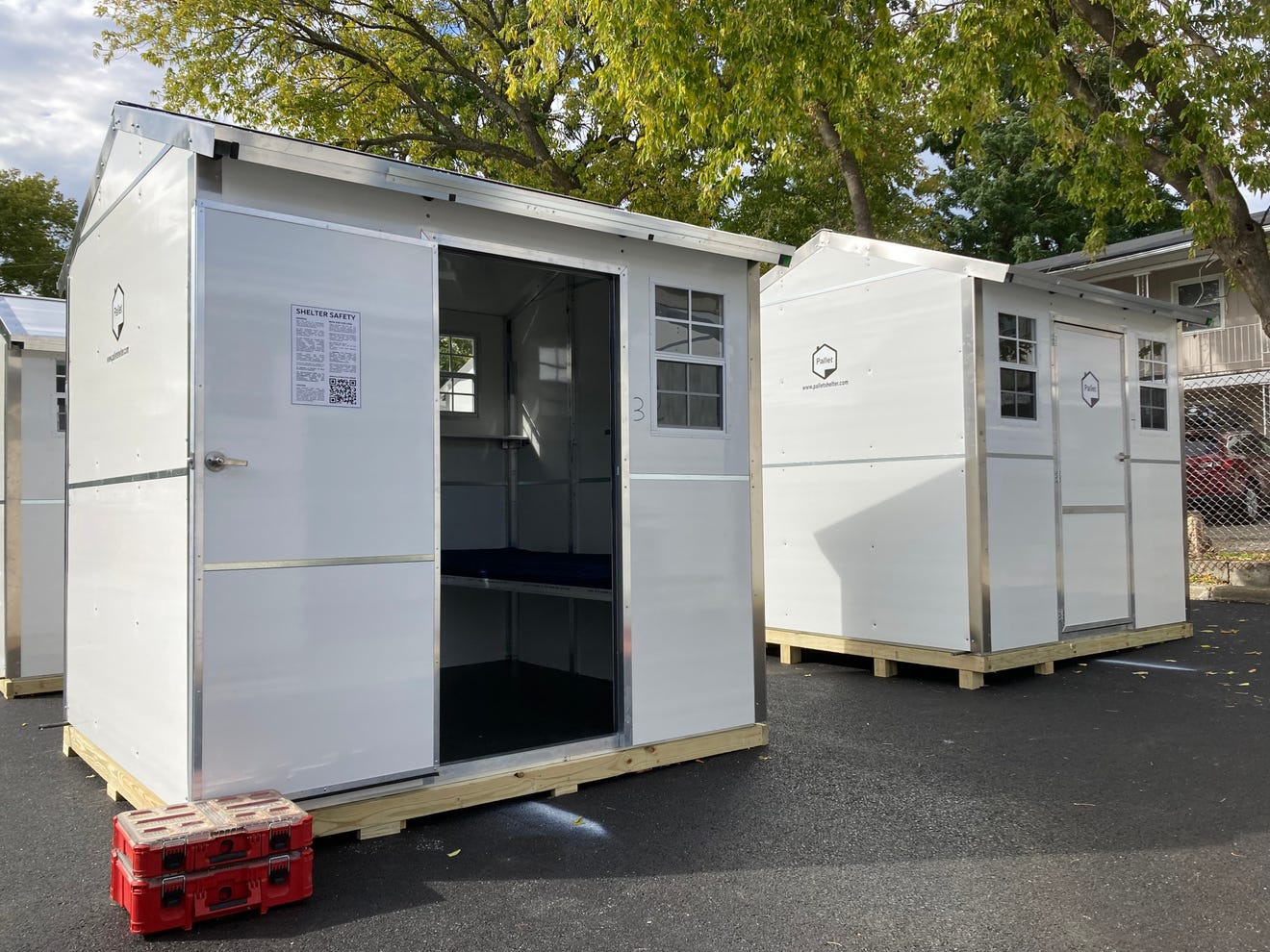
Pallet shelters opened in Burlington, Vermont, in November 2022.

Is this unfancy housing a good idea? It’s a reprieve from sleeping rough. It’s off the bare ground, it provides a roof and some heating and cooling, but … but …

In January, Wheeler Cowperthwaite wrote about “pallet shelters” (above picture) for the Providence Journal.

“Since the onset of the COVID-19 pandemic, when the limitations of congregate homeless shelters became clear as the world shut down against a new disease, House of Hope Executive Director Laura Jaworski has been thinking about pallet shelters.

“Three years later, as Burlington, Vermont and Boston have set up their own pallet shelters, Providence could be next in line with a plan for 45 individual tiny shelter buildings, 70 square feet, with screened windows, fire extinguishers, smoke and carbon-dioxide detectors, electrical outlets and their own heating and cooling systems.

“State officials are ‘pursuing’ a plan to open a 45-unit pallet-shelter village on state land off Victor Street in Providence, state Department of Housing spokeswoman Emily Marshall wrote in a news release.

“An additional four ‘office units’ are in the plan, as the site would be staffed at all times, as well as a ‘free-standing community room’ and a combination shower/bathroom and a laundry room. The shower and bathroom would be Americans with Disabilities Act compliant. …

“The proposed site is on 1 acre of a 4-acre half-moon-shaped lot on Victor Street that is bounded by the on-ramp for Route 146 from Douglas Avenue, as well as by Route 146. One street over, on Chalkstone Avenue, is the Foxy Lady strip club.

“It is unclear how long people will stay, but it’s meant to help them stabilize and move into permanent housing. … Rhode Island Homeless Advocacy Project Director Eric Hirsch said the pallet shelters are very needed and will make a difference to the state’s estimated population of 300 people sleeping outdoors.

” ‘These are a particularly good option, and I like the way they’ve set it up, with one person in each unit, so you don’t have to worry about roommate conflict,’ Hirsch said.

“The pallet shelters will take referrals from the state’s Coordinated Entry System, including those who have been chronically homeless.

“The pallet-shelter initiative is largely a result of outreach workers listening to people struggling with homelessness, and the reasons they would rather live outside than go to congregate shelters, where their lives and behavior are largely controlled by the operators, Jaworski said. …

“In congregate shelters, there is no privacy, people are often kicked out early in the morning and not allowed to come back until late in the afternoon and do not allow people to decompress and begin shifting from survival mode to secure residency. …

“Among the ways the pallet shelter would meet people where they are is allowing pets, including having a dog run, and allowing couples. … Pet ownership being banned and couples being separated were two of the major things that providers found were preventing people from taking offered shelter options, she said.

“Each shelter would also have electric service, which is especially important for people who need medication to be refrigerated, including anyone who needs insulin. …

“The city Board of Contract and Supply has scheduled a Jan. 16 hearing on a proposed $475,763 contract with House of Hope, paid for with American Rescue Plan Act funds, as well as a $475,394 outlay for Amos House to extend its program, or add shelter beds, at the Charlesgate shelter program. … In an email, Providence spokesman Josh Estrella wrote that, because the proposed shelter community would be built on state-owned ‘public right-of-way land,’ it is exempt from city zoning regulations.”

My only question is: Since temporary fixes so often become permanent, who is in charge of seeing this solution is truly transitional?

More at Projo, here. A February update from Sarah Doiron and Kayla Fish at WPRI notes that the shelters will open in early spring. See WPRI here.

Read Full Post »

Photo: Charles Lawrence.
A renovated 1865 Woonsocket, RI, home now provides living space for homeless female veterans.

When one thinks of homeless veterans, one tends to think of men. I remember visiting a new space for veterans when I worked at Rhode Island Housing. Saccoccio & Associates were the architects for the historic renovation of the Heaton and Cowing Mill in Providence, which created 20 units of veterans housing. It was beautifully done, but it did not house women.

So I was interested to read about housing specifically for female veterans in nearby Woonsocket, Rhode Island.

Bella Pelletiere has the story at the Valley Breeze.

“Homeless female veterans in Woonsocket will now have a home to spend the holidays in, say representatives from Operation Stand Down Rhode Island.

“[In November] the historic house at 495 South Main St. was reopened as transitional housing for female veterans in honor of the late Marine Corporal Andrea Ryder.

“Operation Stand Down Rhode Island is Rhode Island’s primary nonprofit resource for homeless and at-risk veterans. OSDRI facilitates a combination of permanent supportive, transitional and recovery housing to low-income and disabled veterans and has 88 locations for housing throughout the state.

“Executive Director Erik Wallin told The Breeze that since 2010, OSDRI has been operating a six-unit facility in Johnston for female veterans. That facility was recently filled to capacity and they have been trying to find alternative ways to house female veterans, who are currently allowed to stay between 6 and 24 months. …

“In May, Wallin told news sources that lead paint had been discovered during renovations, but OSDRI was working with the city and painters to restore the building. Though it was a long process, he said they knew they wanted to restore this ‘magnificent piece of architecture’ for the veterans who were coming to live there.

He added that they wouldn’t house veterans in any building they wouldn’t put their own family members in. …

“OSDRI dedicated the home to Ryder, a Rhode Island native who enlisted in the Marine Corps after graduating high school and was diagnosed with stage three melanoma when she left the service. After numerous surgeries she appeared to be in remission. In 2014, Ryder learned both that she was pregnant and that the cancer had returned at stage four.

“Ryder give birth to her baby girl in 2014, and in 2020, she ultimately succumbed to her illness after spending some time in hospice.

“Wallin said that throughout the years, they had gotten to know Ryder and her family, hosting fundraisers and supporting her until she died. …

“Many officials attended the reopening of the [house], including Tony DeQuattro, president and chairperson of the board of OSDRI, Sen. Sheldon Whitehouse, and Ryder’s family members.

“Ryder’s mother, Donna Paradiso, as well as her daughter, Olivia, and husband, Dennis Bourassa, also came to celebrate the life of their loved one and her name that will live on at 495 South Main St.”

These stories of veteran homelessness are so sad. You just know every time a war starts up that some who serve will come back traumatized. Some will end up homeless. We never do enough for them, but organizations like Operation Stand Down keeping chipping away at the needs.

More at the Valley Breeze, here. No firewall.

Read Full Post »

Older Posts »