Feeds:
Posts
Comments

Posts Tagged ‘rural’

Photo: Caitlin Babcock/Christian Science Monitor.
Tami Graham, executive director of KSUT Public Radio, in her Ignacio, Colorado, headquarters.

It’s inspiring to see ordinary people trying to fill the gaps left by the withdrawal of government funds. But will it be enough? That is the question for the staff of a small but vital public radio station in Colorado.

Caitlin Babcock wrote in September at the Christian Science Monitor, “Crystal Ashike’s reporting for local radio station KSUT made national news when she broke a story on white vans that were showing up on Navajo land and whisking people away. The photojournalist, who is herself Navajo, uncovered how tribal members were being offered access to treatment for substance abuse, only to end up in fraudulent sober living homes.

“KSUT is an NPR-affiliate radio station that serves five counties and four tribes in southwest Colorado and northwest New Mexico, providing local news like Ms. Ashike’s story. And it’s [losing] nearly a fourth of its funding. ….

“Congress passed a rescissions bill this summer, clawing back nearly $1.1 billion in funding for public broadcasting. [The Corporation for Public Broadcasting], established by Congress in the 1960s, provides a small percentage of funding for NPR and PBS [and] also helps fund local radio stations like KSUT, which are affiliated with NPR and air some of its content alongside their own programming tailored to local communities. …

“[For] this station serving small mountain towns, there’s a lot of uncertainty. And for many in the community, it fills an indispensable role.

“ ‘I think we’d really be in a news desert for anything that mattered to us locally, regionally, if it weren’t for KSUT,’ says Carol Fleischer, a longtime listener.

“KSUT is based in Ignacio, a town of about 1,000 people in southwest Colorado that is also the headquarters of the Southern Ute Indian Tribe. The Southern Ute originally founded the station in 1976 to provide community news and traditional Native American music. At the time, it was one of only eight tribal stations in the country.

“After becoming an NPR affiliate in the 1980s, KSUT now runs two separate signals, with one exclusively dedicated to tribal news. The tribal signal broadcasts from 8 a.m. to midnight every weekday. Its programming is a compilation of news affecting local tribes, traditional music, and talk shows like a weekly broadcast on health issues affecting Indian Country.

“The second signal airs a morning regional newscast, a compilation of the station’s own reporting as well as collaborations with other Colorado stations. They also broadcast programming from NPR and BBC News, plus music handpicked by their DJs.

“During the summer – which in southwest Colorado means fire season – KSUT’s morning host puts together a list of updates on any fires that are burning and how effectively they’re being contained. When necessary, the station broadcasts live emergency and evacuation alerts. The fire season this summer has been a pretty intense one, says Tami Graham, the station’s director, with six active fires in the area.

“For some listeners, radio is the primary or only source for this kind of information. In the mountains and canyons of the KSUT broadcast area, cell service is ‘hit-or-miss,’ as one resident describes it. More than 20% of people in La Plata County lack reliable broadband service, meaning radio may be their only way to receive emergency alerts. …

“Like many stations around the country, KSUT has seen an outpouring of support in the weeks since the CPB announced its shutdown. Members have upped their monthly donations, many listeners are sending money for the first time, and the station has even had funds come in from people far across the country. …

“Even though KSUT doesn’t have immediate plans to cut programming, the funding cuts could damage their broadcasting ability. Early this year, KSUT was awarded a $500,000 grant – administered by the Federal Emergency Management Agency through the CPB – to update the technology that enables emergency alerts. But they never received any of the money. After six months of uncertainty regarding the funds because of a separate issue with FEMA, Congress passed a bill rescinding funding for the CPB, which then informed Ms. Graham that KSUT would have to spend any allotted funds by Sept. 30.

“The station paid $46,000 to buy a needed transmitter and other equipment. Three days later, the CPB told the station it would not be able to reimburse them before the shutdown, and warned them not to purchase any new equipment. …

“Priscilla Precious Collins, a member of what’s known as the Ute Mountain Ute Tribe, says KSUT is ‘one of the pillar sources of information in our community.’ She recalls how the radio was ‘crucial’ in spreading information to tribal communities during the pandemic, such as how to keep tribal elders safe. …

“On a baking hot morning in Durango, one of the biggest towns served by KSUT, 20 local listeners assemble in the dining room of a downtown hotel to share their thoughts on local radio.

“ ‘I was a schoolteacher for 37 years, and I listened to KSUT going to school and coming home,’ says Sweetie Marbury, a former mayor who organized the group. ‘It’s a window to the world for us that live in mountain towns.’ …

“On a recent morning, the KSUT broadcast pauses. ‘We have a very sad announcement,’ says Ms. Graham, the executive director. She tells listeners that one of the station’s DJs has unexpectedly passed away. …

“A listener writes in that afternoon. ‘I send my deepest condolences to you and to everyone there at KSUT,’ she writes, ‘as I know it is not just a business.’ In this woman’s 49 years of listening to KSUT, she says the station has been a ‘lifeboat in an angry sea.’ ”

More at the Monitor, here.

Read Full Post »

Photo: Emily Mesner/Anchorage Daily News.
Lenora Ward, general manager at KOTZ radio station, listens to a 2022 dog-sled musher interview while on-air at the station in Kotzebue.

Few places in the US rely more heavily on public radio than Alaska. That is why people who care about Alaska rushed to bridge the gap after the current Congress decided public radio is not needed.

Iris Samuels reports for the Anchorage Daily News, “An Alaska fund has raised $3.5 million as it seeks to replace federal funding rescinded by Congress for public radio and television stations.

“Amid fundraising efforts, station leaders say they are already beginning to cut some programming. …

“Congress in July voted to rescind $1 billion in federal funding for public media across the country. … Two of Alaska’s three-member congressional delegation voted in favor of the rescission, which eliminated roughly $15 million intended for more than two dozen stations in Alaska. …

“Sen. Lisa Murkowski was one of a few Republicans in Congress who attempted to salvage the federal funding that Congress members themselves had approved last year, pointing to its importance in alerting Alaskans to natural hazards like tsunamis, earthquakes and fires.

“In a recent call hosted by a coalition of Alaska public radio and television stations, PBS President Paula Kerger said that Alaska is at the forefront of national fundraising efforts intended to — at least temporarily — supplant federal funding with money from private donors and foundations. …

“Kerger said she was ‘deeply grateful to Sen. Murkowski, who really fought for us more than any other member of Congress.’

Alaska stations banded together in the days following the July rescission vote to, with the Alaska Community Foundation, establish the Voices Across Alaska Fund, which in its first two months raised more than $3.5 million.

“The funds came from 80 donors, which include individuals, corporations and foundations in Alaska and in the Lower 48, according to Alaska Community Foundation spokesperson Ashley Ellingson. The funds will be disbursed to stations [based] on stations’ needs, Ellingson said. …

“Alaska Public Media President Ed Ulman said that since the rescission, new donors have begun giving, or existing donors have upped their contributions. …

“Funds will be distributed to Alaska stations, which are also independently fundraising, several station managers said in recent days. Even as they have pivoted to fundraising efforts, the station managers reported making several targeted cuts to their programming in response to the loss of federal funding.

“Alaska Public Media, the state’s largest public station, has paused Alaska Insight, a television news program that was broadcast across the state. Ulman said Alaska Public Media has also cut its education programming and is considering cutting Debate for the State, a program that features candidate forums for statewide offices. …

“Gretchen Gordon, general manager of KUAC, a station serving Interior Alaska, said the station has cut overnight broadcasting, eliminated some national radio programs and lost television service in Nenana in response to the federal funding cut. Gordon said KUAC is ‘determined to find ways to restore lost programs and services.’

“Kristin Hall, general manager at KYUK, which serves Bethel and the Yukon-Kuskokwim Delta, said the station lost $1.2 million in federal funding, and could eliminate more than half its staff by the end of the calendar year.

“Justin Shoman, president and general manager of KTOO, said the Juneau-based station may need to adjust its coverage of the Legislature. Gavel Alaska, a live-streaming service for legislative hearings, press conferences and trial hearings, costs more than $1 million annually to run and receives no state funding, Shoman said. Until the rescission, federal funding made up more than a third of KTOO’s annual budget. …

“The federal funding cut comes after a yearslong refusal by Gov. Mike Dunleavy to spend state dollars on public media. Starting in his first year as governor, he repeatedly vetoed funding intended for public radio stations. This year, the Legislature did not fund the grants for public radio in the budget. …

“ ‘It’s not lost on many of us that the Legislature has every single year put in funding, in particular for rural public radio,’ said Ulman. ‘And yet, there is one individual who has the power of the veto who exercises that veto and goes against — I’m just going to say it — the will of the people.’

“When Begich, Alaska’s lone U.S. House member, voted in June to claw back federal funding for public media, he reasoned that public broadcasting was no longer essential because Alaskans now use ‘pervasive cellular, satellite, and wireline technologies.’

“But Gordon, with KUAC, said many Interior residents do not have access to broadband internet. … ‘Our lawmakers need to understand that a little better,’ she said.”

Will the new fundraising levels last? Only time will tell. More at the Anchorage Daily News, here. And do read about how an Alaska public radio station saves lives, here.

Read Full Post »

Photo: Wigtown, Scotland, Book Festival.

Book lovers who are traveling this year may want to think about visiting one of the “book towns” profiled recently in National Geographic. Ashley Packard collected seven that sound charming.

“1. In the Welsh village of Hay-on-Wye, where sheep outnumber people and books spill onto the streets, a quiet revolution began. Antiquarian and academic Richard Booth inadvertently launched a global movement when he began filling the empty buildings of Hay-on-Wye with secondhand books.

“What started as a single decision in 1961 to fill his sleepy hometown with secondhand books to sell in numerous empty buildings, turned into the birthplace of a global literary mecca uniting villages, bibliophiles, and dreamers alike. …

“Hay-on-Wye became the first ever ‘book town,’ supporting patrons who flocked to the shops. Booth, who crowned himself ‘King of Hay,’ inspired others to turn literature into lifelines for their little towns and villages. As word of his success spread, more towns around the world embraced the concept for their communities. Before long, the International Organization of Book Towns was formed in April 2001, though it had existed without the official designation for decades prior.

“The organization aims to raise public awareness of book towns through online information and a biennial International Book Town Festival. It supports rural economies by facilitating knowledge exchange among booksellers and businesses, encouraging the use of technology, and helping to preserve and promote regional and national cultural heritage on a global scale.

“By definition, a book town is ‘a small, preferably rural, town or village in which secondhand and antiquarian bookshops are concentrated.’ … Today, there are dozens of towns with the designation, from Pazin, Croatia, to Featherson, New Zealand. These selected and approved locations take pride in their history, scenic beauty, and contributions to the literary world. …

“2. In a small village tucked away in the hilly countryside of Belgium, Redu is now celebrating its 41st anniversary since becoming the second book town in 1984. This idyllic village is described as, ‘fragrant with the scent of old paper.’ … It, along with its hamlets Lesse and Séchery, were recently added to the ‘Most Beautiful Villages in Wallonia‘ list in July 2024.

“3. [In Scotland] nestled on a hill overlooking the sea along a rugged coastline, woodlands, and forests, lies Wigtown, celebrating 20 years as ‘Scotland’s Book Town.’ … It has 16 different types of book shops, many secondhand, that participate in an annual Spring Weekend in early May, a community festival in July, a market every Saturday from April through late September, and the annual Wigtown Book Festival in late September through early October. The 10-day literary celebration was founded in 1999 and now features more than 200 events, including music, theater, food, and visual arts. 

“4. Turup [in Denmark] is situated 37 miles north of the Danish capital of Copenhagen, between the sea and a fjord, and has a population of 374 people. Here, locals put out the best and most high-quality secondhand books from donations out for sale along the rural roads of the 10 different shops (if you can call them that) for purchase. These ‘bookshops’ include a garage, a workman’s hut, a disused stable, a bookshelf on a farm entrance, and even a newly restored railway station. Some of these stalls process transactions on a self-help and honesty basis where customers leave their change in a jar in exchange for their purchases. The Torup Book Town Association hosts an annual Nordic Book Festival with book readings from authors, contemporary short films, cultural events, and more. 

“5. Surrounded by stunning landscapes, rolling hills, and vineyards is the quaint town of Featherston [New Zealand] … became officially recognized as a book town in 2018. It is famously known for the annual book festival held in May. They have initiatives dedicated to fostering community growth, inspire reading, writing, and idea-sharing across Wairarapa and Aotearoa, New Zealand.

“6. Offering year-round bookstalls and literary festivals, the village of St-Pierre-de-Clages is home to Switzerland’s only book village. ‘Le Village Suisse du Livre,’ translated to ‘The Swiss Book Village,’ is home to a large secondhand market, along with authors, thematic exhibitions, activities for children, and a renowned Book Festival that has been hosted every last weekend of August since 1993. … This festival takes place over three days and attracts visitors from all over French-speaking Switzerland and neighbors. It offers insight into book professions such as calligraphy and old printing techniques, a welcoming space for writers and publishing houses to meet, and various artists to display their work.

“7. The former garrison town of Wünsdorf [in Germany] is known as ‘book and bunker city’ due to the historical sites, buildings, book shops, cafes and tea rooms, and lively cultural life. Nestled about 12 miles south of Berlin, the town offers year-round events, readings, exhibitions, military vehicle meetings, and currently five different bunker and guided tours. Wünsdorf was established as an official member of the International Organization of Book Towns in 1998 thanks to its three large antiquarian shops that boast of a wide array of literary treasures on topics such as poetry, philosophy, classical literature, and many more.”

More at National Geographic, here. Great photos, as you would expect from National Geographic.

Read Full Post »

Photo: Liam James Doyle/MPR News.
David Huckfelt performs on the Turf Club stage. “We’re building these little fires in small places,” Huckfelt says.

Because I still believe that “one and two and fifty make a million,” as Pete Seeger used to sing, I get a kick out of all the stories I’ve been seeing lately that confirm the power of small.

Alex V. Cipolle reports at Minnesota Public Radio (MPR) about one small but mighty effort, a new arts collective that “goes on tour to build community in rural Minnesota and beyond. …

“On a September evening at the Turf Club in St. Paul, models weave through bar tables in upcycled designs.

Annie Humphrey, an artist and musician based on the Leech Lake Reservation, performs on the stage, followed by Minneapolis musician David Huckfelt. On a back table Shanai Matteson, an artist from Palisade leads printmaking demos with a stencil of a black aandeg (the Anishinaabe word for crow) and an orange-red sun.

“ ‘There’s a story about the crow. Long ago, the crow had bright, beautiful, vibrant colored feathers,’ Humphrey recalls. ‘But crow also saw that the people were suffering because they had no fire.’ To bring fire to the people, crow flew close to the sun and scorched his feathers black.

“ ‘He was able to grab the fire and bring it back down to the earth and bring fire to the people so that they could be warm,’ Humphrey continues. ‘If you take a crow feather and hold it in the sun, it’s iridescent, and all these colors are still in that feather.’

“The stencil is the logo for the new arts and community-building collective Fire in the Village, started by Humphrey, Matteson and Huckfelt this year. (Fire in the Village is also the title of a book of Ojibwe stories by Humphrey’s mother, Anne Dunn.) …

“The trio all share a background in activism, specifically fighting the Line 3 oil pipeline. … But with Fire in the Village, the collective wants to do something untethered from any one cause. 

“ ‘If we were going to start something, I knew that it should center on art and the human spirit, the human condition,’ Humphrey says, ‘and have no politics involved at all.’

“Through art, fashion, music and collaborative events with schools and local organizations, the collective is hoping to heal divides and put a dent in the loneliness epidemic in rural communities and on reservations.

“ ‘I think a lot of people are feeling isolated,’ Matteson says. ‘There’s a lot of divisiveness going on. Personally, I’m not interested in continuing that. I don’t want to be part of a cause where it feels like it’s putting another barrier between me and the people who live around me.’ …

“ ‘We like the feeling of the collective and not pushing one person as a front for something,’ Huckfelt adds. ‘So, we’re really working together with our skillset because we believe in music, we believe in art, we believe in community, and so that’s what’s being put forward here.’ …

“ ‘Fire in the Village is a way to connect with individuals and to smaller communities that you’re a part of,’ says Meira Smit, one of the Macalester students who came to the Turf Club. ‘A way to build messages and movements around the things that we deeply care about.’

“Haley Cherry, a producer for Minnesota’s Native Roots Radio on AM950, also came out to walk in the fashion show after meeting Humphrey and Huckfelt this past year.

“ ‘It’s important to hear from both perspectives: issues of Indigenous identity, but also [from] David, as a white ally, I think it’s important to draw those bridges of community concerns,’ says Cherry, who is a descendant of the Ho-Chunk Nation of Wisconsin. …

“In June, Humphrey also led a community mural with youth groups on the Leech Lake Reservation, the Boys & Girls Club in Deer River and the Long Lake Conservation Center. Soon, the mural will be installed at the powwow grounds in Ball Club, a village on the reservation. There are more murals to come, Humphrey says.

“The tour is also about revival, Huckfelt says, stopping at historic community buildings in small towns, such as the 210 Gallery and Art Center in Sandstone Oct. 19 and the Historic Chief Theater in Bemidji on Nov. 2. ‘A lot of these spaces are really beautiful old music and theater art spaces,’ Huckfelt says. …

“Huckfelt says, ‘We’ve been doing this work in our own ways for a long time, individually and together. It’s a natural step to call it “Fire in the Village” —  little fires that we can sustain and we can huddle around for good ideas and for community.’ …

“ ‘It’s a very gentle way to say really hard stuff,’ Humphrey says. ‘I have played in front of people who don’t agree with what I speak, but when I sing it?’ “

More at MPR, here. No firewall. Great pictures.

Read Full Post »

Photo: Scotsman.
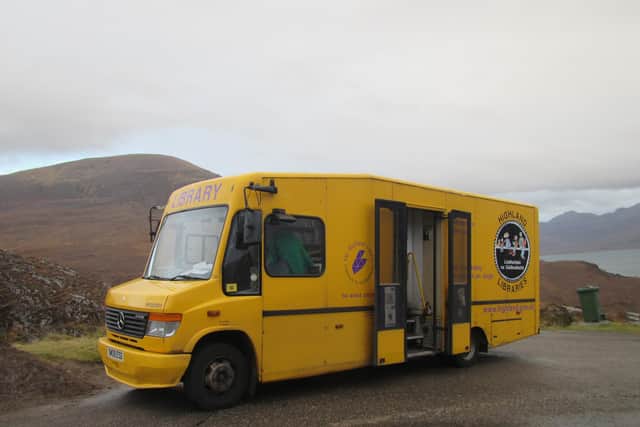
A yellow mobile library in the Highlands. The fleet has dwindled from 10 to seven. Transit vans, with fewer books packed in crates, are now filling the gaps.

All over the world, fans of books and libraries have found ways to reach readers in largely inaccessible regions. We’ve had stories here about using camels, horseback riders, vans, carts, and more.

Today’s article from the Scotsman, bemoans the gradual disappearance of Scotland’s yellow library buses.

As Alison Campsie reported in June, “For those living in the most isolated pockets of the Highlands, the sight of the yellow library van coming into view has long been a welcome one.

“But now, concerns for the future of the mobile libraries have been raised after the distinctive vans – complete with desk and bookshelves – dwindle in numbers.

“Mr Preston said a fleet of 10 yellow mobile libraries – plus a spare – has now been reduced to seven vans. Of these, five are standard Transits, which are now packed with crates, carry fewer books and have to be loaded and unloaded.

“The librarian, whose yellow van did not return from the garage in April, said: ‘I am worried that the mobile library service will fizzle out and die.

“ ‘People love the service and they want to see it continue. A lot of the people I serve are single people living by themselves and they might not see people, apart from the postman, for two or three weeks and then the library arrives. …

“Megan MacInnes, a co-opted community councillor for Applecross, said the mobile library was ‘a hugely important service.

” ‘The range of demographics of folk who use it demonstrates that. We have to drive nearly an hour to get to the nearest library at Lochcarron. That is just not feasible for many.

” ‘Personally, I completely rely on the mobile library for my books and as a parent it has been hugely important in helping my son to read and become interested in books. The children at school love being able to use the mobile library and they come out with such a range, from history and geology to novels and cartoons and the latest David Walliams or Harry Potter.

“Everyone here is very aware of the financial pressures that Highland Council is under but when it comes to these lifeline services, we really urge them to be continued.’ We are so far from population centres that we really can’t afford for our outreach services to go.’ …

“A spokesperson from Highlife Highland said it was working with Highland Council, which owns the vans, ‘to better understand how such services can be delivered including accessibility and customer needs. This will also help to inform replacement fleet requirements and to establish specifications and costs.’

“A statement added: ‘High Life Highland is providing an alternative service for rural customers with the option of a drop-off of books to their homes to ensure that they have access to reading material and schools are also given the option of a drop-off of books to their building.

” ‘We recognise that mobile libraries are an essential part of life in the Highlands and while this service is not a like for like replacement, it may help to ease some of the difficulties for the most vulnerable and isolated service users during this time.’ ”

More at the Scotsman, here. PS, if you search this blog on “mobile library,” you could get enough material for a dissertation, almost! Mobile libraries are cherished all over the world.

Read Full Post »

Photo: Clatskanie Library District via Oregon ArtsWatch.
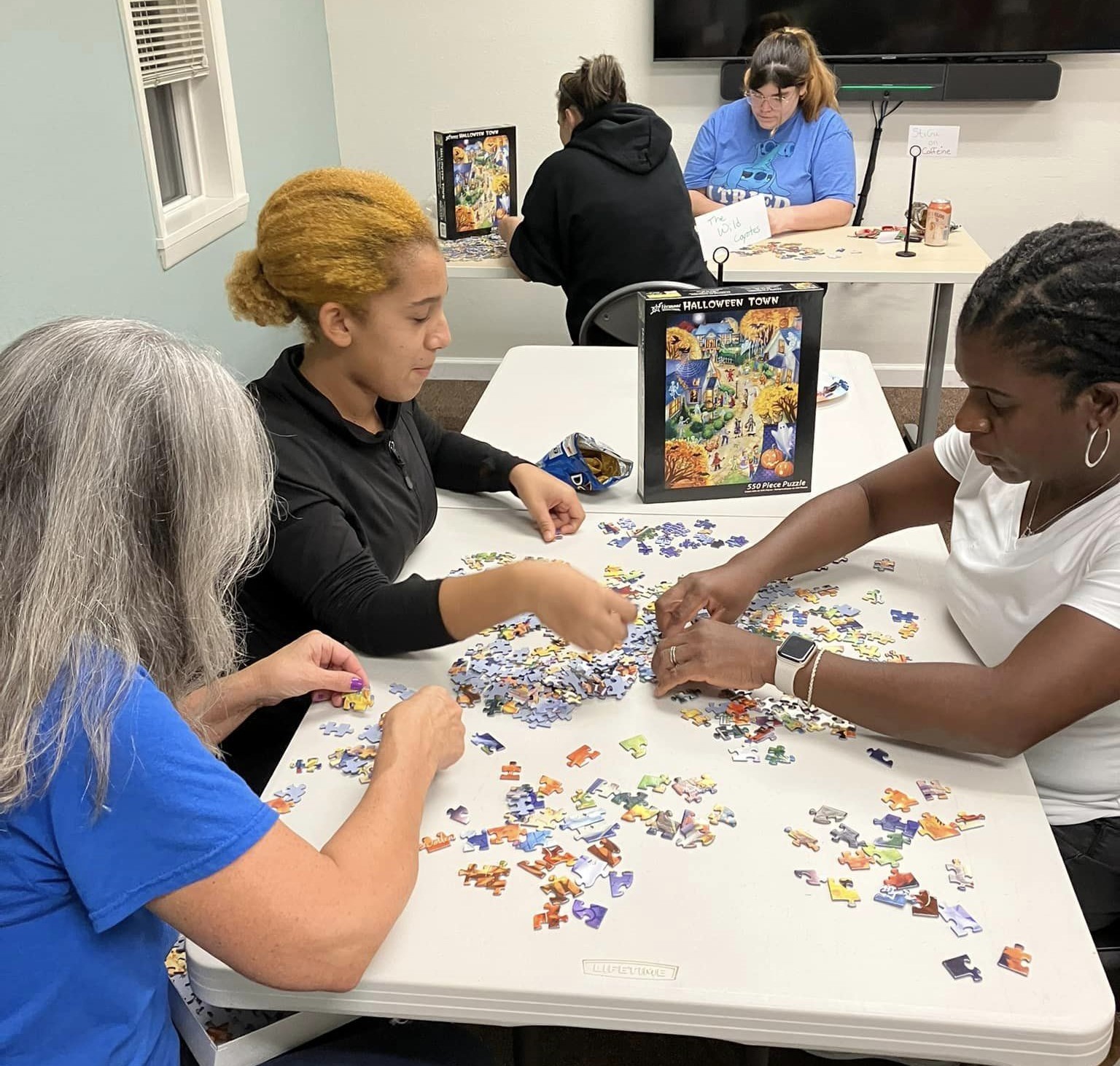
The Clatskanie Library hosted a Halloween puzzle race last fall. “We want to be the community hub,” says library director Maryanne Hirning. “I want everyone to find something at the library.”

It would be hard to overstate the value of a library to a community, a refuge in so many ways. Remember the safe haven in Ferguson, Missouri, during the riots that erupted after the police killing of black teen Michael Brown? I have been following that library on Twitter since 2014 and am impressed with their services in calmer times, too.

At Oregon ArtsWatch, Amanda Waldroupe writes that libraries are often the heart and soul of rural communities.

“During the celebration of [the town of] Maupin’s centennial anniversary last year, its public library – the Southern Wasco County Library – printed a second edition of Chaff in the Wind: Gleanings of the Maupin Community.

Chaff in the Wind is a history of Maupin and Wasco County that the library’s Friends’ group originally published in 1986. The library commissioned new chapters covering Maupin’s history since then.

“Another era also needed to be added: There was nothing about the region’s history before white people settled there, even though Native Americans had lived in the region for hundreds of years. So, Valerie Stephenson, the library’s director, reached out to the Confederated Tribes of Warm Springs.

“Delson Suppah, the Warm Springs’ cultural program coordinator, agreed to contribute – but not through writing a book chapter. Like many Indigenous cultures, the Warm Springs tribe conveys its history through oral storytelling. In two events, Suppah gave an oral history of the Warm Springs tribe’s history and presence in the area.

“Grant funding – in this case, $4,000 from Oregon Humanities – paid for the events and republishing the book. Without the grant, Stephenson said, none of it would have happened. …

“Oregon’s public libraries are well loved and well used, with one of the highest per capita circulation rates in the country. Public libraries are among the last institutions that are free and open to the general public, making them a natural gathering space for adults and children. …

“Libraries have always played a critical role in early literacy: teaching kids how to read, hosting summer reading programs, and reading and story time events for different age groups. Libraries were also early adopters in providing free access to computers and fast, broadband internet.

“Even before the COVID-19 pandemic prompted libraries to begin offering virtual and online services, libraries’ services were expanding to take on roles that blend information literacy, social, and community services. Library staff are increasingly being trained in basic mental health crisis response and how to administer Narcan or naloxone to people experiencing an opiate overdose. To serve growing numbers of immigrant communities, libraries are acquiring books in languages other than English, bilingual books, and hiring staff who speak languages in addition to English, especially Spanish.

“In many communities, libraries are a place where people experiencing homelessness can spend the day, where senior citizens find social interaction, and where kids can go after school.

“ ‘Libraries are places where people from all different backgrounds can interact,’ Buzzy Nielsen, a program manager for the State Library of Oregon, said. …

“That is especially the case in rural Oregon, where libraries are often the only places that host arts and cultural events.

“[Southern Wasco County Library] has a conference room large enough to host governmental, board, and other community meetings. The library hosts social workers from the Wasco County Health Department, who come to meet with residents and process applications for the Oregon Health Plan, SNAP benefits, disability, and other services. …

“Clatskanie’s library has started a young adult book club and hosted classes on flower arranging and cookie decorating, both taught by local business owners. …

“Libraries have also created Libraries of Things, where patrons can check out items ranging from e-readers with pre-downloaded e-books; ukuleles and other musical instruments; pots, pans, and other cooking equipment; fishing poles; and for kids, telescopes and science kits. …

“Libraries of Things reflect their community. Harney County’s library checks out canners, dehydrators, and other items necessary to preserve food.

“Wi-Fi hotspots are another common offering. Stephenson, Hancock, and others said the availability of fast, broadband internet in rural Oregon can be nonexistent. …

“Hancock said, ‘We have a lot of spots that aren’t served by internet companies.’ The library’s ten Wi-Fi hotspots are always checked out with holds placed on them. ‘They are hugely popular, she said. …

“With the expansion of library services, circulation has dramatically increased for a library’s most fundamental offering – books. [Maryanne Hirning, director of the Clatskanie Library District] said book circulation has increased by 400 percent. Other librarians say that once someone attends an event at a library, they are more likely to consider other services the library offers, become a member, and check out books.”

Lots more at Oregon ArtsWatch, here.

Blogger Laurie Graves has long understood that librarians are superheroes. And through her Great Library fantasy series, she shows that threats to libraries can be a matter of life and death.

Read Full Post »

Photo: Jennifer Hodges.
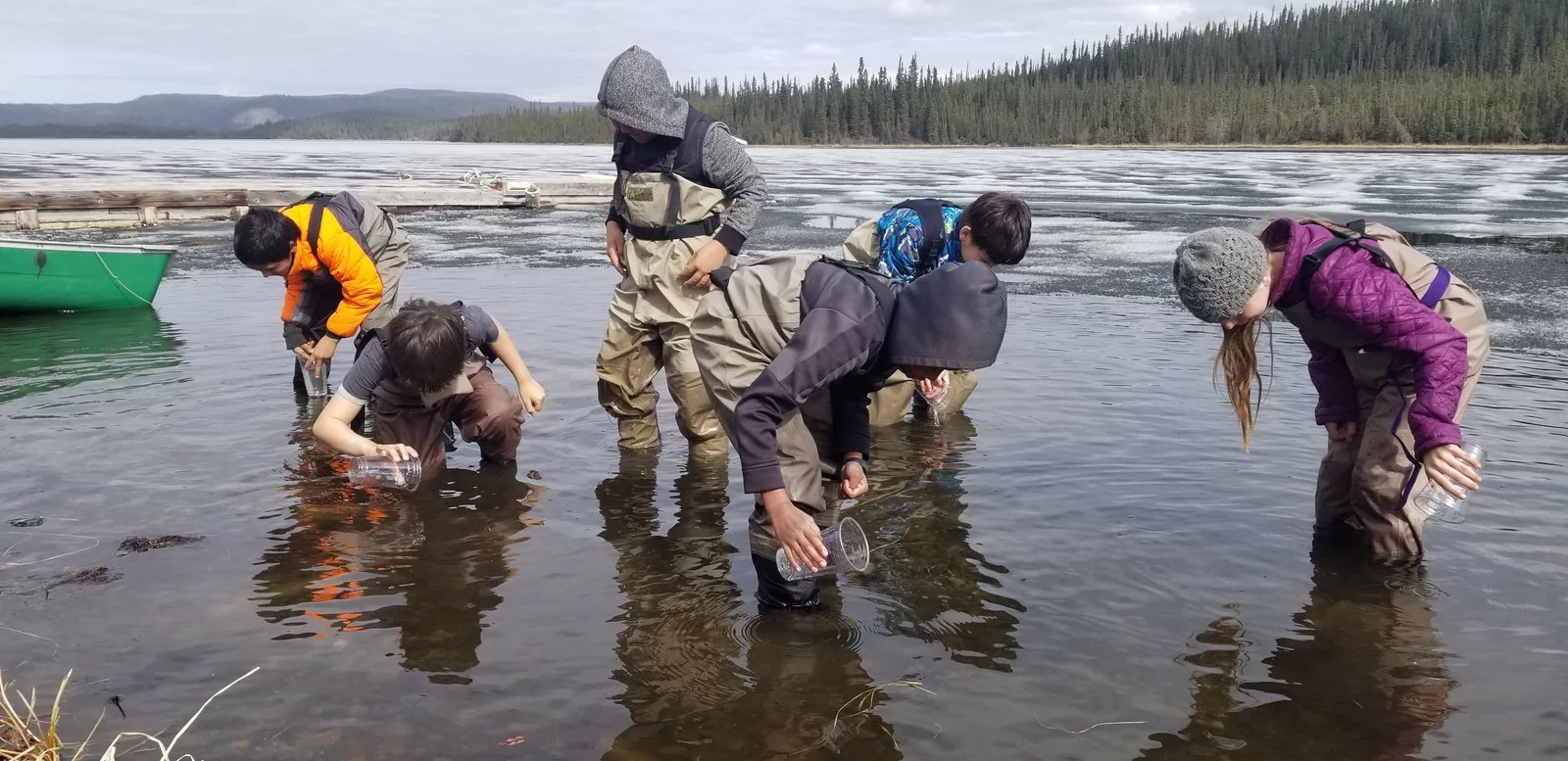
Students releasing salmon into the lake on the Salmon Field Trip in Alaska.

Much of our hope for protecting the planet relies on the education of young children. That’s why this story from Alaska about getting up close and personal with the salmon life cycle is so interesting.

Claire Murashima reports for National Public Radio (NPR), “Kenny Lake School in Copper Center, Alaska, is small, with about 60 students from kindergarten to high school seniors. It’s even smaller in winter when some parents homeschool their children because of the long drives and slick roads.

“Jennifer Hodges is a third, fourth and fifth grade teacher. She says her three-grade class sits only at desks for 20 minutes a day. They do a lot of practical learning, such as raising Coho salmon from egg to Alevin to fry then releasing them into a lake.

“It’s through a program called Salmon in the Classroom, established by the Alaska Department of Fish and Game. Kate Morse, program director for the Copper River Watershed Project, is in charge of implementing the program in six schools throughout Alaska’s Copper River watershed.

“Coho salmon lay eggs in the fall, when many schools start. The eggs remain in the classroom about six months before they are released into lakes. After that, they live for two to four years before they spawn and then die shortly afterwards.

“Every day, about a third of Hodges’ students ride the bus 45 minutes from the Native Village of Chitina. Many students already have experience fishing salmon, which is a staple in Native Alaskan communities.

‘It’s really a delicate balance because we are dealing with traditions and culture of the Native people,’ Hodges says. ‘This is their land, this is their salmon. And so we have to really be part of that.’

“Ahtna, a local tribal association, helped donate the tank in her classroom.

“Though many of her students grow up fishing salmon for food, few have raised them as pets.

” ‘The salmon have turned from being just fish in their backyard that they catch to eat, to fish that they are connecting to,’ says Hodges. ‘With this project, they have a whole different perspective because they know what it takes to actually go through the stages of a salmon.’

“Learning about climate change is more crucial now than ever. In 2022, the Arctic had its sixth-warmest year on record. But these lessons are made concrete to them in raising salmon, which require cold water to survive.

‘We had a failure in our equipment and it brought the temperature up about five degrees,’ says Hodges. ‘Just warming it that much just wiped out our eggs.’

“During the months that the salmon are in the classroom, students like to sit by the tank to observe. ‘When the eggs hatch they have sacs that carry their food,’ says Addy, a student. ‘That way they can hide still and don’t have to look for food. It’s funny because when they try to swim they just end up in circles.’ …

” ‘Putting hand sanitizer on your hands and then putting your fingers in the tank – you’ve polluted the tank,’ Hodges says. ‘That has happened to us before. That year we had seven make it. Normally we have about 180 that make it.’

“Students like to calculate when the salmon will turn from eggs to Alevin to fry based on the temperature of the tank. To them, it’s not practicing math problems: it’s predicting the future. …

“Since Hodges and her students live in such a rural area, there aren’t many field trips. But each year in May, she takes her students on the Salmon Field Trip, where they get to release the salmon they’ve raised in class. …

” ‘The best part is getting to release them after watching them hatch from eggs, grow into fry and take care of them,’ says Fisher, a student. ‘You get to say goodbye.’

“The student put the salmon in a bucket and then secured it with a seatbelt. Students suit up in chest waders, rubber bodysuits to keep them dry when they go into lakes, and then each gets a cup of about ten fish. They put the cup under water and let the fish swim out.”

More at NPR, here. No firewall.

Read Full Post »

Photo: Anupan Nath/AP.
Actors in Awahan mobile theater group perform in a village near Guwahati, India, after a two-year hiatus because of Covid.

So many activities got suspended during Covid, and many workers wondered if they would still have a job when the world reopened. That was true for everyone from servers in struggling US restaurants to actors in rural India.

In April, Al-Jazeera posted about a traveling theater in India that, to everyone’s relief, is reemerging after two years.

“Traveling theater groups in India’s northeastern state of Assam are reviving the local art and culture scene after the COVID-19 pandemic forced a pause in their performances for nearly two years.

“Seven roving theater companies are back on stage playing before crowds in villages, towns and cities across the state. These mobile theaters are among the most popular forms of local entertainment.

“ ‘The public response has been very good. They love live performances. We have no competition from television and the digital boom,’ said Prastuti Parashar, a top Assamese actress who owns the Awahan Theatre group.

“Before the coronavirus hit the region, about 50 theater groups, each involving 120 to 150 people, performed throughout the state. They would start in September, coinciding with major Hindu festivals such as Durga Puja and Diwali, and continue until April. …

“Drama is an integral part of Indian culture and the mobile theater groups do not restrict themselves to mythological and social themes. They have in the past covered classic Greek tragedies, Shakespearean tales and historical subjects like the sinking of the Titanic, Lady Diana and the attack on the World Trade Center in 2001.

“The groups travel with directors, actors, dancers, singers, technicians, drivers and cooks, in addition to all the stage infrastructure to perform three shows in one place before moving on to the next makeshift venue.”

For a bit more background, let’s turn to the Encyclopedia Britannica, which states that “Indian theater is often considered the oldest in Asia, having developed its dance and drama by the 8th century BCE [Before Common Era]. According to Hindu holy books, the gods fought the demons before the world was created, and the god Brahmā asked the gods to reenact the battle among themselves for their own entertainment. Once again the demons were defeated, this time by being beaten with a flagstaff by one of the gods. To protect theater from demons in the future, a pavilion was built, and in many places in India today a flagstaff next to the stage marks the location of performances.

“According to myth, Brahmā ordered that dance and drama be combined; certainly the words for ‘dance’ and ‘drama’ are the same in all Indian dialects. Early in Indian drama, however, dance began to dominate the theater. By the beginning of the 20th century there were few performances of plays, though there were myriad dance recitals. It was not until political independence in 1947 that India started to redevelop the dramatic theater. …

“Classical Indian drama had as its elements poetry, music, and dance, with the sound of the words assuming more importance than the action or the narrative; therefore, staging was basically the enactment of poetry.

“The reason that the productions, in which scenes apparently follow an arbitrary order, seem formless to Westerners is that playwrights use much simile and metaphor. Because of the importance of the poetic line, a significant character is the storyteller or narrator, who is still found in most Asian drama. In Sanskrit drama the narrator was the sūtra-dhāra, ‘the string holder,’ who set the scene and interpreted the actors’ moods. Another function was performed by the narrator in regions in which the aristocratic vocabulary and syntax used by the main characters, the gods and the nobles, was not understood by the majority of the audience. The narrator operated first through the use of pantomime and later through comedy.

“A new Indian theater that began about 1800 was a direct result of British colonization. With the addition of dance interludes and other Indian aesthetic features, modern India has developed a national drama.

“Two examples of ‘new’ theater staging are the Prithvi Theatre and the Indian National Theatre. The Prithvi Theatre, a Hindi touring company founded in 1943, utilizes dance sequences, incidental music, frequent set changes, and extravagant movement and color. The Indian National Theatre, founded in Bombay in the 1950s, performs for audiences throughout India, in factories and on farms. Its themes usually involve a national problem, such as the lack of food, and the troupe’s style is a mixture of pantomime and simple dialogue. It uses a truck to haul properties, costumes, and actors; there is no scenery.”

Great traveling-theater pictures at Al-Jazeera, here. More detailed information at Britannica, here. No firewalls.

Read Full Post »

Photo: Ichihara Art x MIX Committee.
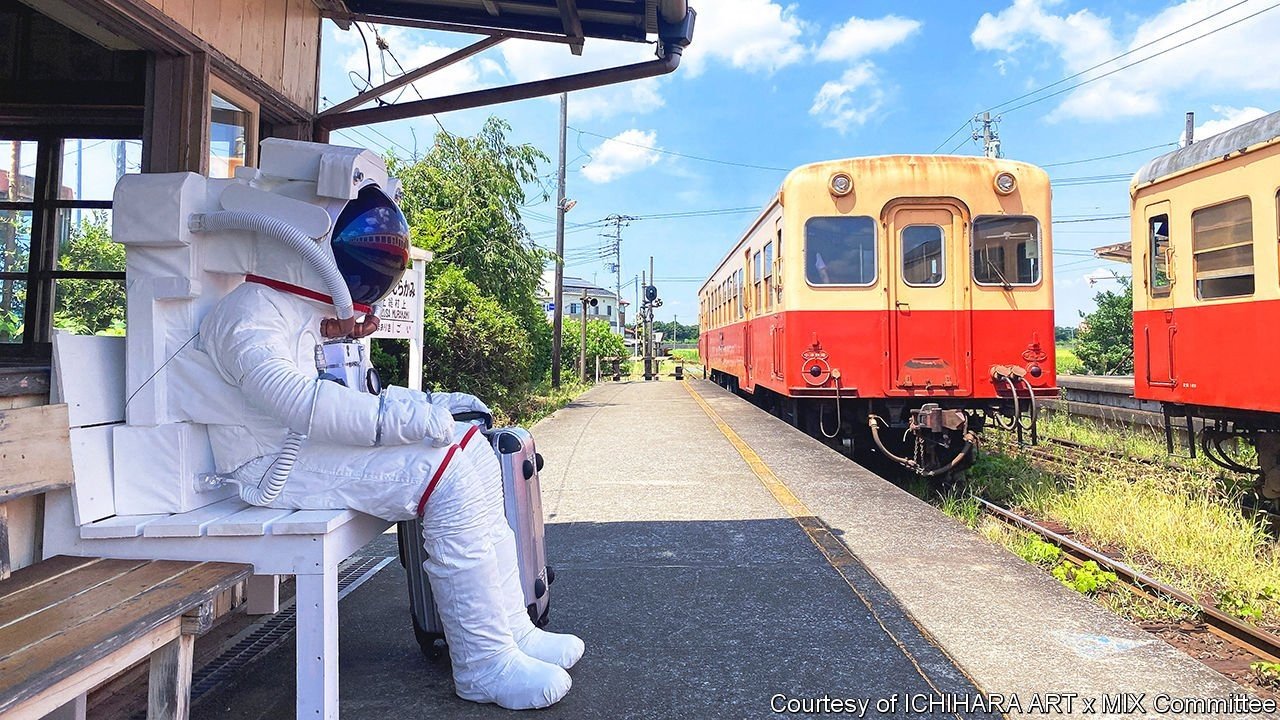
An astronaut greets passengers at Kazusa-Murakami station. Leonid Tishkov titled his installation “Mr. Murakami’s Last Flight,” or “Waiting for A Moon-Bound Train.

Today I have a couple links to something fun happening in Japan, where whimsical art in the countryside is drawing tourists.

At the Economist we learn that “a cosmonaut sat for most of the winter on a platform at Kazusa-Murakami station in Chiba, a rural Japanese prefecture next to Tokyo. As they waited for trains, local grandmothers would chat with the inanimate installation, the work of the Russian artist Leonid Tishkov. Visitors to an abandoned clothing factory in the nearby village of Ushiku found a multimedia labyrinth assembled by the Japanese artist Nakazaki Toru, using objects and memories retrieved from the site: old sewing machines, mannequins draped in fabric samples and recorded interviews with the family that once ran the place. These were two of over 90 pieces created for a triennial festival known as Ichihara Art x Mix, held in the Ichihara area of Chiba in late 2021.”

Alan Gleason at Artscape Japan continues the story: ” ‘Art x Mix’ may seem a curious title for the triennial art festival in Ichihara, Chiba Prefecture. However, the event does boast an unusual blend of elements that serve the art it showcases very well. One is the verdant, rolling landscape of the Boso Peninsula. But even more central to the festival’s identity, and perhaps the key to its success, is a tiny privately operated train line, the Kominato Railway.

“The festival is a fairly new event. First held in 2014, its third edition was scheduled for 2020 but delayed by a year due to the Covid pandemic. Sponsored by the city of Ichihara, the program itself is planned and directed by a team under Fram Kitagawa, Japan’s reigning outdoor art festival impresario. …

“Operating since 1917, the [Kominato] line is a living anachronism, a holdover from the days — well into the postwar era — when trains got everyone everywhere in Japan. As roads improved and rural areas emptied out in a mass migration to the cities, passengership plunged and, one by one, Japan’s local railways shut down.

“How has the Kominato Railway survived? At least partially thanks to the vision and marketing savvy of its management, it would seem. In the last decade the company has carried out what it calls ‘reverse development’ of its stations, restoring them to their appearance in days of yore; enlisted the help of residents along the line to keep brush trimmed back and the station yards attractive; purchased used diesel rolling stock from closed lines in other parts of the country; and, in 2015, introduced the Satoyama Torocco (from ‘truck,’ a small rail car used in mining or logging).

Satoyama, literally ‘villages and hills,’ is a buzzword the city and the railway favor to highlight the pastoral beauty of rural Ichihara. The Torocco is a special train outfitted with open-air passenger cars and a miniature steam locomotive that is actually a diesel. …

“Ichihara Art x Mix is a brilliant initiative on the city’s part, not least because it gives the Kominato Railway pride of place as an art object in itself. The trains — at most two cars in length — trundle slowly along a single narrow-gauge track at roughly one-hour intervals, making the 40-kilometer trip from Goi, on Tokyo Bay, up the Yoro River Valley to its southern terminus in the Boso highlands in one and a half hours. …

“The other defining factor in the festival’s allure is the Yoro River itself, which twists and turns its way through the highlands, carving deep ravines and creating some impressive cliffs and waterfalls in the bargain. …

“In typical kitchen-sink festival fashion, the organizers have installed works all over the area — far too many to see in a day, or even two or three. … A car is certainly the most efficient mode of transport, but also the least rewarding. The train is a pleasure in itself, but its sparse schedule, and the distance between the stations and many art venues, will limit the number of destinations you can easily get to. A good compromise is the festival’s free shuttle bus, which travels around two circuits that cover most of the major venues. …

“Ushiku: In a copper-clad former sundries shop, Chinese artist Ma Leonn’s Mobile Photo Studio has a hilariously retro stage set inspired by prewar kamishibai (‘paper play’) storytellers; staff will kindly photograph visitors posing against this backdrop. …

“Satomi Elementary School: The dark, cavernous gymnasium is the perfect setting for a ‘playback’ of Artists Breath, a tour-de-force display of multiple videos with corona-related messages by artists from around the world. …

“Tsukizaki Village: Sitting in the middle of a fallow rice field is Dutch artist Elmo Vermijs’s cryptically titled installation Mirror of Soil. But that is precisely what it is: a shallow concave hemisphere scooped out of the ground that functions as a ‘sound mirror.’ Stand on the raised platform smack in the center of the pit, and it’s true — you will hear a faint murmur you did not hear before, which the artist describes as the ‘sounds of nature.’

“Just down the road stands an imposing edifice, the now-vacant residence of one of the village’s more eminent citizens. Currently it is home to Turkish artist Ayse Erkmen’s installation Inventory. Erkmen videotaped the process by which the entire contents of the house — not just furniture, but decades of accumulated bric-a-brac — were removed, sorted, and placed in wire crates that now line the path from the gate to the house. Running this gauntlet of family heirlooms, one encounters everything from wall clocks and electric fans to old swords, stuffed birds, dolls, and souvenirs of the kind that all postwar families of means used to acquire on holiday excursions. The experience will give anyone who has lived in Japan a twinge of nostalgia; we all have friends whose parental homes were full of just this sort of stuff. Inside the house, the artist has placed video monitors in each room that play back her recordings, striking a poignant contrast between the on-screen activity and the silence of the emptied rooms.

“The ancient but well-preserved stations along the Kominato Railway are also part of the fun. Each one features at least one prominent outdoor art object, and one extremely eccentric public toilet. The toilets are the brainchild of architect Sou Fujimoto, who appears to have thoroughly enjoyed himself designing facilities customized to the ambience of each stop. Kudos go to Itabu station’s Toilet in Nature, a pristine white throne that sits in a glass box surrounded by a 200-square-meter garden. It’s for women only, by the way. Privacy is ensured by a curtain and the 2-meter-high log fence around the garden.

“Greeting every train at Kazusa-Murakami — an unmanned station that is the first and last stop on the line just outside the Goi terminus — is Russian artist Leonid Tishkov’s astronaut.”

More at Artscape Japan, here. No firewall.

Read Full Post »

Photo: Cardinal News.
Cardinal News calls itself “an independent, nonprofit, nonpartisan news site serving Southwest and Southside Virginia.”

Local news is desperately needed as chains buy up papers for their advertising potential and show little interest in actual communities. The need is especially dire in rural areas.

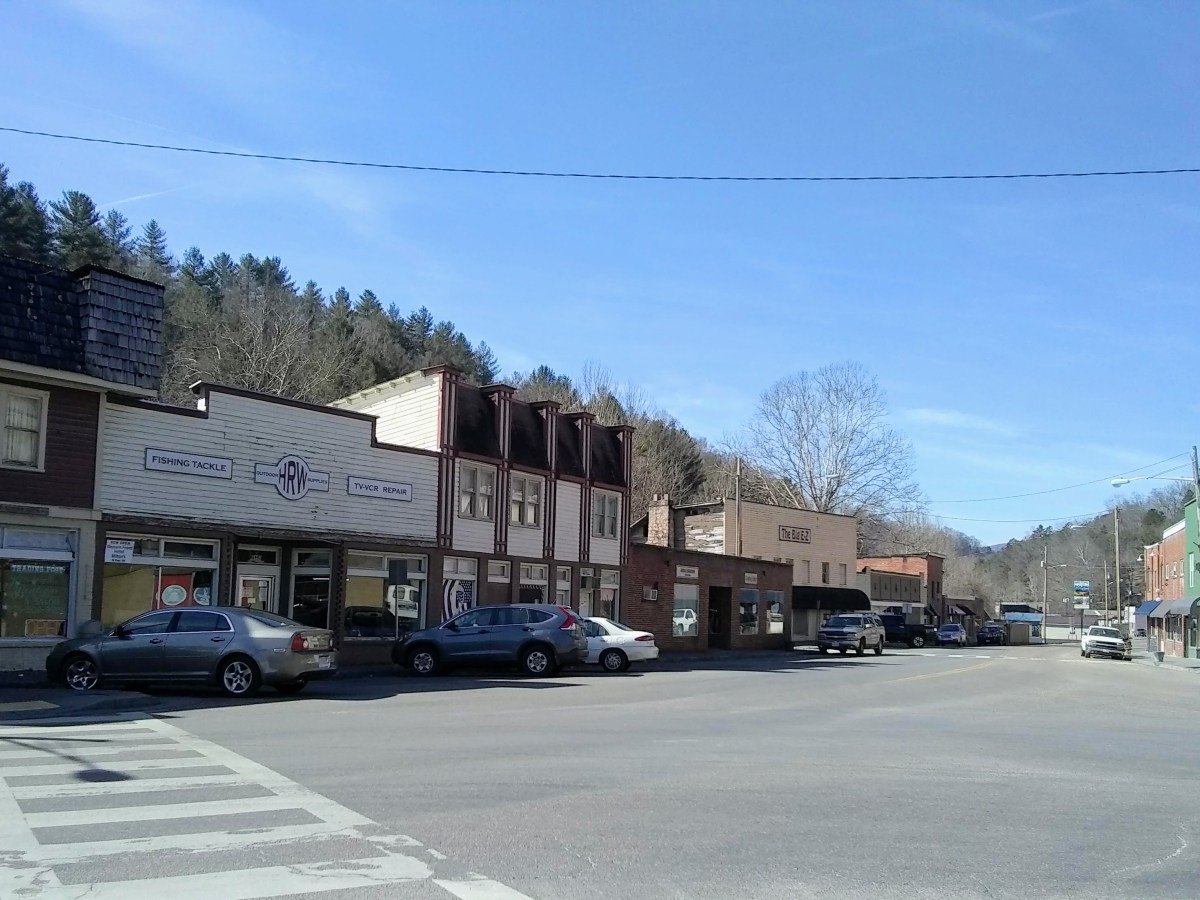
Margaret Sullivan reports at the Washington Post on one hopeful development in western Virginia, where “veterans of a once-great newspaper are starting something small with big ambitions for serving Appalachian readers.”

She writes, “Two photographs tell the story of Cardinal News, a start-up news site in a mostly rural section of Virginia.

“One shows a lawn chair and small table set up just outside the Fincastle branch of the Botetourt County public library. It’s where editor Dwayne Yancey sometimes goes to use the broadband Internet access that he lacks at his nearby home. When he needs to upload big digital files — particularly photographs he wants to publish on the news site — his mobile hotspot can’t get the job done.

“The other photo is of the ravaged interior of Patty Coleman’s home in Hurley, a community close to the Kentucky and West Virginia state lines, where a flood and mudslide destroyed dozens of homes and caused one death last summer. After Yancey sent Megan Schnabel, one of Cardinal’s two reporters, to Hurley for several days, along with a photographer, their in-depth reporting about the devastation brought much-needed attention to Hurley’s suffering residents — and may help them get $11 million of state aid.

“ ‘Without that story, we wouldn’t have had the awareness we needed,’ said Will Morefield, a state legislator who has proposed a funding bill that is moving forward; the money is sorely needed after the Federal Emergency Management Agency denied the state’s request for financial help to individual homeowners. …

“Like many similar start-ups around the nation, Cardinal — named for Virginia’s state bird — is helping to fill the gap left by the shrinking of traditional local news organizations, particularly newspapers. Most of the staff came from the Roanoke Times.

“Yancey made the move after watching the Times scale back its staff in recent years, especially after its sale by longtime owner Landmark Communications in 2013.

Now the Times, like many other Virginia newspapers, is in the hands of Lee Enterprises, which has been fighting off a takeover bid by Alden Global Capital, a hedge fund that is perhaps the worst newspaper owner in the country. …

“More than 1,800 local papers have closed since 2004 as print advertising revenue plummeted and reader habits shifted to online sources. The shuttering of those papers, along with the shrinking of other local news sources, is having profound negative effects on society. …

“ ‘It was basically like getting the band back together,’ Yancey told me last week. They have also been joined by Markus Schmidt, the Cardinal’s second reporter, who is a veteran of the state politics beat at the Richmond Times-Dispatch. He remains based in Richmond, focused on reporting government news of particular interest to Cardinal’s part of the state.

“[Chief development officer, Luanne Rife, a former Times health reporter] told me she took a buyout from the Roanoke paper after she was told she would no longer be able to do many in-depth stories on the health beat, even in the midst of a pandemic.

“ ‘I had always enjoyed my work, but I was burned out,’ she told me. ‘I would go to my keyboard in the morning and start to feel tears rolling down my face.’ When a foundation approached her about a reporting project it wanted to fund, it lit a spark of inspiration for her — and she started exploring whether she could start her own project, one that would be more ambitious and permanent.

“Cardinal’s territory extends far beyond the Roanoke metro area; its mission is to … what Yancey calls ‘Cumberland County to the Cumberland Gap.’

“Much of it is considered part of Appalachia — ‘an easy part of the state to stereotype,’ Yancey noted. Cardinal’s mission includes providing a more nuanced picture of the region to the rest of the state.

“With no paywall, the site’s funding comes from foundations, businesses and individual donors; it has applied for nonprofit status.

“Rife says she’s heartened by the way those contributions have grown from a handful when the site launched last September to more than 700. A new grant will allow Cardinal to add a reporter soon in Danville, along the North Carolina border; Rife also would like to hire an education reporter and one dedicated to health coverage.

“ ‘We’ve been amazed, overwhelmed and humbled by the support,’ Rife told me. The other day, she picked up the mail to find five checks — one for $25, another for $10,000. Cardinal lists its donors on the site and discloses in stories if a person or organization it writes about is a significant contributor.

“In Cardinal’s first big story about the devastation in Hurley, Schnabel describes Coleman’s house: ‘A blue tarp partially draped the door frame where the mud had rushed in. The floor had caved in, and mold and mildew covered the walls.’

“The house was beyond repair. Coleman didn’t have flood insurance; she did have a homeowner’s policy, but the insurer, according to the story, had given her the crushing news that nothing would be covered.

“Now there may be help on the way after all. And a tiny news start-up with big ambitions will have made a difference.”

More at the Post, here.

Read Full Post »

Photo: Ozy.
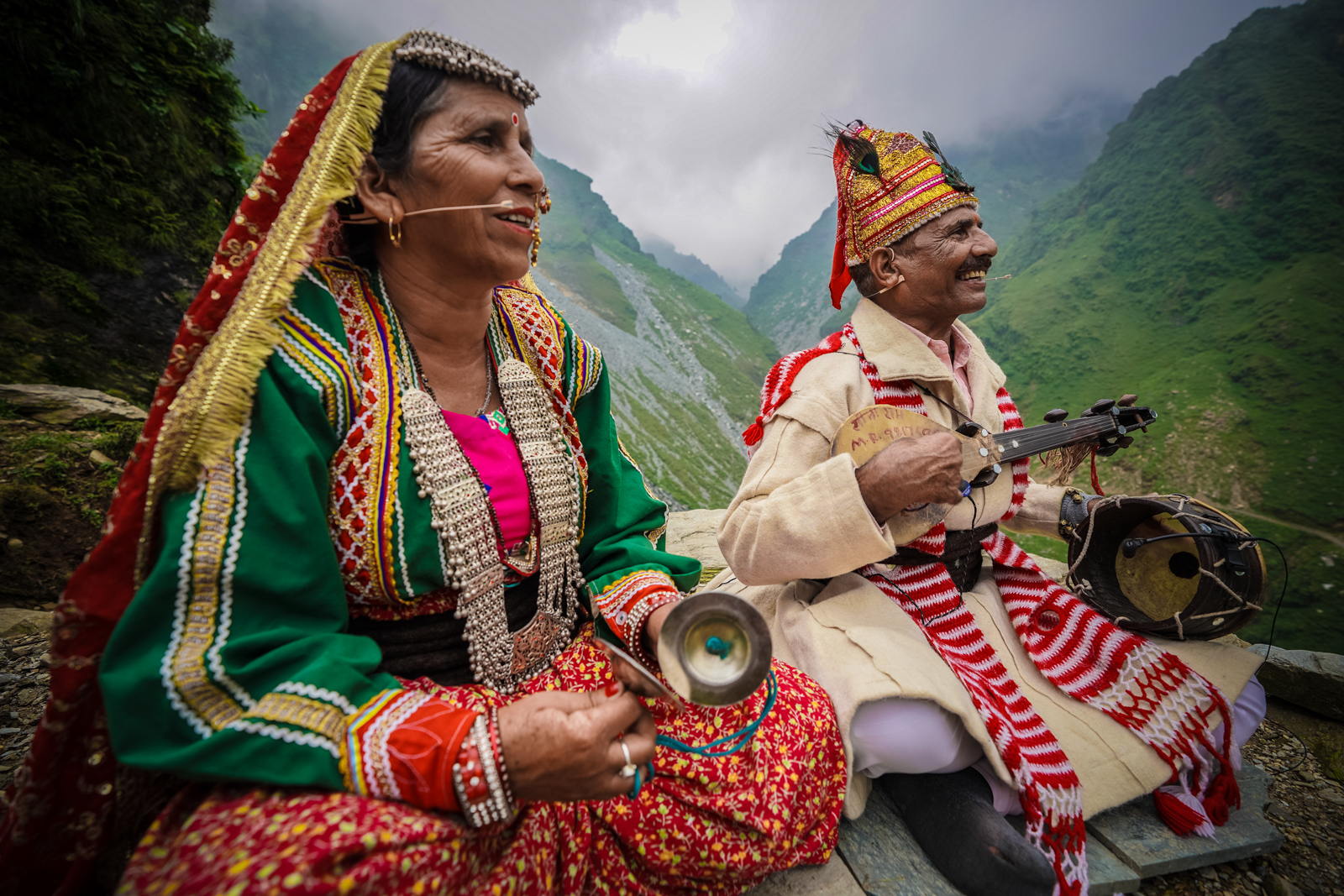
Thirty-year-old Abhinav Agrawal is helping India’s rural folk musicians survive and thrive. He uses a backpack studio developed by Latin Grammy winner Gael Hedding to go where the musicians are.

If there’s a moral to today’s story, it might be, “Stay close to your interests, to things you love.” Young Abhinav Agrawal loved India’s rural folk music.

As Tania Bhattacharya reported at Ozy in fall 2020, “In 2016, Abhinav Agrawal set off to Rajasthan to record folk musicians on the go and set them up with CDs, a website, videos and business cards free of cost so they can market themselves.

“His first find was Dapu Khan of the Merasi heritage community in Jaisalmer. But after Agrawal returned home to New Delhi, he couldn’t contact Khan. ‘We suddenly saw an article in the paper that claimed he had died as a result of communal violence,’ says Agrawal. Heartbroken, the musician-entrepreneur headed to Jaisalmer to look for Khan’s son, who began to cry the moment they met.

“As Agrawal consoled him, Khan’s son was surprised to hear his father had died. ‘But he’s in Germany, performing!’ The tears were of joy and gratitude, and Agrawal’s experiment of empowerment had succeeded.

“India’s countless folk communities are in dire need of funding and technical and creative upskilling to revitalize themselves in an increasingly globalized world. Live and festival-centric performances, which is all these musicians have known through generations, barely bring in money, and an online presence has become mandatory for creative mileage. Many music traditions are dying out, with practitioners taking up menial labor to make ends meet. And the pandemic has dealt a fatal blow, with performances off the table for the foreseeable future.

“Cue 28-year-old Agrawal, whose passion for folk music birthed the nonprofit Anahad Foundation in 2012, and the creation of the BackPack Studio that remains one of a kind in India. Developed by Latin Grammy winner Gael Hedding for Anahad, the portable recording studio is a high-quality wireless recorder with 12 mics that can run on battery for three days and shoot 4K videos. It’s designed to meet rural Indian challenges such as lack of electricity and the unwillingness on the part of musicians to leave their hometowns (and daily livelihoods) to travel to studios in cities.

“Anahad, meaning ‘limitless,’ is also aimed at preserving India’s oral folk traditions, and has extensively covered artists from Himachal Pradesh, Jharkhand, Karnataka, Punjab and Rajasthan — helping 6,000 artists in all.

“Born and raised outside New Delhi in the historic city of Bulandshahr, Agrawal is a trained classical vocalist and tabla player, and was heavily influenced by folk songs. Much of the region’s traditional music revolves around nature and seasons, and Agrawal ‘felt closer to nature through music.’ Growing up, his town was very green, but rapid urbanization adversely impacted its scenic beauty.

‘When components of nature like the trees and birds began to disappear, the tradition of singing songs about them also began to die,’ Agrawal adds.

“With architects for parents, Agrawal also studied architecture but combined his love for nature and heritage by exploring the connection between music and urban spaces, because ‘architecture is frozen music.’ He formed an open music society, experimented with folk songs and set off on lengthy train journeys recording traveling artists and burning CDs for them. ‘All I had was a laptop, mic and sound card,’ says Agrawal. ‘But an interesting pattern emerged — these artists began to sell out their CDs.’

“He formed Anahad soon after, but the reality of running a nonprofit in India proved daunting. ‘I realized I needed business knowledge,’ says Agrawal. He headed to Berklee College of Music for an advanced degree, writing a thesis on how to design a music-based nonprofit in India.

“His organization now attacks all elements of a musician’s life, from approaching event promoters to legal tutorials. The idea has always been to empower these musicians toward dignified livelihoods as opposed to giving them handouts, which is unsustainable. Many singers have broken down in tears listening to their playbacks because they couldn’t believe how beautiful they sound. …

“Having raised some $400,000 over the years from the likes of Google as well as author and philanthropist Sudha Murthy, Anahad is now developing its own music distribution system via an app that will allow artists to earn through streaming. …

“ ‘His compassion for artists is beautiful, with no sense of envy despite being a musician himself,’ says partner and Anahad managing director Shuchi Roy. ‘At the same time, he is very tactical in thought.’ Roy, who is a lawyer and has practiced in India’s Supreme Court, handles all copyright and intellectual property issues for the nonprofit.

“Like a musical score, Agrawal’s journey has had its highs and lows — his music society’s first-ever recording that is yet to be released because the lead singer died a week after recording; dealing with depression after returning to India from Berklee in 2016; and making it to Forbes’ 30 Under 30 list last year. ‘Whenever I’m frustrated with work, I play my music and instantly feel better,’ he says. ‘Now I carry my guitar everywhere.’ ”

More at Ozy, here. There’s music on Spotify, here.

Read Full Post »

Photo: Lauren Petracca/PostAndCourier.
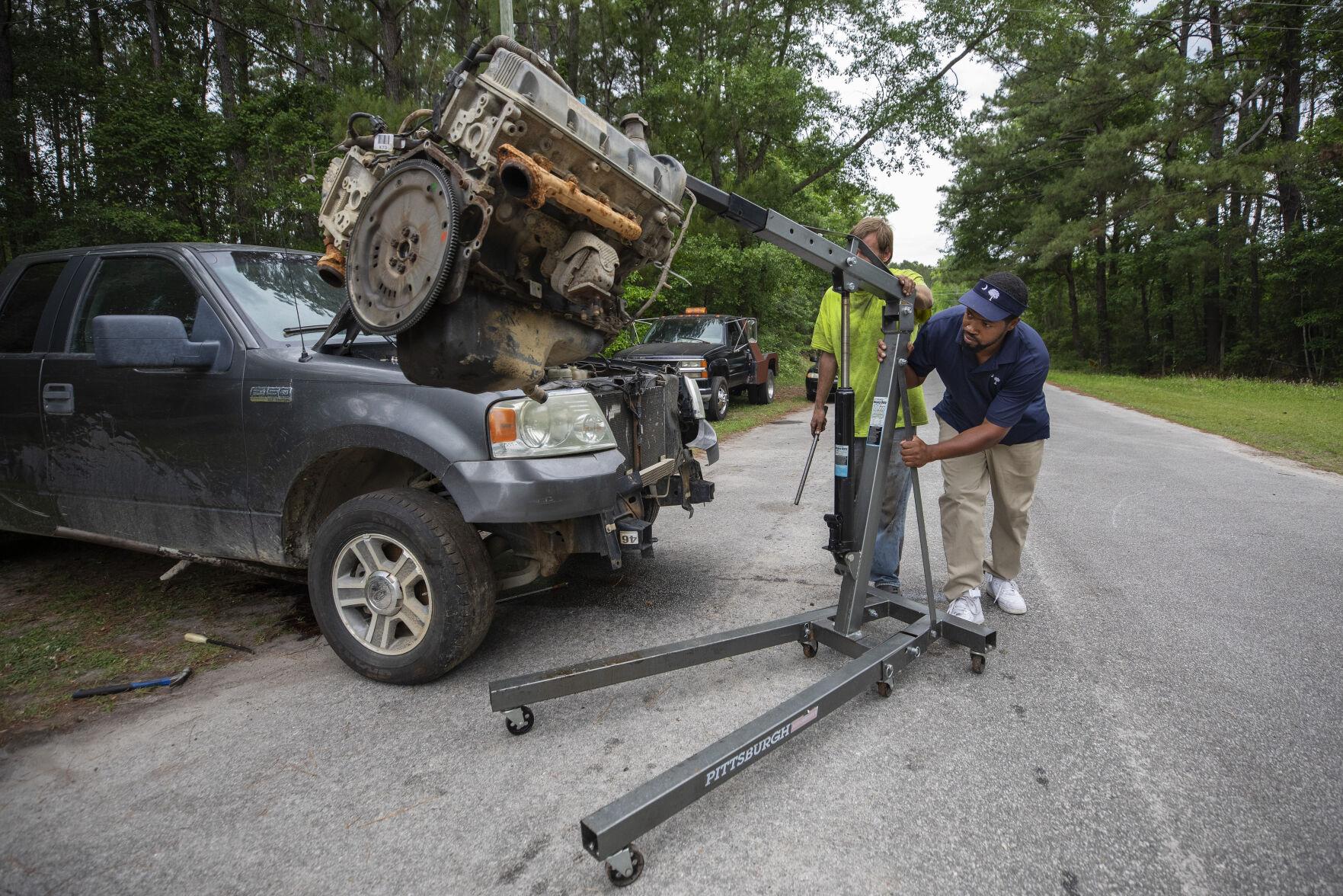
Eliot Middleton (right) and Matthew Poston remove an engine from a truck they are fixing up for donation in McClellanville, South Carolina, on May 10, 2021.

The roots of today’s story were planted in a strong relationship between a South Carolina father and son who knew how to repair cars.

Sydney Page reported at the Washington Post in July, “On Christmas Day last year, Eliot Middleton showed up unannounced at Melanie Lee’s home in Andrews, S.C., with a white 1993 Oldsmobile. What happened next shocked her: Middleton, whom she had never met before, put the key to the Oldsmobile in her hand. He didn’t charge her a dime. He just gave her the car, no strings attached.

‘I had no idea what was going on,’ said Lee, 59. ‘He handed me the keys and didn’t ask for anything.’

“She is one of 33 people Middleton has gifted with a car in the past nine months. Middleton, 38, is a restaurant owner and former auto mechanic who spends his spare time repairing used cars and giving them to people in need in rural South Carolina.

“ ‘There’s a lack of transportation in the rural areas, and I knew I could use my previous experience in mechanics to help,’ Middleton said.

“Only a few weeks before Middleton dropped off the car, Lee’s 33-year-old son, who was ill for several years, passed away. After driving daily for two hours to and from the hospital in Charleston to visit him, her 2007 Chevrolet Tahoe broke down.

“She took the car to a shop to replace the transmission, but ‘I had no means of paying for it,’ she said. She needed a car to help with child care for her two granddaughters, who are 12 and 6 and rely on her to pick them up from school every day and drive them to dance rehearsal. …

“The idea to fix and donate old vehicles came spontaneously to Middleton in early 2020, after he hosted a food drive and several local families showed up with no transportation. They walked more than four miles to get a hot meal. …

“ ‘There’s no public transportation in the area whatsoever,’ said Middleton, who lives in McClellanville, a small fishing town on the Atlantic coast with a population of about 600. ‘We don’t have taxis and Ubers. Without a car, people don’t have a way to get around.’

“So, Middleton — who co-owns Middleton & Maker Village BBQ, a restaurant in the neighboring town of Awendaw, S.C. — decided to put his auto mechanic skills to use the two days a week he isn’t at the restaurant. [As of July], nearly 100 vehicles have been donated for him to fix up. …

“Before jumping into the restaurant industry, Middleton worked as an auto mechanic for 15 years. As a young boy in McClellanville, his plan was to follow in his father’s footsteps.

“ ‘My dad was a mechanic, and I would hang out around his shop since I was 4 years old,’ Middleton said. ‘I’ve always been fascinated by cars.’

“After he graduated from high school, Middleton trained to become an auto mechanic, and in 2004, he and his father opened their own auto service. …

“ ‘We had a lot of single moms as customers, and we always ran into problems with them not having enough funds,’ Middleton recalled. ‘We spoke about trying to find a way to help them,’ [but] whenever they started to brainstorm ideas, something got in the way. Middleton’s father’s health began to decline, and in 2014, they closed the shop. Barbecuing has always been a side passion for Middleton, he said, so he decided to change course and pursue it professionally.

“Still, despite leaving the auto industry, the notion of repairing used vehicles for people in need remained a shared goal for Middleton and his father. But after receiving the first donated car in January 2020, several things in their lives took priority, including Middleton’s father’s failing health — he died in March 2020. Around the same time, Middleton opened a restaurant, just as the coronavirus pandemic was taking hold.

“ ‘Things started changing in my life, and I couldn’t focus on the car program the way I wanted to,’ said Middleton, who has two daughters, ages 14 and 8.

“By September 2020, though, Middleton felt ready, with fresh motivation to honor his father’s legacy. He repaired the first car — a 1997 navy Toyota Camry — and gave it to an unemployed single mother of two children, one of whom is disabled and requires regular medical appointments. …

” ‘That felt great. I could feel my dad’s presence around me, and I could hear him saying “this is exactly what we always wanted to do.” ‘

“Within two months, the same woman was able to land a stable job, and she recently contacted Middleton to say she bought herself a new car and is donating the one he gave her back to him.

“ ‘That blew me away,’ Middleton said.”

More at the Post, here.

Read Full Post »

Yu Hua in Jia Zhangke’s Swimming Out Till the Sea Turns Blue. The film documents life in rural Chinese villages over the past seven decades.

There’s a new documentary covering 70 years of life in China. In an interview at Hyperallergic, Jia Zhangke, director of Swimming Out Till the Sea Turns Blue, tells Jorden Cronk about some of the challenges of extracting personal memories from elderly people raised with a group mindset.

“Moving fluidly between fiction and documentary, the work of Chinese director Jia Zhangke assumes many forms, often within the same film. His latest, Swimming Out Till the Sea Turns Blue, is a documentary portrait of rural China, told through the lives and words of four authors — Ma Feng, Jia Pingwa, Yu Hua, and Liang Hong — whose work collectively spans from the 1949 communist revolution to the present day. Combining reflections on each era’s politics with memories of the authors’ rural upbringings, Jia charts the cultural evolution of China in intimate strokes. … Jia and I connected on Zoom to discuss hidden histories and the generation gap separating today’s Chinese youth from their rural roots.

Hyperallergic: I’ve heard you refer to the new film as the third in your ‘Artists Trilogy.’ At what point did you begin to conceive of the film as such?

Jia Zhangke: I shot the first two films in the trilogy back-to-back. In 2006 I made Dong, about the painter Liu Xiaodong, and in 2007 I made Useless, about the fashion designer Ma Ke. Immediately after I thought I would make the third part, about artists who are either architects or city planners. … I had found quite a few architects and city planners that would be perfect for the project, but they didn’t seem to want to share on camera the things I wanted to capture, so we postponed the project.

“It wasn’t until recently that I started to think again about the third installment. For the past few years, I’ve been going back and forth between Beijing and Jia Family Village [Note: no relation to the director], and while I was there, I noticed that they are facing many issues — and not uniquely Chinese issues, but global issues in terms of the younger generations leaving rural areas for urban settings. Nowadays in these rural areas, you tend to see mostly older people; younger people don’t stay in these areas for long. So now when these younger generations have children, they will have no connection or memories or understanding of their rural or agricultural roots. …

They’re very old. … We had to spend a lot of time during post-production finding a coherent logic and structure in what they were saying, to properly distill their memories.

H: How did you come to the four main subjects of the film? Do they have certain characteristics or writing styles that you felt were particularly suitable to the story you were trying to tell?

JZ: As I was thinking about who I could call on to tell these rural histories, one particular element in Jia Family Village stood out: a literary tradition with very strong connections with the first writer depicted in the film, Ma Feng. He was born and raised in Jia Family Village, and he often wrote about the region. I thought I could use writers born in similar areas who have been writing about these regions as a way to make this documentary come alive. …

“Ma Feng, he was born in the ’20s and most prolific in the ’50s and ’60s, while Jia Pingwa mostly wrote in the ’70s and ’80s, Yu Hua about the ’80s and ’90s, and Liang Hong about anything from the ’90s until now. So it made sense for me to put these authors together as a kind of relay to talk about their formative years, and even though they have some overlap, the most important eras for each of them represent specific moments in time. …

“But more interesting for me was that I could capture each author’s unique way of storytelling and their worldview through the way they talk through their memories, lives, and history, as well as how they depict their characters. … In addition to learning about the last 70 years of rural history, you’re witnessing the evolution of Chinese literature.

H: Ma Feng is the only writer who’s no longer alive. How did you decide to have his daughter speak for him?

JZ: For me, to put together a comprehensive understanding of these rural areas during Ma Feng’s time, it wasn’t sufficient to rely only on his daughter, because I really needed that firsthand account. That’s the reason why, in addition to the daughter, I included two village elders, both in their 90s. These elders had direct experiences and interactions with Ma Feng that I relied on to offer eyewitness testimony to what happened during this period. All three of them talk about the collectivization of society that occurred during Ma Feng’s time. When we look back and rethink the ideas from that era, we might now have different assessments, viewpoints, or understandings of these concepts, but what I want to articulate with the film is that we have to admit that this happened, no matter how we interpret what happened. Through these three people, I wanted to capture the social and historical contexts for these things.

“However, this also posed a couple of problems with regards to interviewing them. They’re very old, of course, but they also come from a society that focused on collectivism rather than individualism, which means that it is very difficult for them to talk from a first-person, or ‘I,’ perspective. It was a challenge to interview them in such a way that they would open up in front of the camera and share their private and subjective memories. And since they are old, they tend to not talk in chronological order, and instead jump around, skip ahead, and flash back in a way that isn’t always coherent. We had to spend a lot of time during post-production finding a coherent logic and structure in what they were saying, to properly distill their memories.

H: Is this hesitancy to talk from a first-person perspective one reason you chose to shoot the interviews from multiple angles and from what seems like a quite a distance?

JZ: For me, the compositions evolve in a natural way within the film’s structure. For the first interviews, I wanted to things to be impressionistic, so we started with images of old people eating, and through that group concept slowly but surely segue into individual memories. In other words, I wanted to locate a visual concept that would take us from the collectivist to individualist way of viewing memories.

H: Much of the film is about the official record of Chinese history and the personal experiences of each author, and how those are quite different. In general, what is the public’s understanding of these events?

JZ: In terms of the grand narrative, the ‘official’ version of history is pretty much the same for everyone, at least in terms of how people understand the big historical junctures. However … everything is stated in such an abstract or statistical way. That’s why I think films like this are very much needed. You can’t feel abstract or statistical histories. There’s no impact — it’s meaningless. What’s missing are visceral connections with history. Of course, there are many ways you can hide certain parts of history. But what’s more important to realize is that what’s often hidden is not necessarily what happened, but how things happened.”

More at Hyperallergic.

Read Full Post »

prairie20hannah

Photo: Melanie Stetson Freeman/ Christian Science Monitor
Young farmers are returning to the prairie as skilled agriculturalists and entrepreneurs —  injecting a much-needed dynamism into that world.

I can’t resist another story about young people who get interested in farming. They’re not only helping to feed us all, they’re setting an example for how people can carve new paths into an uncertain future. Do they get discouraged like the rest of us? My sense is that they don’t have time for that.

Laurent Belsie of the Christian Science Monitor talks to young farmers in Nebraska.

“Outside Unadilla, Hannah Esch walks into her cooler and pulls out packages of rib-eye, brisket, and hamburger. Over the past nine months her new company, Oak Barn Beef, sold out of meat four times and brought in $52,000 in sales. Over the next year, she expects to double those sales numbers. That will [be] when she finishes her last year of college.

“Some 150 miles northwest, the Brugger twins, Matt and Joe, show off how they’re diversifying from traditional agriculture. They directly market the beef from the cows they raise and they grow hops for local microbreweries. But the most visible sign of their commitment to the rural Plains is the two-story farmhouse they’re renovating on the family homestead. …

“It’s the place their great-grandfather bought when he moved here from Switzerland. It’s where their grandfather was born and where they played as children when the house was later rented by people who kept sheep. …

“There’s a new generation of rural entrepreneur returning to the Great Plains. … It’s not clear how big the movement is and whether it can reverse the population decline that’s gone on for a century in the rural Plains. But if energy combined with business and social media savvy can overcome demographic decline, then perhaps these youthful entrepreneurs – the first generation born after the farm crisis of the 1980s – have an opportunity to do it.

‘There is a spirit in these young people that is different than anything I’ve ever experienced,’ says Tom Field, director of the eight-year-old Engler Agribusiness Entrepreneurship Program at the University of Nebraska-Lincoln.

“Of the 120 or more of its alumni, ‘90% of them say their goal is to return – or they choose to live in – a small or rural community. These are students who have had international experiences, had internships on both coasts, but they choose to live and work and play in places where they have a deep affinity with the culture, the people, and the landscape.’ …

“When the Brugger twins first started thinking about a return to the rural Plains, their initial idea was to do something in business development. Then they met with Dr. Field of the Engler program at the University of Nebraska-Lincoln. He urged them to be role models, instead.

“ ‘He was the first one to say, … “The best thing you can do for your community is find what you love to do. Start a business around it and hire people to come back … and show other young people that you can do what you love in a rural community,” ‘ Matt recalls. …

“Now, the recent college graduates run their own company, Upstream Farms. They have 50 cows. They market the beef directly, mostly to the training table program at the University of Nebraska-Lincoln, which serves high-quality foods to student athletes. They raise hops for nearby craft breweries, and because the university takes only the best cuts of beef, the twins sell the rest of their meat as hamburger to the boutique beer firms. …

“ ‘We like to say that we’re twin brothers farming the Midwest, putting new ideas on old dirt and connecting our customers back to land.’ …

“When the twins proposed building a distillery, their parents responded, ‘That’s really risky, guys,’ Matt recalls. ‘They go, “You guys don’t know what it’s like to live in really, really hard times.” And they’re right. We’re privileged not to have [known] that. And so we do take more risks.’ …

“Stability is fragile on the prairie. Despite the good times, Gothenburg has lost more than 3% of its population since 2010, which puts it back to where it was in 1980, before the farm crisis. In rural Nebraska, however, that counts as a roaring success. …

“The decline in population not only crimps the number of people rural businesses can sell their wares to, but also reduces their labor pool. .. Between 2000 and 2010, the typical rural county in the state (one with no town of 2,500 or more) lost nearly half its population of 20- to 24-year-olds, according to the Center for Public Affairs Research at the University of Nebraska-Omaha. That is partially offset by a 16% net in-migration of 30- to 34-year-olds, presumably people who have worked elsewhere and are now wanting to return to the Great Plains.

“But it’s not enough to reverse the overall trend of Nebraskans settling in urban and suburban areas. In 2010, the two counties containing Omaha and Lincoln as well as the county between them represented just over half of Nebraska’s entire population; by 2050, they’re projected to account for two-thirds. The state’s rural counties are expected to lose population over that time….

“Even if the new generation of entrepreneurs succeeds in their attempts to work the soil, the question is whether they can really help revive the rural Midwest.

“ ‘In my area, I’m gonna guess more [people will move in], just because we are so close to Lincoln and Omaha that people can still live this lifestyle but have the great jobs,’ says Ms. Esch, bouncing along a rolling gravel road in her pickup. ‘How do you go live in the city after this?’

“But the rural parts of Nebraska and other states that aren’t close to a metropolitan area might be another matter. …

“ ‘I think the [communities] that continue to innovate and make it a great place for people to live will have more people,’ she says. ‘But the ones that don’t are going out of business.’ ”

More at the Christian Science Monitor, here.

Read Full Post »

Photo: Tom Goldman/NPR
Reporters at rural Oregon’s profitable
Malheur Enterprise keep the news flowing while other local papers nationwide are folding.

This morning I read that television is expanding like crazy, no end in sight. Wasn’t the internet supposed to kill off television? Wasn’t television supposed to kill off radio? It seems to me that new technologies don’t necessarily destroy everything that went before the way cars destroyed horse-drawn carriages. It all depends on whether the old technology finds a new way to meet needs that still exist.

Consider local newspapers. Many are folding — and it’s definitely scary because that’s where big stories often break. But there’s still a need for local news, and I think someone will fill it. In rural Oregon, a small newspaper survived and became profitable by hiring a salesman and improving quality.

Tom Goldman at National Public Radio (NPR) has the story.

“The Malheur Enterprise was founded in 1909, and, like many other newspapers, was languishing. But in the past few years, its circulation has surged and it has won several national awards. … [It] has boomed in the past three years.

” ‘Boomed’ is a relative term when it comes to a rural weekly. Paid subscriptions are at about 2,000. But during a recent week, more than a third of Malheur County’s roughly 30,000 residents read the paper’s online edition. And advertising dollars, the lifeblood of a small newspaper, are way up.

” ‘Our overall revenue is more than triple what it was three years ago,’ says Les Zaitz, the paper’s editor and publisher. ‘Circulation is probably double. We’re profitable, and there are not a lot of papers in the United States that can say they’re profitable.’ …

“Zaitz, 63, was a longtime, award-winning investigative reporter for the Oregonian, the state’s largest newspaper. He is a two-time Pulitzer Prize finalist. But he has always had a passion for small-town papers. Which is why, in 2015, he tabled his retirement plans and bought the Enterprise with family members. The paper, at the time, was almost out of business. It was filled with gossip and press releases.

” ‘It wasn’t delivering much in the way of real local news,’ Zaitz says, adding, ‘[it] had one reporter who primarily focused on high school sports. … It had not had an ad salesperson in 10 years. … There was just no doubt in my mind that if we turned around the news product, and got a salesperson in, we could make the thing profitable pretty quick.’

“Sure enough, the Enterprise now is a serious, award-winning newspaper.

“This spring, the paper won a prestigious national Investigative Reporters and Editors award for its coverage of a case that rocked Malheur County. A man released from the state hospital after claiming he faked his mental illness was accused of killing two people after being freed. The Enterprise was the first weekly paper to win the IRE Freedom of Information award. …

“Reporter Pat Caldwell, who has been a journalist for 22 years, says Zaitz has transformed the way he works. ‘It’s all about detail,’ Caldwell says, ‘detail, detail, detail. Y’know? And why, why, why, why? Why are you doing this? Why is this happening? Who pays for it?’ …

“Zaitz has earned his readers’ trust with his devotion to bedrock principles of journalism. He acknowledges it also helps that he is one of them. His hands are thick from bucking hay and fixing barbed wire fences on his ranch about 100 miles outside Vale. But being on the inside doesn’t mean he and the Enterprise pander. … Enterprise reporting has angered local politicians. Some still don’t talk to Zaitz or his reporters.

” ‘Public officials who’ve evaded scrutiny for decades here aren’t very fond of us in some quarters,’ Zaitz says. ‘But the good public officials, those who are trying to do a good job, they recognize that we are doing our job and we are holding them accountable and we’re making them better governing officials. And they don’t object to that. Because we try to be accurate; we try to be fair. While they may have to salve the sting of a particular story, that sting wears off and they appreciate what we’re doing. …

” ‘Rather than worrying about what’s going on in journalism at the national level,’ he says, ‘let’s turn the periscope around and let’s rebuild from the small guy up. And I think that’s going to have more influence in the long run.’ ”

More at NPR, here.

Read Full Post »

Older Posts »