Feeds:
Posts
Comments

Posts Tagged ‘science’

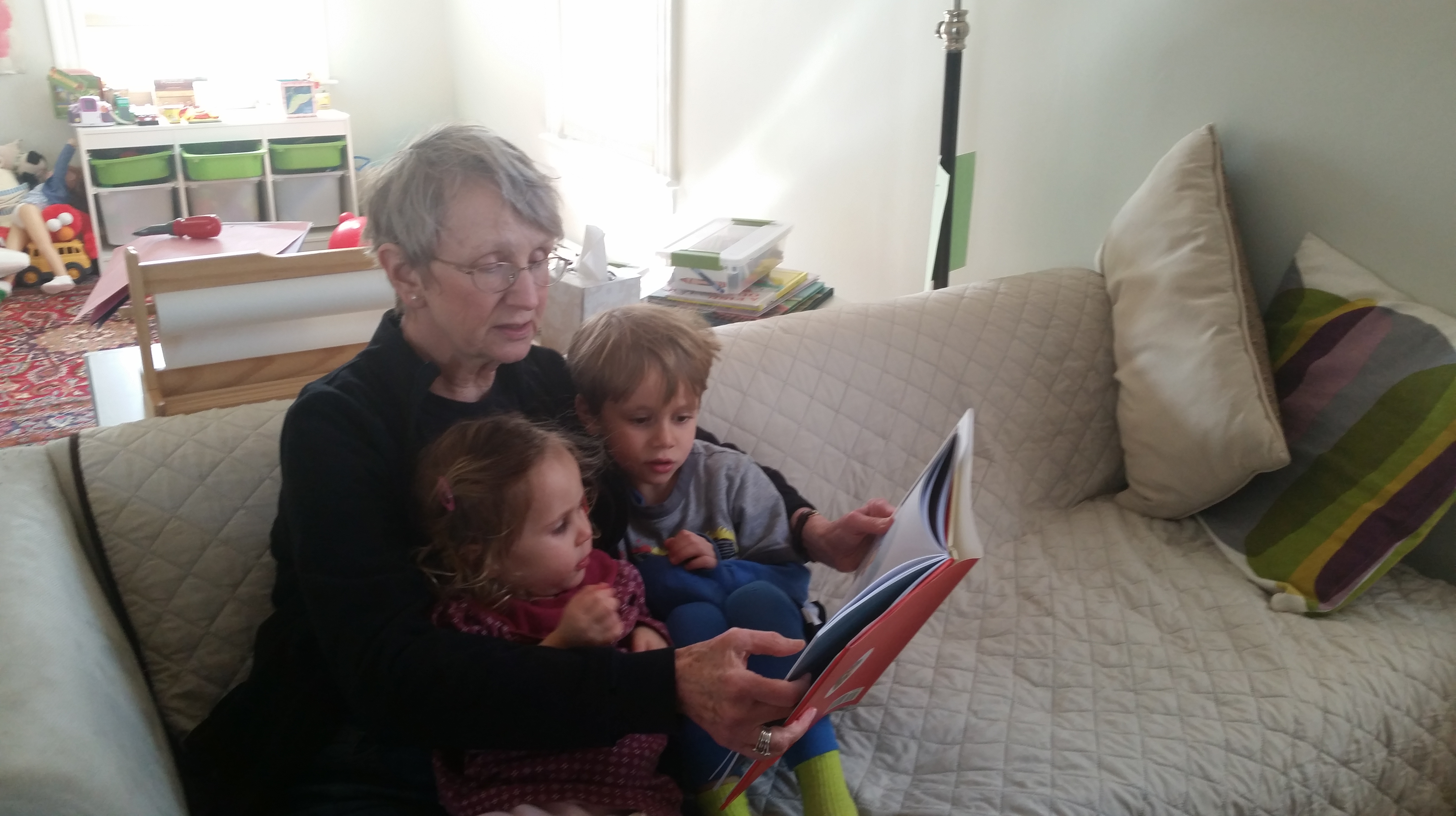
Photo: John.

People absorb information differently, so to each his own. I hope today’s attempt to explain scientific differences between reading a book and listening to one doesn’t make you think reading is necessarily better than listening. We all know the vital importance of being read to as a child.

Let’s see what Stephanie N. Del Tufo, assistant professor of education & human development at the University of Delaware, has to say at Science Alert, via the Conversation.

“As a language scientist, I study how biological factors and social experiences shape language. My work explores how the brain processes spoken and written language, using tools like MRI and EEG.

“Whether reading a book or listening to a recording, the goal is the same: understanding. But these activities aren’t exactly alike. Each supports comprehension in different ways. Listening doesn’t provide all the benefits of reading, and reading doesn’t offer everything listening does. Both are important, but they are not interchangeable.

“Your brain uses some of the same language and cognitive systems for both reading and listening, but it also performs different functions depending on how you’re taking in the information.

“When you read, your brain is working hard behind the scenes. It recognizes the shapes of letters, matches them to speech sounds, connects those sounds to meaning, then links those meanings across words, sentences and even whole books. The text uses visual structure such as punctuation marks, paragraph breaks or bolded words to guide understanding. You can go at your own speed.

“Listening, on the other hand, requires your brain to work at the pace of the speaker. Because spoken language is fleeting, listeners must rely on cognitive processes, including memory to hold onto what they just heard.

“Speech is also a continuous stream, not neatly separated words. When someone speaks, the sounds blend together in a process called coarticulation. This requires the listener’s brain to quickly identify word boundaries and connect sounds to meanings.

“Beyond identifying the words themselves, the listener’s brain must also pay attention to tone, speaker identity and context to understand the speaker’s meaning.

“Many people assume that listening is easier than reading, but this is not usually the case. Research shows that listening can be harder than reading, especially when the material is complex or unfamiliar.

“Listening and reading comprehension are more similar for simple narratives, like fictional stories, than for nonfiction books or essays that explain facts, ideas or how things work. My research shows that genre affects how you read. In fact, different kinds of texts rely on specialized brain networks.

“Fictional stories engage regions of the brain involved in social understanding and storytelling. Nonfiction texts, on the other hand, rely on a brain network that helps with strategic thinking and goal-directed attention.

“Reading difficult material tends to be easier than listening from a practical standpoint, as well. Reading lets you move around within the text easily, rereading particular sections if you’re struggling to understand, or underlining important points to revisit later.

“A listener who is having trouble following a particular point must pause and rewind, which is less precise than scanning a page and can interrupt the flow of listening, impeding understanding.

“Even so, for some people, like those with developmental dyslexia, listening may be easier. Individuals with developmental dyslexia often struggle to apply their knowledge of written language to correctly pronounce written words, a process known as decoding. Listening allows the brain to extract meaning without the difficult process of decoding.

“One last thing to consider is engagement. In this context, engagement refers to being mentally present, actively focusing, processing information and connecting ideas to what you already know.

“People often listen while doing other things, like exercising, cooking or browsing the internet – activities that would be hard to do while reading. When researchers asked college students to either read or listen to a podcast on their own time, students who read the material performed significantly better on a quiz than those who listened.

“Many of the students who listened reported multitasking, such as clicking around on their computers while the podcast played. This is particularly important, as paying attention appears to be more important for listening comprehension than reading comprehension. …

“Each activity offers something different, and they are not interchangeable. The best way to learn is not by treating books and audio recordings as the same, but by knowing how each works and using both to better understand the world.”

More at the Conversation, here.

Read Full Post »

Photo: Sean Waugh.
NOAA’s National Severe Storm Lab has been looking into the hail problem.

Here’s my periodic reminder that cutting out funding for scientific research can affect your life. The important work of the National Severe Storm Lab of National Oceanic and Atmospheric Administration (NOAA) in Oklahoma is just one example of what may be lost.

Nick Gilmore at public radio WVTF in Virginia reported recently on NOAA’s research into hail.

“Just picture this – it’s a warm afternoon and a thunderstorm starts to roll overhead. You head indoors and hear rain begin to fall. As the cracks of thunder get louder, you peek out the window to see large chunks of ice on the ground. … Rain makes sense to fall from a storm – but large pieces of ice?

“ ‘Hail is one of those things that we don’t really know how it forms,’ says Sean Waugh, a research scientist at NOAA’s Severe Storms Laboratory.

“We do know some of the basics. Strong thunderstorms have strong updrafts – think like a vacuum cleaner that’s able to lift moisture high up into the atmosphere. It’s cold up there, so that water freezes into a small stone. It collects more water, refreezes as it cycles through the storm – more water, refreezes. … Eventually, the hailstone gets too heavy and tumbles to the earth below. Waugh says wind speed, direction and moisture in the air also play a part in hailstorm development.

We also know hail can be expensive.

“ ‘In any given year, it’s 60-80% of the damage that comes from severe thunderstorms,’ says Ian Giammanco – a meteorologist at the Insurance Institute for Business and Home Safety. He says we’re just getting more hailstorms these days.

“ ‘Rewind the clock all the way back to 2008 – every year since then, we’ve had over $10 billion in damage from hail. This has crept up now to a $20-30 billion problem.’

“Giammanco says that’s why research like what Sean Waugh is doing is so important – finding out what hail looks like before it hits the ground. …

“Waugh says, ‘We don’t know what broke when it landed, how much of that mass, or size or shape have we lost between when it fell and when we find it, right? I’ve seen six-inch diameter stones melt before I can get out of the car to pick them up.’ …

“There are other questions, too: how fast does hail fall? Does it fall in a specific orientation? Does the stone melt while it’s falling to the earth below?

” ‘These are all really, really important questions if you’re trying to ascertain what hail looks like to a radar. And that’s a really critical piece of knowledge if you’re trying to warn for hail in real time, which is obviously the goal! Most people want to know if there’s going to be golf balls falling at their house or softballs.’ …

“Waugh and his team have built a complex rig that observes hail in free fall and in real time. They head out from Oklahoma – typically to the Southern Plains – to get the system in front of a storm producing large hail.

“The rig has high speed and high-quality cameras, and Waugh says there’s another key component.

” ‘But we need a lot of light to do that. Otherwise, the image would just be dark,’ he explains. ‘So, the LED array I have on the back of the truck produces about 30% more light than the sun!’ …

“ ‘We can use that knowledge to improve our forecasts of what storms are likely going to produce hail days in advance. By understanding the type of hail that different storms produce, that increases our ability to model it properly and then forecast that in the future,’ Waugh says. ‘And that way people can take appropriate action to protect life and property.’ ”

More at public radio WVTF, here. Cool video of hail in flight.

I don’t get the funding cuts. The jobs that will be lost at the weather center are in Oklahoma, so it’s not just coastal communities that will be hurt. And anyway, don’t hurricanes damage golf courses in Florida sometimes? Weather is something no human can be the boss of, so it’s just common sense to try to understand it.

Please share your hail stories.

From the University of Oklahoma news site, OU Daily.

Read Full Post »

Photo: Wes McRae/Georgia Tech School of Music.
Dinosaur Choir is a musical instrument that reconstructs the vocal tract of a Corythosaurus — a type of duck-billed dinosaur with a large, distinctive crest on its head.

Where will the imagination of science-oriented artists take us next? Here’s the story of two imagineers who investigated how dinosaurs might have sounded back in the day.

Verity Burns writes at Wired, “What did dinosaurs really sound like? If you’ve ever found yourself asking that question, a musical project using 3D models of dino skulls could be getting closer to answering it. …

Dinosaur Choir is a musical instrument developed by artists Courtney Brown and Cezary Gajewski, which reconstructs the vocal tract of a Corythosaurus—a type of duck-billed dinosaur with a large, distinctive crest on its head.

“To make a sound, the user stands in front of a camera while blowing into a microphone. Depending on how hard they blow and the shape of their mouth as they do, the vocalizations that resonate through the dinosaur’s skull will change. In effect, the user’s breath becomes the dinosaur’s breath. The result is not the roar that we hear in the movies, but something that sounds more like a deep wail.

“The instrument has just been recognized at Georgia Tech’s 2025 Guthman Musical Instrument Competition, an event that brings together inventors from around the world to discuss ideas on the future of music. …

“ ‘In 2011, we were on a family road trip and we stopped off at a dinosaur museum in New Mexico,’ Brown tells Wired. ‘There I saw an exhibit of a Parasaurolophus, which had crests like a Corythosaurus. There had been many theories as to why this family of dinosaurs had these crests, but researchers have settled on the idea that it could have been for sound resonation. As a musician, I felt empathy with them.’ …

“Brown was inspired and immediately started work on her first project, Rawr! A Study in Sonic Skulls, which is the work that Dinosaur Choir continues. Both projects focus on the Corythosaurus, but at different stages of their lifespan to investigate how changes to the crest in adult maturity affects their sound. However, the biggest difference between the two projects is the way the sound is made — the reimagining of the dinosaur’s vocal box.

“ ‘With Rawr!, we used a mechanical larynx, so people would have to actually blow into a mouthpiece to create the sound. But once we started exhibiting it, we realized it wouldn’t be possible for people to interact with it in a way that was hygienic — and the pandemic solidified that. That’s when I started thinking about something more computational. And as I have a computer science degree, it also made more sense.’

“The work on Dinosaur Choir officially began in 2021, with Brown traveling to Canada, where the Corythosaurus is supposed to have lived, to update her research. She and Gajewski worked with paleontologist Thomas Dudgeon, from the University of Toronto and the Royal Ontario Museum, to analyze the most recent CT scans and 3D fabrications. From those, they built a life-size replica of an adult Corythosaurus’ head, right down to its intricate nasal passages.

“ ‘I’m extremely proud of my nasal passages,’ jokes Brown. ‘I learned CT segmentation for about a year to get them as accurate as possible, taking into consideration the effects that being buried for millions of years would also have had on them.’

“With the skull model complete, work then began on imagining the dinosaur vocalizations themselves. Recreating the vocal box in computational form gave Brown much more control to test out new, and perhaps even conflicting research, without having to rebuild everything from scratch.

“ ‘The models are based on a set of mathematical equations that relate to the mechanics of the voice — things like changes in air pressure and a number of other affected variables through time,’ she says. …

“So far, Brown has developed two models for Dinosaur Choir — one based on the syrinx of a raven, and a more recent one based on that of a dove, but she is also working on one of an alligator too. As these models are computational, they can be switched between in real time during a performance, and participants can also experiment with different trachea lengths and vocal membrane widths to hear the effects on the sound. …

“ ‘We [can’t] completely rule out that non-avian dinosaurs maybe didn’t vocalize at all. Soft tissue [like vocal chords] rarely preserves, and the vocalizations are also a type of behavior that leaves no fossils at all. In my heart, I truly believe they vocalized, but feelings are not facts. So much is lost to time.’ ”

More at Wired, here.

Read Full Post »

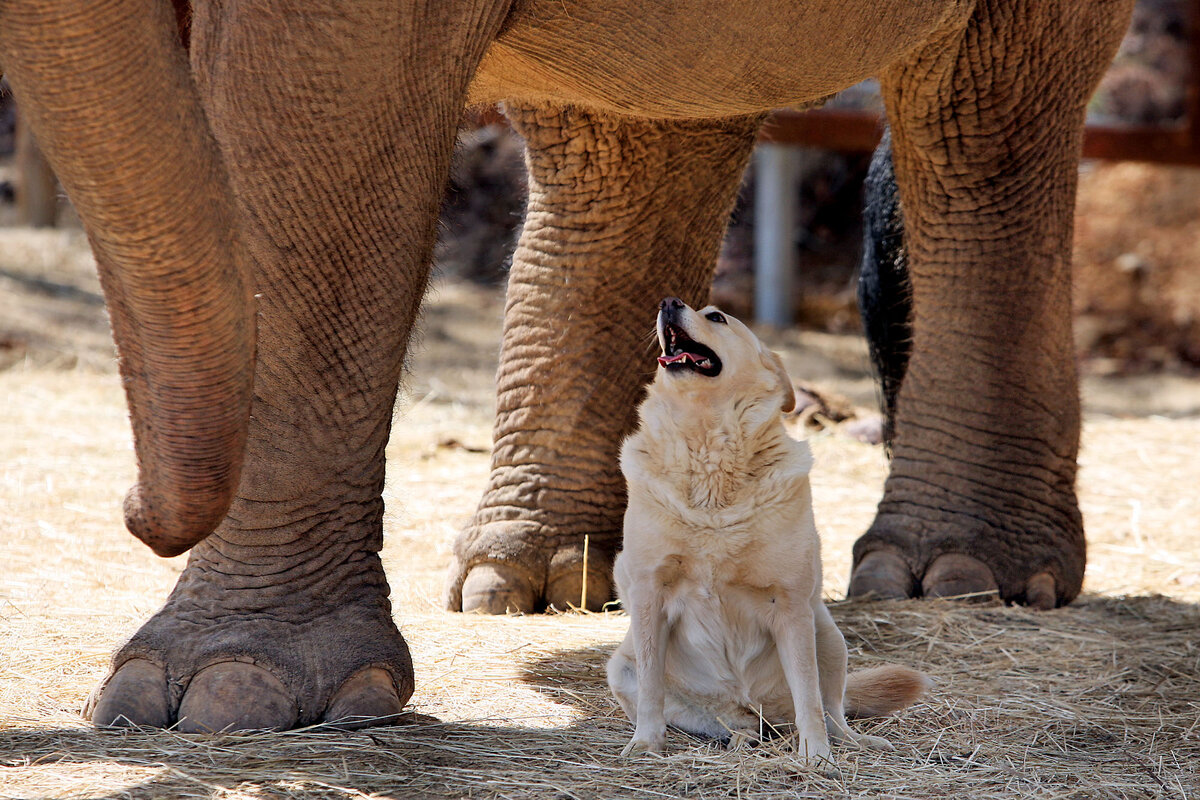
Photo: Melanie Stetson Freeman/CSM.
The friendship between Bella, a stray dog, and Tarra, a resident of the Elephant Sanctuary in Tennessee, exemplifies feelings that are not unusual in the animal kingdom.

If you have ever heard Sy Montgomery on Boston Public Radio or read any of her wonderful books about animals, you will know that there is at least one scientist who believes critters have feelings. (FYI: with the exception of the Bobbitt worm, Sy Montgomery loves them all.)

Other scientists also have noticed that animals have feelings. At the Christian Science Monitor, Stephanie Hanes reports on research showing that many “animals exhibit signs of experiencing emotions and being self-aware.”

“This past April,” she writes, “a group of biologists and philosophers unveiled the New York Declaration on Animal Consciousness at a conference at New York University in Manhattan. The statement declared that there is ‘strong scientific support for attributions of conscious experience to other mammals and to birds.’ It also said that empirical evidence points to ‘at least a realistic possibility of conscious experience’ in all vertebrates and many invertebrates, including crustaceans and insects. 

“Researchers have found myriads of indications of perception, emotion, and self-awareness in animals. The bumblebee plays. Cuttlefish remember how they experienced past events. Crows can be trained to report what they see. 

“Given these findings, many believe there should be a fundamental shift in the way that humans interact with other species. Rather than people assuming that animals lack consciousness until evidence proves otherwise, researchers say, isn’t it far more ethical to make decisions with the assumption that they are sentient beings with feelings?

“ ‘All of these animals have a realistic chance of being conscious, so we should aspire to treat them compassionately,’ says Jeff Sebo, director of the Center for Mind, Ethics, and Policy at New York University. ‘But you can accept that much and then disagree about how to flesh that out and how to translate it into policies.’

“Sasha Prasad-Shreckengast is trying to get into the mind of a chicken. This is not the easiest of feats, even here at Farm Sanctuary in Watkins Glen, a scenic hamlet in the rolling Finger Lakes region of upstate New York. For decades the sanctuary has housed, and observed the behavior of, farm animals – like the laying hens Ms. Prasad-Shreckengast is hoping to tempt into her study.

“Chickens, it turns out, have moods. Some might be eager and willing to waddle into a puzzle box to demonstrate innovative problem-solving abilities. But other chickens might just not feel like it.

“Ms. Prasad-Shreckengast also knows from her research, published this fall in the Journal of Applied Animal Welfare Science, that some chickens are just more optimistic than others – although pessimistic birds seem to become more upbeat the more they learn tasks.

“ ‘We just really want to know what chickens are capable of and what chickens are motivated by when they are outside of an industrial setting,’ Ms. Prasad-Shreckengast says. ‘They have a lot more agency and autonomy.’ …

“In other words, how do chickens really think? And how do they feel? And, to get big picture about it, what does all of that say about chicken consciousness?

“In some ways, these are questions that are impossible to answer. There is no way for humans, with their own specific ways of perceiving and being in the world, to fully understand the perspective of a chicken – a dinosaur descendant that can see ultraviolet light and has a 300-degree field of vision.

“Yet increasingly, scientists like Ms. Prasad-Shreckengast are trying to find answers. What they are discovering, whether in farm animals, bumblebees, dogs, or octopuses, is a complexity beyond anything acknowledged in the past. …

“Researchers have found myriads of indications of perception, emotion, and self-awareness in animals. The bumblebee plays. Cuttlefish remember how they experienced past events. Crows can be trained to report what they see. …

“Ms. Prasad-Shreckengast’s study takes place in the wide hallway of Farm Sanctuary’s breezy chicken house. Unlike in pretty much any other chicken facility, the birds here come and go as they please from spacious pens.

“Following up on her previous research, she has designed a challenge that she hopes will appeal to most of her moody chickens. It is a ground-level puzzle box, with a push option, a pull option, and a swipe option. Birds are rewarded with a blueberry when they solve a challenge. …

“The idea of consent – which is a basic, foundational principle in the study of human behavior – is also a hallmark of animal studies here at Farm Sanctuary. To the uninitiated, this might sound absurd, with images of chickens signing above the dotted line. But it is not actually all that rare. Studies of dogs, dolphins, and primates all depend on the animals agreeing, in their own way, to participate. …

“Spearheaded by Kristin Andrews, professor of philosophy and the research chair in animal minds at York University in Canada, the idea emerged from conversations she had with two colleagues, Jonathan Birch, a philosopher at the London School of Economics and Political Science, and Jeff Sebo, director of the Center for Mind, Ethics, and Policy at New York University. …

“ ‘People were dimly aware that new studies were identifying new evidence for consciousness – not only in birds, but also reptiles, amphibians, fishes, and then a lot of invertebrates, too,’ says Dr. Sebo. ‘But there was no central, authoritative place people could look for evidence that the views of mainstream scientists were shifting.’ …

“For instance, trees communicate, and fungal networks send messages throughout a forest. Species such as sea turtles and bats use electromagnetic fields, a force we cannot even perceive, to guide their movements and migrations. Snakes see infrared light, birds and reindeer see ultraviolet light, and dolphins use sound waves to navigate underwater. …

“For generations, the dominant perspective has been that the human perspective is the best view in the house, with the most complex and complete picture of reality.

“But there hasn’t been a species studied over the past 20 years that hasn’t turned out to exhibit pain. There hasn’t been a species that hasn’t turned out to be more internally complicated than people expected, Dr. Andrews says. …

“ ‘That word, “consciousness,” is the problem,’ Dr. Andrews says. ‘The thing that everybody in the field agrees on is that consciousness refers to feeling – ability to feel things. … But then if you start asking people to give a real, concrete definition of consciousness, they’re not able to do it.’ …

“For the purposes of the declaration, researchers said, they focused on what is called ‘phenomenal consciousness.’ This is the idea that ‘There is something that it’s like to be a particular organism,’ explains Christopher Krupenye, professor of psychological and brain sciences at Johns Hopkins University. … Basically means that an animal experiences the world not as a machine, but as a being. Phenomenal consciousness is what you are experiencing right now in your body with the sight of words on a page as you read this article.”

There are numerous species described in the article at the Monitor, here. Don’t miss the playful bees.

No firewall. Subscriptions solicited.

Read Full Post »

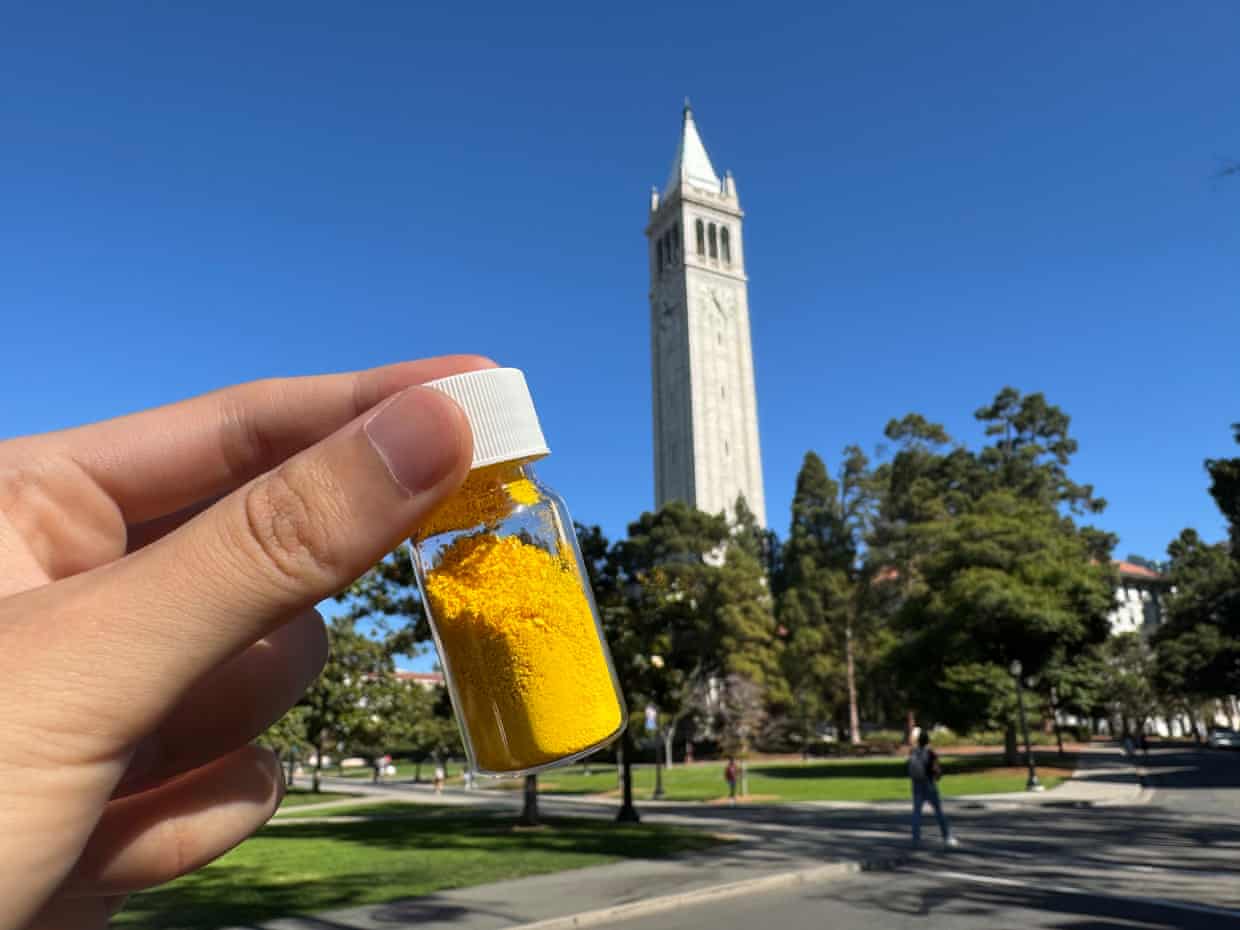
Photo: Zihui Zhou/University of California, Berkeley.
A carbon-capturing powder, pictured on Berkeley’s campus. 

Somehow or other scientific research about global warming will continue. Today’s example comes from Berkeley in California.

At the Guardian, Katharine Gammon reports, “An innocuous yellow powder, created in a lab, could be a new way to combat the climate crisis by absorbing carbon from the air.

“Just half a pound of the stuff may remove as much carbon dioxide as a tree can, according to early tests. Once the carbon is absorbed by the powder, it can be released into safe storage or be used in industrial processes, like carbonizing drinks.

“ ‘This really addresses a major problem in the tech field, and it gives an opportunity now for us to scale it up and start using it,’ says Omar Yaghi, a chemist at the University of California, Berkeley. It’s not the first material to absorb carbon, but ‘it’s a quantum leap ahead [of other compounds] in terms of the durability of the material.’

“The powder is known as a covalent organic framework, with strong chemical bonds that pull gases out of the air. The material is both durable and porous, and can be used hundreds of times, making it superior to other materials used for carbon capture.

“Yaghi has been working on similar materials for decades. It’s part of a broader push to collect tiny amounts of carbon from the air – either from power plants or from air around cities. Yaghi’s research with Zihui Zhou, a graduate student in his lab, and others was published in the journal Nature. …

“Yaghi’s team tested the new powder and found that it could successfully absorb and release carbon more than 100 times. It fills up with carbon in about two hours, and then must be heated to release the gas before starting the process over again. It only requires a temperature of about 120F to release the carbon; that makes it an improvement over other methods, which require a much higher temperature.

“That feature means places that already produce extra heat – such as factories or power plants – could use it to release the gas and start the cycle again. The material could be incorporated into existing carbon capture systems or future technology.

“Yaghi … plans to scale the use of this type of carbon capture with his Irvine, California-based company, Atoco, and believes the powder can be manufactured in multi-ton quantities in less than a year.

“Shengqian Ma, a chemist at the University of North Texas who was not involved in the new work, says this technology could be gamechanging. ‘One longstanding challenge for direct air capture lies in the high regeneration temperatures,’ he says, adding that the new material can substantially reduce the energy needed to use direct air capture. …

“Says Farzan Kazemifar, a associate professor in the department of mechanical engineering at San Jose State University who was not involved in the new study, ‘In the short term, replacing large emitters of carbon dioxide – like coal power plants – with renewable electricity offers the fastest reduction in emissions. However, in the long term, in case the emissions don’t go down at the desired pace, or if global warming effects intensify, we may need to rely on technologies that can remove carbon dioxide from the atmosphere, and direct air capture is one of those technologies.’

“Still, removing carbon from the air remains difficult, and as with all early-stage lab-scale studies, the challenge is scaling up the system for pilot studies. … Any technology to capture the gas from the air requires moving huge volumes of air – and that requires large electricity consumption for running fans, says Kazemifar. …

“Some scientists worry that the expectations of direct air capture systems has been overly rosy. A group of scientists from MIT recently wrote a paper analyzing the assumptions of many climate stabilization plans, and pointing to ways that direct air capture may be overly optimistic.

“Ma also points out that a major challenge to using this approach to combat climate change lies in the high cost of materials for creating substances that capture carbon.

“Still, Yaghi says this material can change the way we address carbon removal. ‘This is something we’ve been working on for 15 years, that basically addresses some of the lingering problems,’ he says.”

More at the Guardian, here.

Read Full Post »

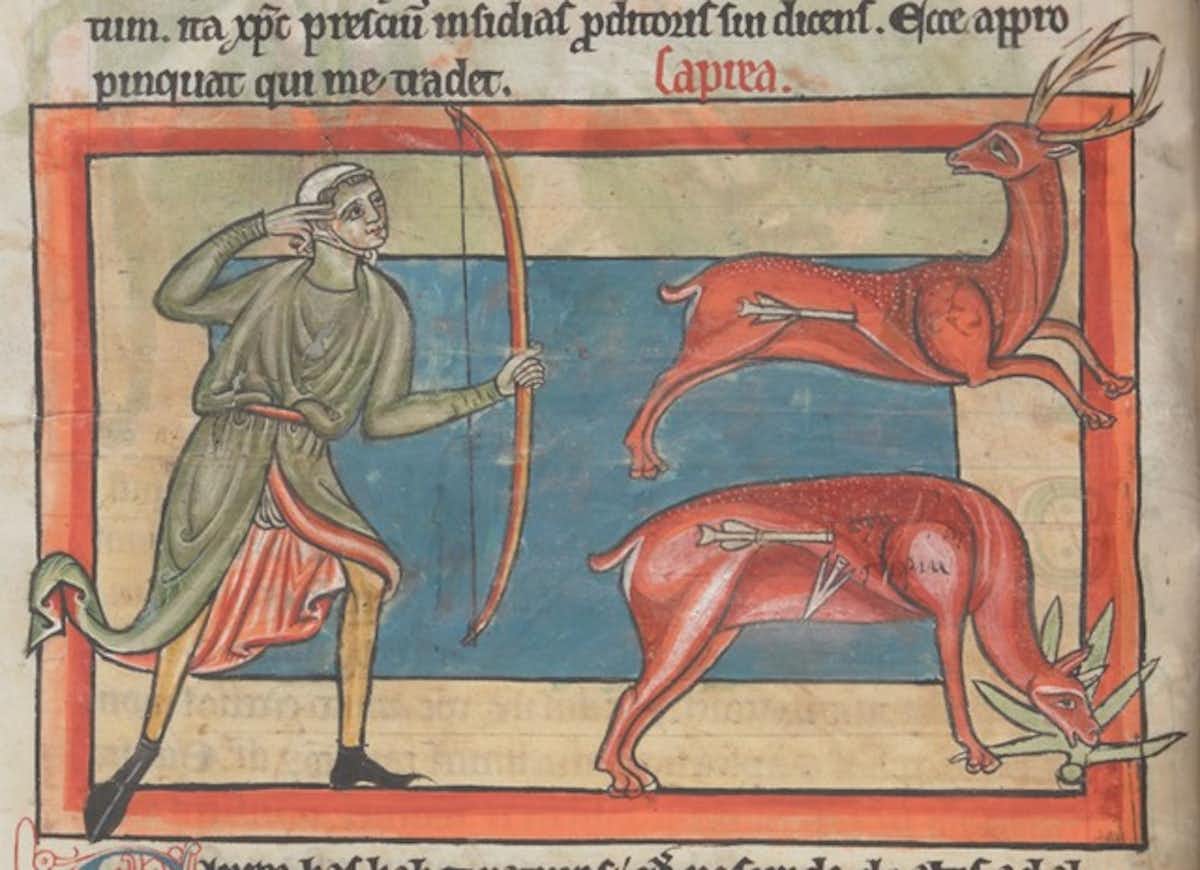
Photo:  British Library, Harley MS 4751 (Harley Bestiary).
As a hunter lands several arrows in his quarry, a wounded doe nibbles dittany to heal herself.

I think we don’t give enough credit to ancient wisdom. Researchers of former times may have been ignorant of cars and computers and smart phones, but why do we think they were unintelligent? (I’m a little cranky because I recently attended a talk on reflexology that barely mentioned traditional Chinese medicine.)

Today we learn that art works from centuries ago suggest humans were observing animals self-medicating long before contemporary scientists started publishing papers on the practice.

Adrienne Mayor, a classics, history and philosophy of science scholar at Stanford University, writes in the Conversation, When a wild orangutan in Sumatra recently suffered a facial wound, apparently after fighting with another male, he did something that caught the attention of the scientists observing him.

“The animal chewed the leaves of a liana vine – a plant not normally eaten by apes. Over several days, the orangutan carefully applied the juice to its wound, then covered it with a paste of chewed-up liana. The wound healed with only a faint scar. The tropical plant he selected has antibacterial and antioxidant properties and is known to alleviate pain, fever, bleeding and inflammation. …

“In interviews and in their research paper, the scientists stated that this is ‘the first systematically documented case of active wound treatment by a wild animal’ with a biologically active plant. …

“To me, the behavior of the orangutan sounded familiar. As a historian of ancient science who investigates what Greeks and Romans knew about plants and animals, I was reminded of similar cases reported by Aristotle, Pliny the Elder, Aelian and other naturalists from antiquity. A remarkable body of accounts from ancient to medieval times describes self-medication by many different animals. The animals used plants to treat illness, repel parasites, neutralize poisons and heal wounds.

“The term zoopharmacognosy – ‘animal medicine knowledge’ – was invented in 1987. But as the Roman natural historian Pliny pointed out 2,000 years ago, many animals have made medical discoveries useful for humans.

Indeed, a large number of medicinal plants used in modern drugs were first discovered by Indigenous peoples and past cultures who observed animals employing plants and emulated them.

“Some of the earliest written examples of animal self-medication appear in Aristotle’s ‘History of Animals‘ from the fourth century BCE, such as the well-known habit of dogs to eat grass when ill, probably for purging and deworming.

“Aristotle also noted that after hibernation, bears seek wild garlic as their first food. It is rich in vitamin C, iron and magnesium, healthful nutrients after a long winter’s nap. The Latin name reflects this folk belief: Allium ursinum translates to ‘bear lily,’ and the common name in many other languages refers to bears.

“Pliny explained how the use of dittany, also known as wild oregano, to treat arrow wounds arose from watching wounded stags grazing on the herb. Aristotle and Dioscorides credited wild goats with the discovery. Vergil, Cicero, Plutarch, Solinus, Celsus and Galen claimed that dittany has the ability to expel an arrowhead and close the wound. Among dittany’s many known phytochemical properties are antiseptic, anti-inflammatory and coagulating effects.

“According to Pliny, deer also knew an antidote for toxic plants: wild artichokes. The leaves relieve nausea and stomach cramps and protect the liver. To cure themselves of spider bites, Pliny wrote, deer ate crabs washed up on the beach, and sick goats did the same. Notably, crab shells contain chitosan, which boosts the immune system.

“When elephants accidentally swallowed chameleons hidden on green foliage, they ate olive leaves, a natural antibiotic to combat salmonella harbored by lizards. Pliny said ravens eat chameleons, but then ingest bay leaves to counter the lizards’ toxicity. Antibacterial bay leaves relieve diarrhea and gastrointestinal distress. Pliny noted that blackbirds, partridges, jays and pigeons also eat bay leaves for digestive problems.

“Weasels were said to roll in the evergreen plant rue to counter wounds and snakebites. Fresh rue is toxic. Its medical value is unclear, but the dried plant is included in many traditional folk medicines. Swallows collect another toxic plant, celandine, to make a poultice for their chicks’ eyes. Snakes emerging from hibernation rub their eyes on fennel. Fennel bulbs contain compounds that promote tissue repair and immunity.

“According to the naturalist Aelian, who lived in the third century BCE, the Egyptians traced much of their medical knowledge to the wisdom of animals. Aelian described elephants treating spear wounds with olive flowers and oil. He also mentioned storks, partridges and turtledoves crushing oregano leaves and applying the paste to wounds.”

Need more proof that modern science sometimes just reinvents the wheel? Read the Conversation, here. No paywall. Fun artworks.

Read Full Post »

In ancient times, Arabic translations of Greek helped spur scientific inquiry.

You may have seen that there are contemporary publishers planning to use artificial intelligence to translate texts. Ha! What could possibly go wrong? If you have ever used Google Translate, you know the answer to that: AI works only up to a point.

Today’s excerpt from Josephine Quinn’s book How the World Made the West, focuses on benefits that came from the traditional type of translation.

“In the eighth-century CE the Abbasids undertook to collect the wisdom of the world in their new capital at Baghdad. … The operation was lavishly funded by [the second Abbasid caliph, al-Mansur] as well as by members of his household, courtiers, merchants, bankers, and military leaders. …

“What is often now called the ‘Translation Movement’ … was part of a wider commitment by Islamic scholars and political leaders to scientific investigation that also saw caliphs commission new works of science, geography, poetry, history, and medicine.

The real legacy of the Arabic translations is the impetus they gave to further thought. 

“It is well-known that classic works of Greek science and philosophy were translated into Arabic before they were translated into other European languages — including Latin. What is less well-known is that the point of translating foreign works was not to preserve them but to build on them. As links around the Mediterranean continued to increase, that Arabic scholarship began to reach western Europe, and to change the way people there thought.

“Back in Baghdad, as so often happened, cultural change began from the outside — and in this case with the collection and comparison of foreign knowledge. The fundamental model and first material for the Abbasid translation project came from Iran, where sixth-century Sasanian shahs had commissioned Persian translations of important Indian and Greek works.

“Living Iranians were an inspiration too. … Persian scholars had already started to translate classic works of their own literature into Arabic. This ensured their preservation, and advertised the history and high culture of Iranian lands. Sasanian intellectuals also maintained useful links with scientific traditions farther east, above all with Indian mathematicians, the most advanced in the ancient world, and they had already translated important works from Sanskrit into their own language. …

“Incorporating the work of Greek thinkers into the Arabic canon was by contrast a declaration of cultural hegemony over the rump Roman empire at Constantinople, where older learning had been set aside in favor of Christian genres from sermons to saints’ lives, and where ancient science and philosophy now moldered in archives and monasteries.

“More immediately, the project took inspiration from the contemporary intellectual culture of western Asia, revitalized by the unification under Islam of regions once subject to either Persia or Rome. … This world produced well-traveled intellectuals expert in topics from military strategy to astrology, and comfortable in Greek, Syriac, Middle Persian (Pahlavi), and now Arabic as well.

“The final key component came from farther east. Paper had been invented in China in the second century BCE and by the second century CE it is found in the trading oases of the Tarim Basin. … As paper was much cheaper to produce than papyrus, it finally made writing in great quantity a practical prospect.

“In the early ninth century scientific scholarship in Baghdad coalesced around a library called the ‘House of Wisdom’ (Bayt al-Hikma), and the translation efforts were put on a more organized footing. … Persian scholars translated into Arabic works that had already been translated from other languages into their own, and since there was comparatively little direct Greco-Arabic bilingualism, Arabic translations of Greek works were often made from Syriac versions. …

“We have a useful guide to the foreign works considered worthy of investigation in the form of an encyclopedia entitled Keys of the Sciences written by Muhammad ibn Musa al-Khwarizmi (c. 780–850), a Persian-speaking mathematician and astronomer from the central Asian oasis of Khwarazm, south of the Aral Sea, who worked at the House of Wisdom.

“He divided the work into two books: one describes ‘Islamic religious law and Arabic sciences,’ defined as law, theology, grammar, secretaryship, poetry, and history; the other is devoted to ‘the sciences of foreigners such as the Greeks and other nations’: philosophy, logic, law, medicine, arithmetic, geometry, astronomy/astrology, music, mechanics, and alchemy. …

“Practical Greek texts also found their way into the collection, on topics from engineering to military tactics to falconry. Popular literature included books of fables, ‘wisdom sayings,’ and letters supposedly exchanged between famous historical figures. …

“Some of the Greek texts were acquired through personal request, even from the caliph himself. Other manuscripts were found on investigative missions. [A] tenth-century compendium of literature written in Baghdad reports that camel-loads of old works were discovered in a pagan Greek temple that had been locked since the arrival of Christianity, getting worn and gnawed at by pests. …

“Most ancient science was indeed lost to western Europe for almost a millennium: such works were usually written in Greek, even by Romans, and they disappeared with the knowledge of that language. …

“Greek texts were far from the only inspiration for Arabic science. [But the] manipulation, criticism, and sometimes outright rejection of foreign works by intellectuals working in the Islamic world catalyzed a scientific revolution.”

More at Literary Hub, here.

Read Full Post »

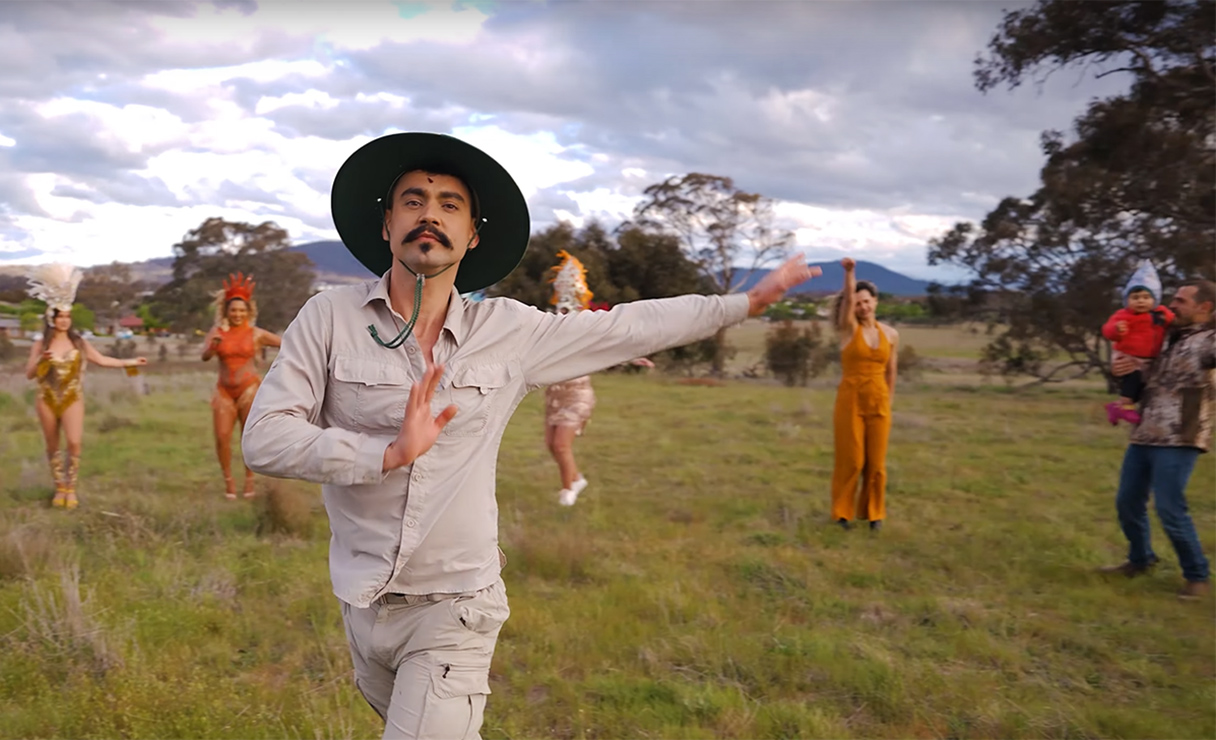
Photo: Weliton Menário Costa via Science.
Says Science magazine: “In his winning ‘Dance Your Ph.D.’ video, Weliton Menário Costa shifts his dance style to match other dancers, mimicking how kangaroos adapt their personalities to fit the group.”

This is a story about Science magazine’s annual “Dance Your PhD” competition. The winning video replicates something a researcher studied — kangaroo behavior. Runners up included dances about stream-bank erosion and moth mating.

Sean Cummings writes at Science, “In a broad grassland beneath an Australian sunset, dancers in everything from fishnets to field attire let loose an unchoreographed mishmash of steps, leaps, twirls, and twerks. There’s no unified style to the movement, but the resulting video — this year’s winner of Science’s annual ‘Dance Your Ph.D.’ contest — carries meaning nonetheless in its joyful madness. To Weliton Menário Costa, its creator, this dance mirrors the one between individuality and conformity in kangaroos — and celebrates the value of diversity in all species.

“Menário Costa, who was awarded $2750 in the annual contest now sponsored by the quantum technology-artificial intelligence (AI) company SandboxAQ, earned his ecology Ph.D. in 2021 at the Australian National University, studying eastern gray kangaroos (Macropus giganteus) living at Wilsons Promontory National Park. Even as joeys, he found, individual kangaroos seemed to have distinct personalities. Bolder animals, for instance, would approach a remote-controlled model car driven near them whereas others shied away. These personalities aren’t set in stone, however: The marsupials modify their behavior to conform with those around them, adjusting as they move between groups.

“Menário Costa, who has since transitioned from science into a career as a singer-songwriter under the name WELI, recorded an original song, Kangaroo Time, for the contest. He then recruited a score of dancer friends representing styles from urban to classical, ballet to Brazilian funk. ‘I wanted to showcase the diversity of kangaroo behavior, and the easiest way was to get the diversity of dance we already have. I didn’t choreograph them, they were just being themselves,’ Menário Costa says. The only instruction?

Do as the ’roos do. In other words, mingle with dancers of other styles and adjust your movements in response, gradually unifying into a group effort.

“The result resonated with a judging panel of artists, dancers, and scientists. ‘There was a sense of surprise and delight in it. You could tell they were having fun through the process’ … says judge Alexa Meade, a visual artist who uses optical illusions in her work. She also praised the video’s original songwriting and costumes, as well as the simplicity and accessibility with which it explained the science relating to kangaroo group dynamics.

“Besides finding a whimsical way to teach viewers about kangaroos, Menário Costa hopes to convey the message that diversity — in all its forms — should be celebrated. ‘Kangaroos are different, just like us,’ he says. ‘Differences happen in all species—.’ …

“The project also provided a way for Menário Costa to translate his academic experiences into an accessible form for friends and family in his small Brazilian hometown. Many of them didn’t fully understand what he was doing in Australia, he says — including his grandmother. ‘Once I released Kangaroo Time, she was like, “That’s my grandson! I get it now!” says Menário Costa, who [planned] to release his first EP, Yours Academically, Dr. WELI, at the beginning of March. …

“ ‘This year’s entries did a great job of incorporating art and science to [create something] greater than the sum of their parts,’ Meade says. In the past, she explains, ‘some entries have incredible research but the dance component feels like an afterthought, or we might get some incredible dance performance, but I’m not sure what it has to do with science. It has to be a blending that accentuates both.’ The entries were so strong, the judges noted, that the second-ranked dance in the social science category might have won the whole thing if not up against the kangaroos.” Click on that one: It’s pretty funny.

You can make a dance about anything — as I learned when I was 14 and had to choreograph a dance about oxygen in combustion. You couldn’t just show Antoine Lavoisier mixing chemicals but had to somehow replicate the chemicals themselves!

More at Science, here. Hat tip: ArtsJournal.com.

Read Full Post »

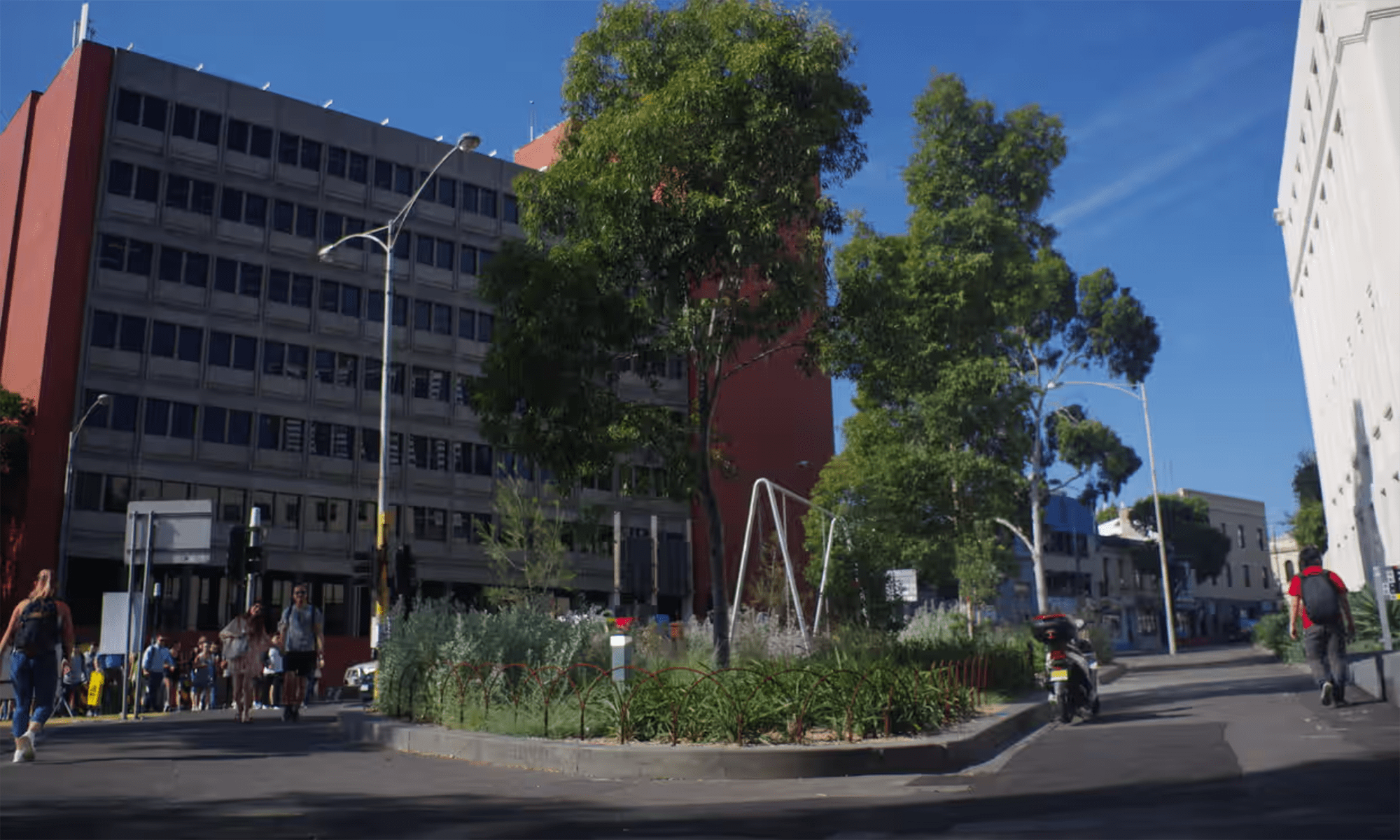
Photo: Mata, et al, CC BY 4.0.
Entomology Today says, “City insects need native plants just like country insects do. A new study, conducted in a small greenspace in Melbourne, Australia, found that an increase in the diversity and complexity of plant communities leads to a large increase in insect biodiversity, a greater probability of attracting insects, and a higher number of ecological interactions between plants and insects.”

My friend Jean Devine, founder of Biodiversity Builders and Devine Native Plantings, works with young people to plant native species that nurture beneficial insects. Between her and University of Texas Prof. Alex Wild, @alexwild, I have been learning a lot about bugs and how essential to life they can be. I even work hard to understand some of Alex’s posts, of which the following is not unusual: “A genomic study of a small group of tiger beetles shows that convergent color evolution had misled past morphological taxonomists.” Ha!

Meanwhile, under the title “Every Little Bit Helps,” Entomology Today advises those responsible for plantings in cities thus: “By increasing the diversity of native plants in urban areas, researchers from the University of Melbourne have seen a seven-fold increase in the number of insect species in just three years, confirming the ecological benefits of urban greening projects. The findings were published [in August] in the British Ecological Society journal, Ecological Solutions and Evidence.

“The study, conducted in a small greenspace in Melbourne, Australia, found that an increase in the diversity and complexity of plant communities leads to a large increase in insect biodiversity, a greater probability of attracting insects, and a higher number of ecological interactions between plants and insects.

“Bringing nature into cities has been shown to deliver a host of benefits, from well-being to increased biodiversity and climate change mitigation. Being able to quantify the benefits of greening projects like rooftop gardens or urban wildflower meadows has become a sharp focus for people creating and funding them.

However, prior to this study, little evidence had been documented on how specific greening actions can mitigate the detrimental effects of urbanization through boosting the numbers of indigenous insect species that have become rare or ceased to exist in a particular area.

“ ‘Our findings provide crucial evidence that supports best practice in greenspace design and contributes to re-invigorate policies aimed at mitigating the negative impacts of urbanization on people and other species,’ says Luis Mata, Ph.D., researcher at the University of Melbourne’s School of Agriculture, Food and Ecosystem Sciences, lead research scientist at Cesar Australia, and lead author of the study.

“Prior to the beginning of the study in April 2016, the research team’s chosen greenspace was limited in vegetation: simply a grass lawn and two trees. Across April, the site was substantially transformed through weeding, the addition of new topsoil, soil decompaction and fertilization, organic mulching, and the addition of 12 indigenous plant species.

“Across the four-year length of the study, the researchers conducted 14 insect surveys using entomological nets to sample each plant species for ants, bees, wasps, beetles and more. Overall, 94 insect species were identified, 91 of which were indigenous to Victoria, Australia.

“ ‘Most importantly, the indigenous insect species we documented spanned a diverse array of functional groups: detritivores that recycle nutrients, herbivores that provide food for reptiles and birds, predators and parasitoids that keep pest species in check,’ Mata says.

“The 12 plant species planted at the beginning of the study were found to support an estimated 4.9 times more insect species after only one year than the original two plant species that previously existed in the greenspace where the research took place. …

“ ‘An increase in the diversity and complexity of the plant community led to, after only three years, a large increase in insect species richness, a greater probability of occurrence of insects within the greenspace, and a higher number and diversity of interactions between insects and plant species,’ Mata says. …

“ ‘I’d love to see many more urban greenspaces transformed into habitats for indigenous species,’ Mata says. ‘We hope that our study will serve as a catalyst for a new way to demonstrate how urban greening may effect positive ecological changes.’ ”

More at Entomology Today, here. No firewall.

Read Full Post »

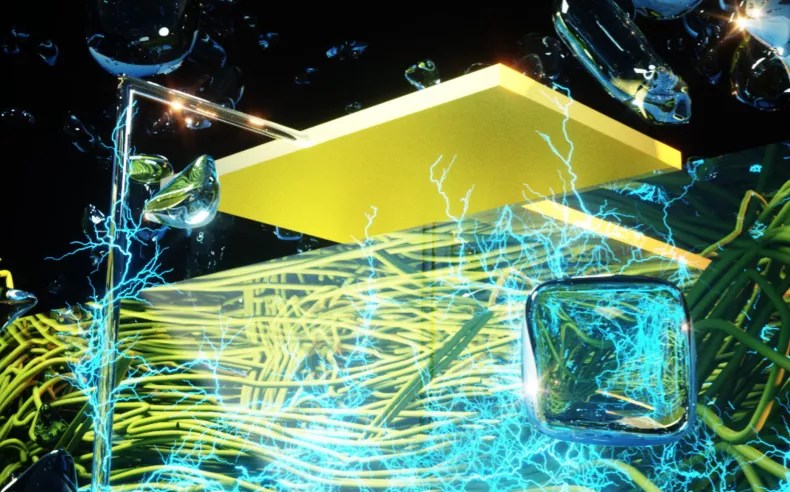
Photo: Derek Lovley/Ella Maru Studio/UMass Amherst via Newsweek.
Scientists have figured out how to use nanopores to make electricity from thin air. These 100nm pores harvest electricity from water molecules in the air.

Scientists, thank goodness, are still doing science, despite recent hostility. At the Washington Post, Dan Rosenzweig-Ziff has a cool story on scientific methods being used to unlock the green energy hidden around us.

“Nearly any material can be used to turn the energy in air humidity into electricity, scientists found in a discovery that could lead to continuously producing clean energy with little pollution.

“The research, published in a paper in Advanced Materials, builds on 2020 work that first showed energy could be pulled from the moisture in the air using material harvested from bacteria. The new study shows nearly any material, such as wood or silicon, can be used, as long as it can be smashed into small particles and remade with microscopic pores. But there are many questions about how to scale the product. …

“ ‘It’s like a small-scale, man-made cloud,’ said Jun Yao, a professor of engineering at the University of Massachusetts at Amherst and the senior author of the study. ‘This is really a very easily accessible, enormous source of continuous clean electricity.’ …

“That could include a forest, while hiking on a mountain, in a desert, in a rural village or on the road.

“The air-powered generator, known as an ‘Air-gen,’ would offer continuous clean electricity because it uses the energy from humidity, which is always present, rather than depending on the sun or wind. Unlike solar panels or wind turbines, which need specific environments to thrive, Air-gens could conceivably go anywhere, Yao said.

“Less humidity, though, would mean less energy could be harvested, he added. Winters, with drier air, would produce less energy than summers.

“The device, the size of a fingernail and thinner than a single hair, is dotted with tiny holes known as nanopores. The holes have a diameter smaller than 100 nanometers, or less than a thousandth of the width of a strand of human hair.

“The tiny holes allow the water in the air to pass through in a way that would create a charge imbalance in the upper and lower parts of the device, effectively creating a battery that runs continuously. …

“While one prototype only produces a small amount of energy — almost enough to power a dot of light on a big screen — because of its size, Yao said Air-gens can be stacked on top of each other, potentially with spaces of air in between. Storing the electricity is a separate issue, he added.

“Yao estimated that roughly 1 billion Air-gens, stacked to be roughly the size of a refrigerator, could produce a kilowatt and partly power a home in ideal conditions. The team hopes to lower both the number of devices needed and the space they take up by making the tool more efficient. Doing that could be a challenge.

“The scientists first must work out which material would be most efficient to use in different climates. Eventually, Yao said he hopes to develop a strategy to make the device bigger without blocking the humidity that can be captured. He also wants to figure out how to stack the devices on top of each other effectively and how to engineer the Air-gen so the same size device captures more energy. …

“It could be embedded in wall paint in a home, made at a larger scale in unused space in a city or littered throughout an office’s hard-to-get-to spaces. And because it can use nearly any material, it could extract less from the environment than other renewable forms of energy.”

Well, OK, it needs work. But you know that someone will move this into the practical realm someday. More at the Post, here.

By the way, it is also possible to make drinking water from air. Read about how that is actually happening in Africa, here.

Read Full Post »

Photo: Akhila Ram.
High School student Akhila Ram won a 2022 ‘Most Innovative’ award for her invention to measure groundwater.

When I get discouraged about what we’re doing to the planet, I remind myself of all the young people coming along who like to solve problems.

Today’s post is about those who are addressing water scarcity. Akhila Ram, a high school student in Lexington, Massachusetts, won a science award for her groundwater-measuring gadget. And at the University of Illinois Chicago (UIC), there are young professors focused on reusing wastewater to save on potable water.

Collin Robisheaux writes at the Boston Globe, “Akhila Ram, a 12th-grader at Lexington High School, isn’t exactly like other high school students. In her free time she enjoys baking, painting – and inventing technologies to map out groundwater levels across the United States in order to monitor problems like water depletion.

“Ram’s invention is a computer model that uses machine learning to interpret data collected by NASA’s GRACE satellite in order to predict groundwater within a few feet of its actual level. While groundwater monitoring tools already exist, they can be expensive to install.

“Ram’s system could give farmers, well owners, and local officials a cost-effective method of monitoring groundwater. According to Ram, this model is the first to use a statistical approach on a large region to predict changes in groundwater levels. …

“The inspiration behind the invention is personal for Ram.

“ ‘My grandparents live in India, and their city faced a major drought,’ Ram said in an interview. ‘It was because of poor management. And I wanted to [do research on] solutions that could be used to properly manage water resources. … I’ve always been really passionate about climate change,’ Ram said. ‘That’s what led me here. I’ve always been trying to come up with ideas in this realm of sustainability and the environment.’ More at the Globe, here.

Meanwhile young college professors at the University of Illinois Chicago (UIC) are finding ways to make better use of wastewater.

David Staudacher reports at Rise magazine, “Water is our most precious resource, but climate change, pollution, and a growing human population has made this resource even more scarce. More than 2 billion people live in water-stressed countries. …

“To reduce this scarcity, two professors in civil, materials and environmental engineering are looking around in the world to find better ways to reclaim and reuse both fresh water and wastewater.

“To find best practices in water reuse, Associate Professor Sybil Derrible and his team have studied the work done in cities and countries around the world. In search of new water sources, many countries are turning to ocean water. …

“ ‘In places like Singapore, Hong Kong, Saudi Arabia, and Israel, there are only a few ways to get water,’ Derrible said. ‘One is from the sea through desalination, and another is by reclaiming used water. Desalination requires a lot of electricity. Recycling used water can save energy and money.’

“Derrible and his team are developing a framework to analyze water circularity — which is the practice of not wasting or losing water and recovering the resources it contains as it is reused in multiple applications — by examining how cities collect, treat, and reuse water. In Singapore, for example, municipalities collect rainwater and recycle wastewater back to industries where it doesn’t need to be treated.

“Derrible wants to create a universal framework that takes into account ideas like this and that can be used anywhere in the world, including places where fresh water is not scarce.

“ ‘Many industries require extensive volumes of water, but the water does not need to be potable. Here, used water that was minimally treated can be sufficient,’ he said. Some places in the United States are already reusing wastewater. In warm climates like Las Vegas, wastewater is used to irrigate golf courses.

“ ‘It’s a big deal because the future of many cities includes reusing water and it is becoming more and more common for many cities in the world because water is a precious resource,’ he said.

“Also, in most countries, water distribution systems consist of large, highly pressurized pipe networks that require an excessive amount of energy and that are vulnerable to large-scale contamination if something goes wrong. However, in Hanoi, Vietnam, water is distributed at low pressures, and most buildings are equipped with a basement tank, a rooftop tank, and separate water treatment processes, resulting in a system that consumes less energy and that is more resilient. …

“Even a city like Chicago — with its vast freshwater resource in Lake Michigan — can benefit from reusing water. Professor Krishna Reddy is working with the Metropolitan Water Reclamation District of Greater Chicago (MWRDGC) and several UIC professors on an interdisciplinary project investigating ways to reuse treated wastewater from MWRDGC processing plants in the region and beyond.

“The district discharges some treated water into the Chicago River, where it makes its way into the Mississippi River and ultimately into the Gulf of Mexico. But ‘from a sustainability point of view, this is not a good reuse of a resource,’ Reddy said. ‘We suggest recycling the treated water where it can be reused for beneficial purpose without any further treatment.’ The researchers are gathering data to understand how much water MWRDGC produces, uses, and discharges, and are examining the quality of the water the plants both take in and discharge. One goal is to find new uses for wastewater.

“ ‘One interesting thing is that there are a large number of industries near the water reclamation plants, and they use a lot of water,’ Reddy said. ‘Maybe some of the industries nearby could use the treated water, or it could be used for other applications like agriculture or recreational parks irrigation, toilet flushing, landscaping, and golf courses.’ “

More at the UIC College of Engineering, here.

Photo: Jim Young
Sybil Derrible and his team are developing a framework to analyze “water circularity.

Read Full Post »

Photo: Time magazine, 2020.
At 15, scientist Gitanjali Rao made history with a device to detect lead in drinking water. ‘You don’t need a PhD to make a difference,’ she says.

More kids are getting into science these days, and I think their enthusiasm is going to benefit us all.

Anne Branigin reports at the Lily, “Gitanjali Rao just finished her final exam of the year and, like any other teenager, is eager to begin her summer.

“The 15-year-old is, in many ways, not your typical teen. She landed on the cover of Time magazine in 2020 as its inaugural ‘Kid of the Year’ for her scientific achievements, which include building a device, Tethys, that detects lead in drinking water.

“But Rao doesn’t see herself as exceptional. In fact, when she was younger, she didn’t even see herself as ‘the science type.’ She was driven, instead, by trying to find solutions to problems in her community. Once she discovered science and technology could be a means of finding those solutions, there was no turning back.

‘Using science and technology as social change became something that was intuitive to me and something that I wanted to keep doing,’ she said. …

“Rao says her passion for STEM has shaped her days and her goals — she is working on creating a global network of young innovators to tackle global problems. It also fuels her relentless optimism for the future and all its possibilities. …

“Anne Branigin: I’m curious what a normal day looks like for you during a very not-normal year.

“Gitanjali Rao: A normal day obviously involves being your normal high school student, just, you know, maintaining a social life, still doing homework every single day, studying for exams. But then there’s this added layer of my research and innovations. A lot of my work has been focused on running my innovation workshops for students all over the globe, which is also taking up a little bit — a lot of my energy and time trying to maintain that sort of situation as well. And also just being, even remotely, in the public eye obviously comes with its own perks, but also disadvantages of being able to manage that as well. …

“I love helping people. I love using science and technology to do that. So that priority always comes first. … I don’t do eight things at a time. I might do eight things in a day, but not eight things at a time because I know what I need to focus on. I know how to prioritize my work. …

“Anne Branigin: On the subject of your generation, there’s a recent study showing that interest in STEM is at an all-time high among young people.

“Gitanjali Rao: It honestly makes me really happy to see younger generations engaging in science. Today’s kids are tomorrow’s innovators and they [will] make the world better, stronger and more sustainable in the future. …

“Anne Branigin: What do you think makes your generation’s approach to science unique?

“Gitanjali Rao: So a question that I commonly get is, what is one word to describe your generation? And I like to say, hotheaded — but in a good way. Our generation, if we put our mind to something, we want to get it done. That’s how I have been. That’s how a lot of my friends have been. …

“Anne Branigin: In the past, we haven’t always seen people of color and women and other members of marginalized communities really be the drivers of this technology. I’m curious how you’ve been thinking about equity and how those conversations have come up with your peers.

“Gitanjali Rao: My generation is destined to be innovators more than any generation that came before. And we’re the first generation to grow up as natural innovators because of how we live, where we live and what we have access to from a technology standpoint.

“Where I want to see that equity change is in education. Access to resources is something that obviously people have faced across the world. It’s an issue still to this day. It’s the 21st century, and we’re still talking about girls and women struggling to get education. But what it’s important to recognize is that a lot of times, the ideas start in the bare minimum.

“With my device, Tethys, to detect lead in drinking water, I started with a cardboard box and a couple of drawings on a piece of paper. And honestly, what that turned into was not looking at what resources I had, but dreaming big and then thinking back to reality.

“So equity is something that we need to work together to make a difference. But until then, it’s about using what we have on hand. Most of the innovators that I talk to online don’t have their driver’s license. I don’t have my driver’s license. But at the same time, it gives me this opportunity to be like, ‘Okay, with the resources that I have on hand, without having money to spend, what can I do?’ “

More at the Lily, here.

Read Full Post »

Some people think religion is incompatible with science, but that depends on the individual and the particular field of science you’re talking about. One of my brothers is both devout and a scientist. And at his Zoom retirement party this past year, I learned he wasn’t the only one in his lab.

A woman who heads up an important climate change center is Texas is another example. Sarah Kaplan wrote about her at the Washington Post.

“ ‘What world have I brought my child into?’ the new mom pleaded. ‘What can I do to make sure my baby isn’t brought up in a world that’s being destroyed?’

“It was 2019, and climate researcher Katharine Hayhoe was at a church breakfast in Fairbanks, Alaska, when a young woman tapped on her shoulder and confessed that she was terrified. Ever since the birth of her daughter, the young woman said, she couldn’t stop worrying about the threat of a rapidly warming planet.

“ ‘That heartfelt question is one I thought I could only really answer as a fellow mom,’ said Hayhoe, an atmospheric scientist at Texas Tech University and an evangelical Christian who has spent years trying to educate the public about climate change.

“Hayhoe told the Alaska woman the same thing she sometimes had to tell herself when she worried about her own son’s future: Channel your fear into action. Talk to your friends and family. Advocate for change in your town, your church, your school, your state. Now, Hayhoe aims to replicate that exchange on a much bigger scale.

“Along with five fellow climate scientists who are also mothers, she has teamed up with Potential Energy, a nonprofit marketing firm, to launch Science Moms, a $10 million campaign to educate and empower mothers to do something about climate change.

“Advertisements featuring Hayhoe and the female scientists will air on national TV and online for the next month. The initial push will be followed by ads in several key states where the effects of climate change are already being felt, including North Carolina, Arizona and Wisconsin. …

“In one video, Colorado State University atmospheric scientist Melissa Burt narrates a montage of images of her 4-year-old daughter, Mia, juxtaposed with footage of a hurricane.

“ ‘You don’t have to be a climate scientist to want to protect the Earth,’ she says. ‘And for Mia, I want you to know that I worked really hard to be a part of the change and to make it a better place for you.’

“The campaign also has a website featuring facts and resources, including links to books on talking to kids about climate and a form for contacting elected officials. …

“Mothers are the ‘sweet spot’ for inspiring social change, said John Marshall, a veteran marketing executive and consultant and a founder of Potential Energy. They have a long track record of political activity: Mothers Against Drunk Driving helped lower the legal limit for blood alcohol content in drivers. Moms Demand Action has lobbied for initiatives to prevent gun violence. …

“His research suggests that mothers are not more vocal about the warming threat because they’re not confident they understand the science and are unsure of what to do about it. That’s where Science Moms comes in.

‘Moms trust moms,’ said Burt. She hopes that viewers will see her — a Black woman who studies the warming Arctic and presents at scientific conferences but also cooks spaghetti for her family and gardens with her daughter — and feel represented.

“ ‘I want to connect with moms who look like me. … We are disproportionately affected by the impacts of climate change. I just want other moms who look like me to know they have a role in combating this crisis,’ she added.

“Science Moms is funded through donations, including large gifts from philanthropist MacKenzie Scott and former Nature Conservancy chief executive Mark Tercek. The group says it will be the biggest educational awareness campaign around climate since Al Gore’s $100 million ad blitz about the issue in 2007. [The] group cannot engage in political campaigns or seek to influence legislation.

“Marshall will measure success in heightened awareness of the threat posed by global warming and increased willingness to take action. He said his aim is to double the proportion of Americans who say they are ‘alarmed’ about climate change — a number that hovers around 26 percent, according to the Yale Program on Climate Change Communication. …

“Hayhoe hopes the ads will help counter the climate misinformation and misconceptions that so many Americans are exposed to: claims that it only affects polar bears (weather-related disasters cost the United States $95 billion and killed more than 200 people last year); assertions that the climate is always changing (in 4.6 billion years it has never warmed this fast); accusations that other countries are more at fault (the United States is the largest historical source of planet-warming emissions). …

“ ‘What we want to do is empower other moms to become messengers in the most-trusted category, which is friends and family,’ she said. ‘I really believe that using our voices is the way we can make a difference.’ ”

More at the Washington Post, here.

Read Full Post »

lead_720_405

Photo: Irena Schulz
This is YouTube personality Snowball the dancing parrot.

Internet videos of cute animals doing surprising things can sometimes lead to research that expands scientific knowledge. Such was the case with Snowball, better known on YouTube as the dancing parrot.

Ed Yong writes at the Atlantic, “Before he became an internet sensation, before he made scientists reconsider the nature of dancing, before the children’s book and the Taco Bell commercial, Snowball was just a young parrot, looking for a home.

“His owner had realized that he couldn’t care for the sulfur-crested cockatoo any longer. So in August 2007, he dropped Snowball off at the Bird Lovers Only rescue center in Dyer, Indiana — along with a Backstreet Boys CD, and a tip that the bird loved to dance. Sure enough, when the center’s director, Irena Schulz, played ‘Everybody,’ Snowball ‘immediately broke out into his headbanging, bad-boy dance,’ she recalls. She took a grainy video, uploaded it to YouTube, and sent a link to some bird-enthusiast friends. Within a month, Snowball became a celebrity. When a Tonight Show producer called to arrange an interview, Schulz thought it was a prank.

“Among the video’s 6.2 million viewers was Aniruddh Patel, and he was was blown away. Patel, a neuroscientist, had recently published a paper asking why dancing [was rare in animals.] …

“Patel reasoned that dancing requires strong connections between brain regions involved in hearing and movement, and that such mental hardware would only exist in vocal learners — animals that can imitate the sounds they hear. …

“In 2008, he tested Snowball’s ability to keep time with versions of ‘Everybody’ that had been slowed down or sped up. In almost every case, the parrot successfully banged his head and lifted his feet in time. Much like human children, he often went off beat, but his performance was consistent enough to satisfy Patel. …

“Meanwhile, Snowball was going through his own dance dance revolution. Schulz kept exposing him to new music, and learned that he likes Pink, Lady Gaga, Queen, and Bruno Mars. He favored songs with a strong 4/4 beat, but could also cope with the unorthodox 5/4 time signature of Dave Brubeck’s ‘Take Five.’ …

“In 2008, Patel’s undergraduate student R. Joanne Jao Keehn filmed these moves, while Snowball danced to ‘Another One Bites the Dust’ and ‘Girls Just Want to Have Fun.’ And recently [she] she combed through the muted footage and cataloged 14 individual moves (plus two combinations). Snowball strikes poses. He body rolls, and swings his head through half circles, and headbangs with a raised foot. …

“His initial headbangs and foot-lifts are movements that parrots naturally make while walking or courting. But his newer set aren’t based on any standard, innate behaviors. He came up with them himself, and he uses them for different kinds of music. …

“Snowball’s abilities are all the more impressive because they’re so rare. Ronan the sea lion, for example, was recently filmed bobbing her head to music (including, again, the Backstreet Boys), but she was trained. And when [another researcher, Adena Schachner,] combed through thousands of YouTube videos in search of animals that could be charitably described as dancing, she found only 15 species that fit the bill. One was the Asian elephant, which sometimes sways and swings its trunk to music. The other 14 species were parrots.”

Are any of you owners of parrots? I wonder if you have seen dancing behaviors. Read more here. And be sure to note the videos of early and late Snowball moves.

Read Full Post »

img_6977_custom-cc736ababb2851142350b8484394ed46b6ac9f94-s600-c85

Photo: Matthias Le Dall
Thanks in part to his original songwriting, singing, and guitar-playing, physics doctoral student Pramodh Senarath Yapa won this year’s “Dance Your PhD” contest.

This is such a creative idea: a “Dance Your Ph.D.” contest!

Just as almost any information can be compressed into a haiku, almost any abstract concept can be danced. That’s what my high school dance teacher said when she made us partner with classmates to choreograph scientific principles.  And when Page and I started to choreograph Lavoisier’s discovery of oxygen to the Firebird Suite, Miss Hinney reminded us that we had to give life to the concept, not do a historical reenactment. Hard but memorable.

That’s why I loved this story about dancing your PhD. Emma Bowman writes at National Public Radio (NPR), “Pramodh Senarath Yapa, a physicist currently pursuing his doctorate at the University of Alberta in Edmonton, Canada, has been named the 2018 winner of the ‘Dance Your PhD’ contest.

“The competition, sponsored by the American Association for the Advancement of Science (AAAS) and Science magazine, invites doctoral students and Ph.D. recipients to translate their research into an interpretive dance. The winner takes home $1,000.

“It took Senarath Yapa six weeks to choreograph and write the songs for ‘Superconductivity: The Musical!’ — a three-act swing dance depicting the social lives of electrons. The video is based on his master’s thesis, which he completed while pursuing his degree at the University of Victoria in Canada.

“The 11-minute sing-songy rendition is far less paralyzing than the jargony title of Senarath Yapa’s thesis alone: ‘Non-Local Electrodynamics of Superconducting Wires: Implications for Flux Noise and Inductance.’

” ‘Superconductivity relies on lone electrons pairing up when cooled below a certain temperature,’ Senarath Yapa told Science. ‘Once I began to think of electrons as unsociable people who suddenly become joyful once paired up, imagining them as dancers was a no-brainer!’ …

“John Bohannon, a former contributing correspondent for Science, founded the contest, now in its 11th year. It all started at a party one New Year’s Eve that was heavy on scientist attendees and light on the dancing. ‘I tapped into their competitive spirit,’ Bohannon tells NPR’s Scott Simon. …

” ‘I think in general, they’re exhibitionists. If you’re willing to stand up and defend some crazy obscure research topic that you’ve devoted your life to then there’s probably something in you that wants to dance.’ ”

More at NPR, here.

Read Full Post »

Older Posts »