Feeds:
Posts
Comments

Posts Tagged ‘sea urchin’

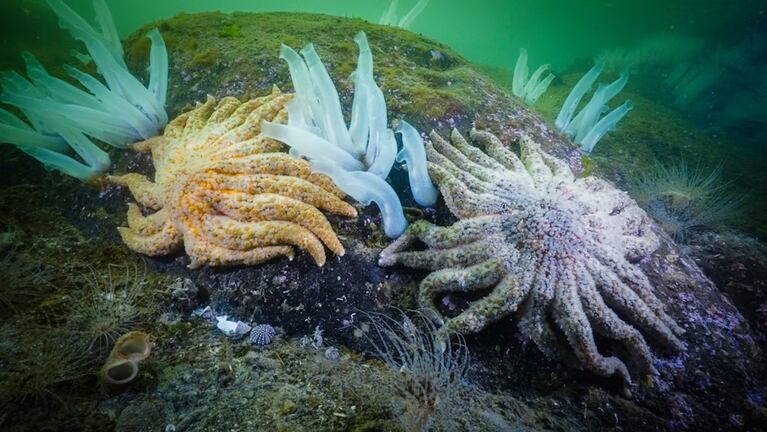
Photo: Bennett Whitnell / Hakai Institute.
Sunflower stars and vase tunicates grow on the sea floor of Rivers Inlet, British Columbia, in 2023.

There have always been voters who care more about knocking a few cents off the gas they put in their SUVs than researching what’s going on with some small creature in the natural world.

But many of us do care about the natural world and believe that a dieoff in any one area can have repercussions for humanity. Everything is connected.

John Ryan reports at OPB (Oregon Public Broadcasting) about how scientists worked to “crack the case” of melting sea stars.

He writes, “Researchers in Washington and British Columbia say they have solved a deadly mystery that has stumped scientists for more than a decade. They have identified the pathogen behind one of the world’s biggest disease outbreaks: a wasting disease that has turned billions of sea stars into goo – from Alaska to California.

“A mass dieoff of ocean-shaking proportions began among sea stars along North America’s West Coast in 2013. Of 20 species affected, the pizza-sized sunflower star was hardest hit. More than 5 billion sunflower stars, or 90% of their global population, wasted away.

“With key predators of sea urchins largely wiped out, the spiny little grazers proliferated and chewed their way through kelp forests, leading to widespread losses of that productive ocean habitat.

“For 12 years, the cause of the wasting disease was either unknown or, mistakenly, thought to be a virus. Instead, the new study says, it is a strain of bacteria known as Vibrio pectenicida. Other Vibrio bacteria sicken corals and shellfish. One species, Vibrio cholera, causes cholera in humans.

“ ‘It is not surprising that it is a Vibrio,’ said biologist Alyssa-Lois Gehman of British Columbia’s Hakai Institute. ‘It was surprising because it took us so long to find out that it was a Vibrio.’

“Gehman and her coauthors are not the first scientists to claim to have found the culprit behind the worst underwater wildlife pandemic on record. …

“Gehman said the new study, published in the journal Nature Ecology & Evolution, avoids a key oversight of the earlier work by focusing on the sea stars’ blood-like internal fluid and not just its external tissues, where many other microbes live. …

“Gehman’s research team not only found much more Vibrio pectenicida in sick stars than in healthy ones. They were able to isolate the Vibrio, grow it in the lab, and give the wasting disease to healthy sunflower stars by injecting them with the Vibrio, steps the earlier researchers had not achieved. …

“The current study grew out of four summers of experiments at the U.S. Geological Survey’s Marrowstone Marine Field Station, a beachfront facility on Marrowstone Island, near Port Townsend, Washington. Avoiding microbial contamination was a top priority.

“ ‘There’s a lot of ethanol and bleach and betadine,’ Gehman said. …

“Researchers stepped in foot baths when entering and leaving the facility. Each sunflower star, after enduring a two-week quarantine, lived in its own tank with its own supply of sand-filtered, ultraviolet-treated seawater. Researchers avoided touching the stars, even with gloves on.

“In January 2024, after analyzing the previous summer’s data, the researchers found large amounts of Vibrio pectenicida in sick sunflower stars and hardly any in healthy stars. …

“Sunflower stars have become so rare that taking any from the wild is both difficult and potentially harmful to the species.

“ ‘We ran at sort of the bare minimum necessary to get robust and strong evidence,’ Gehman said.”

Continued research is under threat. The administration in DC proposes to cut the key U.S. Geological Survey budget 38% in 2026 and eliminate its biological research arm, which environmental advocates call “the backbone of environmental and ecological monitoring.”

More at OPB, here.
Read Full Post »

Too Many Urchins

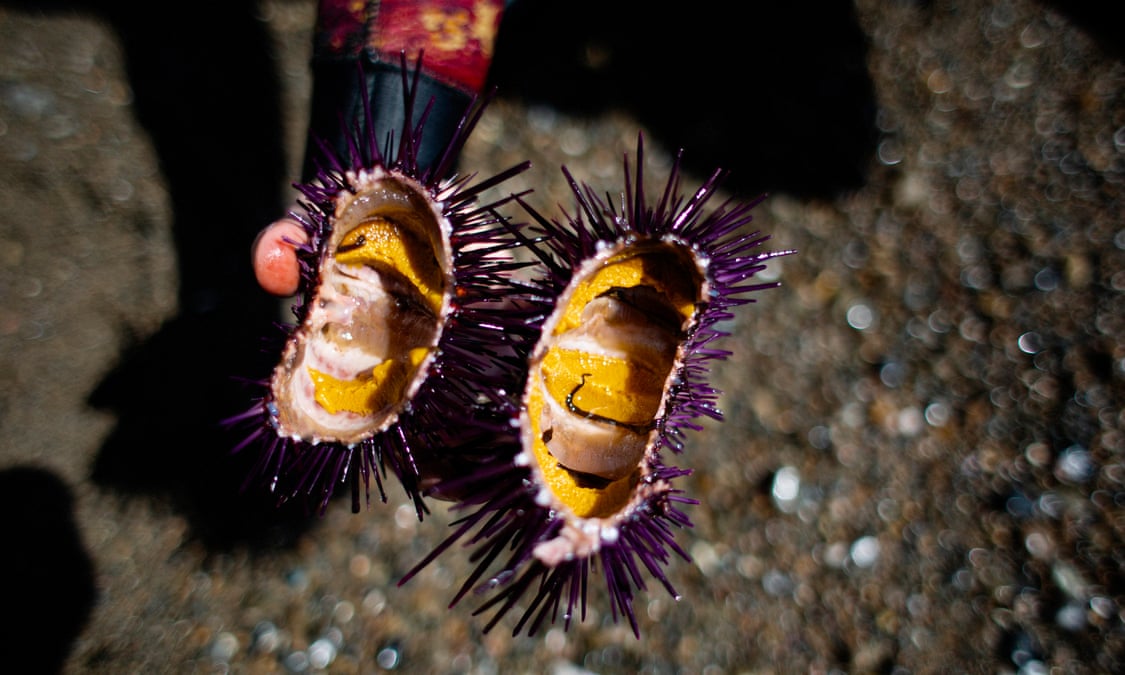
Photo: Talia Herman/Guardian.
A purple sea urchin with roe inside.

In her graphic memoir of her childhood in 1970s China, Na Liu recalls a time that comrades were told to kill sparrows because they were eating crops. The leaders went too far because in eliminating the birds, they let insects take over, and famine followed.

In today’s story, the public is asked to eat the invasive purple sea urchins that are damaging California’s kelp forests. If we are wise, we’ll learn from others’ experience and stop before we have eaten them all. Right now, that’s a long time ahead.

Vivian Ho writes at the Guardian that purple sea urchins “have become a major headache for the Pacific west coast. Their population has exploded by 10,000% since 2014, with scientists blaming the decline of sea otter and starfish populations – two of the urchin’s natural predators.

“Hundreds of millions of purple sea urchins now blanket the coast from Baja to Alaska, where they have been devouring the region’s vital kelp forests, doing untold damage to the marine ecosystem in the process.In California, it is estimated that 95% of the kelp forests, which serve as both shelter and food to a wide range of marine life, has been decimated and replaced by so-called ‘urchin barrens‘ – vast carpets of spiked purple orbs along the ocean floor.

“That’s why marine biologists and chefs have teamed up to release a new predator into their natural environment: me. Or, to be exact, me and all of you. There’s been a push for years to get the public to eat more sea urchin as a way to help curb the population and recover the kelp forests.

“It shouldn’t have been a hard sell. Sea urchin, or uni in the sushi world, is considered a delicacy in the fine dining circles. ‘The two main descriptors I would use are sweet and briny, similar to an oyster, similar to a clam,’ said culinary scientist Ali Bouzari. … ‘The texture is very creamy. It’s very similar to room-temperature butter.’

“During the pandemic, however, fine dining has been harder to come by. And the retail costs, which range from $9 to $12 per urchin at your local fishmonger, isn’t something every home cook can justify.

“But what Bouzari, co-founder of culinary research and development company Pilot R&D, has been pushing for the last few years is that sea urchin cuisine doesn’t have to be particularly precious or expensive. You can have it served on a half shell, topped with espresso-cream whipped potatoes and caviar – as they do at Michelin-star restaurant SingleThread in Healdsburg – or you can sauté it with some onion, sausage and day-old rice and make a dirty rice, one of Bouzari’s favorite recipes. And anyone with access to the coast can have sea urchin dirty rice on a dirty rice budget. …

“[One day] I stood on the beach of Timber Cove in Jenner, California, waiting as Bouzari and his friend Justin Ang, a Pilot R&D product manager, paddled up to shore atop some surfboards. They had spent the morning spearfishing. … But you don’t need a wetsuit or fancy gear to harvest sea urchin, he explained. Anytime at low tide on the edges of a cove, urchin – an intertidal species – should become visible. …

“Sea urchins are essentially a ball of hard purple spikes containing five egg sacs, which is what we eat – in the culinary world, they’re described as the tongues, the roe, the uni. …

“The sea urchin came loose when I twisted it like a doorknob. The triumph of my first harvest overtook any lingering sensations of pain from gripping its prickly spines. Still, I’d recommend gloves.

“I had brought some salted sourdough toast from San Francisco, and Bouzari quickly scooped a fat, golden tongue out of the hardened purple spikes to lay on to the olive-oiled surface. I had enjoyed uni before at sushi restaurants, but never tasted anything quite like the briny creaminess of sea urchin fresh from the ocean, on toast warmed in the California sun. That one bite felt like a calm summer day, floating on a boat in the water. …

“Bouzari showed me a move where he cut the urchin in half elegantly so that you could use the shell as a bowl or a candle holder after removing the roe. I had not mastered that. Instead, I cut the urchin jagged down the middle, at times just using my hands to rip it apart, sending spines flying on to the floor and into my sink.”

Read more at the Guardian, here, about helping the environment by eating this delicacy.

Read Full Post »

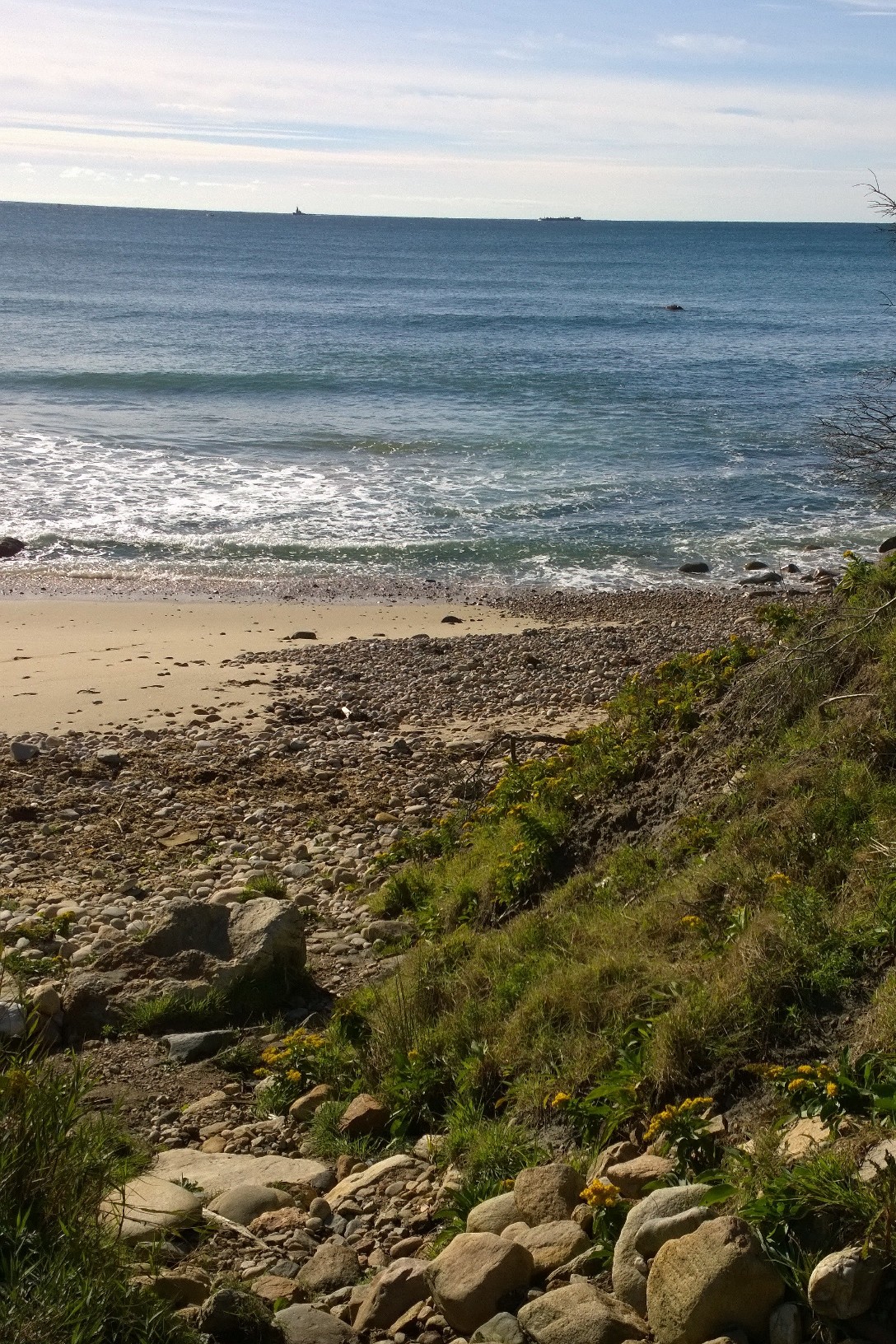
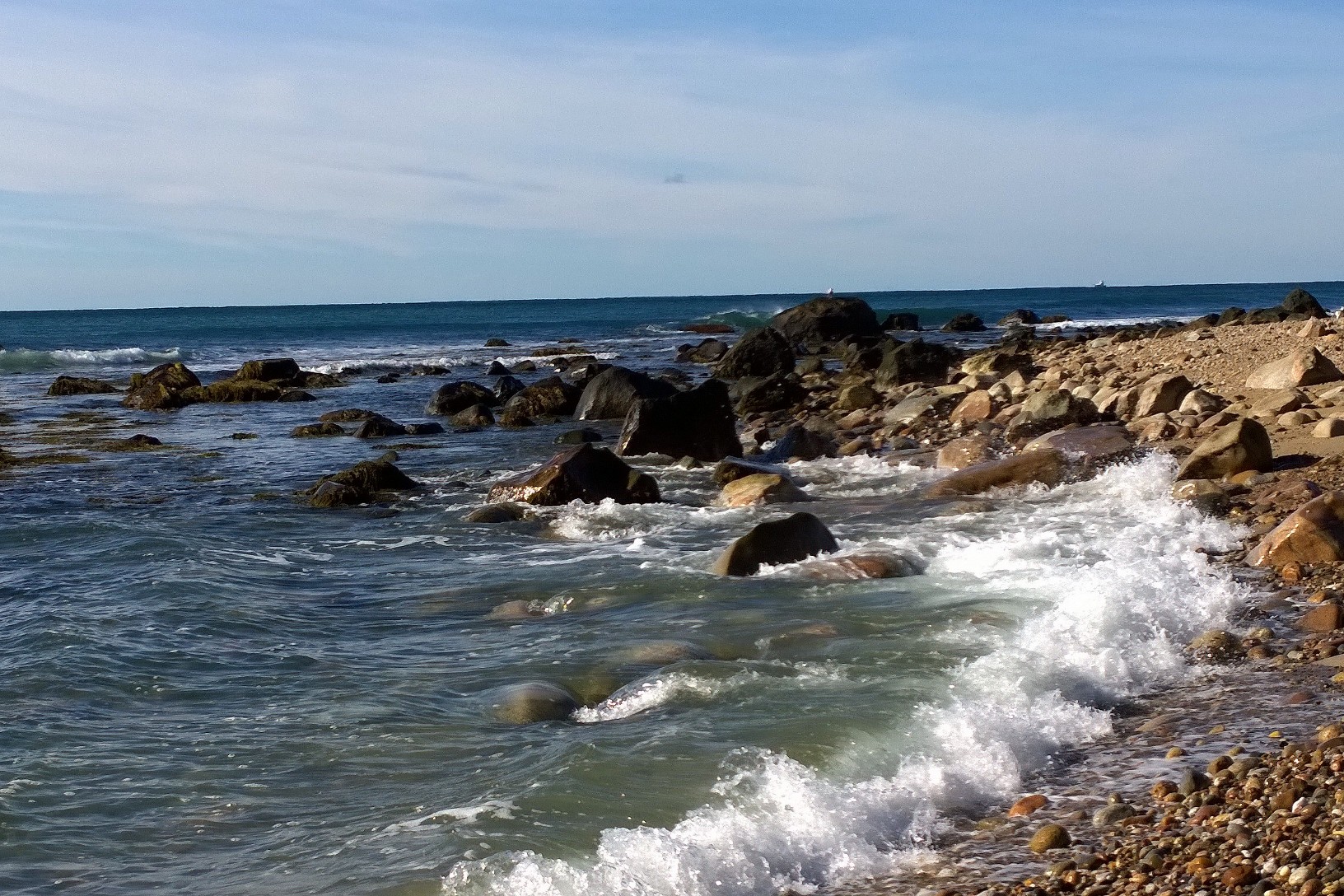
A bouncy boat ride in heavy rain last night. A warm sunny morning. Here are a few photos from my last island weekend of 2015.

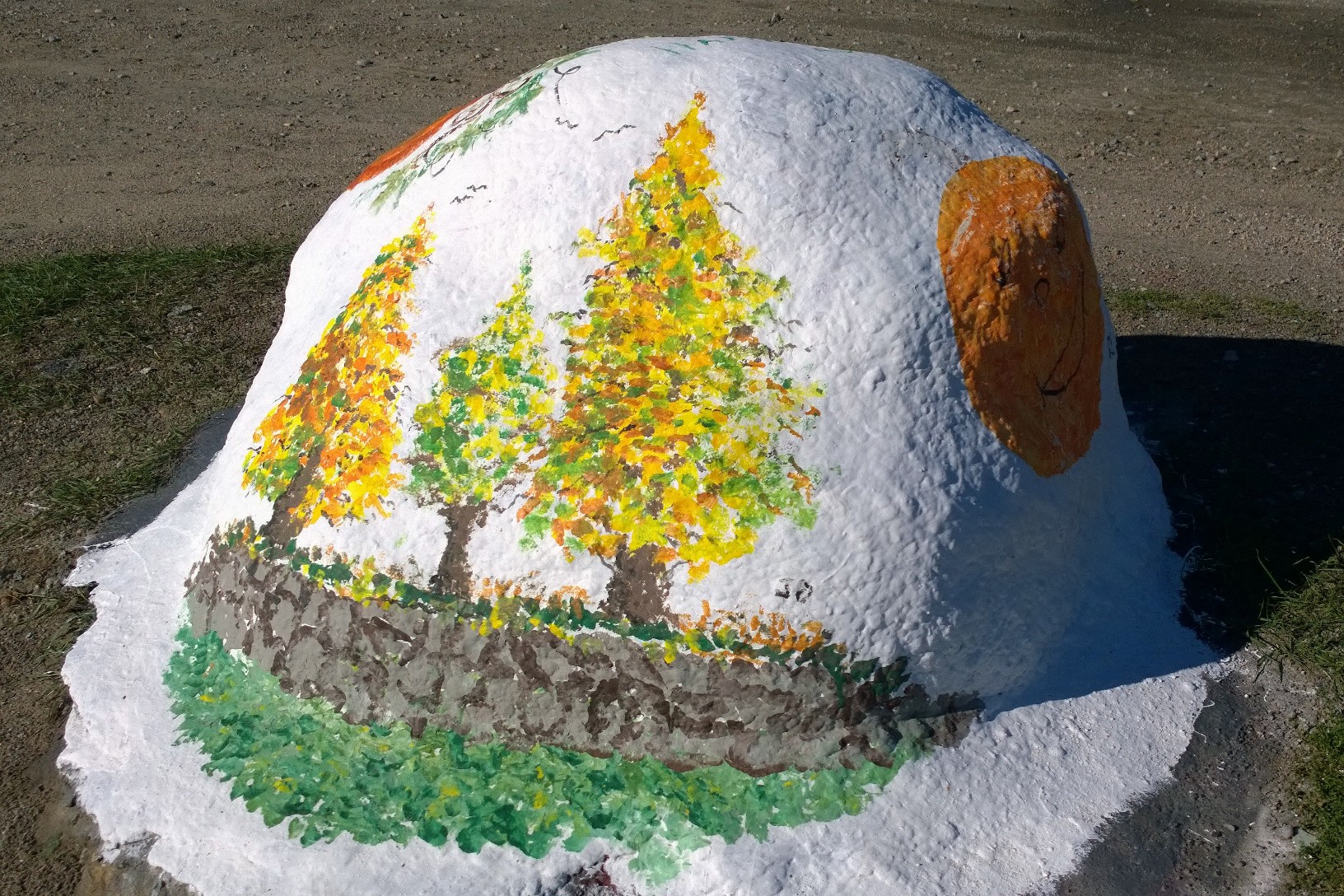
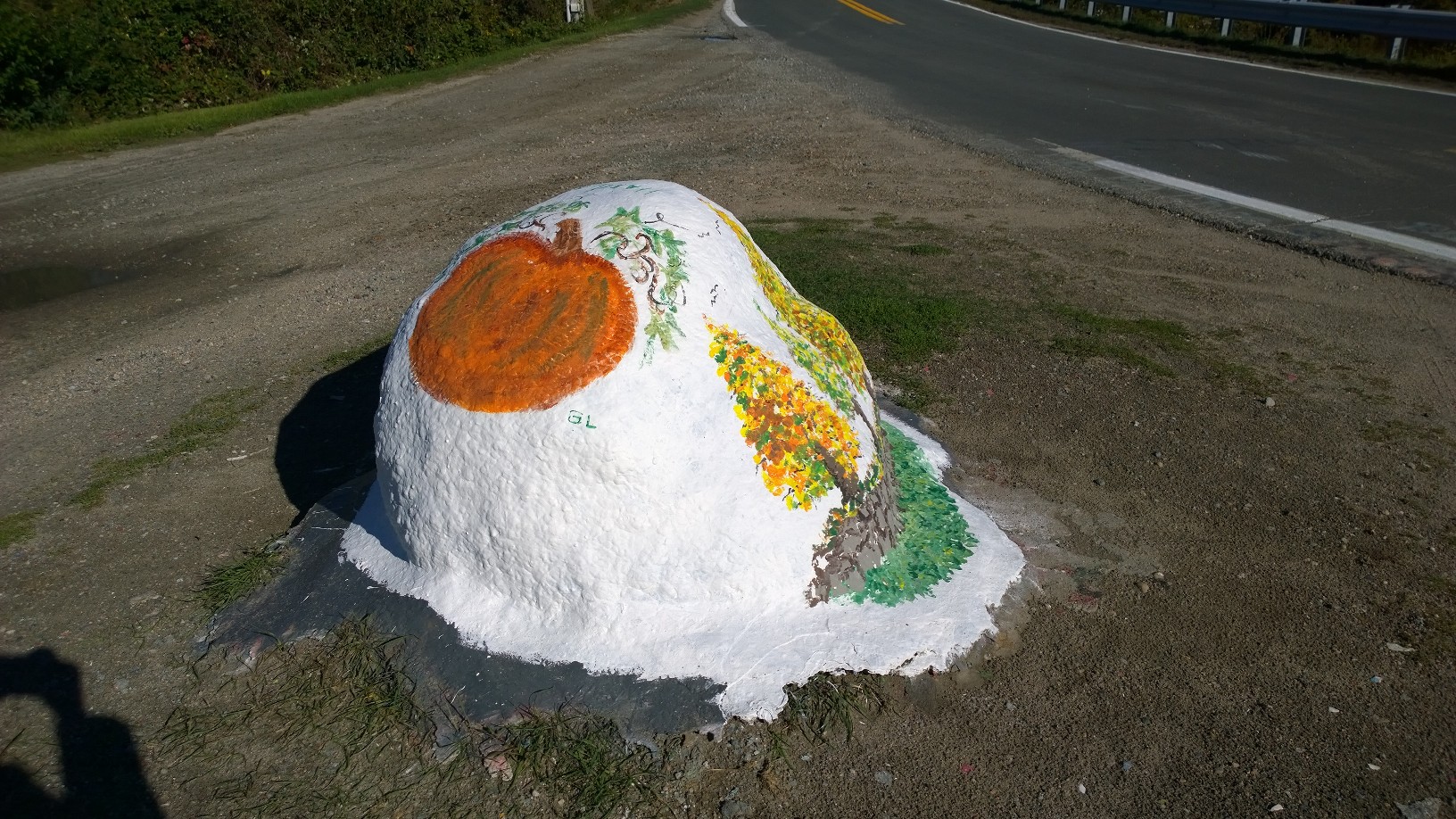
An especially nice autumnal theme for the Painted Rock. Whoever painted it was lucky to have their artwork survive nearly three days. That would be unheard of in the summer, when birthday messages get painted over by wedding felicitations several times a day.

Down the bluffs on a steep path. Waves breaking on the beach. Tide pools.

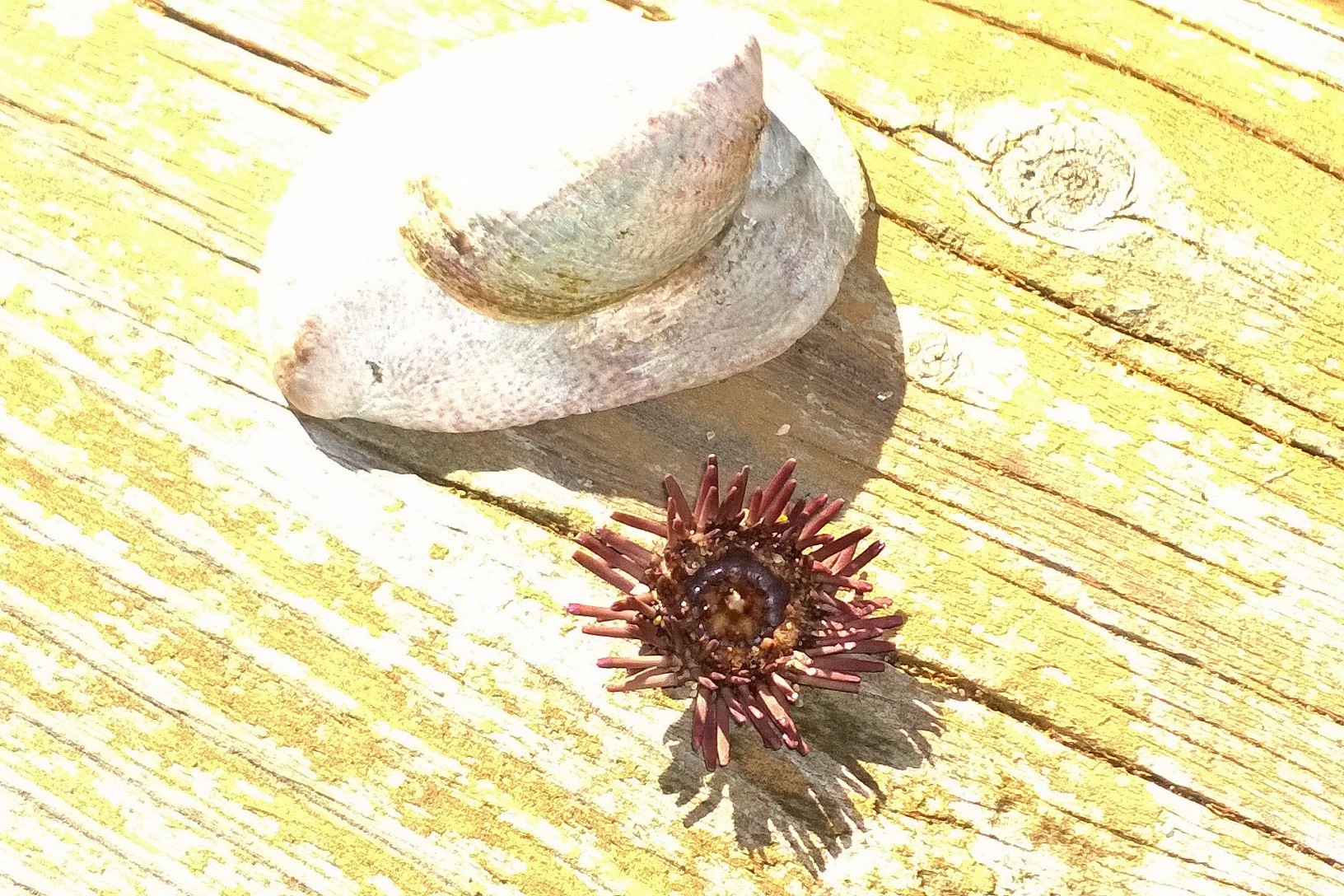
I was delighted to find a little urchin (I don’t think I ever had before) and a slipper shell with a smaller slipper shell hitching a ride.

101015-painted-rock-fall-colors

101015-painted-rock-fall

101015-steep-path-to-beach

101015-surf-at-bluffs

101015-tide-pools

101015-urchin-and-slipper-shell

Read Full Post »