Feeds:
Posts
Comments

Posts Tagged ‘toys’

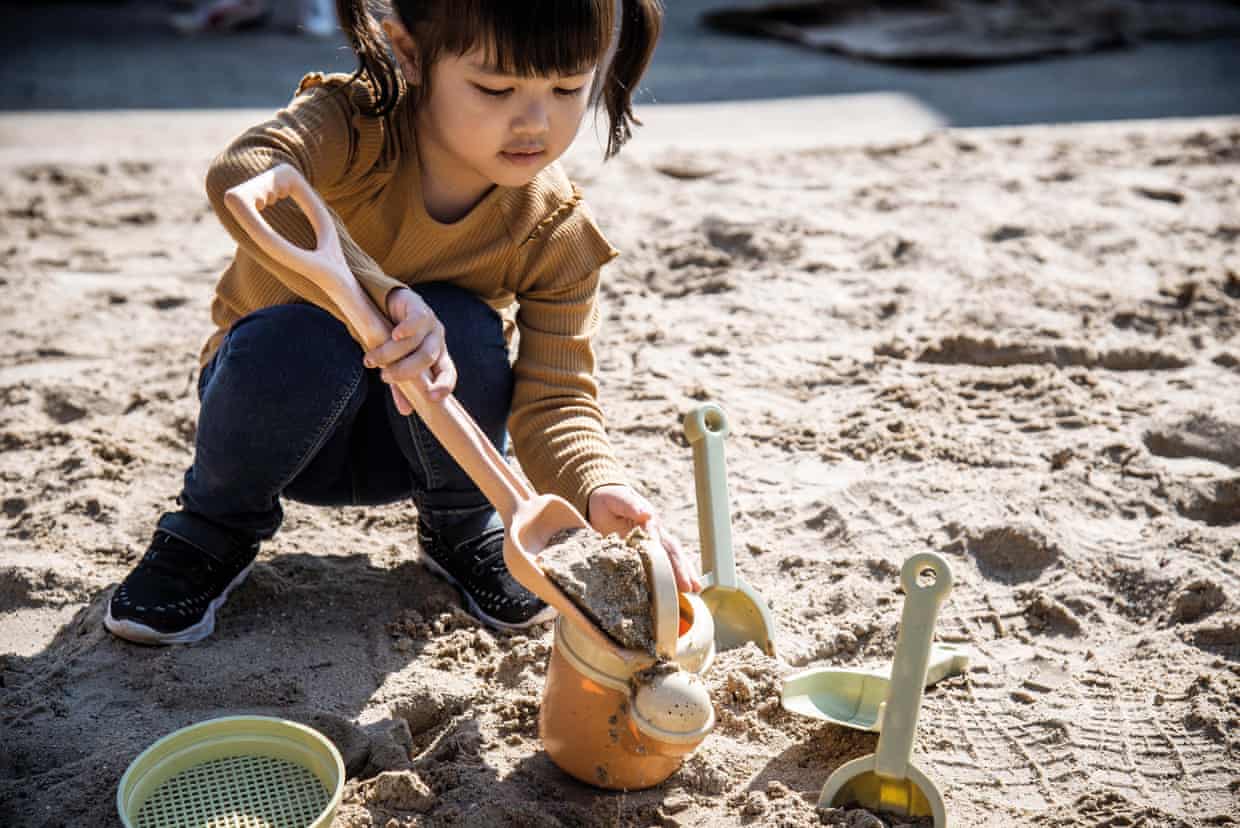
Photo: Mikkel Rolighed.
A bucket set made from sugarcane is an improvement on bioplastics, though the ocean won’t thank you if this is lost at sea – it won’t safely biodegrade (ditto recycled plastic toys). 

Now that we know that plastics have been found in the human brain, are we motivated to fight harder or are we despairing? Michelle O, you know, exhorts us to “do something” and not give in to despair, so here’s a place to start: the beach.

Fleur Britten at the Guardian has put together an impressive list of plastic substitutes you might take to the beach.

She writes, “Pre-1950, we just didn’t take plastic to the beach. Now it’s virtually impossible not to, even if it’s just you and your swimmers.

” ‘If you’re looking for plastic-free nirvana, you may never find it,’ says Anne-Marie Soulsby, aka the Sustainable Lifecoach. Matters are improving – though there’s usually a premium to pay if you want to minus cheap plastic from the mix. So why not borrow the plastic that already exists from friends, family or your local Library of Things. And don’t forget your reusable cutlery and containers for eating and drinking à la plage. If you can’t track down beach essentials from these sources, these are the other best ways to avoid seaside plastic pollution.

“ ‘The most sustainable swimwear is what you already own,’ says Soulsby. If you’re in need of new togs, they’ll most likely contain plastic. However, some brands are minimizing that: Italian label Isole & Vulcani’s swimwear for women and kids uses 93% GOTS-certified organic cotton jersey, with 7% elastane (which is fossil fuel-derived). …

“Inflatables and body boards: ‘Inflatables are a nightmare,’ says Lucy Johnson, founder of the Green Salon consultancy. ‘There isn’t a solution.’ According to one study, UK holidaymakers abandoned around 3 million [pool floats] in 2018. Even the genius Inflatable Amnesty is at capacity and can’t accept any more broken pool toys (though you can still buy its upcycled accessories). So borrow, or look after what you have. … 

“If you do need new toys, she advises silicon: ‘You can squish it into your bag and it doesn’t go brittle or rust’ (Johnson recommends Liewood’s silicon beach set from Kidly). Bioplastic toys are an improvement on regular plastic – for example, Dantoy’s bucket set made from sugarcane.”

As for sun screens, “ ‘There is no perfect solution,’ says Jen Gale, author of The Sustainable(ish) Living Guide. If you want to be absolutely plastic-free – including those pervasive nano-plastics – then your safest option is a zinc oxide-based formulation. …

“It is actually possible to find plastic-free eyewear, provided that you are one very careful person, because we’re talking glass lenses. The Marylebone-based brand Monc’s sunglasses feature wire and bio-acetate frames (made from wood pulp) and mineral glass lenses. …

“Flipflop pollution is real. Hardly surprising, given that about 3 billion are produced annually. According to the charity Ocean Sole, 90 tonnes of flipflops wash up annually on East Africa’s beaches alone. One alternative, suggests [Wendy Graham of the blog Moral Fibres], is Waves Flipflops, made from FSC-certified natural rubber. They also take back old Waves flipflops for recycling into, for example, children’s playground matting, and offer a free TerraCycle recycling programme for plastic flipflops from any brand.”

There’s lots more, including information on dry robes and wetsuits, at the Guardian, here. No paywall. Donations encouraged.
Read Full Post »

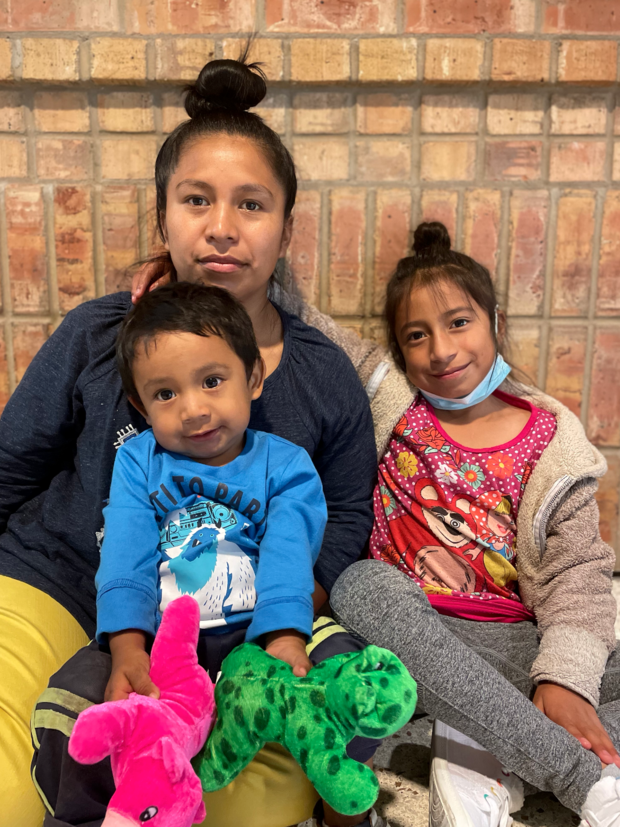
Photo: Natacha Larnaud for CBS News.
From CBS News: “Jacqueline and her two kids sit at a bus station in Brownsville, Texas, hours after being released from Border Patrol custody on April 30, 2021.”

This is the season of the couple who had no place to rest — and the baby who whose gifts were gold, frankincense, and myrrh. Will all the newly displaced children of 2023 have any gifts?

Theresa Vargas wrote at the Washington Post last year about a program for migrant children that made some little travelers very happy.

“The young boy in the red and black jacket didn’t need to look through the toys sitting on the blanket in front of him. As other children walked past stuffed animals, puzzles and building blocks, looking for items that called to them, he made his way straight to a dump truck almost half his size. If you had peeked in on that moment, which took place outside a Virginia church, you would have seen that boy holding the truck tightly. …

“Days before the volunteer collective Food Justice DMV planned to hold the giveaway event on Dec. 17, founder Denise Woods sent out an SOS, letting supporters know that volunteers didn’t have enough food or toys this year to give to the migrant families they serve in the Washington region. What makes the group’s toy collection different from the many others that take place at this time of year is volunteers gather secondhand items and get them to families who might fall beyond the reach of other organized efforts, because of language barriers and deportation fears.

“ ‘It pains me that people who have lost all coming here, may not celebrate Navidad the way they deserve and the way we want: a warm plate of food from home: beans, rice oil and maseca and a side of gifts,’ Woods wrote in an email at the time. …

“People in D.C., Maryland and Virginia started looking through their homes and gathering the toys their children and grandchildren no longer used. They then drove them to one of several places that were collecting items on behalf of Food Justice DMV.

“They brought puzzles and board games and art kits. They brought a toy stove, a toy shopping cart and a bike. They brought small stuffed animals and medium stuffed animals and jumbo stuffed animals. …

“Thousands of people throughout the Washington region responded. All it took was learning that children around them might go without to decide they wouldn’t let that happen. …

“By the time the giveaway event arrived, volunteers were carting truckloads of items to a church in Falls Church. There, migrant families found them spread across blankets and tables. Children who might not have received anything for Christmas left with their arms full and their parents left carrying bags of items. …

“[One teen] said her mom is from Guatemala and works hard at her cleaning job to pay the rent and keep the family fed, but that doesn’t leave much money for her to buy presents during the holidays. That day at the church, the teenager said, her mom and the whole family left smiling.

“ ‘We were so thankful,’ she said. ‘I just want to thank everyone so much.’ …

“ ‘For so long I think we felt, not accurately, that no one really cared, because we were existing on fumes and praying we would make our food costs,’ Woods said. ‘Now we know people do care and care deeply.’ …

“The strangers who came together to help the families recognized the system is broken, not people, she said.”

More at the Post, here.

Read Full Post »

012518-dolls-from-my-childhood

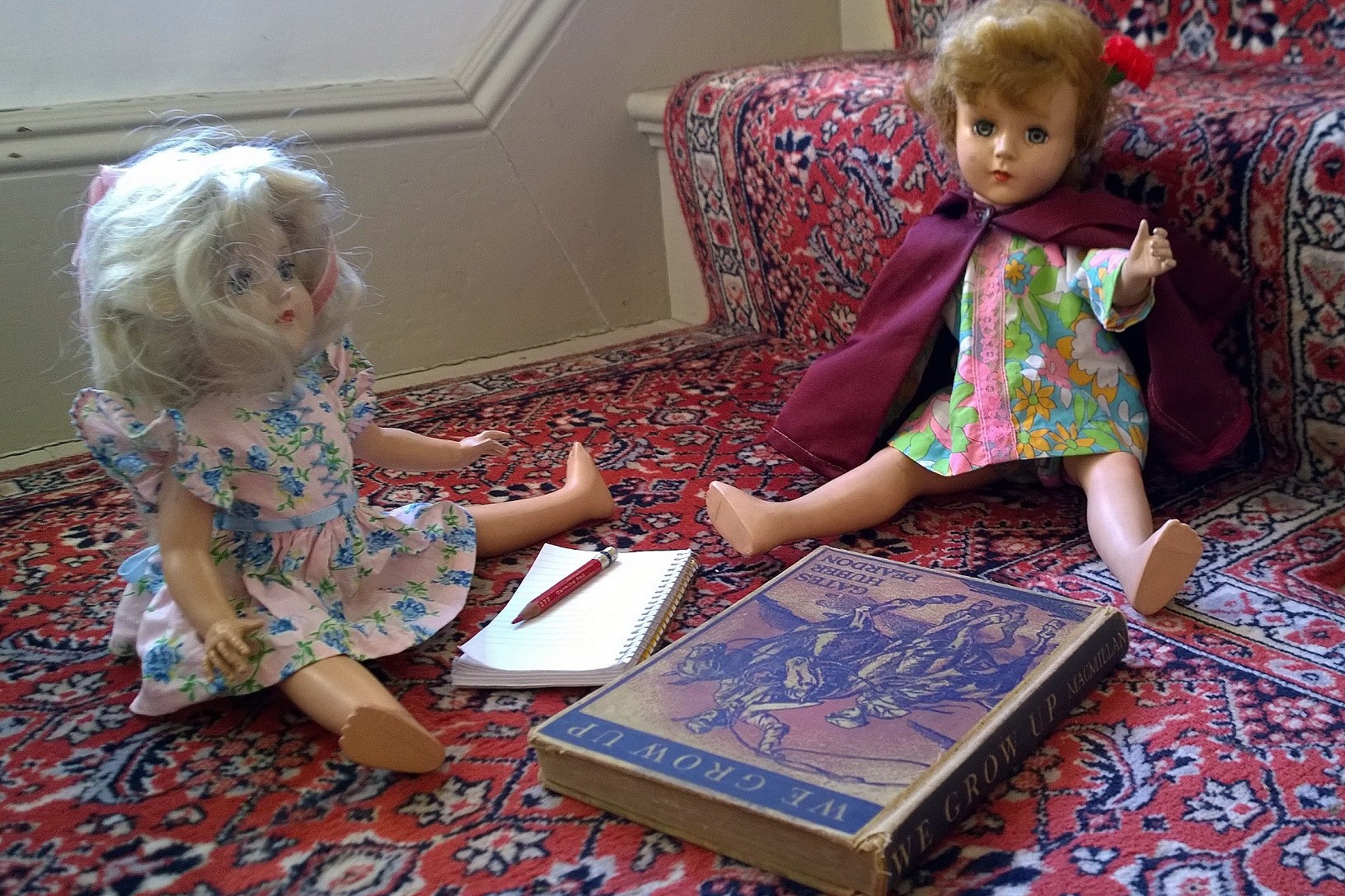
Dolls that used to attend my “school.” I’m sorry to say that the book We Grow Up was pilfered from my second grade classroom.

On the third floor landing in the house where I spent most of my childhood, there was an alcove with a window and a couch. On nice days, the sun streamed in and revealed the perfect spot to set up a space of my own. I called it “The Little House” and hung signs around to indicate it was off-limits to everyone else.

In my space, which eventually evolved into “The Little School,” I set out all the toys related to keeping house or teaching school. The two pupils above I had received earlier. Susie, on the right, is still my favorite. She came into my life when I was 5. The cape is the original, but I don’t know what happened to the blue- and white-striped dress Susie arrived with, or her black shoes and white knee socks.

On the left is Toni, who when I was 7 brought along her hair curlers and styling lotion, courtesy of the Toni hair-perm company. I was an easy grader as a teacher but firm about hard work.

I suppose that whatever children most like to play with reflects their interests and is a way of practicing something grown-ups do that looks like it might be fun. I myself moved on from teaching dolls to using teaching as a camp counselor, a parent, an editor — and an actual teacher.

Nowadays, girls don’t seem to spend as much time with dolls, but nurturing remains a life skill worthy of being practiced by any child. When today’s small daughters enter the workforce (let’s say daughters for the sake of argument), will those engineering and truck driving jobs be the ones that are available? Young adults will probably invent new kinds of jobs, and who knows? Maybe nurturing will be useful in those fields, too. Certainly, there will always be a need for nurturing parents, caregivers, and teachers.

Read Full Post »

Do you ever check the website This Is Colossal? They have the best stuff.

Here is a cute bit about giant, playful robots in Argentina.

In a “clip from Fernando Livschitz of Black Sheep Films,” says the website, “we watch as tin windup toys overtake the streets of Buenos Aires, living amongst its inhabitants as if it was an everyday occurrence. Livschitz is known for his short films that blend live action footage with aspects of absurdity, most notably his New York and Buenos Aires theme parks. Music by the very fine Canned Heat circa 1972.” More.

We hear so much these days about robots in advanced manufacturing and medicine, but I like the idea of robots as toys. You could really warm up to some of these guys, as Frank Langella did with his robot in the futuristic movie Robot & Frank.

Photo: Fernando Livschitz at This Is Colossal

Read Full Post »

I moved from Rochester, New York, more than 30 years ago, so it was only when I went back for a visit that I got to see the storied collections of Margaret Woodbury Strong in a museum built to house them.

When one recovers from the enormity of her obsession, one feels deeply grateful for all the toys and dolls of one’s childhood so beautifully preserved.

The offerings and outreach of the museum have grown like topsy in 30 years. And today another new partnership was announced.

“The great minds of the toy industry will be honored alongside their famous creations when the Toy Industry Hall of Fame combines with the National Toy Hall of Fame under a partnership announced Tuesday.

“The 5,000-square-foot National Toy Hall of Fame gallery at the Strong museum in Rochester will undergo $4 million in renovations, with the goal of opening the combined hall in the fall of 2015.

“The Toy Industry Hall of Fame, whose inductees have included Milton Bradley, Frederick August Otto Schwarz, Walt Disney and George Lucas, has been without a physical presence for about eight years following the closure of the International Toy Center in New York City.

“Leaders of both halls have been talking for some time about combining the two as a way to raise their visibility and exposure and to promote their educational missions. …

” ‘The Strong is an ideal home for this homage to both the toys that have influenced generations of children and the innovative minds that brought them to life,’ Carter Keithley, president of the Toy Industry Association, said at a news conference at the Strong museum, where items like alphabet blocks, roller skates, the Frisbee, Lincoln Logs and the stick occupy places of honor.”

Read more at Yahoo, here. Click “like” if you believe in toys.

Photo: The Strong Museum
“The Strong’s founder, Margaret Woodbury Strong, had a particular interest in dolls and amassed one of the largest collections in the world. The National Museum of Play® at The Strong continues to refine and develop her collection, making it increasingly comprehensive and inclusive. It now includes more than 12,000 dolls and 2,800 paper dolls.”

Read Full Post »