I love walking around dirty old New York, even in cold and rainy weather. Today’s photos are from last weekend, when I took the train down for a wedding.
It’s the small things one notices. The saxophone player under the pedestrian bridge in Central Park, where the sound amplifies like an orchestra. He was playing “Beauty and the Beast,” with his sax case open for tips, a stick placed inside to keep any bills from blowing away.
A nicely dressed woman on a city bus scrolling her phone and wearing a rubber Halloween monster mask — blue and green rubber with a gaping hole at the nose and beaver teeth hanging down.
Then there were two people from my childhood that I ran into on the same morning in the Upper West Side. Not people I even knew from the Upper West Side but from Fire Island. The one I met in an elevator was a close childhood friend. The one I met in a diner was someone I knew from the Ocean Beach teenage musicals I directed. So there we were in a diner on Broadway singing one of those old teenage show tunes.
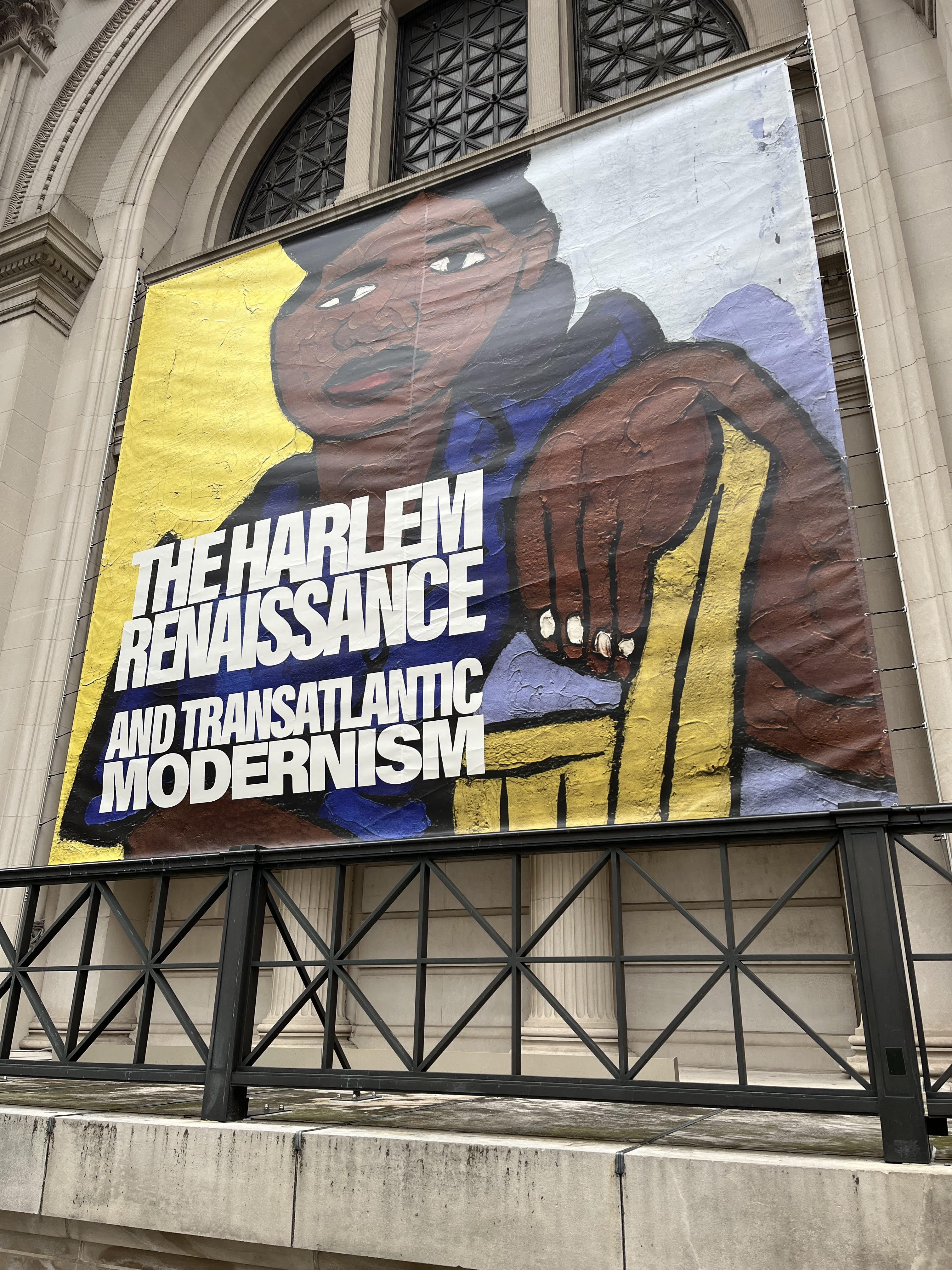
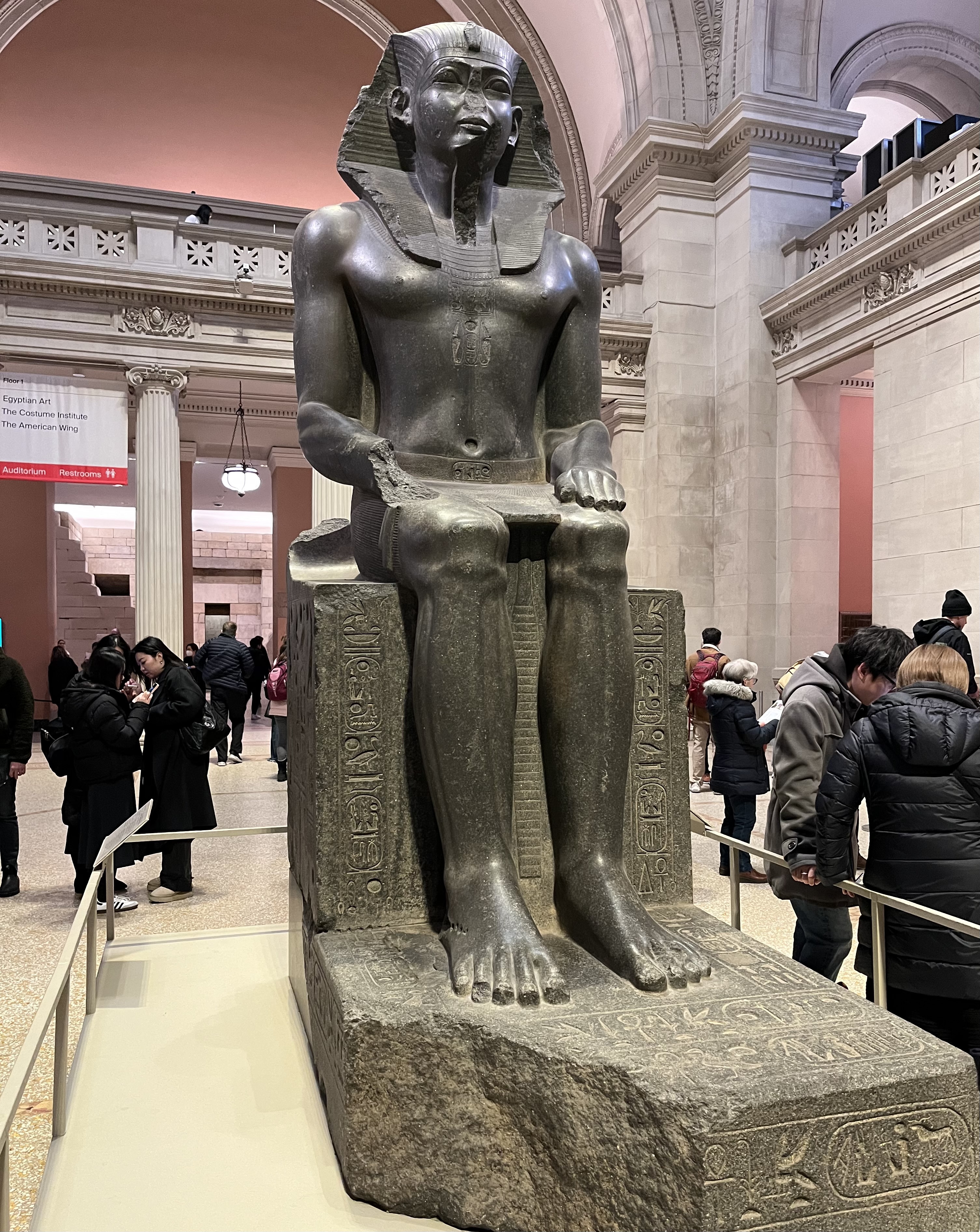
I got myself lost in Central Park on my way to the Met Museum to see the Harlem Renaissance exhibit. Like all New York, it was way too crowded, too many long lines. You spend 20 minutes waiting to buy a ticket, and then, if you want to unload your coat and backpack, you can wait in a ten-minute line to check them in and another long line to pick them up. I decided I could carry mine.
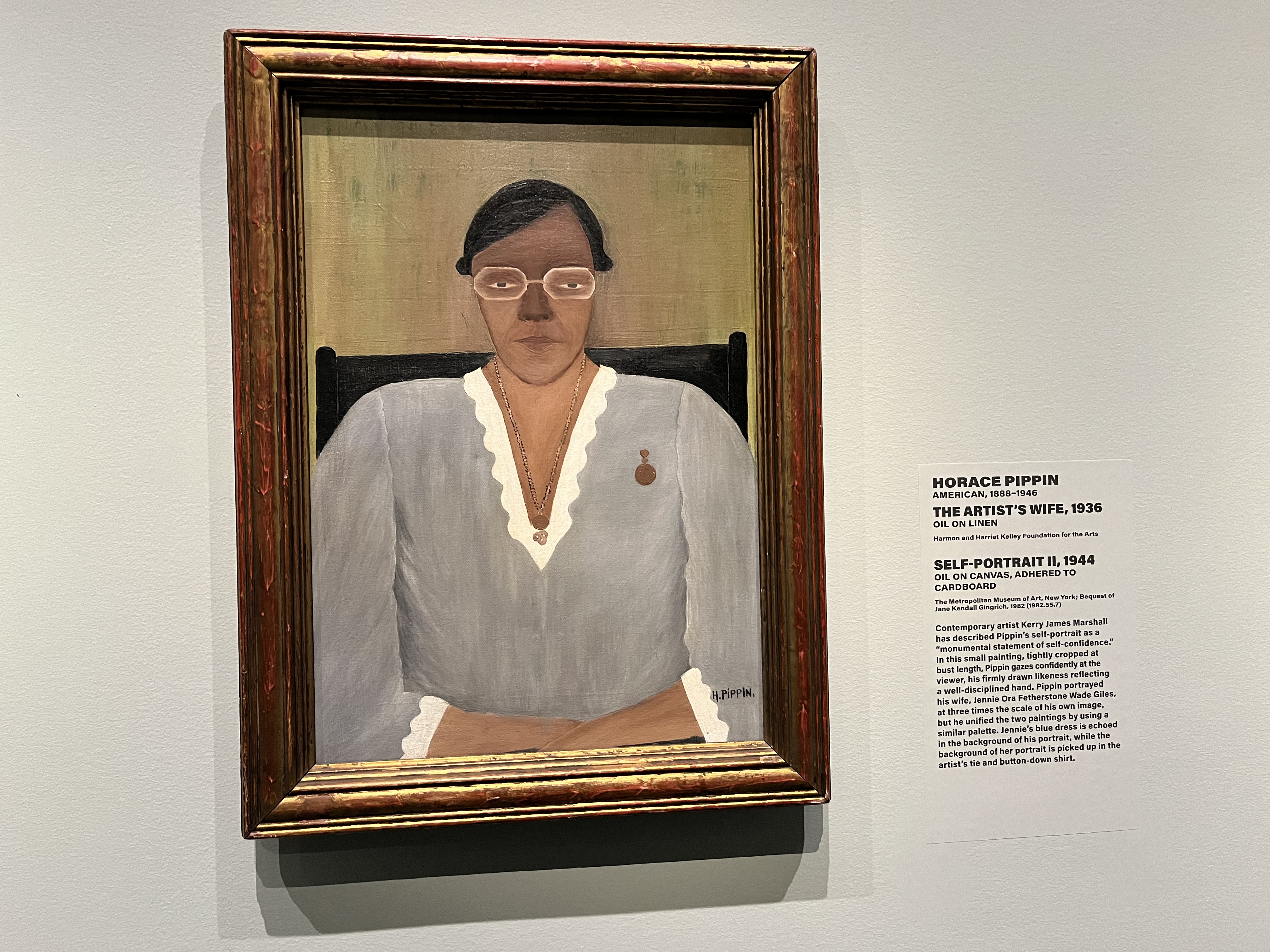
I photographed the Horace Pippin painting for my artist friend Meredith, a Pippin fan. There were many works by Aaron Douglas, but it was too crowded for much picture taking. Here’s a representative sample of Douglas’s art from the Rhode Island School of Design Museum.
The Met exhibit was huge, with portraits of luminaries like Langston Hughes, Zora Neale Hurston, James Weldon Johnson, and Marian Anderson, and scenes of Black life in the 1920s and ’30s rendered in many styles and media. Some artists, like photographer Carl Van Vechten, were not technically part of the Harlem Renaissance, but close observers.
Moving on to other New York sights.
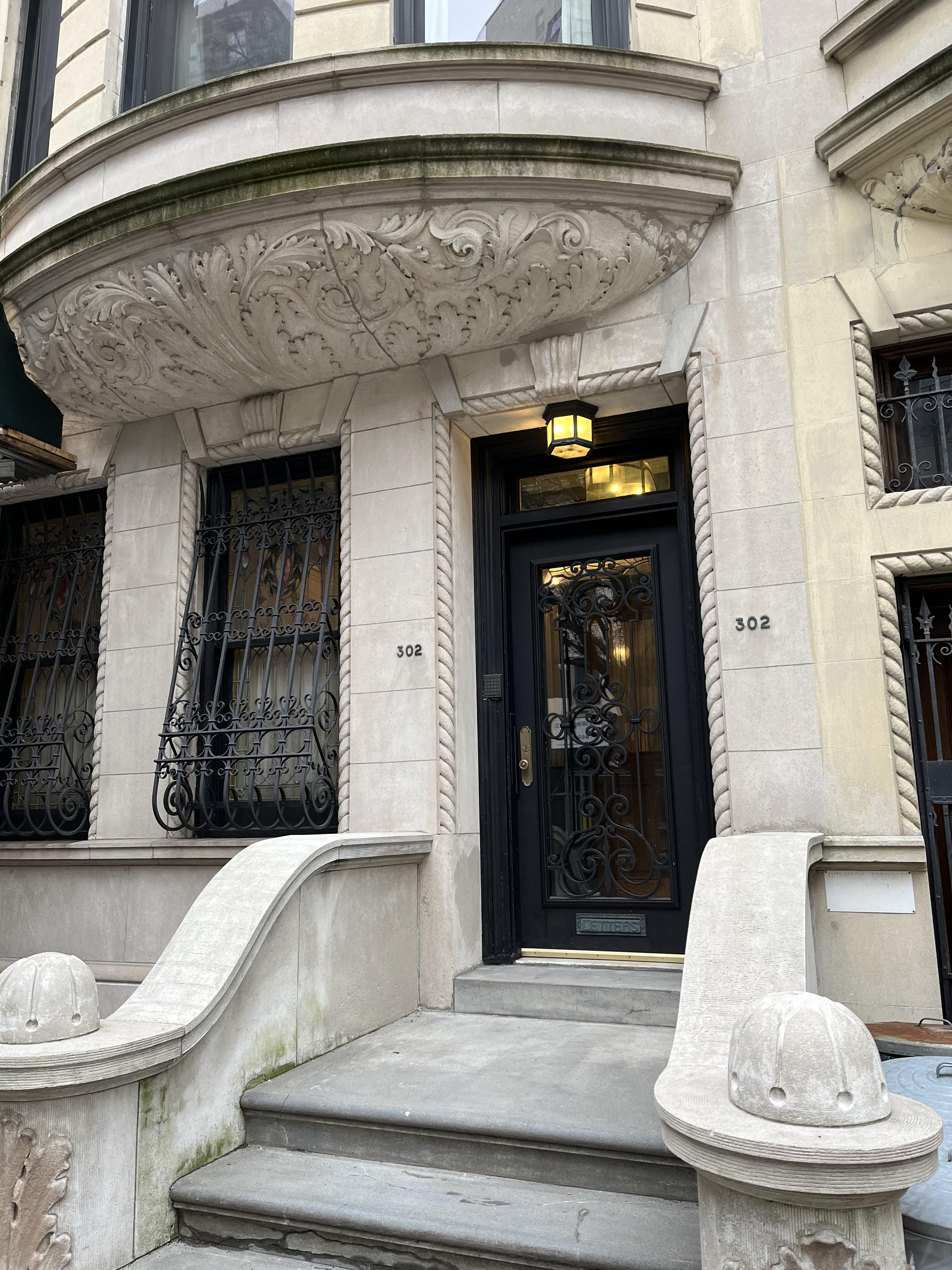
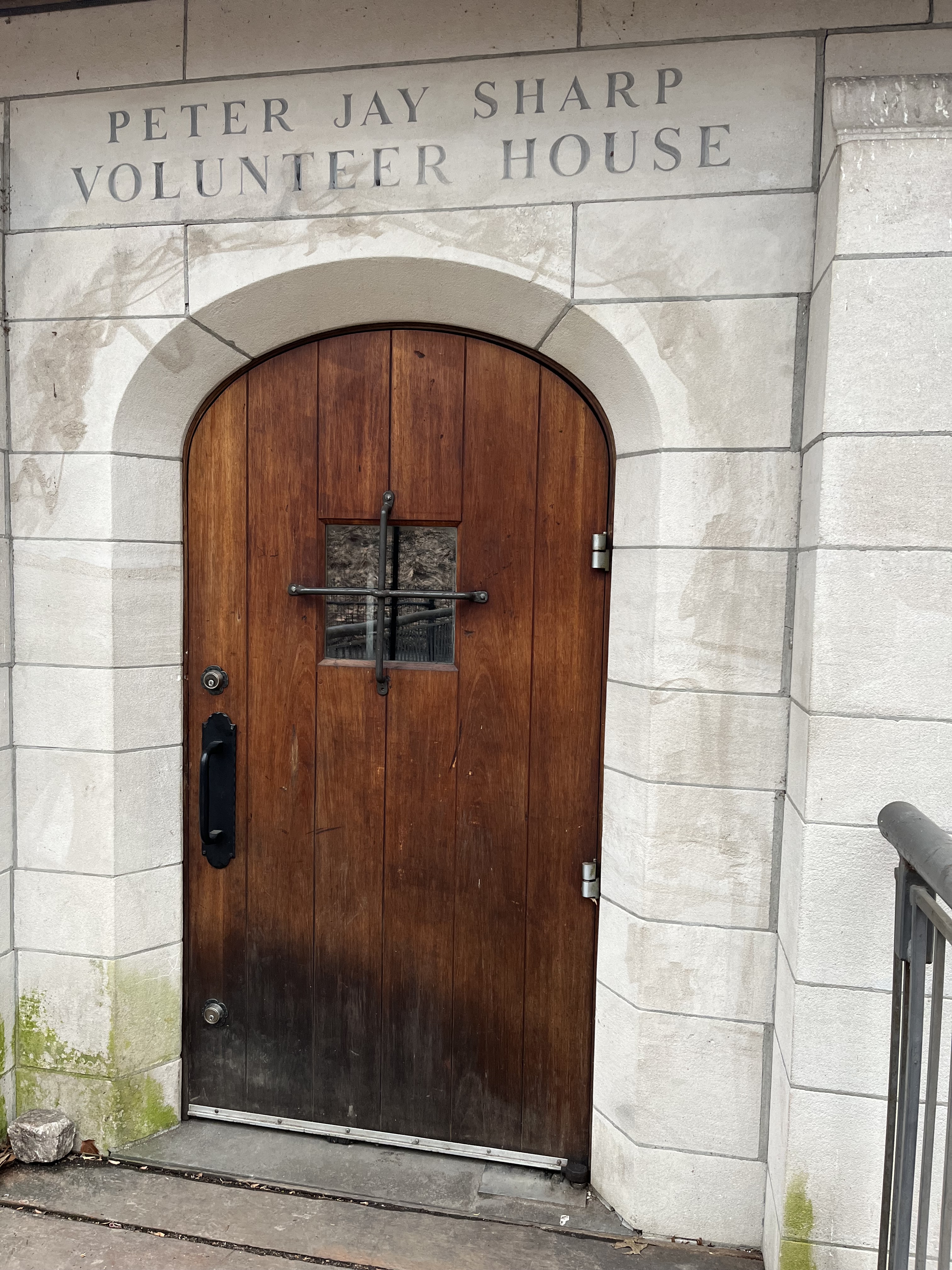
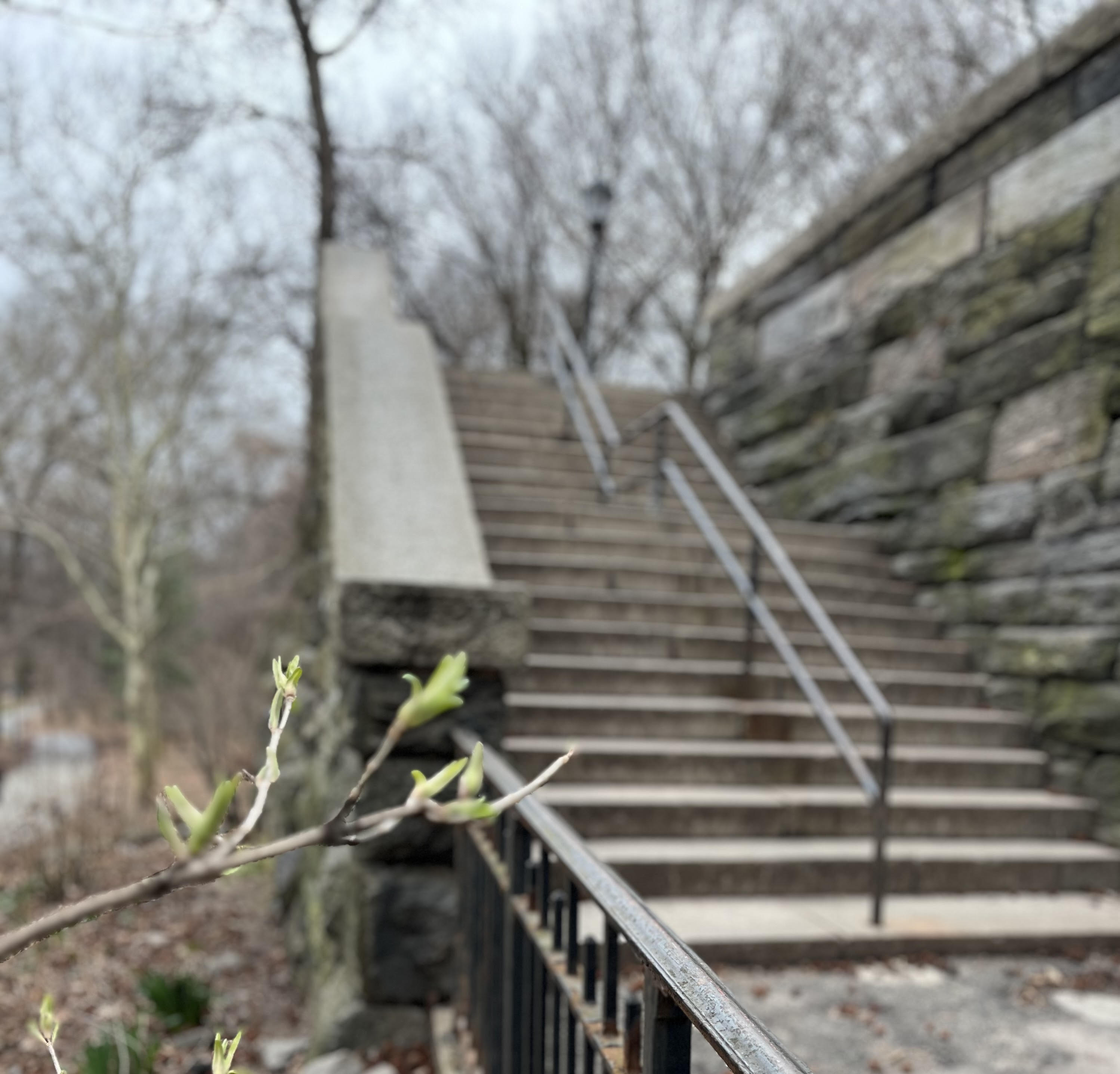
I often envy blogger Sheree, at View from the Back, who can post the most wonderful door photos. Of course, she lives in Europe. I have to go to New York to get anything comparable. Here are two interesting doors, the second in Riverside Park, where signs of spring were defying the miserable weather.
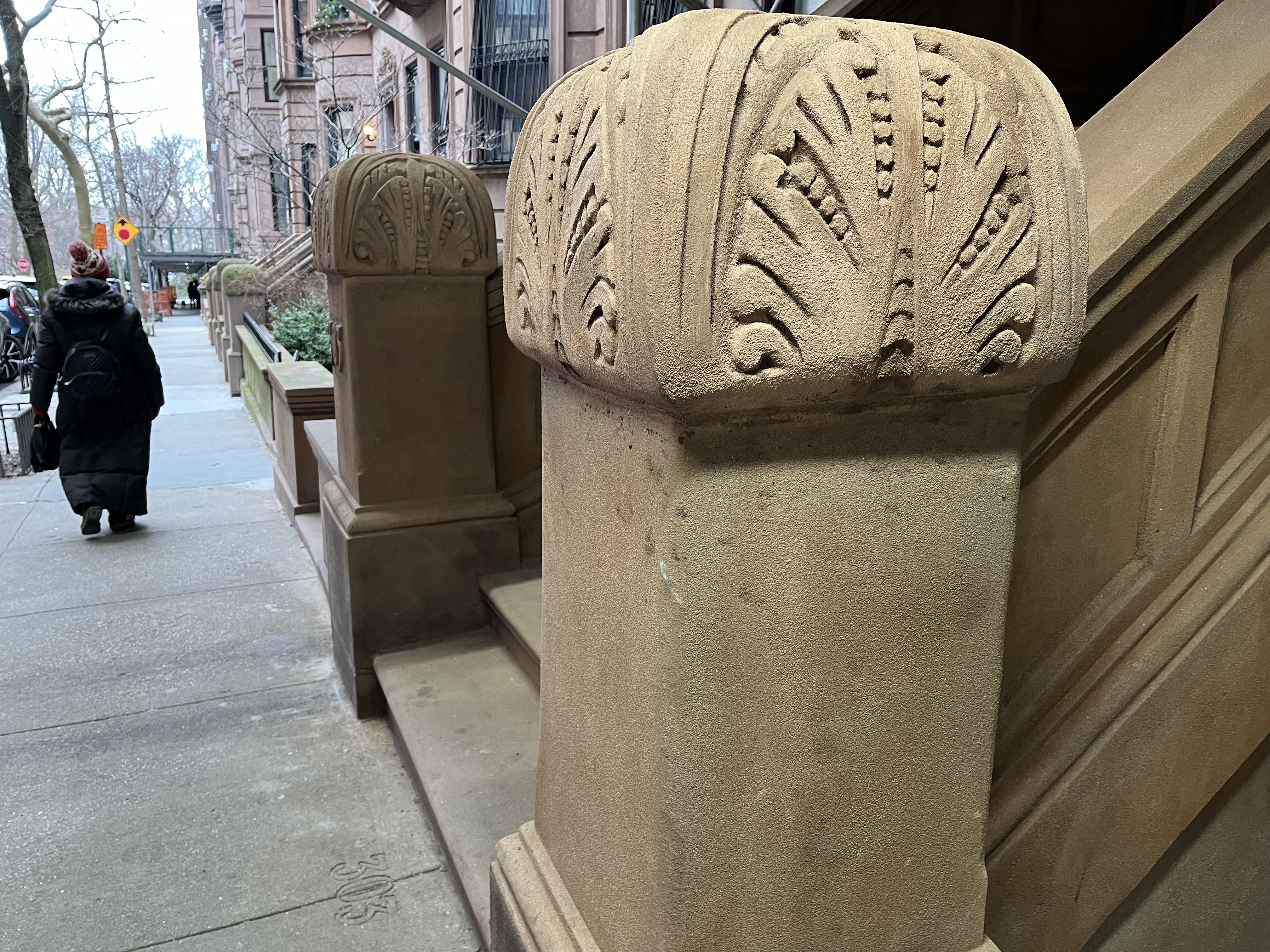
I love that new homeowners in New York often clean up the lovely, old architectural details. Notice the carved staircase, all sandblasted and spiffy.
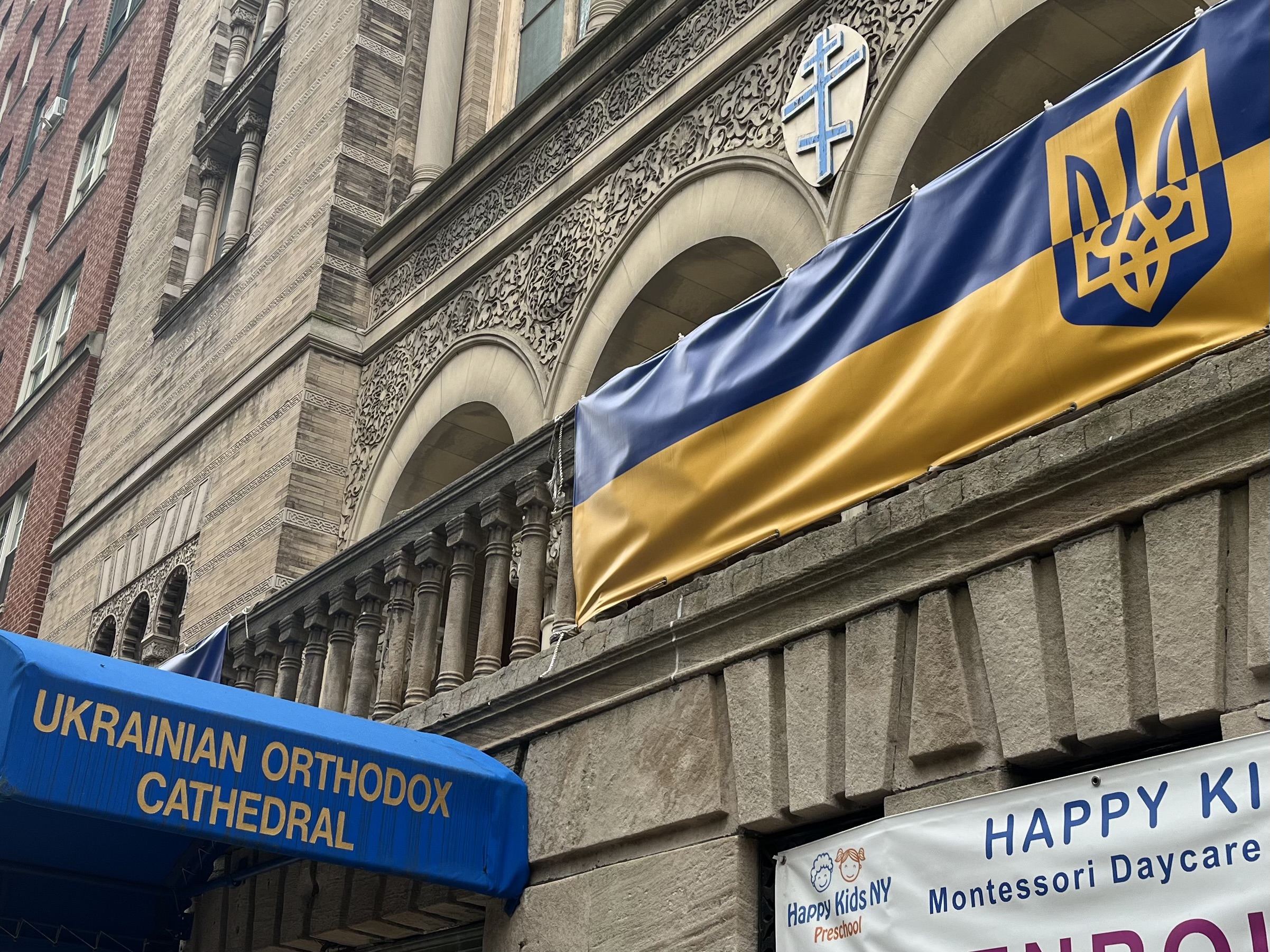
Finally, here’s a shot for my Ukrainian friends. Thinking of you. Always.
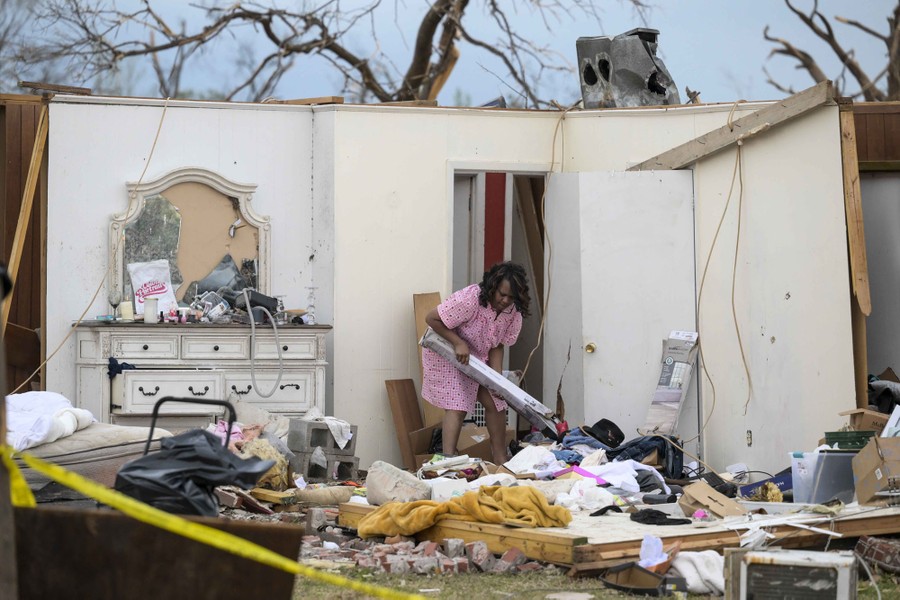
Photo: Fatih Aktas / Anadolu Agency / Getty via the Atlantic. Cleaning up from the fierce tornado that struck Mississippi in March 2023.
Sometimes people who have suffered become hardened to the misfortunes of others. But very often when they see suffering, they want to reach out and help.
Daniel Wu reported recently at the Washington Post about refugees from Ukraine, currently living in Minnesota, who rushed to provide assistance in Mississippi after the March tornado.
“The seven Ukrainians set out just before midnight to make the long drive to their destination,” Wu wrote. “They were on an aid mission to a grimly familiar scene of devastated communities and leveled homes.
“But the refugees were thousands of miles from their homeland and the war that changed their lives. Their journey wound down Interstate 55, starting in Minnesota, where they had resettled just months earlier, and ending in a disaster zone wracked not by bombs, but by the wind: several towns in Mississippi recovering from a devastating tornado that killed at least 25 in late March.
“Dmytro Fedirko, a 34-year-old former van driver, puzzled through American road signs on his first road trip in the country. With him were couple Denys Pavliuk and Viktoriia Hasiuk, 19 and 18, who had arrived in the United States 10 days before. Iryna Hrebenyk, a 51-year-old hairdresser turned forklift operator for Home Depot, tried to stay awake — she joined the group after a night shift, with only a few hours of sleep in between.
“They had all been in the United States for a few months at most, thrust by war from cities and towns across Ukraine into new lives in Minnesota that had not yet settled — they had immigration forms to complete, job interviews to prepare for and families to support.
“But they said they decided, without hesitation, to put that on hold last week upon hearing news of the tornado that leveled towns in Mississippi. They made the 16-hour drive south to donate bottled water and volunteer with aid workers, buoyed by the idea that they could help a community facing a similar struggle to theirs.
“ ‘We had to leave our home,’ Pavliuk told the Washington Post in Ukrainian, in an interview interpreted by Hrebenyk. ‘And they don’t have a place to go back, either.’ …
“Pavliuk’s group had all been helped by the same nonprofit organization, the American Service. Aswar Rahman, a Minneapolis-based digital producer, founded the agency in March 2022 after visiting the Polish-Ukrainian border and seeing the challenges facing refugees there, he said. A month later, when the Biden administration’s Uniting for Ukraine program created a path for Ukrainians with an American sponsor to secure two-year stays in the United States, the American Service started helping refugees resettle in Minneapolis.
“Rahman said he was struck by the kinship that grew in the apartment building where the American Service found housing for Ukrainian refugees. Those who had been there for a few weeks or months were quick to help with the myriad challenges facing new arrivals: like buying SIM cards, applying for Social Security numbers and completing post-arrival immigration forms.
“ ‘I feel like I have a big family,’ said the American Service’s Minnesota director, Sofiia Rudenko, who arrived in the United States from Ukraine in late December. ‘realized that last week, I didn’t even cook because my neighbors kept feeding me every day.’
“That spirit convinced Rahman that the refugees wouldn’t hesitate to help other communities in need, too. When he saw news of the March 24 tornadoes that devastated Mississippi towns, he pitched the idea of taking a team to deliver aid. Rudenko, 22, thought it was a great idea. …
“Everyone leaped at the proposal. The team of eight — seven recent Ukrainian arrivals, accompanied by Rahman — had to turn down additional volunteers because they no longer had room in their cars, Rahman said. None of the Ukrainians had been in the United States for longer than three months. Pavliuk and Hasiuk didn’t mind that it had been less than two weeks since they arrived. …
“The group piled into two cars late Monday night and drove to Memphis, where they rented a U-Haul van and bought several pallets of water bottles from a Costco. The Ukrainian group paid for the water themselves against Rahman’s protests, he said. …
“Rahman contacted the nonprofit Volunteer Mississippi to ask where the group could be of use. A coordinator directed them to a school being used as a distribution center in the city of Belzoni. They distributed the water in Belzoni on Wednesday. In the afternoon, the group drove farther south to Silver City and helped unload additional trucks of aid and supplies. …
“Rahman said their donation, about 13,000 bottles of water, probably wasn’t much compared with those by large corporate donors. But the backstory of the Ukrainian volunteers resonated, both in teary exchanges with other workers on the ground and with Volunteer Mississippi’s coordinators. …
“The group returned to Minneapolis on Thursday evening, just in time for several people to make their shifts at the Home Depot and for Pavliuk to make a weekend job interview.
“Now, the seven Ukrainians will resume the new starts they’re pursuing for themselves. All of them are grappling with the devastating toll that the war is taking on Ukraine and their family members there. But the trip to Mississippi lifted their spirits, Rudenko said, and the American Service is looking for other ways that the refugee community can volunteer in Minneapolis.
“ ‘That’s something that is special about our community,’ Rudenko said. ‘Because we want to share, to give, and to keep doing that because we feel better, and we feel that we are not alone.’ ”
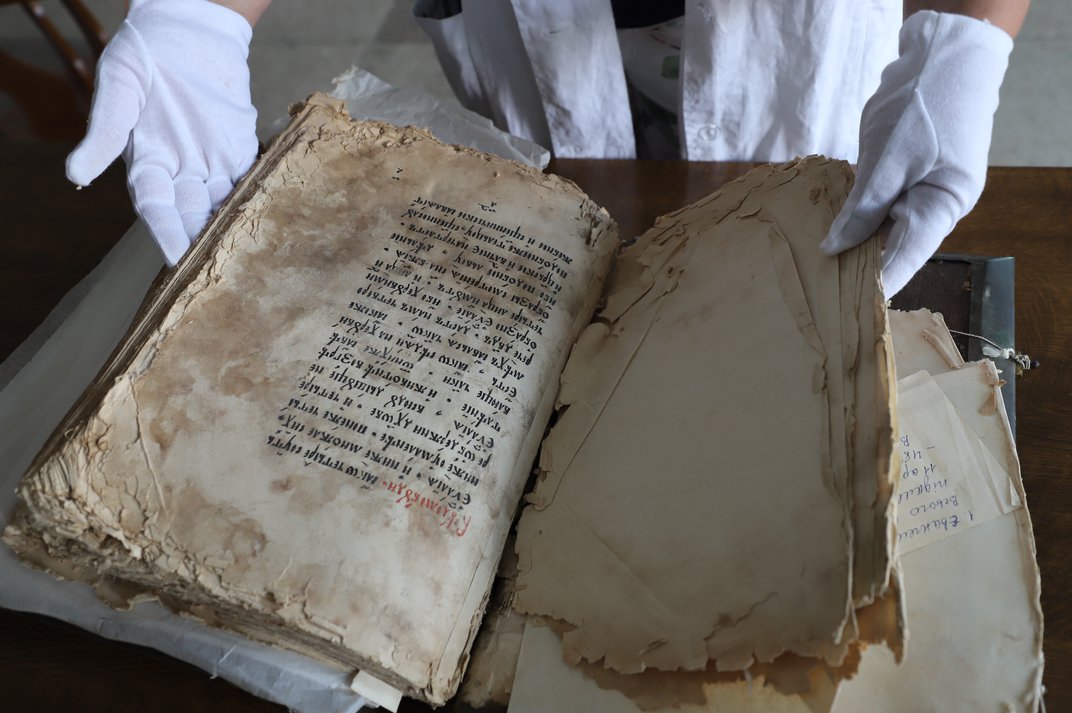
Photo: National Research and Restoration Center. The location of Russia’s attacks, says Richard Kurin at Smithsonian magazine, suggest they target “sites that are significant to Ukrainian history, culture and identity.” (Above, although many items in storage were already in fragile condition, the conservation task is now more difficult.)
Today I have a couple articles about efforts to protect Ukrainian culture since the full-scale Russian invasion.
Richard Kurin writes at the Smithsonian, “Russian leader Vladimir Putin has wrongly made culture both a justification and an object of war with Ukraine. As in other regions of Europe, the population of the geographic region of modern Ukraine reflects a diversity of ethnic migrations and cultural influences, as well as a succession of political rulers and changing boundaries over millennia.
“Putin, though, claims that Ukrainians lack the history, culture and identity worthy of a national state separate from Russia. While drawing on periods of the czarist Russian Empire and the Soviet era to make his case, Putin denies crucial cultural realities.
“The Ukrainian language, the country’s art and its history — including the Slavic-Christian state centered in Kyiv a thousand years ago, the 19th-century flowering of Ukrainian culture and nationalism, the post-World War I Ukrainian republic, the Ukrainian independence movement of the early 1990s and its reaffirming Orange Revolution in 2004 and the Euromaidan Revolution in 2013-2014 — all represent an undeniable Ukrainian identity that is centuries in the making. …
“We take a close look at the ongoing work of hundreds of professionals across a landscape of Ukrainian and international organizations to defend endangered cultural heritage.
“Crucial investigations are underway that will one day provide an accounting of Russia’s devastating war crimes. These attacks are not just random, nor do they represent collateral damage. Rather, they suggest a targeted attack on Ukrainian history, culture and identity, a means toward Putin’s ends — the destruction is a deliberate attempt to obliterate Ukrainian history and culture.
“To support Putin’s wrongful argument that Ukraine doesn’t have a culture and history independent of Russia, his forces figure they can simply bomb away the country’s cultural heritage.
“To date, almost 1,600 cases of potential damage to Ukrainian cultural heritage sites have been documented, including some 700 monuments and memorials, and more than 200 museums, archives and libraries. Notably, more than 500 are religious sites — places of worship and cemeteries — with those of the Ukrainian Orthodox Church specifically targeted. The greatest number of cases are associated with regions of the most aggressive Russian attacks: Kyiv, Kharkiv, Mariupol and Luhansk. And the work of organizations, including the Smithsonian, mobilized thanks to years of cultural heritage training efforts, is aiding the country in its effort to protect artifacts, books, documents and artworks from these insidious attacks. …
“[In 2010], the Smithsonian formally established [Smithsonian Cultural Rescue Initiative or] SCRI under the direction of curator and former U.S. Army ‘monuments woman‘ Cori Wegener. … As part of SCRI’s expanding research and training activities, [Ihor Poshyvailo, now director of the Maidan Museum in Kyiv] became first a trainee and then an instructor for the program and stayed in close contact with Wegener. …
“Last year, with the Russian invasion of Ukraine on February 24, the lab ramped up its efforts employing [satellites], including some with specialized sensors that can detect heat signatures to record ‘kinetic’ activity. That enables the monitoring of bombings, missile strikes, artillery shelling and fires. Using that data, the lab’s analysts are able to see how closely the heat signatures align with cultural sites. If proximate, they call up satellite photographic imagery to examine possible damage. Given satellite coverage, they can reference images over a period of time to pinpoint when the damage occurred and how extensive it is.” More at the Smithsonian, here. No firewall.
Meanwhile at CNN, there’s a great story about one woman’s quiet campaign to get US museums to relabel Ukrainian art misidentified as Russian.
For example: “Repin, a renowned 19th century painter who was born in what is now Ukraine, has been relabeled on the Met’s catalog as ‘Ukrainian, born Russian Empire’ with the start of each description of his works now reading, ‘Repin was born in the rural Ukrainian town of Chuhuiv (Chuguev) when it was part of the Russian Empire.’ …
“One of Repin’s lesser-known contemporaries, Kuindzhi was born in Mariupol in 1842 when the Ukrainian city was also part of the Russian Empire, his nationality has also been updated. The text for Kuindzhi’s ‘Red Sunset’ at the Met has been updated to include that ‘in March 2022, the Kuindzhi Art Museum in Mariupol, Ukraine, was destroyed in a Russian airstrike.’
“In reference to the recent relabeling process, the Met told CNN in a statement that the institution, ‘continually researches and examines objects in its collection in order to determine the most appropriate and accurate way to catalogue and present them. The cataloguing of these works has been updated following research conducted in collaboration with scholars in the field.’ …
“Semenik told CNN that she channeled her anger about the Russian invasion into her efforts to identify and promote Ukraine’s art heritage, using her Twitter account [Ukrainian Art History, or @ukr_arthistory] to showcase Ukrainian art to the world.
“Semenik is herself lucky to be alive. She was trapped in the Kyiv suburb of Bucha for weeks as Russian forces laid waste to the area last March, hiding out in the basement of a kindergarten before eventually walking some 12 miles to safety with her husband and their cat in tow.
“She began her campaign after a visit to Rutgers University in New Jersey last year. While helping curators there, she was surprised to see artists she always considered as Ukrainian labeled as Russian.”
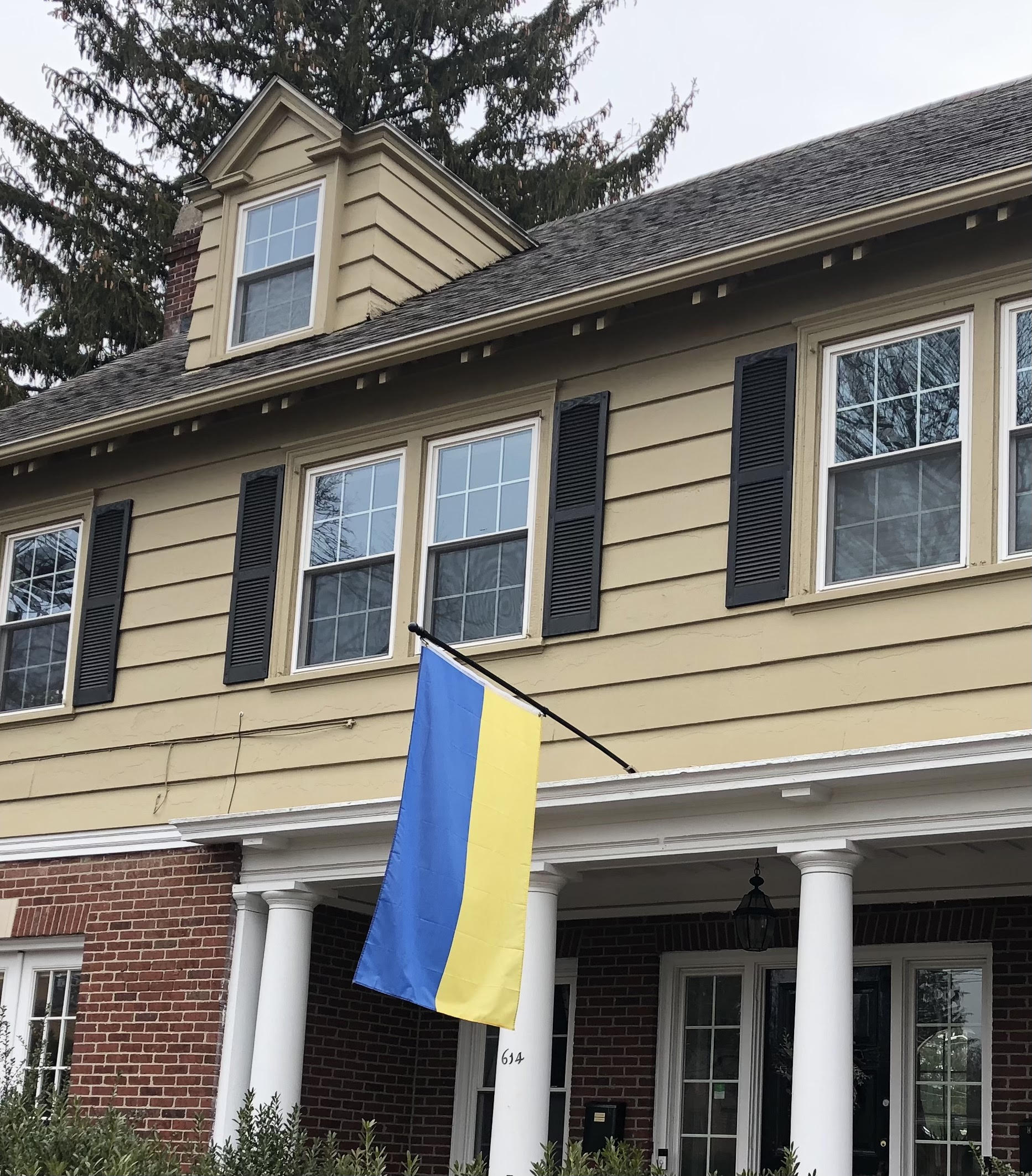
My first photo today is from Pawtucket, Rhode Island, where a homeowner is expressing the solidarity that most of us feel for Ukrainians defending their homeland against a crazed invader.
Some other recent photos also make me think about solidarity — and how good things can happen when folks band together. Remember the WPA? Many of its works are still in use. New Congressional allocations will be doing some of the same kinds of infrastructure projects, thank goodness.
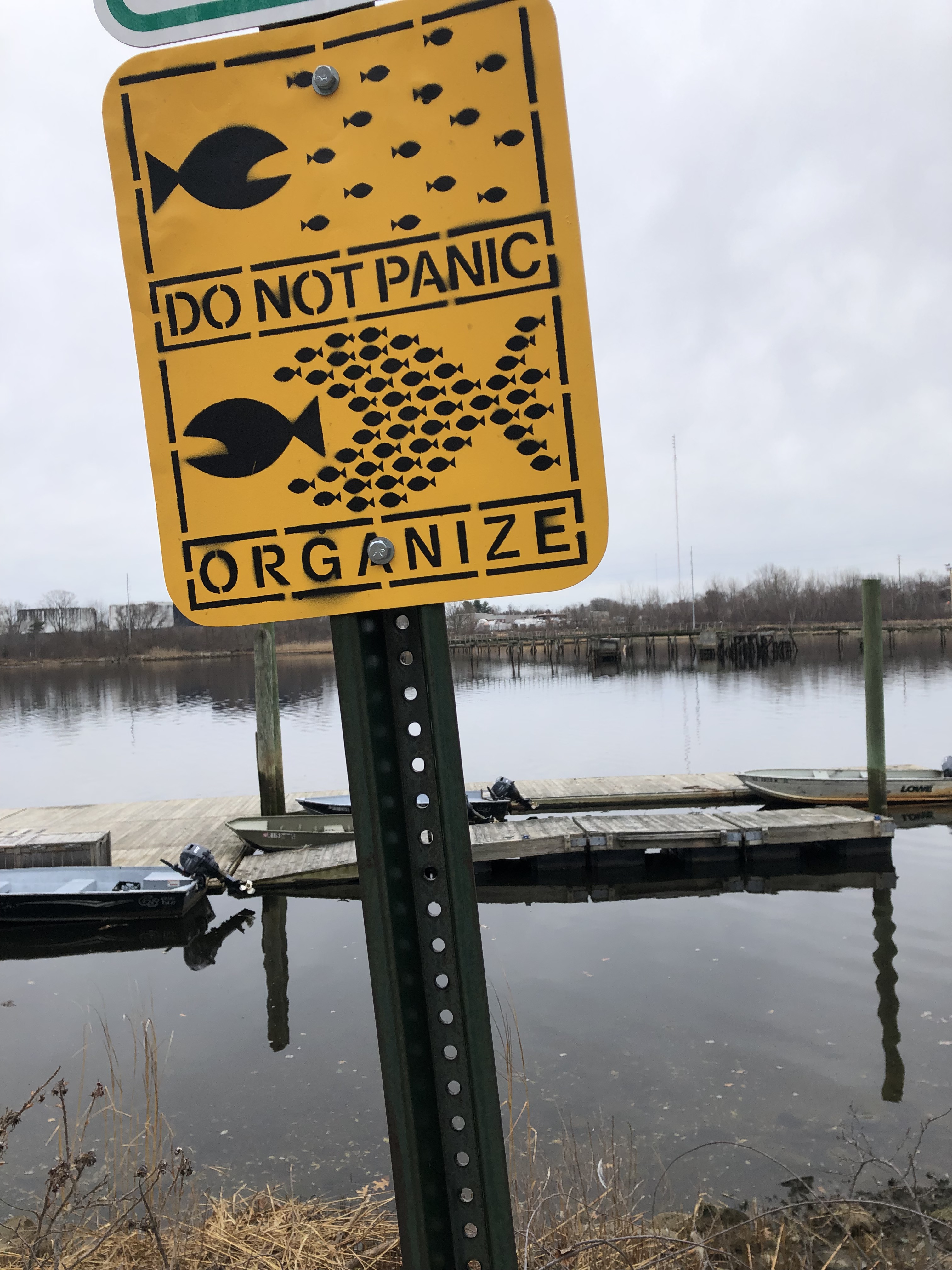
I loved the sign on the bank of the Seekonk River showing the power of “unionized” little fish in a dangerous world.
The photo of the pollinator sign highlights the banding together of neighborhoods in Massachusetts and elsewhere to protect honey bees and other pollinators, guardians of a healthy environment.
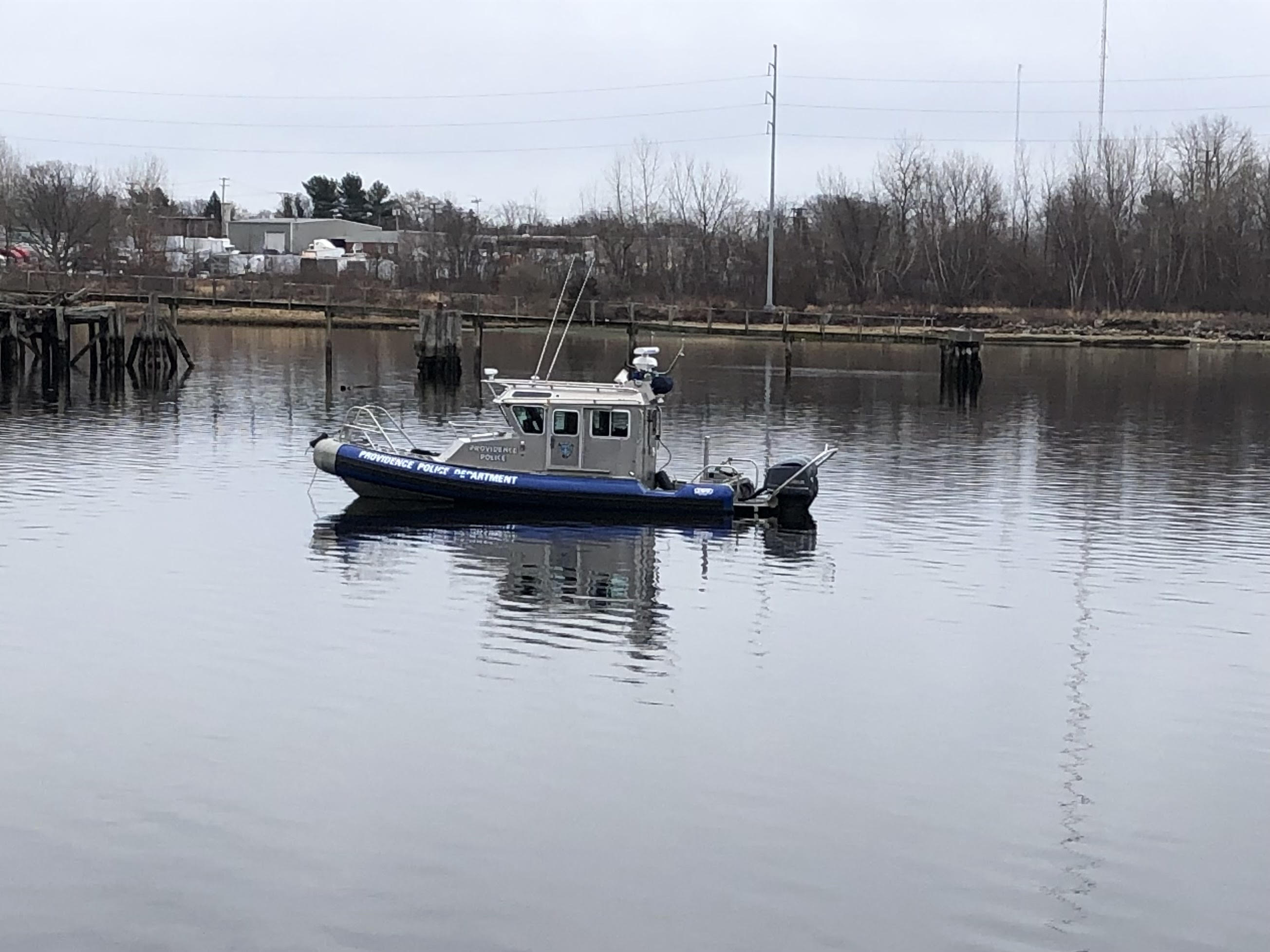
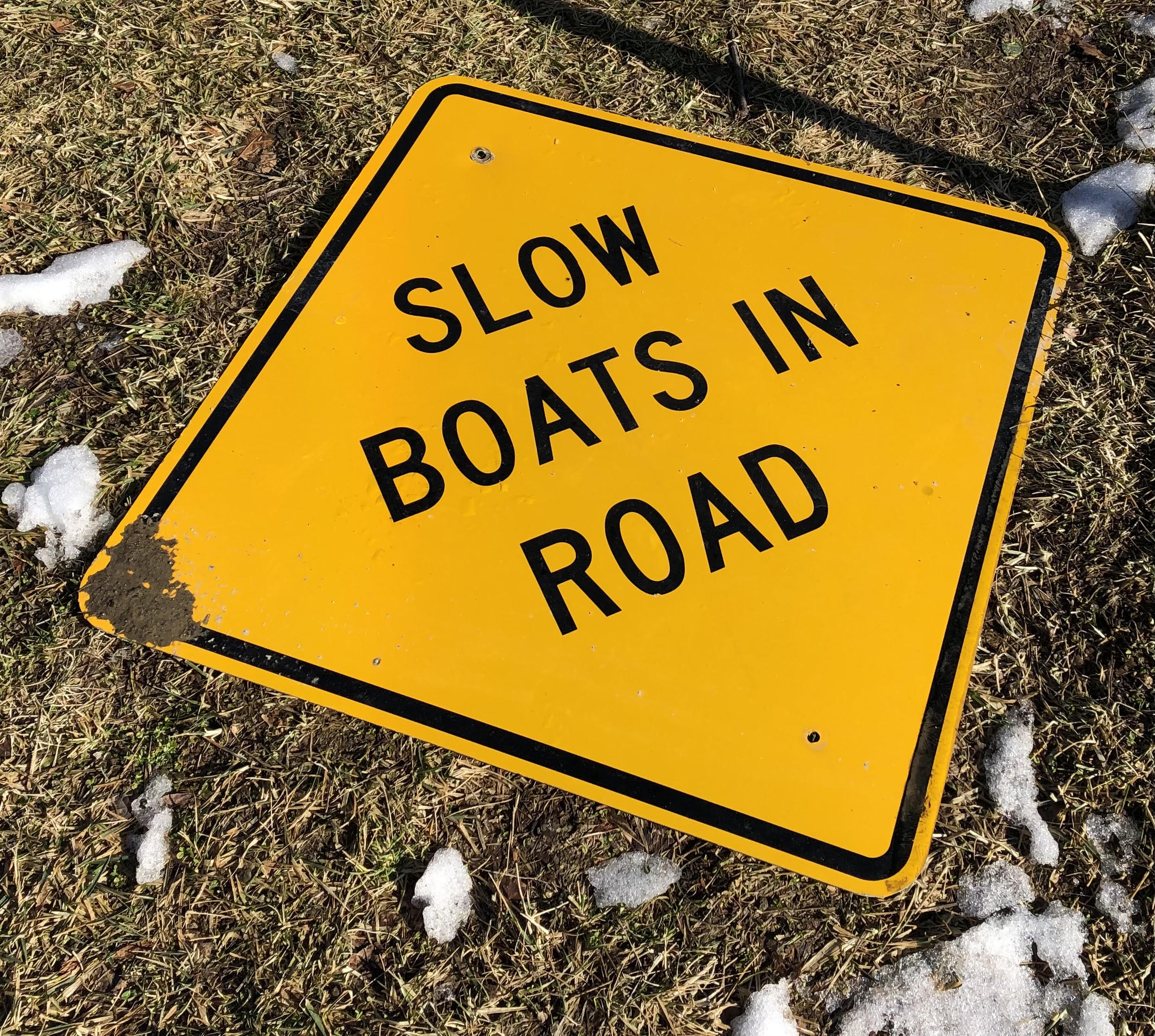
Looks like Providence’s official guardian on the river may actually be needed more on the road.
Meanwhile, encouraging signs of spring give us hope that winter won’t keep returning after random warm days. Still, winter can have attractions. Note the bluebirds that have been regular visitors to our feeder.
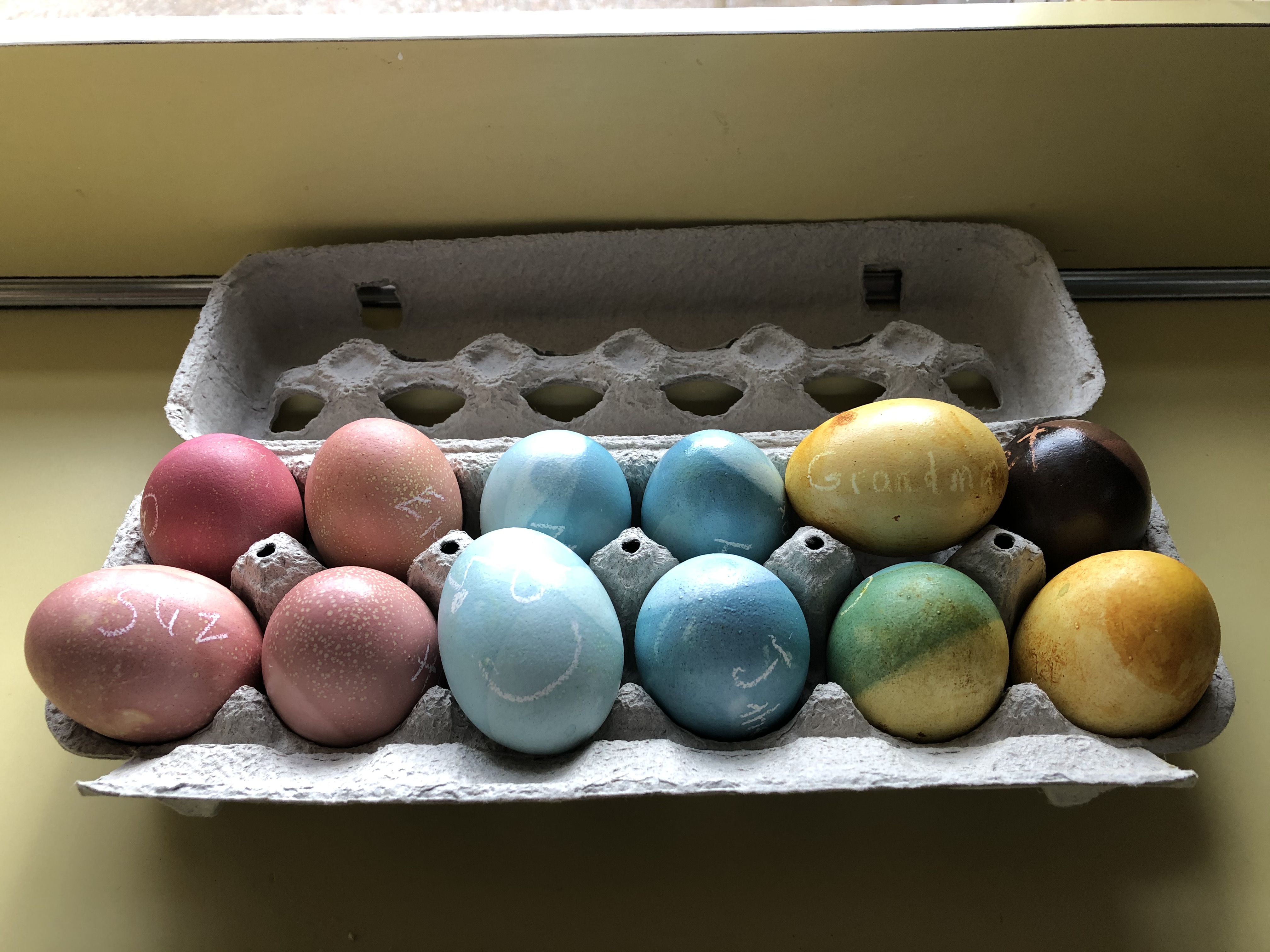
Dyes were made with cabbage, beets, and tumeric because there was a Paas kit shortage this year.
When I made an absent-minded mistake with the egg coloring this year, it occurred to me that misadventures at Easter are sort of a family tradition. For some reason, we like to try new things for this holiday. That’s good. But our adventures frequently lead to hilarious results.
I remember the time our Philadelphia niece and nephew were visiting, and we decided to make bunny cookies from a recipe Suzanne got at Girl Scouts. Barbara went to add milk. The recipe said 2 Tablespoons. She thought it said 2 cups — and, oops! How we laughed!
We turned the cookie batter into something we referred to as “fritters.”
The family has also had lots of experiments with egg-decorating. We’ve tried dipping two sides separately for two-toned eggs; blowing out the raw insides before marbleizing with oil paint floating on water in a bucket; and making Ukrainian wax-resist eggs. Even before John grew up and founded a company that involved visits to Ukraine and employing Ukrainians, he thought we could get Ukrainian egg-decorating instructions and just sit down and do it.
He sat down and did it. I have to say that experiment wasn’t bad.
But I want to tell you about 2021. After not going in a grocery store for a year, I was thrilled to enter at last, and I went looking for white eggs and the Paas coloring kits. The guy who was stocking announced with regret that there were no kits available this year, not even food coloring.
I was floored. But I remembered that one year we made egg dyes with vegetables, so I bought a red cabbage and a beet and went online. One website also suggested tumeric. In three pots, I boiled cabbage for blue, beets for pink, and tumeric for yellow. The tumeric was impossible to strain thoroughly in my strainer and made the yellow eggs all lumpy. (See above.) Plus I forgot the vinegar to set it. The shredded beets worked fine and we ate the leftover beets at dinner.
But I had to do the cabbage twice, and here’s why. The cabbage was the first ingredient I strained after boiling had created a dye. I held the strainer in one hand and the cooled-off pot in the other.
And in true Easter tradition, I poured the dye right down the drain!





 Suzanne's Mom's Blog