Feeds:
Posts
Comments

Posts Tagged ‘vibration’

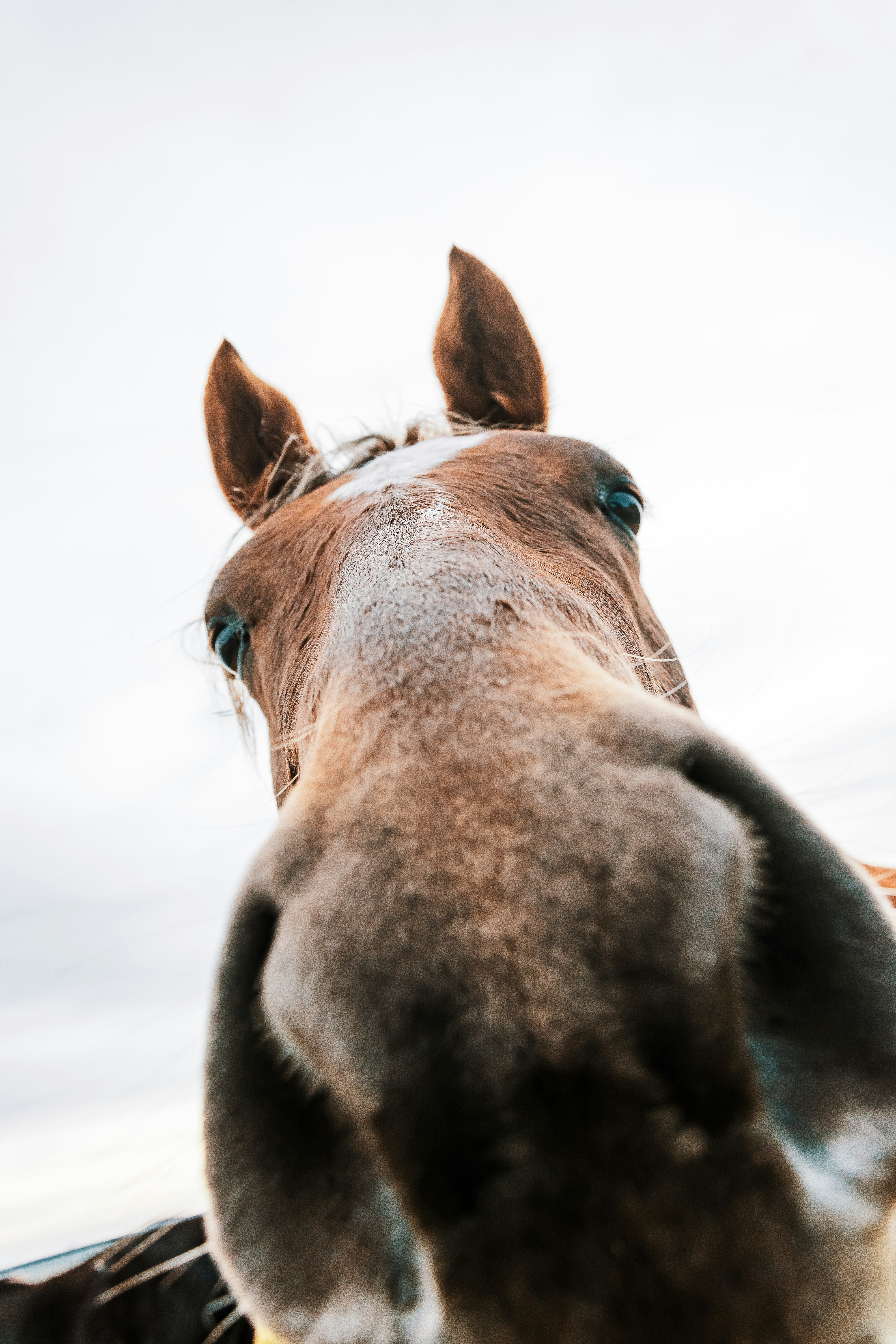
Photo: Rafael Hoyos/Unsplash.
What if horses could speak? What if they already do?

Who remembers Mister Ed, the television series in the early 1960s? The usual bad things were going on in the world at the time, but anyone who needed an escape could indulge in the adventures of a talking horse. Special effects in tv had not advanced very far at the time, but somehow the producers created the illusion that Mister Ed’s lips were moving as if using human speech.

And of course, he often whinnied.

Today we learn from National Public Radio that the dual-layer whinny of real horses is almost as surprising.

Ari Daniel writes that the researcher “Élodie Briefer grew up in the countryside near Geneva — and horses have long been a part of her world. …

“She recalls, ‘I can’t remember at which age I started, but maybe 6 or 7 years old. I did [a] few competitions, but I was never a big fan of that. I would prefer to go for a walk with the horse and enjoy.’

“All this time with horses means that Briefer, now an animal behavioral scientist at the University of Copenhagen, has heard a lot of whinnying over the years. She never noticed anything out of the ordinary until a little more than a decade ago when she was working on a project that involved comparing how different animals, including horses, express themselves vocally.

” ‘The first time I really listened to a horse whinny that I had recorded,’ she says, ‘I was confused because I thought there were two horses — as if there [were] two voices at the same time.’

“Briefer created a visual representation of the sound file, called a spectrogram, to inspect the whinny more closely. And that’s when she saw two frequencies occurring at the same time: one high and one low.

“In a paper appearing in the journal Current Biology, Briefer and her colleagues present a set of experiments that reveal how horses manage to create these two tones simultaneously. It’s a complex feat that seems to be made possible by the anatomy of their vocal tract.

“Briefer was perplexed by what she observed in the whinny for a couple of reasons. First, larger animals tend to produce lower vocalizations, and the high-pitched part of the horse whinny seemed too high for such a big creature. Second, a fair number of birds can produce two simultaneous frequencies like this. But among mammals, ‘it’s quite uncommon, at least when it appears all the time in one type of sound,’ says Briefer. …

“Briefer first went to a Swiss stud farm (where her sister, who’s a co-author on the study, works). She threaded a small camera down the noses of 10 breeding stallions until it was just above the larynx. It’s the same procedure that’s routinely conducted on these animals as part of their physical checkups, so they were accustomed to it.

“Briefer then played the stallions the sound of a female whinnying, or in certain instances, she paraded a mare in front of them. … She noticed how the vocal folds of the larynx vibrated (just like when we speak) to produce the low-frequency part of the whinny.

“In addition, just above the larynx, horses have strong cartilage. The video revealed the cartilage constricting, creating a small opening that likely produced a whistle — the high-frequency part of the whinny.

“Briefer had her first evidence that two different parts of the horse’s vocal anatomy were likely operating in tandem to produce the whinny’s two distinct frequencies.

“Next, Briefer’s colleagues connected with a butcher in France, a country where people eat horses. ‘I know it’s not the same in every country,’ she says, ‘but there it’s quite common.’

“The butcher provided the team with half a dozen horse larynges. ‘And then you blow air through it to reproduce the sounds,’ says Briefer.

“They successfully generated both the low and high tones in the excised larynges, confirming the results on the stud farm. Then, when they blew helium through them, the low pitch was unaffected, but the high pitch shifted higher. That’s what Briefer and her colleagues were expecting, since helium doesn’t affect the pitch of vocal fold vibrations, only that of whistles.

“CT scans provided 3D portraits of the same larynges, revealing ‘a small kind of cavity just above the vocal fold that hadn’t been documented before,’ explains Briefer. That could be where the air is forming a vortex, which then makes the whistle.’ More work needs to be done to confirm that mechanism.

“Finally, the team tracked down several stallions with a rare disease called recurrent laryngeal neuropathy, which tends to paralyze one of the vocal folds fully or in part. They recorded these animals’ whinnies. The low tone was partially absent, but the high pitch was unaffected.

” ‘That was another confirmation that the high pitch is not produced by vocal fold vibration,’ says Briefer. Briefer concludes that a whinny is a unique blending of vocal fold vibration that generates the low pitch and a whistling above the larynx that produces the high pitch. …

” ‘What I really liked in this paper is that they used a very comprehensive experimental approach that combined different techniques and that all converge [on] the same results, says Mathilde Massenet, a bioacoustician at the University of California, Los Angeles, who has worked with Briefer in the past but didn’t participate in the new research.

“As for why horses might be producing these two-toned whinnies, Briefer’s earlier work suggests they appear to encode different pieces of emotional information. ‘The [high-frequency] one indicates whether the emotion is pleasant or unpleasant,’ she says. ‘And then the [low-frequency] one indicates whether the emotion is intense or not.’

“Massenet says that discerning how complex sounds like the whinny are produced can help yield insights into what it is that animals are communicating. ‘Understanding the vocal behavior is important for us to have a better idea of how healthy’ a population of animals is, she says.”

More at NPR, here.
Read Full Post »

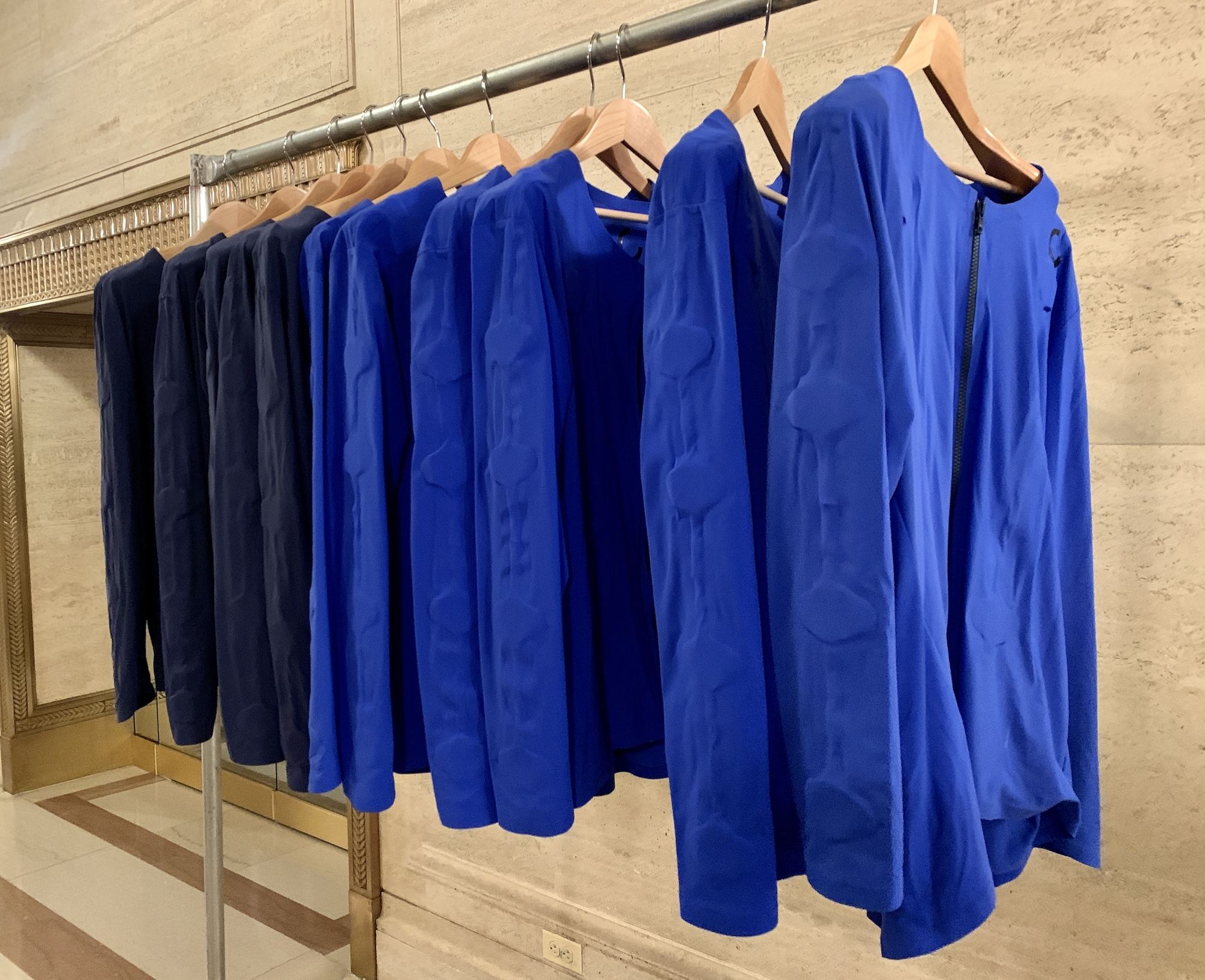
Photo: Carrie Shepherd/Axios.
The Lyric Opera of Chicago’s SoundShirts use “patterns and pulses” to make opera more accessible for the deaf.

It used to be that, for people with a disability, there were certain experiences they knew they would probably never access. With technology, that is changing. Consider how “feeling” the music in new, more subtle ways is helping those with hearing loss.

Michael Andor Brodeur reports at the Washington Post about the SoundShirt.

“Opera is everything all at once: music and drama, poetry and dance, grandeur and intimacy, spectacle and sound. This all-encompassing aspect makes it one of the most accessible art forms yet one of the most challenging to make accessible.

“For audience members who are deaf or hard of hearing, or who are blind or have low vision, attending an opera can be a deeply frustrating experience.

“A pilot program at the Lyric Opera of Chicago is trying on a new approach for deaf and hard-of-hearing people to experience opera: the SoundShirt, a jacketlike garment equipped with 16 haptic actuators* that transmit sound from the orchestra and stage into pulses, vibrations and other forms of haptic feedback in the shirt itself. …

“In addition to accommodations for mobility disabilities such as ramps and wheelchair seating, like many opera houses, the Lyric offers performances with American Sign Language interpretation, projected subtitles, and assisted listening devices for deaf and hard-of-hearing patrons. For blind people and those with low vision, the Lyric provides Braille and large-print programs, audio-described performances, high-powered glasses and pre-performance ‘touch tours,’ allowing audience members to feel various props, costumes and surfaces before the curtain rises.

“The SoundShirt, though, is cut from a different cloth than most accessibility technology, providing a mediated experience of the music that registers as physical and personal.

‘It doesn’t re-create the experience of listening to music,’ [director of digital initiatives Brad Dunn] says. ‘It’s its own thing.’

” ‘It translates the music into a different sensory experience that can be felt by people. And what I’ve seen through all of the early testing that we did is that audiences who are deaf or hard of hearing have responded very viscerally to it.’ …

“For attendees at a Lyric production of West Side Story earlier this year, input from the SoundShirt didn’t just help provide additional detail to the performance — it also illuminated the musical spaces in between, the interludes and interstitial passages of music, the overtures overloaded with crucial cues. Dunn recalls one tester’s eyes welling up with tears after the performance. …

“Lyric’s SoundShirt project was launched in partnership with the city of Chicago’s Mayor’s Office for People With Disabilities (MOPD), but the garment itself was designed by CuteCircuit, a London-based wearable technology design firm. …

“At the Lyric, an array of microphones positioned over various sections of the orchestra feeds audio information to a central computer. Dunn and his crew adapt the software to respond to the specific instrumentation of a given piece. … Those audio signals are divided across seven channels, each mapped to one of 16 different ‘zones’ on the SoundShirt, where motifs and melodies register as patterns and pulses across the garment’s 16 actuators.

“Thus, for a production of The Flying Dutchman, the violins and cellos are assigned to trigger haptic feedback along the right and left shoulders and upper arms. Timpani and bass, meanwhile, are sent down to the lower torso and hips. Wagner’s mighty horns are split across the upper arms like goose bumps, while vocals register at the wrists like a pulse. …

“Rachel Arfa is a longtime disability advocate and civil rights attorney who serves as commissioner of MOPD. As a deaf person who wears bilateral cochlear implants, the issue of accessibility has been close to her heart for a long time. … But while expanding accessibility is her life’s work, Arfa also knows that good intentions can often pave the road to nowhere.

“ ‘When Lyric approached me with this shirt, I was highly skeptical,’ Arfa said via email. [But she] agreed to test the SoundShirt at a recent Lyric production of West Side Story. Arfa was surprised to find the shirt actually felt like a good fit for the problem it is trying to solve. …

“ ‘I began to understand that the haptics on the SoundShirt vibrated in conjunction with the orchestra sounds. One example is when string instruments were played, the haptics followed the pitch and rhythm. A second example is when a singer was singing a long melody, the haptics picked up on this and I could experience this through the vibration. I am not able to hear this sound, but I could feel it. It was such a surprise and a thrill.’

“Tina Childress, an audiologist who lives in Champaign, Ill., is a late-deafened adult who wears cochlear implants and works as an advocate for accessibility in the arts. … Childress appreciated the haptic feedback at the wrists to indicate dialogue, and the way the shirt clarified the various elements of the score. After intermission, she lent the shirt to another audience member to try out. ‘I didn’t realize how much I was using it until I didn’t have it.’ ”

More at the Post, here. Axios Chicago has still more, here.

* haptic actuators are gizmos that provide localized bodily sensations and tactile effects

Read Full Post »


Photo: Lanna Apisukh for NPR.
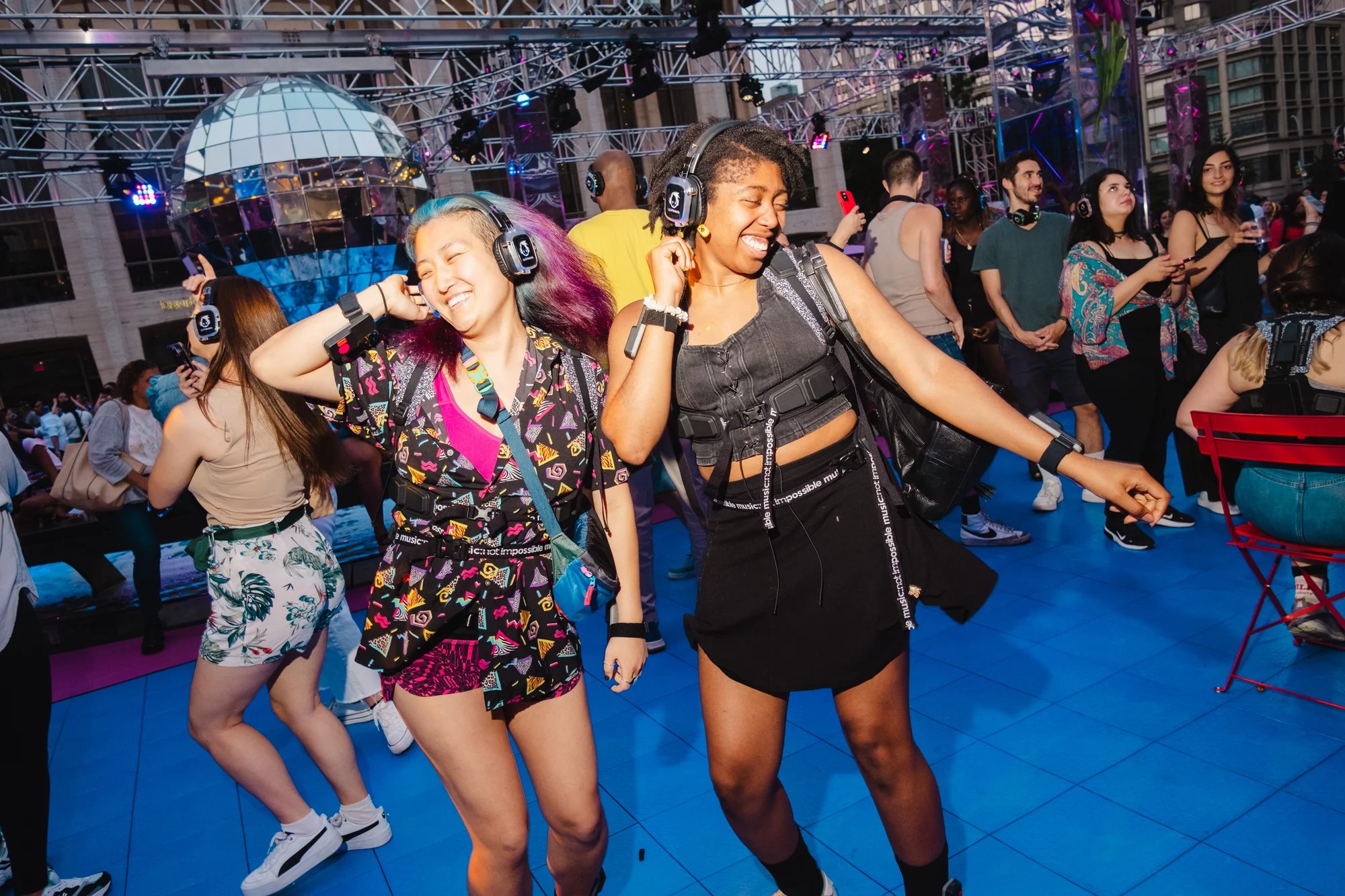
Concertgoers dancing at the Silent Disco dance party at Lincoln Center, New York City, on Saturday, July 1, 2023. “Haptic” suits designed for the deaf community were provided by Music: Not Impossible.

Of the many interesting kinds of jobs in the world, I bet you never heard of this one: “Chief Vibrational officer”! Jennifer Vanasco explains at National Public Radio (NPR).

“When Daniel Belquer was first asked to join a team to make a better live music experience for deaf and hard-of-hearing people, he was struck by how they had developed work-arounds to enjoy concerts.

” ‘What they were doing at the time was holding balloons to feel the vibrations through their fingers, or go barefoot and flip the speakers facing the floor,’ Belquer said.

“He thought the team could make something to help hard-of-hearing people enjoy live music even more with the technology now available. 

“Belquer, who is also a musician and theater artist, is now the ‘Chief Vibrational Officer’ of Music: Not Impossible, an off-shoot of Not Impossible Labs, which uses new technology to address social issues like poverty and disability access. …

“His team started by strapping vibrating cell phone motors to bodies, but that didn’t quite work. The vibrations were all the same. Eventually, they worked with engineers at the electronic components company Avnet to develop a light haptic [3D touch] suit with a total of 24 actuators, or vibrating plates. There’s 20 of them studded on a vest that fits tightly around the body like a hiking backpack, plus an actuator that straps onto each wrist and ankle.

“When you wear the suit, it’s surprising how much texture the sensations have. It can feel like raindrops on your shoulders, a tickle across the ribs, a thump against the lower back.

It doesn’t replicate the music — it’s not as simple as regular taps to the beat. It plays waves of sensation on your skin in a way that’s complementary to the music.

“The vibrations are mixed by a haptic DJ who controls the location, frequency and intensity of feeling across the suits, just as a music DJ mixes sounds in an artful way.

“The evening’s haptic DJ was Paddy Hanlon, co-founder of Music: Not Impossible. ‘What we’re doing is taking the feed from the DJ, and we can select and mix what we want and send it to different parts of the body,’ he said. ‘So, I’ll kind of hone in on, like, the bass element and I’ll send that out, and then the high hats and the snare.’

“The haptic suits were just one component of the event, which was celebrating Disability Pride Month as part of Lincoln Center’s annual Summer for the City festival. There were American Sign Language interpreters; the music was captioned on a screen on the stage; there was audio description for those who were blind, and there were chairs to sit in. There’s also a chill-out space with noise-reducing headphones, earplugs and fidgets for those who feel overstimulated. Because it’s a silent disco — meaning you can only hear the music through headphones — attendees could adjust the sound. …

“The suits are the star attraction. Lily Lipman, who has auditory processing disorder, glowed when asked about her experience.

” ‘It’s cool, because I’m never quite sure if I’m hearing what other people are hearing, so it’s amazing to get those subtleties in my body.’

“Said Kevin Gotkin, one of the evening’s DJs and the curator of disability artistry events at Lincoln Center, ‘This is a chance for us to be together and experience access that’s integrated into a party artistically and not as, like, a compliance thing. … Disability is the center of the party.’ “

More at NPR, here. No paywall.

Read Full Post »

“Good good good good vibrations.”

I wonder if the Beach Boys ever thought about this aspect of good vibrations — how they can bring the joy of music to those who can’t hear.

According to Gramophone magazine, “The BBC National Orchestra of Wales will perform a series of free concerts in Cardiff on February 26 and 27, which aim to make orchestral music accessible to deaf and hard of hearing adults and children. …

“The events will feature sign language and live subtitles, and will allow audience members to sit within the orchestra, in order to feel the vibrations from instruments as the musicians play. The five concerts will demonstrate concepts including pitch, tempo and dynamics through music including ‘Hoe-Down’ from Copland’s Rodeo, ‘In the Hall of the Mountain King’ from Grieg’s Peer Gynt and the theme tune to Doctor Who. Four of the concerts will be aimed at students from primary and specialist schools, and adults in care homes and day centres. The fifth concert will be open to the public, allowing deaf and hard of hearing children and adults to take part alongside friends and family.”

More.

Photograph: Betina Skovbro
BBC NOW presented a pilot event for the deaf and hard of hearing in October 2012

Read Full Post »