Feeds:
Posts
Comments

Posts Tagged ‘wilderness’

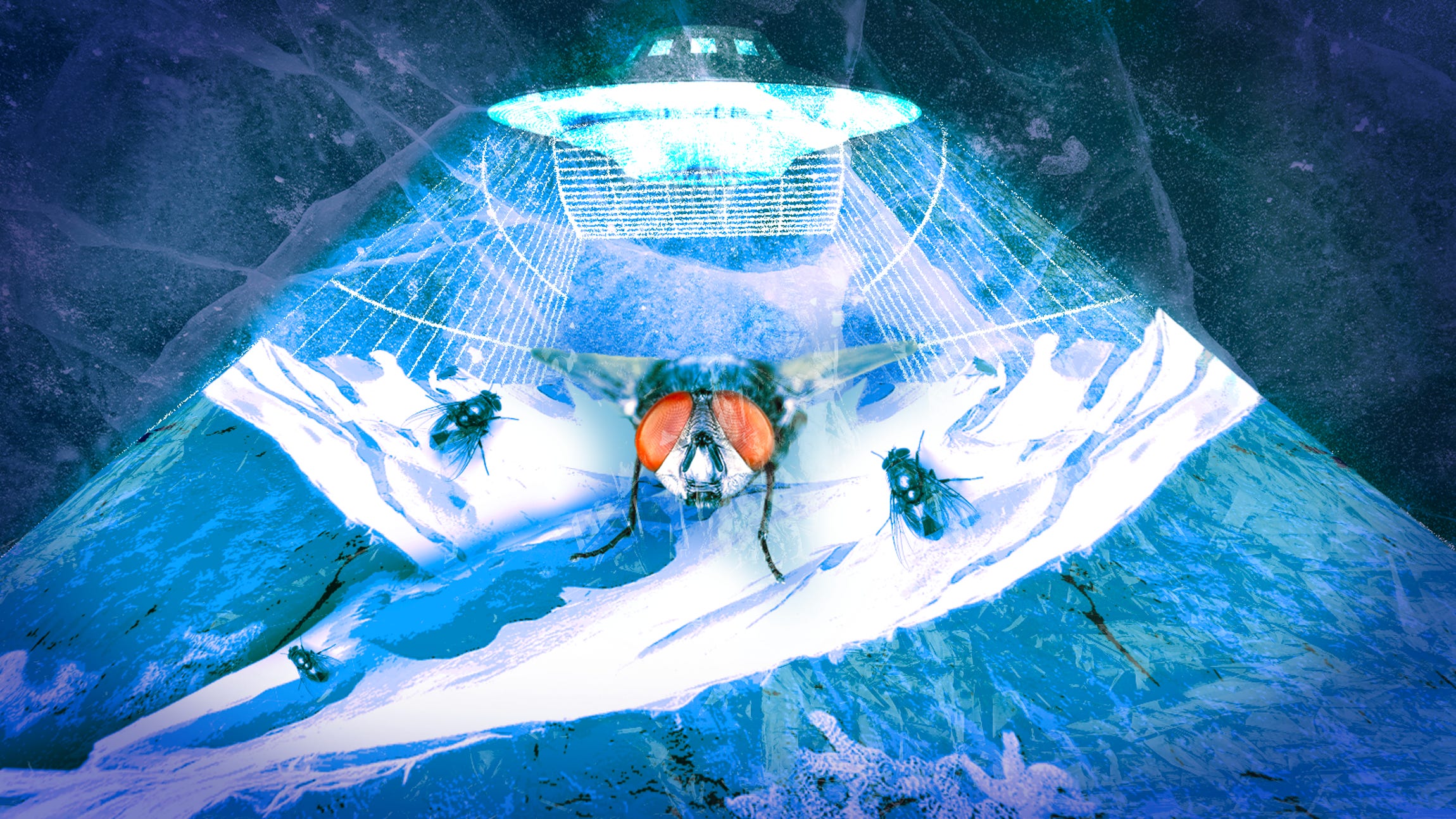
Photo: Naomi Antonino/CNET.
“As the world warms, non-native species threaten Earth’s last great wilderness,” says Jackson Ryan.

In the interest of identifying a problem in order to do something about it, today I share bad news about Antarctica: the invasion of alien species.

Jackson Ryan reports at CNET Science, “At the bottom of the stairwell leading to deck five, an alien lies upturned on green nonslip flooring. If you get close enough, you can see one of its six legs twitching and one of its translucent wings crushed to pieces. Unlike the throng of Antarctic expeditioners aboard the RSV Nuyina, Australia’s newest icebreaking ship, it hasn’t cleared customs. 

“Days after the Nuyina departed its harbor in Hobart, Tasmania, the alien buzzed its way across the Derwent River, slipped through an open door and zipped into the bowels of the ship until this restless, twitching death. 

“Scientists call the creature Musca domestica. You likely know it as the housefly.

“Even if it hadn’t been felled by an errant hand or boot, it likely wouldn’t have survived the journey to Antarctica. At temperatures below 14 degrees Fahrenheit, flies move lackadaisically and seem to barely get airborne. I know this because I’ve been watching them as part of the crew onboard the Nuyina as it crosses the Southern Ocean. Surviving flies buzz at the ship’s windows, trying to escape the upper decks. 

“If their prison break were to succeed, they’d find themselves facing seemingly endless waters, with nowhere to go. The Southern Ocean provides a formidable barrier to entering Antarctica, a great wall of water and powerful currents that has separated the continent from the rest of the world for about 30 million years. Couple that with freezing temperatures, and the Antarctic provides little hope for a wayward housefly trapped on a ship.

“But Antarctica’s temperature is changing, and dramatically. In March, a French-Italian base in East Antarctica recorded temperatures 70 degrees higher than average for that time of year. That may just be an unprecedented anomaly, but it’s expected the continent’s average temperatures could rise a few degrees by 2050. In particular regions, like the western peninsula, the continent is warming at a rate 10 times faster than the rest of the world. In February 2020, the temperature at Argentina’s Esperanza Base research station reached 18.3 degrees Fahrenheit – an all-time high – providing the kind of conditions a wayward housefly might survive in. 

“Historically, it’s been difficult for lost flies to reach the most southern landmass on Earth. As Antarctic explorers aimed to discover and map the continent in the 1800s, humans began providing fleeting opportunities for alien trespass. A handful of nations with a permanent presence across the continent annually resupply research stations that provide permanent outposts for studying the ice and the Antarctic ecosystem. …

” ‘Back-of-the-napkin math, less than a million people in the entire history of human existence have visited Antarctica,’ says Dana Bergstrom, an ecologist at the Australian Antarctic Division. 

“But that too is changing. Before the pandemic slowed cruises to a halt, Antarctic tourism was on the rise. In the 2019-20 season, almost 75,000 people visited the continent, according to IAATO, the chief tourist body in the Antarctic. That’s a 35% increase over the previous season.

“Wherever humans go, so too our pests. Signatories to the Antarctic Treaty and the Madrid Protocol, which include protections for the Antarctic environment, must endeavor to limit their effects on the pristine wilderness, and tourist bodies like IAATO and national Antarctic programs go to great lengths to prevent biological invasions. …

“If an alien were to slip in, it could be disastrous for the delicate Antarctic ecosystems hidden from the world for millennia.

” ‘It’s a super special place to understand how the planet works,’ says Bergstrom. ‘And so it’s really worthwhile putting all our efforts to try to keep nature operating without interfering.’

“On the eastern edge of Antarctica … [a] base, called Davis, is Australia’s southernmost presence on the continent.  In 2014, its hydroponics facility was the site of an infamous alien invasion.

“In May of that year, expeditioners entered the facility, composed of two gray shipping containers, to pick fresh greens for the chef’s evening meal. … During the vegetable collection, they inspected the facility’s water and noticed a black mat had developed over the surface. ‘When they looked closer, they realized it wasn’t a mat,’ says Andy Sharman, environmental manager at the Australian Antarctic Division, ‘it was thousands of tiny invertebrates.’

“Davis had been invaded by The Thing, a thousand times over. An alien species of arthropod known as Xenylla had snuck into the facility and began multiplying in the warm, wet conditions. The flealike critters, known as collembolans, hadn’t been seen in this region of the Antarctic before but had become established in warmer areas. A crack team of scientists deduced that should they get out, they might threaten the local ecosystem.

Almost immediately, the station went into eradication mode. ‘We had a biohazard response like you might get with a virus or disease,’ notes Sharman.

“The effort was blazingly fast. The response team sprayed alcohol throughout the facility, then bagged and burned everything, including recently harvested vegetables that had already made it to the Davis kitchen. The building was subjected to rigorous freeze-thaw cycling; the heat would trick any leftover eggs into hatching and then the temperatures would drop to minus 11 degrees Celsius, killing the hatchlings. 

“The response team also took extreme social distancing measures. ‘We actually lifted the whole building out and parked it on the sea ice and left it there,’ says Sharman. A few months after the discovery and various eradication measures, the containers were shipped back to Australia.

“An investigation into the source of the incursion eventually discovered that the aliens likely got in through plant feed. Subsequent monitoring hasn’t found the collembolan in the area since, but other stations have experienced invasions, too, and protecting the continent from such risks is a constant battle. 

“Exterminating The Things at Davis is one of the Australian Antarctic Division’s success stories, but the threat of incursion is constant. Invertebrates are the most widely dispersed non-native species and are known to hide in shoes and bags, while plant seeds can become stuck in Velcro and marine creatures can lurk in ballast tanks on vessels.” 

The long, interesting CNET article is, here. No firewall.
Read Full Post »

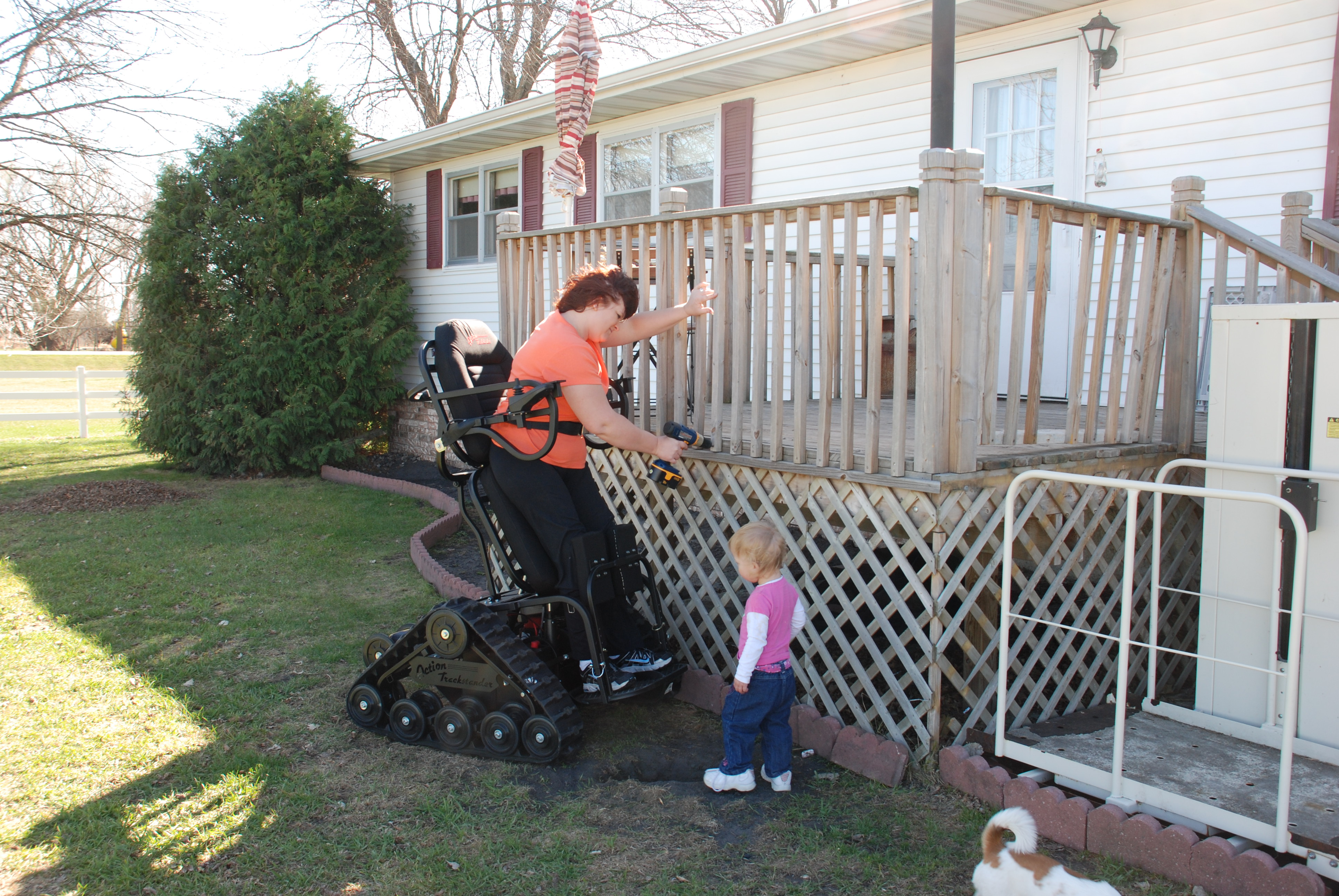
Photo: Baileigh Industrial.
Above, using the Action Trackchair around the house. Wilderness adventurers love it, too.

Technology is erasing the barriers for people with disabilities who want to do everything other people do. At the Washington Post, Andrea Sachs and Natalie B. Compton wrote on Nov. 8 about a 500-pound miracle arriving in US parks: all-terrain wheelchairs.

“Cory Lee has visited 40 countries on seven continents,” they write, “and yet the Georgia native has never explored Cloudland Canyon State Park, about 20 minutes from his home. His wheelchair was tough enough for the trip to Antarctica but not for the rugged terrain in his backyard.

“Lee’s circumstances changed [recently], when Georgia’s Department of Natural Resources and the Aimee Copeland Foundation unveiled a fleet of all-terrain power wheelchairs for rent at 11 state parks and outdoorsy destinations, including Cloudland Canyon.

The Action Trackchair models are equipped with tank-like tracks capable of traversing rocks, roots, streams and sand; clearing fallen trees; plowing through tall grass; and tackling uphill climbs.

“ ‘I’ll finally be able to go on these trails for the first time in my life,’ said the 32-year-old travel blogger, who shares his adventures on Curb Free With Cory Lee. …

“In 2017, Colorado Parks and Wildlife launched its Staunton State Park Track-Chair Program, which provides free adaptive equipment, though guests must pay the $10 entrance fee. Michigan’s Department of Natural Resources has placed off-road track chairs in nearly a dozen parks, including Muskegon State Park. …

“South Dakota is [expanding] its squadron: On Tuesday, the South Dakota Parks and Wildlife Foundation unveils its second all-terrain chair. South Dakota resident Michael M. Samp is leading a fundraising campaign to purchase up to 30 chairs. Last year, Samp’s father packed up his fishing pole and piloted a track chair to Center Lake in Custer State Park. He reeled in trout, just as he had before he was diagnosed with spinal cerebral ataxia. …

“This month, the Minnesota Department of Natural Resources will wrap up its months-long pilot program that tested out the chairs in five parks. … Said Jamie McBride, a state parks and recreation area program consultant with the Parks and Trails division of the Minnesota DNR, ‘People have told us this is life-changing.’

“The Georgia initiative was spearheaded by Aimee Copeland Mercier, who suffered a zip-lining accident in 2012 and lost both hands, her right foot and her left leg to a flesh-eating bacterial infection. Copeland Mercier, a psychotherapist and licensed clinical social worker, tested several types of all-terrain chairs before committing to the Action Trackchair, which several other state programs also use.

“The Minnesota-based company was founded by Tim and Donna Swenson, whose son, Jeff, was paralyzed in a car accident. The original design resembled a Frankenstein of sporting goods parts, with snow bike tracks and a busted boat seat. Today’s model could be an opening act at a monster truck rally.

“ ‘I was floored by what it could do,’ said Copeland Mercier, whose foundation raised $200,000 to purchase the chairs at $12,500 each. ‘Oh my gosh! I can go over a whole tree trunk, up a steep incline and through snow, swamps and wetlands. If I took my regular wheelchair, I’d get stuck in five minutes.’

“Each program has its own reservations system and requirements. For Georgia’s service, visitors must provide proof of their disability and a photo ID, plus complete an online training course available through All Terrain Georgia. Once certified, the organization will forward the rental request to the park. Copeland Mercier urges visitors to plan ahead: The certification course takes about an hour, the foundation needs 72-hour advance notice and the park requires a 48-hour head’s up.

“ ‘These are 500-pound chairs,’ she said. ‘There are some risks involved.’

“The Minnesota DNR, which owns and maintains its five chairs, advises visitors to call the park to reserve a chair. …

“Track chairs can conquer a range of obstacles, but they do not work in all environments.

“ ‘You need the width. If two trees are too close together, the wheelchair can’t pass between them,’ Copeland Mercier said. ‘And some inclines are too steep. The chair also can’t go down staircases.’

“To steer visitors in the right direction, parks have created maps highlighting the trails designated for the track chairs, such as Staunton State Park’s trio of routes that range from roughly three to four miles. … McBride said one goal is to erect markers that would provide detailed information about the hike, such the extent of accessibility. ‘We want to let people know if they can get all the way to the waterfall or halfway,’ he said, using a hypothetical example.

“Copeland Mercier also has a wish list. She hopes to expand the network of chairs to other parts of Georgia, such as the coastal, southern and central regions. Once the foundation acquires several vans (another aspiration), the staff could move the 30 to 40 chairs (ditto) around the state to fill fluctuating demand. She is also eyeing other states.

“ ‘North Carolina is next,’ said Copeland Mercier, who divides her time between Atlanta and Asheville, N.C. But the grand plan is even bigger. ‘The goal is to alter the U.S.A.,’ she said.”

More at the Post, here.

Read Full Post »

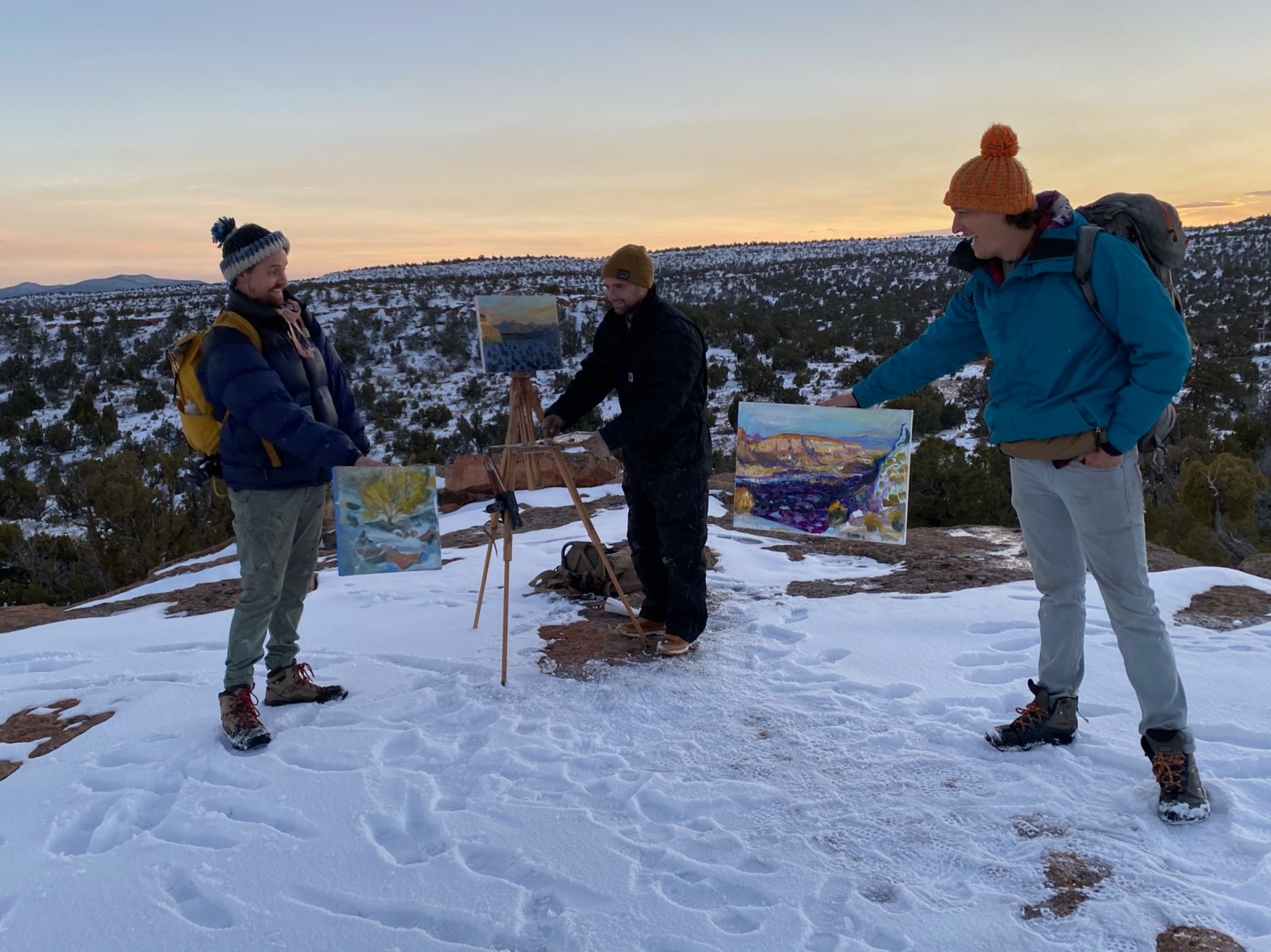
Photo: Sean Hudson, Aaron Zulpo, and Johnny Defeo via Hyperallergic.
Art making at Bandelier National Monument, January 2021.  

I’ve sometimes wondered how landscape painters over the years have dealt with extremes of weather. Think Hudson River School, think storms in the mountains. Even an ordinary person needs a lot of paraphernalia to go outside in bad conditions, let alone someone bringing along an easel, paints, palette, stool …

Susannah Abbey writes at Hyperallergic that in New Mexico, “the rule of the outdoors is that it changes constantly and consistently: sun angles, wind direction and speed, cloud formations, humidity. It is what makes painting outside, en plein air, so maddening and fun.

Johnny DeFeo, co-founder of the Guild of Adventure Painters, has been painting outside since he was a teenager. The challenge of rendering color and light often determines his subjects when he is on the road with his partner in painting, Brooklyn-based artist Aaron Zulpo. Since 2018 they have taken friends on mobile ‘Residency Programs’ and shorter ‘Excursions’ — driving DeFeo’s box truck to Banff, Yosemite, even Brooklyn’s Green-Wood Cemetery, where they led a community painting day. 

“Landscape painting has gone through different iterations in Western art since Claude Lorrain began painting the Italian countryside in the 17th century, yet has remained popular. … Maybe due to COVID lockdowns, or perhaps to a growing fear of losing the natural world, plein air (like other outdoor activities) is enjoying a small resurgence. Being outside, whether in an urban or wild landscape affords benefits; it’s a way to be fully immersed in and aware of the world.

“While its attractions transcend intellectualizing, at the end of a long day on a residency, the Adventure Painters convene to discuss process. ‘We’ll talk about, say, a waterfall — why is a waterfall so hard to paint?’ says DeFeo.

“DeFeo and Zulpo invite a rotating party of like-minded artists to accompany them. In January 2021, they organized a two-week excursion with Raychael StineBeau Carey, and Sean Hudson, then followed it up with a group exhibition at The Valley gallery in Taos, New Mexico.

“Stine teaches, among other courses, Wilderness Studio at the University of New Mexico, an art class in which students make their own pochade boxes and then go camping for two weeks to experiment with working beyond the confines of the Fine Art Department. Painting outside allows her to distill her outdoor observations into new and sometimes surprising palettes. 

“For Sean Hudson, a former student of Stine’s, the attraction to plein air started with the New Mexico sky. ‘I found these ethereal, transcendent spaces for my work in the bright sunsets, gradients, landscape as this whole idea of change, beauty, origin,’”’ he says.

“Beau Carey, also a Wilderness Studio alum, sometimes joins them. … Carey favors remote, icy corners of the world: the mountains of Longervin, Norway, and Denali National Park. He believes that working in the field is a great way to engage with a space, to record a subject with as much accuracy as possible under changing conditions before reinterpreting it in the controlled conditions of the studio. …

“This transformation of total immersion into a two-dimensional picture is rooted in paradox. The word ‘landscape’ in Western culture has been informed by the traditions of painting. It has come to connote, for instance, a sweeping seascape or desert vista, whose details are carefully curated or embellished by the artist’s perceiving eye. But landscapes are complex systems that resist the framing and blocking of two-dimensional composition. … In any given prospect we may choose to interpret on paper, thousands of creatures are born, live and die, rocks and mountains are eroding, forests growing and dying and rotting, rivers meandering, springs drying up. Every moment subtly changes the reality before, behind, above and below us.

“The impossible charge of a plein air painter is to distill this sensory and intuitive knowledge into a single snapshot. …

“ ‘I love it because it’s a game you can’t win,’ says DeFeo. ‘You get locked on a perfect shadow. A few minutes later you turn your brain into recorder mode and [because the light has changed] paint right through that shadow. It’s right on the edge of glory and annihilation.’ “

Some beautiful examples of the art at Hyperallergic, here. No firewall.

Read Full Post »

Julie Turkewitz writes at the NY Times about a mountain library planned by two not-exactly-wealthy book lovers with big ideas.

“The project is striking in its ambition: a sprawling research institution situated on a ranch at 10,000 feet above sea level, outfitted with 32,000 volumes, many of them about the Rocky Mountain region, plus artists’ studios, dormitories and a dining hall — a place for academics, birders, hikers and others to study and savor the West.

“It is the sort of endeavor undertaken by a deep-pocketed politician or chief executive, perhaps a Bloomberg or a Buffett. But the project, called the Rocky Mountain Land Library, has instead two booksellers as its founders.

“For more than 20 years, Jeff Lee, 60, and Ann Martin, 53, have worked at a Denver bookshop, the Tattered Cover, squirreling away their paychecks in the pursuit of a single dream: a rural, live-in library where visitors will be able to connect with two increasingly endangered elements — the printed word and untamed nature. …

“They have poured an estimated $250,000 into their collection of 32,000 books, centering the collection on Western land, history, industry, writers and peoples. There are tales by Norman Maclean; wildlife sketches by William D. Berry; and books on beekeeping, dragonflies, cowboys and the Navajo. …

“Mr. Lee and Ms. Martin have a grant from the South Park National Heritage Area and this summer will finally begin renovations, repairing two leaky roofs. Construction will be limited, however, as they have gathered less than $120,000 in outside funds. An estimated $5 million is needed to build out their dream.” More here.

Photo: Michael Ciaglo for The New York Times

Read Full Post »

I like walking around town at this season, dodging intent holiday shoppers but without any important agenda of my own. No urgent missions, just fun ones like yesterday’s to choose a pair of socks. I never realized how many local stores carry socks.

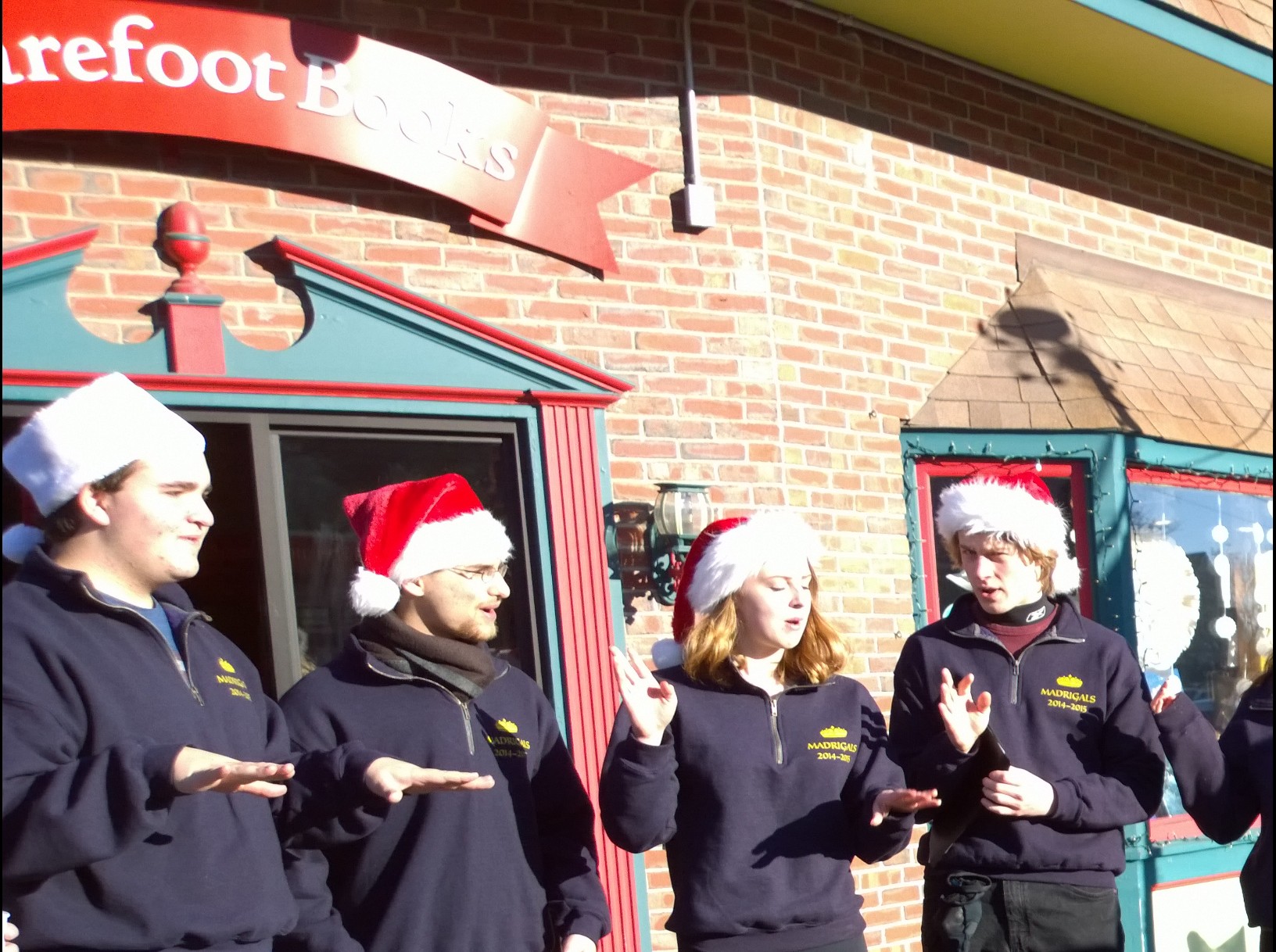
Then today, who should pop up outside Barefoot Books but the Acton-Boxborough High School Madrigal Singers, regaling passersby with seasonal favorites. And hand motions.

There was also a poetry reading at the library, part of an ongoing series. Today we had poet Sandra Lim, who read from her collection The Wilderness. The poems tended to start out straightforward and end up obscure. I need to read and think about them. I liked the title of one section of the nine-part poem “Homage to Anne Bradstreet” (a Puritan poet that Lim likes because of the crazy contrasts between controlled and wild), but I’m afraid my train of thought had nothing to do with the subject at hand.

The section of the Bradstreet homage was called “Black Painting,” and it reminded me of a friend who so detested the level of conversation at her husband’s management-consultant social events that she would invariably announce in the middle of the party, “I’m going home now and make a black painting.”

121414-madrigals-at Barefoot-Books

Read Full Post »