Feeds:
Posts
Comments

Posts Tagged ‘worcester’

Photo: Pat Greenhouse/Globe Staff.
Dutch artist Hendrick Avercamp’s winter scene, stolen in 1978, arrived in May at the Worcester Art Museum in Massachusetts. 

As an inveterate reader of mystery novels, I do love a yarn about art thieves, especially if there’s a clever sleuth who figures out what happened. It’s best if the perps end up in jail, but you can’t have it all. These things take time.

At the Boston Globe, Malcolm Gay has a good story about Clifford Schorer, a former president of the Worcester Art Museum’s board as well as “an international art dealer and sleuth who spends his days (and many nights) hunting ‘sleepers’ — lost masterpieces whose true identities have been obscured through the ages.

“Schorer had flown from Brussels [on a day last May] with the painting he now carried in his hands, a winter scene by the acclaimed Dutch Golden Age artist Hendrick Avercamp.

“The artwork was stolen nearly half a century earlier in a sensational 1978 heist from the baronial estate of Helen and Robert Stoddard, a Worcester industrialist. The Avercamp picture, along with numerous other paintings and other valuables taken from the home that night, had not been seen since. Local officials were stumped. So was the FBI. …

“[Schorer] and a conservator carefully unwrapped the package, revealing the aged but unscathed picture of Dutch figures skating in winter.

“ ‘It was nirvana,’ Warner Fletcher, a nephew of the Stoddards, said of the moment. …

“The Avercamp originally disappeared the night of June 22, 1978, when thieves broke into the 36-acre Stoddard estate, hacking open sofa cushions to cart away valuable works by Camille Pissarro, J.M.W. Turner, and Pierre-Auguste Renoir, among others. …

“That night, with Helen undergoing cancer treatment at a Boston hospital, Robert turned in just before midnight. [He] was sound asleep when thieves broke in through the sun porch.

“The burglars ransacked the home, rifling through drawers and closets. They drank the couple’s liquor and ate food from the fridge, according to later news reports. They made their way through each room, snatching paintings from the walls and pocketing collectibles including miniature carvings, silver tea sets, watches, and valuable music boxes.

“When Stoddard awoke the next morning, he realized the house had been robbed when he found his glasses on the floor. …

” ‘We never had a suspect,’ Ralph E. Doyle, a retired detective sergeant with the Worcester Police Department, told the Telegram & Gazette in 2000.

That‘s not to say there haven‘t been breakthroughs.

“The most valuable work in the Stoddard’s collection, Pissarro’s 1902 oil on canvas, ‘Bassins Duquesne et Berrigny à Dieppe, temps gris,’ surfaced at a Cleveland auction house in 1998. …

“The discovery of the Pissarro prompted authorities to look closely at a Springfield-area art dealer named Robert Cornell and his ex-wife, Jennifer Abella-Cornell, who had brought the painting to Ohio. But the estranged couple gave wildly conflicting accounts. [An FBI] spokesperson later told the Telegram & Gazette that reconciling their stories was ‘like beating a dead horse.’ …

“The trail of the Avercamp and other missing works then went cold. Frustrated by the lack of progress and still hoping they might be retrieved, Fletcher, the Stoddards’ nephew, finally turned to Schorer in 2021. He put information about the missing artworks in a manila envelope and sent it to the sleuth.

“Fletcher was by then familiar with Schorer. … He’s renowned in the trade, and he’d recently discovered a previously unknown drawing by Northern Renaissance master Albrecht Dürer that was purchased at a Concord estate sale for $30.

“Schorer was only vaguely aware of the Stoddard theft at the time, but as he looked through the envelope’s contents, he began to concentrate on the works he found most interesting: the Avercamp, the Turner, and an oil painting by 19th-century Dutch painter Johan Jongkind. …

“His search came up empty. But from his years of experience tracking down stolen art, Schorer knew that disreputable dealers will sometimes misrepresent works to evade detection.

“ ‘Finally, I said, “All right, if I had that painting, who would I fence it as?” ‘ Schorer recalled thinking.

“He knew that Avercamp, a mute painter who specialized in outdoor winter scenes, had a nephew, Barent Avercamp, who mimicked the style of his more gifted relative. Schorer turned again to his computer, this time searching for winter scenes by the famed painter’s nephew.

Bingo: Fifteen minutes later, he came across a throw pillow that was selling for $18.40 with a portion of the missing Avercamp scene — including a distinctive arch — printed on its case. …

“Schorer had made a breakthrough. The only known images of the Avercamp were grainy black and white photos from the ’70s. But this image was in color. It could mean only one thing: The photo was taken after the theft.

“ ‘I clicked on that, and it took me to a page trying to sell me a pillow,’ Schorer recalled. There, just above the asking price, he also found the logo of the image licensing company that held the source file.

“Schorer navigated to the site and paid $39 to download the photo. As he parsed its metadata, he discovered the copyright on the image: L.S.F.A.L., an acronym for Lawrence Steigrad Fine Arts Ltd., a dealer he’d known for years.

“Steigrad told Schorer he’d taken a photo of the painting for Newhouse Galleries, which had offered the artwork at a fine arts fair in the Netherlands in the mid-90s.

“Working another angle, Schorer discovered the name of the person who’d originally sold the work to Newhouse: Sheldon Fish. Fish told Schorer he’d purchased the painting at the Brimfield Antique Flea Market, a short drive from Worcester.”

Brimfield, Holy Cow! It’s a really famous flea market in our area, where Suzanne found most of the antique lockets she sold. I followed her around as she shopped one rainy weekend before Covid.

I love reading this stuff. The rest of the story is at the Globe, here.

Read Full Post »

Photo: WJAR/file photo.
Traffic on Interstate 195 west builds up on the approach to the Washington Bridge in East Providence, where one lane had to be closed a year ago. Now you can have a Washington Bridge Christmas ornament.

I do get tired of “Jingle Bells” and “Deck the Halls” on the radio starting before Thanksgiving, but there are other seasonal songs I look forward to hearing again, some that are lovely (“Mary’s Boy Child”) and some that are playful (“Santa Baby”).

If you want to hear holiday music that’s a bit different, check out WICN, the Worcester jazz station, here. It’s a breath of fresh air. I love seeing the creativity that holidays bring out in jazz musicians.

The holidays bring out the creativity of ornament makers, too, delighting people who want a small, kooky gift to give or something different for their own tree.

Ed Fitzpatrick at the Boston Globe has written about a new Christmas tree decoration that makes hay out of an unwelcome event in Rhode Island: the sudden closure last year of the westbound lane of a critically important bridge. Rhode Islanders are still dealing with the chaos that ensued.

“Forget Christmas ornaments of snowmen, Santa, or even the Big Blue Bug,” says Fitzpatrick. “This year, Rhode Islanders are decorating their Christmas trees with a miniature replica of the Washington Bridge ― complete with orange traffic cones shifting drivers away from the westbound lanes, which have been closed for more than a year. …

“Facing the choice of laughing or crying, many of the Rhode Island motorists who’ve spent time idling in bridge traffic jams have added a sardonic touch to their fir trees.

“Duke Marcoccio, the design artist behind mylittetown.com, said the Washington Bridge is by far the best seller from among the dozens of ornaments he sells. …

“Marcoccio, a Narragansett resident, said he has been making Christmas ornaments for 25 years now. The first was a replica of The Towers in Narragansett. Since then, he has created about 300 ornaments, including a Del’s lemonade cup, the Haven Brothers mobile diner, the Benny’s sign, and the Big Blue Bug. …

“The biggest hit has been the Washington Bridge ornament, Marcoccio said. He said he considered placing tiny orange traffic cones on the bridge deck, but they probably would have broken. So he just painted the cones and shifting lanes on the span. ‘They get the idea,’ he said.”

Read more of the entertaining story at the Globe, here. And please share holiday songs you like, especially ones that don’t get much play. Beautiful or quirky.

Louis Armstrong and his song “‘Zat You, Santa Claus?”

Read Full Post »

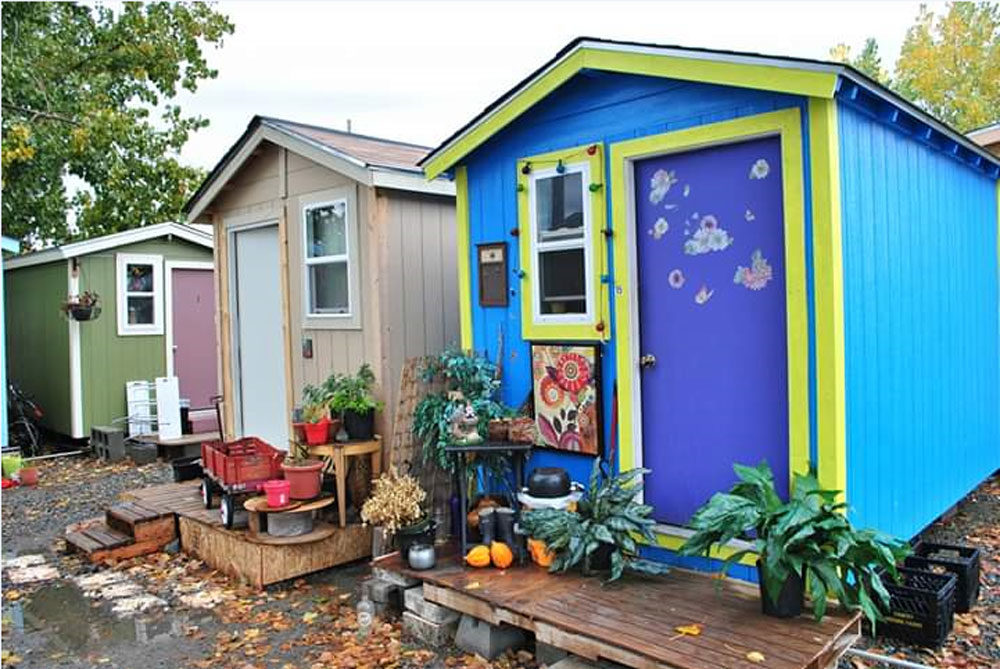
An example of tiny houses designed to combat homelessness.

It’s been a while since I’ve written about tiny houses (you can search on the term to see what I posted before), and I was curious to see what was going on in the movement. To my surprise, I learned that a tiny-house community is being planned to combat homelessness in Worcester.

Tori Bedford writes at GBH News, “Plans for a community of tiny homes for people experiencing chronic homelessness in Worcester have been announced, with a small village slated to open in 2023.

“The village, to be located at 264 Stafford St., will have 21 tiny homes that contain a bedroom, bathroom and combination kitchen and living room, contained within about 480 square feet. As of 2019, 84 people in Worcester were chronically homeless, according to data reported to Central Mass Housing.

” ‘It’s expanding the options for people,’ said Amy Arrell, a service director at Open Sky Community Services, ‘because different things work for different people, depending on their trauma history, their need for privacy, their different experiences when they’ve been out on the streets.’

“Arrell says Worcester’s homelessness crisis has heightened during the coronavirus pandemic: at the height of the crisis in April of last year, nearly half of the population at a Worcester adult emergency homeless shelter tested positive for COVID-19.

“Open Sky is working in partnership with the Worcester East Side Community Development Corporation and a group of local real estate developers, organizations and agencies to offer permanent housing for people who have struggled with chronic homelessness, mental health challenges and substance use.

“Applicants for residency will be processed through a coordinated entry process, led by the city, Open Sky and the Department of Mental Health, to select candidates who don’t thrive in a group setting or temporary housing. …

“The village will include on-site housing specialists to help transition tenants into the neighborhood, as well as individualized and group mental health and substance use treatment. Staff will live in a central building that also serves as a community center, offering monthly social activities like barbecues and picnics. Residents will additionally have access to both individual and community gardens.

“Subsidies will be available to cover the cost of rent based on a percentage of income, and resources for job placement will be made available to residents on-site. …

“ ‘In permanent supportive housing programs, people usually don’t live there forever, they live there for as long as they need to. But there is a sense of security as you’re recovering to know that if you do need that, it’s a permanent option for you.’ …

“Some funding has already been secured through UMass Memorial Health’s anchor mission program, which has connected Worcester East Side CDC and Civico, a real estate development firm that has designed the model based on similar projects across the Pacific Northwest.

“ ‘We abide by some of the principles referred to as “trauma-informed design,” ‘ Taylor Bearden, a partner at Civico, said. ‘The idea is that you’re actually designing for the population and the experiences that these people who may have suffered from chronic homelessness have had in their life. You’re not creating dark corners. You’re making sure that, from the bedroom, you have a clear line of sight to the front door. Certain things that may be triggers for trauma are sort of addressed in the architecture of the spaces themselves.’

“Bearden says safety and community are huge factors in designing a space that can serve as both a recovery center and a liveable space for people who have experienced trauma.

“ ‘The goal is to create a really permanent community where the people who live there develop relationships.’ “

More at GBH radio, here. At the Christian Science Monitor, here, you can see what some other cities are doing to address homelessness.

Read Full Post »

If you live anywhere near Worcester, Mass., try to get to a unique photography exhibit at the Worcester Art Museum by February 25.

Asakiyume and I meet up about once a year, often in a museum, and we saw three interesting shows at the Worcester Art Museum over the Martin Luther King, Jr., holiday.

First, we checked out a small exhibit on antique Japanese metalwork from the Higgins Armory collection. I thought Asakiyume would be interested because of her many ties to Japan. We especially liked a tiny metal dragon and a lifelike lobster — beautiful.

We appreciated the museum’s main event, too, a show featuring art Winslow Homer created while living in England. Related work by J.M.W. Turner and other artists who influenced Homer filled out the exhibit, here.

But it was the collection of William Bullard‘s recently discovered photos of an early 20th century mixed-race Worcester community that had us riveted. Asakiyume wrote about it on her own blog, here.

What was the most remarkable aspect? That there was a mixed-race community at all in Massachusetts at that time? That the photographer whose photos were mostly of African Americans was white? That his subjects looked so relaxed, as opposed to the stiff people seen in most portrait photography of the time? That the works were lost for decades? That they were recovered in the form of glass slides and were printed for the first time for the show?

No, I think what touched us the most were quotations in certain wall texts. Amazingly, the photographer kept detailed notes on who everyone was, so stunned descendants of many subjects got to see their ancestors for the first time or to learn that a family legend was true.

The photographer was poor and couldn’t afford handsome settings. Some subjects had to pose in front of a worn sheet. Bullard lived with his mother and earned little money or recognition from his avocation. He died by his own hand.

How I wish he could have seen what his art meant to people! It wasn’t until the purchaser of the slides remembered he had also bought Bullard’s logs that two and two made four.

Reports the Daily Mail, “In January 2014 [purchaser Frank J. Morrill] and Clark University history professor Janette Thomas Greenwood and her class began researching the stories behind Bullard’s subjects, constructing rich individual narratives and community history. ” (Asakiyume found the Daily Mail article. Read it here and enjoy the array of pictures.)

The Worcester Art Museum adds, “A comprehensive website hosted by Clark University (www.bullardphotos.org) offers teaching resources for educators, all of the photographs and sitters featured in Rediscovering an American Community of Color, a map of the Beaver Brook neighborhood (circa 1911), and additional research written by the Clark students who participated in a seminar related to the exhibition.”

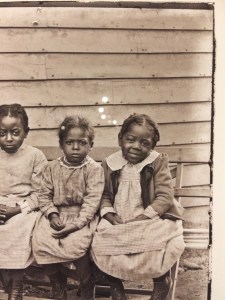
Asakiyume took this photo of Bullard’s photo because she loved sweet-faced Luvenia Ward (right), shown here with her sisters. The photo was printed in 2016 from recently discovered glass slides of Worcester, Mass., photographer William Bullard (1876-1918).

Read Full Post »

There are so many interesting cultures in the world! For example, when I was editor of a magazine about lower-income issues in New England, I heard for the first time about the Karen from Burma (Myanmar). Who? Soon after, I managed to acquire an article on Karen refugees in Waterbury, Connecticut, so I was able to learn something along with my readers.

Recently, I heard of another new-to-me minority, members of which are being resettled in Massachusetts. They are called Mandeans, and their pacifist religious beliefs had subjected them to persecution in Iraq and Iran for millennia.

Here is what Brian MacQuarrie writes about them at the Boston Globe.

“The Mandaeans have found safety and acceptance since they began arriving [in Worcester] in 2008, freely practicing a monotheistic religion that predates Christianity and Islam. But they still do not have a temple — a ‘mandi’ for baptisms, marriages, and birth and death rituals — and whether one is built could determine if they continue to call Worcester home.

” ‘Work is not the anchor, living in an apartment is not an anchor, the mandi is the anchor,’ said Wisam Breegi, a leader of the Mandaean community. …

” ‘It really is a culture that is in danger of disappearing,’ said Marianne Sarkis, an anthropology professor at Clark University. ‘If you don’t have a way of preserving the culture and traditions and even the language’ of Aramaic — what a temple helps provide — ‘it is not going to survive very long.’ …

“ ‘We really don’t have the expertise, the know-how, the connections,’ said Breegi, who also has founded a scientific firm that is developing a low-cost, disposable, neonatal incubator for use in developing countries.

“To help forge the religious connections, Breegi and Sarkis are preparing an application for a nonprofit organization to help raise money for the temple. Worcester Mayor Joseph Petty said in an interview he is willing to help the project where he can.

“ ‘They’re all doing what everyone else is trying to do — working hard and getting their kids a good education.’ …

” ‘It’ll just help make Worcester stronger in the long run,’ Petty said of his city’s embrace of Mandaeans and other immigrants. ‘You can’t build walls between people.’ ”

Worcester held a ceremony of welcome in April that “represented the first time — anywhere, at any time — that Mandaeans had been recognized as a valued, important minority group, Sarkis said.” Wow.

More here.

Photo: Craig F. Walker/Globe Staff
The Kalmashy family (left to right) Lilo, and her husband Mahdi and their daughters and Sura and Sahar, shared lunch at their home in Worcester.

Read Full Post »

I love listening to Worcester-based WICN (jazz radio). Bonnie Johnson had an especially good show yesterday, opening with Cynthia Scott and 3rd, 4th & 5th graders of PS32 in Brooklyn, NY, singing “Dream for One Bright World.”

“There is a new day dawning
“The time is now
“The world is ready for a change …

“Let’s teach out children to care
“To help one another
“And mend broken hearts
“So many children in the world
“Have never had a chance
“Their time has come …

(More lyrics here.)

You can listen to WICN online at wicn.org. Bonnie Johnson’s program is described at Colors of Jazz. “Bonnie Johnson is host of Colors of Jazz on Sunday afternoon from noon-4 pm. If you asked the Worcester native how she found jazz, she would tell you that jazz found her. As an undergraduate student at Howard University in Washington, DC, Ms. Johnson became a fan of the Quiet Storm featured on the college station WHUR-FM. …

“Ms. Johnson appreciates the diversity and the evolution of music. As a self-taught electric bassist, she has enjoyed many years of playing various types of music with her daughter and close friends in a family band. Growing up, she sang in the St. Cecilia Girl Choir at All Saints Worcester. …

“Ms. Johnson holds B.A. in Liberal Studies and M.S. in Communications and Information Management degrees from Bay Path College. She believes the future of jazz is in our children, stating, ‘Music and the arts is one area that gives young people an outlet and release of creative energy. While there are many children exposed to music through lessons and attending live performances, there are too many more that are not.’ One of Johnson’s primary goals as host at WICN is to reach youth in creative ways through community engagement.”

That’s something to think about on Martin Luther King’s birthday — and maybe to act on, too.

Bonnie Johnson, host of WICN radio’s Colors of Jazz 

Read Full Post »

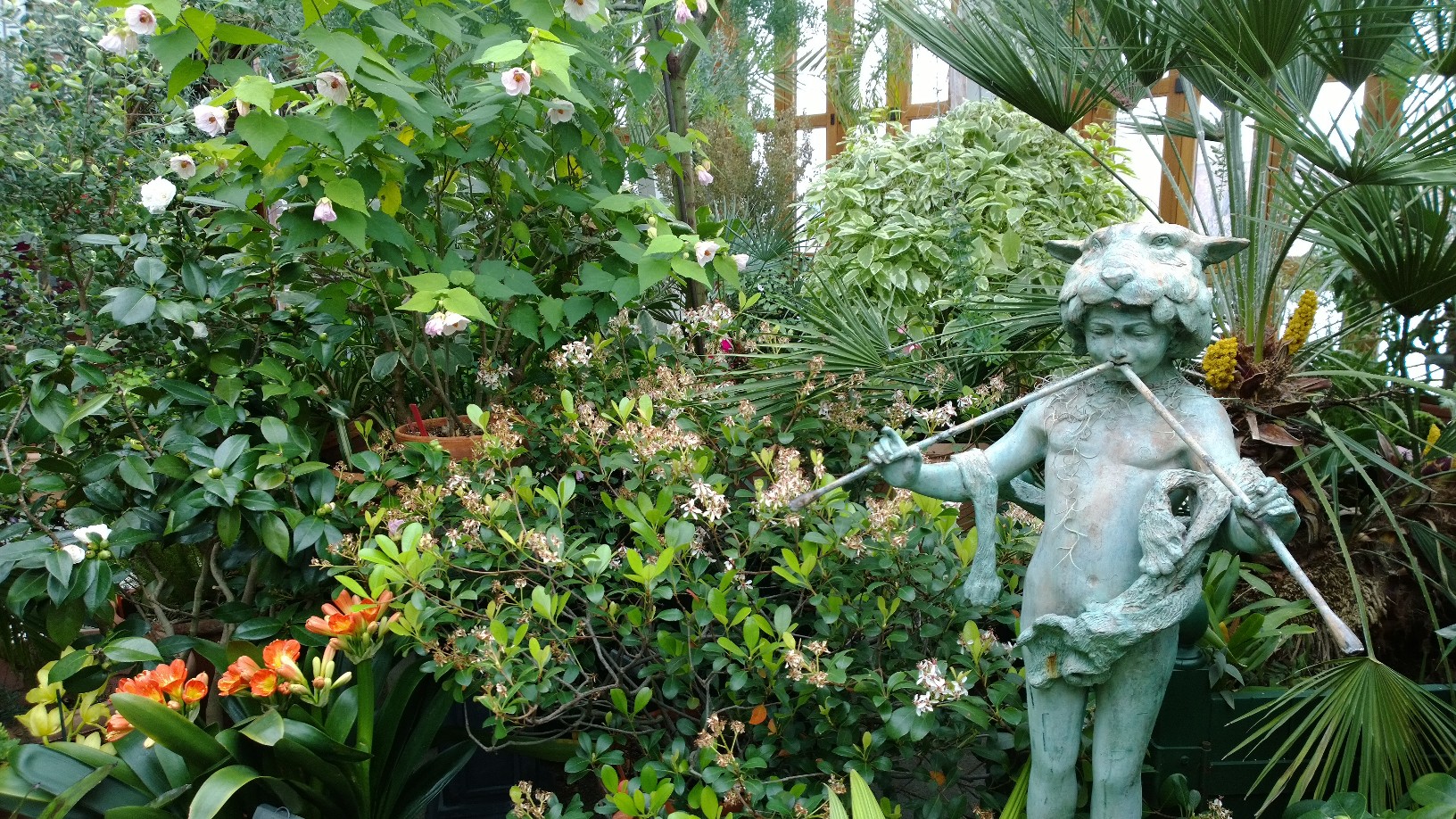
With snow and ice outside every window, and more expected tomorrow, we decided to take a little excursion to Tower Hill Botanical Garden, near Worcester.

The camellia show was the original impetus, but the warm, warm orangerie was an added treat, as was the Lemon House and the piano music of Joe Blanchard.

I made a point of memorizing the names of several plants that keep turning up on MisterSmartyPlants, where I go there to help John identify flowers that people post. It’s a bit of a challenge as the plants come from all over the world and are often not familiar to me. (I hope you’ll consider identifying some, here.)

Here are a few pictures from today’s outing.

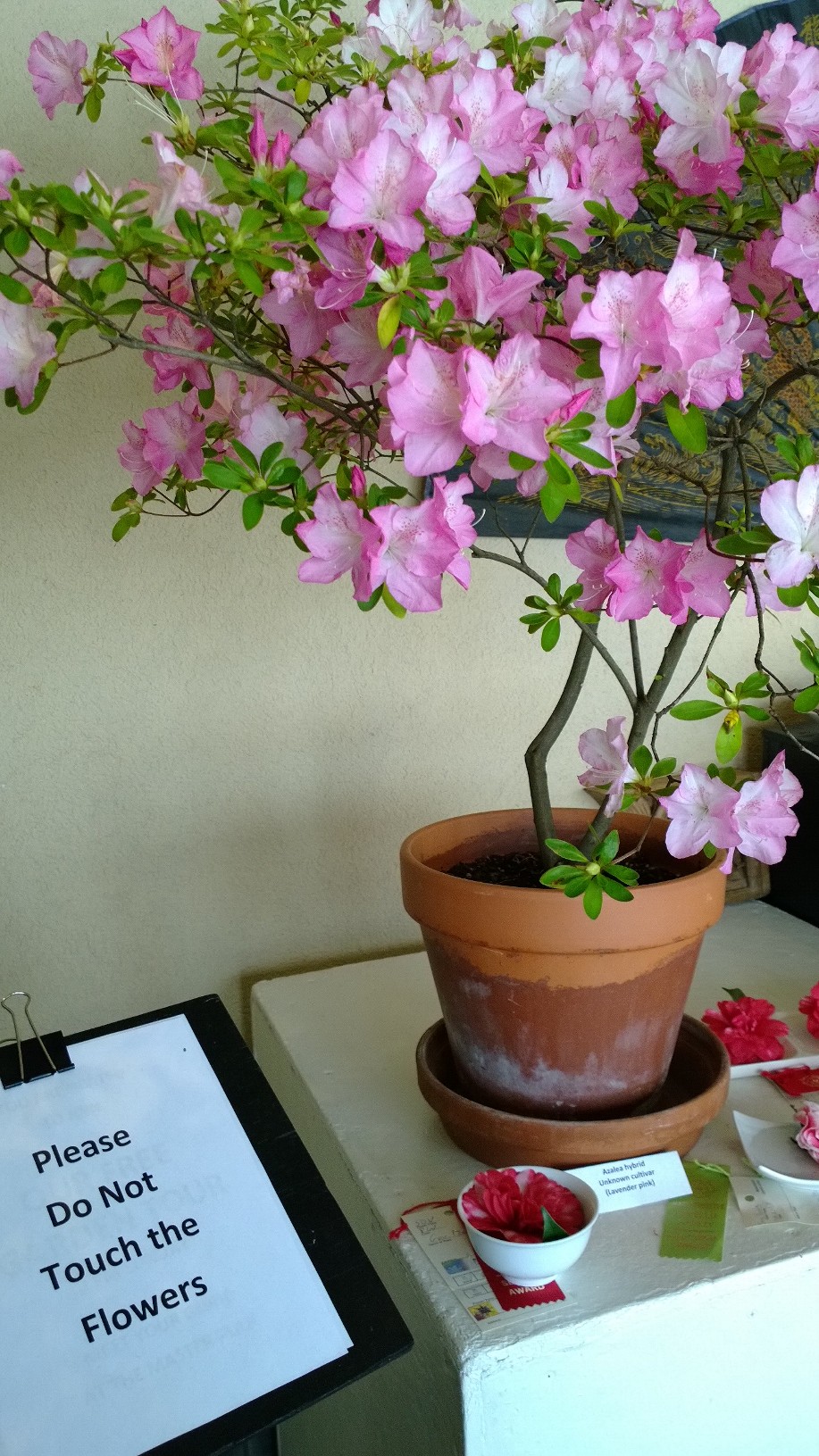
030214-tower-hill-azalea

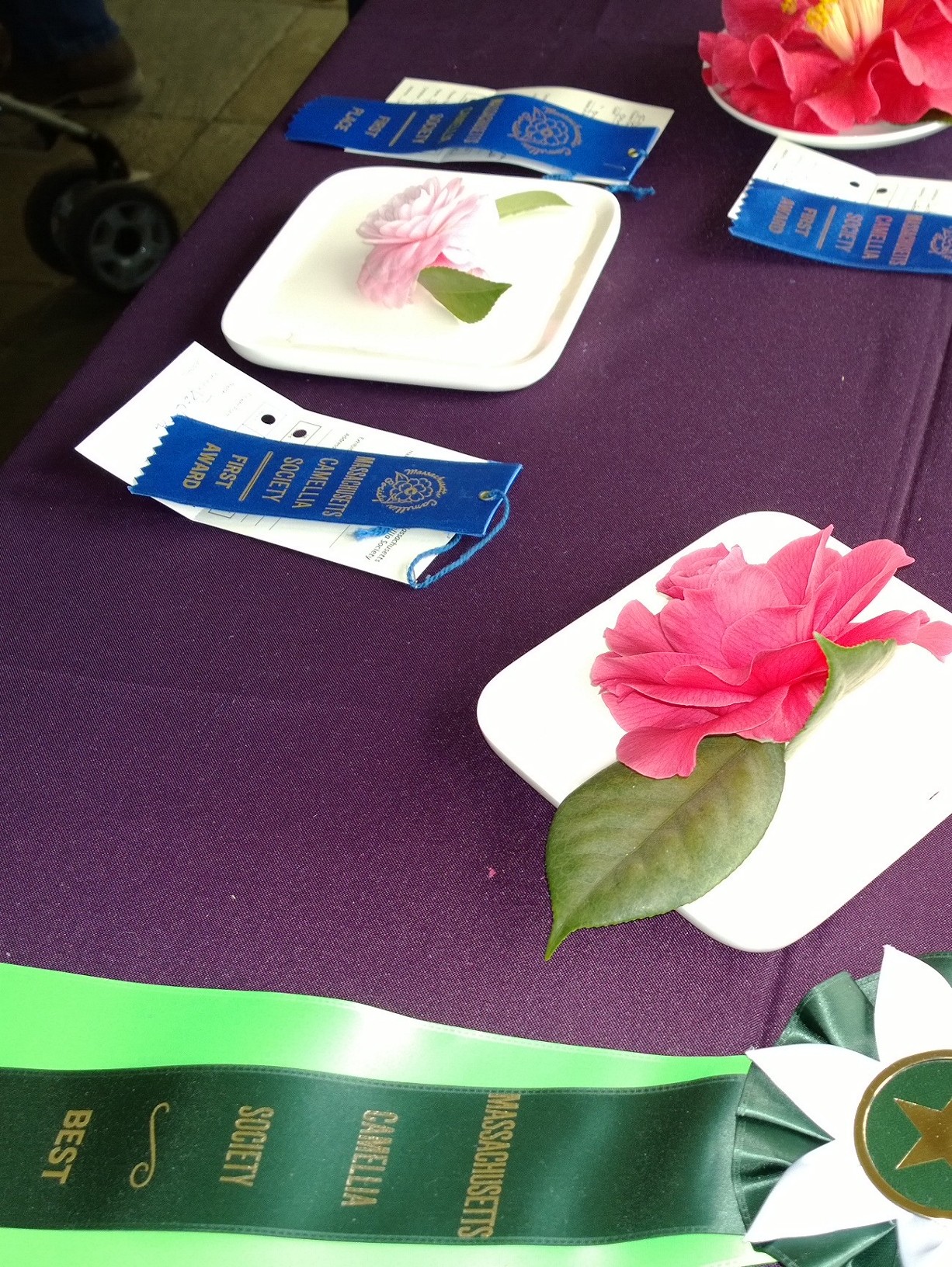
030214-tower-hill-camellia-competition

030214-tower-hill-orangerie

Read Full Post »

Listening to the lone WICN radio host early Saturday morning reminded me of when I was a WGMC radio host in Greece, New York — until Suzanne was six months old and starting to reach over the baby seat to grab the turntable.

I was never sure if anyone was out there listening, but I liked doing it anyway.

Kind of like blogging.

At 5:30 a.m., the WICN host was playing a series of mellow tunes. He seemed to be enjoying the music, which means he didn’t talk much. I appreciate that kind of host so much more than the ones who love to hear themselves talk.

WICN, “Jazz Plus,  for New England,” is a rare boon to jazz lovers. Having been to the studio recently to donate school instruments, I couldn’t help thinking that the hours before dawn on a Saturday must be pretty bleak and lonely in that industrial part of Worcester.

The only thing I was able learn about the host after Googling around was that his last name is Chandler. It was nice to think of Mr. Chandler enjoying the music in that barren neighborhood before 6 a.m., and I wish I had told him that someone was listening and appreciated the way he rode the records, transitioning so smoothly.

You can listen to WICN online, here, if you don’t live near Worcester. Send the station an e-mail to tell a host you’re listening. It’s a small outfit. I’m still waiting to hear back from my own e-mail.

If you are free during a weekday, be sure to catch a live performance by Pamela Hines and Arnie Krakowsky (below) on January 29.

Update 1/27/14: WICN General Manager Gerry Weston e-mails that the early morning host was “Osay Chandler, he’s out of Pittsburgh.”

Photo: WICN
Join pianist Pamela Hines and her special guest on January 29 at 2 p.m. Arnie Krakowsky, a  professional tenor saxophone jazz musician, will perform live with Hines in the WICN studio.

Read Full Post »

In Worcester attending a conference last Wednesday, I worried. Maybe I shouldn’t park my car in the shady part of the lot where there are no lines for parking. I took a chance. When I put the key in the lock at the end of the day, a voice started shouting over and over, “Hey!” I hoped the voice wasn’t addressing me.

“Hey! Hey! Open the window. You parked in front of my gate. I live here. That’s my house. I drive my car in that gate. See that gate? I had to park my car in the street because you’re in front of my gate. All my things were stolen. I had a thousand dollars of stuff. It was all stolen.”

Me: Oh, that’s terrible. I’m so sorry. I saw the fence in front. I’m so sorry. I didn’t see your gate.

“I had a thousand dollars of stuff. They broke in. They took everything. Electronic equipment. Everything. I have the police report. You want to see the police report? I didn’t have you towed.  I had to park in the street.  I live here. See that house. That’s my house. I swing my wife in the hammock. Look. Back up a little. Back up a little more. See that? That’s my hammock. I swing my wife in the hammock.”

Me: It’s very nice. Very colorful. Where’s it from?

“It’s from El Salvador. My wife and I are from Puerto Rico. It’s from the guy who had the house. I live here. I pay all my bills on time. I’m an alcoholic. But I’m responsible. I pay all my bills on time. Look, I have this dollar. I just want to buy a beer, but I don’t have any money. You can give me anything.”

Me: Here’s a dollar. But it’s not good to be an alcoholic. You should go to AA.

“That’s a good idea! Where is it?”

Me: I don’t live in Worcester. You should ask someone in Worcester where there’s an AA.

“Where do you live? I’ll write it down. I’m gonna call you.”

Me: Oh, I live east. Near Boston.

“In Salem? In Salem where the witches are?

Me: Yes. With the witches.

“You should come back. You can park your car any time. I’ll watch it for you.”

Me: You really should have me towed.

“No, no, no. I’ll watch it for you!”

Read Full Post »