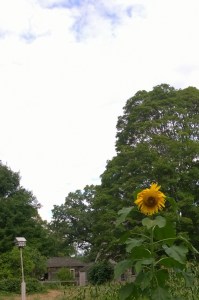
This healthy sunflower is at the Old Manse in Concord. The Trustees of Reservations always plant a big garden there, with pumpkins growing between the corn rows.
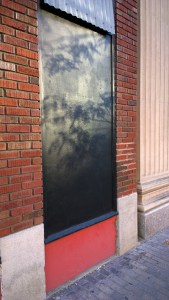
The lantern-like seed pods in the next photo embellish a tree beside the Providence River. The leaf shadows on brick were spotted not far away, along a grubby Providence sidewalk.
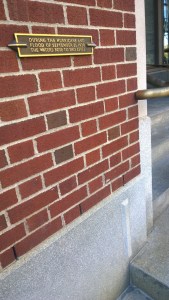
Can you read the plaque on the Providence Journal building? It shows the crazy height that the water reached in the infamous Hurricane of ’38. Golly!
My husband says the barrier at Fox Point will prevent flooding like that from ever happening again. I don’t know. Were the engineers aware of global warming when they started construction in 1960?
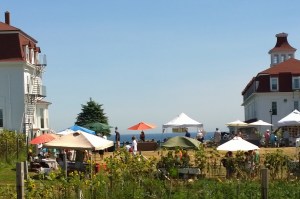
New Shoreham (in the next picture) was also battered in the hurricane of ’38. In fact, the storm wiped out the island economy on land and sea. The fishermen and farmers were not insured against such a catastrophe. No wonder people there remember that hurricane!
One thing that is different since 1938, as I learned in a splendid book called A Wind to Shake the World, communities in the path of a hurricane now get plenty of warning. But in 1938, when houses on Long Island, New York, were washing out to sea, no one up north knew it.
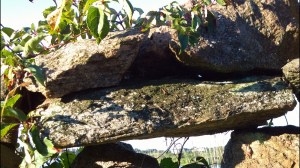
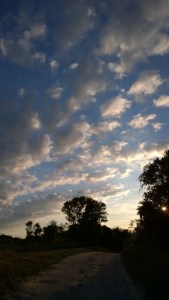
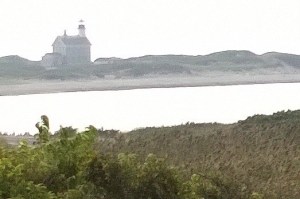
A few other shots of New Shoreham: a Wednesday farmers market, the Little Free Library, a view through a stone wall, a rumpled morning sky, and the North Light.




 Suzanne's Mom's Blog
The 1938 hurricane made the center of the town of Ware (next to Belchertown, to the east) an island (rising waters of the river). Supplies had to be brought in by helicopter.
LikeLike
Wow. When a hurricane is remembered by generations who weren’t even alive at the time, you know it was a serious hurricane.
LikeLike
I really like the horizontal lines and changing colors in the photo of North Light! The hurricane that affected people up here most, recently, was Irene. There’s a place where someone marked a concrete wall, with paint, to mark the high water mark. Like your example, it’s almost impossible to fathom!
LikeLike
I’m convinced something like Noah’s flood really happened and people saw animals climbing onto high ground and anything that floated. Perhaps a few that mate for life were observed in twosomes.
LikeLike