Feeds:
Posts
Comments

Posts Tagged ‘sunflower’

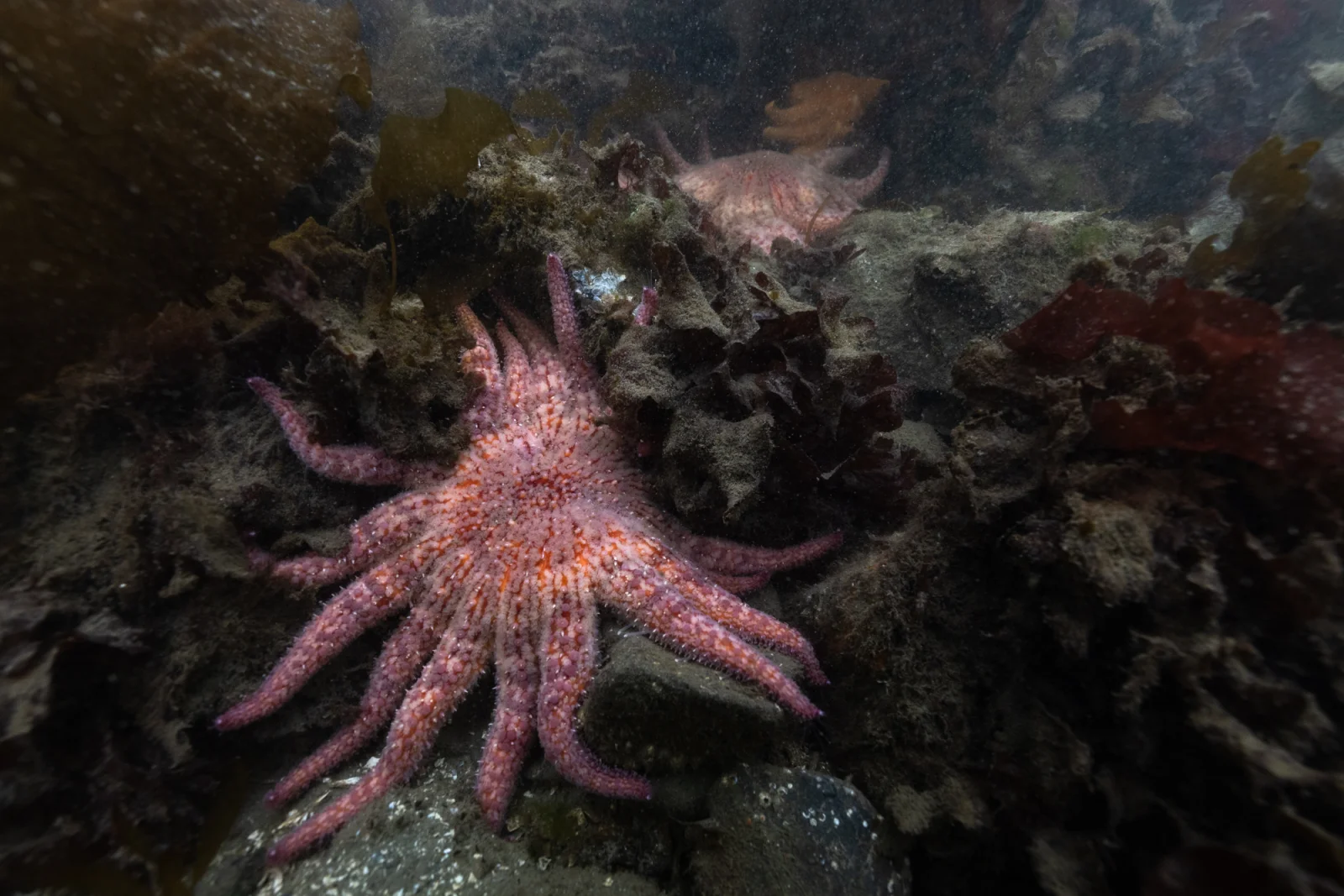
Photo: Jennifer Adler.
Three-year-old sunflower stars explore the kelp forest for the first time. They come in a rainbow of colors but are all the same species.

The kind of starfish or sea star I recall seeing as a child on Fire Island is the echinaster serpentarius, I remember how after a big storm they would wash up on the shore by the thousands. We children in our ignorance would collect handfuls and dry them out at home. We imagined there were plenty more in the sea.

Now we know that sea stars — and their habitat — are in grave danger. Today’s article explains more,

John Ryan writes at National Public Radio, “On a spring morning so blustery that the National Weather Service issued a small craft advisory, a Samish Indian Nation research boat, called the Chinook (Yómech), set out from Anacortes, Washington, just east of the San Juan Islands.

“A team of divers crammed into the cabin as the small craft bounced and slammed across Rosario Strait. They were on their way to pick up precious cargo: 20 endangered sunflower stars, raised by hand in a lab at Friday Harbor on San Juan Island.

“Sunflower stars are one of the Pacific Ocean’s most endangered sea creatures. For the past year, University of Washington researchers have worked closely with the Samish Indian Nation to bring this 24-armed creature back from the brink of extinction after a vast underwater pandemic nearly wiped it out.

“The choppy waters of Rosario Strait were only the latest obstacle in the tribe’s effort to bring sunflower stars back to traditional Samish territory.

” ‘I’ve had dreams about this day. I’ve had nightmares about this day,’ said Samish Nation biologist Sam Strauss. ‘Many things have already gone wrong that I didn’t anticipate, and I’m sure there will be a couple more.’

“The stars were supposed to be turned loose [October 2025]. Then divers found the deadly sea-star wasting disease — the cause of the species’ near-annihilation — surging throughout the San Juans. They called off the release. Six months later, it was back on.

“Sunflower stars can grow more than 3 feet wide and are the fastest of all sea stars. They cruise the seabed at up to 5 feet per minute in search of sea urchins or sea cucumbers to grab for a meal.

“They’re considered a keystone species, whose presence or absence can reshape a whole ecosystem. But the speedy predators have been unable to outrun a wasting disease that’s killed billions of sea stars. It took researchers a decade to pinpoint the Vibrio bacteria behind the disease that dissolved sea stars into goo. Researchers say ocean heat waves, amplified by climate change, helped the bacteria grow.

” ‘We definitely have lost a lot of sea stars,’ University of Washington research scientist Jason Hodin said. “We’ve lost 90% of our sunflower stars, we think.’

“Hodin runs the sea star lab at the university’s Friday Harbor Laboratories. ‘This was a really, really big outbreak,’ Hodin. “It spread from northern Mexico all the way to Alaska, affecting dozens and dozens of sea star species.’ No species was harder hit than the sunflower star.

“International scientists declared the once-common species critically endangered. …

“Inside the sea star lab, tanks of filtered seawater harbor hundreds of sunflower stars, from microscopic larvae up to adults as big as stop signs.

“The researchers have figured out by trial and error how to breed these little-studied animals. They’ve also cured some of them when wasting disease got into the lab. …

“Sunflower stars were never a big part of Samish culture, unlike salmon. … But the stars have played a supporting role in Samish culture by protecting kelp. Many kelp forests on the West Coast have been stripped bare by sea urchins. Sunflower stars prey on urchins, which protects kelp. …

“A dozen labs up and down the West Coast are currently raising sunflower stars, with small releases planned later this year in California and Oregon. It is unlikely biologists will ever raise anything close to the 5 billion sunflower stars lost to wasting disease.

“But they hope to raise enough of them to point the species, and kelp forests, toward recovery.

More details at NPR, here. No paywall.
Read Full Post »

080620-sunflower-in-community-garden

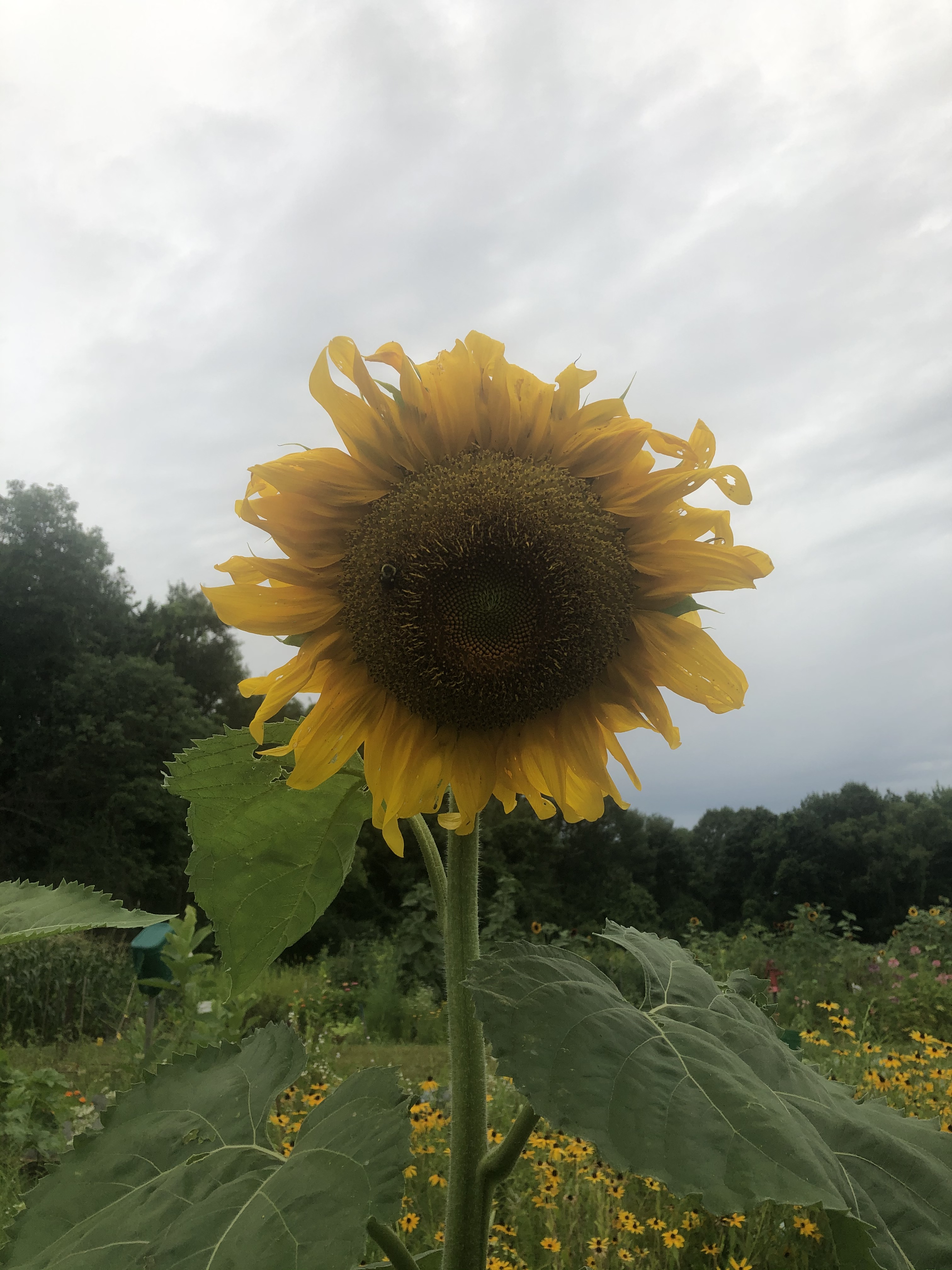
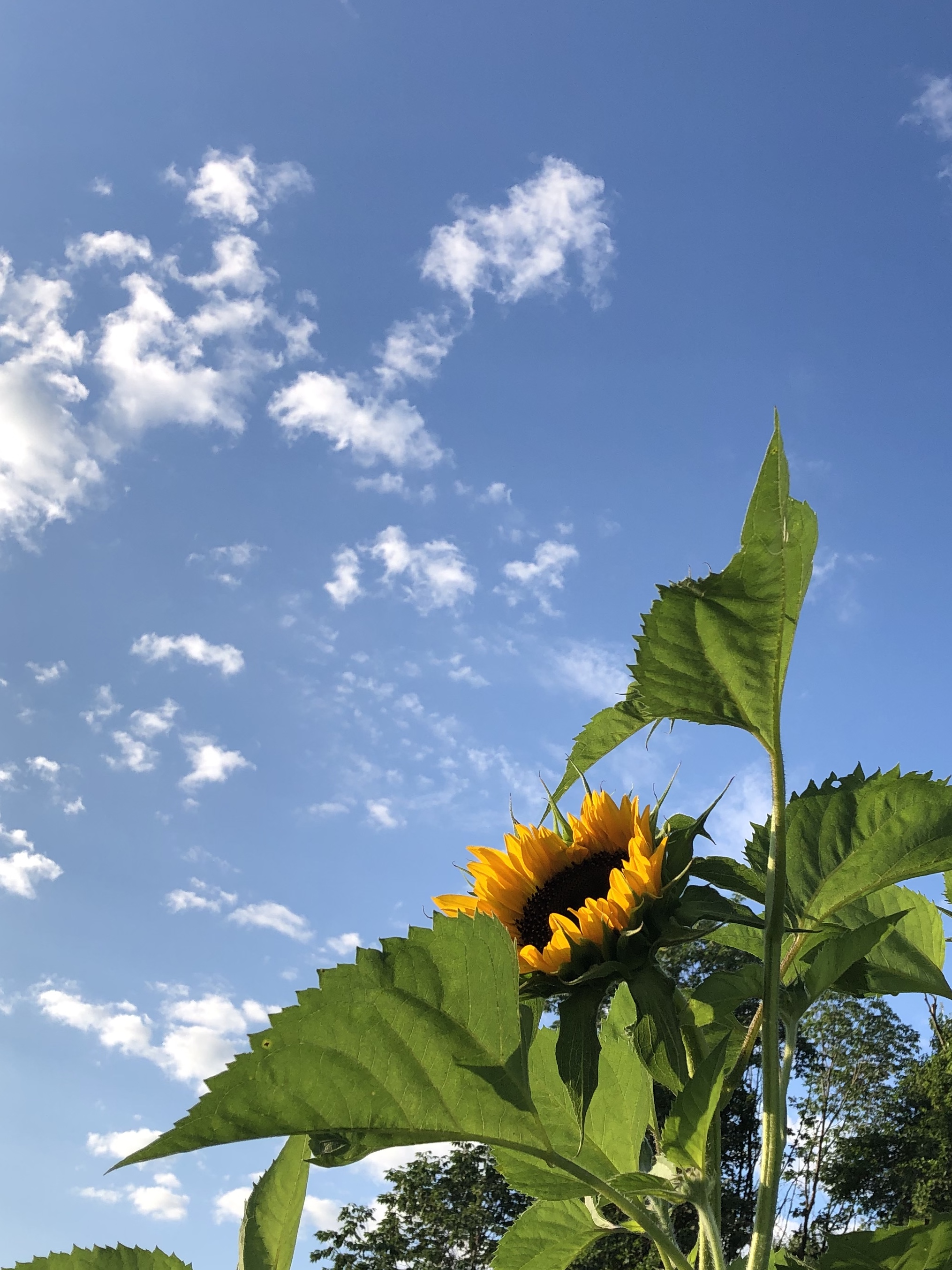
Sunflowers are wonderful on gray days or sunny, but they seem happiest on sunny days. Gardeners in the local community garden plant a lot of sunflowers, probably to keep the birds busy and away from other plants.

I took the second sunflower photo on a gray day when I happened to notice how prettily this lady’s hair was arranged around her face. I haven’t been to my hairdresser for many moons. Although I’m concerned for her and her coworkers, who need to make a living, I’m still too afraid to go in buildings where coronavirus droplets might linger in the air. I’m hoping my hair ends up with a sunflower naturalness — but a scarecrow look seems more likely.

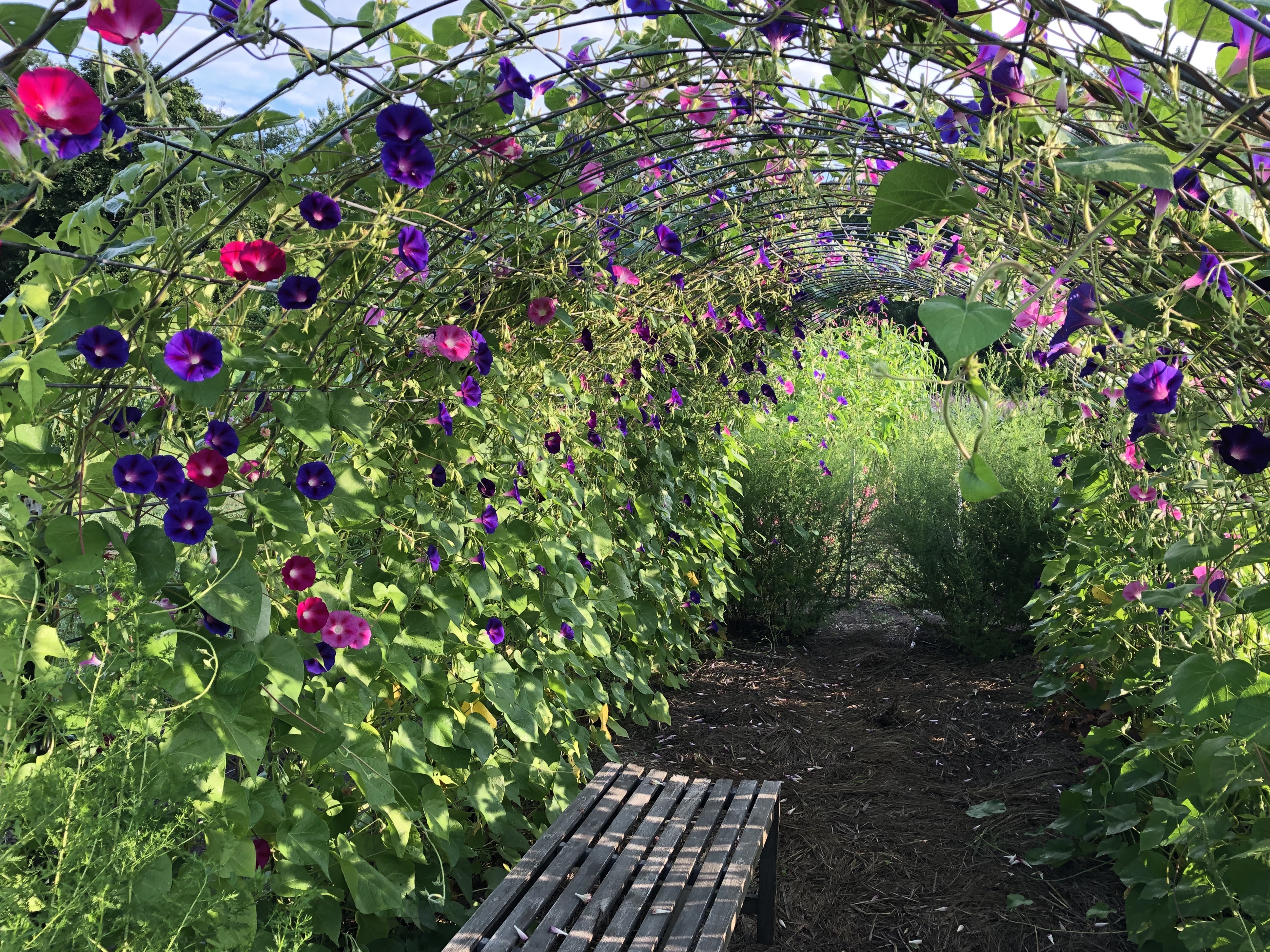
Going deeper into the garden to capture the first photo, I noticed an arbor I hadn’t seen before. All Morning Glories!

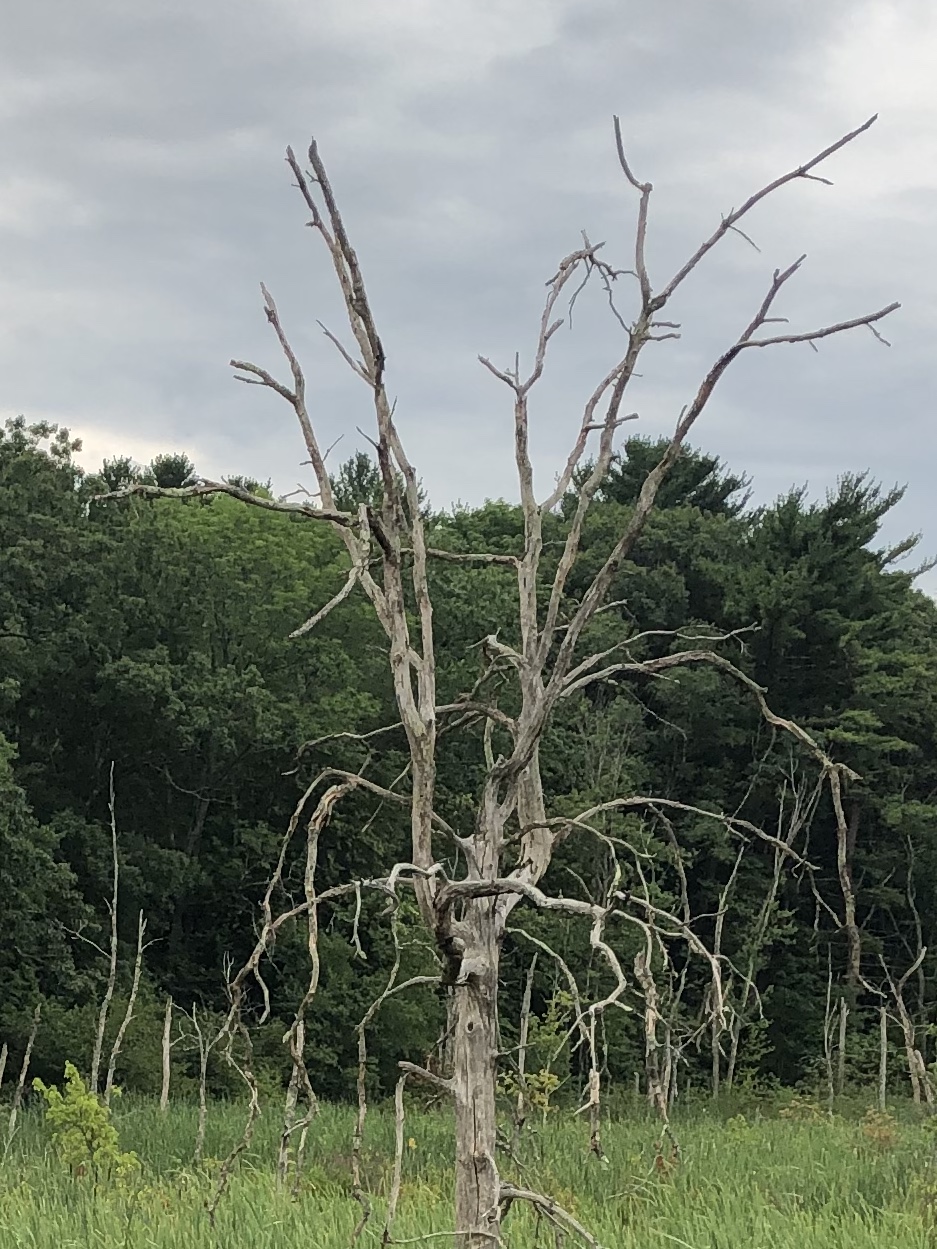
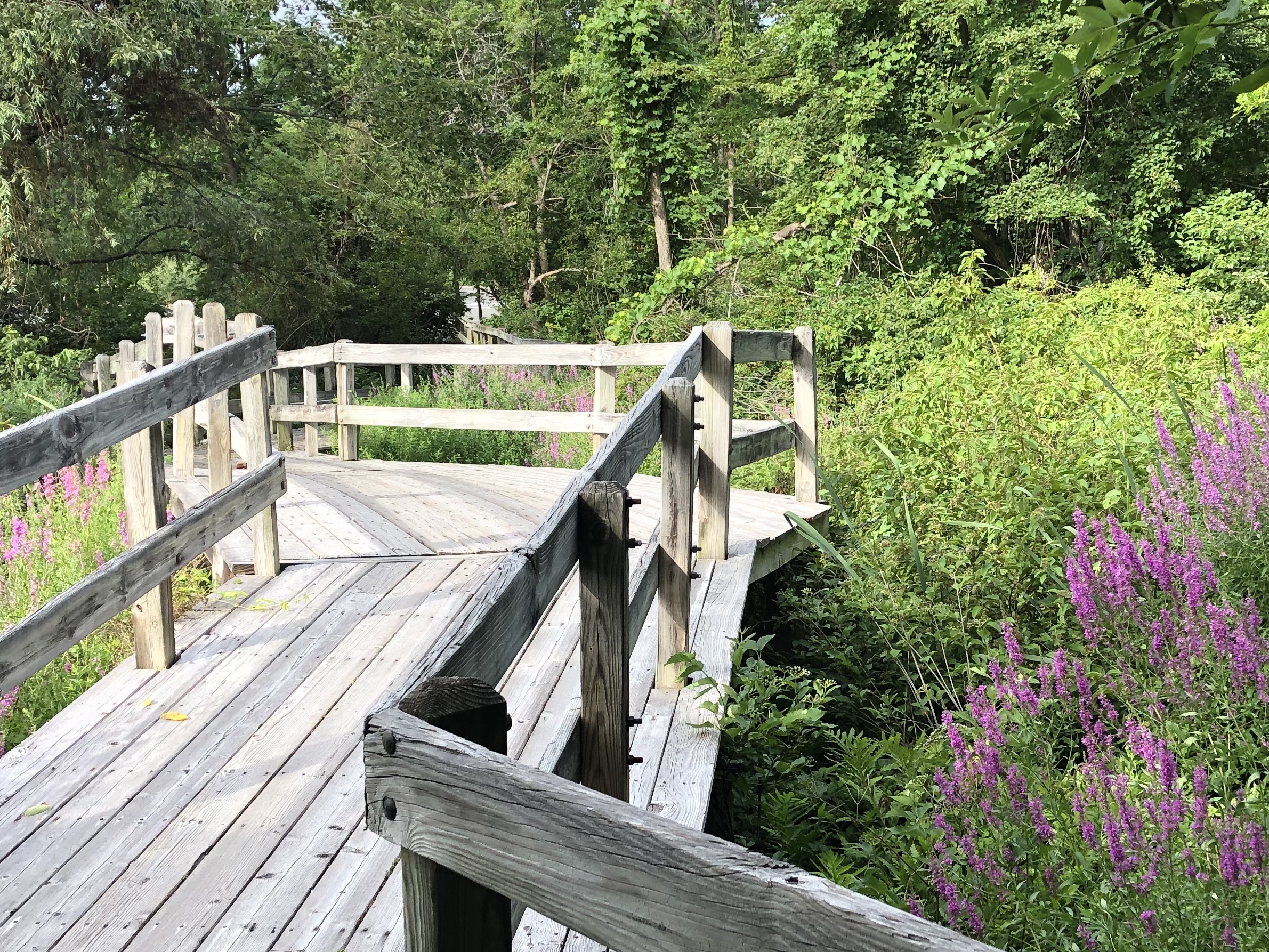
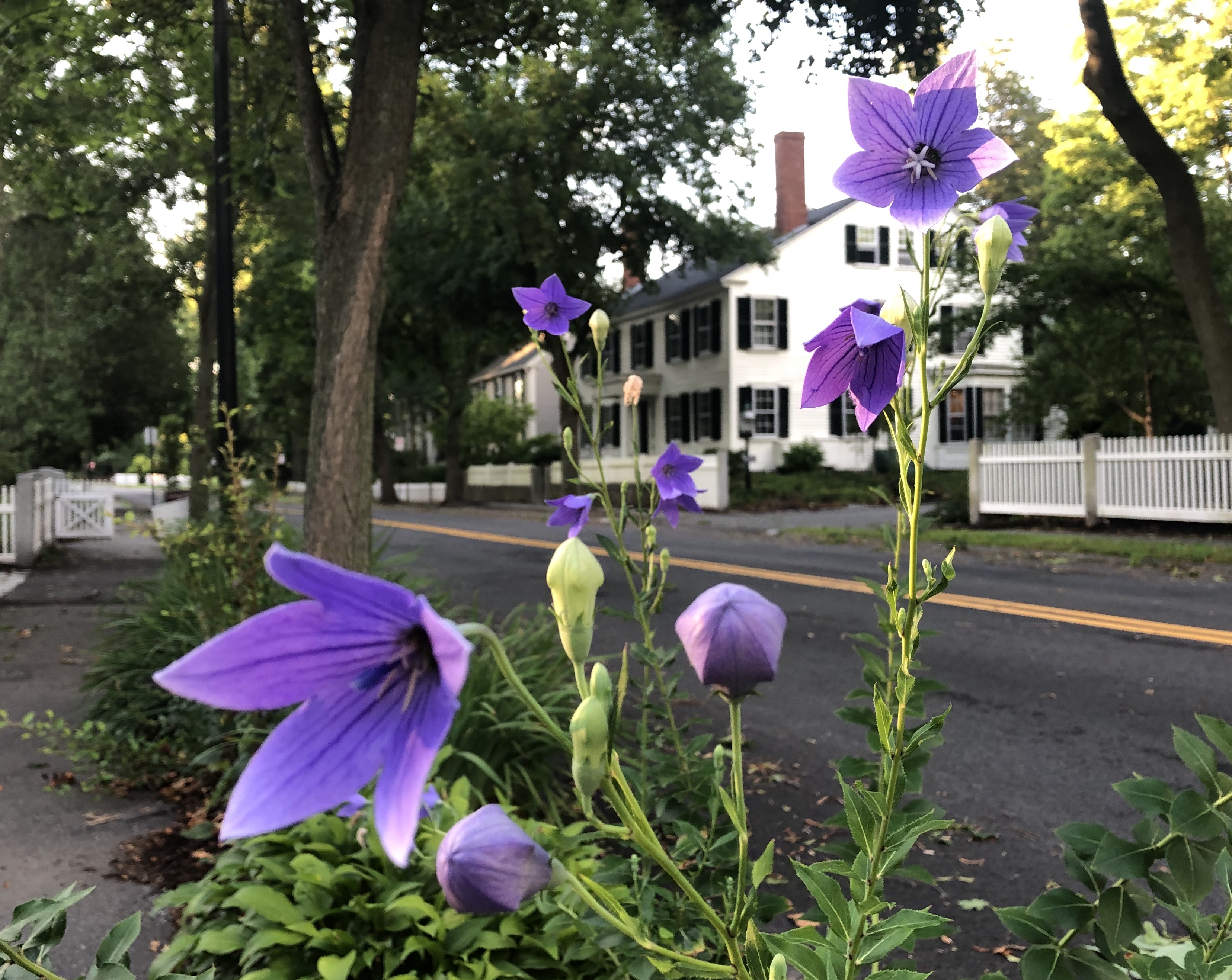
In other walks around town, I was drawn to a stark tree skeleton in a quiet swamp and Purple Loosestrife crowding around a footbridge. The Balloon Flower (or Japanese Bellflower) I suddenly started noticing in local yards after studying a painting on a calendar that a friend in Hokkaido sends me every year. I had never zeroed in on those balloon-like buds before.

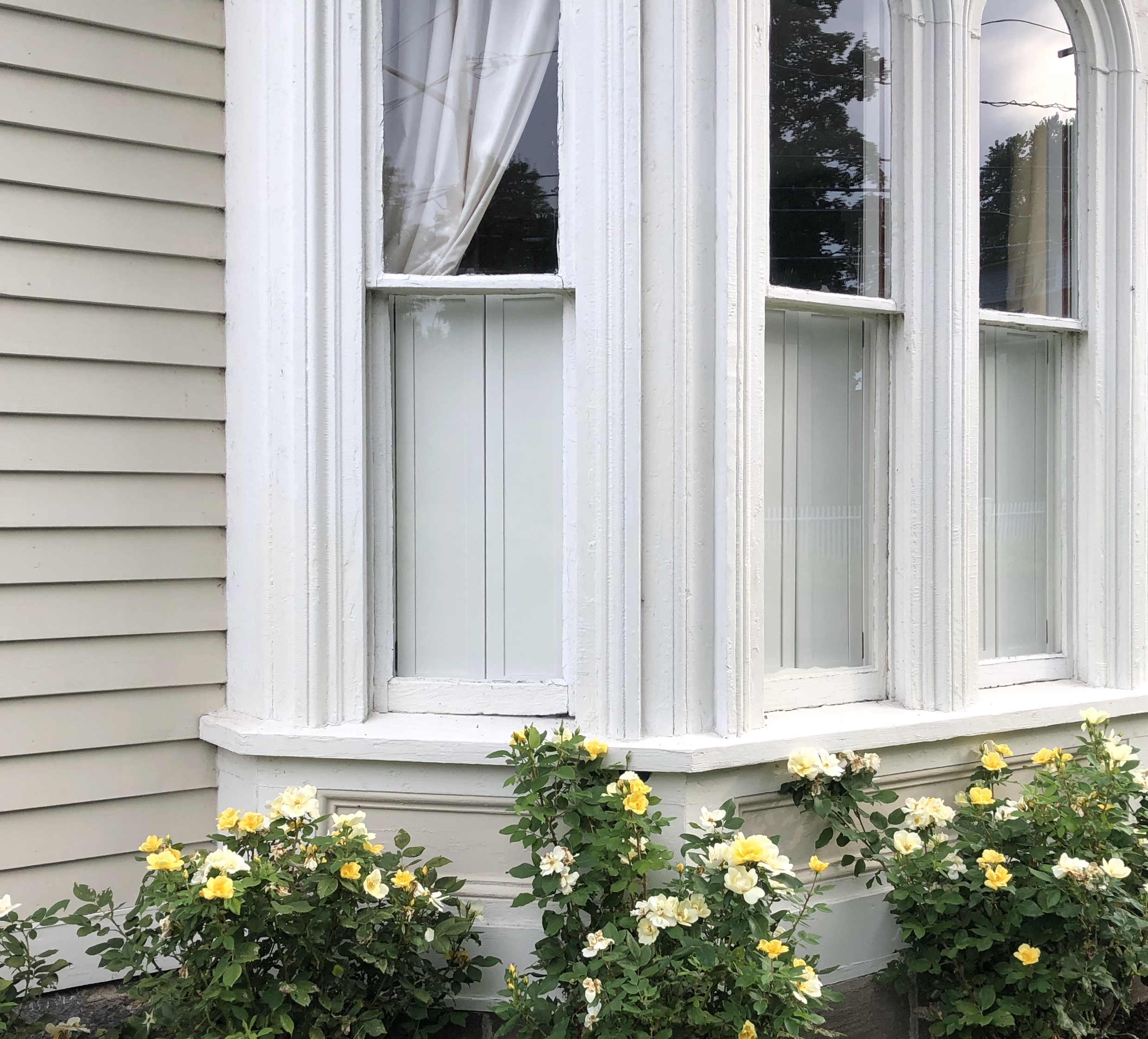
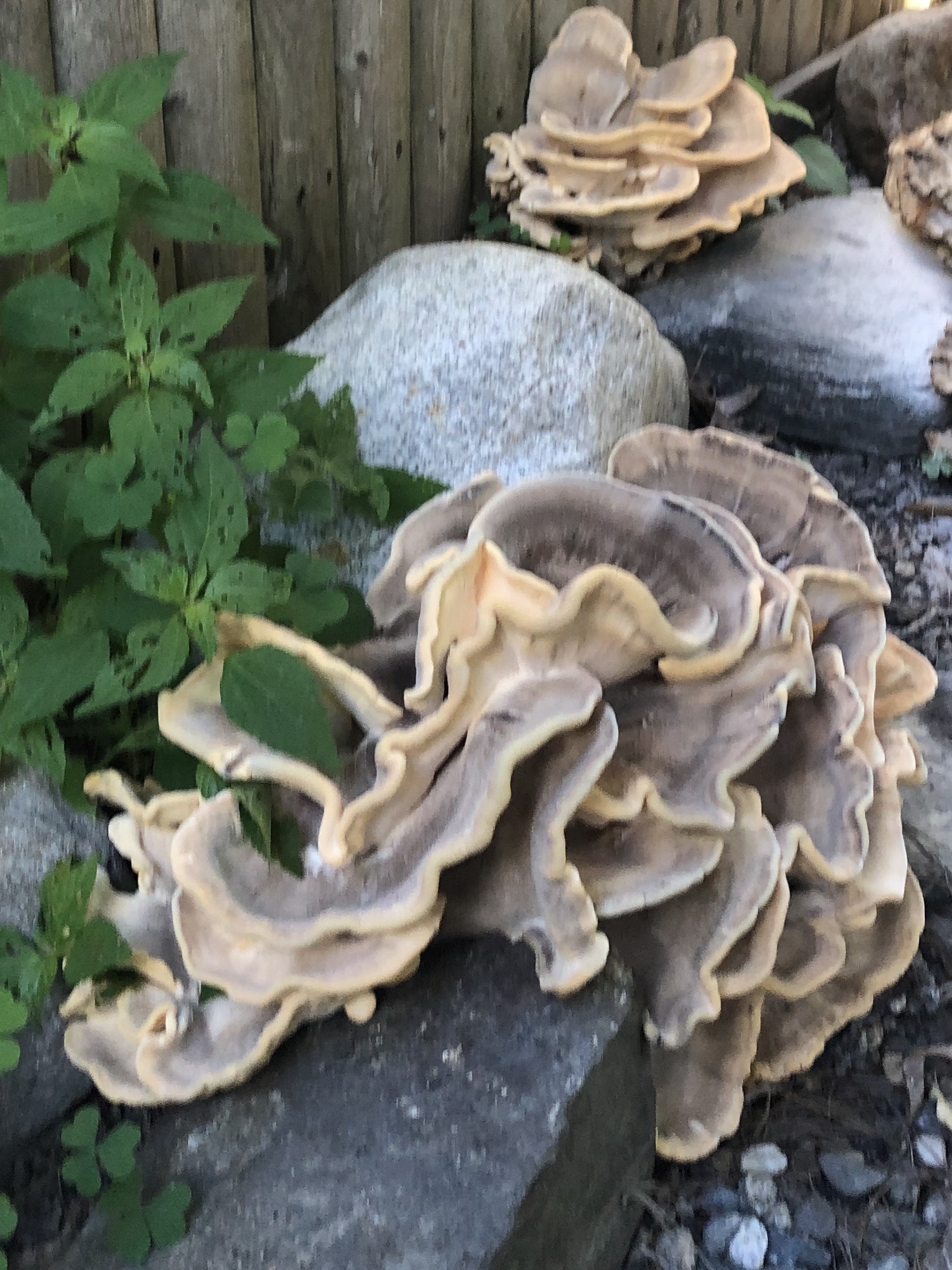
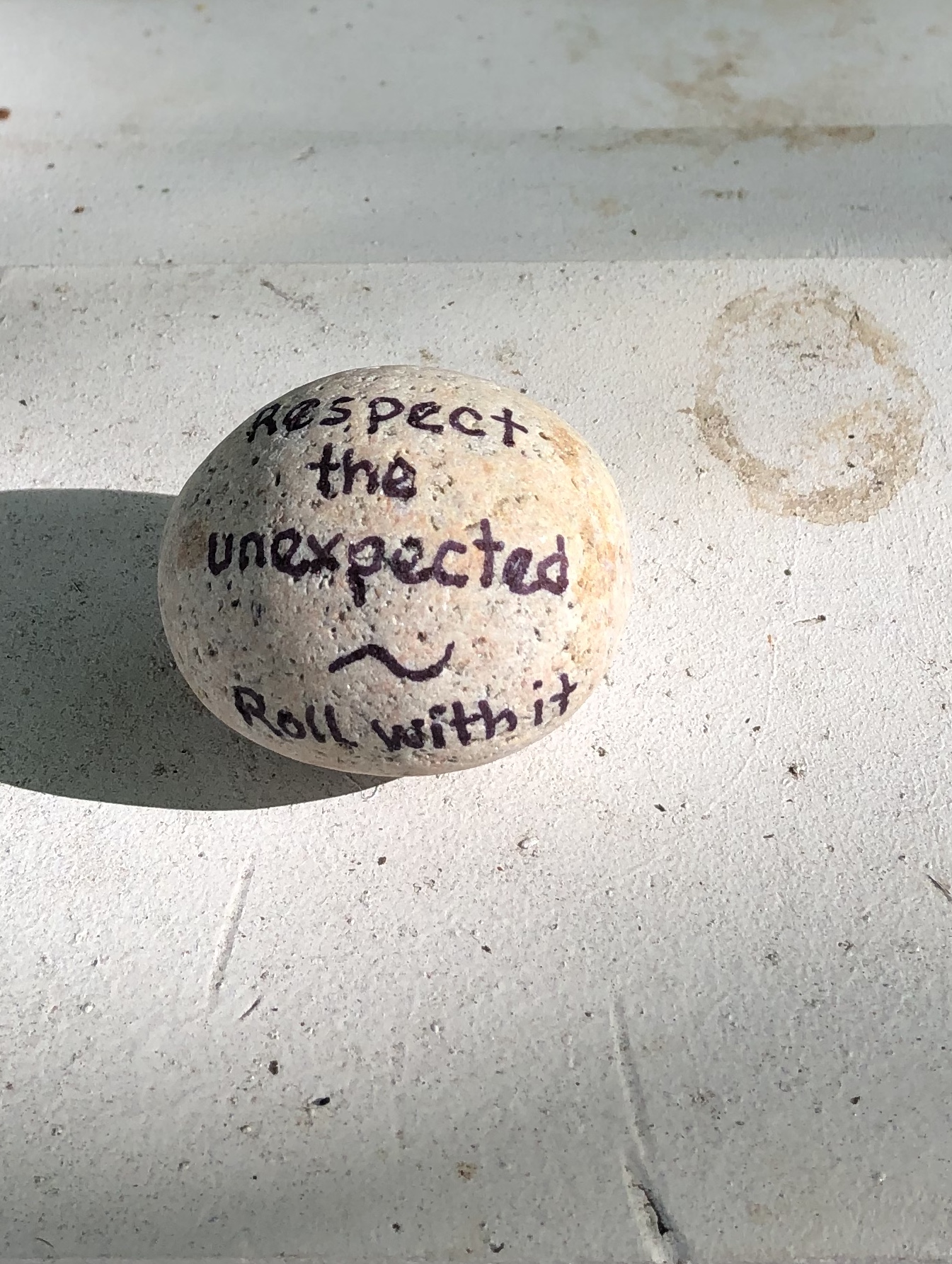
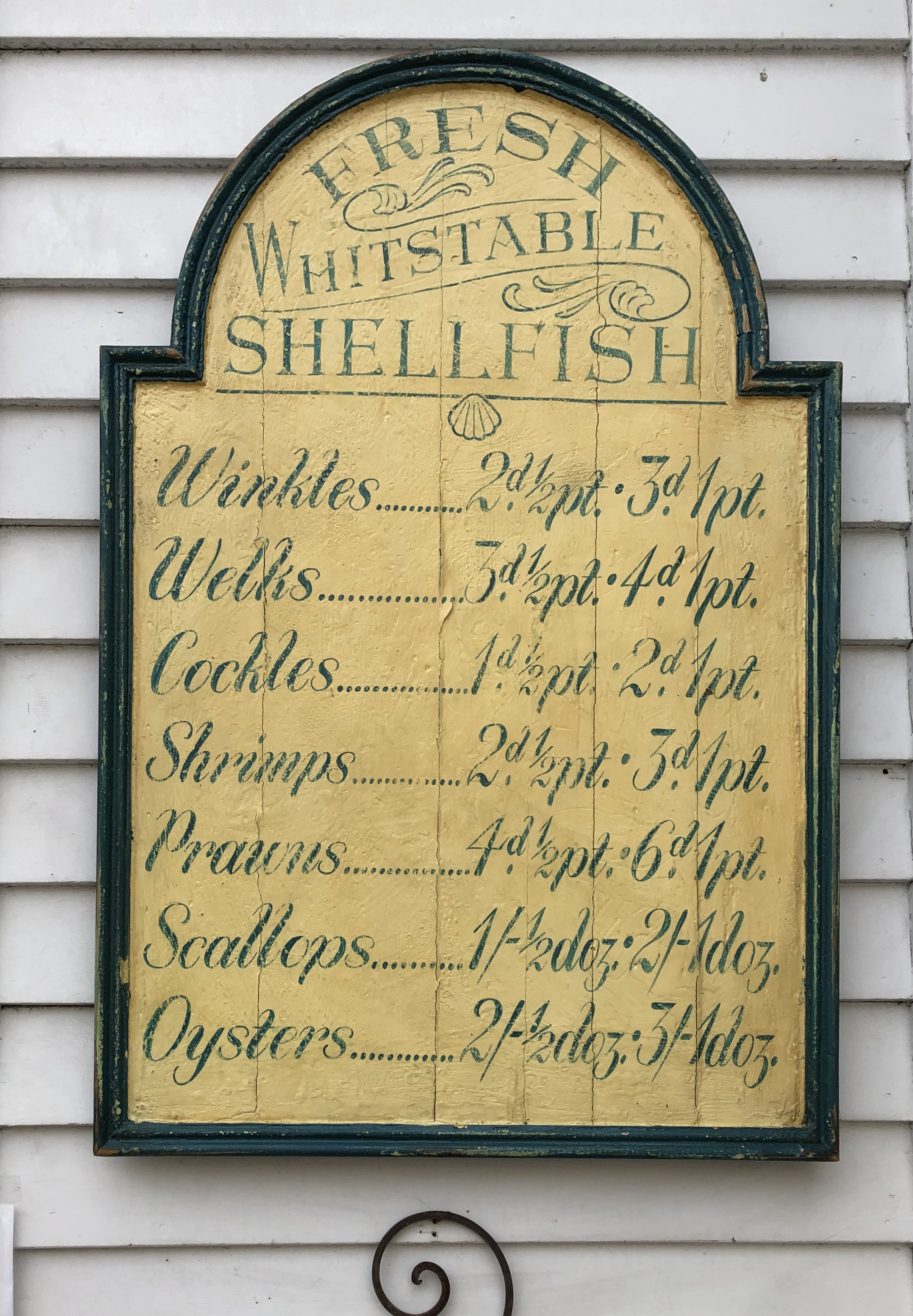
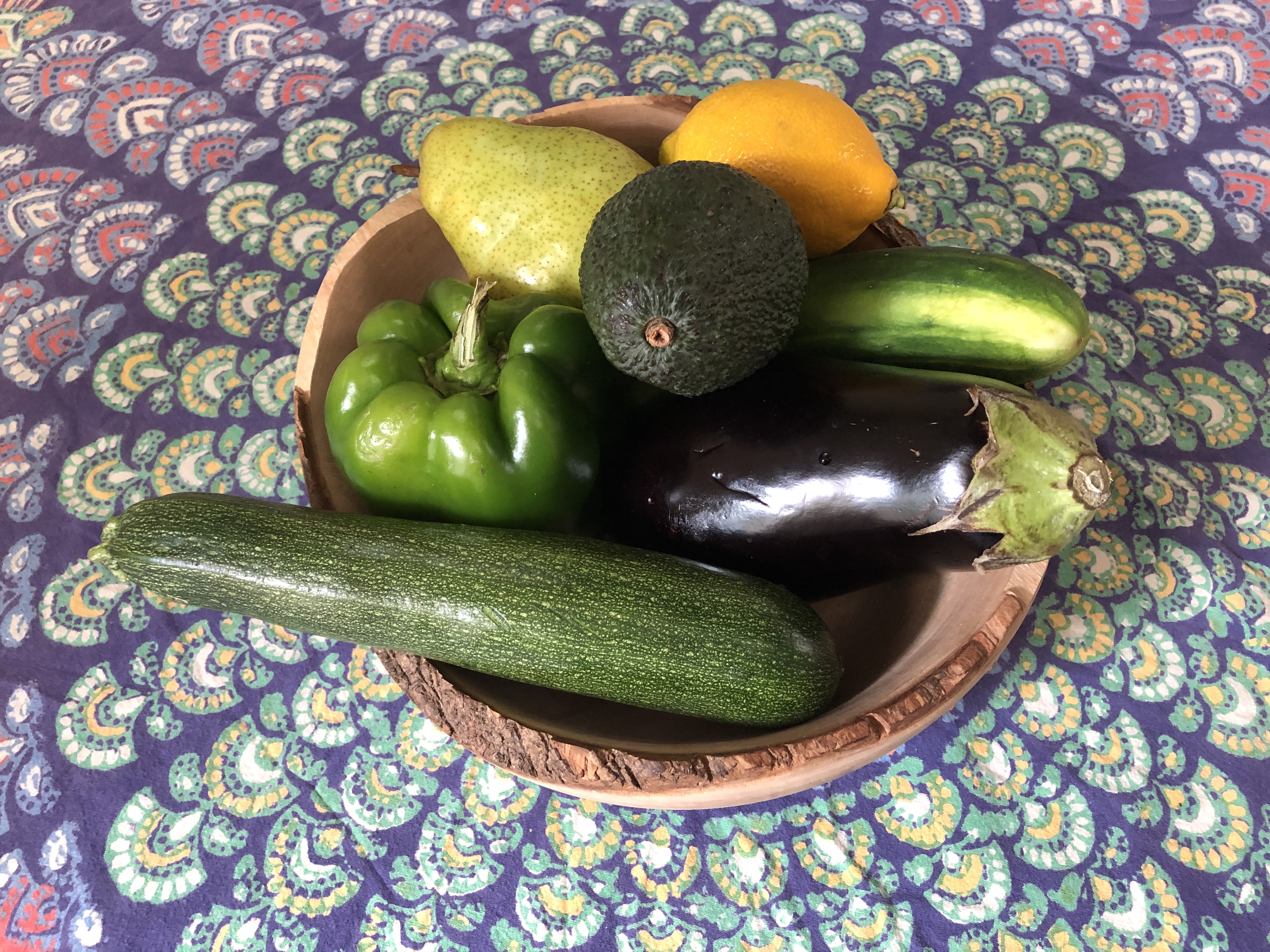
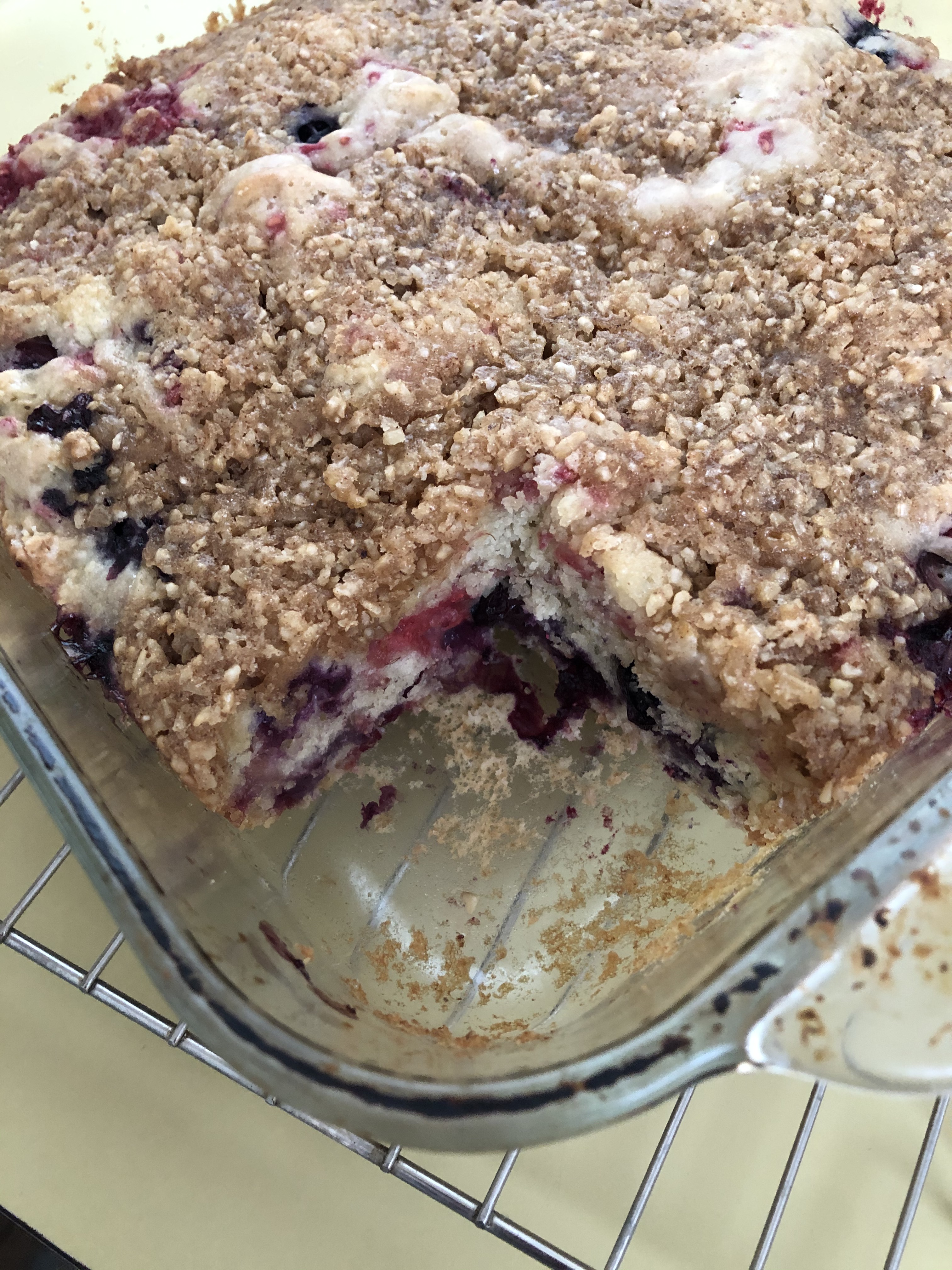
Next are yellow roses, a bizarre fungus, and good advice on a small, wise stone. The old seafood sign was outside an antique shop. I’m also sharing a picture of produce that the grocery store delivered the other day, and a blueberry-raspberry cake I made for our very quiet 50th anniversary.

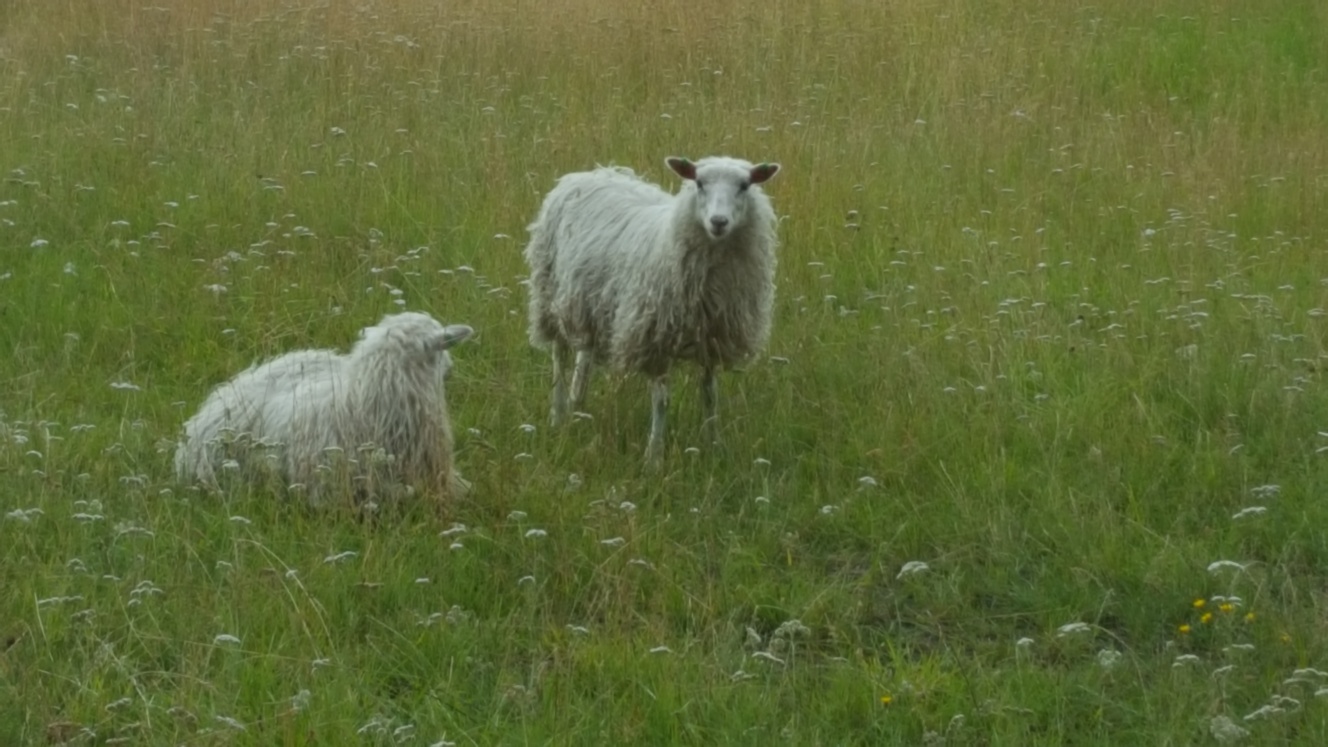
The sheep were sent to me by Stuga40, who sees many wonders on her walks in Stockholm, a city that knows the value of nature.

080420-sunflower-on-gray-day

080620-arbor-in-community-garden

073020-wetlands-Cambridge-Turnpike

073120-loosestrife-by-bridge

080520-balloon-or-Japanese-bell-flower

073120-yellow-roses

072920-mystery-fungus

073120-respect-the-unexpected

073020-antique-seafood-sign073020-green-still-life073120-very-berry-cake

20200729-sheep-in-Skogen-Sweden


Read Full Post »

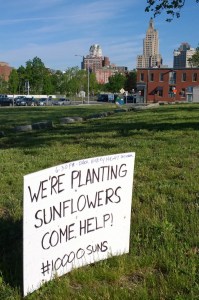
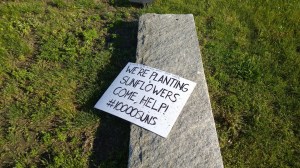
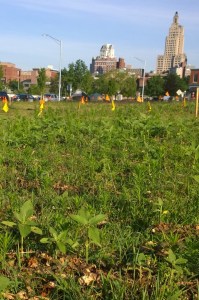
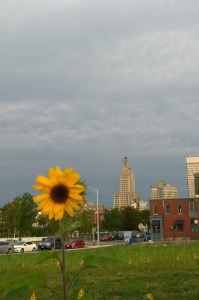
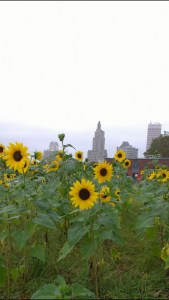
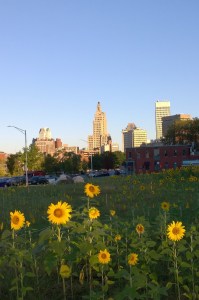
For the longest time, it looked like nothing at all, this art installation of 10,000 sunflowers where route 195 once polluted the soil.
Adam E. Anderson, the brains behind the community-building project, writes on his website, “Ten Thousand Suns is a summer-long botanical performance in which over 10,000 sunflower seeds have been planted and being nurtured over the course of the summer months, on land that until recently sat under a highway, with high compaction, low-organic material, and embedded with toxicity.  …
“Rather than using high maintenance and energy intensive large swaths of turf grass, the installation uses the bio-accumulating (removes toxins) and habitat creating properties of Helioanthus (aka, Sunflower) planted in rows in a series of large circles, leaving paths in-between for intimate exploration.

“The project will create a spontaneous and unique cultural identity for the citizens of Providence and its visitors during the summer months.”

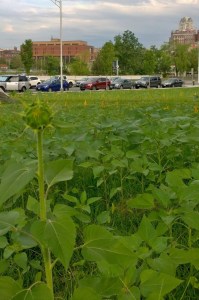
With little rain all summer, the project looked like a hopeless cause for many weeks. Until it didn’t.

In celebration of the cheery results, I want to share a few lines of a poem about a goldfinch loving a sunflower. Because who wouldn’t love a sunflower?

From poet Ross Gay‘s “Wedding Poem”

Friends I am here modestly to report
seeing in an orchard
in my town
a goldfinch kissing
a sunflower
again and again
dangling upside down
by its tiny claws
steadying itself by snapping open
like an old-timey fan
its wings
again and again
until swooning, it tumbled off
and swooped back to the very same perch …

Read more about the project at Adam Anderson’s site, here, and on Facebook, here. Click on my photos to check the dates.

060816-plant-sunflowers-superman-bldg

060816-help-us-plant-sunflowers


071216-sunflower-seedlings

081616-sunflower4


082916-finally-sunflowers

090716-sunflowers-growing


091316-sunflowers-providnece

Read Full Post »

This healthy sunflower is at the Old Manse in Concord. The Trustees of Reservations always plant a big garden there, with pumpkins growing between the corn rows.

The lantern-like seed pods in the next photo embellish a tree beside the Providence River. The leaf shadows on brick were spotted not far away, along a grubby Providence sidewalk.

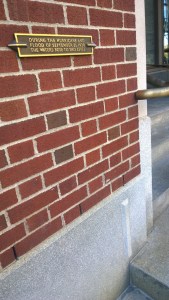
Can you read the plaque on the Providence Journal building? It shows the crazy height that the water reached in the infamous Hurricane of ’38. Golly!

My husband says the barrier at Fox Point will prevent flooding like that from ever happening again. I don’t know. Were the engineers aware of global warming when they started construction in 1960?

New Shoreham (in the next picture) was also battered in the hurricane of ’38. In fact, the storm wiped out the island economy on land and sea. The fishermen and farmers were not insured against such a catastrophe. No wonder people there remember that hurricane!

One thing that is different since 1938, as I learned in a splendid book called A Wind to Shake the World, communities in the path of a hurricane now get plenty of warning. But in 1938, when houses on Long Island, New York, were washing out to sea, no one up north knew it.

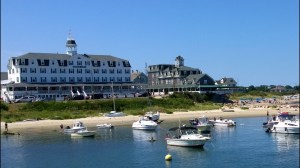
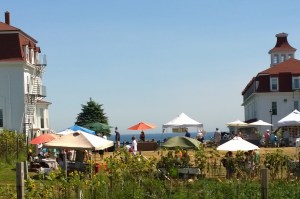
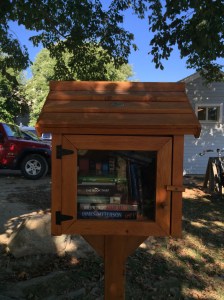
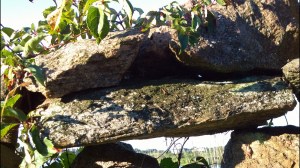
A few other shots of New Shoreham: a Wednesday farmers market, the Little Free Library, a view through a stone wall, a rumpled morning sky, and the North Light.

081916-sunflower-at-Old-Manse

082916-little-lanterns


083016-shadows

083026-sign-re-hurricane-of 1938


082816-Old-Harbpr-bye-for-now

082416-farmers-market-New-Shoreham


082016-Free-LIbrary-BI-3

082216-thru-a-wall-darkly


082816-morning-sky-New-Shoreham-RI

082616-North-Light-New-Shoreham


Read Full Post »

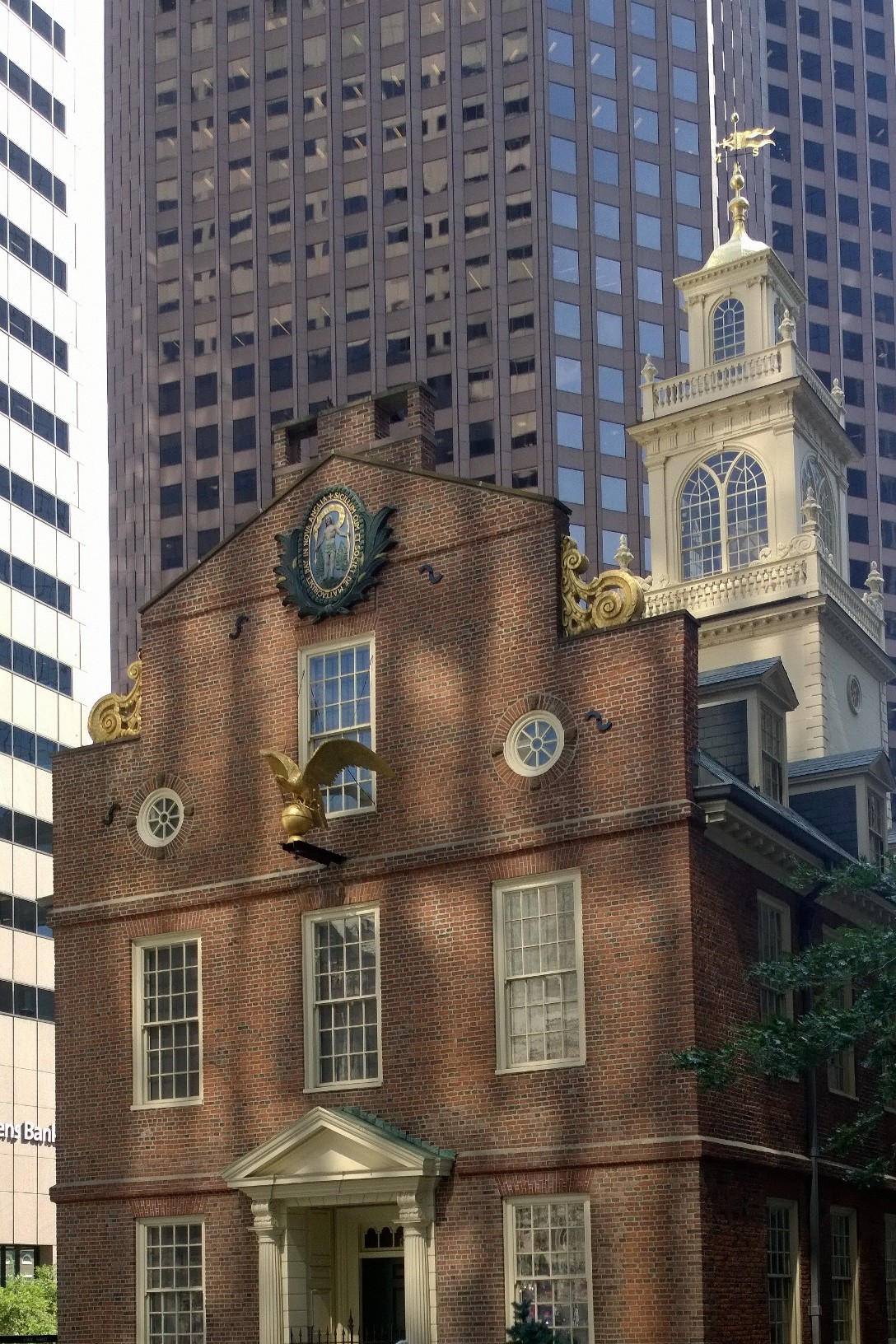
The little Vine video is of the fountain that children love in the Greenway. Nearby is the old State House, looking refined in the shadow of tall, impersonal modernities.

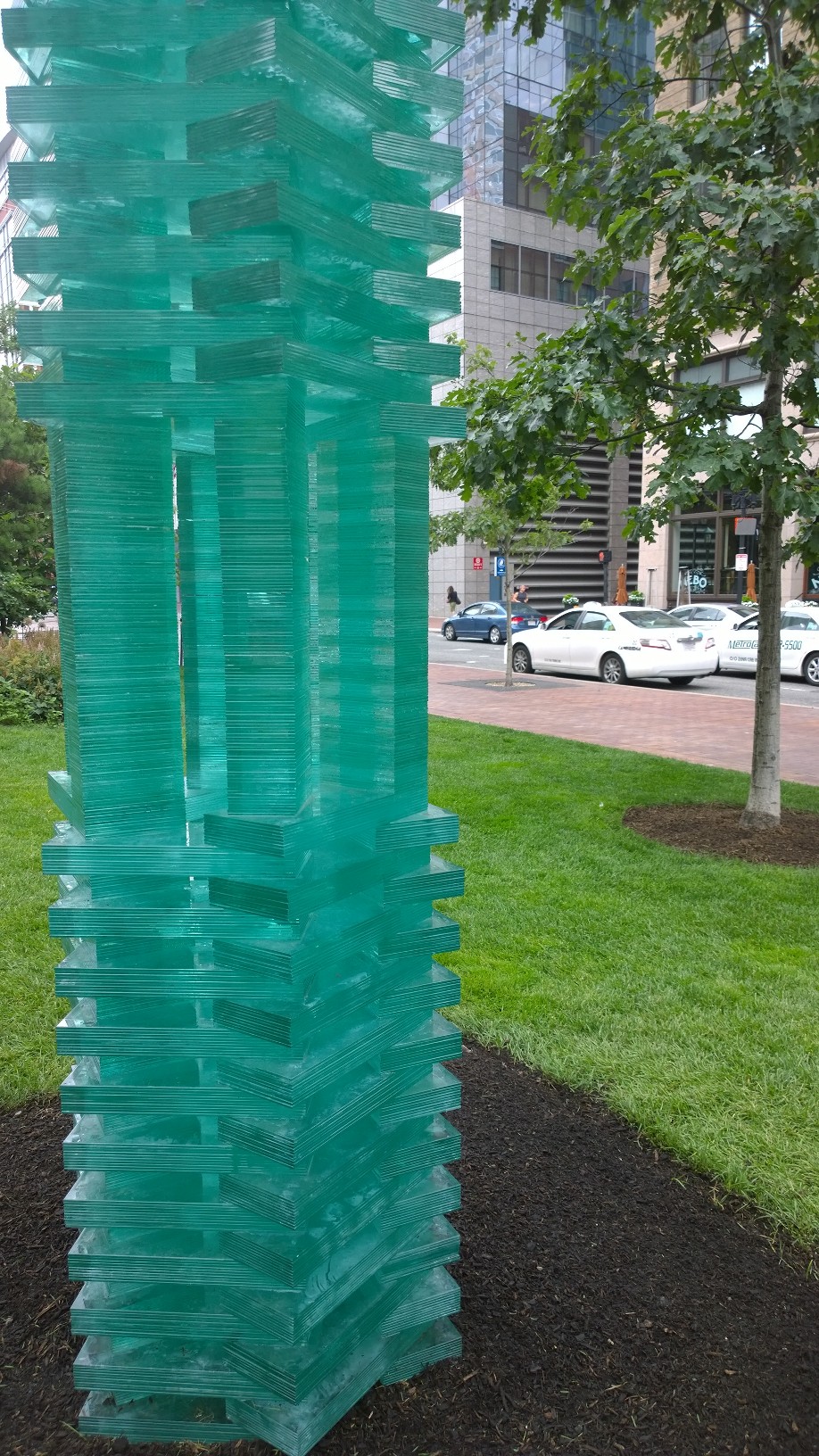
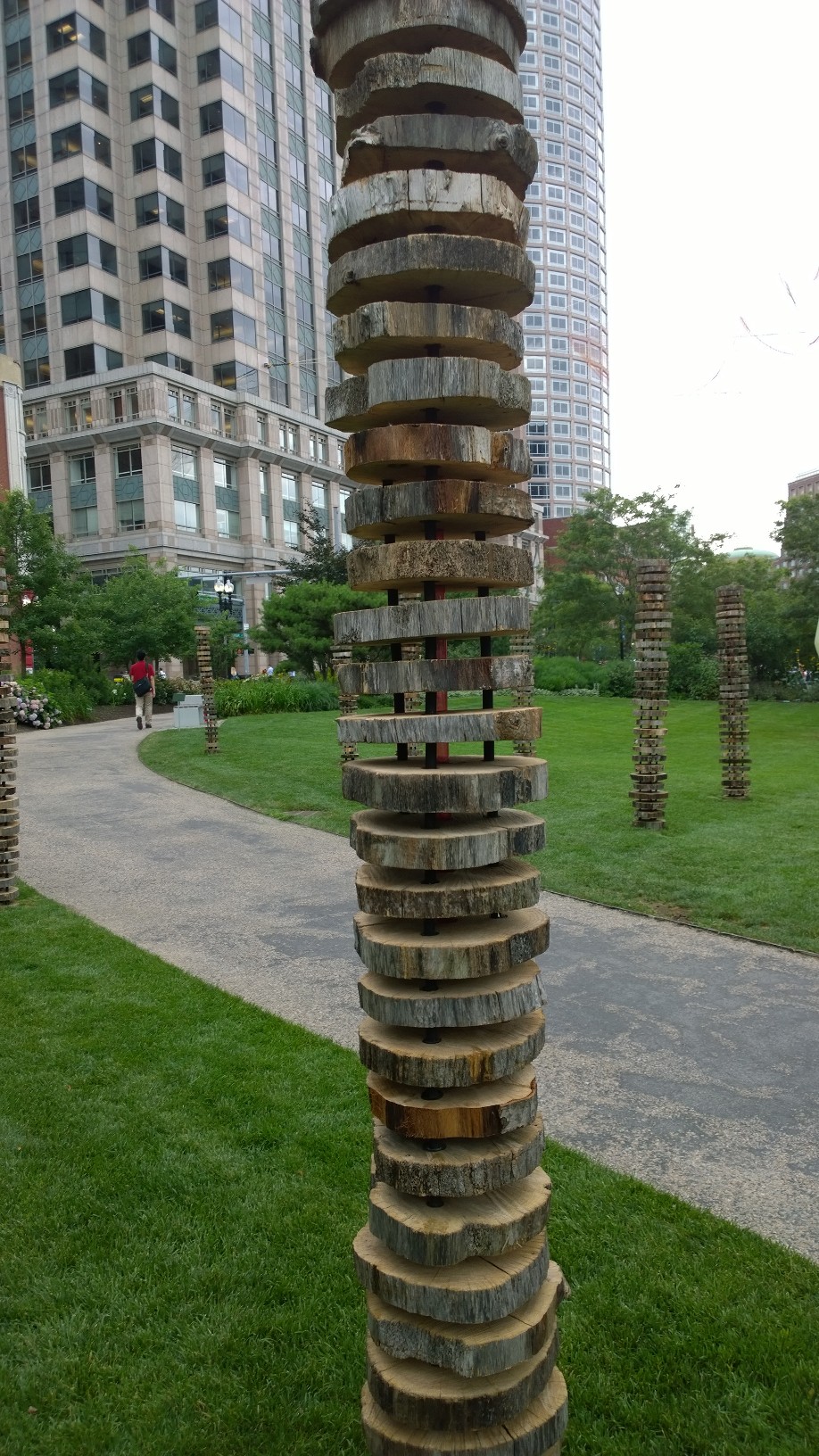
I took a photo of the sign explaining some new sculptures. They turn out to be part of the Design Biennial in Boston.

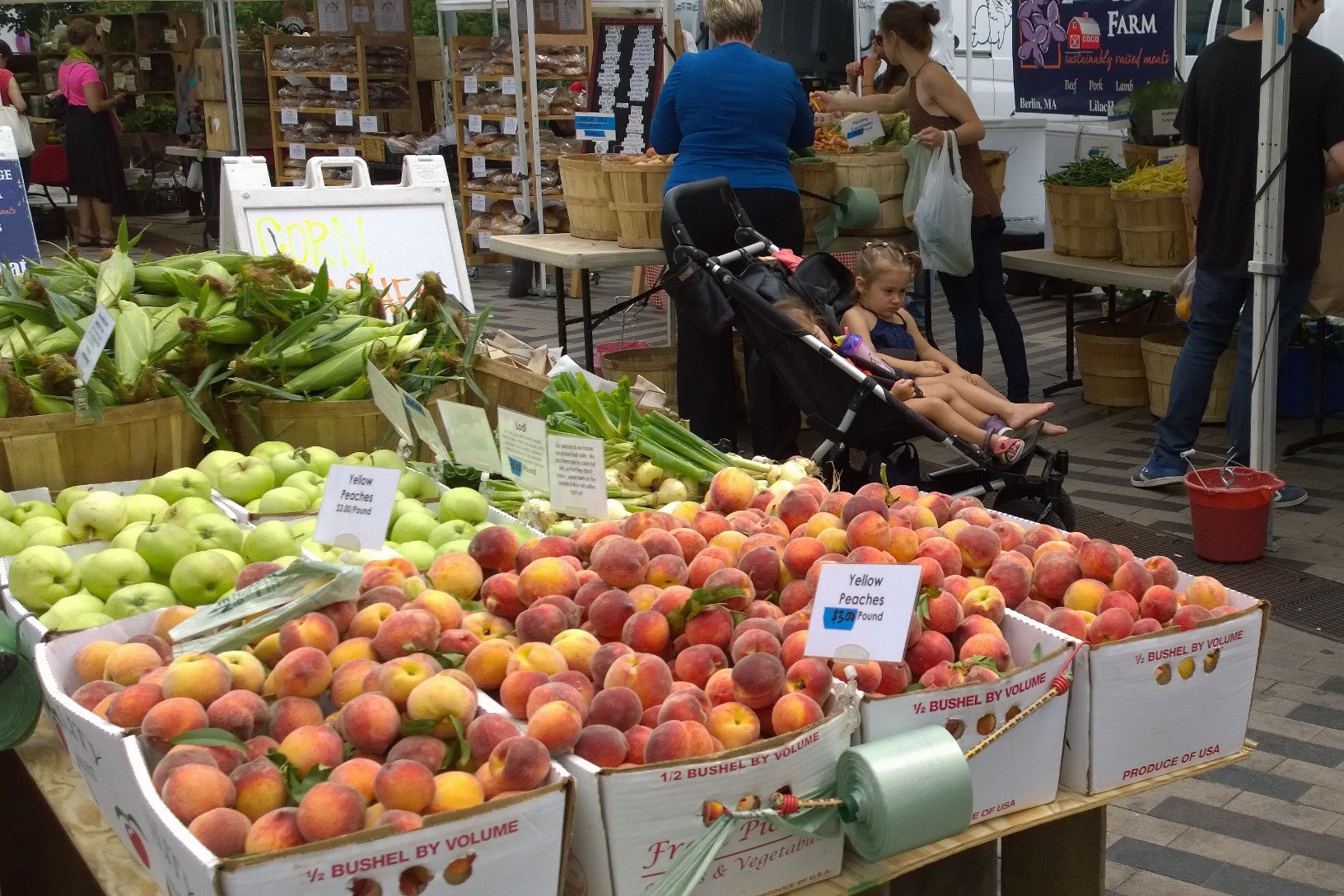
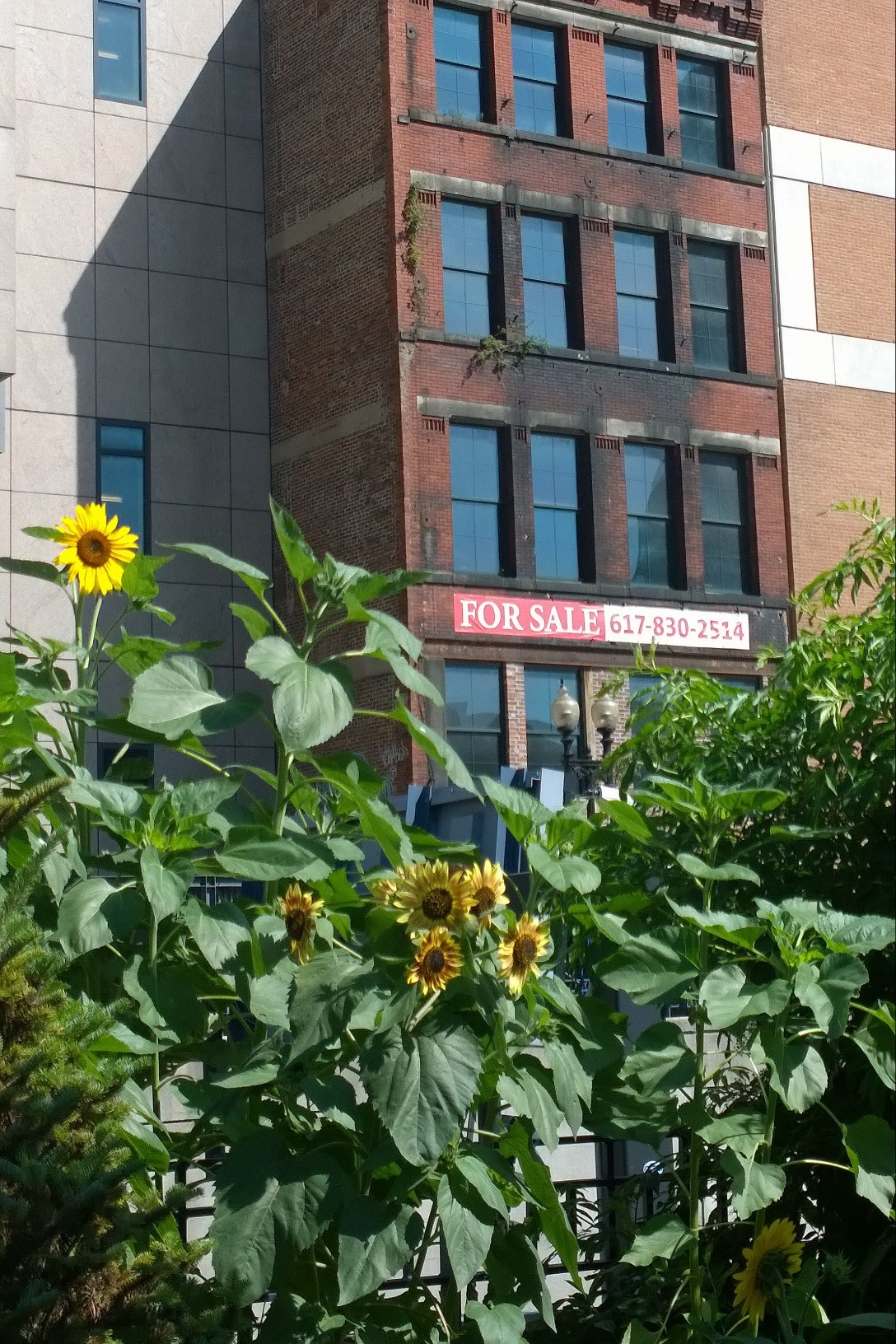
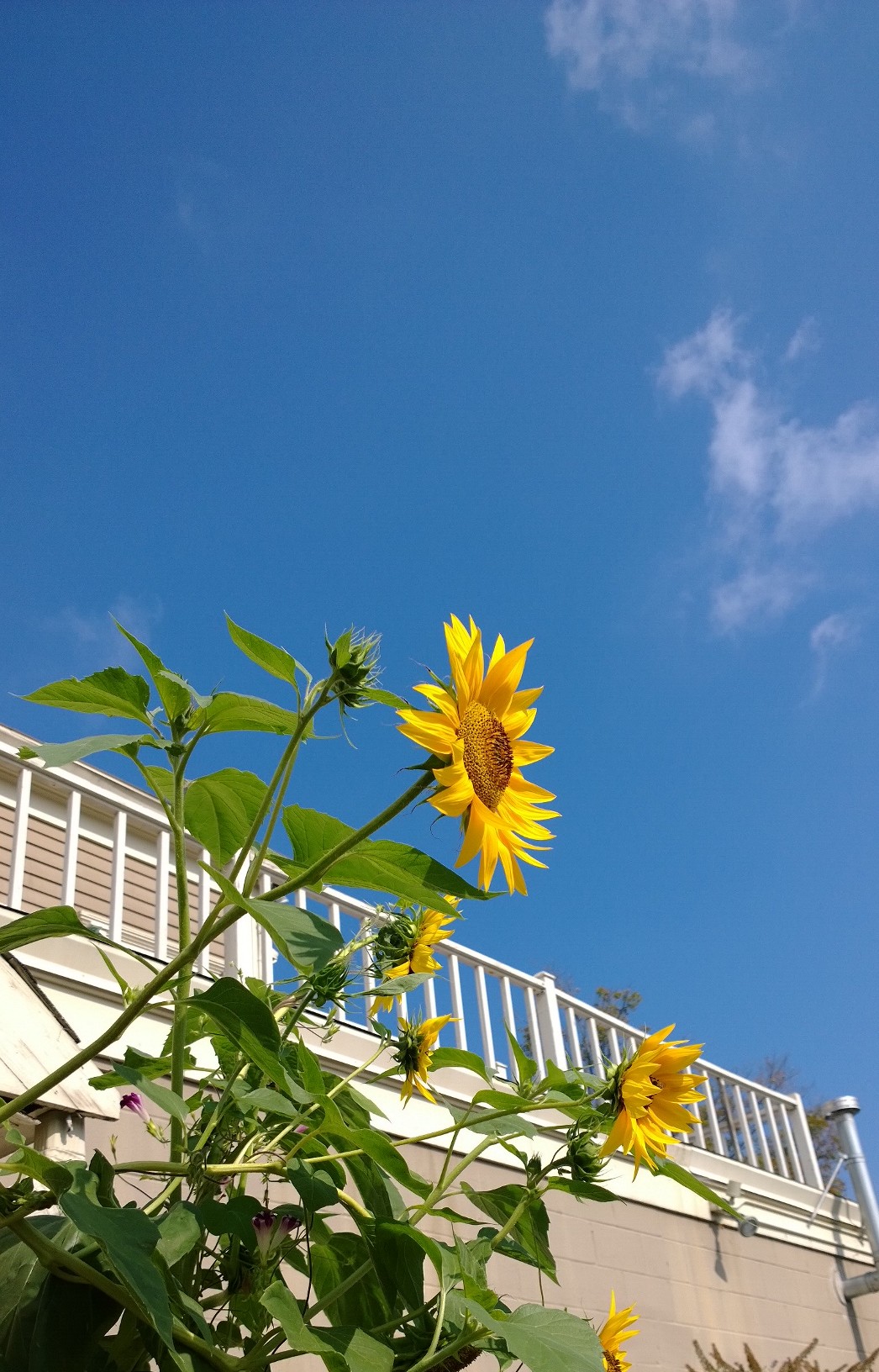
In the Dewey Square section of the Greenway, I also love the farmers market that materializes Tuesdays and Thursdays. Note the sunflowers, flourishing in the Greenway’s demonstration garden. The narrow, decrepit building behind them always intrigues me. What would you do with it if it were yours? It’s a valuable location that no one seems to want. What about a pocket performance space?

071615-old-state-house-boston

072115-design-biennial-boston

072115-Boston-sculpture-near-Congress-St

72115-sculpture-in-Greenway

072115-design-biennial-Greenway

072115-dewey-square-shopping

071615-for-sale-Dewey-Square-2

Read Full Post »

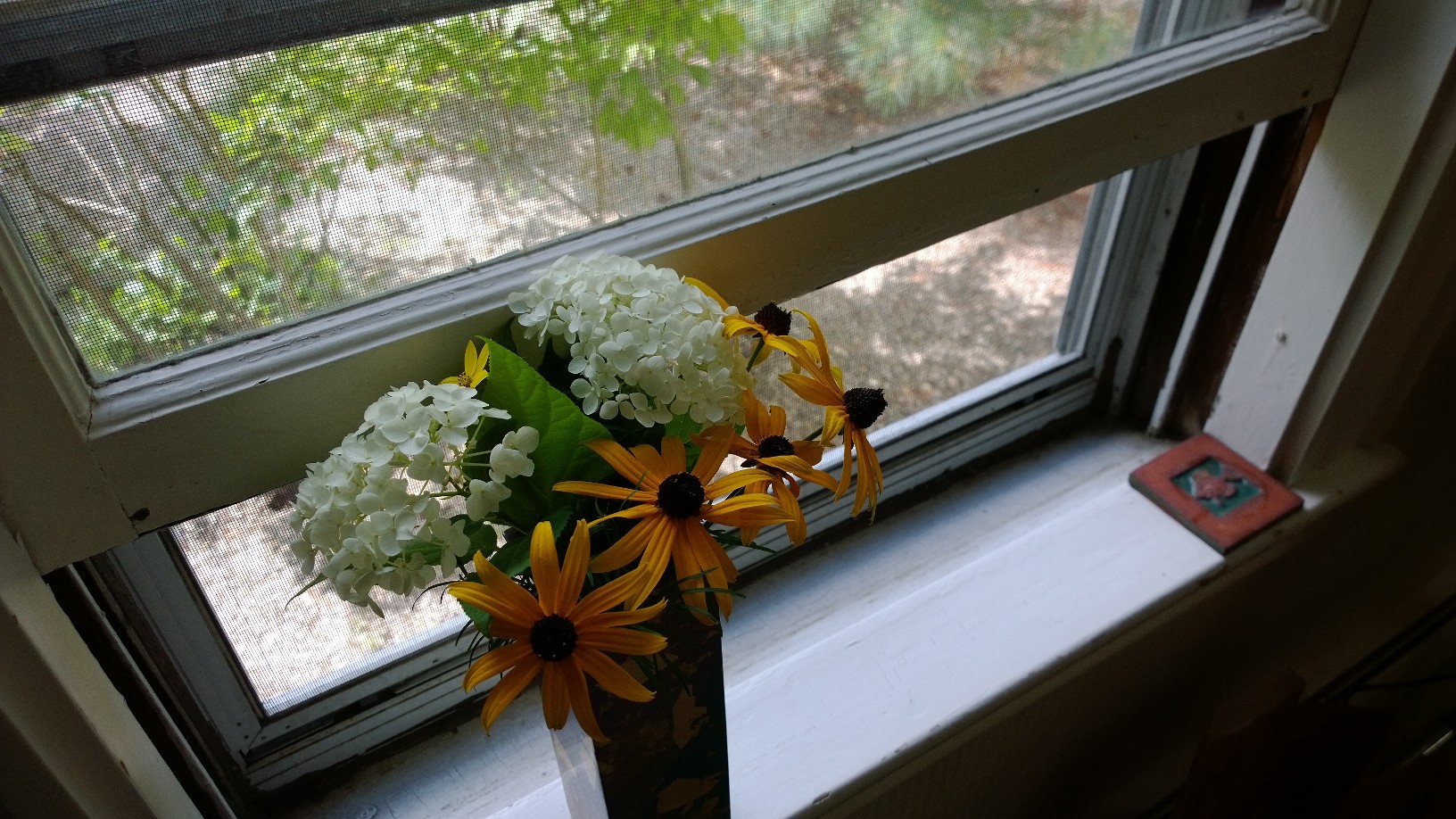
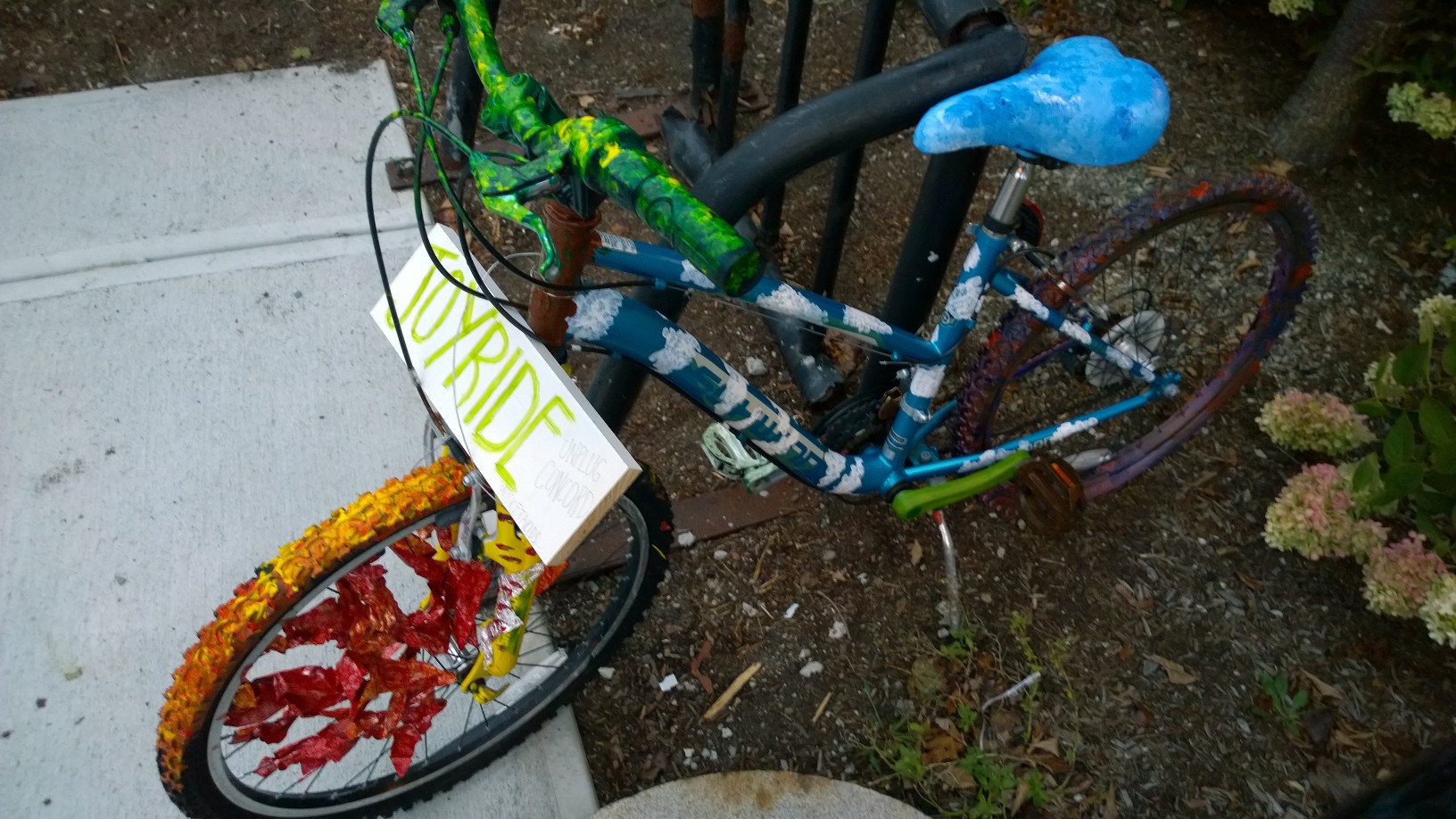
Today’s post features a bunch of photos again, if you can bear it.

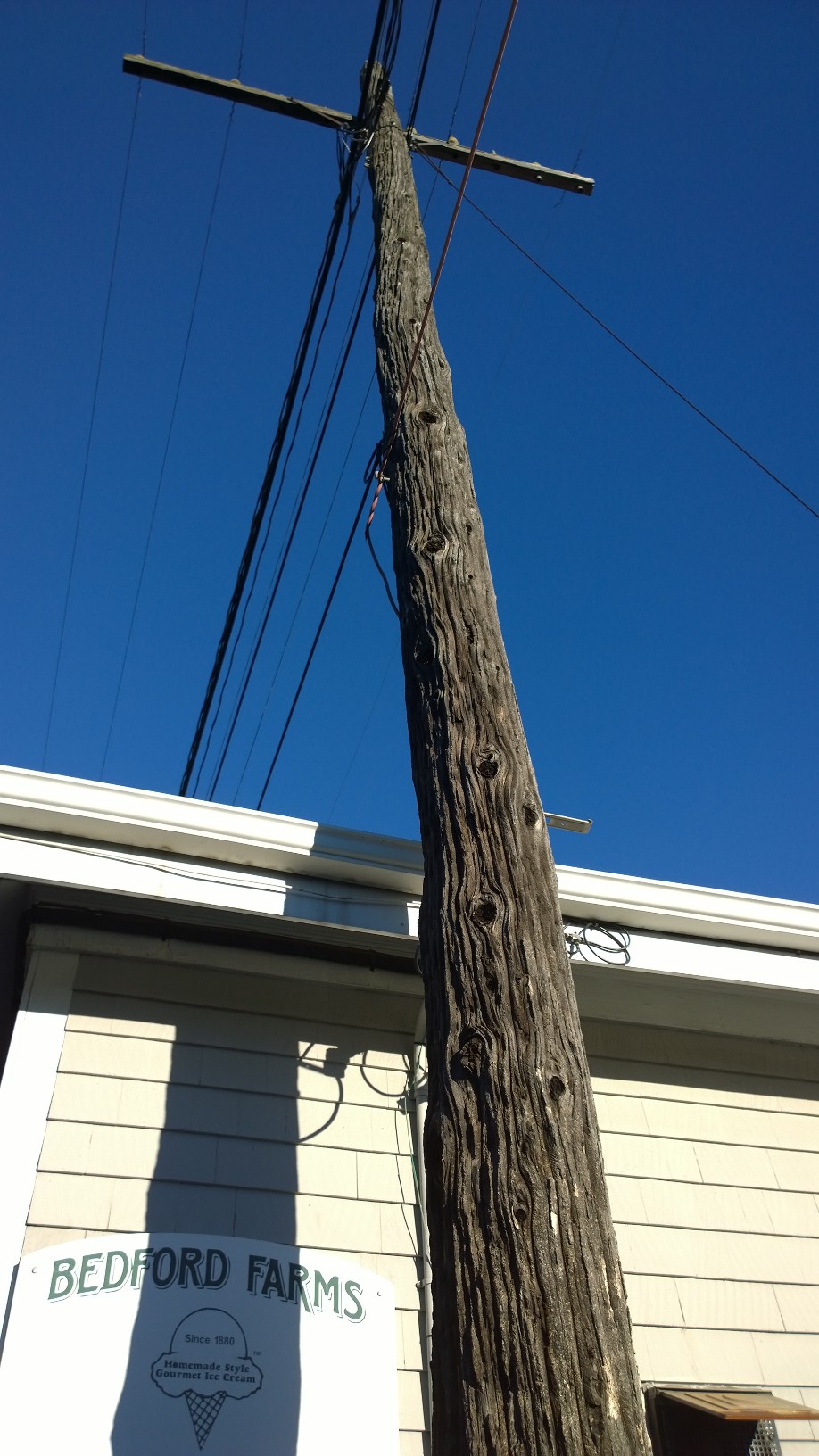
I was especially intrigued by a lovely sunflower and a utility pole that is an actual tree trunk. Although the tree trunk has probably been right in front of my nose for 20 years, it wasn’t until a recent late-train day that I actually noticed. “Holy cow! That’s a tree trunk!” No one else seemed to notice.

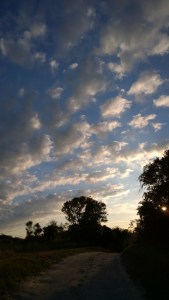
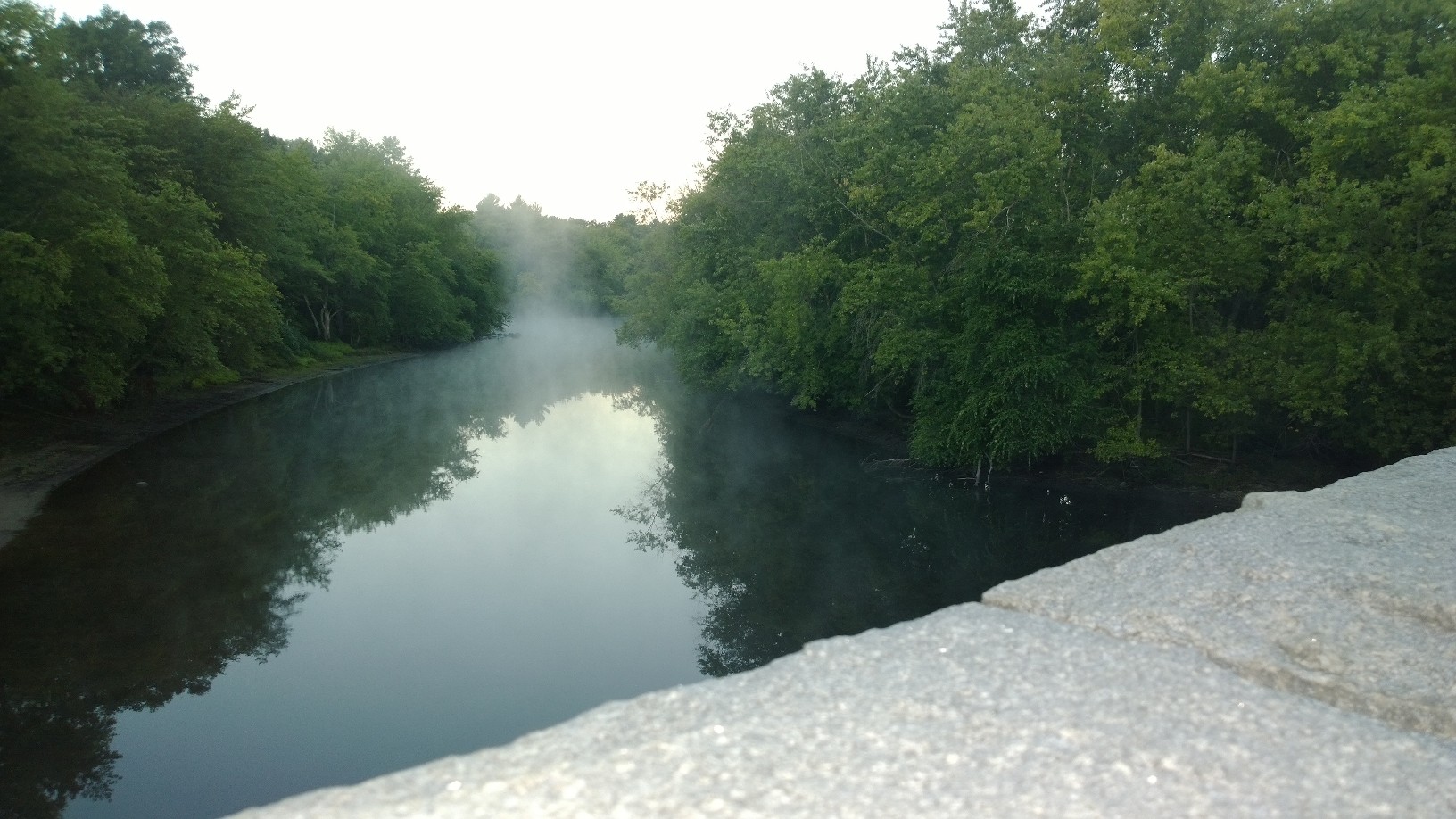
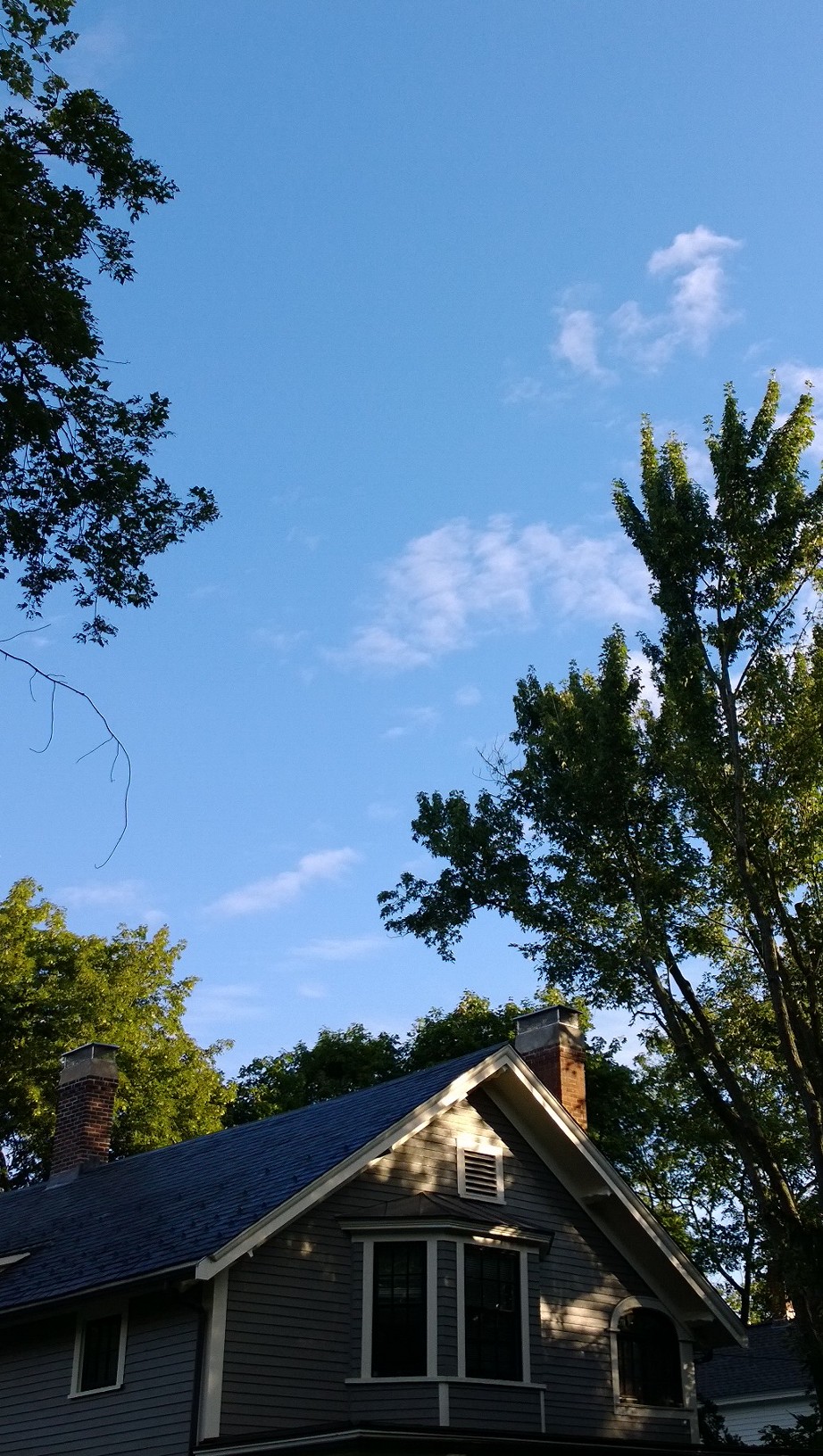
Other photos are attempts to capture early-morning light, but you may not be able to tell what time of day it is.

090614-sunflower-W-Concord

utility-pole-that-is-a-tree


morning-sunlight

morning-mist


autumn-at-main-streets-cafe

morning-sun-2


Window-and-summer-flowers

Joyride-crazy-bike


motorcycles


Read Full Post »