Feeds:
Posts
Comments

Archive for June, 2017

Image: Reuters/Denis Balibouse
The World Economic Forum touts research suggesting that “forest bathing,” the act of being among the trees, has health benefits.

We love trees. John, for example, serves on the Arlington tree committee and helps with the town’s efforts to inventory its trees, acquire more sidewalk plantings, and assist researchers studying the role of urban trees in carbon reduction.

A master landscaper I know is also into trees. He shared this story about the health benefits of something the Japanese call “forest bathing.”

Ephrat Livini wrote at the World Economic Forum, “Now there’s scientific evidence supporting eco-therapy. The Japanese practice of forest bathing is proven to lower heart rate and blood pressure, reduce stress hormone production, boost the immune system, and improve overall feelings of well-being.

“Forest bathing — basically just being in the presence of trees—became part of a national public health program in Japan in 1982 when the forestry ministry coined the phrase shinrin-yoku and promoted topiary as therapy. …

“Forest air doesn’t just feel fresher and better — inhaling phytoncide seems to actually improve immune system function. …

“From 2004 to 2012, Japanese officials spent about $4 million dollars studying the physiological and psychological effects of forest bathing, designating 48 therapy trails based on the results. Qing Li, a professor at Nippon Medical School in Tokyo, measured the activity of human natural killer (NK) cells in the immune system before and after exposure to the woods. These cells provide rapid responses to viral-infected cells and respond to tumor formation, and are associated with immune system health and cancer prevention. In a 2009 study Li’s subjects showed significant increases in NK cell activity in the week after a forest visit, and positive effects lasted a month following each weekend in the woods. …

“Experiments on forest bathing conducted by the Center for Environment, Health and Field Sciences in Japan’s Chiba University measured its physiological effects on 280 subjects in their early 20s. The team measured the subjects’ salivary cortisol (which increases with stress), blood pressure, pulse rate, and heart rate variability during a day in the city and compared those to the same biometrics taken during a day with a 30-minute forest visit. …

“Trees soothe the spirit too. A study on forest bathing’s psychological effects surveyed 498 healthy volunteers, twice in a forest and twice in control environments. The subjects showed significantly reduced hostility and depression scores, coupled with increased liveliness, after exposure to trees. …

“City dwellers can benefit from the effects of trees with just a visit to the park. Brief exposure to greenery in urban environments can relieve stress levels.”

More here. Be sure to watch the video.

Hat tip: Paul Kelly on Facebook.

Read Full Post »

mariannemooresplash-1Ellen’s friend and colleague Heather Cass White has come out with a new edition of poetry by Marianne Moore, the quirky inventor of “turtle top” for a car design, among other, more significant literary adventures.
I once had the pleasure of hearing Marianne Moore read at Bryn Mawr College. She looked so much like my grandmother. My parents encouraged me to read her books, providing O, To Be a Dragon! for example. Random lines stuck with me, like this statement on poetry: “I, too, dislike it.”

On the website “FSGWork in Progress,” White writes thoughtfully about the challenges presented by her subject.

“In trying to sum up the experience of having spent the last ten years editing the poetry of Marianne Moore, most recently in the New Collected Poems, I think of a recent classroom interaction I had. Toward the end of a course on twentieth-century poetry, one of my students, clearly at the end of her patience with me, demanded to know why I kept asking them, ‘But what is a poem?’ It’s probably a measure of how deeply I feel that question that I hadn’t noticed I’d asked it even once before she pointed it out.

“I do know why I am stuck on it, however. Editing Moore’s work will deprive anyone of their certainty about what a poem actually is. All poetry editing raises a fundamental issue: Is a poem a specific ordering of words on a page? And if so, which page? The one the poet originally wrote, whether by hand or type; or the one that was first published; or the one that was last published?

“If all of those arrangements of words are identical, one may duck the question, but they rarely are. Typesetters and proofreaders make mistakes, and they also make corrections which poets find agreeable. Poets change their minds. Conventions of spelling and punctuation vary from house to house, and change over time. There are competing theories about how to handle such issues, and consensus views to guide practitioners, but the questions must always be confronted.

“At the risk of seeming to brag, I will claim that confronting these questions in Moore’s work is unusually torturous. Someone had to, though, because the final record Moore left of her own work — and the standard Moore edition for several decades — has been her mendaciously titled Complete Poems (1967). …

“Creating one, however, is tricky. Her lifelong practices of revising, reordering, and redacting her poems make a special kind of hash out of any attempt to be definitive. Certainly her revisions are the most spectacular problem. Moore didn’t just write poems, she rewrote them, often completely, often more than once. …

“Moore deserves careful editorial attention because she is, by any measure, a major poet. She was and is revered by her poet peers for her inventiveness, her fierce intelligence, her wit, and her moral vision. Her work is original, with an original’s perennial newness. In editing the New Complete Poems, I have done what editors do: devised a working set of procedures to present the poet I know and value. I have not, because I cannot, settled any questions about what her poetry is or may become. Original things always exceed definitive presentation and containment. Long may her poems confound us.” More here.

In one of the ESL classes where I volunteer, we have been reading Emily Dickinson. Time to suggest Moore to the teacher, I think. Women poets don’t get nearly the respect they deserve: it pains me to recall that as much as my father wanted me to know the work of these women, he told me there were no great female poets.

Update 8/5/17: Moore editor Heather Cass White made an appearance at the Island Bound Bookstore tonight. Her talk was super. The book sounded very accessible as well as more authoritative than previous editions. Reader, I bought it.

Read Full Post »

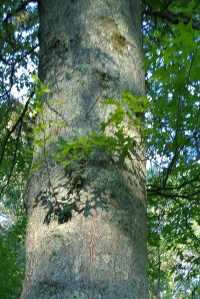
I’m back to taking walks near my home and looking for interesting shadows. The current collection of photos includes leaf shadows on a tree trunk. Only a couple dog walkers were out when I shot this, but I noted an unusual number of cars outside a house flying “2017” balloons. Probably a late-night graduation bash. All was quiet as the grave at 6:30 a.m.

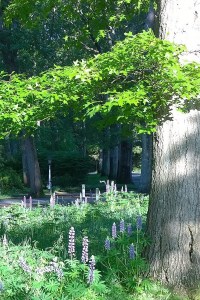
Nearby, blue lupines caught my attention. I admired many lovely ones in Sweden and was happy to see that, while I was gone, a whole batch was blooming along my usual walking route.

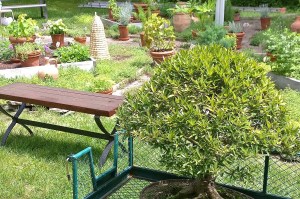
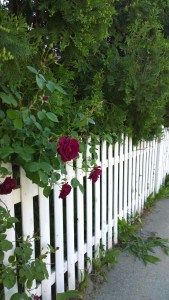
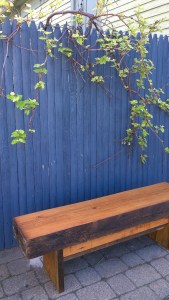
I’m also sharing a grapevine over a bench, a bonsai tree near the church herb garden, and a deep red rose on a white picket fence.

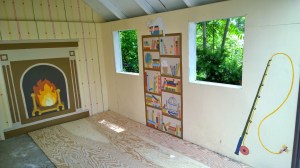
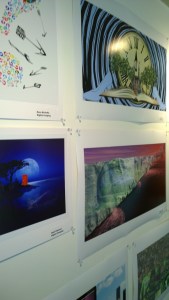
More unusual: the big playhouse at the nursery school and some elaborate digital art by high school students.

061117-leaf-shadows

061117-lupines-ConcordMA


051817-bench-under-grape-arbor

060917-bonsai-and-herb-garden


061117-deep-red-rose-white-picket-fence

060917-playhouse


052117-CCHS-digital-art

Read Full Post »

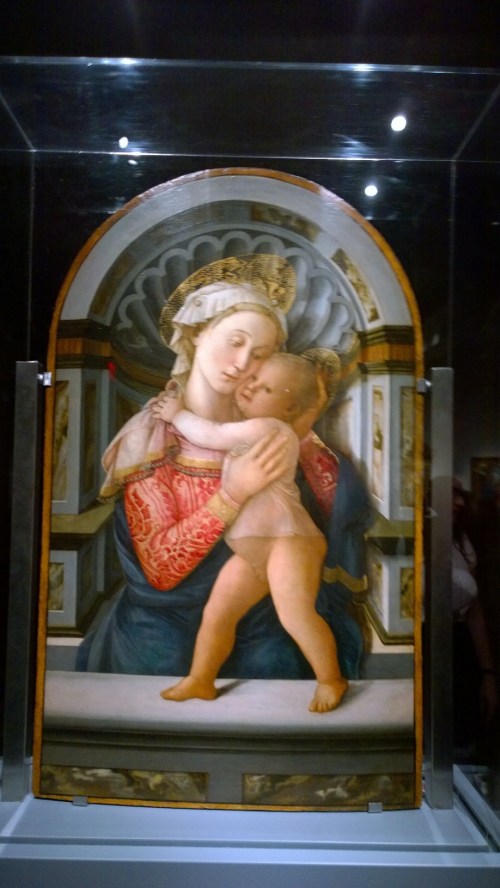
061017-Felippo-Lippi-Madonna-and-Child

I made it to “Botticelli and the Search for the Divine” at the Museum of Fine Arts. By the time I paid for the ticket, the parking garage, lunch, and gas, it was an expensive outing, but I was glad I went. The show closes July 9.

Curiously, I think I loved the tenderness of the mother-and-child by Felippo Lippi (above) the most. That isn’t to say there wasn’t a splendid Botticelli Venus, holding her long tresses in a way that made her look like Eve and the snake. And I was delighted to see the famous Minerva and centaur that I admired so much in Florence when I was 16.

I don’t think I ever knew the centaur story. I ask you, does it look more like the Goddess of War just defeated a warlike centaur or like a tragic couple accepting that they have no future together? The latter version is what I made up, and it still works for me.

But getting back to Botticelli’s teacher: I remembered the name from “Fra Felippo Lippi,” a long, biographical poem by Robert Browning that we were assigned in high school.

So when I got home, I went on Google to have a look. The poem includes a description of the artist’s early years as a street urchin, before being handed over to the friars to be trained as a monk. I wanted to share this section of the poem about how Lippi became a close observer of his world.

“But, mind you, when a boy starves in the streets
“Eight years together, as my fortune was,
“Watching folk’s faces to know who will fling
“The bit of half-stripped grape-bunch he desires,
“And who will curse or kick him for his pains, —
“Which gentleman processional and fine,
“Holding a candle to the Sacrament,
“Will wink and let him lift a plate and catch
“The droppings of the wax to sell again,
“Or holla for the Eight and have him whipped, —
“How say I? — nay, which dog bites, which lets drop
“His bone from the heap of offal in the street, —
“Why, soul and sense of him grow sharp alike,
“He learns the look of things, and none the less
“For admonition from the hunger-pinch.
“I had a store of such remarks, be sure,
“Which, after I found leisure, turned to use.
“I drew men’s faces on my copy-books,
“Scrawled them within the antiphonary’s marge,
“Joined legs and arms to the long music-notes,
“Found eyes and nose and chin for A’s and B’s,
“And made a string of pictures of the world
“Betwixt the ins and outs of verb and noun …”

More on Lippi at Wikipedia, here, and on Botticelli, here.

061017-Minerva-and-centaur-Botticelli.jpg

Read Full Post »

060917-art-and-words-show

Mary Ann alerted me to a local art show co-curated by her artist friend Holly Harrison. I will be visiting this exhibit more than once — it’s a beautiful assemblage of artworks that incorporate words, and there’s a lot to read.

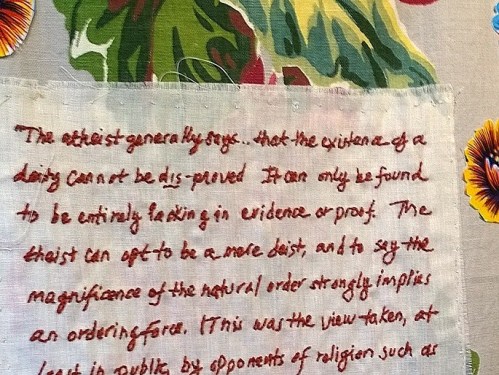
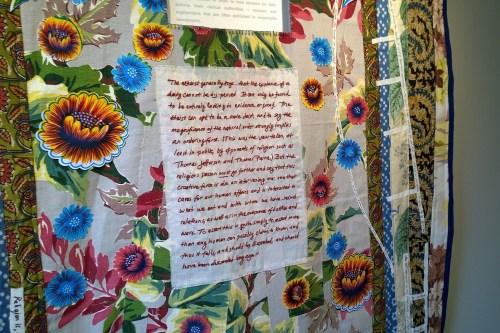
Included in the show “Inhabiting Words” are two needlework pieces by Liz Shepherd that I think will interest blogger KerryCan, given her recent post about a woman who stitched information for her citizenship test into a sampler. (Read it here.)

KerryCan wrote that the citizenship project “was created by artist Aram Han Sifuentes. Sifuentes, from South Korea, prepared for her own US citizenship test by embroidering a sampler of 100 questions and answers typical of the test questions, questions like, ‘What did Susan B. Anthony do?’ ‘Who wrote the Declaration of Independence?’ ‘What is the capital of your state?’ ” I think I should suggest this to a certain Cambodian ESL student who sews.
In Liz Shepherd’s creation for the Concord Center for the Visual Arts show, the topic is religion and its sometimes unintended consequences. Here she stitches ruminations by the late Christopher Hitchens.
060917-Liz-Shepherd-philosophy

060917-Liz-Shepherd-sews-Hitchens-words


Read Full Post »

Art: Horace Pippin
Sunday Morning Breakfast, 1943

Recently I read an interesting piece on a little-known African American artist, Horace Pippin. Art critic Michelle Aldredge wrote about him on her delightfully named blog, Gwarlingo. (“Gwarlingo,” she explains, is Welsh for the moment before the clock strikes.)

Aldredge had been visiting the Barnes collection in Philadelphia when she was startled by a small, powerful painting.

She reports, “Last summer I was strolling through the galleries of the new Barnes Foundation in Philadelphia, surrounded by the exquisite paintings of Matisse, Modigliani, Cézanne, when a small painting of Abraham Lincoln and his father building a log cabin caught my eye. …

“That day in Philadelphia I opened my notebook and wrote the following: ‘HORACE PIPPIN!’ And just so I wouldn’t forget, I underlined Pippin’s name three times. And then I starred it for good measure.

“A descendant of slaves, Horace Pippin’s biography is a compelling one. Here is an excerpt from his Wikipedia entry:

He was born in West Chester, Pennsylvania, and grew up in Goshen, New York. There he attended segregated schools until he was 15, when he went to work to support his ailing mother. As a boy, Horace responded to an art supply company’s advertising contest and won his first set of crayons and a box of watercolors. As a youngster, Pippin made drawings of racehorses and jockeys from Goshen’s celebrated racetrack. Prior to 1917, Pippin variously toiled in a coal yard, in an iron foundry, as a hotel porter and as a used-clothing peddler.

“Pippin enlisted in the army in 1917 and fought in the famous, all-black 369th Infantry regiment in France during World War I. Less than a month before the war ended, he was shot in the right shoulder.

“ ‘When I was a boy I loved to make pictures,’ he once wrote, but war ‘brought out all the art in me. … I can never forget suffering and I will never forget sunsets. So I came home with all of it in my mind and I paint from it today.’ …

“One website on Pennsylvania history describes the evolution of Pippin’s brief career:

After the war, the handicapped Pippin devised a way of supporting his right hand with his left. Using a hot poker to burn in the outlines of his figures and objects onto wood (a technique called pyrography) and then filling them in, he was able to resume painting by the mid-1920s. …

“Words like ‘toiled’ appear frequently in Pippin’s biographies and give some hint at the reverential tone that has been used to describe the artist over the decades. His personal story is so riveting that Melissa Sweet and Jen Bryant have just written a new children’s book about the artist called A Splash of Red. …

“By the time of Pippin’s death in 1946 at the age of 58, he had completed 140-odd paintings, drawings and wood panels. In his obituary in the New York Times they called him the ‘most important Negro painter’ to have appeared in America. …

“Pippin’s paintings are in the tradition of other New-Deal artists like Grant Wood and Thomas Hart Benton, whose murals and canvases depicted ordinary rural life. …

“During his life, Pippin was best known for his landscapes, domestic scenes, and religious paintings. Today, it is his historical scenes showing John Brown and Abraham Lincoln that receive the most attention. (Artist Jacob Lawrence said this his own series on John Brown was inspired by Pippin.) …

“Art critics struggle with Pippin because he does not fit neatly into a category or school. But Pippin didn’t need to buy into some pre-defined idea about what art should or shouldn’t be — he didn’t need to hitch himself to a specific art movement in order to get his work into the public eye. He earned critical acclaim the hard way: by creating outstanding art.

“ ‘Pictures just come to my mind,’ Pippin famously said, ‘and I tell my heart to go ahead.’ ”

More at Gwarlingo, where Aldredge has posted an impressive array of Pippin’s works.

Read Full Post »

Photo: Abby Oulton 

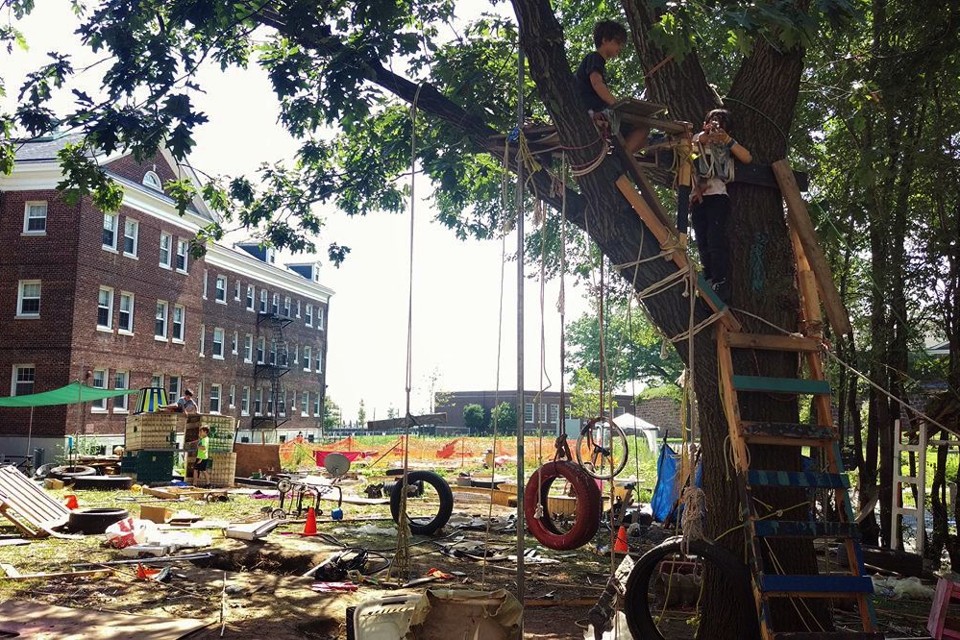
I’ve written before about outdoor nursery schools and child-directed play. Today we carry the concepts a bit further as Timothy D. Walker writes at the Atlantic about the “junk playground of New York City.”

“ ‘It looks like a dumpster playground,’ my wife told me, as we pushed our double stroller down a hill on Governor’s Island in New York City. ‘Like some slum.’

“In front of us was an area that looked like — to my eyes, at least — an Occupy Wall Street campground, with shoddy constructions of plywood, wooden palates, and blue tarp. I counted 10 children, who were roaming a space about half the size of a soccer field littered with car tires, plastic crates, orange cones, and a sea of unidentifiable debris. …

“In 1943, the first adventure playground (‘junk playground’) was piloted in the city of Copenhagen, Denmark, which was under Nazi occupation. From then on, the concept was embraced around the world, especially in Europe. A professional methodology called ‘playwork’ was established in the United Kingdom, in which trained adults (‘playworkers’) would run these environments. …

“Despite their global popularity, adventure playgrounds have struggled to gain traction in the U.S. … Peter Gray, a psychology research professor at Boston College, wrote in the American Journal of Play that free play — ‘activity that is freely chosen and directed by the participants and undertaken for its own sake’ — has declined over the past half century in America, and he inferred that a high level of parental fear about the safety of children and the rise of ‘adult-directed, school-like activities’ are two of the major causes. …

“On the ferry ride back to Manhattan, I reflected on how four  simple ingredients — junk, tools, physical space, and playworkers — could create such a powerful learning environment, where children appeared to develop their ‘Four Cs’ (communication, collaboration, critical thinking, and creativity) for hours on end. Indeed, these Four Cs were the key ’21st-century skills’ that many American schools strived to sharpen in their students, but at the junk playground, this development seemed to happen rather effortlessly through self-directed play, supported by well-trained playworkers. …

“Not only do I think playworker-run junk playgrounds represent the future of playgrounds, they seem to provide a glimpse into the future of schooling, too. Today, teachers — especially in America — are gravitating toward more active, child-directed pedagogical methods that look similar to what I observed on the junk playground: ‘project-based learning,’ ‘makerspaces,’ and ‘genius hour.’

“Finland, the Nordic nation that’s often praised as a leader in public education, is implementing its newest national core curricula this fall, in which playful learning and developing student agency are emphasized.”

Interesting, no? For me, child-directed play has always been the goal, but at the same time, I’m a safety nut. I suspect that US parents’ focus on increasing the safety of playgrounds may have something to do with the fact that fewer parents are there to watch. Just as monitoring your preschooler on a swimming trip may be something you don’t want to delegate, you may prefer to be nearby when you let your kids experiment with a junk playground.

There is more at the Atlantichere. Hat tip: Taught by Finland, on Facebook.

Read Full Post »

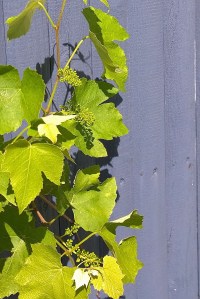
Well, we’re home and adjusting to the time change more easily than when we traveled east. Meanwhile, it occurs to me that I have a bunch of New England photos from both before and after our trip that I want to share. I call the first one “There Will Be Grapes.”

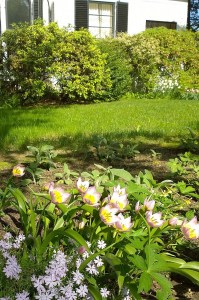
The yellow and white tulips have since died off, but the yard they graced has a floral display that keeps on giving.

My three shadow pictures feature the North Bridge in Concord, Mass., a wildly exuberant dogwood, and a vase of spring flowers.

Two antique child vehicles are on the porch of a home furnishings store.

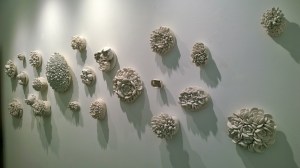
The life forms by Korean sculptor Jaeok Lee at the Concord Center for the Visual Arts completely captivated me. The artist has written about making the tiny cabinet objects while experiencing health challenges that kept her from other projects.

“The healing quality of nature also motivates my work,” Lee says. “A few years ago, I developed an illness that doctors could not diagnose. While going through various diagnostic tests, since I did not have much energy, I started working with very small objects.

“I would go out to my garden for inspiration and would start to pinch small forms of seeds, pods, berries and flowers. Over the course of one year, I made thousands of small pieces that filled a Chinese medicine cabinet that I bought from an antique shop a few years ago.

“I named the project ‘Making my own medicine.’ The simple act of pinching the forms has been a healing experience that gave me enormous hope for my recovery.”

More at her website, here.

060717-there-will-be-grapes

060717-there-will-be-grapes


051817-north-bridge-concord-ma

051917-backdoor-dogwood-shadows


051917-backdoor-dogwood-shadows

060717-old-time-toys


052117-Jaeok-Lee-life-forms

052117-Jaeok-Lee-Cabinet


052117-Jaeok-Lee-Concord-Art

Read Full Post »

24 Hours in Oslo

Because we went to Sweden by Norwegian Air, we took a bus back to Oslo to catch our homeward-bound plane, allowing a day for sightseeing in the city first. My husband had been there in the 1960s; I had never been.

As I came out of the bus station wheeling my bag, I saw an activity that I had recently read was occurring in several countries. A barber was giving a haircut to a homeless man. Another man explained to passersby about an effort to raise money for one homeless person at a time. I was so happy to find a good place to unload the rest of my Swedish kroner.

Here are my Oslo photos. Some are self-explanatory, but you might be puzzled if I don’t explain the bubbling water: it kept the eggs hot at our amazing hotel breakfast.

The first of three museums we visited was the Edvard Munch Museum, where the author Karl Ove Knausgaard had curated a show. I love Munch, and although I would have liked some wall text about what was going on in his life when he painted various pictures (a fantastic 2001 show at Boston College did that), I came away with some good ideas for representing the bark of pine trees.

The Nobel Peace Museum had an outdoor mural to free-speech heroes around the world and a moving photography show about Syrian refugees in Lebanon and how they longed for home. The main exhibit felt ironic though, given that Peace Prize recipients have sometimes been tyrants. And this hit me hard: hundreds of prizes, so little peace.

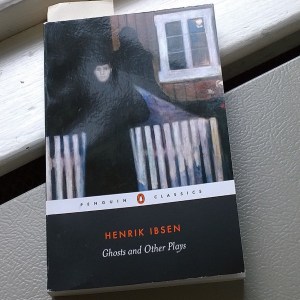
The wall text at the Ibsen museum was great and got me interested in reading more of his plays. The book below is not unique in using Munch cover art. Many Norwegian books use Munch paintings on their covers. He captures something powerfully Norwegian.

060617-purple-flowers-Oslo

060517-Oslo-park-mallard-6tag


060517-Grand-Hotel-Oslo

060617-bubbling-water-for-eggs-Oslo


060617-lion-over-unmade-bed

060617-Kensett-red-and-tiger-Oslo


060517-Knausgaard-on-Edvard-Munch-Oslo

060517-Knausgaard-on-Edvard-Munch-at-Museum.jpg


060617-Nobel-Museum-Oslo

060617-freedom-of-speech-mural-Nobel-museum


060617-freedom-of-speech-mural-Oslo

060717-Munch-cover-Ibsen-plays


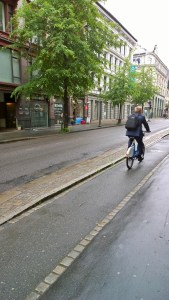
060617-Oslo-bike-path

Read Full Post »

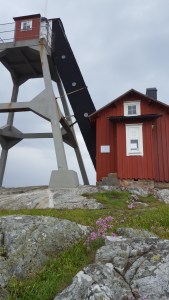
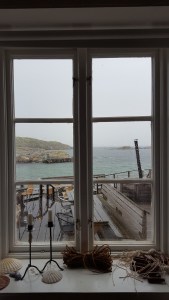
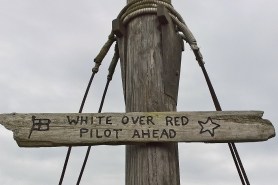
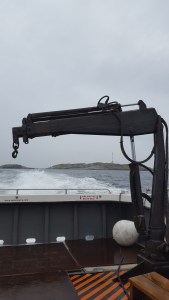
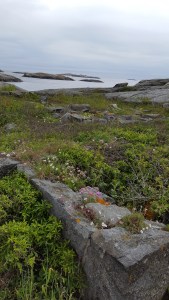
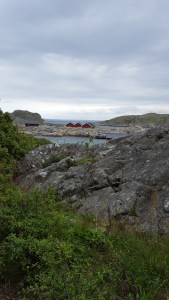
On Sunday we took a boat ride to the Weather Islands in Sweden’s western archipelago, Väderöarna. The drizzle didn’t stop us from enjoying a walk around and eating very fresh cod for lunch. Stuga 40 took all of the pictures seen here but the wooden sign.

We will be thinking about these views as we fly west over the Atlantic.

060417-Väderöarna-lookout


060417-Väderöarna-view-with-flowers


060417-Väderöarna-cabins


060417-Väderöarna-island-path


060417-Väderöarna-rainy-window


060417-Sweden-Väderöarna-message-to-sailors


060417-Väderöarna-wake


Read Full Post »

It’s going to be an adjustment, not just in terms of time zones. Monday we are off to Oslo and will catch our plane back to Boston from Norway on Tuesday.

Here are a few more Sweden pics.

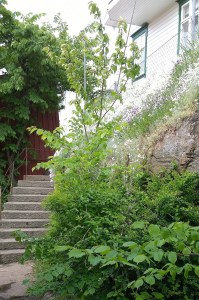
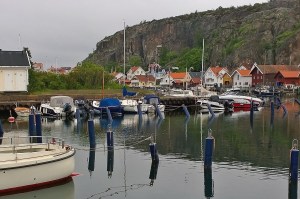
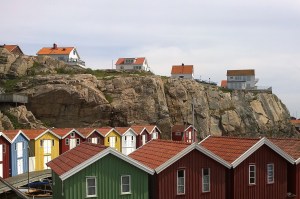
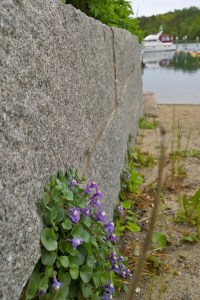
I love the picturesque seaside streets and cottages, the hidden staircases covered with flowers, the boats in snug harbors, the colorful cabins, and the views.

The last picture is one that Stuga 40 took at 10 p.m. Imagine how light it is in Sweden in June!

060317-seaside-cottages-Sweden


060317-hidden-staircase-Smogen


060317-harbor-Swedish-west-coast


060317-colorful-cabins-Smogen


060317-still-life-Veddo-Sweden

Read Full Post »

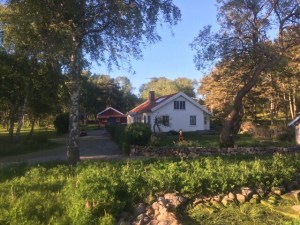
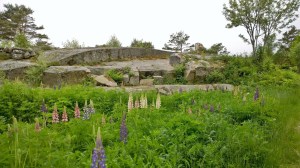
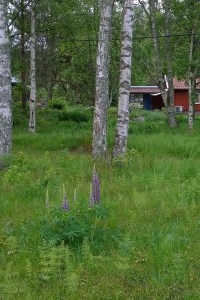
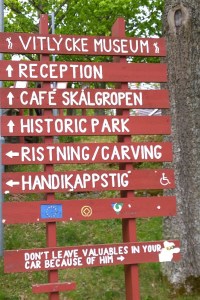
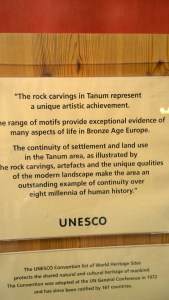
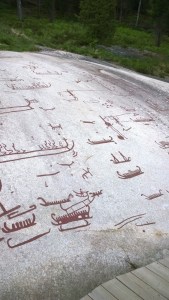
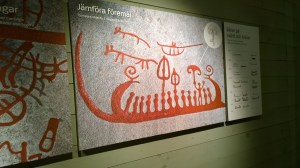
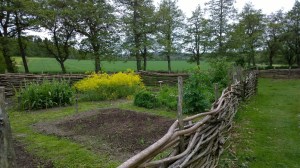
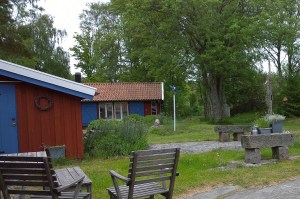
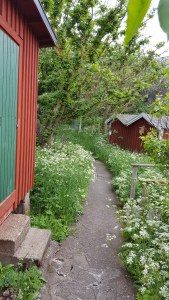
I love the family compound belonging to our hosts, with its birches, lupines, red cottages, and blue doors. Stuga 40 and I took photos there and at the nearby Vitlycke museum, a World Heritage site, where we saw ancient petroglyphs and a Bronze Age garden.

Near the garden were goats chewing their cud and two different kinds of shelters replicating life before 500 BC. It didn’t look luxurious. My photo of  Bronze Age instruments, below, is especially for Modern Age musician Will McC.

060217-staying-in-Sweden

060217-lupines-Veddo-Sweden


060217-birches-and-lupines

060217-hobbit-door-Sweden


060217-Vitlycke-Museum-Sweden

060217-about-the-rock-carvings


060217-petroglyphs-Tanum-Sweden

060217-Bronze-Age-instruments-Tanum-Sweden


060217-petroglyphs-in-museum

060217-petroglyphs-by-Stuga40-Sweden


060217-Bronze-Age-garden-Sweden


Read Full Post »

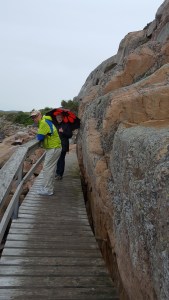
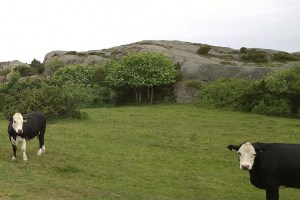
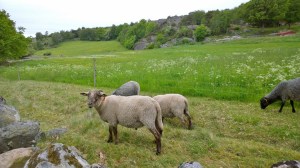
This morning Stuga 40 took us on a walk around breathtaking Veddö. I can take time now to give you only a few pictures as we are headed out again, but you may expect more photos in the days to come. Stuga 40 took the beautiful view of a red house with the harbor behind it.

060217-not-the-right-place-for-umbrellas

060217-cows-graze-Swedish-nature-preserve


060217-sheep-in-Sweden

060217-beautifulSwedish-west-coast


060217-flowers-beside-harbor-in-Sweden

060217-guest-buildings-Sweden


060217-formerly-a-Swedish-farm

Read Full Post »

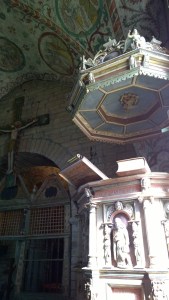
Stuga 40 followed an inspired impulse on our way to the Swedish west coast and took a detour to a historic church that she had never visited. Off in the open countryside, the Romanesque Husaby Kyrka was beautiful and serene. We felt like we were discovering it.

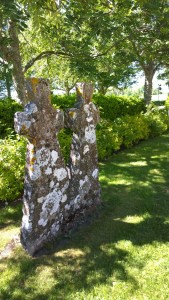
I am sharing a few photos, including one showing the tombstones of Queen Estrid and King Olof Skõtkonung, who was said to have been baptized at a nearby spring in 1008 by the English missionary Sigfrid. Olof was the first Christian monarch in Sweden.

060117-husaby-church-sweden.jpg

060117-husaby-church-11C-sweden


060117-husaby-church-window

060117-husaby-pulpit


060117-husaby-tombstones


Read Full Post »

« Newer Posts