Feeds:
Posts
Comments

Archive for July, 2021

Photo: Remko de Waal/ANP/AFP via Getty Images.
Rembrandt’s restored ‘Night Watch’ at the Rijksmuseum in Amsterdam.

A project to restore a Rembrandt called “Night Watch” has received a lot of attention recently, but at the risk of repeating what you already know, I’d just like to point out that trimming a work of art can seriously affect its greatness.

How many times have building renovations cut paintings to fit or squashed them into too small a space to be properly appreciated. I think, for example, of the many special WPA paintings in US post offices that have been significantly altered over the years. I understand competing needs, but it’s a loss.

What was lost in Rembrandt’s ‘Night Watch,’ the New York Times says, was a sense of movement. The original was “asymmetrical: The large arch that stands behind the crowd was in the middle, and the group’s leaders were on the right. Rembrandt painted them this way to create a sense of movement through the canvas.

“Once the new pieces were restored, so was the balance, [said Rijksmuseum’s director, Taco Dibbits.] ‘You really get the physical feeling that Banninck Cocq and his colleagues really walk towards you.’ “

The main focus of the recent news coverage, however, was on how experts used artificial intelligence (AI) — along with an early copy of the original painting — to reimagine Rembrandt’s intentions.

Nina Siegal reported at the Times, “Rembrandt’s “The Night Watch” has been a national icon in the Netherlands ever since it was painted in 1642, but even that didn’t protect it.

“In 1715, the monumental canvas was cut down on all four sides to fit onto a wall between two doors in Amsterdam’s Town Hall. The snipped pieces were lost. Since the 19th century, the trimmed painting has been housed in the Rijksmuseum, where it is displayed as the museum’s centerpiece, at the focal point of its Gallery of Honor.

“[Now] for the first time in more than three centuries, it will be possible for the public to see the painting ‘nearly as it was intended,’ said the museum’s director, Taco Dibbits. …

“Rather than hiring a painter to reconstruct the missing pieces, the museum’s senior scientist, Robert Erdmann, trained a computer to recreate them pixel by pixel in Rembrandt’s style. A project of this complexity was possible thanks to a relatively new technology known as convolutional neural networks, a class of artificial-intelligence algorithms designed to help computers make sense of images, Erdmann said.”

As amazing as AI is, the work would not have been possible if a less renowned painter hadn’t made an early copy of Rembrandt’s work.

“Indications already existed of how the original ‘Night Watch’ likely looked,” Siegal continues, “thanks to a copy made by Gerrit Lundens, another 17th-century Dutch painter. He made his replica within 12 years of the original, before it was trimmed.

“Lundens’s copy is less than one-fifth the size of Rembrandt’s monumental canvas, but it is thought to be mostly faithful to the original. It was useful as a model for the missing pieces, even if Lundens’s style was nowhere near as detailed as Rembrandt’s. Lundens’s composition is also much looser, with the figures spread out more haphazardly across the canvas, so it could not be used to make a one-to-one reconstruction.

“The Rijksmuseum recently made high-resolution scans of Rembrandt’s ‘Night Watch,’ as part of a multimillion-dollar, multiyear restoration project, initiated in 2019. Those scans provided Erdmann with precise information about the details and colors in Rembrandt’s original, which the algorithms used to recreate the missing sections using Lundens’s copy as a guide. The images were then printed on canvas, attached to metal plates for stability and varnished to look like a painting.” More at the Times, here.

The Guardian also covered the story, quoting the Dibbits as saying, “With the addition especially on the left and the bottom, an empty space is created in the painting where they march towards. When the painting was cut [the lieutenants] were in the centre, but Rembrandt intended them to be off-centre marching towards that empty space, and that is the genius that Rembrandt understands: you create movement, a dynamic of the troops marching towards the left of the painting. …

“I am always hoping that somebody will call up one day to say that they have the missing pieces. I can understand that the bottom part and top might not be saved but on the left hand you have three figures, so it is surprising that they didn’t surface because at the time in 1715 Rembrandt was already much appreciated and an expensive artist.”

Update 8/11/21 — Michiel of Cook & Drink went to the exhibit, sending a picture and comment: “The AI-part adds a lot of value to the overall painting, but obviously it’s a reconstruction. This is clearly visible (the painting lies a bit deeper than the reconstruction) and that helps to appreciate both the original and the extended version. We’ve seen the painting many times, always in its original frame. To see it without a frame was also special. Very nice to see so many people interested in this project. It’s special to see the combination of very advanced IT, AI, art and history.”
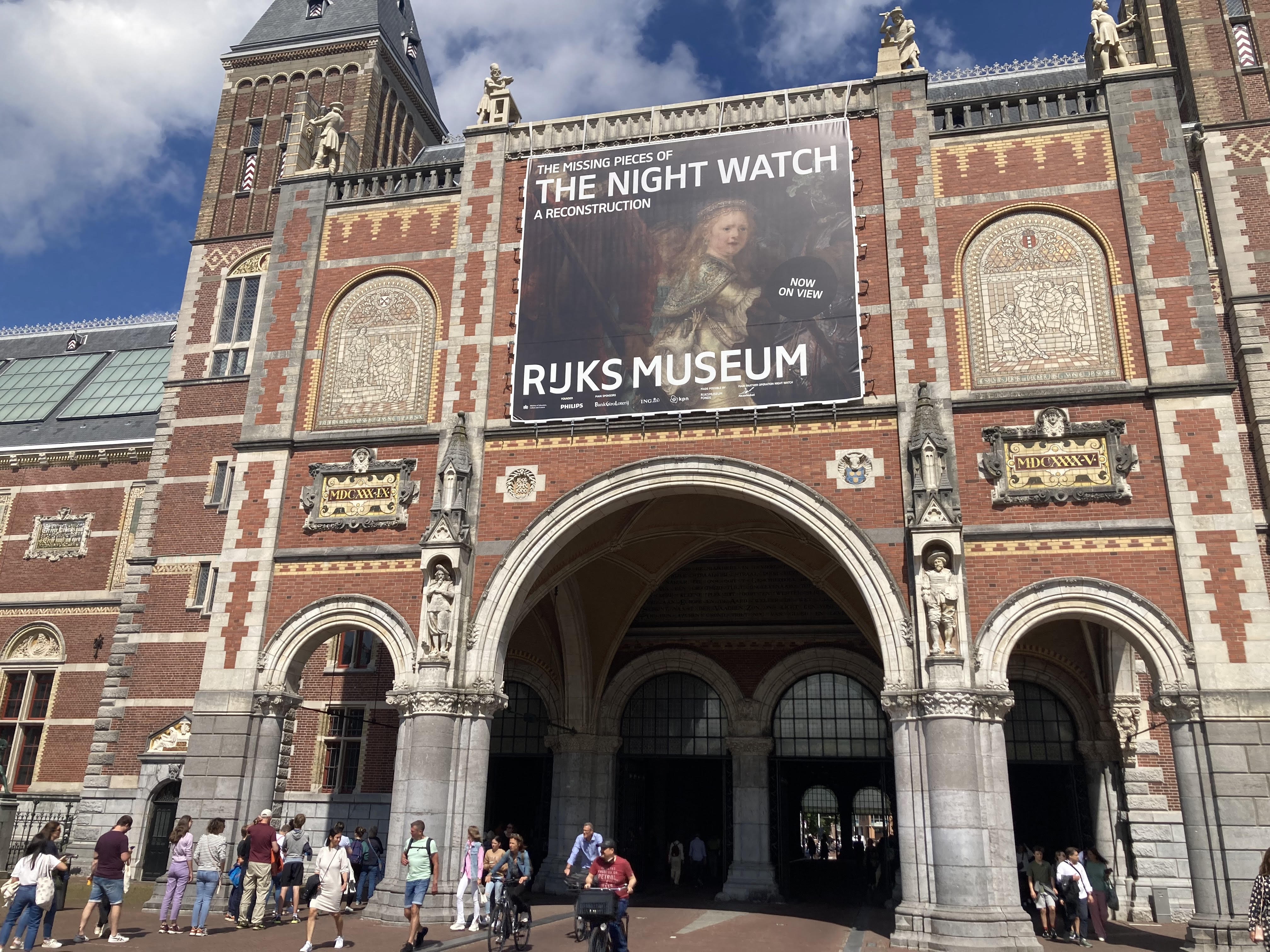

Nice to see a line for art!

Read Full Post »

Photo: PCA Architecture.
The Champs-Élysées will be returned to the French people with wider pavements, bicycle lanes, and more green spaces,” says PCA Architecture.

This post is about a more pedestrian-friendly vision for Paris, but as far as I can tell, it’s still in the imagining stage. Covid, ironically, has helped move things along.

Tim Gibson at the B1M describes what it would be like.

“Mayor Anne Hidalgo has given the green light for the city’s iconic Champs-Élysées to be transformed into an urban garden.

“Traffic congestion has seen the famous boulevard lose its grandeur over recent decades, and many local Parisians have abandoned it in favour of more pedestrian-friendly avenues. Hidalgo hopes to bring the road back to its people by removing its outer lanes, widening pedestrian areas, planting more trees and greenery, and creating dedicated bicycle lanes.

“Plans were first proposed in 2019 by local community leaders who begged the government to restore the road to its former glory. …

“The massive overhaul is part of a £225M project to regenerate Paris’ streets and make the city greener and more people-friendly. Throughout Paris, 140,000 on-street car parking bays will be removed and replaced with vegetable allotments, food composting, playgrounds, bicycle lock-ups and more trees.

Local residents have been consulted on what they’d prefer the spaces to be used for.

‘We can no longer use 50% of the capital for cars when they represent only 13% of people’s journeys,’ deputy mayor David Belliard told The Times.

“ ‘We have to plant greenery in the city to adapt to the acceleration of climate change. We want to make the air more breathable and give public space to Parisians who often live in cramped flats.’

“While plans for the rejuvenation of Paris pre-date COVID-19, the pandemic has expedited the entire process. City-wide lockdowns have shifted the perspective of many Parisians – and others around the world. There is a newfound emphasis on public transport, green spaces, parks and community.

“Hidalgo has become a major proponent of the ‘fifteen minute city,’ where all residents will be able to reach necessary amenities such as shops, parks and offices within a fifteen minute walk or bike ride. …

“Copenhagen continued with plans to become completely carbon-neutral by 2025 and have 75 percent of all journeys be done by foot, bicycle or public transport. Like Paris, the city has started transforming many of its parking bays into areas for plants and trees.

“During the April lockdown, London also shifted space on its roads over to bicycles, expanding its network of cycling lanes.” More at the B1M, here.

I’m hoping Alison, who blogs about her adventures in Paris, will weigh in. Carol at cas d’intérêt, too.

Read Full Post »

Photo: Glasshouse Vintage/Getty.
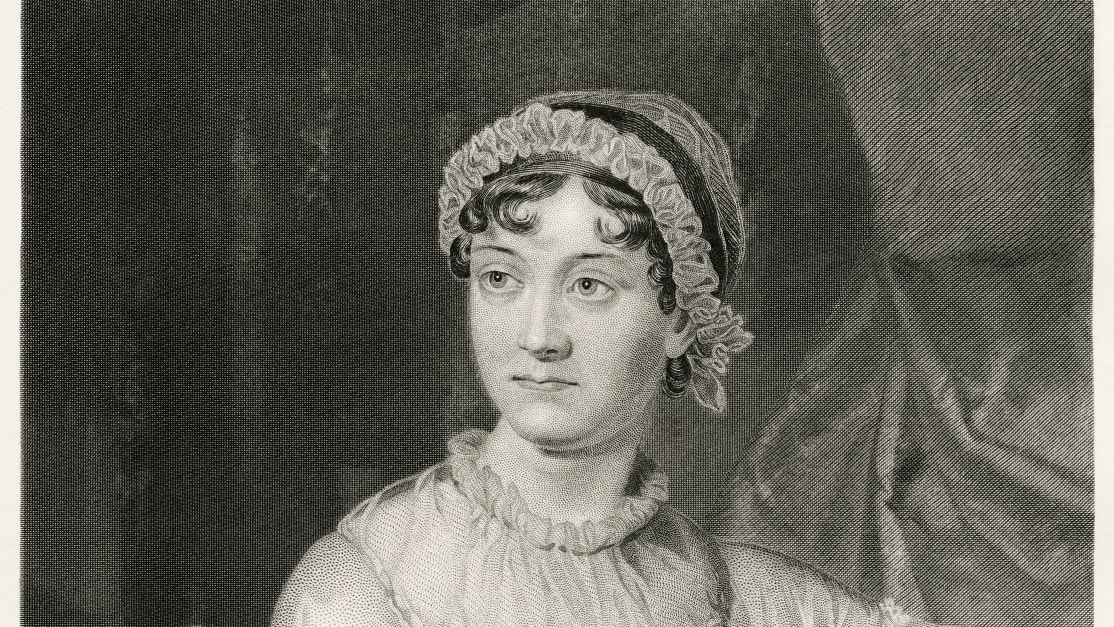
Although Jane Austen’s family had ties to an Antigua property that used slaves, new research hints that the 19th century novelist may have held abolitionist views like her favorite brother.

Just when you think there’s nothing new to be learned about the life of a famous author, someone decides to try a different kind of search. In today’s article, a scholar who already knew quite a bit about Jane Austen’s brother Henry searched for “the Rev H.T. Austen,” the name he used after her death.

Scottie Andrew writes at CNN, “Austen’s personal values — namely, whether she supported slavery — have been debated by literary enthusiasts and experts who read her work like a cipher. A new discovery adds a new wrinkle to the Pride and Prejudice author’s personal lore: Her dear brother Henry was sent as a delegate to the World Anti-Slavery Convention in 1840.

“While it’s common knowledge among ‘Janeites’ — the nickname for Austen’s proudest and most passionate readers — that the author’s brothers privately held abolitionist views, Henry is the first of her six brothers to ‘have participated publicly in anti-slavery activism,’ said Devoney Looser, a preeminent Austen scholar and professor at Arizona State University, who uncovered the record of Henry’s attendance.

“It’s further evidence, she said, that Austen herself might have believed in the abolition of slavery. Looser shared her findings in the Times Literary Supplement, a UK literary review. However, the discovery does not apply to the entire Austen family’s views, Looser says. Austen’s father had ties to a family that ran an Antiguan sugar plantation, and Austen herself never publicly expressed abolitionist views, as far as researchers know. …

‘We’ve wanted to slot her family, and her, as one or the other,’ Looser told CNN of the debate over the Austen family’s attitudes toward and participation in slavery. ‘The uncomfortable truth that my research confirms is that, over the course of 80 years, her family was both.’ …

“Just 161 of her letters exist today, Looser said, but one of them mentions her love of the work of Thomas Clarkson, an abolitionist author. …

“Based on her findings, which Looser said she uncovered in digitized newspapers and church records, Henry was selected as one of two delegates from his town. Looser said it indicates that ‘he would have been a known supporter of, and even a local leader, in favor of abolition.’ The point of the convention, attended by 500 leaders in abolition, was to create a platform for anti-slavery measures around the world and support formerly enslaved Black people who’d been recently freed in the British colonies, Looser said.

“As a delegate, Henry would have debated anti-slavery policies with his peers, most of whom were White men (a handful of Black men served as delegates, and the eight women present weren’t allowed to sit with the men, Looser said). His broader history of activism remains unknown, as none of his letters seem to have survived, but Looser said he was a pastor known for being an ‘excellent public speaker.’

“Henry’s attendance is the first example of public support for abolition among the family, Looser said, and contrasts with his father’s ties to slavery. The Rev. George Austen was close to a man whose family ran a sugar plantation in Antigua and was named a co-trustee for the man’s fortune, Looser said. While her research does not support claims that the senior Austen was directly involved in managing the plantation, he did have a hand in managing the wealth of a man who owed his fortune to enslaved people.

“Though Austen’s work is central to the Western literary canon, for much of the 20th century, experts believed her novels were devoid of politics and nods to controversial subject matter like race and slavery, said Nicole Wright, an associate professor of English at the University of Colorado, Boulder, and an expert in themes of social justice in British literature from Austen’s era. But Austen’s novels aren’t just about fancy balls and complicated courtships.

“More recent scholarship suggests that her novels made subtle references to the evils of slavery. Take the ‘silence’ that inspired many an academic work: A moment in Mansfield Park when heroine Fanny Price questions her uncle about the slave trade and is met with ‘dead silence.’ For many years, that moment was viewed by some critics as complicity. Some Austen scholars today think it might have been a criticism of English society’s discomfort in discussing slavery, Wright said.” More at CNN, here.

You might also be interested in an April New York Times article that reports, “As part of the discussion over racism that followed the police killing of George Floyd in Minneapolis last year, museums have asserted solidarity with the Black Lives Matter movement and begun to rethink and recast how they portray history. Among them is a museum dedicated to the writer Jane Austen in the English village of Chawton.”

Read Full Post »

Photo: Jeff Abbott.
Martín Zapil stands among the lettuce plants growing in one of his plots of land on June 10, 2021, in the village of San Martín la Calera in Zunil, Guatemala. He chose to build a future in Guatemala instead of migrating to the U.S.

It was with considerable disappointment but not much surprise that I heard the message that our vice president was dispatched to relay to Central Americans: Stay home.

But, you know, people leave home only as a last resort. If you want them not to, you have to help make it possible to stay. Today’s article indicates how that might work.

Jeff Abbott and Whitney Eulich reported the story from Guatemala and Mexico for the Christian Science Monitor.

“Martín Zapil crouches down and examines the lush green leaves of a lettuce plant growing on one of his small plots of land here in Guatemala’s western highlands. Access to this land – parcels that he rents from neighbors and family – has given Mr. Zapil the opportunity to build an organic agricultural business, supplying restaurants and local markets with his fresh vegetables.

“And it’s done something else that few in rural Guatemala can claim: It’s given him hope, and alleviated his drive to migrate to the United States. 

“ ‘I’m tied down here; these lands have absorbed me and told me living here is possible,’ says Mr. Zapil, taking a seat on a nearby boulder where he surveys his onion, lettuce, and spinach crops.

“Guatemalans make up one of the largest groups of migrants apprehended on the U.S.-Mexico border in recent years. Many are fleeing rural areas, where climate change and lack of access to land and food have severely limited opportunities to thrive. Rates of chronic malnutrition are some of the highest in the world, racism is rampant toward the nearly 44% of the population that identifies as Indigenous, and corruption is rife, with high rates of violence and crime.

“U.S. conversation about halting migrants and asylum-seekers along its southern border tends to center on ‘push-pull’ factors. Crime, violence, hunger, lack of public services, and limited formal job opportunities push migrants away from home, while promises of employment, family reunification, safety, and education pull them north. But rarely does the conversation focus on learning from cases like Mr. Zapil’s: those who fit the profile of someone prone to migrate, yet decide there’s a way to build a future at home.

“It’s a perspective migration experts say could make or break the success of new U.S. initiatives. …

“Kamala Harris visited the region – her first international visits as vice president – and was criticized for telling Guatemalans, ‘Do not come.’

“ ‘The United States will continue to enforce our laws and secure our borders. … I believe if you come to our border, you will be turned back,’ she said at a press conference.

‘It’s not about telling people not to come to the United States; it’s about explaining or showing them why they should stay’ in their home countries, says Nicole Kast, head of programs in Guatemala for Catholic Relief Services (CRS).

“The international aid organization, which receives the vast majority of its funding from the U.S., recently published a study exploring factors that tend to decrease someone’s likelihood of leaving Guatemala – like education and training opportunities that feed into formal employment, access to fertile land, and a sense of connection to one’s community.

“The U.S. has traditionally looked at migration from Central America ‘as what are the problems that exist in those countries that are pushing people out, and not from an opportunity or resilience perspective,’ Ms. Kast says. She’s hopeful there could be a broader shift in the future to focus on what’s keeping people at home and tailoring aid initiatives accordingly.

“ ‘People don’t migrate because they want to,’ says Juan José Hurtado, executive director of the migrant advocacy group Pop N’oj, based in Guatemala’s western highlands. ‘The lack of hope, the despair is something that pushes [migration].’ Like most people, Guatemalans want to remain in their communities, he says – if they can.

“Mr. Zapil, single and in his 20s, fits the profile of many Guatemalans who head to the U.S. in search of opportunity. He estimates four of his seven closest friends have left in recent years.

“He half expected to do it himself. Zunil is an agricultural town, where children can attend school locally through junior high. If they want to continue studying – as Mr. Zapil did – they have to travel to a nearby city, making a diploma a sometimes cost-prohibitive prospect.

“His father migrated, like many before him, when Mr. Zapil was just 2 years old. The elder Zapil couldn’t read or write, and spent 10 years in the U.S., driven by poverty and a desire to provide for his family. The children’s grandfather raised them, while their father sent paychecks home to put food on the table and keep them in school. When Mr. Zapil was 13, a cousin proposed they migrate north together, and he considered the offer. But his dad had just returned home, and his grandfather raised him with an emphasis on the value of working the land and connecting to his K’iche’ Maya history.

“ ‘I don’t know what would have happened if I had gone,’ he says. ‘My connection to the land helps maintain me. … This is what opened opportunities for me,’ he says. …

“His access to land is key to building what he refers to as the Guatemalan dream. It allowed him to develop his company, Sorel Granjas Ecológicas – a project he’s been working on and dreaming about for at least five years. The pandemic shuttered many markets and restaurants, but he’s continued making connections with potential partners.

“ ‘Those who have sufficient land to live on will not migrate,’ says Mr. Hurtado.”

More at the Monitor, here.

Read Full Post »

Photo: UDiscoverMusic.
Colette Maze was born in Paris on 16 June 1914 and has been playing the piano since she was five years old.

I always like stories about people who accomplish something at an advanced age, but for today’s post, I hasten to point out that the accomplished pianist has actually been working on her skills since 1919.

Maddy Shaw Roberts writes at Classic FM, “On 16 June 2021, Colette Maze celebrated her 107th birthday. She is undoubtedly one of the oldest recording pianists in the world. Her playing, which features plenty of her favourite composer Debussy’s melodies, remains extraordinarily agile and sensitive.

“ ‘It’s no more complicated than eating a salad,’ she told Le Parisien.

“At two or three years old, young Colette heard the children of her family’s upstairs neighbours playing the piano. Inspired, she began to pick out the melodies with one finger. Her parents eventually got the hint and found her a piano teacher.

“Colette spent her childhood bathed in music, and at 16 was accepted to study at the prestigious École Normale de Musique in Paris, just before the onset of World War II.

“Her parents were strict, Colette recalls in an interview, and her mother didn’t like children. To young Colette, the piano became a musical comfort blanket of sorts.

“As an adult, Colette continued her love affair with music and worked as a piano teacher for many years. …

‘My fingers are always working,’ says Maze, who practises for four hours a day. ‘They never get tired.’

“The 107-year-old adds that playing piano helps her to stay loose, engage with her mind and emotions and keep moving. ‘Sometimes I play foxtrots and dance at the piano. I used to go dancing a lot,’ she tells Le Parisien.

“Aged 84, she released her first album. Nearly 20 years later, at 103 years old, she recorded an album of her favourite composer, Debussy. …

“ ‘[Music] is my food, my food for the spirit and for the heart,’ Maze told Reuters after having recorded her sixth album, a three-volume recording of works by Debussy, which she released in April 2021. Last year, she recorded works by another beloved French maestro, Erik Satie.

“Her only son, Fabrice Mace, says his mother has been an inspiration for others during the COVID-19 pandemic.

“To this day, Maze insists that staying young isn’t a question of age – it’s a question of attitude, and staying passionate and curious. If you can do that, Maze tells DW, ‘Staying young is eternal.’ ”

More here.

Read Full Post »

Photo: Slum2School.
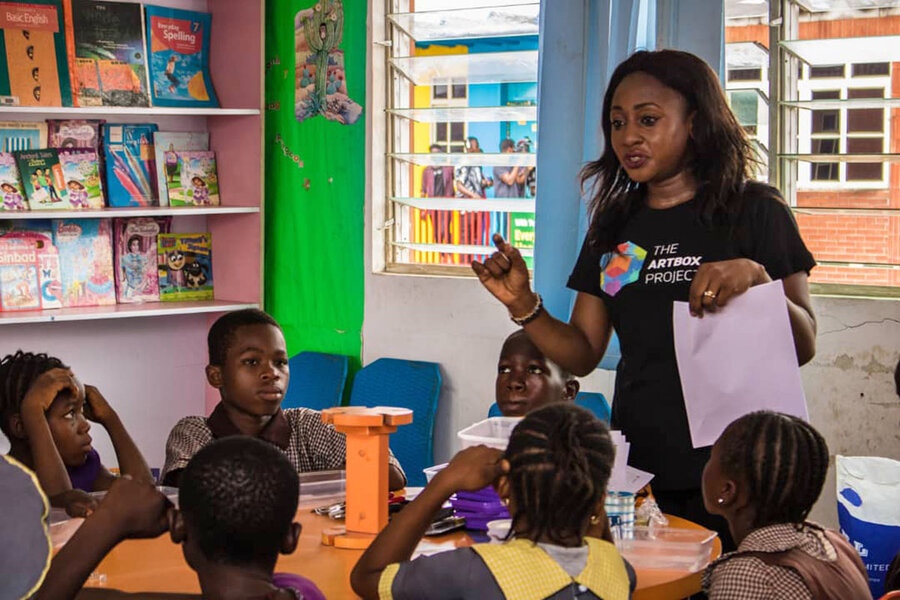
Slum2School volunteers in Nigeria come from all walks of life and help coordinate enrichment activities for children.

One precept that the pandemic underscored for us all is that children need to be in school. We know how hard the year was for American children who couldn’t go in person, but just imagine what it was like for kids in a poor Nigerian neighborhood with no computers! In fact, the children in today’s article are lucky to have school at all. An idealistic young Nigerian man made it happen.

Shola Lawal writes at the Christian Science Monitor, “It was one of the few times Otto Orondaam was ever tempted to quit.

“The year was 2012 and Mr. Orondaam’s passion project, Slum2School, was off to a bumpy start. Here in Makoko, a low-income neighborhood on the Lagos Lagoon, many fishing families need children to stay home and help with their trade. His brand-new nonprofit aimed to get those kids into school, and for weeks, he’d planned an event, hounding a medical company for mosquito nets to hand out as an incentive.

“But just minutes before, the company called – it could not deliver the nets.

“ ‘I cried horribly,’ the young reformer recalls, laughing, sitting in a well-lit office and sporting a deep-blue turtleneck. ‘The parents were waiting and this was going to be the highlight of the event, the only thing they could take home, but there were no nets. It was a heartbreaking moment for me.’

“But Mr. Orondaam’s upbeat personality soon took over. He quickly called up friends, asking for donations. Two hours later, he zoomed in and out of a market, purchasing and distributing 200 mosquito nets – and ended up enrolling 114 children in existing public primary and high schools that the organization partnered with.

“Fast-forward to 2021, and Slum2School says it has directly sponsored almost 2,000 children. Many are still from Makoko – including Hamdalat Hussein’s grandson, Abdulmalik.

‘What Slum2School is doing for us here is good,’ she says in the local Yoruba language. … ‘I am praying to see him become somebody after he finishes school.’

“Nigeria has one of the world’s highest rates of out-of-school children, according to UNICEF – around one-third – although primary education is free and compulsory. Learning during pandemic shutdowns has been especially challenging, since only around half the population has internet access. … When the pandemic struck, Slum2School launched a virtual class for high schoolers, after distributing hundreds of tablets.

“ ‘I was able to teach myself graphics design and many things like how to make logos and flyers,’ says Habeebat Olatunde. Her siblings had skipped around her, fascinated, as she joined hundreds of children in class from their home in Iwaya, another low-income neighborhood bordering Makoko. Now in her final year of high school, Habeebat says she wants to be a human rights lawyer and fight for vulnerable teenage girls. …

“On a recent afternoon, Mr. Orondaam sat in Slum2School’s headquarters in the upscale Lekki area of Lagos, with outer walls shaped like colorful crayons. He flicked through old photos and chuckled at one of himself, thin and sunburned – one of the first times he went to Makoko, standing beside smiling parents holding nets, with the neighborhood’s wooden shacks as a backdrop.

“Growing up in Port Harcourt, a city in southern Nigeria, Mr. Orondaam studied to be a doctor but pivoted to social work, influenced by his parents. His father was the first doctor from his village and would offer free services. His mother was basically ‘everyone’s mother,’ he says. ‘Our classmates would not have sandals, and my mum would come and take yours and give them. The things I picked up from that was devotion to service, serving with your heart.’ …

“He first encountered Makoko through a documentary. … He felt compelled to visit while completing his National Youth Service Corps in Lagos – a mandatory one-year program for Nigerian university graduates.

“ ‘It was the first time I was seeing that kind of community,’ Mr. Orondaam remembers. ‘There were kids there who had never been in school and had no plans to go. I loved the energy. I knew they were happy, but I thought, “You can be happier with education; if you have an education, you can make better choices.” ‘

“He resigned from his stifling bank job and started weekly visits to Makoko, updating friends via a blog. When he came up with the idea to send 100 children to school, they supported him.” 

Read what happened next at CSM, here.

Read Full Post »

Photo: Oxia Palus and Lebenson Gallery London.
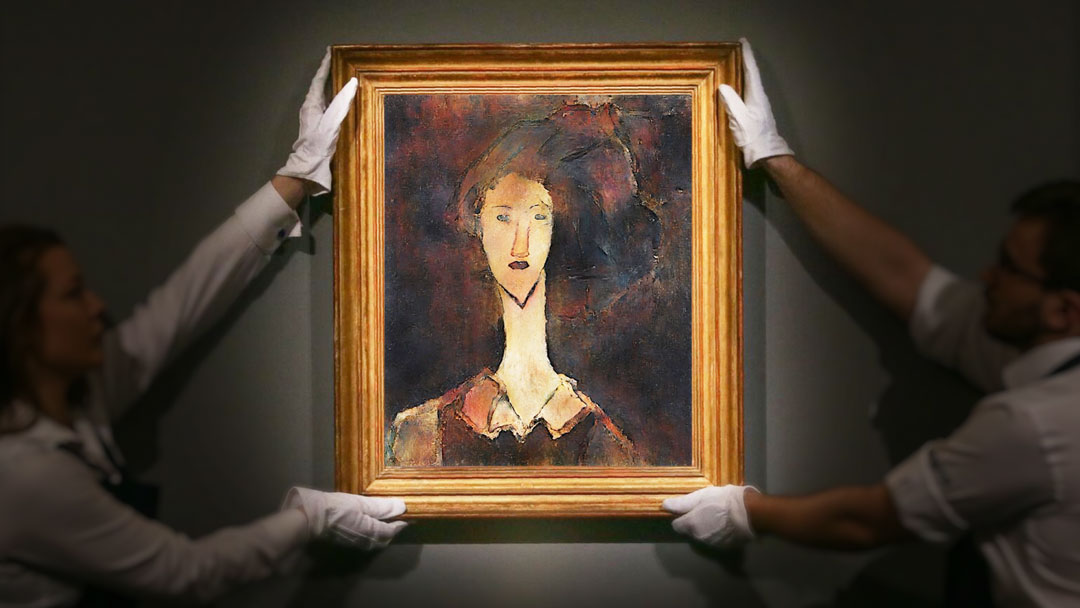
The Hidden Picture of Beatrice Hastings by Amedeo Modigliani was created by Oxia Palus using AI technology.

Nowadays, art and science work hand in hand. Consider this story about how artificial intelligence was used to reveal an unknown painting by a great master. It starts with the practice of “overpainting.”

Suzanne’s art professor overpainted because he wanted you to sense what was underneath. But at Hyperallergic, Lauren Moya Ford writes, “Artists paint over their finished canvases for many reasons — out of frustration at a failed design, because they lack the funds to buy more material, or even to spite whoever or whatever they’ve depicted.

“The latter was the case in Amedeo Modigliani’s ‘Portrait of a Girl‘ (1917), an oil painting of a sullen, seated brunette now held in the collection of the Tate. X-ray studies of the canvas conducted by the museum in 2018 revealed that the piece was originally a full-length portrait of another woman, a slender blonde with angular, elongated features. A portion of this hidden painting — now on view at Lebenson Gallery in London — was uncovered and reconstructed by two scientists using a combination of stereoscopic imaging, artificial intelligence technology, and 3D printing.

“Neuroscientist Anthony Bourached and physicist George Cann joined forces in London in January 2019 to found Oxia Palus, a scientific project that uses machine learning to reconstruct what the duo calls ‘NeoMasters,’ or artworks that have been previously hidden from view under the layers of later paintings. Their past efforts have uncovered a Blue Period nude by Picasso, a Madonna by Leonardo da Vinci, and a landscape painting by Santiago Rusiñol that was later painted over by Picasso, the artist’s friend and mentee. To discover these ‘lost’ works, Bourached and Cann apply a neural style transfer algorithm to X-rays of paintings that are suspected to have another artwork hidden below their surfaces. The technology utilizes imagery from the scan, as well as information from the artist’s other works, to reproduce colors, brushstrokes, and other distinguishing features.

“Unlike conservators or other art specialists, Bourached and Cann bring uniquely non-art areas of expertise to the pieces they analyze.

‘George’s inspiration comes from his research on the surface of Mars for the detection of life,’ Bourached explains in a recent email to Hyperallergic. …

“Who was the woman whose likeness has suddenly been unearthed more than 100 years later? She’s thought to be Modigliani’s ex-lover and muse, the English poet, writer, and literary critic Beatrice Hastings. … The two years that the couple shared an apartment in Montparnasse were creatively productive for both: Hastings published prolifically, and is known to have posed for at least 14 of Modigliani’s portraits. But their relationship was also plagued by alcohol addictions, explosive personalities, and violent confrontations. …

“It was perhaps to symbolically scorn his former lover that Modigliani painted over her portrait in 1917, but, thanks to the two London scientists, Hastings has found a way to see the light again. As she wrote in 1937, ‘Civilized woman wants something more than to be the means to a man’s life. She wants to live herself.’ ” More at Hyperallergic, here.

Who gets the last word about what an artist shows to the world? At some point, the work no longer belongs to the artist but to the public. The only way an artist gets final say, I suspect, is to have some acolyte like Jane Austen’s sister Cassandra, who burned all the novelist’s letters after her death. Cassandra thought that whatever her sister wanted done was more important than what posterity might want.

Read Full Post »

Photo: Clive Barda.
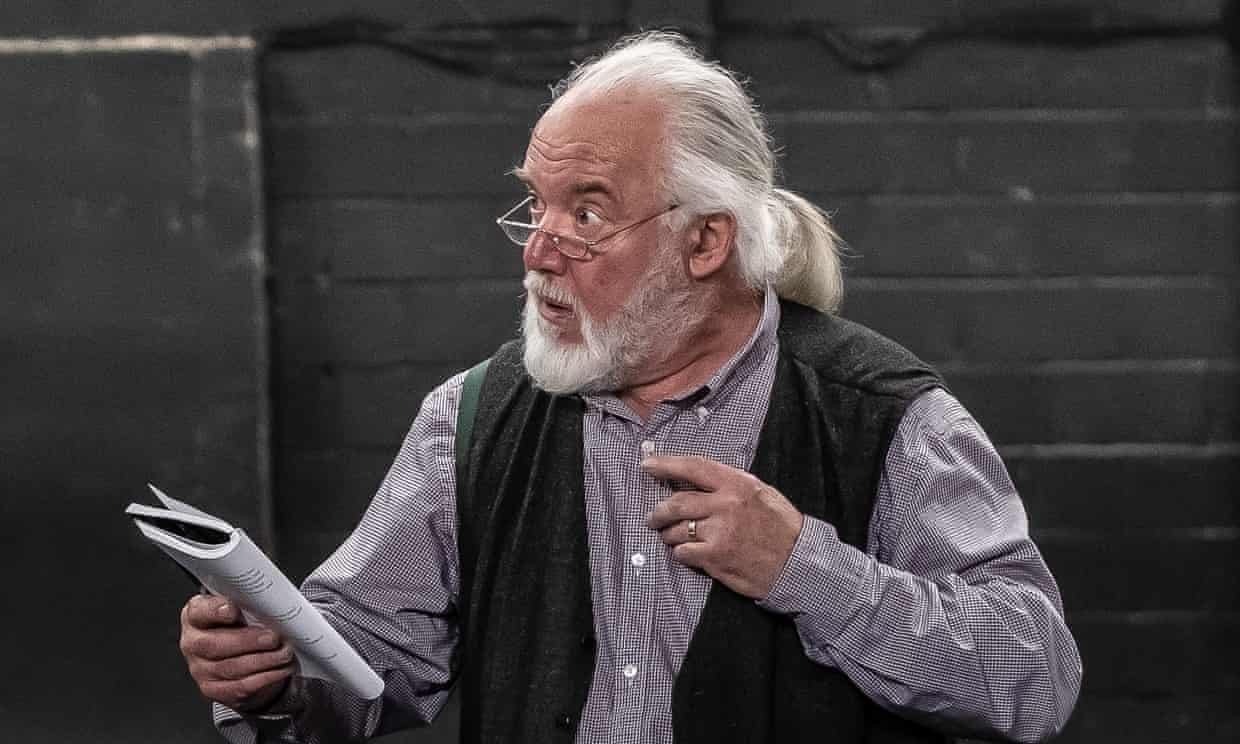
Opera singer John Tomlinson rehearses
King Lear. 

I remember once watching an Aida on television with staging that made my skin crawl. Here was Aida, here was her true love — both knowing they were dying — singing to each other from opposite sides of the cave, no touching. Really? You can’t always blame opera singers for bad acting when it’s the director’s staging that makes no sense.

Today I have a story for all the people who like to listen to opera but hate unnatural staging and acting. Turns out, there are singers who have longed for a chance to show what they can really do with drama.

Michael Billington writes at the Guardian, “I had coffee recently with King Lear and Goneril. To be more precise, with John Tomlinson and Susan Bullock, who play these roles in a brand new production of Shakespeare’s tragedy – one to be staged at the Grange festival in Hampshire [in July] with a cast exclusively drawn from the world of opera. …

“Its director, Keith Warner, says it started with him, Tomlinson and Kim Begley (ex-RSC before turning to opera) planning a two-person version called Lear’s Shadow. Word quickly spread and a reading of the whole play was mounted in Warner’s house. The result is a full-scale production with a dream cast. ….

“Talking to Tomlinson and Bullock, I am struck by their passion for theatre. At college, Bullock played Helena in A Midsummer Night’s Dream and became an ardent fan of Manchester’s Royal Exchange. ‘Seeing Uncle Vanya there with Albert Finney,’ she says, ‘made me think: “This is what I want to do.” When people ask me if I’ve ever acted before, I tell them I’ve been doing it all my life. You don’t get to play Brunnhilde or Electra without being able to act – and singing a Schubert song is a drama in itself.’

“Tomlinson, who made his stage debut at the age of six as a panto sultan, was equally turned on by Manchester theatre and recalls the excitement of going to drama, dance and improv classes when a student at the Royal Northern College of Music. Both are theatrical animals as well as singers – but is there a radical difference between working on an opera and a Shakespeare play?

“ ‘There are a lot of similarities,’ says Tomlinson. ‘You start with understanding the text, letting your imagination flow and working alone before joining the cast. The big difference is that in opera, we are used to emotions being sustained for a long time and underpinned by the music. In a Handel aria you might sing “I love you” for 10 minutes on end. In a play, particularly in Lear where the king is so mind-changing and capricious, you have to be more nimble and quick-thinking.’

“Bullock concurs, pointing out that in opera the drama inevitably starts in the orchestra pit.

‘What is so liberating about a play,’ [opera singer Bullock] says, ‘is that tempo and rhythm are in the hands of the actor, rather than the composer or conductor, and can vary hugely from one night to the next. I am loving the freedom and flexibility this gives me.’

“There is still a popular canard that opera singers are inferior actors: that, at best, they stand and deliver or deploy a limited number of traffic-cop gestures. It is a myth Tomlinson especially can’t wait to demolish. … ‘I’d say that in the UK from the 1960s to the late 1990s, singers were generally very good actors. But I admit that in the last couple of decades, operatic acting has often been stymied by hi-tech design and concept-driven direction that treats the singer as one item in a visual scheme.’ …

“What have Bullock and Tomlinson discovered in rehearsal? ‘That Goneril,’ says Bullock, ‘is not a figure of undiluted evil. She is a complex woman who has suffered from a dictatorial father, who knows that Cordelia is Daddy’s darling and who, quite reasonably, asks why he needs a train of 100 knights.’ …

“For Tomlinson, the whole play is a voyage of discovery. ‘Lear begins,’ he says, ‘as a brutally authoritarian figure but gradually becomes aware of poverty, homelessness, cruelty and injustice. The last is a subject he never stops talking about. … Lear, whose relationship with the Fool is a bit like that of Boris Godunov and the Simpleton in the Mussorgsky opera, also acquires a boundless curiosity. By the end he is not so much morally redeemed as spiritually enlightened.’ “

More at the Guardian, here.

Read Full Post »

Photo: Melanie Stetson Freeman/CSM.
This gourd box and ornament, on display at the Mt. Kearsarge Indian Museum in New Hampshire, were made by Jeanne Morningstar Kent, an Abenaki artist
.

When I was editing the community development magazine for the Boston Fed, I published several articles on the Abenaki people in Vermont. I hadn’t heard of that tribe before and was intrigued to learn they also have a big presence in New Hampshire, Maine, and Canada. Nowadays, they are no longer living their lives below the radar, and a project launched in the middle of the Covid pandemic has helped.

Chelsea Sheasley reports at the Christian Science Monitor, “For years, Darryl Peasley and Sherry Gould, two friends and members of the Nulhegan Band of the Coosuk Abenaki Nation, heard stories about various Native American sites dotting the region around their small southern New Hampshire hometowns. 

“There was the Indian Tie Up in Henniker, an overhanging rock formation said to have been a site where Native Americans camped or spent winters; a mineral springs sacred site in Bradford; and an old chimney in the woods in Hopkinton rumored to hold ties to Native culture. 

“Before last summer, Mr. Peasley and Ms. Gould had visited only a few spots. That’s changed since they launched the Abenaki Trails Project in August 2020 and organized outings to explore each site with other tribe members and community partners. The project aims to create a network of sites and art installations that the public can visit to learn about Native American history and the continued presence of Native Americans in New Hampshire today.  

“ ‘I want to prove that not only did we live here, we still live here,’ says Mr. Peasley, an artist who creates pouches, hats, and dance sticks in contemporary and traditional Abenaki style. He’s mulled over the idea of sharing Abenaki history more broadly ever since he heard state legislators years ago call New Hampshire a ‘pass through’ state for Native Americans, an assertion he and others say is a misconception.  

“Last summer, he and Ms. Gould decided to take action. They approached select boards and historical societies in four towns, asking to work together to better document local Native American history. They’ve held hikes, paddling trips, and spoken at community events, and they plan to branch out to two more towns this summer.

“On June 5 the Abenaki Trails Project and the Vermont Abenaki Artists Association launched an art show at the Mt. Kearsarge Indian Museum in Warner. On display is a birchbark canoe made in the traditional Indigenous style by Ms. Gould’s husband, Bill Gould, who is Abenaki, and Reid Schwartz, a local craftsperson. They sourced all their materials, including white birch bark, spruce root, and moss, within a five-mile radius of Warner. 

“Even in its early stages, the Abenaki Trails Project is ‘raising consciousness, particularly among non-Native people,’ says Robert Goodby, an archaeologist and anthropology professor at Franklin Pierce University in Rindge, New Hampshire, who was invited to attend several of the group’s events to offer an archaeological perspective. 

“ ‘The Native people have always known that they have a long history here and that these sorts of sites exist. For most non-Native people, it’s very easy to spend your whole life living in New Hampshire and never really think about the Native presence here, and I think this is a way of bringing that presence into the light, community by community,’ says Dr. Goodby, who has found evidence in archaeological digs of Indigenous people living in New Hampshire for over 12,000 years. 

The Abenaki Trails Project aims to highlight positive relations between historic Native Americans and European settlers and dispel the myth that Native Americans disappeared from New England – or that they were primarily antagonistic toward settlers.

“ ‘We want people to understand that Abenaki weren’t just what you read in history books, the murderers and marauders. They helped the colonial settlers also or they wouldn’t have known how to plant corn, how to survive the winter,’ says Mr. Peasley on a recent afternoon at the Mt. Kearsarge Indian Museum art show, where some of his handcrafted hats are on display. …

“ ‘Because these initiatives are going on all over New England, I’m hopeful that it will help change dialogue,’ says Christoph Strobel, author of ‘Native Americans of New England’ and a history professor at the University of Massachusetts Lowell. …

“One of the highlights of the Abenaki Trails Project for Ms. Gould, a basketmaker, is how enjoyable the exploratory outings are, which bring together Native Americans and non-Native community partners like historians, geologists, and archaeologists. … Yet Ms. Gould still struggles, she says, with feeling like she lives in a ‘dual reality’ where friends know she’s Native American, but in broader society ‘a lot of people want to think that’s not true or you’re trying to appropriate someone else’s culture.’ …

“It doesn’t help that there are no federally recognized Native American tribes in New Hampshire. The Nulhegan Band that Mr. Peasley and Ms. Gould are members of is headquartered in and recognized by Vermont. …

“The project’s impact continues to ripple out. Heather Mitchell, executive director of the Hopkinton Historical Society, says that seven years ago the society created an exhibit including a paddle trip with points of interest along the Contoocook River. None of the sites included any Native history. This summer, after participating in outings with the Abenaki Trails Project, the society plans another paddle trip that will focus exclusively on Native American points of interest.”

More at the Monitor, here.

Read Full Post »

Photo: AP via News10.
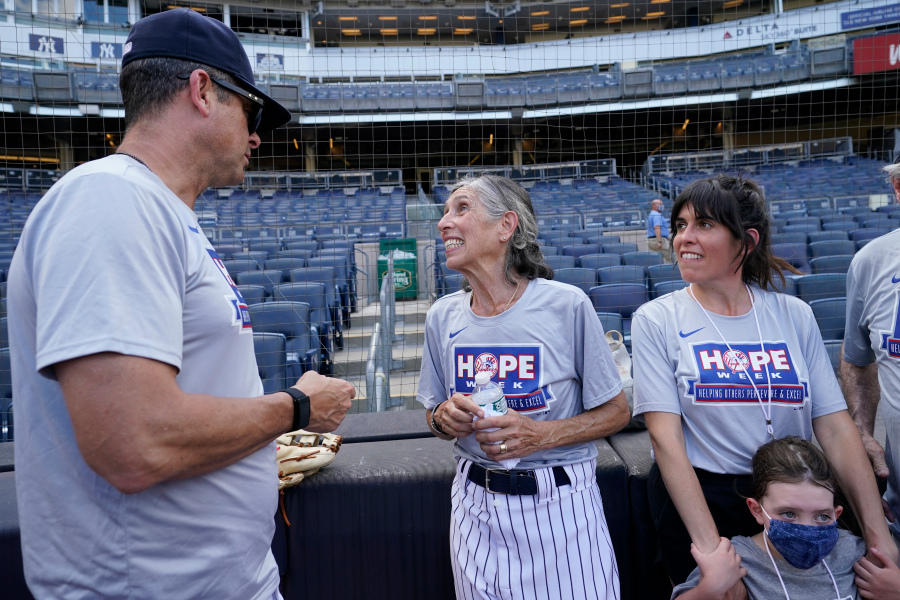
It only took 60 years to fulfill a dream of being a Yankees bat girl! Fortunately, the young lady still has the same dream.

John knew I’d like this story about a grandmother achieving a late-in-life dream. ESPN was among many outlets that carried it.

“Gwen Goldman exchanged fist bumps with the New York Yankees, whom she had been admiring for decades from afar, walked onto the field and waved to the crowd.

“She got to be a Yankees’ bat girl on Monday night at age 70 — a full 60 years after she was turned down because of her gender.

“Shaking with excitement, she beamed while recounting how it felt to be at Yankee Stadium on this day for the game against the Los Angeles Angels. …

” ‘From walking in the front door of the stadium at Gate 2, to coming up to a locker with my name on it that said “Gwen Goldman” and suiting up, then walking out onto the field,’ she said. ‘It took my breath away. … It was a thrill of a lifetime — times a million. And I actually got to be out in the dugout too. I threw out a ball. I met the players. Yeah, it goes on and on. They had set up a day for me; that is something that I never would have expected.’

“Goldman retired in 2017 as a social worker at Stepping Stones Preschool, a public school in Westport, Connecticut.

“She used the Hebrew word ‘dayenu’ — which translates to ‘it would have been enough’ — to describe the different parts of her experience.

” ‘It just kept coming and coming,’ she said.

“Goldman had been rejected by then-Yankees general manager Roy Hamey, who wrote her in a letter on June 23, 1961: ‘While we agree with you that girls are certainly as capable as boys, and no doubt would be an attractive addition on the playing field, I am sure you can understand that it is a game dominated by men. [A] young lady such as yourself would feel out of place in a dugout.’

“Current Yankees general manager Brian Cashman said he had been forwarded an email written by Goldman’s daughter, Abby. In a letter dated June 23, 2021, Cashman wrote, ‘… it is not too late to reward and recognize the ambition you showed in writing that letter to us as a 10-year-old girl.’

” ‘Some dreams take longer than they should to be realized, but a goal attained should not dim with the passage of time,’ Cashman added. ‘I have a daughter myself, and it is my sincere hope that every little girl will be given the opportunity to follow her aspirations into the future.’

“Wearing a full Yankees uniform, Goldman threw out a ceremonial first pitch to New York player Tyler Wade, then stood alongside manager Aaron Boone for the national anthem.

” ‘I think it’s really cool,’ Boone said. … ‘Hopefully, it’s an experience of a lifetime.’ …

“New York extended the invitation as part of the Yankees’ annual HOPE week, which stands for Helping Others Persevere & Excel.

“Goldman posed with the umpires when the lineup cards were brought out. After the third inning, the Yankees played a video that included the letters. … She then was introduced to the crowd, walked up the Yankees dugout steps and onto the field, and waved her cap as fans applauded.”

More at ESPN. Also at the Washington Post.

Read Full Post »

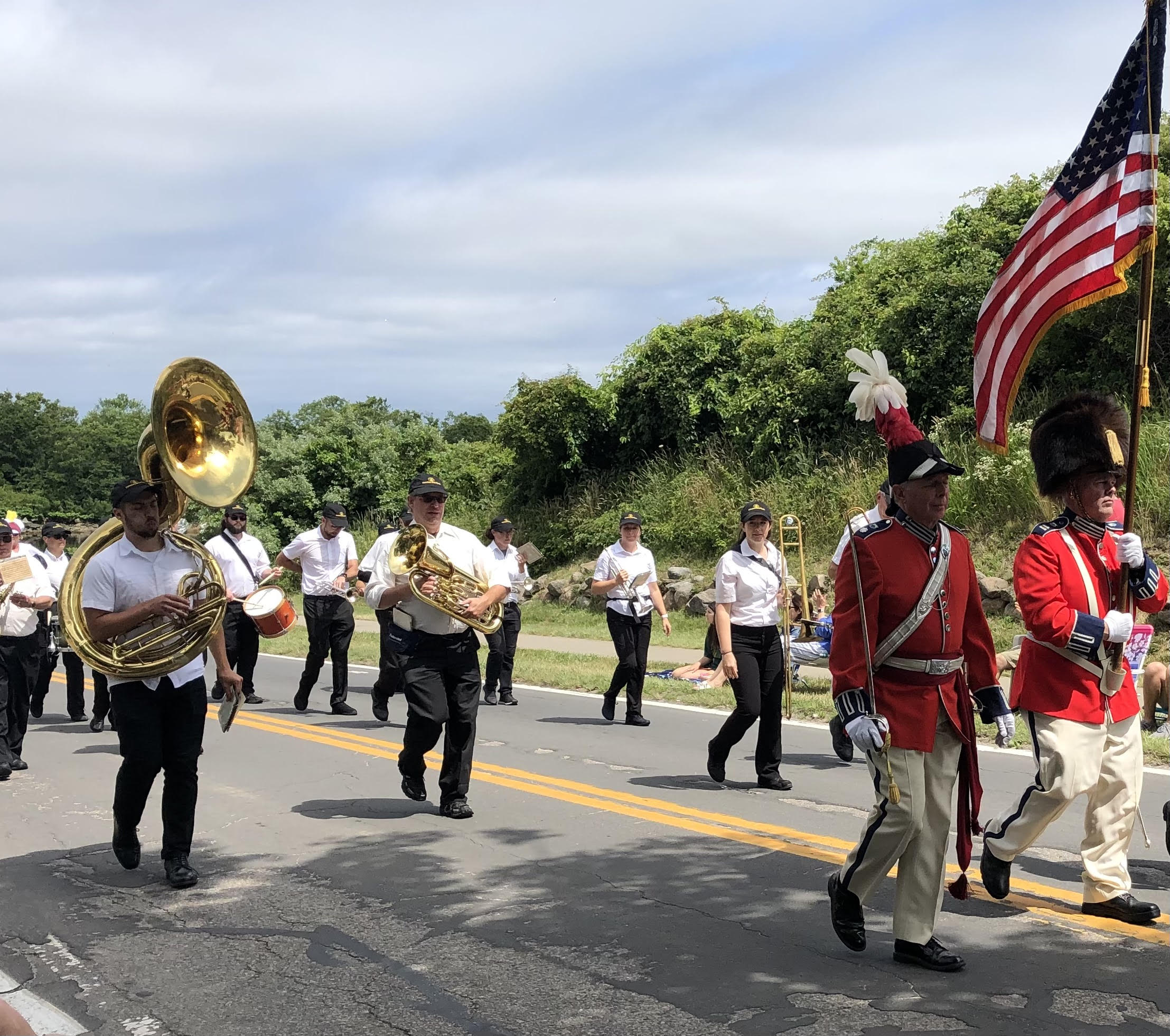
I think I have enough June and early July photos for another round-up. Most of these were taken in Massachusetts and Rhode Island, but I’m including two that Melita sent from Madrid, where (she reports with relief) foreign nationals have finally been able to get Covid vaccinations.

Working backwards from New Shoreham’s July 4th parade, I apologize that the banner is missing an apostrophe. But there was such a sense of relief and gratitude in the air, I think I can let that go. No one knows how long our relief will last — I for one, still put up a mask when I get close to strangers — but it sure felt good for one day.

Another shot from New Shoreham features a blue Lace-Cap Hydrangea. How I love that flower! It says July to me. Next, I have a photo of Great Salt Pond on a cloudy day when the waves on the ocean side of the sandbar were too rough for the grandchildren. Later on, I collaborated with them to identify the Red Admiral butterfly. My husband caught it flying around the house and let it go outdoors.

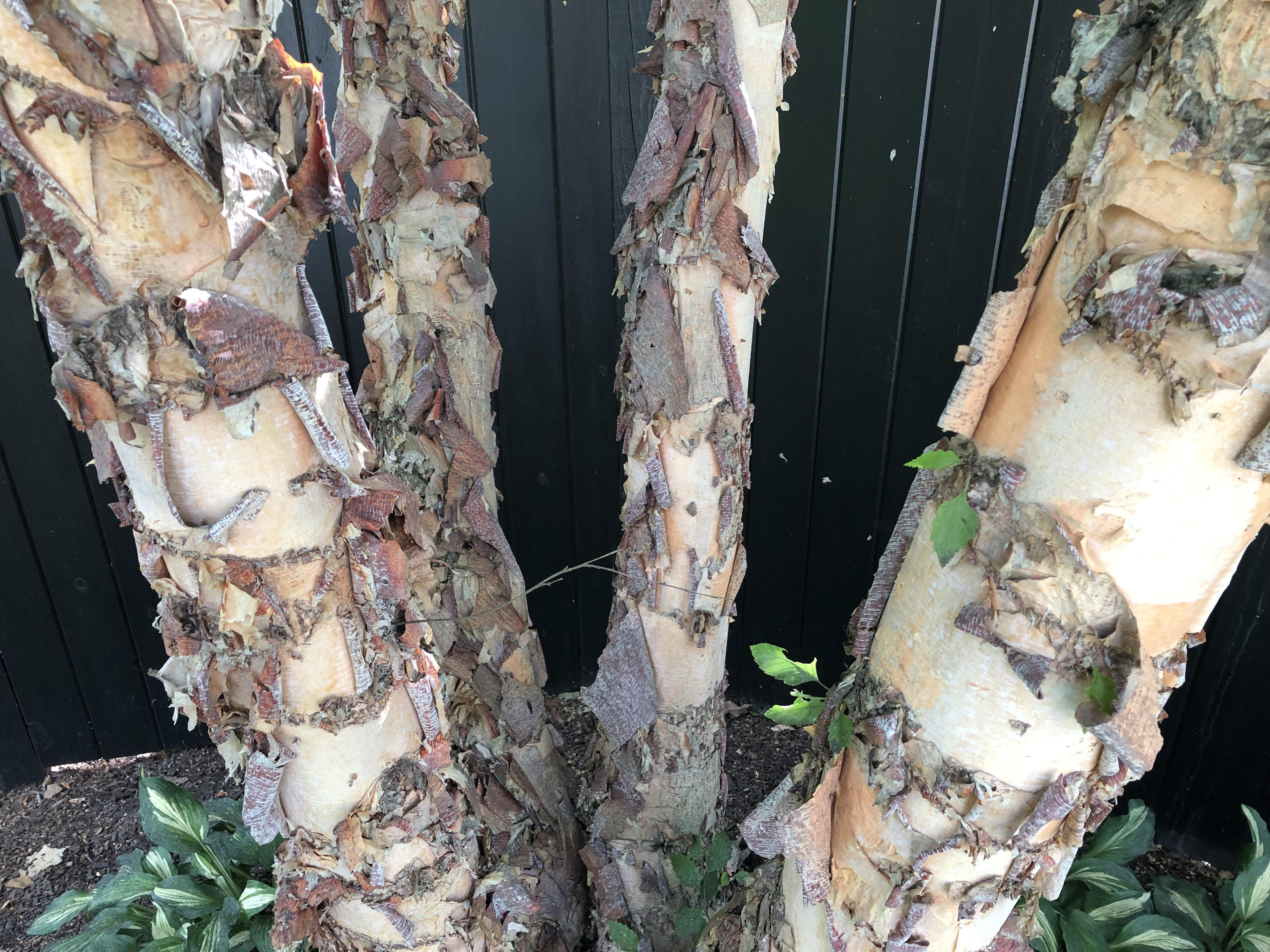
The gorgeous iris and peony from Madrid are followed by the papery bark of the river birch. Such a beautiful tree! And speaking of trees, please applaud the tree puzzle I finally finished. It took me almost six months. It was the hardest puzzle I ever did. But everyone said to do a puzzle in the pandemic.

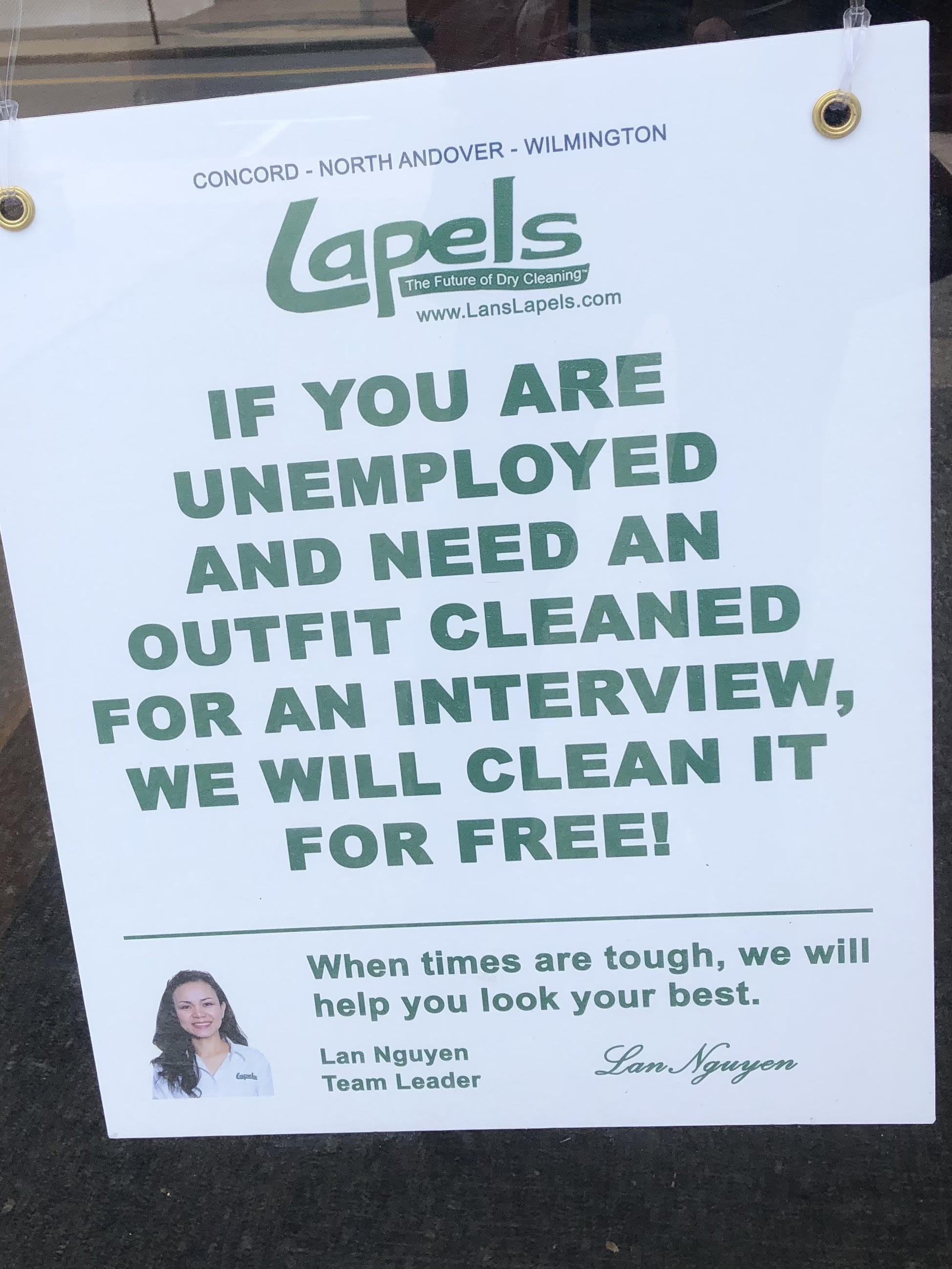
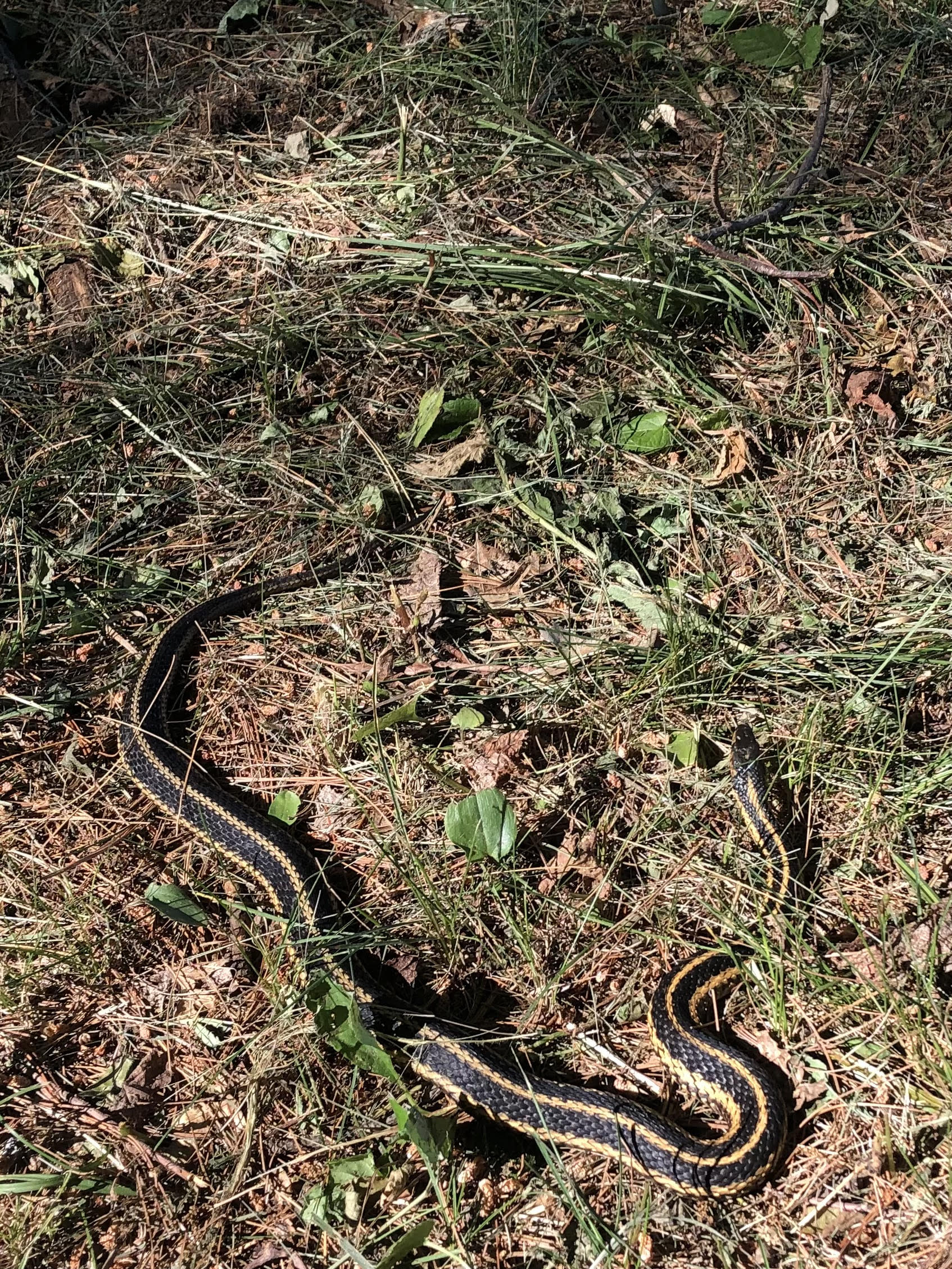
The dry cleaner’s sign speaks for itself. It’s followed by the boat house on the Sudbury River, a kind of garter snake, more flowers, and shadows. I can never resist interesting shadows.

Read Full Post »

Photo: Franco Folini, CC BY-SA 2.0/flickr.
Says Atlas Obscura, “Genetic research indicates that the turnip was likely the first Brassica rapa crop, originating up to 6,000 years ago in Central Asia.”

For something a little bit different, consider “the vegetable that took over the world.” It turns out that different cultures not only develop their own versions of music and art but their own versions of the same edible plant. It helps that the plant in question has triplicated genes.

Gemma Tarlach reports at Atlas Obscura about “the single species that gives us turnips, bok choy, broccoli rabe” …

“The plant known as Brassica rapa has quite the history, one that, after decades of debate, is finally emerging. The single species, which humans have turned into turnips, bok choy, broccoli rabe (also known as rapini), and other residents of the produce aisle, began up to 6,000 years ago in Central Asia.

“[In June] Molecular Biology and Evolution published findings from an unprecedented study of B. rapa that pulled together genetic sequencing, environmental modeling, and the largest number of wild, feral, and cultivated samples ever collected. … The paper is a significant step forward in understanding how one of the planet’s most important agricultural species might weather climate change.

“ ‘This study is really great. I like the approaches they took, and the framework they placed it in,’ says Nora Mitchell, a plant evolutionary biologist at the University of Wisconsin-Eau Claire. Mitchell, who was not involved in the research. … She says the new paper’s environmental modeling — reconstructing conditions under which B. rapa was adapted to different locations, as well as forecasting what changing conditions might mean for its future — makes the study particularly compelling. …

” ‘The work is a particular achievement when you consider both the diversity and global spread of B. rapa crops, wild relatives, and feral varieties that have escaped farmers’ fields’ … says Alex McAlvay, lead author of the study and a botanist at the New York Botanical Garden. Now, he says, B. rapa, in various forms, ‘grows from Alaska to Tierra del Fuego. They grow in Oceania, they grow from Spain to Japan.’ …

B. rapa’s ability to survive as a feral plant worldwide had created a lot of uncertainty about its origins. Botanists often look to wild relatives of crops to help understand where the plants were first domesticated. But B. rapa is everywhere and, before the new research, distinguishing truly wild species from feral escapees was almost impossible. …

“While genetic detective work is always a complex undertaking, McAlvay says he and his colleagues were particularly challenged by a ‘crazy mess’ of genes that originated in the ancestor of both B. rapa and its close relative B. oleracea, another single species that provides multiple vegetables: broccoli, cauliflower, cabbage, kale, and more.

‘One reason we think these species have this incredible diversity is that their ancestor had not only a duplication of their genome, but a triplication,’ says botanist Makenzie Mabry, who coauthored the new paper. …

“While humans and many other organisms inherit a single set of chromosomes, one half from each parent, some plants inherit double sets. The Brassica ancestor had three sets that, says Mabry. …

“ ‘There’s an additional layer of weirdness,’ on the road to domestication and diversification, adds McAlvay: Different cultures selected for certain traits in different parts of the plant. For example, we’re familiar with tomatoes in all colors, sizes, and flavor profiles, but they’re all the fruit of the plant Solanum lycopersicum. For B. rapa, however, ‘with turnip, you’re looking at the root, the underground stem of the plant. Tatsoi is the leaves. Broccoli rabe is the flowers,’ says McAlvay.

“ ‘In China, people saw the same kind of raw material, the turnip, and they did something totally different than the Italians and Spanish did,’ he adds, running down a list of water-rich bok choy, chunky turnips, bitter greens, jagged-leaf mizuna, and other B. rapa permutations worldwide. …

“Digging up B. rapa’s roots is more than an exercise in botanical history. … ‘Food security is a big issue, especially global food security. And with Brassica having so many crops, not only vegetables but for oils as well, it’s really important to continue producing these crop species in the face of climate change, increased drought, and nutrient changes, as well as crop blights and crop diseases,’ Mitchell explains. ‘It’s important to understand not only what happened in the past but how these plants might respond in the future, and to know what kind of genetic resources could increase diversity.’

“McAlvay believes the paper’s findings on weedy, feral varieties may prove particularly significant for breeding better B. rapa crops in the future. ‘For most of recent history, people have dismissed the stray dogs of the plant world as not particularly useful,’ he says. ‘But because they’re already adapted to really rough, tough environments, there’s some push, with the advent of gene editing, to be inspired by those turnips gone wild.’ ”

What a miracle is Nature! More at Atlas Obscura, here.

Read Full Post »

Not long ago, a teacher I work with as an English as a Second Language volunteer asked the class if, like us, their home countries had an independence day. They all did, but it seemed to me that independence from a colonizer hadn’t led to happily ever after. If their countries had flourished after gaining independence, I doubt any of them would have ended up in the USA.

It made me ask myself whether I could identify my own opinions on the building blocks of a successful country. Our recent national introspection has helped. We are looking closer at our history and asking ourselves if it’s really true we’re the only ones on the planet without a stain on our national character. Of course not.

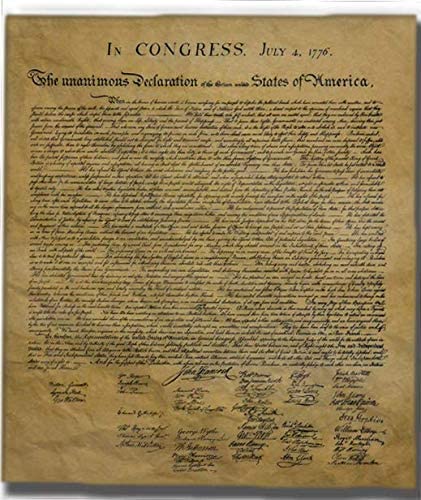
One Glorious Fourth at the Robbins House, a freed slave’s preserved home in my town, I got to hear the whole Declaration of Independence read aloud, and I winced about items I hadn’t remembered, such as the wording about King George using the local “savages” against the colonists. Even more revelatory that day was a reading of Frederick Douglass’s speech “What to the Slave is the Fourth of July?” (Read it here.)

So what makes a country that lives up to its ideals after independence? For starters, I’d say that all adults vote. The corollary to that is that everyone gets a good education so their votes will be informed and based on facts.

Then there are a few things we managed to get into our constitution, things that need to be eternally protected, like the right to free speech and the freedom of the press — to uncover government corruption, for example. There needs to be a structure that enables local resources to be used for good jobs so that people can have homes and other requirements met. There needs to be a fair system of justice in which wrongs are righted as much as possible.

When I think of ESL students from, say, Guatemala, I know that a country’s resources are not always used fairly for all the people. If that were so, those students wouldn’t have become immigrants. The resources have continued to be plundered after “independence,” the government is corrupt, the press is not allowed to say so, and gangs fight everyone over the little that is left.

My knowledge of these things is not deep, but off the cuff, that’s how see what a country needs to be a successful democracy, and I’m hoping you will add some of the important things I’m sure I’ve forgotten. I wonder if we began to think of this holiday as Independence and Introspection Day, we might move a little closer every year to our ideals.

Read Full Post »

Photo: Alfredo Sosa/Christian Science Monitor.
Farmers who aren’t climate-action types may nevertheless be proponents of profitable wind energy. In Knox County, Illinois, the farmers above were glad to get a contract with Orion Energy for a 300-megawatt wind farm that is bringing in extra money for them and tax revenues for the county

One precept that my reading of fiction keeps hammering home to me is that people are complicated. A character doesn’t have to be one of the good guys to do something good or one of the bad guys to do something bad. Similarly, in real life, you don’t have to be on one side of a political divide to find value in something the opposing side values.

This article from the Christian Science Monitor provides an example.

Stephanie Hanes writes at the Christian Science Monitor, “For five generations, Andrew Bowman’s family has worked the land in Oneida, population 700-ish – a flat and fertile swath of Illinois his father always said was good for growing crops and kids. Today, he farms soybeans and corn, as well as specialty popcorn, which he sells under the label Pilot Knob Comforts. Mr. Bowman hopes to have a new resource to harvest soon, as well: wind.

“This past year, Mr. Bowman took a lead representing local landowners in negotiating with Orion Renewable Energy Group, one of the many companies installing wind farms across Illinois, to build a new 100-turbine project in his part of Knox County. Clean energy would not only help keep the local school open and support the fire department and library, he says, but would also offer a new income stream to farmers who agree to lease some of their land for the project – some $30 million over 25 years, according to the proposal. …

“For Mr. Bowman, embracing wind power is part of stewarding the land for the next generation – and one of many steps he and his brother-in-law, Matt Hulsizer, have taken to ensure resiliency on their 1,800 acres. They are acutely focused on soil health, low tillage, and reducing fuel consumption; they have tried organic practices and are investigating cover crops to retain nutrients and prevent erosion.

“But none of this is because they are trying to fight climate change.

“They care deeply about the environment, they say; after all, they live and work in it. But they cringe at the cries for climate action, and they bristle when city people suggest their outdoor, low-consumption life is problematic. … If human-made climate change is happening, they say – something they find dubious – they doubt there’s much anyone can do to stop it.

“For them, tending soil and harvesting wind for clean energy – two initiatives climate scholars say are crucial for reducing carbon emissions – is simply about taking the best steps economically

“And that, scholars point out, is a tremendous shift.

“For years, the dominant narrative of climate action was one of trade-offs and costs – that saving the world as we know it meant taking hard steps to reduce carbon emissions, and likely sacrificing jobs and lifestyle in the process. …

“[But] economic shifts, whether around clean energy or electric vehicles, regenerative agriculture or green construction, may be starting to defuse much of the debate over climate change.

“Instead, climate action has merged with economic progress – particularly when it comes to clean energy. And although climate activists say this awakening won’t by itself put the nation on track to meet the Paris Agreement goal of net-zero carbon emissions by 2050, some suggest it is making that path less arduous, while creating new opportunities and connections for those across the ideological spectrum.

“ ‘There’s an argument that’s been around for a long time, that somehow the economy and the environment are at odds and we can’t do two things at once,’ says Bob Keefe, executive director of E2, an organization of business groups focused on environmental action.

‘What we’re seeing today is that there’s never been more clarity about the economic costs of climate change, or the economic potential of climate action.’

“The narrative of “climate versus jobs,” though, is an enduring one. For decades, environmental protection has been presented in terms of extra costs such as regulations on businesses, requirements for companies, and restrictions on activities. While this wasn’t always divisive – the Clean Air Act of 1970 and the establishment of the Environmental Protection Agency were both highly bipartisan measures, for instance – it has increasingly become a dividing line. …

“Where the left has seen necessary checks on industry for the preservation of the natural world, and the potential for a clean environment to lead to new economic prosperity, the right has seen challenges to businesses, job losses, and economic hardship. Both sides have studies that support their views. Climate action has followed a similar pattern. …

“ ‘We’ve seen that constant conversation about jobs versus climate action,’ says Catrina Rorke, vice president of policy for the Climate Leadership Council, a centrist bipartisan group that promotes policies to price carbon. ‘We think it’s woefully incorrect. We think aggressive climate action can actually unlock a lot of economic activity.’

“In large part, says Stephen Cohen, former director of Columbia University’s Earth Institute, this is because a climate action economy is simply a modern economy – one that is moving away from a stagnating World War II-era industrial approach and into a newly automated, technologically innovative, and cleaner system. …

“ ‘It’s 100 years later and it’s time to modernize,’ he says. … ‘Most of the farsighted businesspeople – they know all of this. It’s how they think about the world.’

“This isn’t just about fossil fuels versus clean energy, he and others say. From the auto industry’s shift to electric vehicles, with all of the connected grid and battery production, to the construction industry’s work retrofitting old buildings, to wind and solar energy jobs, the impact of climate-connected development is broad. It is also spurring a new wave of innovation and entrepreneurship, scholars say.

“None of this means the end to the underlying political tension surrounding climate action. … Nor does this new economy benefit everyone. In any industrial shift, Dr. Cohen points out, some skills and jobs become obsolete. And when it comes to a climate-connected economy, those hardships are concentrated in particular communities, such as in West Virginia and Wyoming, that were built around fossil fuel extraction. In other words, it’s easy to focus on the story of a coal town dying because of a shift in the energy sector. The hardship is concentrated. It’s harder to tell a story when the benefits are diffuse, and everywhere.

“ ‘The losers are more specific and more easily identified – the winners might not exist yet,’ says Wolfram Schlenker, a professor at Columbia University’s School of International and Public Affairs and the Earth Institute.

“Still, Americans increasingly see a price to pay if rising temperatures go unchecked. The number of Americans who believe global warming will harm people in the United States a great or moderate amount grew from 51% in 2014 to 61% last year, according to polling by the Yale Program on Climate Change Communication.

“Here in Illinois and elsewhere, most workers have jobs that aren’t directly focused on climate change. But ‘green’ growth, from the booming renewables market to energy-efficient construction projects, is everywhere.  As a trip across the state shows, the positive economic story of industry that could be categorized as climate-related – even if those involved wouldn’t categorize it as such – is getting easier to observe.”

More at the Monitor, here, where among other topics you can learn about the battle between a fungi protein and chicken nuggets.

Read Full Post »

Photo: Sierra Mar via Forbes.
A California restaurant has initiated impressive air-quality controls post-pandemic.

In the beginning, we were wiping everything down with bleach. I know I kept sharing a video from a doctor who’d worked with Ebola protocols. And for quite a while, I was treating all my groceries as if they could kill me.

Then we learned Covid was contracted mainly through the air, in invisible droplets from people breathing. So now that it’s possible once more to eat indoors in restaurants, the wary among us are asking how well restaurants are doing on ventilation.

At the Washington Post, Chris MooneyAaron Steckelberg and Jake Crump report on a few restaurants in California.

“When California’s Monterey County allowed restaurants to reopen in March, indoor dining returned to the cliff-perched Sierra Mar, known for its spectacular views of the Pacific Ocean.

“The Big Sur restaurant now featured some new pandemic touches: 18 tabletop mini-purifiers, 10 precisely distributed HEPA air purifiers, an upgraded heating and air conditioning system, and four sensors measuring the air quality in real time.

“The bar was closed, and at a table in the back sat someone new: an engineering professor whose specialty is air quality.

‘If this is going to work right, the ventilation keeps up with the head count,’ explained the expert, Mark Hernandez of the University of Colorado.

“Every 15 minutes, he would walk to the front desk to check how many people were now seated indoors. Then he would compare that number to the air’s current levels of carbon dioxide and particulate matter, to see how much exhaled breath lingered in the air and what expelled aerosols it could contain.

“Indoor dining remains risky, as the pandemic rages on, propelled by highly transmissible new coronavirus variants that threaten gains from widespread vaccination. The virus has been brutal for the restaurant industry. … Thousands of restaurants already have shut down permanently.

“Those struggling to hold on are considering a broad range of air ventilation and filtration techniques to keep customers and staff safe. Sierra Mar’s new air-quality experiment, partly funded by a regional foundation, cost about $30,000. That’s a hefty expenditure that might be out of reach for many restaurants running on thin profit margins.

“Mike Freed considers it a worthy investment. He’s the managing partner of the Post Ranch Inn, the exclusive resort that contains Sierra Mar and caters to an affluent eco-conscious traveler. Since the setup, if successful, could potentially be utilized in other restaurants and indoor spaces, the Washington Post asked several experts on indoor air to review the restaurant layout and strategy. They agreed it should work to make the dining experience considerably safer, while noting 100 percent safety is unattainable.

“These experiments in the restaurant industry may usher in a new data-driven relationship with indoor air, with people able to judge where they dine, vacation and work based on the quality and transparency of real-time readings. …

“[One] interior air circulation has been designed, says Hernandez, as a ‘seat belt in a place where you can’t control your peers … This is long overdue for public places.’

“At a time when its vista is clouded by recurrent wildfires, the Post Ranch Inn now displays the restaurant’s air quality updates on its website, so diners can time their escape around what they want to eat — and breathe.”

Check the Post, here, for a variety of new air-quality gizmos. For example: “An air purifier about the size of a water bottle [that] sits on each table. It can’t clean a lot of air quickly, but it can direct filtered air in a small area. And it runs on batteries.

“While the portable air purifier can be tilted toward a person’s face, Hernandez positioned it straight up, to reduce the risk of unmasked diners infecting others by breathing across the table. Instead, the device, made by Wynd and marketed as a personal air purifier, should push any shared or unfiltered air aloft”!

I keep thinking how the the pandemic has created new opportunities for obscure products like that and has also made rock stars out of certain kinds of engineering professors. Those are among the changes we’ll keep.

Read Full Post »

« Newer Posts - Older Posts »