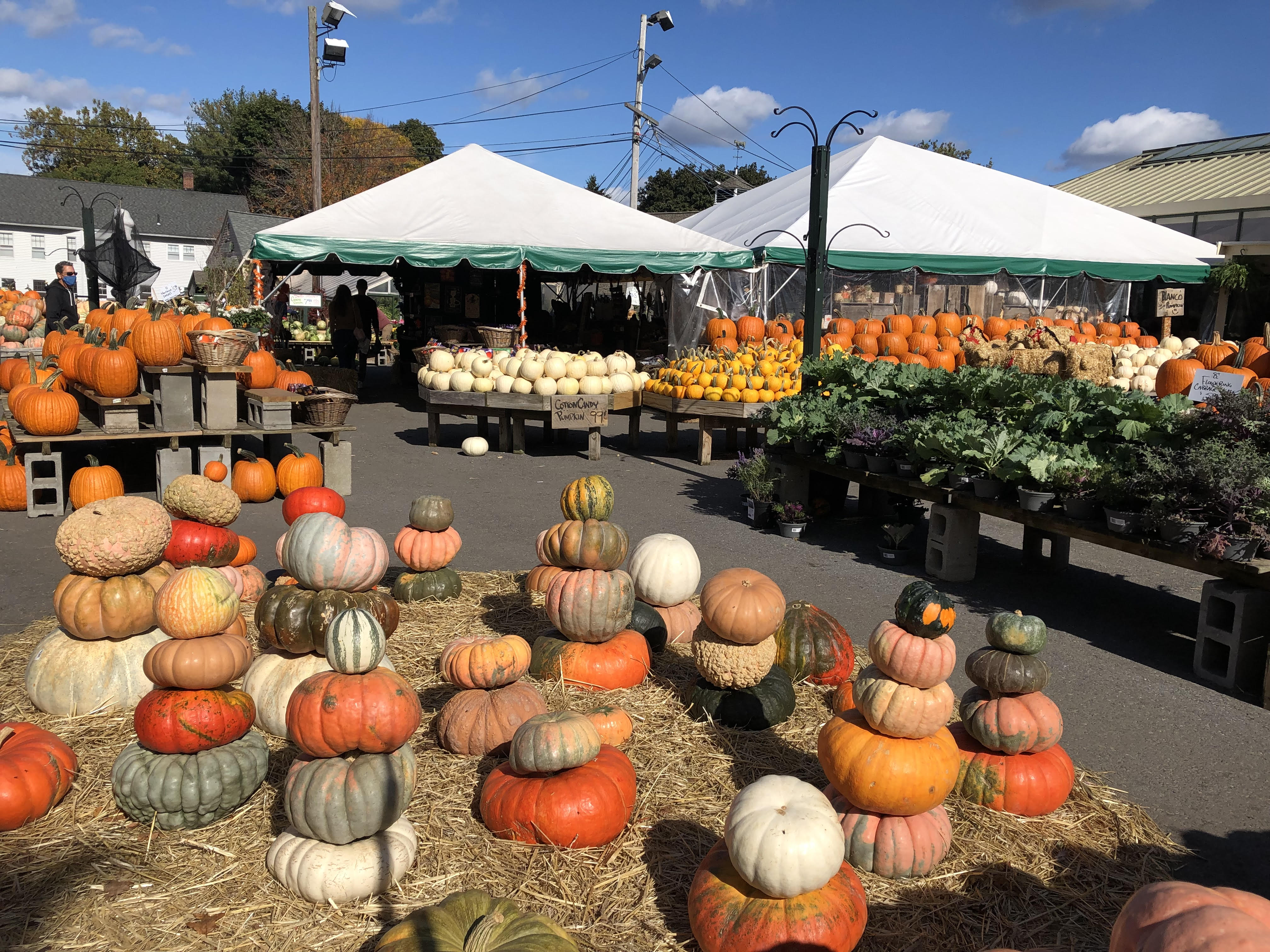
Huge selection of pumpkins and gourds at Wilson Farm, Lexington, Massachusetts.
Most people regard Halloween as simple fun — a moment to indulge in humanity’s playful side. That’s especially true for the very young, if not for the gruesome-looking teens or mischief makers. I always love seeing the littlest ones in their Spider-Man, Snow White, or witch costumes,
But even the creepy stuff is sometimes fun. I went trick-or-treating with John when he was 10, and we loved being startled by what we thought was a bundle of old clothes on the Dallas family’s front steps when it suddenly started moaning.
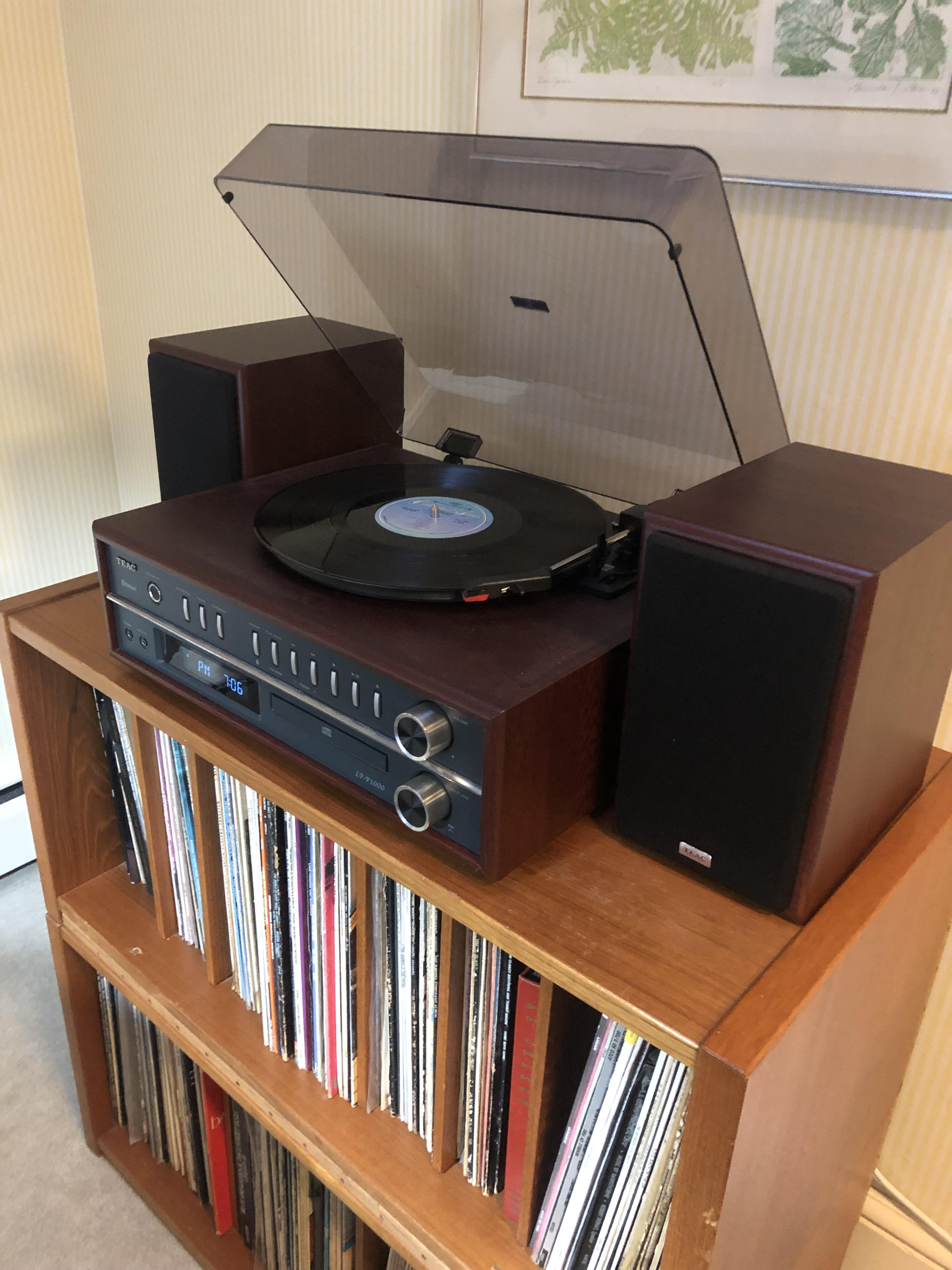
Back at the house, I would usually put on Halloween-ish records and turn up the volume: “Night on Bald Mountain,” “The Ride of the Valkyries,” a pre-Cats version of TS Eliot’s Old Possum’s Book of Practical Cats (narrated in a spooky voice by Robert Donat), and the Lambert, Hendricks & Ross song below, “Halloween Spooks.” Not sure anyone else listened to that background music, but it always got me in the mood.
Nowadays, we alternate between John’s neighborhood Halloween and Suzanne’s. Since we went to his in 2019 and did nothing in the pandemic, we will be with our younger grandson and granddaughter today.
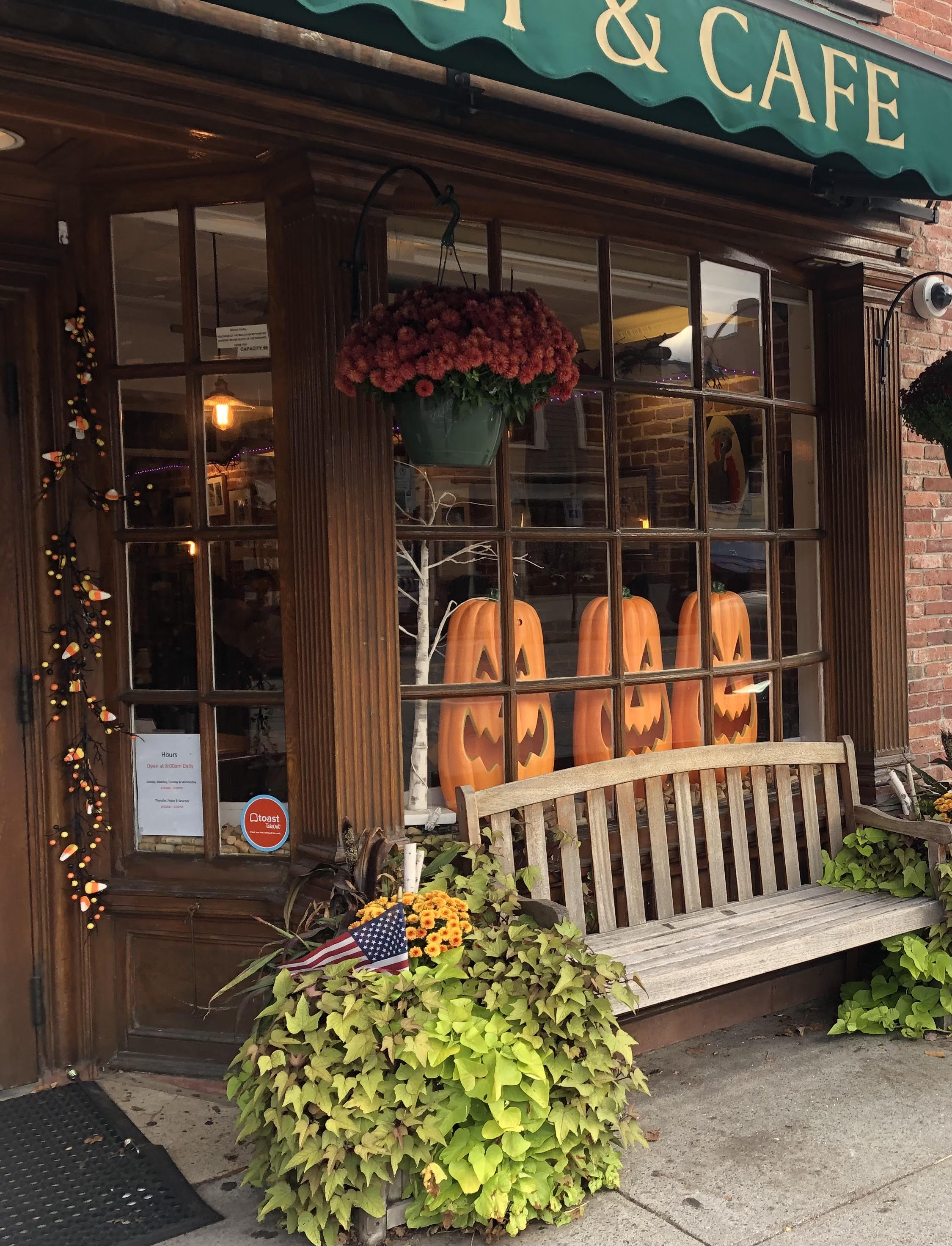
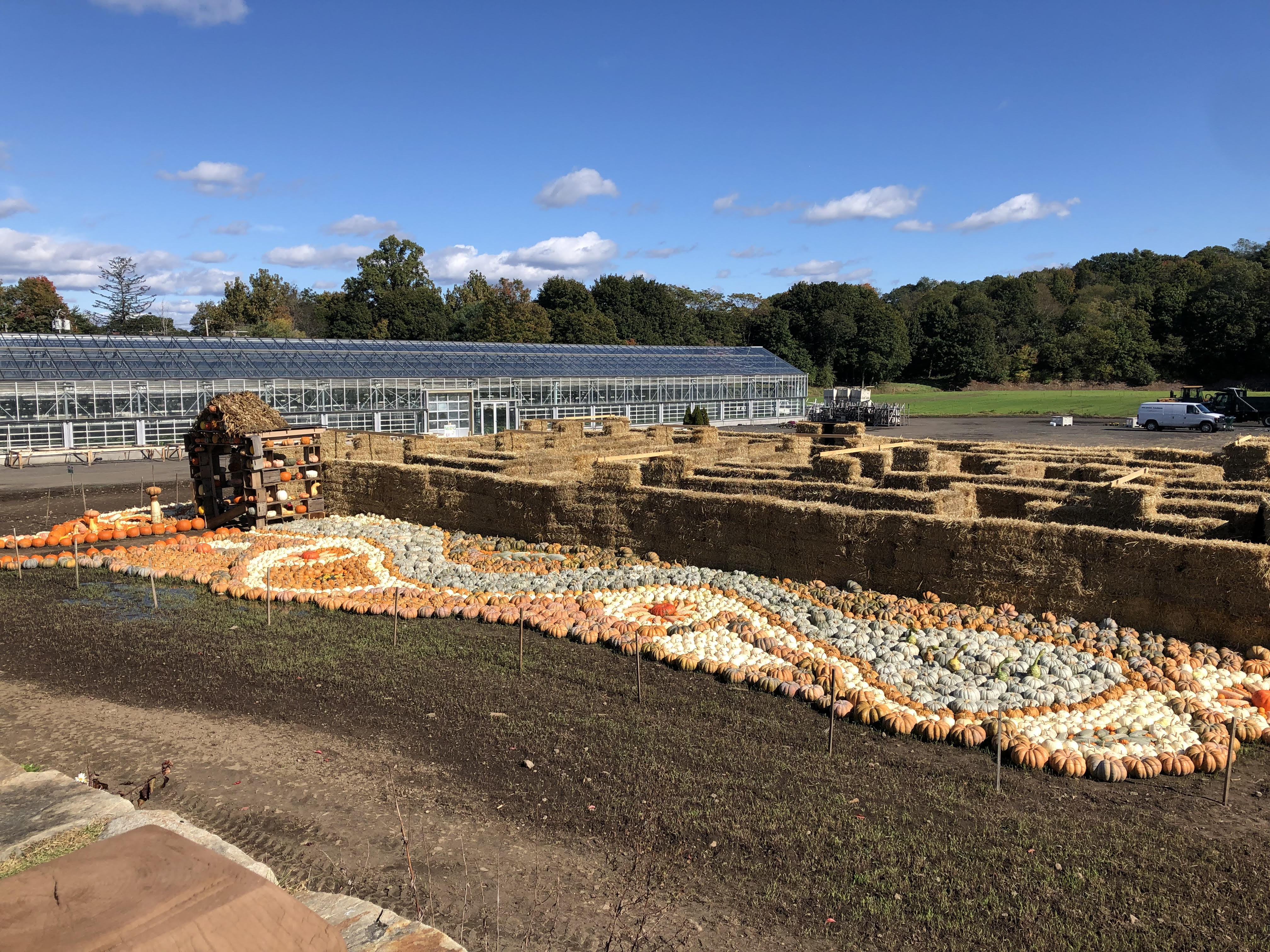
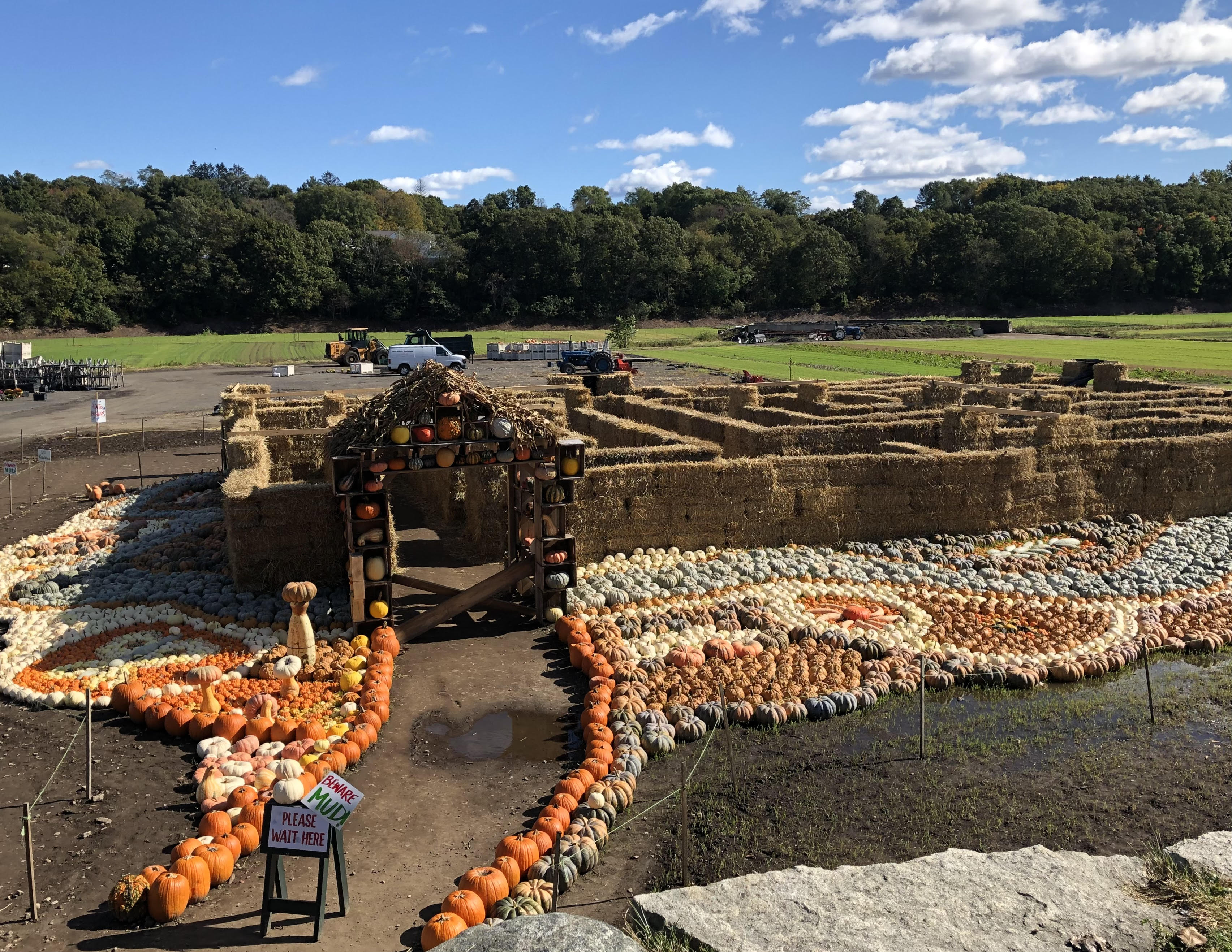
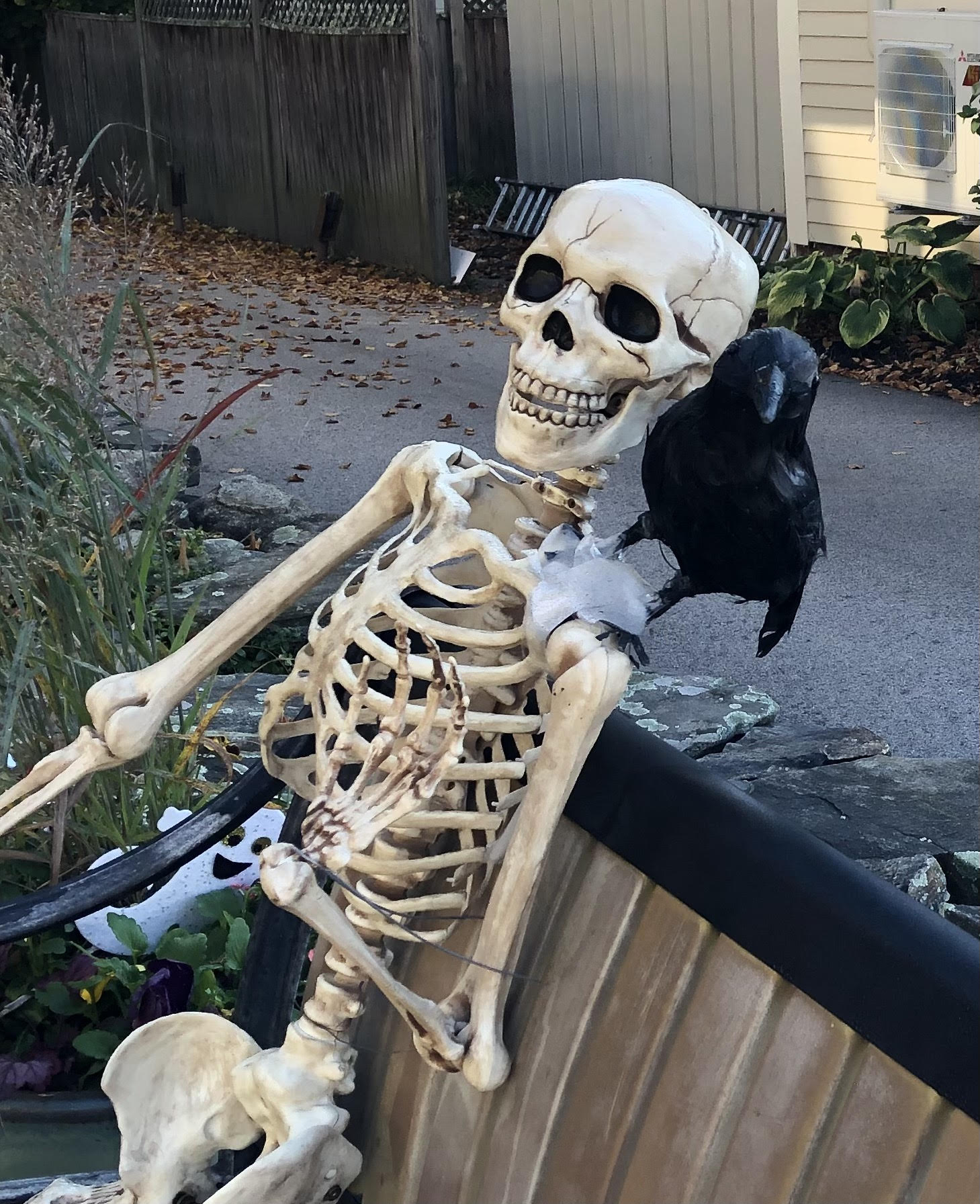
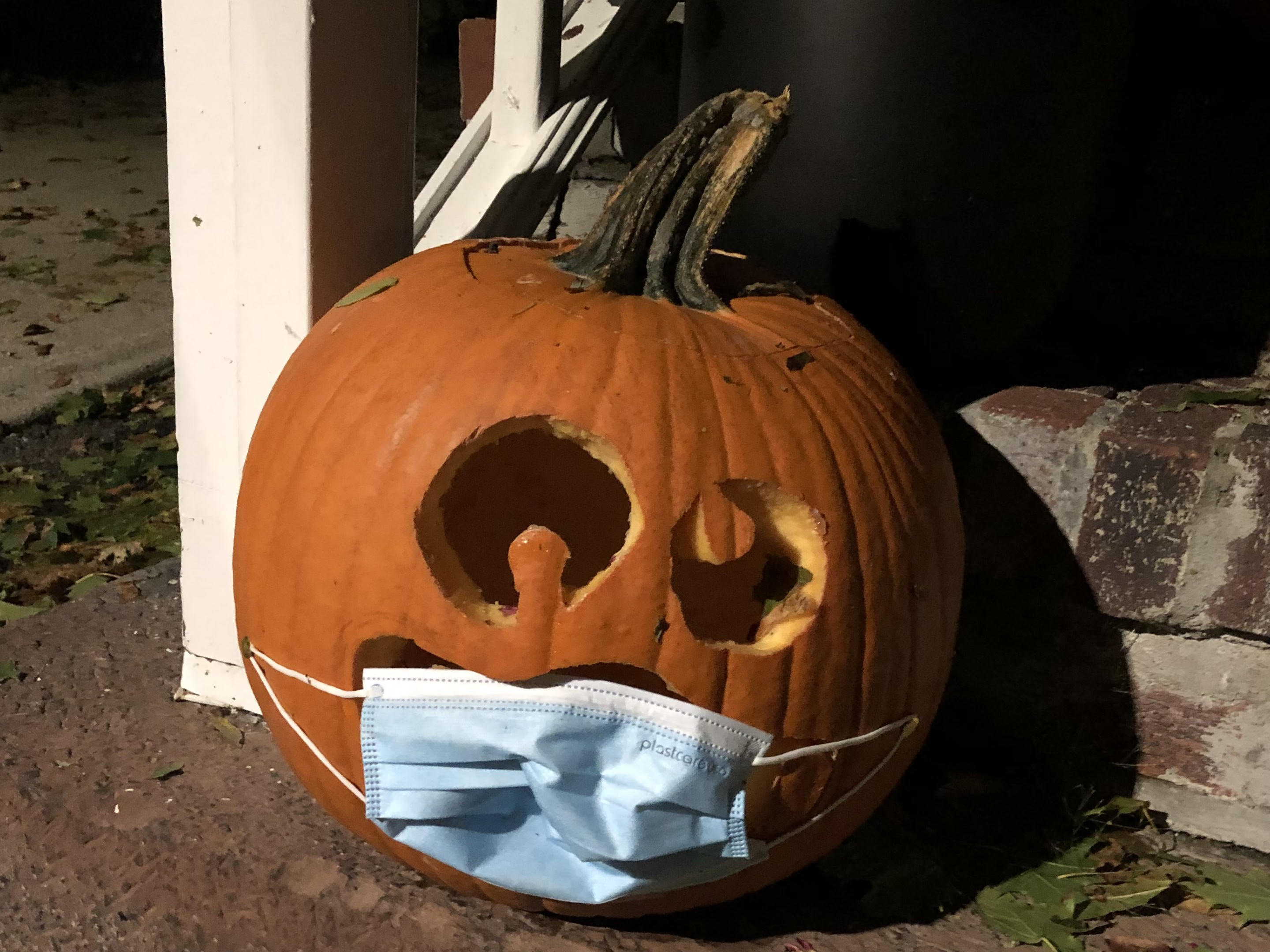
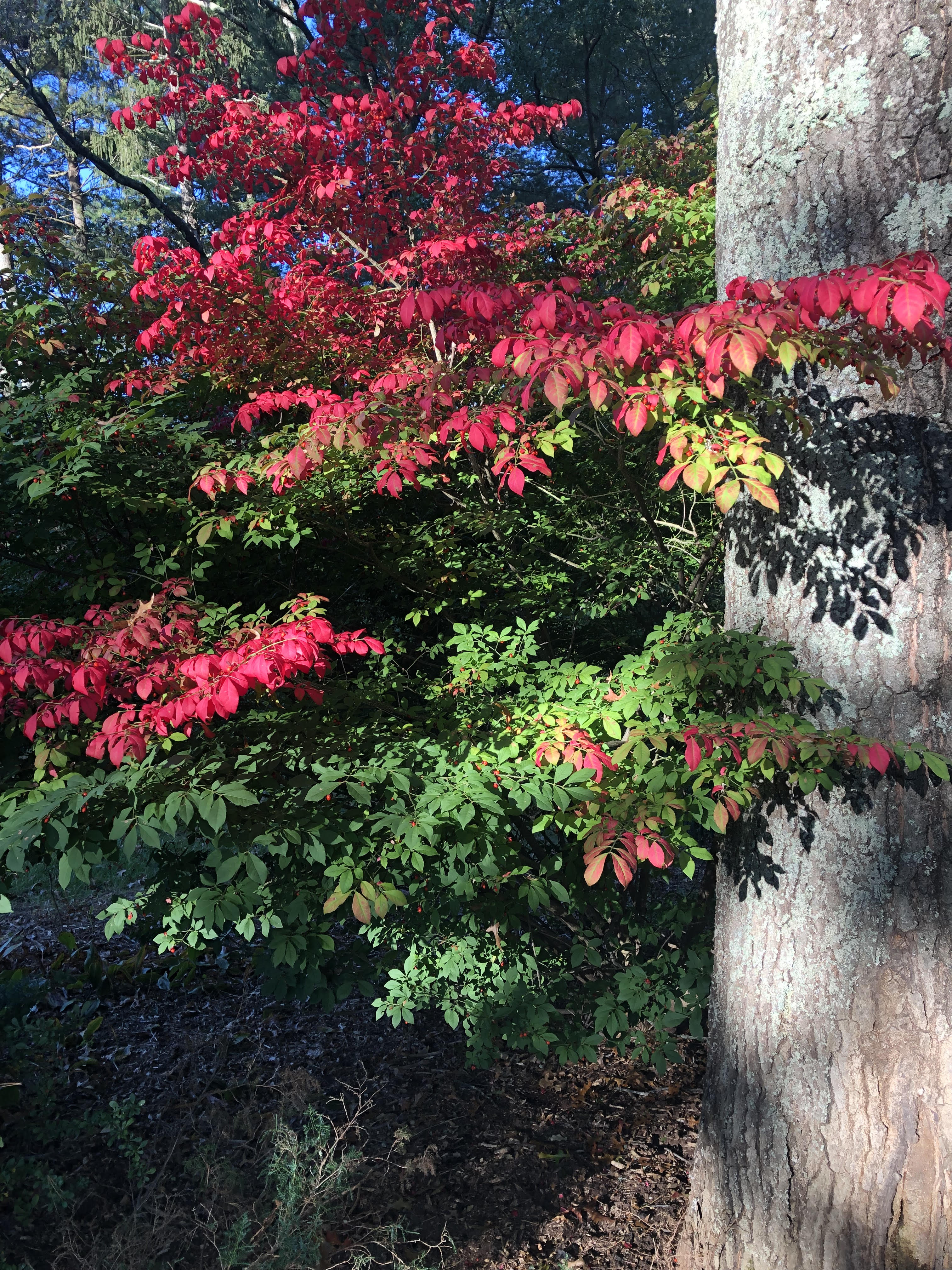
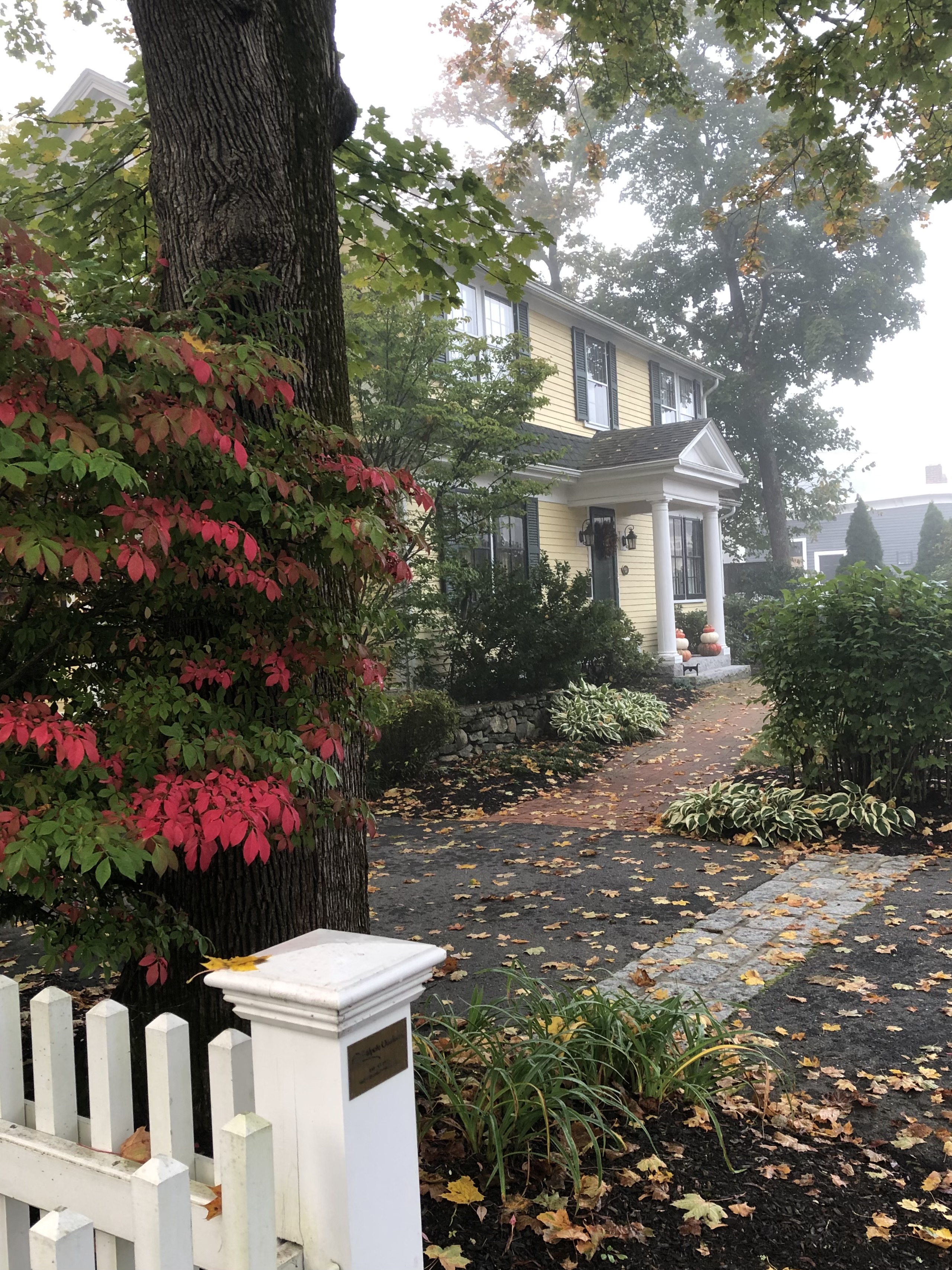
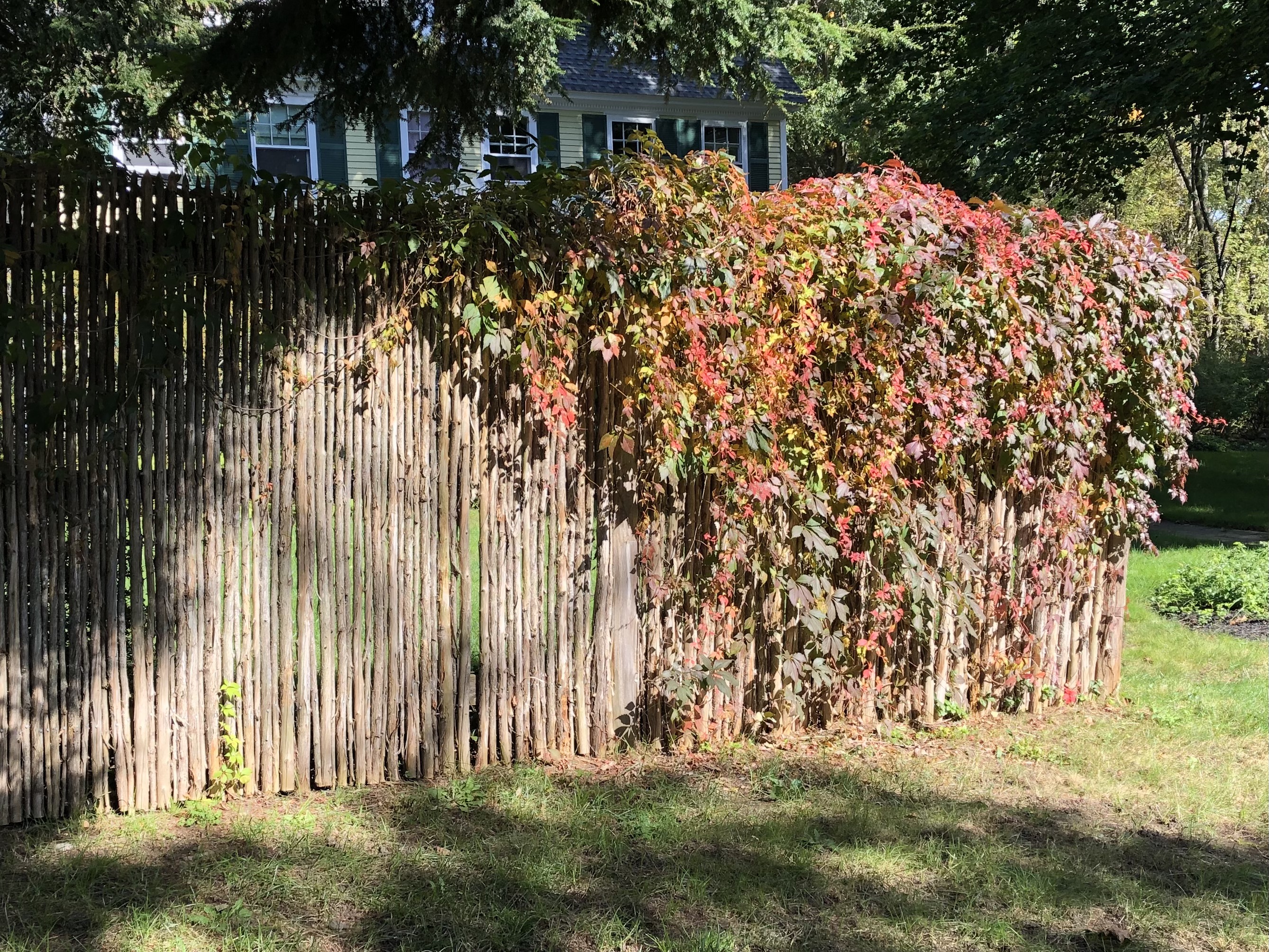
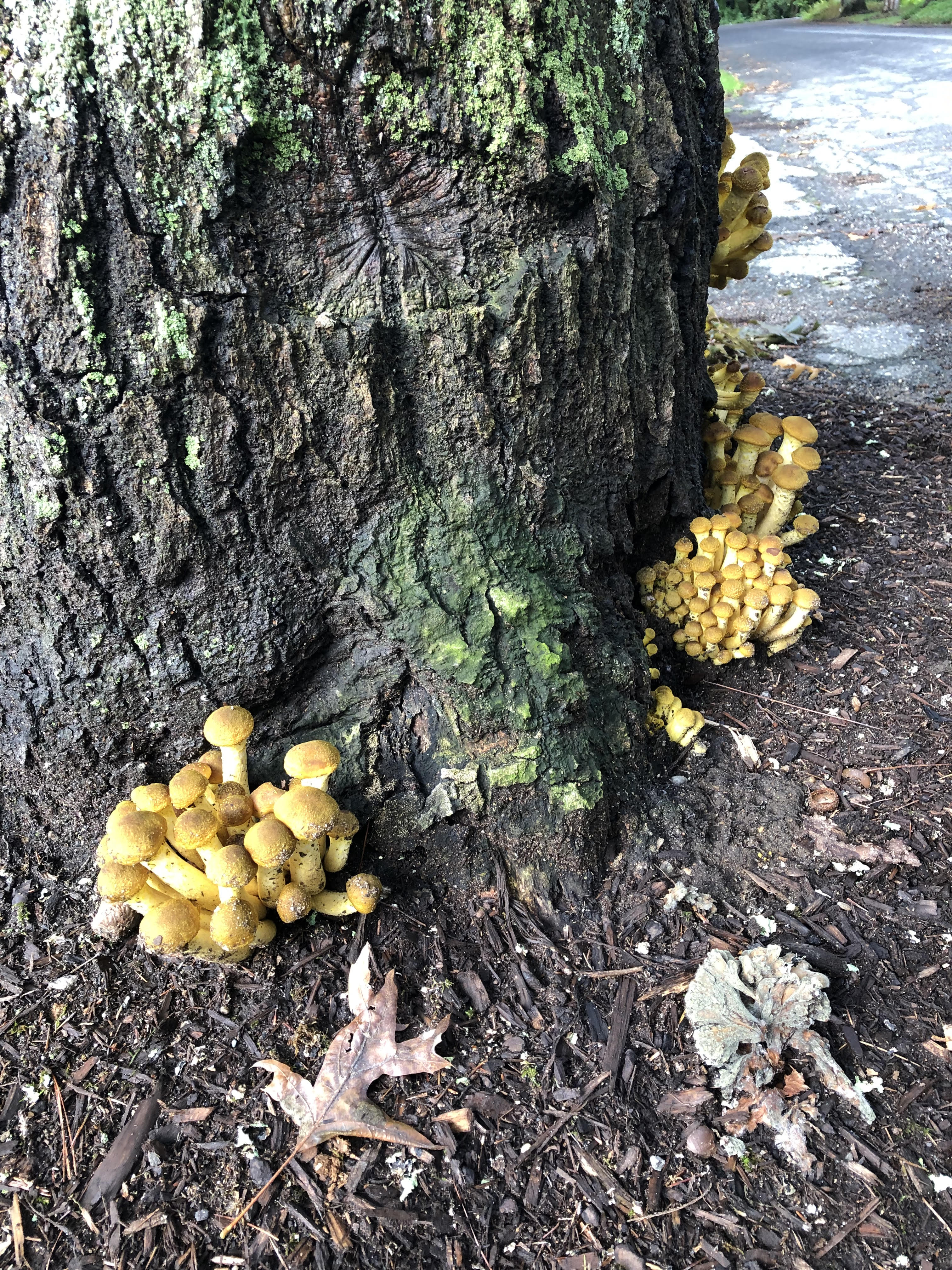
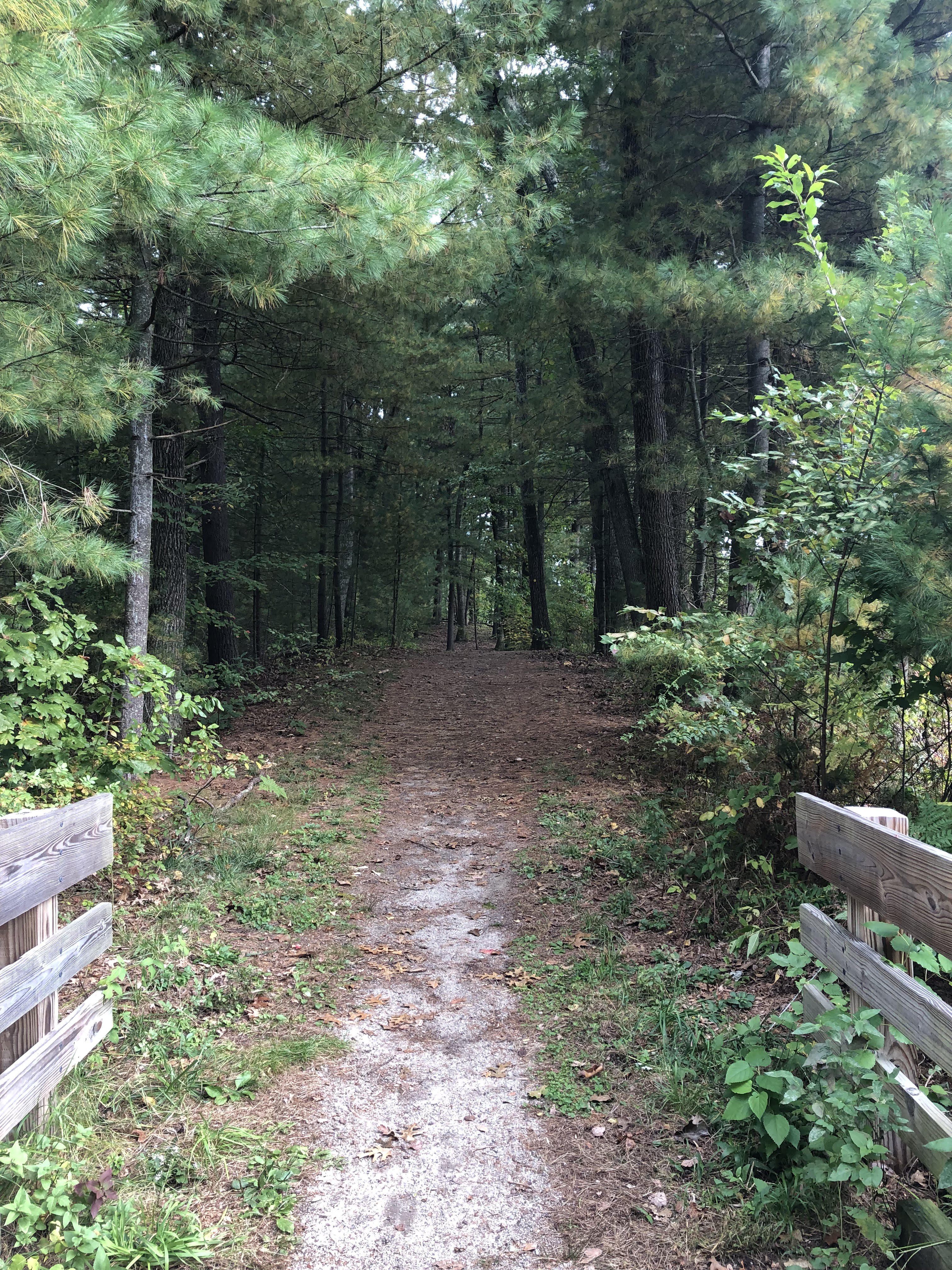
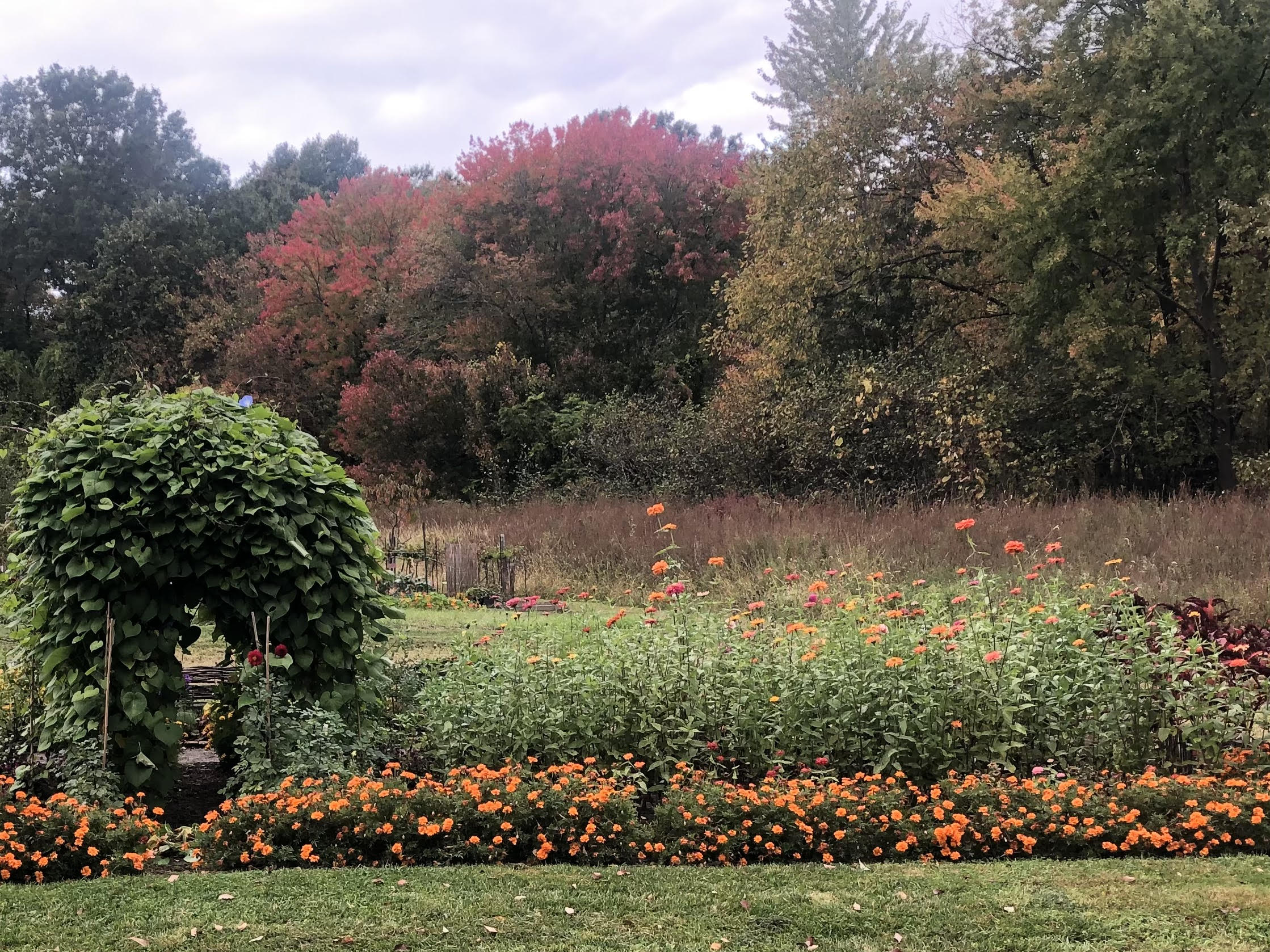
Enjoy a few pre-Halloween photos from around these parts.
I love my vinyl records and can easily understand the renewed demand for them. They’re so popular, there isn’t enough vinyl or pressing equipment to create all the new ones wanted right now. I sympathize, but what should I do with my anti-plastic concerns? Buying vintage is always a good solution for getting products that don’t hurt the environment, but new bands can hardly use vintage vinyl.
Ben Sisario wrote recently at the New York Times about the challenges.
“Within the Indianapolis office of Joyful Noise Recordings, a specialty label that caters to vinyl-loving fans of underground rock, is a corner that employees call the ‘lathe cave.’ There sits a Presto 6N record lathe — a 1940s-vintage machine the size of a microwave that makes records by cutting a groove into a blank vinyl platter. Unlike most standard records, which are pressed by the hundreds or thousands, each lathe-cut disc must be created individually.
‘It’s incredibly laborious,’ said Karl Hofstetter, the label’s founder. ‘If a song is three minutes long, it takes three minutes to make every one.’
“This ancient technology — scuffed and dinged, the lathe looks like something from a World War II submarine — is a key part of Joyful Noise’s strategy to survive the very surge of vinyl popularity the label has helped fuel. Left for dead with the advent of CDs in the 1980s, vinyl records are now the music industry’s most popular and highest-grossing physical format, with fans choosing it for collectibility, sound quality or simply the tactile experience of music in an age of digital ephemerality. After growing steadily for more than a decade, LP sales exploded during the pandemic.
“In the first six months of this year, 17 million vinyl records were sold in the United States, generating $467 million in retail revenue, nearly double the amount from the same period in 2020, according to the Recording Industry Association of America. …
“Yet there are worrying signs that the vinyl bonanza has exceeded the industrial capacity needed to sustain it. Production logjams and a reliance on balky, decades-old pressing machines have led to what executives say are unprecedented delays. A couple of years ago, a new record could be turned around in a few months; now it can take up to a year, wreaking havoc on artists’ release plans.
“Kevin Morby, a singer-songwriter from Kansas City, Kan., said that his latest LP, ‘A Night at the Little Los Angeles,’ barely arrived in time to sell on his fall tour. And he is one of the lucky ones. Artists from the Beach Boys to Tyler, the Creator have seen their vinyl held up recently. …
“For Joyful Noise, the vinyl crunch has also presented a puzzling problem. Up to 500 V.I.P. customers pay the label $200 a year for special editions of every LP it makes. But the production holdups mean the label cannot predict which titles will be ready during 2022. …
“The label’s solution is to make lathe-cut singles for each of the eight albums it intends to release next year, as placeholder bonuses while its customers wait. Doing so will cost Joyful Noise money and time — Hofstetter groaned as we calculated that eight records with five minutes of music per side, cut 500 times each, would take 666 hours of lathe work — but the label sees it as a necessary investment. …
“The pandemic shut down many plants for a time, and problems in the global supply chain have slowed the movement of everything from cardboard and polyvinyl chloride — the ‘vinyl’ that records (and plumbing pipes) are made from — to finished albums. In early 2020, a fire destroyed one of only two plants in the world that made lacquer discs, an essential part of the record-making process.
“But the bigger issue may be simple supply and demand. Consumption of vinyl LPs has grown much faster than the industry’s ability to make records. …
“ ‘What worries me more than anything is that the major labels will dominate and take over all of the capacity, which I don’t think is a good idea,’ said Rick Hashimoto of Record Technology Inc., a midsize plant in Camarillo, Calif., that works with many indie labels. Others say the big labels are just a convenient target. The real problem, they believe, isn’t celebrities jumping on the vinyl bandwagon but that the industrial network simply has not expanded quickly enough to meet growing demand.
“ ‘Am I mad that Olivia Rodrigo sold 76,000 vinyl copies of her album?’ said Ben Blackwell of Third Man, the record label and vinyl empire that counts Jack White of the White Stripes as one of its founders. ‘Not at all! This is what I would have dreamed of when we started Third Man — that the biggest frontline artists are all pushing vinyl, and that young kids are into it. If someone is mad that that prevents some other title from being pressed,’ Blackwell continued, ‘it feels a little bit elitist and gatekeep-y.’ “
Photo: Laura Mam. The artist’s mother writes the Cambodian lyrics. It makes her feel like a teenager again. She says, “This is what I would have wanted to be, you know, be silly, be brave,”
In today’s story, a pop star of Cambodian heritage stumbles on the fun of sharing her parents’ language with audiences hungry for a contemporary vibe.
Quinn Libson reported the story for National Public Radio (NPR) in February 2020.
“Laura Mam is one of Cambodia’s biggest pop stars, but she wasn’t born or raised in the country. She’s American, and even though both of her parents are originally from Cambodia, she hardly spoke a word of the country’s language, Khmer, when she first became famous there.
“Laura’s fame happened almost by accident. It all started 10 years ago, at her mother’s house in San Jose, Calif. It was Christmas Eve and Laura was home after graduating with a degree in Anthropology from the University of California, Berkeley.
” ‘I had been writing music and my mom was kind of interested in what I was doing. I think I went to her room and I was playing this song. I was like “Hey mom, could you write lyrics in Khmer on top of it?” ‘ Laura says. …
” ‘The first song, I didn’t understand what I was doing and I didn’t know how to rhyme,’ Thida says.
“But Thida gave it a try, and it turned out she had a knack for it. They called the song ‘Pka proheam rik popreay,’ which means ‘morning flower is beautifully blossoming.’ A few months later, Laura and some friends made a music video and uploaded the song to YouTube, not expecting much.
“The morning after the music video went live, they woke up to a big surprise. The video had reached 75,000 views in the course of a single night. But it wasn’t just about the numbers. The viewers’ reactions stunned them.
” ‘The comments were all just like “Yes! Original Cambodian music, oh my god!” ‘ Laura remembers. The comments came streaming in from all over the world. …
” ‘I was from Phnom Penh. And when I was growing up the music scene was huge. During that time there were all these new artists writing all these new sounds, new music,’ [Thida] says.
“This was the early 1970s and Cambodia was in the middle of a music renaissance. … While most fathers at the time might have discouraged their young daughters from diving headfirst into Phnom Penh’s music landscape, Thida’s father was different. …
“Thida says. ‘It was a beautiful childhood I had here in Phnom Penh until the war.’
“[In] the background of Thida’s childhood, bombing campaigns by the United States as part of the Vietnam war and political upheaval meant Cambodia was growing more and more unstable. And in the countryside, a radical Marxist insurgent group — the Khmer Rouge — was steadily amassing power. …
“Educated, urban families like Thida’s were considered politically suspect and were forced to live under intense scrutiny in regime-controlled villages.
” ‘As a child, I was wild,’ Thida says. ‘And then [during] the Khmer Rouge, I had to shut down the feeling. It’s as if there’s a lid put on top of something that bubble[s].’ … When the Vietnamese army swept through Cambodia in 1979, Thida’s family fled across the border to a camp in Thailand. And in 1980, when Thida was 19, she and her family came to California as refugees.
“Thida wanted her children to grow up feeling fully American — Laura and her younger brother had American friends and spoke English at home — but at the same time, Thida found ways to weave bits of Cambodia into their lives. Much of that revolved around music. …
“The Khmer Rouge had targeted and killed musicians. … The Cambodian music industry that came after had been shaped by that grim reality. The result was a country whose airwaves were flooded with cheaply produced, karaoke-style covers.
” ‘There was no pride in that kind of music for me,’ says Laura. Thida agrees. … ‘We were longing for something of our own. It’s a quiet longing.’
“The global reaction to the song they wrote showed Laura and Thida they weren’t the only Cambodians who felt that way. So they wrote more. … The process wasn’t always easy. For Thida, helping Laura transform her lyrics from English to Khmer often meant not just translating words, but translating culture as well. …
‘I would write these very American songs with such American attitude and then my mom would have to translate it into this really good girl who doesn’t break any of the rules and just loves with all the poetry of her heart,’ Laura says.
“But they got better at melding their points of view, and Laura’s fame in Cambodia started to grow. But fame alone wasn’t the goal: For both women, the real mission was to foster a more creative Cambodian music industry. To do that, Laura saw she’d have to leave California behind. …
“Moving to Cambodia opened Laura’s eyes to what was happening behind the scenes of the country’s music industry. ‘Once I got here, it was realizing that it’s not that people can’t do original music, it’s that they aren’t allowed to. [Karaoke] houses were like “No, you can’t do original music because that would be only one album a year and I need to sell 12 to 25.” ‘
Read more about this mother-daughter success story and why they created their own production company, here.
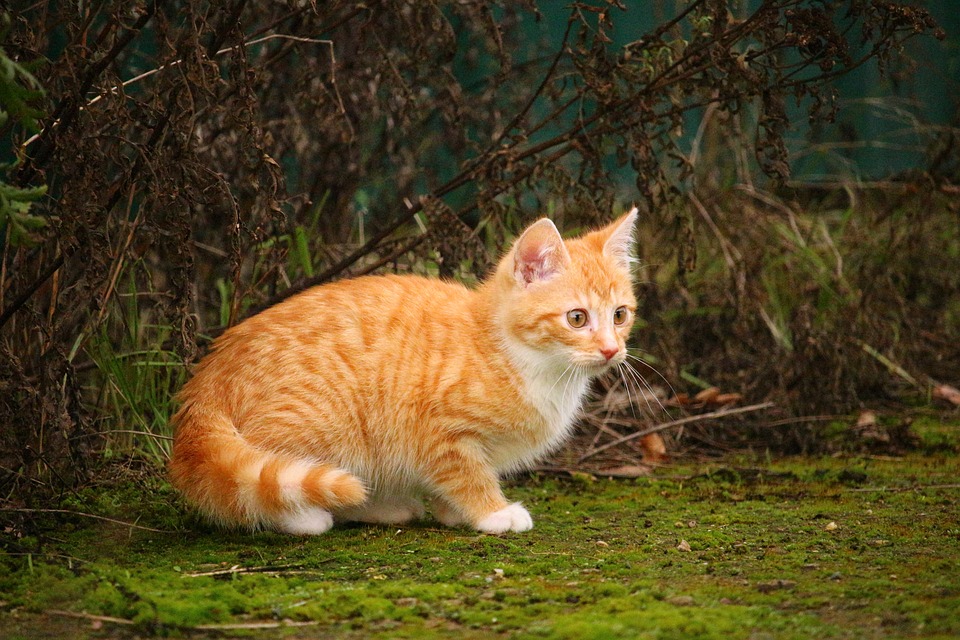
Photo: Maxpixel.net. When Suzanne got Basil as a kitten, he looked a lot like this.
I hesitate to do a post about the rhymes I made when my children were small because there are several actual poets who read the blog. I have no aspirations in the poetical line.
What got me on the train of thought, though, was a memory I had the other day about the cat we once had, Basil.
I remembered how when the kids were young, if they were bored or restless, I sometimes said out of the blue, “Let’s pretend Basil is a fox.”
That always stopped them in their tracks. I mean, how does one pretend a cat is a fox in the first place? The kids were usually able to find something to entertain themselves after that break in the mood.
I liked to make up silly rhymes about Basil. There was a counting rhyme that still comes into my head sometimes when I count. And there was this one:
Basil, Basil, you’re a cat Never try denying that. Stand up for your kitty mother, Turn your back on no cat brother. When the cat god calls your name, Let there be no cause for blame. Future generations all Will praise the cat who heard the call.
Then there was an attempt at lyrics to be sung in winter to the tune of “I’m Looking Over a Four-Leaf Clover.”
What is the reason that we’re all freezin’ And the birdbath is filled with ice? Why does my Omni go sideways down the street? Why do my children wear baggies on their feet?
What normal fellow whose brains aren’t Jello Would keep fighting this cold war? What is the reason that we’re all freezin’, And what did we move here for?
The music teacher that Suzanne had in elementary school actually used that one in a class.
Suzanne’s friend Joanna was amused by the goofy ending of this one back in the ’80s:
Think how lovely it would be Living always by the sea, Eating muffins with your tea. And jam.
Finally, I offer a nonsense poem called a double dactyl. (A dactyl is a rhythm with a hard stress first, followed by two light ones, as in the name “BEV-er-ly.”)
I just had to try it out after reading an entertaining book by the real poets John Hollander and Anthony Hecht. The form is described in the encyclopedia Britannica, which says in part, “One line in the second stanza must consist of a single word. According to the introduction to Jiggery-Pokery: A Compendium of Double Dactyls (1967), edited by the poets Anthony Hecht and John Hollander, this single word should appear ‘somewhere in the poem, though preferably in the second stanza, and ideally in the antepenultimate line,’ though that ambivalence has, for some, hardened into a rule that the word must appear in the poem’s sixth line. (Jiggery-Pokery credits Hecht, the scholar Paul Pascal, and Naomi Pascal, his wife, with having invented the form over lunch in Rome in 1951.)”
If I remember correctly, my double dactyl went as follows below. (I had to look up the Greek word, which means “rosy-fingered.” I used to know such things, and double dactyl rules encourage throwing in other languages.)
Higgledy-piggledy Fabius Maximus Waiting for Hannibal Wasn’t a dope.
Dixit the Cunctator Demosthenistically Dawn ῥοδοδάκτυλος Always brings hope.
l sent it to Hecht, who had a teaching job not far from our home at the time, and he liked it. I think because it followed all the rules.
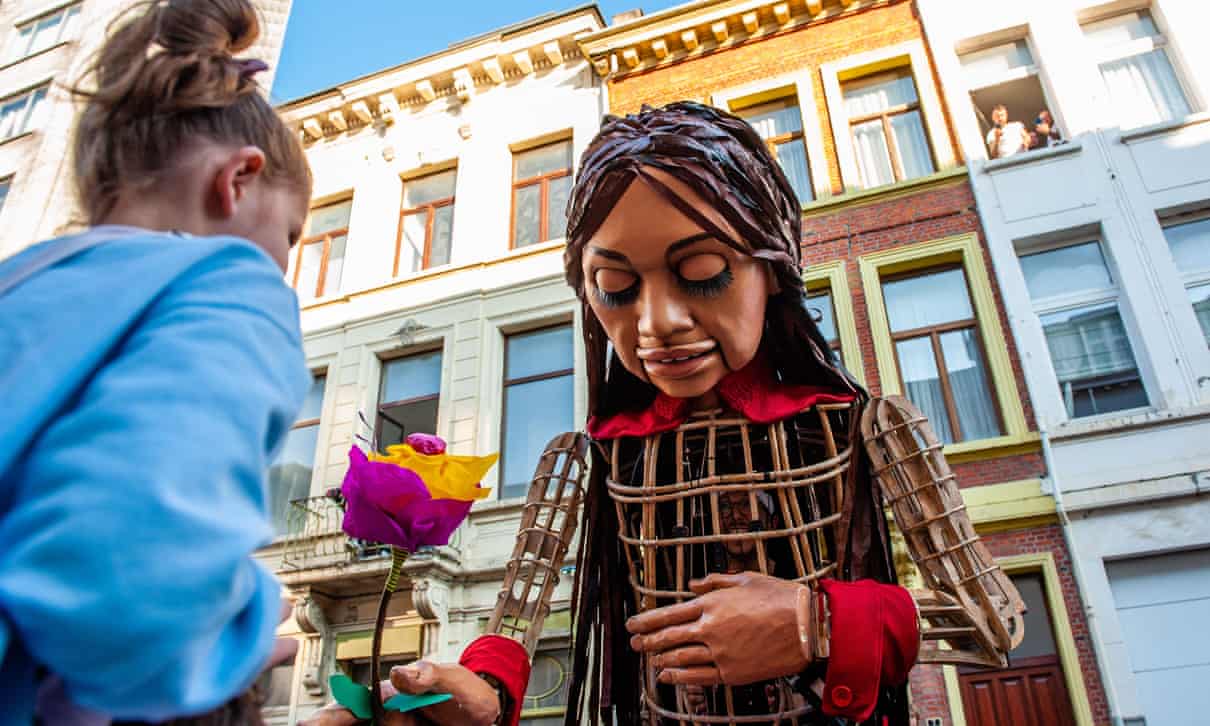
Photo: Romy Arroyo Fernandez/NurPhoto/Rex/Shutterstock. A giant puppet representing migrant children, Little Amal, has crossed Europe “on foot” from Syria. She is seen here in Antwerp, Belgium.
‘We’re not politicians, we’re saying to people: remember refugees are people. We hope that the memory of this odd, beautiful child walking through a village or city or over the mountains helps change the weather a little bit.’
I liked this visceral approach to helping those of us who have no need to migrate to feel the humanity of those who do.
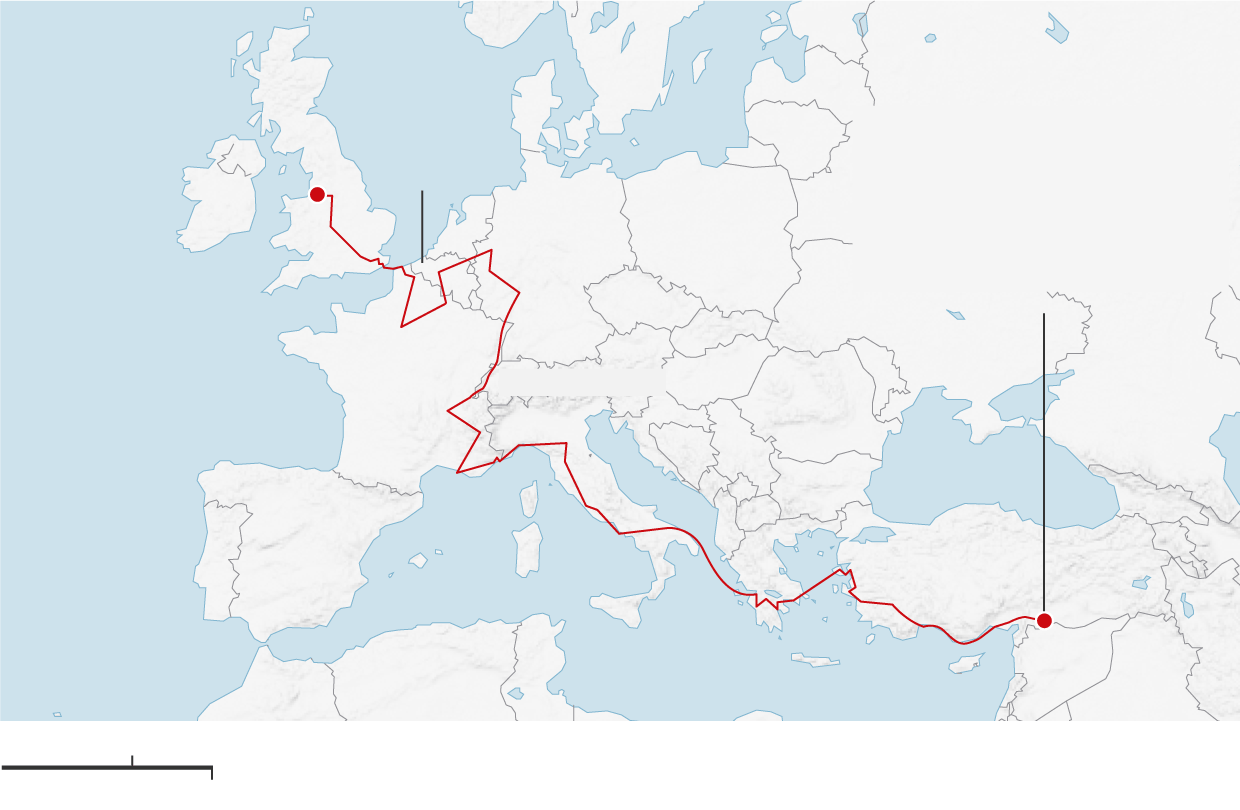
Harriet Sherwood wrote about the idea at the Guardian in September, “The transcontinental odyssey of Little Amal will begin its final stage this week when the giant puppet of a nine-year-old Syrian girl reaches the shores of the UK after walking thousands of miles across Europe.
“Bells will chime and choirs will sing as Little Amal appears on the beach on Tuesday in Folkestone, Kent, after making the same cross-Channel journey that has been taken so far this year by more than 17,000 people seeking refuge from conflict, hunger and persecution. …
“ ‘It’s been challenging, it’s been difficult at times, but it’s also been amazing and incredible,’ said David Lan, one of the producers of The Walk, who has been ‘on this journey right from the beginning three years ago, and on every step of the way’ since Little Amal left Gaziantep near the Turkish-Syrian border at the end of July.
“The idea of Little Amal’s journey in search of her missing mother evolved from The Jungle, a highly acclaimed play about young refugees in a camp near Calais that opened at the Young Vic in London in 2017. The play’s producers, the Good Chance theatre company plus Lan, Stephen Daldry and Tracey Seaward, came up with the idea of taking its message of displacement, loss, dignity and hope to villages, towns and cities across Europe.
“Little Amal, whose name means hope in Arabic, was created by Handspring, the company that made the equine puppets in War Horse. She stands 3.5 metres (11ft 5in) tall and is operated by a team of eight puppeteers working shifts to control her legs, arms and facial features. …
“Since leaving Gaziantep, Little Amal and her entourage of about 25 people have navigated Covid border requirements to cross from Turkey to Greece and then through Italy, Switzerland, Germany, Belgium and France to the UK.
“Along the way, they have taken part in concerts, parties and workshops. In Rome, Little Amal was blessed by Pope Francis. In many places, thousands of local people have walked with her through their town or village.
“But the most powerful connections had been with refugees, said Lan. ‘People who are marginalised, shoved to the side, see a representative of themselves or their children centre-stage and being celebrated. That’s very moving.’
“Only in one place has the welcome been less than warm. In Kalambaka, a village in northern Greece, which is home to ancient Greek Orthodox monasteries built into rocks, the village council decided not to receive a ‘Muslim doll from Syria,’ as the mayor described Amal. ‘It’s distressing, but it’s how the world is,’ said Lan.
“In London, Little Amal will celebrate her 10th birthday on Sunday 24 October at a party at the V&A. Children from all over the capital have been invited to join in musical performances and workshops. Yotam Ottolenghi is coordinating a team of chefs to create a giant birthday cake consisting of several hundred cupcakes in a rainbow of colours and flavours.”
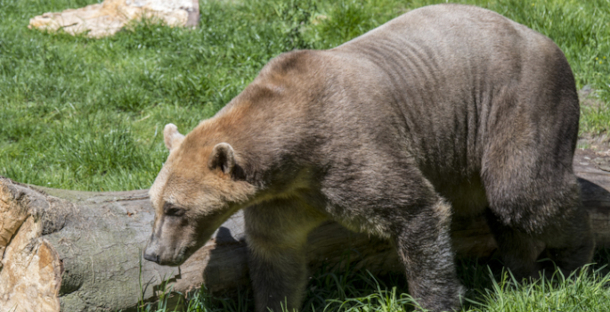
Photo: Philippe Clement/Getty Images. “Pizzly” bears have a physical appearance that is a mix of grizzly and polar bears.
I love the environmental radio show Living on Earth, and I’m grateful that they post transcripts of programs even though natural speech requires a lot of editing. One thing I try to edit out is every “So” at the start of a sentence. When did we start doing that? I first noticed the verbal tic in 2005 at a new job. When did you?
From Living on Earth …
“HOST BOBBY BASCOMB: The Arctic is warming faster than any other region on earth, it actually rained on the Greenland ice sheet in August for the first time ever. And sea ice recently reached its minimum extent for 2021. It was the 12th lowest amount of ice since scientists began keeping records. And for the endangered polar bear, a warming Arctic is bad news. With their habitat melting, polar bears are having trouble finding food. At the same time grizzly bears are moving north and, in some cases, mating with polar bears, creating a hybrid animal known as a pizzly bear. Larisa DeSantis is a paleontologist and associate professor of biology who studies pizzly bears at Vanderbilt University. …
“How do these hybrids compare with the parent species of grizzly and polar bears?
“LARISA DESANTIS: A pizzly bear is essentially an intermediate between these two. It’s a hybrid species, and it’s actually fertile. … Polar bears tend to have really elongated skulls. And this is because they’re really well suited for being able to hunt seals in sea ice. [They] get into those holes and effectively hunt those seals. The grizzlies have much shorter skulls, and they’re able to exude really high bite forces to be able to eat really hard foods when needed. And so essentially, this pizzly is intermediate between those two, you can also see that their coloration is sort of intermediate. [They’re] a bit lighter in coloration than a grizzly, but darker in coloration than a polar bear. … They’re better swimmers than grizzlies, not as good as polar bears. [As] we’re dealing with a warming Arctic, we really don’t know how these pizzlies will do in the future, and they may be better suited for the warming Arctic than the polar bear.
“BASCOMB: Now, many hybrid species, like ligers, or mules, are sterile and can’t produce offspring themselves. But I think you just said that pizzly bears actually can reproduce. Does that make them their own species? …
“DESANTIS: The polar bear and the grizzly bear are really sort of a unique situation. They diverged roughly around 500,000 or 600,000 years ago. They’re pretty closely related to one another in the grand scheme of things. And they also look quite different from one another, right? These are different bears, we know they’re different species. They do completely different things in their ecosystems. They’re of different ecological niches, for example. … But you’re absolutely right, you know, they can produce these fertile hybrids, that’s really interesting. And we know that it’s actually able to persist. …
“BASCOMB: So then would you say pizzly bears are their own species?
“DESANTIS: I wouldn’t go that far. They are a hybrid. And hybrids occur pretty frequently in nature. And typically we see hybridization occurring, you know, over and over and over in particular regions where two different species are coming together. And so it’s not surprising that we see hybrids of these two bears, especially since they’re closely related. And this is because essentially, the brown bears, the grizzly bears, are moving north due to Arctic warming. The polar bears are actually having to retreat from the sea ice, the lack of sea ice, and they’re having to come further inland and often travel further south or look for other food resources. [New studies show] that they’re trying to eat [seabird] eggs. …
“This elongated skull [is] not well suited to eating just sort of any type of food source, right? It actually has biomechanical constraints that prevent it from, you know, eating really hard things. And so it’s sort of having to scavenge potentially, to find different food resources. It’ll find these bowhead whale carcass sites, that’s where the grizzly bears can also be as well. And they’re coming into increased contact and occasionally mating. …
“BASCOMB: With polar bear populations declining so dramatically with the loss of sea ice, and with climate change, as you were just saying, how likely is it that they will ultimately be replaced by pizzly bears or even grizzly bears if it gets much, much warmer? And for that matter, how would a different apex predator in the Arctic affect the whole ecosystem?
“DESANTIS: [We] really don’t know the answer to that. But what we need to do is actually monitor the polar bears, continue to monitor grizzlies, and also monitor these pizzlies, and see how they do. So as I mentioned, hybrids normally aren’t better suited than either parent species, right? But in this case, with the environment changing, they may be our hope for an Arctic bear. And what we do know about predators across the globe, and through time is that apex predators especially are really key to the functioning of ecosystems, right. This is why wolves were reintroduced to Yellowstone, because the elk populations were sort of out of control, wreaking havoc on the vegetation, things were out of balance. [The pizzly] may give us hope for an Arctic bear in a world in which we have Arctic warming.”
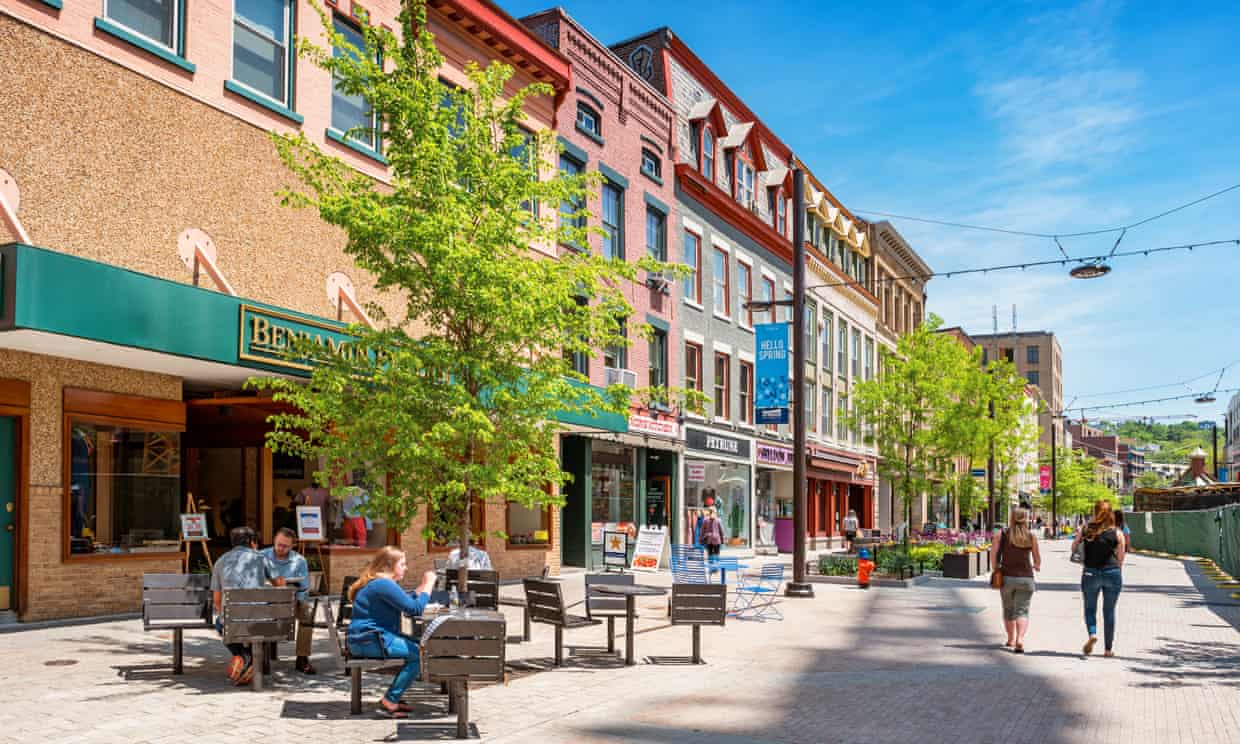
Photo: benedek/Getty Images. Downtown Ithaca, New York. The city has a plan to lower the climate footprint of thousands of buildings across the city.
My family is trying to disentangle itself from fossil fuels. Too slowly, I fear. I have a hybrid car, and my husband has been working with an electrician to change out the gas stove for an electric one. Suzanne and Erik are looking into electric for cooking, too. John has an all-electric car and solar panels on the roof.
The thing is, I’m sure I would have started this process much sooner if I had realized earlier that gas was bad. I’ve been in my current home nearly 40 years, and I assure you that 40 years ago, I hadn’t a clue.
In Ithaca, New York, there are people who had a clue long before I did, as Mike De Socio reported at the Guardian in August.
“When Fred Schoeps bought a 150-year-old building in downtown Ithaca, New York, a decade ago, he was one of only a handful of building owners dedicated to ending their reliance on fossil fuels and reducing their carbon footprint.
“His three-year renovation of the building, comprising three apartments above a skate store, included installing energy-efficient windows and insulation, plus fully electric appliances, heating and cooling systems.
“But while that was an achievement on its own, said Schoeps, Ithaca cannot address climate change one building at a time. ‘In order to move the needle, you’ve got to think in terms of a thousand [buildings],’ he said.
“Luis Aguirre-Torres, Ithaca’s new director of sustainability, is trying to do exactly that. The upstate New York city of 30,000, home to Cornell University and Ithaca College, adopted a Green New Deal in 2019, a big part of which involves decarbonizing thousands of privately owned commercial and residential buildings across the city.
“Ithaca’s main climate objective is to eliminate or offset all of its carbon emissions by 2030. The focus on retrofitting buildings – installing electric heating systems, solar panels and battery storage as well as reducing energy use and greening the electric grid – promises to tackle an often-overlooked but significant contributor to climate change:
“Ithaca is exploring a new solution to fund and motivate building owners to decarbonize: private equity.
“Aguirre-Torres has helped Ithaca – which has a total budget of less than $80m – raise $100m by offering investors entry to a large-scale program he pitched as low risk with the potential for lots of cashflow. The goal is to create a lending program providing low- or no-interest loans and quick implementation of sustainable technology. …
“For most homeowners, the program would help them swap out a gas furnace for an electric heat pump, or a gas stove for an electric one – changes that would otherwise involve high upfront costs. Aguirre-Torres says the program will also train a new green workforce in Ithaca. …
“The plan aims to create 1,000 new jobs by 2030, and the city has promised to redirect 50% of the financial benefits of its Green New Deal plan to low-income residents, although there are few specifics on how this will work.
“Conversations with investors started earlier this year. Covid-19 had already battered Ithaca’s finances, said Aguirre-Torres, and it was clear the city would never be able to fund this energy transformation alone.
“These discussions quickly revealed a problem: how do you keep a lending program affordable? ‘What we needed to do was bring down the cost of capital even further,’ Aguirre-Torres said.
“The city is addressing this by trying to reduce risk. It aims to create an economy of scale by sizing the program for 1,000 commercial and residential buildings in the first 1,000 days, which will mean more consistent work for contractors and lower material costs. Ithaca plans to use a $10m loan loss reserve, backed by New York state, that would act as a guarantee for lenders in case any borrower defaults. It will also secure insurance to protect against catastrophic losses,’ such as a massive default due to another pandemic, Aguirre-Torres said. …
“Ithaca’s reliance on private equity may be new, but the cash incentives and on-bill repayment programs have precedent in states around the country, such as New York and California.
” ‘We’ve seen this work,’ said Ethan Elkind, the director of the climate program at UC Berkeley’s Center for Law, Energy & the Environment. Utilities and municipalities have long been offering upfront dollars to ratepayers to encourage them to upgrade lightbulbs or home insulation.
“However, these types of improvements may be an easier sell than swapping out a gas range or fireplace. Consumer preference for natural gas appliances is one of the biggest barriers to home electrification. Cost is another. ‘If you have the money to do something to your house, putting in a new bathroom or kitchen is much more appealing to people than an invisible efficiency upgrade that pays for itself over eight years,’ Elkind said.
“Anne Rhodes has a different view, however. The 76-year-old Ithaca homeowner, who earns about $20,000 a year, is using an existing state incentive program to insulate her home and replace her oil heating system with electric heat pumps. In addition to the climate impact, she said the upgrades will make her home more comfortable to live in.”
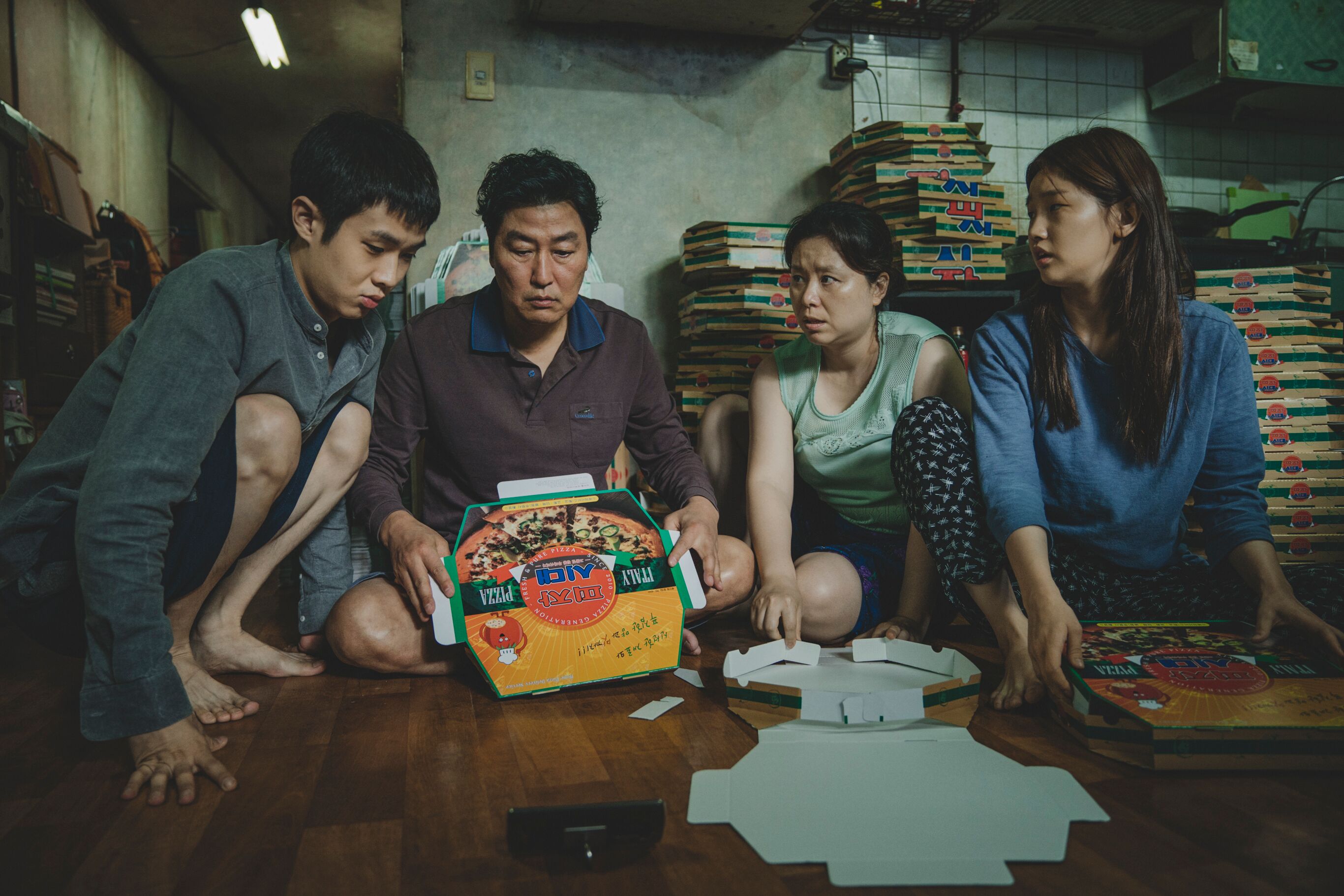
Photo: Cinetic. From the award-winning Korean film Parasite.
Movies can raise consciousness and lead to change, often positive change. Although the wonderful flic we watched last night, The Loins of Punjab, was mostly for laughs, I think some people would take away a heightened awareness of prejudice, and what it can be like to live in a society where too many people see a terrorist behind every brown skin.
Today’s post is about a hopeful side effect of the award-winning Korean movie Parasite, which led the government to look into the plethora of barely habitable basement apartments dividing the country’s haves and have-nots — and begin to make a plan.
As Monica Castillo wrote at Hyperallergic in February 2020, “Weeks after Bong Joon-ho’s historic win at the Oscars, his film Parasite is still making headlines. … Parasite may now pave the way for housing reform in South Korea.
“The country’s government announced it would launch an initiative to help families like the movie’s working-class Kims to improve housing conditions. The Korea Herald reports that the South Korean government, Korea Energy Foundation, and the Seoul Metropolitan Government will offer ‘3.2 million won per household to enhance heating systems, replace floors, and install air conditioners, dehumidifiers, ventilators, windows, and fire alarms’ to 1,500 families in semi-basement apartments who make less than 60 percent of the median income. …
“In Parasite, the Kims live in a cramped, dingy semi-basement apartment that becomes easily flooded when heavy rains fall. They envy the wealthier Park family that lives in an elevated area with a spacious modern mansion, and hatch a plan to get each member of the Kim family in the employment of the Parks. …
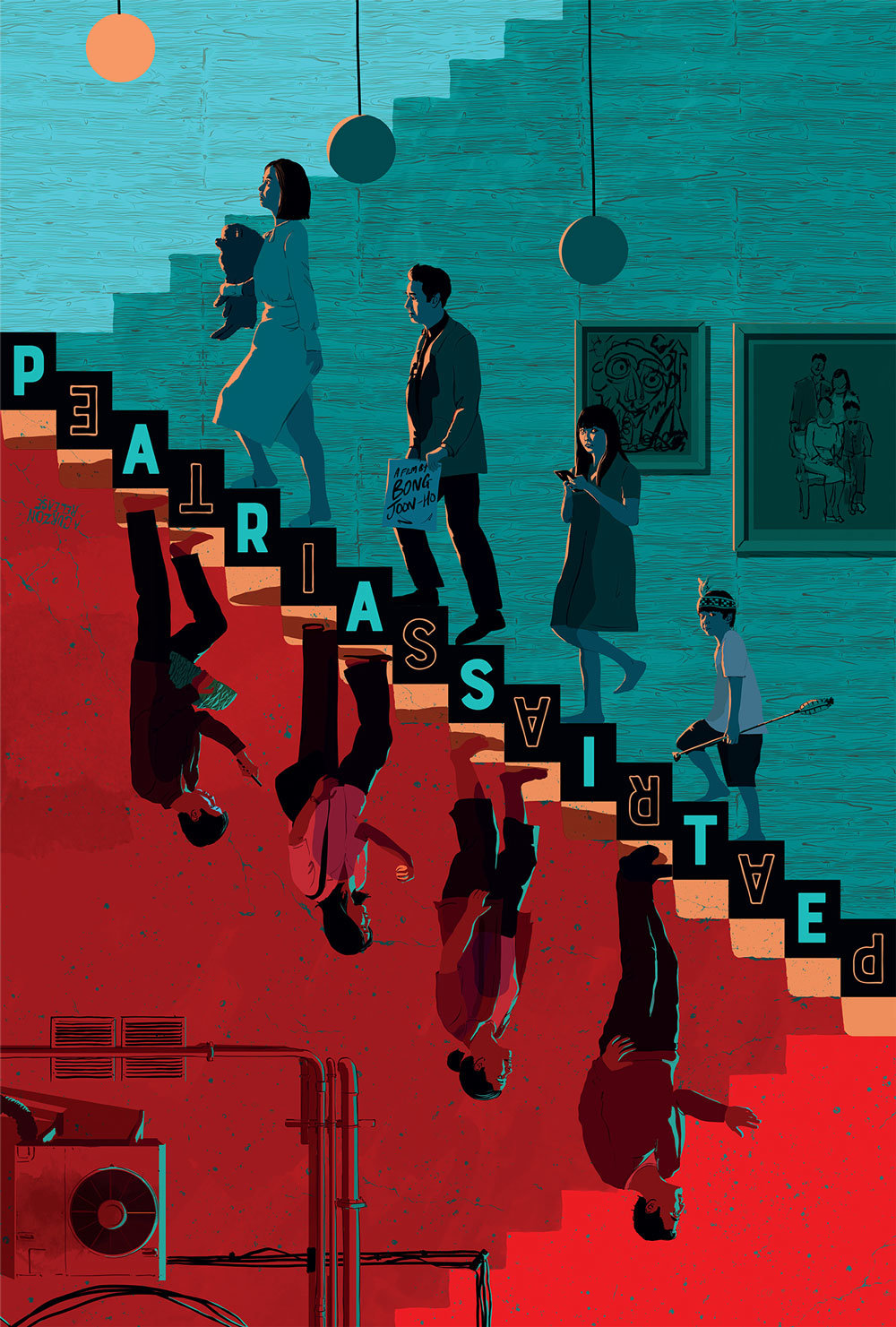
“The film’s clear class distinction between the haves and the have nots also inspired many designers. In a look at the fan art and advertising inspired by the movie, Mubi found several instances where artists visually interpreted the movie’s theme on class through metaphors. Parasite’s attention to architecture featured in a number of the pieces, as several artists incorporated both Park and Kim family homes into their designs. The works ranged from digital illustrations both intricate and deceptively simple to photographic composites reimagining the movie’s many twists and turns.
“Even in the official movie poster, there are hints of a difference between the two families, as the post points out that the Kims have black censor bars over their eyes and the richer Parks have white censor bars. For the French release not long after its Cannes premiere, the Parasite poster featured the Kim family barefoot and the Parks in shoes, a nod to their well-heeled background.”
At Mubu, you can check out posters the movie inspired and the emphasis on inequality. What an array! Adrian Curry wrote, “All great works of art inspire more great art and Parasite has been a gloriously fecund host for poster designers to feed off, inspiring ingenious commercial campaigns and fan art alike. The original Korean poster — the first glimpse any of us got of this soon-to-be sensation back [in April 2019] — was designed by Kim Sang-man, a film director (Midnight FM), art director (Joint Security Area), and composer. …
“Its placid yet ominous domestic scene, rendered undeniably creepy by the censor bars across the protagonists’ eyes … featured half the major players (not least that boxy, modernist home, the ultimate star of the film) and a number of significant objects (the teepee, that ornamental rock, those legs…) without giving much of the game away. One thing I didn’t register until quite recently is how the bars across the eyes are color-coded by family: black for the Kims, white for the Parks.”
I didn’t see Parasite. Did you? Did you think it made a case for affordable housing? A case against inequality?
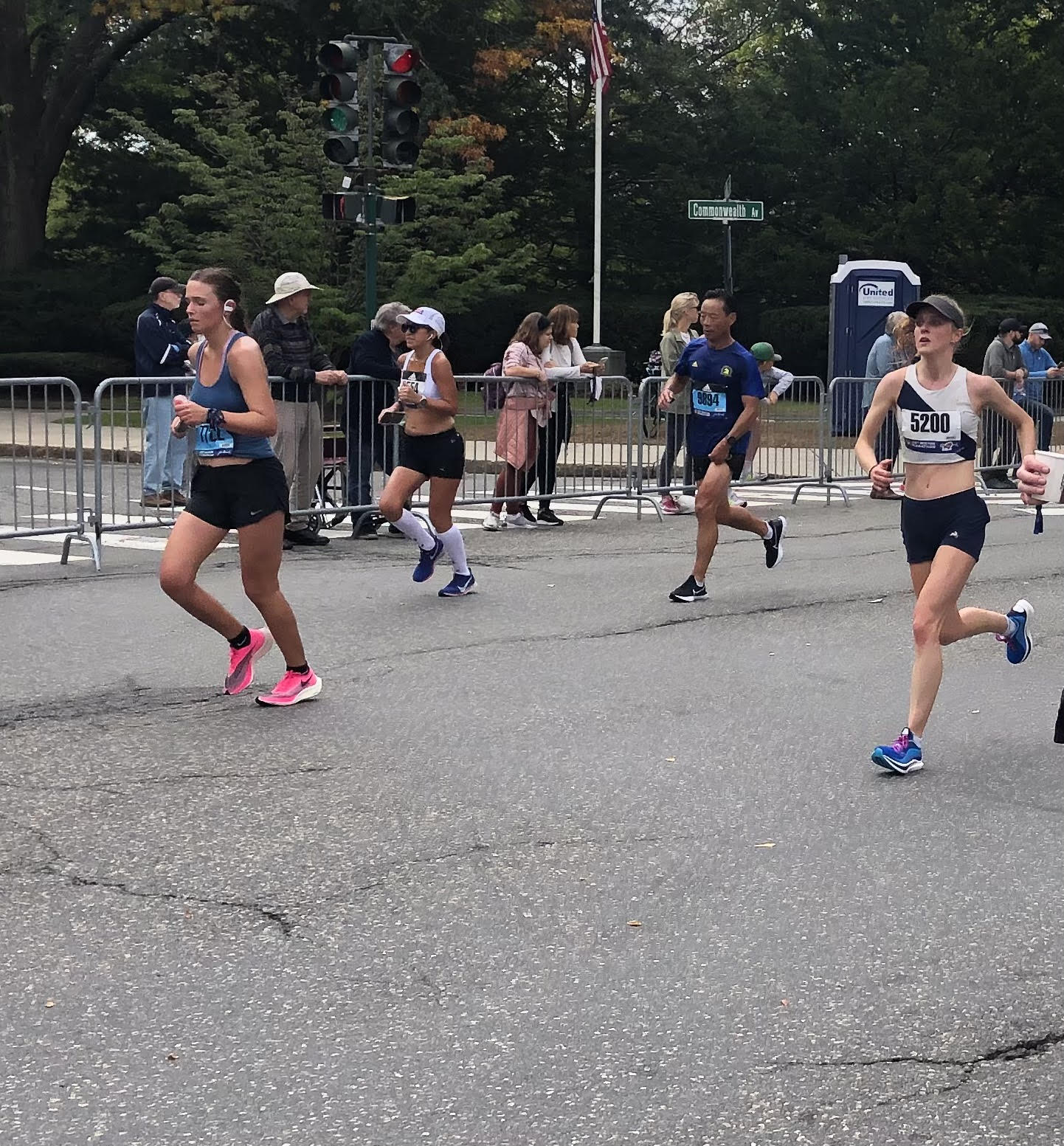
The Boston Marathon was in October for the first time, after missing two Aprils because of Covid.
We ourselves had to hustle a little to get to the Boston Marathon as the new technology told us Erik was running faster than expected and might reach our viewing spot before we could get there. Fortunately, we arrived with a few minutes to spare.
Erik’s final time was a hair over three hours. The photo above is of runners near where we stood. It was a happy day, and although runners had to be vaccinated or show a recent test result, it had a welcome feeling of maybe-life-will-get-back-to-normal-sometime. And the sun was shining.
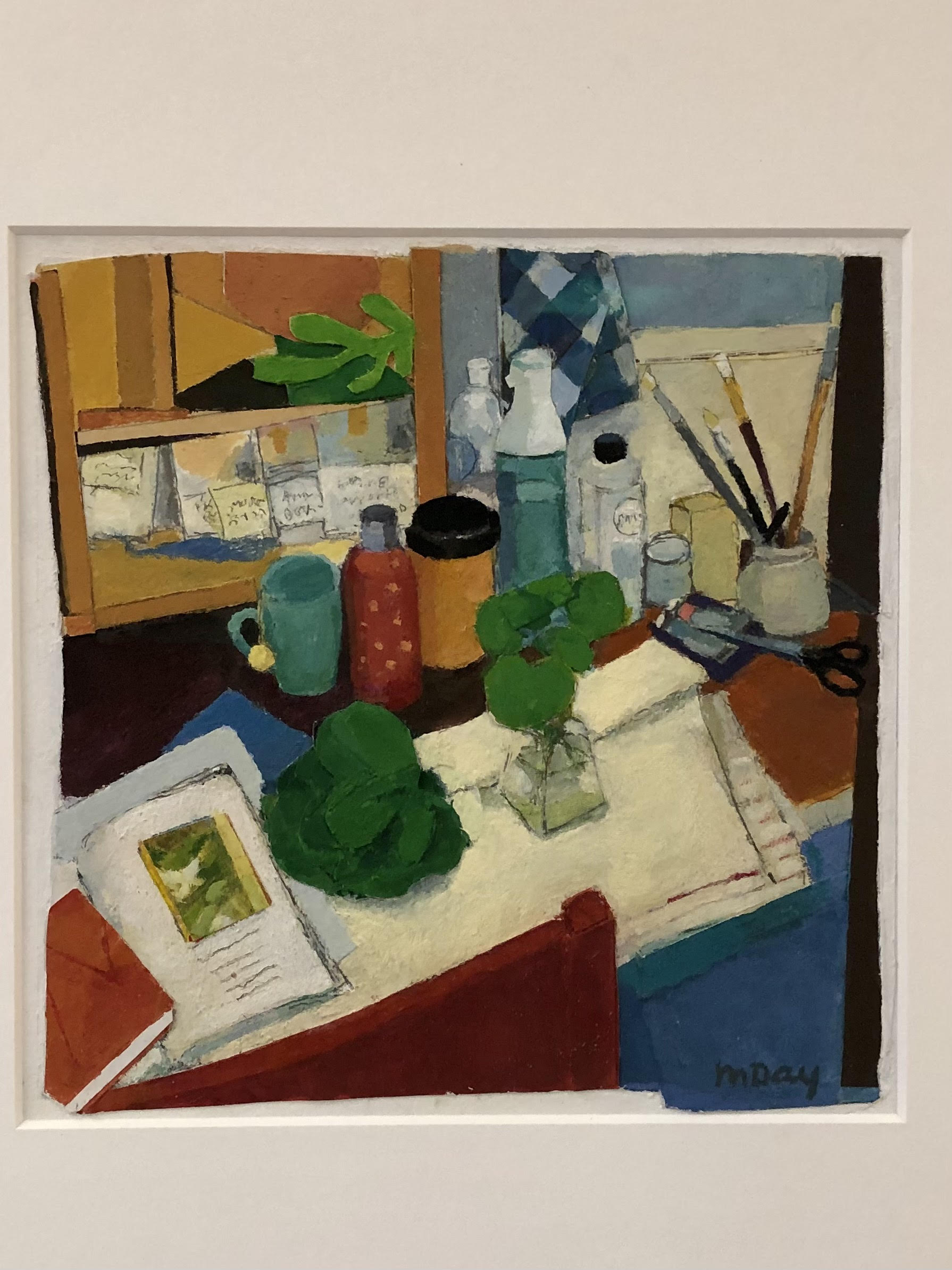
On a drizzly day, I went up to the Brush Gallery in Lowell to see Meredith‘s lovely exhibit. The artist herself came over from her studio in her rain gear, and I learned some interesting things about how she thinks about color and how she works. The first painting below was my favorite.
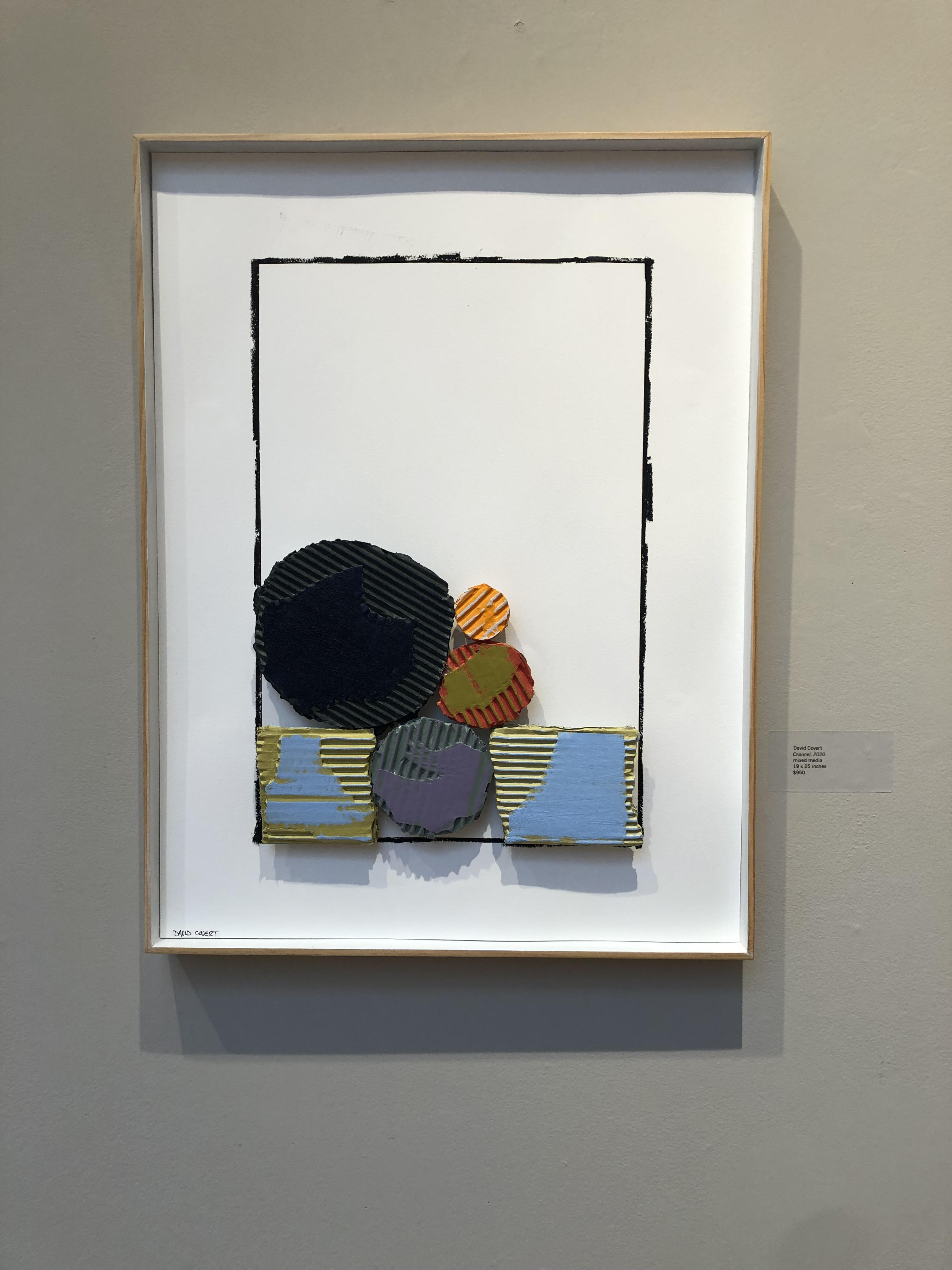
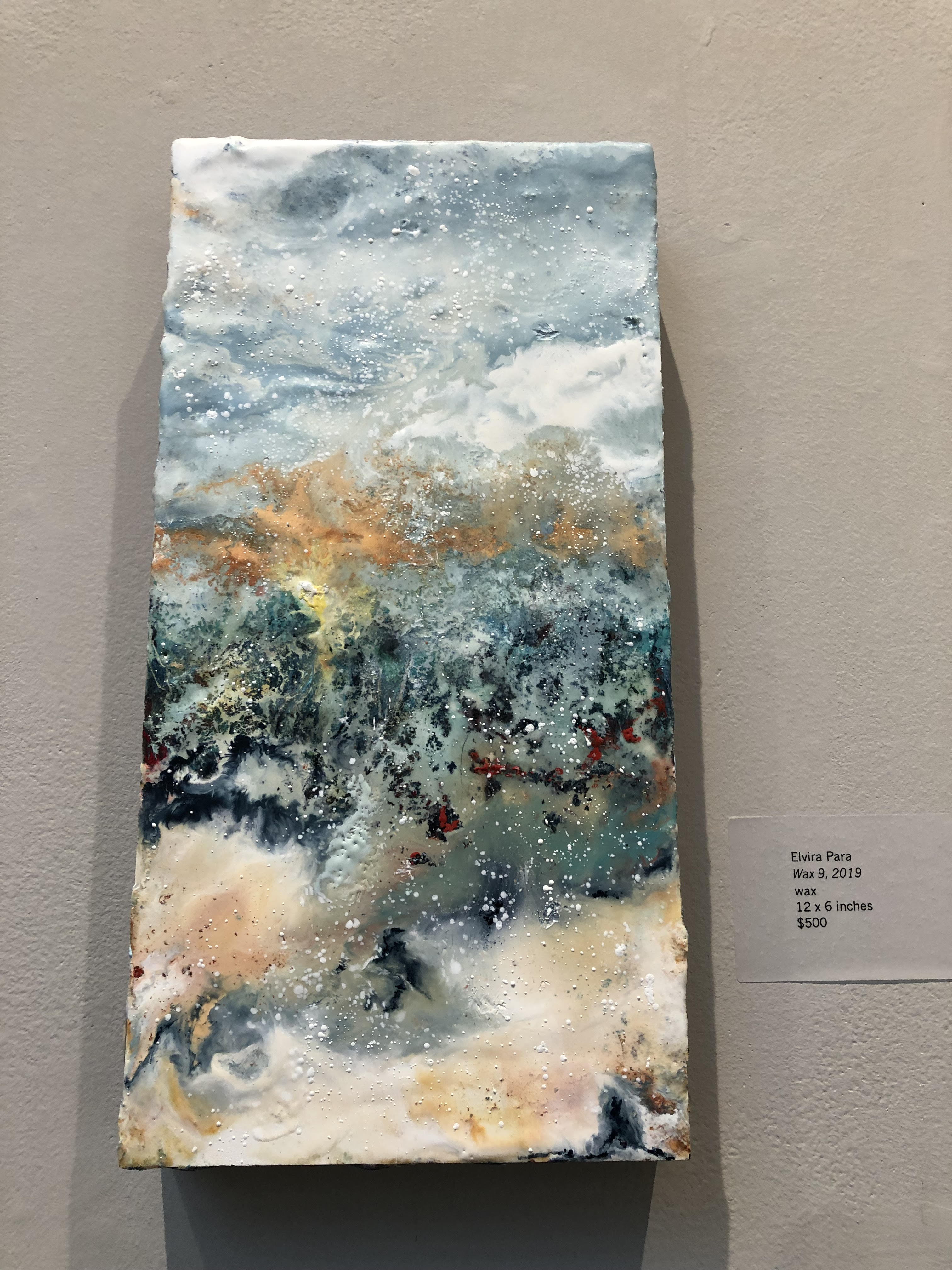
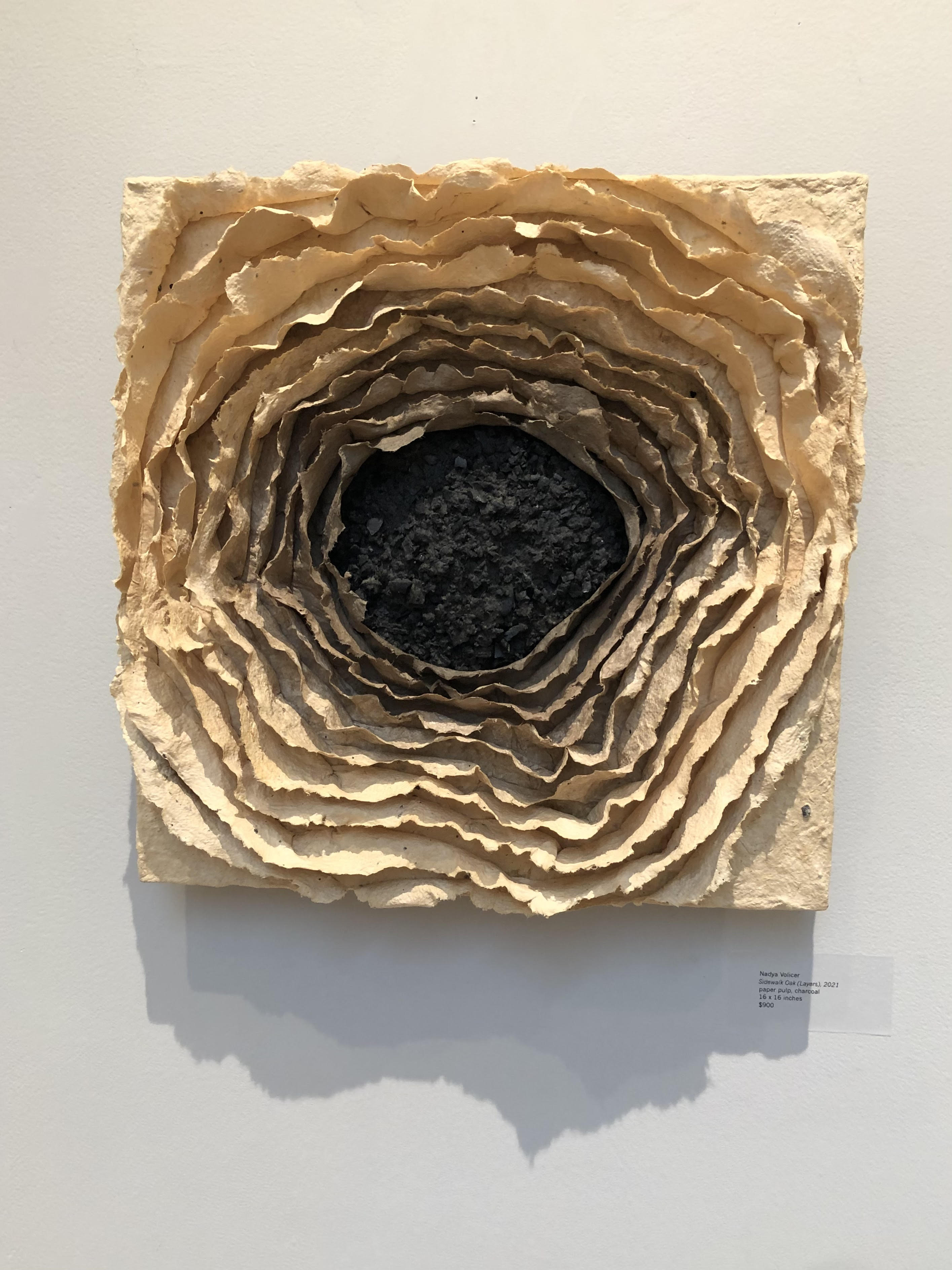
On another day, I took photos at Concord Art‘s juried show. The piece using corrugated cardboard was by David Covert. The wax art suggesting a dreamy ocean was Elvira Para’s. Nadya Volicer’s unusual sculpture was made from paper pulp and charcoal.
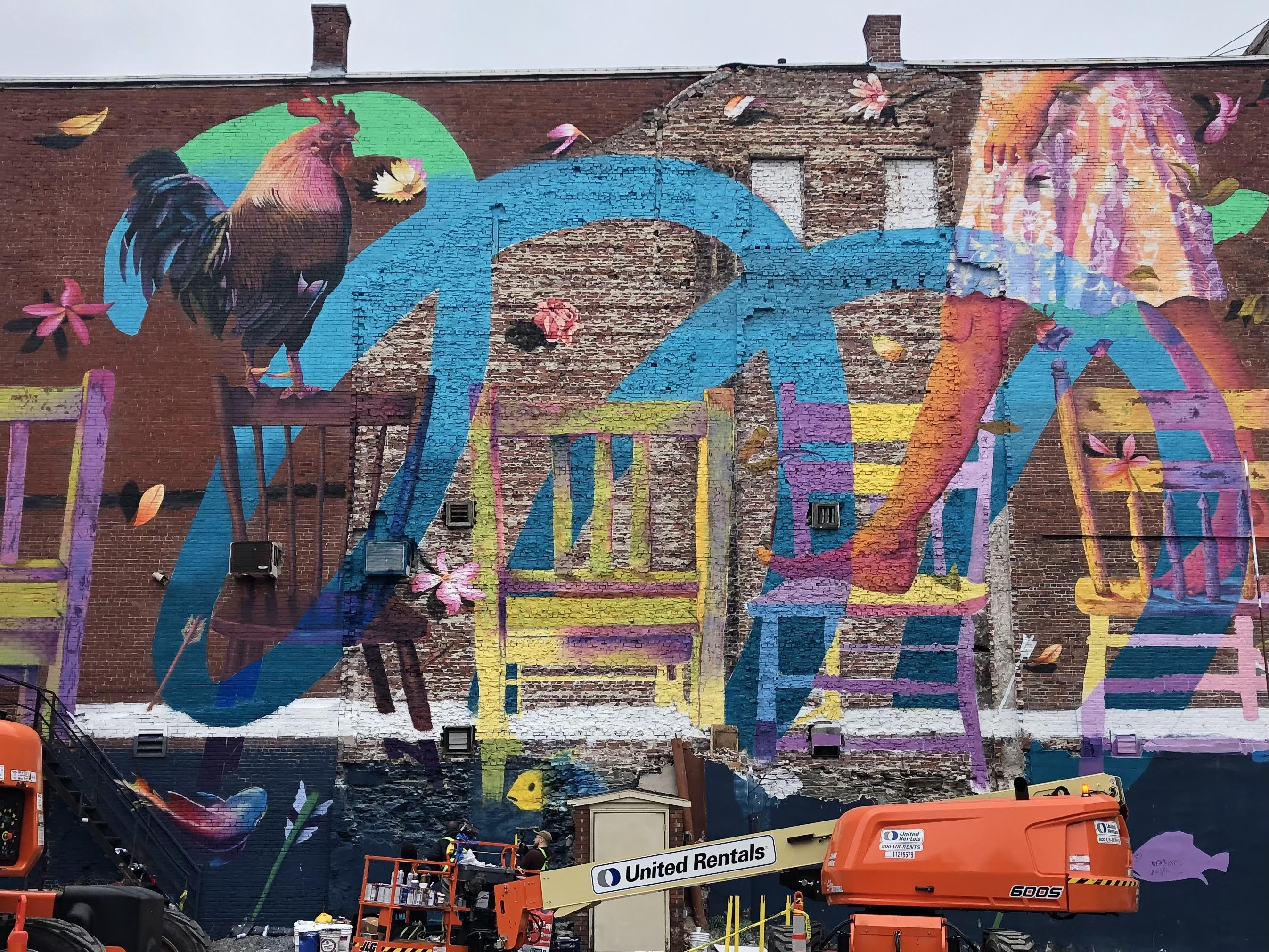
I couldn’t resist shooting an urban mural even though it wasn’t far enough along for me to understand what meaning flowers, a fish, a rooster, and a barefoot woman walking on chairs, might convey.
Meanwhile, nature has been making its own art, and there have been many beautiful days to enjoy it.
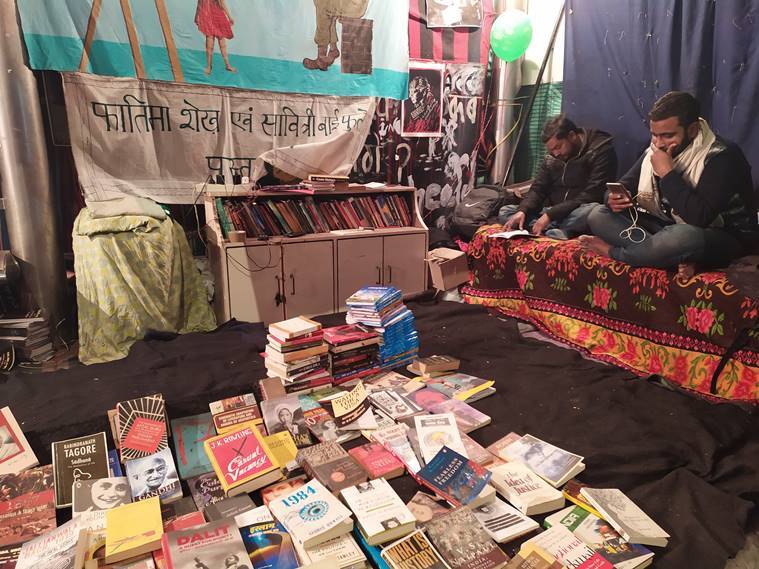
Photo: Anamni Gupta/Indian Express. One aspect of the 2019 Shaheen Bagh protest organized by Muslim women against India’s Citizenship Amendment Act was the emergence of free libraries.
Most Americans don’t keep track of politics in India, but it was hard to miss the news back in 2019 when the Modi government decided to change the rules about who could be counted as a citizen. Muslim women organized a protest that spread across the country from the original site in Shaheen Bagh. One aspect has remained.
As Harshvardhan reported at India’s National Herald in January, “The Shaheen Bagh protest site is gone, but its legacy continues to inspire those who dream of a more egalitarian and democratic India. Led mostly by Muslim women, the Shaheen Bagh protest site inspired one of the most aesthetically-pleasing and thought-provoking experiments with protest art in recent times. Walls and streets of Jamia Millia Islamia and Shaheen Bagh protest site exploded with creativity as students and artists camped there and experimented with ideas. …
“One of the most distinctive contributions of the Shaheen Bagh movement was the introduction of a ‘protest site library.’ The idea of a ‘protest library’ came up during the Occupy Wall Street protest, one of the largest popular demonstrations in the United States. Occupy protesters erected a tent and established a ‘People’s Library’ in Manhattan’s Zuccotti Park in November 2011. This one of its kind library held over 5000 volumes of books along with magazines and newspapers, and was finally razed down by the police.
“Since then, the concept of a ‘People’s Library’ captured the imagination of protesters all across the world. It travelled to Gezi Park in Istanbul in 2013 when people resisted the commercialisation of public spaces. Make-shift libraries cropped up in different parts of Spain during the anti-austerity 15-M movement (2011-15) and then it travelled to Hong Kong during the pro-democracy movement there.
“At Shaheen Bagh, a group of students decided to convert a bus stand into a makeshift library in the heydays of the anti-CAA protests [CAA stands for the Citizenship Amendment Act of 2019]. The ‘Fatima Sheikh Savitribai Phule Library’ captured the imagination of people and soon the make-shift library started to attract a lot of donors and also inspired similar libraries at different anti-CAA protest sites.
“The year 2020, an otherwise gloomy year dominated by the COVID-19 pandemic … ended on a high note with the farmers’ uprising against the three farm bills, passed by the BJP-controlled Parliament in haste. … By blocking the entry points of nation’s capital, farmers are actually attempting to block the privatization and corporatization of Indian economy. Along with that, the protests are also a powerful assertion of the right to dissent. …
“It is but natural that such a huge protest in terms of both mobilization and concerns will also develop into a rich site for cultural production enriching the protest repertoire of the country. In one of the most innovative moves, protesting farmers launched their own bi-weekly newspaper. … They also set up libraries at the protest sites. [It] clearly carried on the legacy of the Shaheen Bagh protests. Now, we can be sure that protest site libraries are going to feature every time there is a sustained peoples’ movement.
“The first library came up at Tikri Border, Pillar no 783. On December 22 [2020], a group of students began the ‘Shaheed Bhagat Singh Library’ with a single book stand with almost 200 books standing against a yellow tent. Farmers at Tikri border welcomed the idea and people could be seen browsing through the limited books available there. Soon the idea picked up and similar libraries came up at Singhu border as well as Ghazipur border while attempts were being made to establish one at Shahjahanpur border. …
“From the anti-CAA movement to the anti-farm law movement, the protesters have been accused of being ‘uneducated’ and … of ‘not having ‘read the law’ or ‘not knowing what they are protesting against or for.’ …
“The protest-site libraries stand as proof that these people are not ‘uneducated folks’ [but] are mature enough to develop a concrete socio-economic-political understanding and act upon it.”
More at the National Herald, here. Search Suzanne’s Mom’s blog on the word “library” for examples of other unusual libraries around the world.
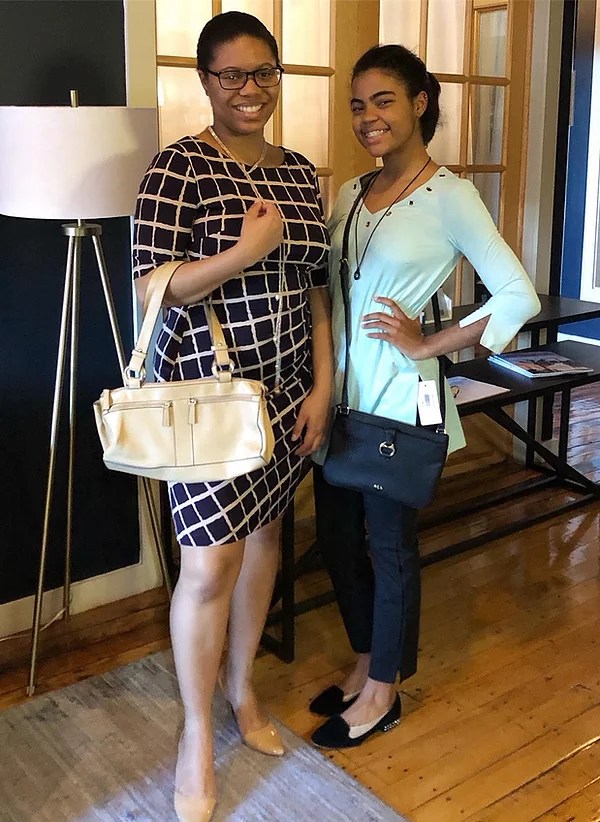
Photo: Uncommon Threads. Uncommon Threads in Lawrence, Mass., helps “low-income women see and feel their true potential by using clothing and image as tools for building self-esteem.”
Some time ago, Grace told me about the Lend a Hand Society, which “provides emergency financial assistance to low-income families, individuals, seniors and disabled people primarily in the Greater Boston area.” It’s been filling a gap for generations now, and as you can imagine, has been especially needed during the pandemic.
A local nonprofit doing similar work but with a narrower focus is Uncommon Threads in Lawrence, Mass. Liz Neisloss at GBH television reported on the gap that the founder identified almost by accident.
“It’s not hard to find organizations that offer free or low-cost clothing,” says Neisloss, “but Susan Kanoff has created a boutique that uses clothes to transform not only the way women look, but how they feel.
“A social worker by training, Kanoff made her living helping low-income families move out of poverty. In her spare time, she channeled her love of fashion as a private stylist and style blogger. When her style clients began asking her where to best donate their old clothes, she had an idea.
“ ‘I started taking them into my social work office,’ said Kanoff, who lives in Methuen. ‘I had racks set up and (if) one of my clients was having a bad day, we’d put an outfit together; going on a job interview, we’d put an outfit together. And I started to realize how powerful these clothes were and how really important they were to a woman’s self-esteem.’
“Partnering with Family Services of the Merrimack Valley, she opened the non-profit Uncommon Threads [in 2017]. … In late 2019, the retailer Timberland helped fund the renovation of a larger space with dressing rooms, a sitting area in shades of beige and dark blue and a on the entry-way wall a message that reads: ‘Self Confidence is the Best Outfit.’
‘Our main goal is dignity and respect,’ said Kanoff. ‘We want women to feel like they’re in, they’re shopping in a beautiful place versus getting a handout.’
“Kanoff, who previously worked for the North Andover Housing Authority running the family self sufficiency program to help lift people out of poverty, works with a more than a dozen social service agencies who must refer women to be able to shop at the store. Retailers and the public donate clothing.
” ‘We could dress a woman who was maybe a victim of domestic violence and is ashamed to go to their kid’s school conference,’ said Kanoff. ‘Whatever it takes to get that woman to feel strong and powerful through the way she looks.’ …
“Women first meet with an Uncommon Threads volunteer to talk about their clothing needs, as well as their work or life goals. Clients can get up to four outfits and two pairs of shoes in one visit – but they can also get some items not commonly found in donation shops: bras, underwear, pyjamas and even matching jewelry. The meeting looks like one with a personal shopper at a pricey store, but costs just ten-dollars — a fee that can also be waived. Otherwise, the clothes are free.
“[Volunteer] Jen Marin sat down for a ‘styling session’ with 19-year-old JJ Ortiz. Shuttled around between group homes and foster care since she was 12, Ortiz said she struggled to find clothes that fit her as she grew and became self-conscious about her weight.
“ ‘I was kind of uncomfortable in my skin, who I was, how I would like show myself, like my clothes wasn’t the best,’ Ortiz said, ‘But they didn’t see that. They saw me for who I am.’
“Marin helped Ortiz try on a jeans jacket and then moved around to take a look. …
“Another volunteer stepped in to put a necklace over Ortiz’ head. Ortiz smiled, ‘I look so pretty,’ she said.
“With shopping finished, Ortiz stayed to sit in on a workshop called ‘Feminine Rocket Fuel.’ She took careful notes as motivational speaker Rosie Dalton explained to the gathering of clients how to use obstacles as ‘fuel’ to move forward.”
Are there similar services in your part of the world? But will clothes needed for work be different post-Covid? And finally, what are the chances that low-income people can start getting paid enough not to need charitable services in the future?
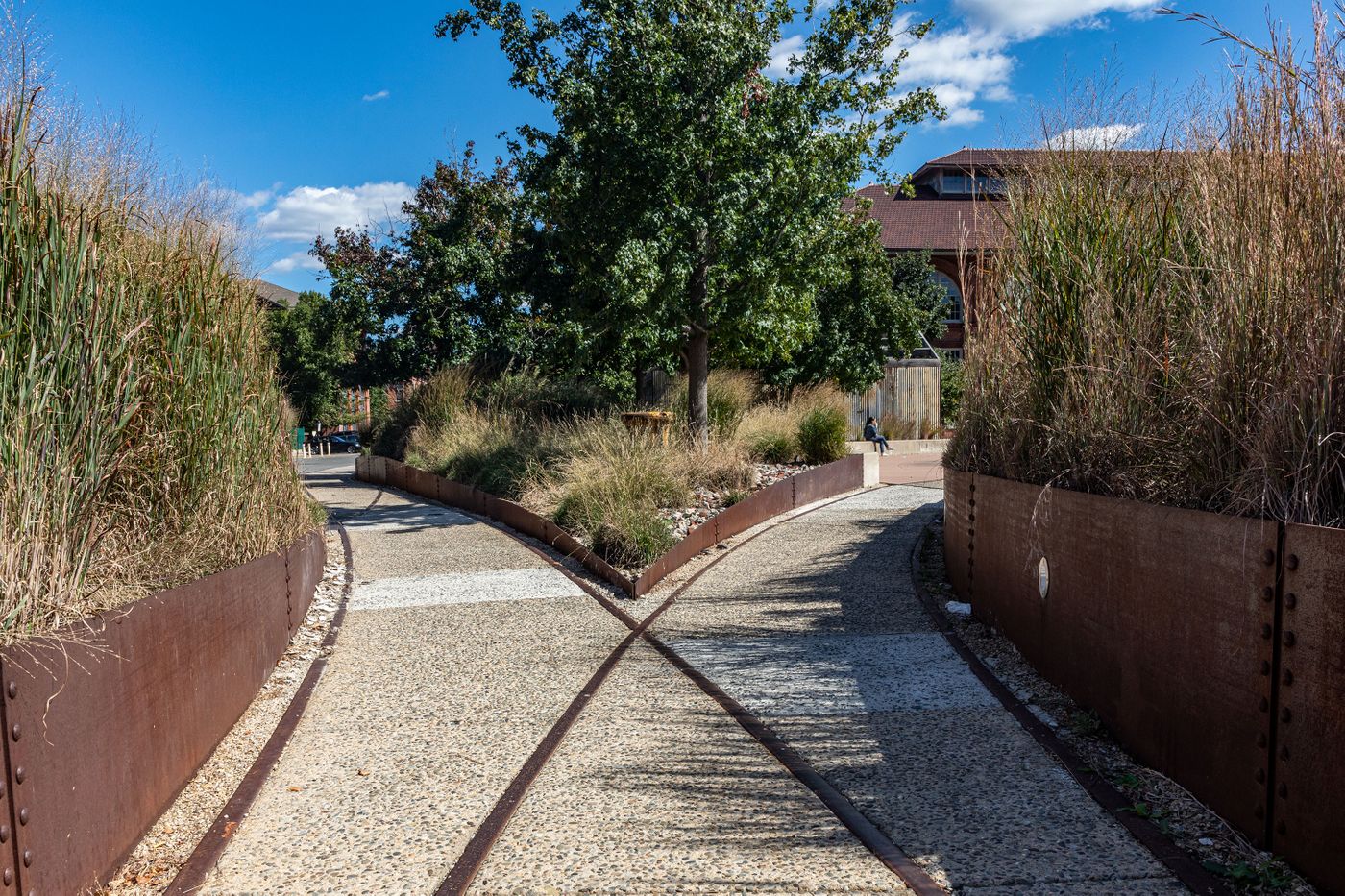
Photo: Barrett Doherty, Cultural Landscape Foundation. D.I.R.T.’s corporate campus for Urban Outfitters in the Philadelphia Navy Yard.
When you rehab a Superfund site or other industrial dead zone, should you wipe out the history or make the interesting parts work for a new generation? You can guess that I’m going to answer that question on the side of the landscape architect mentioned in today’s story. Read on.
Justin Davidson reports at Curbed, “If there was a childhood moment when Julie Bargmann had intimations of her future as a landscape architect, it came not during some backwoods tromp or while touring a lavish garden but when she was sitting in the back seat of her family’s station wagon on the New Jersey Turnpike. The great chemical plants exhaling sulfurous plumes seemed to her like magic kingdoms, and she wondered about the lives of the people inside. Later, when she was in college at Carnegie Mellon in the 1980s, Pittsburgh’s ozone-laced air gave her the same jolt of industrial excitement. …
“Bargmann, who has just been awarded the first $100,000 Cornelia Hahn Oberlander prize in landscape architecture, never lost her taste for such wounded and poisonous places, even after they’ve stopped being productive. Old industrial areas bring out her desire to nurse them slowly back to health.
As a professor at UVA and the founder of a firm she called D.I.R.T. (short for ‘Dump It Right There’) studio, she rejects the urge to demolish dead factories and scrub the land of memory, to conflate cleanup and obliteration.
“ ‘For me, the modest or the genuine way to approach these ugly-duckling sites is to be empathetic. I see a place that’s impregnated with the labor of generations of workers. That goes deep. How do you honor that history without just resorting to plaques?’
“The answer lies in projects like Detroit’s Core City Park, where Bargmann unpaved a parking lot and bared the foundations of a fire station that had been razed long ago. ‘I blurted out “Dig!” and up comes this beautiful red sandstone from the former engine house,’ she says. ‘The miraculous moment was when they hoisted out of the ground the cornerstone with “1893” written on it. The client wanted to stand it up and put it on a pedestal, and I said no — “Put it in the ground and put it back to work.” ‘ Stones, bricks, and asphalt became the raw materials for a new pattern of pavers, interspersed with trees to form an urban woodland. The result is a public space layered with memory.
“Bargmann preaches an ethic of modesty and restraint. Instead of moving great mountains of earth, making the land conform to a drawing, sift through what is already there. Don’t delete; preserve. …
“The conventional technique for cleaning up a contaminated site is [scooping] polluted soil and carting it to other dumps — essentially, moving dirty dirt around. Bargmann prefers to leave as much of the stuff in place as possible to avoid spreading toxins ‘to someone else’s backyard’ and help nature perform its slow-motion cleanup. She starts by visualizing the different levels of contamination and letting those variations suggest a strategy. ‘I love to take the data from the engineers and do a map of what’s hot and what’s not,’ Bargmann says.
“Where conditions allow, she opts for phytoremediation: using plants to clean the soil. At AMD&ART Park in Vintondale, Pennsylvania, acidic mine runoff filters through a series of rock-lined ponds that raises the pH to safe levels, then washes through a sculpture park and flows into a restored wetland.
“The mission to use landscape as a ledger inscribed with both heroic and unsavory history can smack up against her clients’ goals. Sometimes she finds herself working for the companies that ravaged the landscape in the first place and then want to erase that stigma as quickly and cleanly as possible. When Ford opened its River Rouge plant in Dearborn, Michigan, in 1928, it was a marvel of Machine Age efficiency that beguiled filmmakers, painters, and photographers. …
“ ‘They were going to wipe out everything, and I was just … Why?‘ Bargmann recalls. ‘This is the most critical part of an integrated manufacturing world — the first anywhere! Some structures were really nasty and best dealt with off-site, but we also planted remediation gardens in front of the old coke ovens, which were preserved. If you’re going to honor history and work on the toxic legacy, storytelling is a really powerful tool.’ …
“Bargmann’s approach coexists uneasily with Instagram culture, in which landscape is treated as a frame for a preening object. Her projects aren’t conceived to be photogenic on opening day since they set up processes that can grind on for years. Rather than plant meticulously coordinated gardens that require constant tending, she pops in trees and grasses that can be relied on to fend for themselves. Bargmann also has a soft spot for rough hardscape. …
“She has trained contractors to chop up concrete into big reusable slabs she calls ‘Barney rubble’ and mix smaller chunks with crushed brick to produce ‘Betty rubble.’ The combination can produce results that verge on the chic, as at Urban Outfitters’ headquarters at the Philadelphia Navy Yard.”
Read more — including why a developer in Detroit says he “inhales her ideas” — here.
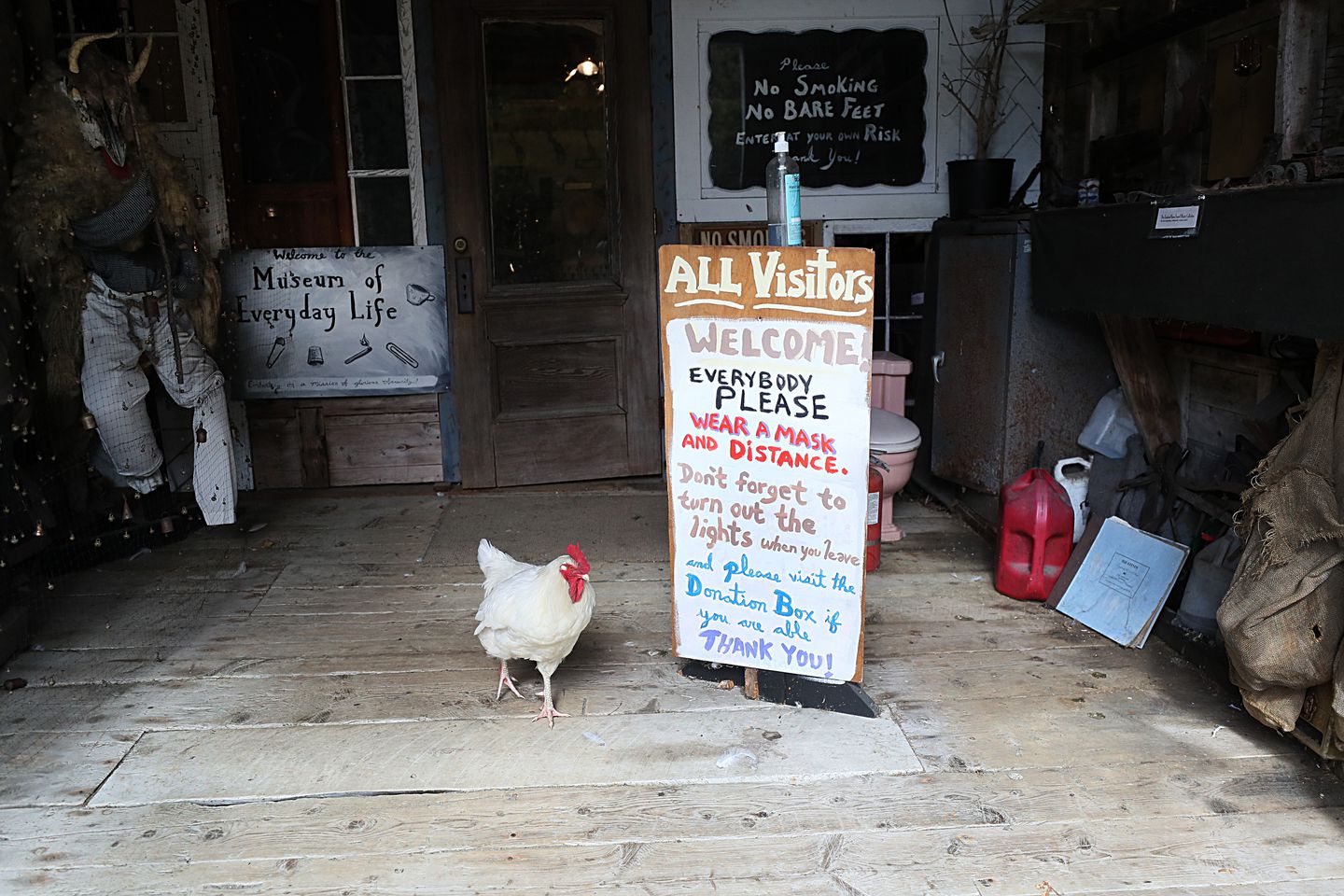
Photo: Suzanne Kreiter/Boston Globe. George, a chicken, and a sign to turn out the lights at the entrance to the Museum of Everyday Life in Glover, Vt.
I knew this Boston Globe article was for me as soon as I saw it was about celebrating the everyday. Most people have bucket lists of adventures they expect will be highlights of their lives. But after we check an item off our list, how do we feel when we get back home?
Maybe we should be enjoying what we do every day. A “museum” founder in Vermont thinks so.
Dana Gerber writes at the Boston Globe, ” ‘What would a museum look like if it was dedicated to ordinary objects of no monetary value, but immense everyday life consequences?’
“That’s the question Clare Dolan seeks to answer at the Museum of Everyday Life in Glover, Vt. Dolan, who founded the museum in 2011, has no interest in celebrating the precious, the rare, the famous. She’d rather honor the stuff of junk drawers — toothpaste tubes, safety pins, old to-do lists — and present them with reverence.
“So, she set out to create a museum that would redefine what is valuable, and whose lives are worth putting on display.
‘We need a museum that’s about us, too — the ordinary people,’ said Dolan, 54, who has dubbed herself the Chief Operating Philosopher of the museum. ‘We’re here, and there’s something lovely about our lives.’
“In a remote corner of the bucolic Northeast Kingdom, the Museum of Everyday Life beckons from the side of the road. There is no admission fee or lock on the door; patrons let themselves in and turn the lights off when they’re done. Dolan, who lives in a house next door, works as an ICU nurse at Northeastern Vermont Regional Hospital in nearby St. Johnsbury, so she’s often not home to greet visitors. The only security is a feisty chicken named George.
“The museum grew out of her childhood love of the material world. ‘I was the kind of kid that would talk to chairs,’ said Dolan, who’s originally from the Chicago area. After she bought her Vermont home in 2004, ‘I found the means to start making the thing that I wish I could come across.’
“The museum, now in its 10th year, champions the small to illuminate the universal. The front of the museum boasts the ‘greatest hits’ of exhibits past, like a trove of tone balls — dust that accumulates inside of instruments — and a violin made of matchsticks. Matchboxes from around the world rest on a wooden table, some from Dolan’s travels, others from outside contributions.
“Each of the exhibits, which run from one summer to the next, are communally curated. Dolan puts out a call for submissions in February when she announces that year’s object of focus. Throughout the 1990s, she worked as a puppeteer at the nearby Bread and Puppet Theater, a political troupe that has tackled a litany of social justice issues throughout its decades-long history — but she also enlists her ‘philosophers at large,’ or board of advisers, to assist her in creating each exhibit.
“This year’s exhibit highlighting notes and lists received the most submissions of any in the museum’s history, Dolan said. The selection is organized by category: love notes, bucket lists, and unfinished lists, like one that reads, ‘Things that have never happened: 1. I’ve never been asked to dance.’ There is a number two, but it is left blank.
“ ‘My heart just broke for that person,’ said Corina Orias, a California elementary school teacher visiting the museum with a local friend on a recent rainy Sunday. ‘I just hope that she did get asked to dance, sometime, someplace.’
“Why lists and notes? Dolan loves their inherent intimacy: the content, but also the way they bear the signs of human use; a pencil smudge here, a crinkle in the paper there. ‘They’re so connected to a person and a person’s story,’ she said. ‘They’re snapshots into how we make our way through the world.’ …
“ ‘It’s a lot of work, and it’s sort of thankless work in a way,’ Dolan said, ‘but it brings a lot of joy to me.’ ”
She brings joy to herself every day. Good idea. Could be at least as satisfying as checking off a bucket list. More at the Boston Globe, here.
Do you know other cool museum concepts? I’m remembering, for example, one man’s Museum of Questionable Medical Devices in Minneapolis and the Museum of Bad Art in Dedham, Mass. The blog has also covered the Mermaid Museums, the Museum of Aromas, the Covid Art Museum, a Museum for Gerbils, and more. Search on the word “museum” at the blog when you have time for joy.
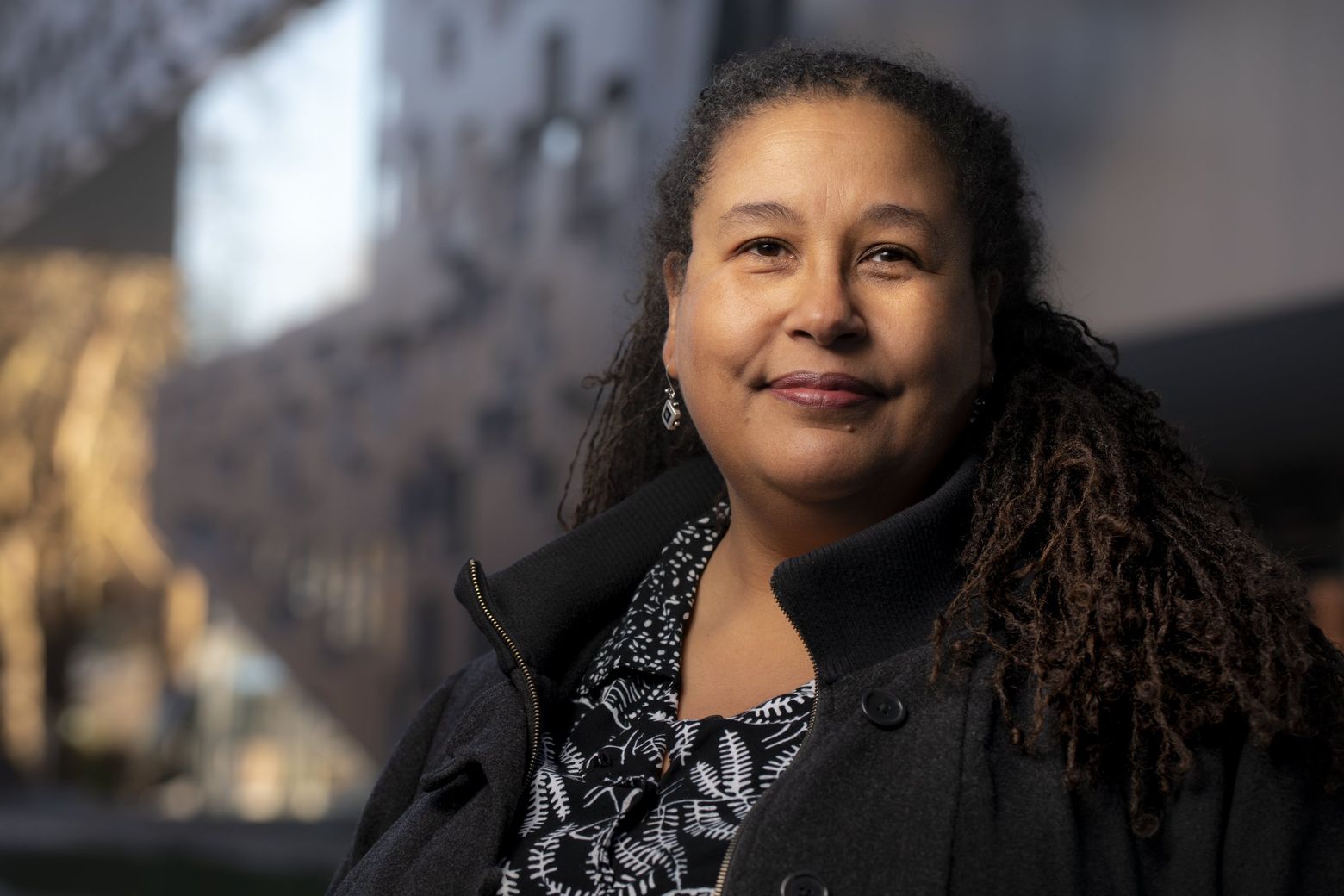
Photo: Bettina Hansen/Seattle Times. Naomi André, Seattle Opera’s scholar in residence, is passionate about sharing her love of opera and making the art form welcoming to a wide range of people, reports the Seattle Times. “I feel that everybody can find something to relate to in opera,” she says.
In March of this year, Naomi André gave a virtual talk at Vermont’s Bennington College on opera and her role as the Seattle Opera’s first scholar in residence. She was appointed right before the pandemic to share her enthusiasm for opera with a new and more diverse audience.
Here’s some background on the opera company’s pathbreaking appointment from Gemma Alexander at the Seattle Times.
“A week before Naomi André’s panel [in February 2020] on Black representation in the arts, Seattle Opera closed registration for attendance. The number of online reservations had hit the 300-person capacity of the Opera Center auditorium for the first time since the building opened in late 2018. At least in local opera circles, André’s name had buzz.
“André is Seattle Opera’s inaugural scholar in residence. It is a role the company created specifically for her and may be the only job of its kind in American opera. As scholar in residence, André acts as an adviser to help Seattle Opera become more inclusive, both for audiences and behind the scenes. …
‘There’s a kind of joy in going to the opera and seeing it live. Unfortunately, opera has an elitist reputation,’ said André, a professor at the University of Michigan, where she has taught courses on 19th-century Italian opera as well as classes on race and gender. …
“Her personal experience as a Black woman in the opera field led to her most recent book, Black Opera: History, Power, Engagement, which examined African American and Black South African participation in opera.
“ ‘I feel that everybody can find something to relate to in opera. This is not a genre that should go away,’ André said.
“To help Seattle Opera become a place where everyone can find their something, André advises on issues of race and equity both in their internal operations and in contextualizing the works they produce for audiences. One of her first acts as resident scholar was a response to the death of pioneering African American soprano Jessye Norman.
“ ‘There were a lot of pieces being written, but they were all so white! No one wrote about what she meant to Black fans. So I suggested that and they said, “Great! When can you have it ready?” ‘ André said with a laugh. ‘I was so impressed that this isn’t contentious.’ The piece she wrote is posted on the Seattle Opera blog.
“André first came to the attention of Seattle Opera when she participated in a forum on race and gender sponsored by the Glimmerglass Festival, a summer-season opera company in central New York state known for producing rare and new works. Called Breaking Glass, the panel visited Seattle in tandem with the 2018 production of Porgy and Bess. Impressed by André, Seattle Opera brought her back for 2019’s Carmen. In a forum called Deconstructing Allure, André and a panel of academics and artists — all women of color — explored representations of women and ethnic minorities in art. They considered the responsibility of contemporary arts organizations toward both classic works of art and the people who may be misrepresented by those art works.
“ ‘Some people would view that as a pretty radical conversation in the opera space,’ said Alejandra Valarino Boyer, Seattle Opera’s director of programs and partnerships. The event was so successful that Seattle Opera designed the new position of scholar in residence to formalize an ongoing relationship with André.
“[André] has recorded an episode of Seattle Opera’s podcast and contributed essays for program booklets. But her most visible role involves a series of free, public community conversations that invite audiences to question problematic social themes and portrayals of marginalized communities in opera while appreciating the artistic elements that continue to hold up.
“On Feb. 13, 2020, she [moderated] the Black Representation in the Arts community conversation at the Seattle Opera Center with speakers Theresa Ruth Howard, curator of the Memoirs of Blacks in Ballet symposium, and Bridgette Wimberly, librettist of Charlie Parker’s Yardbird.”
For her 2021 talk at Bennigton, André provided this preview: “In this talk, I outline some of the larger frameworks from my book Black Opera: History, Power, Engagement (2018) and take them further to include a quick mention of Beyoncé’s Homecoming (2018), and three operas on Black topics that debuted the summer of 2019 (Terence Blanchard and Kasi Lemmons, Fire Shut Up in My Bones, Opera Theater of St. Louis; Anthony Davis and Richard Wesley, The Central Park Five, Long Beach Opera; and Jeanine Tesori and Tazewell Thompson, Blue, Glimmerglass Festival).
“I quickly contextualize Fire Shut Up in My Bones and The Central Park Five and then spend the most time with Blue. I have been fortunate to see all three operas and got to know Tesori and Thompson through several panels in the Breaking Glass series (run by Glimmerglass Opera Festival). From the legacy of minstrelsy and the frequent negative portrayal of Blackness in opera, this talk outlines a shadow history and explores how opera can be relevant for today and a space of liberation.”
More at the Seattle Times, here, and at Bennington College, here.
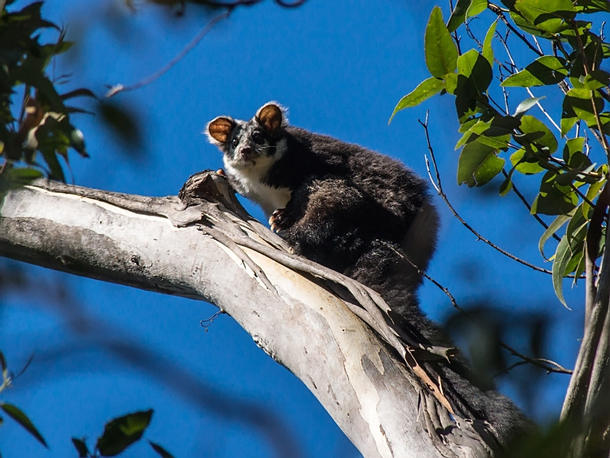
Photo: CC BY-NC 2.0. Australian ash forests are home to many species, including arboreal species like the Greater Glider.
Speaking of damage to forests, remember the terrible bushfires in Australia just before the pandemic — all those pictures of traumatized koalas!
Well, as worried as I am about the environment right now, I’m going to focus on what Mister Rogers said his mother told him when there were tragedies in the world: “Look for the helpers.”
The radio show Living on Earth (2/7/20) tells us that helpers rose up in Australia to rebuild the eucalyptus and ash forests when helpers were needed.
“After years of repeated bushfires, some of Australia’s eucalyptus forests can no longer come back on their own, so humans are giving them a helping hand by carefully collecting and distributing their seeds. Owen Bassett of Forest Solutions and host Bobby Bascomb discuss how the reseeding works, and the impacts of prolonged drought and climate change on Australian forests. …
“BASCOMB: Bushfires have burned through dry habitats home to many of Australia’s most iconic species, like koalas, kangaroos, and wallabies. They’ve even burned the more humid eucalyptus forests, home to the lyre bird, lead beater possum, and the great glider – an animal so adorable it’s been nicknamed a flying teddy bear. Some of these humid forests aren’t naturally equipped to deal with frequent fires and are struggling to grow back on their own. … Owen Bassett is Director of Forest Solutions, which is helping the government reseed forests in Victoria and New South Wales. He joins us from Melbourne, Victoria. Owen, … please describe the forests where you work. What do they look like and what does it feel like to be there?
“BASSETT: [The] forests that I work in are tall mountain forests, they’re known as ash forest. I suppose in terms of stature they’re similar to your California redwoods. So they’re very tall, very large trees and sort of a wet forest. [You] might think that a lot of Australia is covered in dry forest; most of it is, of course, and most of it is arid, but along the southeast corner, we have beautiful wet forests that run up the Great Dividing Range and they are gorgeous to be in. They’re cool, they’re damp, full of great native wildlife. …
“We have all of those marsupials that you American people know about, the jumping ones and the kangaroos; we have a species, or a number of species of wallaby that live in those forests. And we also have arboreals, so these are mammals that live up in the canopy of the forest. And then we have this magnificent songster, I don’t know if you’ve heard of the superb lyrebird. It has the capacity to mimic a whole range of birds and sounds that it hears in the forest. And it’s an absolute joy to listen to them. …
“BASCOMB: I think we actually have some recordings of the lyrebird we can play here. Let’s have a listen.
“[They] have the ability to imitate the shutter sound of cameras. They can imitate the sounds of chainsaws, dogs barking, all sorts of things like that. But the main repertoire is, is the full suite of other birds that are, and animal sounds that are in the forest.
“BASCOMB: So you mention that this is a very wet forest. Why is it burning now, and how common is that? …
“BASSETT: All eucalypts have evolved with fire, so fire is part of the environment here in Australia, a little bit like your California. But the thing is that, you know, we do have a changing climate here at the moment, a drying climate. And we’re currently caught in this real cycle of droughts, okay, so, in southeast Australia, we had this mammoth drought. We refer to it as the Millennial Drought. It went for 12 years, from 1997 to 2009. So what that left was this huge legacy of soil moisture deficit. … The species needs at least 20 years to be able to then reproduce, because young trees don’t flower. … We [have] forests that are at the stage of population collapse. Classically, it occurs in species like alpine ash and mountain ash that, you know, require much longer periods of fire intervals to survive.
“BASCOMB: So it sounds like if there was no intervention, these forests would likely turn into some different type of ecosystem altogether, maybe savanna or grassland or something like that. …
“BASSETT: These species are obligate seeders — if we have enough seed, and we have the means to spread that seed where the forest is going to experience population collapse, then we can intervene, lay seed on the ground or sow seed on the ground, and these forests will return. But it’s easier said than done. So we have to collect the seed, we have to distribute the seed, and that’s a mammoth operation. …
“BASSETT: Mountain ash, for example, is the tallest flowering plant in the world. And every year I go up in a light aircraft, and I actually map the distribution of the flowering. So once it’s flowered and we know where it is in the landscape, one year later, we can expect that there will be seed there. And so at that point, we send climb teams in and they climb these tall 80-meter trees. And they de-limb, just [to] keep the tree alive. We … take just a section of that crown out and from that, we can pick the seed pods, if you like. They’re sent away and the seeds extracted from that fruit or those pods. The seed looks a little bit like coarse pepper, so tiny seeds, the seeds are not, not big and it’s extraordinary to think that such a tall tree, something akin to your California redwoods, comes from this tiny, tiny piece of cracked-pepper size seed.”
“BASSETT: Yeah. So the concept of a seed bank is one that, you know, you put some seed away for a rainy day. We needed 10 tonnes of seed this year. At the moment, we might have a third, maybe to a half of that. Now I’ve been advocating for a seed bank for about 10 years, and the state government has only ever funded small seed collection operations that were emergency in nature, if you like. “Okay, we’ve got a bushfire, we’d better go and get some seed.”



 Suzanne's Mom's Blog