Feeds:
Posts
Comments

Posts Tagged ‘Gullah Geechee’

Photo: Richard Ellis/Alamy.
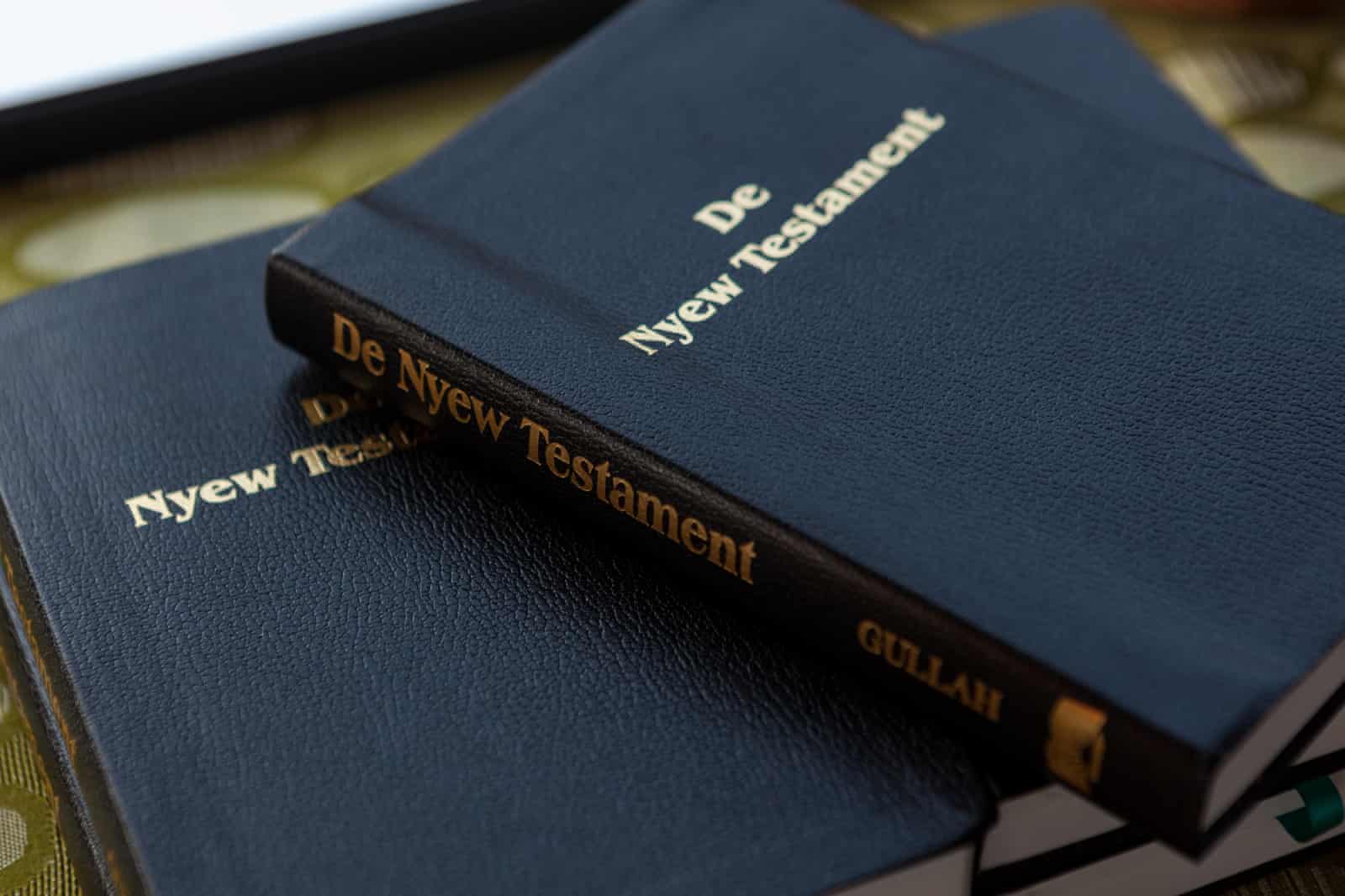
Copies of the Gullah-language Bible, De Nyew Testament. I once had a Bible collection that included this one. Some experts say artificial intelligence will help save endangered languages like Gullah Geechee.

For many reasons, including the fact that artificial intelligence “godfather” Geoffrey Hinton has said AI could wipe out humanity in three decades, I am not a fan. I know it can be helpful in medicine and other things I care about, but three decades is scary.

But what if AI saves dying languages?

Jonathan Abrams wrote recently at the New York Times about people using AI as a tool to do just that.

“While relaxing a couple of years ago, Prof. Joshua Caffery found himself in the mood to unwind with some old-time Cajun music. He asked Amazon’s Alexa to play selections from Dewey Balfa, a celebrated fiddler and singer credited with popularizing the genre.

“Instead, Alexa frustratingly steered him to the catalog of the modern pop artist, Dua Lipa, Caffery said.

“ ‘I love Dua Lipa,’ said Caffery, the director of the Center for Louisiana Studies at the University of Louisiana at Lafayette. ‘Don’t get me wrong. But it seems problematic if you’re interested in a different kind of culture and you want to surround yourself with the music of your region.’ …

“Louisiana French, the oral dialect of which Balfa was a cultural guardian, is part of the Bayou’s societal DNA, a link to its history, music and identity. Today, Caffery described the language as struggling and endangered. …

“In response, Caffery assembled a small team at the center to train its own language learning model in automatic speech recognition for Louisiana French, drawing from a trove of historical artifacts and interviews.

“Over the months, as the learning language model is trained on bits of the language — such as an old-age French nursery rhyme — it brings centuries-old dialect closer into the digital age.

“ ‘It’s scary how fast all this happened,’ Caffery said. ‘I don’t even think I knew a large-language model existed two years ago.’ …

“The efforts are part of inroads to preserve dialects at risk of being lost, and bridge a disconnect between large-language model machines, while maintaining a community’s ability to control and own its digital destiny.

“In the United States, questions exist over how to preserve languages like Louisiana French, the Gullah Geechee language (the English-based Creole language of some coastal regions in the Atlantic southeast) and Appalachian English in the modern, digital age.

“Globally, researchers at the University of Edinburgh are using artificial intelligence to strengthen and revive Scottish Gaelic and Manx. Google recently announced the availability of voice recordings of nearly 30 sub-Saharan African languages to help build tools like voice assistants and translation apps. …

“The importance of accurate speech recognition becomes greater as important tasks like job hiring and medical transcriptions become more automated and digitized, [Christine Mallinson, a professor of language, literacy, and culture at the University of Maryland, Baltimore County] said. …

” ‘There’s accents, patterns of grammar, word choice. Those differences are connected to our families, our neighborhoods, our age and gender and racial and ethnic and cultural backgrounds and where we grew up.’ …

“For centuries, Louisiana French was the predominant language spoken in South Louisiana. In 1921, a new state constitution declared English the primary language. Many parents stopped teaching their children the language out of fear of discrimination, as students who spoke Louisiana French in class were often punished with knuckle-rappings.

“A reversal came in 1968 when the Council for the Development of French in Louisiana was created to advance French, largely through education and community initiatives. In 2023, the Advocate of Baton Rouge estimated about 120,000 Louisianans still spoke French.

“Caffery grew up in Franklin, La., an antebellum town on Bayou Teche. As a child, he ate Cajun and Creole food. His grandparents sometimes sang Old French songs and passed along phrases in the language.

“ ‘Whether you spoke it or speak it, the language is floating in the air,’ he said. ‘There’s this feeling of there is this beautiful thing that we want to hang on to.’ …

“The Center of Louisiana Studies houses a vast trove of Cajun and Creole folklore recordings that include over 12,000 hours of oral histories, field recordings and music performances recorded on everything from wax cylinders to reel-to-reel tape. …

“The language is almost entirely preserved in vocal recordings. ‘A lot of it is sung in the language, and it’s something that’s vanishing,’ Caffery said. ‘Just in the same way you’d want food that’s local to your region, it’s important to have culture that is local to the region that makes you feel rooted and certain.’ ”

More at the Times, here,
Read Full Post »

Photo: Patrick Martin.
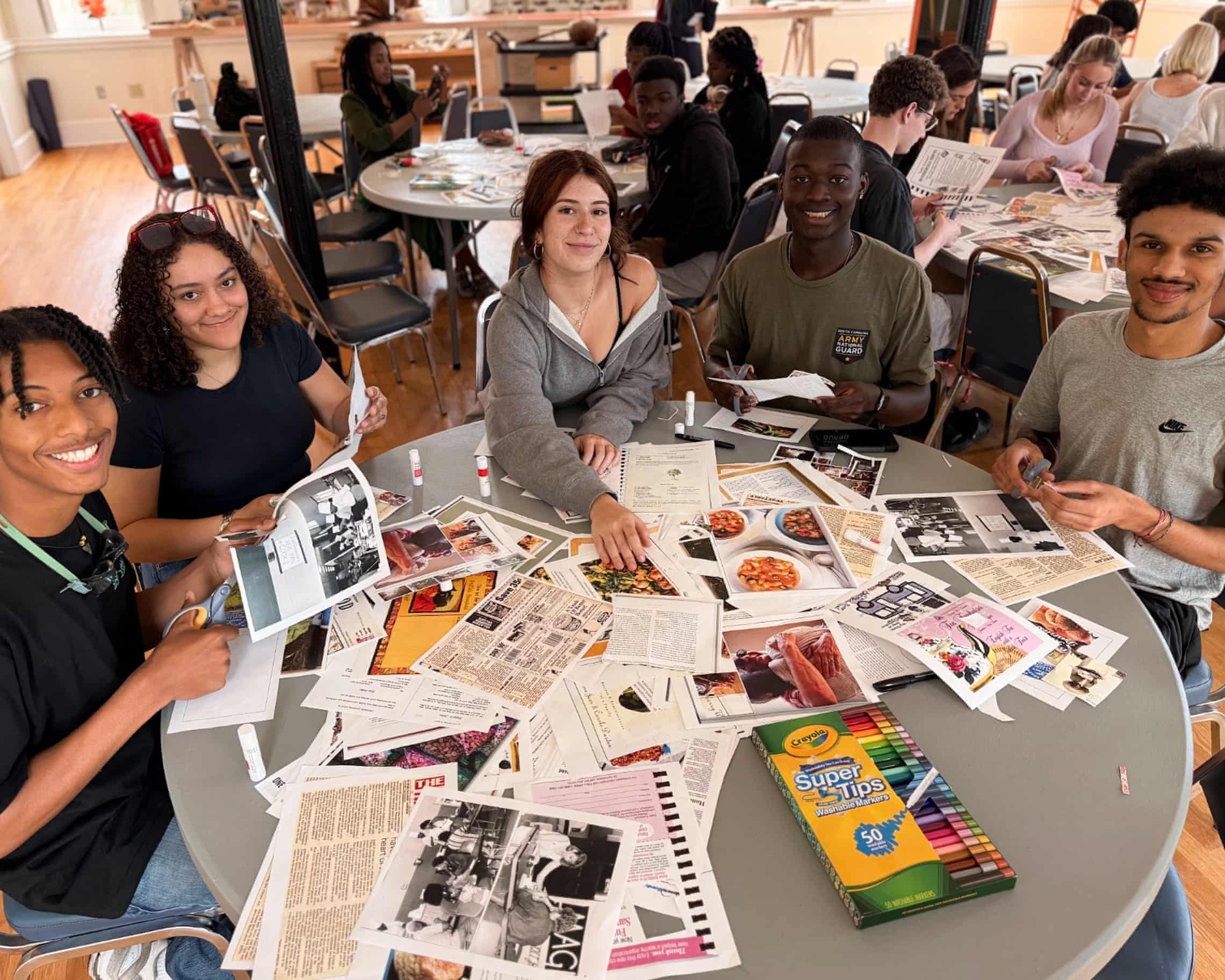
More than 50 high school seniors from Charleston county school of the arts visited the Avery Research Center for African American History and Culture. 

Those of us who enjoy eating in restaurants with authentic cuisine from different countries know how food has taught us a lot about those countries. That’s the premise behind a high school class in South Carolina that hopes to educate seniors about some fascinating South Carolina islanders.

Melissa Hellmann writes at the Guardian, “When students from Charleston county school of the arts in South Carolina entered a research institute on the African diaspora, staff greeted them with ‘welcome home.’

“The field trip at the College of Charleston’s Avery Research Center for African American History and Culture was the culmination of a six-week English course about memoir. Students learned about the culture of Gullah Geechee people — the descendants of formerly enslaved West Africans who retained their customs — through the lens of food such as okra, red rice and beans.

“The more than 50 high school seniors leafed through pamphlets on local food festivals, advertisements from the 1960s and Gullah Geechee cookbooks spanning more than 30 years. A few Gullah students in the class found information about their families in the center’s archives.

“During the visit, a Gullah Geechee chef, Reggie Miller, prepared a meal of Carolina gold rice, broccoli grown on nearby John’s Island and locally sourced chicken for the students. The visit culminated with the students creating a ‘zine about Gullah Geechee foodways that was built on archives from the center, and which showed how family recipes and traditions shape history.

“ ‘These cultural foodway legacies have been part of the Charleston and the southern United States culture and even beyond that for hundreds of years and students may have just not learned about it in school,’ said Patrick Martin, an English teacher at the school. Martin received a $1,000 memoir grant through the National Council of Teachers of English (NCTE), Penguin Random House and the Anne Frank Fonds to teach the course. …

“High school and college students throughout South Carolina this past school year have learned about Gullah Geechee history and culture in the context of food. These classes mark a shift in the past decade in which educators are increasingly teaching about Gullah Geechee culture and history in classrooms. Coastal Carolina University students, for instance, created multimedia projects about Gullah foodways through support from the Charles Joyner Institute for Gullah and African Diaspora Studies, and the student-driven publishing lab the Athenaeum Press. Twelve students contributed articles, photography and graphic design to the project, funded by a $150,000 Mellon Foundation pilot grant. Students wrote about the history and cultural significance of rice, hibiscus, peas, watermelon and collard greens within the Gullah Geechee community.

“Recently published literature such as Natalie Daise’s Okra Stew: A Gullah Geechee Family Tradition, and Rita Woods’s The Last Dreamwalker serve as new tools for teachers to introduce Gullah Geechee culture to their students, said Dr Tamara Butler, the executive director of the Avery Research Center. Teaching about Gullah Geechee foodways is one way that classrooms can connect to the community’s history and heritage, particularly in the face of environmental changes.

“ ‘Gullah Geechee folks’ struggles are included in environmental sciences. We’re expanding beyond the English classroom and social studies classroom and into the science classrooms as well,’ Butler said. ‘Foodways are one of the ways you can get at that: what foods are available to us in the face of climate change? What’s available to us as people are being displaced? What recipes can we still hold on to and adapt, especially now as prices are going up, and fertilizer is not available? …

“As part of the Coastal Carolina University project, it was important to [Zenobia Harper, the Joyner Institute director] and Alli Crandell, the director of the Athenaeum Press, to give back to the Gullah Geechee community. The students helped five Gullah makers increase their social media presence and designed packages for their products.”

More at the Guardian, here.This sounds like a great way to educate young people. But the story makes me wonder why state and federal governments don’t contribute more to such quality education. Did you notice how many charitable funders were mentioned, even from abroad?

Read Full Post »

Photo: North Carolina office of state archaeology.
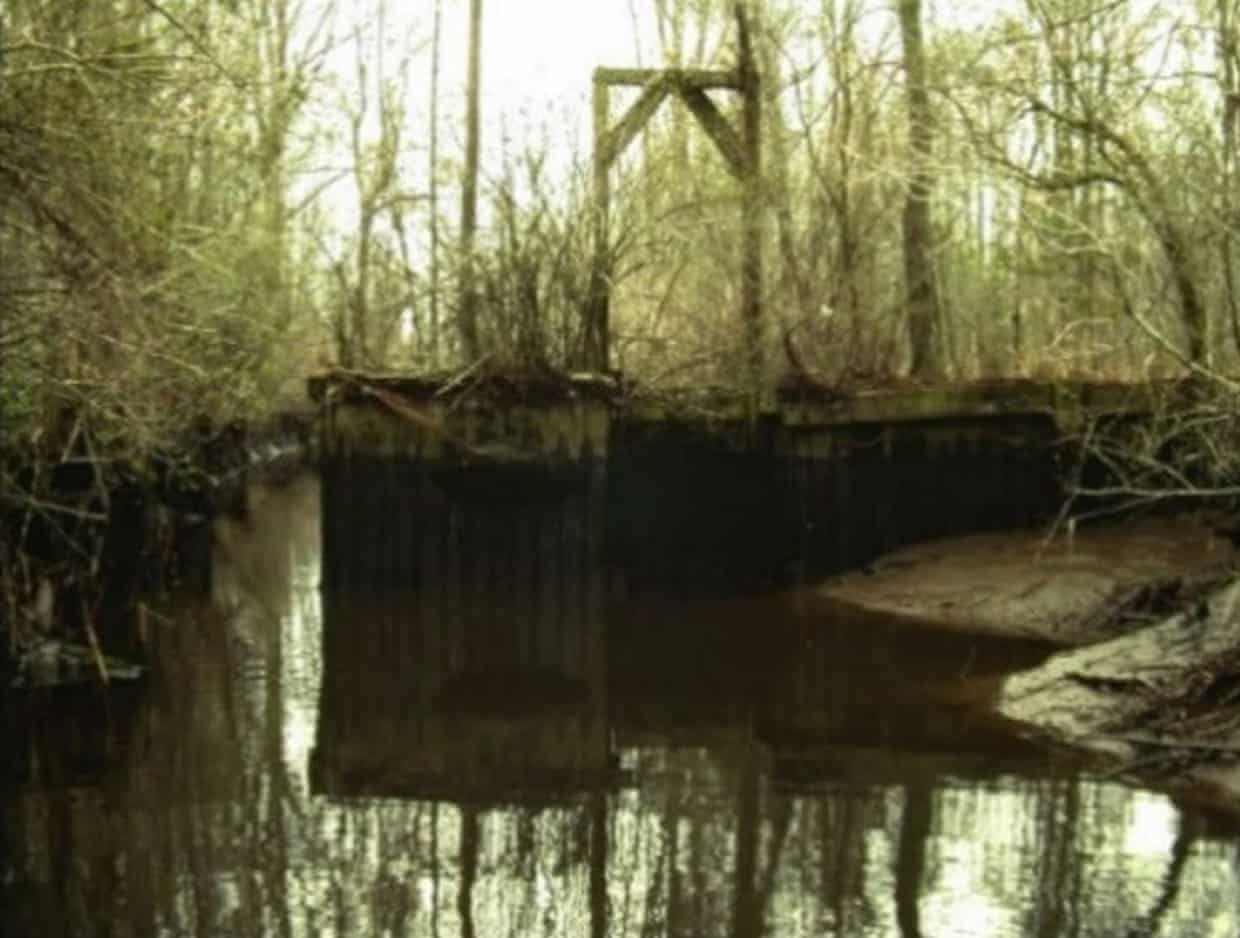
A rice gate, seen here in 1986. At Eagles Island, North Carolina, in the late 1700s, the enslaved Gullah Geechee people began creating ingenious rice fields. 

If the people described in this archaeological report used brilliant rice-growing techniques while enslaved, imagine what they might have done if they had been free! But, alas, slavery destroys lives of the enslaved and their descendants for generations, as Pat Conroy documented in The Water is Wide, his memoir about teaching.

In an in-depth article at the Guardian, Adria R Walker writes about recent archaeological discoveries concerning the Gullah Geechee people of the American South.

“As a former deputy state underwater archaeologist, Mark Wilde-Ramsing can’t help but look down. While rowing around North Carolina’s Eagles Island, at the tip of the Gullah Geechee corridor, he noticed signs of human-made structures, visible at low tide. Though he’d retired, he was still active in the field and knew his former agency hadn’t recorded the structures – which meant he had come across something previously undocumented. …

“Wilde-Ramsing knew the area had once been full of rice fields. His neighbor, Joni ‘Osku’ Backstrom, was an assistant professor in the department of environmental sciences at the University of North Carolina-Wilmington whose specialty was shallow-water sonar, and he had the skills and technology to explore the area. Using a sonar device, the duo detected 45 wooden structures in the river, and the remote sensing tool allowed Backstrom and Wilde-Ramsing to acoustically map the canal beds. …

“Spanning 2,000 acres (809 hectares) of the northern end of Eagles Island, the 45 irrigation devices were developed by enslaved people, who would later come to be known as the Gullah Geechee. The devices were used to control water flow for the rice fields in conjunction with earthen dams and levees, Wilde-Ramsing said.

Their existence provides further evidence of the engineering and technological skills that Gullah Geechee people used for rice cultivation, beginning in the late 1700s at the latest.

“Backstrom and Wilde-Ramsing documented their findings in a study published earlier [in 2024]. ‘The use of the island for this endeavor prior to the Civil War, in large part rested on the shoulders of transplanted and enslaved Africans and their descendant Gullah Geechee tradition,’ the study reads.

“The team’s discoveries, which came after two years of research in and around Eagles Island, have helped further shed light on the ingenious, skilled work of the Gullah Geechee people. Though Gullah Geechee people have been studied for centuries, Backstrom and Wilde-Ramsing’s research is the first to focus on their irrigation systems. The research couldn’t come soon enough: Eagles Island is environmentally vulnerable, both because of climate change and ongoing development. The duo registered their sites with the state, making development more difficult as a means to ensure the protection of cultural artifacts.

“ ‘The whole area was originally swamp. It was cleared mostly in the post-colonial, early 1800s period for tidal rice cultivation because that area was freshwater,’ Wilde-Ramsing said. ‘They were able to actually use, regulate, introduce the water and drain it with the tides.’ …

“The work the Gullah Geechee people did would have been exhaustive. Wilde-Ramsing says it required removing the cypress forests, then building dams and levees. Growing rice necessitated the use of water, so they created long wooden boxes, or ‘trunks,’ with gates on either side, that allowed them to let the water in by opening the gates. …

“The enslaved populations throughout the Gullah Geechee corridor – which spans the coasts of North Carolina to upper Florida – were isolated in such a way that they developed and maintained a culture different from that of most plantations.

“ ‘[They were] from coastal regions of west Africa, an area that had similar environs to those along the southern Atlantic seaboard centering on Georgia and the Carolinas, where rice agriculture was a mainstay of the economy,’ the study reads. …

” ‘I didn’t quite realize the role that rice played. It rivaled cotton during the 1840s and 50s,’ Backstrom said. ‘It was all over Europe and the US and it was all run by African Americans. A lot of it was developed based on their skills. I’m just happy that it’s coming to light and they’re getting their – I won’t say new – but recognition that this was an amazing thing, amazing work.’

“Even though Wilde-Ramsing and Backstrom’s discovery likely won’t permanently stop either development or climate change, not least because the island is owned by multiple private entities, the existence of historic, cultural artifacts can ensure that the Gullah Geechee structures are at least documented instead of simply being razed and forgotten.

“The researchers have been in communication with East Carolina University’s maritime program, and the school plans to send a contingent to the site to study some of the characteristic types. People from the school will be able to work on noting the various structures, trying to figure out how they operated and taking samples. Backstrom said that they’ve also been in contact with researchers at George Mason University in Fairfax county, Virginia, including a professor who had ancestors [from the area].

“In terms of further discovery, a mix of approaches best suits the complicated terrain. ‘We’re thinking about using drone imagery,’ Backstrom said. ‘We have some preliminary drone footage, which gives us access to these areas at dead low tide, areas that we had a lot of difficulty with, even with a very small vessel.’ The area is remote, full of tight nooks and crannies. It’s ‘particularly challenging because of the tides and the timing,’ he said. The different combinations of drone imagery and sonar mean the researchers aren’t limited by turbidity in the water.

“Backstrom hopes to go to west Africa, specifically to Senegal or the Senegambia region, where many Gullah Geechee people were from, to learn about the history of rice farming, including the roles women and children played. Children, for instance, tasted the water to ensure too much saltwater wasn’t being let in, and women helped in the actual cultivation of the rice, using skills from their home countries that were passed down throughout generations.”

More at the Guardian, here. No firewall. Donations help save reliable news.

Read Full Post »