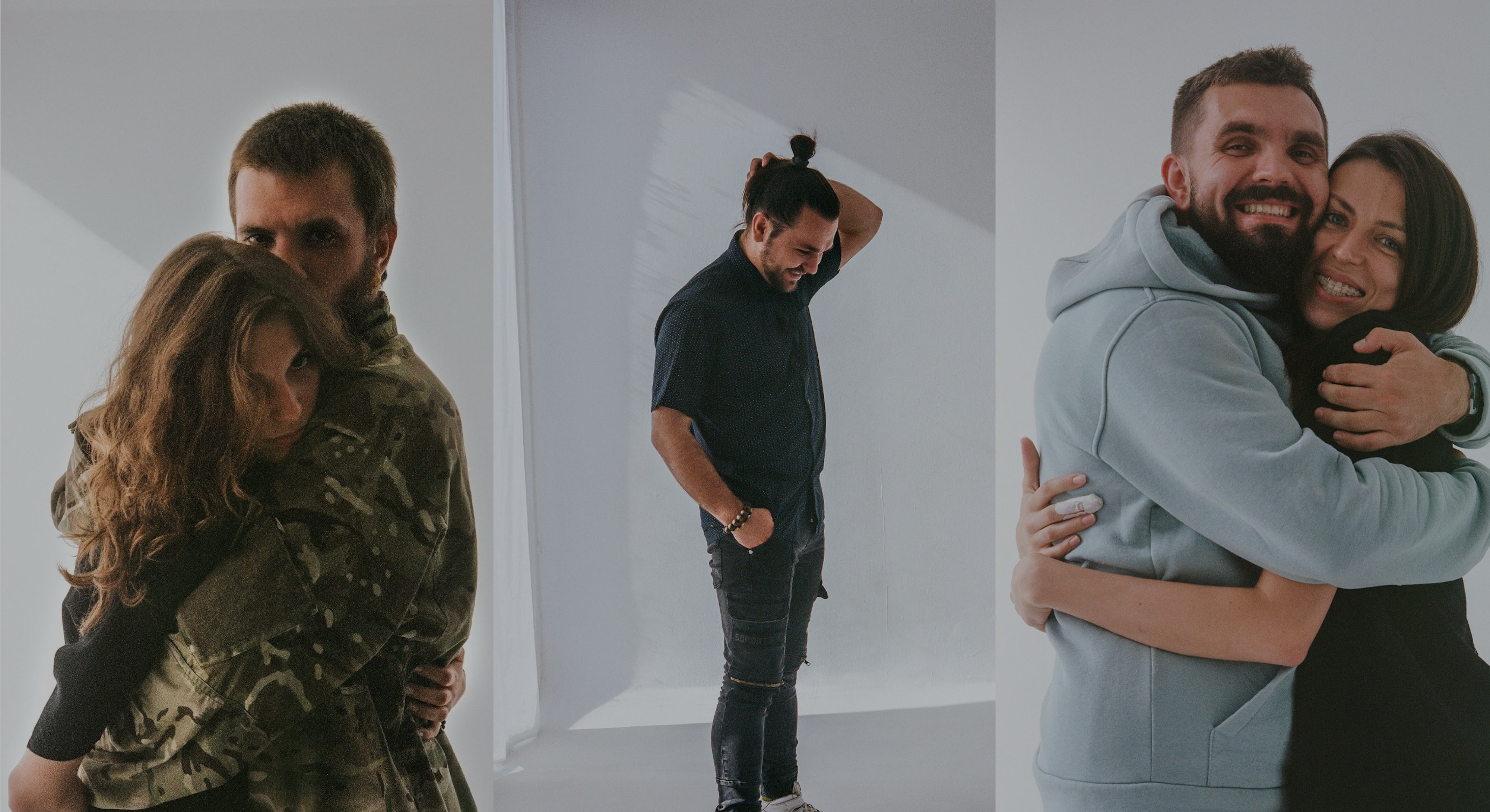
Photo: DeansBeans. Dean Cycon of Dean’s Beans and his wife decided to go to Poland to help World Central Kitchen feed the influx of Ukrainian refugees.They both have forebears that were chased out of Europe by Russia.
Do you know the legend of the Jongleur de Notre Dame?
My francophone blogger friends should correct me if I get this wrong, but the way I remember it is that a man wanted to present a gift at the statue of the Virgin Mary but was desperately poor. He had a different kind of gift, though — a talent for juggling. The story goes that he juggled with all his heart and soul in front of the sculpture, and it gently bowed its head to him.
That’s the kind of miracle that feels real.
Today people are donating money and whatever talents they have in order to help Ukrainians invaded by Russia. First off, John, my son, who continues to employ optical engineers in Ukraine for remote work.
Another Massachusetts resident, Dean Cycon of Dean’s Beans Organic Coffee, is going with his wife, Annette, to Poland to work with World Central Kitchen, which is feeding thousands of Ukrainian refugees. Dean and Annette both have forebears they say were chased out of Europe by Russia. Their story is detailed at the Greenfield Recorder, here.
Boston doctors, interviewed here, made YouTube videos to teach ordinary Ukrainians how to treat war wounds. According to the Washington Post, “The video is less than 40 seconds long — but its creators say it could help save lives in Ukraine.
‘The data we know from the battlefield is that a significant amount of deaths are preventable with taking these steps,’ Eric Goralnick, an emergency medicine physician at Brigham and Women’s Hospital in Boston. …
“Goralnick is the doctor shown acting out the tutorial in the short video, which provides a list of actionable steps written in Ukrainian. Another video, about 4½ minutes long, features a more detailed, step-by-step narration in Ukrainian by Nelya Melnitchouk, a Ukrainian-born oncology surgeon at Brigham and Women’s Hospital.” More.
The nonprofit group End Hunger New England is pivoting from mostly local needs to help Ukrainians, too, but according to the Christian Science Monitor, the group was stumped about how to deliver the meals so far away. Then a Boston-based shipping company, BOC International, stepped up. “It’s handling all the logistics,” the Monitor reports, “No charge.”
Along with Asakiyume, I myself have joined a crowd of editor-types to help media people in Kyiv clean up translations of events so the Ukrainians can share the latest on Anglophone social media.
I am so grateful for this opportunity, which Asakiyume, a friend I met 25 years ago when we were both copyediting at a management magazine, offered me.
How it works: bilingual Ukrainians translate local news into English the best they can, then send it to colleagues to check as well as to “proofreaders,” mostly American. As proofreaders, we try to make the English sound more natural.
The organization we are helping works 24 hours a day. I know I’m getting more out of it than I am giving. Talk about real! If I want to sacrifice, I ought to sign up for the sparse 2 a.m. shift.
My first photo today is from Pawtucket, Rhode Island, where a homeowner is expressing the solidarity that most of us feel for Ukrainians defending their homeland against a crazed invader.
Some other recent photos also make me think about solidarity — and how good things can happen when folks band together. Remember the WPA? Many of its works are still in use. New Congressional allocations will be doing some of the same kinds of infrastructure projects, thank goodness.
I loved the sign on the bank of the Seekonk River showing the power of “unionized” little fish in a dangerous world.
The photo of the pollinator sign highlights the banding together of neighborhoods in Massachusetts and elsewhere to protect honey bees and other pollinators, guardians of a healthy environment.
Looks like Providence’s official guardian on the river may actually be needed more on the road.
Meanwhile, encouraging signs of spring give us hope that winter won’t keep returning after random warm days. Still, winter can have attractions. Note the bluebirds that have been regular visitors to our feeder.
Photo: American Alliance of Museums. A young visitor is captivated by Dakota, Natural History Museum of Los Angeles County’s full-suit Triceratops puppet.
When Suzanne was a few months old, John was learning about dinosaurs, and we got into a kind of chanting routine reeling off all the fancy names we knew. Baby Suzanne seemed to think they were hilarious. If she was fussy, dinosaur names would distract her and make her laugh.
Dinosaurs and their names have always enchanted small children. To up the enchantment, a museum in Los Angeles has begun experimenting with bringing dinosaurs to life. Sort of.
Ilana Gustafson writes at the American Alliance of Museums blog, “The anticipation of an imminent transformative journey is palpable in the diorama hall at the Natural History Museum of Los Angeles County (NHMLAC), where a Dinosaur Encounter is about to begin.
“During the show, the audience cheers as a young guest, decked out in a bedazzled dinosaur shirt, is called onstage to feed the juvenile Triceratops known as Dakota. … The audience falls into a quiet anticipation as Dakota’s feet shuffle impatiently, her beak opening and closing, indicating that she’s hungry. The child onstage gets closer to the dinosaur, leaf in hand, and reaches their arm out nervously toward her beak. Slowly Dakota approaches. …
“Dakota opens her mouth and suddenly clamps it closed with the leaf in its clutches and excitedly wiggles her tail. The audience cheers as the child onstage, grinning from ear to ear, watches a dinosaur playfully eat a leaf right at their feet. The host of the show thanks the young visitor. …
“The full-suit Triceratops puppet, created by the fabulous puppeteers at Erth, is made of aluminum and plastic boning, foam, and lycra painted with acrylic, and contains an internal speaker and other mechanisms. Inside is a puppeteer … holding the sixty-five pounds of the weight of the puppet on their back, using largely their shoulders and core strength to maneuver it. Many technical elements need to come together to bring the dinosaur to life, but when they all unify in a performance, the audience forgets to focus on the mechanisms at work. …
“This act of relating to the characters on stage is another thing that make theater so powerful. In a study published in the Journal of Experimental Social Psychology, researchers discovered that watching theater can lead to increased empathy, the ability to understand the feelings of others. … I would make the argument that this empathy toward the dinosaur increases intellectual curiosity about these creatures, paleontology, and other related studies. …
“The father of a dedicated fan shared with us in an email the love his son had developed for our puppet, and in turn for the Natural History Museum.
‘Lev didn’t just watch T-Rex and Triceratops. Lev became T-Rex and Triceratops. After each show, Lev would show us his improvisational reproduction of the show we had just watched. He insisted upon silence while he delivered his performance, mirroring and perfectly mimicking the T-Rex right down to lifting his legs, bending over with retracted arms, and delivering his ferocious ‘roar’ while bobbing his head back and forth seeking his prey.’ …
“The designs of the full-suit Triceratops and T. rex puppets were informed by the museum’s paleontologists, including Dr. Luis Chiappe, Senior VP of Research and Collections, who advised the fabricators on how best to merge entertainment with science. The physical characteristics of our juvenile Triceratops and T. rex puppets were based on our paleontological collections and research. The museum’s scientists were keen to have some of the current research on dinosaurs reflected in these creatures. After a performance with our T. rex puppet, known as Hunter, we often get the question from a visitor (young and adult alike), ‘What’s that fluffy stuff all over his body?’ This opens up a conversation about proto-feathers, and how scientists have been able to make the connection between theropod dinosaurs and modern-day birds. …
“The experts at NHMLAC see the value these puppets have in garnering interest and support for their research. Dr. Nathan Smith, Curator at NHMLAC’s Dinosaur Institute, says … ‘The puppets are a truly unique way where we can envision these species as living animals, but also allow visitors to interact with them.’ “
More at the American Alliance of Museums blog, here. If you missed the giant puppet at the San Diego Zoo, you can read about it here. And here‘s a post from last fall on the one that strode across Europe.
Photo: Chris Granger/The Times-Picayune/The New Orleans Advocate/AP “Roofing contractors install a temporary roof on a home in New Orleans East, Sept. 8, 2021. FEMA and the U.S. Army Corps of Engineers are overseeing this Blue Roof program to help homeowners recover from the damage cause by Hurricane Ida,” the Monitor reports.
Can humanity learn from history? Sometimes, yes. According to this September 2021 story, people are learning from climate disasters. Even I, as a child on Fire Island, learned that people who build houses on sand dunes ask for heartbreak. Collectively, the towns on the island learned the same thing.
Marshall Ingwerson wrote this report on collective learning at the Christian Science Monitor.
“In the weeks since Hurricane Ida landed at New Orleans, it has illustrated two very different stories. One is the rising violence of the changing climate. The other, which is only now fully emerging, is the human resilience that has already made the world far safer. …
“The aftermath of Hurricane Ida is now entering what we might call the resilience zone. It can be the most testing, and telling, phase.
“As part of the Monitor’s Finding Resilience project, here is a tale of two cities: The New Orleans hit by Hurricane Katrina 16 years ago and the New Orleans hit by Hurricane Ida late last [August].
“They were not identical storms. Ida struck with less sweeping girth than Katrina but more sheer force. They weren’t all that different, either.
“But they hit a different New Orleans. Katrina killed more than 1,800 people. The breaching of the levees put 80% of the city underwater. The blow was nearly existential to New Orleans as we knew it. Three in 10 residents vacated, many permanently.
“After Ida struck last month, the now-fortified levees held against the surge. The toll in fatalities in Louisiana is at 28. A similar number died in New Jersey as Ida-driven rain flooded the Northeast. The scale of damage and heartbreak is so vastly different that clearly Louisiana is more robust and storm-hardy than in 2005. The population had even grown back in New Orleans, recently surpassing its pre-Katrina numbers.
“Ida has been covered as an example and a warning of the rising violence of climate change, making hurricanes stronger, floods higher, and fires bigger and more frequent in the dry West. And that’s an important context.
“But here’s another: Even as climate events become more dangerously frequent and potent, humanity has actually become safer – dramatically safer.
“The economist Bjorn Lomborg finds that the number of people killed worldwide by climate-related events in the 1920s, a century ago, was 27 times higher than the number killed over the decade ending 2019.
Corrected for the far higher global population today, the death rate a century ago was more than 130 times what it is today.
“Dr. Lomborg’s point is that when we assess the costs, the dangers, and the difficulties that climate change implies, human resilience and ingenuity is a nontrivial factor. So far, in fact, it has been an overwhelming factor.
“A term like resilience can risk sounding a little minimizing and reductive – just a personal character trait. It is much more than that.
“Those who have been through a hurricane strike report that it is after the winds have gone quiet, the ground dried, and the sun shining in steamy afternoons, only then have they arrived at the hard part – the exhausting building back, the forging ahead, the relaunch into forward motion. …
“Many of the efforts to resuscitate post-Katrina New Orleans were deeply personal, with families making remarkable sacrifices to rebuild the economy and education, much less the roads, bridges, and buildings of the city itself.
“So resilience is a matter of spirit, of finding the heart to come back. But its structure, the ladder resilience climbs, is learning. We pick ourselves up, we learn what we need to learn, and we get to work.
And it’s not just person-by-person resilience that drives the kind of change we have seen. It’s collective.
“Only big, complex teams can achieve what New Orleans accomplished in the past 16 years. The scale of the investment, the engineering, the overlapping interests, the cross-cutting visions and values – only politics can put all that together and sort all that out. …
“Yet humankind has made the world, per Mr. Lomborg’s numbers, more than 99% safer against natural disasters in the last century by scaling resilience. And we do that through the institutions we use to work together.
“The only way we can learn and then act on as massive a scale as demanded of New Orleans is through the institutions we’ve developed over centuries – whether it’s a city council, a police department, a university, an engineering association, a religious denomination, a news organization, a Supreme Court, or an updated building code.
“It’s the lack of robust institutions that reduce resilience in a country like Haiti – where such institutions were undermined by Western powers for centuries – to a more individual matter. Anyone who has visited the nation has witnessed the sheer energy and unoppressed vitality of the people that crowd the streets of Port au Prince. The spirit is there, but it’s a resilience on foot, a personal challenge, and not yet a resilience that can collectively build safety from the next natural disaster.
“Individual learning can be a flashlight for families, communities, organizations, nations. But it is collective learning, what we achieve together, that holds real power. In fact, civilization itself could be defined as collective learning.”
Photo: Dan Cameron. Chumono, Muelle de Alma (2005), site specific art installation near Cucao, Chiloé, Chile.
Today’s article is the first in a Hyperallergic series about a fellowship for curators that one recipient used for a project in Chile. Blogger Rebecca may know the part of Chile that curator Dan Cameron talks about.
He writes at Hyperallergic, “While preparing this project one day, I was perusing Chilean regional news outlets for details about the December 2021 fire that damaged or destroyed a number of houses in Castro, the capital of the Isla Grande de Chiloé, when I noticed that multiple sources referred to the island as a ‘tourist’ destination.
“Maybe it’s the just intellectual vanity that goes with being the sort of curator who leaves New York City to come to a remote corner of South America, but it felt weirdly like a slap in the face to see this little-known (outside of Chile) place that I’d been steadfastly exploring for a future curatorial project seemingly transformed by a single word into a locale that would be for, well, tourists. In my mind it didn’t matter that Chiloé’s famed palafito stilt houses and 17th- and 18th-century wooden churches attract visitors worldwide, or that the more secluded corners of Chiloé I’d scouted on previous trips had everything a moderately resourceful traveler would need for a splendid visit. …
“My flash of pique at reading Chiloé so described is curiously linked to my personal history with Chile, which I first visited exactly 30 years ago. … I’ve returned consistently to Chile over the years, precisely because I thought I wouldn’t otherwise get to know it. This was summarized by the word that the Santiago-based artist Eugenio Dittborn would employ five years later as his title for a survey exhibition I curated of his signature pinturas aeropostales (airmail paintings) at the New Museum: Remota.
In 1992 I hardly knew anybody who possessed firsthand information about Chile, and that made it irresistible.
“During our initial meeting at his studio in Santiago, I shared with Dittborn my very ambitious itinerary, which included Santiago, Valparaiso, Easter Island, and the northern cities of Iquique and Antofagasta. … Dittborn responded that in the future, I should visit the southernmost art museum in the world, in Castro [in Chiloé], and perhaps consider organizing an exhibition there. …
“I finally made it to Chiloé in 2015 with the artist Gianfranco Foschino. … It helped that Gianfranco was personally enthusiastic about organizing a contemporary art exhibition in Chiloé, but what became less clear once we’d made our initial reconnaissance of the island was whether or not MAM Chiloé was the ideal venue for a project that would function largely as a platform for local artists. After spending time with and talking to various artists living on the island, it seemed that, for most, the museum functioned as a venue for artists based in Santiago. If I wanted to see where local artists showed, I’d need to dig a little deeper into the patchwork of regional museums, municipal libraries, gallery-cafés, and community centers, which tended to be scattered all over Chiloé, and on the nearby islands of Quinchao and Lemuy.
“My last time in Chiloé, in November 2019 … I started envisioning Alrededores more as a long-term curatorial endeavor, where instead of artworks appearing for one season and vanishing, some might require years even to come to fruition. That would place the project closer in spirit to the niche that the Chilote artist Chumono opened up with his site-specific Muelle del Alma (‘Pier of the Soul’), which since its 2005 construction has become emblematic of art and nature co-existing on mutually beneficial terms. Thousands of visitors each year park their cars near the village of Cucao and hike nearly three miles through verdant hills and pastures to the westernmost edge of the island.
“There, according to Chiloé folklore, the boatman Tempilcahue will someday ferry them to the afterlife; fittingly, Chumono’s wooden ramp visually beckons visitors up into the sky and out over the Pacific Ocean. …
“The most exciting part of my plan was the possibility that Chiloé’s artists might end up with an international context for their work, without rupturing the sociocultural framework of their lives.
“The art was already there — I had already been surprised by its depth, and it was simply a matter of introducing the world to it. Even if cultural tourism, broadly speaking, was on a temporary hiatus as new waves of COVID spread worldwide, other avenues could bring the public to the art of Guillermo Grez or Anelys Wolf, or to the sole-proprietor storefront Museum of the Accordion in Chonchi.
“The latter, a modest but beloved establishment, preserves an integral part of the musical legacy left through centuries of ships — on which the accordion was that rare instrument capable of surviving adverse conditions — rounding Tierra del Fuego to pass between the Atlantic and Pacific Oceans, which slowed to a crawl after the 1914 opening of the Panama Canal. Part of the original Alrededores concept had been to move the museum’s collection — acquired long ago from sailors who left their accordions for repair and never returned — temporarily to MAM Chiloé, while putting some TLC into the museum’s display and conservation in Chonchi, where exhibits are typically set out on folding tables with hand-written labels.
“This month I’m returning to Chiloé for the fifth time in eight years … in pursuit of something that compels me to return over and over again, and to continue dreaming of a truly marvelous future art exhibition.”
More at Hyperallergic, here, where you can click through the curator’s updates. No firewall, nice pictures.
Photo: Tri-State Brid Rescue & Research. Study: Nearly half of bald eagles and golden eagles have chronic lead poisoning, probably from bullets lodged in their prey.
Eagles rebounded when humans stopped using DDT to kill mosquitos. But like most things in life, there’s always something else that comes along. Eternal vigilance is required. Today’s story looks into the reasons many of these eagles are now suffering from lead poisoning.
As Maria Cramer reported at the New York Times last month, “The bald eagle, whose resurgence is considered one of the great conservation success stories of the 21st century, is facing a serious threat: lead poisoning.
“Researchers who tested the feathers, bones, livers and blood of 1,200 bald eagles and golden eagles, another bird of prey in the Northern Hemisphere, found that nearly half of them had been exposed repeatedly to lead, which can lead to death and slow population growth.
“Scientists believe that the primary source of the lead is spent ammunition from hunters who shoot animals that eagles then scavenge, usually during the winter, according to the study, which was published on Thursday in the journal Science.
“Nearly a third of the birds tested also showed signs of acute poisoning, or short-term exposure to lead, according to the study, which was led by scientists from the United States Geological Survey, Conservation Science Global, Inc. and the U.S. Fish and Wildlife Service.
“The effects of lead poisoning are devastating, said Vincent A. Slabe, the lead author of the study and a research wildlife biologist for Conservation Science Global in Montana.
“Lead poisoning can prevent an eagle from digesting food properly, eventually leading to starvation, he said. It can cause loss of locomotion so severe that an eagle will lose the ability not only to fly, but also to move at all, he said. …
“The study, which examined bald eagles and golden eagles from 38 states, is the first to look at the effects of lead poisoning on the bird populations on such a large scale, said Todd E. Katzner, a research wildlife biologist at the U.S. Geological Survey.
” ‘The research also showed that poisoning slowed down population growth rates by about 4 percent for bald eagles and 1 percent for golden eagles. … These percentages seem small, but, over time, thousands and thousands of individual birds are being removed from the population’ because of lead poisoning, Dr. Katzner said. …
“Dr. Slabe said he hoped the report’s findings would help to educate hunters and encourage more of them to switch to lead-free ammunition.
“ ‘This is 100 percent human caused and totally preventable,’ said Laura Hale, president of the Badger Run Wildlife Rehab in Klamath Falls, Ore., whose organization has taken in bald eagles, golden eagles, and different species of hawks that were poisoned by lead.
“In 2018, the group tried to save an eagle that a hunter had found in the woods and was unable to fly and gasping for air.
When Ms. Hale told the hunter that the eagle most likely became sick from feeding on contaminated gut piles … ‘He was horrified. [He] wanted to stop hunting.’ [She] told him that he did not have to stop hunting; he needed only to stop using lead ammunition.
“Many hunters, concerned about effects not only on wildlife, but also on game meat consumed by humans, have been moving away from lead ammunition and have begun using copper bullets.
“Sporting Lead-Free, a hunters and anglers group based in Wyoming that seeks to raise awareness about the adverse effects of lead ammunition, posted a short film with testimonials from hunters who stopped using it.
“ ‘Hunters are conservationists,’ said Bryan Bedrosian, a co-founder of Sporting Lead-Free and a raptor biologist. ‘This does not need to be a polarizing issue.’
“Some hunters hesitate to switch ammunition because of tradition, a mistaken belief that copper bullets are less effective, or because they have a backlog of lead bullets, he said.
“ ‘Then there are still folks who just don’t know,’ said Mr. Bedrosian, who says he uses lead bullets at the range, where he knows the ammunition will not come into contact with wildlife.
“Hannah Leonard, the group’s outreach coordinator, said she hunted with lead bullets until four years ago, when she came upon an emaciated golden eagle hobbling on the ground while she was hunting in Anaconda, Mont.
“ ‘Her talons were really clenched, her wings were drooped,’ Ms. Leonard said. ‘You could tell she was in danger.’
“The eagle later died and Ms. Leonard said the animal rescue group she called to try and save the bird told her the cause of death was lead poisoning. ‘It was a no-brainer for me to switch’ types of ammunition, she said.
“In January 2017, the U.S. Fish and Wildlife Service issued a policy [later reversed] to phase out the use of lead ammunition and fishing tackle used on national wildlife refuges. … The service declined to say whether that policy would be reinstated as a result of the new study. …
“Dr. Slabe said that hunters, once they were educated, would voluntarily stop using lead ammunition. ‘Hunters are very receptive to this issue,’ he said.”
Photo: Adria Malcolm/ NYT. Lieutenant Colonel Susana Corona of the New Mexico National Guard worked as a substitute teacher in a third grade class in Estancia, New Mexico.
When things are bleak, it’s helpful to remember the advice that Fred Rogers’s mother gave him when he was small: “Look for the helpers. There are always helpers.”
On National Public Radio the other day Ari Shapiro interviewed a woman who had just escaped from Ukraine and came back to the border the next day to help people with translation. And yesterday I learned that Asakiyume — from her home in Massachusetts — was helping translators make their English sound more natural. Perhaps I can also help with that.
Many, many people have also stepped up during the pandemic to meet needs wherever they are. Consider this story about a National Guard lieutenant colonel filling in for an elementary school teacher in New Mexico.
Erica L. Green wrote at the New York Times, “The chorus of small voices ringing from a third grade classroom on a recent morning signaled how far Estancia Elementary School had come in resuming a sense of normalcy after the latest coronavirus surge.
“Students in this small, remote community were enthusiastically engaged in a vocabulary lesson, enunciating words with a ‘bossy r,’ as well as homophones and homonyms, and spelling them on white boards.
“But there was also a sign of how far the district, about an hour outside Albuquerque, New Mexico, still had to go. The teacher moving about the classroom and calling on students to use the words in a sentence was clad in camouflage. ‘My substitute is wearing gear,’ one student responded.
” ‘Yes,’ Lt. Col. Susana Corona replied, beaming. ‘The superintendent allows me to wear my uniform. I’m wearing a pair of boots.’
“[Dozens] of soldiers and airmen and women in the New Mexico National Guard have been deployed to classrooms throughout the state to help with crippling pandemic-related staff shortages. Gov. Michelle Lujan Grisham has also enlisted civilian state employees — herself included — to volunteer as substitute teachers. …
“The presence of New Mexico’s state militia — whose members are trained to help with floods, freezes and fires, as well as combat missions overseas — has largely been embraced by schools as a complicated but critical step toward recovery. Teachers have expressed gratitude for ‘extra bodies,’ as one put it.
Students were mostly unfazed but aware that, as Scarlett Tourville, a third grader in Corona’s class put it, ‘This is not normal.’
“Superintendents were given the choice of whether to have the guardsmen and women wear regular clothes or duty uniforms; most joined Cindy Sims, superintendent of the Estancia Municipal School District, in choosing the uniforms. ‘I wanted the kids to know she was here, to know why she was here,’ Sims said. ‘I wanted them to see strength and community.’ …
“ ‘Trying to have school at a time when everybody’s heart was broken was very difficult,’ Sims said. ‘Our mission is to keep hope alive, and the National Guard is helping us do that.’
“Corona, an intelligence officer in the New Mexico Guard … never envisioned that one of her missions would require being armed with a lesson plan, Wet-Naps and dry-erase markers. But nor did she envision watching her own fourth grader try to learn from a teacher through a screen last year.
“ ‘You always have to be ready when there’s a need,’ she said, ‘when there’s a call to service.’ …
“Coronavirus-related illnesses, quarantines and job-related stress have hit many districts hard. But the country’s education leaders say the pandemic is just accelerating trends that were at least a decade in the making. …
“ ‘Crisis is the word we have to use now,’ said Becky Pringle, the association’s president, describing the enlistment of the guard as a ‘stopgap.’ …
“At Belen High School, in a farming community less than an hour south of Albuquerque, the staffing crunch has been felt acutely. … Principal Eliseo Aguirre said he believed the death of a teacher from COVID-19 had a chilling effect on teacher and substitute applications.
“The arrival of Airman 1st Class Jennifer Marquez last month was a ‘blessing,’ Aguirre said. On a recent Wednesday, she was covering a Spanish class — her third subject in two weeks. …
“Veronica Pería, a freshman at Belen, was happy to see [her]. She said her grades suffered last semester when her teachers were absent and random staff members were popping in and out of her classes, leading to inconsistent instruction. ‘It’s better than watching a video or something,’ she said of having Marquez filling in. ‘It’s good to have someone I can go to and ask for help.’ …
“When the call came from the governor, the New Mexico National Guard’s commander-in-chief, Brig. Gen. Jamison Herrera, knew he would have no trouble recruiting volunteers for Operation Supporting Teachers and Families, or STAF.
“Many guardsmen and women had already seen how the pandemic affects students up close, having delivered meals to those at risk of going hungry when schools closed. …
“Although some members have advanced degrees or certifications that could translate to the classroom — a welder is teaching shop class in one district, for example — Herrera, a former teacher, impressed upon his team they were there to accomplish one goal.
“ ‘We are there to support the learning objectives of the teacher, because we certainly know we can’t fill their shoes,’ he said.”
Photo: Russ Rowland/Heartbeat Opera. Professional opera singers Kelly Griffin and Derrell Acon perform with incarcerated singers for Heartbeat Opera’s production of Fidelio in a dress rehearsal at New York’s Metropolitan Museum of Art.
Positive things happen when punishment for people who have committed crimes doesn’t negate their basic humanity. That’s why I like posting stories about enlightened systems (see Norway’s successful rehabilitation process, here) and programs that bring the arts inside the walls.
Anastasia Tsioulcas reported recently at National Public Radio (NPR) about an unusual production of Beethoven’s opera Fidelio, the story of a man who has been imprisoned for political reasons.
“A group of enterprising artists has found a way to bring Fidelio, quite literally, into today’s incarceration system — and to bring the voices of those men and women to the stage.
“In this updated version of Fidelio staged by New York City’s Heartbeat Opera, the main character is Stan, a Black Lives Matter activist who has been thrown into solitary confinement. His wife, Leah, tries to rescue him. The music is still sung in German, but the spoken parts are in English.
“In person, this production is small: there’s just a handful each of instrumentalists and singers on stage at New York’s Metropolitan Museum of Art. … But this production is a much larger effort, notes Ethan Heard, who is a co-founder and artistic director of Heartbeat Opera.
” ‘I revisited the story and was just so struck by the idea of a wrongfully incarcerated man and this amazing woman, his wife, who infiltrates the prison where she believes he’s been kept. And it felt like an opera we could really update for a contemporary American version,’ Heard says.
“Heartbeat first staged its version of Fidelio in 2018 [then updated it] to reflect certain events of the past couple of years, from the nation’s racial reckoning to the Jan. 6 insurrection at the Capitol.
“Stan has been jailed by the corrupt prison governor Pizarro [who exhorts] his cronies to ‘stand back and stand by’ as he plots Stan’s murder. A senior guard, Roc — who is Black himself — comes to wrestle with his position in the system. …
“The emotional apex of any version of Fidelio is a scene in which the prisoners are allowed a brief outing into the fresh air, exulting in a passing moment that feels just a little bit like freedom.
“In thinking about that scene, Heard and co-musical director Daniel Schlosberg hit upon a much larger idea that spoke to what they really wanted this production to address: mass incarceration in America.
“They connected with an old friend of Schlosberg: Amanda Weber, a prison choir director in Minnesota. She in turn helped put them in touch with other such groups. As a result, in Heartbeat’s production, singers from six prison musical groups — a mix of over 100 men and women who are incarcerated as well as about 70 community volunteers — are the ones singing the ‘Prisoners’ Chorus.’
“Schlosberg says that this moment in the opera [is] some of the most gorgeous music ever written for chorus in an opera, and that is the center, both emotionally and musically. Everything about this piece kind of comes from there.’
“In order to make this collaboration happen, the Heartbeat team had to earn the trust of the singers in prison. Michael Powell is one of those chorus members; he’s also known by the name Black. He was formerly incarcerated in Ohio, at Marion Correctional, and sang in the KUJI Men’s Chorus there. Above all, Black says, they didn’t want to be used as a prop. …
‘When Danny and Ethan came in, it was like the quick feel-out process — let’s see what’s going on there because we don’t want to feel exploited in any way. We already get exploited enough.’
“Derrell Acon is the associate artistic director of Heartbeat. In Fidelio, he sings the role of Roc. Acon says that opera can be a great vehicle for addressing and reflecting social movements. …
” ‘I’m someone who has been impacted by the carceral system. I have a sibling who was incarcerated. … This is not actually a mechanism for justice, but rather revenue,’ Acon continues, referring to the use of privatized prisons. ‘It sits on the backs of Black and brown people.’ …
“Black, the singer from the KUJI men’s chorus, was released from prison in 2020. He’s now the director of outreach and new initiatives for a small non-profit in Columbus, Ohio, Healing Broken Circles, which works with people touched by the justice system. …
” ‘If you really want to try to impact lives or if you care anything about prison justice reform or any of those things,’ Black says, ‘support the arts going into those prisons and support the community coming out of prison.’ ” More at NPR, here.
Music heals. And in case you missed it, see also what music can do for people in a bomb shelter, here.
Photo: Biosphere2. Biospheres in Arizona gather ancient wisdom to aid future generations.
Now that we know human activity is the main reason for dangerous global warming, it’s time to turn to indigenous tribes and learn to step more lightly on Plant Earth. That’s the thinking behind a biosphere project in Arizona.
Samuel Gilbert reports at the Washington Post, “Indigenous peoples have known for millennia to plant under the shade of the mesquite and paloverde trees that mark the Sonoran Desert [in Arizona], shielding their crops from the intense sun and reducing the amount of water needed.
“The modern-day version of this can be seen in the Santa Catalina Mountains north of Tucson, where a canopy of elevated solar panels helps to protect rows of squash, tomatoes and onions. Even on a November afternoon, with the temperature climbing into the 80s, the air under the panels stays comfortably cool.
“Such adaptation is central to the research underway at Biosphere 2, a unique center affiliated with the University of Arizona that’s part of a movement aimed at reimagining and remaking agriculture in a warming world. In the Southwest, projects are looking to plants and farming practices that Native Americans have long used as potential solutions to growing worries over future food supplies. At the same time, they are seeking to build energy resilience.
“Learning from and incorporating Indigenous knowledge is important, believes Greg Barron-Gafford, a professor who studies the intersection of plant biology and environmental and human factors. But instead of relying on tree shade, ‘we’re underneath an energy producer that’s not competing for water.’
“On both sides of the Arizona border with Mexico, scientists are planting experimental gardens and pushing the potential of an ‘agrivoltaic’ approach. Thirsty crops such as fruits, nuts and leafy greens — which require elaborate irrigation systems that have pulled vast quantities of water from underground aquifers and the Colorado and other rivers — are nowhere to be found. …
“Southern Arizona is an epicenter of the movement not just because of the intense environmental pressures that the region faces but because of the presence of the Tohono O’odham Nation southwest of Tucson.
“The Tohono O’odham have farmed in the Sonoran Desert for several thousand years. Like many Indigenous groups, they now are on the front lines of climate change, with food security a paramount concern. Their expansive reservation, nearly the size of Connecticut, has just a few grocery stores. It is a food desert in a desert where conditions are only getting more extreme.
“Since the early 1970s, a group of Nation members have run the San Xavier Cooperative Farm and grown ‘traditional desert cultivars’ in accordance with their ancestral values — particularly respect for land, water and plants.
“Sterling Johnson, a member of the Tohono O’odham Nation, has worked for the past decade to share that expertise broadly. His partner, Nina Sajovec, directs the Ajo Center for Sustainable Agriculture, a Native American-governed food justice organization that several years ago founded its own seed bank and already has distributed over 10,000 seeds to farmers.
“ ‘We’re all about using what is out there,’ Sajovec said. Among the center’s heirloom varieties: 60-day corn, a fast-maturing desert-adapted vegetable, and the tepary bean, a high-protein legume particularly suited to the climate because of leaves that can fold to withstand direct sunlight during the peak of summer.
“Johnson captures precipitation during the Arizona monsoon season to sustain crops on his field in the desert lowlands. ‘It’s using the rainwater,’ he explained, ‘using the contour lines, using your environment and nature to grow food.’ …
“Perhaps even more daunting than the rising temperatures of climate change are the water shortages that many parts of the world will confront. In Tucson, the Santa Cruz River is now dry because of too much diversion and burgeoning demand, according to Brad Lancaster, an expert on rainwater harvesting.
“ ‘The majority of the water that irrigates landscapes and Tucson and Arizona is not local water’ but tapped from the Colorado River, Lancaster said. Unless severe drought conditions reverse and the river level improves, mandatory federal cutbacks mean farmers will lose a significant amount of that critical resource starting next year.
“ ‘The goal is how can we use rainwater and storm water, passively captured, to be the primary irrigator,’ said Lancaster, who lives in a local neighborhood that has been transformed through passive water harvesting into an ‘urban forest,’ with wild edible plants such as chiltepin pepper and desert hackberry lining the sidewalks.
“He is planning a similar system at Tumamoc Resilience Gardens, using basins and earthen structures to spread water across the landscape and reduce channelized flows. Nabhan, who also is involved in the site’s design, sees it as replicable and, more importantly, scalable. …
“ ‘We’ve had 5,000 years of farmers trying out different strategies for dealing with heat, drought and water scarcity,’ said [Gary Nabhan, an ethnobotanist and agrarian activist who focuses on plants and cultures of the Southwest], walking around his own creation at his home in Patagonia, a small town about 18 miles north of the Mexico border. The fenced space holds 40 species of agave, three species of sotol, prickly pear and other varieties of cactuses and succulents.
“ ‘The key concept,’ he said, ‘is that we’re trying to fit the crops to the environment rather than remaking the environment.’ ”
Photo: Takehiko Kambayashi. Octogenarian app developer Wakamiya Masako creates fabric designs with Excel art (note her shirt) and also games that older people can win against kids.
I know I’m not the only one when I say that I miss Jimmy the Geek. He would make an initial housecall for computer problems, but after that, he’d solve problems over the phone, usually without charge.
Jimmy died two years ago. And I have managed to take care of myself, techwise, mostly by following his approach to finding solutions.
The common wisdom that old folks need to ask children for tech help gives us a bad rap. Many older bloggers know how wrong that is. We have learned to do all sorts of fancy things with WordPress, for example, adapting when the platform makes its endless “improvements.” My grandchildren have no idea how to do this. They could learn it fast, but I would have to teach them.
You can see why I was drawn to today’s story about Wakamiya Masako, 86, who learned to develop a game app at age 82.
Takehiko Kambayashi writes at the Christian Science Monitor, “Retired from bank management for about 25 years, she has spent a lot of her time helping older friends and neighbors learn to use smartphones, and she’s developed the theory that they have a hard time because there aren’t games and apps aimed at their age group.
“One possible solution, she thought, was to create a gaming app to encourage and enchant older people into more comfort with their smartphones. …
“Her idea has made her famous at home and abroad for being one of the oldest app developers in the world, lauded by Japanese leaders and global technology executives for transcending age barriers.
“ ‘Ms. Wakamiya asked me to develop a gaming app in which seniors can beat young people,’ recalls Koizumi Katsushiro, president of Tesseract, a company that teaches computer programming and app development in the northeastern city of Shiogama.
“But he suggested she create the app herself, and that he would help her. The energetic Ms. Wakamiya took on the challenge, struggling for six months to create the game. …
“In 2017, at the age of 82, she launched Hinadan. The game features Japan’s traditional Hinamatsuri festival, a celebration of Girls’ Day. On the Hinadan app, which takes its name from a tiered stand for displaying traditional Japanese dolls, users must move dolls – puzzle-like – into appropriate positions according to roles: the emperor and the empress, court ladies, and court musicians with instruments. It has now been released in five languages.
“ ‘I was pleased with the launch. But I did not think it was such a major achievement,’ says Ms. Wakamiya, surprised at the global interest in her work.
“Hailing her as the world’s oldest app developer, Apple chief executive Tim Cook invited her to the company’s Worldwide Developers Conference in San Jose, California, in 2017. …
“Ms. Wakamiya, who serves as vice chair of the Mellow Club, a Japanese online group for older people, soon found herself on the global speaking circuit encouraging older people to overcome discomfort with technology.
“In 2018, she delivered a keynote address at a United Nations conference in New York on ‘Why are digital skills critical for older persons?’ And she has published several books on aging and technology in Japan, including one titled ‘Life Becomes More and More Interesting After 60.’ …
“In Japan, her advocacy for the use of technology at older ages is particularly notable. Japan has struggled with difficult problems associated with its declining birthrate and aging population, including labor shortages and slow economic growth.
“Those age 65 or older account for 29% of Japan’s population. That’s projected to rise to 38% by 2065, estimates the National Institute of Population and Social Security Research in Tokyo.
“Ms. Wakamiya began using computers a few years before she retired in 1997 in hopes of socializing online while looking after her aging mother at home.
She says she found that, more than just a new way to expand her circle of friends, computer literacy enriched her life with opportunities to broaden her perspective and satisfy her intellectual curiosity.
“The deficit of online material for older people made her get creative: Using Excel spreadsheets, she saw patterns that she translated into art – designs for fabric and paper fans. She calls it ‘Excel art.’
“ ‘Excel looks difficult for seniors. But I came up with an idea of drawing designs using its functions. Then, I got so excited as I was able to produce one new pattern after another,’ says Ms. Wakamiya. …
“Ms. Wakamiya has taught other seniors how to produce artworks online, using the Excel software as a design tool. ‘It’s very important for seniors to be creative and produce something original,’ she says.
“Ms. Wakamiya, who sits on Prime Minister Kishida Fumio’s digital policy committee, is known as an information technology evangelist with a mission to get seniors to acquire digital skills. … On her own initiative, Ms. Wakamiya flew to Estonia, which is pioneering the e-Residency concept of digital nations, in 2019 to see how seniors are able to fit in its e-government systems. She also made a speech and held workshops on Excel art during her stay. …
“Hashimoto Kayoko, retired from her career at a major trading house, stumbled upon Ms. Wakamiya at an Apple store in Tokyo, where she was giving an inspirational speech. ‘It was as though rain in the dark sky suddenly turned to a brilliantly sunny day. Ma-chan lights up my heart,’ she says. ‘Ma-chan shows me a can-do attitude.’
“Ms. Wakamiya, who lectures across Japan, encourages older people to be involved in volunteer work especially because many, particularly men, do not know what they are going to do in their post-retirement life.
“ ‘While you contribute to society, volunteering can help broaden your perspective by meeting and working with those in different age groups. Some of them have high aspirations,’ she says. …
“Ms. Wakamiya’s life after retirement made her see things differently because, throughout her four-decade career at a bank, most of her acquaintances were in the same business, she says. She recently realized that often, in Japan’s culture of perfectionism, many people are simply so afraid of failure they won’t try something new.
“ ‘You should not worry about failures. There are no such things as failures,’ she says. ‘To just start something new is deemed a success because you still learn in the process.’ ”
Photo: Richard Vogelvia New York Post. Percy the porcupine is two stories tall and has 2,000 foam quills.
I finally got it through my head that wild animals want to be in the wild — not in a zoo. But I have lingering ambivalence. The better zoos can keep animals pretty happy while also protecting those that are endangered; they collaborate with other organizations to improve the habitat of animals’ endangered families back home; and they teach delighted children about the importance of conservation.
So you be the judge of today’s story about delighting children at a zoo. No animals were harmed.
Jessica Gelt has the story at the Los Angeles Times. “Boris is not shy, but he is a bit prickly. He enjoys being the center of attention and squeals with indignation if anyone tries to remove him from the limelight. He loves bananas and his large, porcine nose wriggles with contentment as he bites into one.
“A group of artists, designers and fabricators surround Boris [at] Jim Henson’s Creature Shop in Burbank.
“ ‘What color is his tongue?’ one asks, leaning in to observe the lithe muscle as it darts out of his diminutive mouth for a taste of fruit.
“Another studies his whiskers, marveling at the way they cover his velvety muzzle.
“Boris … is a 21-year-old Brazilian porcupine — a visiting ambassador to the legendary puppet-making shop as it works to build what might be the world’s largest animal puppet, most certainly the largest porcupine puppet. …
“Named Percy the Porcupine, the two-story creation is covered in 2,000 foam quills and has an articulated nose the size of a 2-ton Volkswagen. And that’s just the arboreal animal’s head. The five fabricators who spent more than 1,000 hours meticulously constructing the fantastical creature decided to leave the body out of the equation. …
“The San Diego Zoo commissioned Percy over the holidays in celebration of the grand opening of a new 3.2-acre attraction called Wildlife Explorers Basecamp, which will welcome families beginning March 11. …
“ ‘Our goal is to inspire the youth of the world,’ says San Diego Zoo wildlife ambassador Marco Wendt, who stands in a conference room beside a small 3-D-printed foam model of Percy’s head that was made to ensure the patterns created for the giant puppet were accurate. ‘Jim Henson’s Creature Shop does the same. So it’s the perfect collaboration.’
“Wendt shares that his parents are from Mexico, and that as a first-generation American, he learned English in part from cartoons and Jim Henson movies.
“Peter Brooke, creative supervisor for the Creature Shop, smiles broadly beneath his face mask as Wendt talks. ‘The reason we said ‘yes’ is that we’ve never had such a challenge,’ says Brooke. …
“Fabricators, including Tina Roland, labor on Percy’s 2,000 quills, which are hand carved out of pool-noodle-like foam using a variety of sharp knives, box cutters and razors. It will take more than 10 gallons of paint to give all of the quills their signature brown stripes.
“ ‘I did get the process down to a minute-and-a-half for each quill,’ says Roland, who uses barge glue (the kind you’d find at a cobbler shop for repairing soles) to attach the quills to Percy’s head. ‘But that was after a lot of practice, and it doesn’t include painting.’ …
“Fabrication supervisor and lead designer Scott Johnson first created the patterns for Percy using a stock photo and a computer program for digital sculpting called ZBrush. The patterns were sent off to a company that turned them into sewing patterns for Percy’s giant head, which was stitched together from inflatable canvas (the kind you’d find on a hot air balloon).
Percy is made large using air blown by a loud generator through a seam at the back of his head. Creators realized this was the only reasonable solution to the problem of the puppet’s portability. …
“Percy’s whiskers are made from a thick monofilament, like fishing line, says Brooke. Those are punched into the muzzle and pulled through. The tongue, which fabricators have identified as pink thanks to Boris, ends up being made from a piece of foam, as do the two beaver-esque front teeth. …
“A few hectic weeks later, Percy is ready for his coming-out party. Dozens of eager elementary kids from schools around the city sit on the grass in Elysian Fields with a stunning view of downtown L.A. behind them. …
“After some inspirational words from San Diego Zoo reps, the kids count backward from five and Percy zooms out from inside the log, his giant head bouncing and bobbing, his liquid-brown eyes blinking beneficently. Rice paper confetti shoots from two air rockets on either side, strains of ‘Going to the Zoo’ by children’s folk singer Raffi blast from speakers, and the kids swarm the massive puppet. They scream, squeal and cheer, petting his super-soft snout and pulling on his fabulous quills.
“ ‘It’s a success; we’re happy,’ says Brooke, proudly observing the kid chaos. ‘It really worked!’ “
Photo: Alhaji Siraj Bah via CNN. Alhaji Siraj Bah makes eco-friendly products in Sierra Leone.
In many parts of the world, when people have no way to heat their homes or cook, they cut down trees to make charcoal, leading to a whole series of other problems. In Sierra Leone, Alhaji Siraj Bah learned that lesson as a kid, and never forgot it.
Danielle Paquette writes at the Washington Post, “Their house was gone. They weren’t at the hospital or the morgue. Even as he searched the news for their faces, the teenager knew: His adopted family — the people who’d given him a bed when he was sleeping under a bridge — didn’t survive the mudslide.
“Three days of downpours, heavy for Sierra Leone’s rainy season, had given way to reddish brown muck streaming down the residential slopes of Sugarloaf mountain. Sinkholes opened. People in this hilly capital reported hearing a crack— like thunder, or a bomb — before the earth collapsed.
“Alhaji Siraj Bah, now 22, might have been there that August morning in 2017 if his boss had not put him on the night shift. He might have been sharing a bedroom with his best friend, Abdul, who he called ‘brother.’
“Instead he was sweeping the floor of a drinking water plant when 1,141 people died or went missing, including Abdul’s family.
“ ‘All I felt was helpless,’ he said, ‘so I put my attention into finding ways to help.’
“Four years later, Bah runs his own business with nearly three dozen employees and an ambitious goal: Reduce the felling of Sierra Leone’s trees — a loss that scientists say amplifies the mudslide risk — by encouraging his neighbors to swap wood-based charcoal for a substitute made from coconut scraps. Heaps of shells and husks discarded by juice sellers around Freetown provide an energy source that requires no chopping.
“His enterprise, Rugsal Trading, has now produced roughly 100 tons of coconut briquettes, which, studies show, burn longer for families who do most of their cooking on small outdoor stoves. One report in the Philippines found that a ton of charcoal look-alikes fashioned from natural waste was equivalent to sparing up to 88 trees with 10-centimeter trunks.
“ ‘My motivation is: The bigger we grow, the more we can save our trees,’ Bah said on a steamy afternoon in the capital, chatting between coconut waste collection stops. ‘The hardest part is getting the word out about this alternative. Everyone loves charcoal.’
“Researchers weren’t sure what triggered the worst natural disaster in the West African country’s history, but some pointed to Sugarloaf mountain’s vanishing greenery. Deforestation not only releases more carbon dioxide into the atmosphere — it weakens slopes. Canopies are critical for soaking up rain and taming floods. Roots anchor the soil together. …
“ ‘After [the flood], he was always on YouTube,’ said Foday Conteh, 23, who met Bah when they were both living on the street. ‘He became obsessed with looking for ways to stop deforestation.’
“Bah, 17 at this point, saw a video of a man in Indonesia who crafted charcoal replacements from coconut shells. Others were doing something similar in Ghana and Kenya: Collecting coconut scraps, drying them out in the sun, grinding them down, charring them in steel drums.
“He watched the makers mix the blackened powder with binders like cassava flour and then feed the dough into a machine that spits out matte loaves. Next came slicing the loaves into cubes. You could grill with them the same way — except a coconut aroma fills the air.
“ ‘It looked like a great business idea,’ Bah said. ‘I could make fuel with stuff we find on the street.’ …
“He kept researching the concept on his boss’s computer. The [briquette] machine cost about $3,000, so Bah asked for more hours and a raise. … The wages alone weren’t enough, spurring him to follow the blueprint of another young entrepreneur he’d read about in Uganda who’d started a recycled bag business with $18. Bah saved up for scissors and glue. He visited shops around town, offering to sell bags fashioned from discarded paper for customers who would pay half up front.
“One hotel manager agreed, and Bah suddenly had the capital to make a thousand bags. The order took five days to complete and netted him $100. More clients emerged. Within a few months, he bought the machine he needed to churn out the coconut briquettes. …
“ ‘I was a homeless boy,’ Bah [says today], ‘and now, on a good month, we do $11,000 in revenue.’ …
“Deforestation still worries him. Charcoal remains king in Africa — the continent accounts for 65 percent of global charcoal production — and people haven’t stopped hacking down trees on Sugarloaf mountain. Sierra Leone’s president was among the 100 world leaders who vowed to halt deforestation by 2030 at this year’s United Nations climate summit in Glasgow, and Bah hopes he sticks to his word.
“ ‘We have a lot more to do.’ “
Although I would love to see more solar stoves and less burning of any kind of material, I have to admire this young man’s ecological awareness and his determination to improve the world. Read about the challenges he had to overcome at the Post, here.
Photo: Andy Chopping/MOLA. This newly unearthed mosaic is thought to have adorned the floors of a Roman dining room. The spot where it stands is close to London Bridge.
There are still surprises to be found on Planet Earth. Sometimes right beneath your feet. In today’s story, it was a Roman mosaic buried below a parking lot. Wouldn’t you have liked to be the chap who first realized what was there? As often happens in archaeology, the mosaic was discovered in the process of prepping a site for new construction. Jeevan Ravindran had the story at CNN.
“A large area of well-preserved Roman mosaic — parts of it approximately 1,800 years old — has been uncovered in London near one of the city’s most popular landmarks. The mosaic is thought to have adorned the floors of a Roman dining room, and the spot where it stands is near the Shard — the capital’s tallest building, close to London Bridge.
“Archaeologists from the Museum of London Archaeology (MOLA) unearthed the mosaic earlier this month during an excavation ahead of building work due to take place on the site, which previously served as a car park.
“The find is the largest area of Roman mosaic to have been discovered in London in at least 50 years, according to a press release from MOLA.
” ‘It is a really, really special find,’ Sophie Jackson, MOLA’s director of developer services, told CNN Wednesday, adding that large Roman mosaics were not often built in London due to it being a ‘crowded’ city. …
“The dining room where the mosaic was found is thought to have been part of a Roman ‘mansio,’ or ‘upmarket “motel” offering accommodation, stabling, and dining facilities,’ the team said in the press release. The lavish decorations and size indicated only ‘high-ranking officers and their guests’ would have stayed there.
“The mosaic itself is [composed] of two panels, with the larger dating to the late 2nd or early 3rd century AD. However, the team spotted traces of an earlier mosaic underneath, which Jackson said an expert will now attempt to retrace and reconstruct.
“The larger panel is decorated with ‘large, colorful flowers surrounded by bands of intertwining strands’ and patterns including a Solomon’s knot (a looped motif). …
“As there is an ‘exact parallel’ to this design in a mosaic found in the German city of Trier, the team believes the same artists worked on both, suggesting a tradition of ‘traveling Roman artisans at work in London.’ …
“Near the spot where the mosaic was found, the team also found traces of ‘lavishly’ painted walls, terrazzo-style and mosaic floors, coins, jewelry and decorated bone hairpins, suggesting the area was occupied by wealthy inhabitants.
“Although the mosaic’s future is not yet decided, Jackson said it will likely go on public display. The archaeologists will now proceed to the final stage of the excavation, at a spot that has not previously been examined.”
Bet the folks behind the planned construction are feeling a little frustrated! More at CNN, here.
You may also like to read about the mosaics in Trier, a World Heritage site. Dr. Marcus Reuter, director of the Rheinisches Landesmuseum, says, “Most of the mosaics come from our own excavations in the region. Many impressive objects that point to the Roman city’s significance have been found in the former Roman Imperial Residence of Trier.” More from Germany here.
Photo: Brandon Harris. Brandon Harris (left) and Sura Sohna after Sohna’s release from the Patuxent Institute Feb. 8. Harris’s work on a Davidson Collegeproject figured into the court’s decision to release Sohna more than a decade before the end of his 14-year sentence.
Your childhood friends may know you better than anyone else. In today’s story, Brandon Harris knew that a disadvantaged friend who had gotten in trouble with the law was a good person at heart and deserved a second chance. Getting him out of jail took a college research project and people willing to listen.
Sydney Page reports at the Washington Post, “Brandon Harris sat anxiously in an Annapolis courtroom, his head buried in his hands. He took an audible breath as the judge prepared to read the ruling.
“The 22-year-old college student didn’t fear his own fate. He was concerned for Sura Sohna, his childhood friend, whose 15-year prison sentence for first-degree burglary was being reconsidered that morning.
“ ‘Being in that moment was completely surreal,’ said Harris, a senior at Davidson College in North Carolina. It was his independent-study project that was part of what compelled the court to reassess the case [of] Sohna, 23, who had been in the Patuxent Institution, a correctional facility in Jessup, Md., since he was 20. …
“Sohna’s friendship with Harris began at Hillsmere Elementary School in Annapolis, when they were in the same fourth-grade class.
“ ‘We had a lot of great times,’ Sohna recalled. ‘We were close as kids.’ … They remained close as they moved on to Annapolis Middle School.
“ ‘But towards the end of that, we started drifting apart,’ Harris said.
“As teenagers, they were on opposite paths. While Harris got an academic scholarship to a prestigious private high school, Indian Creek School, Sohna was living in an affordable-housing community, witnessing acts of violence with little guidance or stability in his life.
“ ‘We had bad circumstances,’ Sohna said, explaining that he felt responsible for looking after his mother and brother. ‘I felt like I had to be the one to support us, and I went into criminal activity because of that.’ He broke into several houses when people weren’t there and stole property. He would then sell the items for money.
“Sohna got caught and was first incarcerated at age 17 after being charged as an adult with 25 counts, including burglary, theft and multiple gun-related offenses. Many of the charges were dropped in a plea deal, but he still ended up behind bars. When he was released, he continued committing crimes and was again arrested. On Jan. 14, 2020, he was sentenced to 15 years in prison for one count of first-degree burglary, which he had committed while on probation.
“ ‘The judge gave him a really hefty sentence,’ said Keith Showstack, Sohna’s lawyer, who thinks the tough sentence was due to ‘a track record of Sura committing a lot of burglaries, and the judge thought enough was enough.’
“At that time, Harris and Sohna had lost touch. Harris remembers seeing Sohna’s mug shot in the local news more than once over the years. ‘I was very scared for him,’ Harris said. ‘That hurt.’
“Harris knew his friend was a good person at his core and believed he had committed those crimes as a response to poverty and desperation. ‘The thought that went through my head was that if our life circumstances were flipped, I might also be behind bars,’ Harris said.
“While they weren’t in contact, Sohna stayed on Harris’s mind, particularly during his college classes that covered social justice. ‘It just made me think a lot about him,’ Harris said.
“But it wasn’t until June 2020, when Harris read about how the coronavirus pandemic was worsening already poor prison conditions, that he decided to write a letter to his childhood friend to check in. Sohna was stunned to receive it.
“ ‘It was so shocking to me,’ he said. ‘I saw it said, “Brandon Harris,” and that made me feel warm inside.’ [He added] that when you’re in prison, ‘you don’t have people on your side.’
“Harris’s letter was mostly filled with life updates, as well as motivational messages. … Before long, their childhood bond was restored.
“Sohna shared with Harris what life was like in prison. ‘It was miserable. It was shameful. It was angering,’ Sohna explained. ‘I felt like that place was going to define me and make the worst of me.’ When Harris resurfaced in his life, he added, it was ‘at a time when I really needed it.’
“Corresponding with Sohna was meaningful for Harris, too. … He was inspired to start an independent-study project through the school’s Communication Studies department. … Sohna was enthusiastically onboard. It offered him a sense of purpose, and for the first time in a while, allowed him to see himself as more than an inmate.
“As part of the semesterlong assignment that started last January, Harris conducted interviews with Sohna, as well as some of the victims of Sohna’s crimes, prosecutors, law enforcement officers and Sohna’s family.
“Harris learned that Sohna’s father was mostly uninvolved in his upbringing, and that his family struggled with homelessness at one point. He also came to understand the violence that Sohna had seen while living in Robinwood, an affordable-housing community in Annapolis, where even this week, two youths were shot — a boy, 15, and a girl, 11.
‘He had to be willing to listen to good things about Sura but also things that were not all that flattering in order for him to actually have the full story, which is not always easy,’ said Ike Bailey, a journalist and professor at Davidson College, who mentored Harris through the project. …
“Harris contacted Maryland Gov. Larry Hogan (R), who gave permission for Sohna to participate in a public interview from prison, which the facility initially had prohibited. It turned into a live Zoom conversation that was publicly broadcast.
“Sohna’s lawyer, Showstack, participated in the discussion — which was promoted by the school and featured in local media — along with hundreds of members of the Davidson community and others. Sohna could feel the support, he said.
“His lawyer said the Zoom was helpful, as it ‘opened his eyes to the realization that there are a lot of good people who are willing to help,’ Showstack said. … In December, Showstack decided to try to get Sohna’s sentence reevaluated. … The judge granted the request. …
“By the end of the month, Sohna was granted a hearing. While Showstack was optimistic, Sohna was less confident. ‘I just had really no hope,’ he said.
“At the Feb. 8 hearing, though, he poured out his heart to the judge, owning his actions and explaining why he was worthy of being back in society. He said he wanted to contribute to his community rather than take from it.
“ ‘It was an amazing speech. I was proud,’ Harris said. … Harris also took the stand, outlining the findings from his project, including Sohna’s unstable situation at home and his family’s financial struggles. He reinforced that Sohna’s behavior was a series of bad choices he made rather than who he was as a person — or who he would be in the future.
“ ‘I talked about the progress I’ve witnessed since working with him’ [and added] that Sohna’s father is back in his life, he speaks regularly with a therapist and, because of the project, he has many prospective mentors in the Annapolis community and beyond.
“At one point, Maryland Circuit Court Judge William Mulford II — the same judge who sentenced Sohna in 2020 — asked everyone in the gallery to raise their hand if they had come to support Sohna that morning, and everyone did.
“Then, in a moment Harris and Sohna described as dreamlike, the judge said: ‘You’re going home today.’ “
Photo: Kate Evans, CIFOR, Flickr, CC BY-NC-ND 2.0. Note the contrast between forest and agricultural landscapes near Rio Branco in Brazil. Learn how you can have the products you love without damaging the environment.
We all love chocolate, but it’s important to be mindful in our interconnected world to think about the potential consequences of producing the foods we love. I have written before about how you can avoid buying chocolate that relies on child labor (click here). Today we turn to the environmental radio show Living on Earth to learn about saving the rain forest and other critical ecosystems from the wrong kind of cultivation.
Host Steve Curwood talks to Anke Schulmeister of the World Wildlife Fund about the European Union’s decision to stop importing a half-dozen agricultural products from newly deforested areas.
“STEVE CURWOOD: When someone takes a bite of a hamburger or tofu or has a cup of coffee or chocolate bar, it’s hard to know if those foods added to the destruction of tropical forests that are so key for biodiversity and climate stability. …
The EU is moving to ban the importation of certain agricultural products from any newly deforested areas. And they are starting with soy, beef, palm oil, wood, cocoa and coffee.
“The EU laws would compel purveyors to prove their products didn’t come from any newly deforested land. The proposed laws are projected to reduce greenhouse gas emissions by some 32 million tons a year and help the EU meet its goal of net zero emissions by 2050. It requires final approval by the European Parliament as well as each of the 27 EU member states. … How will people be able to understand that the cocoa that was used to make [chocolate] came, in fact, from a place that’s not being deforested, at least in contravention of this proposed set of regulations? …
“ANKE SCHULMEISTER: What this law is trying to do is that there is no choice for a consumer on whether the product is made with deforestation or not; it’s just simply you’re making sure that no matter which chocolate you buy, it is going to be free from deforestation. And to achieve that, there are measures in this legislation proposed that will ask a company to check down the whole supply chain. [No] environmental impact … neither human rights violation taking place. …
“For example, in Brazil, deforestation is still legal in certain aspects. … What the EU at the moment is proposing is to say, even if the Brazilian law allows that, we in the EU do not want to buy this. …
“CURWOOD: So beef is part of this, which of course, at the end of the day means leather. So let’s say an American shoemaker, who has a contract with somebody in China is now selling that label in the European Union, once this rule goes into effect, what kind of challenge would they would they face?
“SCHULMEISTER: This is a very good question, because that goes really much into the depth of it. So normally, what the commission has proposed is that you would need to know where it was produced no matter whether it came by China, or else. So if this American shoemaker would like to actually sell in Europe, he would need to get from his Chinese supplier information that tells him where he actually bought the leather. And then in the end where the cow was fed that produced that leather.
“CURWOOD: Sounds very complicated.
“SCHULMEISTER: Yes and no. Because let’s put it like this: we’re asking something rather simple in stating, is there still land where there’s forest or has this forest been converted to something else? And for this, there’s a lot of satellite data these days available. So you know, it’s very clear, very regularly updated. What is making it a bit more complicated is that there is a need for more transparency about your supply chains. …
“CURWOOD: What are the numbers? What kind of reductions in emissions, carbon emissions, do you think these rules, this legislation, will create? …
“SCHULMEISTER: If there’s no law, there will still be about 248,000 hectares a year of deforestation, and about 110 million tons of C02 emitted until 2030 per year. … We think that European Commission is on the right track. But you know, what our plea would be now to the European member states and the parliament is that, you know, to close some of the gaps which we see. One is that for example, other ecosystems — savannas or grasslands — are not included from the beginning.
“We [call] savannas ‘the inverted forests,’ meaning that their roots store nearly as much carbon as actually forests do, you know. On the landscape that they are they have such a dense root system, you know, that they really store a lot of carbon in there and that is then if it’s converted to agricultural land lost. [Also] it is not very strong on human rights violations or actually ensuring that there are no human rights violations. [Further] it is not addressing the finance sector. …
“And what for us is important is that this law applies the same to all companies so that we do not make a differentiation between sourcing from a high-risk region–so where there’s a high risk of deforestation–or a so-called low risk region. … And even if a company is sourcing from a high-risk region, there can be companies who have a good traceability and a good transparency.”