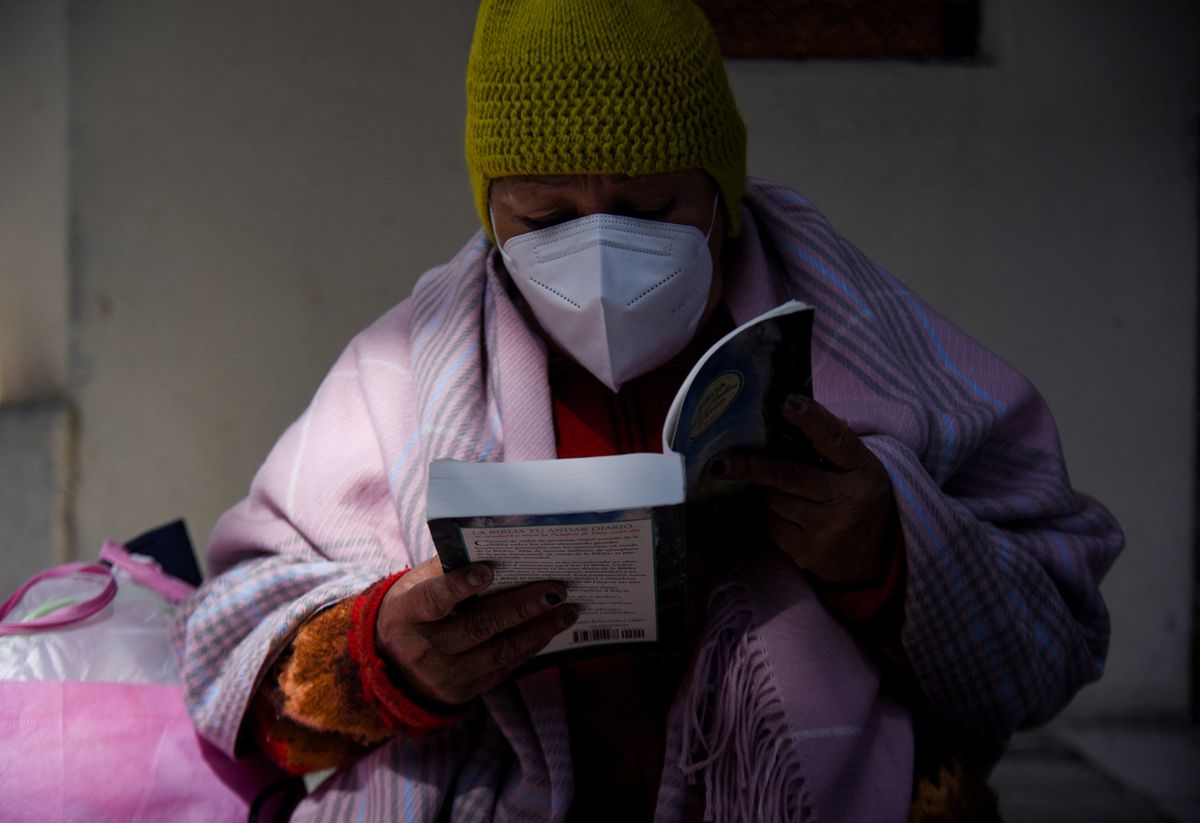
Blogger Nguyễn Thị Phương Trâm got a couple of us hooked on Vietnamese poetry with her translation of a long and moving epic by the poet pictured above, Lê Vĩnh Tài.
At the AJAR Press, where Lê Vĩnh Tài’s work is published, Nguyễn Trọng Tạo provides background on the poet, “Lê Vĩnh Tài was born in 1966 in Ban Me Thuot, Daklak. He graduated from Tay Nguyen Medical School but later pursued a career in business and making poetry. Le Vinh Tai’s poetry is rich in intellect but also carries much of tenderness and trembling. He is like a ‘balanced renovator.’ ”
A small sample of his more playful poetry comes from Nguyễn Thị Phương Trâm’s blog, Songngutaitram:
“I want to write a poem
“because the poem will “because the poem be
“the poem “will throw itself upon the pages “with the vigour of a child learning how to talk
“the poem “the lyrics you’ve forgotten
“I want to turn us into a poem.”
Nguyễn Thị Phương Trâm, herself a poet as well as a translator, reports that she was “born 1971 in Phu Nhuan, Saigon, Vietnam. The pharmacist currently lives and works in Western Sydney, Australia.”
A word on the Vietnamese press called AJAR: “AJAR is dedicated to the discovery of poetry and art in both ordinary and hidden places, providing a space for these works to be exhibited, loved, and challenged. As a bilingual journal and independent small press based in Hanoi, AJAR provides an opening for questions, imaginings, and poetic (im)possibility to be shared across borders, inhabiting language as it moves between worlds and words. In bringing fresh and critical voices of Vietnamese literature and art into English, and welcoming those voices from everywhere into Vietnamese, we focus on quality translations and envision books as artifacts of artistic collaboration. Alongside single author poetry collections, AJAR publishes a bilingual journal of poetry, short fiction, essay, and artwork that revolves around a specific word of choice for each issue.
“While accepting donations from individuals, AJAR is self-funded and unaffiliated with any outside or inside organization. To be a part of keeping AJAR alive, please buy books or contact us at shop@ajarpress.com.”
To learn more about translation in general, check out This Little Art, by Kate Briggs. Briggs brings up many fascinating points about the decisions that translators must make — points you may never have thought about — and opines that, in fact, the translator is also the author. At least, the author in the second language.
Photo: Case 1-Euro. A small town in Sicily decided to sell decrepit houses for almost nothing to see if someone would fix them up. It’s certainly bringing in more curious visitors.
Sometimes getting something for nothing may cause a recipient to be careless with the gift, as in a story I read a few years ago about a guy who built and donated a home to a homeless woman who let it run to ruin.
Other times, wonderful things happen.
Harrison Jacobs writes at the Washington Post, “If someone said you could buy a house for a dollar, your reaction might be disbelief. That was how Rubia Andrade felt when she read a news article in 2019 about towns in Italy selling properties for one euro.
“ ‘Obviously, your first thought is that this can’t be true. I needed to see it in person,’ said Andrade, a Brazilian American who works in California’s solar industry.
“Andrade booked a flight three days later and drove to Mussomeli, Italy, a hilly town in central Sicily with about 11,000 residents that had recently launched a program selling hundreds of properties in the run-down historical center. …
“The 1-euro housing program was first proposed over a decade ago by TV personality Vittorio Sgarbi. Then the mayor of Salemi in southern Sicily, Sgarbi proposed the idea as a way to save the town’s crumbling old quarter. The idea has since caught on in 34 municipalities across Italy.
“But it was only in the past few years that it captured the global imagination when articles about towns launching similar programs on the island went viral. …
“While some houses sold through these programs are livable upon purchase, most are little more than four medieval-era walls. Roofs are caved in, and floors are torn up. Many are filled with dead pigeons or other vermin. Prospective buyers who haven’t done research are usually surprised by the conditions, said Toti Nigrelli, the deputy mayor of Mussomeli.
‘We tell people to come here first because we don’t want any surprises. We want them to know what they are getting into.’ …
“Though the official cost is 1 euro (around $1.14), fees and closing costs can typically run up to 3,500 euros (or almost $4,000). Then, you are required to renovate it within a designated time frame — typically three to five years — or forfeit a sizable deposit, usually around 5,000 euros (or $5,709). According to Nigrelli, towns use the deposit to ward off speculators and ensure buyers renovate the properties instead of letting them sit. Renovations cost anywhere from 5,000 to 100,000 euros, depending on the house’s size and condition and the renovation style. Most end up spending 20,000 euros to 40,000 euros, Nigrelli said.
“None of those complications deterred Andrade. She initially purchased a 1-euro property and returned that summer to renovate. Since then, she has bought two more and become an evangelist, returning every few months with friends, family and even Facebook acquaintances to help them with the purchasing process.
“ ‘Even with the fees and the cost of the renovation, it costs less than a timeshare in the U.S.,’ Andrade said.
“While Andrade first saw the 1-euro program as a cheap way to own a vacation home, she now has bigger plans: to help revive the town. Andrade and her son are converting their three properties into an art gallery, a wellness center and a restaurant. She plans to move to Mussomeli permanently.
“She’s far from the only one. Danny McCubbin is one of about a dozen foreigners who bought 1-euro houses in Mussomeli and now lives there full-time. McCubbin, an Australian who worked for celebrity chef Jamie Oliver for 17 years, bought a 1-euro house with the intention of converting it into a community kitchen to provide meals to vulnerable people. He crowdfunded over $30,000 last March for the project.
“Complications due to the pandemic delayed renovations, but he has since purchased an 8,000-euro house to live in and rented a storefront in Mussomeli’s piazza.
“Since launching the Good Kitchen this summer, McCubbin has become an unofficial ambassador for the 1-euro program. …
‘“The townspeople thought I was opening a restaurant. They didn’t understand the concept,’ McCubbin said. After he partnered with local charities to host picnics and baking parties for orphans and those dealing with mental health issues, locals got the idea.”
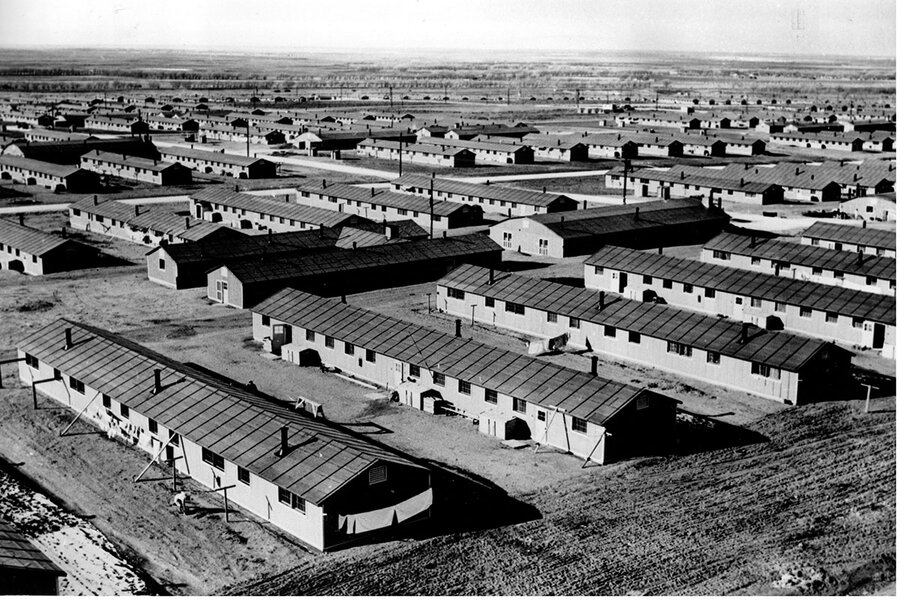
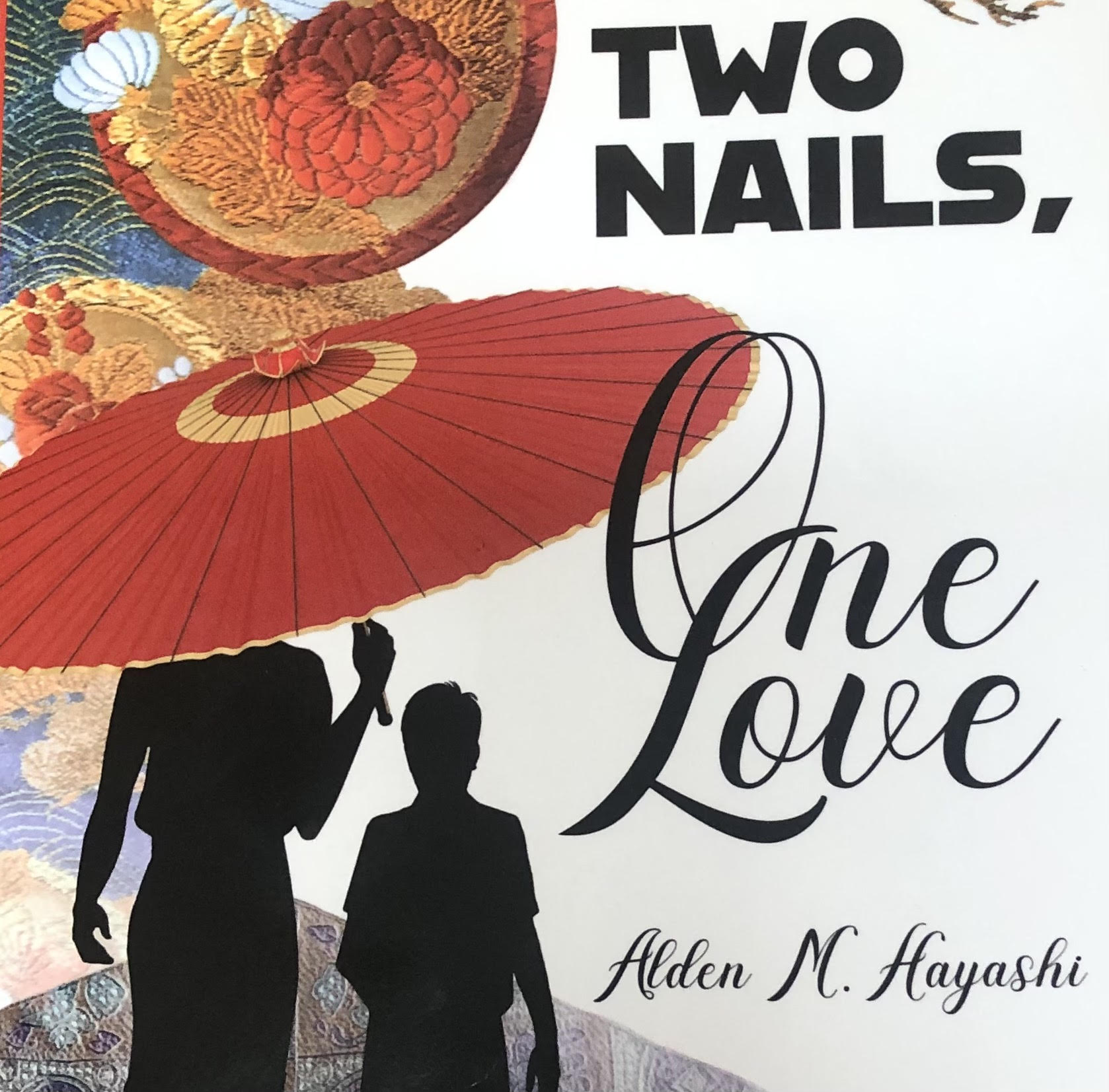
Art: Jana Brenning. The above novel by Alden Hayashi came into being partly because he wanted to write about his mother’s WW II trauma and the incarceration of innocent Japanese Americans in camps. It’s also about the difficulty of coming out to a very cautious parent as a gay man.
I’ve been telling friends, especially friends in book groups, to check out Alden Hayashi’s novel. It’s based on his relationship with his reticent Japanese American mother, who suffered injustice at the hands of the US, her birth country — a history she long kept hidden. Since publication, the book has found an audience not only in the Japanese American community, but among other Americans. After all, this is our history, and we need to Face History.
Alden had a lot of experience from his day job ghost-writing books for management consultants and others, and he thought it would have been ideal if he had been able to ghost-write his mother’s story. But as he explained in one of the online book discussions he’s been invited to attend lately, his mother didn’t begin to open up about her history until late in life, and he could tell that some of the dates were getting confused. He had already learned a lot on his own by research into obscure government documents and by attending a Japanese American group’s visit to his mother’s infamous camp in Arkansas. (Americans used to refer to these camps as “internment camps,” but they are more properly called “concentration camps.”)
I do not think that making this history part of a book about the gay son coming out in a family conditioned against being the “nail that sticks up” has kept it from being a good novel. If anything, the mother’s story made the son’s feel more real, and the son’s story helped show the consequences of an early trauma for a future parent.
But the aspect that will rivet you the most is learning that many of these Americans were rounded up from the camps to be exchanged with Americans trapped in Japan and occupied Asia. The first group that went “home” were in fact Japanese people who wanted to go. But for Americans like Alden’s mother, home was Hawaii, her birthplace. She had never even visited Japan. And her family was being sent to a country they felt they were at war with. In fact, her brother fought and died for the US alongside other Japanese Americans. The family definitely did not find a warm welcome when they got to Japan.
I’d read many intriguing vignettes about this history on Alden’s Facebook page and was thrilled it got into a book. No wonder he bristled during the years 2016-2020, when a whole religion was considered terrorist by some powerful people. He was so afraid of history repeating itself.
Be sure to look for the moment when the mother in the novel visits the Statue of Liberty with her grown son. Find the book here.
Check out this interesting conversation between Alden and another Japanese American author.
Photo: Louisiana Bucket Brigade. One of the most effective grassroots groups fighting pollution in poor neighborhoods is the Louisiana Bucket Brigade, ordinary folks who got fed up with being endangered by Cancer Alley.
It’s no secret that some of the most polluting companies are located in poor or Black communities. I once had a boss who insisted that was not done on purpose, but still, decision makers often count on poor communities not fighting back.
I’m glad to say that’s changing. I’ve learned so much just from following the grassroots Louisiana Bucket Brigade, which has been fighting back effectively against Formosa Plastics.
In another example of fighting back, Michael Laris writes at the Washington Post about “how an outdoorsy engineer is working to cut transportation pollution around disadvantaged communities.”
Laris reports, “As a clean air and innovation manager at the Environmental Defense Fund, [Harold] Rickenbacker works with companies and communities to monitor and reduce pollution from transportation, which contributes to climate change and harms health, particularly in disadvantaged areas.
“While working on his engineering doctorate at the University of Pittsburgh several years ago, he worked with families hurt by the city’s air pollution, both outdoors and seeping into their homes. ‘My will to succeed when I wake up in the morning is impacted by … the air that I’m breathing,’ said Rickenbacker, who has taken up these issues in Maryland, Virginia, Delaware and other states. …
“Q: The Environmental Defense Fund has developed a mapping tool to help understand how truck pollution near warehouses and fulfillment centers affects low-income communities and people of color. How does that work?
“A: Medium- and heavy-duty trucks spew nitrogen oxides, black carbon, particulate matter, smog — you name it — which has had a clear impact on upper-respiratory health, things like asthma, lung cancer and even hypertension in some of the work we’ve done out in West Oakland. We use our GIS-based tool to calculate the population that lives within a half-mile radius of the predefined distribution centers and warehouses. It calculates the demographic and socioeconomic variables around those facilities. You can pinpoint X percentage of people of color that live near this facility and X amount of people with health issues who live near these facilities. Then you can prioritize things like green infrastructure, electric vehicles, workforce development, renewable energy. We’re using health- and equity-based tools to identify where the distribution of those infrastructure benefits should take place first.
“Q: What has the Environmental Defense Fund found in Oakland through its air monitoring work?
“A: Hyperlocal air pollution monitoring can occur every 30 to 60 meters, and every minute, every second, down to the hour or daily averages. Why is this significant? Well, conventional air pollution monitoring networks are spaced miles apart or away from cities.
We’ve had a partnership with Google Earth Outreach for many years, where we’re installing monitors on vehicles and getting a much more complete picture of air pollution at that neighborhood level.
“In West Oakland, the data really highlighted impact zones where residents lived among elevated levels of pollution. The highest concentrations of nitrogen dioxide in that community created a 40 percent greater risk of cardiovascular disease events among those who were 65 years of age or older. …
“Q: Big trucks drive a lot and they pollute a lot, as they move so much of the economy. Yet electric trucks, which have no emissions, are still comparatively costly. How can that problem be tackled?
“A: We have to lean on large corporations to move the needle. There are tons of different incentive programs out there, where there are opportunities to purchase commercial EVs and deploy them in communities. But that’s often not enough. For some of our corporate giants, if you have the bandwidth, you have the resources, you can really drive the demand and drive the market. If there’s a clear need for electric trucks, manufacturers will understand that and then you essentially have this revolving market where prices go down.
“Q: Unlike with power plants and other big polluters causing climate change, transportation emissions stem from huge numbers of individuals making individual decisions. How do you address such a sprawling problem?
“A: Part of it is really this idea of coalition-building. You have groups like EV100 that has dozens of corporations that have carbon-neutrality goals for 2030, or transportation-emission reduction goals. It’s not really an individual discussion or decision. It has to be more of a collective. [Justice40 initiative, which] means investments in climate, clean energy, clean transportation, you name it. Low-income communities that have been subjected to racial segregation — those same communities that have the health burdens — should see clean transportation and other environmental benefits in their communities first.
“Q: But it’s still this vast swath of society that’s making decisions about what kind of cars to buy and how much to drive them — and creating those emissions.
“A: Under the infrastructure funding and reconciliation packages, there are going to be tons of opportunities to beef up infrastructure, including public transit. Most of the communities that are impacted by transportation emissions are the same communities that are using public transit. More affluent communities can also understand you can lower your carbon footprint by riding a bus and not driving your vehicle. So at that point, it does turn into more of an individual decision.”
Alas, last-minute lobbying by the gas industry and a Pennsylvania Senator means the infrastructure bill actually has a huge fund for building more polluting buses. Man, you just cannot win! If you live in Pennsylvania, please give Sen. Patrick J. Toomey what-for!
Photo: Suzanne Kreiter/Globe Staff. Mother and daughter Afrika Lambe (a pianist), and Erika Lambe (a dancer) talk about their deep roots in Boston arts and their love for the “Urban Nutcracker.“
Boston has an unusual dance event at the holidays. It’s called the“Urban Nutcracker.” Some years ago, Kristina and I went to see to a production and really enjoyed it. My understanding is that it’s a little different every year, so I know I need to get back there. Today’s story highlights a mother and daughter who have had a role in preparing young dancers of color to take part both here and in the wider arts world.
The daughter danced with the acclaimed Boston Ballet for 11 years, but says that despite some principal solos there, she finds her current work with young dancers more meaningful.
Karen Campbell reports at the Boston Globe, “Twenty years ago, dancer Erika Lambe became Boston Ballet’s first Black Sugar Plum Fairy in ‘The Nutcracker.’ During much of her time with the company, she was the only Black ballerina.
“Now Lambe is involved with a version of the classic ballet dedicated to putting artists of color front and center. This season, City Ballet of Boston’s production of ‘Anthony Williams’ Urban Nutcracker’ also celebrates a landmark 20th anniversary. Williams’s multicultural twist on the ballet classic, set in present-day downtown Boston, blends the traditional Tchaikovsky score with Duke Ellington’s jazzy version and features dance styles ranging from ballet and flamenco to hip-hop.
“ ‘There’s no other “Nutcracker” like this,’ Lambe says. ‘Its whole intent is to speak to a more diverse audience, unlike the more traditional productions. … Twenty years ago, people in this community wouldn’t even consider going to a ballet, but this has brought them into the theaters and gives kids exposure to dance, ballet in particular. It’s such a holiday tradition.’
“This year, Lambe reprises her role as the Mother in ‘Urban Nutcracker,’ and a role behind the scenes, too, as ballet mistress, running the children’s rehearsals, working with some of the adults in the production, teaching upper-level classes in City Ballet of Boston’s school, and running its introductory Relevé program. She’s also helping in the wardrobe department, refurbishing costumes and making new tiaras.
“Now in her 50s, Lambe, who grew up in Brookline, has been enmeshed in the dance world since she began classes at the age of 4. She says she was never one of those kids who dreamed of being a ballerina, but after seeing a Boston Ballet ‘Nutcracker’ production when she was 6, she was hooked, beginning training with the company as one of only a handful of students of color. ‘I hated ballet, but I wanted to be in “The Nutcracker.” ‘ …
“When she was 10, she says, the ballet master pushed for her to be given the role of Clara. Boston Ballet founder E. Virginia Williams demurred, saying the ballet was a period piece, but she cast Lambe in other challenging roles to showcase her talent.
“At the age of 16, Lambe began her professional career at Dance Theater of Harlem under the legendary Arthur Mitchell, which led to three years of ‘great opportunities.’ Then Edward Villella invited her into the fledgling Miami City Ballet. In 1993, she joined Boston Ballet, dancing with the company until 2004. ‘I did a lot. Jumping was my forte, and I was a quick study. I remember I got thrown into a solo [last minute] in “Raymonda” — and I got a good review!’ she recalls with a delighted laugh.
“Lambe comes by her drive and enthusiasm honestly. Her mother is Afrika Hayes Lambe, a beloved Boston area dance accompanist with an impressive background as a vocal soloist as well. At the age of 88, Afrika is still accompanying ballet classes, known for her expansive memory in repertoire ranging from ballet classics to Broadway tunes.
Erika’s grandfather was the internationally acclaimed tenor Roland Hayes, whose father had been enslaved and was later emancipated. Roland went on to fill concert halls and shatter racial barriers around the world.
” ‘A lot of my grandfather’s history informs me,’ Lambe says, citing Hayes’s tireless fight against racism and inequity to blaze a trail for generations of Black vocalists and become one of the highest-paid recitalists in the world by the 1920s. …
” ‘I had hoped to follow in my grandfather’s footsteps,’ says Erika Lambe. ‘I wanted to be a principal or soloist at Boston Ballet, but it just didn’t happen. I got some principal roles so I did get the opportunities, just not the title. I had a great career dancing … but I feel like maybe what I’m doing now is more meaningful.’
“Williams, a progressive dance educator and former principal dancer with Boston Ballet … says at his own school, Lambe has become an inspiring role model. ‘Students and parents can identify with her,’ Williams says. ‘She really cares about them, and she’s passionate, reliable, professional, and very proactive about getting things done.’
“Lambe who has taught widely in Greater Boston, also currently teaches at Reading’s Northeast School of Ballet and created a program to bring students from the school’s youth company into the upcoming ‘Urban Nutcracker’ production. ‘It’s a great exchange,’ says Williams, ‘a nice bridge between the white suburbs and inner-city kids. … People that come to the show are struck by the diversity onstage. … Our first show happened right after 9/11, now this one’s right after COVID. I hope it offers the community a kind of a salve to help us heal wounds.’ “
Photo: Lauren Petracca/PostAndCourier. Eliot Middleton (right) and Matthew Poston remove an engine from a truck they are fixing up for donation in McClellanville, South Carolina, on May 10, 2021.
The roots of today’s story were planted in a strong relationship between a South Carolina father and son who knew how to repair cars.
Sydney Page reported at the Washington Post in July, “On Christmas Day last year, Eliot Middleton showed up unannounced at Melanie Lee’s home in Andrews, S.C., with a white 1993 Oldsmobile. What happened next shocked her: Middleton, whom she had never met before, put the key to the Oldsmobile in her hand. He didn’t charge her a dime. He just gave her the car, no strings attached.
‘I had no idea what was going on,’ said Lee, 59. ‘He handed me the keys and didn’t ask for anything.’
“She is one of 33 people Middleton has gifted with a car in the past nine months. Middleton, 38, is a restaurant owner and former auto mechanic who spends his spare time repairing used cars and giving them to people in need in rural South Carolina.
“ ‘There’s a lack of transportation in the rural areas, and I knew I could use my previous experience in mechanics to help,’ Middleton said.
“Only a few weeks before Middleton dropped off the car, Lee’s 33-year-old son, who was ill for several years, passed away. After driving daily for two hours to and from the hospital in Charleston to visit him, her 2007 Chevrolet Tahoe broke down.
“She took the car to a shop to replace the transmission, but ‘I had no means of paying for it,’ she said. She needed a car to help with child care for her two granddaughters, who are 12 and 6 and rely on her to pick them up from school every day and drive them to dance rehearsal. …
“The idea to fix and donate old vehicles came spontaneously to Middleton in early 2020, after he hosted a food drive and several local families showed up with no transportation. They walked more than four miles to get a hot meal. …
“ ‘There’s no public transportation in the area whatsoever,’ said Middleton, who lives in McClellanville, a small fishing town on the Atlantic coast with a population of about 600. ‘We don’t have taxis and Ubers. Without a car, people don’t have a way to get around.’
“So, Middleton — who co-owns Middleton & Maker Village BBQ, a restaurant in the neighboring town of Awendaw, S.C. — decided to put his auto mechanic skills to use the two days a week he isn’t at the restaurant. [As of July], nearly 100 vehicles have been donated for him to fix up. …
“Before jumping into the restaurant industry, Middleton worked as an auto mechanic for 15 years. As a young boy in McClellanville, his plan was to follow in his father’s footsteps.
“ ‘My dad was a mechanic, and I would hang out around his shop since I was 4 years old,’ Middleton said. ‘I’ve always been fascinated by cars.’
“After he graduated from high school, Middleton trained to become an auto mechanic, and in 2004, he and his father opened their own auto service. …
“ ‘We had a lot of single moms as customers, and we always ran into problems with them not having enough funds,’ Middleton recalled. ‘We spoke about trying to find a way to help them,’ [but] whenever they started to brainstorm ideas, something got in the way. Middleton’s father’s health began to decline, and in 2014, they closed the shop. Barbecuing has always been a side passion for Middleton, he said, so he decided to change course and pursue it professionally.
“Still, despite leaving the auto industry, the notion of repairing used vehicles for people in need remained a shared goal for Middleton and his father. But after receiving the first donated car in January 2020, several things in their lives took priority, including Middleton’s father’s failing health — he died in March 2020. Around the same time, Middleton opened a restaurant, just as the coronavirus pandemic was taking hold.
“ ‘Things started changing in my life, and I couldn’t focus on the car program the way I wanted to,’ said Middleton, who has two daughters, ages 14 and 8.
“By September 2020, though, Middleton felt ready, with fresh motivation to honor his father’s legacy. He repaired the first car — a 1997 navy Toyota Camry — and gave it to an unemployed single mother of two children, one of whom is disabled and requires regular medical appointments. …
” ‘That felt great. I could feel my dad’s presence around me, and I could hear him saying “this is exactly what we always wanted to do.” ‘
“Within two months, the same woman was able to land a stable job, and she recently contacted Middleton to say she bought herself a new car and is donating the one he gave her back to him.
Photo: Linda Dulan. In July, the Thunderbird American Indian Dancers hosted its 42nd annual powwow at New York’s Queens County Farm Museum. Seen here, an old-style men’s dance.
I’ve always wanted to get to the Narragansett tribe‘s summer Powwow in Rhode Island. And I will do it yet — never mind how busy summer gets.
In today’s post, Dance magazine whets my appetite even more with wonderful pictures from a “dance powwow” in New York State.
“Over the course of three days in July, the Thunderbird American Indian Dancers hosted its 42nd annual powwow at Queens County Farm Museum. Founded in 1963 by members of the Mohawk, Hopi, Winnebago and Kuna (San Blas) tribes, Thunderbird is the oldest resident Native American dance company in New York, and puts on the city’s largest powwow, drawing dancers from more than 40 tribal nations for a series of performances and dance contests, as well as crafts and food stands.
The next morning the mother showed the women how to make the dress, showed them a special dance and sang a very special song for them. Sure enough, her daughter got well.
“Dance Magazine joined [a] sunset bonfire to capture some of the competitions, and asked Thunderbird director Louis Mofsie and company dancer Michael Taylor to share their insights on the place of dance within the powwow.”
They write, “The powwow is a social gathering where we get together to dance and sing, to meet old friends and make new ones. Originally a Western/Great Plains tradition, it does not have any religious or ceremonial significance — our religious and ceremonial dances and songs are restricted and closed to outsiders.
“Dancing is the major activity. Over the weekend, there are dance competitions and also what are called intertribal dances, where the dancers from all tribes are invited to participate. Our bonfire each evening during the gathering is there to help us travel back in time to the days when we had no spotlights. It reminds us of our past, our connection to our heritage and how it has survived through all our hardships to this day.
“As Native American people, we start dancing at a very young age. Dancing at powwows is how we learn the different styles of dances and what they represent. It helps us to connect to our roots and reinforces our awareness of who we are. It also reminds us that Native American dance is the original dance in America—and is still alive today. …
“Women’s Fancy Shawl Dance. This dance dates back to around 1945, right after the Second World War. Native American women and men had volunteered for the armed services and traveled all over the world. During their travels they observed how the women in many different countries were dancing. When they returned home, they decided to introduce a different style of dancing. Traditionally, the women did a very slow, graceful movement around the outer edge of the dance circle, and the men would be doing more vigorous movement on the inside. The Fancy Shawl Dance is much faster in rhythm, more vigorous and permits them to dance on the inside of the circle. The women wear shawls with very long fringe along the edges, and as they move, the fringe reminds you of the feathers that the men wear. Although the women do not wear the feathers and bells on their legs like the men do, their footwork and movements are very similar.
“Men’s Fancy Dance. They say this dance also originated around the end of the Second World War. When the men returned home from the war, they also wanted a more vigorous style of movement. Fancy dancing is much faster than traditional men’s dancing. Each of the dancers tries to create as many fancy steps as they can while keeping time with the singing and drumming. The men wear feathers with ribbons attached to each end, and they carry dance wands that are decorated with ribbons and feathers.
“Women’s Jingle Dress Dance. This dance tells the story of its origin. There was a mother who had a very ill daughter. One night she had a dream, and in it she had a vision: She was told to show the women how to make a special dress with little cones or jingles on it, show them how to do a special kind of dance and sing them a very special song. If she did all these things, it would help her daughter get well. The next morning the mother showed the women how to make the dress, showed them a special dance and sang a very special song for them. Sure enough, her daughter got well. The dance started out as a healing dance but has come down to us as one of the more popular competition dances at the powwow gatherings.”
I never thought about it before, but why should any community have an art form that never evolves. I love the idea that indigenous people who returned from WW II incorporated new influences into traditional dance. More at Dance, here.
Photo: Ann Hermes/CSM. Leigh White and Walter Adams, behavioral health specialists, respond to a 911 call about a homeless encampment in Albuquerque. They are members of the Albuquerque Community Safety department, an ambitious experiment in policing, according to the Christian Science Monitor.
Is there another way to do policing that actually accomplishes the goal of keeping people safe? That is the question communities have been asking themselves since the demonstrations and riots of 2020. The epicenter of that upheaval, Minneapolis, just voted against doing away with the police department altogether since no clear alternative had been proposed. Now let’s take a look at a small-scale experiment in Albuquerque, New Mexico.
Henry Gass has the story at the Christian Science Monitor. “It’s early October, and perhaps the busiest week of the year in New Mexico’s largest city. … Walter Adams and Leigh White are on patrol. Their white car, stamped with ‘Community Safety’ decals, is headed for a neighborhood once known as the ‘war zone.’
“Mr. Adams and Ms. White aren’t carrying guns, though. Instead, they are armed with a trunk full of water bottles, Cheez-Its, and Chewy bars. … Before long, the first dispatch flashes over the computer screen. They have to head west.
“A few minutes later, they’re standing outside two tents pitched in the trees near a church. People walking or jogging along a nearby trail glance over.
“ ‘Someone called 911 and said there was a fire,’ says Ms. White. A man inside the tent curses back at her.
“ ‘We know better than that,’ he says. He’s been homeless for seven years, he tells them. ‘That’s what people do, call the cops,’ he adds. ‘It’s [bull].’
“ ‘We’re not here for that,’ replies Mr. Adams. ‘What happens is police get a call, and they send us.’
“Ms. White and Mr. Adams, in fact, aren’t police. What they do is not normal emergency response work nor normal police work. It’s something of a hybrid of the two – part of an experiment that Albuquerque is hoping will change public safety in America.
‘We’re not quite sure if [everything] is going to work,’ says Mariela Ruiz-Angel, director of ACS. ‘But if we don’t get this going, [if we] try to overanalyze, we’ll never get anywhere.’
“They are members of the Albuquerque Community Safety (ACS) department. Launched in August, the agency is intended to complement the city’s police and fire departments by having teams of behavioral health specialists patrol and respond to low-level, nonviolent 911 calls.
“While it is modeled after programs in a few other cities, ACS is the first stand-alone department of its kind in the country. The initiative is still nascent – Mr. Adams and Ms. White are one of just two responder teams at the moment. But authorities here hope it will defuse the kinds of tensions between police and residents that have surfaced in cities across the country and help reinvent 911 emergency response systems, which many believe have become antiquated.
“ ‘What Albuquerque is doing is really exciting and innovative,’ says Nancy La Vigne, executive director of the Task Force on Policing at the Council on Criminal Justice, a think tank based in Washington, D.C. Police chiefs ‘almost universally say we’d love to offload these calls to other people. We need these types of models to be developed and implemented, so we can learn from them.’
“On this stop, the program makes its small mark. Mr. Adams tells the homeless man about resources available at HopeWorks, a local nonprofit. The man says he’s been there before, but never upstairs, where many of the services are.
“ ‘As long as you show commitment, they’ll help you,’ says Mr. Adams. The man says he’ll go. …
“From 2010 to 2014, members of the Albuquerque Police Department shot and killed 27 people. One of them, in March 2014, was James Boyd, a homeless man diagnosed with schizophrenia. … The police entered into a court-approved agreement with DOJ that October, which the department has been operating under ever since.
“Initially, police shootings in the city decreased for several years. But more recently they have begun to rise again. … While all this was going on, New Mexico’s behavioral health system was falling into disarray as well. … Since moving to Albuquerque from the East Coast 20 years ago, Ms. White has watched as the city’s police and mental health care systems have fallen in national rankings – and wondered what she could do. …
“In many cities, calling 911 hasn’t always been the best way to get someone help. Albuquerque’s aim with its new initiative is as much to re-imagine its emergency response system as it is to reform policing. …
“ ‘The default response is to send police to a scene and hope they solve whatever is happening,’ says [Rebecca Neusteter, leader of the Transform911 project at the University of Chicago Health Lab, an initiative aimed at reforming the nation’s emergency response system]. That’s ‘really not in anyone’s interests.’ …
“ ‘By and large [ACS] is a positive move’ for policing in the city, says Peter Simonson, executive director of the American Civil Liberties Union of New Mexico. ‘It holds the promise that perhaps someday we will see fewer armed officers interacting with people in mental health crisis.’
“Ms. White and Mr. Adams are having a busy morning. … Mr. Adams and Ms. White grab water bottles and snacks from the trunk. They offer them to the people in the encampments, who eye them with a mixture of suspicion and curiosity. Then the behavioral health specialists ask the people if they’re connected to services, or want to be. …
“Mr. Adams approaches them with a disarming ease. He ambles up and greets the individuals like he would a stranger he’s asking for directions. It’s an unruffled approach born of his past.
“Mr. Adams grew up in a town, Las Vegas, New Mexico, that had widespread gang and drug problems. It also was home to the state’s main psychiatric hospital. To keep him out of trouble, Mr. Adams’ father would have his son accompany him to basketball games at the hospital.
“So, starting in third grade – long before he knew about behavioral disorders – young Walter began socializing with people who were dealing with mental health issues. …
“ ‘You knew those people, you knew their name, you talked to them. So to me, it wasn’t anything new or different.’ ”
Read more about these remarkable people and about the innovative program and the people it serves at the Monitor, here.
Photo: David L. Ryan/Globe Staff. Aminullah Faqiry, newly arrived with his family in Rhode Island, was an interpreter for the US military, in Afghanistan. He talks with Edward Fitzpatrick about his life there and his sorrow about the failure of 20 years of fighting the Taliban.
Because I’ve volunteered with refugees for several years, I know firsthand that these people do not leave jobs, friends, and family in their home country because they prefer to live in the United States or any other country. They leave because the situation at home is untenable. And it breaks their hearts.
Consider the sadness of the former military interpreter who recently arrived with his immediate family in Rhode Island, forced to abandon other family members who are now in grave danger. Ed Fitzpatrick, a reporter for the Boston Globe, talked to him.
He writes that Aminullah “Faqiry said he was overcome with emotion as he prepared to board the plane to leave Afghanistan, and people began looking at him, wondering why he wasn’t happy to be escaping an incredibly precarious situation. But he knew the source of his tears.
“ ‘I am a very patriotic person,’ Faqiry explained. ‘I cried for my people, for my country, for the system being destroyed, for so many sacrifices that we had made.’
“He said he cried for the family members he was leaving behind — for his mother and father, who are struggling with health problems, and for the widow and the children of his brother, who was killed by the Taliban. …
“He said he was crying because the Afghan people had been ‘liberated’ before the Taliban arrived.
“ ‘Women were able to go to school, and a girl was able to walk on the streets free without tension and without fear,’ he said. ‘Afghanistan was growing up. We were on the move to compete in the world.’ …
“But now, he said, it was clear ‘We were going to go back — my country was going to be thrown back like 50 years. … We are leaving everything behind to the Taliban, who we fought for 20 years and who are a terrorist organization. … We were not able to hold on — we had fallen. … I wanted my country and my people to have been peaceful. It just didn’t happen,’ Faqiry said. ‘I was crying because we lost everything.’ ”
But as you know, people do what they have to do. Most refugees regroup, find or create work to support their families, and give back to their host countries. Today, in Virginia, former refugees are offering a warm welcome to Afghans.
Story Hinckley reports at the Christian Science Monitor, “For many Americans, it’s difficult to imagine what the tens of thousands of newly arrived Afghan refugees are going through.
“But Arshad Mehmood doesn’t have to imagine. He knows. Only seven years ago, Mr. Mehmood was in their shoes, fleeing Pakistan. He describes being kidnapped and tortured by the Taliban for being a local politician.
“Now, as the regional coordinator for a national nonprofit, Mr. Mehmood as well as his team in northern Virginia, many of whom are refugees themselves, is helping these new arrivals with everything from finding apartments to translating school enrollment forms from English to Pashto. They have assisted more than 80 Afghan families over the past three months and expect to help almost 200 by the end of the year.
“And while this practical aid is important, says Mr. Mehmood, it’s not what newly evacuated Afghan allies need most right now. That would be encouragement and empathy. And here in Virginia, Afghans are finding this support in local communities – especially from the refugees who came before them.
“ ‘English was my third language, but I did it. We live a good life here,’ says Mr. Mehmood. His wife, who is a manager at T.J. Maxx, feels welcomed to wear her hijab on the job. His daughter will start her first year of college this fall, and his son is a defensive star on his American football team.’ ”
Read on. There is light in darkness. Perhaps after reading these stories, you will find a way to help a refugee family. And if like blogger Milford Street you already do help refugees, please share a word about your experience.
More at the Monitor, here, and at the Globe, here.
Photo: John Hart/ Wisconsin State Journal. The State Journal reports, “A 1,200-year-old dugout canoe was raised from Lake Mendota [Nov. 2] by the Wisconsin Historical Society. The canoe … is the oldest intact boat ever recovered from Wisconsin waters.”
My Wisconsin brother sent me a cool article recently about the discovery of an ancient canoe. I suspect that blogger Rebecca Cunningham knows all about this as she lives in Madison.
Barry Adams at the Wisconsin State Journal has the story.
“Tamara Thomsen and Mallory Dragt thought they would take a spin under Lake Mendota on a couple of underwater scooters, motorized gadgets that scuba divers use to propel themselves through the water. It was a beautiful Saturday morning in June, and the duo, who work at Diversions Scuba, debated whether they had just seen a log sticking out of the bottom of the 9,781-acre lake or something extremely rare.
“The discovery, on a slope in 27 feet of water near Shorewood Hills, has turned out to be about as historic as it gets.
“After a bit of investigation, it turns out that Thomsen, who is also a maritime archaeologist for the Wisconsin Historical Society, was right in judging that it was more than just a log: It was a dugout canoe. A few weeks later, carbon-14 dating showed that the 15-foot-long vessel was an estimated 1,200 years old, the oldest intact boat ever found in Wisconsin waters.
“On a brisk Tuesday, amid a chop of waves and 50-degree water, the canoe was brought to shore by teams of divers who shared fist bumps and hugs to applause from residents of the Spring Harbor neighborhood who had gathered at the beach to witness the canoe’s return to shore.
“ ‘This is the first time this thing has been out of the water in 1,200 years. And maybe they left from this very beach to go fishing,’ said James Skibo, Wisconsin’s state archaeologist. ‘Not only has it been underwater; it’s been under the ground. The reason it’s so well preserved is that it has not been exposed to the light. So that’s one of the reasons we have to start preserving it.
‘There’s living organisms on it that are chewing away on it as we speak.’
“The canoe will ultimately be displayed in the Historical Society’s proposed new and expanded museum on Capitol Square. But for the next two years, it will undergo a series of treatments. The first, in a 16-foot-long, 3-foot-wide tank at the State Archive Preservation Facility on Madison’s Near East Side, will preserve its liquid environment, although mixed in the water will be a biocide to kill any algae or microorganisms. That’s followed with a treatment of polyethylene glycol designed to replace the water that has saturated the wood.
“The process will make the structure more solid and stable, and prevent further degradation, said Amy Rosebrough, a leading expert on the Effigy Mound builders of Wisconsin, who likely made the canoe and inhabited villages and encampments around Lake Mendota and throughout much of southern Wisconsin. A cache of net sinkers, used to weigh down fishing nets, was also found with the canoe, which could have been made from basswood or a walnut tree, two common woods used for dugouts during that time frame.
“ ‘This is extraordinarily rare,’ said Rosebrough. ‘We really don’t have anything like this from Wisconsin. We have found pieces of dugouts before in various lakes (but) nothing this intact and nothing intact this old.’ …
“The people who built the dugout canoes in what is now Dane County were ancestors of the Ho-Chunk Nation. Typical techniques could have included using a combination of burning the inside of the canoe and using stone tools to scrape out the charred and soften remains. Bill Quackenbush, the Ho-Chunk’s tribal historic preservation officer, was on hand Tuesday to watch the dugout canoe emerge from the lake. The Ho-Chunk are referred to as ‘People of the Big Water.’
“ ‘When it comes to items of this nature, if it’s going to protect and preserve the history and culture of us in this area, we’re all in support of that,’ Quackenbush said of the canoe’s recovery. …
“The recovery effort began last week with divers carefully dredging around the canoe. Once sediment was removed and the boat fully exposed, rods of rebar were stuck into the lake bottom and a web of rope tied over the canoe to keep it in place.
“On Tuesday morning, a small armada of boats made their way to the site. … Thomsen drove [a] boat that included Randy Wallander, a volunteer diver from Manitowoc who has years of experience bringing up large objects from Lake Michigan. His equipment included large yellow floats, diving gear and four 45-pound bags of sand that were placed in the canoe to give it weight as it was towed into shore in a sling supported by the floats at just above idling speed. The 1-mile trip took nearly two hours, after which divers unhooked the canoe from a boat and walked it the last 100 yards or so to shore. …
“ ‘It was a team effort,’ Thomsen said. ‘I’m actually surprised at how smooth it went. You always expect for there to be problems and you anticipate the worst and hope for the best, but it came up faster than we thought. Everybody really danced together to make it come up.’ ”
The photos are from two local cemeteries. The first honors John Hosmer, who fought in the Continental Army and “was in all his life after a man of peace.” In the second, you see how the living put flags on the graves of veterans who have died.
In one of the ESL (English as a Second Language) classes where I volunteer, the teacher introduces a citizenship factoid every week as some students plan to take the test to become US citizens. Citizens or not, we all learn something from the test questions.
That made me think that for Veterans Day this year, I should look up the history. The commemoration started after World War I, when many soldiers came home relieved to be alive, only to die of a pandemic not unlike the one that you and I know too well.
The day was originally named for the cease-fire that ended hostilities in the “Great War” but became “Veterans Day” in 1954, when a WW II general who had become president renamed it
Here’s what the US Department of Veterans Affairs has to say.
“World War I – known at the time as ‘The Great War’ — officially ended when the Treaty of Versailles was signed on June 28, 1919, in the Palace of Versailles outside the town of Versailles, France. However, fighting ceased seven months earlier when an armistice, or temporary cessation of hostilities, between the Allied nations and Germany went into effect on the eleventh hour of the eleventh day of the eleventh month. For that reason, November 11, 1918, is generally regarded as the end of ‘the war to end all wars.’
“In November 1919, President Wilson proclaimed November 11 as the first commemoration of Armistice Day with the following words: ‘To us in America, the reflections of Armistice Day will be filled with solemn pride in the heroism of those who died in the country’s service and with gratitude for the victory, both because of the thing from which it has freed us and because of the opportunity it has given America to show her sympathy with peace and justice in the councils of the nations…’
“The original concept for the celebration was for a day observed with parades and public meetings and a brief suspension of business beginning at 11:00 a.m. … In 1954, after World War II had required the greatest mobilization of soldiers, sailors, Marines and airmen in the Nation’s history; after American forces had fought aggression in Korea, the 83rd Congress, at the urging of the veterans service organizations, amended the Act of 1938 by striking out the word ‘Armistice’ and inserting in its place the word ‘Veterans.’ With the approval of this legislation (Public Law 380) on June 1, 1954, November 11th became a day to honor American veterans of all wars.”
I had forgotten why there’s a moment of silence at 11 a.m. on Veterans Day. Good to know. More here.
Photo: Wreckwatch magazine. Archaeologists are learning more about the Srivijaya Empire of Indonesia, which once dominated maritime trade routes. But nighttime divers selling to the black market may stop the research in its tracks.
I’ve been reading a murder mystery that takes place after a very dark time in India’s history — the time called Partition, when Britain made a ghastly, clumsy attempt to create one Hindu nation and one Muslim nation out of a country Gandhi had hoped would stay whole. I’m at the part in the book where it appears that the ugliness of different faiths slaughtering each others’ families might have been exacerbated by lust for gold. Where some have a lot of wealth, others may have nothing.
That’s my roundabout introduction to a report on newly found treasures of a defunct civilization — and my way of saying that lust for wealth can’t end well.
Livia Gershon reports at Smithsonian magazine, “Local divers exploring Indonesia’s Musi River have found gold rings, beads and other artifacts that may be linked to the Srivijaya Empire, which controlled sea trade across large swaths of Asia between the 7th and 11th centuries C.E.
“ ‘In the last five years, extraordinary stuff has been coming up,’ British maritime archaeologist Sean Kingsley, who reported on the discoveries in the autumn issue of Wreckwatch magazine, tells the Guardian’s Dalya Alberge.
‘Coins of all periods, gold and Buddhist statues, gems, all the kinds of things that you might read about in Sinbad the Sailor and think it was made up. It’s actually real.’
“Among the discoveries are a life-size Buddhist statue covered in precious gems, temple bells, mirrors, wine jugs and flutes shaped like peacocks, reports Stephanie Pappas for Live Science.
“The kingdom of Srivijaya began in Palembang, a city located on the Musi River on the island of Sumatra. Per Encyclopedia Britannica, the empire controlled the Strait of Malacca — a key route between the Pacific and Indian Oceans — and established trade with groups in the Malay Archipelago, China and India. Srivijaya was also a center of Mahayana Buddhism.
“Seventh-century Chinese reports indicate that Palembang was home to more than 1,000 Buddhist monks. Chinese Buddhists stopped in the city to study Sanskrit during pilgrimages to India, according to Indonesia’s Ministry of Tourism. In 1025, war with India’s Chola dynasty reduced Srivijaya’s power, though it continued to play a role in trade for another two centuries.
“As Kingsley writes in Wreckwatch, archaeologists have found no traces of royal court buildings, temples or other structures. It’s possible that the island’s volcanoes covered them. But another likely explanation is that the city was built mostly out of wood, with homes and other buildings constructed on rafts that floated on the river—a type of architecture still seen in some Southeast Asian countries today, per Live Science. Such structures would have rotted away long ago. …
“Per Wreckwatch, the kingdom was rich in gold, which it used strategically to build relationships with China and other regional powers. …
“Kingsley tells Live Science that no official archaeological excavations have been conducted in or around the Musi River. But amateurs have been finding treasures there since 2011, when construction workers discovered a number of artifacts while dredging sand from the river. Soon, local fishermen and workers began exploring the body of water. …
“Large numbers of these artifacts then showed up on the antiquities market. Many ended up in private collections, leaving little physical evidence about the civilization for scholars to study. …
“Indonesia put a moratorium on underwater archaeology in 2010. But as Kingsley points out, a black market in artifacts discovered during nighttime dives continues.
“ ‘Fishermen don’t stop fishing and they don’t stop discovering,’ he tells Live Science. “ ‘Only now, they’re even more unlikely to report finds to authorities. … Newly discovered, the story of the rise and fall of Srivijaya is dying anew without being told.’ “
Photo: Marcio De Assisvia GoodNewsNetwork. Brazilian piano maestro João Carlos Martins was deeply moved when new bionic hands enabled him to return to the keyboard.
Well, here’s some uplift for a November Monday. It concerns a Brazilian pianist who had to switch to conducting when disease and injury crippled his hands. Twenty years later, a designer tried to get in touch with the famed musician “on various platforms.” If you’ve ever tried to reach a famous person that way, you’ll appreciate the designer’s persistence.
Gabriella Paiella at GQ wrote, “Over the years, fate seemed to do all that it could to stop João Carlos Martins from playing the piano.
“It started in the 1950s, when he was 18. Something called focal dystonia. … The brain misfires and causes involuntary muscle spasms, which was mighty inconvenient for a young Brazilian piano prodigy on the precipice of world fame.
“He managed to get it under control and, by his early 20s, landed in New York City. Martins had it made back then: a tony apartment across the street from the Met, celebrated performances at Carnegie Hall and virtually every other major theater around the globe. They even had a nickname for him, the Mailman, because he always delivered. To relax, Martins would take leisurely strolls around Central Park, where sometimes he’d see his neighbor Jackie Kennedy. He played pickup soccer in the park too.
“Then one day, while chasing after the ball, he tripped.
“In the seconds between losing his footing and hitting the ground, there hung countless permutations for how skin and bone could collide with earth and inflict damage. The outcome: right elbow, sharp rock, a sliced ulnar nerve. Martins knew he was in trouble when the blood started spurting out. He knew he was really in trouble when, in the coming months, his fingers started to atrophy. And when his fingers started to atrophy, he thought about killing himself.
“Martins kept going, though his skills as a pianist were diminished. He even embarked on a decades-long quest to record the complete works of Johann Sebastian Bach. In 1995, at the age of 54, he traveled 6,000 miles from his then home in Brazil to tape in this one theater in Sofia, Bulgaria, with great acoustics. He was walking back to his hotel late at night when two muggers ambushed him with a metal pipe, and — thwack! — they took off with his passport and wallet and left him for dead. When Martins woke up in the hospital, he couldn’t feel the right side of his body.
“There had been other pain and misfortune along the way. A recurring repetitive-motion injury from practicing that was so agonizing he compares it to kidney stones. A pulmonary embolism. A coma because of that pulmonary embolism, during which Death, or at least an apparition of it, paid him a personal visit.
‘I recall an image of a carriage passing by with beautiful black horses,’ Martins says. ‘It was a beautiful carriage. The coachman asked me to get in the carriage, and I said, “No, I’m not going to get in.” That image is something I’ve never forgotten. The image is like a sign that I had a mission I had to fulfill with music.’
“In 2000, a failed surgery originally intended to restore functionality did his right hand in for good. Soon after, doctors found a tumor in his left. They removed it, along with any remaining hope of his fingers gliding over his beloved keyboard ever again. …
“At the age of 63 … Martins resigned himself to saying his most permanent goodbye to the piano yet: He chose to retire and become a conductor. He would now make music communally, after decades of being entwined in personal relationship with his instrument.
“Then along came these bionic gloves, created by an industrial designer named Ubiratan Bizarro Costa, who became familiar with Martins’s problems after he saw the maestro on a Brazilian television show in 2019. There is nothing high-tech about the gloves Costa invented, which is how he prefers it. … ‘I use minimalist design,’ Costa says. ‘The fewest number of pieces and the fewest number of expensive parts for the maximum result.’
“The gloves are both deceptively complicated looking and incredibly precise. The hand slips into a neoprene sleeve outfitted with a 3D-printed frame and stainless steel bars on the fingers. … Without the gloves, when Martins’s fingers hit a key, they stay depressed; the steel bars pop them back up.
“After seeing Martins on TV, Costa made a prototype and tried to get in touch with him on various platforms, but never heard back. The gloves lay dormant on a shelf in his office, until Costa saw that Martins and his orchestra were passing through Sumaré. …
“He went to the show, flagged down a musician, and explained his predicament. The guy thought Costa was kind of a weirdo but agreed to grab Martins. Eventually, Martins came out and Costa presented him with his invention.
“ ‘I thought he was an endearing mad scientist,’ Martins says, remembering his first encounter with Costa. [But] a few days after the concert, Martins invited Costa over for lunch. He told the designer what worked and what didn’t. Costa went home and fiddled with his model. …
“By Christmas 2019, Martins was able to place all 10 fingers on the keyboard for the first time in over two decades. Costa was pleased to see Martins playing in person, but it wasn’t until he saw the video that the gravity of the moment fully dawned on him.
“It’s like designing a paintbrush for Pablo Picasso, he thought.”
More at GQ, here. If you are on Instagram, you will be moved by this video of him playing properly for the first time in 20 years, thanks to the bionic gloves.
Photo: Aloha Feels Chocolate. Many boutique candy companies are determined to do more than the giants about child labor. “There are over 27 million slaves in the world today. Of them, over 9 million are children,” says slavefreechocolate.org.
I’m sure you know I’m not going to focus on the dark side of anything, so as we dig out from Halloween chocolate created by name brands that have failed to end child labor, let’s start by mentioning companies that are more careful about sourcing.
I, too, buy the mini Trick-or-Treat bars available in the supermarket. But I also have a friend who loves getting chocolate on her birthday, and that is when I really focus on ethical brands. There’s a long list here. Taza is one I know. It’s headquartered in Somerville, Massachusetts.
The problem with chocolate seems to be that even companies seeking Fair Trade labels are often bamboozled by chocolate growers or aggregators on the ground. No doubt, it’s hard to get to the bottom of things unless you work directly with a grower.
In a February article from the Guardian, we learn that several young men who were once child slaves in Africa were hoping for a hearing in US courts. After all, big companies like Cargill, Mars, and Hershey are based here.
Oliver Balch writes, “Eight children who claim they were used as slave labour on cocoa plantations in Ivory Coast have launched legal action against the world’s biggest chocolate companies. They accuse the corporations of aiding and abetting the illegal enslavement of ‘thousands’ of children on cocoa farms in their supply chains.
“Nestlé, Cargill, Barry Callebaut, Mars, Olam, Hershey and Mondelēz have been named as defendants in a lawsuit filed in Washington DC by the human rights firm International Rights Advocates (IRA), on behalf of eight former child slaves who say they were forced to work without pay on cocoa plantations in the west African country.
“The plaintiffs, all of whom are originally from Mali and are now young adults, are seeking damages for forced labour and further compensation for unjust enrichment, negligent supervision and intentional infliction of emotional distress.
“It is the first time that a class action of this kind has been filed against the cocoa industry in a US court. Citing research by the US state department, the International Labour Organization and Unicef, among others, the court documents allege that the plaintiffs’ experience of child slavery is mirrored by that of thousands of other minors.
“Ivory Coast produces about 45% of the global supply of cocoa, a core ingredient in chocolate. The production of cocoa in west Africa has long been linked to human rights abuses, structural poverty, low pay and child labour.
“A central allegation of the lawsuit is that the defendants, despite not owning the cocoa farms in question, ‘knowingly profited’ from the illegal work of children. According to the submissions, the defendants’ contracted suppliers were able to provide lower prices than if they had employed adult workers with proper protective equipment.
“The lawsuit also accuses the companies – whose industry body is the World Cocoa Foundation – of actively misleading the public in the voluntary 2001 Harkin-Engel Protocol, characterized by the complainants as promising to phase out some child labour (‘the worst forms,’ in the protocol’s words). …
“In the legal claim, all eight plaintiffs describe being recruited in Mali through trickery and deception, before being trafficked across the border to cocoa farms in Ivory Coast. There, they were forced to work – often for several years or more – with no pay, no travel documents and no clear idea of where they were or how to get back to their families.” More at the Guardian, here.
Alas, at the Washington Post, here, you can read that the former child slaves were not granted standing by the courts, although the plaintiffs sued confidently “under the Alien Tort Statute, a 1789 law that allows federal district courts to hear ‘any civil action by an alien for a tort only, committed in violation of the law of nations or a treaty of the United States.’ ”
Robert Barnes and Peter Whoriskey reported in June, “The Supreme Court on Thursday said U.S. chocolate companies cannot be sued for child slavery on the African farms from which they buy most of their cocoa. But the court stopped short of saying such a lawsuit could never go forward.
“The court’s splintered decision was written by Justice Clarence Thomas. Justice Samuel A. Alito Jr. dissented from the decision, saying it was premature to dismiss the suit.”
Alito, for goodness sake! This is why I don’t like blanket assumptions about what Supreme Court justices are thinking. You can say what position they are likely to take, but you can’t really know. And besides, it’s too depressing to assume you know.
Anyway, we’re back to Square One with chocolate and child labor.
Except that informed consumers can do their part: start asking themselves the right questions and paying a few more cents to be sure no children are harmed. After all, more chocolate-buying holidays are fast approaching.
Photo: jbdodane/Alamy A sign warns against child labor in cocoa production in Ghana.
Photo: Acciona. Toronto uses deep lake water to cool buildings.
Although the building-cooling technology in today’s post has been online since 2004, it was new — and delightful — to me. I do love hearing about advances in energy sustainability.
Tik Root at the Washington Post has the story.
“With just minutes left in Game 5 of the 2019 NBA finals, the Toronto Raptors drained a 16-foot jumper to pull ahead by six points. Hardly a soul was sitting down or silent as fans cheered the team toward Canada’s first basketball championship.
“But the sellout crowd also posed a challenge. The National Basketball Association requires arenas to be chilled to between 65 and 72 degrees Fahrenheit. And, left unchecked, the arena’s 20,144 attendees were likely to produce a sweltering mess that would set off alarms at league headquarters.
“ ‘People bring with them a lot of body heat,’ said Kyle Lamkey, director of engineering for the arena. ‘Cooling is probably one of the most critical parts of our building.’
“But unlike other sports venues, Scotiabank Arena doesn’t keep its temperatures in check using air conditioners. Toronto is home to the world’s largest deep lake water cooling (DLWC) system.
Conceptually, the technology is relatively simple. Instead of relying on energy-intensive compressors and chillers to dissipate heat from buildings, DLWC uses water from nearby Lake Ontario to whisk away the warmth.
“The system launched in 2004 with only a handful of customers in the city, but it now cools over 100 downtown buildings, ranging from City Hall and Toronto General Hospital to hotels and even a brewery.
“Enwave, the company that owns and operates Toronto’s DLWC, says the system already saves 90,000 mega-watt hours of electricity use annually — roughly enough to power a town of 25,000. It is so popular that the city has nearly reached capacity and recently committed to an expansion. …
“Toronto’s cooling process begins about 3.5 miles south of the city and 280 feet underwater, in the depths of Lake Ontario where the water remains cool year-round. The water is first drawn into the city through three massive pipes, spaced about half a mile apart. In the planned expansion, a fourth pipe will be added to increase capacity by 60 percent.
“Once the lake water makes it to the city, the DLWC system operates via a series of water loops. There is a loop that moves the lake water; a loop that moves water within the downtown area; and loops in each building the system serves. The water moves itself through these pipes using relatively little energy.
“Traditional commercial water-cooling systems often involve towers that evaporate water as a means of expelling heat. DLWC avoids that evaporation, and Enwave estimates that the Toronto system saves roughly 220 million gallons of water annually.
“Another way the Toronto system saves is by using largely passive heat exchangers, rather than energy-intensive air conditioners and chillers. Heat exchangers transfer heat, or coolness, between water loops and are located where those water loops meet — at each customer site and where the lake water pipes meet the city pipes. The latter heat exchanger uses the coolness of the lake water to dissipate heat from the downtown buildings. DLWC ultimately allows buildings to consume less electricity. …
“Finding suitable conditions for a DLWC system isn’t always simple. Location is the first hurdle to making the technology feasible. Much of the East Coast of the United States, for example, has a shallow, sloped ocean shelf that makes it difficult to position a system at the depths necessary. There also must be enough cooling demand to justify a system.
“Then there are the enormous upfront costs. Cornell University’s lake water cooling system — the largest and oldest in the United States — cost $58.5 million. The investment, though, ‘has easily already paid for itself,’ said Todd Cowen, an engineer at the university, because operating and maintenance costs are so low.
“Toronto’s system costs (CAD) $170 million, and unlike Cornell, Enwave needed customers. Lou Di Gironimo, general manager for Toronto Water, says the question was, ‘Would this be a sustainable economic activity?’ But any fears of failure were short-lived. Starting with only a few customers in 2004, Enwave’s DLWC customer base has since expanded rapidly. …
“Said Hermann Kugeler, with Makai Ocean Engineering, Inc., a company that designs and installs piping for the systems … ‘I think the big thing is informing people that it exists.’ ”
Diagrams at the Post, here, can help you understand how it works.