Feeds:
Posts
Comments

Archive for the ‘Uncategorized’ Category

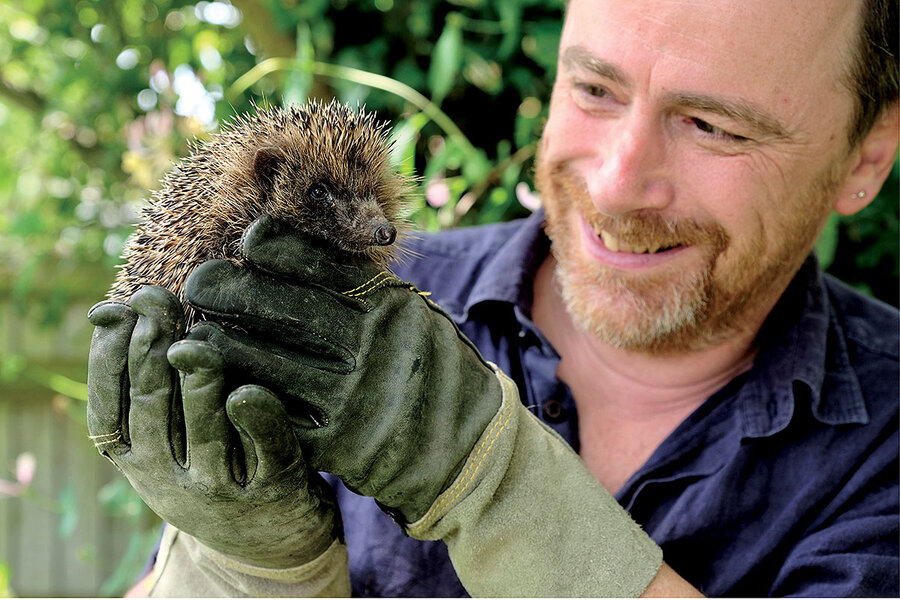
Photo: Hugh Warwick.
Hugh Warwick has collected over a million signatures calling for legislation to require planners and construction companies to create “hedgehog highways”

When we lived in Minneapolis, we had friends with a pet hedgehog called Hazel. I didn’t know if there were any rules about keeping hedgehogs as pets in those days. All I knew was that hedgehogs were adorable. And the way they curled up in a ball when anxious reminded me of myself. Or an ostrich.

Time to give up our ostrich behavior and do something about hedgehogs’ loss of habitat. Shafi Musaddique has a report at the Christian Science Monitor.

“Jo Wilkinson realized she was losing her students’ attention, so she turned to an old friend: the hedgehog. As a sustainability and engagement officer at Britain’s University of Sheffield, she wanted to rally students around sustainable foods and energy conservation. But it could be hard to hold students’ interest. That was until she proposed building a ‘hedgehog safari’ trail on campus. …

“ ‘I recognized straightaway that hedgehogs captured everyone’s imagination,’ says Ms. Wilkinson. ‘There’s something about them that does that to people.’

“Her effort to expand hedgehog habitats at Sheffield earned British Hedgehog Preservation Society (BHPS) funding in 2019. … Within 18 months, she had a fully funded national project that has certified 110 ‘hedgehog-friendly’ campuses across the country. …

“Britain’s hedgehogs need all the help they can get. The country’s ‘red lists’ categorize species based on how threatened they are. Hedgehogs joined the lists in 2020, officially classified as vulnerable to extinction. But advocates and organizations like Ms. Wilkinson and BHPS, which maintains her Hedgehog Friendly Campus accreditation program, are working to save the iconic British garden dweller.

“Researchers estimate there were about 1.5 million hedgehogs across England, Scotland, and Wales collectively in the mid-1990s.

The population size is difficult to keep track of, but studies show that British hedgehog numbers in rural areas have declined by 50% since 2000, though in cities and towns the decline is closer to 30%.

“ ‘It’s almost as if hedgehogs are moving out and doing the opposite of humans,’ says Ms. Wilkinson. ‘They’re moving into towns and cities because perhaps those places are providing them a bit of a refuge.’ Hedgehogs tend to follow people, she says, and have found that they can scavenge on cat and dog food in gardens. …

“That’s become more valuable as rural areas have lost wildflowers, bramble patches, and leaf and log piles in the countryside. Pesticides from intensive, modern farming practices and ‘habitat fragmentation’ – the ‘chopping up’ of Britain’s landscape into smaller pieces – have added to the rural challenges facing hedgehogs, says Hugh Warwick, author of four books dedicated to the spiky critters.

“The self-dubbed hedgehog connoisseur leads the fight in finding solutions to the destruction of hedgehog habitats due to ‘manicured gardens.’ From his garden shed in Oxford, Mr. Warwick has drummed up over a million signatures for a petition calling for British planning law requiring all new developments to include ‘hedgehog highways’: holes to allow hedgehogs to move freely between gardens.

“Mr. Warwick – once described by a British politician as the ‘Lorax of hedgehogs’ in reference to Dr. Seuss’ literary character who ‘speaks for the trees’ and fights suburban development – has managed to convince the government to change planning law guidance through his petition and online campaigning. …

“[The] hamlet of Kirtlington has already devised a hedgehog highway featuring eccentric holes, miniature stairs, and knocked-down walls that knit gardens together. Villagers took a map of the hamlet and spent time working out the minimum number of holes to connect a maximum number of gardens. A map of the hedgehog highway helps tourists trace the paths of the tiny inhabitants. … Recognizing the threat toward one of the U.K.’s favorite creatures is an opportunity for people to reconnect with their surroundings.

“For Ryan Wallace, sustainability officer at the University of London, which is part of the Hedgehog Friendly Campus initiative, that means ensuring hedgehogs thrive in the most unlikely of places: central London. Though surrounded by Regency-era houses and within walking distance of busy tourist attractions, the public squares of Bloomsbury offer overgrown bushes and ample foliage. That makes them – and the neighboring university – fertile ground for hedgehogs, though none were seen last year.

“ ‘They can travel up to 2 miles through the streets of London,’ says Mr. Wallace. … ‘Hedgehogs have loads of benefits people don’t realize. They keep the slug population down, and they’re natural pest killers,’ he says. ‘They’re also a good indicator of how well the natural environment is doing.’ …

“ ‘If there’s a space in your garden where you can let the weeds grow, do that and stop cutting the grass,’ says Ms. Wilkinson. ‘Let nature be nature.’ …

“[At] Nottingham Trent University, a ‘bronze-winning’ Hedgehog Friendly Campus … the school’s sustainable development projects officer has plans to add special hedgehog accommodations like ramps to provide safe exit from ponds. ‘They can swim really well, but they get tired,’ she says. ‘If they can’t climb out, they’ll get into trouble.’ …

“For many advocates, hedgehog conservation isn’t just about the survival of a species. It’s a chance to connect with bigger environmental issues such as climate change. ‘You can start with hedgehogs, because that doesn’t scare people off. Everybody has an anecdote about a hedgehog.’ “

Do you?

More at the Monitor, here.
Read Full Post »

Photo: Suzanne’s Mom.
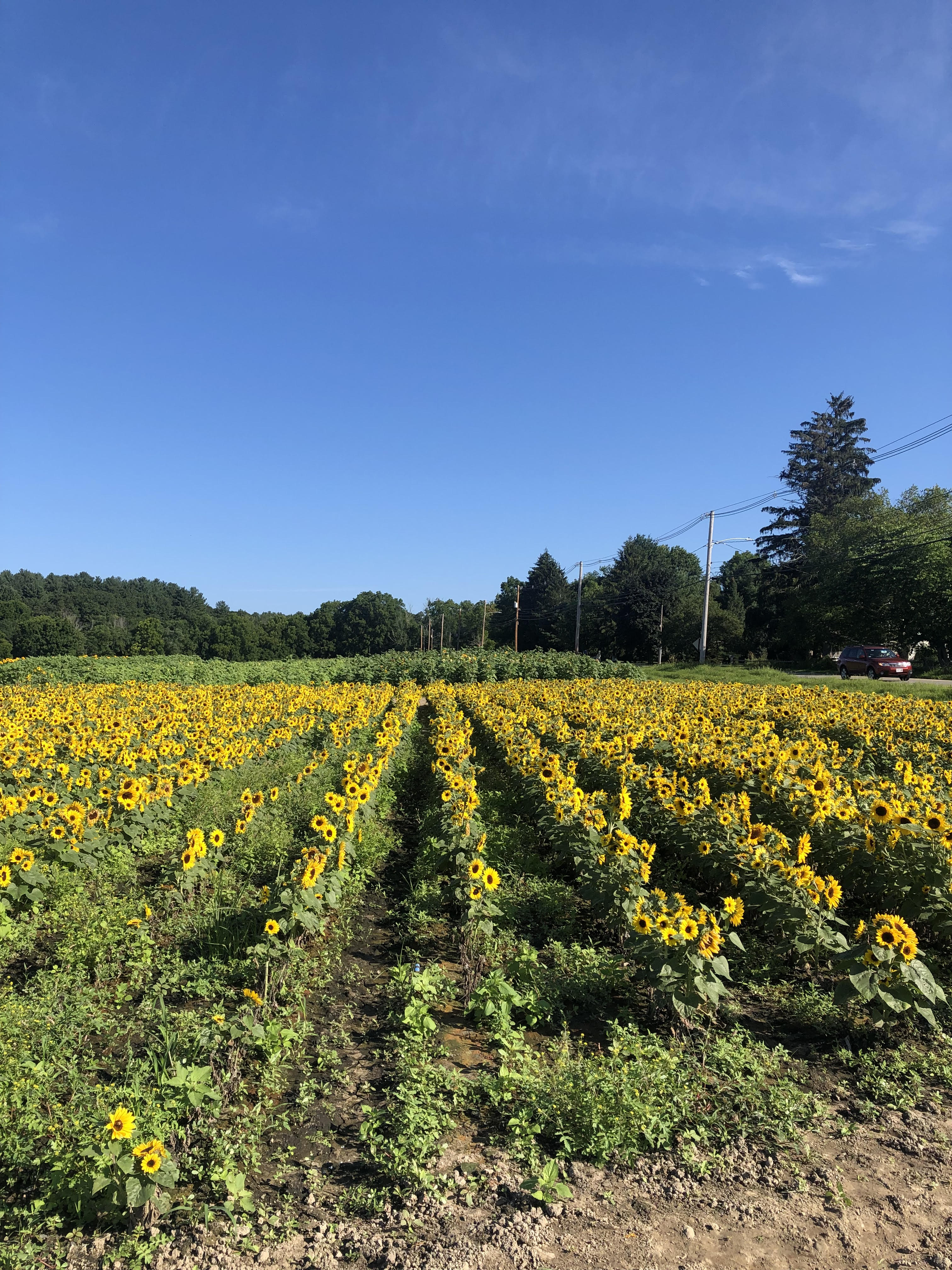
At Verrill Farm’s Sunflower Day, lovers of pick-your-own sunflowers benefit both themselves and the pediatrics unit of the local hospital.

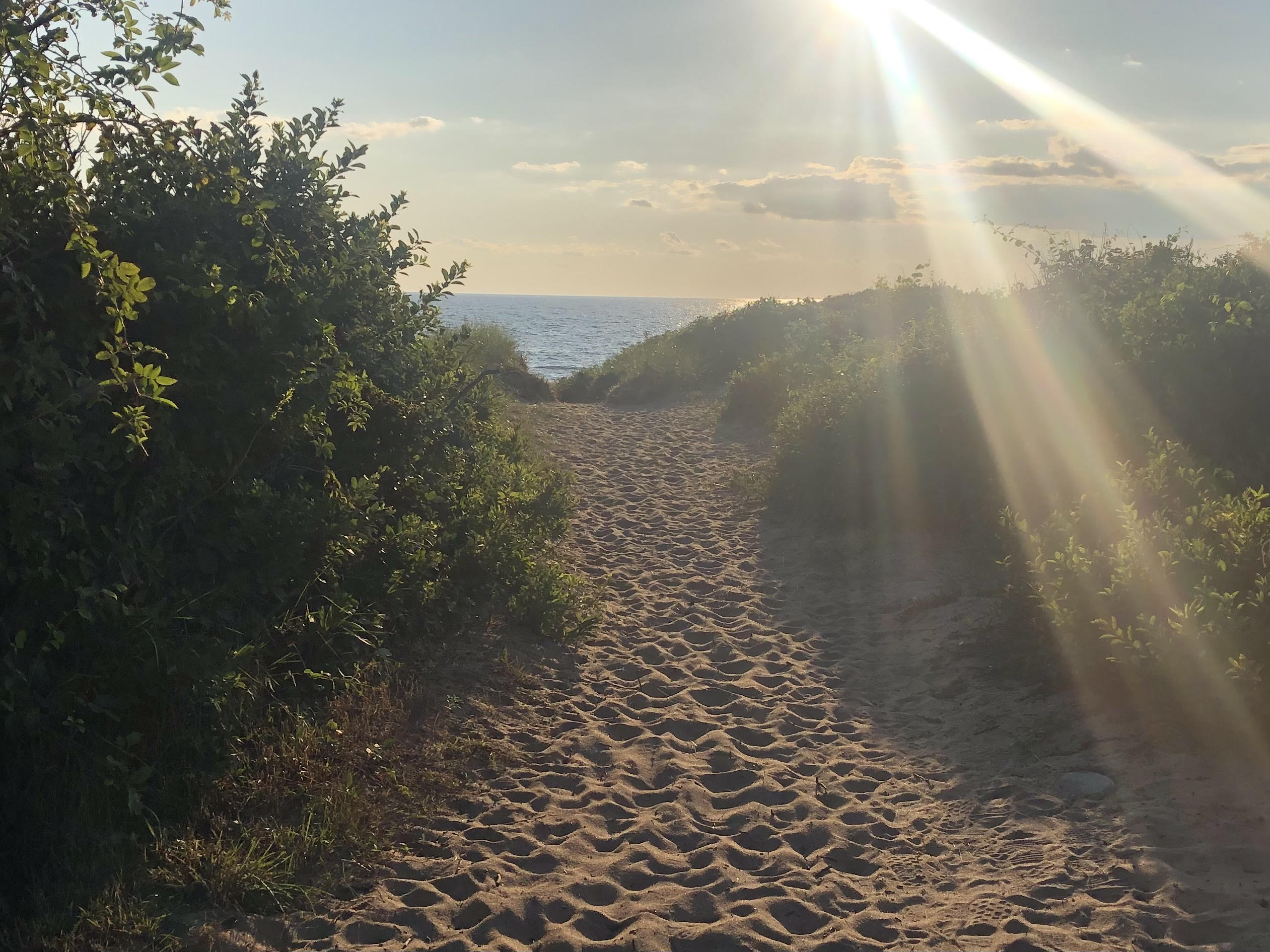
It’s only August, so I’ll have more summer photos down the road, but I decided to share what I have today. This collection includes both inspiration from nature and quirky things that just call out for a picture.

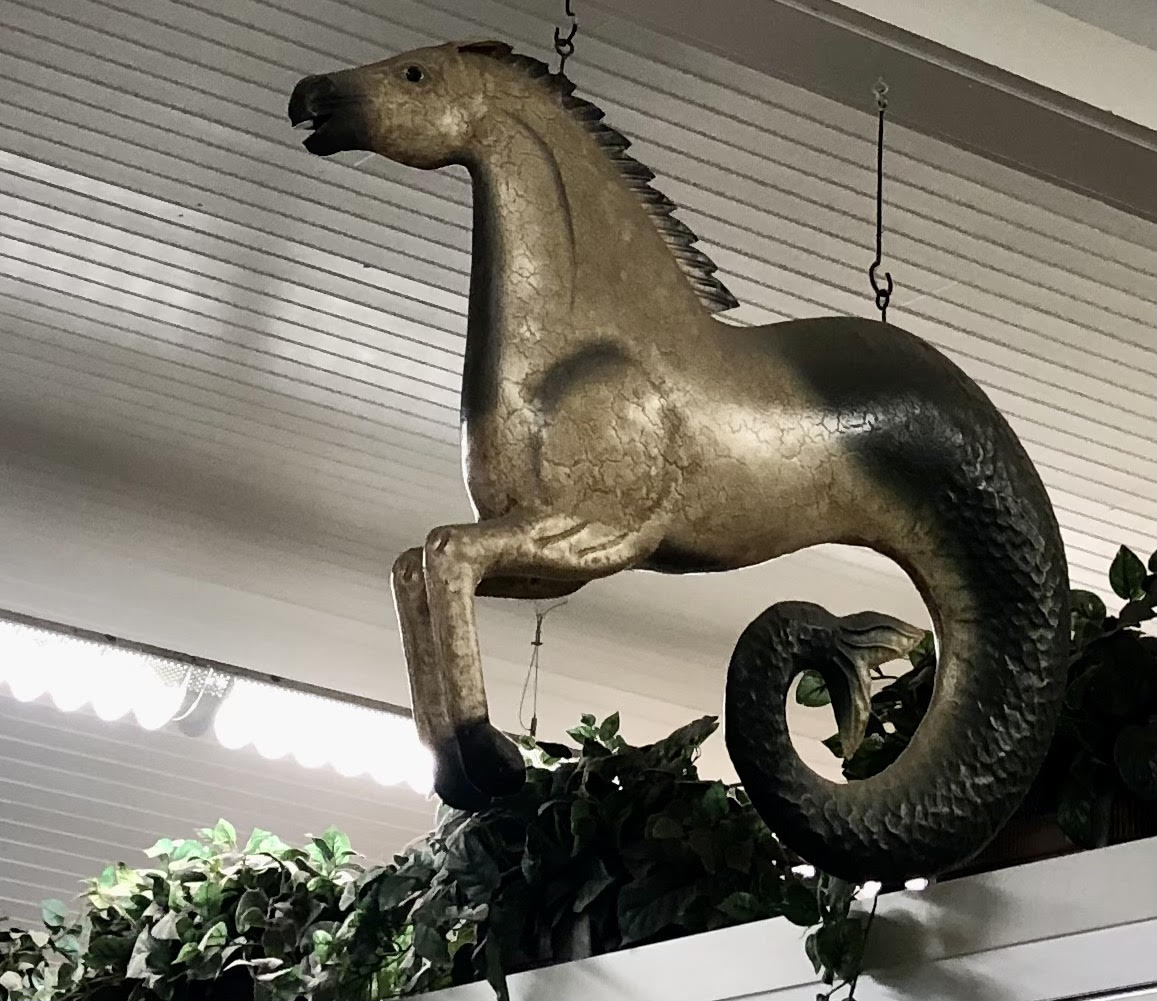
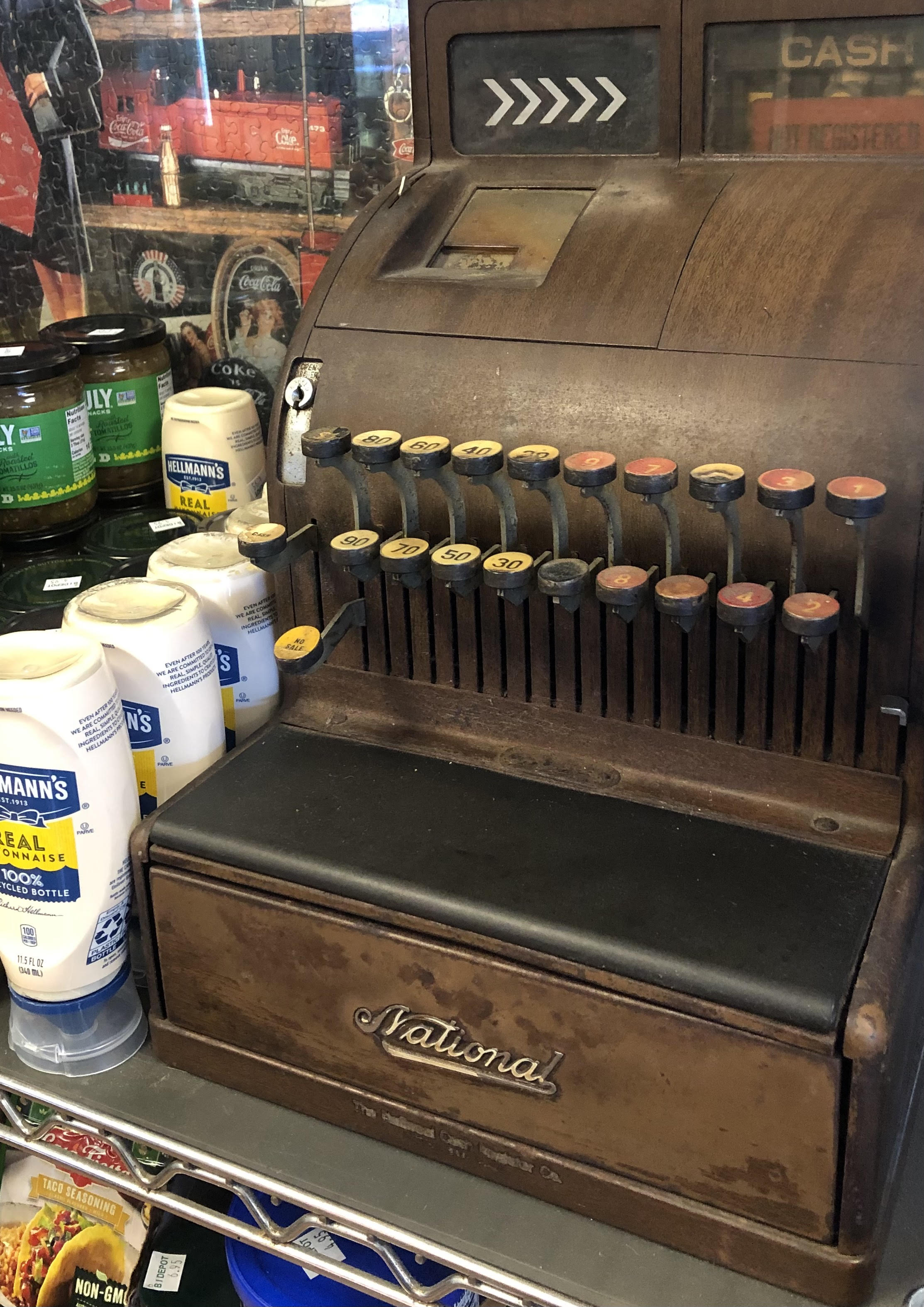
When you wait in line at the big grocery store in New Shoreham, RI, if your eyes wander to the ceiling, you will note the shop’s unusual version of a seahorse. More like a mermaid horse than a real seahorse. At the island’s smaller market, I was drawn to an antique cash register.

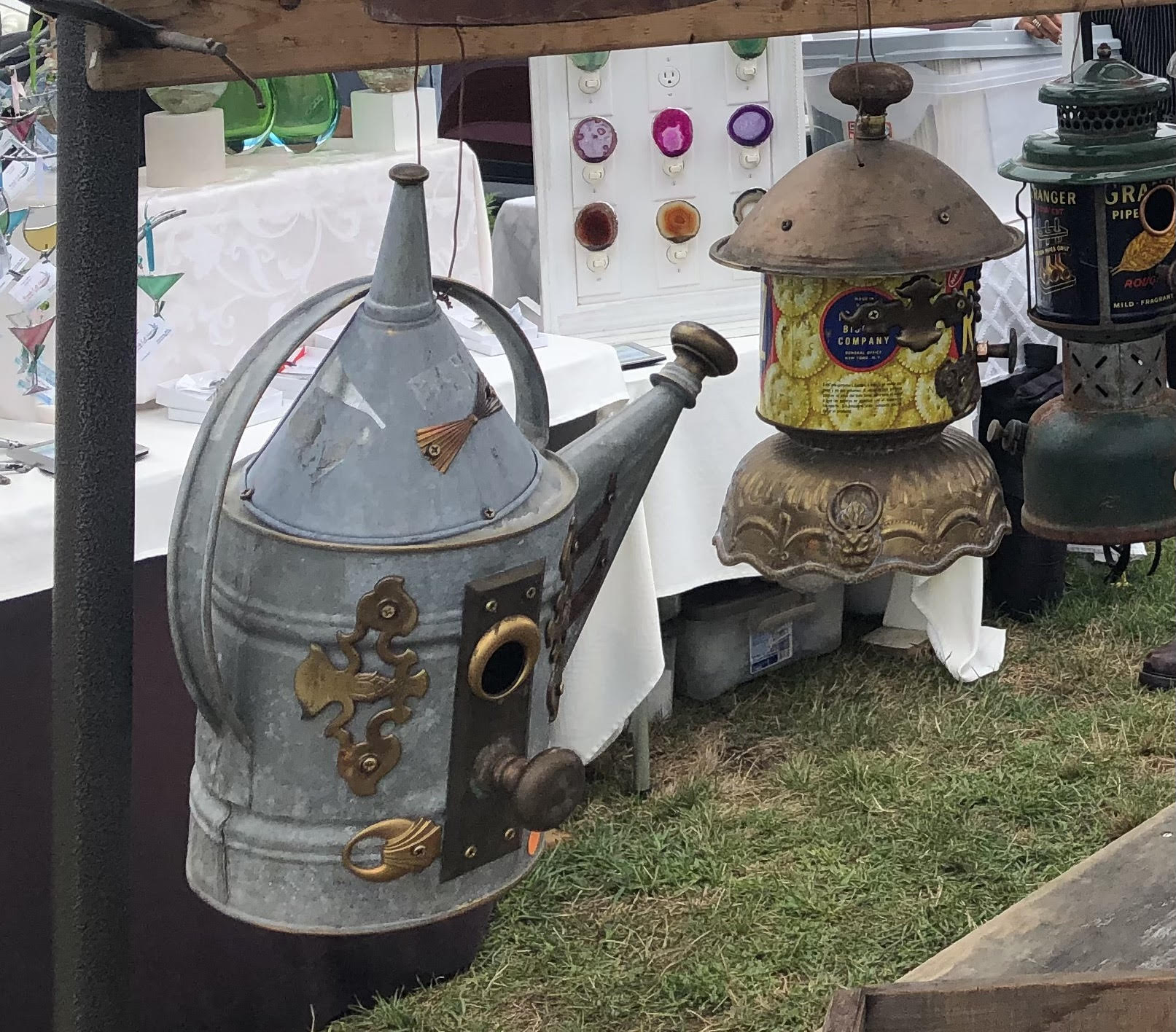
An artisan at a craft show converted watering cans and lanterns into bird houses — whether for actual birds or just for display, I don’t know.

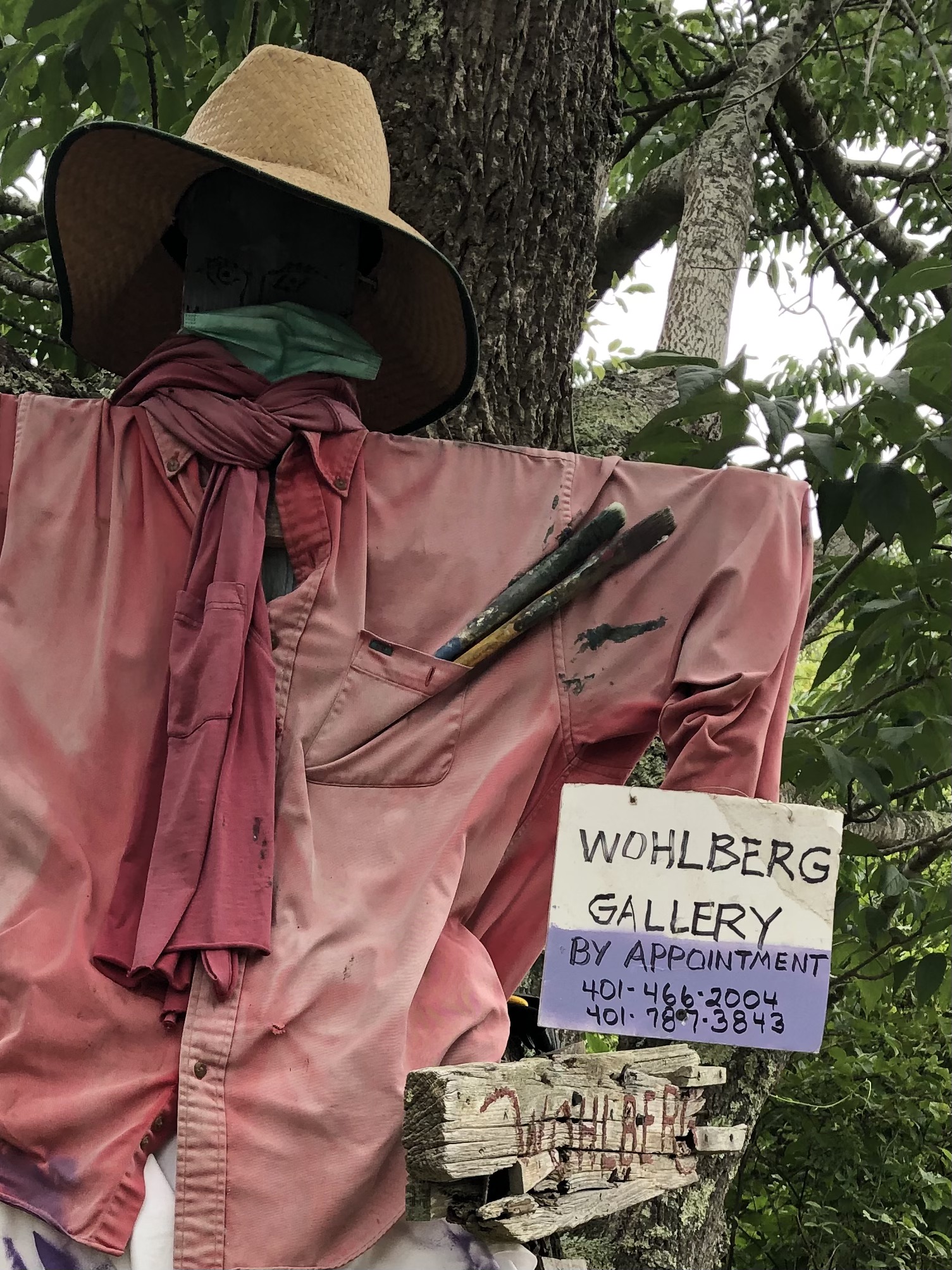
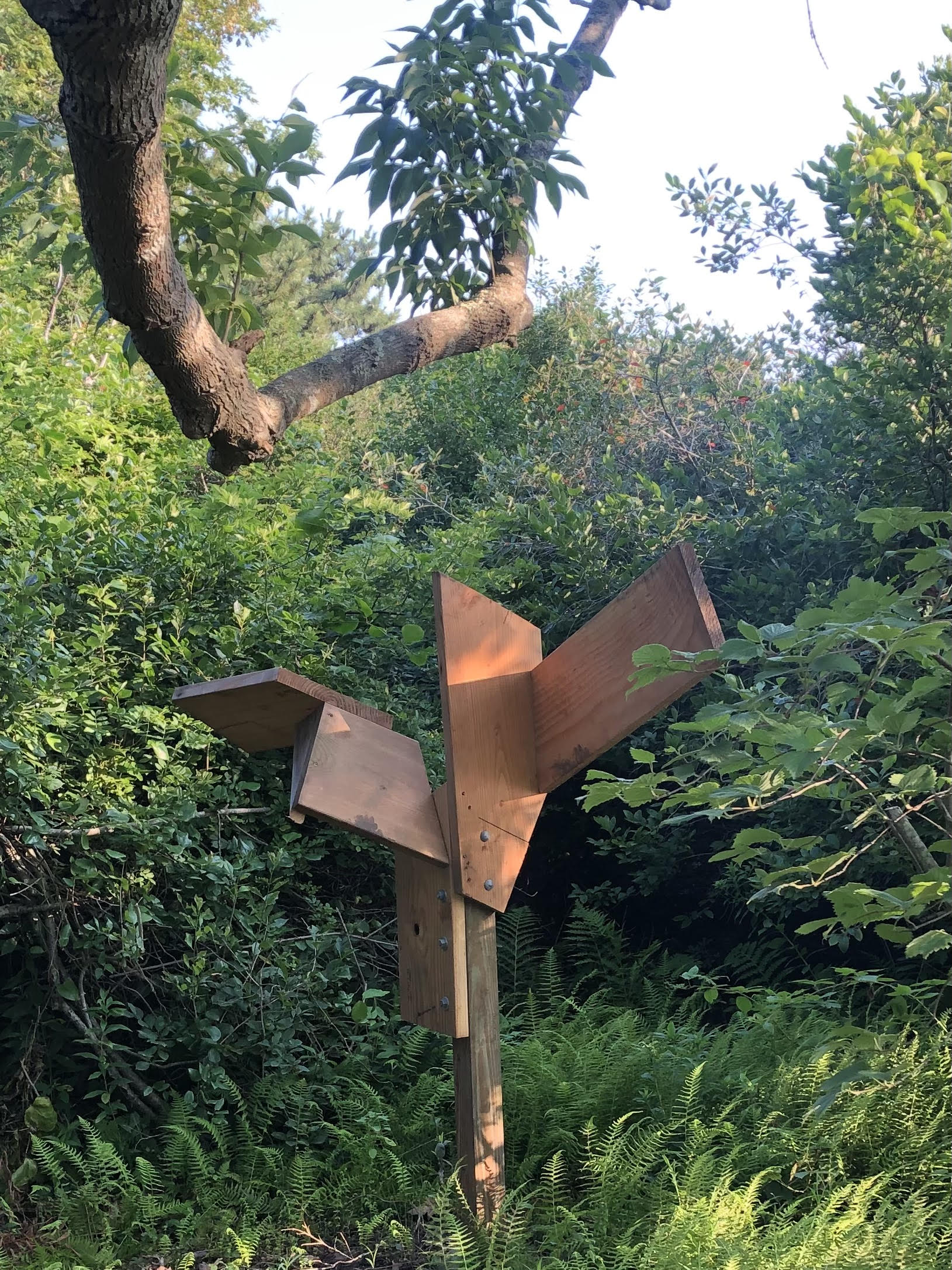
In the woods near Ben Wohlberg‘s gallery, there was a wooden sculpture like a signpost.

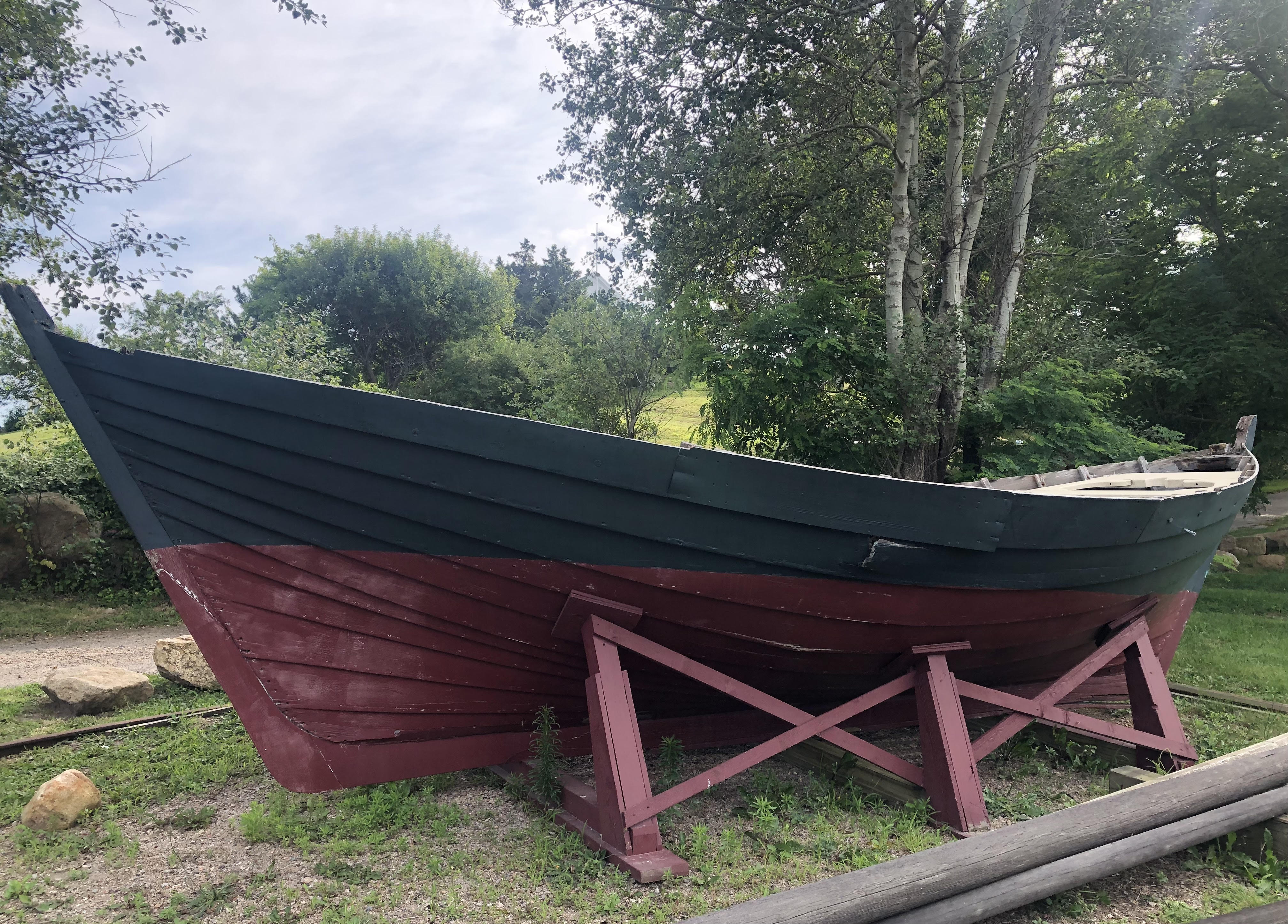
The stove-in double-ender on display at the historical society is in need of some love and attention. This was historically the kind of boat island fishermen used.

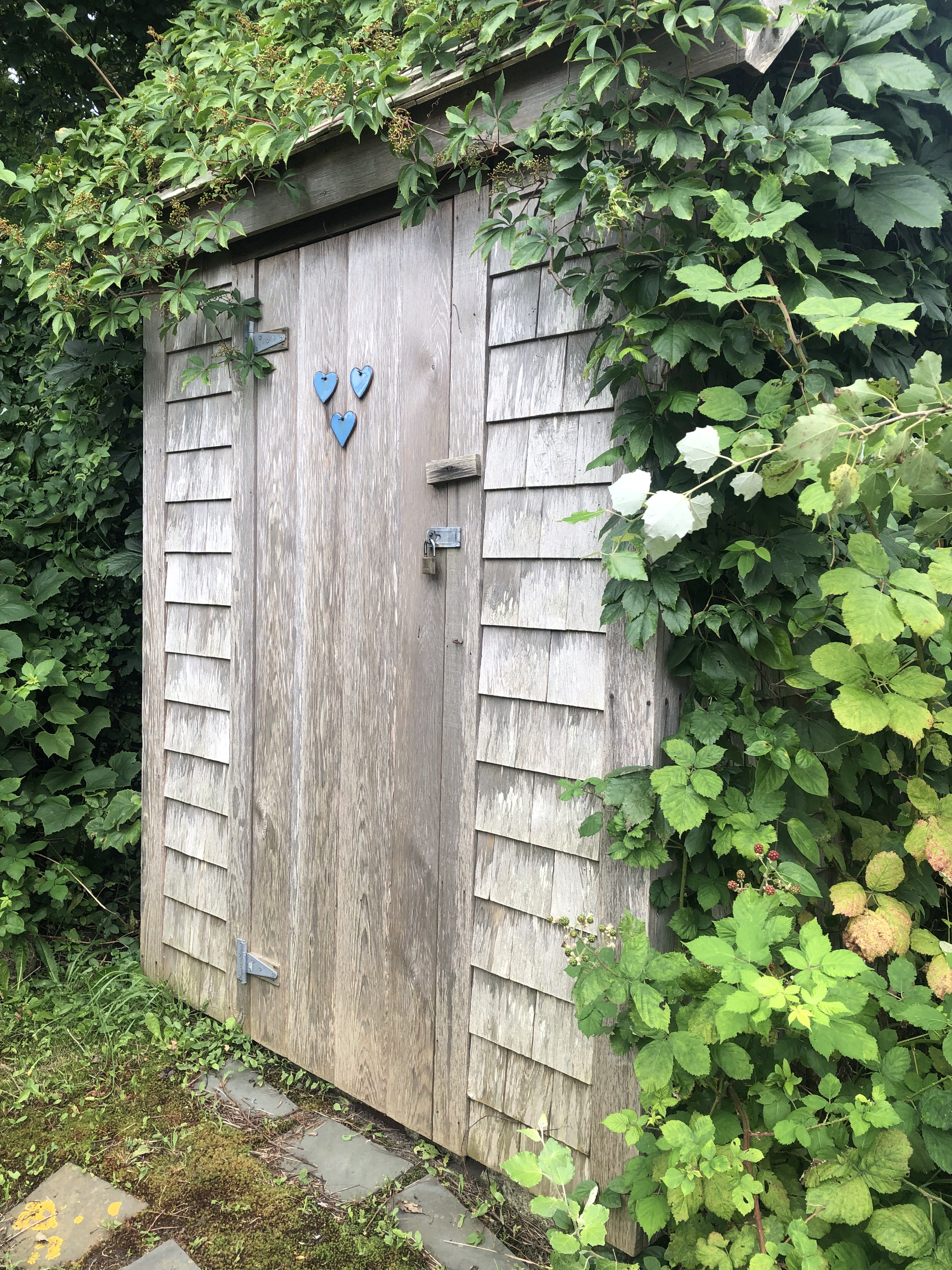
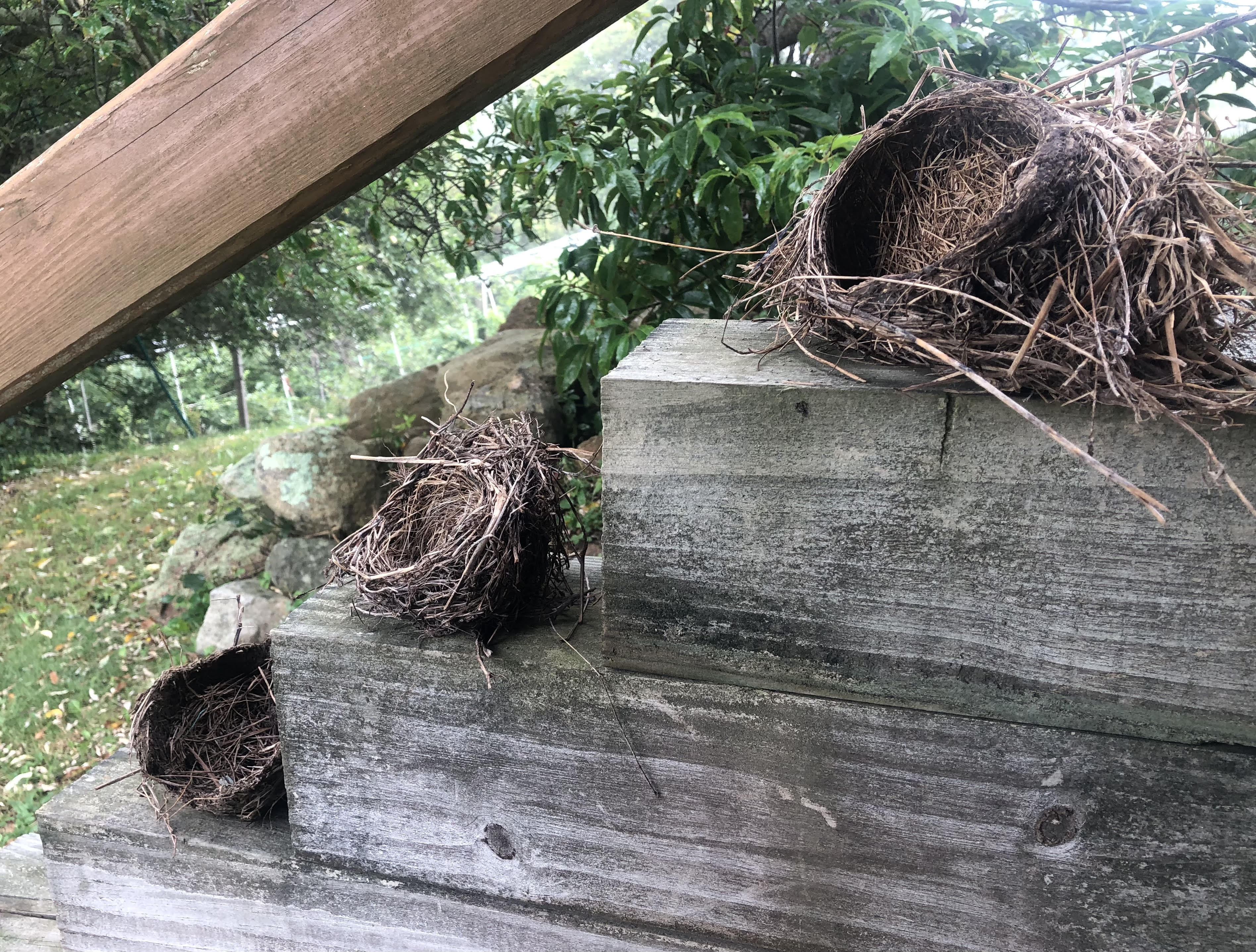
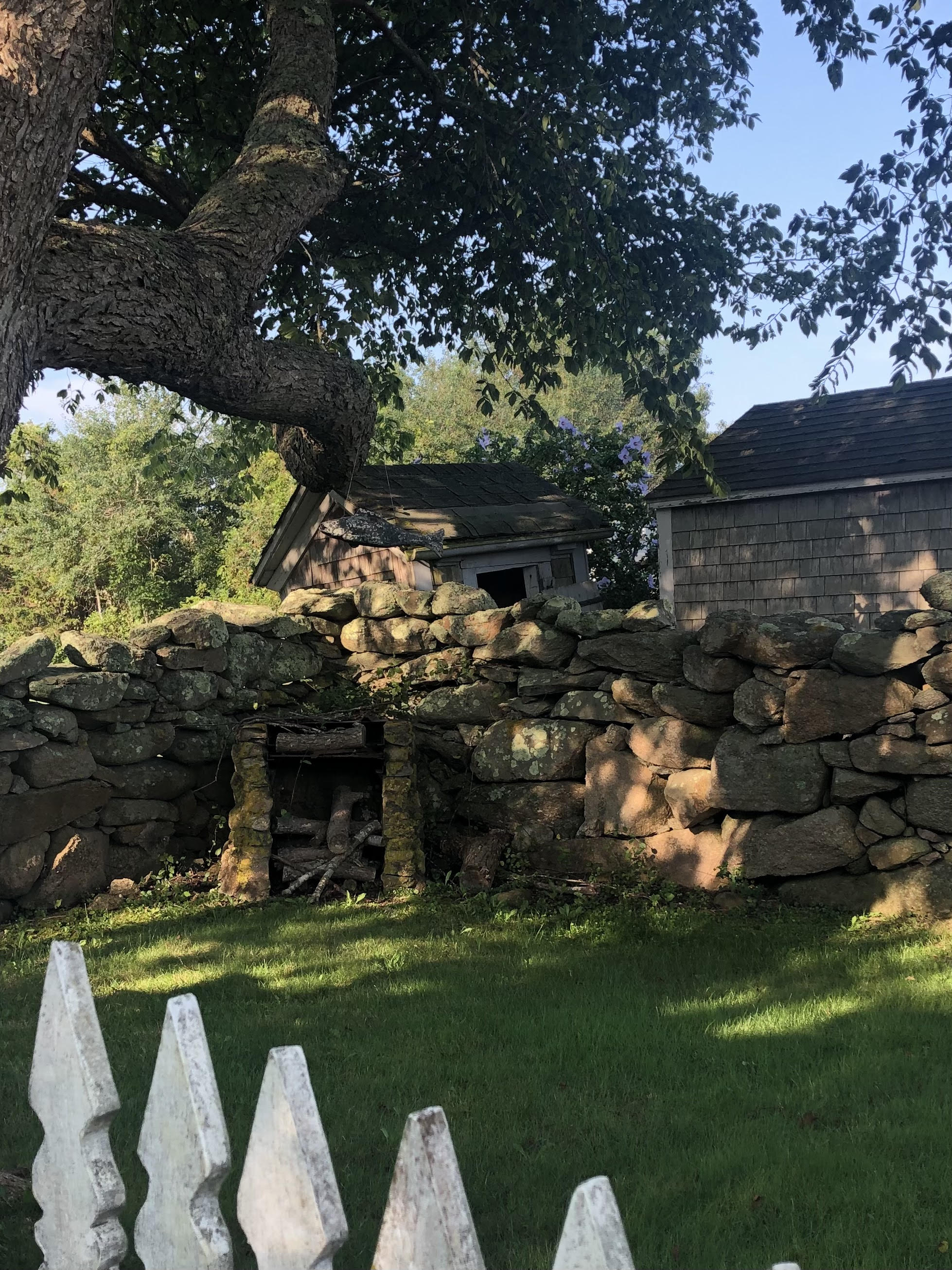
Next is one of the many old, unused outhouses on the island, followed by bird nests, also unused. Then a picturesque outdoor fireplace by a stone wall.

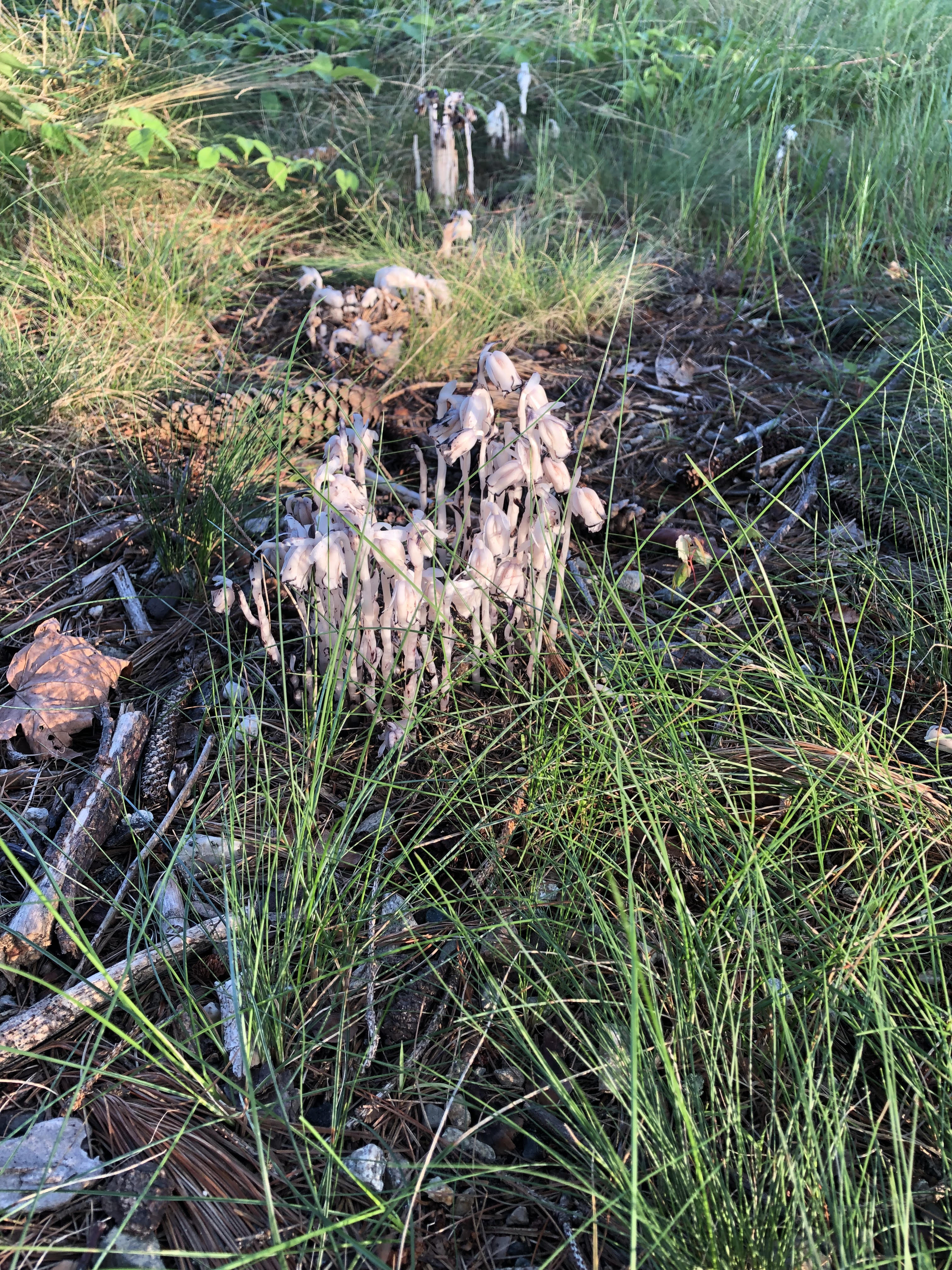
Moving on to Massachusetts, Indian Pipes, giant tomatoes at Verrill Farm, and the farm’s version of social-distancing guidelines.

Read Full Post »

Subway Door Chimes

Photo: The Atlantic.
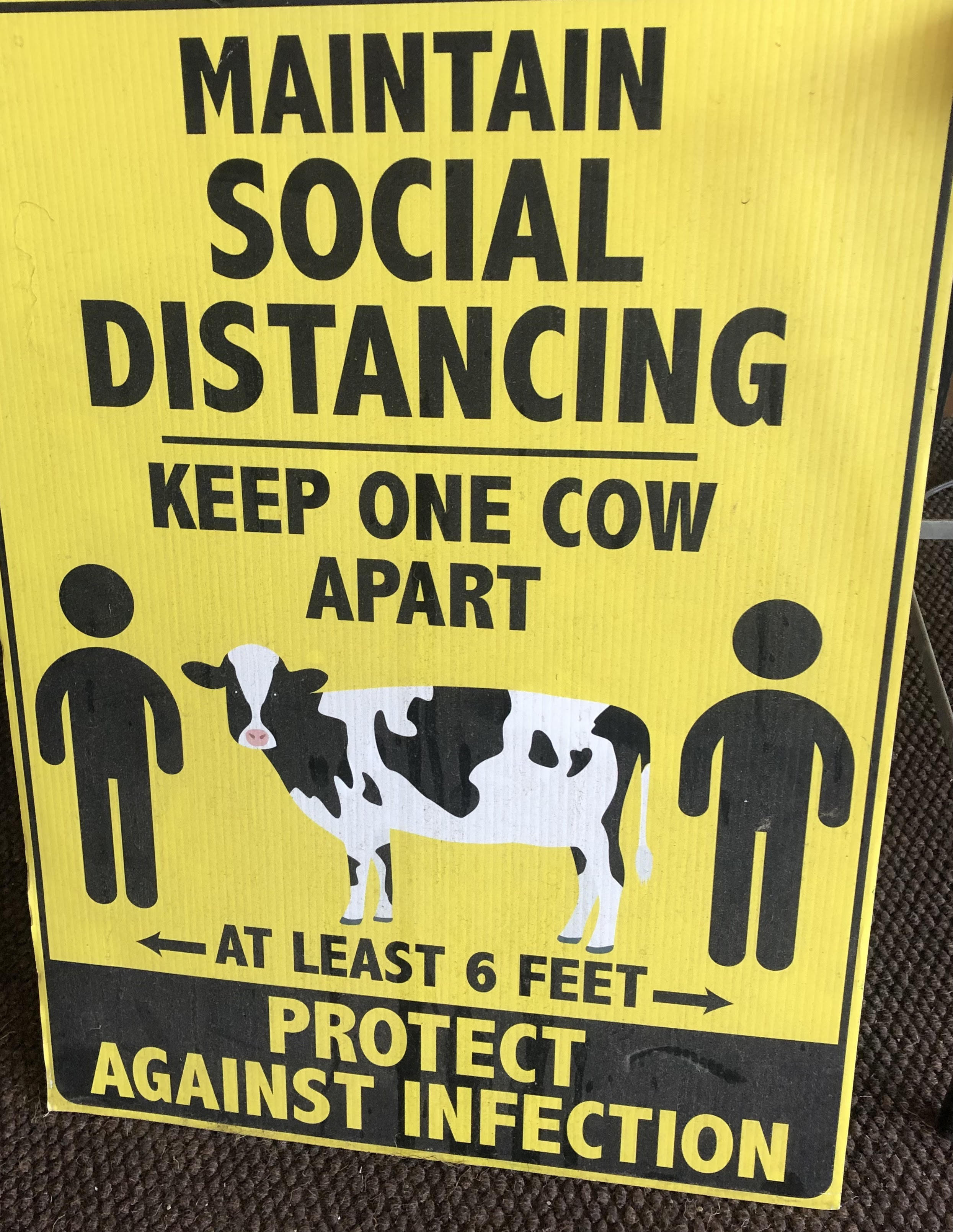
Workers are assigned to push commuters through the subway doors in Tokyo at rush hour.

You know about setting different ringtones on your phone. And you know how your choices say something about who you are or what you think of the various people who call you.

But there are other sounds programmed to convey a meaning — for example, the subway door chimes of different countries. What do they say about those countries or about what their transit systems are trying to convey? As Sophie Haigney and Denise Lu report at the New York Times, civil engineer Ted Green has actually looked into that.

“Ted Green has been collecting the sounds and sights of transit systems for more than a decade,” the authors write. “He travels frequently for work, as a civil engineer, and in every city he visits, he rides the mass transit system and films video of the closing doors, replete with the announcements and the telltale chimes — beeps, ding-dongs, jingles and arpeggios that warn riders around the world to stand clear. …

“Like many aspects of mass transit systems, door chimes may seem banal, the dull background track to daily commutes. If you listen more closely, though, you’ll notice regional patterns and distinctions.

“For Green, recording videos of door closings started as a way to document his travel for himself, but he eventually compiled some videos on YouTube. He was shocked when one door-closing montage got more than two million views. He has made many more videos since; this past year, he’s noticed that there’s been a spike in viewership, perhaps because of nostalgia for train riding during global lockdowns.

“ ‘A lot of train enthusiasts are also collectors,’ said Adam Rose, an audio designer who works on train simulations for Dovetail Games, and who consequently spends a good part of his day listening to transit chimes. ‘So looking for different transit chimes can almost be a form of collecting.’

“Most chimes these days are computer generated, played automatically as part of the door-closing process. But some originally emerged from mechanical processes in older trains.

“In Montreal, where the first metro trains were put in service in 1966, there was an electronic circuit called a current chopper, which worked to slow down the electronic frequency applied to the motor. It made a sound as the trains pulled out of the station: ‘doo-doo-doo.‘ ‘Metro cars act as a sounding board, and amplify the melody,’ said Benoit Clairoux, a historian of Montreal’s transit system.

“When the transit authority wanted to add a door-closing chime in 2005, they tested various sounds, though none was as popular as a chime that mimicked this mechanical sound. So executives added a synthetic ‘doo-doo-doo.’ …

“In Paris, a simple ‘A’ note plays as the doors shut. This is also a throwback, a sound that mimics the vibrations of a mechanical part that is no longer in use on any of the system’s trains. ‘But for a half century Parisians and visitors alike became used to that sound, so we decided to keep it, and recorded a synthesized version,’ said Song Phanekham, a communications manager for the Paris transit system. …

“In Tokyo, each station has its own custom jingle to signal departures. In Rio de Janeiro, the subway’s door chime pays homage to bossa nova. In Vancouver, the doors still close to a three-note sound that was recorded in the 1980s on a Yamaha DX7. …

“One Russian train enthusiast, who also collects transit videos, said that he finds station announcements and certain chimes to be reminiscent of a romantic, inaccessible past. … ‘When I ride through the Old Town and hear the names of the stations located there, I imagine that I’m a hero of a Dostoyevsky novel. I imagine that I’m in the 19th century, and if I get to this or that station I will see carriages, kerosene lamps and people in black suits and hats.’ …

“When it comes to designing a new transit chime, there is much to consider. Length, for one, especially given what is called ‘dwell time,’ when a train is lingering in the station. ‘One of the biggest things about transit is just trying to get people to step lively on and off trains as the doors are about to close,’ said Max Diamond, a New York City Transit conductor. ‘It seems to a layperson like a door chime is innocuous, but it’s a really critical part of keeping the capacity of the subway up.’

“So, Diamond said, you wouldn’t want the chime to be too long, or it might slow things down further on an already overburdened transit system. On the other hand, according to [Ian Fisher, manager of operations planning at] British Columbia Rapid Transit Company, it can’t be too short or people might miss their window of opportunity to rush out the doors. …

“Then there’s the question of how best to get people’s attention. A relaxing melody might fail to rouse slow-walking commuters from their daydreams, as they shuffle out the door. … But there is rider experience to think about, as people hear the chimes day in and day out, often during stressful parts of their day. Fisher said descending chimes might be more soothing than the upbeat sound of climbing notes. …

“Even given all these considerations, most commuters likely won’t notice the sound as they go about their days. ‘It becomes, like everything else, a part of the background,’ [Bruce Alexander, former director of strategic innovation and planning for the MTA] said. ‘No matter how strong a signal is, eventually it’s going to disappear into the general cacophony.’ “

Listen to sounds of subway systems around the world at the Times, here. They are really fun.

Read Full Post »

Photo: Petros Karadjias/AP.
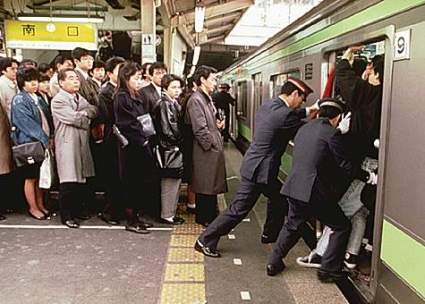
Firefighters try to extinguish a fire in Avgaria village on Evia, an island about 115 miles north of Athens, Aug. 10, 2021.

The Greek government was doing nothing to fight the raging fires on Evia island, and some mainland folks watching the disaster on television couldn’t stand what they were seeing. So they took matters into their own hands.

Tony Rigopoulos and Dominique Soguel reported the story for the Christian Science Monitor.

“Volunteers were the first – and at times only – line of defense against the wildfires that engulfed the Greek island of Evia this week, leaving charred olive trees in a sea of ashes.

“Some were brave local youth. Others came from other parts of the country, shocked into action by the inadequacy of the government response as it scrambled to fight an unprecedented number of fires across multiple fronts, including the capital, Athens.

“Wherever they came from, the volunteers, as well as grassroots support from nearby cities and towns to get supplies into fire-stricken areas, have helped save lives and property from roaring blazes across the island, located just northeast of Athens. The destruction the fires caused is nonetheless catastrophic for many living on Evia, especially in its heavily wooded north. But the actions of volunteers helped prevent loss of life and keep a bad situation from becoming that much worse.

“[The fire] broke out on Aug. 3 and continued to smolder through Thursday. A sinister smoke hung over the small western port of Aidipsos early Wednesday as firefighters and volunteers from other parts of Greece arrived to help Evia.

“The blaze had spared the port, an important entry point to the island, but consumed more than 110,000 acres just beyond. Some villages continued to burn, adding to the bitterness of residents who say the government prioritized fighting a wildfire at a large forest near Athens and allowed the fires on Evia to grow into a huge front that was impossible to battle.

“Known for its fierce winds that stayed mercifully calm in recent days, the island’s north boasted beautiful pine forests that went up in flames all the same, along with vineyards and olive groves. Thousands of residents work either in small honey or resin production facilities. …

Said soccer coach Vaggelis Bekakos, ‘The volunteers saved Evia because there was no one there to help.’ …

“After the fierce wildfires of 2016, says the coach, residents of Limni created a volunteer corps of firefighters and rescuers who received proper training. They are bound by an oath to drop their day jobs and serve any time that there is a fire alert. Mr. Bekakos credits their heroic acts to save the town – broadcast on national TV – with inspiring villagers in other parts of the island to also fight the flames, rather than flee.

“ ‘We were asking the fire service to spray some water on a house that was beginning to burn and they would answer, “We have no such order. Our order is to evacuate the people, not to spray water,” ‘ he recalls. …

“Greece had to battle nearly 600 fires in the span of just eight days, issuing 65 evacuation alerts and evacuating 63,000 people, according to Nikos Hardalias, the deputy minister of crisis management. ‘What I know is that the choices we made saved lives,’ he told journalists on Tuesday. ‘We didn’t underestimate any fire. … We had to deal with a situation that was unique for the fire service: 568 fires!’ …

“Five days after the start of the fires, Marinos, a native of the southern part of Evia who now studies in Athens, went with his friends to the scorching north because there appeared to be no government effort to bring the flames under control.

“ ‘We took branches from trees to hit the flames until they died,’ says Marinos, who didn’t give his last name. ‘Later a man came from the village with his car, carrying the watering tank he uses for his vines. We used that water too. We used anything we could find. …

“ ‘It’s not only the houses, it’s the forest. Their whole life is now in the past. What can they do after this?’

“Maria Papadopoulou, a native of Athens, has devoted days to delivering food and water packages to those in need, shuttling villagers to safety, and rescuing and feeding the few animals that survived the inferno. She agrees that the loss of the forest is a huge problem. ‘The forest and the animals are gone forever,’ she says. ‘In a few days, all the volunteers will leave and the people of the villages will be really alone then. They will continue to live in this huge cemetery.’ ”

More at the Monitor, here.
Read Full Post »

Photo: Tara Adhikari/The Christian Science Monitor.
Three Pluma siblings rushed to play the upright that Pianos for People had just brought from a donor in St. Louis.

Not all children take to the piano, but for those that do, cost should never be a barrier. At least, that’s the belief of a relatively new charity in St. Louis, as we learn from Tara Adhikari at the Christian Science Monitor.

“Nose pressed to the window, 2-year-old Mary Pluma is excited, her smile so big it’s visible even from the street. Her four older siblings lean in behind her. Eyes wide, they track the movers outside. …

“Today is the day the Pluma family receives their first piano. 

“The moment the upright is nestled in the corner, three of them beeline for the bench meant for one and tap on the black and white keys. Sometimes the notes sync in harmony, more often they do not, but the room is alive with music and joy. 

“The piano was delivered by Pianos for People, a St. Louis nonprofit that reduces financial barriers to music education by providing donated pianos and free lessons to low-income families. The organization is transforming what was historically a luxury item and symbol of financial success into a tool for growth – accessible beyond the American middle-class family.

‘Our philosophy is that a piano is more than just a piano,’ says Matt Brinkmann, the executive director. ‘We use the piano as a gateway to self-esteem and connection and community.’ 

“Tom Townsend, a St. Louis advertising executive, and his wife, Jeanne Townsend, an attorney, founded Pianos for People in 2012 in memory of their son, Alex. A pianist and artist, Alex died in a car accident while attending college. …

“Their focus on saving pianos – connecting unwanted instruments with recipients who can’t afford their own – expanded to music education more broadly. They opened a piano school, in 2014, at their Cherokee Street headquarters and have since delivered more than 300 donated pianos, opened a second school, and grown lesson enrollment to 129 this past spring.

“Of the families served, 92% have annual income below $25,000. While many recognize the benefits of music education – confidence, discipline, focus – paying the grocery bill takes priority. A good upright used piano can cost upward of $1,000; a new one close to $10,000; and lessons here average $50 an hour. By cutting the costs that make learning an instrument untenable, Pianos for People creates space for self-expression that, for many, wouldn’t exist otherwise. …

“There are far more pianos available for donation than the organization can accept, says Danny Ravensberg, piano donations coordinator. This allows Pianos for People to reject pianos in poor condition and protects recipients from repair costs. 

“Every piano has a history, and donors care where their piano, often a treasured part of family memories, ends up. 

“Jackie Wennemann’s five children enjoyed playing piano when they were growing up in the 1960s – so much so the family bought two, and she’d conduct from the basement door giving cues between the instruments. ‘Sometimes we would have duets and one would get on this piano,’ she says gesturing to one in the entryway, ‘and one on the one downstairs. I would say, “Ready, set, go,” and they’d both play the same song.’

“With her children grown, Ms. Wennemann wanted the pianos to be used again. She donated the one in the best condition to Pianos for People. The organization matched it with the Pluma family, three of whom had been taking free lessons for four years. …

“ ‘When they come [home] from school, they are stressed,’ says their mother Patricia Pluma, adding that the kids speak Spanish at home, which means in school they are having to learn in their second language. But sitting at the piano bench translating the music on the page into sounds on the keys is different. It’s freeing, she says. ‘They start playing the piano and they start smiling.’

“Indeed, the peaceful power of pianos is emblazoned on Pianos for People staff T-shirts: ‘A free piano inspires peace in a child. A peaceful child becomes a peaceful adult. Peaceful adults make a peaceful world.’ “

More at the Monitor, here.
Read Full Post »

Photo: Clay Bank/Unsplash.
There’s a musical road near Mt. Fuji, one of several discovered around the world.

When my mother was a kid, she loved to go to Singing Beach in Manchester-by-the-Sea. If you scuffed your feet in the sand, it squeaked. It didn’t really “sing,” but that was how the beach got its name.

Now I’m learning there is also such a thing as a singing highway. Stacy Conradt shares the story at Mental Floss.

“You’re probably familiar with rumble strips, those grooves on roads that make a loud, obnoxious noise when a car crosses them. Shoulder and centerline strips are placed to alert drivers that they’re getting too close to the edge of their lanes, while transverse strips typically cross the entire road and are used to signal that drivers should slow down.

“In most cases, rumble strips are anything but pleasant to the ear — but a few enterprising individuals realized that it doesn’t have to be that way. In fact, varying the length and distance of the grooves can allow cars to create melodies on the road. Here a few places where you can find harmonious highways.

DENMARK

“The road-as-an-instrument concept was invented in 1995 when two Danish artists came up with the ‘Asphaltophone,’ raised pavement markers that are more closely related to Botts’ dots than rumble strips. See it in action just after the 1:30 mark:

NEW MEXICO

“Transportation officials in New Mexico hope that ‘America the Beautiful’ will get cars to slow down on a section of historic Route 66 between Albuquerque and Tijeras. To hear the song at the proper speed and pitch, vehicles must strictly obey the posted speed limit of 45 mph. Drivers are unable to hear the song if they are going even a few miles under or over the limit.

CALIFORNIA

“The only other musical road in the U.S. can be found in Lancaster, California, where a snippet of the ‘William Tell Overture’ plays for drivers going 55 mph. … The attraction was originally installed near a residential area, but citizens complained so much that the grooves were paved over just two weeks after they were installed. The city received hundreds of phone calls from people who missed The Lone Ranger theme song and eventually agreed to reinstall the strips in an industrial area where it wouldn’t bother residents. …

 JAPAN

“Japan embraced a number of singing streets after engineer Shizuo Shinoda accidentally scraped a road with a bulldozer and realized that the resulting grooves made interesting sounds. There are now several melody roads in Japan, including [one] near Mt. Fuji.

 SOUTH KOREA

“Nearly 70 percent of highway accidents in South Korea are caused by distracted or dozing drivers, so the Korean Highway Corp. has installed musical grooves in particularly dangerous stretches of road in an attempt to get motorists to pay attention. [One] of the songs, which you’ll recognize as a slightly off-tune version of ‘Mary Had a Little Lamb.’ ”

More at MentalFloss, here.

Read Full Post »

Monarch caterpillar bulking up on milkweed in order to work a miracle.

Plenty of Monarch butterflies swooping around here lately, and I keep wondering if the hungry caterpillar I captured on video is one of them. I hope so. As much as I love birds, I hope they eat something else. We need our Monarchs.

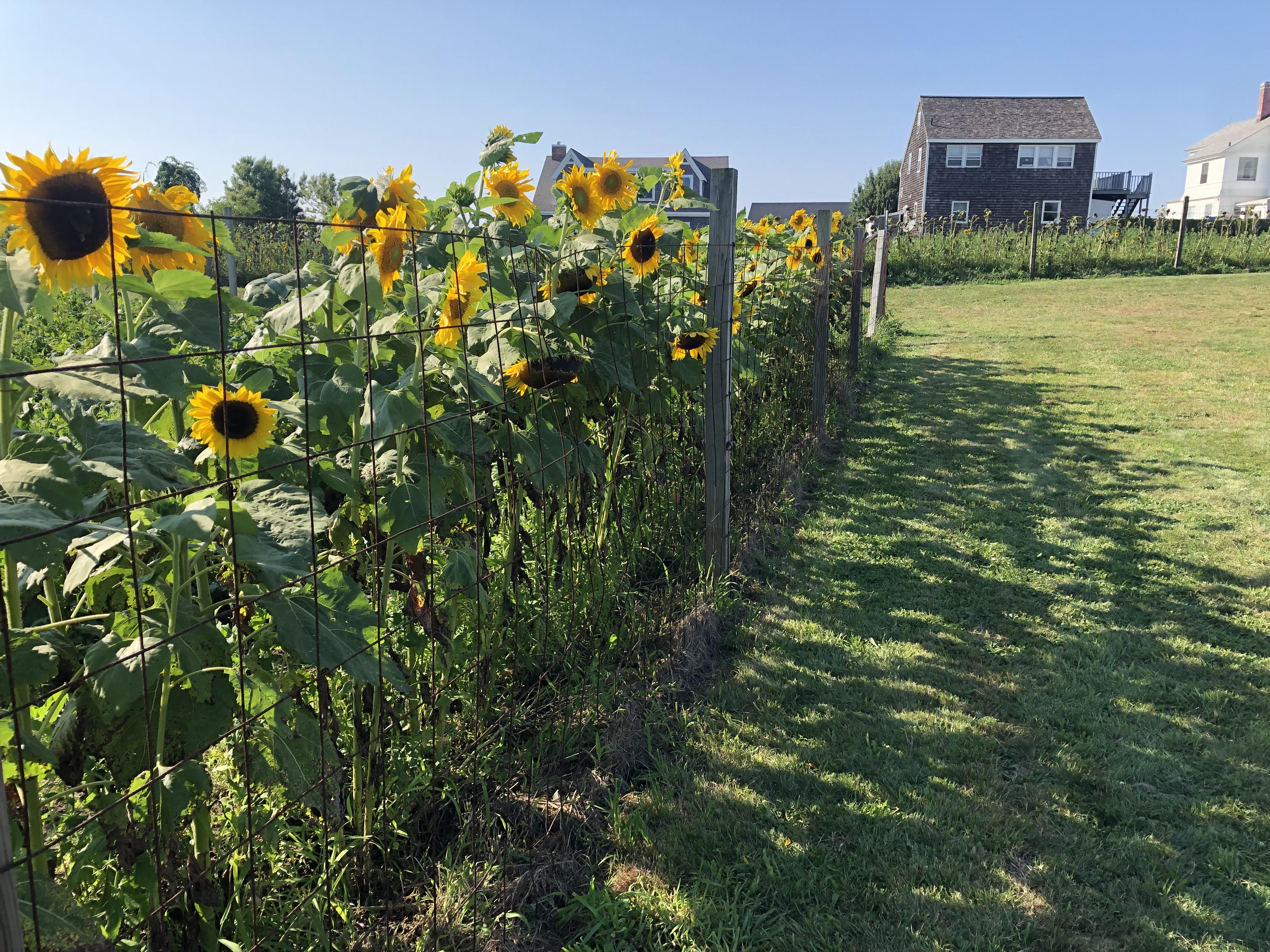
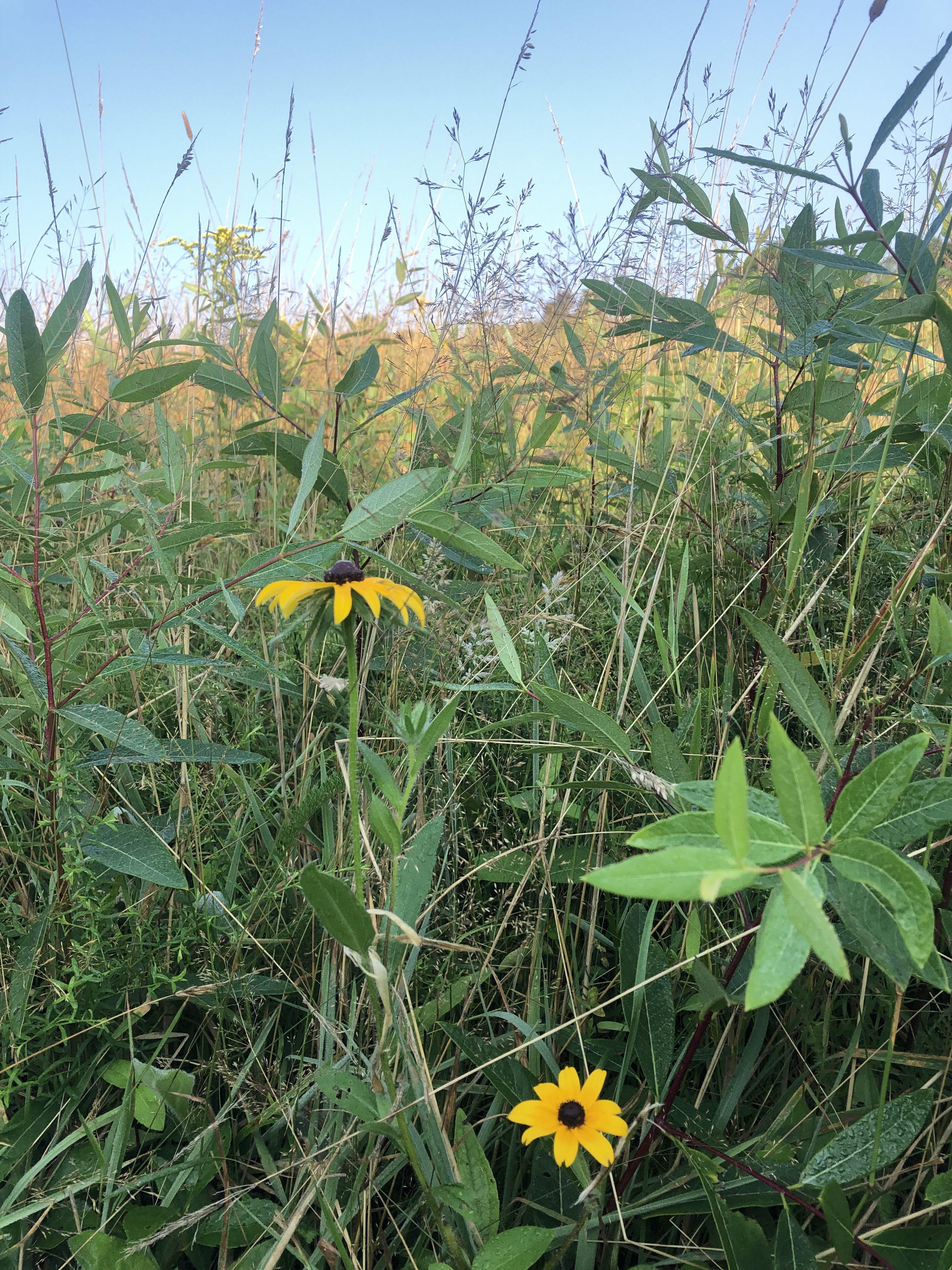
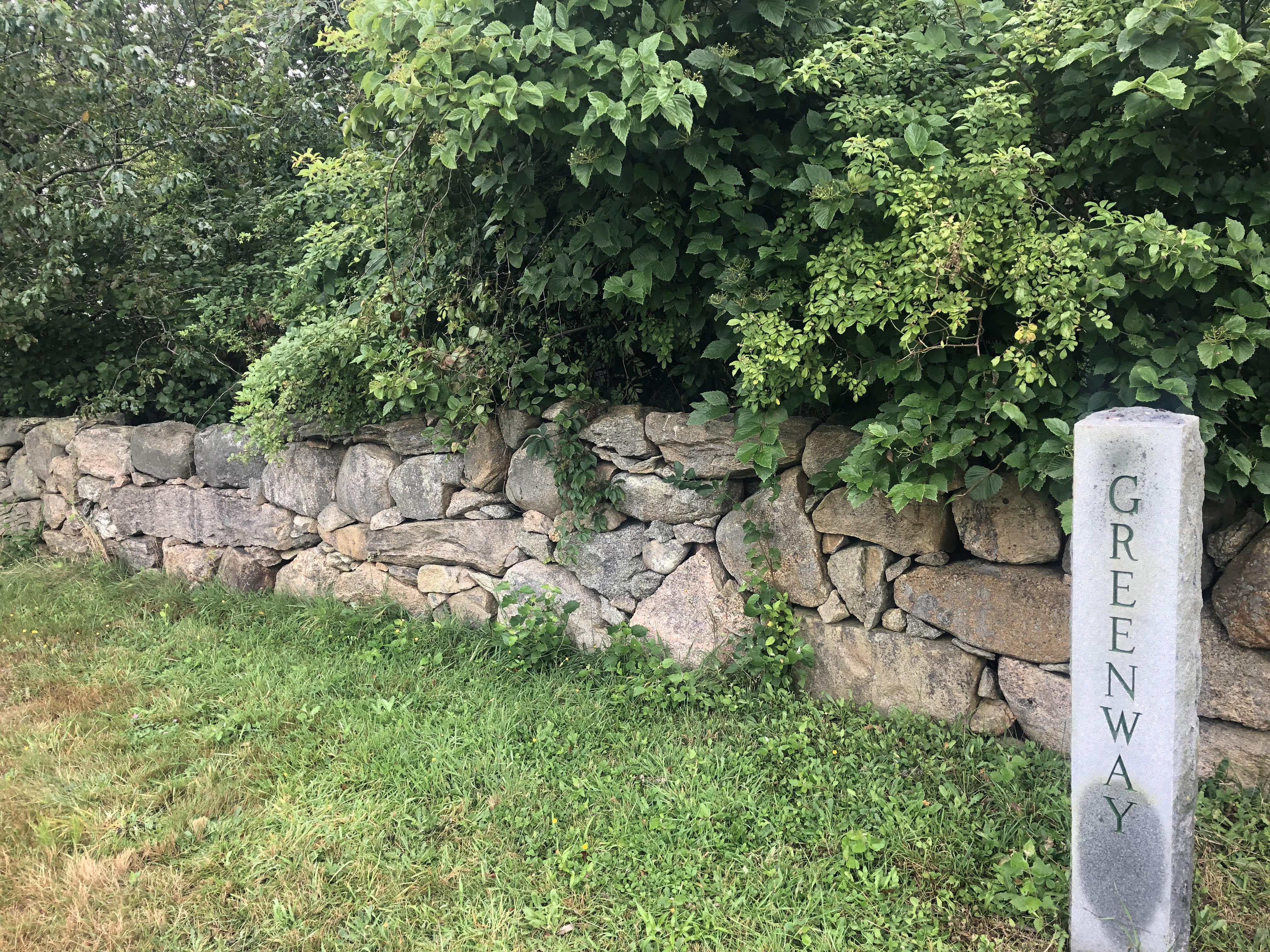
In the first photo below, we see that something has been doing a good job of pollinating the sunflowers. Maybe Monarchs? Pollinators have also been working on the Black-Eyed Susans scattered through a field along the Greenway.

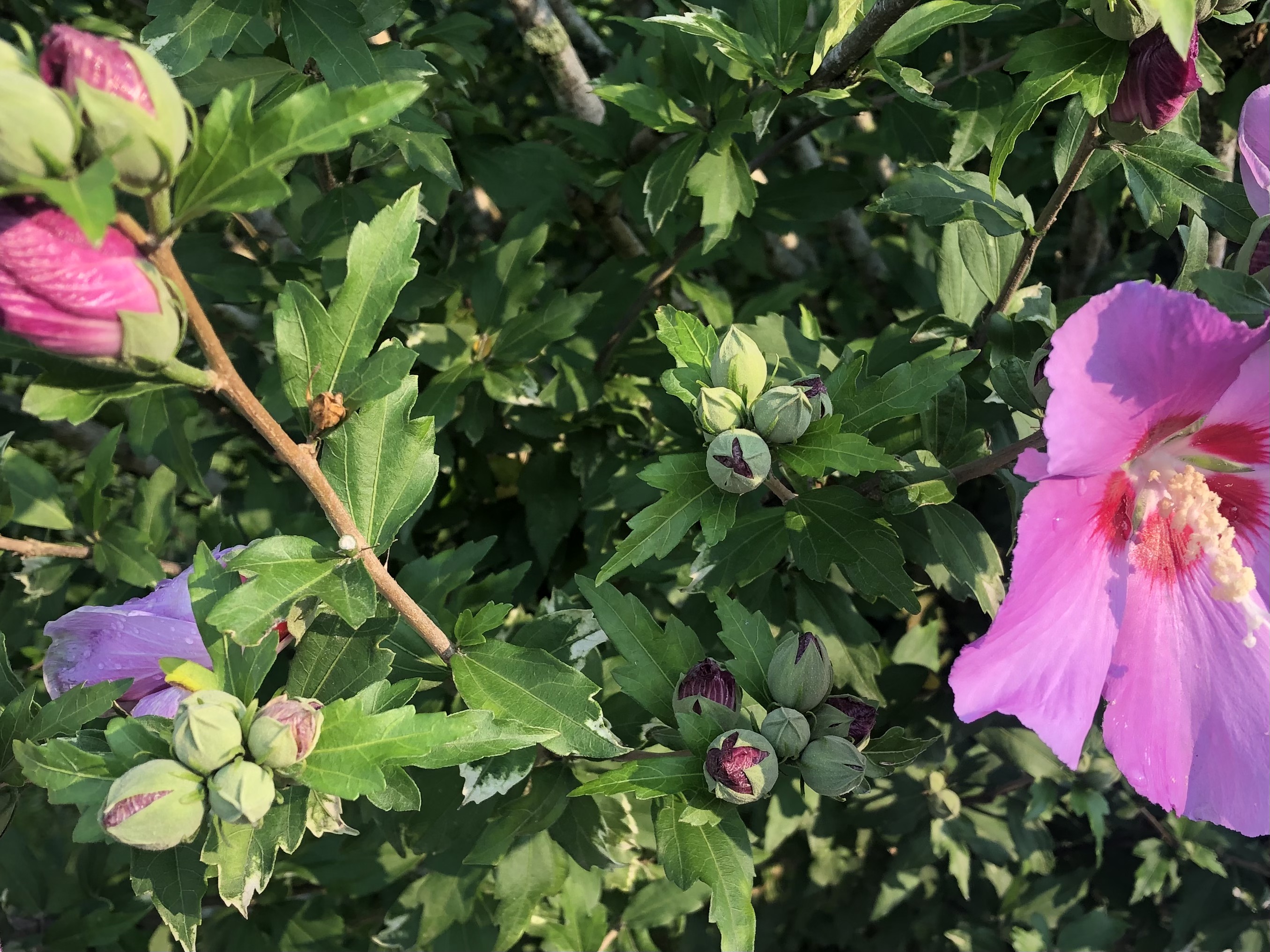
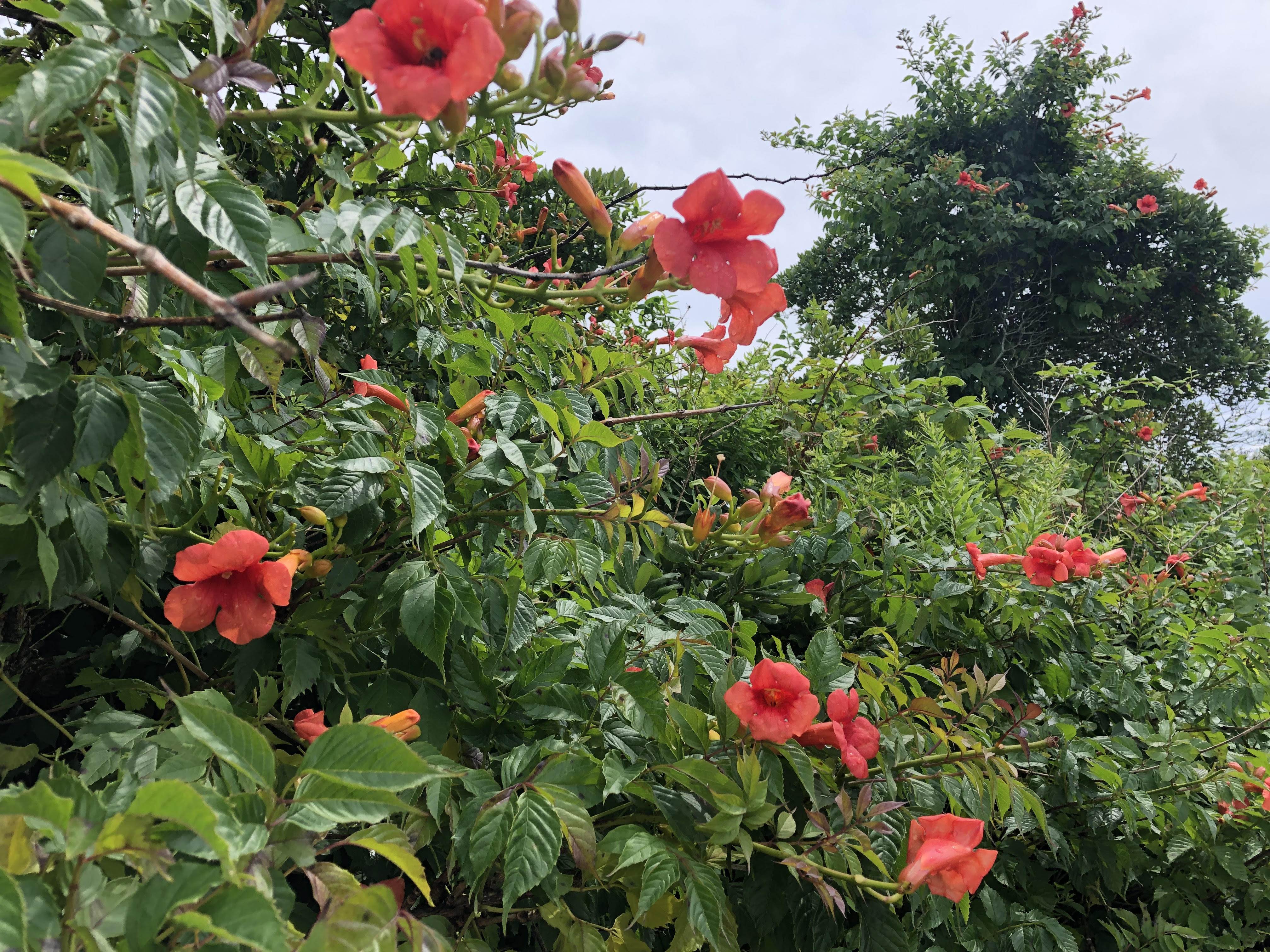
The Rose o’ Sharon and the Trumpet Vine are flourishing. So much beauty! I had to bring some of it indoors — Russian Sage and Potentilla.

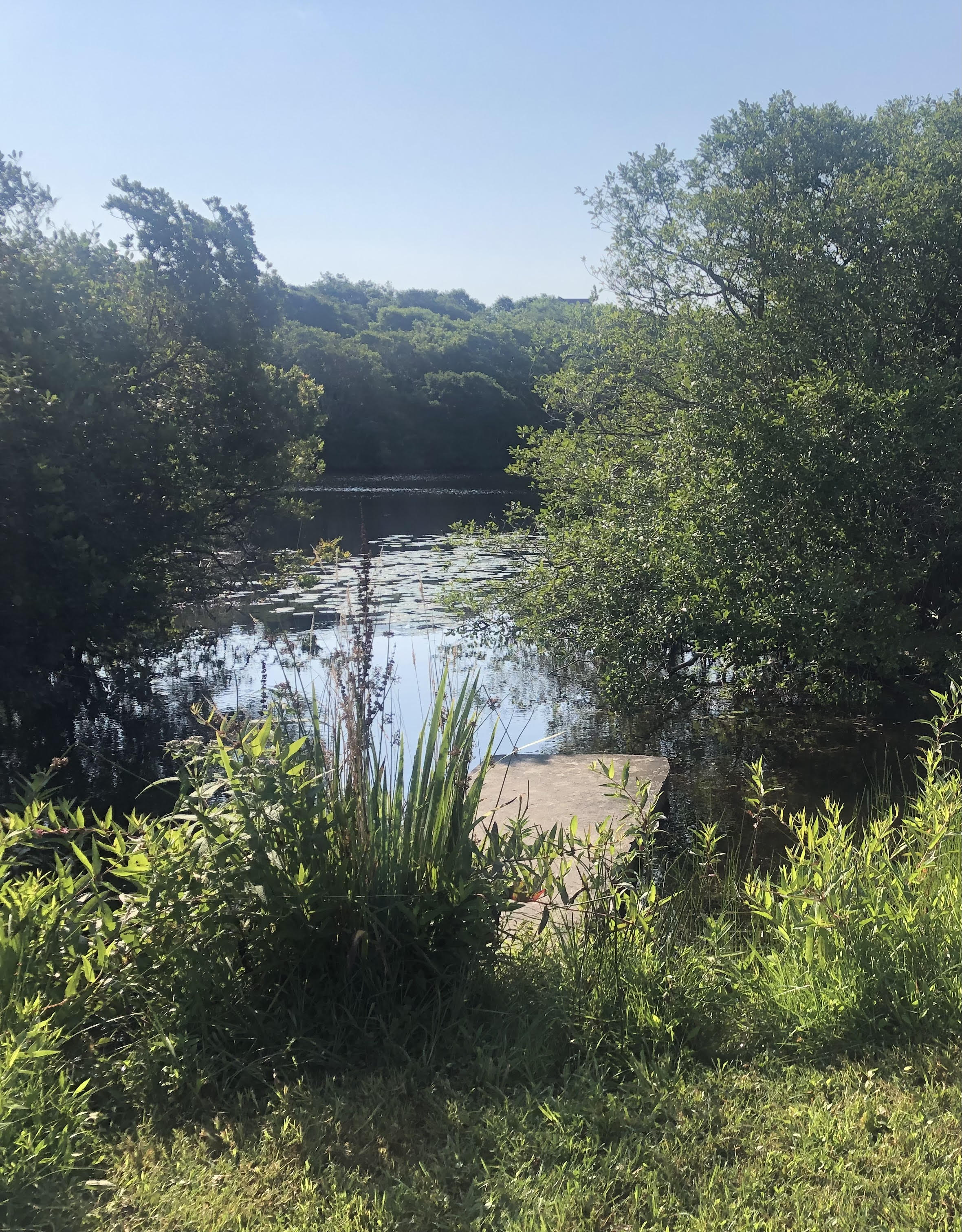
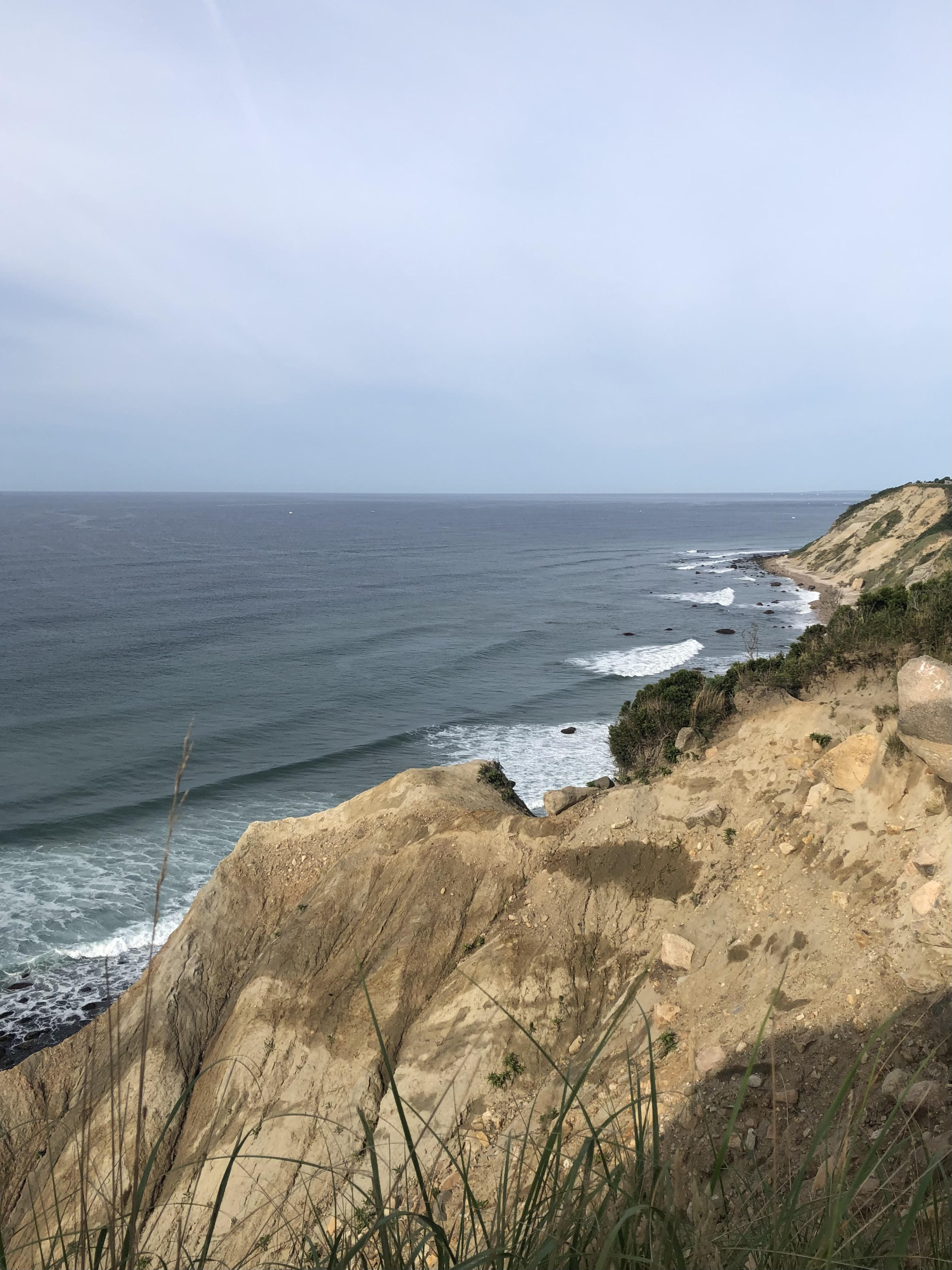
Next are views of a lily pond, Fresh Pond, and a West Side New Shoreham beach, including long shadows from artists of various ages who work with stones. There’s also a shot of the Mohegan Bluffs.

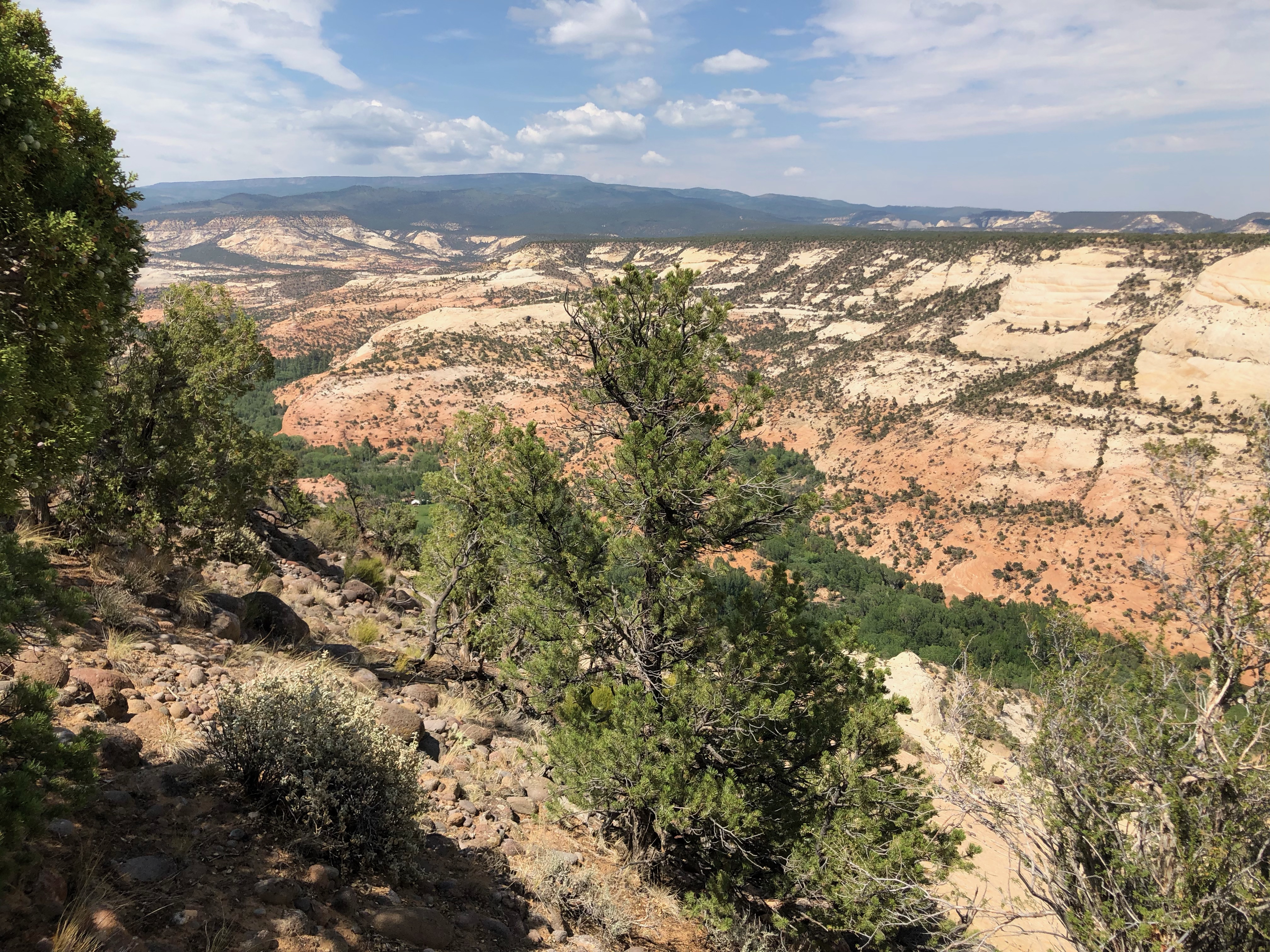
And for good measure, another glamorous nature scene, but one that Caroline H. sent from Utah.

Read Full Post »


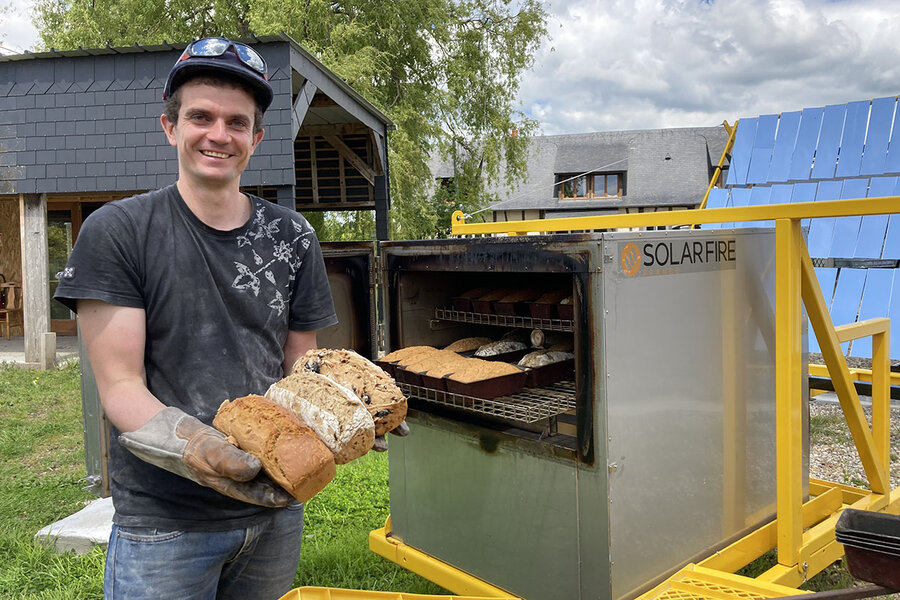
Photo: Colette Davidson.
“Arnaud Crétot holds three varieties of his organic bread, which he bakes using a solar-powered oven,” reports the Christian Science Monitor.He is the first baker in Europe to use the technique.

I was 16 when I went to France and got hooked on café au lait and baguettes. So good! Understandably, the French cherish the purity of such traditional foods, but according to this article at the Christian Science Monitor, even the French can experiment a bit around the edges.

Colette Davidson reports on Arnaud Crétot, the country’s first solar baker.

“Every Thursday, he takes a break from his small business NeoLoco, roasting local grains for snacks and aperitifs, to make bread using solar panels. For the next few hours, he will scuttle back and forth between the makeshift, cabinlike kitchen he’s built in his yard … to his wall of 57 concave mirrors.

“At 10-minute intervals, the 5-square-meter contraption needs to be manually rotated ever so slightly into position, in order for the sun to properly fire up the outdoor oven connected to it. …

“By the end of the day – if the temperamental Normandy weather cooperates – he will have produced 40 loaves of sourdough-fermented, sun-baked bread. …

“Mr. Crétot is part of a burgeoning group of ‘neo-bakers’ around France who are working to incorporate local products and ecologically friendly, ancestral methods into making bread. For some bakers, it’s a question of choosing additive-free wheat or organic ingredients. For others, it’s about method – hand kneading dough or using sourdough fermentation in the place of yeast. …

“ ‘We have to adapt, to constantly re-imagine and renew our products without abandoning traditions,’ says Patrick Rambourg, a French historian and specialist in gastronomy. ‘The French aren’t against innovation. They like new things – but based on something they know and love already.’ …

“Over time, [French bread] grew to be synonymous with French gastronomy, and this past March, France’s culture minister nominated the French baguette for UNESCO cultural heritage status. … But in recent decades, the role of bread has diminished. …

“While around 10 billion baguettes are consumed each year in France, some 20,000 bakeries have closed since the 1970s. Shoppers are more likely than in previous decades to buy their bread at the supermarket, where it’s generally made on assembly lines instead of using artisanal methods. 

“ ‘When you look at what the French are eating commonly as bread, it’s an awful product of really mediocre quality,’ says Steven Kaplan, professor emeritus at Cornell University who has written 15 books on bread, trained as a baker in 1969, and lives in southern France. ‘The everyday, white baguette is an insipid, denatured bread – tasteless, not properly fermented, and full of additives.’ 

“That’s created an opening for new techniques and ingredients for those hoping to revitalize this French staple. Among them is Paris baker Benoît Castel’s pioneering pain d’hier et de demain – ‘yesterday and tomorrow’s bread.’ It’s the culmination of a year’s worth of meticulous work to find the right combination of ingredients and method to create a sourdough-based loaf using pieces of leftover, already-baked bread. 

“At the outset, Mr. Castel set off on this baking journey to fight food waste. France wastes approximately 10 million tons of food each year, equivalent to 3% of its gas emissions. The government has passed a handful of bills in the last decade to address the problem. 

“ ‘I’m lucky to have grandparents who were farmers and it’s made me realize how much we take raw materials for granted,’ says Mr. Castel. His pain d’hier et de demain is a hearty round loaf with a crusty outer layer and airy, light body, and lasts up to five days – as opposed to one day for a typical baguette. 

“ ‘That means respecting the land as well as the hard work others put in to grow wheat, cocoa, etc. We throw away a lot of food before utilizing all the energy and resources it can offer us.’

“Local initiatives in bread-making move in the same direction as trends in France’s agriculture sector. Over 10% of French farmers work with organic products and in 2018, around 7,000 farmers registered to convert to organic farming, according to national organic agricultural agency Agence Bio. Approximately 13% of French people eat organic products everyday, according to the same agency. 

“But neo-baking remains niche, and most baking schools continue to teach primarily based on dominant techniques. Thomas Teffri-Chambelland, who founded the International Bakery School in southern France in 2005, is hoping to shake up modern-day teaching. The school focuses entirely on using organic ingredients and offers the only high school-level diploma in Europe dedicated to organic and sourdough baking. Since its launch, 80% of graduates have opened their own bakeries, and none have closed since. 

” ‘Most of our students have recently changed careers and are looking for something more concrete and meaningful,’ says Mr. Teffri-Chambelland. ‘Working with organic materials or sourdough isn’t just about being trendy. It’s raising awareness about the benefits they have for health, conservation, and the environment.’ 

“[Mr. Crétot] learned about Solar Fire – the company that developed his solar oven – as well as the solar tech nonprofit Go Sol during a trip to India in 2014. He went on to work on developmental projects across Africa with them, teaching sustainable baking. Now, every month he gives training to those looking to learn more about his technique. … [He] plans to start delivering his bread to sales points by bike to further reduce his environmental impact.”

More at the Monitor, here.
Read Full Post »

gordon-stewart
Photo: Victory Hall Opera.
Miriam Gordon-Stewart (above), artistic director of Victory Hall opera in Charlottesville, Virginia, and music director Brenda Patterson had the original idea for deaf opera.

Right before the pandemic, a cutting-edge company in Virginia put on an opera with deaf performers. The company is still going strong. Undaunted by Covid, it claims it was made for this moment and is offering a roster of outdoor performances for its 2021-2022 season.

An example of the company’s creativity was the deafness project. Thomas Floyd wrote the report for the Washington Post.

“Alek Lev understands that he’s not exactly a member of the deaf family, but he feels comfortable enough calling himself an ‘in-law.’ As a student at Wesleyan University, he took a sign-language class on a whim and subsequently dated a deaf person. Over the past two decades, the writer, director, actor and American Sign Language interpreter has largely worked in the deaf community on films and stage productions.

” ‘As someone who is fluent in sign language and has done this for such a long time, just seeing people sign onstage isn’t particularly thrilling now,’ Lev says. ‘It needs to be thrilling for some other reason.’

“One such reason arose in 2018, when Miriam Gordon-Stewart and Brenda Patterson of the boundary-pushing Victory Hall Opera in Charlottesville pitched Lev on a production of Francis Poulenc’s 1957 opera Dialogues of the Carmelites, but with deaf performers.

“The concept came about after Gordon-Stewart, Victory Hall’s artistic director, and Patterson, the music director, read Andrew Solomon’s 2012 nonfiction book Far From the Tree, about how families accommodate children with disabilities. The book mentioned ASL’s roots in French Sign Language, dating to the deaf community of 18th-century Paris. They then drew parallels to Dialogues of the Carmelites, which follows a convent of Carmelite nuns pressured to renounce their vocation during the French Revolution.

” ‘Within the deaf community, there are a lot of similar issues that come up,’ Gordon-Stewart says. ‘There’s a pressure to assimilate with hearing culture, for example, which is intensely political. These things worked together for us into the idea of a production of Dialogues of the Carmelites that would be set in a deaf convent.’

“Victory Hall Opera [took] a step toward making the production a reality with a workshop Feb. 27 [in 2020, featuring] three sopranos singing alongside three deaf actors. …

” ‘There’s something about the challenge of figuring out how to do this and why to do this each time that is just more exciting to me than putting on yet another version of a play that’s been put on several times. … I like that we have a whole new problem now. We have sign language. We have deaf actors. We have hearing actors who don’t know sign language. I love the puzzle.’

“ ‘I’ve done a lot of workshops and productions that include hearing and Deaf actors, but the fascinating thing about those experiences is that it’s never the same,’ [Sandra Mae Frank, who in 2015 played the lead role of Wendla in Deaf West Theatre’s Tony-nominated revival of Spring Awakening on Broadway] writes in an email. …

“Most of the roles in that Spring Awakening production were doubled by a deaf actor, who used sign language, and a hearing actor, who simultaneously performed the vocals. Although that has become a common template for deaf theater, the [Victory Hall] team wants its performers to complement one another in an artistically innovative way. … The deaf actors act out the plot while the singers serve as spiritual guides, representing women who have endured similar oppression.

” ‘If we’re going to create an art form out of this, then we need to push the concept one step further than it’s been pushed before,’ Gordon-Stewart says. ‘There’s a potential for the result being a marriage between two art forms, rather than just the two art forms being simultaneously performed. You bring a potentially heightened physicality to both ends of that equation, making it a more visually compelling art form for the deaf performance, and making it a more heightened experience for the hearing audience.’ ”

More at the Washington Post, here.
Read Full Post »

Image: Revery Architecture/Westbank/Squamish First Nation.
2021 artistic rendering of Senakw. The Squamish First Nation has set a goal of housing every member within a generation.

Just before the pandemic, I read at the Guardian about an indigenous-led development for Vancouver, Canada. And yes, it’s still going forward. The market-rate aspect of the development is supposed to fund the parts that benefit the First Nation providing the land. I found a more recent story from the Daily Hive.

Kenneth Chan reports, “By the end of this year, site preparation for construction could begin on the Senakw development. … Squamish First Nation members overwhelmingly voted to approve the massive development on their 12-acre Kitsilano reserve in late 2019. Thus allowing band leaders to seal the partnership with local developer Westbank and continue their work with refining the design concept.

“In an interview with Daily Hive Urbanized, Khelsilem, a spokesperson and councillor of the First Nation, said the heights of several buildings have been increased, including the tallest tower, now up from 56 storeys to 59 storeys at 172 metres (564 ft). … The first of four construction phases will target the westernmost parcel of the reserve — a narrow strip of land between the bridge and Vanier Park. …

“He said, ‘Some of the motifs of the building have been refined to incorporate Squamish culture and identity, and there is starting to be a bit more imagining of where the public gathering spaces will be.’

“The ground plain commercial space component of the project has changed too, with open public courtyards sunken into the landscape, activated by retail, restaurants, cafes, and potentially grocery stores and fitness centres.

“It also takes advantage of the space under the Burrard Street Bridge, using the structure as a cover for an ‘outdoor restaurant,’ gathering areas, a playground, and basketball courts.

“The residential component of the project still carries a total of 6,000 units, possibly enough to house as many as 9,000 people. …

“The housing tenure composition has not been finalized, but Khelsilem maintains purpose-built market rental housing will likely account for at least 70% of the homes. The below-market rental housing component dedicated to Squamish members has grown slightly to roughly 300 units. …

“The First Nation has set a goal of housing every member within a generation, defined as in 25 years. More than half of its 4,000 members live on reserve, and over 1,000 are on the housing waitlist, with the most recent housing allocations offered to members who have been waiting for over three decades.

“Senakw’s non-market housing component for members will help achieve some of this broader goal directly. The real win is that the revenue generated by the market housing will provide the First Nation with the capacity to pursue greater self-determination. It will greatly enhance their ability to provide current members and future generations with more services, such as eldercare, education, and language and culture support. It would also help fund more member housing initiatives beyond this reserve. …

“Khelsilem adds many members have also expressed excitement about the trades training and employment opportunities that will be offered by the construction project.

“ ‘It is important for the public to understand that this is an economic development venture, it is not an affordable housing project. It is an economic development venture so that we can generate significant amounts of revenue to be invested into our community because we’ve been without the means to do it otherwise,’ said Khelsilem. …

“The infusion of thousands of market rental homes at Senakw will serve to improve overall housing affordability in Metro Vancouver by filling some of the demand from moderate-income households.

“ ‘The reality is new market rental housing is affordable for middle class workers and families in Vancouver, and that’s who this housing will be for,’ he said, adding that strong demand for rental housing has persisted even under COVID-19 conditions.”

More at the Daily Hive, here.

Read Full Post »

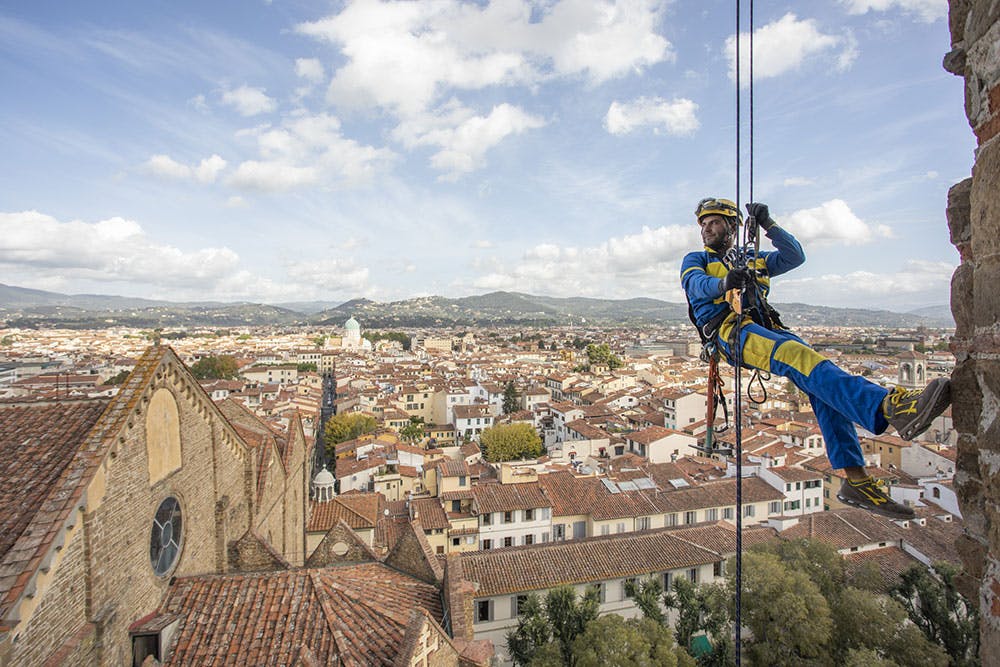
Photo: EdiliziAcrobatica.
A construction worker has a great view from Santa Croce in Florence.

So many different kinds of jobs in the world! Today’s story is about construction workers with specialized talents that might just as easily have gotten them hired by the circus.

Rebecca Ann Hughes has the story at Apollo. “Beneath the celestial vistas of Parma Cathedral’s frescoed dome, two men swing like trapeze artists from ropes crisscrossing under the roof as though in a circus tent. They seem to be attempting to join the swirling vortex of angelic limbs in Correggio’s scene of the Virgin’s Assumption above them. But they are actually members of EdiliziAcrobatica, an Italian construction company specializing in rope access building interventions. On this occasion, the company has been drafted in to repair a bell in the cathedral.

“EdiliziAcrobatica’s team has rock-climbed up and abseiled down some of Italy’s most significant historic monuments. The company has worked on the Ponte Vecchio in Florence, Siena Cathedral, and the Roman Forum, to name a few. It has also intervened in banks, apartment blocks and various other public and private buildings. Suspended from ropes, the acrobatic technicians can perform a whole range of tasks, from the waterproofing of roofing to welding – all the necessary tools in bags and buckets attached to their harnesses. To watch the team at work is a breathtaking and nail-biting experience. From street level, they are minute figures poised on the roof of Parma’s dome to replace copper panels damaged by rain or casually dangling above the waters of the Arno to repair a leaking fountain on the Ponte Vecchio. …

“The building company didn’t choose to specialize in these acrobatic techniques just for the spectacle. Rope access, a construction work-at-height technique that started to become popular in the 1980s, comes with a multitude of advantages over traditional scaffolding, as Riccardo Iovino – who founded EdiliziAcrobatica in 1994 – explains via email.

“At the forefront is safety. Workers are attached by two ropes, one for safety, and ropes can also relay equipment. Although founder Iovino was, as a skipper, at home shimmying up and down rigging – and was thus inspired to adopt the technique professionally – EdiliziAcrobatica’s workers are not expected to have a mountaineering or caving background. The company assists the construction workers – who are overseen by specialist surveyors – with training and obtaining the required permit for rope access work. Thus, suspended from the side of a building, EdiliziAcrobatica’s technicians can carry out restoration work, paint walls, clean windows, replace gutters and repair unsafe elements of a building in total safety.

“That’s not to say that these strict safety procedures dampen the thrill of the work. Enzo Spitale, who began as an acrobatic builder and now acts as coordinator overseeing the team in Italy, returned from his interview 10 years ago thinking it was all completely mad. But he now says his employment at EdiliziAcrobatica was a life-changing opportunity. Dangling from a Renaissance dome or a medieval bridge, ‘you feel one step away from the sky,’ Spitale says. ‘It is unique and unimaginable for those with their feet on the ground.’

“This aspect of the job comes with its own risks. ‘It is always important, as I remind the new company recruits, never to lose concentration at work,’ says Spitale. ‘We are suspended from ropes several metres off the ground, we have to pay attention to what we are doing and not get distracted by the clouds!’ “

More at Apollo, here.

Read Full Post »

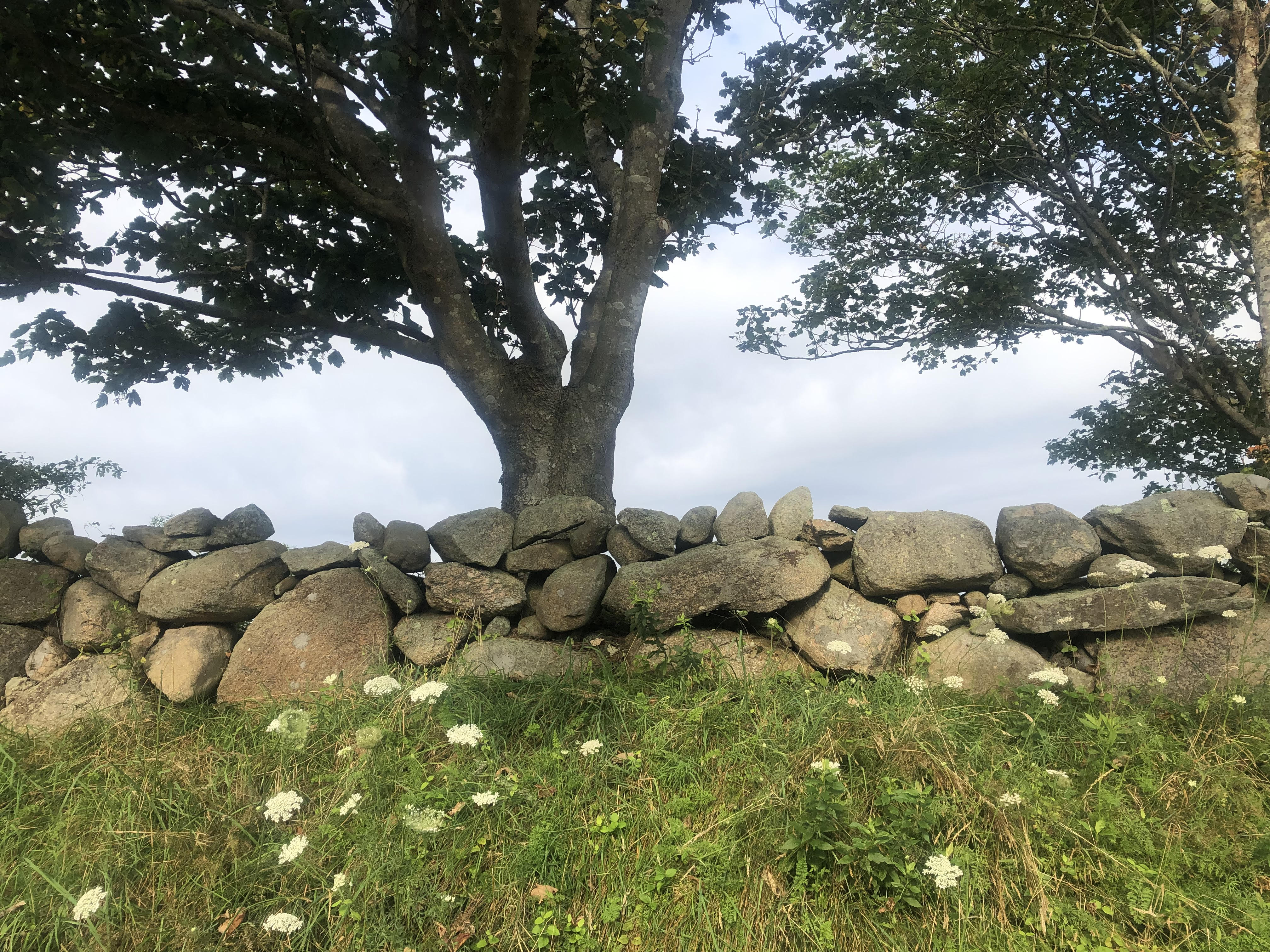
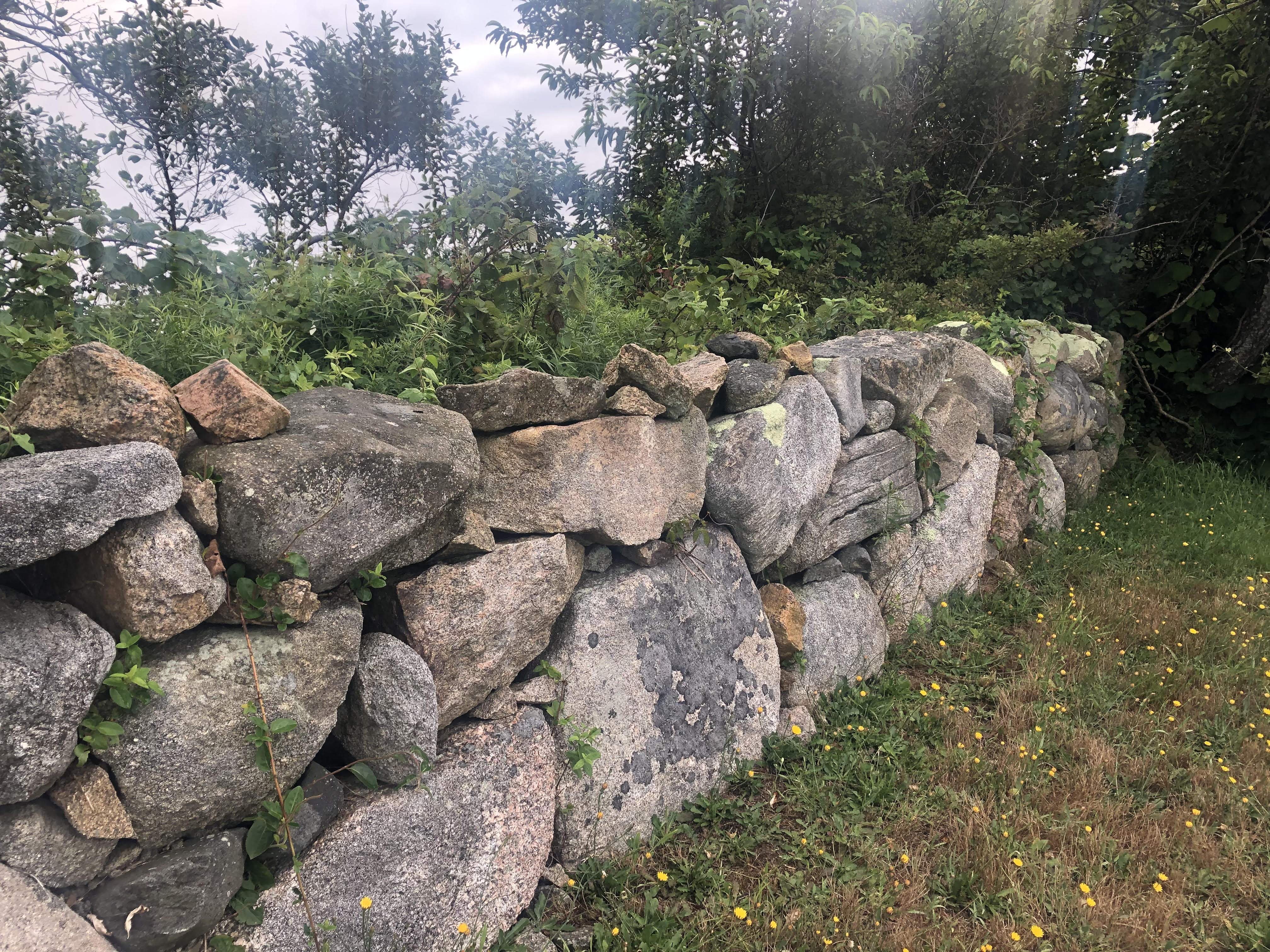
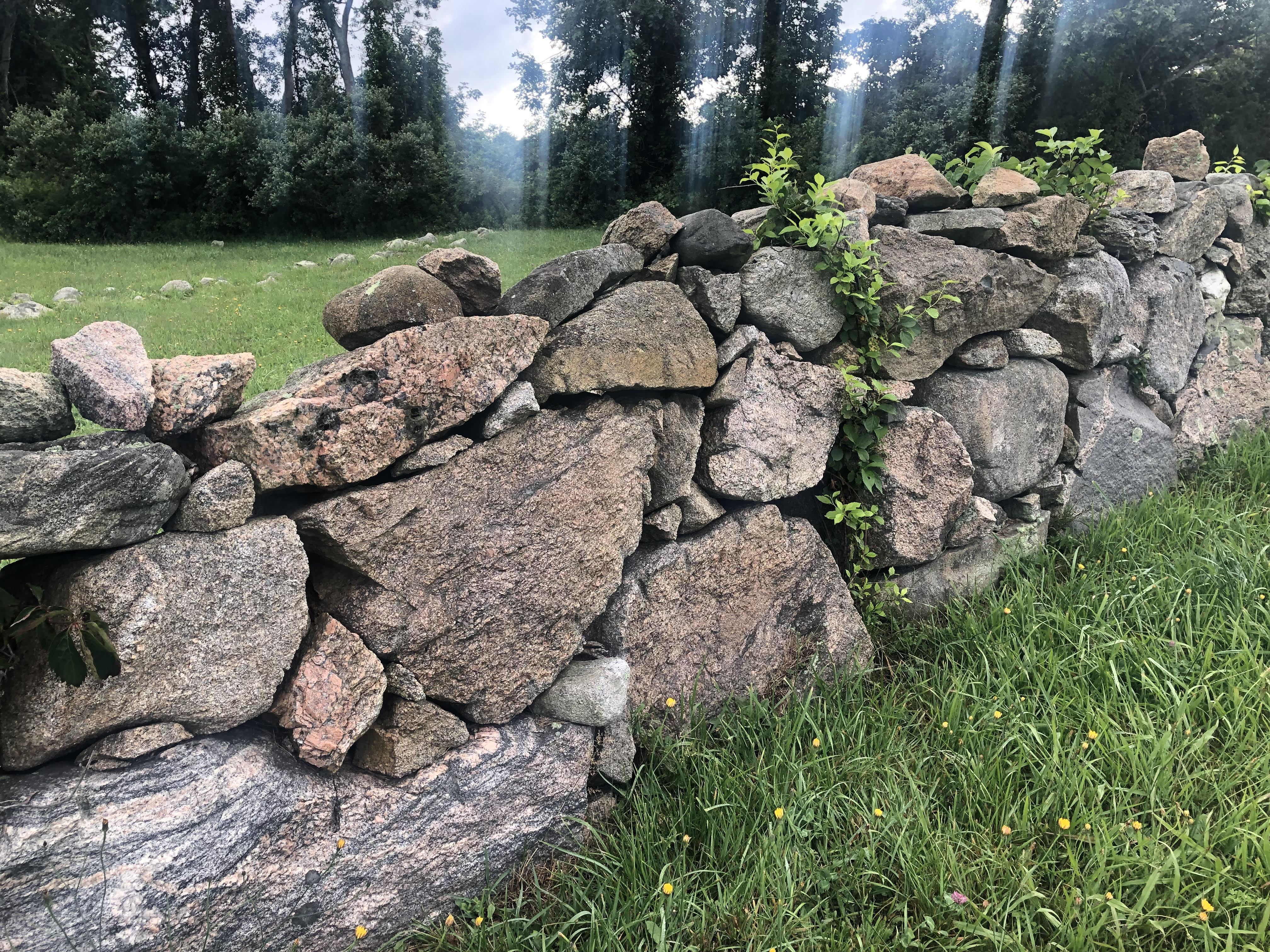
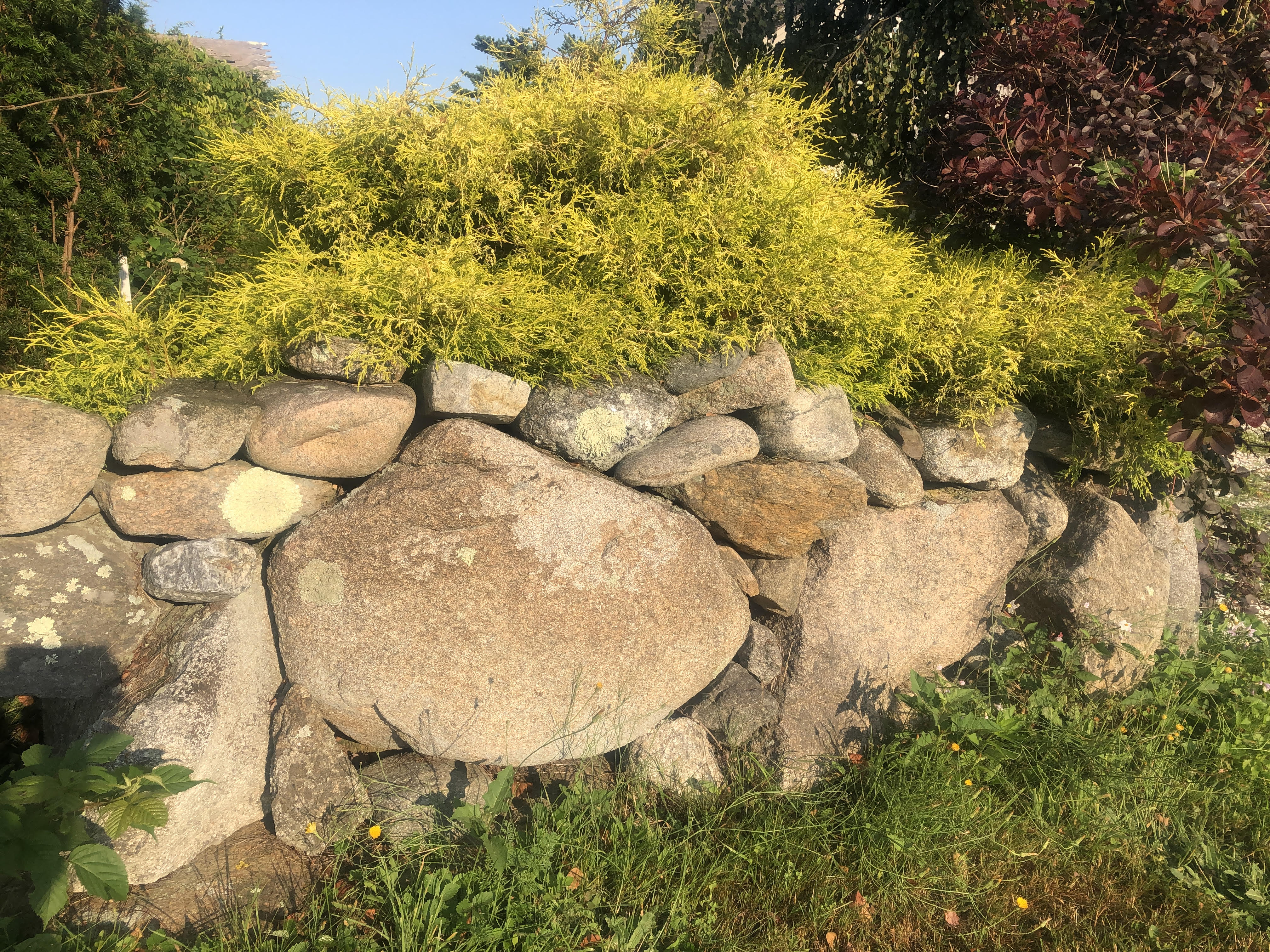
Photo: Suzanne’s Mom.

Something there is that doesn’t love a wall,
“That sends the frozen-ground-swell under it,
“And spills the upper boulders in the sun;
“And makes gaps even two can pass abreast. …”

I was going to make some pompous observations about old-time walls meant to clarify property lines, not keep people out or prevent neighborly conversations. But then I read a merciless spoof of bloggers trying to be profound. So I decided just to show you how cleverly these old dry walls were built to last, smaller stones tucked into gaps to keep higher ones balanced.

The spoof was in a strange, delightful novel called Winter, by Ali Smith. And although I bristled at the unproofread mess of her fake blog post, I recognized the temptation to invent or reinterpret something from childhood because … who will know the difference?

But I must stay honest, like the old, sturdy dry walls. They were not the kind that blow over in a high wind as the one in this 2020 story: “A portion of [the] border wall blew over from gusty winds Wednesday, falling on the Mexican side of the border.

“The newly installed panels were a part of an ongoing project to improve existing parts of the wall in Calexico, California. Agent Carlos Pitones of the Customs and Border Protection in El Centro, California, told CNN that the new concrete foundation had not yet cured when the wall panels fell down amid windy conditions.”

Read Full Post »

Photo: Larry D. Moore/ Wikimedia Commons.
Prof. Gretchen Daily of Stanford writes about “natural capital” and argues that nature preserves are not enough: conservation awareness needs to be part of all development decisions.

Needless to say, we shouldn’t have to put a monetary value on nature to save it, but then again, we shouldn’t have to offer a million-dollar lottery to the unvaccinated to do the right thing.

For those who need capitalistic arguments about the obvious good of our natural world, there’s a professor who can provide the data.

Gretchen Daily, says Tik Root at the Washington Post, “is a pioneer in the field known as ‘natural capital.’ Using science and software, she shows stakeholders why it benefits everyone to prioritize conservation.

“Colombia’s Gulf of Morrosquillo is home to thousands of mangroves. Their roots arc downward into salty seawater while their limbs climb upward — a mesmerizing entanglement of branches and leaves.

“But the mangroves must compete with hotels, resorts and other financial ventures in the tourist-dependent area, which spans 325 miles of Caribbean coastline. One study found that between 1960 and 2011, the mangrove population in Colombia dropped by more than half, largely due to human activities such as development or trash dumping.

“The burgeoning tourist destination of Rincón del Mar, for instance, is one of many towns along the gulf that was built on land cleared of the trees. And because there is no central garbage collection system, people’s wrappers, bottles, bags and other refuse often end up in the mangroves that still stand.

“In early 2020, the government signed a five-year, $300 million pact to promote tourism in the gulf area, where approximately 350,000 Colombians live. It called for, among other initiatives, building hotels, a hospital and aqueducts to alleviate a dearth of drinking water that threatens the growth of the tourism sector. But the plan could also put even more pressure on the mangroves, as well as the sea grasses, coral reefs and fisheries offshore.

“For Gretchen Daily, threats like these are also moments of opportunity.

‘Nature is often just seen as kind of in the way of prosperity,’ she said. ‘What we’re saying is that nature is crucial to prosperity.’

“Daily is a professor of biology at Stanford University and a pioneer in a field known as ‘natural capital.’ The term refers to the soil, air, water and other assets that nature has to offer. As a conservation model, it is rooted in the idea that nature has a measurable value to humans and that protection efforts must go far beyond walled-off reserves and be broadly integrated into development practice and planning. …

“By the time Daily and her team had identified the potential for impact in the Gulf of Morrosquillo, the coronavirus pandemic had confined the 56-year old to her home in Stanford, Calif. Zoom — which is decidedly not her natural habitat — became the norm.

“But within a matter of months, the Natural Capital Project put together a report for the Colombian government detailing that more than a third, or 118 miles, of the coastline had high exposure to flooding and coastal erosion. Protecting and restoring mangroves, the authors said, could help with that issue — especially along two specific stretches of the coast, including Rincón, where local activists say they’ve removed many tons of trash.

“Mangroves, the report highlighted, also nurture robust fisheries for local communities and sequester carbon at a rate two to four times greater than tropical rainforests. Left in their current state, the Morrosquillo mangroves will store 62 million tons of carbon by 2030 — the equivalent of taking 12 million cars off the road for a year — which could help the country toward its commitments under the Paris climate accord.

“ ‘Until now we didn’t have the specific information in a simple way to show the importance of maintaining the mangroves,’ said Santiago Aparicio, director of environment and sustainable development for the Colombian department of national planning. He added, ‘you don’t protect what you don’t value.’

“The next step, he said, is to take the information to mayors and local officials to incorporate that value into their development plans. [One] ‘ideal situation’ would be using mangroves instead of cement walls as barriers against rising sea levels fueled by climate change.

“For Daily, the work in Colombia has met all three of the criteria she uses when deciding whether to pursue a project: There must be a policy window that allows change; partners on the ground must be committed to that change; and the change must be scalable. …

“Daily’s own scientific curiosity dates back to middle school — or rather, she says, to her walks on the way to school.

“In 1977, Daily and her family lived in Kalbach, West Germany, where her father was stationed in the military. Then a 12-year-old, Daily and her sister would walk about a kilometer to class. It wasn’t far. But the route passed a coal plant.

“ ‘You could taste the acid on the tongue,’ she said of the pollution. The smell of coal permeated the air. ‘That turned me on to science.’ …

“ ‘Reserves are too small, too few and too isolated to sustain enough nature,’ she explained. ‘We have to be able to integrate nature into our normal lives.’ …

“ ‘Gretchen has really been the forerunner in clarifying the natural capital movement,’ said Carl Folke, director of the Beijer Institute of Ecological Economics at the Royal Swedish Academy of Sciences. He said one major catalyst came in late 1997, when Daily edited the book Nature’s Services: Societal Dependence on Natural Ecosystems — recently referred to as ‘one of the most influential books published on the environment in the past 30 years.’ Read more at the Washington Post, here.
By the way, Francesca Forrest has a delightful fictional take on the mangroves-versus-hotels issue in her novella Lagoonfire, which features an imagined world that is both uncomfortably and amusingly familiar.

Read Full Post »

Photo: Cool Hunting.
Brooklyn bar owner Henry Rich, pictured in 2019 with co-owner Halley Chambers, says, “You start with the commitment to remove the trash. That creates quite a bit of clarity in terms of what we can and can’t, should and shouldn’t do.”

One of the challenges of blogging since the pandemic started has been trying to figure out if the stories I was saving are still relevant. For example, was the New York wine bar that was aiming to create zero waste in January 2020 even still in business and was there any point in reporting on its laudable goal?

Well, hooray! Google informs me that Rhodora is still in business, and I think you’ll appreciate the banner at the top of its home page that may be a reason it has remained in business. It reads, “Hello! Due to the rise in Delta variant Covid cases we are requiring proof of vaccination for guests dining indoors. Thank you for helping keep our doors open + our community safe!”

As Matthew Sedacca wrote in the New York Times in a time of innocence, New Year’s Day 2020, “Garbage is inevitable in the restaurant and bar business. Kitchen employees toss onion skins and meat fat into the wastebasket almost instinctively. Once-used plastic wrap and slips guarding the linens find their way into black bags for trash-day pickup. Plastic bags are ordered by the bundle and then often discarded after customers use them to take leftovers home.

“At the Brooklyn natural wine bar and restaurant Rhodora, however, taking out the trash works a little differently.

“The new eatery is one of a handful of establishments in various cities that have begun to operate under a zero-waste ethos, meaning they do not send any trash or food waste that enters their business to a landfill. There is not even a traditional trash can on the premises. …

“Such radical idealism comes with challenges, including finding producers and distributors who can accommodate requests like compostable packaging and figuring out how to recycle broken appliances. …

A recent report from ReFED, a nonprofit organization focused on food waste reduction, found that restaurants in the United States generate about 11.4 million tons of food waste annually, or $25.1 billion in costs. The Environmental Protection Agency has reported that food waste and packaging account for nearly 45 percent of the materials sent to landfills in the United States. …

“Mr. Rich and Halley Chambers, the deputy director of his Oberon restaurant group and co-owner of Rhodora, spent almost 10 months and $50,000 researching and transforming their Fort Greene space into a neighborhood joint that could operate without any trash pickup.

“Out went many of their regular vendors who wrapped deliveries in single-use plastic. In came tools to aid their waste-reduction efforts: a cardboard shredder to turn wine boxes into composting material, a dishwashing setup that converts salt into soap, beeswax wrap in lieu of plastic wrap.

“ ‘It’s not arcane secret knowledge,’ Mr. Rich said. ‘It’s just a couple things that are very specific, and you need to kind of re-engineer how you think about’ operating a restaurant or bar.

“Much of the planning time was spent searching for distributors and producers who could adhere to Rhodora’s mission. … A handful of companies were able to accommodate the unorthodox restrictions, including She Wolf Bakery and its sister butcher shop, Marlow & Daughters, which deliver reusable plastic bins full of fresh-baked breads and jars of pickled vegetables and eggs via Cargo Bike Collective riders. Another company, A Priori Distribution, switched to using compostable packaging and paper tape when dropping off aluminum tins of fish. …

“The paper menus, which feature a mini-essay on the restaurant’s green mission, are fed to the compost pile when they become outdated or tattered. Anything left on customers’ plates is dumped into collection bins in the kitchen, which are fed into the commercial-grade composter tucked inside hutches adjacent to the bar. (Rhodora does not serve meat, which is more difficult to compost, although its composter does process any fish that is left over.)

“Natural wine bottles and most other non-compostable containers are removed for recycling via Royal Waste Services, which the restaurant said also accepted broken glass. Corks are donated to ReCork, a recycling program that repurposes the material for shoe soles and yoga blocks.” More at the New York Times, here.
I wonder if not being able to compost meat is another reason to give it up. Our extended family composts, but there are always discussions (arguments?) about what to do with leftover meat before the trash man cometh. My husband and I double-bag ours and freeze it, but others think it’s gross to keep any garbage in the freezer.

Read Full Post »

Photo: Chelsey Geralda Armstrong.
An aerial shot of the Sts’ailes forest garden. These forests demonstrate the way that First Nations people in the Pacific Northwest have actively managed natural ecosystems to increase the accessibility of preferred food near their homes.

Today’s story is about how indigenous people in Canada have created “forest gardens” to be able to harvest the traditional food the tribes value.
From the radio show Living on Earth:

“BOBBY BASCOMB: British Columbia is home to lush forests that cover almost two-thirds of the Canadian province. And for some ten thousand years, First Nations peoples made the forests their home. The trees provided much of what the people needed to survive and thrive. After asking permission of towering cedars, Coast Salish and other peoples would harvest bark for weaving and wood to carve canoes and totem poles. But they also carved out special gardens in the forest to grow food and medicinal plants. And new research shows that these forest gardens are still home to abundant biodiversity. …
“DR. CHELSEY GERALDA ARMSTRONG: We live in the Pacific Northwest where you have very contiguous conifer dominant forests … cedar and spruce and hemlock and firs. [But the forest gardens are] broadleaf forests, which are very rare here … maple and birch and then sub canopies of hazelnut and crabapple, all deciduous species. One of the big things that kind of sticks out when you’re in these places is at the right time of year, it’s just like a fruit paradise. There’s so many fruits going, kind of around late August, early September. It is an edible forest without question, and also a lot of medicinal species as well in that understory, things like wild ginger. …

“BASCOMB: And these were gardens cultivated by the Indigenous people that lived there, how did they create them? It sounds like they must have had to travel quite far to bring these different species together in one spot. …

“ARMSTRONG: We don’t know exactly how they were started, or when, how old they are, although we are getting closer to some dates. … Hazelnut, for example, [is] a native species to British Columbia, but it’s found far outside its range in certain forest gardens. But also, people were managing for succession. These types of forest management practices are basically utilizing and capitalizing on natural ecosystem processes. So things like wild raspberries, black huckleberries, Alaska blueberry, oval-leaf blueberry, all these kinds of plants that grow in forest gardens are locally available. And so it’s just about letting those things come back, keeping the competitors out, and then enhancing them with new species. …

“ARMSTRONG: Comparing forest gardens with the surrounding conifer forests, or what we refer to as peripheral forest, it was very clear that overall, forest gardens [were] a lot more biodiverse. … So you can imagine that, in fact, the edge between these two ecosystems are incredibly productive areas.

“BASCOMB: Well, that totally makes sense. I mean, you would expect more biodiversity in an area with, say, maybe a field, next to a forest, with a river running through it. If you have several different ecosystems all in one spot. ….

“ARMSTRONG: We found that forest gardens have a higher frequency of animal-dispersed and animal-pollinated species. So what this means is that forest gardens are the result of animal movement. And of course, humans are included in that category. But on top of that, what this suggests is that after humans left these gardens and villages, in some cases a couple hundred years ago, forest gardens began providing really unique habitat for animals and pollinators seeking food. So what we see here is an example of human land use that actually provides and increases functions across the landscape, rather than depleting it. …

“BASCOMB: Can you tell me about the First Nations people that lived in this area and created these gardens? …

“ARMSTRONG: I worked with two communities, Kitsumkalum, and Kitselas. And, you know, the archaeological record of people living in this area is very, very rich. People have been here for, you know, 10,000 plus years. And for Kitselas, we know that [families] have been in the same canyon area for at least 7,000 years. [But] people were forcibly removed from their communities. A lot of times they moved to the coast to work in canneries, which were, you know, kind of slave-like conditions for people. But they returned, a lot of them, to their communities in the ’50s and ’60s. …

“There are elders in Kitselas that always say, ‘Old villages are really good places to hunt,’ … But basically, these places have not been maintained for, you know, 200 years. … A huge part of our research is actually employing different management strategies, clearing the forest garden areas and getting them back to a place where they can be producing lots of food for people locally.

“BASCOMB: And what did you learn about these forest gardens from the First Nation elders that you spoke with? …

“ARMSTRONG: The elders had pointed me in [the direction of hazelnuts, which I was studying], saying, well, it’s not just hazelnut. [It’s] Pacific crabapple, it’s Saskatoon berries, it’s soapberries. And so, you know, they’re the ones that were leading a lot of this inquiry. And of course, we know from them all the different ethno-botanical uses of plants. … A lot of our research is kind of being led by them and the questions that they have about these places that we can answer.

“BASCOMB: Chelsey Armstrong directs the Historical and Ethnoecological Research, or HER, Lab at Simon Fraser University.”

More at Living on Earth, here.

Read Full Post »

« Newer Posts - Older Posts »