Feeds:
Posts
Comments

Archive for the ‘Uncategorized’ Category

Photo: Fine Art Images/Heritage Images/Getty Images.
Relief depicting two scribes from Saqqara, Old Kingdom, 5th Dynasty, in the collection of the Egyptian Museum, Cairo.

I went for a massage the other day, and the masseuse noted that the muscles in my shoulders and neck were really tight. “Have you been working at the computer a lot?” she asked.

Writing on computers is the usual culprit these days, but back in Ancient Egypt, research suggests, writing on papyrus did even more damage.

Adnan Qiblawi wrote at ArtNet, “According to a new study published in Scientific Reports, scribes were suffering with similar issues back in the days of the pyramids.

“A team of archaeologists examined dozens of adult males’ skeletons from the necropolis at Abusir, Egypt, which was used between 2700 and 2180 B.C.E. Written evidence indicates that 30 of the studied males lived as scribes. These high ranking dignitaries enjoyed privileged lives with an elevated social status thanks to their literacy, at a time when only one percent of ancient Egypt could read and write.

“Records indicate that influential families sent their sons to the royal court for education and training. Eventually, they became scribes who served a similar societal role to contemporary government workers. 

“ ‘These people belonged to the elite of the time and formed the backbone of the state administration,’ explained Veronika Dulíková, an Egyptologist and member of the archaeology team. ‘Literate people worked in important government offices such as the treasury (today’s Ministry of Finance), the granary (today’s Ministry of Agriculture). They also played an important role in the collection of taxes.’ …

“While Egyptian scribes’ lives have been studied in detail, their archaeological remains have never before been examined for anomalies. The study’s lead author, Petra Brukner Havelková, is an anthropologist at the National Museum in Prague who has specialized in identifying activity-induced bone markers for nearly two decades.

“When comparing the remains of scribes to non-scribes, the former were found to suffer from osteoarthritis, a breakdown of the joint tissue. The condition was found in joints connecting the lower jaw to the skull, the right collarbone, the upper right arm bone connected to the shoulder, the bottom of the thigh, right thumb bones, and throughout the spine. 

“Just as modern-day government workers suffer neck and spinal injuries from sitting at desks and arching forward to stare at screens, ancient Egyptian scribes endured comparable physical stresses from hunching over papyrus for prolonged sessions.

It is theorized that scribes often squatted on their right legs, which may explain why significant damage was found on the skeleton’s right sides, with particular degeneration in their right knees.

“Historical sculptures, such as The Seated Scribe, corroborate that scribes frequently knelt or sat cross-legged while writing. They recorded their notes on sheets of papyrus, pottery notepads called ostraca, or wooden boards. Scribes generally wrote in hieratic cursive, a simpler script more practical for everyday note-taking, rather than using the elaborate hieroglyphs carved on monuments by specialists.

“Researchers were most surprised to discover damage in the scribes’ jaws, which is explained as a consequence of chewing on rush stems to make brush-like heads. They used these rush pens, and later reed pens, to write their notes, pinching the utensils between the index and thumb fingers of their right hands.

“Looking to the future, the study’s scientists are seeking to collaborate with other research groups to analyze scribes’ remains across other ancient Egyptian cemeteries.”

More at Artnet, here. No word yet on whether scribes had access to a massage.
Read Full Post »

Photo: Roy Riley.
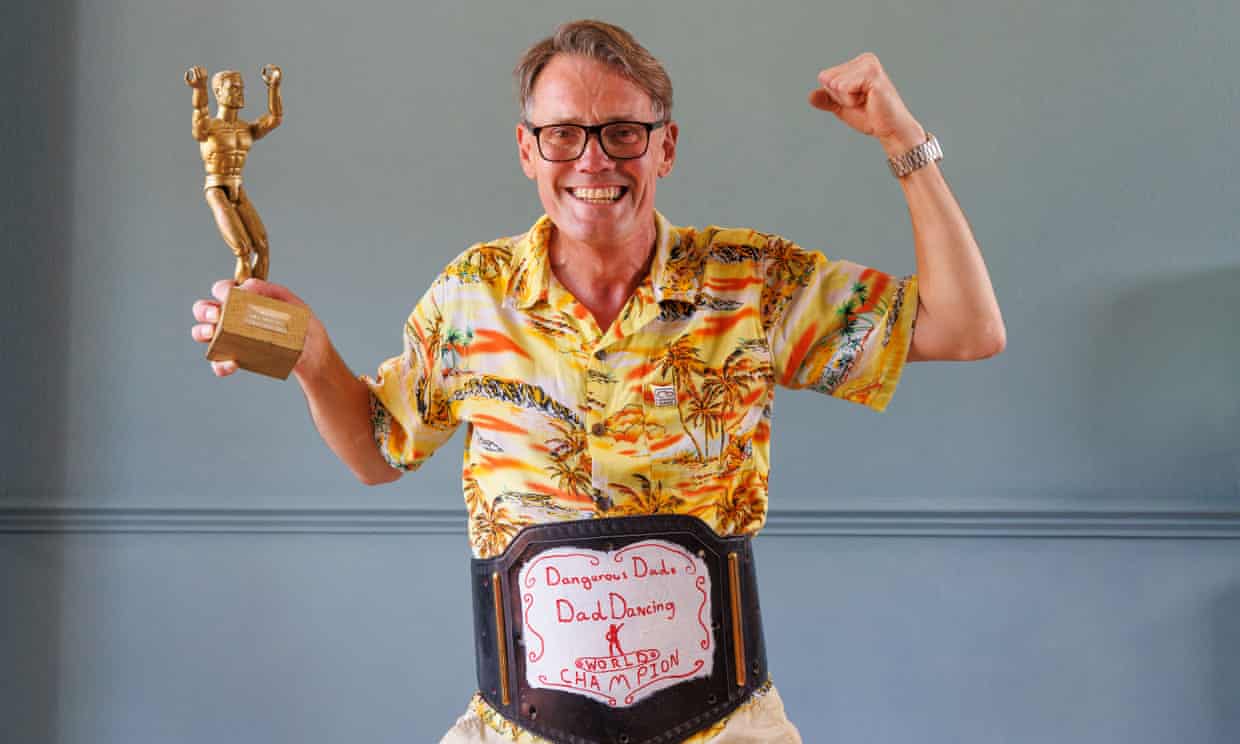
Robin Woods, from Devon, UK, was crowned World Dad Dancing champion at Dadfest last year. The Dadfest is judged by children.

When in the mood, both my son and son-in-law have at different times been known to perform some pretty inspired Dad Dancing, a zaniness that tends to affect all other potential dancers in the vicinity. We have videos.

As it happens, Dad Dancing is good for health.

Linda Geddes reports at the Guardian, “In his early 20s, Prince William was often seen stumbling out of night clubs after a night of grooving. Now, however, as though a clock has struck 12, this youthful cavorting appears to have transformed into something altogether more cringeworthy: dad dancing.

‘In a viral video captured at a Taylor Swift concert, the heir to the throne was filmed with his arms aloft, chest shimmying swiftly – and somewhat stiffly – to the beat. … Experts argue that dad dancing should be celebrated, not slated, for the numerous benefits it can bring.

“ ‘When I look at Prince William dancing, I just see someone who’s smiling, he’s happy, and dance does those amazing things,’ said Dr Peter Lovatt (AKA Dr Dance), the head of dance psychology at Movement in Practice and author of The Dance Cure. …

“Dr Nick Neave at Northumbria University, found that young women judged men to be good dancers if they had a varied repertoire and more moves that involved tilting and twisting the torso and neck – although most men display highly repetitive moves involving their arms and legs, but not the rest of their bodies. …

“As well as boosting familiarity and trust, other studies have suggested that improvised dancing – or ‘groovy moving’ – also changes the way we think and solve problems.

“Lovatt said: ‘We know that anxiety and depression are associated with being stuck in negative patterns of thinking, and when people engage in dance, those negative thoughts get disrupted for a while. There’s a lifting in their mood and they break away from those set patterns of thinking.’

“To Dr Ian Blackwell, a visiting lecturer at Plymouth Marjon University and the organizer of the World Dad Dancing Championships, the scrutiny of William’s dancing is a reflection of how society still expects men to conform, and not express themselves. ‘It’s a shame that anytime that a dad gets up to move, it has negative connotations – it’s embarrassing for him and the children, it’s embarrassing for the public. We know the value of dancing for health, wellbeing and making friends. It’s something that we should celebrate.’

“Despite further research by Lovatt suggesting some men avoid dancing because they fear being judged, men’s confidence in their dancing abilities usually grows as they get older – and once they hit their mid-60s, it ‘goes through the roof.’

“The reigning World Dad Dancing champion, Robin Woods, a father of three from Paignton in Devon, said he has not been shy about sharing his triumph on Facebook. ‘I think the people that know me from when I used to go out a lot – and always ended up on the dance floor – were pleased that I’ve finally been recognized,’ he chuckled. ‘It’s a nice thing – it’s not a serious thing – and so it’s fine that I’m making fun of myself.’

“Woods, who describes his usual dancing style as ‘freestyle’ with influences from James Brown and Michael Jackson, was not even sure what dad dancing involved when he entered the competition, which is judged by children and takes place at DadFest in Devon each September. ‘I just assumed it would be a bit more enthusiastic and amateurish than normal dancing – so, I just went for it and exaggerated everything I did.’

“He claimed the title after a hard-fought dance-off with two other finalists performed to ‘Mr Brightside’ by The Killers and ‘Baby Shark’ by Pinkfong.

“Blackwell said that while the clip of William’s dancing was too short to judge whether he could be in with a chance of winning, ‘he would be very welcome to come to DadFest in September so we can see the full extent of his moves and whether he’s got a decent Lawnmower Starter, Big Fish, Little Fish, John Travolta, or Lasso.’ ”

More at the Guardian, here, including a photo of Taylor Swift with Prince William. No firewall.

Read Full Post »

Photo: Epli Photography via Eli Nixon.
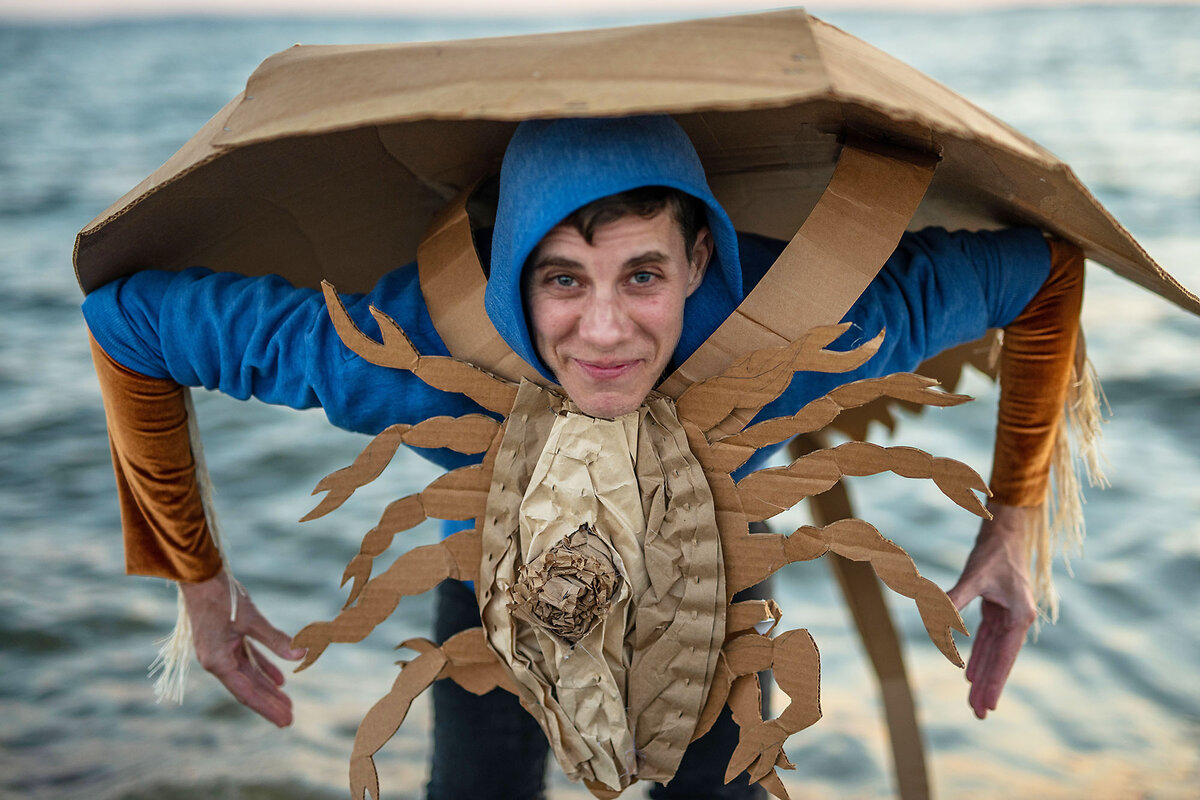
Multidisciplinary artist Eli Nixon poses in a homemade cardboard horseshoe crab costume at Barrington Beach in Barrington, Rhode Island.

There is an ancient form of life that lives in the waters along our shores — the horseshoe crab. The horseshoe crab is in danger from big pharma, which harvests them because their blood can reveal toxins in chemicals. Fortunately, people of all backgrounds are learning about this treasure and hope to save it.

Oli Turner writes at the Christian Science Monitor, “With its dome shape and spiky tail, the horseshoe crab might at first look like a fearsome visitor from another planet. But for artists like Heidi Mayo, the ancient creature is an approachable muse.

“A collection of 13 brightly painted horseshoe crab shells hangs along her back fence here. On her kitchen table sits a novel she wrote, inspired by encounters with the living fossil. Upstairs, in the top-floor studio where she teaches art classes, two spiny molt serve as figure-drawing models. [Crabs molt shells.] …

“A few miles away, at the Plymouth Center for the Arts, the public can see more of her work – and that of other artists, similarly inspired – at a new exhibit, ‘The Horseshoe Crab: Against All Odds.‘  

“The exhibition, featuring representations in watercolor, metal, and textiles, is part of a broader effort to save and conserve the once-misunderstood sea animal, which is now facing new threats. 

“ ‘The essence of this show [is] that horseshoe crabs are in trouble,’ says Joan Pierce, one of the curators, her silver horseshoe crab earrings swaying as she speaks. …

Pharmaceutical companies use their unusual blue blood to test products for toxins. 

“The Atlantic States Marine Fisheries Commission reports that the Northeast horseshoe crab population is currently in a ‘neutral,’ or stable, state. But the population remains vulnerable, according to advocates. On March 19, the Massachusetts Marine Fisheries Advisory Commission approved protections preventing the harvest of horseshoe crabs during their spring spawning season. …

“The horseshoe crab isn’t actually a crab, despite its name. More closely related to ticks and spiders, it walks on 10 spindly legs in the coastal shallows, feeding on worms, algae, and other inhabitants of the ocean floor. The long, pointed tail protruding from its hardened exoskeleton is often mistaken for a stinger. At times, the public has seen them only as a nuisance … not understanding that their eggs, which migratory shorebirds eat, help the coastal ecosystem.

“But the tide is turning. The curators of ‘Against All Odds’ felt an urgency to raise awareness about the crabs’ plight. They issued invitations to artists to highlight ‘the beauty of these ancient creatures, their ecological importance, and the threats they face.’ They hoped for 35 submissions. Then more than 160 offerings rolled in from more than 70 artists. Of those submitted, 74 works made it into the final show. …

“ ‘This is not just pretty pictures on the wall,’ Ms. Pierce says. ‘This is about education and advocacy. … We want to see stricter regulations.’ …

“Elsewhere in New England, other artists are also trying to raise awareness. In Rhode Island, another horseshoe crab hub, multidisciplinary artist Eli Nixon hopes that learning about the animal can create a new culture of compassion and responsibility. [Nixon offers a] 2021 illustrated manual and field guide Bloodtide: A New Holiday in Homage to Horseshoe Crabs [and] often wears a homemade cardboard horseshoe crab costume to parades. …

“Back in Massachusetts, Mark Rea remembers in his youth, before tourism swept the shores of Nantucket, when horseshoe crabs drifted along the seafloor undisturbed. …

“For the past 18 years, Mr. Rea has made ceramic casts of the exoskeletons of horseshoe crabs when he finds their remains on Cape Cod beaches. He fires the lifelike molds, glazing them with vibrant, glossy colors. While most of his creations look peaceful, several of them depict the toll the bait and pharmaceutical industries have had. Creating the ceramic horseshoe crabs is now his full-time job – he makes 600 a year and sells his work online and in local galleries.”

More at the Monitor, here (no firewall; subscriptions reasonable). Use the Search box on this blog to find more horseshoe crab info.

Read Full Post »

Photo: Kumar Ganapathy via Unsplash.

When I think of jellyfish, I remember a little marine scene I made in a shell when I was 13. As a see-through cover for the display, I used a dead jellyfish I’d found — the common kind of jellyfish that doesn’t sting.

It eventually evaporated.

James Bradley writes at the Guardian that scientists are only beginning to give jellyfish and other creatures that float on the surface the attention they deserve.

“In the summer months, north-easterly winds frequently herald the arrival of bluebottles on beaches along Australia’s east coast. But while bluebottles – or to give them their more formal name, the Pacific man-of-war – are a common sight on Australian shores, they are not native to coastal waters. Instead, they spend most of their lives on the open ocean, drifting with the winds and the currents.

“Bluebottles are just one of a collection of organisms that have made their home at the ocean’s surface. Some of these animals are hydrozoans like the bluebottle. There is the by-the-wind sailor, Velella velella, which has a stiff, transparent, oval sail about five centimeters [~two inches] attached to its bright blue float, and Porpita porpita, sometimes known as the blue button, which is shaped like a disc about three centimeters in diameter surrounded by stinging polyps. But there is also the strikingly beautiful sea dragon; crustaceans such as shrimp, buoy barnacles and tiny swimming copepods; and even mollusks such as the violet snail and Recluzia.

“Known collectively as the neuston, these creatures are not tied to any one place. Instead, they move with the wind and the water. Sometimes they gather into huge drifts, living islands of velella and bluebottles. … At other times they clump together around drifting debris or spread out sparsely over hundreds or even thousands of square kilometers.

“Despite its ubiquity, the neuston remains comparatively poorly understood and critically understudied. … Marine ecologist Associate Prof Kerrie Swadling, from the University of Tasmania, puts it bluntly. ‘“’We know more about deep sea vents than we know about the neuston.’

“The reasons for this ignorance are partly historical. Although several important studies of the neuston were published during the 20th century, they were written in Russian by scientists from the Soviet Union and were largely ignored outside the Eastern Bloc. But for the most part, the lack of research into the neuston is a consequence of the practical challenges involved in observing organisms that are scattered unevenly across the immensity of the open ocean. …

“In recent years, however, there has been an uptick in interest in the neustonNew research is revealing not just its importance to the health of ocean ecosystems as disparate as coral reefs and the deep ocean, but also important gaps in our understanding of how it will be affected by changes in the ocean environment.

‘The person most responsible for the increased visibility of the neuston is Dr Rebecca Helm. Now an assistant professor at Georgetown University in the United States, Helm was scrolling Twitter in 2018 when she came across a tweet about The Ocean Cleanup’s plans to remove plastic from the oceans by sweeping a floating net across the surface.

“Helm says she immediately wondered about the potential impact of this technology on the neuston, and so began to investigate. …

“[During the pandemic] she was locked out of her lab for several months. ‘I suddenly had all of this nebulous time to start looking into this more deeply, and became really fascinated. …

“Survival in the neuston [requires] animals to find some way to remain at the surface. For free-swimming species such as copepods and zooplankton, this is easy. But for other organisms it requires special adaptations.

“Hydrozoans like the bluebottle and velella employ gas-filled floats, while the buoy barnacle extrudes air into the cement that it would otherwise use to attach itself to ships and rocks, creating a substance a bit like pumice that it uses as a float. Similarly, violet snails suspend themselves beneath rafts constructed out of hardened bubbles of mucus. There is even a form of free-floating sea anemone that hangs upside down from the surface with the aid of a float in their pedal disc.

“Fascinatingly, this need for a float helps explain one of the more surprising discoveries to have come out of Helm’s research, which is that many of the animals that inhabit the neuston are not particularly closely related to other free-swimming species. Instead, they are descended from species that usually exist attached to the bottom of the sea that have migrated upwards, meaning that the neuston is, in a very real sense, what Helm dubs ‘an inverted sea floor’ clinging to the ocean’s surface.”

More at the Guardian, here. No firewall. Donations encouraged.

Read Full Post »

Photo: Shawn Henry via Unsplash.
Skateboarding in New Zealand has a culture all its own.

At a certain age, we start getting the same question at the beginning of every medical appointment: “Any falls?”

For a few years, that question seemed silly. Why would I have any falls? But after a while, it starts to make sense because we start to feel unsteady or because so many people we know have bad falls. A dear friend even died of one last year.

So I am in awe of people like those in today’s story who seem impervious to fear of falling: skateboarders.

Becki Moss and Lauren Bulbin write at the Washington Post, “If you venture past a skate park on any given day in the center of New Zealand’s capital, look for the skaters with neon hair. There’s a good chance they’re members of Wozer, an ever-evolving collective of young, diverse skaters, musicians and artists that has revolutionized the skate scene in Wellington in part by making it more welcoming to women and gender minorities.

“The group has blossomed in this city of approximately 200,000 residents, known for its abundance of native birds, must-visit coffee shops and notoriously strong winds. … Becki Moss, a photographer and artist based in New Zealand, followed the Wozer collective for two years, capturing their lives, their athleticism and their creativity.

“The first Wozer meeting was held in June 2022 by a group of friends who loved the sport, an effort to take their group chat offline and into the real world. Two years later, the collective has released two print magazines and become an increasingly visible force within the scene, teaching workshops at festivals and collaborating with clothing brands, including Converse.

“The point is to show skaters who feel left out of the sport’s cis-male-dominated spaces that there’s a hub for them, too. As the group writes in its 2022 zine: ‘Skating is infamous for its community, when you find a skate community you love, you become part of an instant family. Unfortunately, in amongst a battle of male egos, there wasn’t much room for us in our own local skate communities.’

“Clare Milne is a 23-year-old visual communications design student who moved from Gisborne to Wellington to study. She created the first version of Wozer magazine in May 2022 for a school assignment. Five months later, backed by a sponsorship from Kingsbeer Architecture, the first issue was officially released the same weekend as Bowlzilla, a national skateboard championship.

“ ‘It’s given a lot of people confidence in their identity,’ Milne said. ‘Just meeting like-minded people, it really made me feel comfortable in my own skin. I think the reason I’m so passionate about this is because I saw how these people influenced my life.’

“While the city-run Waitangi skate park features impressive bowls and ramps, Milne said enthusiasts might wish to venture out of the central business district and up a hill behind Wellington city hospital. There you’ll find ‘Hospital DIY’ — a skate park created by the skating community over the years. …

“Here, Gala Baumfield, 22, [who uses they/them] showed where the handprint of their mother, Pearl, is set in the concrete. Their hands are the same size. Pearl died in April 2023 after fighting lung cancer. The Wozer community supported Baumfield as a young caregiver and after their mother’s death continued as their found family, they said. …

“Wozer is continuing to grow. Initially, the group identified itself as a hub for women and gender minorities, but it has since expanded to include cis men. Baumfield says this was because it just felt really exclusionary to a lot of trans whanau’ — a Maori term for extended family or community — ‘especially if you’re not open about being trans, and you don’t really want to broadcast it to the whole world.’ “

Great photos at the Post, here.

Read Full Post »

Photo: David Matos via Unsplash.

I take naps pretty regularly. Not just because I am tired but because my brain needs a rest. And I’m a big believer in letting the sleeping, unconscious brain sort out things that have me going around in circles when awake. That’s why I was impressed with the presidential candidate who wanted to “sleep on it” before choosing a running mate. To me, that was really smart. Often when you “sleep on it,” vibes you have unconsciously picked up when awake become more clear to you.

Now let’s look at some research on letting your brain take rests.

Jamie Friedlander Serrano writes at the Washington Post, “Downtime is a necessary part of life. Science shows it helps us to be healthier, more focused, more productive and more creative. Yet, somehow, we often lose sight of this.

“ ‘Downtime is important for our health and our body, but also for our minds,’ says Elissa Epel, a professor in the psychiatry department at the School of Medicine at the University of California at San Francisco.

“Epel and others acknowledge that many of us feel as though we’re wasting time if we aren’t getting things done, but research points to the costs of always being ‘on’ and the importance of giving our brains a break. Our brains aren’t built to handle constant activity.

“Even the briefest moments of idle time, or pauses, are important, says Robert Poynton, author of Do Pause: You Are Not a To-Do List.

“Short pauses — whether you take a few breaths before entering a room or walk through the woods for 10 minutes — can lead to necessary self-reflection.

“ ‘I think we feel that we need to be getting on with things,’ says Poynton, who is an associate fellow at the University of Oxford in England. But ‘if we’re always getting on with things, we haven’t taken any time to decide or examine whether what we’re getting on with is the most interesting, important, fruitful, delightful, pleasurable or healthy thing.’ …

“Well-established research has shown that low-level daily stress can create such intense wear and tear on our body’s physiological systems that we see accelerated aging in our cells, says Epel, who co-wrote the book The Telomere Effect. Epel added: ‘Mindfulness-based interventions can slow biological aging by interrupting chronic stress, giving us freedom to deal with difficult situations without the wear and tear — and giving our bodies a break.’ …

“One small study published in the journal Cognition found that those who took short breaks had better focus on a task when compared with those who didn’t take a break. [And a 2022 meta-analysis published in the journal PLOS One looked at how ‘micro-breaks’ can affect well-being. The review found that breaks as short as 10 minutes can boost vigor and reduce fatigue. …

“In 2021, when many Americans were working remotely all the time, Microsoft conducted a study that followed two groups of people: The first had back-to-back Zoom meetings, and the other group took 10-minute meditation breaks between meetings. Microsoft monitored brain activity of 14 participants in the study using an electroencephalogram (EEG).

“In the first group, ‘what you see is a brain that’s filled with cortisol and adrenaline,’ says Celeste Headlee, a journalist and author of Do Nothing: How to Break Away From Overworking, Overdoing, and Underliving. ‘It’s tired, it’s stressed, it’s probably more irritable, and it’s probably less compassionate.’ The other group? ‘You can see in brilliant color what a difference [the breaks] make,’ she says. ‘Those are brains that are relaxed.’ …

“New research has begun showing the negative effects our cellphones can have on our health. Smartphone addiction (which [James Danckert, a professor of cognitive neuroscience at the University of Waterloo in Ontario, Canada, and co-author of Out of My Skull: The Psychology of Boredom] says afflicts 4 to 8 percent of people) is becoming increasingly common worldwide.

“It has been linked to physical health problems, such as digital eyestrain and cervical disc degeneration, as well as anxiety and depression. Some recent research also suggests it can affect the structure of our brains: Two studies found smartphone addiction was correlated with lower white matter integrity and lower gray matter volume in the brain. …

“Most Americans think of downtime as something that is extra or indulgent — a treat that has to be earned only after we’ve done all of our productive tasks, says Amber Childs, a psychologist and associate professor at Yale School of Medicine’s Department of Psychiatry. But research would suggest the opposite: Downtime is a basic human need.”

More at the Post, here.

Read Full Post »

Photo: Mikkel Rolighed.
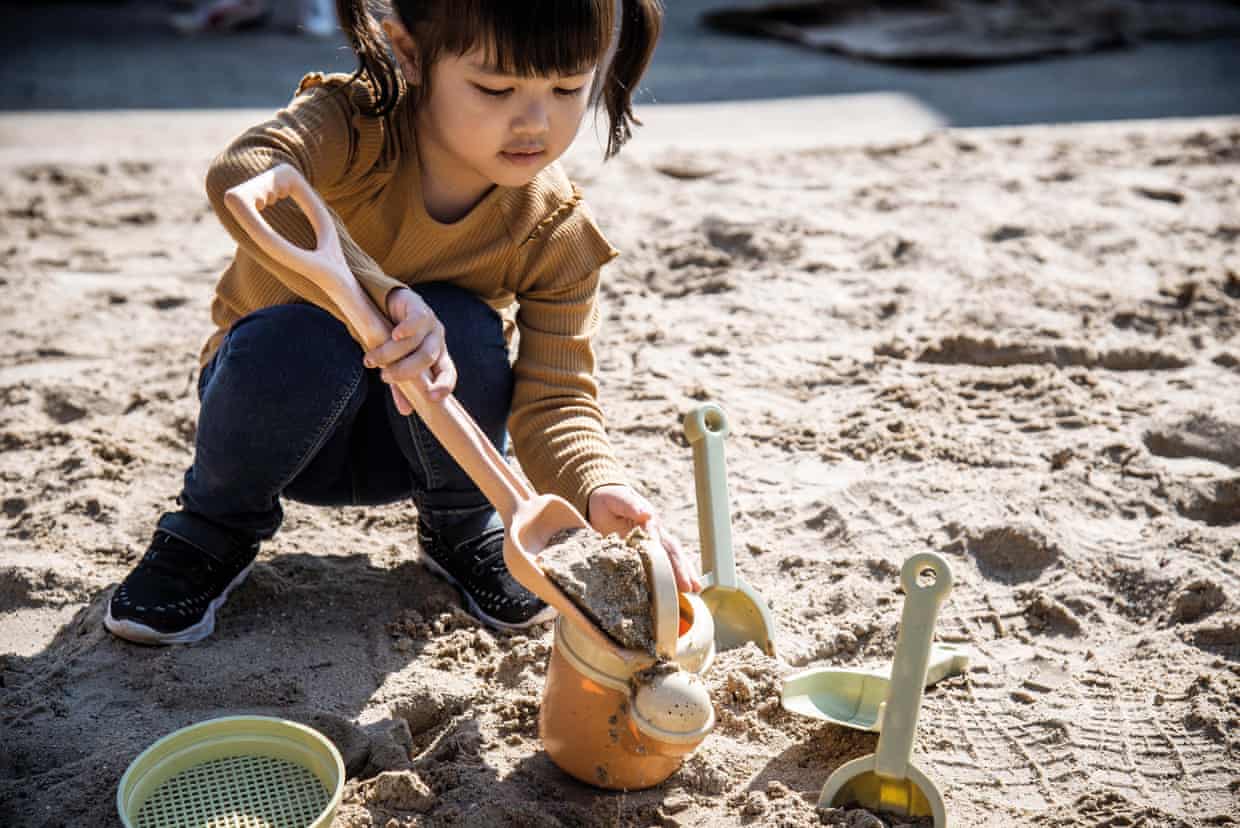
A bucket set made from sugarcane is an improvement on bioplastics, though the ocean won’t thank you if this is lost at sea – it won’t safely biodegrade (ditto recycled plastic toys). 

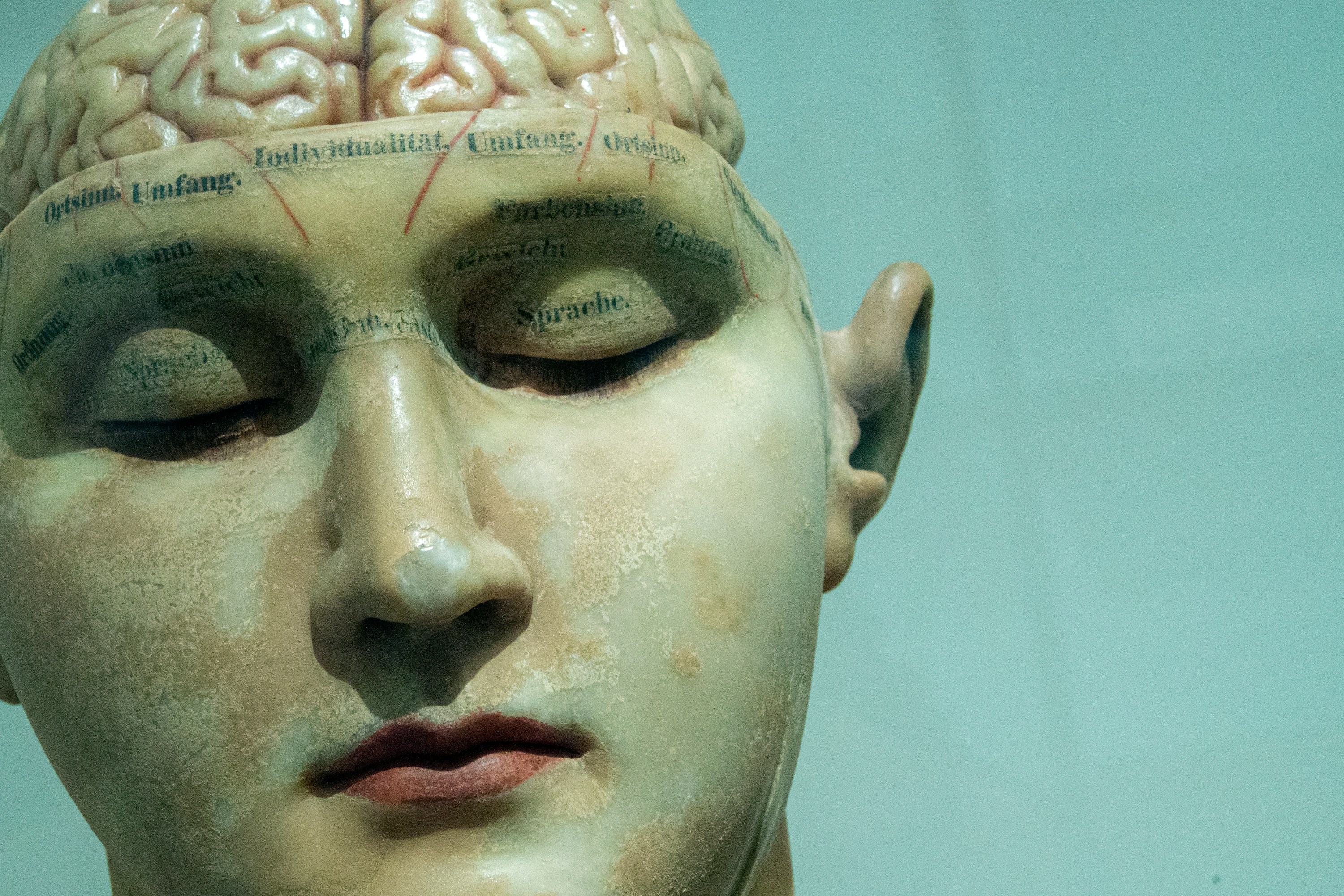
Now that we know that plastics have been found in the human brain, are we motivated to fight harder or are we despairing? Michelle O, you know, exhorts us to “do something” and not give in to despair, so here’s a place to start: the beach.

Fleur Britten at the Guardian has put together an impressive list of plastic substitutes you might take to the beach.

She writes, “Pre-1950, we just didn’t take plastic to the beach. Now it’s virtually impossible not to, even if it’s just you and your swimmers.

” ‘If you’re looking for plastic-free nirvana, you may never find it,’ says Anne-Marie Soulsby, aka the Sustainable Lifecoach. Matters are improving – though there’s usually a premium to pay if you want to minus cheap plastic from the mix. So why not borrow the plastic that already exists from friends, family or your local Library of Things. And don’t forget your reusable cutlery and containers for eating and drinking à la plage. If you can’t track down beach essentials from these sources, these are the other best ways to avoid seaside plastic pollution.

“ ‘The most sustainable swimwear is what you already own,’ says Soulsby. If you’re in need of new togs, they’ll most likely contain plastic. However, some brands are minimizing that: Italian label Isole & Vulcani’s swimwear for women and kids uses 93% GOTS-certified organic cotton jersey, with 7% elastane (which is fossil fuel-derived). …

“Inflatables and body boards: ‘Inflatables are a nightmare,’ says Lucy Johnson, founder of the Green Salon consultancy. ‘There isn’t a solution.’ According to one study, UK holidaymakers abandoned around 3 million [pool floats] in 2018. Even the genius Inflatable Amnesty is at capacity and can’t accept any more broken pool toys (though you can still buy its upcycled accessories). So borrow, or look after what you have. … 

“If you do need new toys, she advises silicon: ‘You can squish it into your bag and it doesn’t go brittle or rust’ (Johnson recommends Liewood’s silicon beach set from Kidly). Bioplastic toys are an improvement on regular plastic – for example, Dantoy’s bucket set made from sugarcane.”

As for sun screens, “ ‘There is no perfect solution,’ says Jen Gale, author of The Sustainable(ish) Living Guide. If you want to be absolutely plastic-free – including those pervasive nano-plastics – then your safest option is a zinc oxide-based formulation. …

“It is actually possible to find plastic-free eyewear, provided that you are one very careful person, because we’re talking glass lenses. The Marylebone-based brand Monc’s sunglasses feature wire and bio-acetate frames (made from wood pulp) and mineral glass lenses. …

“Flipflop pollution is real. Hardly surprising, given that about 3 billion are produced annually. According to the charity Ocean Sole, 90 tonnes of flipflops wash up annually on East Africa’s beaches alone. One alternative, suggests [Wendy Graham of the blog Moral Fibres], is Waves Flipflops, made from FSC-certified natural rubber. They also take back old Waves flipflops for recycling into, for example, children’s playground matting, and offer a free TerraCycle recycling programme for plastic flipflops from any brand.”

There’s lots more, including information on dry robes and wetsuits, at the Guardian, here. No paywall. Donations encouraged.

Read Full Post »

Photo: Nadja Wohlleben.
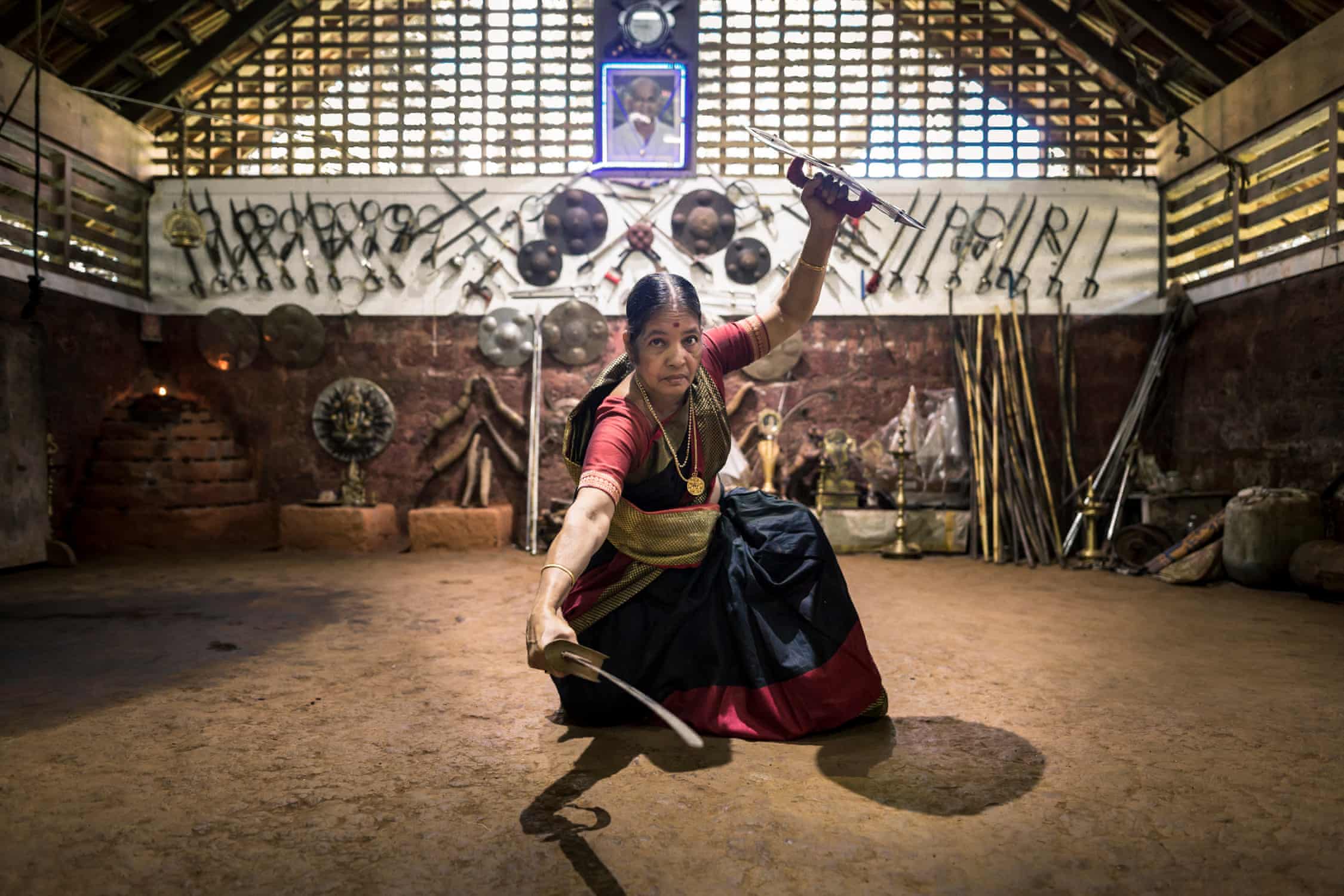
Meenakshi Raghavan at the school she runs in Vatakara, Kerala, India, teaching more than 200 students, mostly girls. 

Women have had to fight for every freedom they’ve gained, and they have to fight to keep those freedoms, too. Maybe not with swords, but as today’s story suggests, a little knowledge of martial arts wouldn’t hurt.

At the Guardian, Haziq Qadri reported recently on an elderly woman in India who teaches younger females how to protect themselves.

“Today the pupils are mostly schoolchildren, aged from seven up to teenagers. The teacher is an 82-year-old woman known to all as Sword Granny. Inside her martial arts school – a large hall with walls adorned with trophies and mementoes – in Vatakara, in the southern Indian state of Kerala, the session begins with prayers and warmup exercises.

“Then Meenakshi Raghavan takes the class through the precise movements of Kalaripayattu, India’s oldest martial art, their bare feet padding across a floor of red dust mixed with medicinal herbs.

“Every day, this formidable women teaches Kalaripayattu to youngsters and the older men and women of the town alike.

“Raghavan has built a team of teachers who work alongside her at the Kadathanad Kalari Sangham school, but she has become especially renowned in this region not for her age, but for her focus and commitment to empowering the next generation of young women.

“Sword fighting is an essential part of Kalaripayattu, and the grandmother moves swiftly and with great grace when she swings her sword at the opponent.

“Kalaripayattu [was] banned by India’s British colonial rulers in 1804. But the art form survived underground, experiencing a resurgence in the early 20th century and gaining new life after India’s independence in 1947.

“Raghavan’s martial arts school was started by her late husband, Raghavan Gurukkal, in 1949. … ‘Anyone is welcome here, we do not charge anything to our students,’ she says.

“Raghavan began practising martial arts at seven, under the guidance of her father, who recognized the importance of self-defense in a society where women were often vulnerable. …

“ ‘When young girls and women look at me, they feel inspired that if I can do such a thing at this age, so can they at their age,’ she says.

“Raghavan says self-defense techniques are essential for young women in these times and martial arts is the best way to equip them.

“For her, the teachings of Kalaripayattu instill self-confidence and mental resilience, crucial in a society where women face systematic marginalization and violence. Crimes against women have been on the rise in the past decade, according to India’s National Crime Records Bureau. Of nearly 6m crimes recorded by police in India in 2022, 445,256 involved crimes against women, a rise of more than 30% since 2016.

“ ‘Kalaripayattu plays an important role in building mental strength and self-confidence,’ she says. ‘Offering girls hope and empowerment.’ …

“The red-sand training ground – or kalari – of her school is filled with energy and determination as her students engage in their rigorous drills and intricate movements, mastering the techniques passed down through generations.

“ ‘When I train young girls and women, I keep in mind to teach them Kalaripayattu for its essence and their self-defense,’ she says.

“Raghavan is now connecting with people beyond Kerala too. ‘I also have special groups with people coming from different countries who seek one-on-one training,’ she says proudly.”

More at the Guardian, here.

Read Full Post »

Photo: No Waste Army.
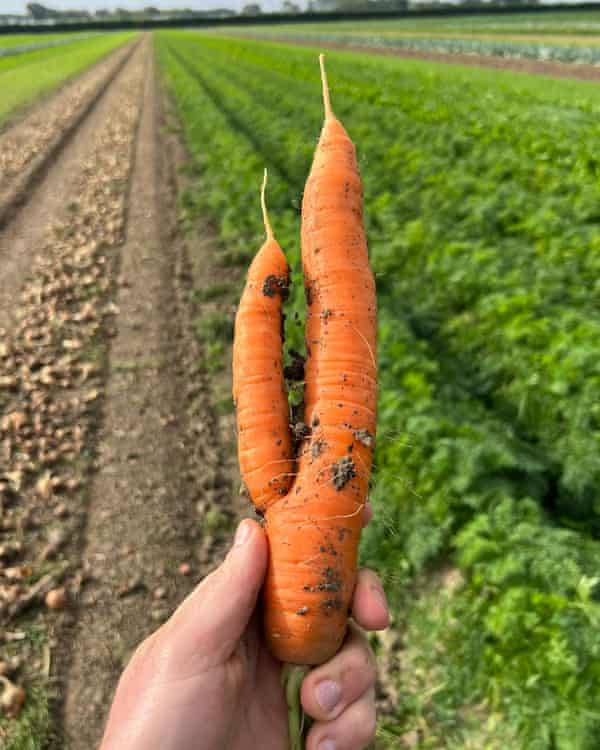
Farmers are linking the climate crisis to wonky vegetables that may not meet modern standards of perfection but are perfectly good to eat. 

There used to be a delightful account on Twitter called Ugly Fruit and Veg (@UglyFruitAndVeg), and it posted wonderful, fun photos of misshapen produce that was still edible. Nowadays that person has turned to other topics on other platforms, but I thought of the account when I read today’s Guardian story by Senay Boztas in Amsterdam.

“When 31-year-old Dutch farmer Bastiaan Blok dug up his latest crop, the weather had taken a disastrous toll. His onions – 117,000 kilos of them – were the size of shallots.

“ ‘We had a very wet spring and a dry, warm summer, so the plants made very small roots,’ said Blok, who farms 90 hectares in Swifterbant, in the reclaimed province of Flevoland. … ‘It’s either far too wet and cold, or far too warm and dry, and there’s no normal growing period in between.’

“Blok is one of a number of farmers in Europe’s largest agricultural exporter linking the climate crisis to ever more ‘imperfect’ fruit and vegetables, rejected by a food system based on standardization and cosmetic appearance.

“Last month, a crowdfunding scheme to help him was launched by social business the No Waste Army, which runs a quarterly food box scheme, with soups, sauces, pasta, drinks and jams made from rescued fruit and veg. Thanks to its commission, public donations – some sending onions to food banks – and a pickling order from Amsterdam ‘Gherkin King’ Oos Kesbeke, Blok’s sheds are finally empty and a year’s work wasn’t wasted.

“But Thibaud van der Steen, co-founder of No Waste Army, said farmers are suffering from weather extremes, linked to the climate crisis, making it ever harder to meet modern standards of perfection.

“ ‘One of our founders, Stijn Markusse, was working for 12 years with farmers with a meal box concept, and was astonished that so many vegetables and fruit stayed in the ground or were thrown away because they didn’t fit a kind of beauty ideal,’ said Van der Steen. ‘The average consumer has got used to cucumbers as straight as candles. But anyone who has a vegetable patch knows that for every 10 cucumbers, two or three will be straight and all the others will have all kinds of shapes.’ …

“The wettest autumn, winter and spring on record have threatened the spinach and potato crops, leading to parliamentary questions and warnings from farming union LTO. Evelien Drenth, LTO agriculture specialist, said 61% of Dutch farmers report lost yields due to extreme weather, diseases are up and sowing is late or sometimes missed. ‘Consumers and supermarkets need to get used to empty shelves sometimes for short-season crops like spinach … and also irregular-sized Brussels sprouts and broccoli,’ she added.

“If the plants are stressed, so are the farmers, according to Jaap Fris, of the community-owned farm Erve Kiekebos, in Empe, Gelderland. ‘It is true that things are getting more difficult because of the climate,’ he said. ‘But sometimes I have to challenge my own perception that things have to be perfect, when I know that even if it looks less good, it is just as tasty.’ “

Meanwhile in the US, the Fioneers are consumers who value wonkiy vegetables. At their blog, they have reviewed businesses that make the odd shapes available to the cost conscious. They write, “Through some research, we realized that we spent more money on food than the USDA’s guidance for a (liberal spending) family of four.

“We have taken steps to improve. We’ve focused on not wasting food, meal planning based on what we already have, and buying in bulk. We have reduced our food spending quite a bit, but we felt like it was still high. …

“When I was doing research into this, I stumbled across ugly produce delivery services. I found these services appealing for two reasons. First, these services ship the produce directly to your house. CSAs typically require you to pick it up from a central location. The ugly veggie services also provide the option of customizing the size of the box you want and the products inside. CSA shares provide a lot of food, and I wasn’t sure that we could use it all.

“There are two options for ugly produce where we live: Misfits Market and Imperfect Foods. We decided to try them both, alternating weeks between the two. One week we’d get a Misfits Market box. The next week we’d receive an Imperfect Foods Box. …

“In the United States, approximately 40% of our food is wasted. It isn’t only consumers who are wasting food. Food is wasted for a variety of reasons and at different points along the supply chain. Farms, distributors, stores, and consumers are all guilty of too much food waste. …

“The National Resource Defense Council makes a number of recommendations to help solve this problem. One of their main recommendations is to ‘expand secondary markets for items that do not meet the highest cosmetic standards.’

“This is precisely what companies like Misfits Market and Imperfect Foods are doing. They are the secondary markets. They are buying the produce from farms when there is a surplus or when the produce doesn’t meet cosmetic requirements.” More from the Fioneers, here.

More at the Guardian, here.

Read Full Post »

Art: Charles Arthur Cox, “Bearings” (1896), via Hyperallergic.
Art Nouveau posters often reflect both a love of books and young women enjoying more freedom.

Do you like the Art Nouveau, a style identified as roughly 1890 to 1910 in Europe? After reading about the literary posters of that time, my already considerable appreciation for it is has only increased.

Sarah Rose Sharp writes at Hyperallergic about a recent exhibition at the Metropolitan Museum of Art in New York.

“The literary poster occupies a special place at the intersection of American art history and literature. Advances in color printing technology at the end of the 19th century made way for a flood of colorful and intricately detailed materials, often in the form of handbills and posters, which were suddenly more affordable as a vehicle to advertise the latest books, magazines, periodicals, and other forms of literature.

“Accompanying an eponymous exhibition at the Metropolitan Museum of Art, The Art of the Literary Poster: The Leonard A. Lauder Collection illuminates the expansive genre through several examples culled from the titular collection, accompanied by essays on the form by exhibition curator Allison Rudnick, scholar Jennifer A. Greenhill, paper conservator Rachel Mustalish, historian Shannon Vittoria, and Lauder himself. …

“Both historically astute and visually delightful, the book captures the influence of the Art Nouveau movement on printed materials at the turn of the century, as well as showcases the evolution of graphic design as innovations in multi-color plate printing that allowed text and imagery to come together in increasingly complex ways. Vittoria’s essay highlights the particular power of literary posters as a genre ‘by women, for women,’ noting that American illustration was one of the few professions young women were encouraged to pursue at the time.

” ‘As male artists and critics worked to defeminize illustration by minimizing women’s contributions to the field, female artists and advocates saw the potential of the visual arts, particularly printed media, to advance the campaign for women’s suffrage,’ Vittoria writes. ‘The art poster became a potent tool in this struggle.’

“Turn-of-the-century literary journals like Lippincott’s Monthly Magazine and Harper’s were some of the first publications to avail themselves of this new technology, with cover art featuring thoroughly modern Gibsonesque girls riding bikes, snuggling cats, and of course, reading. Though the magazine and visual digest Bradley, His Book was only published between 1896 and ’97, the cover works by Art Nouveau illustrator and film director William H. Bradley, its publisher, are dazzling examples of the intricacies made newly possible in literary art posters. …

“In her catalog essay, Rudnick examines a cover of the July 1896 issue of Lippincott’s as the essence of the burgeoning form. Created by Joseph J. Gould Jr., the image features a woman in a day suit equipped with the exaggerated sleeve caps and narrow skirt of the era, perched calmly on a bike with a straw hat on her head, which partially obscures the masthead’s bold red letters. She is biking out of a richly blue background, presumably off to enjoy the copy of Lippincott’s held against the handlebars in her right hand.  ‘The poster itself represented something new: an advertisement that looks and functions like a work of art,’ Rudnick writes, ‘an image made for public consumption in which commercialism and culture coalesce.’

“The distinctive print also captures the spirit of new possibilities for women, as a cavalcade of unbothered women on bikes became the visual heralds of the era’s first-wave feminism that paved the way for women’s movements of the following century. A 1911 ‘Votes for Women‘ poster by artist and educator Bertha Margaret Boyé, chosen as the winner of a poster competition held by the San Francisco College Equal Suffrage League, embodies this renewed sense of possibility as a woman in flowing yellow robes stands before a landscape displaying the titular banner. Behind her, the rising orange sun halos her head, giving the effect of saintliness while hinting at the dawning of new opportunities.

“Full of aplomb women on bikes with literary and political ambitions (and, of course, cats), The Art of the Literary Poster gathers inarguably beautiful printed materials that — even beyond their political and promotional implications — demonstrate the elegance, interests, and aesthetics of a pivotal moment in art history.”

Check out the gorgeous collection of posters at Hyperallergic, here. No firewall. Subscriptions encouraged. And for those interested in learning more about Art Nouveau in general, see at Wikipedia, here.

Read Full Post »

Weaver and Shepherd

Photo: John Burcham.
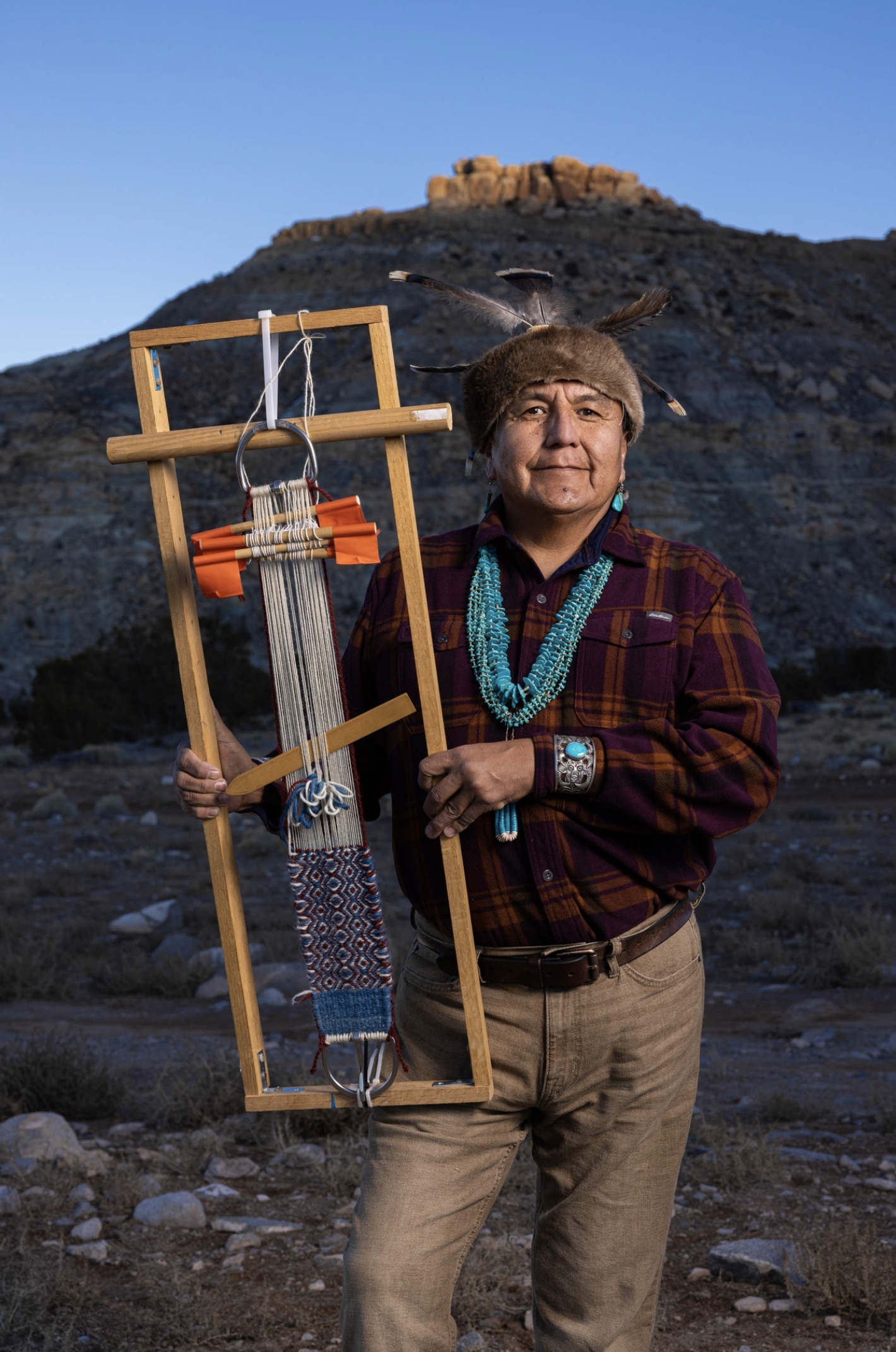
Textile weaver and fiber artist Roy Kady.

Today’s story is about a man for whom work and art are inseparable: Navajo weaver Roy Kady.

Elaine Velie at Hyperallergic conducted the interview.

“Diné weaver and fiber artist Roy Kady sat down for a video interview wearing a shirt that read ‘Sheep is life.’ Kady is a shepherd and an artist, roles he sees as definitively intertwined. ‘I am first a shepherd, then art comes with it,’ he said.

“Kady’s decades-long career has been one of constant learning, and in recent years, teaching. He shares weaving techniques and Diné stories that he says are too often missing from younger generations. Kady spoke to Hyperallergic about Diné conceptions of gender, apprenticeship in his small Arizona town, and being accepted as a gay man in his community.

Hyperallergic: What are your earliest memories of weaving, and how did your mother’s practice influence your own?

Roy Kady: My sisters and I grew up in a single-parent household where my mother brought us up, so we were taught everything from building a house to repairing a roof to working under the hood of a vehicle, the sort of things the colonized world would call ‘man’s work.’ We learned inside, too. From washing dishes and getting the house tidied up to cooking and baking, we did what would be considered ‘women’s work.’ But for us, it’s not.

“I was taught about weaving at the young age of nine years old. I have some recollections before that of sitting by my grandmother, grandfather, and mother, who all also partook in fiber arts — weaving and processing the fiber. My mom gifted and shared weaving techniques with me: vegetable dyeing and some of the family designs that came with it. I was fortunate; I was given the tools she and our kin relations had, and that’s what inspired me to become an artist. We learned farming and goat and sheep herding, too. …

“Sheep provide you with sustainability, food, and the opportunity to learn how to maintain the land. We take care of them so that they can take care of us.

“As a shepherd, you know what they like to eat and what keeps them healthy. They also know that themselves, so they’ll take you on journeys to where particular plants exist. On those journeys, you’re able to be inspired by color and the environment, by the mesas. You start to see geometric forms that you can bring back to your weaving repertoire.

“That’s what traditional Navajo weaving is: an interpretation of your environment. A lot of my earlier pieces were designed with that in mind. They’re not necessarily just stripes; they represent rainbows. They’re not just step patterns; they’re mesas or clouds.

“There’s a whole opening of the universe that is represented. In order to understand and have that knowledge, you must have the knowledge of shepherding. But it’s a rarity now because there are not many shepherds. The sheep population has really declined. Navajo fiber artists and textile weavers create beautiful artistry, and while they may no longer have herds, they have memories from their grandparents or parents or maybe from within themselves around growing up with sheep. …

“My mother would sometimes say something like, ‘You’re at the age when you are going to learn about horsemanship.’ She was a horsewoman type. She would teach us, then she would want us to ask a neighbor or other kinfolks to learn other forms. I remember growing up and learning a lot from the neighboring kids. We would go to their houses and learn different types of fiber arts, traditional recipes, or plant foraging. …

“I would go spend a day, a weekend, or even a month in their home and helping them with their livestock. That’s how I would earn the opportunity to learn from them. They’ve always told me that this knowledge doesn’t just belong to one individual, saying, ‘It was gifted to me. It goes all the way back to the creation story.’ That’s how I model my apprenticeships now. …

“I don’t just use wool. I use anything that’s of natural origin, including tree bark and wild cotton, nettle, silk, you name it — whatever I can get my hands on. If I can find somebody who says, ‘I have a herd of bison,’ then I say, ‘What do you do with their wool?’

H: Are there any works that you particularly love?

RK: That would be the one titled ‘Shimá,’ meaning ‘my mother.’ I would wheel her into the sheep corral in her wheelchair, and the sheep knew who she was and come up and greet her. They knew the scent of her hands and how she cared for them. I took a beautiful picture of her making those interactions and decided to weave it. I broke ground for myself by incorporating all different types of techniques that I’ve learned along my weaving journey. At this point, that would be my favorite. …

H: Are there any projects you’re working on now or that you’re excited to start in the future?

RK: There’s an upcoming gallery exhibit near us in Cortez, Colorado, that I’m starting with my grandson, Tyrell Tapaha. He’s come back to learn about shepherding and be my apprentice. We’re doing a collaborative type of show. I will show what took place between the two of us, and it will include his interpretation of what I taught him about sheep, the landscape, or a particular plant.

“We are utilizing what we call barbed wire art. When you’re a sheepherder in this country, you have barbed wires lying around everywhere that are rusty, but we create these wonderful shapes and incorporate that into our textiles or fiber work. We’re excited to venture.”

Read more and see how the artist wove an image of a sheep at Hyperallergic, here. No firewall. Subscriptions encouraged.

Read Full Post »

Photo: University of the Witwatersrand.
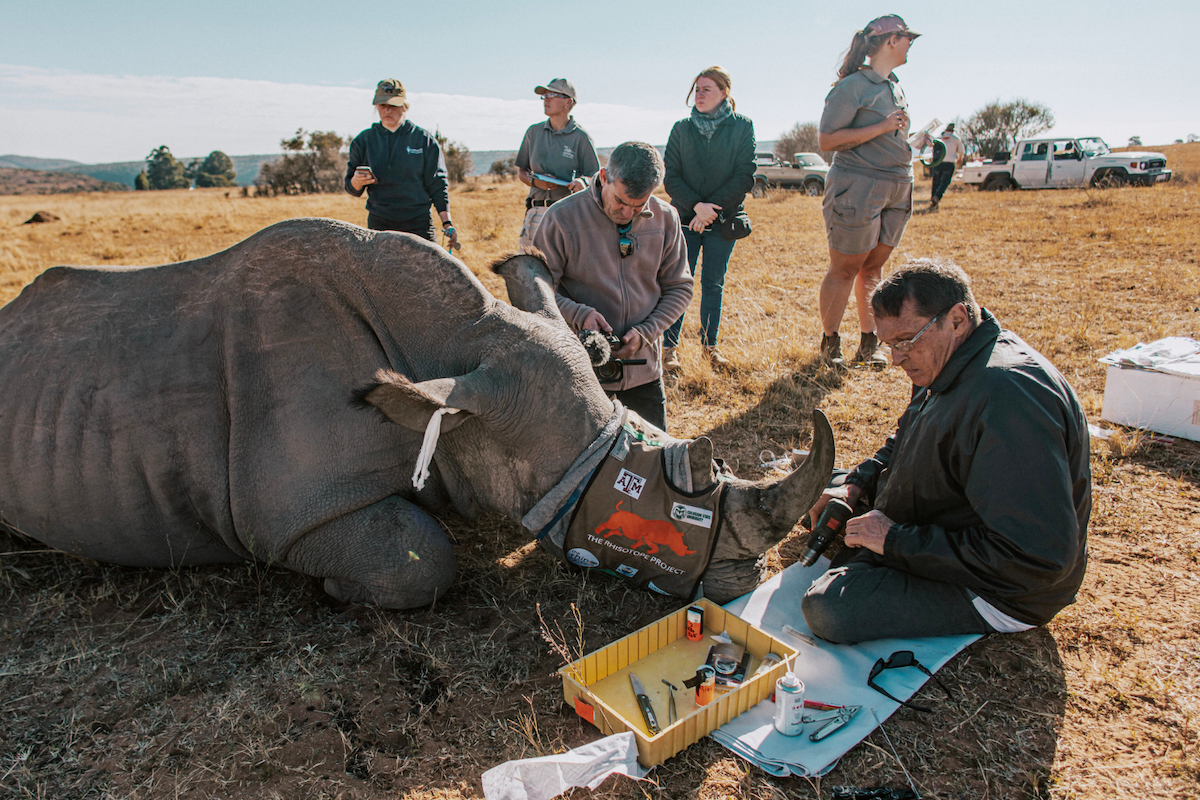
To protect rhinos and scare off poachers, researchers add radioisotopes to a rhino horn at the Waterberg Biosphere Reserve in South Africa. 

Who would think of protecting endangered rhinos by injecting something radioactive into their horns? Researchers in Africa, that’s who.

YaleEnvironment360 reports that “South African researchers have inserted radioactive material into the horns of 20 live rhinos. Their goal: to track horns from rhinos that were hunted illegally.

“Researchers say radioisotopes added to horns would be picked up by radiation detectors at airports, harbors, and border crossings, and so would send up a red flag. There are more than 11,000 such detectors at ports of entry around the globe, part of a vast infrastructure aimed at stemming the flow of illicit nuclear material. And the thousands of security personnel devoted to operating these detectors far outnumber officials working to stem the illegal wildlife trade.

“ ‘Ultimately, the aim is to try to devalue rhinoceros horn in the eyes of the end users, while at the same time making the horns easier to detect as they are being smuggled across borders,’ said project lead James Larkin, of the University of the Witwatersrand in Johannesburg.

“ ‘Every 20 hours in South Africa a rhino dies for its horn. These poached horns are then trafficked across the world and used for traditional medicines, or as status symbols,’ Larkin said. ‘This has led to their horns currently being the most valuable false commodity in the black-market trade, with a higher value even than gold, platinum, diamonds, and cocaine.’ “

The University of the Witwatersrand website adds: “These radioisotopes will provide an affordable, safe and easily applicable method to create long-lasting and detectable horn markers that cause no harm to the animals and environment. At a later stage, the work will expand to elephants, pangolins and other fauna and flora. …

“Starting on Monday, 24 June 2004, Professor Larkin and his team carefully sedated the 20 rhinos  and drilled a small hole into each of their horns to insert the non-toxic radioisotopes. The rhinos were then released under the care of a highly qualified crew that will monitor the animals on a 24-hour basis for the next six months. ‘Each insertion was closely monitored by expert veterinarians and extreme care was taken to prevent any harm to the animals,’ says Larkin. ‘Over months of research and testing we have also ensured that the inserted radioisotopes hold no health or any other risk for the animals or those who care for them.’    

“The development and application of the Rhisotope Project nuclear technology has the capacity to help deter poaching, increase the detection capabilities of smuggled horns, increase prosecution success, reveal smuggling routes and deter end-user markets.

“Rhino poaching reached crisis levels since 2008 where close to 10 000 rhinos were lost to poaching in South Africa, with wildlife trafficking being the third biggest organized crime globally.

“Professor Lynn Morris, the Deputy Vice-Chancellor: Research and Innovation at Wits University says: ‘This is an example of how cross-disciplinary research and innovation makes a real difference. This novel approach pioneered by Prof Larkin and his colleagues has the potential to eradicate the threat of extinction our unique wild-life species, especially in South Africa and on the continent. This is one of many projects at Wits that demonstrates research with impact, and which helps to address some of the local and global challenges of the 21st Century.’

“The Rhisotope Project at Wits was set up by a small team of likeminded individuals as a South African-based conservation initiative in January 2021 with the intention of becoming a global leader in harnessing nuclear technology to protect threatened and endangered species of fauna and flora as well as communities of people.

“Aside from developing a solution to combat the illicit trade and trafficking of wildlife products, the Rhisotope Project seeks to provide education and social upliftment to empower people and local communities. A special focus is aimed at uplifting the girls and women of rural communities, who are often the backbone of these communities in the remote areas where endangered species are found and are the greatest components of success in changing the hearts and minds of local communities thereby creating rhino ambassadors and champions.”

More at Yale e360, here, and at the university’s website, here.

Read Full Post »

Photo: South China Morning Post composite/Zhihu.
“Teeth Playing” is one of China’s most terrifying, and difficult, forms of folk art. Performers manipulate up to 10 wild boar tusks at a time with their mouths. 

At Halloween in the US, children often think it’s fun to be vampires and go trick-or-treating with scary wax fangs in their mouths. But the fake dentures soon come out and go in a pocket because they are so uncomfortable.

In China, there’s a performance art that involves singing with actual boar tusks in the performer’s mouth. Talk about uncomfortable! At the South China Morning Post, you can see a photo of the damage that tusks are causing a young performer.

Zoey Zhang reports on the strange art of “teeth playing.”

“A performer with a fierce makeup conceals the tusks of several wild boars in their mouth, flipping them up and down with their tongue and teeth. Throughout this process, they need to sing, read and dance.

“It could well be the most terrifying, and most difficult, folk art in China. It is called shua ya, which literally means ‘teeth playing.’

“Shua ya is a stunt used in traditional Chinese opera designed to portray the dark, dangerous and complex psychology of villainous characters.

“The tusks of male wild boars that it uses are polished and disinfected and usually reach the length of an adult index finger.

Performers need to manipulate four to 10 tusks in their mouths, using their lips, teeth, and breath to make them move, conveying the emotions of characters.

“Lowering the tusks indicates relaxation and satisfaction, while shaking them vigorously indicates anger. …

“Shua ya has a history spanning over 400 years and is a distinctive feature of opera performances in Ninghai, a county located in Zhejiang province in eastern China.

“The most classic shua ya performance is Jinlian Slays Jiaolong. Jiaolong, or the Chinese water dragon, diverges from the auspicious portrayal of Chinese dragons, causing chaos and bringing misfortune to people. Artists portraying Jiaolong need to master shua ya to perform the part of a villain.

“The stunt is recognized by the government as an intangible piece of cultural heritage. Due to the arduous training process, the art form is on the brink of extinction. Its exponents must keep sharp tusks in their mouths at all times, except when eating or sleeping, until they can speak clearly. It typically takes over a decade of practice to fully master.

“Xue Qiaoping, 41, from Zhejiang province, is a sixth-generation inheritor of China’s shua ya art and one of its few female performers.

“She told China Central Television: ‘When training with eight tusks in my mouth because they are very hard, my entire gums were worn out. I couldn’t eat or drink for a week, only relying on intravenous drips for nutrition.’

“When she reached 10 tusks, Xue needed to use both hands to open her mouth wide enough to fit in all the teeth. Her mouth cracks after each performance.

“Meanwhile, Li Yi, 19, from Henan province in central China, is a shua ya artist with 1.4 million followers on Douyin. He has been practicing this stunt for eight years.

“ ‘My mouth has torn and ulcerated more than 70 times, my jaw muscles enlarged, my teeth were ground down and my appearance changed dramatically,’ Li said. ‘But I am willing to devote my youth entirely to traditional culture.’ “

More at South China Morning Post, here. No paywall.

Read Full Post »

Photo: West Virginia University.
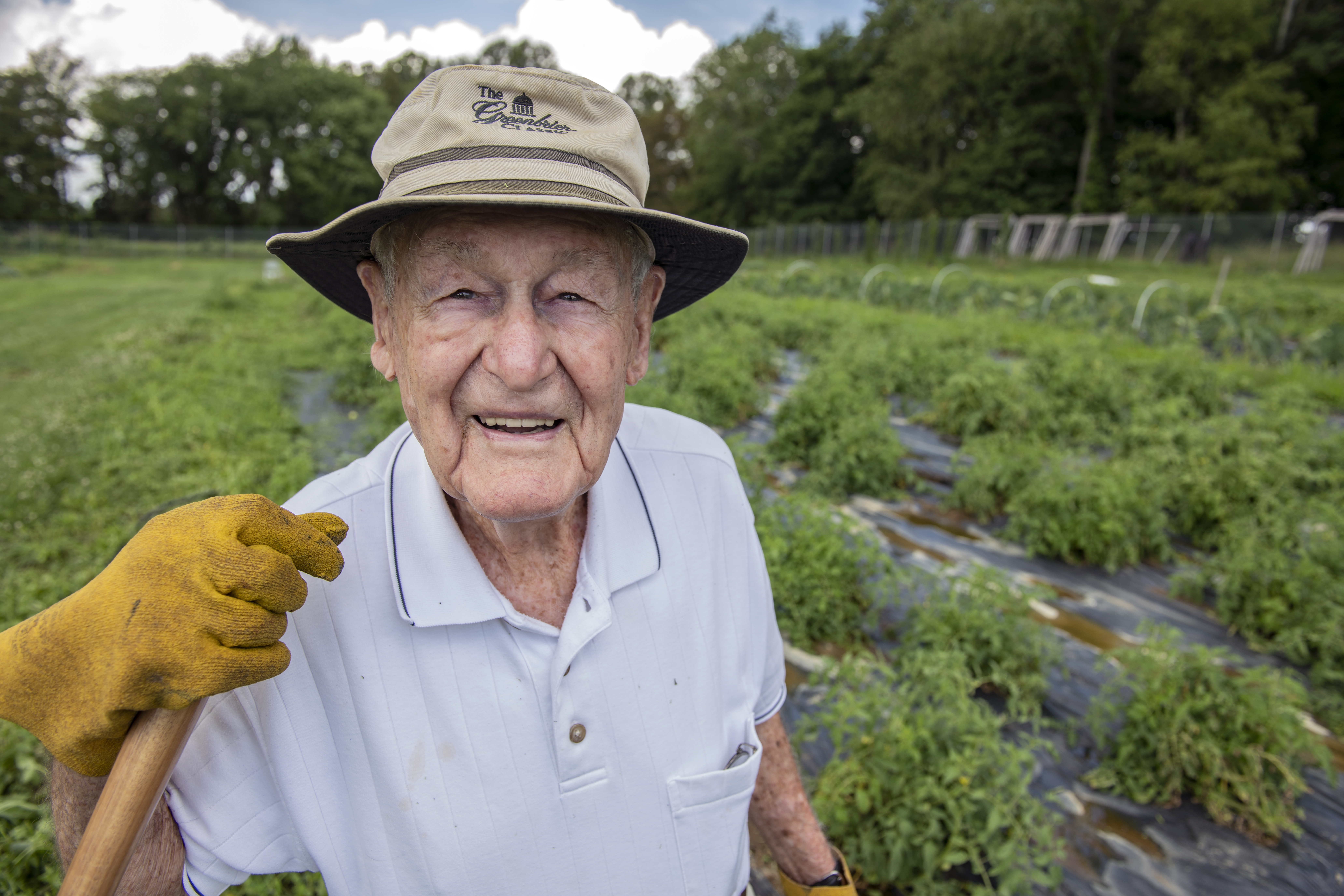
Mannon Gallegly, WVU plant pathology professor emeritus, has created four tomato varieties, including his last, “Mannon’s Majesty,” free to West Virginians.

For a short time in my childhood, I was a member of a 4-H club and won a $0.75 check for a tomato that my father really grew — a check I failed to cash before it expired!

I still love tomatoes. This is the time of year for gorgeous tomatoes. Ashley Stimpson writes at the Washington Post about the 101-year-old West Virginia professor who brought four special varieties into the world, including one he made free to West Virginians.

“You may not have heard of Mannon Gallegly, but chances are you’ve eaten one of his tomatoes, and perhaps even grown one in your garden. More than 60 years ago, Gallegly bred the first tomato that could stand up to Phytophthora infestans, otherwise known as tomato blight. The West Virginia ’63, sometimes called ‘the people’s tomato,’ is still a seed-catalogue superstar and beloved around the world, gracing gardens from Alabama to Africa.

“This year marks the first time since 1949 that Gallegly, who moved into a nursing home after falling ill in the spring, has missed the annual planting. … This morning’s planters are a mix of graduate students from WVU’s Davis College of Agriculture — where Gallegly worked for 38 years — and volunteers who have known the plant pathologist for decades. Gallegly developed three more hardy tomato varieties since 1963, each of which has claimed a spot in this year’s field, including his latest and likely his last.

“After the college publicized the release of the tomato, called Mannon’s Majesty, earlier this year — noting that it was free for any West Virginian who wanted seeds, per Gallegly’s insistence — WVU’s greenhouse manager Whitney Dudding came to work the next Monday morning to find 2,000 email orders waiting in her inbox, a number that far outstripped availability. …

“Until very recently, Dudding held out hope Gallegly might make it to the organic farm for the occasion. … ‘Every year, even last year, he’s been out there on the soft soil, out there in the heat, walking around, right there with us,’ she says. ‘I really don’t know how he does it.’

“The son of a carpenter and a school dietitian, Gallegly grew up in the rural southwest corner of Arkansas. ‘We were pretty poor people,’ he says. During the Great Depression, his parents grew cotton on rented land, where Gallegly logged the first of many hours spent walking between crop rows.

“A teacher from Future Farmers of America inspired Gallegly to attend college, and a Sears Roebuck scholarship made it financially feasible. After graduating from the University of Arkansas with a degree in agriculture, Gallegly went to the University of Wisconsin to get his master’s in plant pathology, working on a rice disease called white tip.

“In June 1949, Gallegly arrived in Morgantown. … ‘That was my favorite month,’ he recalls. ‘I had a new job, I had a new wife, I had a new baby.’ He also had a new three-acre research farm on the grounds of the nearby medium-security prison, where he could conduct trials on plant diseases, including tomato blight.

“By the following summer, Gallegly’s fields swayed with potato and tomato plants of all different varieties. Then disaster struck. ‘The disease farmers and gardeners feared most’ arrived, he says: late blight. The pathogen leaves ugly brown bruises stretching across the leaves, stem and fruit until the plant looks like it’s been blasted with a blow torch.

“That year, Gallegly lost nearly his entire crop of tomatoes to late blight — except for a few wild varieties with tiny fruit that showed a curious resistance to the disease.

“In the 1950s, late blight was more than just an annoyance for the home gardener. In the right conditions, Phytophthora infestans, which is Greek for ‘plant destroyer,’ can wipe out entire food supplies, as it did during the 1840s, when about 1 million people starved during the Irish Potato Famine. …

“For 13 years, Gallegly worked on developing an indestructible tomato, crossing those initial wild varieties that showed genetic resistance to blight with popular commercial tomatoes. …

“Finally, he stumbled upon a variety that was both blight-resistant and delicious. ‘Good things happen sometimes,’ he says.

“Gallegly, who primarily views himself as a public servant, called his creation ‘the people’s tomato.’ When it was released to the public in 1963 as part of the state’s centennial celebration it was given a new name: the West Virginia ’63. …

“Gallegly retired in 1986, but that didn’t stop him from coming into work every day. …

“In addition to writing books and breeding tomatoes, Gallegly has mentored countless plant pathologists getting their start in Morgantown. Dudding, who has helped Gallegly with cultivating diseases (to test for resistance in plants) and crossbreeding, ‘because my hands were smaller and steadier than his,’ says the scientist ‘is never in a hurry. He has always had time to talk to me and teach me.’

“WVU graduate student Inty Hernández, who’s been working with Gallegly on breeding new tomatoes, agrees, saying: ‘He’s very supportive all the time. It has been very inspiring to work with him. Sometimes you feel tired, you know, and then you arrive to the greenhouse and there’s a 100-year-old man hard at work.’ ”

More at the Post, here. Is your garden producing tomatoes right now?

Read Full Post »

Photo: Naja Bertolt Jensen/Unsplash.
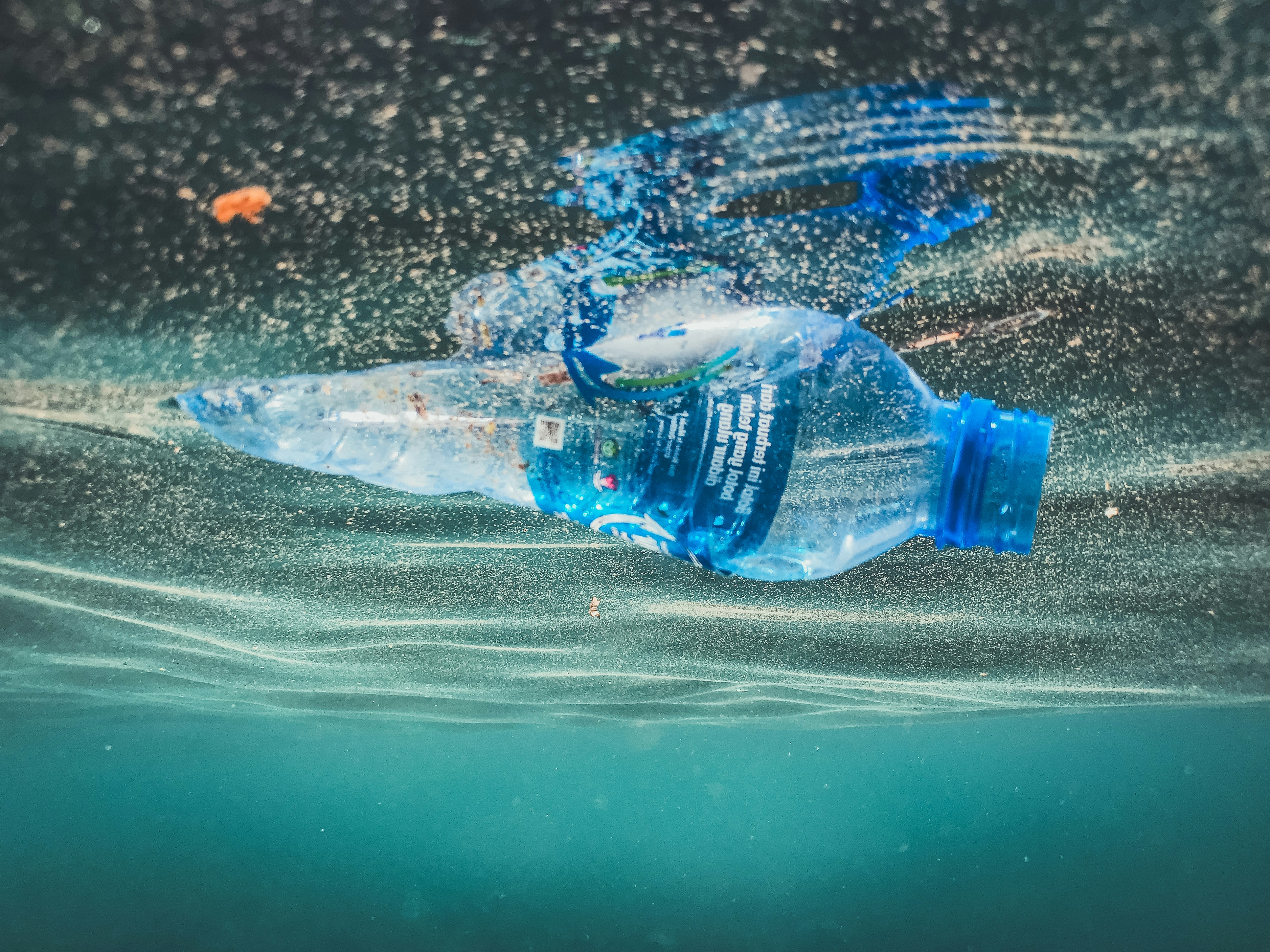
Can we ever escape plastic?

When I think about all the plastic we have created and put into our landfills and oceans, I am close to despair about ever cleaning it up.

Still, there are always people willing to fight the odds. Consider the initiative called Plastic Free July. Jacob Fenston has the story at the Washington Post.

“The idea took root in Australia more than a decade ago, and in recent years it has been gaining popularity in the United States. It all began when Rebecca Prince-Ruiz visited her local recycling sorting center in Perth, Australia, in 2011. She had always thought of herself as being eco-conscious, but after looking around at the heavy machinery sorting an endless stream of bottles, tubs, jars, cans and boxes, she had an aha moment.

“ ‘I suddenly realized that filling my recycling bin each fortnight didn’t make me the great green citizen I thought I was,’ Prince-Ruiz says. ‘The most important thing I should be doing was actually reducing my waste in the first place.’

“She decided to try to avoid single-use plastic for an entire month. The next month happened to be July. So Plastic Free July was born.

“Since then, the idea has spread around the globe. According to the Plastic Free Foundation, the nonprofit that Prince-Ruiz founded, 89 million people in 190 countries pledged to reduce their plastic use during July last year. The countries with the most participants are China and India.

“Over the last five years, participants have avoided more than 1.5 million tons of plastic waste, according to the campaign. That’s enough to fill about 80,000 garbage trucks. …

“Sending anything to the landfill or incinerator has a negative impact on the environment. But plastic is particularly problematic, experts say.

“ ‘Plastics are one of the greatest threats facing our planet today,’ says Melissa Valliant, a spokesperson for Beyond Plastics, a plastic-pollution-fighting nonprofit. … ‘We are not going to recycle our way out of this problem,’ Valliant says.

“Plastic waste chokes oceans and the creatures who live there. And plastic production is a major contributor to climate change: The industry emits four times the planet-warming emissions as the airline industry, according to a recent U.S. Energy Department report.

“But from the beginning, the Plastic Free July campaign has focused on solutions rather than the problem. In fact, the campaign’s website contains almost nothing about the harms of plastic, other than its sea turtle logo — a reference to one of the animals most at risk from ocean plastic.

The website offers ideas for plastic-free beginners — small changes like using reusable shopping bags. There are also suggestions for those further along the journey, including making your own toothpaste, sans plastic tube.

“Prince-Ruiz says that first plastic-free month was harder than she’d thought it would be. … Her best advice for newbies: Don’t try to quit plastic cold turkey. Instead, start with a quick inventory of your plastic use — go through your fridge and pantry and trash — and choose one or two places to work on eliminating or reducing your consumption. …

“Freweyni Asress, a D.C. resident who has written about living a zero-waste lifestyle, recommends finding a buddy or two to do the plastic-free challenge with.

“ ‘When there’s a community of people participating in something like Plastic Free July, it really reinvigorates you,’ Asress says. …

“Of course, going plastic-free can be more challenging depending on your circumstances. In the Midwest, for example, store clerks are not always receptive to the idea of skipping plastic bags, Harper says. On one shopping trip where he was only buying a few things and didn’t need a bag, the checker forced one on him, citing concerns about shoplifting.

“ ‘She would not let me leave without a bag,’ Harper says.

“When Asress started her zero-waste journey in 2016, she was working at a food co-op that had a large bulk section and many plastic-free products. But she found not all plastic-free products worked for her.

“ ‘A lot of the hair products that were sustainably packaged or provided in bulk bins were specifically for White people’s hair,’ says Asress, who is Black. … ‘It has to be practical, and we have to be able to figure out ways to be able to include everybody.’ …

“Valliant says the key is to move away from disposable containers and packages and go with materials that can be used over and over. Refundable deposit systems can make this economical.

“Travel to Latin America, Africa or Asia, for example, and you’ll find refillable soda and beer bottles are still common — each one can be filled, purchased and returned as many as 30 times before it breaks or is worn out.”

More at the Post, here.

Read Full Post »

« Newer Posts - Older Posts »