Feeds:
Posts
Comments

Posts Tagged ‘happy’

A great deal of thought has been given to what makes for a happy childhood. Some studies even aim to show which countries have the happiest children.

In the Netherlands, a uniquely Dutch evening ritual may have something to do with overall contentment.

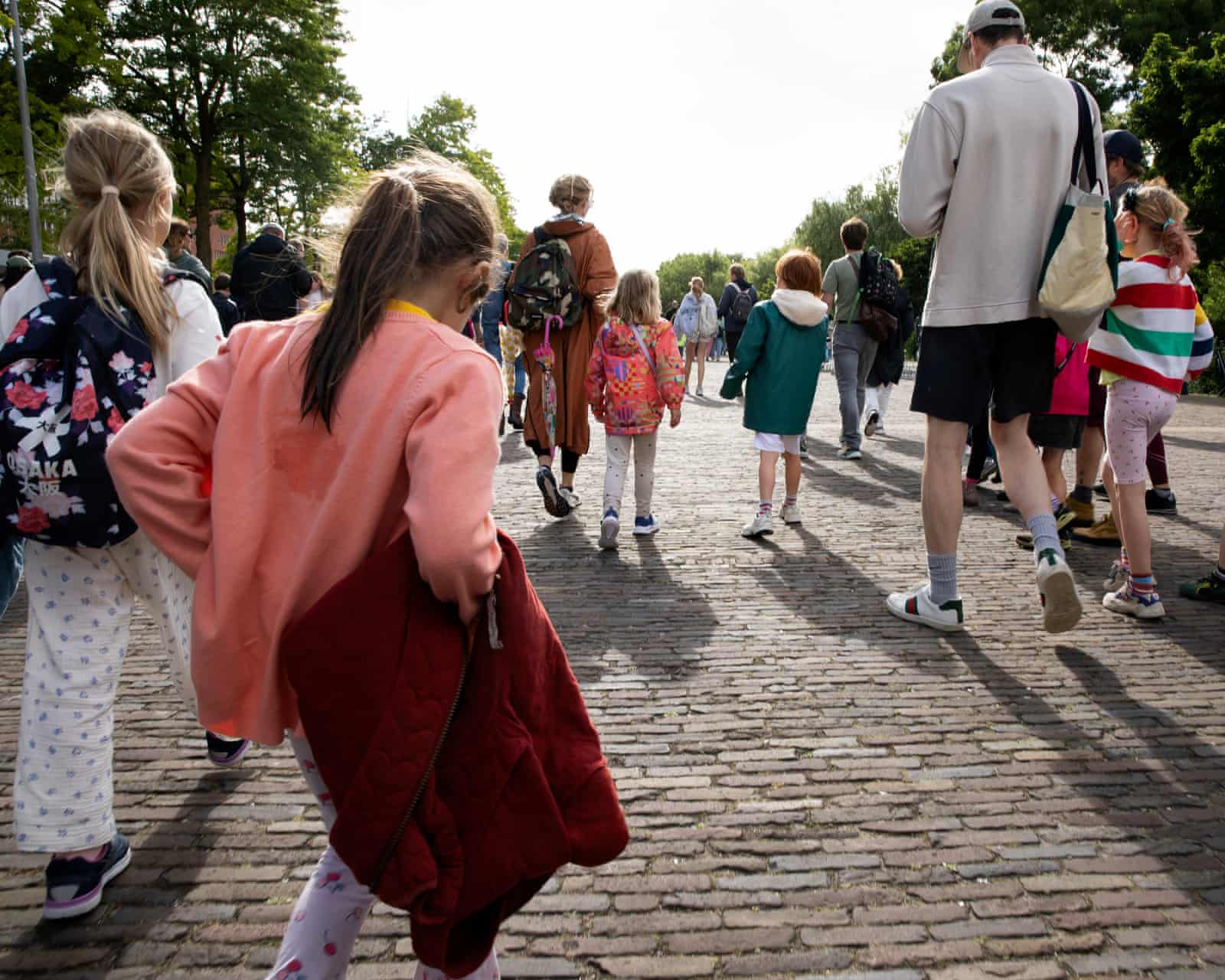
Hannah Docter-Loeb writes at the Guardian, “I shouldn’t have been surprised that the rain didn’t stop the Dutch kids. All day it had been thunderstorming, and the forecast didn’t look so great for the evening. And yet at 5pm, hundreds of kids started arriving – many by bike – with their parents to Amsterdam’s Westerpark, a beloved city park that caters to a more residential area of the capital. Today, it functions as a starting point: volunteers coordinate registration, and groups of children gather, decked out in raincoats and eager to embark on either a 5km or a 10km excursion around the surrounding neighborhoods.

“It’s the second night of Avondvierdaagse (which literally means ‘four-day evening walk’), organized by a group of neighborhood volunteers. It’s not a race, but if children complete every night, they get medals, a bouquet of flowers and, if they’re lucky, a lot of sweets.

“It’s not just Amsterdam; across villages, towns and cities in the Netherlands, hundreds of thousands of Dutch people are doing the same: every year, kids spend four evenings in early summer exploring their neighborhoods with their school friends and parents as part of the Week van de Avond4daagse. … There are also four-day cycling and swimming events. According to the Royal Dutch Walking Association (KWbN), which helps coordinate the events, half a million people take part every year, in 700 locations across the country, powered by tens of thousands of volunteers.

” ‘The event is just so Dutch – they don’t have this really anywhere else,’ says fellow volunteer Judith van Oudheusden as we cycle from one checkpoint to another to catch the wave of kids at another part of the route. We are responsible for stamping cards to confirm they have completed this part of today’s 10km walk. A full card means they can get their medal on the last day, a feat many are determined to accomplish. … Van Oudheusden participated in the activity as a child, she says, and then walked with her own children when they were younger. Volunteering is a full circle moment for her.

“Avondvierdaagse originated from military ideology, explains Inger Leemans, professor of cultural history at Vrije Universiteit Amsterdam and a researcher at the Royal Netherlands Academy of Arts and Sciences. The first march was held in 1909 in Nijmegen as a military training event. But when the second world war broke out, different towns started to organize their own walks for soldiers. After the war, citizens were invited to walk along with them: the four-day marches in Nijmegen grew into an immensely popular event where tens of thousands of soldiers and citizens walked in solidarity.

“Aimed at older crowds, this is now the largest walking event in the world, with 45,000 participants from more than 80 countries, walking the same 30km, 40km and 50km routes each year. According to Arno van Gemert, a team leader for programs and projects at KWbN, the Avondvierdaagse is … mainly aimed at primary school children and their parents. …

“Most people now see it as a national event, comparable to other festivities such as King’s Day, a national holiday to celebrate the Dutch monarch’s birthday, involving street parties, flea markets, and lots of orange apparel. Avondvierdaagse even has its own traditional delicacy: half an orange, topped with a white Wilhelmina peppermint and wrapped in a piece of muslin, for kids to suck on as they walk. …

“While the original walks were not necessarily to promote exercise, Avondvierdaagse has become a way to motivate kids to enjoy being outside and moving their bodies. ‘It’s important that children are physically active and can develop their motor skills from a young age,’ explains Sanne de Vries, professor of physical activity in childhood at Leiden University Medical Center. Encouraging children to go through the whole week of walking – rain or shine – and rewarding them at the end can help build a positive association with physical activity. ‘Positive emotion that sticks is important.’

“It also helps build resilience. ‘It’s been presented to them as a big challenge because it’s 5km and it sounds super hard,’ says Fernanda Gomes, 44, who is walking the shorter route with her seven-year-old daughter, Alicia. … ‘Even if it’s raining, they do it and the message behind it is very great for the children.’

“Dutch kids are consistently judged to be some of the happiest in the world. This year, a Unicef report again ranked them number one out of 44 western countries for overall wellbeing, and for mental health. Rich social relations were cited as a key factor. Research has shown that Dutch children have strong connections with their peers. In addition, many Dutch parents work part-time, so have more time to spend with their children. Children also have increased independence: parents let their kids roam more freely, and many start young.”

More at the Guardian, here.
Read Full Post »

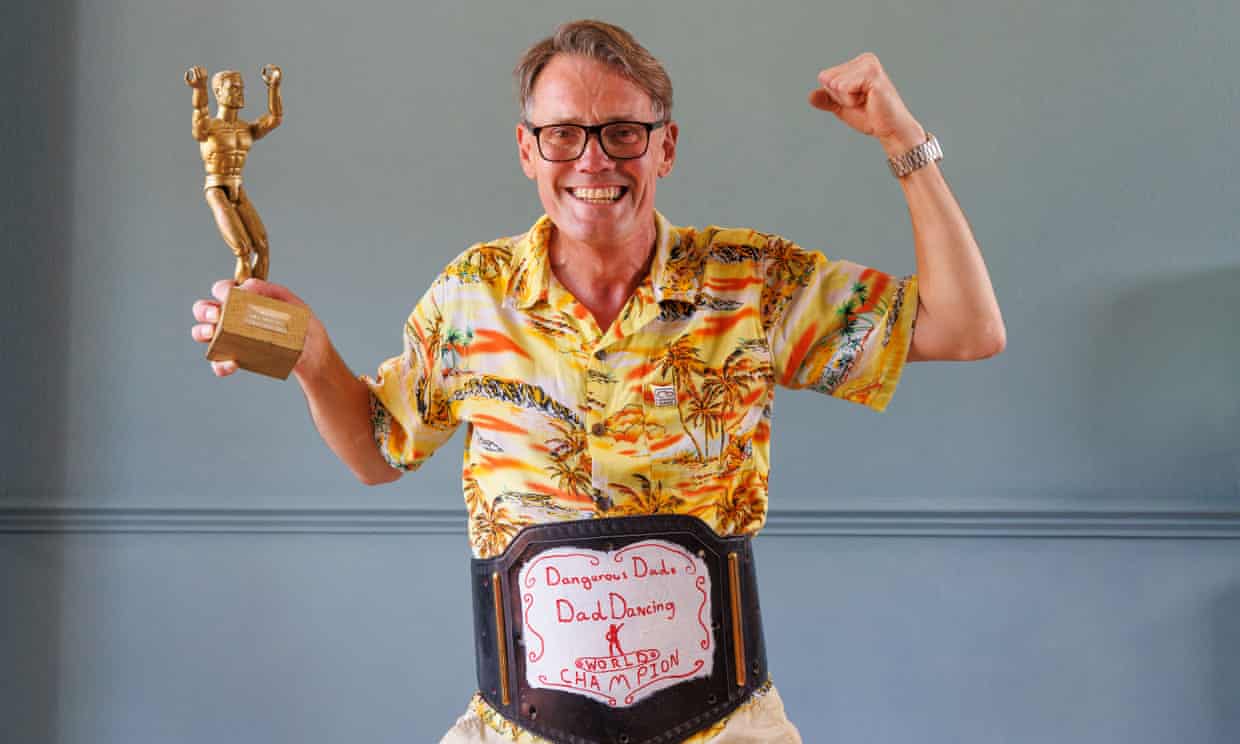
Photo: Roy Riley.
Robin Woods, from Devon, UK, was crowned World Dad Dancing champion at Dadfest last year. The Dadfest is judged by children.

When in the mood, both my son and son-in-law have at different times been known to perform some pretty inspired Dad Dancing, a zaniness that tends to affect all other potential dancers in the vicinity. We have videos.

As it happens, Dad Dancing is good for health.

Linda Geddes reports at the Guardian, “In his early 20s, Prince William was often seen stumbling out of night clubs after a night of grooving. Now, however, as though a clock has struck 12, this youthful cavorting appears to have transformed into something altogether more cringeworthy: dad dancing.

‘In a viral video captured at a Taylor Swift concert, the heir to the throne was filmed with his arms aloft, chest shimmying swiftly – and somewhat stiffly – to the beat. … Experts argue that dad dancing should be celebrated, not slated, for the numerous benefits it can bring.

“ ‘When I look at Prince William dancing, I just see someone who’s smiling, he’s happy, and dance does those amazing things,’ said Dr Peter Lovatt (AKA Dr Dance), the head of dance psychology at Movement in Practice and author of The Dance Cure. …

“Dr Nick Neave at Northumbria University, found that young women judged men to be good dancers if they had a varied repertoire and more moves that involved tilting and twisting the torso and neck – although most men display highly repetitive moves involving their arms and legs, but not the rest of their bodies. …

“As well as boosting familiarity and trust, other studies have suggested that improvised dancing – or ‘groovy moving’ – also changes the way we think and solve problems.

“Lovatt said: ‘We know that anxiety and depression are associated with being stuck in negative patterns of thinking, and when people engage in dance, those negative thoughts get disrupted for a while. There’s a lifting in their mood and they break away from those set patterns of thinking.’

“To Dr Ian Blackwell, a visiting lecturer at Plymouth Marjon University and the organizer of the World Dad Dancing Championships, the scrutiny of William’s dancing is a reflection of how society still expects men to conform, and not express themselves. ‘It’s a shame that anytime that a dad gets up to move, it has negative connotations – it’s embarrassing for him and the children, it’s embarrassing for the public. We know the value of dancing for health, wellbeing and making friends. It’s something that we should celebrate.’

“Despite further research by Lovatt suggesting some men avoid dancing because they fear being judged, men’s confidence in their dancing abilities usually grows as they get older – and once they hit their mid-60s, it ‘goes through the roof.’

“The reigning World Dad Dancing champion, Robin Woods, a father of three from Paignton in Devon, said he has not been shy about sharing his triumph on Facebook. ‘I think the people that know me from when I used to go out a lot – and always ended up on the dance floor – were pleased that I’ve finally been recognized,’ he chuckled. ‘It’s a nice thing – it’s not a serious thing – and so it’s fine that I’m making fun of myself.’

“Woods, who describes his usual dancing style as ‘freestyle’ with influences from James Brown and Michael Jackson, was not even sure what dad dancing involved when he entered the competition, which is judged by children and takes place at DadFest in Devon each September. ‘I just assumed it would be a bit more enthusiastic and amateurish than normal dancing – so, I just went for it and exaggerated everything I did.’

“He claimed the title after a hard-fought dance-off with two other finalists performed to ‘Mr Brightside’ by The Killers and ‘Baby Shark’ by Pinkfong.

“Blackwell said that while the clip of William’s dancing was too short to judge whether he could be in with a chance of winning, ‘he would be very welcome to come to DadFest in September so we can see the full extent of his moves and whether he’s got a decent Lawnmower Starter, Big Fish, Little Fish, John Travolta, or Lasso.’ ”

More at the Guardian, here, including a photo of Taylor Swift with Prince William. No firewall.

Read Full Post »

px7pz2qvff3jtvnpho3qfa

Image: GamesRadar
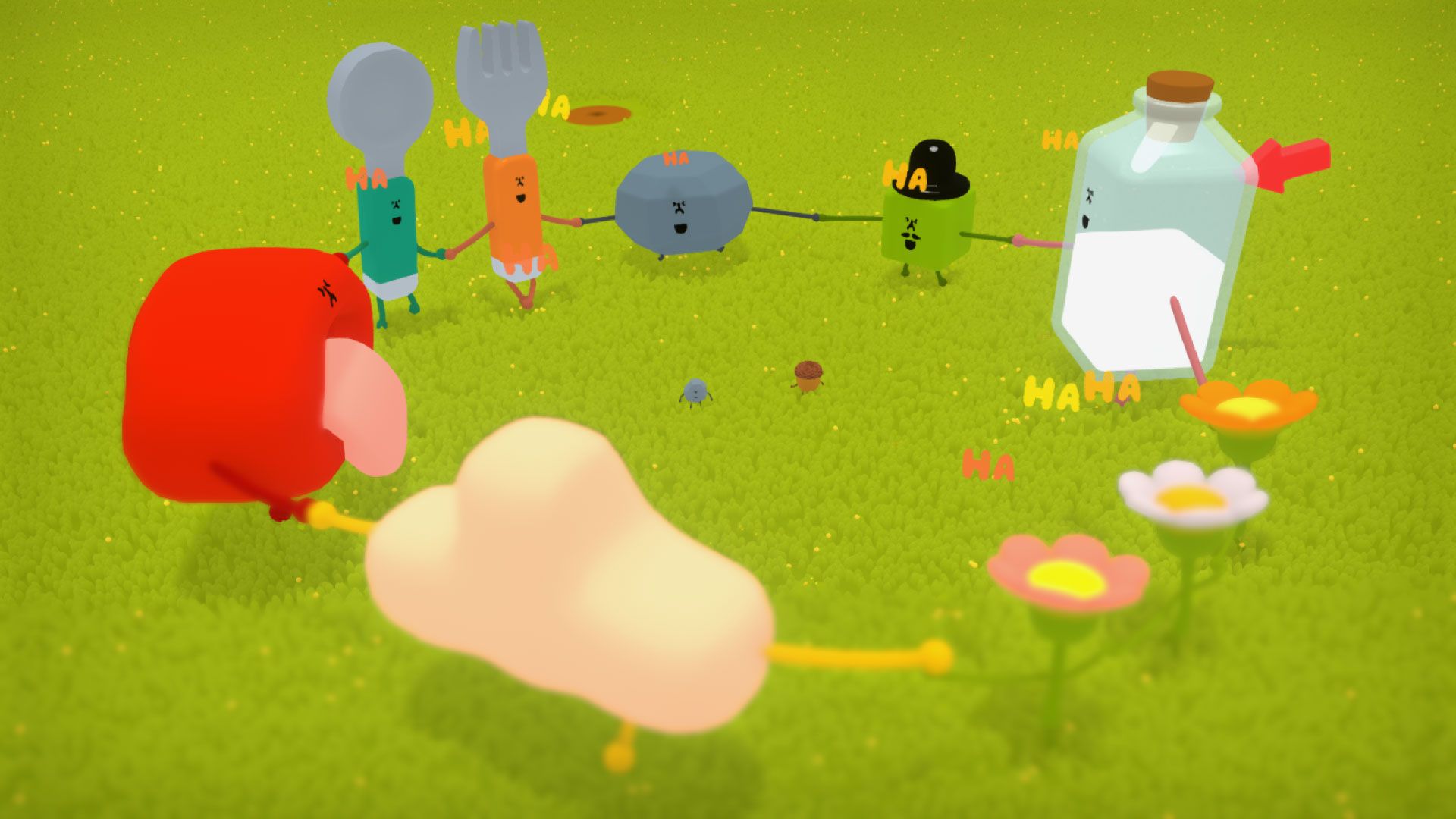
This video game for children is all about joy, love, peace … and being silly.

I know almost nothing about video games, other than that my grandchildren are fascinated by them. But a recent article in the Los Angeles Times opened my mind to how important they can be.

Todd Martens writes at the Los Angeles Times, ” ‘Meow!’

“Artist and unconventional game developer Keita Takahashi has just overheard a feline through the telephone line. He laughs and begins asking questions about said cat. It’s the moment Takahashi seems most comfortable and chatty during our long-distance interview, a detour from discussing his latest game, which is about explosions, golden poop and, ultimately, how to be better people.

“ ‘Wattam,’ the long-awaited work from the developer behind the endearing cult smash ‘Katamari Damacy,’ itself a jubilant celebration of fun and optimism, is also about seeking out the joy in the everyday, namely the objects that surround us and can sometimes be taken for granted. If it existed in the world of ‘Wattam,’ for example, a random cat’s meow would be cause for celebration, a reminder that beauty and joy is not only everywhere but too often fleeting.

“Yes, that’s heavy stuff for a game in which a walking and talking mouth might devour an anthropomorphic apple and then turn the latter into a human-like piece of feces that wants to spread love, but Takahashi’s metaphorical approach to game-making is one in which play is utilized as an expressionist tool. …

Objects are simply excuses to explore interactions, to show that a toilet, a telephone, an acorn, an octopus toy, an onion, a nose, a castle-sized cake and a bounty of other random things can and should live in harmony.

“ ‘Wattam,’ Takahashi says, was inspired by watching his two younger children play. He wanted to create something that presented a more hopeful view of the world.

“ ‘Kids are so great,’ the Japanese developer says. ‘They can enjoy everything, even small things. They can run around and be happy and then suddenly cry or get angry. But they can get that happy feeling back so quickly. That’s unbelievable. That’s like a different creature.’ …

“In ‘Wattam,’ as in ‘Katamari Damacy,’ there’s an underlying sense of rebuilding the world, of correcting a past generational mistake. … Objects are drawn in the bold, rounded colors of infant toys sprung to life; they slowly and awkwardly wobble, bumping into one another and even crawling and climbing all over one another.

“There are occasional missions — retrieve a receiver to stop a telephone set from crying, or create a body of water to prevent the season of summer from being sad — but mostly ‘Wattam’ is about wonder: What happens if I climb a tree? What happens if I explode? What happens if I get eaten? …

“When he lays it all out, it becomes clear why one of the core abilities of ‘Wattam’ is holding hands. Solutions in the game can come just from creating giant dance circles, of watching the hand of a flower touch that of a crown. But be careful of the latter: ‘[inventory] descriptions tell us that those who wear a crown — those who flaunt their power — are ‘susceptible to losing it.’

“Upon arriving in Vancouver and discovering its diversity, Takahashi marveled that the city functioned without everyone warring with one another.

“ ‘For me, it was very impressive,’ he says of the shift in cultural points of view. ‘There were so many different races of people in Vancouver. They speak different languages, like different Asian or European languages. They speak English. They work together. …

” ‘I just believe that while differences make so many problems, it’s differences that make our cultures more deep, more nice, and make our perspective more wide. I just wanted to make a video game about our differences, but a game that would get over our differences.’ …

“While Takahashi’s ultimate goal for ‘Wattam’ may be to strengthen communication between us, he’ll be content, no doubt, if the game’s audience simply finds a greater appreciation in all that surround us.

“ ‘When I find a very nice very small object — beautiful fruit at the grocery store, or nice plants in the flower shop — I’m just happy,’ he says. ‘I don’t need to go on vacation. … I’m happy to just be in a peaceful environment. I’m happy to walk around the city and take the bus.’ ”

More here.

Read Full Post »

Here is an idea whose time has come. Aux armes! We need to remove the barriers to napping!

Olivia Vanni at BostonInno explains the revolutionary new Sleepbox concept.

“Sleepbox, a startup that’s recently set Boston roots, is making our wildest dreams come true: You will soon be able to sleep soundly and safely in any public place conceivable. As the name implies, the company has developed cozy, technologically decked-out cabins that can be set up just about anywhere — in airports, offices or downtown metropolitan areas — and rented by folks looking to catch some Zs.

“How did this visionary venture come about? According to Mikhail Krymov, CEO of Sleepbox and research fellow at MIT, he and his business partner Alexey Goryainov started it as a theoretical side project for their architecture firm Arch Group. The two professionals travel a lot for work and were constantly subjected to flight delays and layovers where all they could do was wish for a comfortable, private place to rest. From their personal experience, they created an initial design for Sleepbox. But it was meant only as a concept, at first.

” ‘It was just a design idea, but then it was published — it was actually published quite a few times — we started receiving requests and orders from all over the world,’ Krymov told me. …

“There are some customers who are buying them for noncommerical uses — say, companies installing them in their offices for employees to use for free. However, there are clients who buy them with the intention of charging people to rent them, like airports and municipalities. …

” ‘I really want people to be more happy, productive and healthy by having enough sleep, and hope that our solution will help,’ Kyrmov said.”

Ye-es!

More here.

Photo: Mikhail Kyrmov

Read Full Post »

Melissa Dahl writes in NY Magazine‘s Science of Us section that thinking of happy images can put a spring in your step and that in turn can make you feel better.

Dahl references new research on the topic. “Walk like a happy person and you’ll actually feel happier, says a study published online in the Journal of Behavior Therapy and Experimental Psychiatry. 

“In the study, people walked on a treadmill for 15 minutes. Around them were cameras with sensors that picked up their movements, and in front of them was a screen displaying a gauge that moved to the left if they walked like they were depressed, and to the right if they walked like they were happy. … But, because researchers are sneaky, the people in the study didn’t know what the gauge was measuring. They were simply told to try to get the needle to move to the left, or to the right.

“Before the treadmill task, they were shown a list of words, some positive (pretty) and some negative (afraid, anxious). After they hopped off the treadmill, they were asked to write down as many of those words as they could remember. The people who’d been prompted to walk like a depressed person ended up recalling more negative words and (slightly) fewer positive words than the people who’d merrily bounced along on their treadmills. This, the authors conclude, means that the people who’d walked as if they were sad did, in fact, end up feeling sadder.” Read more here.

Skeptical as I am about psychological studies that base their insights on showing people a list of words, I think it’s definitely worth a try to walk like you’re happy.

I once read in a mystery that is very hard for a suspect to disguise his walk. One perp put a pebble in his shoe to throw off the detective.

And one year I watched how young women walked and tried to imitate the bounce, but it was way too much work. Might as well try to change your handwriting. Or your unique way of washing dishes.

Photo: Getty Images

Read Full Post »