Feeds:
Posts
Comments

Origami and Engineers

merlin_164618445_1535c5ad-0e5e-48e9-90f9-7020e6dbeefd-superjumbo

Photo: Ryan Jenq for the New York Times
Robby Kraft created two origami, left,
“using his own custom code for developing new crease patterns.” He also folded “Hyperbolic Cube,” right, which was designed by Thomas Hull of Western New England University.

Origami is an ancient paper-folding technique that is turning out to have some very modern applications.

Kathleen Massara at the New York Times interviewed a few folks who know a lot about it.

” ‘I would say the biggest rule is no cutting,’ said Wendy Zeichner, the president and chief executive of OrigamiUSA. It’s ‘one piece of paper and no glue.’

“OrigamiUSA is a nonprofit organization dedicated to educating the public about the art form. The group traces its roots to the 1950s, when Lillian Oppenheimer, one of its eventual founders, began to communicate with paper folders around the world, including Akira Yoshizawa in Japan, who is often credited as the father of modern origami — they would send each other diagrams explaining how to fold different shapes from a single square sheet of paper. …

” ‘Origami is really almost as old as paper,’ Ms. Zeichner explained — it means ‘to fold paper’ in Japanese — and paper in sheet form is thought to have been invented in China around 105 A.D. To start making shapes like cranes and frogs, it boils down to two basic techniques: mountain folds and valley folds, which are different ways to make the edges meet. After that, you can get creative….

A few years ago, NASA engineers were able to create foldable telescopes and a flower-shaped shade to block out light from distant stars by using paper-folding techniques.

” ‘If you want to send something in a rocket, it has to be packed small,’ Ms. Zeichner said. ‘The same algorithms you would use in origami would be used in this.’ The same goes for folding an airbag into a car, or creating pop-up homeless shelters.

“Precision is key, whether someone is folding a humble crane or a complex modular structure with interlocking parts. So is enthusiasm. ‘The majority of people are either enthusiasts on the simple end or on the complex end,’ said Jason Ku, a lecturer at M.I.T. and a faculty adviser to the origami club there. …

“The goal is to arrive at the most efficient and elegant means of achieving a particular effect. ‘I want the result to be complex, but I want to simplify the process it takes to get there,’ Dr. Ku said. …

“As in math, it’s important to show your work. … ‘Showing your technique is one of the biggest aspects of origami,’ said Taro Yaguchi, the founder of Taro’s Origami Studio in Brooklyn.

“Before the 1950s, certain origami objects were more difficult to create, partly because diagrams weren’t standardized. Some guide books simply presented the results, without the necessary steps to get there. Yoshizawa, in Japan, and Samuel Randlett, in the United States, helped develop a set of international diagram conventions that is now referred to as the Yoshizawa-Randlett system.

“ ‘Before it got codified, it could be very confusing,’ said Jeannine Mosely, a software engineer in Cambridge, Mass. Ms. Mosely is known for large-scale projects such as an origami Menger sponge, a series of cubes adding up to a giant cube, made out of business cards. At the time, the fact that she didn’t use square paper caused ripples throughout the origami community. ‘There were people who didn’t want anything to do with my work because I started with rectangles,’ she said. …

“Diagrams and algorithms won’t be much help if you’re not using the right materials. ‘It’s a mistake a lot of beginner’s make: they go online and find the most beautiful kind of paper,’ said Jewel Kawataki, a New York-based jewelry maker who creates different designs with chiyogami, a sleek fabric-like paper. “You can see their frustration in YouTube tutorials. They’ve used the wrong paper.’ …

“Toshiko Kobayashi, an art therapist in Manhattan who grew up folding as a child in Tokyo after World War II, believes in the art’s ability to heal. ‘Just after the war, there was nothing. Paper was one of the readily available toys for me,’ she said. In New York, she has been busy introducing the art to different communities through the Origami Therapy Association in Manhattan, which she founded in 2002. …

“For many, the practice is embraced for its calming aspects. ‘It’s lessened my anxiety a lot,’ Ms. Kawataki said.

“Regardless of techniques, the community, whether in person or online, keeps people excited about the art form. ‘Origamists from around the world will meet and fold together,’ Ms. Mosely said. ‘They might not be able to talk to each other, but they can fold.’ ”

For some breathtaking photos, check out the New York Times article, here.  And be sure to watch the origami documentary Between the Folds by Vanessa Gould.
Magical Bookstore

merlin_163865472_330a0776-0a88-4fa0-bbca-c08b12292a1c-jumbo

Photo: Bryan Anselm for the New York Times
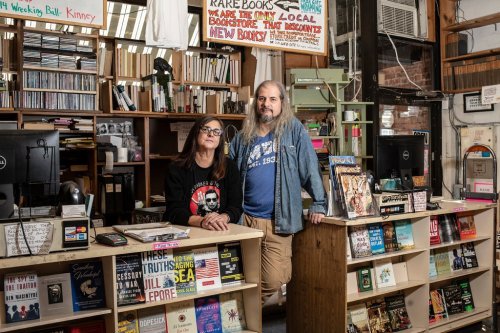
Co-managers Maureen Disimile and John D. Ynsua at the employee-owned Montclair Book Center in New Jersey innovate to keep the magic going.

Who doesn’t find a bookstore magical — especially an independent bookstore? It takes a certain amount of flexibility and creativity to keep one going and not get plowed under by a certain online billionaire. If we all look for books first at our local indy, we can help keep the magic alive.

In New Jersey, Montclair Book Center has found that employee ownership, ability to improvise, and independent-minded customers are critical.

Dana Jennings writes at the New York Times, “Montclair Book Center is 35 years old, going on eternity. A ramshackle throwback to a funkier, more literary time, the store has shelves handmade from raw lumber. And its customers and clerks are often just as eccentric as the shelves.

“I’ve been shopping and snooping there since 1995 and still haven’t exhausted all of this biblioscape’s labyrinths and warrens — some of which, I suspect, lead to C.S. Lewis’s Narnia or Mervyn Peake’s Gormenghast. …

“I’ve stumbled across Italo Calvino limited editions, a hardcover of William Burroughs’s ‘Naked Lunch,’ and a stash of musty, black-and-white comics magazines from the 1960s and ’70s that included ‘Eerie, Creepy and Savage Tales.’ …

“The place is suffused with the sweet reek of ink, decaying pulp and vintage book dust — seductive scents that are like pheromones to book lovers.

“ ‘Unless you work at a bakery, you don’t get many customers talking about how good your store smells,’ said Pete Ryby, who has worked there since it opened in 1984 and is now the store’s primary owner. (Other employees own smaller stakes.)

“The pre-World War I building itself is so cockeyed that it looks set to pratfall down the street, as in some silent Buster Keaton two-reeler. … Still, the store is orderly if not antiseptic. Signs are hand-lettered; there are plenty of chairs for contemplation and ladders for climbing; and, whether by accident or puckish design, the crime section stops short at a fittingly dead end. …

“When I tell people about Montclair Book Center, I almost always mention Ynsua, a friendly 56-year-old filigreed with tattoos and earrings who started there in 1999 and who embodies its eclectic vibe. He owns five kilts and hundreds of vintage T-shirts — Count Chocula, the Emma Peel and John Steed ‘Avengers’ — and his passions as a bibliophile include comics, science fiction and pre-Renaissance European history. He’s also the store’s resident carpenter and a talented cartoonist who once studied at Joe Kubert’s cartooning school in Dover, N.J.

‘I’ve tried not to work for corporations,’ Ynsua said. ‘I like bosses who own their businesses. I like jobs where I can improvise.’

“There’s plenty of that at the Book Center. Indeed, improvisation has helped the store stay in business. Since it started selling used vinyl in 2014, for example, the records ‘have brought in a lot of new customers and increased foot traffic,’ said the co-owner Maureen Disimile, who manages the music side of the business. …

“A quick look at the records revealed a healthy infestation of Beatles; ‘Together,’ by Marvin Gaye and Mary Wells; the musical ‘Hair,’ in the ‘version originale française”’; and even the 1960s British blues rockers Blodwyn Pig. There was also a strong dose of 45s.

“Still, the store comes down to what employees call ‘book people.’ ‘I like being around literature, art and music, and the people who like that stuff,’ said Ynsua, who doesn’t own a computer or subscribe to cable TV. ‘My brain isn’t calcifying here.’

“Lucas McGuffie, a clerk since 2014, added:

‘The attraction is the books, and the book people. They aren’t stupid. They’re more open-minded. They’re smart enough to know that they don’t know all there is to know.’ “

More at the New York Times, here. By the way, if you love vintage vinyl records like the ones at the Montclair Book Center, check out a great R&B collection on my nephew’s site, here. For listening only.

2704a953a69d47e498ef6496f7fc748f

Photo: Taiwan News
There’s an edgy vibe among artists in and around Moscow. The Associated Press
describes one painter:  “Hailing from southern Russia, self-taught painter Pasmur Rachuiko [right] offers an extreme outsider’s view of Moscow reality.”

Speaking of authoritarian governments that label art and architecture they don’t understand “degenerate,” we turn now to a free-spirited movement that is rising up in Moscow, mostly in the suburbs.

Kate de Pury of the Associated Press says that one self-taught artist’s “paintings sparked disapproval from Moscow’s culture department.” Sounds good to me.

“As sleet falls on a cold November day, communist-era apartment blocks dominating Moscow’s suburban skyline look bleak and forbidding,” writes de Pury. “But it’s precisely these sprawling city outskirts that are the focus of a major international art exhibition.

“ ‘Beyond the Center’ is staging art events across Moscow’s vast urban space [culminating] in March 2020. With the participation of the Museum of Vienna and the Austrian Cultural Forum, the exhibit uses contemporary art to explore the many hidden facets of life outside the Russian capital’s nucleus.

“Simon Mraz, Austria’s cultural attache to Russia and director of the Austrian Cultural Forum in Russia, says the ‘real’ Moscow, where most of the city’s 12.6 million people live, is outside the center.

“ ‘They all come to Moscow with some dreams, facing struggles, hoping for a better future. They won’t find it in Red Square and definitely not in the Kremlin,’ Mraz, curator of the exhibition, told The Associated Press. …

“Hailing from southern Russia, self-taught painter Pasmur Rachuiko offers an extreme outsider’s view of Moscow reality. Burka-clad figures, policemen and wolves pose in the suburbs, gangsters have angels’ wings and young women carrying AK-47 rifles stare out of his canvases. Rachuiko depicts himself as ‘everyman’ among this cast of new Russian archetypes. …

“The paintings sparked disapproval from Moscow’s culture department, but Rachuiko found support from the arts establishment, including theater director Kirill Serebrennikov, himself still under threat from the authorities after a long term of house arrest. …

“The urban renewal project aimed at impressing World Cup visitors to Moscow in 2018 didn’t reach Liublino, a working-class suburb. In this dilapidated industrial zone, the ‘Museum of Industrial Culture’ houses a private collection of discarded objects, amassed by former auto engineer Lev Zheleznyov. It’s a social history of more than 70 years of communism, told through ordinary things people recognize from a shared past.

“ ‘It’s a museum of memory. We are not so interested in how a lamp works, more that it was in someone’s home,’ Zheleznyov said. …

“In ‘Polly wants a cracker,’ Austrian artist Michele Pagel sees a darker side of Moscow – domestic abuse. Her visceral sculptures, on show in Mraz’s apartment, located opposite the Kremlin, seek to bring violence against women back from the peripheral vision of Russian society to its central focus.

“Attending the opening, lawyer Alyona Popova campaigns to reverse a 2017 law decriminalizing certain types of domestic abuse in Russia. According to the advocacy group ‘You Are Not Alone,’ an estimated 16 million Russian women suffer domestic violence each year.

“A residential complex called Novo-Molokovo, just outside Moscow and still under construction, houses the newest generation of Muscovites. A studio apartment here costs $95,500. Curator Elena Ishchenko set art installations inside [one].

“ ‘We got used to viewing the suburbs as strange, remote areas we don’t want to visit,’ she said. ‘But when you get out here, thanks to the artist, you see something you wouldn’t expect.’…

“[Sociologist Natalia Zubarevich] hopes a grassroots civil society will grow in Moscow’s residential districts, but it’s a social trend the Kremlin watches carefully and any political activism brings repression. ‘This city shows what Russia could be,’ she said. ‘It’s our hope of modernization.’ ”

More at AP via the Seattle Times, here.

012920-window-ConcrdMa

I wanted to do another photo post but didn’t have very many photos. That’s mainly because I have been doing my daily walk indoors when it’s not nice out. ‘Round and ’round indoors. Kind of dull.

So I went to a couple free art exhibits, and now I have more pictures.

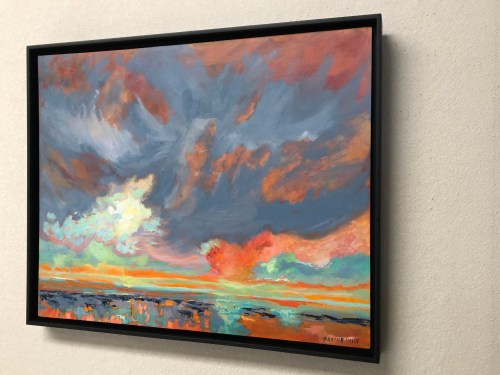
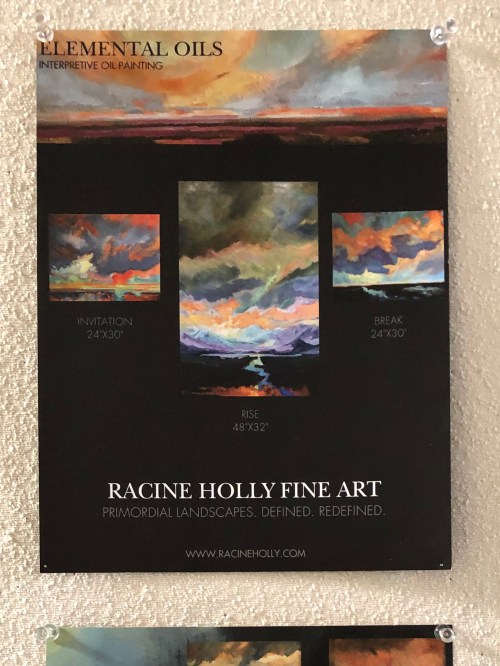
In Providence, Racine Holly was showing some dramatic skies at a church. When I went in, I didn’t see anyone around. Very trusting. I could hear construction workers talking behind a screen at least. I’m sharing the two oils I liked best. They both had “sold” stickers. The second one was tiny.

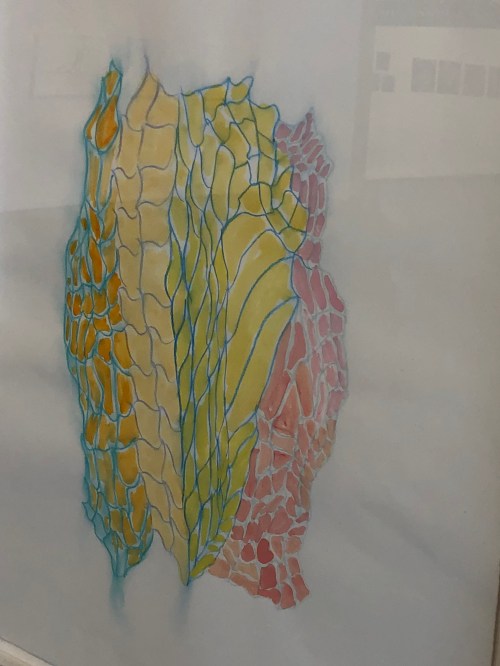
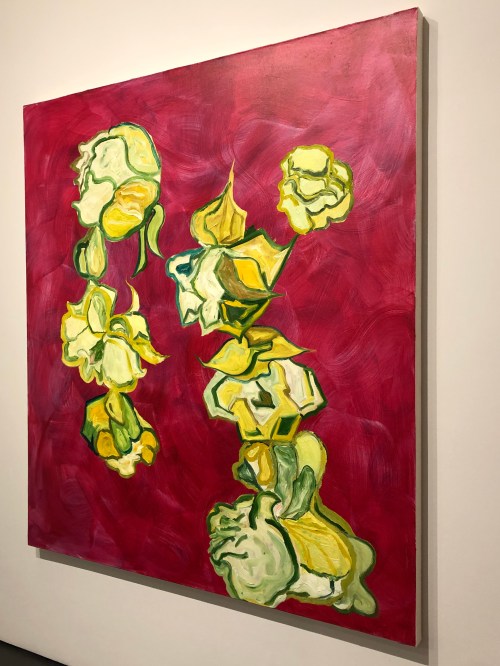
Then I went to the Bell Gallery at Brown University, where there was a show of work by Brown art professor Wendy Edwards that had been recommended by critic Cate McQuaid at the Boston Globe. I find I like art that McQuaid likes.

021720-free-Providence-art-gallery

This artist had a lot of works related to reproduction. The giant peach looks great in the Globe article but up close was “too buch for be,” to quote the Elephant’s Child. Below are a few paintings I liked better.

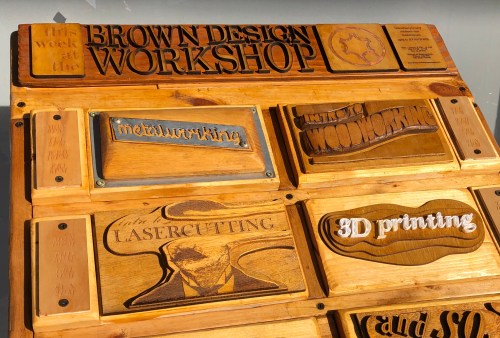
While at the Bell Gallery, I also took a picture of a Brown University Design Workshop pedestal that I didn’t quite understand. It looks like a range of stamping techniques carved in different styles. But if you used one as a stamp, the words would be backwards. It’s probably just to show potential clients what can be done.

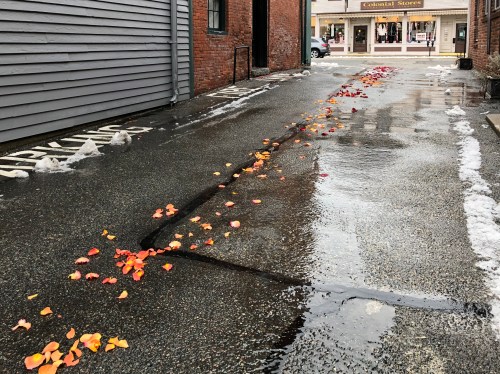
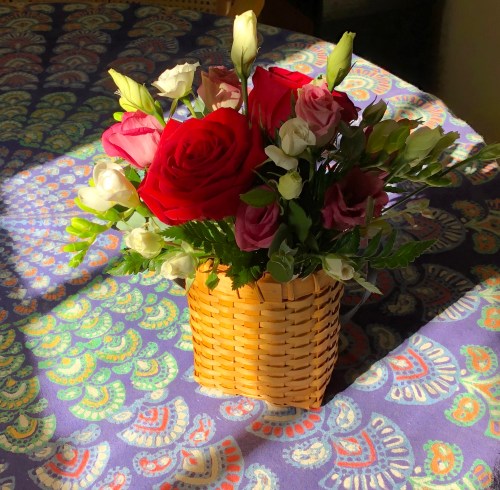
The final six photos reflect recent travels in Massachusetts and Rhode Island. Note the path of rose petals a clever florist scattered to her door for Valentine’s Day shoppers to follow.

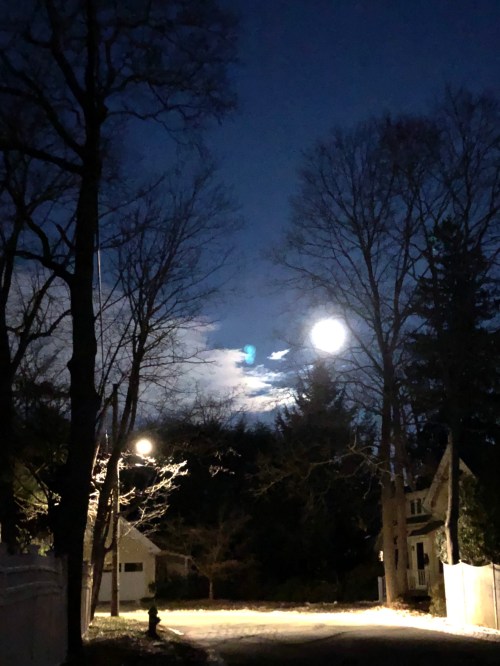
If anything needs more explanation, please let me know in Comments. (Did you get where I’m trying to imitate Magritte?)

021720-dramatic-Racine-Holly-sky

021720--small-Racine-Holly-painting

021720-exhibit-in-Providence-church

021720-no-idea-but-I-like-it

021720-artist-Wendy-Edwards-likes-fruit-with-seeds

021720-Brown-U-art-prof-shows-where-you=-come-from

021720-Brown-U-Design-carved-pedestal

020320-bring-your-own-container

020320-sign-in-Providence-about-a-horse

021320-rose-petal-path-to-florist

021420-bouquet

020620-Magritte-in-the-neighborhood

020820-Magritte-moon


merlin_159839055_96531db4-6471-4426-8d7a-ac42eb8b93d1-jumbo

Photo: Yagazie Emezi for the New York Times
“The neighborhood of the Médina in Dakar has welcomed street artists from all over the world to practice their craft in what the founder of the project calls an open sky museum,” writes the
New York Times.

You can’t keep a good artist down. Art will out. It’s a reassuring thought. In the course of history, we’ve seen governments that think they know best, branding cutting-edge art and architecture as “degenerate.” Fortunately, such governments don’t last.

In Senegal, Anemona Hartocollis of the New York Times discovered a vibrant street art community that has grown up almost spontaneously.

She writes, “On one wall, the painting of a marabout, a Muslim holy man, peers out from behind a line hung with laundry. Nearby, a poster of an African woman in a bustle has been pasted to a house. …

“These are the painted houses of the Médina, a poor and working-class neighborhood near downtown Dakar. The neighborhood has welcomed street artists from all over the world to practice their craft in what the founder of the project calls the open sky museum. …

“Artists from not just Senegal but Burkina Faso, Algeria, Morocco, Congo, France and Italy have come to paint on these walls. They in turn have brought art lovers and tourists into a neighborhood where they otherwise might not go, to mingle with people they otherwise might not meet. …

“Street art seems to come naturally to Senegal, where many small shops are adorned with images of what they sell. Paintings of scissors signify tailors; heads with fancy hairstyles advertise barbers; images of cows and bowls of milk herald the ubiquitous sweet milk shops; a drawing of a sheep broadcasts the presence of a vendor serving grilled meat.

“Shop art is commissioned by the shop owners, and sometimes painted by them too. But to paint on a house in the Médina neighborhood, it helps to go through Mamadou Boye Diallo, known as Modboye.

“Mr. Diallo, 31, was born and raised in the Médina, the son of an elevator operator. He dropped out of school at 15 to become a break dancer and rollerblader. He got to know the art scene by working as a messenger, delivering fliers on roller blades for art galleries.

In 2010, he created Yataal Art, a nonprofit arts collective, and painted the first wall in the Médina with friends. The beauty of it is that ‘you don’t have to take a nice shower and wear perfume’ to see the art, Mr. Diallo said. …

“ ‘You have to pass by him in order to work in the Médina,’ one of the street artists, Doline Legrand Diop, said. ‘He functions a bit like a curator.’ …

“In the beginning, it was not always easy to convince homeowners to let people paint on their walls.

“ ‘They wanted money,’ Mr. Diallo said. But as the project caught on, they wanted to keep up with their neighbors. …

“The painted-houses project has gotten so big that this year, Delphine Buysse, a Belgian curator, has arranged for artists in residence to live at a luxury hotel in Dakar, the Pullman, for a week, while painting in the Médina.

“One of the most recent wall paintings was a collaboration between Kouka Ntadi, a Congolese-French artist, and Barkinado Bocoum, a Senegalese artist. Mr. Ntadi painted abstract portraits in black-and-white, and Mr. Bocoum added folksier portraits in bright colors.

” Mr. Ntadi loved sharing the neighborhood with the commercial artists of the barbershops and the milk stores.

“ ‘I would say there is not really a border between the two in Africa,’ he said. ‘It’s not like in France or the U.S. where there is a snobbism about art, and you can’t be in marketing. So for sure, we can still be an artist and make a design for a bottle of milk or a side of beef.’ ”

More here.

tknsbpcqfei6viwqd7pvru32sa

Photo: Robert Sansom
Employees at a small bookshop in England were inundated with orders last week after a day with no sales was reported on Twitter. Pictured here is John Westwood, one of the shop’s owners.

For better or worse, the thing about Twitter is it can reach a lot of people very fast. Some people reached by tweets are not so nice. In this story, though, kindly Twitter users decided to give strangers a helping hand. Of course, it helped that one person with millions of followers took an interest.

“After more than 100 years in business,” writes Cathy Free, “the Petersfield Bookshop in Hampshire County, England, had perhaps never seen a day quite like Jan. 14.

“For the first time that anyone could remember, the independent shop on Petersfield’s Chapel Street did not have a single sale, saddening bookseller Robert Sansom so deeply he decided to tweet about his ‘tumbleweed’ day.
‘Not a single book sold today. . . £0.00,’ he wrote. …

After closing up shop that day, Sansom, 48, went home, thinking the 102-year-old secondhand shop specializing in antique and collectible books might have to close permanently, he said.

“But overnight, something unexpected happened. Sansom’s tweet went viral and was retweeted by author Neil Gaiman to his 2.8 million followers, prompting thousands of people to inundate the shop’s website with orders.

“The worst day ever quickly turned into the best day ever, said Sansom, who works at the bookstore with owners Ann Westwood, her son, John Westwood, and sales clerk Barbara Kelsey.

‘‘ ‘Just reading the messages we have received has brought tears,’ he said. ‘This was a lightning strike. …

‘’We’re now actively looking for ways to pay it forward.’’

“For the past two weeks, Sansom, his co-workers and a small band of volunteers in Petersfield — population 14,372 — have spent 14 hours a day frantically filling hundreds of orders and mailing them to customers around the world. …

‘‘ ‘One lady, recently back home in the States after a UK holiday, sent us her leftover UK currency,’ he said. ‘One couple drove 460 miles, round trip, to visit us, and many drove at least an hour or two.’ …

“On the afternoon he tweeted about his lonely day, he said, a storm had swept into town, bringing steady rain and putting a damper on customers.

‘‘ ‘There wasn’t a single penny in the till — not a book was sold to a flesh-and-blood customer,’ he said. ‘Of course we have slow days — everyone does. But that particular week, the shop was facing one of its worse crises ever. Even on a slow day, we would expect to sell 20, 30, or 50 books. We were wondering if we would have to announce the closure of the shop by the end of the week.’ …

“Now that the shop has 21,000 Twitter followers, ‘We have a voice we didn’t have before,’’ Sansom added. ‘Please, go and find your local indie bookshops, new and secondhand, and buy real books from them. If you don’t, they will just close and disappear. … You won’t even notice to start with,’ he said, ‘and then you will. And it will be too late.’ ”

How lovely that the shop is looking for ways to “pay it forward”! I wonder what they will decide to do. Encouraging followers to shop at indie bookstores is a good place to start. Personally, I avoid Amazon for books, food (Whole Foods), and other items unless I have tried and failed to get the thing somewhere else. Too much power in one pair of hands.

Although I read this story in Boston’s Sunday Globe, the article originally appeared in the Washington Post. More here.

3500

Photo: Hayam Adel/Reuters
Cat statues found near Saqqara’s necropolis are pictured in Giza, Egypt. Recently, mummified cats, birds, lion cubs, and an enormous mummified beetle have also been found.

Members of my extended family are making a trip to Egypt this year, where the youngest generation can meet relatives they have only heard about and visit famous cultural sites. Maybe a toddler will get to ride a camel, who knows?

Historic sites in Egypt are benefiting from ongoing discoveries by archaeologists, as Ruth Michaelson reports at the Guardian.

“A rare discovery of mummified big cats, cobras and crocodiles has been unveiled by Egyptian authorities.

“Egyptologists are thrilled at the cache, which includes dozens of mummified cats, 75 wooden and bronze cat statues, mummified birds, and an enormous mummified beetle three to four times the normal size. …

“Of five large mummified wildcats, two have been identified as lion cubs; the remaining three will be analysed to determine their species.

“ ‘If it’s a cheetah, a leopard, a lioness, a panther – whatever, it will be one of its kind,’ said Mostafa Waziry, the head of Egypt’s Supreme Council for Antiquities.

“The mummified large cats were found close to the remains of an adult mummified lion discovered beneath the Saqqara necropolis in 2004, and provide more information about the ancient Egyptians’ use of animals in worship.

“Worshippers either believed that the mummified animals were deities to be worshipped, or mummified the creatures in order to offer them to the gods. ‘People would make devotional offerings in the form of animals as mummies,’ said Dr Salima Ikram, an Egyptologist and mummy expert at the American University of Cairo. …

“Ikram was elated by the new finds, which she estimated date from the Ptolemaic period that ended in 30BCE. ‘I think it’s one of the most exciting series of finds in the world of animal mummies ever,’ she said.

“Egyptian officials hope the new discoveries will spark curiosity among potential visitors to the country in the run-up to the opening of the Grand Egyptian Museum close to the Saqqara necropolis. The long delayed opening is expected [in 2020], amid fervent hopes the project will help draw tourist numbers back to the highs of over 14 million visitors who came to the country in 2010, before the 2011 revolution which overthrew former autocrat Hosni Mubarak.

“Political instability and concerns about security drove down tourist numbers in the years following, dipping to record lows after the downing of Metrojet flights 7K9268 close to the resort town of Sharm el Sheikh in 2015. In recent years there has been a surge in arrivals, with 11.3 million people visiting Egypt last year, according to local news reports. The UK recently lifted a ban on flights to Sharm el Sheikh that had been in place since 2015.”

More at the Guardian, here.

http3a2f2fcdn.cnn_.com2fcnnnext2fdam2fassets2f191115120957-immigrant-food-columbia-road

Photo: Irena Stein Photography/Immigrant Food
Chef Enrique Limardo says the “Columbia Road” bowl at his restaurant, Immigrant Food, combines elements of Salvadoran and Ethiopian cuisine. A special side dish: opportunities to help recent immigrants.

People say, “I’m upset, but I don’t know what to do.” Or, “I don’t have time to do anything extra.”

Look, when you shop, do you have time put a can in the food pantry bin? Do you have time to write a handful of postcards to voters once in a while? There is always time to put a can in a bin; there are always nonprofits that will accept a tiny bit of volunteering. It adds up.

And here’s the biggest benefit: you will feel better. Was it Ann Landers or Dear Abby who was always recommending helping someone worse off as a cure for nonclinical blues? You just need to find a volunteer gig that fits your interests.

This post is mostly about a cool restaurant in Washington, but be sure to note what the owners are trying to do in addition to presenting delicious, creative dishes.

In November, Catherine E. Shoichet reported at CNN about a new restaurant that opened up in the nation’s capital.

“It’s called ‘Immigrant Food,’ ” she wrote, “and it’s just a block from the White House. The fast-casual spot caters to a weekday lunchtime crowd, with bowls blending cuisines from different cultures around the globe — like a dish that combines Vietnamese spicy-rice noodles with pickled bananas in what the restaurant says is an ‘ode both to Central America’s favorite fruit and to German-style pickling.’

“It also gives diners a chance to donate to local immigrant advocacy groups, all under a slogan aiming to bridge the political divide and find common ground: ‘United at the Table.’

“[Co-founder Peter Schechter] wants people to feel at home here, and to hear the story he’s excited to tell. …

“As the child of immigrants from Austria and Germany, Schechter says he felt like he had to respond to the surge in anti-immigrant rhetoric across the United States.

” ‘This isn’t the America I recognize. … Immigrants have been the foundation of growth and vibrancy. This country has been great again and again and again because of immigrants. …

” ‘Immigrants are feeding America,’ he says. ‘All of the industries that make food, whether it is the picking or the shucking or the meatpacking or the slaughterhouses, (or) in restaurants, the servers, the bus boys, this is an industry that is dominated by immigrants.’ …

“At Immigrant Food, menus available by the door describe each of the nine fusion bowls and five vegan drinks on tap. They also encourage visitors to donate to and volunteer with local immigrant advocacy groups.

“Among the suggestions listed on the restaurant’s ‘engagement menu’: teaching English, visiting detention centers, staffing hotlines and helping with mock ICE interviews. …

“There’s also a photo booth featuring a world map. Diners can point to where their families are from, snap a selfie and get a text message with a frame around the image that says, ‘We are all immigrants!’ …

‘People say, “I’m really upset about what’s happening, but I don’t know what to do,” ‘ Schechter says. ‘And so, you come to this restaurant, we will give you stuff to do — concretely and easily.’

“Local immigrant advocacy groups will also be able to use the restaurant’s upstairs space for things like meetings and English classes, free of charge. And on its website, the restaurant will serve up bite-sized breakdowns of immigration policy issues, dubbed ‘The Think Table.’ …

“The location turned out to be a case of serendipity, Schechter says. ‘[But] I really think it goes beyond the political.’ …

As he sips on a drink called ‘Across the Border’ — which blends cacao, dates, peppers, allspice, vanilla and cashew milk — Robert Evans, 72, says he loves the concept but worries the restaurant might end up preaching to the choir rather than crossing political lines.

“But then again, he says, one day someone who works in the White House might stop by. … In Schechter’s view, immigration shouldn’t be a polarizing topic. He points to polls that show most Americans say immigration is a good thing. And he hopes Democrats and Republicans will dine at Immigrant Food together.

” ‘The table, the restaurant, has always been a place where people unite,’ he says.” More.

By the way, if you’re ever in Providence, the immigrant restaurant called Aleppo Sweets is just fantastic. An extra treat for me is running into one of my former ESL (English as a Second Language) students who’s working alongside her family members there.

dsc1405_2

Photo: Alight (formerly American Refugee Committee)
The nonprofit called Alight, which believes in “doing the doable” amid daunting challenges, knows how to make a huge difference with just a small gift. For this tea lady in Sudan, the gift was a few chairs for customers.

I love this nonprofit and want you to know about it. It used to be called American Refugee Committee. Today it is Alight, an organization that focuses on doing the doable for those in need, including refugees here or in camps around the world. I get Alight’s e-newsletter, and it’s always full of inspiring stories about places many people think of as hopelessly damaged. Here are some words of cheer from Sudan.

Alight’s “Changemakers 365 is all about doing the doable. It’s about opening our eyes to the opportunities to make an impact in a person’s life with relatively few resources – and making change each and every day of the year. …

“Tea ladies are a neighborhood institution in Khartoum. They provide the place – a piece of shade and a place to sit – for the community to meet, connect and share a cup of tea. They don’t earn much at all, but they really are the glue that holds together communities.

“Fatima’s tea stand is right outside [Alight’s] front door. And that’s given us a great opportunity to get to know everyone who lives and works in the neighborhood.

“We wanted to thank Fatima for her service to the community, so we asked if there was anything she needed.

“ ‘Chairs,’ she said, immediately! Fatima’s stools weren’t very comfy and she wanted everyone to feel at ease as they discussed neighborhood happenings and the news of the day.

“It was an easy wish to grant. 30 minutes later we delivered a couple dozen chairs to an astonished Fatima.

“ ‘I’m the most happiest ever!’ ” Click here.

“Mayo is a large section of the city that is home to people who’ve relocated to Khartoum, mostly from western Sudan. And inside Mayo, there’s a neighborhood called Mandela that refugees from South Sudan now call home. Some came fleeing conflict near home, others were seeking the opportunity of the capital and the chance at a different future.

“For most the promise hasn’t lived up to reality. But there is a group of changemakers in Mayo determined to change that. Samira and Kemal lead the Green Hope Association for Peace and Development. They don’t have any regular funding. So, when they decide to do something new, they mostly just bootstrap it by gathering resources and talent from their own community.

“Green Hope offers adult education, skills training for women in carpentry, welding, food service, handicrafts, electrical repair and more. They even offer a food-for-work program for the vulnerable elderly in the neighborhood, providing food staples in exchange for seniors collecting trash in the community. But Green Hope’s primary mission is running a K-8 school for 200+ students.

South Sudanese and Sudanese students attend together in harmony. Teachers are college educated. There are no funds for teacher salaries, so they volunteer. And when the school day ends in the afternoon, they have to find some small jobs to make ends meet.

“Green Hope is abundant with hope, joy, possibility and a can-do spirit. But scarce in almost everything else. When we asked the students how we could help, their response was unanimous. Books! …

“So they gave us a list and we headed to the store to buy all the books that students from 5th to 8th grade would need to prepare for their high school entrance exams – Arabic, English, Mathematics, Geography, History, Science. The budget allowed for a notebook and pen for every single student in the school. And we received a donation of storybooks for the younger children – so everyone in Green Hope received at least one book. For many, their first ever book.

“ ‘We’re so happy, we want to dance,’ Samira told us. And they did.” More.

“Green Hope Founders Samira, Kemal and a group of women had built the center themselves some 15 years ago. At night!

‘We built at night, because construction work wasn’t really acceptable for women. AND we all had to work to make a living during the day,’ Samira told us.

“The school is compact, but there’s space for separate classrooms for all of the grade levels. What there wasn’t was a chair for every student. Some kindergarteners sat on the floor. Other kids shared chairs. We knew we could do something about that.

“We called up a local furniture maker and he got to work building wooden and metal chairs – small ones for the younger kids and big chairs that would work for older students and for the adults who come to Green Hope for adult education and skills training.

“The kids had also asked us for some exercise materials, so we grabbed some soccer balls and jump ropes. And we had enough left over to buy a small stock of crayons and JUMBO coloring books for the two, three and four-year olds who accompany their older siblings to school – and sit so nicely, by the way – because their mothers are at work.

‘You may think that what you have done here is small, but it will make a big difference for our children,’ said Kemal. ‘Thank you for coming back to us down this bad road.’

More.

If you’re feeling down, you can sign up for the doing the doable newsletter or follow Alight on Facebook or Twitter @We_Are_Alight . Alight has earned the top rating at Charity Navigator.

3prqfxbguvgivpary2okwcczre

Photo: Jessica Griffin/Philadelphia Inquirer
James Hough spent 27 years in prison making murals for the outside world without getting to see the finished product. Now, he’s the Philly DA’s artist-in-residence.

This makes good sense to me: an ex-offender welcomed at the district attorney’s office as an artist-in-residence. Way to move forward! But in this and other restorative justice programs, the victims of a crime are not left out.

Samantha Melamed reports at the Philadelphia Inquirer, “For nearly two decades, James Hough painted sections of murals that would splash color, bold imagery, and messages of resilience, healing and hope across more than 50 blank or blighted walls across Philadelphia.

“But Hough — who was serving a life sentence at the State Correctional Institution-Graterford — never saw the finished artwork. Each square of parachute cloth he painted was sent out into the world. He saw the finished product only in photographs sent to him by Mural Arts Philadelphia’s Restorative Justice program.

“Then, the U.S. Supreme Court ruled that life sentences automatically imposed on minors were cruel and unusual, putting Hough in line for a new sentence making him eligible for parole.

“Now, Hough is seeing his work on display for the first time — and expanding his role in making public art as an unlikely emissary for the Philadelphia District Attorney’s Office, where he is taking a position that’s been described as the first-ever artist-in-residence at a DA’s office, embedded alongside prosecutors, investigators and victim advocates. …

“It makes perfect sense to DA Larry Krasner, who sees the arts as central to the criminal justice reform movement, starting with the writing of Michelle Alexander and continuing with the films of Ava DuVernay, right up to Kendrick Lamar’s songs of racial injustice.

[The DA said], ‘The connection between the reforms we’re trying to make in Philadelphia and the people in Philly who are part of that movement are best made in some ways through the arts.’ …

“The project will be supported by Mural Arts Philadelphia and by Fair and Just Prosecution, the national network of reform prosecutors. …

“Miriam Krinsky, who heads Fair and Just Prosecution, sees the project as a pilot for other offices around the country willing to welcome in artists and work with them to humanize the impact of the system and underscore the need for reform.

“She acknowledged that by bringing in someone such as Hough, who came into the criminal justice system at 17 for fatally shooting a man on a Pittsburgh street in 1992 and spent 27 years in prison, the work is also squarely aimed at those who work within the office.

“Hough, who lives in Pittsburgh, envisions conducting interviews and workshops with DA office staffers and people in the community, and using those testimonials to inspire a series of videos and paintings. …

“Before a news conference at the District Attorney’s Office to announce his new role, Hough stopped off near 12th and Callowhill Streets, to gaze up at a striking mural he’d created called the Stamp of Incarceration, working side by side with the artist Shepard Fairey and other prisoners.

“ ‘I was involved with this mural for the whole process: developing the concept, mixing the colors,’ he said. ‘Now, the final step is witnessing it. … I can’t wait for some of the other guys that are incarcerated to get that experience,’ he said. ‘It really places you as an individual who worked on a collective project in the bigger scheme of things, in the sense that you contributed to the tapestry of the city in a meaningful way. And it opens the door to the possibility that there’s more that you can do.’ ” More here.

For a previous post on restorative justice, click here. And here’s one about an indigenous approach and another about using the arts.


Composing with the Birds

15-macdowellcabin

Musician Diane Moser says, “Six of my bird song compositions [were] originally created back in 2008 during a 5-week residency at the MacDowell Colony in Peterborough, New Hampshire.”

The more we lose from nature, the more we’re stunned to discover what we’ve lost. As National Public Radio (NPR) reported recently, “Over the past half-century, North America has lost more than a quarter of its entire bird population, or around 3 billion birds. … Researchers estimate that the population of North American shorebirds alone has fallen by more than a third since 1970.”

Maybe it’s not too late to do something. People are waking up. And artists, as usual, are at the forefront of raising consciousness. In this story, a composer is bringing the music of birds to the attention of concert audiences.

Diane Moser writes at New Music USA, “For the past 11 years, I have been working on incorporating bird songs into my music. When I say ‘my music,’ I am talking about my improvisations, because all of the music I compose starts with improvisation, which I then sculpt into compositions. To me, this is a more ‘natural’ way to go. … Six of my bird song compositions that are currently in my repertoire were originally created back in 2008 during a 5-week residency at The MacDowell Colony in Peterborough, New Hampshire. …

“I was completely seduced by the bird songs around my studio and decided to play around with them for just one afternoon, then get back to work. One afternoon turned into the entire residency; I just had to play with those birds! When would I ever get another chance like this, to have a piano in the middle of the woods, and to play freely? …

“My designated studio was Delta Omicron, and inside was a beautiful Mason and Hamlin grand piano. I had a digital recorder and was able to put the microphone in a small window, covering it with a curtain to have a little separation from the piano, which enabled me to hear the birds clearly through my headphones. In this way I was able to adjust the volume I played on the piano so that the birds and I were balanced. I never saw them, so I was never sure who was singing what.

Every day for five weeks, I improvised with songbirds and any other creatures that made their voices heard, and recorded each session. My goal was to become a member of their band. …

“We had a standing jam session time at around 10 a.m. each morning until lunch. Then they would retreat, and I would do some reading and listen to our recordings. They would come back out to sing with me around 4 p.m. until I left them for a swim in the local pond. …

“The first bird I began improvising with was the American Robin. In fact, the most well known song, Cheerily, Cheerily, seemed to creep into all of my improvisations. I slowed down the song just a bit, and lengthened the motif, and played around with it in Garage Band. …

“Just before sunrise, the first bird I heard singing was the Hermit Thrush. The landscapers at MacDowell referred to the hermit thrush as a deep woods singer, and told me it was the first one singing at the break of day, and first one back into the woods just before sunset. Commonly known as the Nightingale of the Americas, this bird has an amazing set of songs and calls. It’s no wonder that Amy Beach composed two piano pieces based on these songs. …

“The bird I had the most fun with was the chipping sparrow. His dry trill and constant singing at regular intervals of time provided tempo and an ostinato for my improvisations. I used the age old technique of a repetitive note as an imitation of the chipping sparrows dry trill, and that became a “thread” for the composition, tying it together. …

“One of the benefits of being a performer-composer are the ensembles that I lead, and other people’s ensembles that I perform with, where I can arrange the music I compose for any combination of instruments. … Thankfully, the musicians I performed with had a wide range of musical experiences and could untether themselves from the standard go-to licks, as we say in the jazz world.”

More at New Music USA, here. Listen to the birds and the compositions there.

Photo: Dennis Connors
Mark Dresser (bass) and Diane Moser (piano) perform Moser compositions that incorporate birdsong.

15-dressermoserphotobydennisconnors

2019-11-14-verona-balcony

Credit: Frank Bienewald/LightRocket via Getty Images
To see the famous balcony, tourists crowd the backyard of the building in Verona said to be Juliet’s house.

Having read recently that there are tens of thousands of people writing PostcardsToVoters these days, I was intrigued to learn about a letter-writing club with quite a different purpose. The letter writers in today’s post are making sure that anyone who writes to Shakespeare’s Juliet gets a personalized response.

Bianca Hillier reports at Public Radio International’s The World, “Verona, Italy, is filled with references to Romeo and Juliet, the city’s most famous literary residents. Tourists can pretend to be Juliet by standing on the balcony at what is said to be her 14th-century house.

“They can also write Juliet a letter. Each year, tens of thousands of people do, asking for advice on life and love.  They may be surprised to learn Juliet writes back.

“The personalized responses come from volunteers with the Juliet Club. Their work began decades ago as a group of friends answering letters to Juliet. … The letters have grown into a worldwide phenomenon.

“ ‘The letters started arriving in Verona maybe 100 years ago. So it’s a long tradition that belongs to the story of the city,’ said Giovanna Tamassia, manager of the Juliet Club. Giovanna’s father, Giulio Tamassia, founded the club in 1972.

“People can send letters by traditional mail, email, or by dropping a letter in Juliet’s mailbox at her house in Verona.

‘If you think, “Who writes to Juliet? Who takes the pen and writes to someone they don’t know?” It can sound crazy,’ Tamassia said. ‘But if you read the letters, you discover it’s not crazy. It has a meaning.’ …

“When the letters finally make it to the club’s modest office in Verona, they are sorted by language. Tamassia said some people write in looking for advice on love, while some simply want to express their emotions.

“ ‘We can see in these letters that [this opportunity] is a really unique thing. It’s not like writing to a doctor or a psychologist or someone you know,’ Tamassia said. ‘They don’t know who will read the letter [or] who will answer. It’s like writing to yourself, in a way. Writing is a therapy.’

“Juliet’s secretaries, as they’re called, respond to letters every day during the club’s limited hours of operation. A few remote secretaries in the United States, England, and Moscow reply to the email messages, but most letters are answered from Romeo and Juliet’s home city of Verona.

“An influx of Americans began volunteering as secretaries after a 2010 movie starring Amanda Seyfried called ‘Letters to Juliet’ popularized the club. …

“ ‘When people come to reply, it’s very heartfelt. They feel like [they are] in a mission of love. In the name of Juliet,’ Tamassia said. … ‘It’s like seeing in the hearts of many people. [We] try to give help or support or friendship. But we also receive a lot when we have the chance to read others’ lives, others’ experiences. It opens your mind to different kinds of love.’

“There are no standard replies to the letters Juliet receives, Tamassia said, and it takes secretaries 30 to 60 minutes to craft each thoughtful response.

“Only one aspect of the letters is standardized: they’re all signed, ‘All my love, Juliet.’ ” …

“As the Juliet Club nears its 50th anniversary, Tamassia said there is no plan to close the doors anytime soon.

“ ‘It’s a job I have because I love it,’ she said. ‘It started as a passion but maybe, now, I can’t stop because the letters continue and continue to arrive.’

“The doors also remain open, in part, due to donations. A local bank pays for the office space and the city of Verona pays for the stamps.

“ ‘The letters are really like a treasure. So many love stories in all languages from every corner of the world,’ Tamassia said. ‘There isn’t anything else that can be compared.’

“Instructions for writing a letter to Juliet can be found on the Juliet Club’s website.” More at PRI, here.

You know what really impressed me? That the people in the club take 30 to 60 minutes to craft a response. That’s longer than I would have thought. This is not like writing to Santa and getting no response.

Hat Tip: Twitter

Photo: David Simchi-Levi MIT

psp_4321

b9d3c5a3-c5af-4fc9-a347-357b11076000

Photo: Anonymous twitter user
An embroidered “village” of temperatures, inspired by Nathalie Cichon. Handcrafters aren’t about to look away from the reality.

Every day I think about a blogger I know who had to step back from WordPress due to illness in the family. She wrote the most beautiful posts and commented thoughtfully on the posts of others. And because she was a weaver, quilter, and broadminded thinker, among other things, I know she would have liked this story about people using their handcrafts in a cause. Perhaps I will email her the link.

Rebecca Onion writes at “Future Tense,” a feature of Slate magazine, “As January became February, I noticed that green shoots from the daffodils in my front yard in Ohio were already poking above the ground. On Sunday, writer Josie George shared a photo on Twitter of a scarf she had been knitting, with a daily row for the temperature and weather in her town.

‘It felt like a good way to engage with the changing climate and with the changing year,’ she wrote. ‘A way to notice and not look away.’

“In response to George’s viral Tweet, a number of knitters, cross-stitchers, and quilters shared their own projects. The idea of a temperature scarf, it turns out, is at least a half a decade old, and a whole lot of people are trying to chart the ‘new normal’ in yarn.

“In 2015, Joan Sheldon, a marine scientist, knit a scarf depicting global average temperatures from the 1600s to the present. Last year, the St. Paul Star Tribune covered a knit-along called Weather or Knot, conducted by one of the city’s yarn stores, that asked knitters to make a temperature blanket or scarf; that knit-along was inspired by the Tempestry Project, a group founded in Washington state in 2017, that now has chapters across the country. Climate crafting, it seems, has come into its own. …

“The image at the top of this article is the work of a cross-stitcher from France, who is making a little ‘village’ of houses with the low temperature of the day stitched on the door and windows and the high temperature on the walls. She said via email that she started her project after seeing the idea discussed on a Facebook fan group for the French cross-stitch designer Nathalie Cichon. …

‘ I pictured my project as a personal memo of the temperatures of 2020,’ she said over email. ‘However, the further I go the more I can see the impact it can have. I am angry and sad every time I have to stitch a house with a color that shouldn’t be there. …

“I spoke with Fran Sharp, a quilter from Massachusetts who had begun work on a temperature quilt without quite knowing how many other people were carrying out similar projects. … When I shared George’s thread with Sharp, she was full of new ideas. ‘This got me thinking about all the different things one could portray,’ she said. ‘I made a list. Temperature extremes, effects on animal life, food production.’ …

“The knitter, quilter, or cross-stitcher who works on a climate-related design can make interesting design choices that force deep interaction with the data. The Weather or Knot design, for example, featured different colors for absolute temperatures, and varied stitches that reflected whether the day’s temperature was above or below the average. …

“Katharine Schwab pointed out in a Fast Company piece, knitting has long been recognized as conveying mental health benefits. But there’s more to this particular kind of craftivism than self-care. The act of crafting [is], itself, a sort of protest against the industrial world that gave us climate change in the first place. ‘Crafting creates slow space, a speed at odds with the imperative toward hyperproduction,’ Jack Bratich and Heidi Brush write in a history of crafting and activism. …

“These projects also play with the idea of ‘steganography’— the concealment of secret information in plain sight. … The history of fiber and textile art is full of steganography, real, fictional, or anecdotal: Madame Defarge of Dickens’ A Tale of Two Cities, knitting a list of people to be guillotined; the Belgian resistance during WWII, recruiting women whose windows were located over train yards to knit patterns of the trains’ arrivals and departures; enslaved women sewing codes into quilts that helped people navigate the Underground Railroad.” More.

“Future Tense” is a partnership of Slate, New America, and Arizona State University that examines emerging technologies, public policy, and society.

Hat Tip: ArtsJournal

816w7pil1wl._ac_sx522_

It all started with individuals making changes in their lives to avoid single-use plastic, then moved to small shops offering plastic-free shopping. Nothing wrong with that says the UK version of Wired, but what is really needed more is for large supermarket chains to get on board.

Nicole Kobie writes at Wired, “Plastic-free, zero-waste shops — which include Bulk Market and Harmless in London, and Refill Store in Truro, Cornwall — are a utopia for people looking to ditching single-use plastics, and have even inspired (or shamed) some larger retailers into following their lead and cutting down on packaging. …

“Using reusable containers has benefits; it avoids the environmental costs of manufacturing and disposing of single-use plastic packaging and reduces littering. [But] says Simon Aumônier, principal partner at Environmental Resources Management (ERM). ‘The issue is it’s not always as simple as that.’ … The overall environmental impact can be small compared to other choices, such as reducing meat consumption.

“Here’s how to make the most of shopping plastic-free, and why it matters what you buy, where you buy it, and how you carry it home.

“Plastic-free stores require shoppers to bring their own reusable containers (or buy them in-store) in which to ferry home their pasta, nuts and other dry goods.

Shunning single-use plastic means it doesn’t end up in landfill or choking a turtle. ‘Every time you use your own container, you’re cutting down the amount of plastic you would have been responsible for,’ says Clare Oxborrow, a campaigner at Friends of the Earth.

“However, as with the plastic bag versus reusable tote debate, it matters what you use in place of the single-use plastic packaging, and how often you use it. …

” ‘Replacing a piece of single-use plastic packaging with a Tupperware container means you’ve got maybe ten times the material — therefore you need to reuse it maybe ten or 20 or 100 times before it’s a better solution in material consumption terms,’ says Aumônier. …

” ‘Glass and metal are more robust for the long term and can often then be recycled at the end of their life much more easily than plastic can,’ says Oxborrow. ‘Because of the way the system is set up, only about nine per cent of plastic ever made has been recycled. [We] have to stop using so much plastic in the first place.’ …

“There is a reason single-use plastic is used for packaging: it works. One study shows that cucumbers wrapped in plastic stay fresh for up to two weeks longer than ‘naked’ ones. And a cucumber that gets chucked in the compost bin is a waste of water and transport (and related emissions), regardless of how it was packaged. … Pasta, nuts and the like have a longer shelf-life, so are less likely to be wasted once brought home, and less likely to get damaged in store. …

“Biodegradable plastics are seen as one solution, but [Helen Bird, resource management specialist at WRAP] warns they aren’t necessarily as green as they may seem, as they also require fossil fuels to produce and often aren’t actually compostable. ‘To a large degree, the infrastructure that we have in place at the moment in the UK is not set up to make those plastics actually compost,’ she says – meaning they end up in landfill or are incinerated.

“Budgens in Thornton swapped paper for plastic bags on bread, Bird notes, but that led to problems as shoppers couldn’t see what they were buying. Sales slumped. … The supermarket has now found the right balance, with one store offering 1,700 plastic-free products, showing alternatives can be found.

“Plastic-free stores are usually locally-run businesses, and stock locally-produced food. While that has social benefits, whether local production has environmental benefits depends on the food in question. … How you get to the store also matters. If you’re walking or taking the bus to a local zero-waste store, you’re doing it right. …

“Local, simpler shopping doesn’t require a zero-waste store, of course — old-fashioned local butchers and greengrocers also fit the bill, though many high streets now lack them. ‘A lot of them shut down because they can’t compete with the supermarkets,’ notes Oxborrow. And that means we get into cars and drive to buy plastic-wrapped cucumbers instead. …

“Sarah Laidler, an analyst at the Carbon Trust, notes it’s best to buy locally grown and in-season, and to eat fruits and vegetables quickly so packaging isn’t required. ‘But vegetables don’t account for the bulk of carbon emissions in most people’s diets.’

“And then there’s processing. Those jars of dry beans and other ingredients are light to transport and easy to store, but require home cooking. …

Rather than try to calculate the merits of canned chickpeas versus dry, it makes more sense to make changes we know work, says Aumônier, such as only boiling the amount of water needed for a cup of tea and putting a lid on a saucepan to keep heat escaping.

” ‘These things can dramatically multiply the impact of the food and they’re easily overlooked.’ Laidler adds: ‘A key step Pepsi took to reduce the emissions of its Quaker Porridge Oats was to cook them more in the factory, so it was then cooked less at home.’ …

“And that’s the core issue at the heart of plastic-free stores: there are bigger changes we could make more easily. That doesn’t negate the positive impact of zero-waste shops, notes Bird, as they act as gateways to encouraging people to think when they shop — and they help shame larger supermarkets into action.

“Supermarkets are starting to clean up their act, albeit slowly. [It’s] better for everyone if the supermarkets themselves also change their practices, so the least amount of single-use plastic is used even for those who aren’t within striking distance of progressive shops in Dalston or Cornwall. ‘Ultimately we need to see the supermarkets embracing reuse culture,’ Bird says.” More at Wired, here.

You might be interested in etee, where I just bought a dish soap I’m testing to cut down on plastic bottles and the fossil-fuel consumption involved in transporting what is essentially a lot of water and only a little soap. And for coffee drinkers who compost, consider Dean’s Beans. However, you do need a really robust compost pile to break the bags down, we’ve found.

Part of the movement to bring your own containers to takeout restaurants or as a “doggy bag” after dining out is a shop is in Providence, RI.

020320-bring-your-own-container

10-02_cookbooks_kw_custom-7590cdc484b3905fc6f8b4d410b078f30cf1598a-s600-c85

Photo: Klaus Wagensonner/Yale Babylonian Collection
The Yale Babylonian Collection houses four tablets that contain recipes for stews, soups, and pies. Three tablets date back to “the Old Babylonian period, no later than 1730 B.C.,” says National Public Radio.

When I come home after being away a long time and feel overwhelmed by all the things that have to get done to settle back into my life, I like to start with some completely unnecessary little chore. I find it’s calming.

Perhaps in these difficult times, when we wake up in the night afraid of what will happen next, it can stabilize us to do something totally unnecessary and unrelated to the worries of our world.

How about cooking something from a 4,000-year-old recipe?

Maria Godoy asks at National Public Radio, “What did a meal taste like nearly 4,000 years ago in ancient Babylonia? Pretty good, according to a team of international scholars who have deciphered and are re-creating what are considered to be the world’s oldest-known culinary recipes. …

“The tablets are part of the Yale Babylonian Collection at the Yale Peabody Museum. Three of the tablets date back to the Old Babylonian period, no later than 1730 B.C., according to Harvard University Assyriologist and cuneiform scholar Gojko Barjamovic, who put together the interdisciplinary team that is reviving these ancient recipes in the kitchen. A fourth tablet was produced about 1,000 years later. All four tablets are from the Mesopotamian region, in what is today Turkey, Syria, Iran, and Iraq.

For a long time, says Barjamovic, scholars thought the tablets might be medical texts. In the 1940s, a researcher named Mary Hussey suggested the writing was actually recipes, but ‘people really didn’t believe her”‘ at the time, he says.

” ‘The tablets all list recipes that include instructions on how to prepare them,’ the authors write in a piece about their work published in Lapham’s Quarterly [in 2019]. ‘One is a summary collection of twenty-five recipes of stews or broths with brief directions.’ …

“The researchers write that the ‘stews represent an early stage of a long tradition that is still dominant in Iraqi cuisine’ — specifically, aromatic lamb stews [flavored] ‘with a combination of spices and herbs and members of the Allium family, such as onion, garlic, and leek. These seem to be direct descendants of the Babylonian versions found on the culinary tablet with stew recipes.’

“So far, the cooking team — which also includes a food historian, a curator, a chemical biologist specializing in food, a professional chef and an expert on cultural heritage — has re-created three stews. ‘One is a beet stew, one is vegetarian, and the final one has lamb in it,’ says Barjamovic.

“NPR’s Scott Simon spoke with Barjamovic about the research. …

“Why have these recipes taken so long to come to light?
“Well, people don’t expect ancient texts to be food recipes. They were known since the 1920s, really, but were thought to be perhaps medical texts, stuff like that. It was really only Mary Hussey, a scholar from Connecticut, who suggested that they might be recipes [back in the 1940s]. And people really didn’t believe her until a French author and scholar [French Assyriologist Jean Bottéro] in the 1980s was asked to write an encyclopedic article about cooking in the ancient world. He had heard about this rumor that they might be recipes. So he went to Yale and found out that they were. And of course, being a Frenchman, he started working on them.

“So have you tasted any of the recipes?
“Yes, I’ve cooked these many times now. And the big difference between our French colleague, Monsieur Bottéro, and the way that he could handle these texts in the ’80s and now is that we have a somewhat greater knowledge of, first of all, the ingredients listed in the texts themselves. We quite simply understand many of the words better than he did. But secondly, and more importantly, we’re working together as a team and he worked alone.

“Are they good?
“Yes, they are, I would say — some of them. … Not as foreign as you might imagine. And there are some basic elements that we share with this kind of cooking. And there are certain aspects of the human palate which are not going to change, which biologically we remain the same.

“Any big-name chefs express an interest in making the recipes or putting them into restaurants?
“Big name? No. Small name? Yes. All over the place, there are lots of people who are contacting me these days and asking whether, you know, one would be interested in collaborating on having this presented in a restaurant.”

More at NPR, here.