Feeds:
Posts
Comments

Photo: Tim Tai
The Dancing Monks of Assam rehearse in Philadelphia.

As I mentioned in a recent post, I take tai chi chuan for exercise. The practice is also what is sometimes called a “moving meditation.”

Another kind of moving meditation is performed by the Dancing Monks of Assam in India.

Nancy G. Heller wrote for the Inquirer about an April visit that a group of monks paid to Drexel University.

“The Dancing Monks of Assam live on a remote river island in India and devote their lives to celebrating the Hindu god Krishna through the arts. Eight of them visit Philadelphia this week on their first-ever U.S. tour, initiated by a Philadelphia dance company with roots on that same river island. …

“Unlike dancers in the better-known Bharatanatyam and Kathak styles, ‘Sattriya dancers do not stamp their feet or wear ankle bells, [co-artistic director of Philadelphia’s Sattriya Dance Company — Madhusmita] Bora said. ‘Their movement occurs mainly in the torso.’ …

“At home at their monastery on the river island of Majuli, in India’s Assam state, the monks have the same religious obligations as members of any monastic community. But they also receive rigorous daily instruction in traditional singing; how to play drums, cymbals, flutes, violins, and conch shells; plus mask-making, yoga, and dance. They often join the monastery as children.

“Everyone studies everything, and eventually each monk chooses an area of specialization.”

If you are interested in weaving, you can also learn about Assam’s “Cloth of Vrindavan” here. The Inquirer article describes it as “an elaborate silk cloth once woven in Assam. It uses the now-extinct lampas technique to tell stories from Krishna’s life through stylized images and ancient Assamese text.

” ‘Growing up in Assam,’ Bora said, ‘everyone heard about this cloth.’ But no one saw it, since the textiles themselves, and records of their whereabouts, had long since disappeared.

“Then, in the 1990s, a British textile curator chanced upon several 17th-century examples in London, Paris — and the  Philadelphia Museum of Art. …

“Thanks to support from the Pew Center for Arts and Heritage and some other sponsors, the ancient Assamese script on the Philadelphia textile was decoded as part of the dance project. Bhabananda Barbayan, an Indian monk, translated the cloth’s images into movement.”

Photo: Vincent Francigny / Sedeinga archaeological mission
A large cache of recently discovered texts offers insight into one of Africa’s oldest written languages.

Archaeologists, whether professionals or amateurs like those in a recent post, keep discovering new wonders. They remind us never to make the mistake of thinking that everything has been discovered.

Jason Daley writes at Smithsonian magazine, “Archaeologists in Sudan have uncovered a large cache of rare stone inscriptions at the Sedeinga necropolis along the Nile River. The collection of funerary texts are inscribed in Meroitic, one of Africa’s earliest written languages.

“As Charles Q. Choi at LiveScience reports, the find is full of potential. … The archaeological site of Sedeinga — once part of the kingdoms of Napata and Meroe (which were jointly referred to as the ‘Kush kingdom’ by their ancient Egyptian neighbors) –- includes the remains of 80 small brick pyramids and more than 100 tombs created during a cultural period from about 700 B.C. to roughly 300 C.E.

” ‘The necropolis’ miniature pyramids were initially inspired by Egypt’s massive monuments, but during a later time, Meroitics refashioned the tombs and pyramids to include chapels and chambers where they could worship the dead. …

“In addition to the funerary texts, archaeologists also found pieces of decorated and inscribed sandstone. … One of the more interesting new finds from the dig is a lintel, or structural beam from a chapel with a depiction of Maat, the Egyptian goddess of order, equity, and peace. This is the first time archaeologists have found a depiction of Maat with black African features.

“Another find of note, a funerary stele, describes a high-ranking woman by the name of Lady Maliwarase and details her connections with royalty. Similarly, a lintel uncovered during the excavation explores the lineage of another woman of high rank, Adatalabe, who counts a royal prince among her blood line.

“These kinds of inscriptions are sure to help historians continue to piece together the story of Meroe. For instance, as Francigny tells Choi, the aforementioned finds reveal that in Meroe kingdom matrilineality — the women’s lineage — was important enough to record.”

More here.

Photo: Gramophone
Children in Uganda are learning the joy of playing a musical instrument thanks to an initiative called Brass for Africa.

The opening sentence of the following article caught my attention as, in fact, both my children had instruments they no longer played. A couple years ago, they let me donate the oboe and the alto sax to the Worcester public schools as part of a WICN program.

At Gramophone, Isha Ranchod wrote about something similar occurring in Uganda, “If you found out that your son’s junior band had 30 brass instruments that were not going to be used anymore, what would you do?

“Airline pilot Jim Trott raised funds to have them shipped to Uganda after seeing the circumstances of children while there for work, and what started as a way to save the instruments from the scrap heap turned into a story of hope and transformation.

“Trott placed the trumpets in an orphanage called The Good Shepherd Home, with the tutelage of music given to Ugandan local Bosco Segawa and his organisation M-Lisada – and so he thought his work was complete.

“However, he continued to visit the home regularly, and was amazed to find overall improvement in the children learning music. He said that they had discovered self-confidence and pride within themselves and found that playing in their brass band together had become the most important thing in their lives.

“This was when Trott realised that he needed to find a way to sustain this musical intervention and share this opportunity with more children. And so the charity organisation Brass for Africa officially began. …

“The children involved include those living in extreme poverty (living either as street children or in a slum), as well as children living in orphanages and rehabilitation centres, living with physical or mental disability, or coping with HIV/AIDS. These children each have two training sessions a week, which include music theory, and are periodically recorded so as to let them hear their improvement along the way. The bands each have at least three performances a year, which not only serve as goals for the children to work towards, but also allow for them to show the local communities their growth and talent. …

“The music lessons are supplemented with a life skills programme tailored to the experiences of these Ugandan children. The emotional support and practical skills taught in this way aim to help the participants to reach their own goals in the long term. …

“The teachers of the programme were once students of Brass for Africa, having come through the programmes themselves. This ensures that they understand the challenges faced by the participants and also creates a sustainable cycle in which the culture is not forced to adapt to a Western influence. …

“The project’s vision has attracted two internationally-acclaimed trumpeters, Alison Balsom and Guy Barker, who serve as ambassadors and patrons. …

“In 2014, Balsom and Barker went to Kampala, Uganda, and played in the different bands with the children, making music together and experiencing first-hand what had drawn them to the charity in the first place.

” ‘There were hundreds of young people that I met, and for all of them, this was the highlight, the focus, and the safety net of their day.’ … Many of the children told Balsom that playing in the band gave them a valuable escape from the stresses and challenges of their daily lives.” Read about a girl whose life was changed by the program, here.

Photo: Jim Trott
Aisha Nassaazi, a Ugandan girl, says her life was changed completely by music.

Photo: Phil Torres, Dr. Geoff Wheat
Seventeen octopods huddled on the Dorado Outcrop, two miles underwater near Costa Rica. Most are in a brooding (in the sense of baby-launching) posture.

Not sure where I picked up this octopus story, maybe from twitter. But who knows? Sometimes I learn facts about sea creatures from the Octonauts-loving grandchildren. (I’m grateful that cartoons these days have educational content. The cartoons I watched as a child were often no more than a bunch of mice running around and squeaking.)

Maddie Stone reports at Earther, “Scientists have made a truly bizarre discovery on an expanse of cooled lava 150 miles west of Costa Rica and nearly two miles underwater. There, they laid eyes on more than a hundred female octopuses, tending to eggs that didn’t seem to be growing in water that seemed too warm for their liking.

“Deep sea octopuses are a rare sight, and it’s even rarer to catch them in the act of brooding. So when Janet Voight, a deep sea biologist at the Field Museum of Natural History, examined footage collected at the Dorado Outcrop during a 2013-14 study of warm hydrothermal fluids seeping out of cracks in the rocks, it was nothing short of shocking to discover an enormous camp of tentacled, seemingly-expectant moms. …

“It’s [puzzling], because deep sea octopuses tend to thrive in near freezing temperatures. Warm water speeds up their metabolism, causing them to use up too much oxygen. And indeed, when lead study author Anne Hartwell examined the octopods’ breathing patterns in hundreds of hours of video footage collected by an ROV and a crewed underwater vehicle, she learned that those in or near hydrothermal fluids were breathing faster, suggesting oxygen stress.

“Moreover, none of the nearly 200 eggs the researchers examined appeared to be developing at all. …

“The researchers go on to speculate that females are drawn to the area because of the lack of sediment, which makes it easier to anchor their eggs, blissfully unaware of their new home’s thermostat problem.

“As the authors explain, hydrothermal fluid discharges can ramp up quickly at any given site, and once a female chooses a place to brood, she’s stuck with it — stressful environment or not. …

“Nicole Morgan, a deep sea biologist at Florida State University who also wasn’t involved, told Earther in a Twitter DM that while the water is warm, it’s ‘not outside known ranges for the octopus genus.’ The oxygen levels are also low but not lethal, she said, suggesting ‘the authors are probably right that this is sub-par brooding habitat.’

“ ‘I think they have captured a snapshot of what evolution looks like in real life — they are brooding in an area that is stressful but available and not immediately lethal,’ Morgan continued. ‘More likely than not this subpopulation will die out because of the high egg fatality, but if some eggs do survive, that could be a start to speciation.’ ”

More here.

2cf4ba3e-6649-45c3-bb13-dbaa91e43fe7Photo: Kayana Szymczak/New York Times
Charles Sennott (left) and Steven Walden, cofounders of Report for America. The nonprofit organization modeled after AmeriCorps aims to install 1,000 journalists in understaffed local newsrooms by 2022.

In spite of the fact that local news is under threat from overwhelming economic forces, it’s really important. After all, some of the biggest national stories break thanks to local-news reporting. That’s why some news veterans have started a kind of AmeriCorps for journalists who want to give back to the communities that launched them.

Nellie Bowles wrote at the New York Times, “A group of journalists have decided to do something about the diminution of newsrooms at the local level. They’re making reporting part of a national service program.

“Report for America, a nonprofit organization modeled after AmeriCorps, aims to install 1,000 journalists in understaffed newsrooms by 2022. Now in its pilot stage, the initiative has placed three reporters in Appalachia. It has chosen nine more, from 740 applicants, to be deployed across the country in June.

“Molly Born, 29, was one of the first three selected for the program. She grew up in West Virginia and has the state motto tattooed on her back: ‘Montani Semper Liberi’ (‘Mountaineers Are Always Free’). A reporter at The Pittsburgh Post-Gazette for the last six years, Born applied to Report for America with the hope of covering her home state.

” ‘I felt like I needed to give something back to a place that has given a lot to me,’ she said. ‘And journalism is the way for me to do that.’

“Born now lives in Williamson, a town of roughly 3,000 along the Tug Fork River, and covers the state’s southern coal fields for West Virginia Public Broadcasting.

” ‘It’s important to have reporters based in parts of America where some people feel misunderstood,’ she said. …

“Report for America fellowships last one to two years, and the pay is about $40,000, with half covered by the program and the rest split between participating news organizations and donations. Two media veterans, Steven Waldman and Charles Sennott, started the project with funding from sponsors.

“ ‘People are applying for the same reason people want to go into the Peace Corps: There’s an idealistic desire to help communities, and there’s a sense of adventure,’ Waldman, 55, said. ‘They want to try and save democracy. People keep saying that.’ …

“In 1990, daily and weekly newspapers employed about 455,000 people, according to the Bureau of Labor Statistics. By January 2016, that number had fallen to 173,000. …

“Because [the founders] had seen how Facebook and Google contributed to the destruction of the advertising-based business model that had long kept local newspapers afloat, they asked them to kick in to their project. While Google has committed money and training, Facebook has yet to sign on. …

“For the nine reporter slots, 85 newsrooms applied asking for corps members, describing a crucial beat that needed filling. Reporters who make the cut start with eight days of training before joining their host newsrooms. They must also fulfill a service requirement, such as working as mentors to student journalists, during their stints.”

More here.

051118-looks-up-at-blue-sky

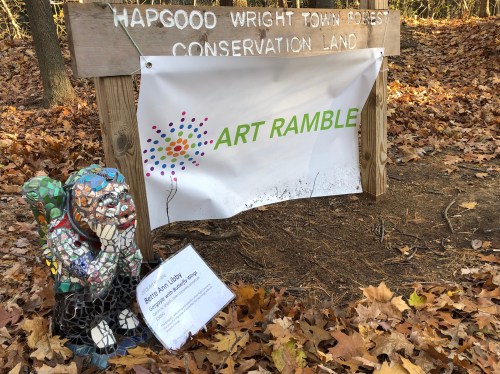
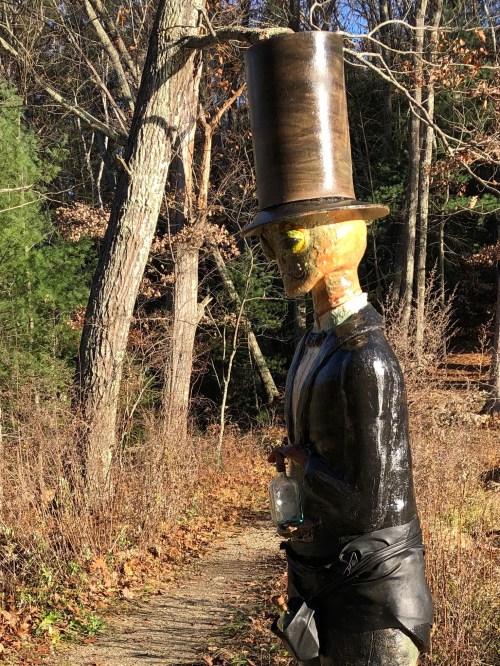
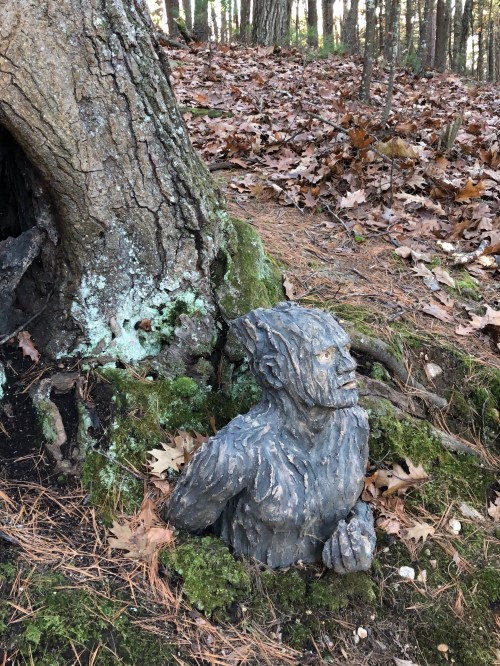
Spring sunshine and blooms provide opportunities to take the kinds of photographs I like best. Here I share blossoms that I believe are quince, things I saw in the woods (baby oak leaves in mud, foam flowers, ferns, Sessile Bellwort, and a garter snake), murals in Cambridge, Mass., and a random indoor shot from the past month.

The carpet of cherry petals was shot in Providence.

051118-might-be-quince

051018-lialcs-and-graveyard


051518-pink-petal-carpet

051018-world-is-mudluscious


051718-iris-in-waiting

051318-Amble-Trail-Hapgood-Wright-Town-Forest


051318-could-be-Sessile-Bellwort

051318-foam-flower-Town-Forest


051318-unfurling-ferns

051318-garter-snake


051118-brass-75-Federal-St-Boston

051818-horsewoman-mural


051818-violinist-mural

051818-woman-in-window-mural


050418-mural-in-Cambridge-MA


gettyimages-946840760_wide-e44073efd0e58eae89dd7a6f848e057591f2c7ad-s600-c85

Photo: Stefan Sauer/AFP/Getty Images
Amateur archaeologist Rene Schoen (left) and 13-year-old student Luca Malaschnichenko looking for treasures in Schaprode, Germany. The boy made a startling discovery in January, then participated in a professional dig that uncovered a larger trove.

In this National Public Radio story, a young boy working with an amateur archaeologist gets to experience the thrill of a significant find, one that underscores the historical connection between Germany and Denmark.

It wasn’t aluminum trash he found. It was a silver coin.

Camila Domonoske reports at NPR, “An amateur archaeologist and a 13-year-old student have uncovered a stash of thousand-year-old coins, rings and pearls on an island in the Baltic Sea in northern Germany, including items that might be tied to Harald Bluetooth, the famous king who united Denmark.

“René Schön and student Luca Malaschnitschenko were searching northern Rügen island with metal detectors when they found something they thought was aluminum but turned out to be silver, Agence France-Presse reports. …

“The two alerted professional archaeologists, and then helped recover of the rest of the trove — more than 600 silver objects dating from the late 10th century. …

“About 100 of the coins are from the reign of King Harald Bluetooth of Denmark: the largest find of such coins in the southern Baltic region, the [archaeology office of Mecklenburg-West Pomerania] office says.

“Harald I — his nickname is believed to come from a dead tooth that may have looked blueish — was a Viking king who united Denmark, conquered Norway and converted to Christianity.

“And based on the date of the stash, the state archaeology office says, it’s possible that the hoard wasn’t just from Bluetooth’s reign, but that it was directly tied to the king himself. …

“In case you were wondering: Yes, King Harald Bluetooth is the namesake for Bluetooth wireless technology. An Intel engineer who worked on the technology, Jim Kardach, was reading about Vikings as the project developed.

“In his words, King Bluetooth ‘was famous for uniting Scandinavia just as we intended to unite the PC and cellular industries with a short-range wireless link.’ The Bluetooth symbol is a runic representation of his initials.”

More here.

Photo: John Walker
Melvin Smith, who completed the Transition from Jail to Community (TJC) program at Fresno County Jail, is now clean and running his family’s well-drilling business.

Here’s another example of a program that has been helping ex-offenders reintegrate into society.

Brianna Calix reports at the Fresno Bee, “The last time Melvin Smith was arrested, he was so hungry and tired that he prayed to God the authorities would keep him in Fresno County Jail instead of releasing him.

“Smith was arrested 14 times in 2013 for drug use, auto theft and vandalism. In Fresno County, law enforcement arrested him 41 times since 1999. ‘I was wild,’ he said. In jail, his ‘celly’ asked him where he saw himself in five years. Smith’s goal was to reunite with his family.

“He’s been out of jail for four years, sober for five years and his probation ends in June. He runs his grandfather’s well and pump company, goes to church with Fresno Police Chief Jerry Dyer and is about to buy a home with a pool for his family. For birthdays, he takes his family on trips to places such as Universal Studios, Magic Mountain and Disneyland.

“During that last stint in jail, Smith went through the Transition from Jail to Community program. It helps inmates who are more likely to re-offend prepare for life after incarceration.

“The TJC program, as it’s known, was started in 2013. The men who complete the program have a dramatically lower recidivism rate than the rest of the jail population, in part due to the support system the program builds for them.

“ ‘We’ve had programs for many years in the jail,’ Sheriff Margaret Mims said. ‘This one was very different.’ …

“Inmates have to opt into the program voluntarily, and not just any inmate can qualify. Forty or fewer people participate in the program at a time. The jail houses between 2,600 and 2,900 inmates.

“Jail staff evaluate each inmate based on how many times they’ve been arrested in Fresno County, their age and how old they were when they first were arrested. Based on that score, staff evaluate the inmate’s risk to re-offend. Only medium-to-high-risk inmates qualify.

“If the inmate agrees to participate in the program, he signs a contract pledging to participate, follow the rules and stay engaged with supervision upon release.

“In a typical housing unit, the inmates tend to group by race, said Michelle LeFors, Fresno County Jail’s inmate services director.

“ ‘Not in the TJC,’ she said. ‘You’ll see mixed races sitting together, sharing a meal with each other. … They work with each other as opposed to against each other. If you ask the inmates, they’ll tell you they leave their politics at the door.’ …

“As a gang dropout in jail, [inmate Clinton S. ] constantly worried about his safety. But that’s not the case in the TJC program. …

” ‘Everyone in here is pretty much in here for the same reason. There is perks that they come over here for, but everyone obviously wants to change because being in jail is not cool. It gets old. You grow up quick.’

“The program has helped transform his mindset and taught him to persevere and that his consequences have actions.

“So far, his biggest takeaway in the program is to ‘not give up.’ ”

More here. See also the recent post on my cousin’s work to rehabilitate 18- to 24-year-old prisoners. So encouraging.

Photo: blvckimvges
Santiago, Chili, turned a congested area into a walkable, artistic delight for $550,000 raised from sponsors. But will the pilot program last?

Where there’s a will, there’s a way. In the congested capital of Chile, people who value walkable cities took matters into their own hands to pilot a livability initiative. The only question now: will it last?

As Martín Echenique reported at CityLab, “It was all done in record time. In just 30 days, more than 120 people — led by 32-year-old Chilean visual artist Dasic Fernández — transformed one of the most congested and iconic streets in the center of the Chilean capital.

“Today, Bandera Street, next to the government palace and the city’s main square, is a colorful promenade, thanks to an urban intervention that’s unprecedented in Latin America. …

“Fernández, who lives in New York City, joined forces with architect Juan Carlos López, and in three days they developed a proposal to sway the mayor: The idea was to transform Bandera into an example of tactical urbanism that fused art and architecture, and that would set a precedent for how both disciplines can successfully intervene in urban spaces. …

“ ‘The idea was to pedestrianize the street, to put a little green area, some color and furniture. There was nothing like an elaborate request from the municipality,’ said Fernández. …

“The Municipality of Santiago did not have to take any money out of its pocket. The entire project was financed, basically, through payments made by various brands to make their logos visible on the Paseo, where tens of thousands walk through each day. … According to the artist, the total cost of the project did not exceed $550,000. …

“ ‘We made a team of 20 local and Latin American muralists, who painted each block in eight or 10 hours. There was a whole coordination. It was a true visual choreography,’ said Fernández. …

“At the end of this year, the Chilean capital will have to make a decision: either reopen the Paseo to cars and public transport, or keep it pedestrianized, permanently. …

“The decision is not in the hands of the municipality, but with the Chilean Ministry of Transport, which has already indicated that the street must be reopened to public transport. However, the mayor of Santiago, Felipe Alessandri, is advocating for Bandera to remain an exclusively pedestrian route and cultural space. …

“Although Fernández says that he is accustomed to his work being temporary or reversible, he hopes that the Paseo Bandera can remain as a pedestrian street, not only because it sets a precedent in the region, but because he believes such spaces create a sense of citizenship.”

Read about the ancient and modern themes of the mural and also about previous Santiago design innovations at CityLab, here.

Photo: Kol Peterson
Los Angeles will pay homeowners who are willing to house pre-screened homeless families by creating “granny flats,” like this accessory dwelling unit over a garage in Portland, Oregon.

I like stories on creative ways cities are trying to tackle homelessness. These initiatives may seem like a drop in the bucket, but some may actually work well over time and help alleviate the effects of our extreme inequality. You have to start somewhere. After all, the homeless population includes working families unable to make ends meet on their wages.

As Vanessa Romo wrote at National Public Radio last month, “In an attempt to alleviate the soaring homelessness problem in Los Angeles County, officials want to pay homeowners to house people by building new living units or bringing existing dwellings up to code if they are in violation.

“It’s part of a $550,000 pilot program launched by the LA Community Development Commission to explore new ways to safely and at a relatively low cost, provide housing options for handful of the county’s nearly 60,000 homeless residents.

“The county Board of Supervisors has narrowed down the pool of applicants from 500 to 27 and is in the final stages of selecting a group of six property owners who are ready and willing to start construction in the fall, according to the LA Times. The county is also leading a design competition for model secondary dwelling units.

“Officials will consider whether to expand the program after 18 months. …

” ‘People are looking at what they can do to make our neighborhoods more affordable and help more Angelenos find stable places to live,’ LA Mayor Eric Garcetti told the Times.

“Garcetti has been urging property owners to build secondary units, or ‘granny flats’ as they’re often called, in their backyards for years. He estimated it could create 50,000 more units if only 10 percent of homeowners would take on the challenge. …

“The Times also reported ‘the loan principal will be reduced each year the unit is occupied by a formerly homeless person and forgiven after 10 years, at which point the homeowners can do as they wish with the housing.’ …

“Los Angeles is only the latest county trying to take on the nation’s homelessness crisis by inducing property owners to provide affordable housing.

“Multnomah County in Oregon started a similar project last summer where four homeowners agreed to have a small unit built on their lot and pledged to provide housing for pre-screened homeless candidates for at least five years.”

More.

Photo: Aeromate
An urban farm flourishes on a rooftop in the heart of Paris.

I never can resist a story about urban rooftop gardens, which not only bring fresh produce to city dwellers but also make use of empty space and help reduce carbon in the atmosphere.

I have blogged about them a lot. There was the post about a rooftop garden in Montreal, here. Another about Higher Ground in South Boston, here. Suzanne and Erik’s former church in San Francisco, Glide Memorial, made its rooftop garden a community-building activity for Tenderloin residents. And this was an article about a Whole Foods that aimed to harvest 10,000 pounds of food a year from its rooftop in Lynnfield, Mass.

Today’s story comes from Paris.

Freelance blogger Aimee Lutkin writes at the World Economic Forum blog, “The mayor of Paris, Anne Hidalgo, was elected in 2014 with the intention to improve the city’s green spaces as a part of her platform. …

“In 2016, her administration launched Parisculteurs, a campaign that is working to cover 247 acres of rooftops and walls in Paris with greenery by 2020.

“One third of that greenery will specifically be set aside for urban farming. To date, 74 organizations have signed a charter to work with the city on planning this enormous enterprise. The city has already approved 75 projects for development, which are estimated to produce more than 500 tons of vegetation.

“The deputy mayor of Paris, Penelope Komites, [told CNN] … ‘Citizens want new ways to get involved in the city’s invention and be the gardeners.’ …

” ‘Three years ago, people laughed at my plan. Today, citizens are producing [food] on roofs and in basements. We are also asked by numerous cities around the world to present the Parisian approach,’ she said.

“And they already have their success stories. … La Chambeaudie started shortly after Parisculteurs was announced in 2016, but now grows over 40 varieties of plants and herbs using a hydroponic system …

” ‘We’ve seen a real craze among Parisians to participate in making the city more green,’ said Komites. ‘Urban agriculture is a real opportunity for Paris. It contributes to the biodiversity and to the fight against climate change.’

“And it also means jobs. According to Komites, Parisculteurs has created 120 full-time jobs.”

More at World Economic Forum blog, here.

Photo: Jonathan Wiggs /Globe Staff
Lauren Mayhew was my Essentrics teacher for a year. Here she is leading a class at the Steinberg Wellness Center for Mind and Body. Despite the photo, Essentrics doesn’t have students hold positions.

I was never one for doing exercise for exercise’s sake, but a couple decades ago, my doctor friend Anna insisted I take up something. I’m so glad she did.

I knew that in order to do any exercise regularly, it would have to be something I really enjoyed, so I started walking every day. I don’t walk fast, but I keep the joints moving, and I learned that any sort of walking fulfills that Holy Grail called “weight-bearing activity.” I also love the time to think, and I like taking pictures on my walk.

In addition to walking, I take two exercise classes. I’ve been taking tai chi chuan at Zhen Ren Chuan for more than six years. I like taking tai chi chuan at a martial arts studio because the moves are more clear and understandable than at another place I tried. They are clear because the martial arts people like to tell you the self-defense origins of the moves.

Tai chi chuan is great for balance and moving your body in a seamless way so you don’t stress the joints as you might do when holding a yoga position.

Moving in a seamless way is also the goal of a class I’ve been taking for two years called Essentrics. Essentrics was developed by a former ballerina and aims to strengthen and stretch all the muscles in every session, with beneficial attention to often neglected hands and feet.

Although the tai chi class includes many young people who are also studying martial arts, my midday Essentrics class has mostly retired people, many of whom have had injuries of one kind or another.

What do you do for exercise? Do you take any classes? As a child I took a lot of ballet classes, and ever since then, I’ve had the idea that you make friends in classes. Do you find it works that way with grown-ups? Since starting exercise lessons again as an adult, I find that most grownups keep their heads down and avoid eye contact. I can’t figure out why that is.

Here’s a Boston Globe article that explains how Essentrics helps improve posture. Lauren Mayhew, one of my teachers, is featured in the story.

Photo: Zhen Ren Chuan
The Zhen Ren Chuan website highlights its community garden: “Our families learn horticulture as well as Martial Arts.” Students and teachers keep the school’s corner of the business district neat as a pin.

3-sm

Photo: Drew Fellman
Ben Kilham, of the Kilham Bear Center in New Hampshire, seen with a giant panda at Panda Valley in Dujiangyan, China, in the  IMAX film Pandas. Oh, to be that guy at that moment!

I loved the picture above and thought I’d like to have that kind of connection to a Giant Panda. But as Cristela Guerra reports at the Boston Globe, if you work with pandas, you learn that they have a strong bite for chomping bamboo and you should expect to get bitten.

Guerra starts with the backstory of a promising new research effort. “In New Hampshire, Ben Kilham’s work with black bears has earned him a couple of nicknames, including ‘the bear whisperer’ or simply ‘Papa Bear.’

“In Chengdu, China, Hou Rong’s research into giant pandas has earned her a nickname as well: ‘Panda Mom.’

“Their cross-cultural collaboration is the focus of a new documentary called ‘Pandas,’ [which opened] at the New England Aquarium on April 6. …

” ‘Pandas’ presents breathtaking, panoramic views of China around the mountains of Sichuan where the nonprofit Chengdu Research Base for Giant Panda Breeding is located. There, a group of scientists raise endangered giant pandas in captivity with the hope that one day they’ll be able to introduce them into the wild.”

Kilham’s techniques, honed with black bears in New Hampshire, “involve taking captive-born bear cubs for walks through the woods, where they follow Kilham like a mother bear. …

” ‘That’s what the mother bear does; she is their protecting force,’ Kilham said of the training method. ‘For pandas, it works the same way.’ …

” ‘I had trouble learning in school,’ Kilham says in the documentary. ‘But I could read nature the way other people read books. I don’t teach bears how to be bears. The knowledge is already inside them.’ …

“Inspired by Kilham’s techniques, the scientists at the Panda Base begin to test the abilities of captive-born panda cubs to see if one has what it takes for a journey into the wild. This means a whole lot of footage of adorable, roly poly baby pandas being bottle-fed, pushed down a wooden slide, and wrestling with researchers. …

“ ‘For bringing a captive-born animal whose mom is also captive-born, whose grandparents are also captive-born into the wild, my biggest consideration is [the panda’s] vigilance.” said [wildlife conservation biologist Jake] Owens. ‘How alert they are, how aware they are about potential dangers.’ …

“ ‘All young animals need to have is some sort of mother figure,’ Kilham said. ‘What you’re giving the cubs is an opportunity to learn. If you just put them out there by themselves, they’re unable to go anywhere.’ ”

More here. And check out the movie trailer here.

Mother’s Day

050618-running-in-tulips


050918-tulips-in-kitchen


I had two early Mother’s Days this year. There was one last Sunday with Suzanne’s family at Rhode Island’s Wicked Tulips Flower Farm and an epic birthday card by Suzanne’s kids (the 3-year-old insists all cards should be birthday cards). I also got flowers from my husband. I do love flowers.

Then yesterday at John’s house my daughter-in-law provided one of her delicious meals, and the grandchildren created the artistic Mother’s Day cards below. Both my kids gave me donations to beloved charities, too, which makes me happy.

By chance, the Boston Globe had an article about Wicked Tulips a couple days after I went there, so I’ll quote from it for background.

Cristela Guerra reported, “In a small town in Holland called Zwaagdijk, Jeroen Koeman’s last name is synonymous with flowers. Koeman’s father is a tulip farmer, as are his older brothers. So try as he might to leave the family business, the 36-year-old found his way back to the flowers.

“Since 2015, on a small plot in the town of Johnston, R.I., the Dutch farmer has grown acres of tulips in rows of deep purples, oranges, and sunset reds. …

“Koeman said, ‘When we came here, we fell in love. It’s kind of magical. When you drive through Johnston, you never, ever expect to land on the piece of heaven that we have over here.’

“Koeman leases and tills the state-owned soil on the edges of Snake Den State Park, alongside other farmers like himself. The project, called Snake Den Farm, resulted from a partnership between the state and the nonprofit Northern Rhode Island Conservation District to return the land to agricultural production. …

“Turns out, the climate in Rhode Island happens to be perfect for tulips. The Koemans work year-round to prepare for one ‘U-pick’ event in the spring that lasts for a month — if they’re lucky. …

“Their first year brought out close to 20,000 people all eager to tiptoe through the tulips. The second year brought close to 40,000. …

“ ‘We are not about just the bouquet of flowers,’ Jeroen said, ‘but the whole experience of walking in a blooming tulip field.’ ”

More here. Check out the impressive array of photos.

Suzanne told me that the farm never knows precisely when the tulips will be ready in the spring, so you have to be alert and buy tickets as soon as they go online.

051218-Mothers-Day-cards-by-artists

Photo: James Glossop 
Charlotte Hoather as Uccellina in the “BambinO” production from Scottish Opera, Improbable theater company and the Manchester International Festival.

I know that babies take swimming lessons these days and yoga with Mama. I know they go to music classes (“put your instruments back in the Taster’s Choice bin before we go home”). But opera?

Well, why not? Some babies are so loud everyone says they will be opera stars when they grow up.

Michael Cooper, a reporter for the New York Times, wrote in March at about an opera actually designed for babies. “The average age at the Metropolitan Opera is about to get lower — much lower. Sitting still will not be required: Audience members will be encouraged to crawl around and interact with the singers if they like. The dress code will be so relaxed that many operagoers may opt for onesies.

“No, the barbarians are not at the gate. The Met is presenting a new opera for babies.

“The company will present 10 free performances of ‘BambinO,’ an opera for babies between 6 months old and 18 months old, from April 30 to May 5. …

“The most unusual opera, about a bird, an egg and chick, was written by the composer Lliam Paterson and developed by Scottish Opera, Improbable theater company and the Manchester International Festival. It was directed by Phelim McDermott. …

“ ‘In the Met’s never-ending quest to develop audiences of the future, we’ve decided to start at the very beginning,’ Peter Gelb, the Met’s general manager, said in a statement.

“The opera will be performed for 25 babies, who will be seated on the laps of their caregivers on benches with cushions around the perimeter of the stage area.

Changing tables and stroller parking will be provided.

“The Met’s education team will work with researchers in infant development and early childhood music education from the Rita Gold Early Childhood Center at Teachers College, Columbia University.” More at the New York Times, here.

I apologize for not posting this in time for New York readers to take babies to the opera, but you can read a thoughtful review at Broadway World:

“No one in the audience as on Facebook or Twitter during Lliam Paterson’s opera BAMBINO at the Met’s List Hall — a rare occurrence for the company these days — on Friday May 4. In fact, no one looked at a cell phone at all during the performance. And nobody fell asleep — even though the opera was written for 6-18 month-olds. …

” ‘It’s lovely to see the full range of reactions the show has received,’ says Paterson, ‘and that every little toddler is just a person — and you’re already seeing all of the characteristics that are eventually going to come out.’ ”

Let’s hope operas for babies help build audiences for the future. “Free” is definitely the way to start.