April 16, 2016 by suzannesmom
As a coffee drinker and a fan of Dean’s Beans (whose mission is “to use high-quality specialty coffee as a vehicle for progressive change throughout the coffeelands of Asia, Africa and the Americas”), I was interested to come upon a Living on Earth radio story about the wider sustainable-coffee movement.
Steve Curwood is host of the Public Radio International show.
“CURWOOD: A cup of joe might help sustain your energy, but it may not be so sustainable for the Earth. Just 12 percent of coffee is sold under the label ‘sustainably grown.’ A new initiative called the Sustainable Coffee Challenge aims to change the way the coffee industry operates to the benefit of the Earth. Peter Seligmann is chairman, CEO, and co-founder of Conservation International. … So tell me about the sustainable coffee challenge that CI has just formed. Why did you zero in on coffee as a target for sustainability?
“SELIGMANN: Well, we started working on coffee about 15 years ago with Starbucks, and after 15 years we’ve been able to announce with Starbucks that 99 percent of all their coffee is certifiably sustainably harvested and produced. Which means that as their company has grown they have not cut a single tree, and hundreds of thousands of hectares of forests have been set aside as Starbucks has expanded its coffee business. That inspired us to think, is it possible to make coffee the first agricultural commodity that is completely and 100 percent sustainably produced. …
“The dark side of coffee growing is that coffee that is not produced under the shade of forest, [is] produced by clear-cutting forests and planting coffee. And when you clear-cut a forest, you destroy the biodiversity, you put emissions — CO2 emissions — in the atmosphere, you lose soil, and you do industrial agriculture, which maximizes pesticides and chemicals and reduces the benefits to society.
“CURWOOD: So, what’s the obstacle to growing coffee sustainably?
“SELIGMANN: It’s convincing the producers that this is in their enlightened self-interest. To go from non-sustainable coffee to sustainable coffee requires an investment of money and it requires time. Most of these growers, farmers actually work in co-ops, and the challenge is getting the co-ops to agree that this is the transition they want to make from non-sustainable to sustainable and what’s going to motivate them is there being a buyer for the coffee they grow. And so it gets back to the consumer, and the consumer says it’s what we want.” Read on.
Photo: Martin Diepeveen, Flickr CC BY-NC-ND 2.0
Coffee beans are the pits inside the fruit or “cherry” of the coffee plant. 
Posted in Uncategorized | Tagged coffee, Conservation International, dean's beans, enlightened self-interest, growing, harvest, living on earth, loe, Martin Diepeveen, Peter Seligmann, postaday, pri, Public Radio International, starbucks, steve curwood, sustainable, Sustainable Coffee Challenge | Leave a Comment »
April 15, 2016 by suzannesmom
Time for another animal story. Edie Freedman has a surprising one about elephants, African farmers, and bees at a new-to-me website called O’Reilly.
“Although elephant populations have increased since the 1970s, the human population has grown even more quickly,” she writes “cutting the elephants’ habitat up into farms and roads. The elephants’ key migratory routes have been cut off in many places. As result, they regularly break through fences, where they eat and destroy crops. When the farmers confront elephants on their property, things don’t generally end well for either party.
“Lucy King, a researcher working with Save the Elephants, has spent many years investigating the problems involved in crop protection. Her goal is to find long-term solutions that reduce the frequency of human-elephant conflicts—and that can be financed and managed by local farmers.
“As Ms. King looked into the elephants’ habits for any clues to keeping them out of fields planted with crops, she noticed that they tended to avoid acacia trees with active nests of African bees. Elephants, it so happens, are afraid of the bees, and will move away from an area and warn other elephants if they hear bees buzzing nearby.
“And so the beehive fence was invented. The fences are simple, inexpensive, and easy for the farmers to build and maintain. … The hives are hung at chest height, which makes it easy for the farmer to harvest the honey, while also making them highly visible to the elephants.
“The hives, connected by wires, are hung every 10 meters around the perimeter of a field. The farmers leave wide pathways between their crops so elephants can move past the fences along their migratory routes. If an elephant makes contact with one of the hives or the connecting wires, the beehives all along the fence will swing and release the bees.”
More here.
What a terrific solution! Where there’s a will, there’s a way.
Photo: oreilly.com

Posted in Uncategorized | Tagged acacia trees, africa, beehive fence, edie freedman, elephant, farm, habitat, hives, honey, lucy king, migratory routes, nests, o'reilly, postaday, save the elephants, sustainable | Leave a Comment »
April 14, 2016 by suzannesmom
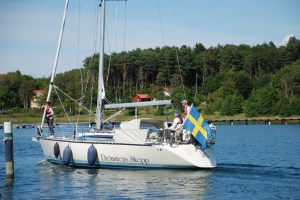
My daughter-in-law sent me a link to this funny story about Sweden’s latest tourism promotion: letting foreigners call up a Swede to ask questions.
Jillian Kumagai writes at the Atlantic magazine, “Last week, the Swedish Tourist Association, a volunteer organization, declared Sweden the first country in the world with its own phone number: +46 771 793 336. The number connects callers to a switchboard and then, wherever in the world they are, to ‘a random Swede, somewhere in Sweden.’
“(So says an automated voice before your call is connected, though since Swedes have to sign up via a mobile app to receive these calls, the sample likely skews to the friendly and the cell-phone-owning.)
“Which raises a question: Why? As it happens, the tourist association also bills Sweden as ‘the first country in the world to introduce a constitutional law to abolish censorship,’ in 1766, and the introduction of The Swedish Number commemorates 250 years since that happened.
“But what does censorship have to do with getting a phone number? And what kind of people, in what kind of country, sign up to be called at all hours by total strangers? (The number’s website notes politely that while ‘you are welcome to call at anytime … we might be asleep.’)
“One of them was Jenny Engström, a spokeswoman for the STA, who had already fielded calls from strangers in China, Turkey, and Michigan. She explained that part of the point was to give callers an ‘uncensored’ view of Sweden, by letting Swedes speak for themselves.
“So that explained one mystery. And perhaps unsurprisingly, my experience of ‘Sweden: Uncensored’ was not at all scandalous. Among the things an uncensored Swede might tell you about, if you asked: what his compatriots name their dogs (often appellations that fit Nordic men, like Gunnar and Bosse); typical opinions on the Swedish band ABBA (from mixed to vaguely fond); the words for home-cooked Swedish food (husmanskost) and Swedish candy (lösgodis).” More here.
Erik asked his mother if she had considered signing up to answer calls, but she did what I probably would have done: she demurred.
Photo: Stuga40
Posted in Uncategorized | Tagged call, jillian kumagai, phone, postaday, swede, sweden, Swedish Tourist Association, tourism, tourist | 2 Comments »
April 13, 2016 by suzannesmom
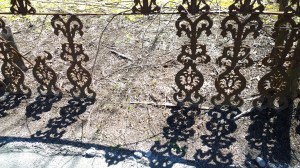
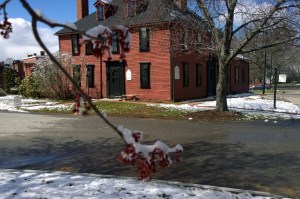
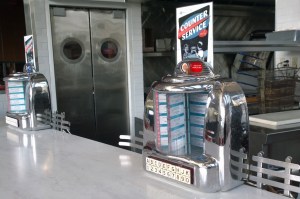
Eleven New England photos in no particular order.
Colored chalks are provided for patrons of the Small Point Café in Providence. Someone made a gorgeous dragon.
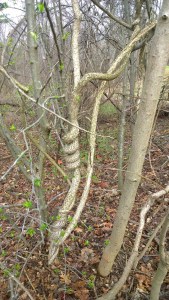
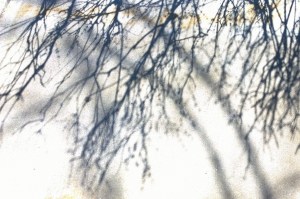
There are three photos of shadows: a broken wrought-iron fence, branches on the sidewalk, and two kinds of trash cans.
Spring snow at the Wright Tavern in Concord. Lotus sports cars on a Sunday outing. An old-tyme lunch counter with jukebox at Providence Place. Another treehugger tree. Daffodils on the vacant Route 195 land in downtown Providence. The Swedish Workingmens Association building, which now houses a Starbucks.






Posted in Uncategorized | Tagged Cambria Grace Photography, colored chalk, concord, dragon, jukebox, lotus sports car, new england, photos, postaday, providence, route 195, small point cafe, swedish workingmens association, treehugger tree, wright tavern | 2 Comments »
April 12, 2016 by suzannesmom

Photo: Melanie Stetson Freeman/Christian Science Monitor
Vicki Houska, who has fostered 12 children, including Brandon (l.) and Michael, started a food pantry to help other foster parents.
I could probably write a post every day just drawing from the Christian Science Monitor series People Making a Difference. It’s overwhelming how many stories they collect — overwhelming and reassuring about human goodness.
Here’s one by Marjorie Kehe about a St. Louis woman who mothered 12 foster children in addition to her biological ones and now helps other foster parents lighten their expenses.
“Vicki Houska is a woman of many gifts. But one of the first things that her friends and colleagues will tell you about her is that she is a hugger.
“ ‘No one leaves her without a hug and a smile,’ says Michelle Barron, a work crew supervisor for the St. Charles County Juvenile Justice Center. …
“On this busy Saturday, though, Ms. Houska is getting ready to dispense more than just hugs. She’s moving briskly through the jampacked rented rooms that house the operation she runs for FAST (Foster Adoption Support Team), a support organization for foster and foster adoptive families caring for children who are wards of the state of Missouri.
“Houska’s making sure that packages of frozen pork chops, fresh loaves of bread, and tiny snowsuits are all properly shelved and stacked, ready for the families who are about to arrive and lay claim to them. …
“A foster parent herself since 1998, she has fostered 12 children over the years and, of those 12, adopted three. ‘It’s the hardest thing you’ll ever do,’ she says of foster parenting. The emotional challenges ‘will bring you to your knees.’
“But one thing that doesn’t have to be so hard on foster parents, she decided some years ago, is the financial burden. …
“Foster families are expected to provide food, clothing, and household items like toothbrushes and hairbrushes, and to cover school expenses and any additional treats, lessons, or outings.
“From her own experiences and those of other foster families she has met, Houska came to feel that financial challenges were one of the biggest obstacles to the foster-parenting experience. So in 2005, to help alleviate the strain, she lined her own basement with industrial freezers and shelving, sought out donations, and began distributing food, diapers, and toiletries each Saturday, free to all local foster families. …
“Eventually, the OASIS Food Pantry, a local nonprofit, notified Houska that it had rental space available near its own operation in a nearby strip mall. …
“Houska’s pantry offers not only household items but emotional and social support. …
“Foster families arrange play dates, with pickups and drop-offs scheduled at the food pantry. Sometimes, for siblings who have been assigned to separate families, a trip to the food pantry is a chance to reunite in the pantry’s backyard, where the children are invited to romp on the playground equipment donated by a local church and other well-wishers. …
“ ‘Poverty doesn’t take a vacation,’ [Houska] says. ‘Kids in need don’t take a vacation. So neither do I.’ ”
Read what happened to Houska at age 21 that is one reason she is so dedicated, here.
Posted in Uncategorized | Tagged care, children, forster child, Foster Adoption Support Team, foster moter, home, Marjorie Kehe, Melanie Stetson Freeman, Michelle Barron, missouri, people making a difference, postaday, St. Charles County Juvenile Justice Center, st. louis, vicki houska | 2 Comments »
April 11, 2016 by suzannesmom

Photo: Tokyo Five, via Gwarlingo
Back in the early days of this blog (nearly five years ago), I posted about the imaginative Japanese manhole covers that I had seen at the Gwarlingo website. Now Asakiyume has clued me in to collectable cards made from the designs.
The Japan Times has the story. “The cards will be distributed for free to anyone who wants one at sewage plants and other facilities. Pictures of the manholes will be on one side of the cards, which are roughly business card size, while explanations about their designs will feature on the reverse side.
“The manhole designs differ from area to area, and often feature flowers and animals used as symbols in respective communities, or yuru kyara (local mascots). …
“The manhole cover designs are decided after asking the public for ideas, or through a competition among manufacturers of manhole covers. [Hideto Yamada of the GKP, a group including officials from local governments and the infrastructure ministry’s sewage management department] said he hoped the cards will help lift public interest in the sewage system.”
An even better way, I think, would be create greeting cards and postcards that could be sold widely and sent around the world.
More at the Japan Times, here.
Photo: Remo Camerota, via Gwarlingo
A design for a new drain cover.

Posted in Uncategorized | Tagged asakiyume, business card, card, collectable, gkp, gwarlingo, Hideto Yamada, Japan Times, manhole cover, mascot, postaday, Remo Camerota, sewage, sewer, Tokyo five, yuru kyara | 4 Comments »
April 10, 2016 by suzannesmom
You haven’t heard the last word on tiny houses from this blog yet. Just check out Treehugger reporter Kimberley Mok’s amazing story about using a 3D printer to create a tiny house and SUV that can create, store, and share energy. Unreal but true.
“Designers from architecture firm SOM, University of Tennessee and researchers from the US Department of Energy’s Oak Ridge National Laboratory are cleverly tackling the energy issue by using a concept they call ‘integrated energy.’
“Their innovative design features a 3D printed house, that comes with a 3D printed SUV, which each generate, store and share energy — boosting energy efficiency both ways, while benefiting from the reduced construction waste and quick turnaround that comes with additive manufacturing techniques. …
“The design of both home and car uses carbon-fiber-reinforced ABS plastic (admittedly not the greenest of materials). The home was printed in separate modules that are assembled together and reinforced with steel rods, and insulated with a modified, highly efficient atmosphere insulation panels, resulting in a surprisingly strong and insulated structure.
“Certainly the most intriguing thing about the design is the reciprocal energy relationship that the car has with the house. … The 3D printed SUV is a hybrid that uses both electricity and natural gas to power itself. It’s parked on an inductive charging pad that allows it to send or receive energy from the solar-powered house — thus significantly solving the electricity issue on cloudy days. If there’s no electricity at all from either solar panels or car, the house can still tap into the energy grid. …
“Thanks to the additive manufacturing process, the prototype took only one year to realize from start to finish.” Read more here.
Photo: ORNL (Oak Ridge National Laboratory)

Posted in Uncategorized | Tagged 3d printed car, Additive Manufacturing Integrated Energy Structure, ecology, energy, environment, extrude, green, integrated energy, kimberley mok, manufacturing, microhome, Oak Ridge National Laboratory, ornl, postaday, SOM, University of Tennessee, US Department of Energy | 2 Comments »
April 9, 2016 by suzannesmom
Jeremy Hance has an article at the Guardian on the quest to save from human encroachment a huge — and largely unknown — raptor: Blakiston’s fish owl.
“It’s not easy studying an endangered species few people have ever heard of,” says Hance. “It’s difficult to raise money, build awareness, or quite simply get people to care. But still, Jonathan Slaght – one of the world’s only experts on the massive, salmon-eating, frog-devouring Blakiston’s fish owl – insisted there are upsides. …
“Blakiston’s fish owl is the world’s largest [owl], and in the Russian forests, where Slaght conducts his research, it cohabits with a lot of big names: the Ussuri brown bear, the Amur leopard, the Asiatic black bear and, of course, the grand-daddy of them all, the ever-popular Amur Tiger. …
“Slaght is a project manager with the Wildlife Conservation Society and a co-founder of the Blakiston’s Fish Owl Project along with Russian ornithologist, Sergei Surmach. But his first run-in with a Blakiston’s came in 2001 when he was a Peace Corps volunteer in Russia. At the time, all he knew about the species was from a tattered bird book more than 40 years old, including an ‘inaccurate, terrible illustration of Blakiston’s fish owl. …
“Although an avid birder, Slaght never expected to actually see one of these things. He was told the owl was so rare that even seasoned ornithologists rarely saw it. Yet one day, hiking in the forest with a friend, he had an encounter that changed the course of his life.
“ ‘Something enormous flies away from us and lands close by and it’s just this big owl.’
“He assumed it was a Eurasian eagle owl – which can be found across the entirety of Eurasia, from the coast of Spain to that of Primorye – but took a few photos just in case.
“ ‘My brain wouldn’t believe it was this mythical thing.’ …
“A few weeks later, though, Slaght gets his pictures developed and takes them to a local ornithologist.
“ ‘He says: “don’t show anyone this picture; this is a Blakiston’s fish owl.” ‘
“Slaght … has become one of the foremost experts on the great owls and continues to find them where people thought them vanished.”
Read about other places this rare bird is found (including Hokkaido, where it was once considered a god), here.
Photo: Jonathan C. Slaght/WCS Russia
Jonathan Slaght holds a Blakiston’s fish owl in his arms. He is one of a handful of researchers studying this massive raptor, which is threatened by human activity. 
Posted in Uncategorized | Tagged Blakiston’s fish owl, Jeremy Hance, Jonathan Slaght, postaday, preservation, protection, raptor, russia, save, Sergei Surmach, Wildlife Conservation Society | 4 Comments »
April 8, 2016 by suzannesmom
You probably know about Humans of New York and the photographer Brandon Stanton, who gets strangers to tell him how they really feel. I was reminded of his work when I read this NY Times story about an artist and musician who invited strangers to answer offbeat questions about their lives and then used the material to write songs for them.
Reporter Alex Vadukul attended a gallery exhibition of the work in February.
He writes, “The crinkled papers pinned across the small Chinatown gallery’s walls … contained scrawled drawings and questions: ‘Do you know your limits yet?’ ‘Most recent Google query?’ and ‘Were you ever involved with the occult?’
“They were not pointlessly esoteric. Grey Gersten, an artist and musician, had designed them to gather information he then used to compose songs about strangers; individuals filled them out for him two summers ago during rapid 20-minute song-making appointments for his project, ‘Custom Melodies.’ …
“Mr. Gersten, 32, worked from an impromptu music studio inside the Mmuseumm, a peculiar contemporary museum the size of an elevator shaft in the narrow Cortlandt Alley in TriBeCa, where people handed him the papers through a window opening. The forms, posing questions personal and abstract, helped him explore a concept: Can you bottle a stranger’s essence in a song? The resulting compositions were played publicly at the Chinatown Soup gallery on [Feb. 5, 2016] and varied from ambient and sonic to poppy and feverish.
“People wandered through the space studying the papers on the walls, but a few sought their own original forms. …
“Josh Koenigsberg, 31, who sat for a song appointment, also tracked down his form at the gallery. … He recalled: ‘It was like going to a doctor’s office, except you filled out the last dream you had or the last time you got goose bumps. And he studied your form like he was a doctor.’ (One man at the event described it as a ‘takeout window for music.’)
“Another participant, Philip Weinrobe, 34, found his form hanging beside the gallery’s busy bar. It indicated his earliest memory was ‘sitting in a playground and looking up,’ that his favorite advice is ‘measure twice, cut once,’ and that at the time his last Google search was, ‘Why aren’t my marigolds flowering?’ ”
More here.
Photo: Emon Hassan for The New York Times
At a Chinatown gallery in February, visitors read forms people filled out so Grey Gersten could write customized songs.

Posted in Uncategorized | Tagged Alex Vadukul, brandon stanton, Chinatown Soup, Custom Melodies, customized, emon hassan, Fialka Semenuik, Grey Gersten, humans of new york, Josh Koenigsberg, mmuseumm, music, new york, Philip Weinrobe, photographer, postaday, songs to order, takeout | 2 Comments »
April 7, 2016 by suzannesmom
Imagine how chuffed I was to see this article about Suzanne by Charmaine Gahan!
A close friend since kindergarten, Charmaine has been a huge support to Suzanne and the birthstone-jewelry company that hosts this blog, Luna & Stella.
In a delightful report, Charmaine describes how her whole family joined Suzanne’s family in New York City over school vacation to lend a hand at the Playtime trade show, a big deal for promoting new products to retail shops around the world.
Among the highlights of Suzanne’s growing collections are sweet Mama + Me bracelets, just in time for Mothers Day (May 8), and some stunning vintage lockets.
Notes the website, “All of the lockets in the Luna & Stella Vintage Collection were made in Providence, East Providence or Attleboro between 1880 and 1940.”
Why vintage mixed with contemporary? That’s kind of an interesting story, too, being the result of a hunt for beautiful hinges to use in new lockets. After the long search, Suzanne concluded that they just don’t make smooth and subtle hinges like they used to.
But sometimes an apparent dead end can lead to even better ideas, and Luna & Stella’s cool mixing of old and new seems to be an idea that is catching on.
At the Concord Journal (here), you can read more about the two friends and their families working the trade show in New York during the coldest week of the year.
Photo: Charmaine’s girls join Suzanne to look over the Mama + Me collection from Luna & Stella.

Posted in Uncategorized | Tagged attleboro, birthstone, birthstone jewelry, bracelet, Charmaine Gahan, concord journal, families, friends, hinge, jewelry, locket, Luna & Stella, luna and stella, mama + me, mama and me, mother's day, new york, playtime, postaday, providence, trade show, vintage | 2 Comments »
April 6, 2016 by suzannesmom
Do we praise the work of librarians enough? I started following the Ferguson Library on twitter and Facebook after reading how it was the calm eye of the storm in Ferguson, Missouri, amid the 2014 riots. As a result, I now get good leads about other libraries. Here is a report on Ohio librarians who go the distance — and beyond.
Katie Johnson at School Library Journal describes her experience with “Play, Learn and Grow, a pop-up storytime and early learning program created through a collaboration between Twinsburg (OH) Public Library and Akron Metropolitan Housing Authority (AMHA). …
“I noticed that none of the children living in the housing development were coming to storytime at our library. I reached out to AMHA representatives, hoping they would be open to the idea of the library hosting a weekly program at the development. They were, partnering me with one of their employees, Kellie Morehouse, who was already working with families within the complex.
“We set up Play, Grow, and Learn in an unused room behind the apartment leasing office. Our initial goal was to get to know children age five and younger and their families through storytime, crafts, and free play. As the weeks went on, we saw everything that these families lacked: employment, education, transportation, healthy food, proper healthcare, access to preschool, even reliable phone service.”
They got involved in all those areas — helping children get vaccinations and nutritious food, for example, and arranging for isolated young mothers to address depression.
“Early experiences with storytime revealed a desire of the young mothers to interact with one another. This led the AMHA representative to suggest teaming storytime with one of the organization’s programs for moms. AMHA and a local behavioral health agency had been working together to provide maternal depression support groups to low-income women in other parts of the county. …
“Twice a month, the moms in our storytime are able to meet in a group setting with a professional to discuss their frustrations and worries. Mom-ME Time has become key, as so many of our moms are dealing with heavy pressures every day, and most do not have a strong support network. Being able to vent and get helpful parenting advice can be crucial to the choices they are making for their young children.”
It is worthy of applause when a librarian sees the whole child, not just a child in storytime, and tries to tackle the barriers to a better life. More here.
Photo: Katie Johnson/School Library Journal
Moms are included in programming for children.

Posted in Uncategorized | Tagged Akron Metropolitan Housing Authority, amha, books, education, katie johnson, Kellie Morehouse, learning, librarian, ohio, poor, postaday, preschool, reading, school library journal, storytime, Twinsburg Public Library | 2 Comments »
April 5, 2016 by suzannesmom
OK, here’s one I bet you don’t know about. Like a couple super fathers I know, the sandgrouse father is devote to parenting. But when the fathers I know give thirsty children some water, it is likely to arrive in a bottle or sippy cup. The sandgrouse papa delivers water in his feathers.
Rick Wright and Mary McCann report at Public Radio International’s Living on Earth, “Sandgrouse – pointy-tailed relatives of pigeons – live in some of the most parched environments on earth. To satisfy the thirst of newly hatched chicks, male sandgrouse bring water back to the nest by carrying it in their feathers. It sounds incredible, and for decades, scientists thought it was just a myth. But it’s not. In the cool of the desert morning, the male flies up to twenty miles to a shallow water hole, then wades in up to his belly.
“The water is collected by ‘rocking.’ The bird shifts its body side to side and repeatedly shakes the belly feathers in the water; fill-up can take as long as fifteen minutes. Thanks to coiled hairlike extensions on the feathers of the underparts, a sandgrouse can soak up and transport 25 milliliters of liquid. That’s close to two tablespoons.
“Once the male has flown back across the desert with his life-giving cargo, the sandgrouse chicks crowd around him and use their bills like tiny squeegees, ‘milking’ their father’s belly feathers for water they so desperately need.”
Listen here.
Photo: Ian White, Flickr CC
The Feathers of Burchell’s Sandgrouse carry water for miles back to the nest.

Posted in Uncategorized | Tagged birdnote, chick, desert, dry, father, living on earth, loe, male, Mary McCann, postaday, rick wright, rocking, sandgrouse, thirst, water | 2 Comments »
April 4, 2016 by suzannesmom
In environmental news, Lloyd Alter at Treehugger reports that an Irish county now requires new homes to meet the very high standard of energy efficiency called passive.
“In Ireland’s Dún Laoghaire-Rathdown County, a near suburb of Dublin, it’s now the law. …
“The building codes there are pretty tight already. And it’s not completely a done deal; the national Minister of the Environment, of all people, may challenge it out of concern that it might raise the cost of housing. However the local Passive House Association says that it’s not necessarily true, and showed case studies demonstrating that in fact they could build passive houses ‘at or below conventional build costs.’
“Writing in Passive House Plus, Pat Barry of the Irish Green Building Council noted that really, it’s all about just trades having the skills and doing the job right. …
“As many as 20,000 houses could be built in the county, houses that cost almost nothing to heat, produce almost no CO2, and are comfy as can be day or night, sun or no sun.”
More here.
Photo: Kelvin Gillmor
Irish passive house built on a budget. Hmmm. Does it burn wood?
Posted in Uncategorized | Tagged Dún Laoghaire-Rathdown County, dublin, energy, environment, ireland, irish, Irish Green Building Council, Kelvin Gillmor, Lloyd Alter, passive, Passive House Association, Passive House Plus, Pat Barry, postaday, solar, treehugger | Leave a Comment »
April 3, 2016 by suzannesmom
If the five unexpected salmon are a sign of a comeback in the Connecticut River, this could be really exciting.
Nate Schweber writes at Al Jazeera America, “By the fall of 2015, the salmon of the Connecticut River were supposed to be doomed. The silvery fish … went extinct because of dams and industrial pollution in the 1700s that turned the river deadly. In the late 1800s a nascent salmon stocking program failed. Then in 2012, despite nearly a half-century of work and an investment of $25 million, the federal government and three New England states pulled the plug on another attempt to resurrect the prized fish.
“But five Atlantic salmon didn’t get the memo. In November, fisheries biologists found something in the waters of the Farmington River — which pours into the Connecticut River — that historians say had not appeared since the Revolutionary War: three salmon nests full of eggs.
“ ‘It’s a great story,’ said John Burrows, of the Atlantic Salmon Federation, a conservation group, ‘whether it’s the beginning of something great or the beginning of the end.’ …
“The streamlined wild Atlantic salmon, genetically different from their fattened domesticated counterparts, which are mass-produced for human consumption, are so rare that anglers spend small fortunes chasing them across Canada, Iceland and Russia. …
“The stocked salmon continued to die off through the early 1970s. Gradually, scientists began to learn the importance of different strains of salmon and their close relatives, trout. In 1976 the program was able to acquire Atlantic salmon eggs from the Penobscot River in Maine, the closest surviving population both physically and genetically. This strain was still different from the lost native strain of the Connecticut River, but less so than their Canadian cousins, previously stocked there. In 1978, 90 fish from the Maine strain managed to make the two-year, 6,000-mile migration out to the food-rich Labrador Sea off of Greenland and then return to the Connecticut River. …
“As only 54 salmon returned to the Connecticut River in 2012, the U.S. Fish and Wildlife Service pulled out of the restoration program. New Hampshire, Vermont and Massachusetts followed. Connecticut opted to continue stocking a small number of salmon …
“Then in the fall of 2015, biologists found five adult Atlantic salmon swimming past the Rainbow Dam on the lower Farmington River. On a hunch, they searched likely upstream spawning habitat and there found the three nests full of eggs.
In the spring of 2016 they will hatch the first wild salmon into that river in two centuries.”
More here.
Photo: Design Pics Inc / Alamy Stock Photo
In North America, Atlantic salmon migrate up rivers and streams to reach spawning grounds in New England and Canada.

Posted in Uncategorized | Tagged @nateschweber, atlantic salmon, Atlantic Salmon Federation, connecticut river, environment, extinction, Farmington River, fisheries, John Burrows, migration, Nate Schweber, penobscot, postaday, salmon, spawning, stocking, trout | 3 Comments »
April 2, 2016 by suzannesmom
I’ve read before about inventive approaches to teaching math — and my daughter-in-law, who coaches teachers of math, probably knows most of them. But recently, the Washington Post examined a new method, one that uses dance.
Reporter Moriah Balingit described observing a kindergarten game that “actually was a serious math lesson about big and small and non-standard measurements. Dreamed up by [drama teacher Melissa] Richardson and kindergarten teacher Carol Hunt, it aims to get the children to think of animal steps as units of measurement, using them to mark how many it takes each animal to get from a starting line to the target.
“[Today] teachers are using dance, drama and the visual arts to teach a variety of academic subjects in a more engaging way. …
“The Wolf Trap Institute, based at the Wolf Trap Foundation for the Performing Arts, brought Richardson to Westlawn Elementary through a program that pairs art teachers with early-childhood educators to formulate math lessons. The program also provides professional development to teachers.
“And the program appears to have been effective: A study by the American Institutes for Research found that students in classes headed by Wolf Trap-trained teachers performed better on math assessments than did their peers being taught by teachers who were not in the program. …
“Researcher Mengli Song said the students in the program did not necessarily learn additional math content but they did demonstrate a better grasp of the material. And the effect was comparable to other early-childhood interventions. …
“Jennifer Cooper, director of the Wolf Trap Institute for Early Learning Through the Arts, said arts integration — particularly lessons where children get to move and play — is a good way to reach a lot of children who struggle with traditional book lessons.
“ ‘By embodying a concept . . . and putting it through your body in a multi-sensory way, you’re going to reach a lot of different kinds of learners,’ Cooper said.”
Read more at the Washington Post, here.
Photo: Bill O’Leary/The Washington Post
Teaching artist Melissa Richardson, right, from the Wolf Trap Institute, watches her kindergarten students at Westlawn Elementary School take large bear steps during a math lesson in Falls Church, Va.
Posted in Uncategorized | Tagged American Institutes for Research, art integration, bill O'Leary, Carol Hunt, dance, Early Learning Through the Arts, education, Jennifer Cooper, kindergarten, learning, math, mathematics, melissa richardson, Mengli Song, Moriah Balingit, postaday, teacher, teaching, Teaching artist, wolf trap institute | 2 Comments »
« Newer Posts - Older Posts »


