Feeds:
Posts
Comments

In case you missed it, the NY Times had a great story on the discovery of ancient fragments of the Quran (or Koran) in Birmingham, England, of all places, where they had been long overlooked.

Dan Bilefsky writes, “The ancient manuscript, written on sheep or goat skin, sat for nearly a century at a university library, with scholars unaware of its significance.

“That is, until Alba Fedeli, a researcher at the University of Birmingham studying for her doctorate, became captivated by its calligraphy and noticed that two of its pages appeared misbound alongside pages of a similar Quranic manuscript from a later date.

“The scripts did not match. Prodded by her observations, the university sent the pages out for radiocarbon testing.

“[In July], researchers at the University of Birmingham revealed the startling finding that the fragments appeared to be part of what could be the world’s oldest copy of the Quran, and researchers say it may have been transcribed by a contemporary of the Prophet Muhammad.

” ‘We were bowled over, startled indeed,’ said David Thomas, a professor of Christianity and Islam at the University of Birmingham, after he and other researchers learned recently of the manuscript’s provenance.”

The manuscript fragments are estimated to be at least 1,370 years old.

Lots more here.

Video: BBC, by way of Youtube

Let me tell you about these photos.

I first noticed the shoes of the gentleman riding the subway. Then the white suit, the pocket hankerchief, the bow tie, and the hat. I was concentrating so hard on taking a photo surreptitiously that it didn’t occur to me to check out what he was reading. Somerset Maugham? Proust? William Dean Howells?

You never know what photo ops you might see on the MBTA, and I hope to get adept at taking pictures unobtrusively.

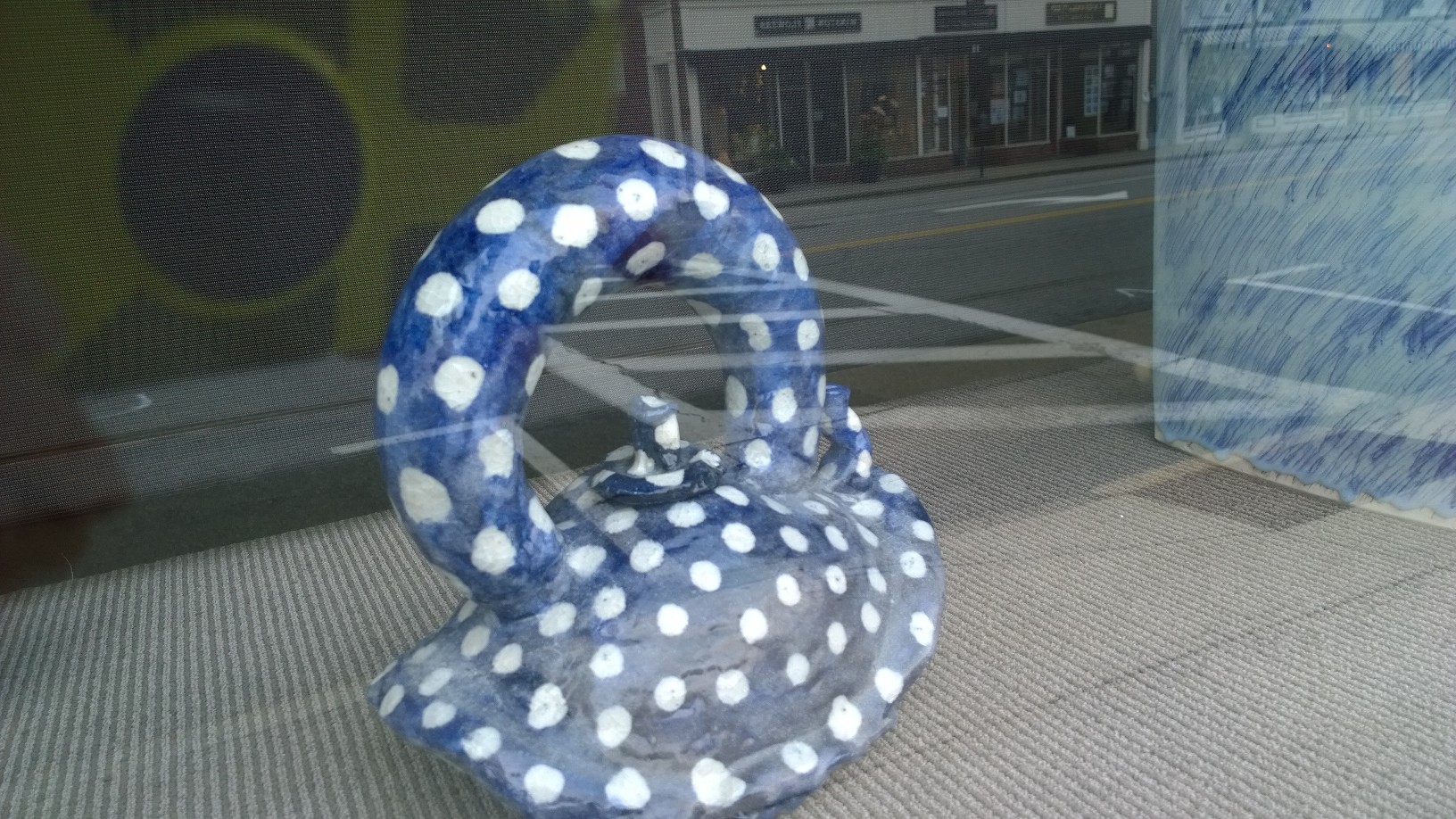
Next we have a fanciful teapot in the window of the Lacoste Gallery.

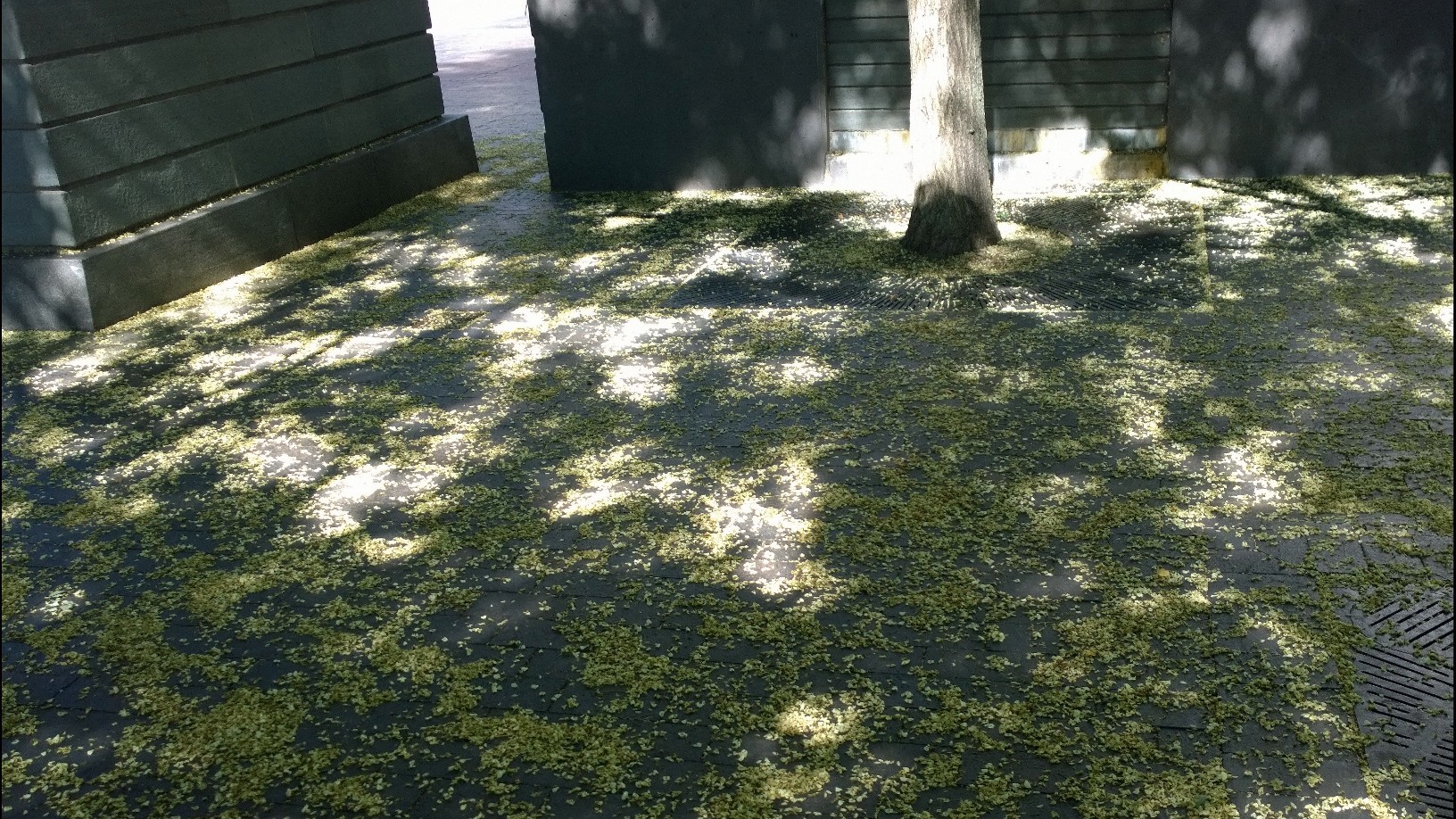
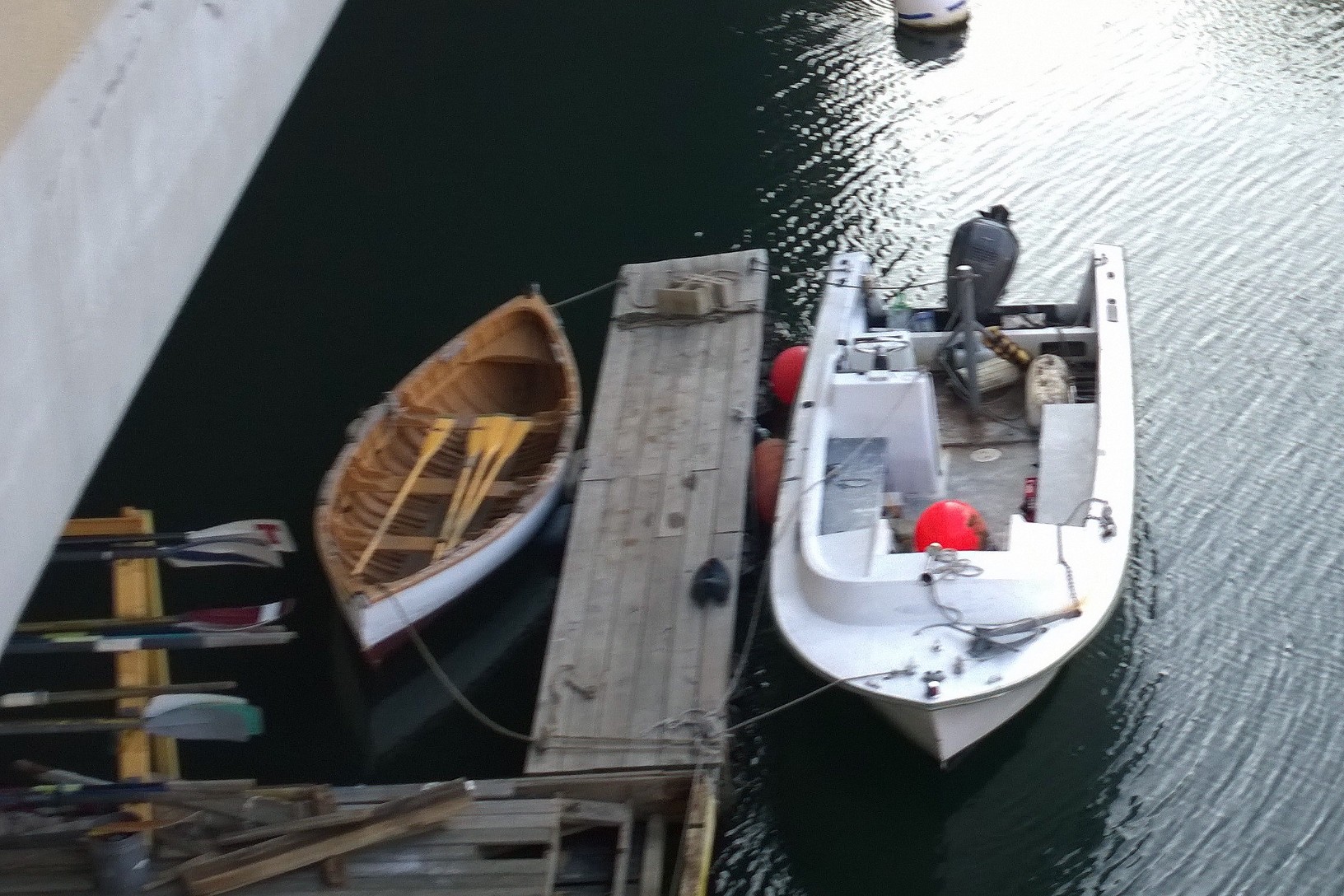
Moving right along: dappled shade on Summer St., Boston, near South Station; and a row boat for rent in Fort Point Channel.

Today’s Dewey Square excitement was a labor rally for striking airport workers demanding a $15/hour minimum wage. Lots of speeches. I photographed a T-shirt and a Boston politician. The politician had such an energetic speaking style, the photo came out blurry, but I’ll add it if you want it.

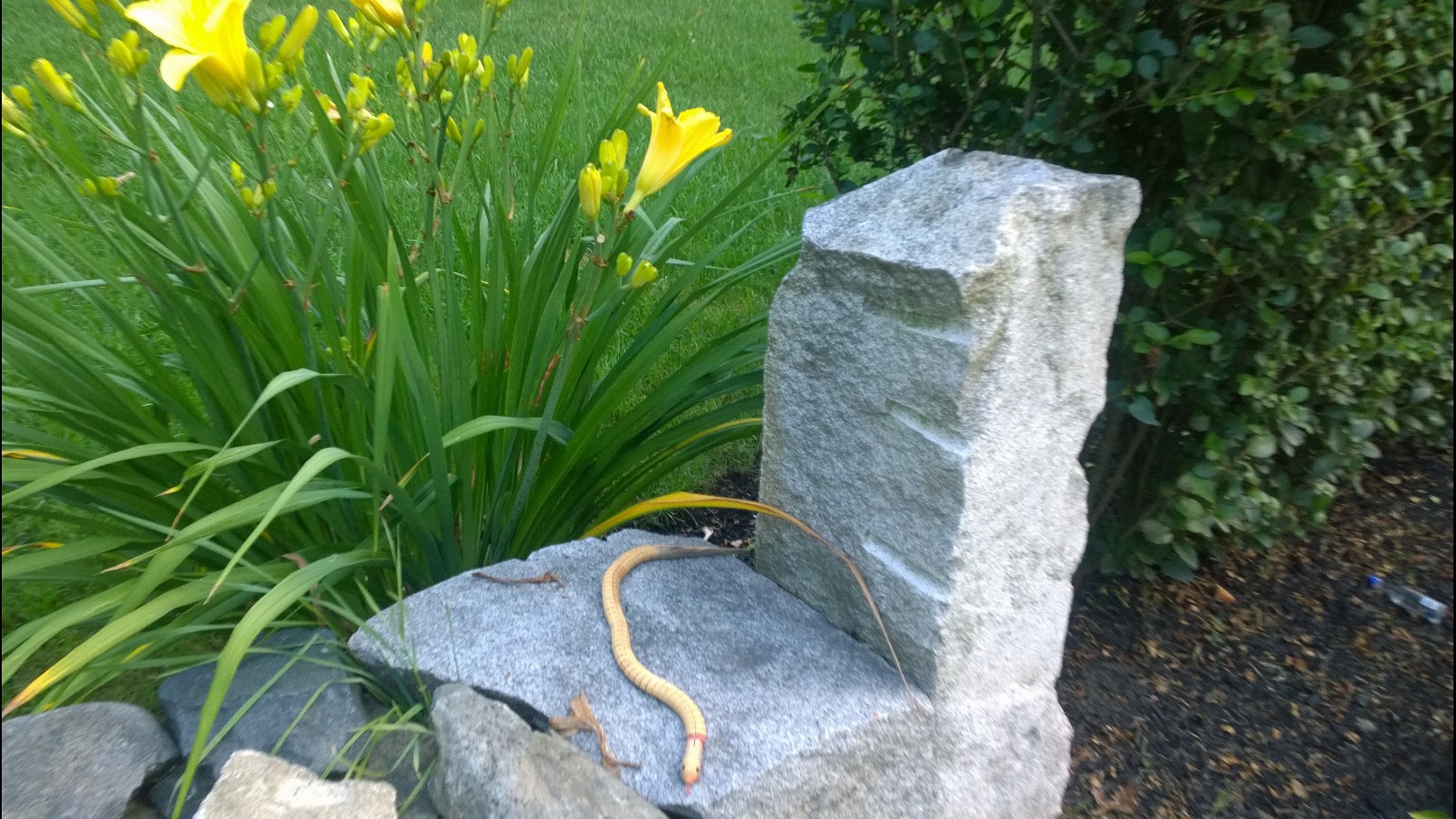
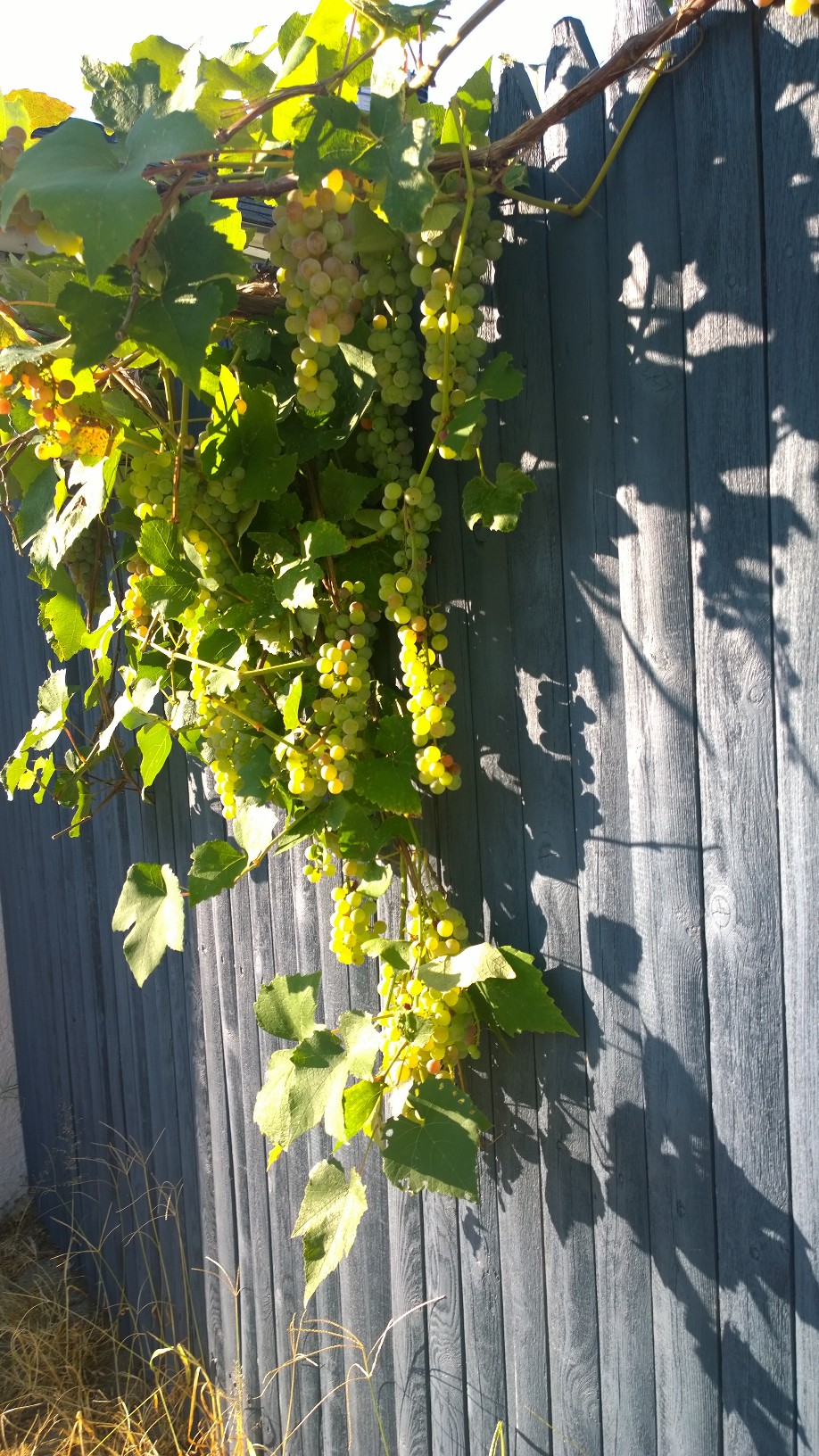
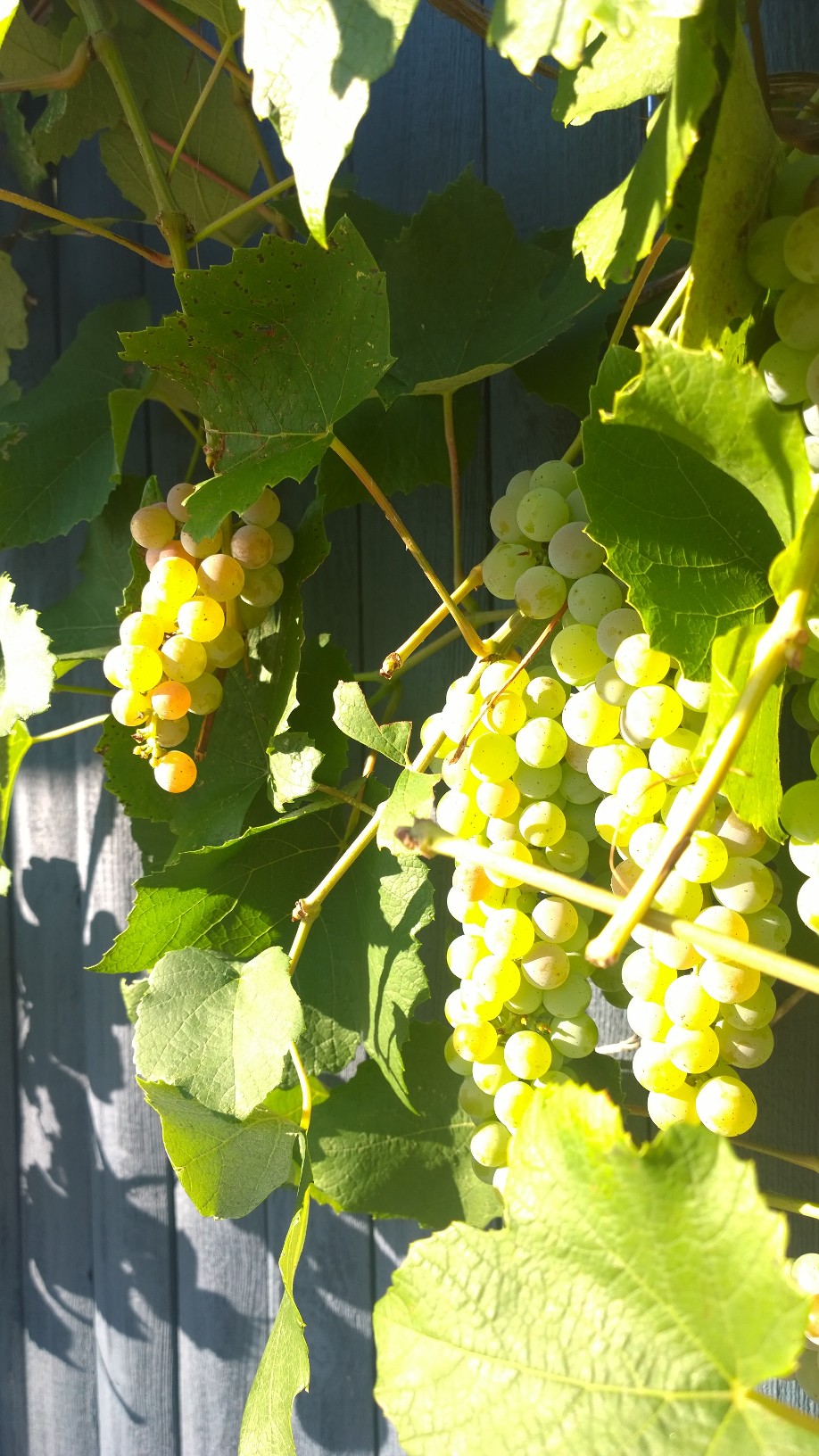
The last three pictures are of a fake snake — perhaps intended to keep passersby from sitting on a resident’s stonewall — and grapes. The grapes were the most surprising thing that happened to me today. I must have walked past that fence twice a day for years and years, and I never noticed a grape vine growing there. Did someone drape it over the fence while I was at work?

Goes to show you don’t really have to go anywhere much to find surprises.

081115-shoes-bowtie-hankerchief-hat

081515-teapot

081415-dappled

081915-boat-rental-Ft-Pt-Channel

081915-labor-action-Dewey-Sq

81915-fake-snake

081915-neighborhood-grapes

081915-grape-close-up

I got started following @MassChallenge on twitter after Erik won a prize for his startup, and I still see items worth noting. Recently Mass Challenge linked to a Boston magazine article on one of the companies the business incubator helped launch. It unshrinks your ruined sweaters.

Lauren Landry reports, “Two Harvard Business School graduates are determined to unshrink your clothing.

Desiree Stolar and Nate Barbera sold out of their first 200 units of Unshrinkit on the Somerville-based product discovery site The Grommet in one hour. The patent-pending solution interacts with proteins in wool and, with the help of a cold-water rinse, causes them to revert to their original shape. …

“A shrunken cashmere sweater spawned the idea. … Around the same time [it shrank], a team of her Harvard Business School classmates were given $5,000 and told to launch a startup, as part of the school’s FIELD 3 program. … Barbera, with a background in mechanical engineering, set out to try and develop a chemically based solution capable of unshrinking wool clothing. …

“ ‘We tested out at least 20 ideas, one of which happened to work incredibly well—with no side effects and a relatively inexpensive ingredient.’ ”

The startup grew very fast and soon heard from customers that the magic potion didn’t work on very tightly woven wool.

“So, the founders launched into another round of R&D this past February to develop a new solution. Within the next month, the company plans to launch a ‘professional version’ of Unshrinkit, made with the same active ingredients, but with a few additives and a nice, fresh linen scent. …

“Now the team is focused on growing that community of supporters.

‘A lot of people don’t know they can unshrink their clothing,’ Stolar says. ‘We have to disrupt that mental state.’ ”

More here.

For relative beginners, they have a pretty professional ad.

Tiny House Vacation

The latest thing in tiny houses is taking a vacation in one. The Boston Globe suggests that if you have been intrigued about downsizing (way, way down sizing) to a tiny house, you could test one out. Or maybe you just want to simplify your life for a week.

Jessica Geller writes, “Getaway, a new startup out of Harvard, is taking the off-the-grid retreat and miniaturizing it. …

“For $119 a night, a group of four can book a cabin complete with hotel basics, such as towels and sheets. The tiny house is stocked with snacks, bicycles, firewood, and playing cards, all available for purchase via Venmo, a mobile payment system.

“Getaway … is one of the first projects out of the Millennial Housing Lab — a collaboration among the business, law, and design schools [at Harvard] — with the goal of developing fresh housing ideas for a new generation. …

“But are they too cramped for comfort? Jon Staff, a cofounder of the Millennial Housing Lab, says no. They’re full of conveniences. And they might just teach visitors a thing or two about scaling back. …

“In addition to Getaway, the Millennial Housing Lab plans to build tiny houses for the homeless and create kits for anyone to be able to build a house in 30 days.

“At 160 square feet, the 8×20-foot Getaway cabin is larger than the average minivan, 90 square feet, and a little smaller than a school bus, 245 square feet.”

Check out a few of my past posts on tiny houses: here, here, here, and here. And be watching for a series of photographs I’m taking of a tiny house going up gradually over the summer at the Umbrella Arts Center.

Photo: Kataram Studios

I like this story about a couple of idealistic young men who have created fair-wage, environmentally sustainable textile jobs in the United States with the help of customers’ T-shirt collections. Their company, Project Repat, is “repatriating” some textile jobs lost overseas years ago.

From the website: “Project Repat story starts in Nairobi, Kenya, where Project Repat co-founder Ross Lohr was doing non-profit education work. After sitting in traffic for 2 hours, he discovered the cause of the jam: an overturned fruit and vegetable rickshaw pushed by a Kenyan man wearing a t-shirt that said ‘I Danced My Ass Off at Josh’s Bar Mitzvah.’

“Amazed by all the incredible t-shirts that get sold off and sent overseas by non-profit and for-profit companies in America, [Nathan Rothstein and I] began working with Kenyan artisans to design new products out of castaway t-shirts, including bags, scarves, and re-fabricated t-shirts. Those products were ‘repatriated’ (or returned to the country of origin) back to the United States and sold to raise money for non-profits working in East Africa.

“When trying to sell our upcycled products at markets in Boston, we quickly discovered the difference between a ‘good idea’ and a real business: while potential customers liked the idea of a repatriated upcycled t-shirt bag, they didn’t like it enough to actually buy it. What customers did ask for, time and time again, was an affordable t-shirt quilt.

“We had heard enough: instead of shipping goods all around the country, why not create fair wage jobs in the United States and create a product that has a lot of meaning for customers? As they say, the rest is history. Rather than ‘repatriating’ t-shirts back to the United States, Project Repat creates a high quality, affordable t-shirt quilt with minimal carbon impact.”

The factories are located in cities once-renowned for textiles: Fall River, Massachusetts (where “Precision Sportswear has been able to succeed by specializing in custom work and smaller production runs for made-in-USA. companies”), and Morgantown, North Carolina (where “each worker at Opportunity Threads is part of a collaborative working model, [and] each employee adds input to the production process and has the opportunity to earn an ownership stake in the company”).

I was not able to find on the website what happened to the artisans in Africa when the company’s focus changed. Ping @lunastellablog1 if you know.

On this Repat page, you tell the company what size quilt to make with your T-shirts, what size panels, and what color PolarTec backing you want.

Photo: Project Repat

A Camera that Flies

The first time I really got into the Internet and computers was in 1994 when I was working at HBR. We all loved experimenting with kooky screen savers. Do you remember flying toasters?

Flying toasters are what I think of when I look at what reader Rob Moses is doing with his camera on a drone. Here are photos from a flight over the Calgary Zoo. (Rob lives in Canada.)

He writes, “I have been flying around this DJi Phantom 3 Professional Quadcopter lately. I took this picture with it flying over the Calgary Zoo. One of the most fun things around flying one of these things is having the ability to shoot photos of views people don’t really see. This picture is a good example of a view not seen. I only wish there was some animals walking around in the picture haha.”

Seeing what your flying camera picked up must feel similar to riding on a train through people’s backyards, where you get a sense of lives as they are lived that you never get from a front lawn.

Be sure to check out the Rob Moses Photography blog, here.

Photo: Rob Moses Photography


Boston Public Market

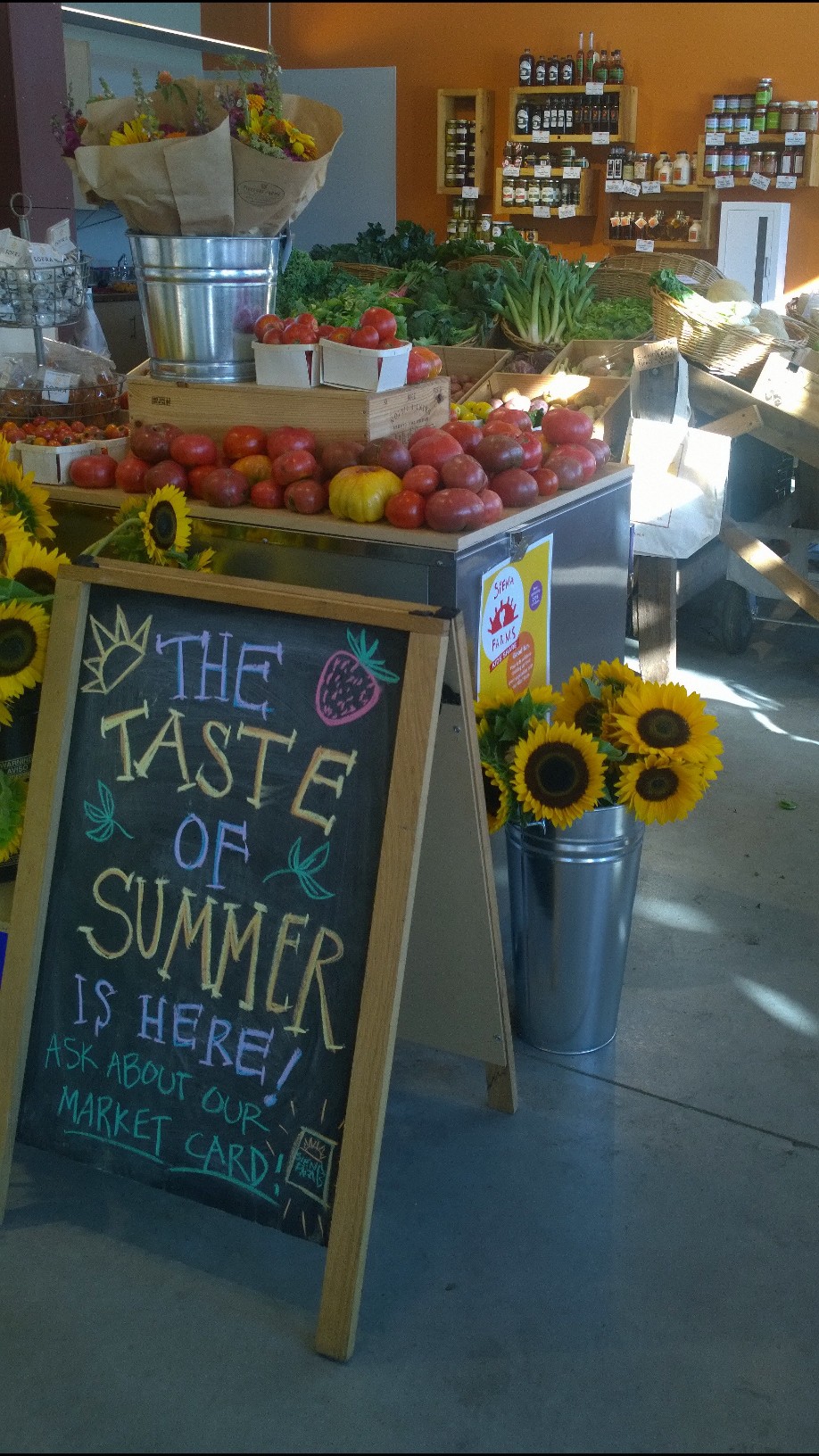
The original idea when the grandchildren visited my workplace was to walk to the new Boston Public Market, but it was too far and there were so many other interesting things along the way.

We will go as a family another day, but I thought I would zip over there Thursday and take some pictures. I arrived at 8 a.m. The market is open Wednesdays to Sundays, 8 to 8, and since the activity wasn’t in full swing, it was a good time to look around.

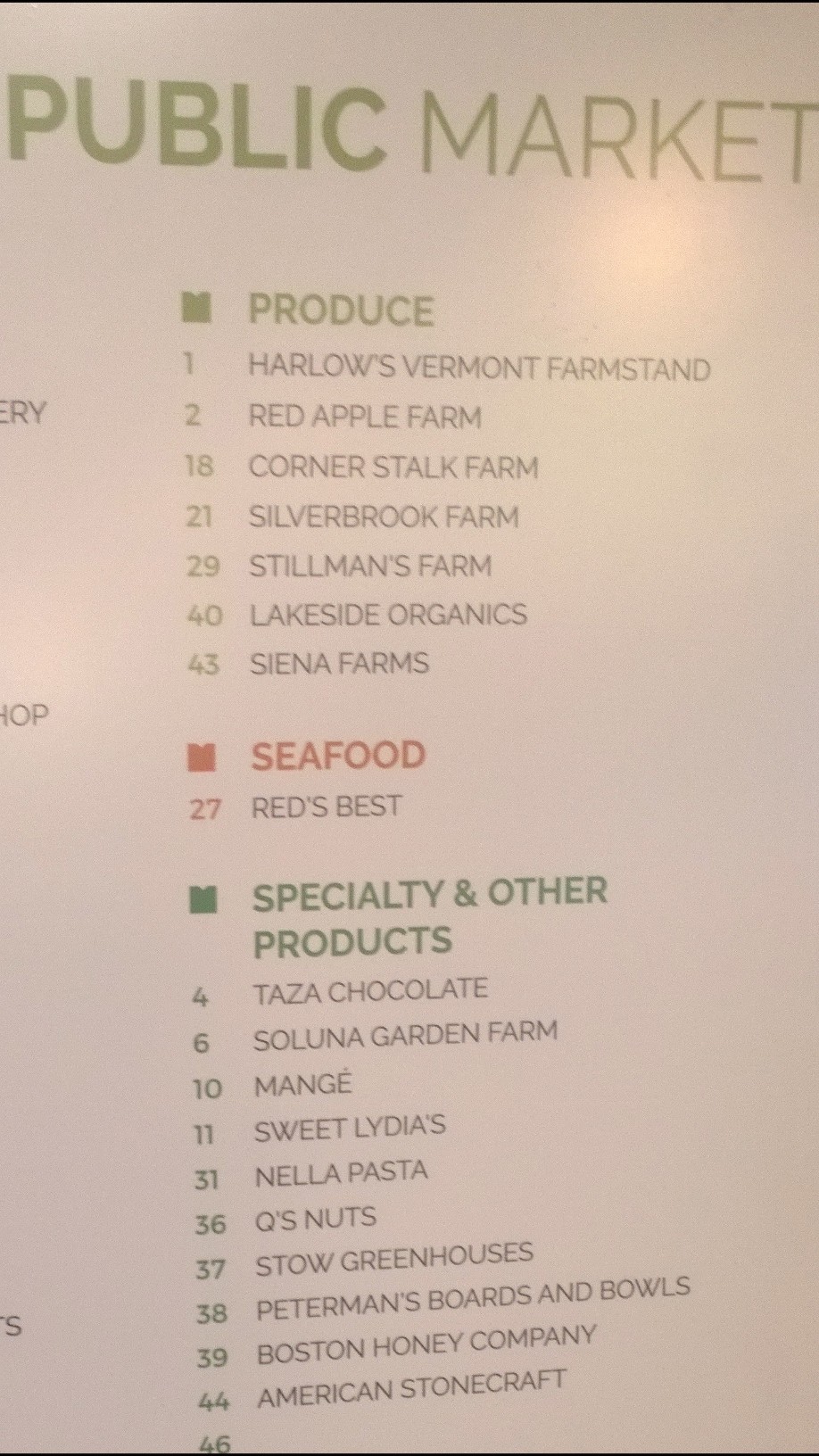
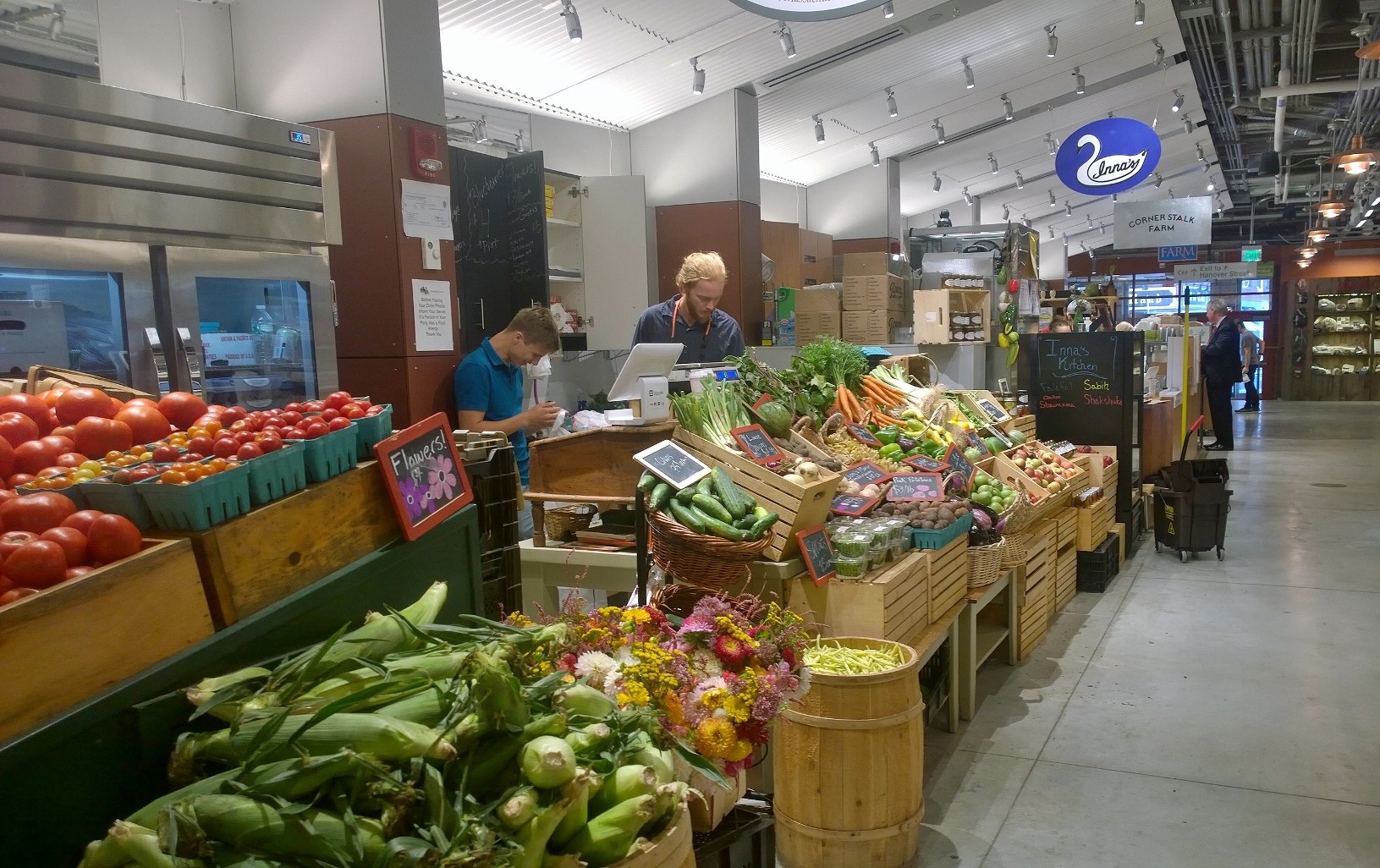
The Boston Public Market is not as big, as noisy, or as messy as the famed Reading Terminal Market in Philadelphia (and there are no Amish), but it shows real promise. Although the market was fairly quiet at 8 a.m., there was already a line at MotherJuice and George Howell’s Coffee — people getting revved up for work at Government Center and environs. At a farmstand, I bought two small squashes. Fifty cents.

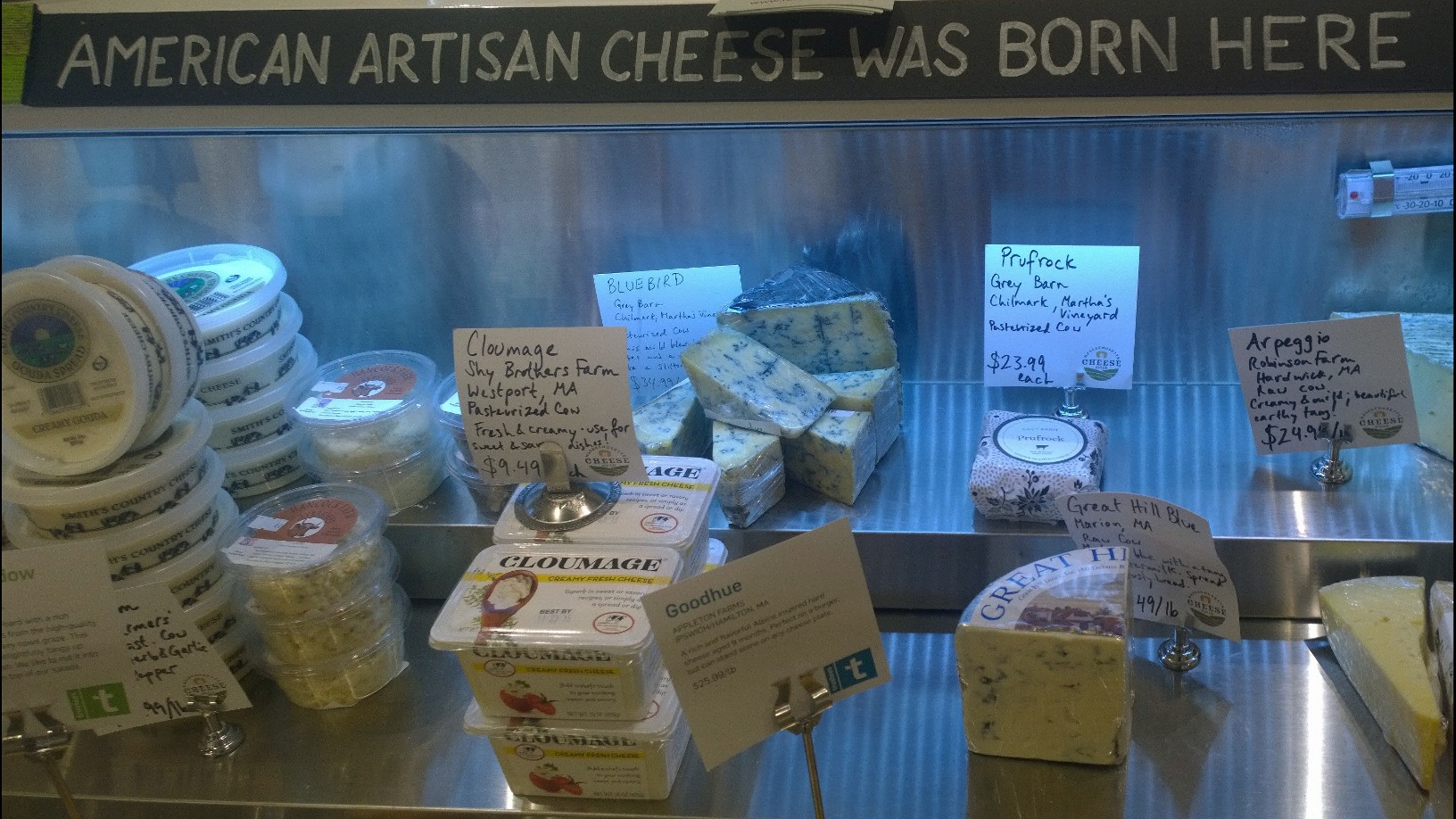
The Vietnamese restaurant Bon Me had a counter, and I saw local honey, fruits, vegetables, artisan cheese, and crafts. The crafts gave me pause as the market is supposed to be mainly an outlet for regional farmers, and much as I love crafts, I have seen them overwhelm another farmers market. As long as there is a good balance, it will be fine.

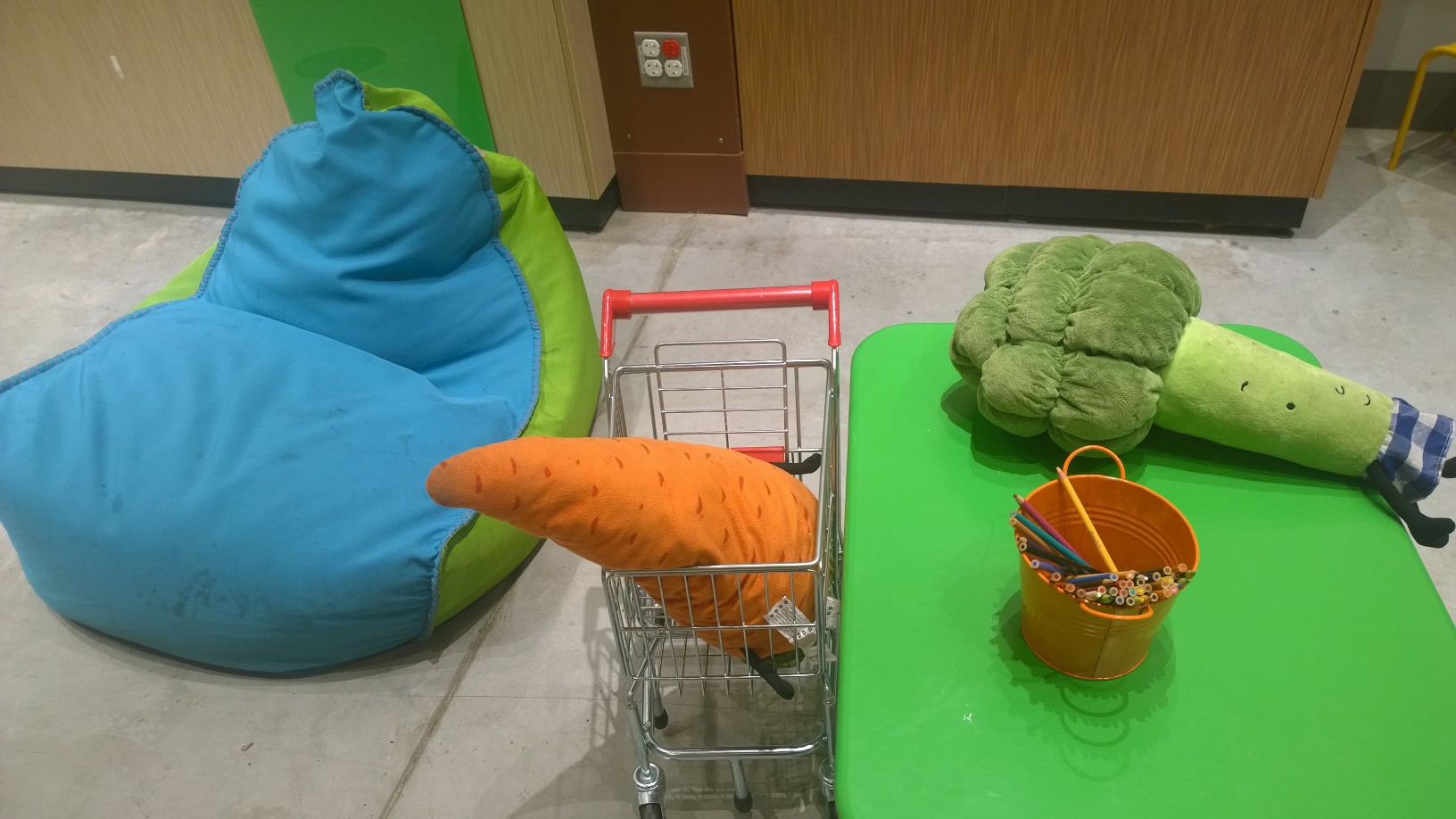
Note the vegetable soft toys in the children’s play area.

081315-market-window

081315-indoor-farmstand

081315-market-overview

081315-public-market-play-area

081315-cheese-at-market

081315-fresh-produce

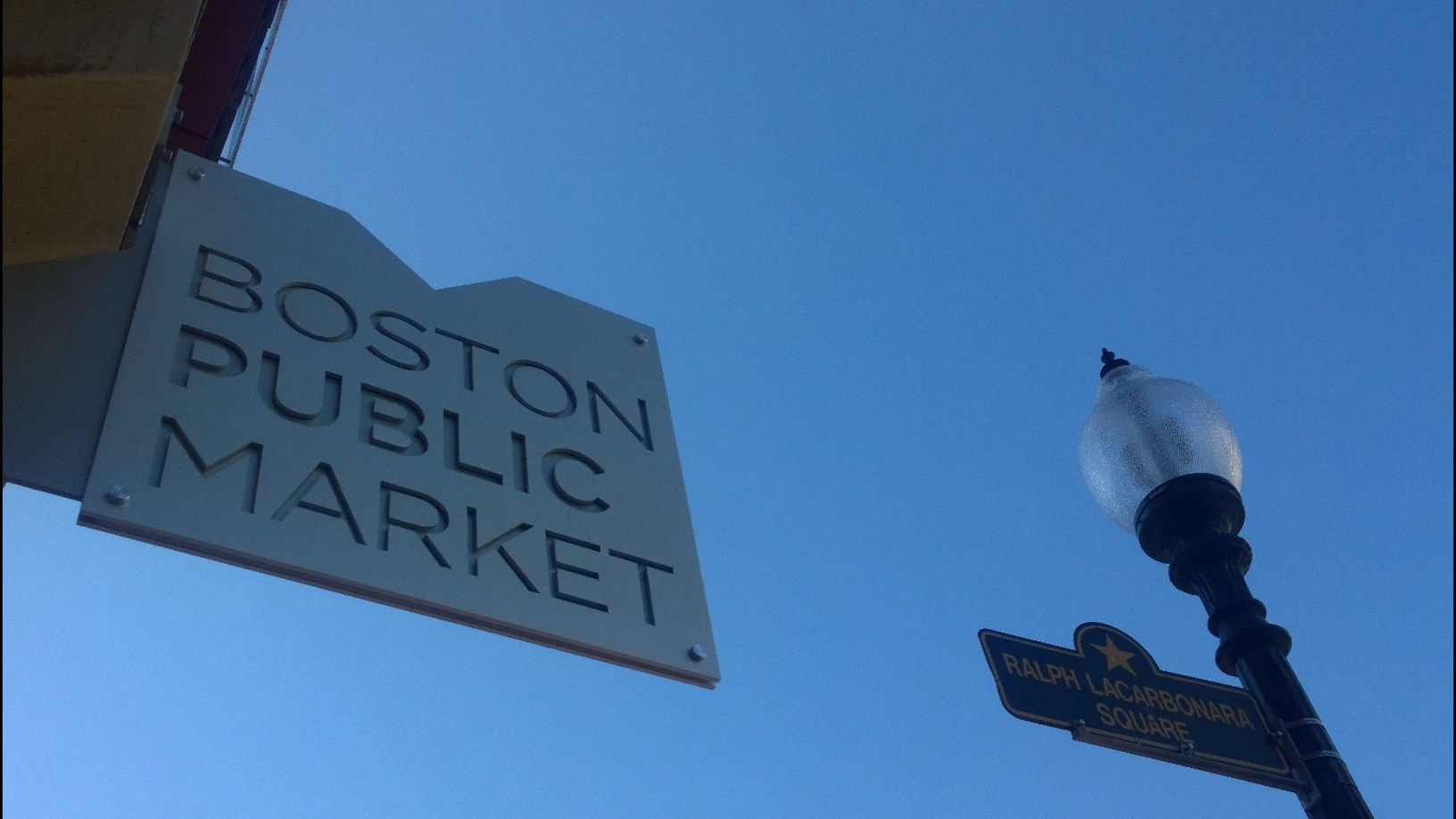
081315-public-market

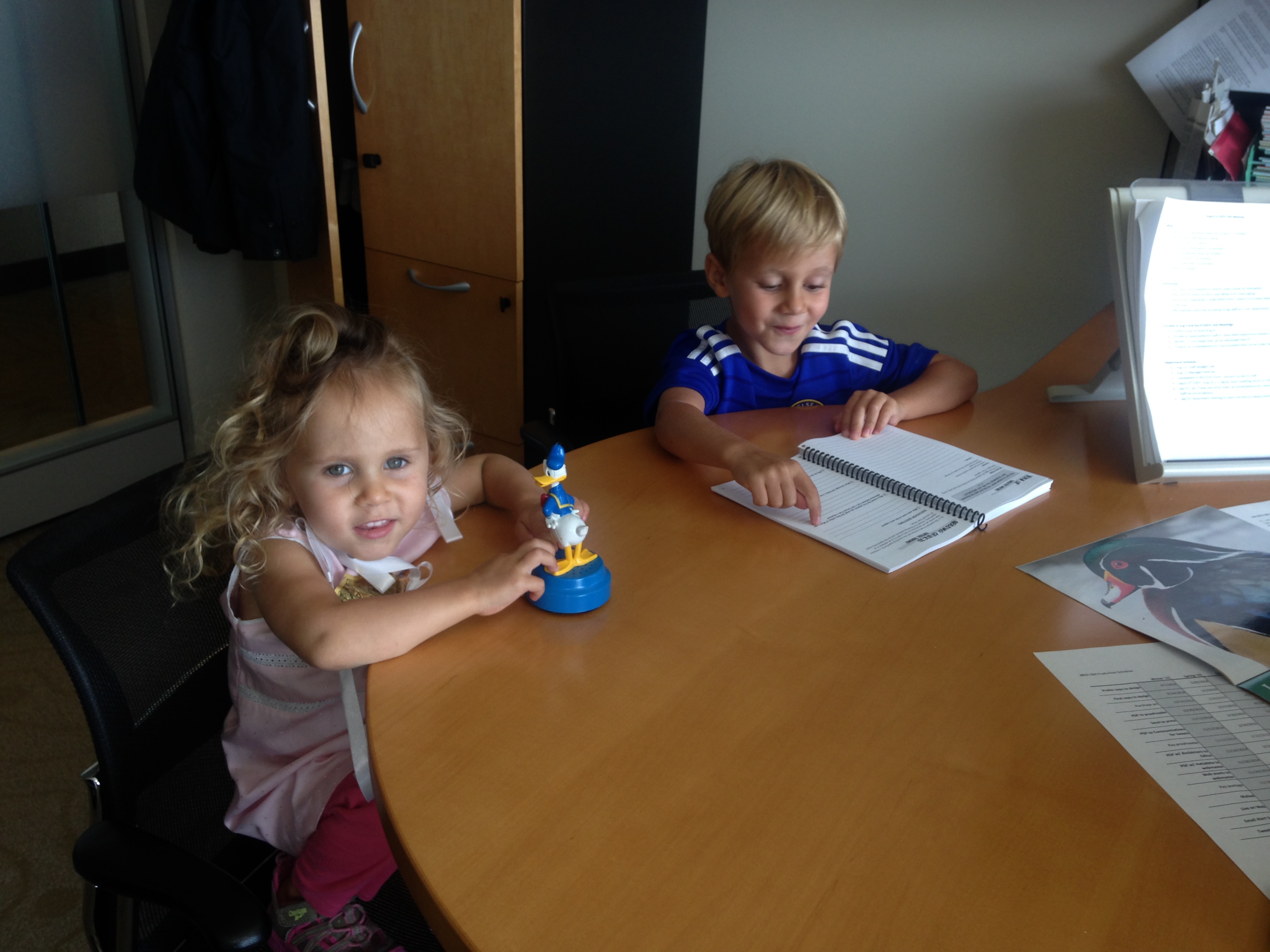
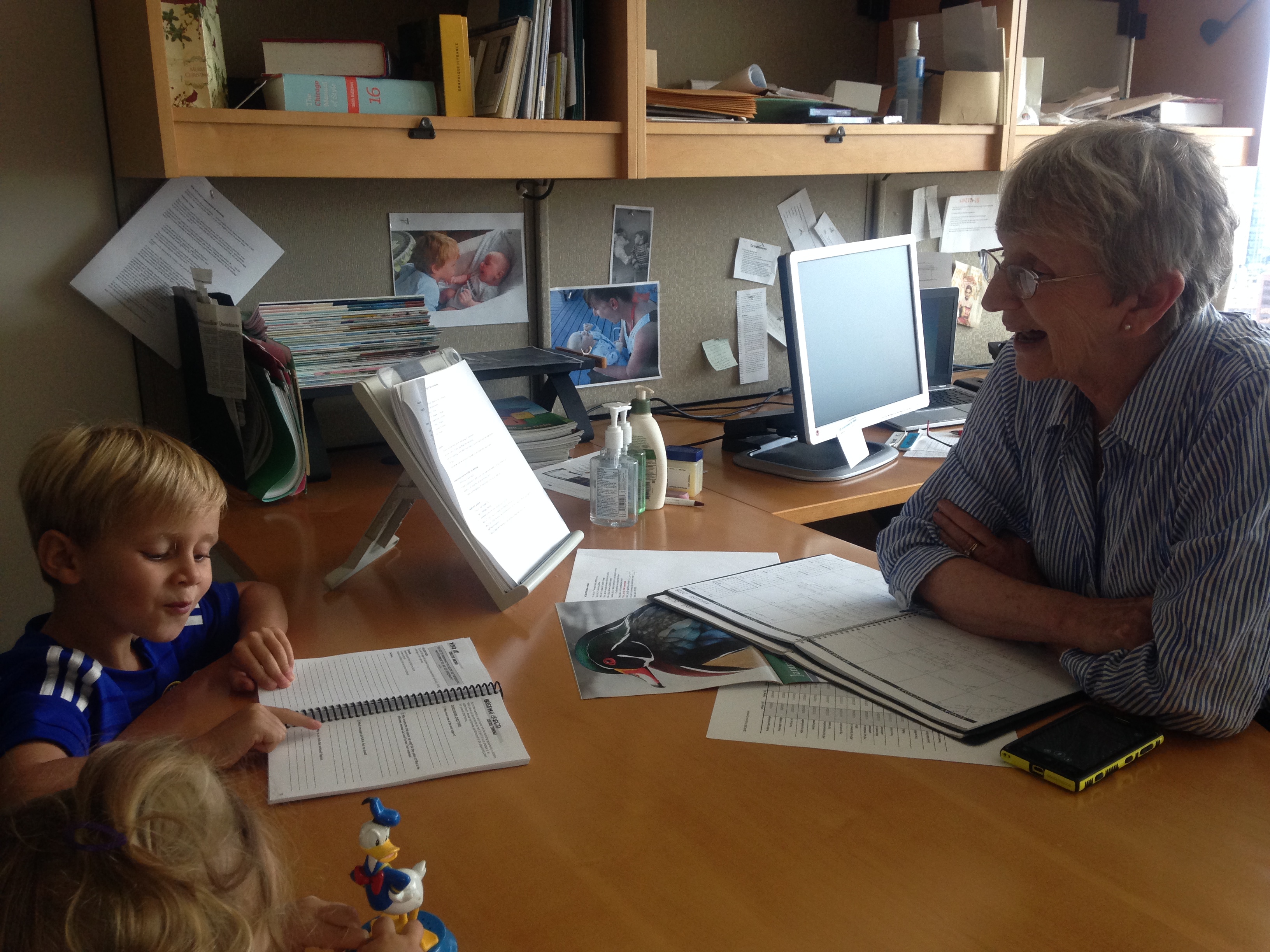
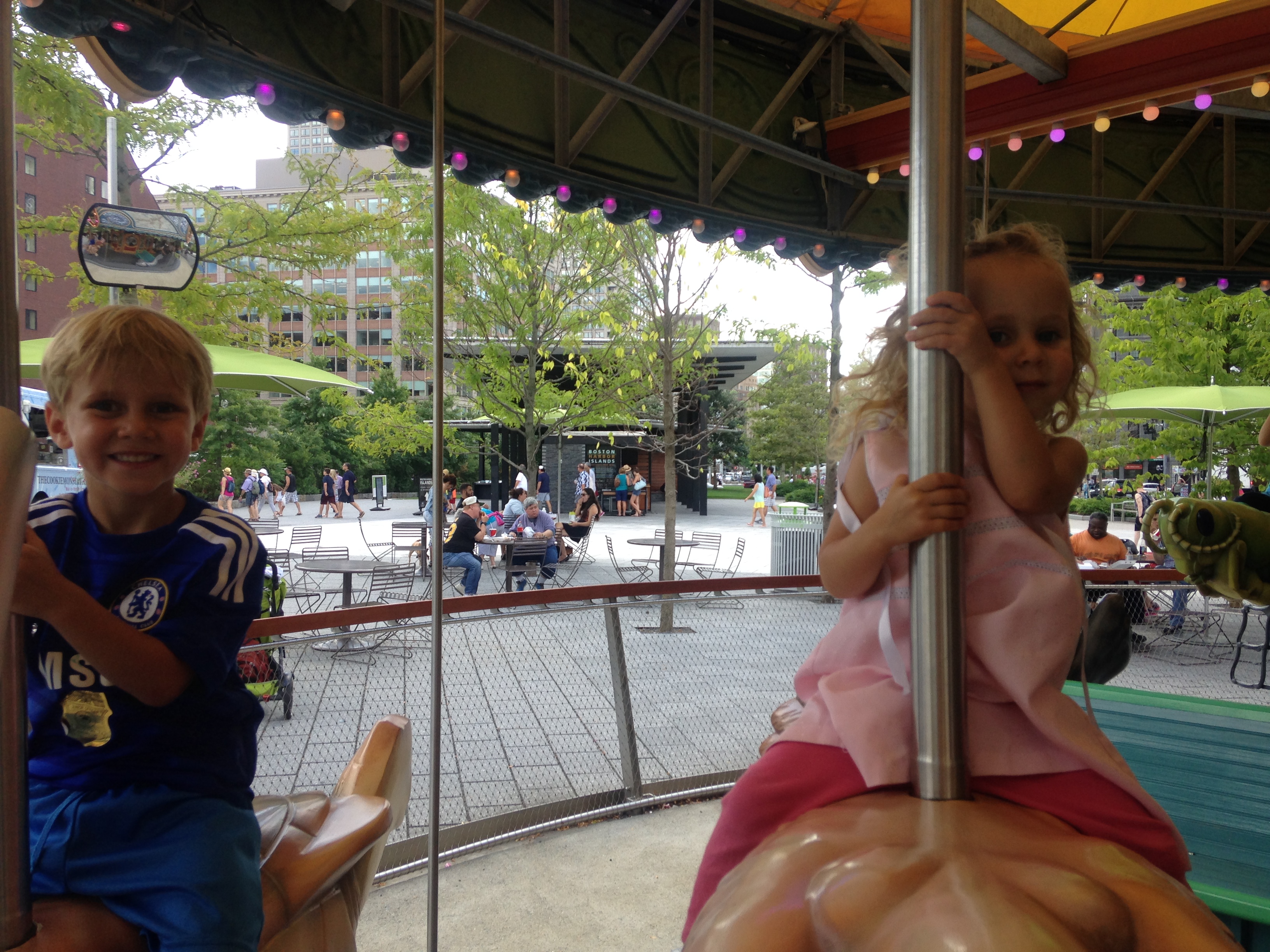
Yesterday two of my grandchildren came to where I work prior to setting out on a downtown exploration with their mom. What a treat for me! Co-workers who missed seeing them were kicking themselves today. Fortunately, my daughter-in-law took pictures I could share.

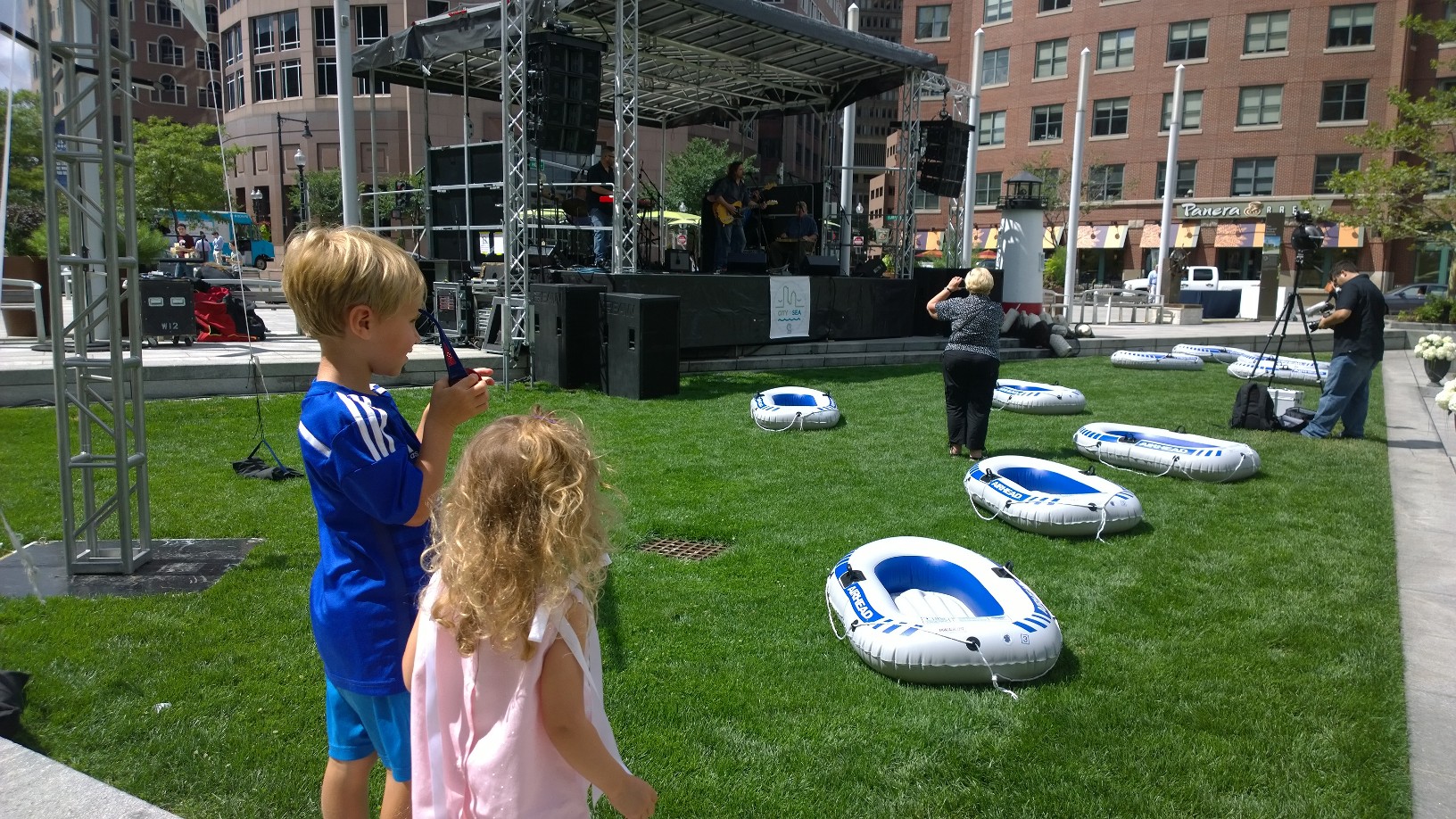
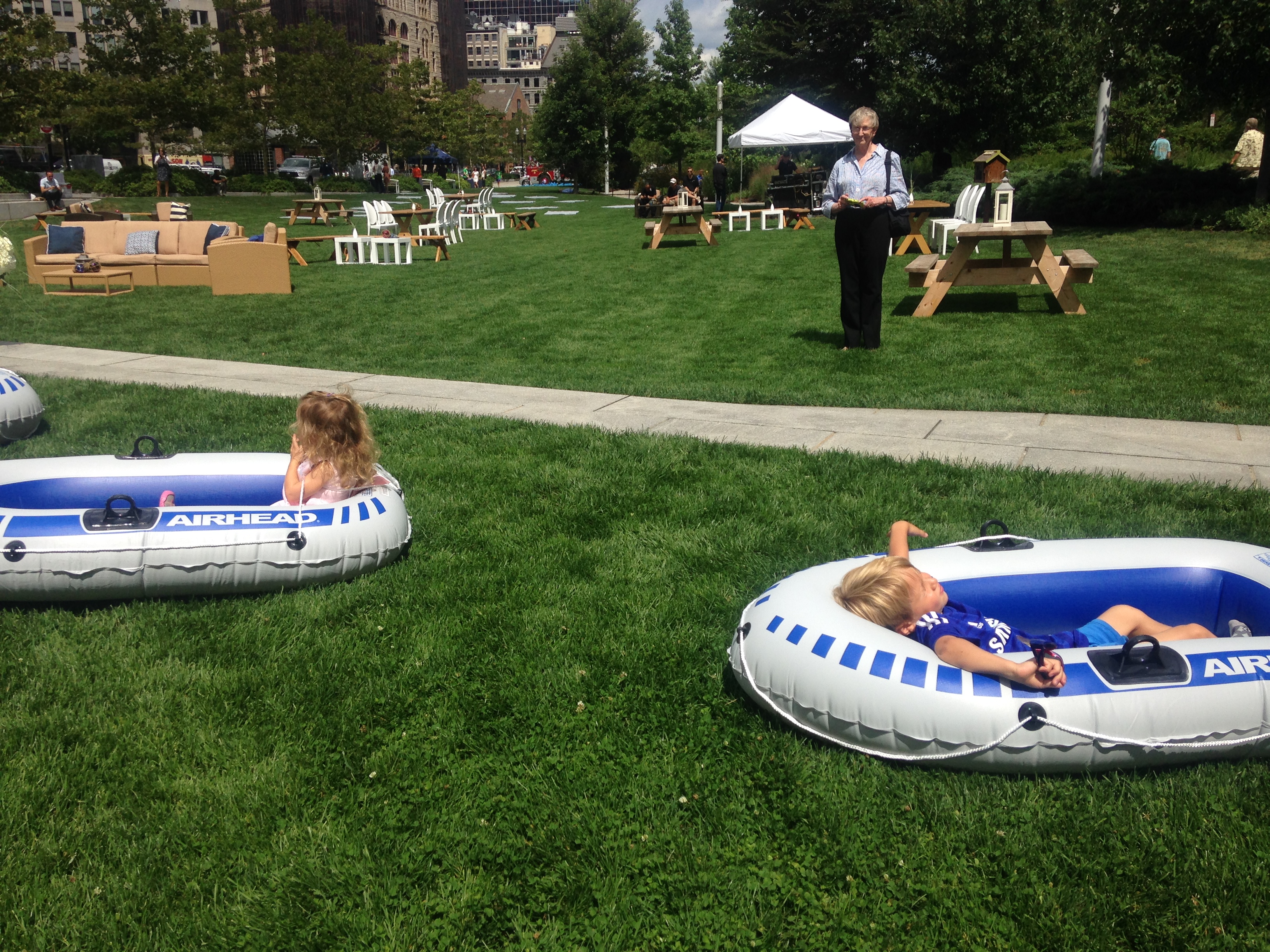
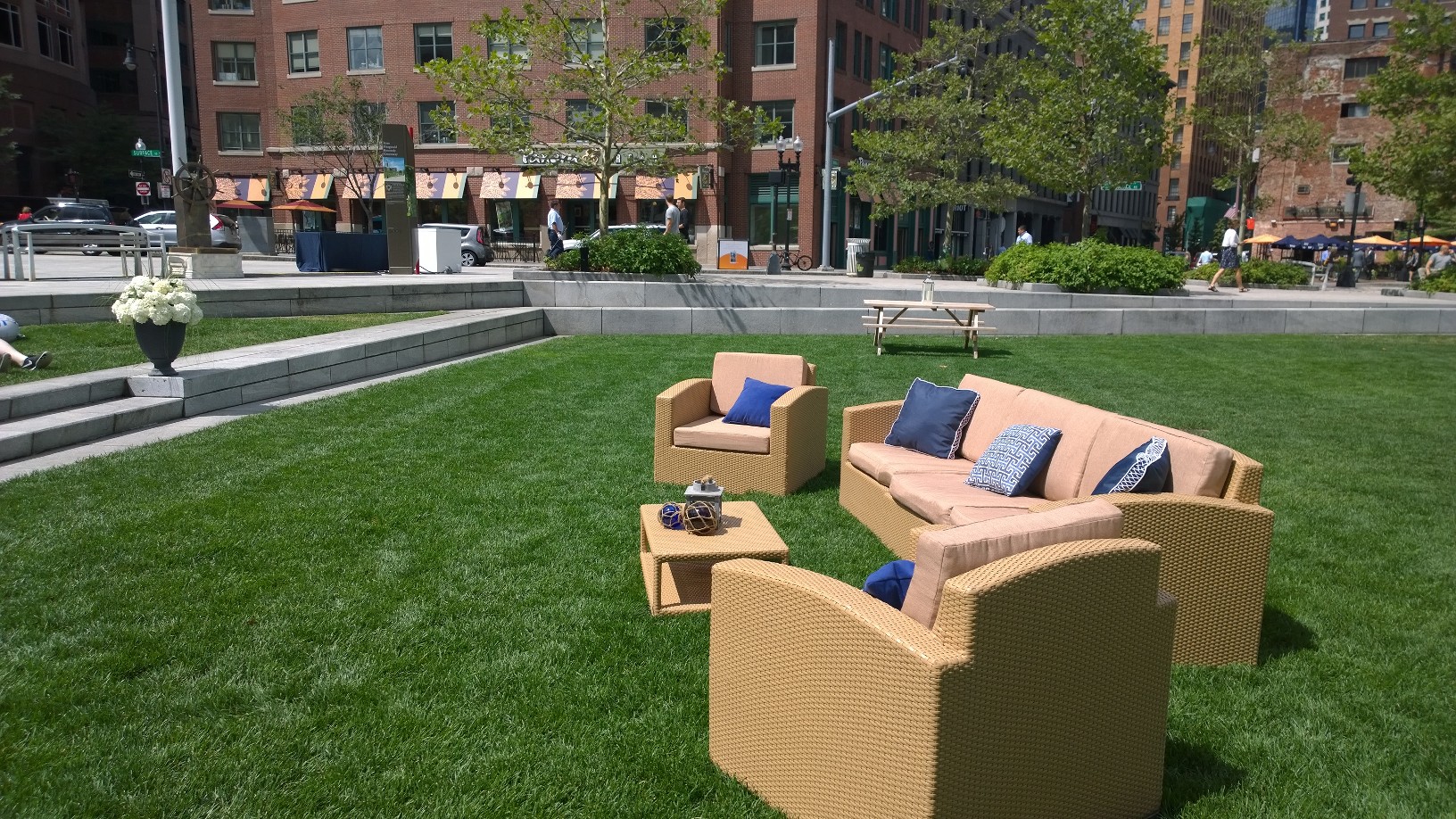
After the kids pretended to work at my desk (assisted by a colleague’s Donald Duck — push the button and he talks like the real thing), we went out into the Greenway. There is always something going on there in the summer, and we were surprised to find a good band concert surrounded by lounging chairs, tables, couches, bouquets, and beach floats.

I had to go back to work, but the kids got to ride on the wonderful marine-themed carousel and get wet in the crazy fountain. Everyone was impressed with all the food trucks along the Greenway and sampled a couple.

I was just running out to put more coins in the meter where my savvy daughter-in-law had parked (she actually found street parking!) when they returned from their adventures, just in time. That takes talent.

081215-at-office-with-Donald-Duck

081215-at-Grandma-office

081215-band-sets-up-in-Greenway

081215-relaxing-at-Greenway-concert

081215-couch-in-greenway

081215-Greenway-carousel

Good things continue to happen in the West End of Providence, thanks in large part to the vision and community responsiveness of West Elmwood Housing Development Corporation (WEHDC) under the direction of Sharon Conard-Wells.

Tuesday, WEHDC held a reception to celebrate past accomplishments and the new mixed-income housing development they are about to build. The mayor came. Community members came. Many of Rhode Island’s movers and shakers came. I came.

It was impressive to see how WEHDC’s projects have flourished when you consider that 10 years ago, the nonprofit was tackling the cleanup of a nearby industrial site and hoping to turned the blighted Rau Fastener factory into beautiful mixed-income housing — keeping their fingers crossed that the market would respond.

The market sure did respond, and now WEHDC is starting the second phase. At the same time, it continues community work of many kinds. Antoine started out doing lead abatement and now works with young people in the neighborhood. Adeline works with the community farm and the Sankofa World Market. Rosa and Debra do housing counseling and lending. Rachel manages WEHDC’s many partnerships and is always looking for more.

The energy and optimism are tangible, and it was good to see the recognition the nonprofit is getting from people in a position to ensure that the good work keeps going. The current wish list includes new laptops and web design work (in case you know anyone interested in offering help that is sure to be used wisely). Check out WEHDC here.

Photo: Sankofa Initiative

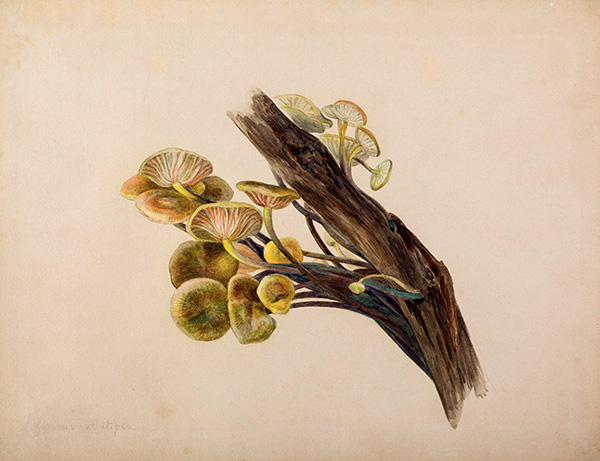
There was more to Beatrix Potter than Flopsy, Mopsy, and Cottontail. Her meticulous drawings of flora and fauna made serious contributions to the science of the day.

Maria Popova at Brain Pickings shares Potter’s mushroom drawings and more.

“At a time when women had no right to vote and virtually no access to higher education, very rarely owned property and were themselves considered the property of their husbands, Potter became a commercially successful writer and artist, using the royalties from her books to purchase her famed Hill Top Farm, where she lived simply and with great love for the land for the remaining four decades of her life. …

“Linda Lear’s altogether magnificent Beatrix Potter: A Life in Nature (public library) — [is] by far the best book on Potter and one of the finest biographies ever written, Lear’s prose itself a supreme work of art.

“A formal scientific education was virtually inaccessible to women, except for the rare Ada Lovelace or Maria Mitchell, and membership in scientific societies was strictly reserved for men. But Potter’s scientific work was exceptional in that she deliberately tried to penetrate the very institutions that dismissed women’s scientific labor solely on the basis of gender. …

“By her early twenties, Potter had developed a keen interest in mycology and began producing incredibly beautiful drawings of fungi, collecting mushroom specimens herself and mounting them for careful observation under the microscope. … Lear writes:

Beatrix’s interest in drawing and painting mushrooms, or fungi, began as a passion for painting beautiful specimens wherever she found them. She never saw art and science as mutually exclusive activities, but recorded what she saw in nature primarily to evoke an aesthetic response. She was drawn to fungi first by their ephemeral fairy qualities and then by the variety of their shape and colour and the challenge they posed to watercolour techniques. Unlike insects or shells or even fossils, fungi also guaranteed an autumn foray into fields and forests, where she could go in her pony cart without being encumbered by family or heavy equipment.

More here.

Art: Beatrix Potter
Flammulina velutipes (Armitt Museum and Library)

Jeffro Uitto Sculpture

Someone posted a chair by Jeffro Uitto on Facebook, and I had to know more.

Uitto’s About page says, “On the Washington coast there’s a place where nature’s leftovers get a second chance at stardom. The place is Knock on Wood, and Jeffro Uitto is the artist making the magic happen.

“Since high school Jeffro has been creating with wood, his favorite medium. This stuff isn’t from a lumber mill either. Each piece is found and rescued from the shores of Tokeland, the banks of Smith Creek, or the valleys between the Willapa Hills. In due time the varied sticks, slabs, and roots are cured and then found a fitting home. …

“Not everything is built right in the shop though. Clients have brought Jeffro on site to build one-off creations in places like Alaska and Hawaii.

“Jeffro’s shop is located near the historic Tokeland Hotel, a stone’s throw from Willapa Bay. … Visitors are surprised to see that many of Jeffro’s tools are hand made by the artist himself. After you get to know him, this isn’t surprising at all.”

Be sure to check out the amazing sculptures at Jeffro Uitto’s website, here.

Photos: Jeffro Uitto

I have another unusual library story — this time from China. It’s about a small village that built a magnificent library, drawing admiring visitors and boosting the local economy.

Jane Perlez writes at the New York Times, “The tiny village of Jiaojiehe suffers from being close to the nation’s capital. The young flee easily to the big city, leaving the elderly behind, lonely and poor.

“In today’s China, villages like this often try to engineer a sense of well-being by opening a new medical clinic, say, or by upgrading the water supply.

“But Li Xiaodong, an award-winning architect who fuses traditional Chinese ideas of design with Western themes, had a different idea for Jiaojiehe. He was captivated by the potential he saw in the village’s most abundant natural resource, the branches of its thousands of trees, which the locals harvest for fuel.

“So he built a library — with a twist. At its base, it is a steel and glass box in the vein of a Philip Johnson open-plan creation from the 1950s, but its exterior walls and roof are clad with fruit-tree twigs.

“The spindly sticks are arranged in vertical rows, and their uneven shapes allow natural light to filter into the library’s reading room, while keeping the building cool in the summer and cozy in the winter. They also act as a kind of camouflage, making the library’s rectangular edges barely noticeable in the landscape as visitors approach the village on a narrow, twisting road. …

“The library has a presence on social media, and many of the visitors on the weekend are university students or young professionals. They wander around the village, snap photos of themselves and order the local delicacy, stewed chicken with chestnuts, at one of the restaurants.

“And some of them actually read. Sun Liyang, 27, an automotive journalist, said a friend in Beijing had donated some books after hearing about the library online, and he decided to come for a look. ‘I am sitting here reading “The Adventures of Tintin,” ‘ he said. ‘It’s taking me back to my childhood.’

“Wang Fuying, 57, who used to grow crops in the area, is now the librarian, even though she can barely read. ‘All the library visitors are from the city,’ she said. ‘We have up to 200 visitors a day over the weekend. They come for fun, take a look, take some pictures and take a walk.’

“There are a few flaws. To preserve the wood floor, patrons must remove their shoes at the front door, but in the summer when there are many visitors, the reading room becomes smelly from all the socks, Ms. Wang said. …

“Mr. Li’s projects in other parts of China where he has built small structures in rural areas — including a school built high over a creek — have won many prizes. But few honors seem to have pleased him more than last year’s Moriyama R.A.I.C. International Prize, named for the Canadian-Japanese architect Raymond Moriyama. …

“On a recent weekend, Mr. Moriyama, 85, was one of the visitors to the library. He liked what he saw. ‘I was so happy this particular project won,’ he said. ‘It was all about picking one that represents service to the people. The sense of humanity of the library is so great.’

“The older architect patted Mr. Li on the back. ‘You did good,’ he said. ‘I was not on the jury, and quite often, I disagree with the jury. But in this case, I believe it was 150 percent right.’ ”

More here.

Photo: Sim Chi Yin for The New York Times
Li Xiaodong, a prize-winning architect, was inspired by the branches of local fruit trees, which he used to cover the Liyuan library’s roof and exterior walls.

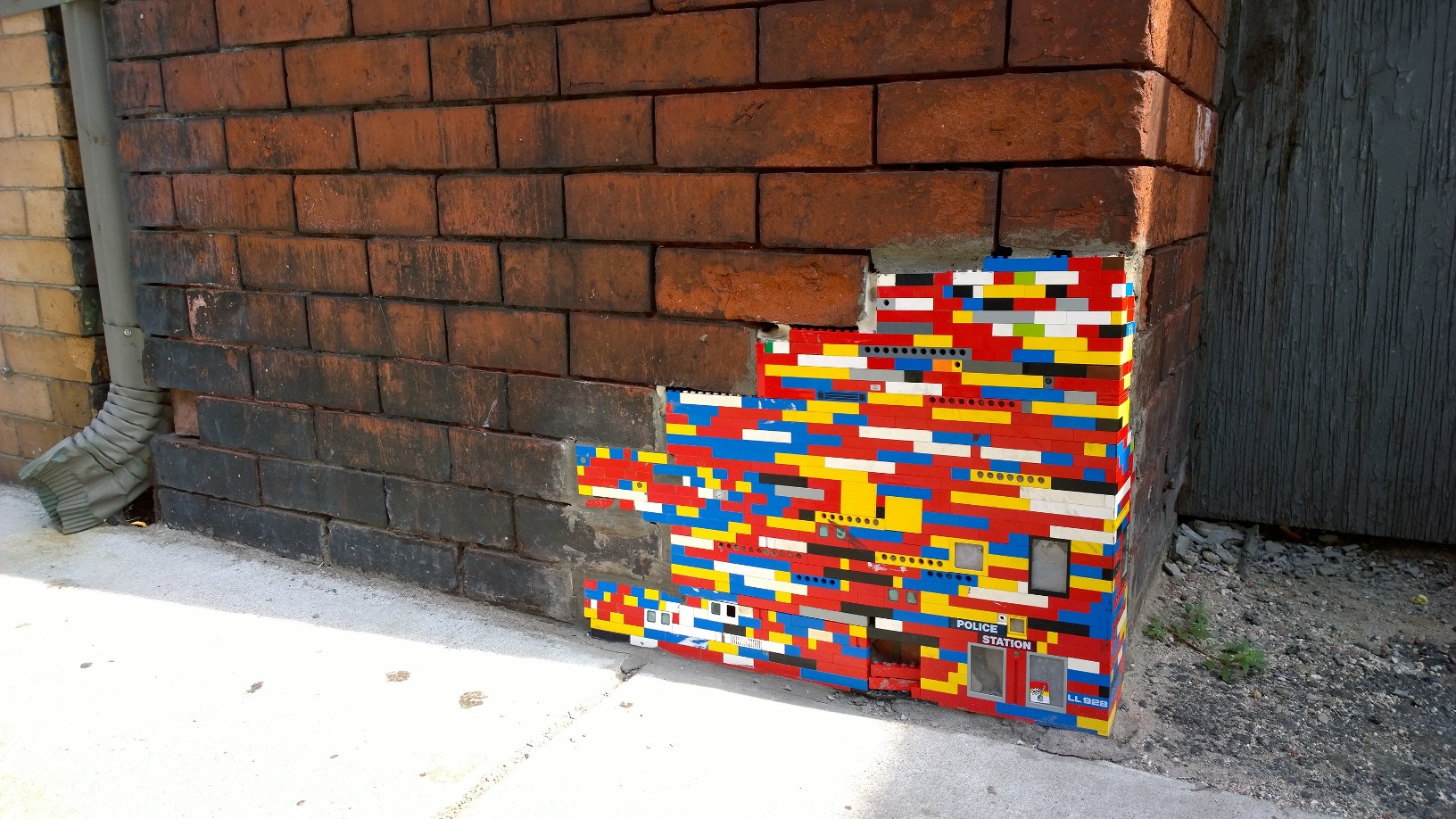
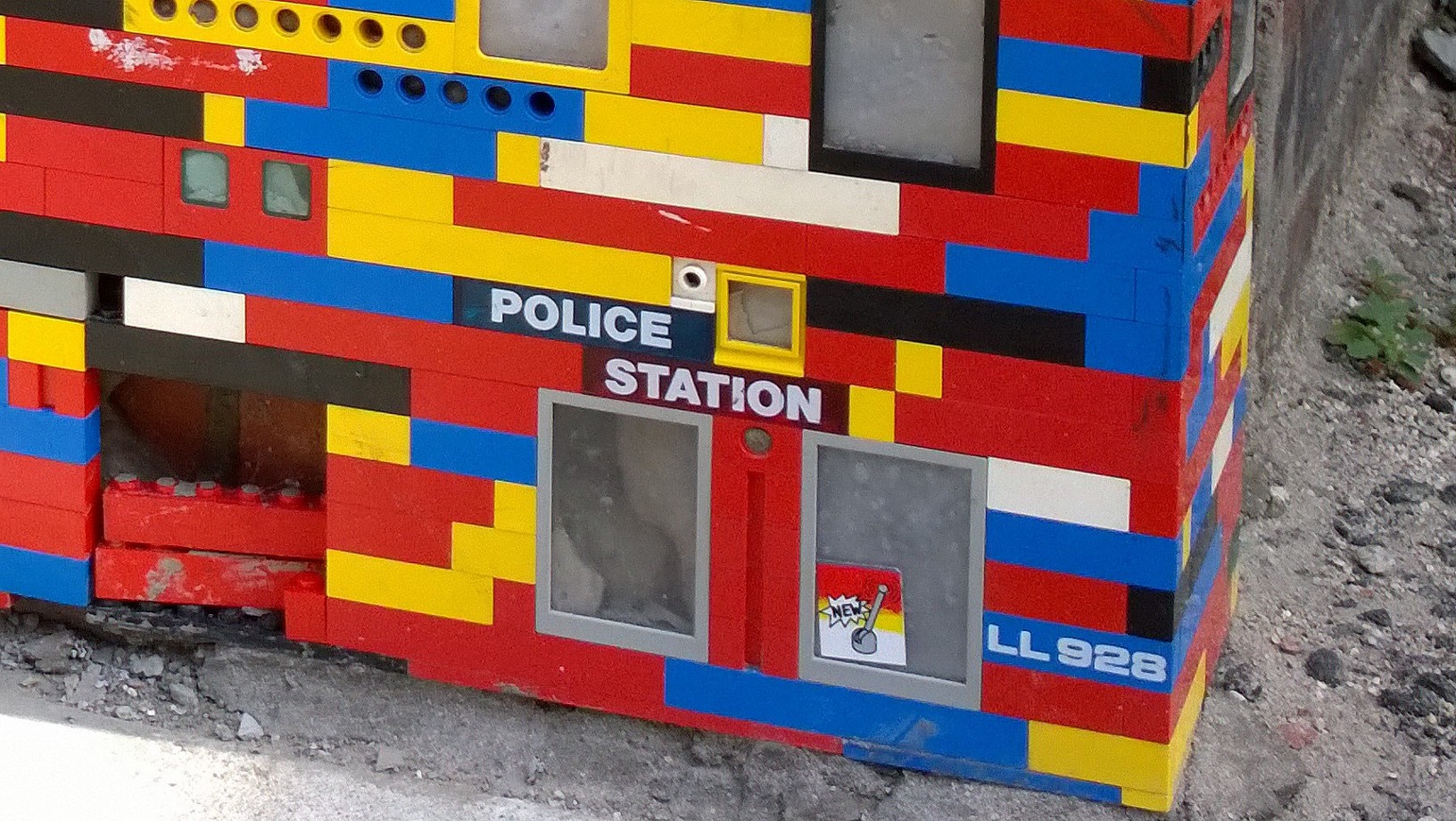
On the corner of Congress and Farnsworth, there is a parking lot, and on the Fort Point Channel side of the parking lot, there is a Lego-size police station. In case you are ever lost around there and need to ask for directions. If LL Bean is more your thing, there’s one by the parking lot, too. I took two pictures.

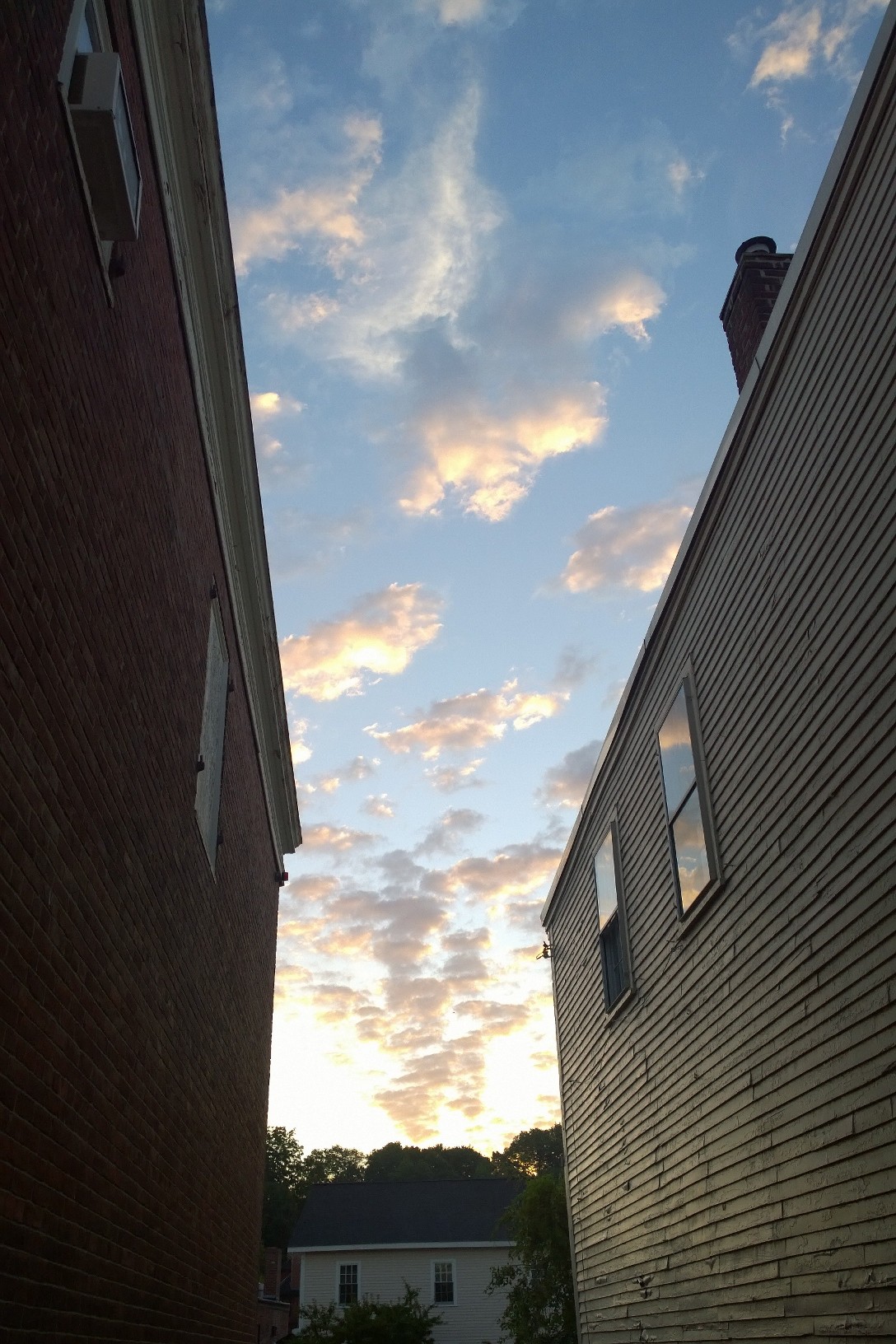
The clouds at dawn have been especially good lately. I include two shots in case you are not up early. Roses need no elaboration, but I am quite proud of how the yellow mullein turned out the second time I tried to capture it. A granddaughter was with me at the time, in the stroller.

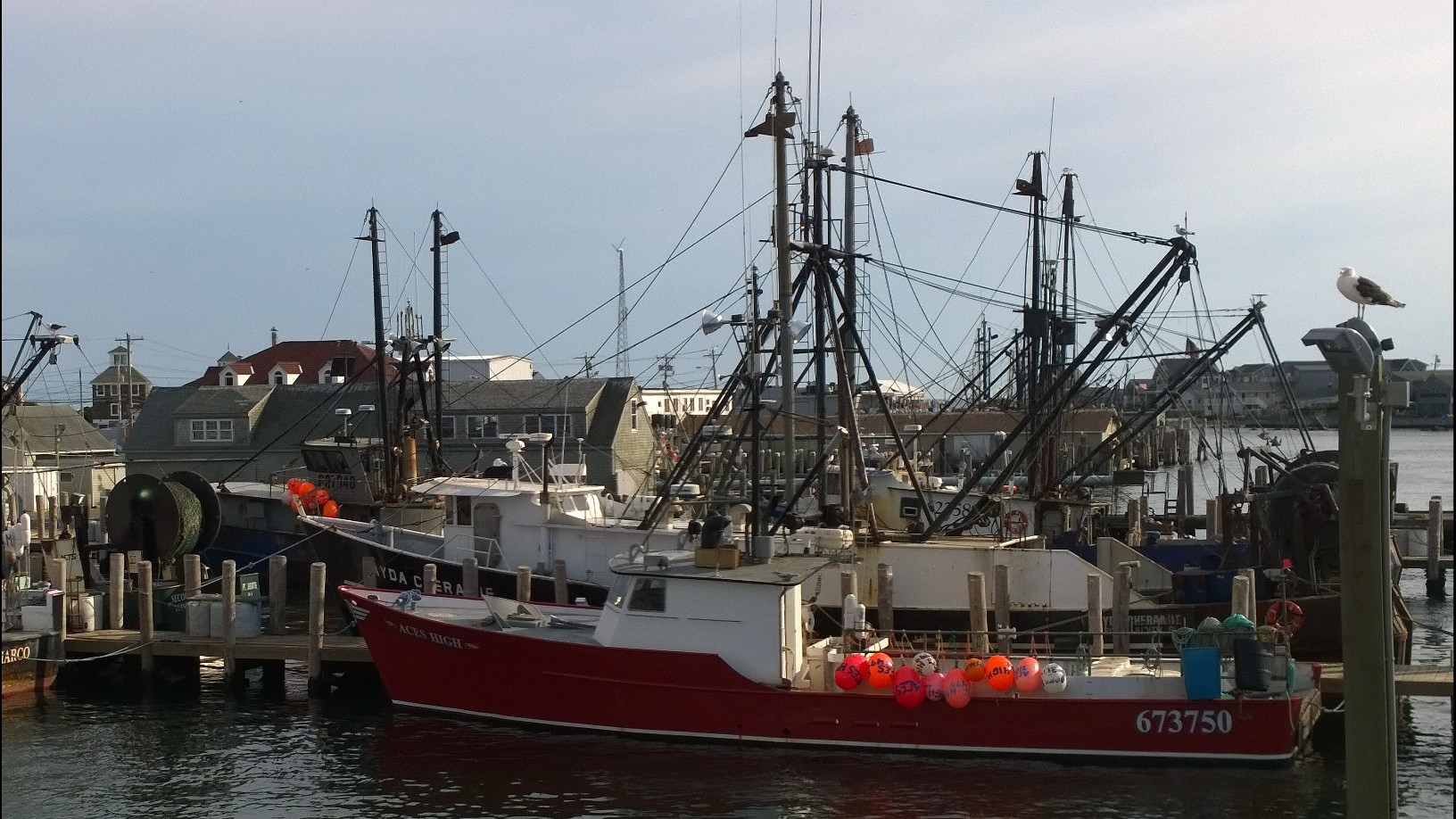
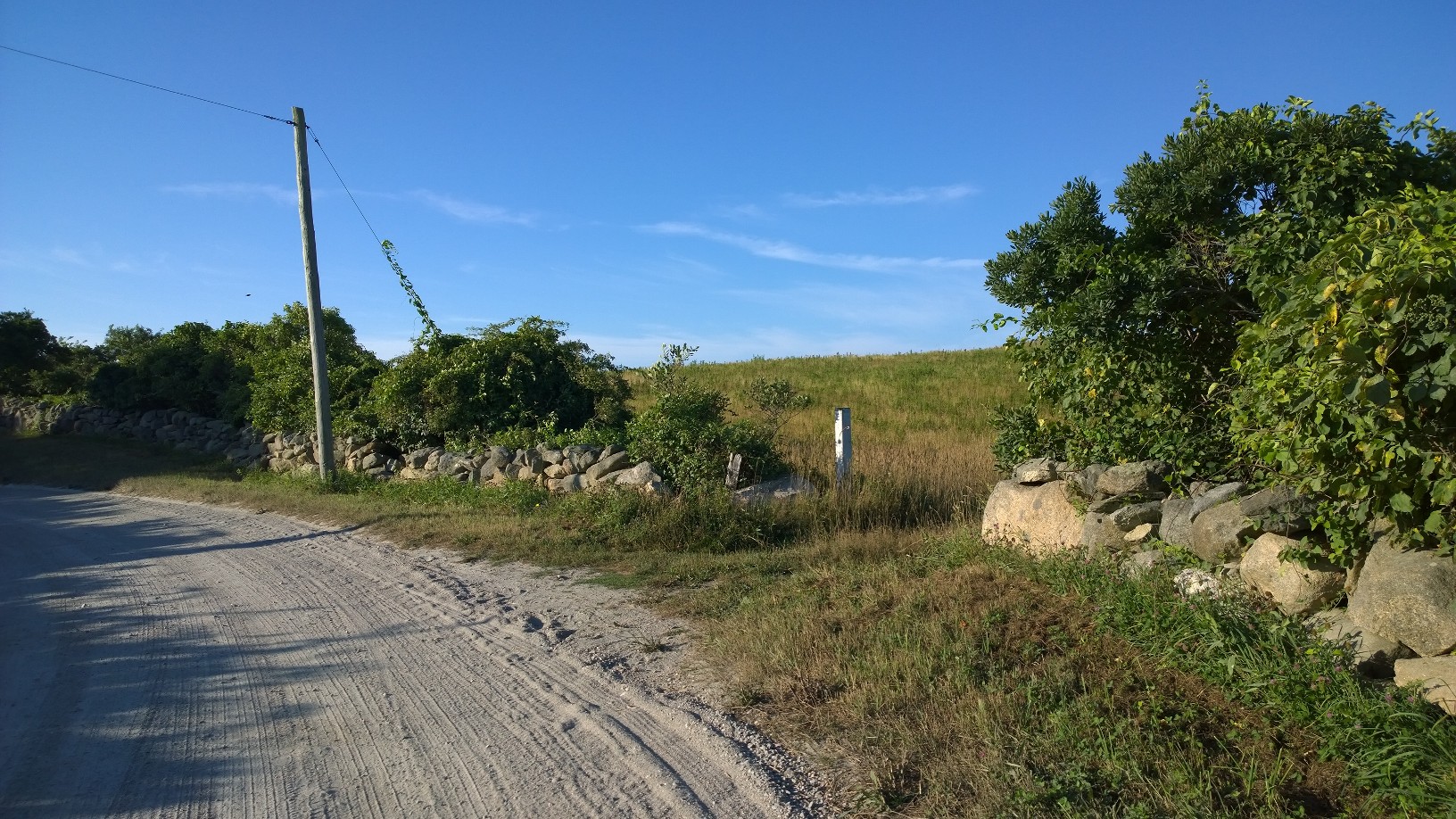
Moving right along, there is a shot of the fishing fleet in Rhode Island. The country road photo was supposed to show you a goldfinch, but even when I zoom in, it is too tiny to see. The still pond is called John E’s Tughole. A tughole is a place where peat is harvested, but I don’t think it happens much anymore. Maybe in Ireland. I know James used to harvest peat. And burn it, too.

080415-legos-built-into-corner

080415-Congress-St-nr-Farnsworth


080515-clouds-between-bldgs

080515-clouds-Concord-dawn


080815-rose-and-hydrangea

080315-mullein


080715-Point-Judith-boats

080815-dirt-road-RI


080815-John-E-Tug-Hole


Maria Popova linked to this story on twitter. It’s about how climate change is affecting a way of life for Fiji Islanders.

Meehan Crist writes at the blog Nautil.us, “The day that conservation biologist Joshua Drew, his two students, and I arrive in the Fijian village of Nagigi, the wind is blowing so hard that the coconut palms are bent sideways. ‘Trade winds,’ we are told. And, ‘El Nino. The villagers here also know that climate change is affecting the weather, but their more immediate problem, shared across the Pacific—and, indeed, the world—is an ocean ecosystem sorely depleted by overfishing.

“Nagigi is a village of about 240 people living in tin-roofed wooden homes strung along a sandy coastline. A single paved road runs the length of the village, parallel to the ocean, and along this road are homes clustered by family, painted in cheerful pastels, and connected by well-worn paths through the crab grass. ‘Before,’ said Avisake Nasi, a woman in her late 50s who has been fishing this reef her whole life, ‘you just go out and you find plenty fish. Now, you have to look.’ …

“If pressures mount from too many sides at once—rising ocean temperatures, acidification, pollution, overfishing—the combined pressure will be too much even for Fiji’s remarkably resilient reefs to bear. …

“Conservationists and humanitarian groups have recently united in the call for sustainable resource management, and in this trend, Nagigi is ahead of much of the Western world. Villagers have been discussing how they might use a traditional ban on fishing known as a tabu (tam-bu) to help manage their marine resources in new ways. …

“Drew presents his findings about how fish here are interconnected with other reefs, and how to best protect the species most important to the village in terms of food and income. He talks about how, for the last three years, he has been collecting baseline data about the species present on the reef so that if the village sets up a tabu, its effects can be measured.

“His audience is most interested in what Drew has to say about where to set up a tabu—include the mangroves at the left side of the village shore, because they act as fish nurseries—and for how long—three years would give crucial species enough time to mature and spawn. There has been some talk of a one-year tabu, which would be less of a hardship for villagers who will have to walk a mile or more to reach ocean where they are allowed to fish. But Drew’s data suggest this wouldn’t be long enough to make the sort of difference the village wants to see. ‘I can only offer information,’ Drew says at the end of his presentation, ‘the decision is yours.’ ”

The reporting for Crist’s  story was made possible by a grant from the Mindlin Foundation.

Try to see the related climate-change movie Revolution, which I wrote about here.

Photo: Meehan Crist
The view from Nagigi’s school to the sea, where many locals make their living

My husband’s new favorite news source is the US edition of the Guardian, and I can see why. It covers national and world affairs well and has some really unusual articles.

This one by Johanna Derry on Native American cuisine appealed to us both because of several years spent in Minneapolis. Back in the 1990s, there was no Native American food truck, but there was a nice restaurant on Franklin Street next to a Native American store, and we ate there a few times.

Derry writes, “Travel across the US and the cuisine doesn’t change much from state to state. It has a reputation for being sodium-filled, sweetened and glutenous (though, arguably, delicious) food. But chef Sean Sherman, known as the Sioux Chef, is hoping to redefine what we think of as ‘American’ food.

“At his newly launched Minneapolis food truck Tatanka, named after the American bison, dishes are made with ingredients that could be found living or growing locally before the arrival of European settlers. So you can forget processed sugars, wheat flour, beef, chicken and pork, Sherman serves wild rice and taco-style cornflour cakes with bison, turkey or rabbit, topped with wild greens and washed down with maple water. As well as being truly American, the food is super-healthy, organic – and local.

“ ‘We’ve worked with a couple of native-run farms to grow back some heirloom varieties of beans, squash, melon and corn,’ says Sherman.

“As well as introducing Minnesotan foodies to indigenous foods, the truck – which is supported by Little Earth, an urban Native American community – will head out to reservations, too, to reintroduce native populations to the healthier diet of their ancestors.”

Read more at the Guardian.

Photo: The Guardian
Tatanka Food truck, Native-American cuisine in Minneapolis