An Associated Press story on an “innovative program that allows inmates to reduce their sentences in exchange for generating power” caught the attention of NPR today. It seems that prisoners may volunteer to help “illuminate the town of Santa Rita do Sapucai [Brazil] at night.
“By pedaling, the inmates charge a battery that powers 10 street lamps along a riverside promenade. For every three eight-hour days they spend on the bikes, [the volunteers] get one day shaved off their sentences.
“The project in the southeastern state of Minas Gerais is one of several across Brazil meant to cut recidivism by helping restore an inmate’s sense of self-worth. Prisoners elsewhere can trim their sentences by reading sentences — in books — or taking classes.
“Officials say they’ve heard a few complaints the initiatives are soft on criminals, but there’s been little criticism in the country’s press or in other public forums.” Read more at National Public Radio.
Here is what such a bike might look like.
Photograph: Eric Luse, The Chronicle / San Francisco
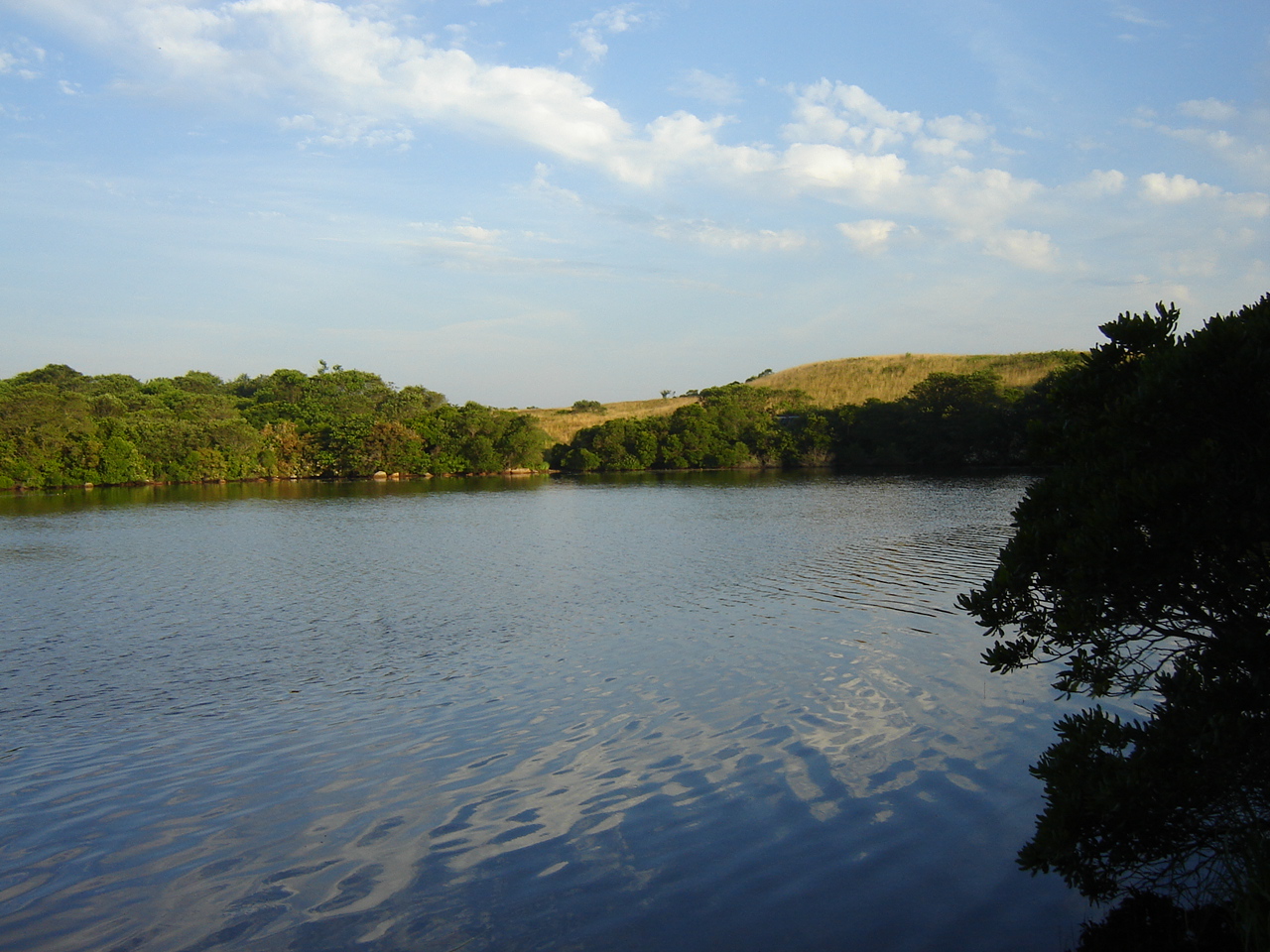
Whenever I walk by this field, I think of the Andrew Wyeth painting “Christina’s World.” But Christina doesn’t live in the house. An old woman does, visited by her son, who lives nearby.
One day, I suspect, the field will be sold and summer cottages will sprout there to take in the view of the pond.
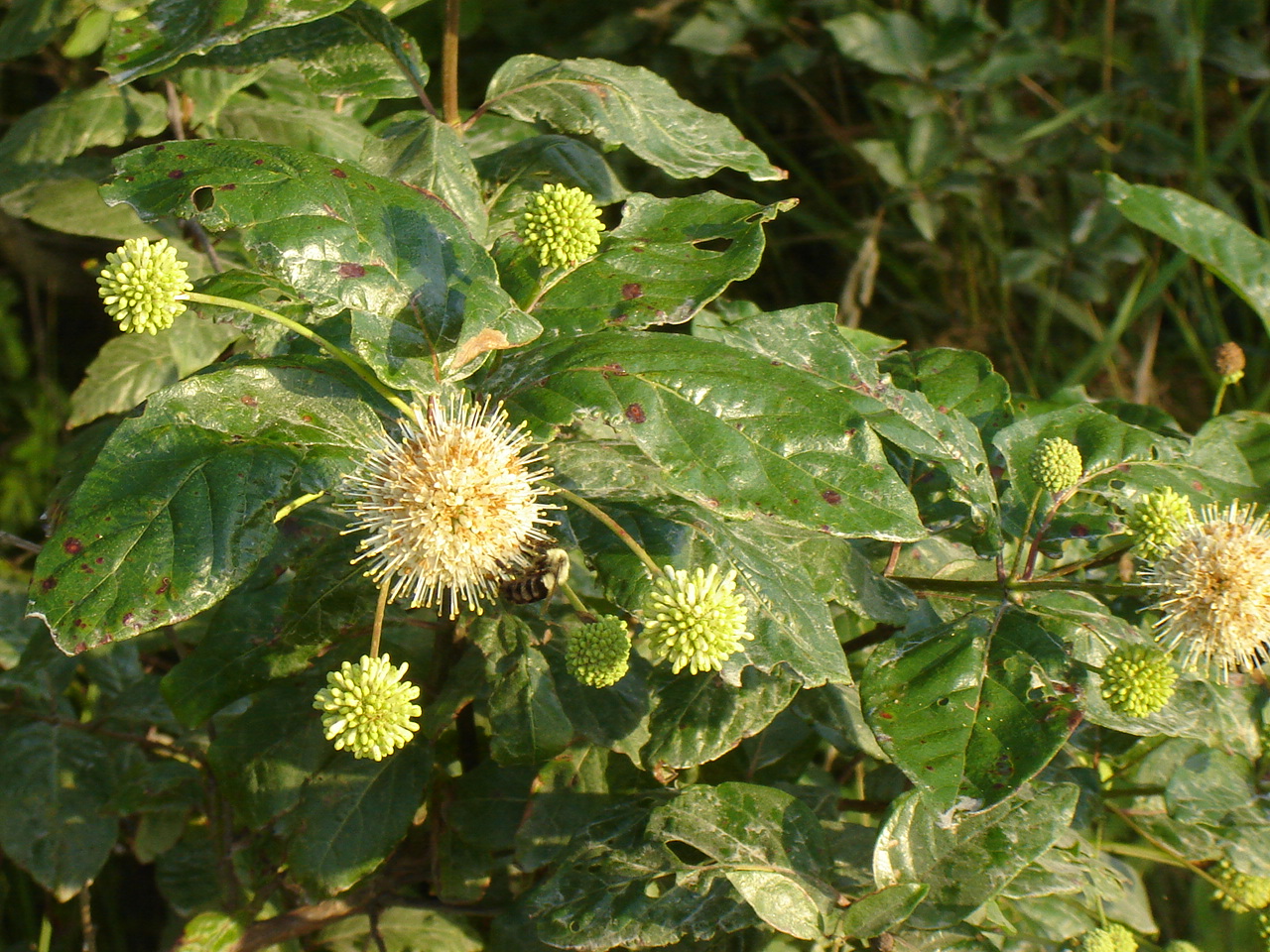
From today’s walk: note the bumble bee on the button bush. And the water lilies.
At ConceptualFiction.com, Ted Gioia writes that the friend of Lewis Carroll who helped organize the boat trip where Alice in Wonderland emerged deserves much of the credit for its being a story that amuses adults as well as children.
“On July 4, 1862, mathematician Charles Dodgson—better known to us as Lewis Carroll—spent a pleasant afternoon with a small party of acquaintances. The group embarked on a rowing expedition from Oxford, journeying to Godstow some three miles away, where they stopped to have tea on the river bank. Dodgson was joined by his friend Reverend Robinson Duckworth and the three Liddell sisters: Edith (age 8), Alice (age 10) and Lorina (age 13). As he often did on such occasions, Dodgson regaled his companions with an extemporized tale.”
Some of the bits the children found funniest on their level could be understood differently by the adults, and Gioia thinks that is what gave the story its lasting appeal.
Rev. Duckworth later wrote an account of the day: “I rowed stroke and he rowed bow … and the story was actually composed and spoken over my shoulder for the benefit of Alice Liddell.” In essence, it was being told to both Duckworth and Alice.
You may recall that six grandmothers from the former Soviet Union competed in Eurovision. We blogged about them here. Loreen from Sweden won first prize, but the babushki came in second.
In a follow-up story in the NY Times, Andrew Kramer writes that the grandmas’ fame is bringing a modicum of prosperity to their forgotten village. In particular, it is rebuilding the church that Stalin destroyed and that they loved in secret. They chose to spend their winnings on the church.
“For years, Buranovo was a dying village, one of many in the Russian countryside left behind by an oil-driven boom that revitalized drab Soviet cities and drew the young away from the farms that had sustained their parents. …
“Now, the women’s good fortune is transforming not only their lives, but also Buranovo. In appreciation of the group’s near victory, the local government is building a water pipeline, installing streetlights and high-speed Internet for the village’s sole school and laying new gravel on the main roads. …
“It all began with a miracle, said Olga N. Tuktareva, the leader of the singing group …. Ms. Tuktareva recalled strolling about the village with a friend in 2008 and lamenting a sad episode in local history: the destruction of the Church of the Trinity, taken down like countless other churches in Stalin’s Russia. …
“During that walk, Ms. Tuktareva recalled, her cellphone rang. It was a music producer in Moscow who had heard of the singing babushki …”
I have admired the New England artist James Aponovich for some time but had not seen his paintings up close until the Clark Gallery in Lincoln had a show of his recent work. Amazing!
I am probably not using accepted art history terms, but the paintings make me think of Italy and the Renaissance and are breathtakingly luminous. He might feature, for example, a large, glorious amaryllis flower in an ornate urn on a wall high over a traditional, distant landscape. You just want to go there.
The work in the current show is the result of Aponovich making up his mind to create a painting a week for an entire year. He succeeds splendidly, often making everyday items like Chinese takeout feel exceptional. For my money, there is not a dud in the bunch. (Although my money can’t stretch to even the smallest of the 52 pictures.)
I am so grateful to galleries that make work like this free for anyone who walks in off the street to view. Museums, wonderful as they are, don’t often let you in free.
Doubtless you know about fairy circles, also called fairy rings. According to Wikipedia, they’re a “naturally occurring ring or arc of mushrooms. The rings may grow to over 10 metres (33 ft) in diameter, and they become stable over time as the fungus grows and seeks food underground.
“They are found mainly in forested areas, but also appear in grasslands or rangelands. Fairy rings are detectable by sporocarps in rings or arcs, as well as by a necrotic zone (dead grass), or a ring of dark green grass. If these manifestations are visible a fairy fungus mycelium is likely to be present in the ring or arc underneath.
“Fairy rings also occupy a prominent place in European folklore as the location of gateways into elfin kingdoms.”
But in Africa, there is a different kind of fairy circle that doesn’t seem to have anything to do with mushrooms.
“The grasslands of Namibia — and to a lesser extent its neighbors Angola and South Africa — are speckled with millions of mysterious bare spots called ‘fairy circles,’ their origins unknown.
“Now, a study based on several years of satellite images describes the circles’ life span as they appear, transform over decades, and then eventually disappear.
“Writing in the journal PLoS One, Walter R. Tschinkel, the study’s author and a biologist at Florida State University, reports that the circles can last 24 to 75 years.
“The circles, which range from about 6 to 30 feet in diameter, begin as bare spots on an otherwise continuous grass carpet; after a few years, taller grass starts to grow around the circle’s perimeter.”
The reader is left with the question, Are these circles gateways to elfin kingdoms? What kind of elves are in Namibia?
I don’t understand why scientists don’t investigate matters like that.
Update July 13, 2012: Asakiyume has been tracking down stories about African fairy circles. Read this.
Update March 30, 2013: NY Times has fingered a particular species of sand termites, Psammotermes alloceru. Read this.
I’ve also been asking myself what makes a song on the album, “Mr. Beford’s Barn,” so moving.
An old man comes to the narrator’s farm and says he wants to see the barn he helped his daddy build years ago. The barn is very solidly constructed, nearly 100 years old now, and the refrain says it will probably last another hundred years.
It makes a person think about how fine it is to make something that lasts hundreds of years. But the more I thought about it, the more I wondered if maybe the hundred-year-ness is not what’s moving.
The old man will not be there for hundreds of years and will not be enjoying the fact that the barn lasted so long. The reason he wants to see it is that he knows he helped make something that’s very fine. It’s the well-built-ness that is valuable. The hundreds of years are merely a feature of the value.
I think you will like the song. Although it is not on YouTube, the band lists its YouTube songs here, and you might want to listen to a few if you are thinking of buying Appomattox.
I was pumping gas, and a guy with California plates who was filling the tank for his wife commented that our town seems incredibly pretty and quiet. I said it’s quiet because everyone leaves in summer. That surprised him. He thought it would be busy in summer because it’s so beautiful.
Made me think. Why are we always looking for someplace else to be?
Asakiyume writes that an old friend visited her and brought along an unusual harp. Asakiyume explains that the nyckelharpa is “a Swedish musical instrument that’s both keyed and bowed.”
That sounds harder than walking and chewing gum. Even the hurdy-gurdy that I hear in the subway doesn’t look as hard as that sounds, and the hurdy-gurdy involves keying and cranking.
“It’s older than the violin,” Asakiyume says of the nyckelharpa, adding, “my friend tells me there are old tapestries and paintings showing the angels playing these nyckelharpa in heaven.”
(Readers of this blog will note that I can seldom resist tidbits about Sweden. Egypt is another favorite. Both for family reasons.)
Here is Asakiyume’s friend playing the nyckelharpa.
At the WordPress blog Montreal in Pictures, Martin has posted his beautiful photos of beautiful sand sculptures. Hard to believe this in a city beach.
Sand is challenging to work with. You have to keep it wet. But not too wet or it gets sloppy. The pros keep misting their creations lightly with spray bottles. I imagine sculpting in ice entails other very specific challenges. Especially if there is a warm spell at New Year’s.
Suzanne and John often participated in sand-sculpture contests in the summer. It was good fun, although you rarely saw anything as elaborate as the creations in Montreal. I don’t think anyone on the island organizes such competitions anymore, so we just try to be alert and have a camera ready for spontaneous solitary eruptions of creative energy.
Lots more great sand-sculpture photos by Martin here.
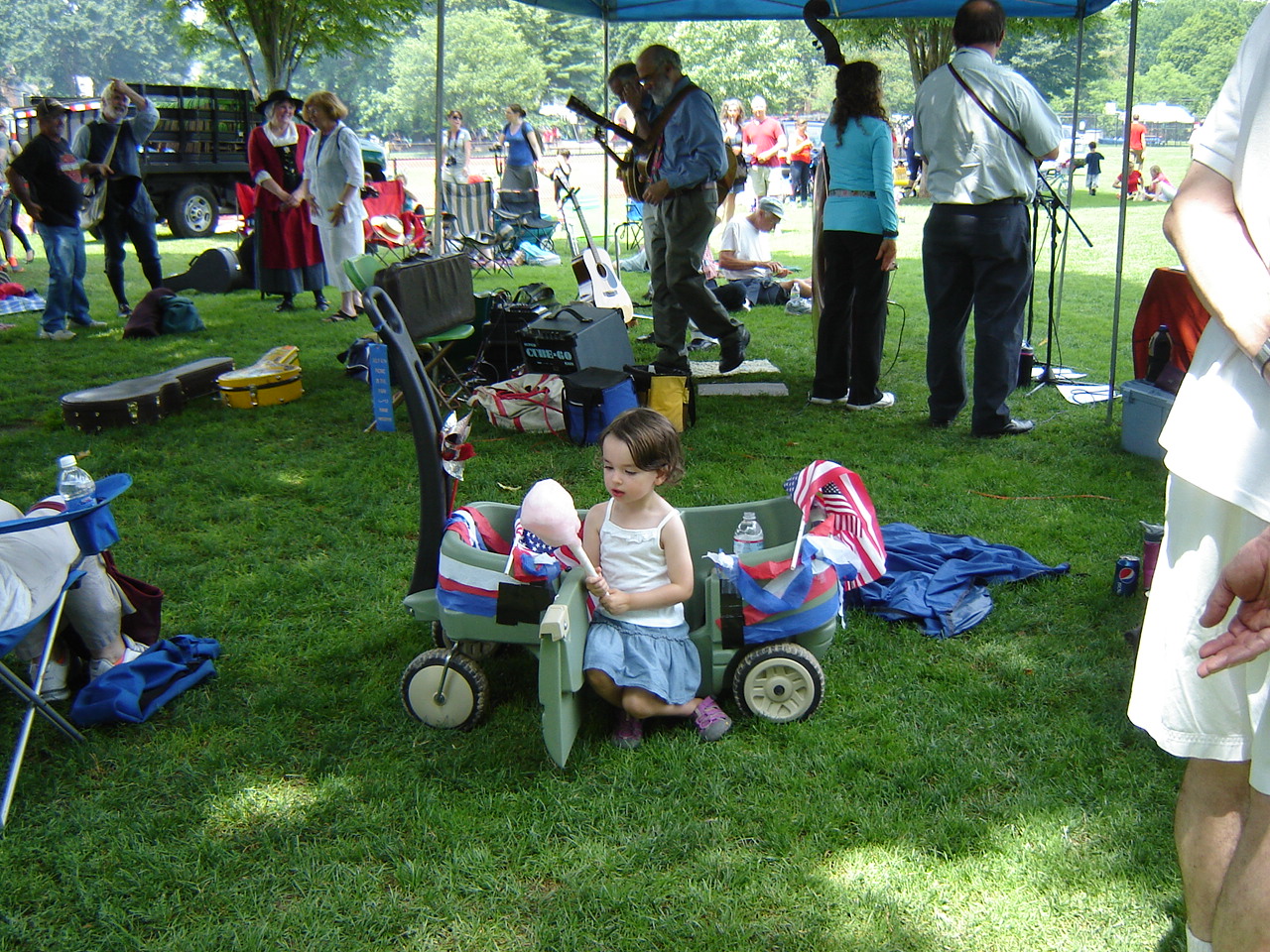
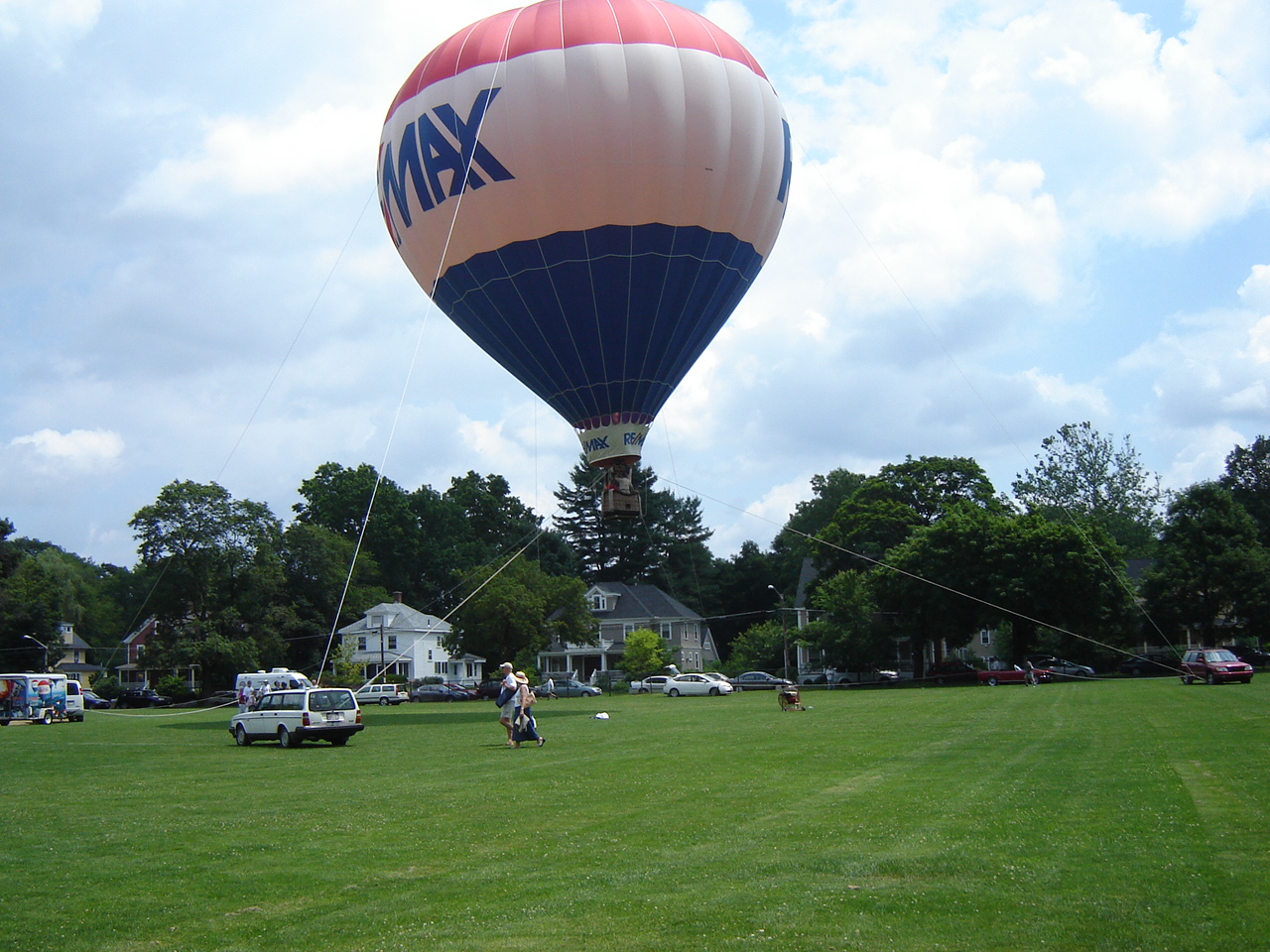
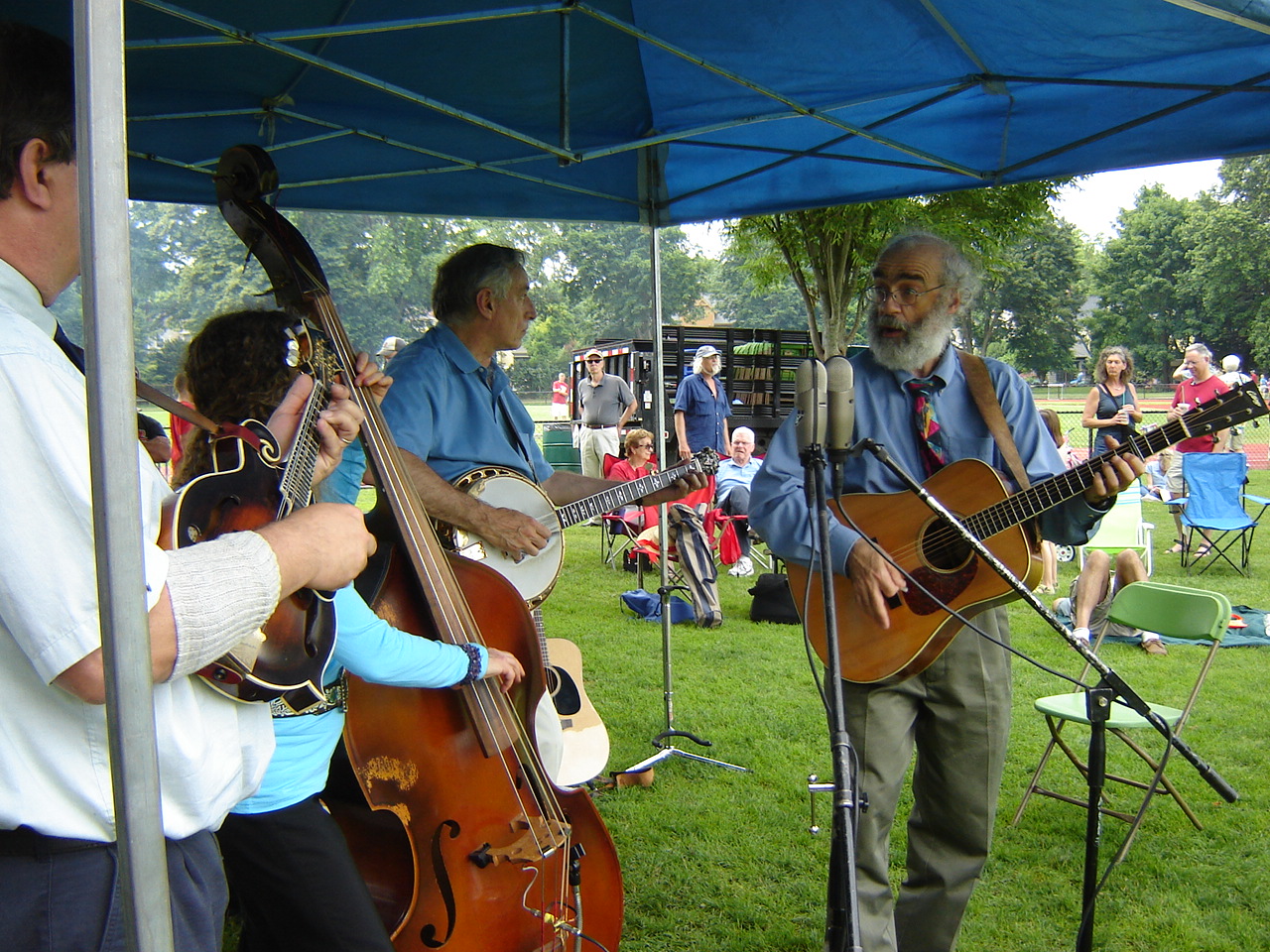
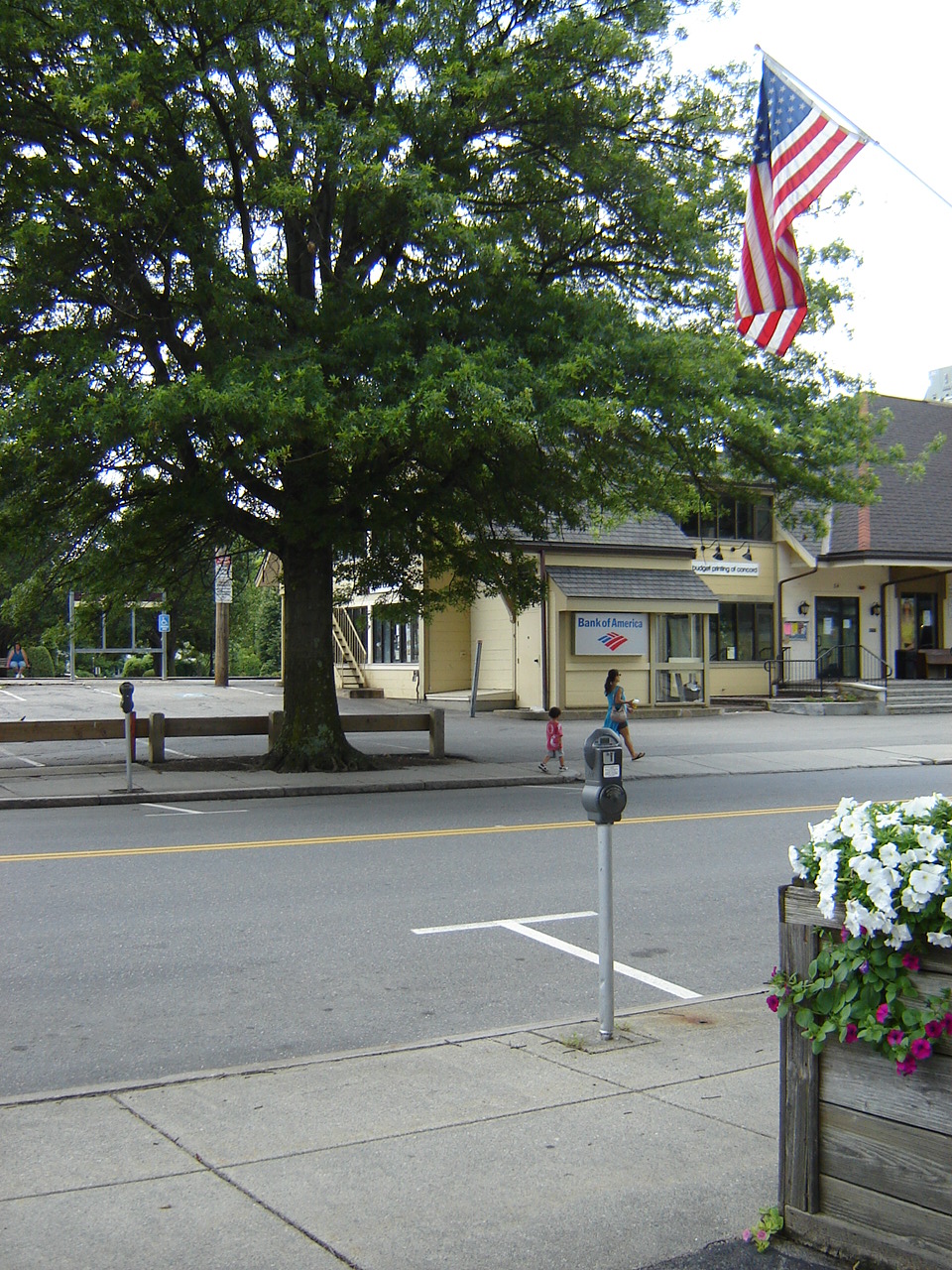
I haven’t been to Concord’s homey celebration in years, and yesterday was a good day to see it at its best. Please note the “burning building” with fake flames, which the fire department repeatedly doused, cooling off the children watching at a safe distance.
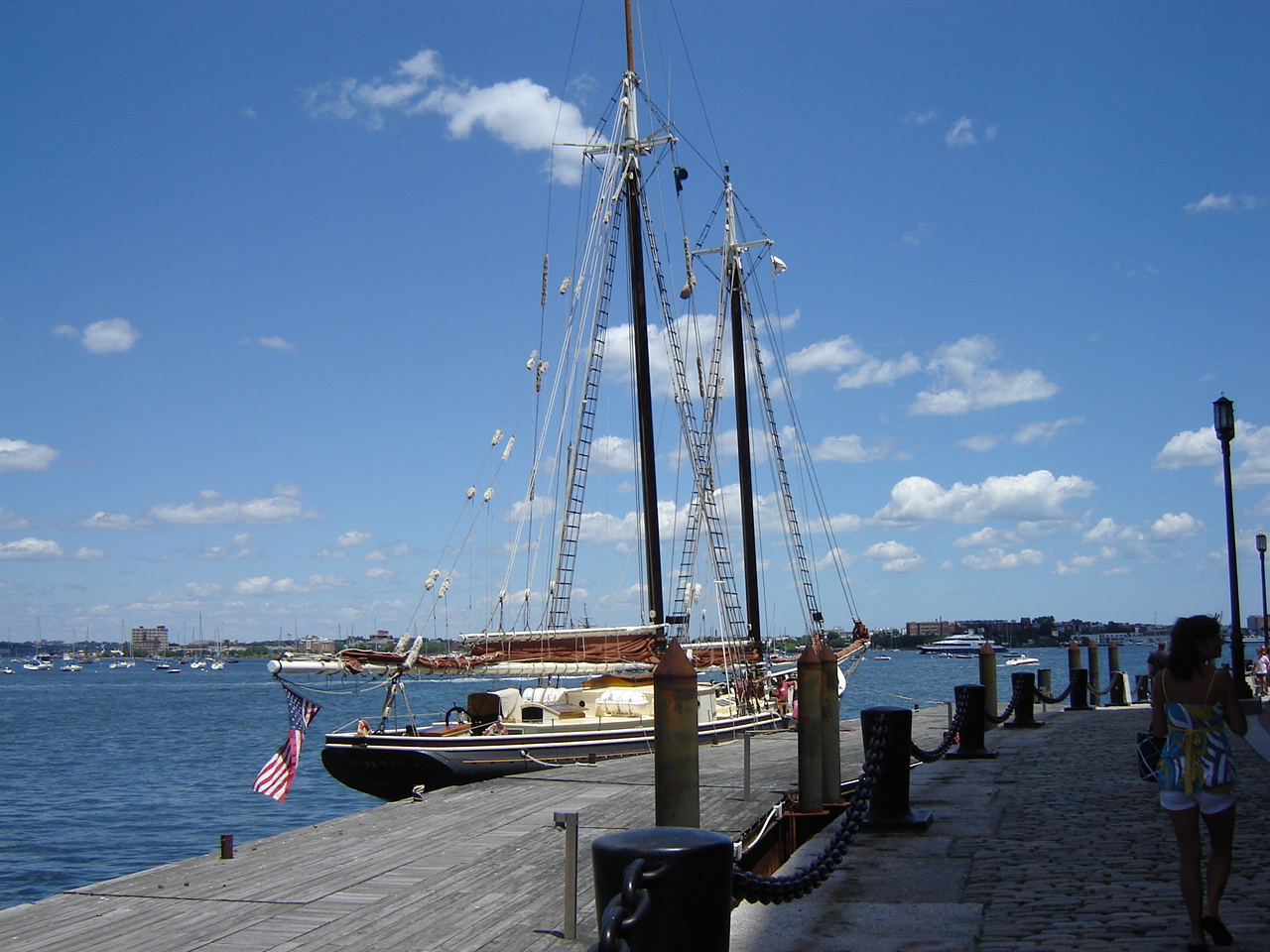
On Tuesday, a group from work set out at lunchtime for lobster rolls (and shrimp rolls and crab rolls) at James Hook & Co., whose golden lobster weathervane appeared in one of my previous posts.
Then we joined the crowds on the Harbor Walk to luxuriate in tall ships and a gorgeous sky.
A vessel flying the Jolly Roger was dwarfed by the triumphs of modern capitalism. (I won’t say “piracy” because I have no idea what goes on in those buildings.)
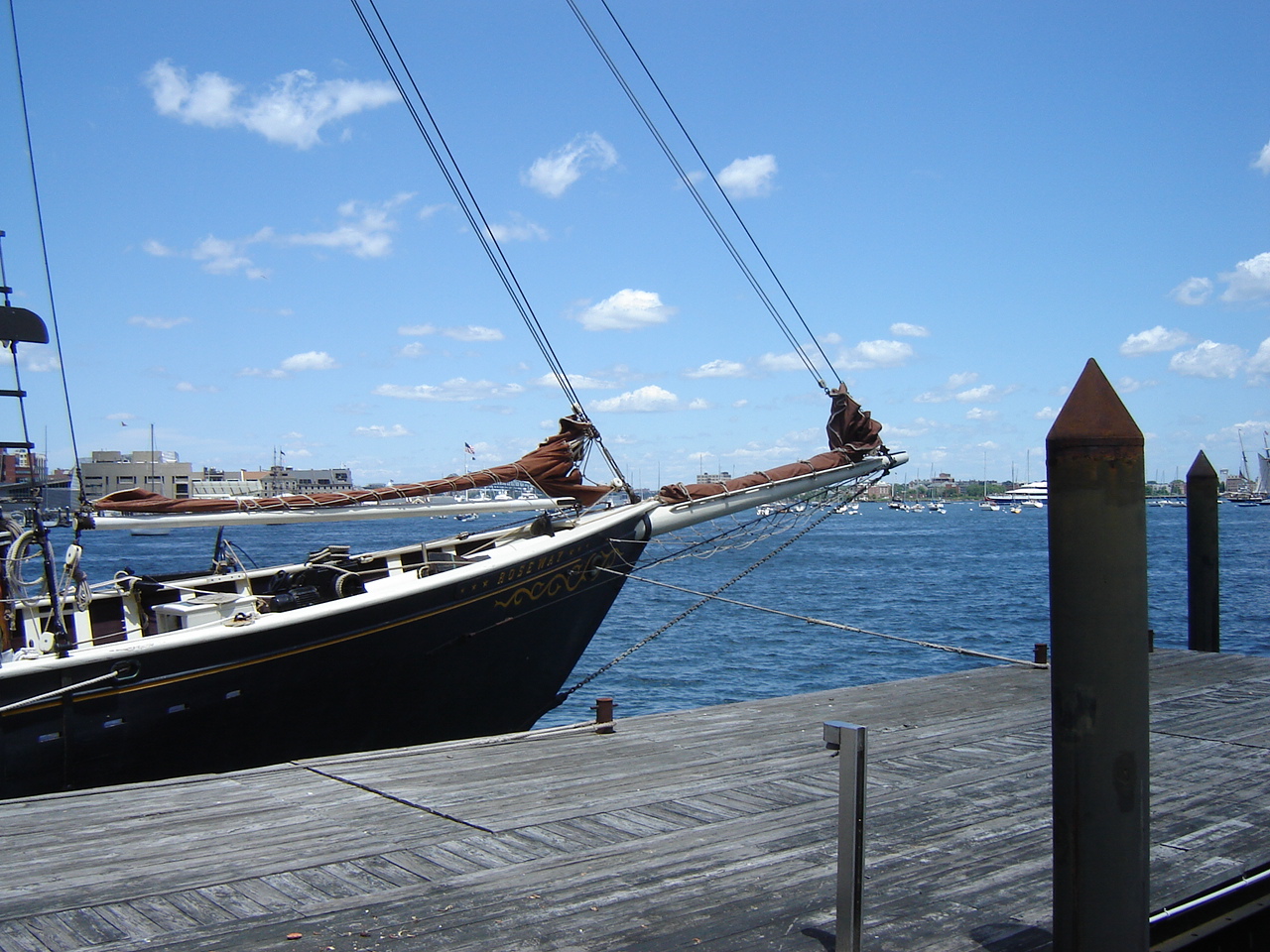
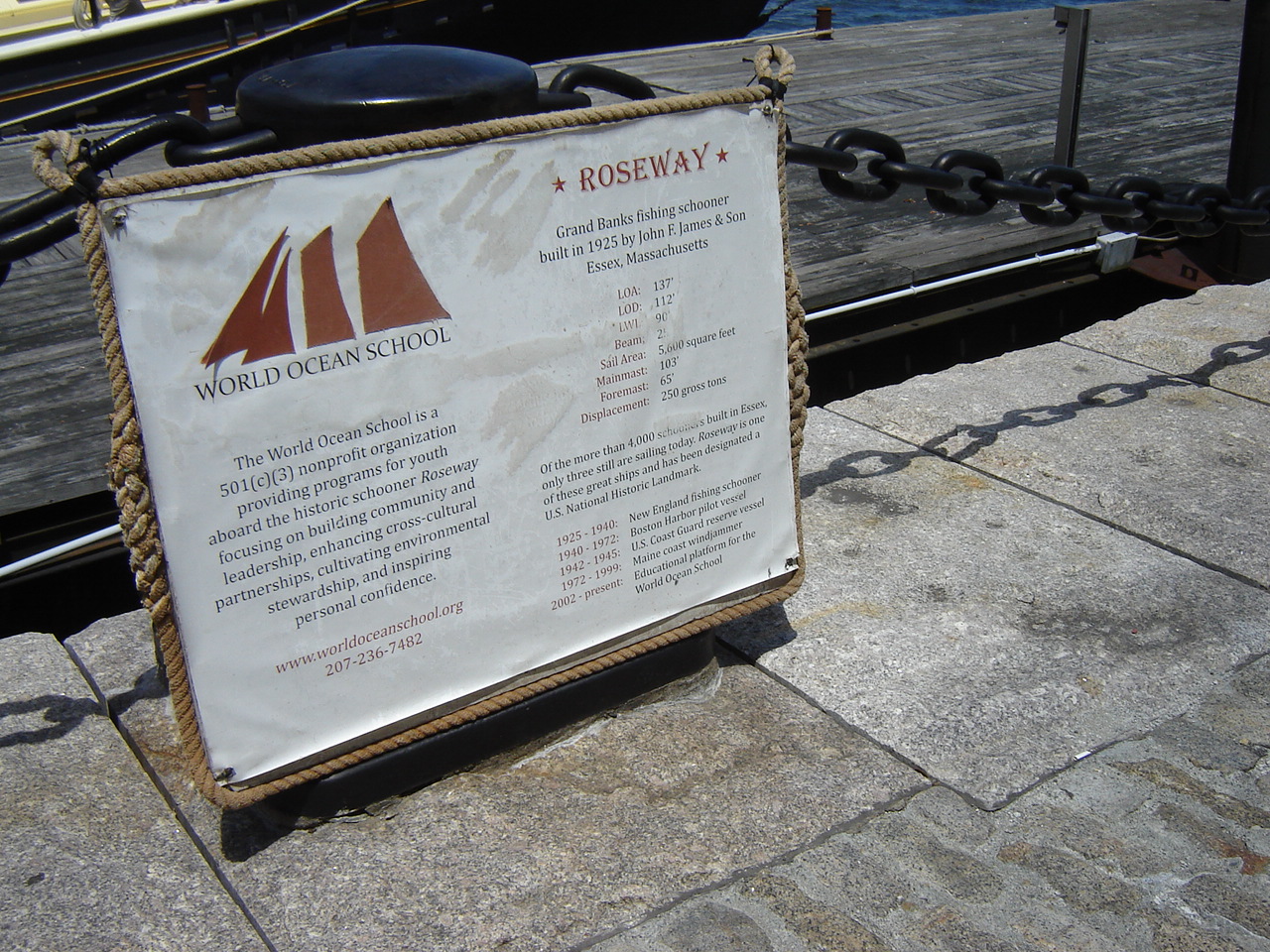
A teaching schooner called the “Roseway,” from the World Ocean School, was taking tourists out.
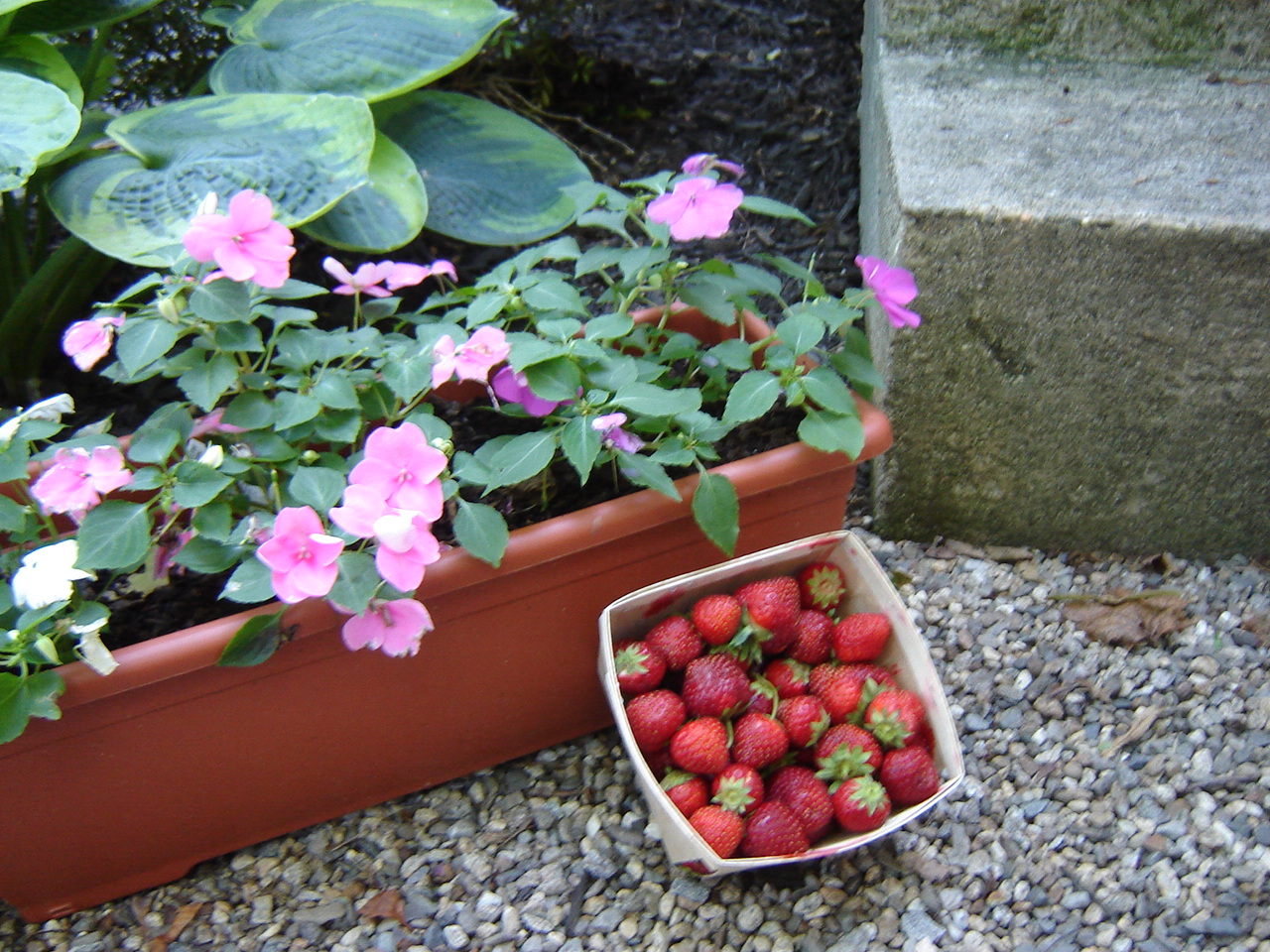
I took a taste of local strawberries, and they brought back the little wild strawberries of my childhood. And how a friend might come over, and I might tell her in whispers that I had found a secret place.
I wouldn’t say where exactly until we got close, and she would have to promise not to tell anyone. Then, checking around that no one was watching, I would lead her into a stand of pine trees and out into a clearing in the middle. And there we would sit down and pick wild strawberries, which are always sweeter than any in the supermarket.
Today I was asking my boss about his vacation with his wife’s family in France. He said his four-year-old had such freedom there to run outside and play with cousins. It reminded him of the freedom of his own childhood, and he thought his daughter was only just now experiencing the way childhood is supposed to be. Where he lives, in the city, his little girl could never just run out like that.
(If you are interested, here is one of many studies on the importance of nature and play in childhood.)

















 Suzanne's Mom's Blog