Feeds:
Posts
Comments
Photo: Anthony Souffle/Star Tribune.
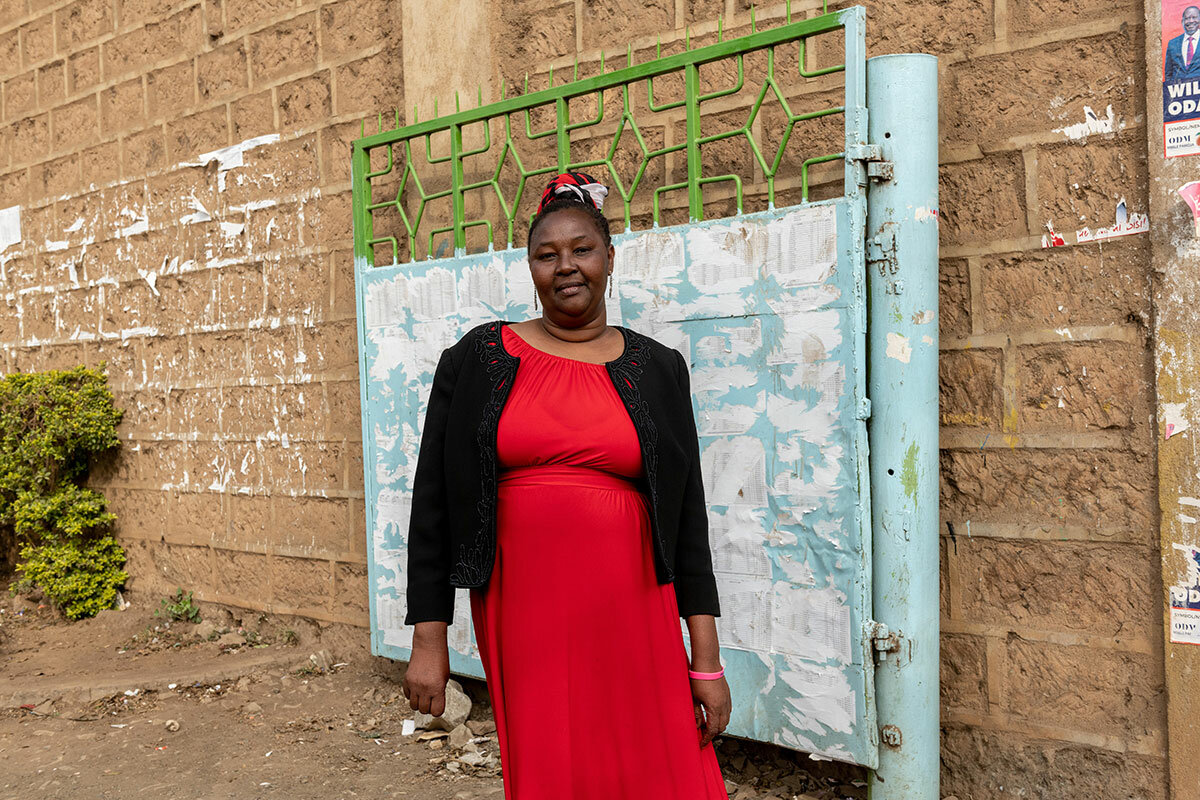
Linda Taylor talks with a friend as he ferried her paintings to an art show in April. Taylor has lived her Powderhorn Park home for about 20 years and was nearly forced out when her landlord decided to sell.

Here’s a story of people coming together to help a neighbor who was about to be evicted. It’s not necessarily about a greedy landlord. It’s more about systems that make it almost impossible for a person without money to get ahead. And about the power of community.

“Linda Taylor,” writes Sydney Page at the Washington Post, “was given two months’ notice from her landlord to vacate the Minneapolis house she has proudly called home for nearly two decades.

‘It felt like the world had been pulled from under me,’ said Taylor, 70. ‘My house means everything to me.’

“She initially owned the house, but she sold it when she fell prey to a real estate deal she didn’t understand, she said, and has rented the home for about 15 years.

“Earlier this year, Taylor received an unexpected notice from her landlord to leave her white stucco home in the Powderhorn Park neighborhood, just a few miles south of downtown, by April 1. Her landlord wanted to sell the house and was asking for $299,000 — a sum Taylor could not afford. …

“She worked at a local nonprofit organization for nearly three years before she was laid off during the coronavirus pandemic.

“She lost her paycheck but continued paying rent — about $1,400 a month — using her savings, money from family and government subsidies including RentHelpMN, a program started during the pandemic to aid Minnesotans at risk of losing housing.

“[Taylor’s landlord] said he would evict her if she didn’t buy the home or leave. …

“ ‘I’m going to do something about it,’ Taylor remembered telling herself. ‘This is my house.’

“She decided to share her struggle with Andrew Fahlstrom, 41, who lives across the street and works professionally as a housing rights organizer. Since he moved to the neighborhood six years ago with his partner, he and Taylor have built a strong rapport. …

“ ‘So many people are losing housing right now,’ he said. ‘If we actually believe housing is a right, then we need to act like it, because the next stop is homelessness.’

“As word of the grass-roots campaign to save Taylor’s home spread around the block, neighbors were eager to help.

“ ‘People listened to what Miss Linda was saying and wanted to do something,’ Fahlstrom said. ‘It was just such a clear and compelling story that everyone rallied for her.’

“According to Taylor, she originally bought the house in 2004, but she started falling behind on payments and felt she was tricked into signing the house back over to the previous owner, who allowed her to stay on as a renter. In 2006, after her landlord was caught in a mortgage fraud scheme — which affected more than 45 homes, including hers — [her new landlord] purchased the house.

“He raised her rent twice during the pandemic, Taylor said, and let repairs and maintenance issues linger. Several times over the years, Taylor — who has five children, nine grandchildren and three great-grandchildren — went to social services and applied for programs and grants geared toward renters who want to buy their homes.

“ ‘Every time I tried to buy it, I ran into a ton of different walls,’ Taylor said, adding that although she knew ‘my children would always support me,’ they were not in a position to offer significant financial help.

“Her neighbors empathized with her predicament.

“ ‘This is a person who has been paying for housing for 18 years. Her rent has gone to pay the property taxes, other people’s mortgages, the insurance, and supposedly repairs, too,’ Fahlstrom said. ‘There needs to be more systemic intervention so that people can stay in their homes.’

“The Powderhorn Park community decided it would not allow their neighbor to be displaced. The group was well equipped to mobilize on Taylor’s behalf.

“ ‘We have an active local neighborhood group because we’re within two blocks of George Floyd Square,’ Fahlstrom said, adding that the 2020 protests over Floyd’s murder by a police officer brought the community closer. …

“Organizers sent a letter to the landlord, urging him to wait on eviction and start negotiations with Taylor so she could buy the house. It was signed by about 400 neighbors and hand-delivered to [him] in February.

“The plea worked. … He lowered the sale price to $250,000 — still out of reach for his tenant.

“ ‘Then it became a fundraising effort instead of an eviction defense effort,’ Fahlstrom said.

“Neighbor Julia Eagles was at the forefront of the initiative.

“ ‘I don’t want anyone getting displaced or priced out of the community,’ Eagles said. ‘We all believed collectively that we were going to do what it takes to keep Miss Linda here. So many people know and love this woman.’ …

“In just four months, the people of Powderhorn Park raised $275,000 for Taylor — enough to buy her home and cover repairs. Any additional funds will go toward utility payments.

“Taylor said she is stunned by the support. …

“She is determined to pay the kindness forward.

“ ‘I’m here to help the next person and the next person and the next person,’ she said.”

More about the effects of community organizing at the Post, here. You can also read about this at the Minneapolis Star Tribune, where there’s no firewall.

Photo: Anne Rayner.
Athena watches over a production of ‘Semele’ at the Parthenon in Nashville, a city better known for Country & Western than Early Music.

Well, this is fun. Just goes to show that blanket assumptions about places (about groups of people, too) tare always wrong.

John Pitcher writes at Early Music America, about a recent Vanderbilt Opera Theatre production of George Frideric Handel’s 1744 opera-oratorio hybrid Semele.

“The production, featuring a small student string ensemble and singers expertly coached in Baroque performance practice, ran two consecutive nights inside Nashville’s Parthenon. ….

“Vanderbilt’s historical performance (HP) program is just one part of an early-music scene that’s been ebbing, flowing, and growing in Nashville for nearly 20 years. The city is home to two HP ensembles, Music City Baroque and Early Music City. Each can boast of distinguished pedigrees. There are also a couple of churches, St. George’s Episcopal and First Lutheran, that serve as regular venues for early-music performances, along with an assortment of choral groups that routinely perform Renaissance and Baroque music.

“Nashville’s period-instrument musicians can play Bach’s B-minor Mass with the best of them. But these musicians are influenced just as much by their close association with Music City as they are by their familiarity with valveless horns and viola da gambas. Nashville has a music infrastructure that is second to none, with over 180 recording studios, 130 music publishers, 100 live music clubs, and 80 record labels. …

“It’s not uncommon for Nashville classical musicians to perform Mahler with the Nashville Symphony, record a pop song with Miley Cyrus, premiere a 21st-century piece with one of Nashville’s several contemporary-music ensembles, and give a period-instrument performance of a Bach Brandenburg Concerto — all in a few weeks.

“Chris Stenstrom, a long-time cellist with the Nashville Symphony who also performs regularly with Nashville’s contemporary group Alias Chamber Ensemble as well as Music City Baroque, is typical of this kind of musician. Indeed, he keeps a spare cello in his closet, strung with sheep gut and tuned to A415. ‘I like to have one instrument that’s settled in and ready to play Baroque music,’ Stenstrom says.

“The versatility of Nashville’s historically informed musicians has made them flexible, even delightfully heretical, in their approach to performing early music. … Many of Nashville’s historically informed players are open to performances using modern instruments, and most are utterly expansive in their definitions of what constitutes early music.

“Although Bach, Handel, and Telemann are often performed, one also encounters programs devoted to Baroque women composers, along with music from Nashville’s early history, which includes Negro spirituals, hymns, and fiddle music. ‘Nashville musicians have never felt the need to be completely orthodox in their approach to early music,’ says Jessica Dunnavant, a long-time flutist with Music City Baroque who teaches modern and Baroque flute at both Vanderbilt and Lipscomb universities. ‘Rhinestone and twang are welcome at our concerts.’ …

“Things didn’t get started until 2003, when George Riordan, an oboist and scholar steeped in Baroque performance practice, left his post as an assistant dean at Florida State University College of Music to become director of the School of Music at Middle Tennessee State University.

“That summer, Riordan’s wife, Karen Clarke, a noted period violinist who had performed with the Atlanta Baroque Orchestra and Smithsonian Chamber Orchestra, among others, noticed an item in an Early Music America newsletter that caught her eye. Murray Forbes Somerville just announced he was leaving his position as Harvard University’s University Organist and Choirmaster to take up a post in, of all places, Nashville. …

“Nashville’s classical-music scene was, at that moment, on the cusp of its golden age. Kenneth Schermerhorn, then music director of the Nashville Symphony Orchestra, had already established a partnership with Naxos Records to record for its American Classics series. This arrangement would soon turn the Nashville Symphony into a Grammy Award juggernaut. Martha Ingram, a Nashville billionaire benefactor, was meanwhile dispensing funds to her favorite performing-arts groups with unprecedented largesse. This culminated with the 2006 opening of the Schermerhorn Symphony Center, modeled after Vienna’s Musikverein.

“The city, moreover, had plenty of choristers who knew their way around Handel’s Messiah, and a growing number of classical musicians who had at least some training in historically informed performance. This was fertile ground for the right maestro to plow.

“Not long after Somerville moved to Nashville, Riordan connected with a phone call. ‘I invited Murray out to MTSU for an early music jam session,’ Riordan recalls. ‘We played that first session, and Murray declared that we needed to put on a show.’ “

Be sure to read the part about finding similarities with Appalachian musical traditions at Early Music America, here. No firewall.

Photo: Melanie Stetson Freeman/Christian Science Monitor.
“Great Pyrenees dogs watch over Navajo-Churro sheep … outside Toadlena, New Mexico. … The sheep flourish in the harsh environment,” according to the Monitor.

I like that the Christian Science Monitor has so many stories about the Navajo Nation and other indigenous peoples. Although I’m not a Christian Scientist, I’ve always been impressed by the objective reporting at the Monitor and its steady coverage of underreported topics.

Reporter Henry Gass wrote recently from New Mexico about the resurgence of sheep farming on Navajo land.

“Irene Bennalley steps out into the fierce afternoon sunlight wearing jeans and a maroon sweater, her long gray hair knotted in a braid. Brandishing a long white stick as her crook, she picks her way across her parched desert farm toward the sheep pen. Answering their bleats with firm instructions in Navajo, she shepherds them out onto the dry, dusty range.

“She doesn’t know exactly how many Navajo-Churro sheep she has, but she ballparks it at around 100 head.

It’s bad luck to keep exact counts of your livestock, her father taught her. Don’t boast about your animals, he would say, or they’ll start dropping.

“Out here, ranchers like Ms. Bennalley can’t afford to lose animals. The winters are cold and hard, and the summers are hot and relentless. Water is scarce and feed is expensive. It’s the main reason she has come to love the breed, known colloquially as churros, that she’d grown up only hearing about in stories.

“The Navajo, who refer to themselves as Diné, have long been a pastoral society. Sheep are prominent in their creation myths, and after Spanish colonists first brought the churro sheep to the Southwest, the hardy, adaptable breed became, over centuries, the heart of a self-sufficient economy and vibrant Diné culture.

“But the days of sheep camps and flocks roaming the arid plains and valleys here are long gone. On two separate occasions the churro came close to full extermination. From over 1 million head at one time, by 1977 there were fewer than 500 left in the world.

“Efforts have been gaining momentum in recent years to rebuild the breed and return flocks to the Navajo Nation. Decades of painstaking, sometimes dangerous, work by a handful of committed ranchers and animal scientists have helped restore the population to over 8,000. 

“Now, people on the Navajo Nation are working to bring flocks back to the reservation, to try and fill the economic and cultural void left by their near extinction. 

“ ‘We’re back in a place of reevaluating how we live,’ says Alta Piechowski, whose family has been involved in restoring the Navajo-Churro for decades.

“ ‘When you’re walking the land [with the sheep], there’s a different kind of healing,’ she adds. ‘It heals your heart, and when it heals your heart you’re going to want other people’s hearts to be healed too.’ …

“An ‘unimproved’ breed – meaning one that hasn’t been selectively bred for market – churros are long and lean. … They are resistant to most diseases, and have adapted over the centuries to thrive in the dry, low-forage climate of the Southwest.

“For the Navajo people, the churro were something of a panacea. They provided a healthy and sustainable source of food and income; their many-colored fleece are ideal for weaving iconic Navajo blankets. And culturally, sheep have always been prominent in Navajo spiritual traditions. One of the six sacred mountains that bound the Navajo Nation, Dibé Nitsaa, translates to Big Sheep Mountain.

“But for the best part of a century, Navajo-Churro have been hard to find on the reservation. 

“The official term used by the U.S. government in the 1930s was ‘livestock reduction.’ The Midwest was in the grips of the Dust Bowl, and the Bureau of Indian Affairs, led by commissioner John Collier, concluded that too many livestock were causing land to erode and deteriorate.

“The policy resulted in the slaughter of hundreds of thousands of churros, often on the reservation, and sometimes on the properties of their owners. And it came after the Navajo people had spent over 70 years steadily rebuilding their churro herds. …

“Nearly a century since the stock reduction, the collective memory is still raw. Ms. Bennalley speaks mournfully of what she calls ‘the John Collier days.’ For a long time no one spoke of it at all.

” ‘Some people never really got out of losing their sheep that way,’ says Ms. Bennalley. ‘My family, my dad, nobody really talked about it, because it wasn’t something to be proud of.’ …

“ ‘That connection to the sheep is the connection to the land, which is the connection to the culture, which is the connection to the spirituality of the Diné people,’ says Dr. Piechowski, a career psychologist for reservation schools.

“ ‘If you exterminate the sheep, you’re pretty much eliminating [those] connections,’ she adds. …

“The churro never disappeared from the reservation, but the few that remained stayed hidden in some of the reservation’s most remote corners – so remote that the man who first led efforts to bring the churro from the brink of extinction almost died trying.”

Read more about that at the Monitor, here. Lovely photos. No firewall.

Floating Saunas

Photo: Kevin Scott/Dezeen.
The designers of this sauna aimed to build a structure that engaged the local waterways and encouraged people to use them throughout the year, says Dezeen.

When Erik saw my post about a birdhouse championship, he told me one picture reminded him of floating saunas in Sweden. I had to look that up. I found out that saunas on the water are both like and unlike ice-fishing huts. You definitely have to dress differently.

Jenna McKnight at Dezeen writes about the sauna in the above photo: “Visitors can take a plunge into a cold lake after warming up in this floating wooden sauna by Seattle firm goCstudio – the latest example of the trend for buoyant architecture (+ slideshow).

“The structure is intended to be used all year round on Seattle’s lakes and can accommodate up to six people. It is called WA Sauna. … It follows the growing trend among architects to explore the possibilities afforded by building on water rather than land.

” ‘Following in the Scandinavian tradition of saunas as a place for gathering, WA Sauna provides a place for Seattle’s community to share a unique experience on the water,” said goCstudio, a firm founded in 2012 by Jon Gentry and Aimée O’Carroll. …

“Inspired by the concepts of fire, water and community, the designers aimed to build a structure that engaged the local waterways and encouraged people to use them throughout the year. The $25,000 (£17,000) project was funded through community donations and a Kickstarter campaign hosted in the fall of 2014.

“The deck consists of a pre-manufactured aluminum frame and marine-grade plywood with a clear varnish. Boats and kayaks can be tied up to the deck. The floating structure is powered by a 36-volt electric trolling motor. More than two dozen 208-litre plastic drums keep the vessel afloat. …

“Spruce was used to clad the interior and to form the benches. A wood-burning stove heats the space. Users can easily exit the vessel via a door or side hatch and dive into the cool water. …

“The structure was built by studio employees and skilled volunteers. It was erected within a warehouse owned by the local brewery, Hilliard’s, which allowed the team to use the space for free.

“One of the greatest challenges was getting the structure to the lakefront for the first time. … ‘Towed on six steel casters with a 1980 Volkswagen Vanagon, we slowly crept along at dawn making the eight-block trip to the boat ramp in just under three hours.’ …

“Rising sea levels and a shortage of development sites are leading to a surge of interest in floating buildings, with proposals ranging from mass housing on London’s canals to entire amphibious cities in China.

“Other examples that, like WA Sauna, are targeted at communities include a buoyant Nigerian school and a travelling London cinema.”

You can read about another nice sauna at designboom, a site that doesn’t seem to believe in capital letters: ” ‘löyly’ is a prefab floating sauna made of swiss douglas fir. gently swaying in the middle of lake geneva, ‘löyly’ is a floating prefab sauna designed by trolle rudebeck haar – a graduate from the lausanne university of art and design. haar completed this project after spending a year in finland, where he found a true appreciation for the sauna concept and translated it into ‘löyly’ – his final year project. 

“haar designed the structure as a 24 sq. ft floating sauna made of locally sourced swiss douglas fir – a lightweight yet durable material that he salvaged from a sawmill nearby. the entire structure was then coated with teak oil to create a more resistant shell all while preserving the fir’s natural look and feel.

“the interior of the floating sauna oozes with tones of intimacy and comfort. using sliding doors that echo japanese shoji screens, visitors are met with a small wooden burning stove from morzhand. … the choice of stove was made based on practicality: ‘I chose it because it’s compact, transportable, lightweight, and easy to heat up’,  comments haar. 

“haar also had to consider balance and weight while designing the sauna. ‘I was calculating the mass of every unit,’ he explains. the presence/absence of people aboard the floating structure, as well as the placement of the barrels underneath it were all carefully studied to create a safe and enjoyable experience. 

“in just six hours, the floating sauna was built – but haar made it easy to disassemble and scale for different uses.” 

You might also want to click at the Gessato website to see a sauna created by an Italian design team.

Beautifully integrated into its natural surroundings and context, this floating sauna conceptually links Sweden, Italy, and Japan.

“The structure stands on a floating platform, connecting the lake to the land and providing a relaxing space for the guests staying in the clients’ small bed and breakfast. … Self-built by the studio, the project pays homage to nature and sustainability, with impact on the birch forest minimized by moving the sauna on the surface of the water. …

“A glazed wall provides stunning views over the lake, helping guests relax completely and contemplate the beauty of nature. This floating sauna project was presented during the Superdesign Show 2017, held at Superstudio Più via Tortona 27, Milano in April 2017.”

More at Gessato, here, at Designboom, here, and at Dezeen, here. Lots of super pictures.

Photo: Risto Matilla.
Risto Matilla, an amateur photographer, took this picture of ice eggs found on a Finnish beach. The largest was the size of a soccer ball. Ice eggs have also been seen in Siberia and Michigan.

I continually find Nature amazing. Whether it’s the cardinal in my yard this morning collecting grass to build a nest or author Sarah Smarsh’s experience last weekend at an outdoor concert in Kansas, where the audience came terrifyingly close to a tornado-producing supercell. Then there is a weather phenomenon like the one in today’s story,

Nicoletta Lanese wrote about it in November 2019, but it’s new to me. I just had to share it. Especially that picture — worth a thousand words.

Lanese’s report was at the BBC. “Thousands of egg-shaped balls of ice have covered a beach in Finland, the result of a rare weather phenomenon. Amateur photographer Risto Mattila was among those who came across the ‘ice eggs’ on Hailuoto Island in the Gulf of Bothnia between Finland and Sweden.

“Experts say it is caused by a rare process in which small pieces of ice are rolled over by wind and water.

“Mr Mattila, from the nearby city of Oulu, told the BBC he had never seen anything like it before. ‘I was with my wife at Marjaniemi beach. The weather was sunny, about -1C (30F) and it was quite a windy day, he told the BBC. ‘There we found this amazing phenomenon. There was snow and ice eggs along the beach near the water line.’

“Mr Mattila said the balls of ice covered an area of about 30m (100ft). The smallest were the size of eggs and the biggest were the size of footballs [soccer balls].

” ‘That was an amazing view. I have never seen anything like this during 25 years living in the vicinity,’ Mr Mattila said. …

“BBC Weather expert George Goodfellow said conditions needed to be cold and a bit windy for the ice balls to form. ‘The general picture is that they form from pieces of larger ice sheet which then get jostled around by waves, making them rounder,’ he said. … ‘The result is a ball of smooth ice which can then get deposited on to a beach, either blown there or getting left there when the tide goes out.’

“Similar sights have been reported before, including in Russia and on Lake Michigan near Chicago.”

Jessica Murray adds this at the Guardian: “Jouni Vainio, an ice specialist at the Finnish Meteorological Institute, said the occurrence was not common, but could happen about once a year in the right weather conditions.

“ ‘You need the right air temperature (below zero, but only a bit), the right water temperature (near freezing point), a shallow and gently sloping sandy beach and calm waves, maybe a light swell,’ he said.

“You also need something that acts as the core. The core begins to collect ice around it and the swell moves it along the beach, forward and back. A small ball surface gets wet, freezes and becomes bigger and bigger.’

“Autumn is the perfect time to see the phenomenon, according to Dr James Carter, emeritus professor of geography-geology at Illinois State University, as this is when ice starts to form on the surface of water, creating a form of slush when moved by waves.

“ ‘I can picture the back and forth motion of the surface shaping the slushy mix,’ he said. ‘Thanks to the photographer who shared the photos and observations, now the world gets to see something most of us would never be able to see.’ ”

According to a 2016 BBC report, residents of Nyda in Siberia found a strange and beautiful sight “in the Gulf of Ob, in northwest Siberia, after thousands of natural snowballs formed on the beach.

“An 11-mile (18km) stretch of coast was covered in the icy spheres. The sculptural shapes range from the size of a tennis ball to almost 1m (3ft) across. … Locals in the village of Nyda, which lies on the Yamal Peninsula just above the Arctic Circle, say they have never seen anything to compare to them.”

Check out the map showing the location of the Finnish find at the BBC, here, and read more at the Guardian, here. No firewalls, bless their hearts.

Lake Michigan, 2010

Photo: NeuroscienceNews.
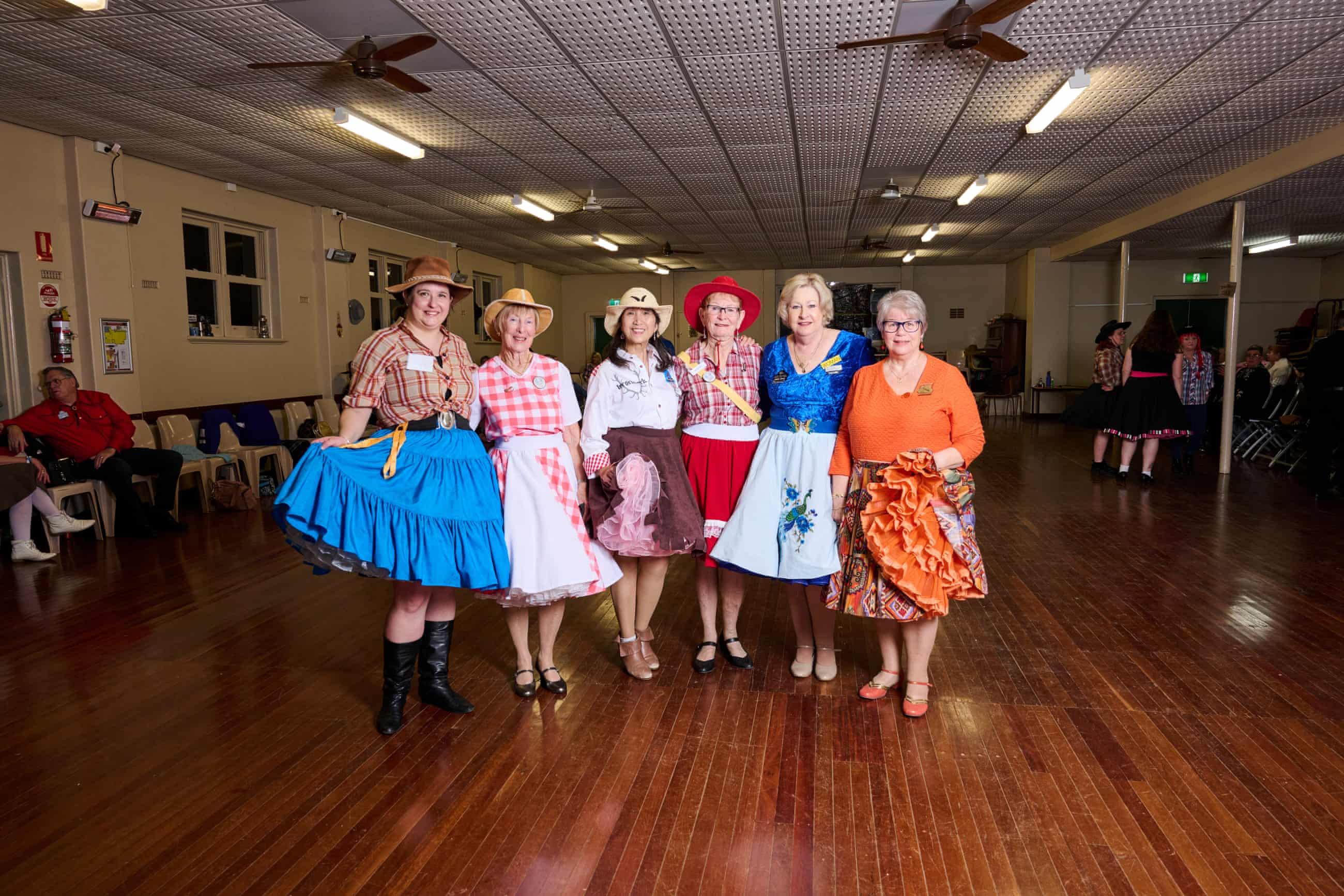
Latinos aged 55 and older who participated in Latin dance classes for eight months showed significant improvement in working memory over their peers who did not partake in Latin dance.

When I expressed worry about signs of aging, my scientist brother chided me for not being more upbeat, saying, “The brain can look like Swiss cheese and one can still have a happy hour, or more maybe, left.”

He was right. Today’s article on the virtues of dance for older people underscores that point and suggests that for some, dance can even reverse decline.

NeuroscienceNews describes a recent study from the University of Illinois.

“Latinos age 55 and over who participated in a culturally relevant Latin dance program for eight months significantly improved their working memory compared with peers in the control group who attended health education workshops, according to the study’s lead author, Susan Aguiñaga, a professor of kinesiology and community health at the University of Illinois Urbana-Champaign.

Working memory – the ability to temporarily keep a small amount of information in mind while performing other cognitive tasks – is integral to planning, organizing and decision-making in everyday life.

“The dance program used in the study, Balance and Activity in Latinos, Addressing Mobility in Older Adults – or BAILAMOS – showed promise at enticing older Latinos to become more physically active and help stave off age-related cognitive decline, Aguiñaga said.

“ ‘Dance can be cognitively challenging,’ Aguiñaga said. ‘When you’re learning new steps, you have to learn how to combine them into sequences. And as the lessons progress over time, you must recall the steps you learned in a previous class to add on additional movements.’

“BAILAMOS was co-created by study co-author David X. Marquez, a professor of kinesiology and nutrition, and the director of the Exercise and Psychology Lab at the University of Illinois Chicago; and Miguel Mendez, the creator and owner of the Dance Academy for Salsa.

“BAILAMOS incorporates four types of Latin dance styles: merengue, salsa, bachata and cha cha cha, said Aguiñaga, who has worked with the program since its inception when she was a graduate student at the U. of I. Chicago.

“ ‘It’s an appealing type of physical modality,’ she said. ‘Older Latinos are drawn to Latin dance because most of them grew up with it in some way.’

“Latin dance can evoke positive emotions that prompt listeners to participate, increasing levels of physical activity in a population that tends to be sedentary, according to the study, published in the journal Frontiers in Aging Neuroscience.

“More than 330 Spanish-speaking Latino adults who were middle-aged or older were recruited for the study, primarily through community outreach in local churches. Participants were randomly assigned to either the dance group or the control group, which met once a week for two-hour health education classes that covered topics such as nutrition, diabetes and stress reduction.

“Participants in the BAILAMOS groups met twice weekly for the dance sessions, taught by a professional instructor for the first four months and later by a ‘program champion’ – an outstanding participant in each group who displayed enthusiasm and leadership qualities.

“The program’s champions were selected and trained by the instructor to lead the sessions during the four-month maintenance phase.

“Over the different waves of the four-year study, the dance lessons were held at 12 different locations across Chicago, such as neighborhood senior centers and churches that were familiar and easily accessible to participants, Aguiñaga said.

“Participants’ working memory – along with their episodic memory and executive function – was assessed with a set of seven neuropsychological tests before the intervention began, when it concluded after four months and again at the end of the maintenance phase.

“Participants also completed questionnaires that assessed the number of minutes per week they engaged in light, moderate and vigorous physical activity through tasks associated with their employment, leisure activities, household maintenance and other activities. …

“As with a small pilot study of BAILAMOS conducted previously, the current study found no differences in any of the cognitive measures between the dance participants and their counterparts in the health education group at four months. However, after eight months, people in the dance group performed significantly better on tests that assessed their working memory.

“ ‘That’s probably one of the most important findings – we saw cognitive changes after eight months, where participants themselves had been leading the dance classes during the maintenance phase,’ Aguiñaga said. ‘All of our previous studies were three or four months long. The take-home message here is we need longer programs to show effects.

“ ‘But to make these programs sustainable and create a culture of health, we also need to empower participants to conduct these activities themselves and make them their own.’ “

The open-access study, “Latin Dance and Working Memory: The Mediating Effects of Physical Activity Among Middle-Aged and Older Latinos,” by Susan Aguiñaga et al appears in Frontiers in Aging Neuroscience.

This really intrigues me. Even though I have no Latin background, music like salsa makes me want to dance, too. I suppose if I were in a research study, though, I’d probably need doo-wop to trigger a primordial urge to leap out of my chair.

More at NeuroscienceNews, here.

Photo: Far Western Anthropological Research Group.
Archaeologists and members of the Muwekma Ohlone Tribe worked together on a project that revealed the longstanding genetic roots of some of the region’s Native peoples. 

As I learn more about what our dominant culture has done to native tribes, the thing that really gets me is how recent some of the travesties have occurred — and for what stupid reasons. For example, a 1927 California official deciding they “didn’t need land.” Read on.

Jane Recker writes at the Smithsonian Magazine that “for decades, a misperception that the San Francisco Bay Area’s Muwekma Ohlone Tribe was ‘extinct’ barred its living members from receiving federal recognition.

“Soon, however, that might change. As Celina Tebor reports for USA Today, a new DNA analysis shows a genetic through line between 2,000-year-old skeletons found in California and modern-day Muwekma Ohlone people.

“The research, published in Proceedings of the National Academy of Sciences, flies in the face of more than a century of misconceptions about the tribe and its people’s long history.

“ ‘The study reaffirms the Muwekma Ohlone’s deep-time ties to the area, providing evidence that disagrees with linguistic and archaeological reconstructions positing that the Ohlone are late migrants to the region,’ write the authors in the paper.

“Members of the tribe, scholars and the public are hailing the work as a chance to correct the record — and perhaps open up opportunities for the tribe to regain federal recognition. …

“The tribe’s history mirrors that of other Native Californians. After more than 10,000 years in the area, Native people were forced to submit to colonization and Christian indoctrination — first by the Spaniards, who arrived in 1776, and then, beginning in the 19th century, by settlers from the growing United States.

“As a result, the Ohlone and other Native groups lost significant numbers to disease and forced labor. Before European contact, at least 300,000 Native people who spoke 135 distinct dialects lived in what is now California, per the Library of Congress. By 1848, that number had been halved. Just 25 years later, in 1873, only 30,000 remained. Now, USA Today reports, there are just 500 members of the Muwekma Ohlone Tribe.

“The Ohlone people once lived on about 4.3 million acres in the Bay Area. But federal negligence and anthropologist A.L. Kroeber’s 1925 assessment that Native Californians were ‘extinct for all practical purposes’ caused the federal government to first strip the Muwekma Ohlone of their land, then deny them federal recognition, writes Les W. Field, a cultural anthropologist who collaborates with the Muwekma Ohlone, in the Wicazo Sa Review.

“Even though Kroeber recanted his erroneous statement in the 1950s, the lasting damage from his diagnosis meant the very much not-extinct members of the Muwekma Ohlone Tribe never regained federal recognition, according to the New York Times’ Sabrina Imbler.

“The new research could change that. It arose after the 2014 selection of a site for a San Francisco Public Utilities Commission educational facility. The area likely contained human remains, triggering a California policy that requires developers to contact the most likely descendants of people buried in Native American sites before digging or building. When officials contacted the Muwekma Ohlone Tribe, its members requested a study of two settlement areas — Síi Túupentak (Place of the Water Round House Site) and Rummey Ta Kuččuwiš Tiprectak (Place of the Stream of the Lagoon Site).

“Experts from Stanford University, the University of Illinois Urbana-Champaign, cultural resources consulting firm Far Western Anthropological Research Group and other institutions led the research. But members of the Muwekma Ohlone Tribe were involved in every aspect of the study. …

“Researchers and tribe members alike commented on the unique nature of the collaboration.

“ ‘When you’re a student doing the work, it’s not common to have this kind of direct connection to the people who are “the data” that you’re working with,’ says lead author Alissa Severson, a doctoral student at Stanford University at the time of the research, in a statement. ‘We got to have that dialogue, where we could discuss what we’re doing and what we found, and how that makes sense with their history. I felt very lucky to be working on this project.’ …

“The team analyzed the DNA of 12 individuals buried between 300 and 1,900 years ago, then compared the genomes to those of a variety of Indigenous Americans. They found ‘genetic continuity’ between all 12 individuals studied and eight modern-day Muwekma Ohlone Tribe members. …

“Tribe members hope the new evidence of the Muwekma Ohlone Tribe’s longstanding connection to the land — and their ancestors — will spur politicians to finally recognize the tribe. According to an official tribal website, Muwekma Ohlone families started the reapplication process in the early 1980s and officially petitioned the U.S. government for recognition in 1995. Despite filing a lawsuit against the Bureau of Indian Affairs, the tribe is still not recognized by the U.S. government.

“Co-author Alan Leventhal, a tribal ethnohistorian and archaeologist who works with the Muwekma Ohlone Tribe, tells USA Today he’s hopeful this new research will help cut through some of the bureaucratic red tape that’s been delaying the tribe’s petition.”

There’s more at the New York Times, where Sabrina Imbler notes, “The Muwekma can trace their ancestry through several missions in the Bay Area and resided on small settlements called rancherias until the early 1900s, Leventhal said.

“The tribe had once been federally recognized under a different name, the Verona Band of Alameda County. But it lost recognition after 1927, when a superintendent from Sacramento determined that the Muwekma and more than 100 other tribal bands did not need land, effectively terminating the tribe’s formal federal recognition, Mr. Leventhal said. ‘The tribe was never terminated by any act of Congress,’ he added. …

” ‘The cost of living is pushing us out,’ Ms. Nijmeh, the tribe’s chairwoman, said. ‘Recognition means that we will be able to have a land base and have a community village and have our people stay on our lands in their rightful place.’ “

More at the Smithsonian, here, and at the Times, here.

Photo: Anupan Nath/AP.
Actors in Awahan mobile theater group perform in a village near Guwahati, India, after a two-year hiatus because of Covid.

So many activities got suspended during Covid, and many workers wondered if they would still have a job when the world reopened. That was true for everyone from servers in struggling US restaurants to actors in rural India.

In April, Al-Jazeera posted about a traveling theater in India that, to everyone’s relief, is reemerging after two years.

“Traveling theater groups in India’s northeastern state of Assam are reviving the local art and culture scene after the COVID-19 pandemic forced a pause in their performances for nearly two years.

“Seven roving theater companies are back on stage playing before crowds in villages, towns and cities across the state. These mobile theaters are among the most popular forms of local entertainment.

“ ‘The public response has been very good. They love live performances. We have no competition from television and the digital boom,’ said Prastuti Parashar, a top Assamese actress who owns the Awahan Theatre group.

“Before the coronavirus hit the region, about 50 theater groups, each involving 120 to 150 people, performed throughout the state. They would start in September, coinciding with major Hindu festivals such as Durga Puja and Diwali, and continue until April. …

“Drama is an integral part of Indian culture and the mobile theater groups do not restrict themselves to mythological and social themes. They have in the past covered classic Greek tragedies, Shakespearean tales and historical subjects like the sinking of the Titanic, Lady Diana and the attack on the World Trade Center in 2001.

“The groups travel with directors, actors, dancers, singers, technicians, drivers and cooks, in addition to all the stage infrastructure to perform three shows in one place before moving on to the next makeshift venue.”

For a bit more background, let’s turn to the Encyclopedia Britannica, which states that “Indian theater is often considered the oldest in Asia, having developed its dance and drama by the 8th century BCE [Before Common Era]. According to Hindu holy books, the gods fought the demons before the world was created, and the god Brahmā asked the gods to reenact the battle among themselves for their own entertainment. Once again the demons were defeated, this time by being beaten with a flagstaff by one of the gods. To protect theater from demons in the future, a pavilion was built, and in many places in India today a flagstaff next to the stage marks the location of performances.

“According to myth, Brahmā ordered that dance and drama be combined; certainly the words for ‘dance’ and ‘drama’ are the same in all Indian dialects. Early in Indian drama, however, dance began to dominate the theater. By the beginning of the 20th century there were few performances of plays, though there were myriad dance recitals. It was not until political independence in 1947 that India started to redevelop the dramatic theater. …

“Classical Indian drama had as its elements poetry, music, and dance, with the sound of the words assuming more importance than the action or the narrative; therefore, staging was basically the enactment of poetry.

“The reason that the productions, in which scenes apparently follow an arbitrary order, seem formless to Westerners is that playwrights use much simile and metaphor. Because of the importance of the poetic line, a significant character is the storyteller or narrator, who is still found in most Asian drama. In Sanskrit drama the narrator was the sūtra-dhāra, ‘the string holder,’ who set the scene and interpreted the actors’ moods. Another function was performed by the narrator in regions in which the aristocratic vocabulary and syntax used by the main characters, the gods and the nobles, was not understood by the majority of the audience. The narrator operated first through the use of pantomime and later through comedy.

“A new Indian theater that began about 1800 was a direct result of British colonization. With the addition of dance interludes and other Indian aesthetic features, modern India has developed a national drama.

“Two examples of ‘new’ theater staging are the Prithvi Theatre and the Indian National Theatre. The Prithvi Theatre, a Hindi touring company founded in 1943, utilizes dance sequences, incidental music, frequent set changes, and extravagant movement and color. The Indian National Theatre, founded in Bombay in the 1950s, performs for audiences throughout India, in factories and on farms. Its themes usually involve a national problem, such as the lack of food, and the troupe’s style is a mixture of pantomime and simple dialogue. It uses a truck to haul properties, costumes, and actors; there is no scenery.”

Great traveling-theater pictures at Al-Jazeera, here. More detailed information at Britannica, here. No firewalls.

Photo: Cycling Without Age.

Thinking a lot about ageing these days. For one thing, hiding from Covid all the time makes me feel old, and then there are the inevitable health issues.

How does anyone make a plan? There is no way to predict exactly what will happen next. So far my husband and I do everything we always did, but I have felt a need to start looking at “Places,” to use the word of humorist Roz Chast.

Some Places boast activities that look interesting. Today’s story is about an activity that would make a good addition.

Jessica Coulon reports at Bicycling magazine on a clever nonprofit initiative. “Ole Kassow, of Copenhagen, Denmark, was riding his bike to work one morning in 2012 when he noticed an old, disabled man sitting on a bench outside a local nursing home. The man reminded him of his father, who uses a wheelchair.

“Knowing the challenges that come with limited mobility in old age, and thinking about how deeply ingrained bicycling is in Copenhagen culture, a thought occurred to him: The man likely hadn’t ridden a bike in a long time and, Kassow thought, he probably missed it.

‘I couldn’t get that thought out of my head, that I needed to get this man back on a bike,’ Kassow told Bicycling.

“Kassow acted on his idea the very next day by renting a rickshaw and offering rides to seniors at the retirement home. He ended up piloting a woman, who began telling him stories about living in Copenhagen as they rode around. When they returned, the facility’s staff were amazed at the woman’s energizing reaction to the ride.

“These volunteer rides grew into what is now the nonprofit Cycling Without Age. The organization partners with nursing homes and senior care facilities around the world to offer bike rides to the people who live there. Volunteers who sign up can pilot rickshaws, also known as trishaws, which can carry up to two passengers. There are also bikes that can accommodate wheelchairs.

“The primary goal of the program is to improve the lives of seniors by getting them outside and back into the community and bringing them joy through riding a bike. According to Kassow, the program gives its participants a greater ‘sense of belonging.’ It’s also a way for the younger generations who volunteer to connect with and learn from older generations.

“ ‘It quickly became something that the other care homes wanted to do in Copenhagen,’ Pernille Bussone, the global community captain for Cycling Without Age, told Bicycling. From there the program began to spread into neighboring countries, like Sweden and Norway. Now, the organization boasts chapters in more than 45 countries. …

“Their evidence of this was anecdotal at first. But after conducting an impact study in their Singapore chapter, they discovered that these rides have the potential to improve participants’ reported mood and outlook on life by up to 80 percent.

“While the shorter, one-day outings are perhaps the most common type of ride that volunteers offer, some of their volunteers have gotten creative. One chapter in Sweden, for example, began offering ice-fishing trips using the trishaws. …

“They’ve also introduced bike touring in certain chapters, which consist of three or four day outings in large groups, that include family members of the elderly passengers and staff from their nursing homes. They stay at hotels and often have picnics outside. Some of the bike tours have had more than 100 people take part. …

“The organization is now gaining ground in the U.S. where there are currently 418 chapters. ‘I’ve personally witnessed the joy and effects getting seniors back outside brings to their quality of life,’ Shelly Sabourin told Bicycling. Sabourin was the director of nursing at a care facility in Madison, Wisconsin, when she found out about the program in 2016.”

Andrea Morris at CBN News has more.

” ‘I see CWA as a catalyst for better lives by helping socially isolated elders and people with limited mobility gain access to their local communities,’ Kassow told CBN News. ‘We all know that exercise and fresh air is good for us, but not many people know that happiness and longevity are mainly the result of both a few close relationships and access to interact with several people in our daily lives. I see Cycling Without Age play(ing) a key role in making relationships a human right for all elders in all societies.’ “

More at Bicycling, here, and at CBN News, here. No firewalls. And be sure to check out the organization’s website, here.

Photo: Denis Dobrovoda.
Justo Gallego Martínez, 2018, in the cathedral he built in Mejorada del Campo, Spain. The self-taught monk even made the crypt he wanted to buried in.

I often wondered about the investment of time and money that went into places people wanted to be buried. In the case of Egyptian Pharaohs and Chinese emperors, it had to do with what they believed would happen after death. But what about European kings and queens? It’s hard to understand.

Today’s story is about a contemporary monk who built a crypt for himself as part of building a cathedral — alone.

Matthew Bremner writes at the Guardian, “One late spring evening in 2018, Justo Gallego Martínez said he would show me his grave. The old man was warming his hands by a stove in the dim back room of his cathedral. A dusty film coated the concrete floor. The shelves and tables were full of relics, screws, chipped wood, crushed glass, half-eaten loaves of bread. A bare hanging bulb cast the room in jaundiced light.

“ ‘I want to be buried here,’ Justo said, signalling around him to the cathedral’s cavernous nave and the 20 trembling towers sprawled across thousands of square feet of his own land on the outskirts of Madrid. … He’d be buried there because it was his cathedral.

He’d designed it entirely in his head, without a single measurement or calculation on paper, without a record of any of the materials he’d used. And he had done it largely by himself. …

“Outside, the uncovered frame of a dome, 35 metres high and 10 metres wide, loomed above us. The nave lurched around 45 metres to our left, covered by a half-barrel vault whose exposed beams curved upwards like a whale’s ribcage.

“The rest of the cathedral was an architectural Frankenstein’s monster propped up on mismatched bricks, tires, wheels, food cans, plastic and excessive quantities of concrete. Large chunks of the building were already in decay, invaded by moss and rising damp. In the aisles dusty cement bags were piled as high as the first-floor gallery. Other rooms erupted with broken tiles, dismantled cement mixers, motorbikes, rotten wood, oxidised saws, festering ropes, chicken carcasses and plastic bags fossilised in pigeon shit. It sprawled over an area the size of a football pitch. …

“Next to the shrine, the floor opened to the darkness of the crypt below. This hole was where it had all begun, Justo said. Here, he had first started to dig, and to formulate his vision. …

“In early 2018, I came across an article in a local paper about an ex-monk building a cathedral in Mejorada del Campo, just outside Madrid. For almost 60 years, with no help or architectural expertise, Justo Gallego Martínez had been constructing a cathedral that was almost the size of the Sagrada Familia, using waste and recycled materials.

“When the monk started his project, the locals had called him a madman. Since then he had fought with family members, made enemies and won an adoring international public. He had never gained formal permission to build the structure, which meant it was illegal. …

“As I got to know Justo better, I realized that he was a mess of incongruities. He could be open-minded and bigoted, forgiving and stubborn, kind and brusque, wise and simple. He was a flawed genius, who never sought to be named as such. …

“Justo’s early life was marked by religious fervor, political upheavals and health problems. As a boy, he was very close to his mother. ‘She was the one that taught me the words of the Bible,’ he said. At an early age, he had to leave school to escape the dangers of the Spanish civil war, which ravaged Madrid and its surroundings. His mother’s teachings were a vital part of the little education that Justo would receive.

“The young man had always dreamed of dedicating his life to God. … At the age of 27, he entered the monastery of Santa María de Huerta in Soria, northern Spain. Many of his fellow monks found him strident and difficult; he would work longer hours than necessary and often pray into the night. Insisting on remaining teetotal, he even refused to drink the wine during communion. ‘They were very suspicious of me,’ he once told local journalists. ‘They said I was breaking the rules.’ …

“Justo told me that after he was rejected from the monastery, he went to Mejorada del Campo and fell into a ‘funk,’ what we might consider depression. … Where would he channel his religious fervor? What could he do with himself that would mean anything? It was in the midst of this self-questioning, he said, that it came to him – the idea to build something for his creator: a cathedral, which would demonstrate his willingness to sacrifice himself for God.

“So, in 1961, he started to dig.

“Justo worked feverishly. Alone, he barrelled mountains of dirt, scaled scaffolding with no harness and soldered with no mask. Sometimes he would have visions. Laying bricks, he would suddenly remember the holy trinity, drop to his knees and weep. …

“Justo came from a relatively well-off family who owned land near Madrid. Over the years, he sold much of it to fund the construction of his church. He also relied heavily on charity. …

“Justo hated sharp angles and straight lines and tried to avoid them at all costs. He preferred curves and circles – vaulted ceilings, domes, arches, rounded chapels, annular altars and spiral staircases. ‘God made all things round. He made the planets round. He made the earth round.’

“To make circles he would bend metal rods around columns and draw around circular water drums or tins of paint. But making curves was more difficult. They were expensive and had little tolerance for error. A millimeter of imprecision in one step could culminate in a spiral staircase that didn’t quite reach its landing.

“The curve Justo loved most was the dome, which was modeled on St Peter’s basilica in Rome. With large blue metal girders curving up to a pressure ring at its centre, it looked like a mechanical spider atop the nave. The dome took him 30 years to imagine and seven years to build. It is the only thing I ever heard him boast about. …

“Justo made up for his technical shortcomings by devising strange solutions. He piled empty paint cans on top of one another and filled them with concrete to make columns. He bent corrugated iron rods and fed them through slinky-like springs to create the structure for arches. When the columns he built were too short, he filled the gaps with clumps of iron, piling them up like mismatched books to the height of the support beams. He’d then solder them together. …

“Soon there was interest from local newspapers. Then the national press came, followed by journalists from abroad. At the end of 2003, photographs of Justo’s cathedral appeared in an exhibition at the Museum of Modern Art in New York. …

“The cathedral became even more famous in 2005 when it appeared in an advertisement for a new soft drink made by the Coca-Cola Company. Justo only agreed to the advert to get funds to continue building. He wasn’t thinking about cash, only more bricks. Indeed, when the commercial was shot, Justo had no idea of the consequences of his decision: ‘I didn’t know it was going to be on TV. I thought they were just going to print something on the side of the can.’

“There was an irony to the advert’s success. While Justo had tried to embody temperance and humility, one of the world’s biggest brands had turned his abnegation of the ego into the exact opposite – a celebration of individual accomplishment. The ad had made his faith synonymous with ambition, his devotion with perseverance, and his sacrifice with self-interest.

“Over the years, tens of thousands of people have come to visit the cathedral. They all want to see Justo – to touch him, to hear him speak, to understand him, his inspiration, his genius and his imagination. I saw old ladies kiss him, pilgrims accost him and fanatics pitch him with all manner of schemes for the future of the cathedral.

“People often talked about him in saintly terms. They marveled that, during almost 60 years of construction, he had suffered no significant injury. Carlos Luis Martin, an architect who helped Justo at the cathedral, recalled witnessing an accident: ‘I was working in the crypt. Justo tripped over a stone and fell and smashed his head on the ground hard … “God has healed me, and now all is fine,” he said. And there was not a scratch on him.’ ”

Read the article at the Guardian, here. No firewall. Justo Gallego Martínez died on 28 November 2021.

Photo: Australian Museum.
The Australian Magpie is a clever songbird that inhabits nearly 90 percent of mainland Australia.

Today’s article by Anthony Ham at the New York Times is reminding me of the children’s book Mrs. Frisby and the Rats of NIMH, in which a determined mouse helps lab rats escape from scientists using them for experiments.

He writes, “The Australian magpie is one of the cleverest birds on earth. It has a beautiful song of extraordinary complexity. It can recognize and remember up to 30 different human faces.

“But Australians know magpies best for their penchant for mischief. … Magpies’ latest mischief has been to outwit the scientists who would study them. Scientists showed in a study published [in] the journal Australian Field Ornithology just how clever magpies really are and, in the process, revealed a highly unusual example in nature of birds helping one another without any apparent tangible benefit to themselves.

“In 2019, Dominique Potvin, an animal ecologist at University of the Sunshine Coast in Australia, set out to study magpie social behavior. She and her team spent around six months perfecting a harness that would carry miniature tracking devices in a way that was unintrusive for magpies. They believed it would be nearly impossible for magpies to remove the harnesses from their own bodies.

“Dr. Potvin and her team attached the tracking devices and the birds flew off, showing no signs of obvious distress. Then everything began to unravel.

“ ‘The first tracker was off half an hour after we put it on,’ she said. ‘We were literally packing up our gear and watching it happen.’

“In a remarkable act of cooperation, the magpie wearing the tracker remained still while the other magpie worked at the harness with its beak. Within 20 minutes, the helping magpie had found the only weak point — a single clasp, barely a millimeter long — and snipped it with its beak. …

The scientists took six months to reach this point. Within three days, the magpies had removed all five devices.

“ ‘At first it was heartbreaking,’ Dr. Potvin said, ‘but we didn’t realize how special it was. We went back to the literature and asked ourselves, “What did we miss?” But there was nothing because this was actually new behavior.’

“The only similar example of what Dr. Potvin described as ‘altruistic rescue behavior’ — where birds help other birds without receiving tangible benefits in return — was when Seychelles warblers helped other members of their social group escape from sticky seed clusters in which they had become entangled.

“The magpies’ behavior was, Dr. Potvin said, ‘a special combination of helping but also problem solving, of being really social and having this cognitive ability to solve puzzles.’ …

“The Australian magpie is a large black-and-white perching songbird, or passerine, that inhabits nearly 90 percent of mainland Australia. … Remarkably, magpies can recognize the faces of as many as 30 people, which is the average number who live within a magpie’s territory, which is the average number who live within a magpie’s territory. ‘Very rarely do magpies attack more than one or two people,’ said Darryl Jones, a magpie expert at Griffith University. ‘It’s the same individual people that they attack each time.’

“And magpies have long memories: One of Dr. Jones’s research assistants was attacked upon his return after 15 years away from one bird’s territory. …

“If more than 30 people pass through a bird’s territory, ‘they actually start stereotyping people,’ [Sean Dooley, the public affairs manager of Birdlife Australia] said. ‘People who resemble 10-year-old boys are much more likely to be swooped, because those are the kids who are more likely to be throwing sticks and stones, shouting and chasing and running at magpies.’

“Dr. Jones calls the magpies’ ‘gorgeous, glorious caroling song’ another example of their intelligence.

“With more than 300 separate elements, he said, ‘it’s unbelievably complex. In order to remember and repeat a song of that complexity every single morning without error, you have to have a big brain.’

“Dr. Potvin and her team have shelved their original study. But they can’t help but ponder a bigger question: ‘What else are magpies capable of?’ ”

More at the Times, here.

Photo: Erin L. Thompson/ Hyperallergic.
Paubhā painting of Vishnu surrounded by other major Hindu deities, based on various historical paintings from the Malla era.

Around the world, artists are finding unique ways to blend ancient and contemporary, taking the most meaningful aspects of tradition and interpreting it for new generations.

Erin L. Thompson has a story about Nepal artists at Hyperallergic.

“The Vietnamese monks said they wanted a river. So Lok Chitrakar, one of Nepal’s most prominent painters, wrote ‘need river’ amid the folds of a landscape on a preparatory sketch for the gateways of a Buddhist monastery in Vietnam.

“These drawings stretched across the wall of a room in Chitrakar’s studio when I visited Nepal late last year. I was there to see the reinstallation of a 10th-century sculpture of a deity into the shrine it had been stolen from in 1984 … but I couldn’t help being drawn into Nepal’s vibrant contemporary art scene. …

“The Chitrakars have long followed their name’s Sanskrit meaning: ‘image maker.’ But Chitrakar’s father tried to persuade him to follow a different career path, believing that it had become impossible to make a living creating paubhā, the devotional paintings used in Newar Buddhism. …

“But Chitrakar, born in 1961, persevered. His paubhās, painted following the exacting dictates of traditional form and subject matter in hand-ground mineral pigments bound with buffalo-hide glue, are now in collections and Buddhist sites across the globe. Chitrakar also receives commissions, like the one from the Vietnamese monastery. …

“Chitrakar correctly anticipated that the lull during his youth was temporary. Now, the streets around the major Buddhist pilgrimage sites in the Kathmandu Valley are lined with artists’ shops selling deities in paint, limestone, wood, and copper. Ordinary tourists take some home, but the most magnificent examples are commissioned by Tibetan Buddhists eager to establish new sanctuaries outside their homeland.         

“The Valley’s sought-after artists used the pandemic to catch up on these orders, often placed years ahead of time. Chitrakar also finished an enormous painting of the elephant-headed deity Ganesha, who is worshipped in both of Nepal’s major religions, Newar Buddhism and Hinduism. The artist had to climb a ladder to unveil the painting to me. Its intricate details took him 20 years to complete. Ganesha, worshipped as a remover of obstacles, is usually shown as a peaceful deity sampling a bowl of sweets. Chitrakar’s magnum opus depicts his wrathful side. Holding a skull cup and flourishing a variety of weapons, Ganesha dances, symbolizing the strength necessary to protect his devotees.

“Chitrakar was easy to find, but it took me much longer to track down another artist I wanted to meet. … I especially admired a mural with saddhus — Hindu ascetic sages — meditating on heaps of coals, intertwined with bouncy figures wielding spray-paint cans, wittily squirting out the traditional scroll-shaped depictions of clouds.

“I finally spoke to Sadhu X, who created the mural in collaboration with the illustrator Nica Harrison. Today, Sadhu X’s works blend traditional iconography and modern influences into his own distinct style. But when he was growing up, the only street art in Nepal was made by visiting foreign artists. In 2010, as he was completing his undergraduate degree, a teacher suggested he use the stencils he was creating on walls outside those of his art school. He followed the advice, soon met others interested in creating street art, and helped found the art space and community Kaalo.101.

“Helena Aryal, who also joined the video call, is another of Kaalo.101’s founders. She expressed her frustration at the perception, both inside and outside Nepal, that street art is a Western phenomenon. Aryal insisted that although the medium might be foreign, the form is deeply rooted in Nepal’s history. The hand-painted paper illustrations of snakes (nagas), pasted on many homes and buildings in the Valley during the annual rainy season festival, confirm that paste-ups are nothing new in Nepal. And the concept of creating art by modifying the public landscape also fits in well with the interactive, multisensory nature of devotion in Nepal, where worshippers in open street-corner shrines leave fingerprint marks in vermillion powder on deities’ foreheads and offer them marigolds, perfumes, food, and even music, by ringing bells. Some shrines are covered in names written in marker — not casual graffiti, but reminders to the gods about who has prayed for what.

Sadhu X told me that he’s never seen a rigid distinction between the style of traditional paubhās and the work of street artists he admires from other parts of the world. …

“Sometimes he thinks that his work is helping traditional Nepali art to evolve, but more often he’s just mixing together his influences and inspirations because he wants to tell stories using a visual language that he hopes his audience will understand. …

“I also had long discussions about this question with Birat Raj Bajracharya, a scholar of Newar Buddhism and part owner of a gallery selling the works of artists intent on both preserving and transforming paubhā painting. …

“Like Sadhu X, Bajracharya does not see a fundamental distinction between traditional Newar style and classical European models. For example, he pointed out to me that the texts describe paintings as portraying deities with emotionally expressive faces. But such expressions are difficult to render in the linear style of traditional paubhās. Bajracharya thus believes that the more complex shadings of emotion captured by artists who use European Renaissance techniques and the full range of colors of modern pigments may better approximate the ancient texts than the older paubhās. …

“Bajracharya advises the artists associated with his gallery about details like the color, attributes, and hand positions of deities in their paintings, making sure they follow the standards passed down in Buddhist and Hindu texts. He wants art to transform without ‘letting go of its core sense.’ “

More at Hyperallergic, here. No firewall.

Photo: Melanie Stetson Freeman/Staff.
Ida Joe tries out her new sink with running water, which the nonprofit DigDeep installed in her home in Smith Lake, New Mexico. About 30% of those living on the Navajo [Diné] reservation do not have indoor plumbing or running water.

In Navajo Country, water is precious, and running water is sometimes nonexistent. Golly. I shouldn’t complain. Renovations at our house have left us without hot water since May 18, but at least we have cold water and friends with showers. Some Navajos [Diné, as they call themselves] trek periodically to the nearest town and rent a hotel room to take a shower!

Henry Gass, a writer at the Christian Science Monitor, reported the story from Smith Lake, New Mexico. “Ida Joe flinches a little as the tap sputters, then spurts water into the sink. Cautiously, tentatively, she pushes her hand under the faucet. She feels the water soak her skin and run through her fingers – first cold, then hot. After a few seconds, she starts to laugh.

“Outside the one-room house she shares with her two daughters and granddaughter, a cold breeze rolls across the dusty, arid plains of the Navajo Nation. A few hundred yards away, wild horses drink from a small, briny lake.

“Ms. Joe has lived on the Navajo Nation for all of her nearly 50 years. This late February day is her first with running water in her home. Until now, her family would drive to Thoreau, 10 minutes away, or Gallup, 45 minutes away, to buy gallon jugs of water.

They would drive to town to do laundry, and rent a hotel room for the day to use the shower. …

“Water is sacred on the Navajo Nation, and scarce. About 30% of the roughly 173,000 population lack running water, according to a report from the U.S. Water Alliance and DigDeep, an international nonprofit with Navajo employees who have been installing running water systems in homes on the reservation since 2014. The size of the reservation, the large distances between homes, scarce natural water sources, jurisdictional issues, and contamination from industries like uranium mines have all contributed to restricting access to running water here for generations.

“But according to those working to improve water access on the reservation, the COVID-19 pandemic has heralded a bittersweet turning point. … The pandemic drew widespread attention to the fact that many Navajo didn’t have enough water to thoroughly wash their hands, which was core advice of health experts at the time. … New coalitions have formed, funding has increased, and innovations from organizations like DigDeep have helped expand water access here more than ever before.

“ ‘This has been a silver lining for us,’ says Crystal Tulley-Cordova, principal hydrologist for the Navajo Nation Department of Water Resources. …

“A pickup truck, a trailer towing a backhoe, and a gleaming white water truck nicknamed ‘Big Ernie’ make up the DigDeep convoy. …

“The region has been in various forms of drought for over 20 years, and is currently experiencing severe and extreme drought. … There are also problems with water quality. Arsenic and uranium, both left over from a century of mining on the reservation. …

“Meanwhile, piping water onto the reservation is challenging because of how spread out the population is. Some areas are a checkerboard of public and private land, presenting right-of-way issues. On top of that, funding has typically been limited, according to Capt. David Harvey, deputy director of the Division of Sanitation Facilities Construction at the federal government’s Indian Health Service. …

“Through the CARES Act – a pandemic relief funding package passed by Congress in March 2020 – the Navajo Nation received over $5 million specifically for increasing water access on the reservation. …

“The [DigDeep] crew were here 18 months ago to install one of their foremost pandemic-era innovations: a ‘suitcase’ – a 4-cubic-foot box filled with a water pump, heater, filter, expansion tank, and battery installed outside homes to provide tap water from a 1,200-gallon underground tank. …

“During the pandemic, 100 of these suitcase systems have been installed by DigDeep crews on Navajo lands, at no cost to residents.

‘People [were being told], “Wash your hands for at least 20 seconds with soap and water.” But how can they do that if they don’t have running water?’ says Cindy Howe, the project manager for DigDeep’s New Mexico office. …

“Ms. Joe and her family wait in their car while Kenneth Chavez and Brian Johnson assemble the sink and Erving Spencer maneuvers the backhoe. …

“Ms. Joe likes living here, she says. She feels safe, and she wants to raise her kids and grandkids here.

“ ‘It’s one of the most important things that I would probably want to do before I go,’ she says, ‘teaching them the foundation of our culture.’ …

“As they finish their work at Ms. Joe’s house, ‘Big Ernie’ refills the 1,200-gallon tank that now supplies her indoor sink. …

“Lacking water ‘is just normal for a lot of people,’ says Ms. Howe of DigDeep. Her grandparents would melt snow for water. Her parents hauled water throughout her childhood as well – always on Sundays, so she could have a bath before school on Monday.

“ ‘It was really heartbreaking to see,’ she says. ‘Fifty-five years later, it’s still happening. We’re all helping each other [but] there’s still a lot of people that don’t have any water.’ ”

More at the Monitor, here.

Photo: Blanton Museum of Art.
Pie by Christine Williams of Cookies del Mundo, inspired by Honoré Daumier’s “Naiads of the Seine” (1847).

Remember how, at the beginning of the pandemic, shut-in families took funny pictures of themselves imitating famous art? The Getty Museum in California was the first I knew to promote the meme, but people all over the world were soon doing it. I wrote about it here.

Well, something similar is going on at a museum in Texas. This time it’s about art turned into pastry.

Sarah Rose Sharp wrote at Hyperallergic about the Blanton Museum of Art in Austin, Texas, and the third annual Great Blanton Bake-Off.

“The contest, conceived in 2020 by Lizabel Stella, the Blanton’s social media and digital content manager, asks art lovers and amateur and professional bakers to recreate a work from the Blanton’s collection in edible treat form. In addition to a regular collection and a host of contemporary exhibitions, the museum is famous for Ellsworth Kelly’s ‘Austin,’ built into the museum’s architecture. …

“Stella told University of Texas student newspaper The Daily Texan, ‘I feel like baking is something that appeals to all ages because it’s so multisensory. You can’t eat or smell art … so this is a completely new way for people to engage with art from our collection.’

“Competition was fierce among the Adult Amateur category, with riffs on everything from Ray Johnson to a red-figure Apulian plate dating back to around 340 BCE. Ultimately, a competitive and humorous field was eclipsed by some expert joconde Imprime work by Blythe Johnson. The technique involves baking a design directly into a sponge cake (rather than simply using the decorative layer of the cake to figure the artwork), and perfectly suited the gentle geometrics of Mac Wells’s ‘Untitled, Meander Paintings, River‘ (1968), in whose likeness it was created. Shout-out to Lois Rodriquez for an iteration of the sculpture ‘The Barefoot Clown‘ (1999) by Tré Arenz (aka Tre Arenz) that offers the disgusting opportunity to eat a foot. …

“The Adult Professional category was a tighter competition, with a series of works on postcards from the Blanton’s collection, converted to cookie form by Hannah Erwin, taking top prize. This beat out a pie by Christine Williams of the Austin bake shop Cookies del Mundo in what is perhaps a miscarriage of justice, as cookie art is a medium with many icing possibilities, but pie offers limited means and requires a sculptural touch. Regardless, the results look all-around delicious, which is hard to say about a pie that has been tinted blue (you made the right choice with blueberry filling there, Christine).

“Finally, the junior bakers came through, a small field that nonetheless proves there is hope for the future. The top prize was taken by Georgia Gross, who meticulously reconstructed a colorful tapestry by Luis Montiel in friendly-looking fondant, but one must frankly tip the hat to the raw ambition of runner-up Jules Beesley, who attempted a functional rendition of the 1987 work of installation art by Cildo Meireles ‘Missão/Missões [Mission/Missions] (How to Build Cathedrals).’ Beesley built a net-covered scaffolding over his cake, the top of which was adorned with golden chips to imitate the 600,000 coins that filled the well of Meireles’s piece. If we haven’t got a baker on our hands, we’ve at least got an arteest.

“But really, everyone is a winner when it comes to competitive baking, because even if you have to eat humble pie, at least you also get to eat regular pie. As Stella emphasized in an interview with Smithsonian Magazine, the point of the event is to feel good.

“ ‘We’re going through a lot of hard things and political stuff right now,’ Stella said. ‘It’s important to remember that it’s okay to take a break — not to ignore the things that are happening, but to make time for the things that move you,’ said Stella.”

I liked this baker cameo at the Smithsonian: “The first time Blythe Johnson, winner of this year’s amateur category, baked a loaf of bread was in elementary school. She eventually started making cookies, cupcakes and pies … but the 40-year-old Austin resident, whose day job consists of medical billing, decided to cut gluten and dairy from her diet a few years ago in order to combat chronic illness. She took a step back from baking, until watching baking competitions, like the Great British Baking Show, rekindled her interest. … Yet, it wasn’t until she heard about the Blanton Bake-Off that she decided to give baking a cake a try. …

“For each Bake-Off, Johnson sets a goal or picks a skill she wants to learn to avoid being overly focused on winning or losing. This year, after seeing that the Great British Baking Show featured the ‘Joconde Imprime,’ a decorative design baked into a light sponge cake, she knew what her next Bake-Off entry would be.

“ ‘I was immediately interested in an Untitled piece by New York artist Mac Wells when I was looking through the museum’s catalog,’ Johnson said. ‘The colors of the painting made me think of blueberry and almond, and the rest just fell into place after that.’

“The cake, which had layers of blueberry almond sponge, lemon curd and whipped cream, was a challenge for Johnson. She made the joconde five or six times to achieve the perfect colors to match the artwork, and worked endless hours, broken up over a two-week period, to finish the cake.”

More at the Smithsonian, here, and at Hyperallergic, here. Wonderful pictures. No firewalls.

There’s a young baker in my neighborhood who could ace this competition. Maybe she’ll try.

Photo: Bihar Museum.
Tens of thousands of schoolchildren have visited the Bihar Museum in Patna, India, thanks to a government initiative.

I like being exposed to parts of the world I know nothing about. That’s why most of the mystery books I read are set in froreign countries.

Today I’m learning about a region just south of Nepal in India’s northeast, Bihar. In the town of Patna, the government-owned Bihar Museum is working to expand the horizons of its large population of children.

Kabir Jhala writes at the Art Newspaper, “At India’s last census, Bihar was the nation’s youngest state, with 58% of its more than 104 million citizens under 25 years old. The museum hopes, through a unique scheme, [to] create a generation of future art lovers.

“Since 2019 Bihar’s Ministry of Education has pledged to provide 20,000 rupees ($260) to every primary school in the state for museum visits, with the money going towards transport, entry tickets and lunches. While the sum might not seem great, multiplied by the state’s 67,000 eligible schools, it amounts to more than $17.4 million, a considerable sum in a country where most public museums have virtually no engagement programs.

“At the museum, children can explore dedicated sections for young visitors, including works that can be touched, labels at child-friendly heights and workstations in which they can mint their own coins and simulate parts of an archaeological excavation.

“So far the scheme has only been rolled out in the nearest districts to Patna, the state’s capital, and Covid-19 has limited its reach. But from April 2019 to March 2020, the only full year in which the scheme was untouched by the pandemic, 33,000 students from 1,000 schools visited the museum. …

“ ‘I want the children to go back to their communities and rave about their time at the museum,’ says the institution’s director, Anjani Kumar Singh. ‘Through word of mouth, I think we can transform not just this generation into museum-goers, but the whole state, too.’ …

“ ‘Many of these children live in rural areas with parents who can’t read or write [Bihar’s literacy rate is one of the lowest in India] and the concept of museums and art are totally alien,’ Singh says. ‘But despite Bihar being one of the country’s poorest states, I am proud that we have pioneered a scheme that is totally unprecedented in terms of scale in India — no other museum comes close to this level of youth engagement.’ …

“Singh says his next plan is to fill a vehicle with photographs, films and replicas from the collection to create a traveling museum to tour the state.”

More at the Art Newspaper, here.

I went to Wikipedia to learn more. Of the Children’s Gallery, it says, “Its collection of artifacts and exhibit items is divided into six domains: the Orientation Room, the Wildlife Sanctuary, the history sections on Chandragupta Maurya and Sher Shah Suri, the Arts and Culture section and the Discovery Room. Among the exhibits are a simulated the Asian paradise flycatcher, the Indian giant flying squirrel, animals, birds, trees and plants native to the state of Bihar. The gallery’s focus is family learning; most exhibits are designed to be interactive, allowing children and families to actively participate.’

A history gallery boasts “artifacts from the Harappan Civilization, also known as Indus Valley Civilization, the second urbanization and Haryanka. The whole collection of this gallery represents the advanced technology and sophisticated lifestyle of the Harappan people. The gallery has objects from the fourth century BCE to the first century BCE. It has objects spanning three major dynasties of India: the Mauryas, the Nandas and the Shishunagas. The gallery also houses fragments of railings from various ancient Stupas that are carved on with episodes from Buddha‘s and Mahavira’s life.”

And I’ll just add a bit about the Diaspora Gallery, which “provides the historic context of how Biharis were relocated to countries like Mauritius, Bangladesh and beyond. Some were recruited as laborers in the early days of the East India Company, and others explored foreign lands on their own initiative. Activate an interactive map to learn about the origins of Bihari culture, trade routes and how the population has relocated in foreign lands. Aside of the past movements, also discover recent stories of the people of Bihar, their accomplishments and their involvements, to understand the influence Bihar has had around the world.”