Feeds:
Posts
Comments

Posts Tagged ‘alaska’

Photo: Emily Mesner/Anchorage Daily News.
Lenora Ward, general manager at KOTZ radio station, listens to a 2022 dog-sled musher interview while on-air at the station in Kotzebue.

Few places in the US rely more heavily on public radio than Alaska. That is why people who care about Alaska rushed to bridge the gap after the current Congress decided public radio is not needed.

Iris Samuels reports for the Anchorage Daily News, “An Alaska fund has raised $3.5 million as it seeks to replace federal funding rescinded by Congress for public radio and television stations.

“Amid fundraising efforts, station leaders say they are already beginning to cut some programming. …

“Congress in July voted to rescind $1 billion in federal funding for public media across the country. … Two of Alaska’s three-member congressional delegation voted in favor of the rescission, which eliminated roughly $15 million intended for more than two dozen stations in Alaska. …

“Sen. Lisa Murkowski was one of a few Republicans in Congress who attempted to salvage the federal funding that Congress members themselves had approved last year, pointing to its importance in alerting Alaskans to natural hazards like tsunamis, earthquakes and fires.

“In a recent call hosted by a coalition of Alaska public radio and television stations, PBS President Paula Kerger said that Alaska is at the forefront of national fundraising efforts intended to — at least temporarily — supplant federal funding with money from private donors and foundations. …

“Kerger said she was ‘deeply grateful to Sen. Murkowski, who really fought for us more than any other member of Congress.’

Alaska stations banded together in the days following the July rescission vote to, with the Alaska Community Foundation, establish the Voices Across Alaska Fund, which in its first two months raised more than $3.5 million.

“The funds came from 80 donors, which include individuals, corporations and foundations in Alaska and in the Lower 48, according to Alaska Community Foundation spokesperson Ashley Ellingson. The funds will be disbursed to stations [based] on stations’ needs, Ellingson said. …

“Alaska Public Media President Ed Ulman said that since the rescission, new donors have begun giving, or existing donors have upped their contributions. …

“Funds will be distributed to Alaska stations, which are also independently fundraising, several station managers said in recent days. Even as they have pivoted to fundraising efforts, the station managers reported making several targeted cuts to their programming in response to the loss of federal funding.

“Alaska Public Media, the state’s largest public station, has paused Alaska Insight, a television news program that was broadcast across the state. Ulman said Alaska Public Media has also cut its education programming and is considering cutting Debate for the State, a program that features candidate forums for statewide offices. …

“Gretchen Gordon, general manager of KUAC, a station serving Interior Alaska, said the station has cut overnight broadcasting, eliminated some national radio programs and lost television service in Nenana in response to the federal funding cut. Gordon said KUAC is ‘determined to find ways to restore lost programs and services.’

“Kristin Hall, general manager at KYUK, which serves Bethel and the Yukon-Kuskokwim Delta, said the station lost $1.2 million in federal funding, and could eliminate more than half its staff by the end of the calendar year.

“Justin Shoman, president and general manager of KTOO, said the Juneau-based station may need to adjust its coverage of the Legislature. Gavel Alaska, a live-streaming service for legislative hearings, press conferences and trial hearings, costs more than $1 million annually to run and receives no state funding, Shoman said. Until the rescission, federal funding made up more than a third of KTOO’s annual budget. …

“The federal funding cut comes after a yearslong refusal by Gov. Mike Dunleavy to spend state dollars on public media. Starting in his first year as governor, he repeatedly vetoed funding intended for public radio stations. This year, the Legislature did not fund the grants for public radio in the budget. …

“ ‘It’s not lost on many of us that the Legislature has every single year put in funding, in particular for rural public radio,’ said Ulman. ‘And yet, there is one individual who has the power of the veto who exercises that veto and goes against — I’m just going to say it — the will of the people.’

“When Begich, Alaska’s lone U.S. House member, voted in June to claw back federal funding for public media, he reasoned that public broadcasting was no longer essential because Alaskans now use ‘pervasive cellular, satellite, and wireline technologies.’

“But Gordon, with KUAC, said many Interior residents do not have access to broadband internet. … ‘Our lawmakers need to understand that a little better,’ she said.”

Will the new fundraising levels last? Only time will tell. More at the Anchorage Daily News, here. And do read about how an Alaska public radio station saves lives, here.

Read Full Post »

Any one change has a cascading effect, and for tribes’ radio stations, the recent change to Corporation for Public Broadcasting has posed an existential threat. More than music is involved here. It’s about keeping a culture alive.

Neel Dhanesha reports at Neiman Lab, “In the most remote parts of Alaska, staying in touch can involve a bit more effort than sending a text. Cell service is spotty, highways are nonexistent, and the postal service remains a vital lifeline, delivering supplies and mail by plane. But for anyone who wants to broadcast a different kind of message — a reminder to pick up milk, for example, or birthday wishes — there’s always the Muktuk Telegram.

“Named for a traditional food of whale skin and blubber, the Muktuk Telegram (also called the Mukluk Telegraph, after a phrase referring to how gossip spreads in Alaska) is sort of like an amplified shout: Someone calls into a radio station with a message, and it gets broadcast on their airwaves so that anyone in range with a radio tuned to the right frequency will hear it. Usually, the radio station broadcasting the Telegram is one of the fifteen tribal radio stations in Alaska. But now, after Congress took away $9.4 billion in previously allocated public media funding and the Corporation for Public Broadcasting (CPB) subsequently announced it will shut down, the future of those stations, the Telegram, and tribal public media across the country is up in the air.

“ ‘Stations are trying to figure it out,’ said Jaclyn Sallee, president and CEO of KNBA, a tribal radio station in Anchorage, and Koahnic Broadcast Corporation, which produces shows that are distributed to tribal radio stations across the country. …

“Indigenous radio and television stations are unique in the landscape of American media. While many are part of the NPR and PBS networks, they are mostly staffed by Indigenous reporters and producers and primarily serve audiences in tribal nations around the U.S., many of which lack broadband or cell service. According to Native Public Media, an NPR-like network for tribal stations, there are 57 tribal radio and 3 tribal television stations in 20 states in its network across the country, and most if not all of them received CPB funding before the rescissions package passed.

“ ‘When a Tribal station goes dark, the silence is more than technical,’ said Loris Taylor, president and CEO of Native Public Media, in an emailed statement to Nieman Lab. ‘These stations are not just media outlets, they are cultural infrastructure. … Without these stations, many Tribal citizens, especially elders, low-income families, and those without broadband, would lose essential access to news and public discourse.’

Among the essential services at risk are emergency alerts, which are particularly crucial in areas with gaps in cellular coverage.

“At particular risk is the Missing Endangered Persons Alert, a new type of alert similar to an AMBER alert that the Federal Communications Commission (FCC) adopted in August 2024 and that is set for national launch in September. According to the FCC’s website, ‘The MEP code could be particularly beneficial to Tribal communities, where American Indians and Alaska Natives are at a disproportionate risk of violence, murder, or vanishing.’ …

“Kathryn Squyres reported in Current, a spokesperson from Sen. Mike Rounds (R-S.D.) office explained that the Department of the Interior’s Bureau of Indian Affairs (BIA) will distribute $9.4 million of previously appropriated funding to 35 tribal radio stations in 11 states, which matches the amount those stations received from the CPB in fiscal year 2025. But it’s unclear what will happen after this year’s grants are dispersed, or to the 22 radio stations and nine states left out of that deal. …

“In an emailed statement, a spokesperson from the Department of the Interior wrote that ‘a transfer of previously appropriated federal funds allows Interior to support tribal communications infrastructure through targeted grants. Indian Affairs will administer these funds under established authorities. At this time, Indian Affairs anticipates awarding the first set of contracts by the end of Fiscal Year 2025 or early Fiscal Year 2026.’ It’s not clear where that funding is coming from, or whether other programs at the Bureau of Indian Affairs will be affected by the funding being reappropriated.

“It wouldn’t be the first time stations have been funded through the Bureau of Indian Affairs. Before the CPB was created in 1967, says Mark Trahant, who spearheaded the revival of ICT (formerly Indian Country Today), tribal stations received funding through the BIA for almost 40 years. Trahant, a member of the Shoshone-Bannock tribe of Idaho, said the funding Rounds claims to have secured is probably ‘a handshake. And I don’t think it’ll be anywhere near what’s being funded [through CPB] now.’ …

“If the DOI funding gets delayed for any reason [stations] may have to shut down. For now, said Sue Matters, station manager at KWSO, a tribal station on the Warm Springs Indian Reservation in Oregon, ‘everyone’s scrambling.’

“If stations disappear, Trahant said, he’s worried about what might fill the gap. …

“Trahant said. ‘To me, this is a question of who owns the airwaves. The great thing about CPB was that it set as a national standard that the public owns the airwaves, and they have an investment in that. I think that’s what’s really been missing from this debate.’ ”

More at Nieman Lab, here.

Read Full Post »

Photo: Dave Koz.
Dave Koz and the Summer Horns perform on their summer 2025 tour. A video of their impromptu, in-flight performance went viral.

When I was in high school, Cousin Bob dated Ellen, a girl I knew who was good friends with Liza Minnelli. This was back when Minnelli was best known as the daughter of Judy Garland and not in her own right.

Well, Liza was already a good singer, and Ellen sang exactly like Ethel Merman. She was a little tiny thing, and it was amazing to hear that booming voice come out of her.

One day, the two of these girls were traveling together, and their plane was badly delayed. So Liza and Ellen started singing to entertain the other passengers, and it got in the paper that Judy Garland’s daughter had done this.

I think that’s the only story I know that’s similar to the one in this post, but probably you know of others.

Kelly McCarthy reported at ABC in August, “No one likes being stuck on an airplane longer than absolutely necessary, so when a famous jazz group aboard an Alaska Airlines flight was asked to help lift the spirits of their fellow severely delayed passengers with a live musical interlude, they happily busted out horns and played the unlikely venue.

“In a now-viral video, Dave Koz and the Summer Horns performed their rendition of Stevie Wonder’s ‘You Haven’t Done Nothing’ in an impromptu concert amidst a slew of delays, diversions and timed-out staff en route from St. Louis to their next tour stop in Seattle.

“The moment took place in the wee hours early [in the] morning on the tarmac after their flight was diverted to Boise, Idaho, the namesake saxophonist told Good Morning America. That’s when Koz said most people were ‘at their breaking point’ and ‘this wonderful flight attendant’ stepped in to see if their group would want to provide some in-flight entertainment.

” ‘Charlene was like, “Can you guys play?” ‘ fellow saxophonist Marcus Anderson added. ‘We end up getting our instruments out and everyone’s excited and all these phones are coming out — we’re just thinking about giving people a great concert on an airplane.’

“They selected a song from their show set list and played it with as many of the 16 band members who had carried on equipment. …

” ‘People were clapping. It was great vibes. It was great energy,’ Anderson said, adding that little kids recorded the video and were already watching it back in their seats after they concluded.

” ‘We got the video content from people, and I said, “Hey, Dave, I’m going to post it and share it.” By the time we get off the plane — it was trailing close to maybe 200,000 views,’ Anderson explained of the initial explosion in social media interest. …

” ‘We were just taking a moment trying to make lemonade with lemons, and it tasted very good,’ Anderson, whom Koz called ‘the future of the saxophone,’ said. ‘We brought the concert to all those incredible passengers, not just on stage, but on the plane as well.’

“Koz said he’s ‘never played on a plane’ before that, whereas Anderson once performed a solo version of ‘America the Beautiful’ on Fourth of July. …

” ‘This really taps into everybody’s sort of frustration right now of traveling in the United States, where you feel so out of control, and this feeling of like you just don’t know what to do,’ Koz explained. ‘We were able to sort of channel that energy and turn the vibe completely.’

“In 40 years of the music industry, this moment reminded Koz that he’s still ‘humbled by the power of music to change a mood.’ “

More at ABC, here.

Read Full Post »

Photo: Kate Laster.
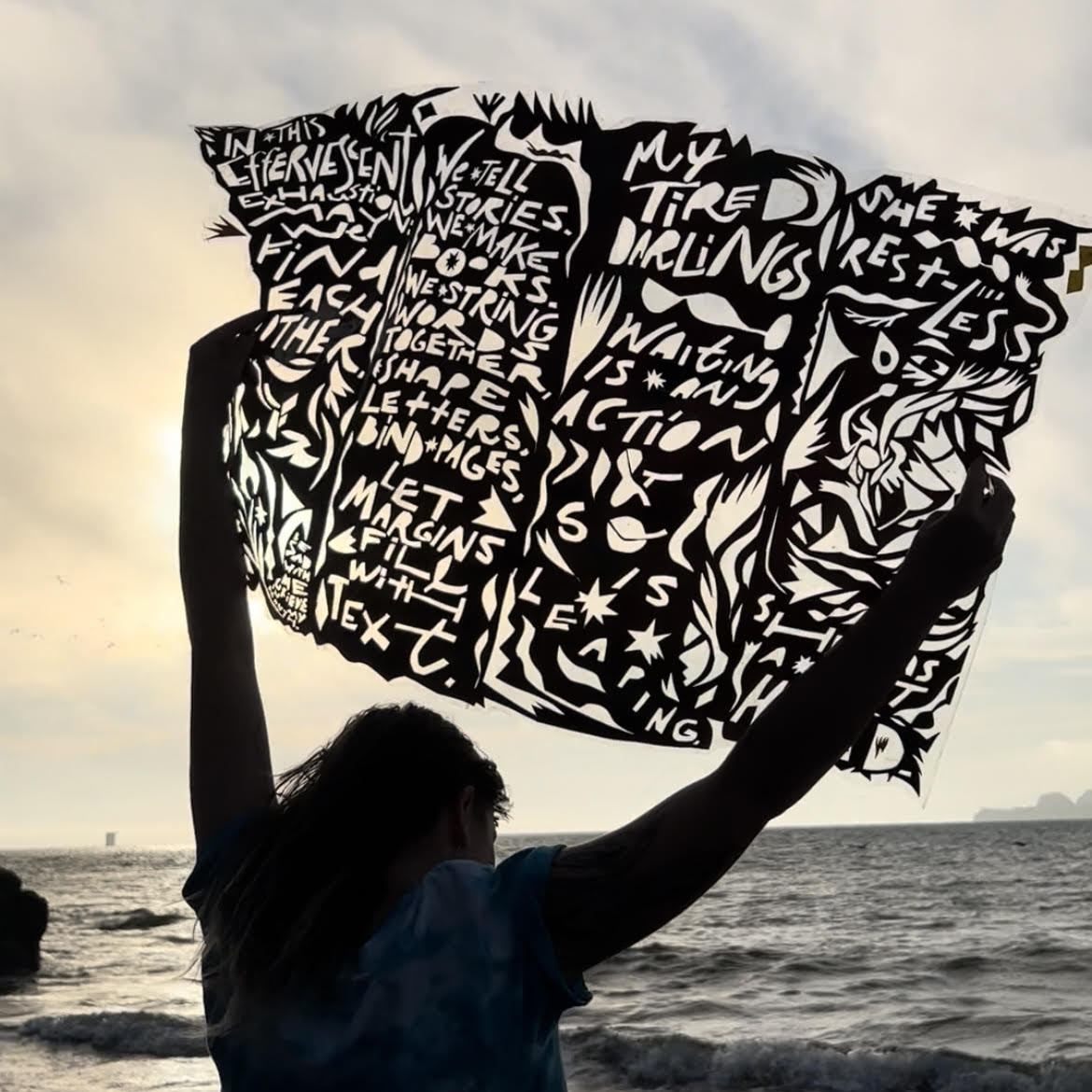
Kate Laster’s paper cutout “Waiting Game” (2022).

I’ve been reading almost more than I can bear lately about the Holocaust, so when I saw this unusual use of a Jewish paper-cutting tradition at Hyperallergic, it really spoke to me.

Isabella Segalovich wrote, “April 5 marked the first night of Passover. Upholding Jewish tradition, we reclined in our chairs, sang boisterously, and drank ample wine. We reveled in the joy and safety many of us are thankful to have in the present while holding close the memory of those that came before us. Alaskan-born Jewish artist Kate Laster carves those memories into delicate paper cuts. Then, she dunks that paper in the ocean.

“ ‘My art is about the people we carry with us,’ she told Hyperallergic in an interview.

“Laster’s first memories are of snow floating on water. She grew up moving from place to place in rural Alaska, from temperate rainforest of Juneau to the icy treeless wilderness in Utqiaġvik. In a world ‘dense with imagination,’ as she described it, she learned to whittle scraps of wood into small figures while hearing stories and poetry by a warm fireside. She said she first saw language being used as a ‘visual medium in the sense of people putting time aside and really either being in nature or being in warm space talking.’

“Today, she uses the visual force behind letters themselves, cutting paper into vibrant collages with fragments of poems — some collected, some written by her. The paper is thoroughly weathered as stencils, multiplying its message as it’s doused in spray paint again and again. Then, she painstakingly laminates the paper by hand, using ‘really scruffy bits of tape.’ The ritual is completed at sundown when Laster dips her works into the Pacific Ocean. As the paper undulates and floats, she understands the waves, part of a living, ‘primordial soup,’ to be reading the text on the pages.

“Laster’s youth in Alaska is proof that the Jewish diaspora spreads far beyond the urban landscape. But for all of us, Jewish practices are deeply tied to the natural world. Festivals begin with the setting sun. … As the great star sets, Laster lifts the text up from the water. And as drips fall off its edges, she uses the hollow paper cut as a viewfinder, so words are filled with the sky. 

“The water that laps at Laster’s paper cuts is of the same body that carried our ancestors as they wandered the world, searching for home and safety. “…

“Laster is one of growing number of anti-Zionist American Jews. For those who do not wish to move to Israel, it’s common to lift up and celebrate the beauty of the diaspora. Following the love of movement, this celebration is also a deep love of the places we find ourselves now. For the Laster, that place is the Bay Area, where the Mexican and Chicano paper-cutting tradition of papel picado is tied to trees lining the Mission, a historically Latinx neighborhood. Chinese paper cuts — 窗花 chuāng huā, or ‘window flowers’ — bloom in glass panes. …

“But this artist’s work is also a part of her own ancestry. Jewish paper cutting is a centuries-old tradition that used to be much more commonplace. It was practiced by both professionals and amateurs at home, not only for marriage contracts or ketubot, but also for holidays like Shavuot and Sukkot. Laster now sees herself as a part of the newest generation carrying it forth. With no other materials needed than paper and a sharp edge, she sees the beauty in paper cutting’s accessibility.

“The belief that everyone has a fundamental right to engage with and create art is central to Laster’s work, both in and outside of her visual practice. She runs suggested donation-based art history classes, and has held a position as a studio assistant at Hospitality House’s Community Arts Program, a free-of-charge art studio for unhoused and low-income residents of the Tenderloin. Today, she works as a studio facilitator at the NIAD Art Center, a creative space for artists with disabilities. …

“ ‘Printmaking and paper cut in general are about accessibility, making a message, a transmission, go as far as possible,’ she said. Laster is also in the tradition of modern Jewish graphic arts: Words that dance and shout diagonally across the page recall the utopian dreams of the 1920s Eastern European Kultur-Lige (Culture League) artists like El Lissitzky and Nathan Altman. …

“Messages can be interpreted differently depending on who hears them. ‘This is the struggle of sharing, of trying to convey anything you feel to someone else. And knowing once it’s public, it can be altered and transformed and interpreted,’ Laster noted. ‘I revel in that.’

“Laster’s work is also deeply personal, as she grieves the loss of her father during the COVID-19 pandemic. In ‘Kaddish Reunion’ (2021) a self-portrait shows the artist sitting by her father’s bedside. Spray-painted shapes bleed into each other. The text typical of her pieces is replaced by swirls, stars, and leaves. Shadows of these words return in another laminated book. Lovingly saved scraps from past paper cuts are laminated alongside a plastic bag that says ‘THANK YOU.’ The only full words are on the cover: ‘I don’t know how to say goodbye.

“Laster’s father was a pilot of a small bush plane. As a child, she studied the dense text and cartoons of flight emergency manuals, replicated today in her shining messages of grief, love, and hope. Perhaps the Haggadah is another kind of emergency manual: a guide on how to keep on going?

“On Passover, we remember those that came before us and those that we lost. … We taste the bitter herbs of longing and grief, but also wash down dry matzoh with sweet wine. And most importantly, we argue, laugh, and tell stories of our survival.”

More at Hyperallergic, here. No firewall. Check out the short video of a paper cutout floating on water.

Read Full Post »

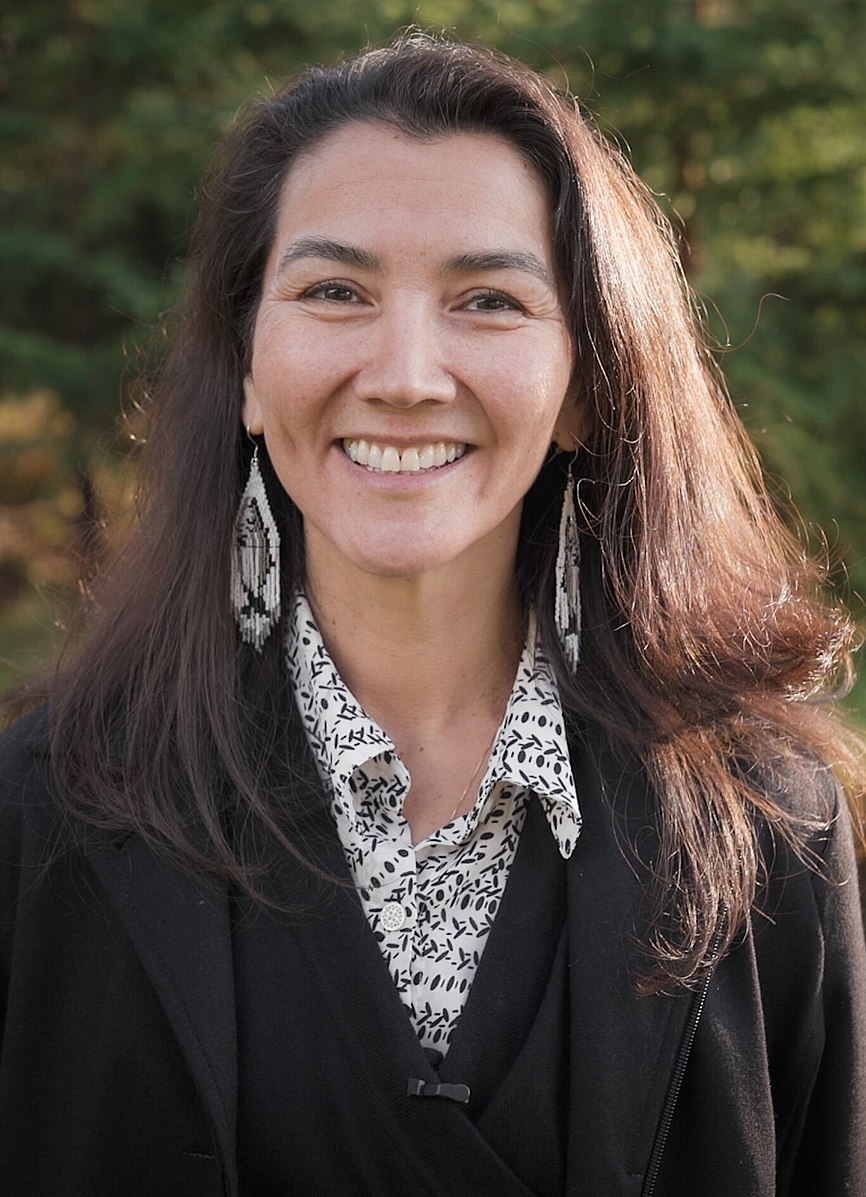
US Rep. Mary Peltola of Alaska.

Is there hope for Americans with different political views to get along? Well, why not? We used to get along. Now it seems that we have to teach ourselves that skill all over again.

Believe it or not, there’s actually a member of the House of Representatives who is showing people how it’s done.

Samantha Laine Perfas and Clayton Collins at the Christian Science Monitor created a podcast about her with West Coast bureau chief Francine Kiefer.

“A race for [Alaska’s] lone House seat had been won in a special election by Mary Peltola, an Alaska Native and a Democrat. … Representative Peltola had hired the chief of staff of her late Republican predecessor, and then hired two other Republican staffers.

“ ‘This just doesn’t happen in Washington,’ Francine says on the Monitor’s ‘Why We Wrote This’ podcast. ‘And I was curious about what kind of person it was that would make sort of a practical decision to hire folks who knew Alaska, who knew Washington, even though they’re not of your own political party.’ (Representative Peltola’s mother’s side of the family is Alaska Native and all Democrats; her father’s side is white Nebraska wheat farmers and all Republicans.)

“What Francine produced [is] a story about the ‘Alaska way’ at the root of such thinking. It’s about interdependence. And while there are many factors at play in Alaska politics – ranked choice voting among them – it’s really about something that might transfer beyond the 49th state. …

Samantha Laine Perfas
“Welcome to ‘Why We Wrote This.’ I’m today’s host, Samantha Laine Perfas. I’m joined by Francine Kiefer, a longtime, award-winning staff writer at the Monitor. … What was it that piqued your interest about Alaska? 

Francine Kiefer
“I have to admit that I’ve just been wanting to get back to Alaska for over 40 years. It was the scene of where I had my first job in journalism, at the Anchorage Daily News. I was just a pipsqueak intern, and I fell in love with the state and I’ve just always wanted to go back. And the political story was a fantastic reason. Here you have a red state. And it just elected two moderates to Congress.

“[Mary Peltola] was the first Alaska Native to be elected ever to Congress. And her whole persona is a bridge builder. One of the things that really got my attention was when I read that Mary Peltola had hired the chief of staff of her Republican predecessor, Don Young. She hired his Republican former chief of staff, his Republican scheduler, and she hired a Republican spokesperson from another office on the Hill. And I was curious about what kind of person it was that would make sort of a practical decision to hire folks who knew Alaska, who knew Washington, even though they’re not of your own political party. …

Laine Perfas
“What was it like talking to her for this story? 

Kiefer
“I’ve talked to many lawmakers over my journalistic career, and she sounded so authentic. She didn’t have her guard up. She wasn’t being measured about what she was saying. She is from an area in western Alaska that depends on fishing for survival. And she’s been fishing since she was six years old. She, as the Alaskans say, ‘She knows how to fill a freezer.’ And she also embraces the spirit of Alaska. It’s a large state. It’s a beautiful state, but it’s also a cold and a dangerous place. And people rely on each other. And there’s a real spirit of cooperation there where people help each other out in tough spots. … Having to help each other out, that is part of the ‘Alaska spirit.’ 

Laine Perfas
“I think it’s interesting to think about how this spirit of Alaska might be different than other parts of the US. How did you see that affecting the political arena? Did it affect the way that candidates interacted with their potential constituents? 

Kiefer
“It definitely did, because of the way that ranked-choice voting works. That allows voters to rank their choices in order of preference such that the one with the broadest appeal emerges from the system. When you’re out there on the campaign trail, you’re not only trying to get people to vote for you as their first choice, but you’re [also] trying to get people to vote for you as their second choice.

“I talked with a local candidate for the state Alaska Senate. And she said this time because of ranked-choice voting instead of knocking only on the doors of the Republican base, she knocked on over 6,000 doors, including many Democrats’, and they would open their door to her and say, ‘You don’t want to talk to me. I’m a Democrat.’ And her answer was, ‘Oh, yes, I do want to talk to you because you can put me as your No. 2 vote. And we may not agree on everything, but here is the stuff that we do agree on.’ And in the end, it was votes from Democrats who had ranked her second, who put her over the line into the majority. 

Laine Perfas
“In the beginning of the conversation, you referred to Peltola as a ‘bridge builder.’ What is the value of having someone like that in office? 

Kiefer
“I think it has two main impacts. One is it can help restore civility to a political dialogue and the other one is it can build understanding and mutual understanding among lawmakers, and hopefully lead to compromise.

“One of my sources for this story was a gentleman named Andrew Halcro. He’s a Republican. He talked to me about the time in which he served as a freshman legislator in the Alaska House at the state Capitol in Juneau. Right off the bat, within a few days of his arriving, he gave a speech where he said, you know, the way to solve Alaska’s fiscal problems is to cut the budget. Cut, cut, cut. And he pointed to rural Alaska, which is where most Alaska Natives live as the place [where the budget] needed to be cut.

“And this speech did not go over well. And within hours, he said, Mary Peltola, who of course, is from this region, knocked on his door and said, ‘You know, I know we’re both new here, but let me explain to you a little bit about what I know about rural Alaska and what their needs are.’ And he said that out of this discussion came a wonderful working relationship with her, as well as understanding and appreciation for the needs of a part of Alaska that he had never set foot in except for sport.

“So you get a sense there of the relationship building, of the understanding that can come about by having bridge builders in a legislature. At the same time, there are limits. And Mary Peltola also said to me, look, she can’t singlehandedly solve the political divide in the United States, but she can do her job of being a model in the way she communicates and the way she reaches out for other political leaders. 

Laine Perfas
“Do you think what we’re seeing in Alaska could be transferable to the rest of the country? 

Kiefer
“Well, definitely the voting system could be. Ranked choice voting has been practiced by Maine in a more limited sense since 2018. And in this very past election in November, Nevadans voted for a system very similar to what Alaska is practicing. So that part of it, I think, could be replicable. The other part of this that we’ve talked about is ‘the Alaska spirit,’ which is that cooperative spirit. I think that is rather specific to Alaska. And in fact, people told me that. But as Peltola said to me, it’s not exclusive to Alaskans, right? And she said, ‘You know, we have been civil before. If we’ve been civil before, we can do it again.’ ” 

Click the podcast arrow at the Christian Science Monitor, here.

Read Full Post »

Photo: Jennifer Hodges.
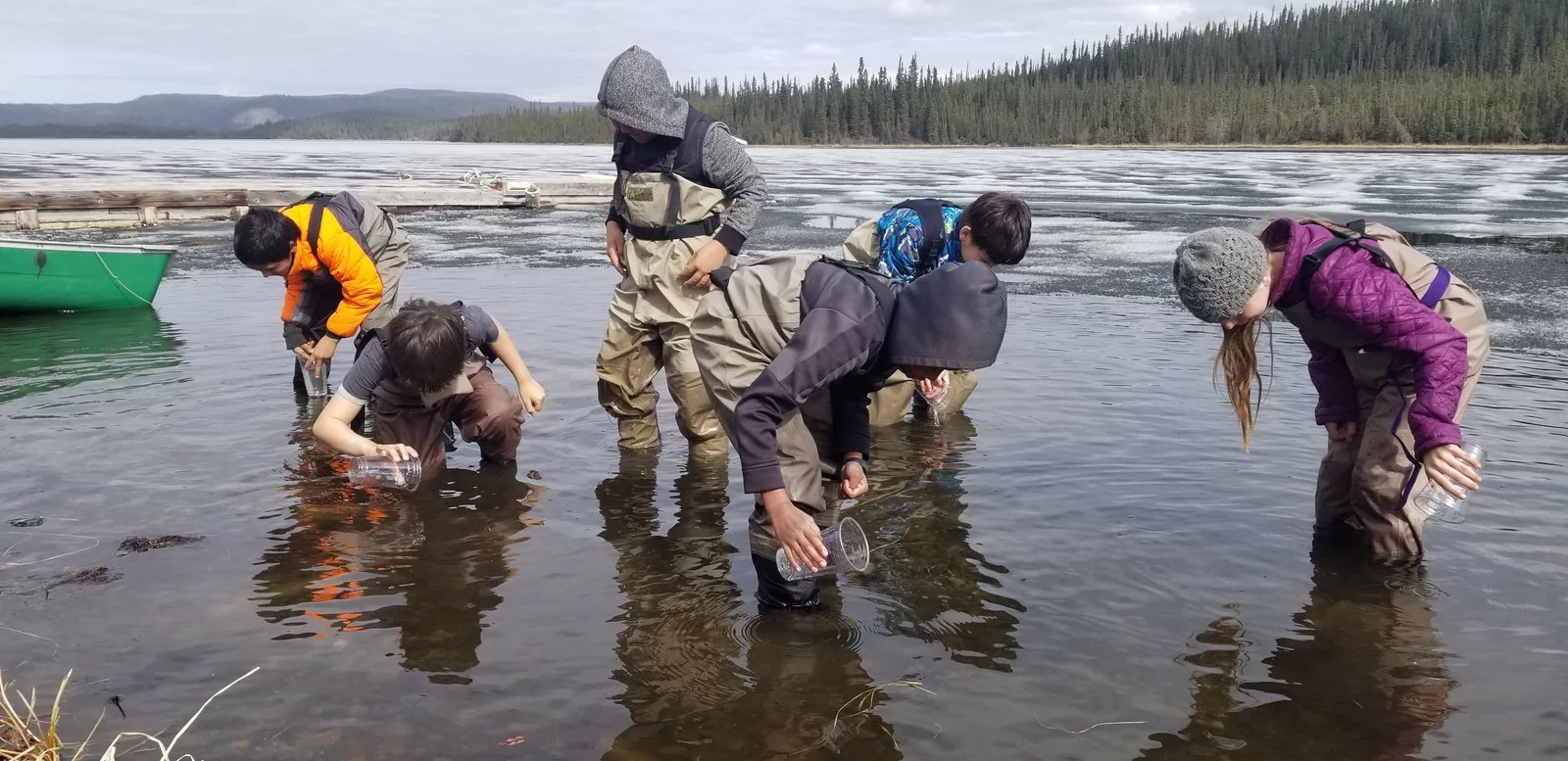
Students releasing salmon into the lake on the Salmon Field Trip in Alaska.

Much of our hope for protecting the planet relies on the education of young children. That’s why this story from Alaska about getting up close and personal with the salmon life cycle is so interesting.

Claire Murashima reports for National Public Radio (NPR), “Kenny Lake School in Copper Center, Alaska, is small, with about 60 students from kindergarten to high school seniors. It’s even smaller in winter when some parents homeschool their children because of the long drives and slick roads.

“Jennifer Hodges is a third, fourth and fifth grade teacher. She says her three-grade class sits only at desks for 20 minutes a day. They do a lot of practical learning, such as raising Coho salmon from egg to Alevin to fry then releasing them into a lake.

“It’s through a program called Salmon in the Classroom, established by the Alaska Department of Fish and Game. Kate Morse, program director for the Copper River Watershed Project, is in charge of implementing the program in six schools throughout Alaska’s Copper River watershed.

“Coho salmon lay eggs in the fall, when many schools start. The eggs remain in the classroom about six months before they are released into lakes. After that, they live for two to four years before they spawn and then die shortly afterwards.

“Every day, about a third of Hodges’ students ride the bus 45 minutes from the Native Village of Chitina. Many students already have experience fishing salmon, which is a staple in Native Alaskan communities.

‘It’s really a delicate balance because we are dealing with traditions and culture of the Native people,’ Hodges says. ‘This is their land, this is their salmon. And so we have to really be part of that.’

“Ahtna, a local tribal association, helped donate the tank in her classroom.

“Though many of her students grow up fishing salmon for food, few have raised them as pets.

” ‘The salmon have turned from being just fish in their backyard that they catch to eat, to fish that they are connecting to,’ says Hodges. ‘With this project, they have a whole different perspective because they know what it takes to actually go through the stages of a salmon.’

“Learning about climate change is more crucial now than ever. In 2022, the Arctic had its sixth-warmest year on record. But these lessons are made concrete to them in raising salmon, which require cold water to survive.

‘We had a failure in our equipment and it brought the temperature up about five degrees,’ says Hodges. ‘Just warming it that much just wiped out our eggs.’

“During the months that the salmon are in the classroom, students like to sit by the tank to observe. ‘When the eggs hatch they have sacs that carry their food,’ says Addy, a student. ‘That way they can hide still and don’t have to look for food. It’s funny because when they try to swim they just end up in circles.’ …

” ‘Putting hand sanitizer on your hands and then putting your fingers in the tank – you’ve polluted the tank,’ Hodges says. ‘That has happened to us before. That year we had seven make it. Normally we have about 180 that make it.’

“Students like to calculate when the salmon will turn from eggs to Alevin to fry based on the temperature of the tank. To them, it’s not practicing math problems: it’s predicting the future. …

“Since Hodges and her students live in such a rural area, there aren’t many field trips. But each year in May, she takes her students on the Salmon Field Trip, where they get to release the salmon they’ve raised in class. …

” ‘The best part is getting to release them after watching them hatch from eggs, grow into fry and take care of them,’ says Fisher, a student. ‘You get to say goodbye.’

“The student put the salmon in a bucket and then secured it with a seatbelt. Students suit up in chest waders, rubber bodysuits to keep them dry when they go into lakes, and then each gets a cup of about ten fish. They put the cup under water and let the fish swim out.”

More at NPR, here. No firewall.

Read Full Post »

Photo: Haven Daley/AP via NBC.
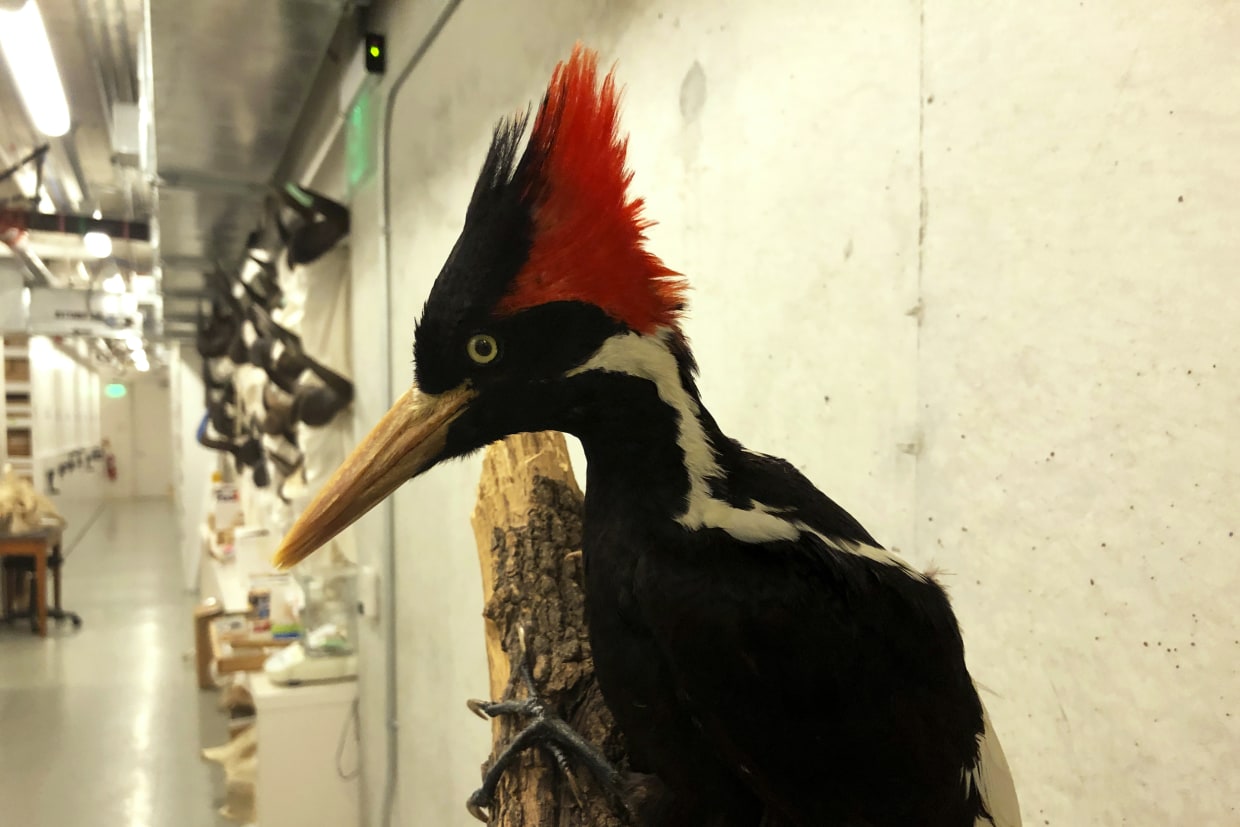
An ivory-billed woodpecker specimen on display at the California Academy of Sciences in San Francisco. The ivory-billed woodpecker has been officially declared extinct, but hope lingers on.

Jenni Doering at the environmental radio show Living on Earth recently interviewed a woman who works to protect endangered species — and who sometimes fields calls from enthusiasts who think they have found the last living … whatever. The interview begins with Curry’s memory of an encounter that opened her eyes to the parallel lives we are living with wild creatures.

“JENNI DOERING: I talked with Tierra Curry, a senior scientist with the Center for Biological Diversity. Today she mostly has a desk job, working towards getting legal protection for endangered species, plants and animals, but she started by telling me about a close encounter she had a while back working with animals in Alaska. …

“TIERRA CURRY: One winter morning, it was my job to take two bald eagles in really large dog kennels out to this flight center. And there happened to just be a huge blizzard that day. And in Anchorage, when there’s a blizzard, your life doesn’t shut down, you just keep going. And so you just go out on the road and try to make a lane and hope for the best. …

“I kept having to get out of the car and chink the ice off my windshield wipers. And because this was my first winter in Alaska, I didn’t even really have an ice scraper. So, I’m embarrassed to say this, but I was using a credit card. I’m just like stuck there with my head down, it’s pouring snow, I’m sure my hair’s freezing and, and I look up and there’s a wolf at the edge of the woods, just looking at me. And I stared back at it. And it was just this moment where I was hyper aware of being a human. I’m here, at this moment, on a Tuesday morning, outside Anchorage. And this wolf is here too. And we just stared at each other and shared this moment. And we’re both dealing with the snow. … And then we both just went on about our schedules after that moment. …

“I work on all kinds of species across the country, from crayfish to butterflies to the Humboldt martens, just whatever is endangered and needs help if it’s a plant or an animal. And people contact me regularly when they have an experience with one of these animals. Like, if someone has a monarch butterfly that they’ve watched grow from a caterpillar and it isn’t doing what they think it should be doing, they contact me for advice.

That ranges from ‘my monarch lacks self confidence’ to, like, ‘it’s the wrong color’, or ‘should I help it out of its shell?’

“Or one time somebody found me because their dog was down in the creek and came back with a blue crayfish attached to its lip. And they had heard on the news that there was this endangered blue crayfish. … I sent the pictures to crayfish researchers in that state and it actually was a species that we had petitioned for protection for and this ended up being a new location for it. …

“One time, there was a fairy shrimp in Florida called the Florida fairy shrimp and we petitioned for protection for it, and the Fish and Wildlife Service said that it was extinct. And so that was hard and we put out a press release about the Florida fairy shrimp being gone. And then, this woman a couple months later, the roads around her house flooded and she found a bunch of fairy shrimp on the road. And she thought that maybe these fairy shrimp were the Florida fairy shrimp and she didn’t know what to do. …

“She contacted the state Wildlife Commission, a local Marine Lab. Upon their advice, she went and bought a tank and food to feed them. She just wanted so desperately to help these fairy shrimp. And she felt so much responsibility, because beyond compassion for the individual animals, she was afraid they were going to get run over, or that vector control was going to spray for mosquitoes and that it would kill them. She felt responsibility for the fate of the entire species. What if she had found this animal that was just declared extinct.

“And for days, it took over her life, she dropped, like, everything she was doing to try to take care of these shrimp to see if she could save the species. … They ended up being the common species of fairy shrimp in that area. But they could have been! So it’s really important that when people do have these encounters, they report it to someone who could help save them because it’s entirely possible that it’s just something that researchers didn’t find, and that you could find it. …

“Just take a picture, take a bunch of pictures of it, don’t disturb it. … Mostly just take the pictures so that you can contact the researcher or contact me and I can find the researcher to find out what it is. Most of the time unless an animal is hurt — even if it is hurt — just contact somebody who has the skills to go pick it up.”

More at Living on Earth, here.

Read Full Post »

Photos: James Austin V.
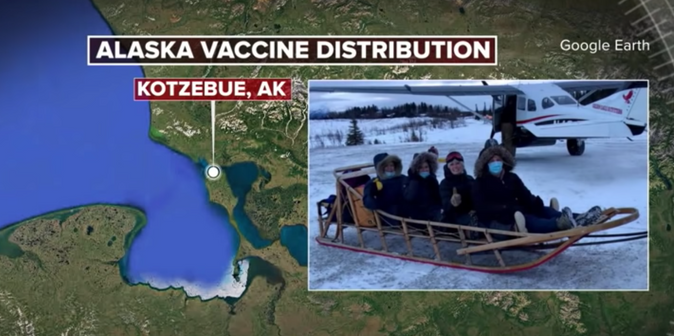
Alaska is delivering vaccines by sled, boat, plane, and snowmobile. Flashback to the Iditarod origins — when diphtheria antitoxin was rushed to Nome by dog sled.

It’s so interesting to me which states are doing well with vaccine distribution and why! West Virginia was ahead of the pack because it used local pharmacies but also had a central sign-up site. Now Alaska seems to have taken the lead, and its techniques are completely different.

Cathy Free writes at the Washington Post, “Alaska, the state with the largest land mass in the nation, is leading the country in a critical coronavirus measure: per capita vaccinations.

“About 13 percent of the people who live in Alaska have already gotten a shot. … But the challenge for Alaska has been how to get vaccines to people across difficult, frigid terrain — often in remote slivers of the state.

“ ‘Boats, ferries, planes, snowmobiles — Alaskans will find a way to get it there,’ said the state’s chief medical officer, Anne Zink, 43.

“Alaskans are being vaccinated on fishing boats, inside 10-seater planes and on frozen landing strips. Doctors and nurses are taking white-knuckle trips to towns and villages across the state to ensure residents are protected from the coronavirus.

“Contributing to Alaska’s quick speed in getting the vaccine to its residents is a federal partnership that allows the state, which has more than 200 indigenous tribes, to receive additional vaccines to distribute through the Indian Health Service.

“Other reasons include the state’s small population of 732,000, as well as a high number of veterans, Zink said. The U.S. Department of Veterans Affairs is working with the Centers for Disease Control and Prevention to ensure that high-risk veterans receive priority for the vaccine.

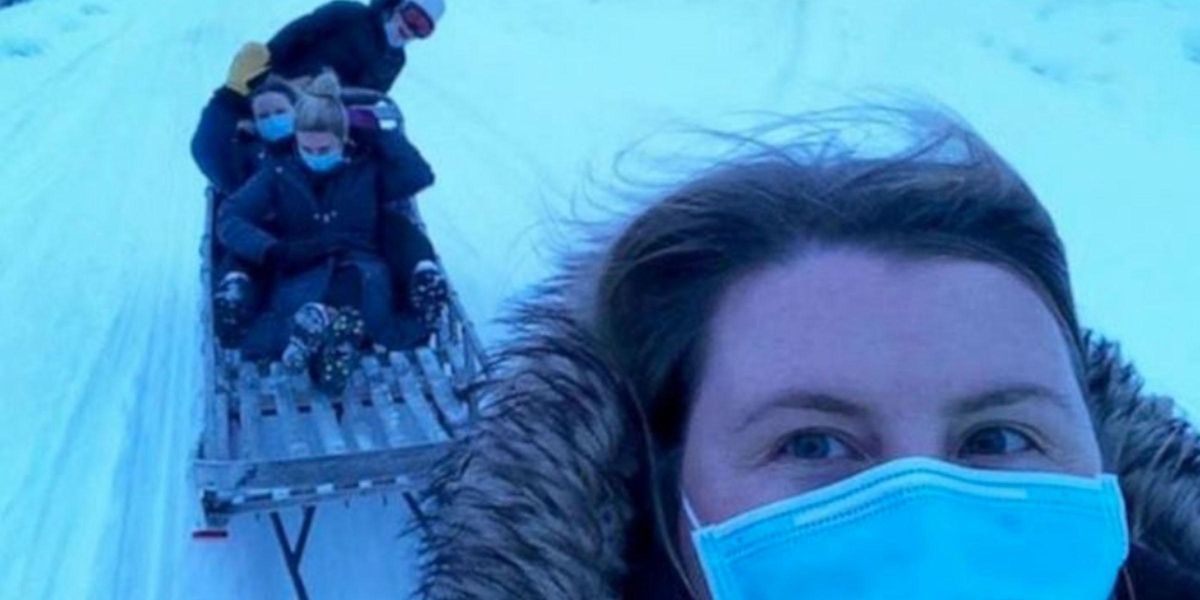
“But one big reason is the state is practiced in delivering precious cargo by transport not often used in the Lower 48. Sometimes that even means adventures by sled. One all-female medical crew of four in December used a sled pulled by a snowmobile to deliver vaccine to the village of Shungnak in the state’s remote Northwest Arctic Borough.

‘It’s just an easier way to get around when you don’t have a lot of roads,’ said Kelli Shroyer, public communications director for the Maniilaq Health Center in Kotzebue, Alaska, where the crew started their journey. …

“Zink was so impressed by the sled crew’s delivery in December that she posted about it on her Facebook page. ‘I love the pictures of vaccination distribution in Alaska,’ she wrote. ‘Recipients expressed how grateful they were that even though they are so remote, they are getting this vaccine. They are not forgotten. …

‘One chief told me how his grandmother took his mother out to the wilderness for a year so that she would be safe. When they returned, they learned that most of their village had died.’ …

“Thousands of Alaskans are playing a role in getting people vaccinated, Zink said.

“Curt Jackson used to employ his water taxi, the Orca, to shuttle tourists from the small city of Homer to villages across Kachemak Bay that aren’t accessible by roads. In late December, Jackson received a request to take three nurses across the bay to Seldovia, a town with about 450 residents, including members of the Seldovia Village Tribe. Planes couldn’t fly that morning because of weather, and the water was rough.

“When the women climbed aboard his 32-foot aluminum landing craft and took seats in the windy darkness, Jackson said, he noticed that the woman in the middle, Candace Kreger, was clutching a bright blue cooler. That was when he realized that the women were traveling with the precious doses. …

“For Ellen Hodges, a doctor from Bethel, Alaska, the coronavirus vaccination effort is the most rewarding project in which she has been involved, she said. Hodges, 46, has flown to several villages in a six-seater plane to vaccinate medical workers and elders, who meet her on the runway.

“ ‘We land in the isolated tundra, and they’ll be lined up waiting,’ she said. ‘Some places have up to 30 people, and some have only one.’ “

More at the Washington Post, here.

An all-female medical crew from Alaska’s Maniilaq Health Center took a sled to deliver vaccine to the isolated village of Shungnak in December.

Read Full Post »

It makes me happy when people are proud of their culture, especially people who have long felt marginalized. Today in Alaska, increasing numbers of indigenous residents are embracing their history and art.

Jennifer Nalewicki writes at the Smithsonian, “A community-wide effort began in Juneau in late 2017, when Sealaska Heritage Institute, a private nonprofit that promotes cultural diversity through the arts and public services, announced its plans to make ‘Juneau the Northwest Coast arts capital of the world.’ They’d meet this goal through the promotion and support of several Indigenous cultures that are strongly interwoven into the fabric of the region, and whose works exemplify this artistic style.

“By definition, Northwest Coast art is recognizable by its usage of ‘formline designs,’ according to The Canadian Encyclopedia, or ‘the continuous, flowing, curvilinear lines that turn, swell and diminish in a prescribed manner.’ The term was coined by art historian and author Bill Holm in his 1965 book Northwest Coast Indian Art: An Analysis of Form. Indigenous artists, particularly the Tlingit, Haida and Tsimshian peoples, … apply this style of art in everything from drawings and paintings to sculptures and weavings. …

“A closer look at Juneau reveals a city populated by art museums, galleries, murals and statues promoting the artistic endeavors of local artists. Public art can be seen all over the city, from the Old Witch totem pole created by Haida carver Dwight Wallace in 1880 that creeps up the side of the State Office Building to the ‘Raven Discovering Mankind in a Clam Shell’ mural by painter Bill Ray, Jr. located on the side of the City Municipal Building. …

“One of the first steps Sealaska Heritage took to reach its goal occurred in 2015, when it opened phase one of its Sealaska Heritage Arts Campus. … Once complete, the 6,000-square-foot campus will [comprise] both indoor and outdoor spaces that are designed for artists to create different mediums of Northwest Coast art, both on a small and ‘monumental scale,’ the latter of which will include totem poles and canoes. …

“Lily Hope, a Juneau native known for her colorful and intricate weavings that have been on display at the Alaska State Museum, Portland Art Museum and the Burke Museum of Natural History and Culture in Seattle, is hopeful that Juneau’s Indigenous art scene will get the recognition that it deserves. As a member of the Tlingit people, she has been weaving since she was 14 years old, when her late mother taught her the craft.

“Now 40, Hope continues their legacy by weaving arm bands, face masks and jewelry using techniques she mastered while working alongside her mother for many years. Hope also serves as the president and co-founder of Spirit Uprising, a nonprofit ‘dedicated to preserving the integrity of Ravenstail and Chilkat weaving.’ …

“ ‘Our focus is on art forms that were starting to become extinct,’ [Rosita Worl, president of Sealaska Heritage,] says. ‘We want Northwest Coast art to be recognizable and to be everywhere. We’re working with our local congressional district to try to get it to become a designated national treasure. … We want art everywhere in our community, from street signs around Juneau to pieces on street corners. When people visit Juneau, we want them to be excited about our art.’ “

More at the Smithsonian, here.

Read Full Post »

joannaviyukkane

Photo: Library Loan
I enjoyed hearing Native Alaskan Joan Naviyuk Kane read her poems and talk about her life at the Poetry at the Library series.

Our library has enabled me to hear all sorts of wonderful poets over the years. The woman in charge of the poetry series is good at bringing in poets you can sort of understand even at first reading. And the poets’ books are available to buy if you want to dig in later.

Last fall, I was intrigued by poet Joan Naviyuk Kane — both by her poems and her explanations between poems of what life is like for indigenous people in Alaska. To share some of that experience with you, I poked around on the web and came up with links.

The first link is from the library, here. “Multiple award-winning poet Joan Naviyuk Kane will read from and discuss her work that explores themes of adaptation and resilience, motherhood, marriage, extended family and its geographical context in her rapidly changing Arctic homeland.”

From the Poetry Foundation, here, we learn that “she earned a BA at Harvard University and an MFA at Columbia University. Kane’s spare, lyric poems are rooted in her Arctic homeland and concerned with movement: enlarging, thawing, accruing, crossing, even at times transforming. She considers themes of ecological, domestic, and historical shifts. Kane contends with biological, cultural, and political threats to her ancestral community, including climate change, language death, and the diaspora prompted by the Bureau of Indian Affairs’ forcible relocation of King Island residents in the mid-twentieth century.

” ‘Yet as a mother and a daughter, an educator and an artist, Kane brings to these subjects a singular, sonorous voice and a lyric sensibility as alternatingly austere and lush as the land of her ancestral home,’ observed Maggie Millner in a 2014 ZYZZYVA review of Hyperboreal.” More from the Poetry Foundation.

You might also like an interview conducted over e-mail by Anastasia Nikolis in winter 2018 for the Library of Congress, here:

“The stereotype about writers is that they are solitary and isolated, but your work is so connected to your family, to your ancestral heritage, and to the Inupiaq community.
“I’m so fortunate to have been raised with a family that insists upon connection, however difficult. When I am trying to structure the life of my children so that they remain connected — not just to our ancestral heritage, but to each other and our relatives, to the replenishing aspects of the human intellect that words afford, to our present and traditional lands — I remain connected to the fact that my ancestral heritage is not just a thing of the past, but a gift and responsibility whose urgency and vitality is carried forward in the present and future. …

“I’m not alone in this. My close contemporaries in the Native literary community — Sherwin Bitsui, Terese Mailhot, M.L. Smoker, Eden Robinson, Abigail Chabitnoy, Cathy Tagnak Rexford, and Tommy Orange, for instance — bring this to bear in their writing and discussions, in their families, in their lives as teachers. … Closer to home, I was raised with books and essays and poems by Joseph Senungetuk, Susie Silook, and William Oquilluk. My mother and father are voracious readers: they made it possible for me to see that you can read to establish and inform your sovereignty, and to remind me that their best words connect people through time.

“My uncles (as I was growing up and as I raise my children), too, all world-class artists (carvers of walrus ivory), modeled one way of being independent yet joined in with the work that Inuit have done and will do as long as humanity exists. …

The poems in Milk Black Carbon work out the profound and complicated, but also dynamic and changeable, ways the body, the land, and language relate to one another. … Could you elaborate on that interaction?
“This is not an on-trend platitude: the land, water, and ice give Inuit everything we need to survive, and it’s been that way for millennia. It’s been something to live through and witness firsthand the astonishing rate of climate change in the arctic and sub-arctic, to feel in my bones some of the most drastic environmental turns.

“My relatives — Uyuguluk in particular — told me how much more of the King Island dialect I would understand once I’d been to the island. It’s among the most challenging and generative sites of human inhabitation on the planet. It requires and bestows a highly-specialized and precise command of language. I think I have some difficulty answering this question because my family had its relationship with our ancestral lands extinguished by the United States government.”

And there’s the Harvard Magazine angle, here, “ ‘We ended up going by crab tender,’ says Joan Naviyuk Kane ’00, of her latest work trip. ‘It’s not lavish, or glamorous, riding a crab tender out, 90 miles, 12 hours across the Bering Sea.’

“Kane’s choice of transportation — a small boat used alongside larger vessels in crabbing — is perhaps even more surprising given her choice of career. [She] has three books of poetry to her name: The Cormorant Hunter’s Wife, Hyperboreal, and an untitled collection just sent to her publisher. ‘I thought I was going to be pre-med,’ she says, but a gap year after high school and a fall semester in Porter University Professor Helen Vendler’s freshman seminar, reading poetry closely, changed all that. …

“But back to the Bering Sea. The crab tender was headed to King Island, a tiny, rocky landmass between Russia and Alaska. Now uninhabited, the island was home until the early 1960s to a small indigenous hunting and fishing community that included Kane’s mother and grandparents. Eventually, under the Bureau of Indian Affairs’ assimilation policy, they were pressured to leave.

“Though Kane was born after they left the island, she describes a childhood filled with stories of its landscape. … So this past summer, after a successful crowd-funding campaign, she and a small group of fellow King Island women returned. It was the first time she had set foot there.

“ ‘It’s one thing to hear; it was another thing entirely to go,’ she says of the trip’s hazards.” More.

Read Full Post »

fatbears_chubbybear

Photos: N. Boak
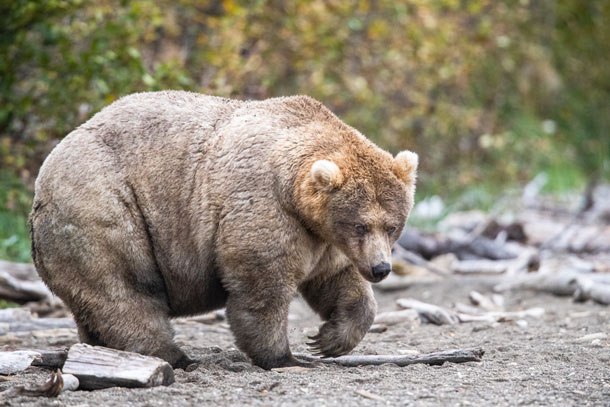
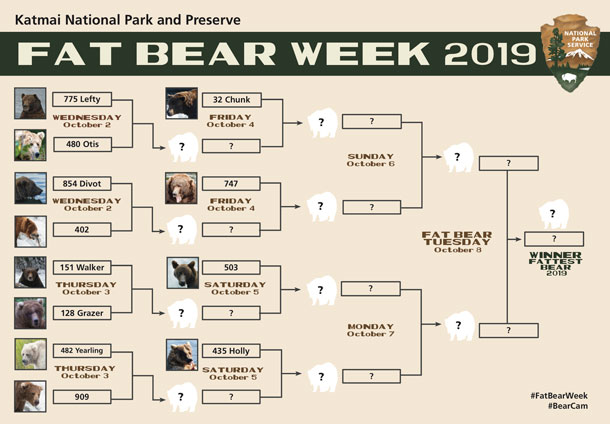
Brown Bears at Katmai National Park and Preserve gain a lot of weight during the spring and summer to prepare for winter hibernation. Alaskans and friends around the world compete to vote on which bear looks the fattest.

I just learned about a funny competition that even the inventive, competition-loving Finns hadn’t thought up. The story was on the wonderful radio show Living on Earth.

“RADIO HOST STEVE CURWOOD: The rangers at Katmai National Park in southern Alaska are hosting a fishing derby, but in this case it’s not the biggest fish that wins, it’s the biggest one who catches fish.

“These contestants are very large bears, the eight and nine footers of Katmai, which is home to the largest concentration of brown bears in the world. These bruins can lose as much as one third of their weight while sleeping through the long cold Alaska winter, so summer and fall, they pack on extra pounds with sockeye salmon.

“And to let the public decide which bear appears to have caught and eaten the most fish, park rangers host a fat bear contest each year. People can watch the live stream of the bears snagging fish on the Brooks River in Katmai and then go to Facebook to vote for the ursine angler they think should be named the fattest. For details of the fat bear tournament Living on Earth’s Bobby Bascomb spoke with Katmai media ranger Naomi Boak.

“BOAK: It’s like March Madness for bears. We create brackets, and we have head to head matchups. And people from all over the world vote for who they think is the fattest bear this year at the Brooks River. And we have several bear cams here which stream live the activities of the bears all season. …

“BASCOMB: I was watching the live stream online and it’s really fun just to watch these bear stand so stoically, and try and catch the salmon coming upstream. And that’s how they’re fattening up right now. Right?

“BOAK: Yes, and they’ve been doing that all summer. We have one of the largest sockeye salmon runs here on the Brooks River. And it was a great salmon run; last year was record breaking. And the bears came back nice and healthy. And this year was another great year. The bears are really obese, and they’re working very hard to be as fat as they can for their winters hibernation. …

“When they go into hibernation in the winter, they’re not completely asleep. But they do not eat; they lose maybe 30 to 40% of their fat stores. So if they’re not fat enough, they’re going to have a hard time surviving the winter.

“And when they come out of hibernation in early spring, there’s not a lot of food around. So they’re eating grasses, it’s not very nutritional, they will continue to lose weight. And for sows, it’s important for them to get fat because they won’t get pregnant unless they’re fat. With bears, there’s what’s called delayed implantation. So the bears mate early in the season. Spring and early summer, mostly. But the eggs don’t implant in the uterus until the sow is fat enough. …

“BASCOMB: You have some before and after photos on your website of some of these bears, and I gotta say they’re pretty shocking. I mean, you can see the same bear when it comes out of hibernation in June, as you mentioned, and again in September, they hardly look like the same animal. …

“BOAK: No, they don’t, which is why we want to celebrate what they’ve done all summer. And to really let the public know. And it’s hard for us to identify the bears from the beginning of the year to the end of the year, they look so different. They change colors, they shed their coats, and the coats are different. …

“BASCOMB: Last year’s winner, Beadnose I think her name was, looks more like a furry hippo or something than a bear. Her belly is practically dragging on the ground. Does she have some kind of special technique to get so big, you know, how is she catching her fish better than the other bears?

“BOAK: Well, yes, she was very successful. But bears have different fishing techniques. They can be on the lip of a falls, which is a delicate balancing act, but it’s a very great position to be in. Beadnose liked to do that. Another technique that the really big guys like is to fish in the jacuzzi, which is the eddy right below the falls. It’s where the fish wait to make the jump up the falls. And these bears are big enough. So they can sit down on their haunches and with their front paws, fish. And so they don’t have to move. They just have to fish with their front paws. … Bears don’t like to get their ears wet so they will snorkel. …

“Bear 747 is certainly a fan favorite. He is humongous. He looked like he was ready to hibernate back in July. Bear 435, Holly, who is a very famous female here. She has had several litters, and she actually adopted a lone yearling a few years ago. So it’s made her a fan favorite. She is also gi-normous. She does look like a hippo. …

“CURWOOD: For links to the live stream of the fat bears of Katmai go to our website LOE.org.”

fatbear_bracket

Read Full Post »

molly_approved_custom-4fd4462a2c5abefc308739f14d767a277e2b1d4c-s600-c85

Photo: WGBH Educational Foundation
In the PBS program
Molly of Denali, Alaska Native Molly Mabray helps her mom run a trading post in an Alaskan village.

In the old days, TV shows meant to educate children tended to be dry and clunky. Sesame Street began to move the bar, and now my grandkids and other children are learning a lot from shows that are fun, like Wild Kratts and the Octonauts. They amaze me with the facts they produce to correct my misperceptions about nature.

Now they are giving a thumbs up to a new show about indigenous people in Alaska.

Mandalit del Barco wrote about it at National Public Radio (NPR), “For decades, animated children’s stories included negative stereotypes of Indigenous people. …

“More recently, Disney and Pixar got kudos for more authentic representations of Native people in the films Moana and Coco. Now, TV networks and streaming services are reaching children with realistic portrayals on the small screen — where they consume most of their media.

“The new PBS show Molly of Denali is the first nationally distributed children’s series to feature an Alaska Native lead character. She’s 10 years old; her heritage is Gwich’in, Koyukon and Dena’ina Athabascan. She lives in the fictional village of Qyah, population 94. She goes fishing and hunting, and also looks up information on the Internet and on her smartphone.

“Molly is computer-savvy,’ says the show’s creative producer, Princess Daazhraii Johnson. ‘I think it’s really important for us to show that, because we are modern, living people that are not relegated to the past. That stereotype, that romanticized notion of who we are as Native people, is rampant.’

“Johnson says when she travels, she still meets people who assume all Alaskans live in igloos and are Eskimos — ‘which isn’t a term that people really even use anymore up here,’ she says. ‘We have 229 federally recognized tribes in Alaska; we have 20 officially recognized Alaska Native languages here. We are so diverse and dynamic.’ …

“In one episode, Molly learns that her grandfather stopped drumming and singing as a child when he was taken away to a Bureau of Indian Affairs boarding school. ‘At the school we weren’t allowed to sing the songs from our people,’ an elder tells her. ‘We were made to feel bad about who we were.’

“Johnson says this storyline really happened to one of the elders on the show’s advisory board. It’s a kid’s show, so it has a happy ending: Molly and her grandfather sing together.

” ‘We’re just over the moon about Molly of Denali, because this is exactly the type of thing that can really began to shift perceptions in this country,’ [Crystal Echo Hawk, CEO of the media watchdog group IllumiNative] says.

“Echo Hawk says that for years, Hollywood didn’t produce stories about or by Native people because it didn’t think a market existed for them. But that, she says, was shortsighted. Her organization polled more than 13,000 Americans, and found that nearly 80% of them said they want to learn more about Native peoples. …

“For several decades, the Australian and Canadian Broadcasting Corporations have spotlighted shows by and about their indigenous populations. Now, Netflix is partnering with three Indigenous cultural organizations to develop the next generation of First Nation creators across Canada.

“And in the U.S. and in Latin America, Netflix is running the animated film Pachamama. The story centers on a 10-year-old boy in an Andean village who dreams of becoming a shaman. His people suffer under both the Spanish conquest and the Incan Empire.

” ‘It’s told from the point of view of the Indigenous people,’ says Juan Antin, who wrote and directed the film. … Antin, who is from Argentina, says he was inspired by his travels with his anthropologist wife in Bolivia and Peru. ‘There, I fell in love with the culture of Pachamama, which is how the indigenous people call Mother Earth, having respect, love to the Earth,’ he says.

“The Cartoon Network series Victor and Valentino features two half-brothers in a fictitious Mesoamerican village, exploring myths that come to life. For example, they follow the dog Achi into the land of the dead, where they encounter a chupacabra and other legends.

“Animator Diego Molano, whose heritage is Mexican, Colombian and Cuban, … says it’s about time networks began showing cartoons with Indigenous characters and themes. He just hopes it’s not just a fad.”

More at NPR, here, and at the New York Times, here.


Read Full Post »

04poets_600

Photo: New York Times
Fisher poet Dave Densmore, on his boat, wrote his first poem as a joke in the 1970s. Now he studies writing.

Jobs like commercial fishing can provide a lot of of time to think, and it’s amazing how thinking often leads to poetry. That is also true of experiences that are so hard to capture they must be addressed obliquely.

Poetic storytelling is alive and well in the fishing community, it seems. Consider this transcript of a National Public Radio (NPR) report, in which Melanie Sevcenko describes an annual fisher poet event.

“MELANIE SEVCENKO: Moe Bowstern named herself after the front and back end of a ship. She calls herself a fishing woman. And for her, writing poetry comes with the job.

“MOE BOWSTERN: Well, I mean, have you ever been fishing? …  It’s unbelievably boring. And so you just have to think of something else to do.

“SEVCENKO: Now retired from commercial fishing, Bowstern is one of dozens of fisher poets who have been meeting for their annual gathering in a Astoria, Ore. During the last weekend of February, the far-flung fisher people interpret the commercial fishing industry in prose, poetry and song. …

“Bowstern started fishing in Kodiak, Alaska, in the mid-’80s when women on commercial boats were scarce. Her zine shares a name with a popular brand of deck boots, XTRATUF. This piece is called ‘Things That Will Be Difficult.’

“BOWSTERN: ‘It will be hard, if you are a man, to understand why your female crewmate, who started out so friendly, is so silent now when you are only trying to help. It will be hard if you are a woman to go’ …

“SEVCENKO: The poetry onstage at FisherPoets touches on what Bowstern calls an incredibly difficult life.

“BOWSTERN: Not just because of the rigors of the actual physical experience of the life, but it’s just, how can you be a fisherman at a time of climate change? And, like, where are you going to position yourself with resource extraction?

“SEVCENKO: That’s something John Copp has written about. For 20 years, he ran operations in Bristol Bay in the Bering Sea. Multinational corporations want to mine gold and copper from the area nearby and have been angling to do so for years. His poem ‘Tsunami’ is inspired by his opposition to the proposed Pebble Mine. … Many commercial fishermen have been against the Pebble Mine because of the damage it could do to the biggest salmon run on the planet. Copp is retired and lives in Oregon now. But he’s still inspired to write by the natural beauty of Alaska. …

“This weekend, once again, the fisher poets will do what they’ve done for more than two decades — gather on piers, in cafes and in theaters to perform their poetry for grateful audiences in this seaside town. Bowstern feels lucky that people who’ve never even been fishing want to hear their stories.

“BOWSTERN: We’re participating in two traditions that have been going on. Like, storytelling is probably only a little bit older than fishing, you know? So we get to tell stories in our special, weird language. And people just can’t get enough of it.”

The NPR transcript is here, and there’s another good article at the New York Times, here. If you know people who fish and also write poetry, have them check out the Fisher Poets website, here.

Read Full Post »

16x9_m

Photo: Clark Mischler
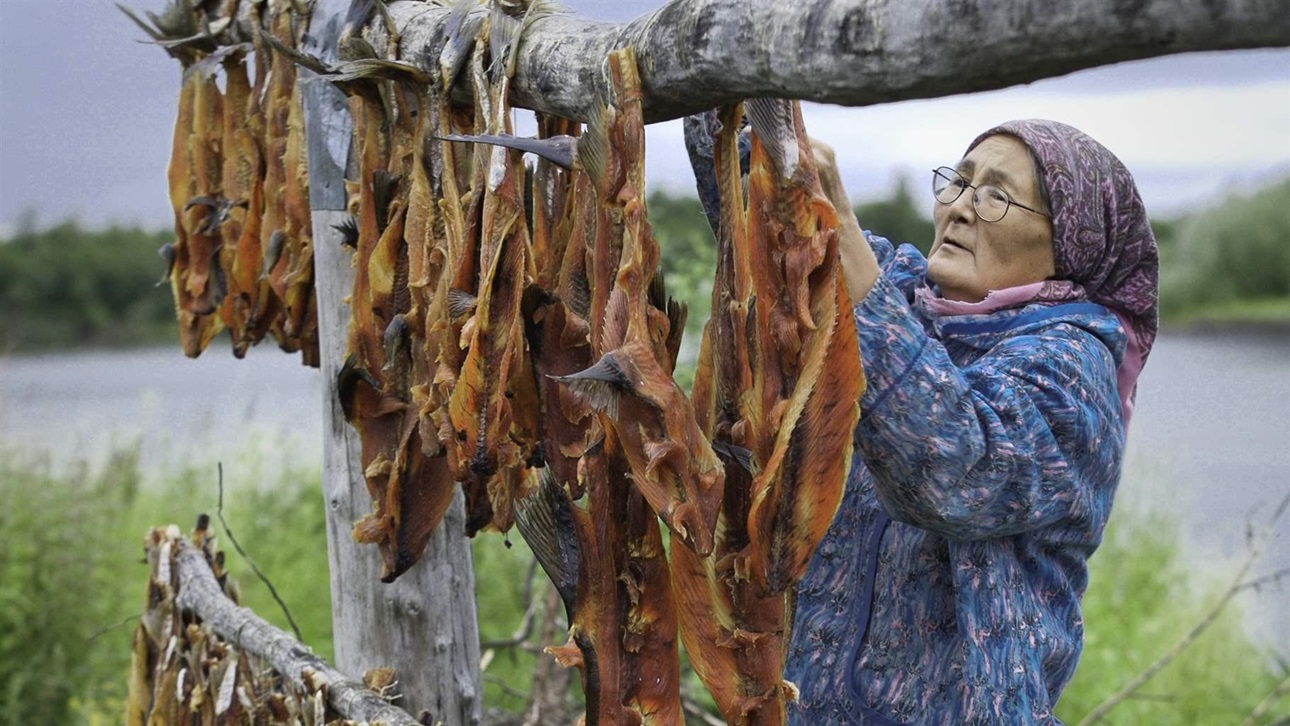
Hanging salmon at a fish camp near Kwethluk, Alaska, in the Yup’ik region, which has extensive coastline on the Bering Sea. The North Pacific Fishery Management Council is tapping the traditional knowledge of indigenous communities as it works toward more-sustainable fishery management.

I was listening to the radio in the car when the United Nations’ dire warning about biodiversity came out. Called the “Global Assessment Report on Biodiversity and Ecosystem Services,” it predicts one million species could be pushed to extinction in the next few years by such things as overbuilding and loss of habitat, global warming, and pesticides and herbicides. (The scientists who did the research provided their services for free. The naysayers are being paid. Ask yourself: Paid by whom?)

One commentator suggested that a road map for preventing loss of species is right under our noses in indigenous communities.

For a window on one way government agencies are starting to collaborate with indigenous communities, consider this Pew Trusts report on the salmon fishery in Alaska.

“The indigenous communities of the Bering Strait region have a vast knowledge of salmon runs, ocean currents, marine mammal behavior, and other ecosystem dynamics — information gathered over millennia and passed down from generation to generation. Now federal fishery managers will use that Traditional Knowledge to help guide management for the Bering Sea.

“The North Pacific Fishery Management Council voted at its December meeting in Anchorage, Alaska, to adopt a new Bering Sea Fishery Ecosystem Plan that lays the groundwork for meaningful incorporation of Traditional Knowledge into decision-making. Social scientists Julie and Brenden Raymond-Yakoubian, a married couple who have worked on the issue for years, say this is a groundbreaking action by the council.

“ ‘Indigenous communities have been living on — and with — the Bering Sea for generations,’ says Julie Raymond-Yakoubian, who is social science program director for Kawerak Inc., the Alaska Native nonprofit tribal consortium for the Bering Strait region. ‘They can see components of the ecosystem, including interconnections and relationships, that fishery managers might miss.’

“ ‘Incorporating indigenous perspectives is crucial for overcoming management challenges,’ adds Brenden Raymond-Yakoubian, who runs Sandhill.Culture.Craft, a social science consulting firm based in Girdwood, Alaska. …

Here are a couple of the nitty gritty matters addressed in the Pew interview.

“Q: What are the greatest challenges to ensuring that Traditional Knowledge informs decision-making?
“Brenden: One is getting recognition for Traditional Knowledge and ensuring there is a desire for it to inform policy and science. Another is getting natural scientists — those working in fisheries or oceanography, for example — to work with social scientists and Traditional Knowledge holders.

“Julie: There are five council meetings a year that each last about 10 days and are held in different places. Gaining a good understanding of how to work within the council’s process can be a full-time job. Most tribes don’t have the resources to do this. But if we want to include Traditional Knowledge and Traditional Knowledge holders in fisheries management, then these issues must be addressed.

“Q: How can Traditional Knowledge help address conflicts between federal fishery management and the subsistence way of life that Bering Sea communities have lived for millennia?
“Brenden: There are many ways. For example, management could include a broader understanding of the impact of commercial fishing on subsistence communities and of millennia-old practices and principles that have connected those communities to fish and the sea and sustained that relationship with the environment.

“Julie: Incorporating Traditional Knowledge will also help federal fishery managers better meet their existing obligations, such as the requirements to use the best scientific information available and consider social and ecological factors in management. It will also help them better implement ecosystem-based fishery management, which calls for managing fisheries at the ecosystem level rather than single-species level. Traditional Knowledge can also help federal fishery management become more adaptive, for example, by providing managers access to information about ecosystem changes they may not otherwise be aware of. This should help fishery managers adjust their policies to adapt to climate change, which would hopefully occur in a manner which ensured the sustainability of fishery resources for subsistence communities into a climate-uncertain future.”

More here.

Read Full Post »

Photo: David Bedard
An example of the resurgence of indigenous theater is
Our Voices Will Be Heard, directed by Larissa FastHorse. It was performed at Perseverance Theatre in 2016 in Alaska. 

Another way that culture gets shared, revitalized, and preserved is through theatrical performances. Alaska and Hawaii, in particular, are seeing a resurgence of indigenous theater.

As Frances Madeson writes at American Theatre, “The pace at which producers of Hawaiian and Alaskan Native theatres are creating original offerings specific to their lands and peoples and mounting them on their mainstages ranges somewhere in the giddy spectrum between prestissimo and full-tilt boogie.

“ ‘We’re experiencing a Native arts revival right now,’ said Alaska Native playwright Vera Starbard, whose autobiographical advocacy play Our Voices Will be Heard was performed in Juneau, Anchorage, Hoonah, and Fairbanks. …

“Part of the exhilaration comes as a result of resources to match the rhetoric of support for Native theatre arts. In 2016 Starbard was granted $205,000 from the Andrew W. Mellon Foundation to sustain her while she creates three full-length Alaska Native plays over three years. …

“There is also an attitudinal shift by institutional gatekeepers toward inclusion of Native theatre artists, some of whom have been maintaining the vision for a very long time with minimal support.

“The first Hawaiian-language play presented at the Kennedy Theatre at the University of Hawai‘i at Mānoa was in February 2015, ‘in the theatre’s 51st season,’ said Tammy Haili’ōpua Baker, who wrote it. … She repeated for emphasis: ‘Half a century to get anything Hawaiian on that stage.’

“But now that the vessel’s been unstoppered, there’s a growing groundswell of audience demand for shows with Native-centric realities and expression.

“ ‘The success of Our Voices was completely community-driven,’ said Starbard. …

“Tlingit actor and playwright Frank Henry Kaash Katasse said he sees a category shift. ‘Indigenous stories are now seen as American stories.’ …

“Katasse teaches theatre in schools to Alaska Native kids, and encourages them to take acting seriously. ‘They didn’t even know this was a career option,’ he said.

“Indeed, to keep pace with demand, artistic directors Harry Wong III at Kumu Kahua Theatre and Eric Johnson at Honolulu Theatre for Youth (HTY) on Oahu, and Art Rotch of Perseverance Theatre in Juneau and Anchorage, are prioritizing both actor training and play development. …

“In Fairbanks, Alaska, [Allan Hayton, language revitalization program director at Doyon Foundation] pursues theatre as a vehicle for cultural and linguistic survival.

“ ‘We are restoring balance,’ Hayton said. ‘In indigenous tradition theatre is performed to achieve something for the people and balance for the world in the natural environment. Theatre is a healing art form in which we can address very serious and difficult issues safely, and offer a larger healing for society.’ …

“For Starbard, Alaska Native theatre artists literally standing on thousands of years of storytelling tradition have nothing to prove.

” ‘Our goal as Native artists and theatremakers is not to develop this “uncultured” audience so they can come in and understand what a Western theatre is like. I think that’s the attitude taken sometimes,’ she said, choosing her words with great care. ‘I’m proud of Native artists who are pushing back against this mindset. It’s not about how we can help our people adapt to the Western theatre, but how we can help Western theatre to be an even more dynamic and beautiful thing.’ ”

More here.

Read Full Post »

Older Posts »