Feeds:
Posts
Comments

Posts Tagged ‘architecture’

What happens to the buildings, some of them by great architects, after a World’s Fair is over?

Jade Doskow at Jade Doskow Photography wants to save them. She is part of a group that might save at least one.

From her website: “April 2014 marked the 50-year anniversary of the New York World’s Fair, part of which is the iconic New York State Pavilion, designed by Philip Johnson, one of the most revered architects of the last 100 years.

“Famously described by Ada Louise Huxtable as ‘carnival with class,’ the Pavilion is in serious need of renovation before it deteriorates further. In Doskow’s two large-scale photographs of the New York State Pavilion both the grandeur and the decay of this magnificent structure are readily apparent.

“People for the Pavilion (PFP) is a volunteer-run advocacy organization whose mission is to develop a vibrant community around the structure, and to ultimately preserve and develop a sustainable reuse plan for it.” More here.

Musée magazine writes that Doskow’s interest in the afterlife of World’s Fair buildings extends beyond New York: “Onishi Project Gallery presents Jade Doskow’s ‘World’s Fairs: Lost Utopias,’ for the 50th anniversary of the 1964 New York World’s Fair. Her seven-year project captures the memory of the fair by documenting the architecture and grounds left behind. The images hold a melancholy feeling about people and the spaces they no longer use, while displaying the fun atmosphere of the memories retained in these dormant structures.”

See Doskow’s photos of other World’s Fairs, including Buckminster Fuller’s dome in Montreal, here. 

Photo: Jade Doskow
New York 1964 World’s Fair, “Peace Through Understanding,” New York State Pavilion

Read Full Post »

If you like trompe l’oeil painting — that sleight of hand that makes you think you are seeing one thing when it’s really another — you will love “invisible” architecture.

Writes Mallika Rao at the Huffington Post, ” ‘Invisible’ architecture isn’t a novel concept … But it’s an evolving one. Given the pace of technological change, an architect is never done finding fresh ways to make a building disappear.”

Consider the picture below.

“The revelation is the technology the architects chose not to use,” says Rao. “No fancy LEDs or futuristic materials are needed to build “Invisible Barn,” as the parallelogram-shaped structure pictured in Socrates Sculpture Park is known. The brainchild of the New York-based architecture firm stpmj, it’s designed to be made of wood and sheeted with mirror film, at a cost of $5,000.

“The idea is to ‘blur the perceptual boundary’ between object and setting, according to a statement sent by the architects to The Huffington Post. Niches built into the structure mean the experience changes the closer you get — up close, you can see where true birch trees turn into reflected ones. …

“If it seems whimsical, that’s because the idea was hatched for the Folly contest, an annual event held by the Architectural League of New York. The name references the age-old concept of the ‘architectural folly,’ a fanciful, small building typically set in a garden as a conversation starter.” More here.

Photo: stpmj, an architecture firm

Read Full Post »

Photograph: Devesh Uba
Grocery store in Makoko, Lagos, Nigeria.

A recent manmade-island story in the Guardian made me think of Francesca Forrest’s lovely novel Pen Pal, which involves a girl in a floating community in the U.S. South who corresponds with a political prisoner in Asia.

The Guardian article, however, is about designers and architects building islands for populations threatened by rising seas.

Jessa Gamble writes, “It may seem like science fiction, but as rising sea levels threaten low-lying nations around the world, neighbourhoods like [the Yan Ma Tei breakwater in Hong Kong’s Causeway Bay, where residents live in boats] may become more common.

“Whereas some coastal cities will double down on sea defences, others are beginning to explore a solution that welcomes approaching tides. What if our cities themselves were to take to the seas? …

“The immediate and most numerous victims of climate change are sure to be in the developing world. In Lagos, the sprawling slum of Makoko regularly suffers floods, and its stilted houses are shored up with each new inundation. It’s under threat of razing by authorities.

“The Nigerian-born architect Kunlé Adeyemi proposes a series of A-frame floating houses to replace the existing slum. As proof of concept, his team constructed a floating school for the community. Still, many buildings do not make a city: infrastructure remains a problem here. One solution would be to use docking stations with centralised services, rather like hooking up a caravan to power, water and drainage lines at a campground.” More.

It all sounds like Noah building an ark. But I can’t help thinking it would be better to end global warming in the first place.

Photograph: Seasteading Institute, by way of the Guardian
The Seasteading Institute proposes a series of floating villages.

Read Full Post »

No reason a recycling facility can’t have an attractive design, right? As long as it isn’t expensive.

Michael Kimmelman wrote for the NY Times last month about a municipal facility that must make the recycling staff there feel good about going to work.

“Recycling in New York is a scrappy business,” Kimmelman writes. “Billions have gone toward building water tunnels, power plants, subways and sewage treatment facilities, but little toward an infrastructure of recycling. …

“But a Sims Municipal Recycling Facility will open shortly at the South Brooklyn Marine Terminal in Sunset Park. The city’s first big, state-of-the-art plant for processing discarded plastic, metals and glass, it promises jobs to nearby residents and, as the cost of exporting garbage out of state rises, some savings for the city. …

“The facility is understated, well proportioned and well planned — elegant, actually, and not just for a garbage site. It is an ensemble of modernist boxes squeezing art, and even a little drama, from a relatively meager design budget. …

“Instead of letting engineers design the plant, as often happens at an industrial site, Sims hired Selldorf Architects, a glamorous New York firm known for doing Chelsea art galleries and cultural institutions. …

“The idea? Partly to game the public review process, but also to build a well-designed plant — welcoming to the public, beckoning from the waterfront.” More here.

Photo: Fred R. Conrad/The New York Times
A look inside the new Sims Municipal Recycling Facility in Brooklyn.

Read Full Post »

Boston and environs.

It’s mainly weekends that I have time to upload photos, so I hope this isn’t too much.

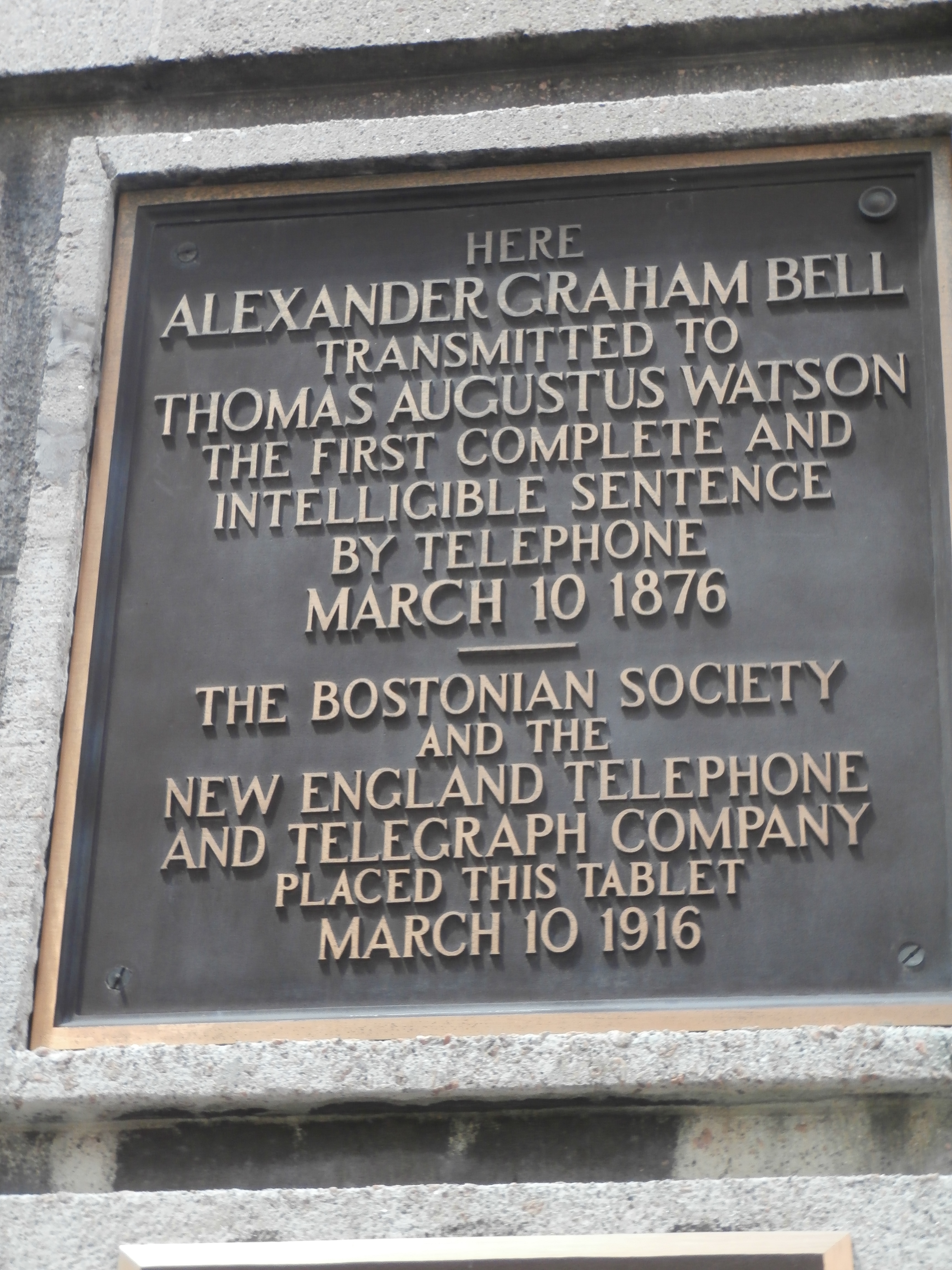
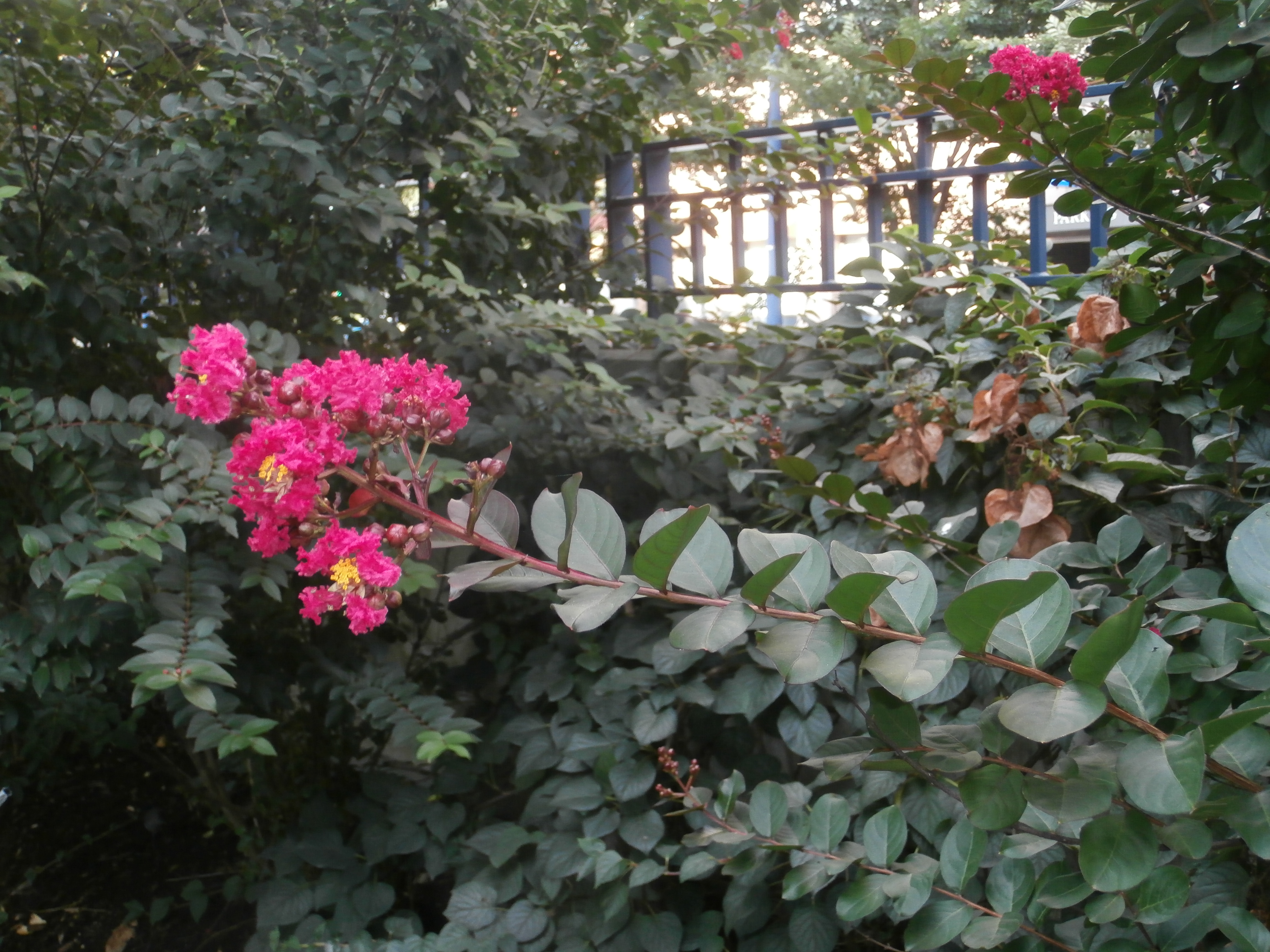
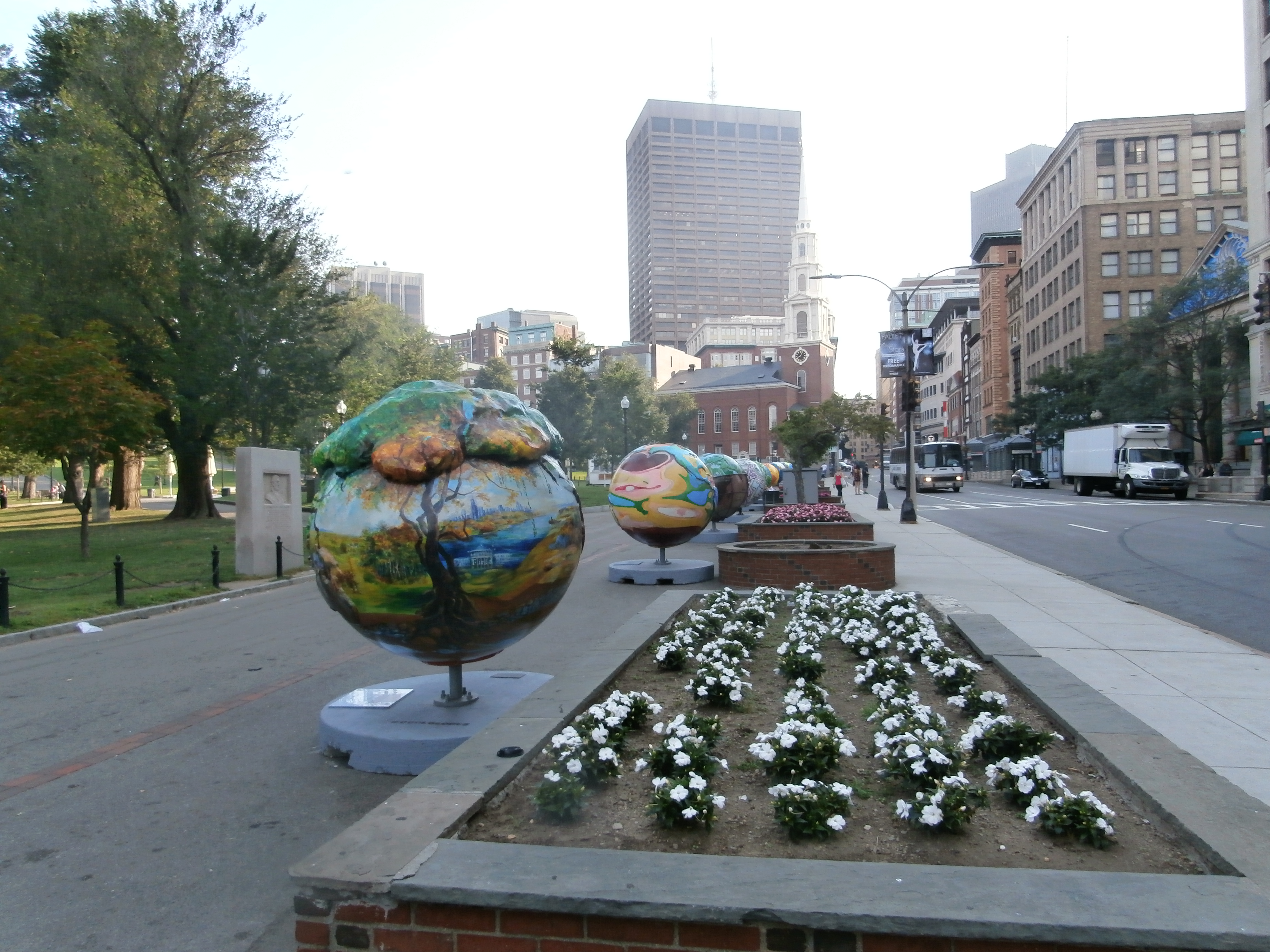
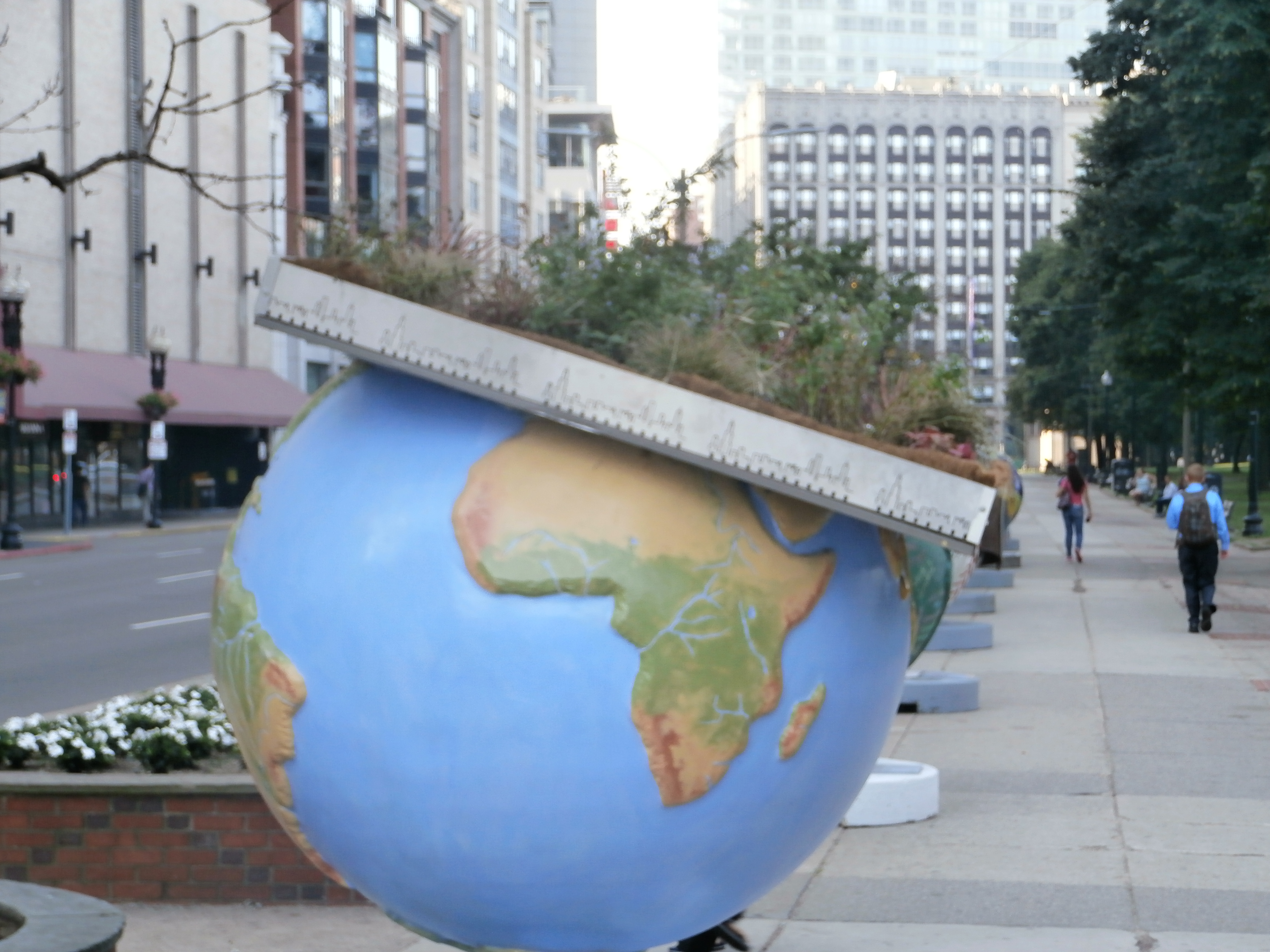
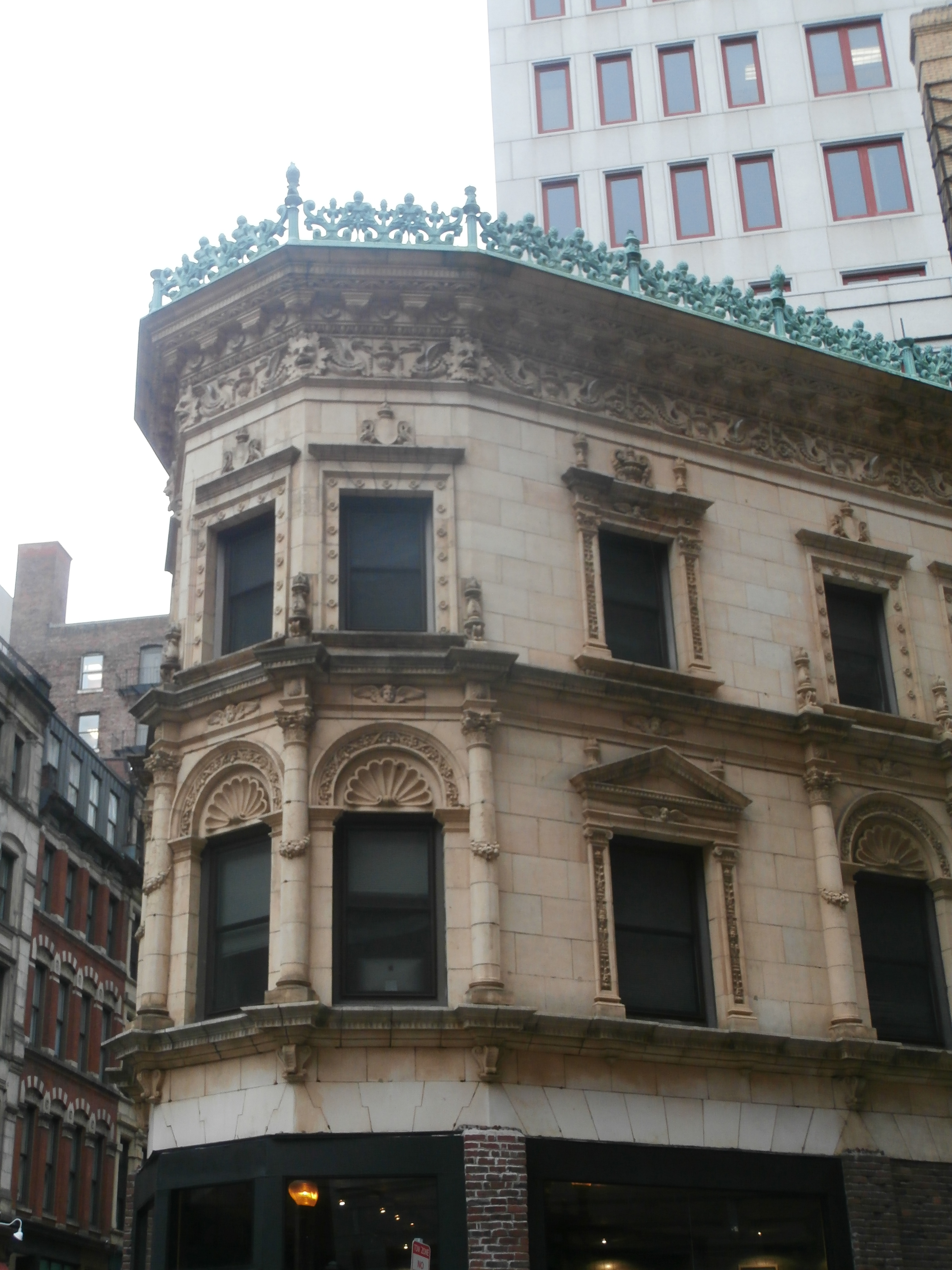
First is a plaque commemorating the discovery of the telephone, then a mysterious Greenway flower, extra pics of the traveling save-the-earth exhibit, a tai chi session at the Frog Pond, pensive frogs, interesting architecture near Downtown Crossing, and an early morning rooftop in Concord.

I love rooftops. Makes me think of Dickens.

watson-i-need-you

red-flower-yellow-center

globes-in-boston

earth-globe

tai-chi-in-the-park

deep-thoughts-frog-pond

near-downtown-crossing

early-morning-shadows

Read Full Post »

I liked this story by Penny Schwartz from the Sunday Globe. It’s about the painstaking work of restoring a magnificent synagogue built in the 17th and 18th centuries and destroyed by the Nazis in WW II.

“For the last 10 years, Laura and Rick Brown have been immersed in the art and architecture of Poland’s historic Gwozdziec synagogue. …

“Now, after a decade of research and building small-scale models, the Browns and their international team of 300 carpenters, artists, and students have created a nearly full-scale replica of the the triple-tiered roof and intricately painted ceiling and cupola of the Gwozdziec synagogue, considered one of the most magnificent, well-documented of the wooden synagogues of the era. …

“ ‘They really have done something miraculous,’ said Barbara Kirshenblatt-Gimblett, professor of performance studies at New York University’s Tisch School of the Arts, who was tapped to lead the museum’s exhibit development team. …

“The Browns’ approach to building, using traditional tools and techniques dating back to the time the synagogue was built, offered something beyond having a copy of the synagogue roof built as a prop, Kirshenblatt-Gimblett said. …

“Both sculptors, the Browns came to the Gwozdziec project as founders and directors of Handshouse Studio, an educational nonprofit in Norwell [Massachusetts] that replicates historic objects using authentic methods. …

“Looking back on the journey, Laura and Rick say they are humbled by the hundreds of people, including many MassArt students and graduates, who have given so much time to this project.

“They are grateful to MassArt for allowing them the flexibility to create courses designed for the project including a series of Lost Historic Paintings’ classes analyzing and replicating quarter-scale, then half-scale models of the Gwozdziec synagogue ceiling panels.

“The 85 percent scale replica represents more than the grandeur of a long ago synagogue, Laura said. ‘This object speaks to a very painful history that is still very alive,’ she said.” More.

Photo: Jonathan Wiggs/Globe Staff
Artist Rick and Laura Brown at their studio in Hanover, Massachusetts.

Read Full Post »

For architecture buffs everywhere, an article on a collaboration between Hariri Pontarini Architects and Gartner Steel and Glass that has led to an unusual place of worship in South America.

Lisa Rochon writes in Toronto’s Globe and Mail that starting last September “at the Gartner Steel and Glass testing facility in Bavaria, Germany, translucent panels of cast glass [were] mocked up. Artisans at Toronto’s Jeff Goodman Studio, working in close collaboration with Toronto’s Hariri Pontarini Architects, produced the thick, milky glass for a Baha’i temple on the edge of metropolitan Santiago, Chile.

“The protective embrace of the domed temple, to be defined by nine petals (or veils), will be fabricated of myriad shapes in cast glass, with 25 per cent of them noticeably curved. Luminous and white is what design lead Siamak Hariri had in mind; seen up close, they look like streams of milk frozen in place.

“It took years of testing and the rejection of hundreds of samples at the acclaimed Goodman Studio (which typically makes chandeliers or small-scale screens of glass) to arrive at the 32-millimetre-thick cast glass with matte finish. ‘That the design is finally being mocked up in Germany represents a major milestone,’ says Hariri. …

“The project is unique in the world, says Gartner’s managing director, Armin Franke, from his office in Germany. Hariri’s exacting specifications have presented many challenges. For one thing, the architects want only the most minimal silicon joints between the heavy cast-glass panels. The panels – made from countless glass rods laid on a sheet and baked at Goodman Studio – are stronger than stone, according to tests, to satisfy a Baha’i requirement that the building endure for 400 years, and to survive one of the most active earthquake zones in the world.”

I love how many players around the world are collaborating on the innovations behind this project.

Lots more on the project here and at the Baha’i website, here.

Photograph: Hariri Pontarini Architects. A computer-generated rendition of the Baha’i House of Worship under construction in Santiago, Chile.

Read Full Post »

For years, I’ve been a fan of Bikes Not Bombs, a local bike repair and training outfit that got its start providing donated bikes to poor people in Central America.

Now I find out that an architecture charity also likes Bikes Not Bombs — enough to donate time to renovate the shop.

The Christian Science Monitor and Cathryn J. Prince have the story.

“Inside the sleek steel and cement workshop of Bikes Not Bombs in Boston’s Jamaica Plain neighborhood, at-risk youths recondition bicycles before sending them on for use in developing countries.

“Halfway across the country at the University of Minnesota Amplatz Children’s Hospital, a ‘showcase suite’ shows how a child’s hospital room can be made less intimidating and more comfortable.

“The ‘1 percent’ built the bike-repair workshop. The ‘1 percent’ also built the hospital room.”

The 1% program of Public Architecture, based in San Francisco, “connects nonprofit groups in need of design assistance with architecture or design firms. The name for the group comes from the idea that if firms across the country donate just 1 percent of their time each year to charitable work it would equal 5 million hours. …

” ‘In a moment of ambitious insanity, I decided to start a nonprofit,’ says John Peterson, the founder and president of The 1%. …

“Most architecture and design firms, he found, were unfamiliar with the idea of doing pro bono work. Initially, holding design competitions was the only way to get firms to participate.

“ ‘But competition [projects] rarely get built,’ says Amy Ress, project manager for The 1% program. ‘We wanted to do projects that would get built.’

“Mr. Peterson launched The 1% in 2001. More than 10 years later, more than 1,000 architecture and design firms (between 3 percent and 5 percent of all American architectural firms) and 600 nonprofit organizations are participating. About 18 new firms join each month, he says.

“One of the earliest design ideas was The Station, which would serve as a gathering point for day laborers. Day laborers normally must hang out at spaces meant for other uses, such as gas stations and parking lots. Today a handful of official Day Labor centers exist across the country.”

More.

Photograph of John Peterson: The 1% program of Public Architecture

Read Full Post »

K. Emily Bond has a nice article at EcoSalon on the greening of architecture. (Thanks for the lead, ArtsJournal!)

“The trend of vertical gardening is up,” writes Bond, “as is the rise of the jolly green skyscraper. Easy on the eyes and easier on the planet, the trend of upward greenery is transforming our concrete jungles into ivied oases. …

“As watchers of modern eco architecture, of course, there does come a point when we ask what it is, exactly, we’re looking at. … Is it architecture, or vegitecture?

“That’s what the Barcelona City Council and one Spanish firm are calling this, the Green Side-Wall, ‘represent[ing] the birth of a novel type of construction in the field of vegitecture.’ ” See the photograph.

“An interior staircase lends access to the metal platforms throughout; a pulley system facilitates the transport of planters, nests, and other materials within the prefabricated steel frame.” More.

It’s all a bit complicated. But what fun!

Photograph: Ecosalon.com

Read Full Post »

Sometimes a new perspective is called for. This is the hallway staircase, from below.

It’s a little weird how I discovered this might make a good shot.

Normally I do my back exercises in the dining room on a yoga mat, but because I hoped to catch the trash and recycling guys and give them their New Year’s envelope, I did the exercises in the hall where I could hear if a truck stopped. Hence.

P.S. I caught them.

Read Full Post »

Dr. Paul Farmer, the subject of a great Tracy Kidder book called Mountains Beyond Mountains, has spent many years delivering medical care — and working to alleviate poverty — in remote areas of Haiti. His nonprofit organization, Partners in Health, takes the word “partners” seriously. The teams do not tell the locals what is good for them but makes a point of learning from them and helping them get what they need.

In recent years, Farmer has been in demand in other countries, too. One focus area has been Rwanda. I liked a recent Boston Globe article on the approach to building a Partners in Health hospital there.

“The designers quickly realized that the challenge was not simply to draw up plans, as they had first thought, but rather to understand the spread of airborne disease and design a building that would combat — and in some cases sidestep — the unhealthy conditions common to so many hospitals.

“Learning from health care workers that hospital hallways were known sites of contagion, poorly ventilated, and clogged with patients and visitors, MASS Design decided that the best solution would be to get rid of the hallways. Taking advantage of Rwanda’s temperate climate, they placed the circulation outdoors, designing open verandas running the lengths of the buildings. …

“When it came to building, MASS Design looked at the Partners in Health model of involving local poor communities in health care, and realized that they could apply the same ideas to the construction process. The hospital was built entirely using local labor, providing food and health care for the workers. Unskilled workers received training that would help them get more work; and skilled laborers, notably the Rwandan masons who built the hospital’s exterior from carefully fitted together local volcanic stone, refined their craft and found themselves in demand all over the country. The construction process also beefed up local infrastructure — new roads and a hydroelectric dam — creating more jobs and literally paving the way for future projects.”

To paraphrase what Farmer often says, the biggest challenge to health is poverty. Read more.

Update on the designers from the June 19, 2012, Boston Globe.

Read Full Post »

« Newer Posts