Feeds:
Posts
Comments

Posts Tagged ‘art’


Photo: Michael Miller / OCA.
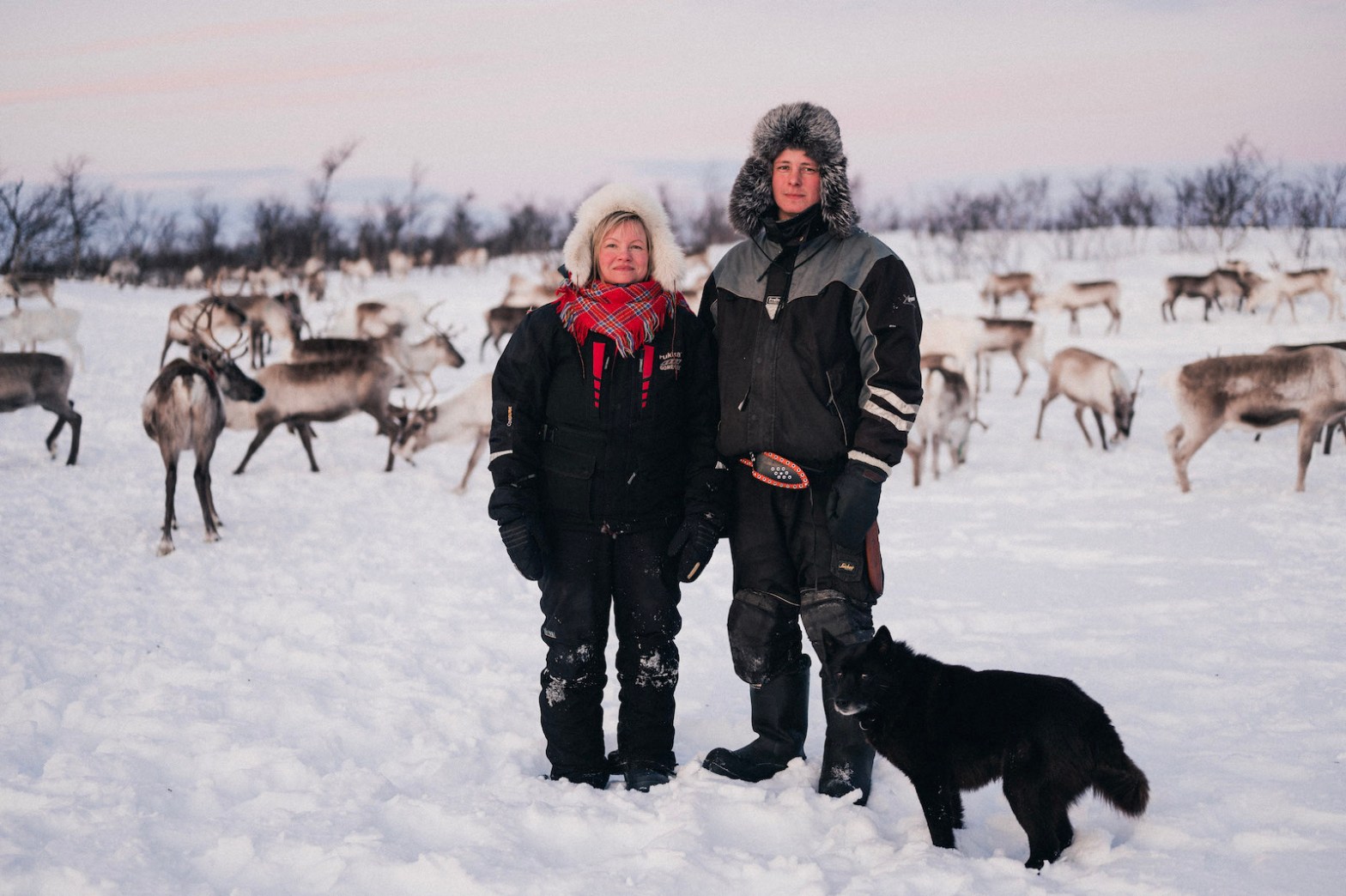
Venice Biennale Sámi Pavilion artist Máret Ánne Sara and her brother, Jovsset Ante Sara.

The Sámi are indigenous people of Finland, Norway, and Sweden. Today’s post is about the art some of them have chosen to present to the world at the Venice Biennale this year.

Anna Souter reports at Hyperallergic, “Sámi artist Pauliina Feodoroff says that ‘to be Indigenous is to be site-specific.’ For centuries, colonial governments have deliberately represented the site-specific Indigenous landscapes of the European Arctic as empty wildernesses. In reality, these are the ancestral lands of the Sámi people. Far from empty, they are ecologically diverse sites of culture, care, and collective endeavor. 

“At this year’s Venice Biennale, the Nordic Pavilion will be transformed for the first time into the Sámi Pavilion. The project undermines the nationalistic structure behind the Biennale, instead recognizing the sovereignty and cultural cohesion of Sápmi, the Sámi cultural region, which covers much of the northernmost areas of Norway, Sweden, and Finland, as well as part of Russia. The three contributing artists — Pauliina Feodoroff, Máret Ánne Sara, and Anders Sunna — draw attention to the ongoing colonial oppression and discrimination experienced by Indigenous Sámi under local and national governments across the Nordic region. 

“Feodoroff’s family members are Skolt Sámi reindeer herders, originally from the part of Sápmi within the Russian border. They were pushed into Finland after World War II, into a reputedly toxic area ravaged by mining and fallout from Chernobyl. Feodoroff’s work for the Sámi Pavilion will combine performance and video installations to explore non-colonial modes of physical expression, emphasizing the close relationship between the body and landscape in Sámi culture.

“Feodoroff has no artist studio; instead she sees the landscapes with which she works as her expanded studio. Her creative practice is inseparable from her work as a land defender. … She laments and resists the logging of old, slow-growth forests for one of Finland’s key exports: toilet paper. The bathos is not lost on Feodoroff and local Sámi reindeer herders, who are bypassed by the transaction, gaining nothing but a degraded landscape and poorer survival rates for their reindeer. 

“To protect and restore remaining old-growth forests, Feodoroff is attempting to use the art market to buy back land to be owned and managed collectively by Sámi people. Purchasing one of her works is framed as a contract through which the collector buys the right to visit an area of land in Sápmi; in return, the artist pledges to protect that land. …

“In 2015, the Norwegian government introduced mass reindeer culling quotas for Sámi herders, hitting younger herders such as artist Máret Ánne Sara’s brother particularly hard. Throughout a lengthy and expensive legal process, Sara has supported her brother’s appeal against the ruling, showing solidarity and resistance through her artistic project ‘Pile o’Sápmi’ (2016-ongoing).

“In 2016, Sara piled 200 reindeer heads outside the Inner Finnmark District Court and topped the pile with a Norwegian flag. The work refers to the 19th-century white settler policy of controlling the Indigenous population of Canada by slaughtering millions of buffalo and piling their bones in enormous heaps. …

“Sara’s work emphasizes that reindeer herding is at the heart of both Sámi culture and the complex ecologies of Sápmi. Her installation for the Sámi Pavilion incorporates preserved dead reindeer calves as bittersweet symbols of both loss and hope. …

“Anders Sunna’s painting and sound installations speak directly to his own history. ‘My paintings tell stories of what happened to my family,’ he says. ‘Today our family has no rights at all, we have lost everything.’ Located on the Swedish side of Sápmi, Sunna’s family has been refused its ancestral right to herd reindeer because of the competing interests of local Swedish landowners. … Sunna’s family has been practicing what he describes as ‘guerrilla reindeer herding’ for 50 years.

“Sunna’s paintings borrow motifs from international protest movements, news footage of riots, and his artistic origins as a graffitist. His move into the fine art world is helping to bring his family’s story to an international audience. For the 2022 Venice Biennale, he has created five paintings depicting episodes from the last five decades of the Sunna family’s struggles. … Sunna tells stories of oppression and even despair in the face of relentless attacks on his family’s rights, but he also hopes for a better future for the next generation.

“Before I visited Sápmi to meet the Sámi Pavilion artists in February 2022, I felt disillusioned with the power of the art world to enact change; despite countless artworks raising awareness of climate breakdown, for example, society has failed to make meaningful changes. But across Sápmi, I met individuals who believed in the capacity for art — and for the Venice Biennale — to make a difference. …

“The stories told in the Sámi Pavilion have rarely been presented on an international stage; and though often deeply personal, they speak to issues that affect us all. The Arctic is warming four times faster than the rest of the world; it is a litmus test for our environmental future. Indigenous knowledge and Indigenous land management could lead us toward a safer ecological future.”

More at Hyperallergic, here. For related posts, search on “Sámi” at this blog.
Read Full Post »

Photo: Harout Bastajian.
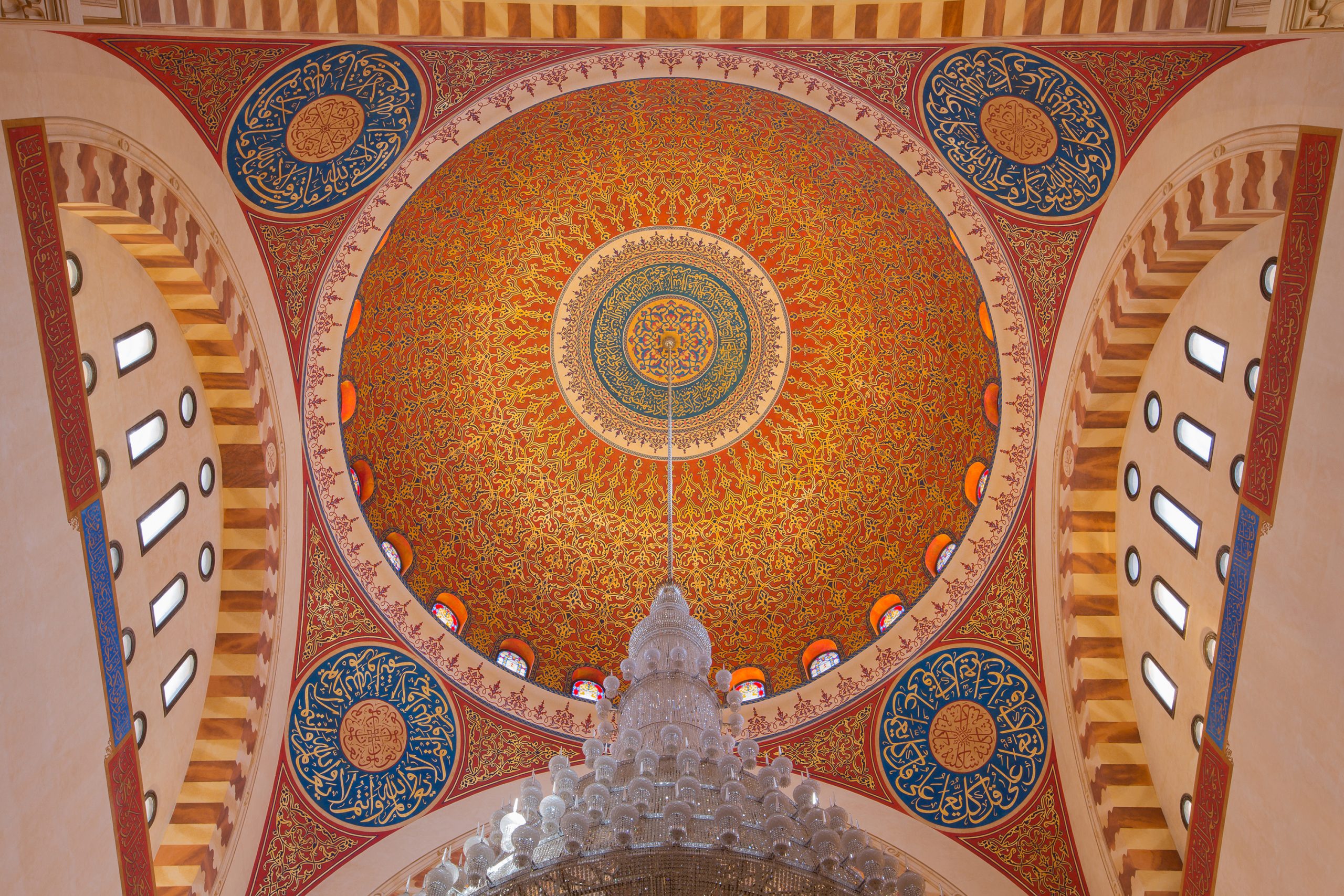
The Mohammad al-Amin Mosque, also referred to as the Blue Mosque, in downtown Beirut, Lebanon.

Some years ago, I read Jason Elliot’s fascinating book about his travels in Iran, Mirrors of the Unseen. One thing that stuck with me was his theory about caves and how they might have influenced Islamic art and the dome shape of mosques. I wrote about it before.

Today I chose an article on a man who is often called in to paint or repaint domes, both Islamic and Christian. His own theories are about which types of imagery are best for which sects.

Hrag Vartanian reports at Hyperallergic, “At the center of downtown Beirut is the prominent Mohammadal-Aminmosque, the largest mosque in Lebanon. …

“Inside is a stunning painted dome. It is the work of an artist who has gained a reputation as a leading painter of decorative ornament, particularly in mosques. What may surprise many people unaware of the rich cosmopolitan tradition of Islamic religious art is that the artist, Harout Bastajian, is not Muslim himself. When people ask him how a Christian is creating the decorative program of a mosque, he likes to answer, ‘God works in mysterious ways, brings us all together to decorate his house of worship.’

“He embarked on this artistic path back in 2004, when he was asked by the Hariris, a prominent business and political family in Lebanon, to decorate the newly inaugurated Hariri mosque in Sidon, Lebanon. …

“The journey into painting in sacred spaces has been inspiring for the artist. Not only has he painted the interiors of mosques but he’s also been involved in the restoration of Roman Catholic and Armenian Catholic buildings in Lebanon. He remembers his first mosque commission in Sidon well. ‘When I went in and saw the huge dome, which is like 900 square meters [roughly 9,687 square feet], I couldn’t sleep that night.

‘I was thinking, “How am I supposed to do this?” And then I was playing basketball in my backyard. I saw the basketball, the shape, how it’s divided. So I started thinking, how can I divide the dome and try to manage it?

” ‘And it was easy. Within two months I was able to finish the project with my team,’ he explains. … ‘I go through history, through different schools, and I try to come up with something somehow contemporary and work on it. And I will always use the golden ratio as a fundamental for my work. Regarding the colors, I don’t see one color. I always work with layers of colors.’ …

“He currently has a team of six or seven colleagues who work with him full time, and a graphic designer who helps organize the project plan since Bastajian doesn’t like to work with digital tools. …

“In the last 18 years, Bastajian says, he has painted 37 full and half domes, which translates into over a dozen mosques and many secular projects as far afield as Nigeria, the United Arab Emirates, Saudi Arabia, Kuwait, and Switzerland.

“ ‘[When] I did my first few mosques, I had to travel a lot and check other mosques in order to understand it all better. Then I took some courses in Islamic design and Islamic art [and] after a while it became part of me. I can see the end result only by doing the sketches and preparing the designs.’ …

“He conceives each project from the ground level, where visitors will experience the work, incorporating a mixture of geometric designs, along with vegetal and floral motifs, to create a rich web of patterns. ‘The shape of the dome itself, it has something divine in it because it’s circular. It doesn’t have a start or an end,’ Bastajian explains. ‘And the light that comes in from the windows, they call it the light of God. The dome itself, you feel that it’s flying, it’s something divine.’

“[The artist] is sometimes inspired by other works, such as the designs from the Topkapi Palace in Istanbul, which influenced his work for the al-Aminmosque in Beirut. He adjusts the designs according to the sect: Ottoman designs tend to work better for Sunni spaces, while Shia holy spaces tend to take their aesthetic cues from Persian-influenced styles and geometry.”

More at Hyperallergic, here. No firewall.

Read Full Post »

Photo: Asortymenta Kimnata.
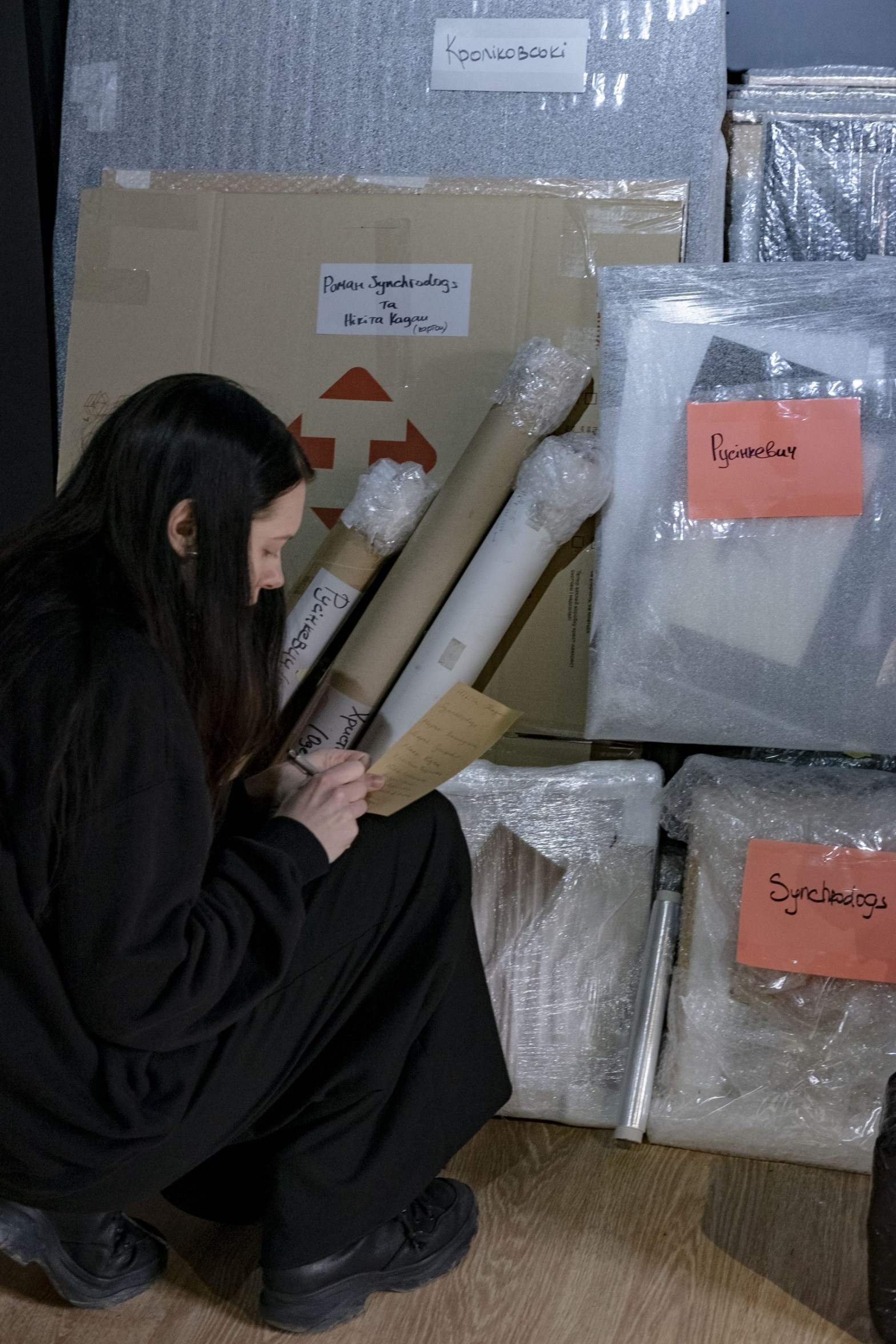
People are working ’round the clock to save Ukraine’s museum collections.

Everyone is doing their part. You have probably read about groups working to transfer zoo animals from Ukraine to a safer country. In today’s story, we learn what Ukraine’s museum workers are doing.
Lisa Korneichuk at Hyperallergic interviews the founders of Museum Crisis Center on their work to safeguard museum staff and save Ukraine’s cultural heritage.
“Many art and cultural monuments in Ukraine fall victim to Russia’s full-scale invasion along with civilians. [Russian] troops have damaged libraries, churches, and a mosque, and shelled local historical museums in Chernihiv, Okhtyrka, Ivankiv, an art museum, architectural monuments in Kharkiv, and many more. As of this writing, they dropped a 500-kilo bomb on the Donetsk Regional Drama Theatre in Mariupol, where over a thousand people were hiding from the shelling. 

While the Ukrainian governmental institutions are focused on saving the national art collections, local heritage and contemporary art remain vulnerable to the war threat.

“Moreover, museum teams in the region often risk their lives staying in the war zones to guard exhibits. To save overlooked Ukrainian heritage from vanishing, local citizens, cultural workers, and NGOs organize independent initiatives and evacuate art that has fewer chances to survive the war. 

“On March 3, Olha Honchar, director of Lviv museum ‘The Territory of Terror‘ asked on Facebook if there were any funds supporting Ukrainian artists and museums in wartime. She later updated her post: ‘Meanwhile, we start making such a fund ourselves.’ In partnership with the team of the NGO Insha Osvita, Olha launched Museum Crisis Center, a grassroots initiative aimed at helping museum workers in the emergency regions and evacuating artworks. …

“The main task of the center was the rapid financial and organizational support of museum workers, many of whom found themselves face to face with the war and without a means to support themselves. The center has to look for ways to get around long bureaucratic processes to aid those who need it immediately.

Hyperallergic spoke to the Museum Crisis Center co-founders Olha Honchar and Alyona Karavai over Zoom about the balance between legal requirements and efficiency in times of war and their critical stances on international humanitarian institutions. This interview has been edited for length and clarity.

Hyperallergic: Tell us exactly what your organization is doing?

Olha Honchar: We have offices in Ivano-Frankivsk and Lviv [cities in the west of Ukraine]. We joined our efforts and found more people to launch the Museum Crisis Center, or the Museum Emergency. I coordinate quick support for museum workers in war-torn areas that are under attack. We provide donations for basic things, like food, water, medicine. Many museum workers haven’t received salaries, their expenses increased. Our goal is to ensure that these people can survive the war. …

“We are developing an efficient algorithm for our work because within the bureaucratic Ukrainian system, it’s quite difficult to respond to people’s needs quickly. Everything is designed for a long bureaucracy. But in many regions we are working with there are no accountants, the treasury is bombed, or the culture department is not operating. Therefore, the only way to help is to send money directly on a personal card. Our task is to make it transparent and convince donors that help is received by those who need it.

“The next step will be the reconstruction of museums and infrastructure, but these are large-scale things. At the moment it is crucial to support teams and people so that there is someone to do the reconstruction later.

H: You are also involved in the evacuation of works, focusing on grassroots initiatives and art projects that will be the last to come to the attention of government agencies for cultural heritage.

Alyona Karavai: Or won’t come at all. The other day we met with the Minister of Culture and they said that they were focused on objects that are defined as being ‘of cultural value’ under Ukrainian law, i.e. objects that are 50 years old and older. Their primary mission is to save large national collections. Thus, they are unable to help even the small state museums which they have under their control. Grassroots initiatives and contemporary art are generally beyond their sphere of influence. We [NGO ‘Insha Osvita’] evacuate works from artists’ studios, private collections, and art centers. 

H: How often are you asked for help and do you carry out any selection of works?

AK: There is no selection. We help everyone we can. We’ve received 17 requests for assistance, so far we’ve fulfilled six. One request was from Mariupol, but it was clear that we could no longer help there. There are areas where we are powerless. …

OH: We help museums that we have personal contacts with. Our monitoring team includes museum workers [and] directors of centers, who call each other and gather information about needs. It is very important for us to do this through proven contacts because now there are many suspicious situations, fake news.

“People are afraid to say what they have in museum collections because it is unclear for what purpose this information can be gathered. That’s why we rely on the trusted network and work through the close contacts I have made during my career, including as the director of the ‘Territory of Terror.’ …

H: How do you evacuate artworks?

AK: We have a few volunteers on the ground. There are some people in Kyiv, in Odessa who help to evacuate artworks by buses. We’ve been looking for trucks. It takes a while to find any, we are not a transport company, we have never done that before. There were moments when we found a car and then it dropped [out] at the last minute. The situation on the roads is changing fast. So if we were able to use a route yesterday, it does not mean that we can go there tomorrow.”

More at Hyperallergic, here. No firewall.

Read Full Post »

Photo: Peter Aaron/OTTO.
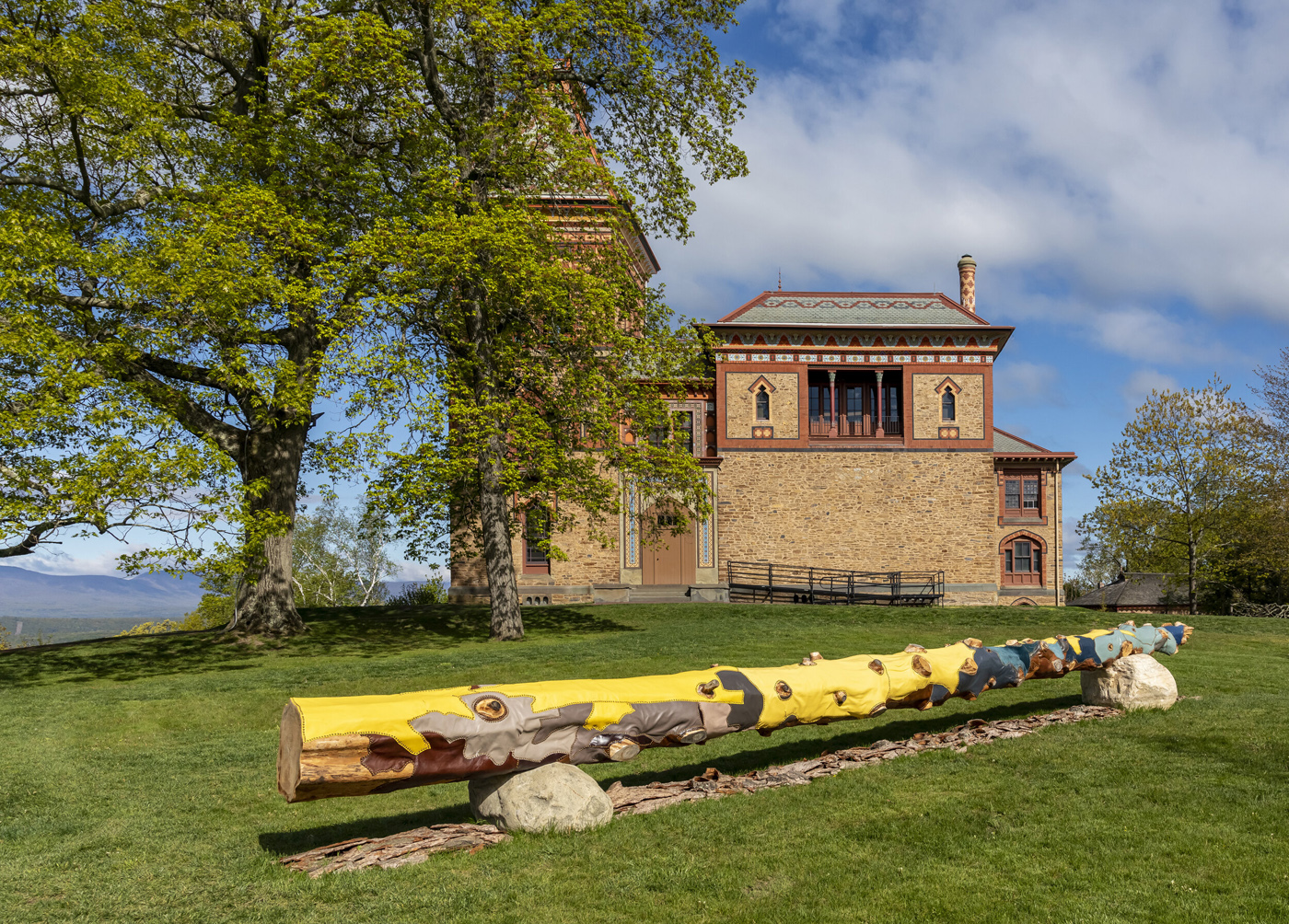
Jean Shin’s installation “FALLEN” at the Olana State Historic Site, part of the recent “Cross-Pollination art show.

I don’t know if growing up near the Hudson River has anything to do with it, but I’ve always loved the monumental nature paintings of the Hudson River School. In recent years, different kinds of art have made the region famous, including art shown at Dia Beacon and the offbeat Visitors film screened at the ICA in Boston and elsewhere. (That’s the one with the Icelandic musicians playing haunting music in the bathtubs and salons of a ruined Hudson River mansion.)

Not far from Rokeby, the ruin in question, another mansion has been turned into a museum called Olana, and today’s post is about putting its classic paintings together with more modern conceptions of nature.

Sarah Rose Sharp wrote at Hyperallergic last October about Cross Pollination, “a collaborative exhibition that spans institutions and centuries, to put artists in conversation with each other on the topic of ecology — and hummingbirds.

“The exhibition is organized between the Olana Partnership at the Olana State Historic Site (once the home of Frederic Church), the Thomas Cole National Historic Site, and Crystal Bridges Museum of American Art in Arkansas. The historic presentations include 16 paintings from a series of hummingbirds and habitats — The Gems of Brazil (1863-64) — by naturalist and painter Martin Johnson Heade (1819-1904).

“This Audubon-like survey of Brazilian hummingbirds — and the resulting writing on the artist’s part to protest the overhunting of their populations — serves as the aesthetic and philosophical inspiration for a series of new works commissioned for the exhibition. The exhibition also includes paintings by Thomas Cole and Frederic Church, as well as botanical works on both paper and porcelain by Emily Cole, Cole’s daughter, and Isabel Charlotte Church, Church’s daughter. This generational affair also features some highlights from natural specimens collected by Thomas Cole and Frederic Church, including items from the Church family’s extensive collection of bird eggs.

“The exhibition is presented simultaneously at both Olana State Historic Site in Hudson, New York, and the Thomas Cole National Historic Site in Catskill, New York.

“With these 19th-century collections that focused so intently on natural systems as their inspiration, a cohort of 21st-century American artists present works in response. The contemporary artists are known to take on issues of biodiversity, habitat protection, and environmental sustainability, and contributions include new works by Rachel Berwick, Mark Dion and Dana Sherwood, Lisa Sanditz and Emily Sartor, and Jean Shin.

“On location at the Thomas Cole Site, ‘The Pollinator Pavilion’ is a public artwork by Mark Dion and Dana Sherwood created for the exhibition, where pollinators and humans can share the same space. Jean Shin used the remains of a fallen hemlock tree at the Olana site to create a memorial artwork in its memory, titled ‘FALLEN’ (the tree died of natural causes). …

“Ironically, though Heade, Cole, and Church advocated for the preservation of natural spaces, the fad of biological specimen collections like the ones being presented fueled a market for hunting the birds that Heade idealized. Even these days, as evidence of our excess mounts in flaming piles on land and sea, it seems we can still hardly even agree that the planet is a finite resource, let alone determine who is entitled to take any little piece of it that catches their eye. Perhaps this exhibition [holds] the seeds of change within it.”

More at Hyperallergic, here.

The video below did a pretty good job of educating me, but it’s painful. The “10-Minute” professor doesn’t ultimately shy away from our destruction of nature and native tribes.

Read Full Post »

Photo Reflections

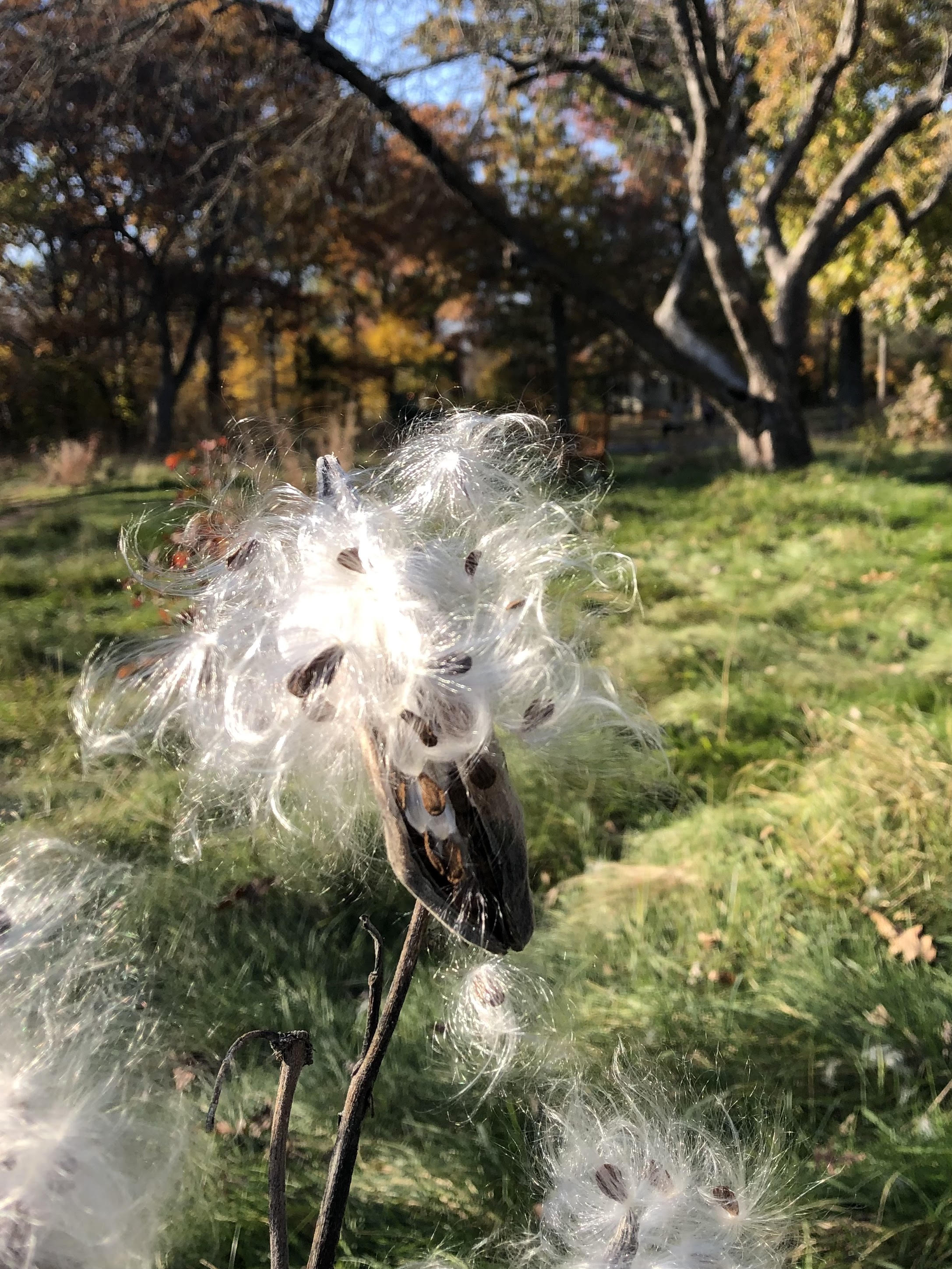
The next time that I post photos, I hope I can include some action around the bird feeder. Although there are experts who recommend feeding the birds year-round, I usually wait to put seeds in the feeder until it’s really hard for birds to find other food. As of this moment, they are still having a good time with all the berries and naturally occurring seeds in our yard.

I continue to take outdoor walks in the cold, identifying birds with my Merlin app for birdsong. I’m also working with a grandson to learn more about birds through Wingspan, the board game. (I blogged about it here but didn’t understand then how difficult it is to learn the rules.)

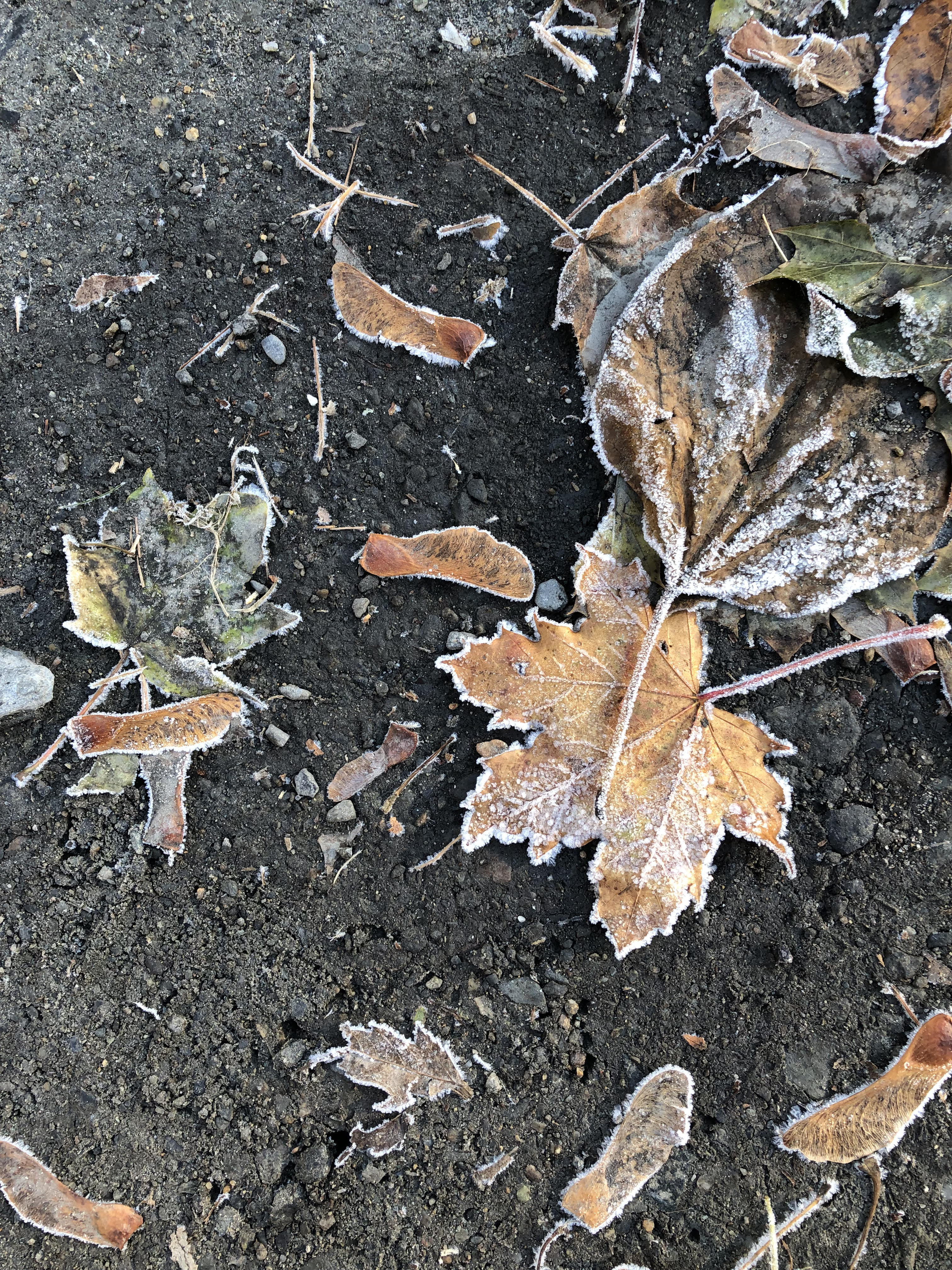
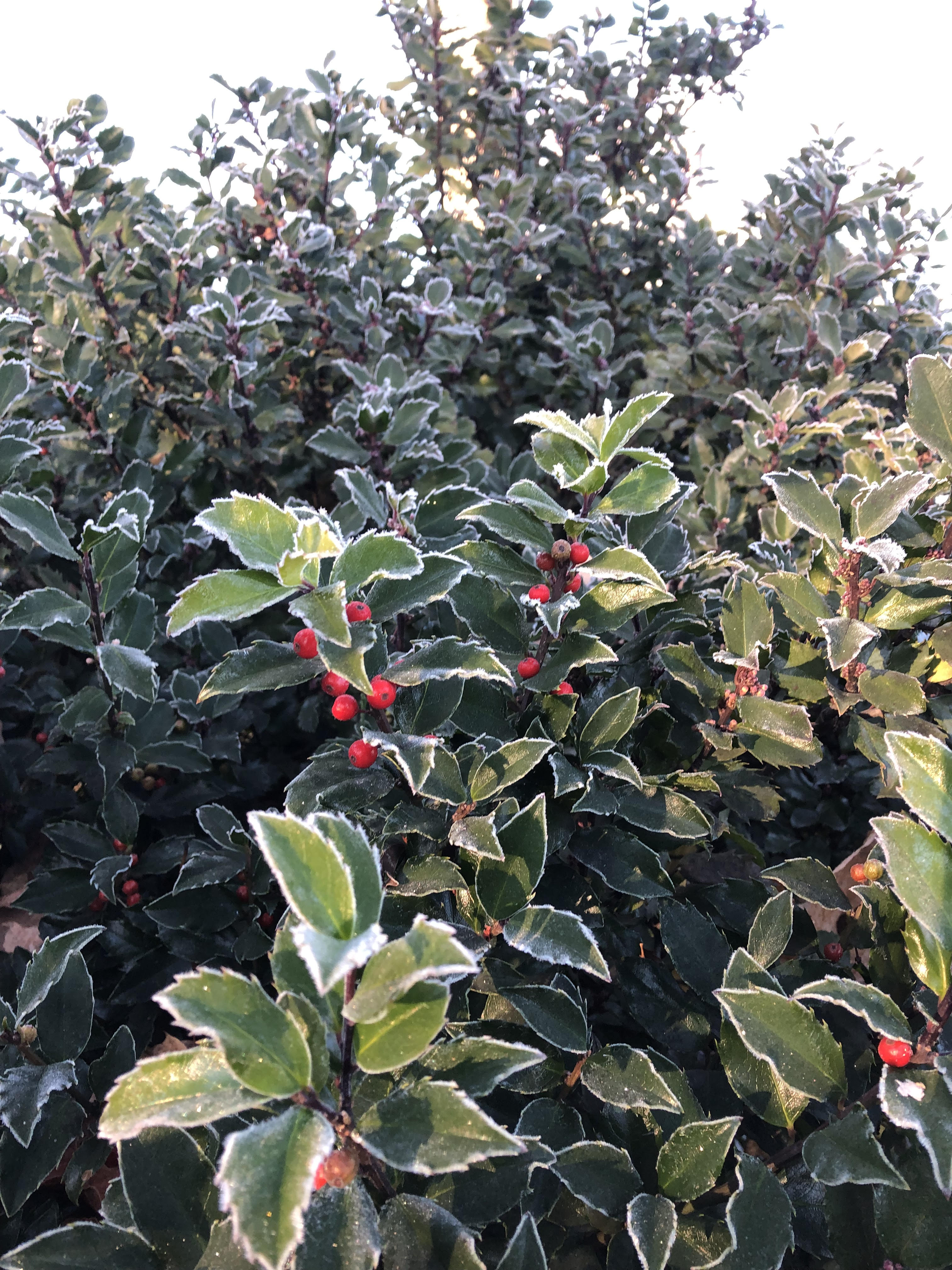
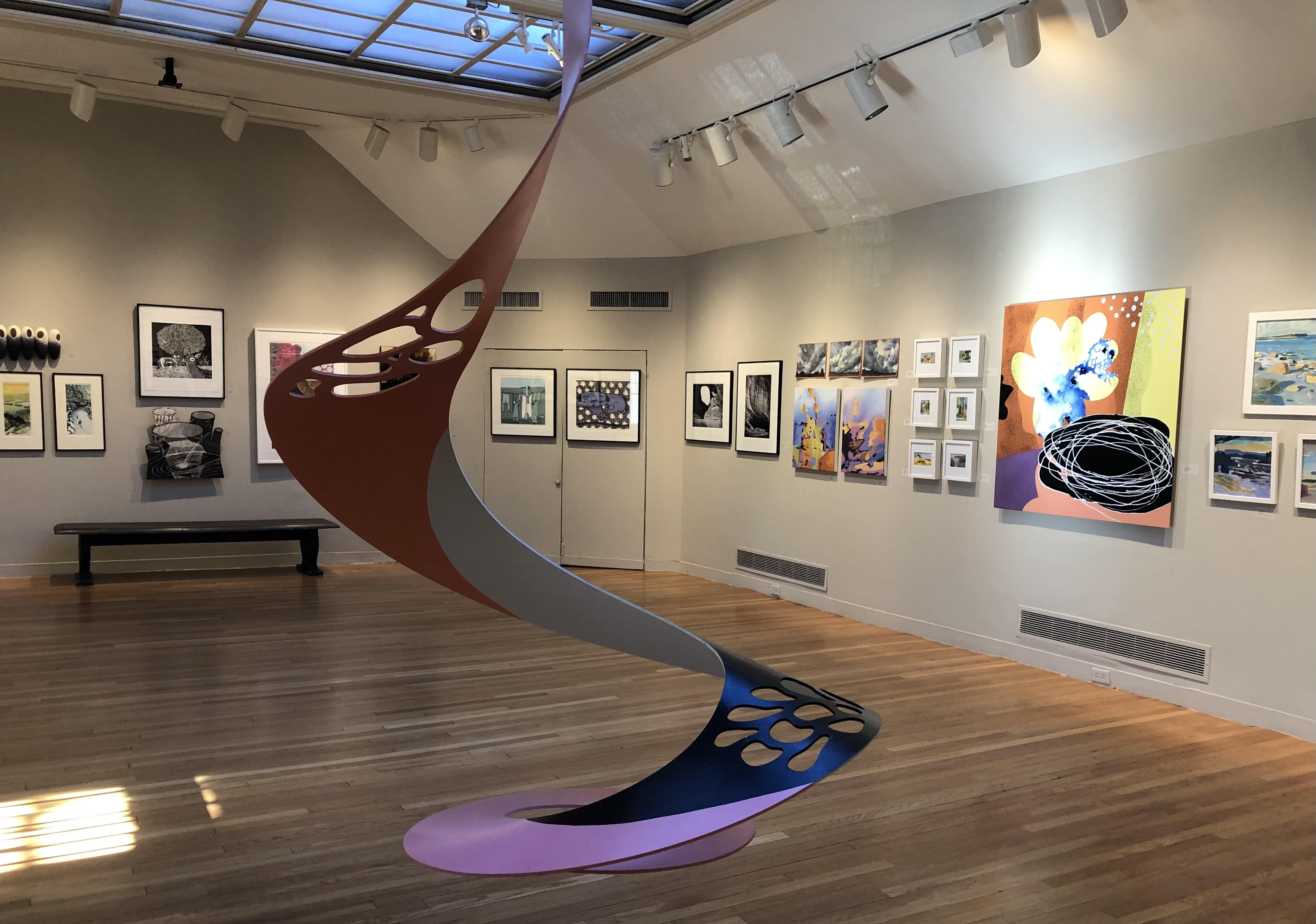
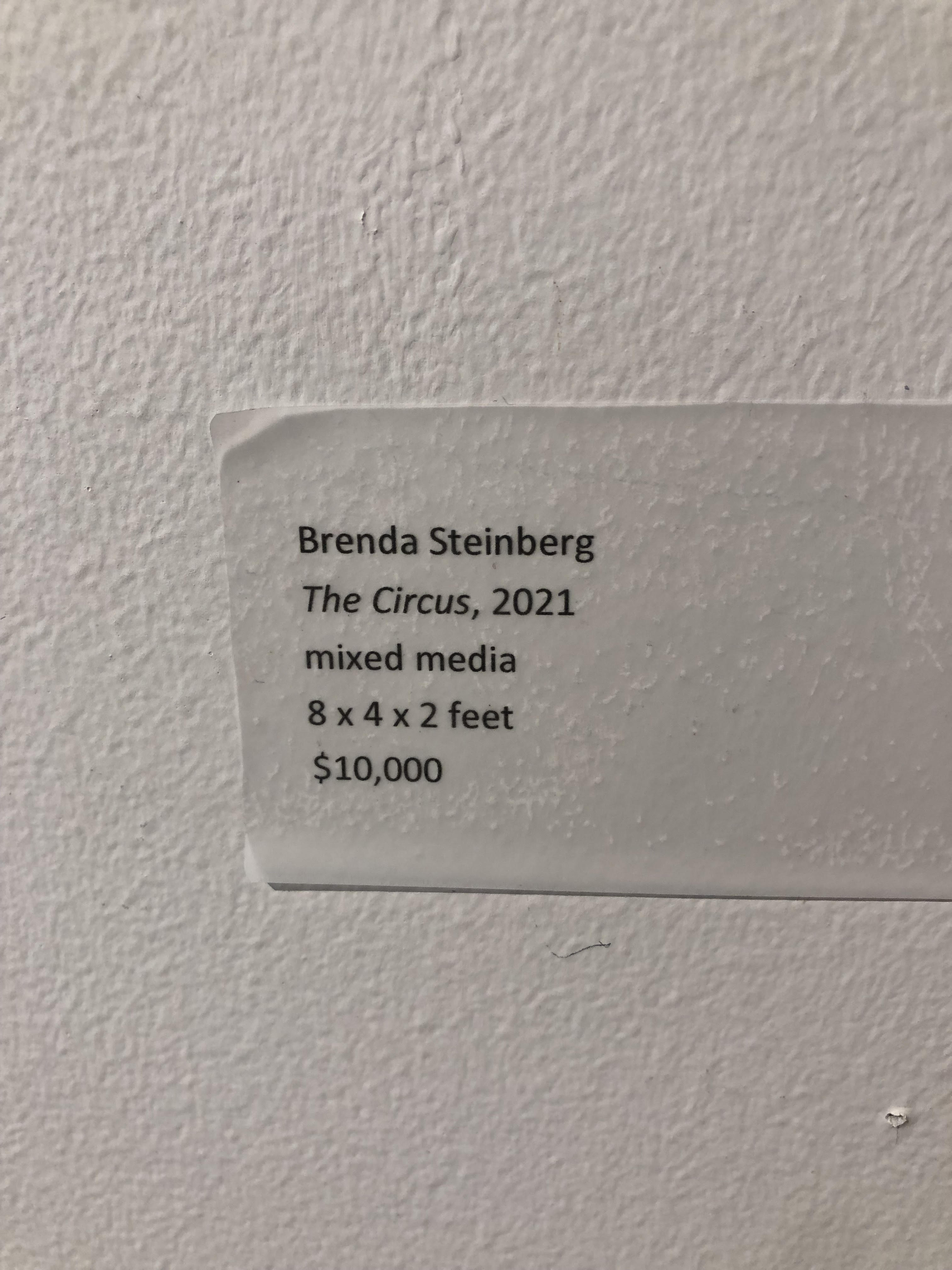
Here are a few more photos: from cold, frosty walks; from a nice, warm art gallery featuring a circus of skate-egg-case performers; and from Kristina’s visit to balmy North Carolina.

Read Full Post »

There were quite a lot of opportunities for photos on sunny October days this year, and I’m not even counting funny pictures from Halloween in Providence, where one grandchild was Harry Potter, another was Princess Aurora, Suzanne was the Fairy Godmother from Disney’s Cinderella, and Erik had turned into a vampire after getting vaccinated (as some would have you believe).

I didn’t get to see my young Captain Marvel and her scary brother the Mummy in person. Fortunately, their mom sent a dramatic action shot.

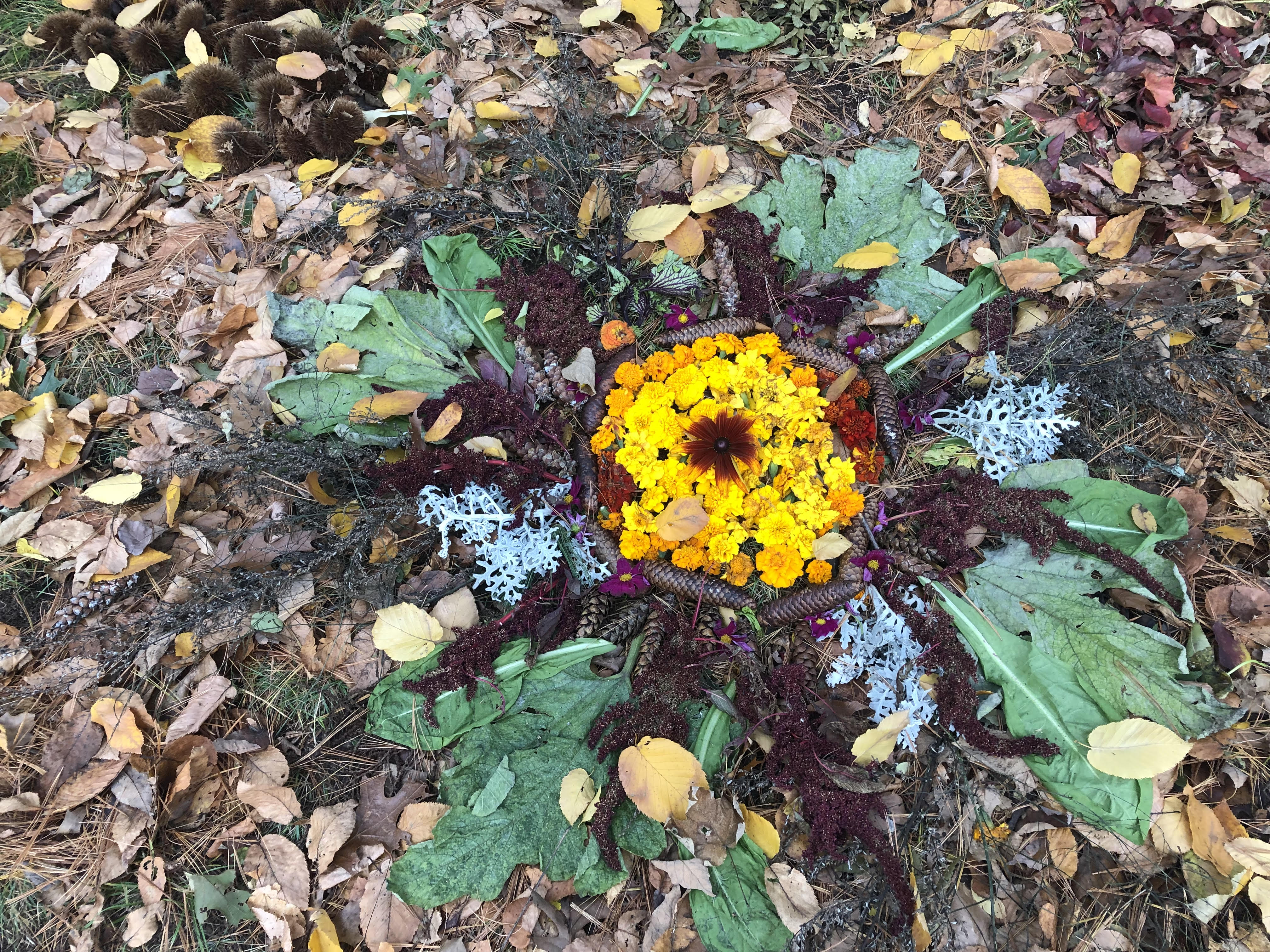
I do try to be a bit restrained with family photos on social media, so today I will show you other shots I’ve collected. The photo above is of a kind of mandala that a Providence resident is in the process of creating near Blackstone Park. She encourages passersby to add something. I added more red leaves.

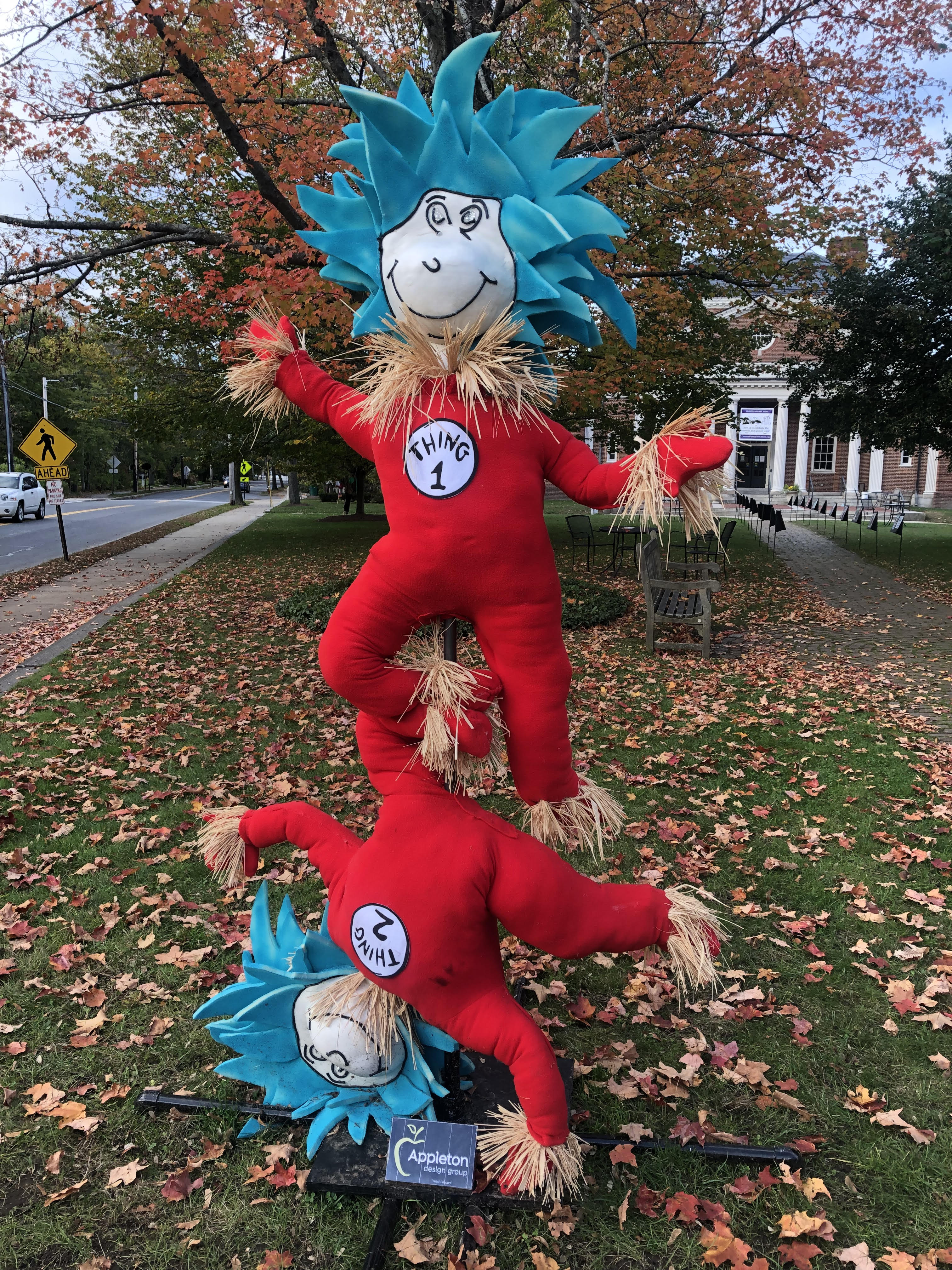
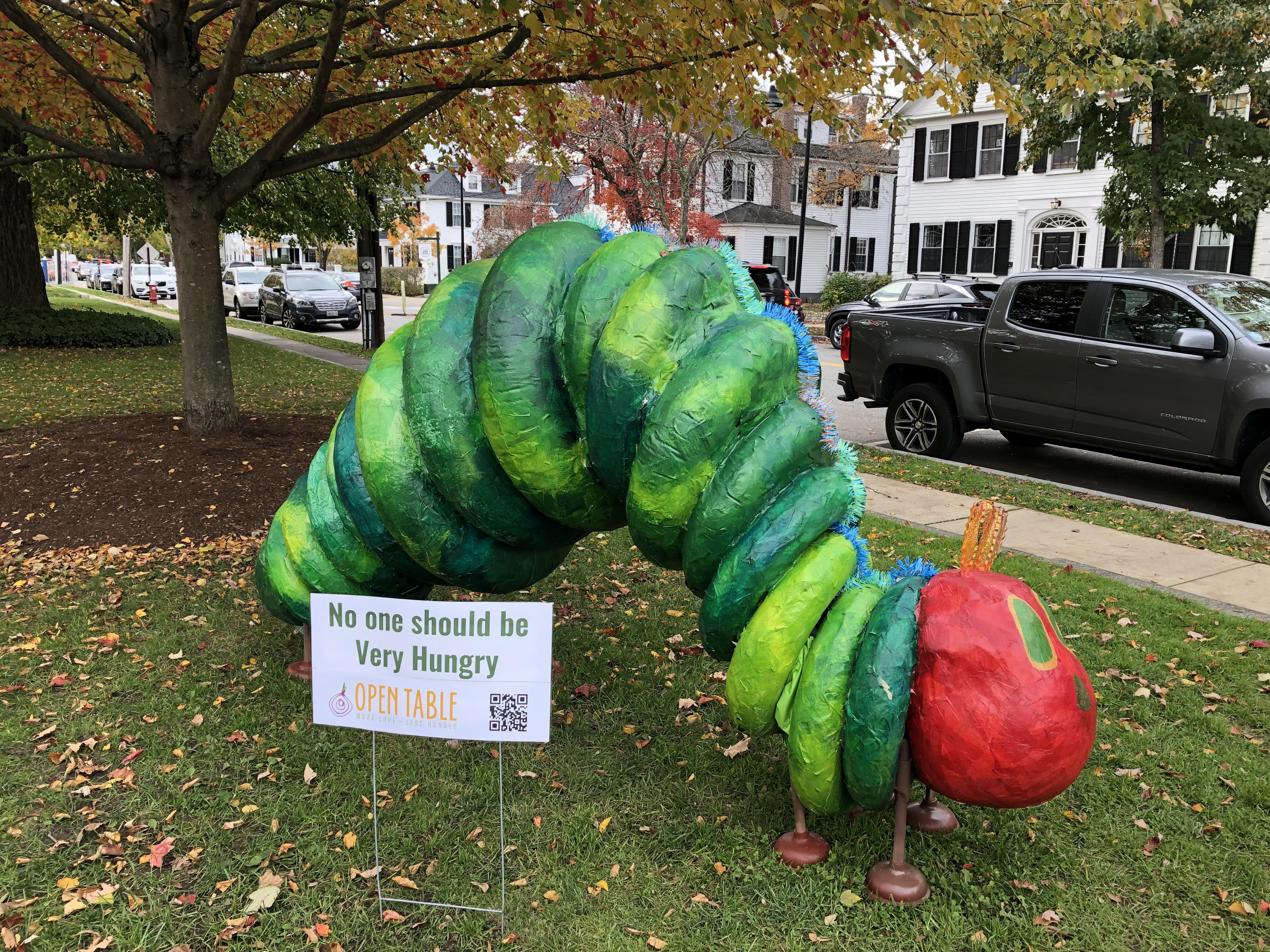
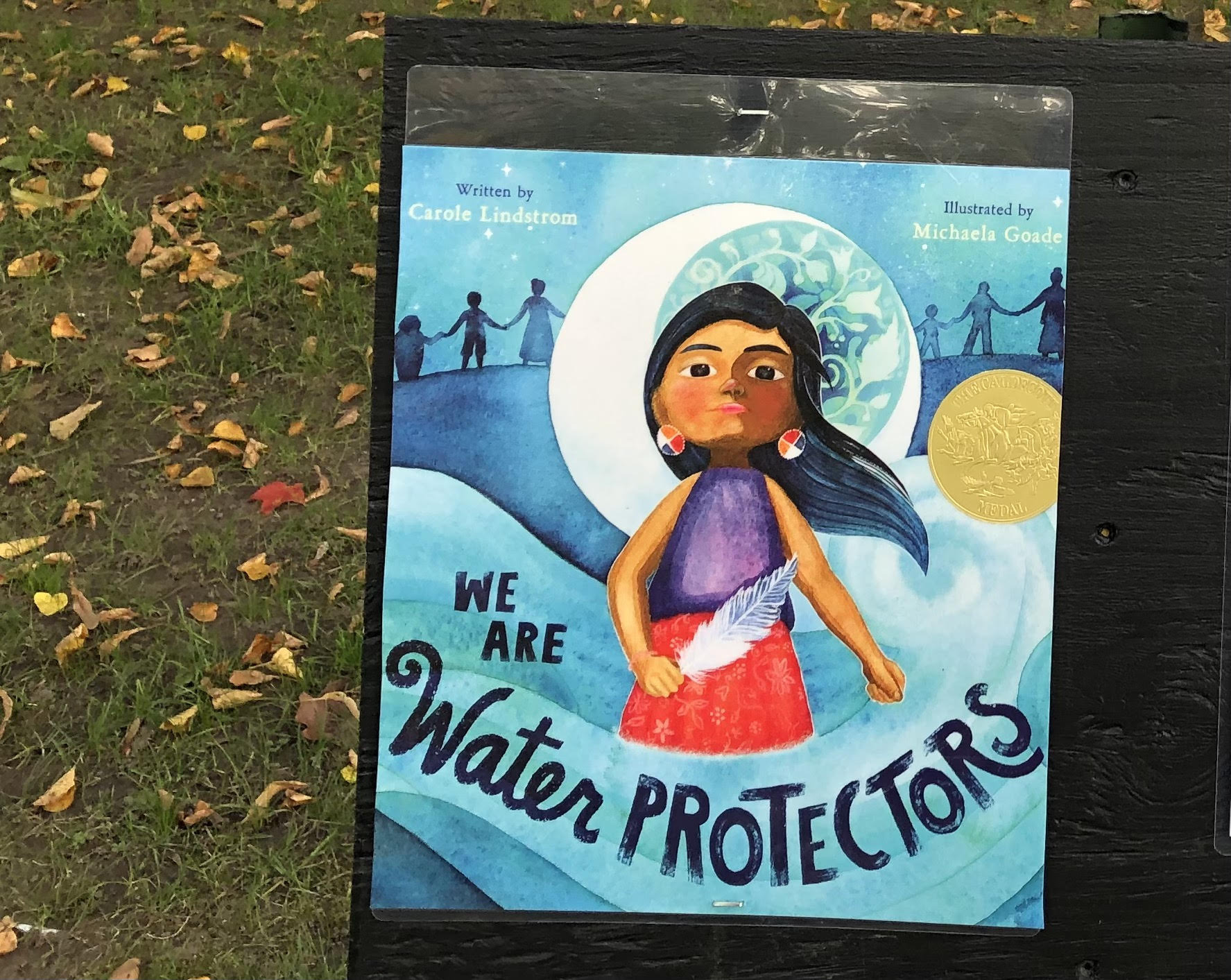
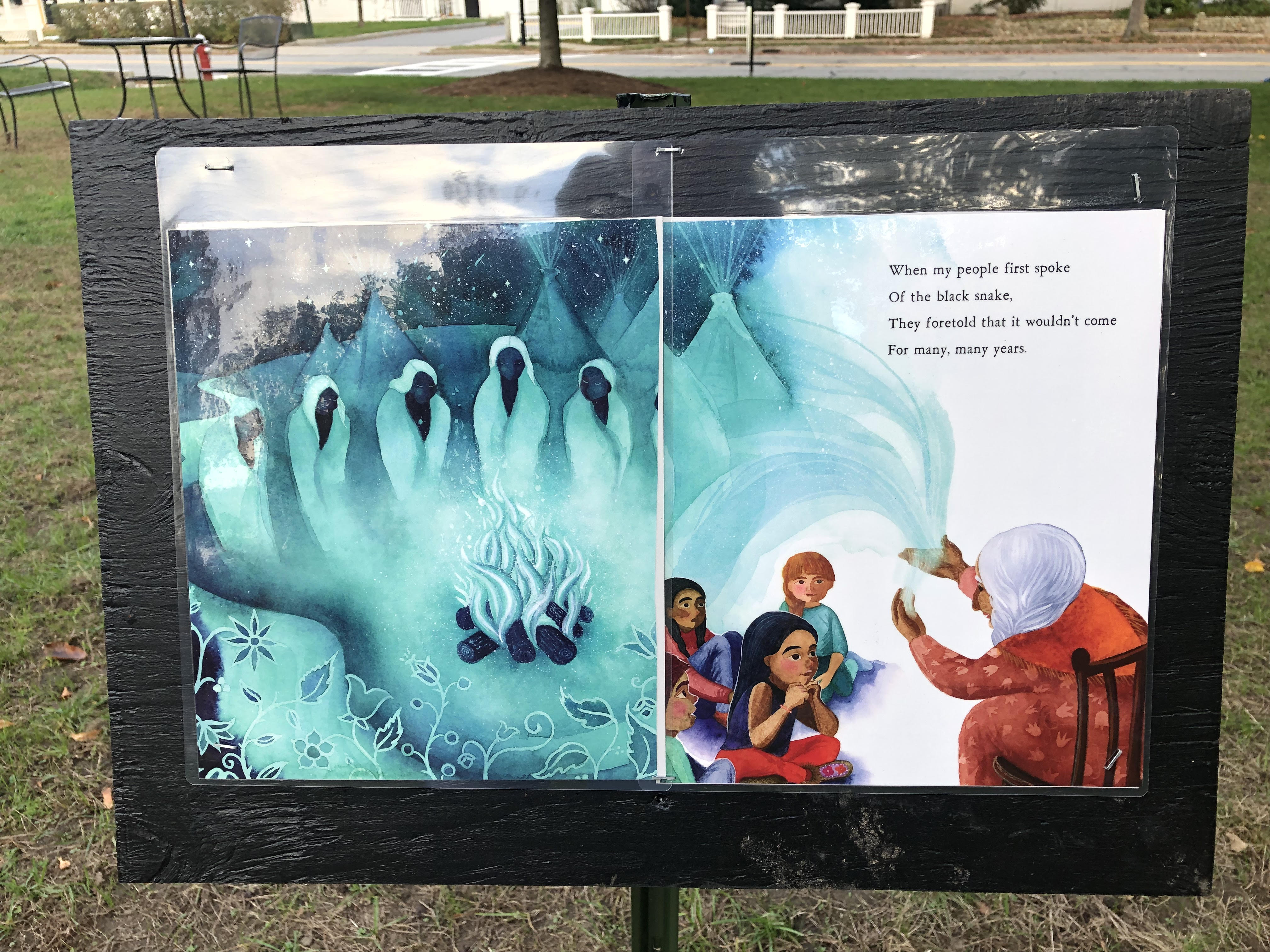
On the library lawn back home, I got to see Dr. Seuss’s famous Thing One and Thing Two and Eric Carle’s Very Hungry Caterpillar. There was also a “walking” book, consisting of signs showing page spreads. The current choice is The Water Protectors, by Carole Lindstrom and Michaela Goade (illustrator).

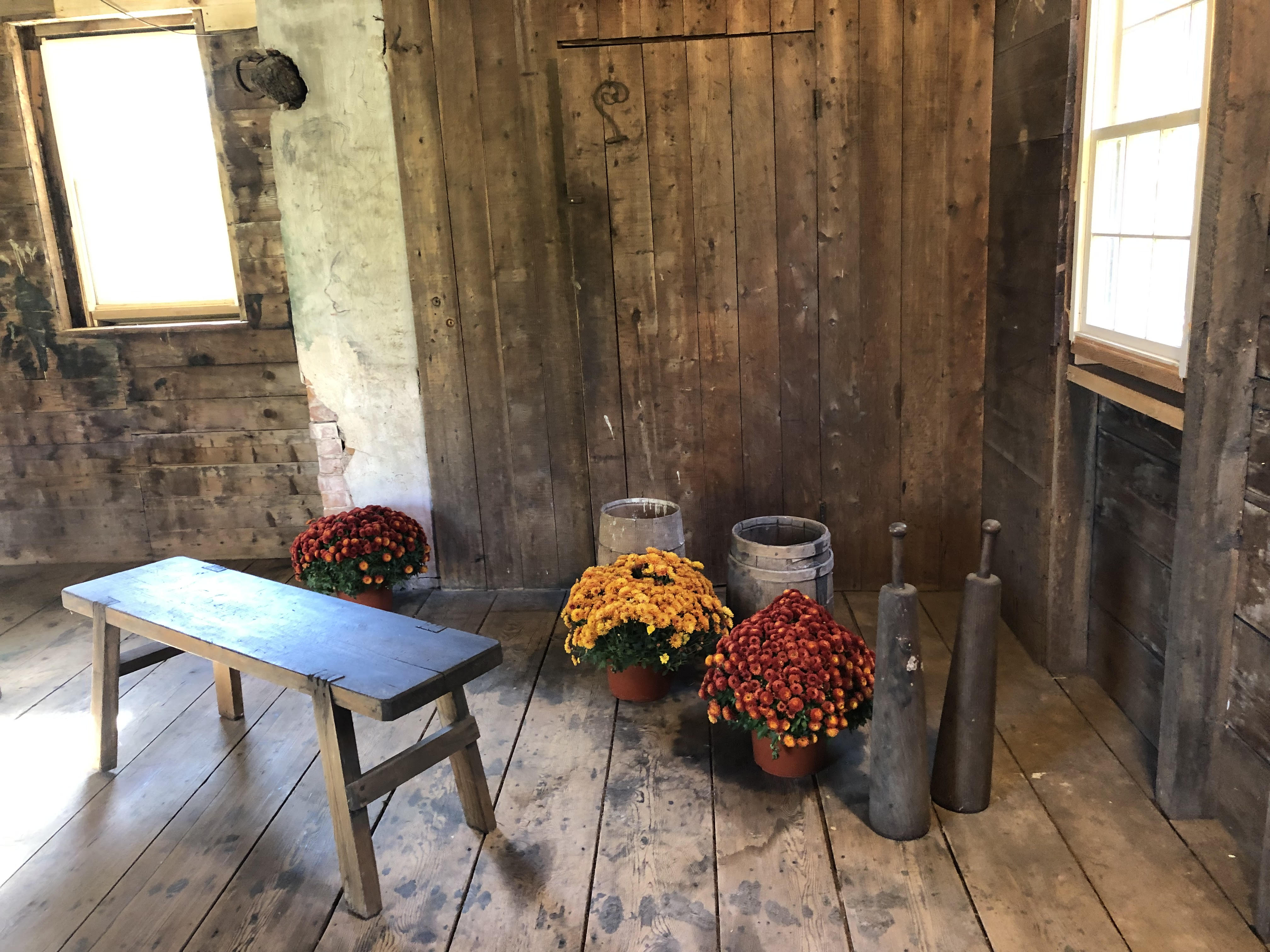
My husband had been reading about Ralph Waldo Emerson — particularly about the influence that Quaker thinker George Fox had on him — and so decided it was high time to visit Emerson’s house. Among other things we learned was the fact that in the early 1800s, people didn’t know that tuberculosis was contagious. Emerson’s first wife died of it at age 18. Also, the original Emerson family still owns the home. It’s a rather dark and gloomy place, though. I preferred the recently restored barn and took a picture there.

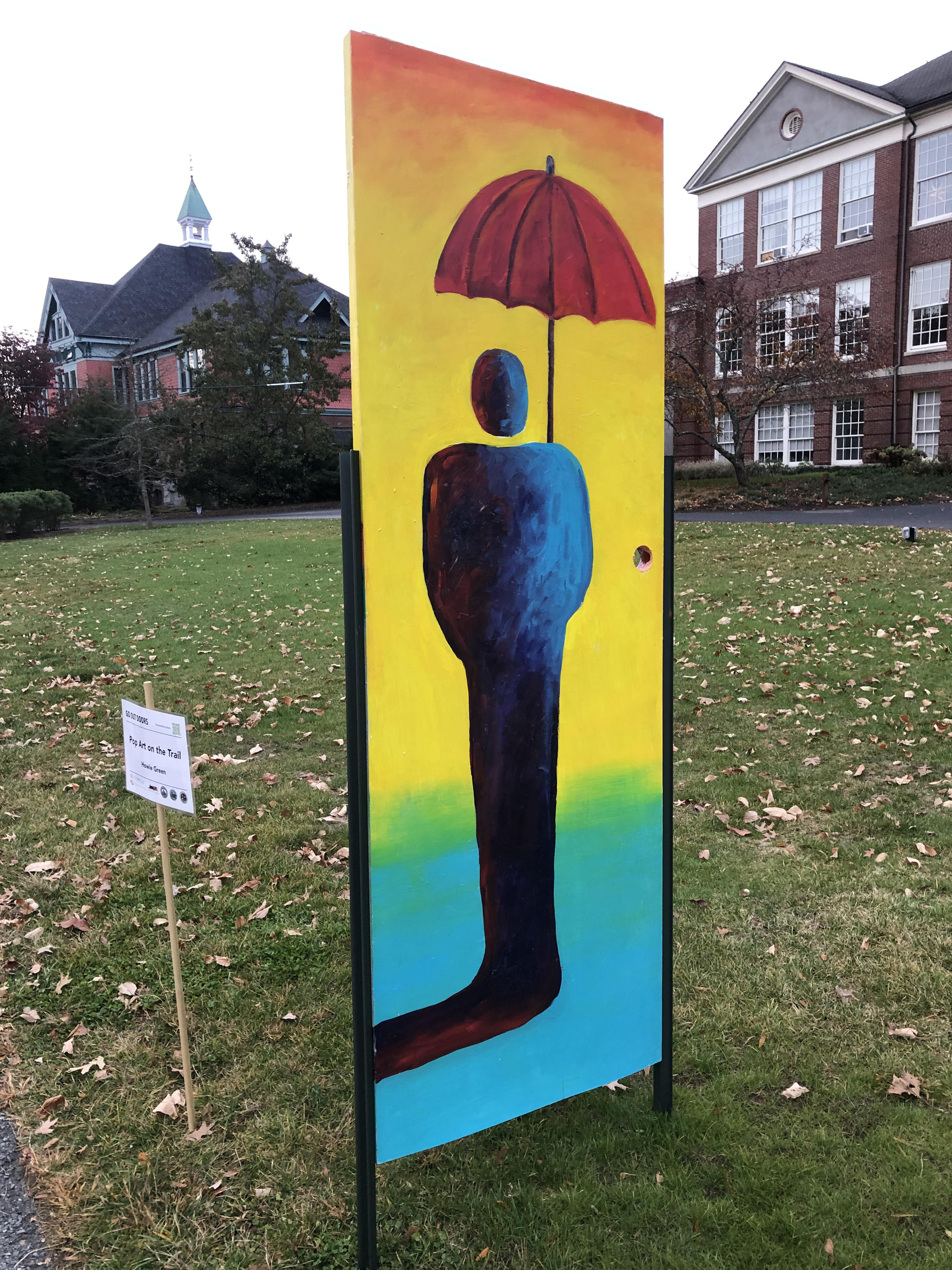
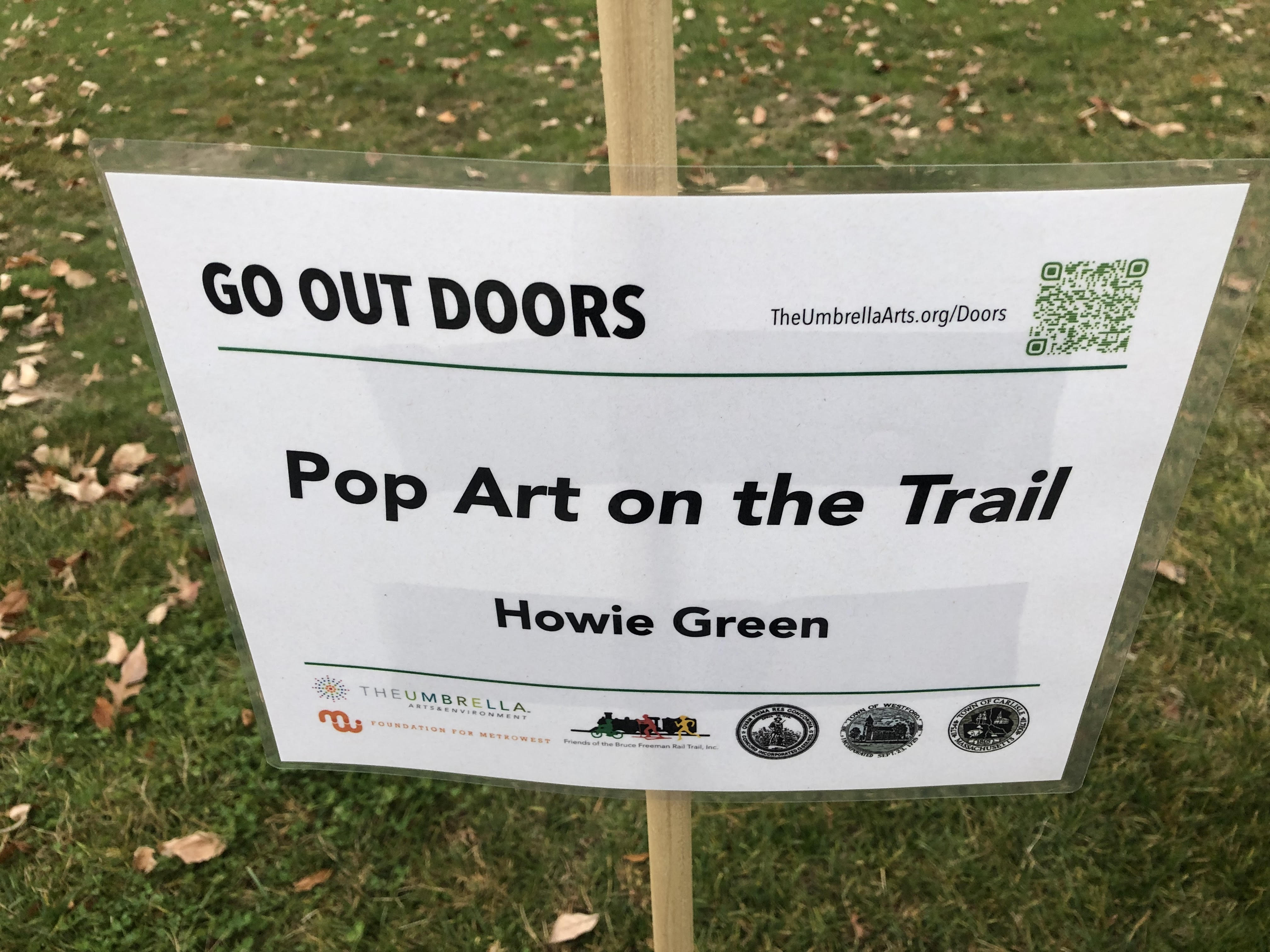
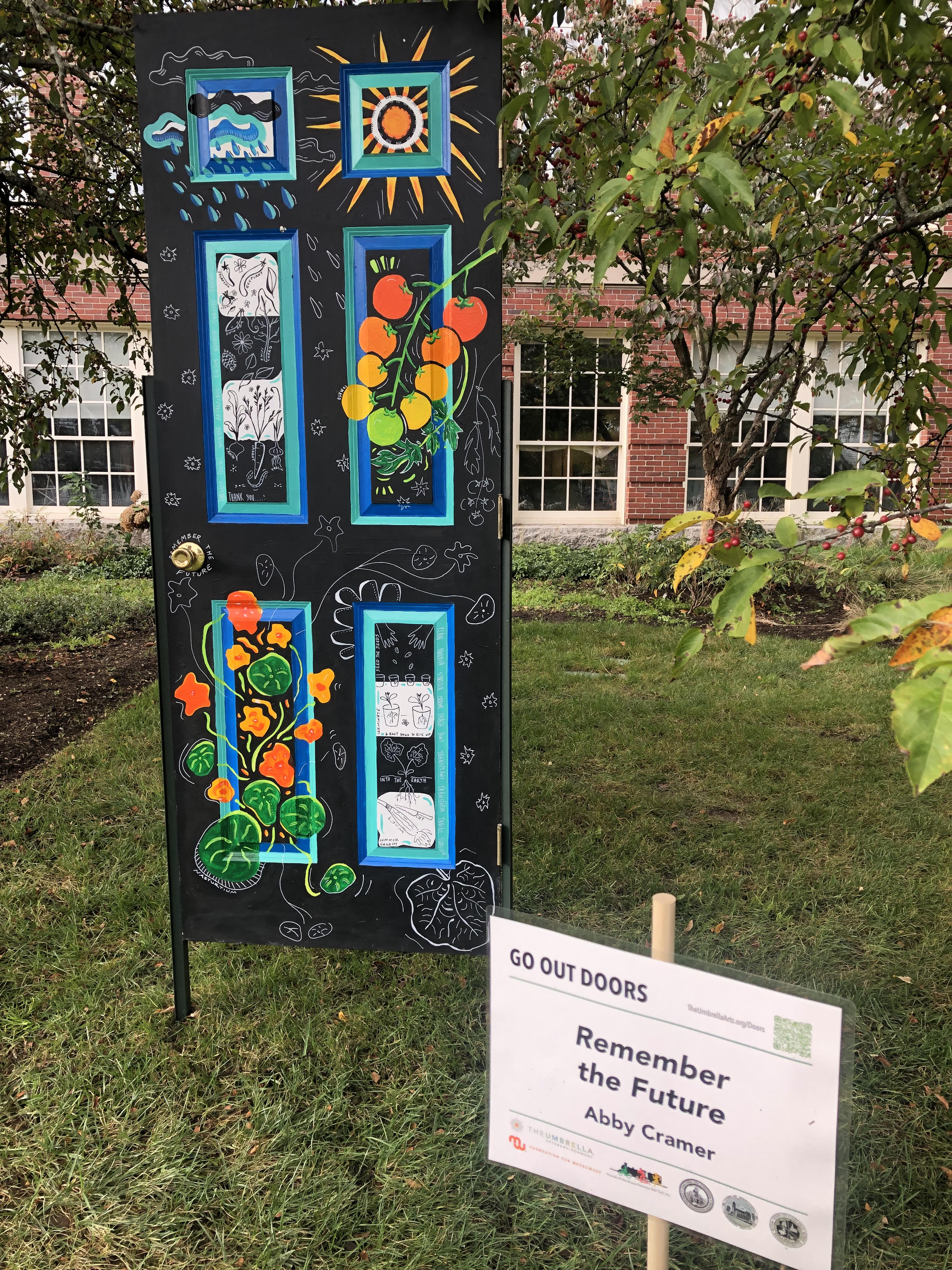
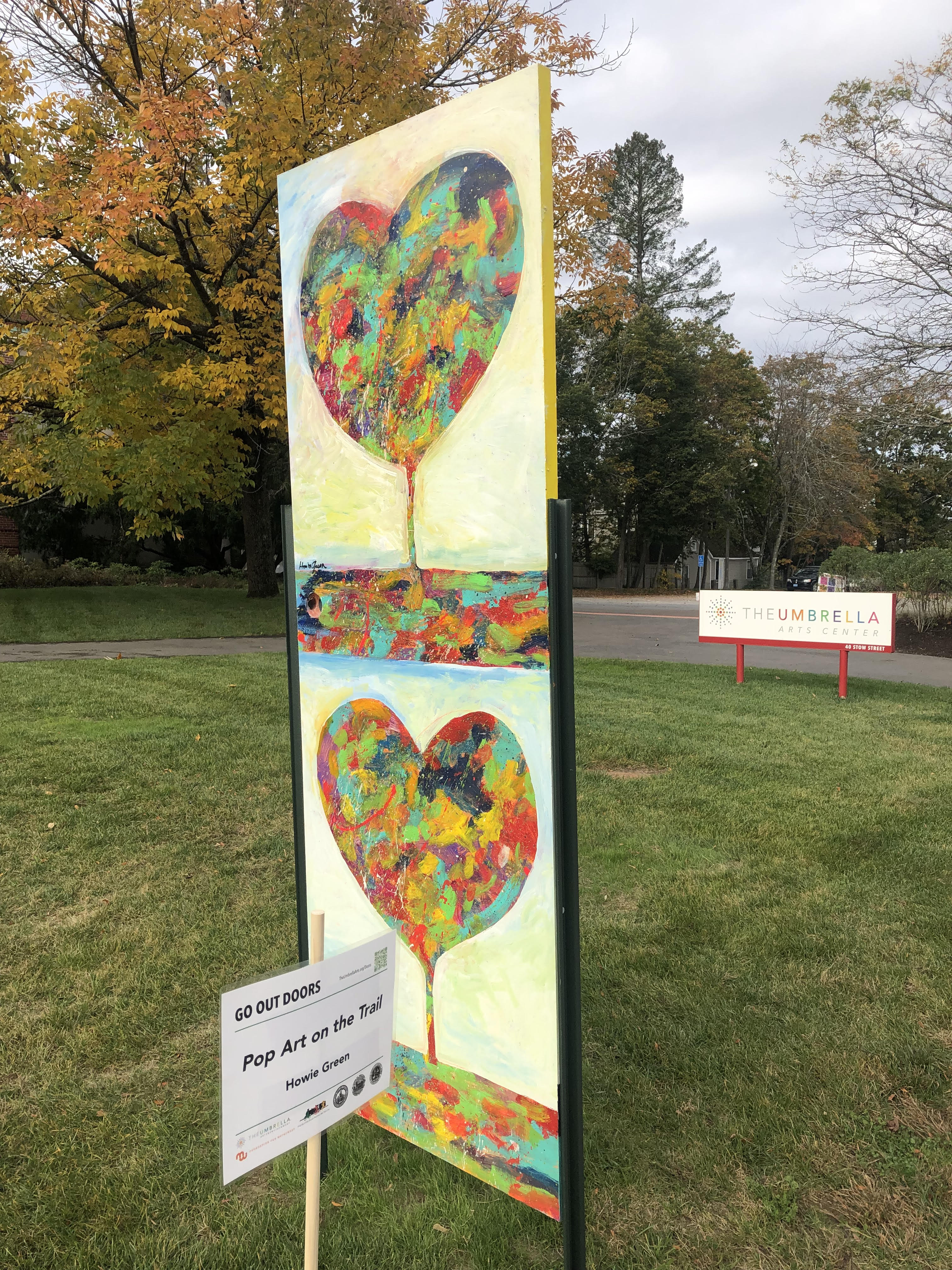
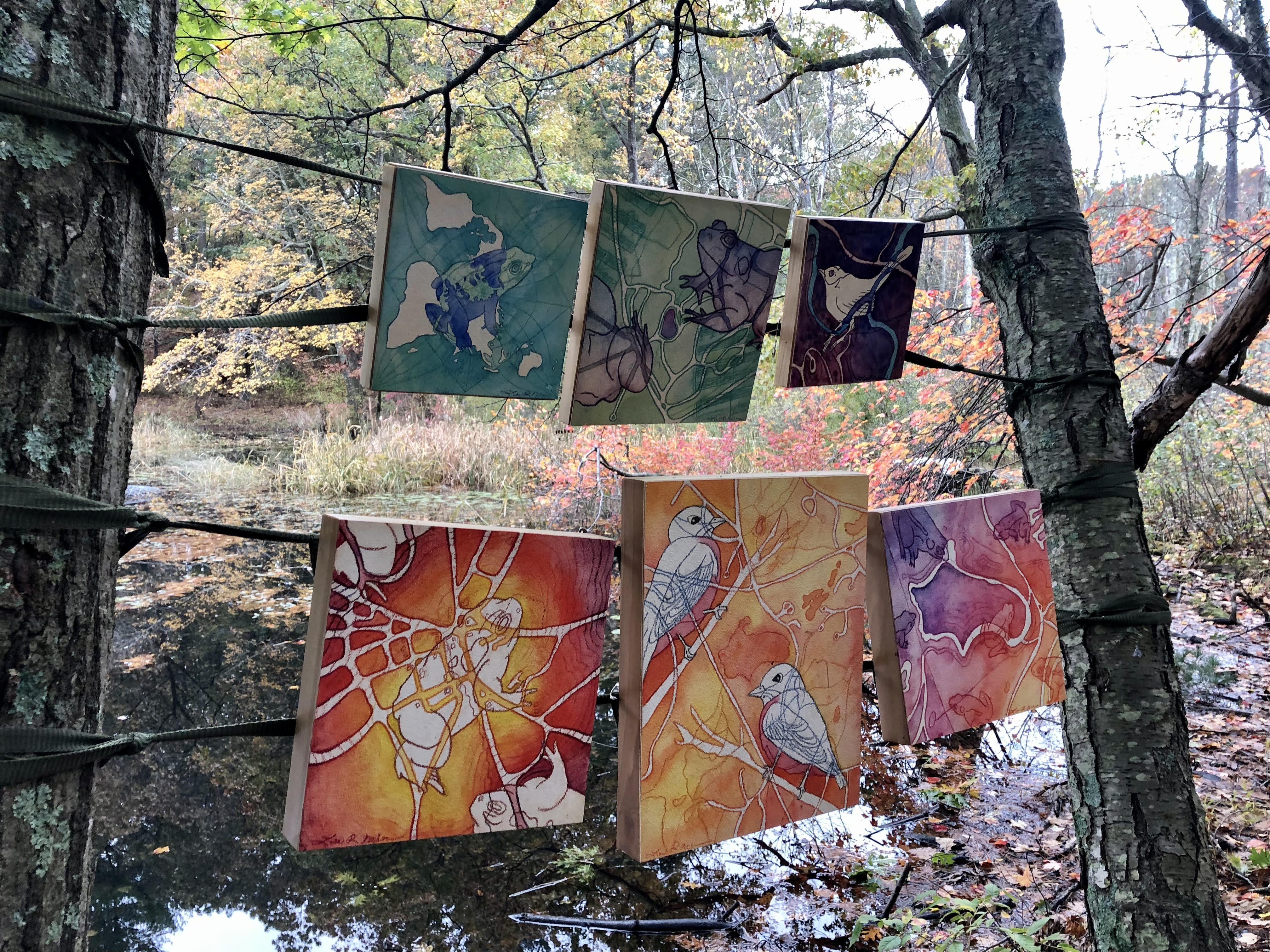
Moving right along, I have art for you from the Umbrella. The two pieces of door art are “Pop Art on the Trail,” by Howie Green, and “Remember the Future,” by Amy Cramer.

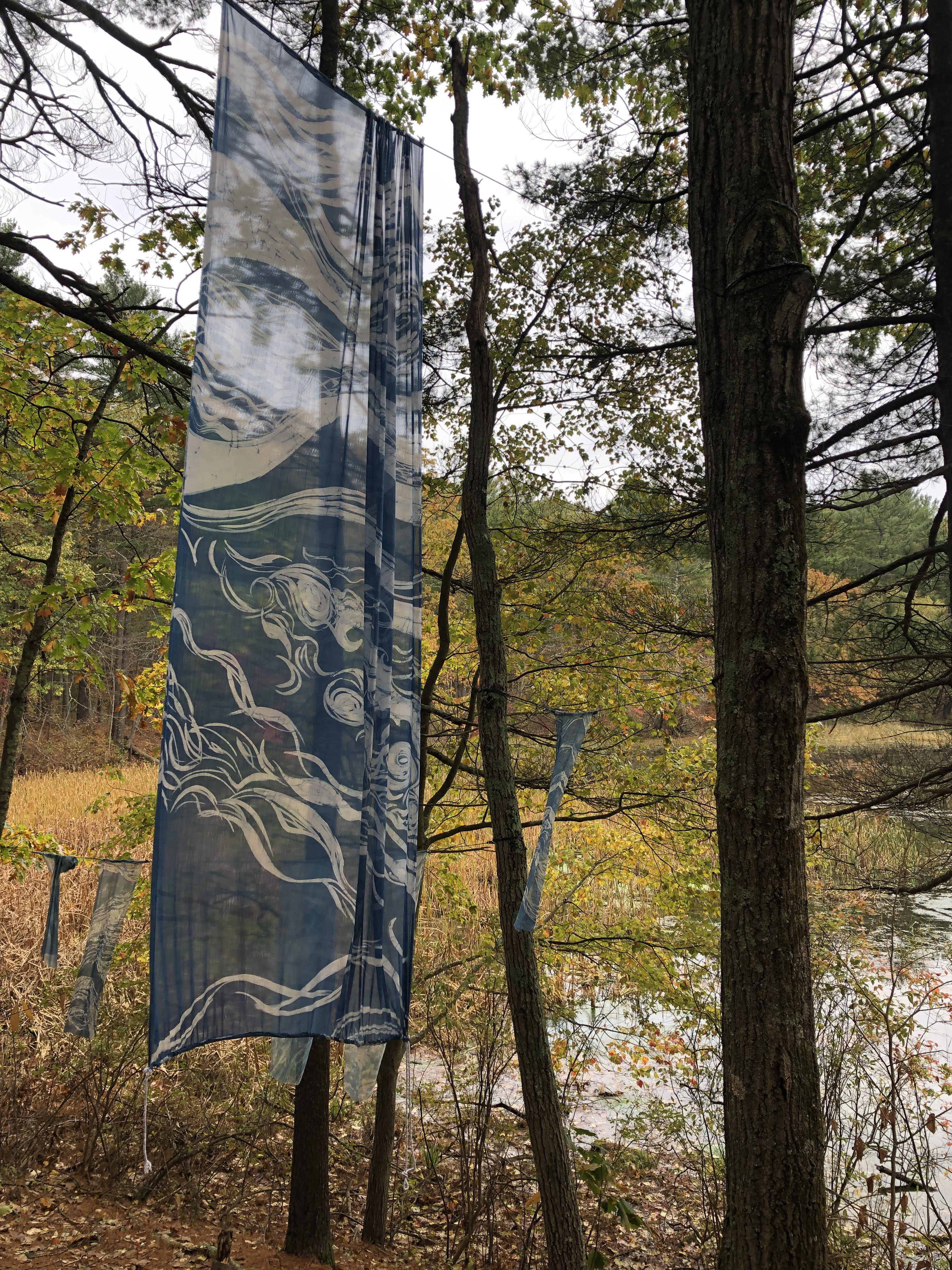
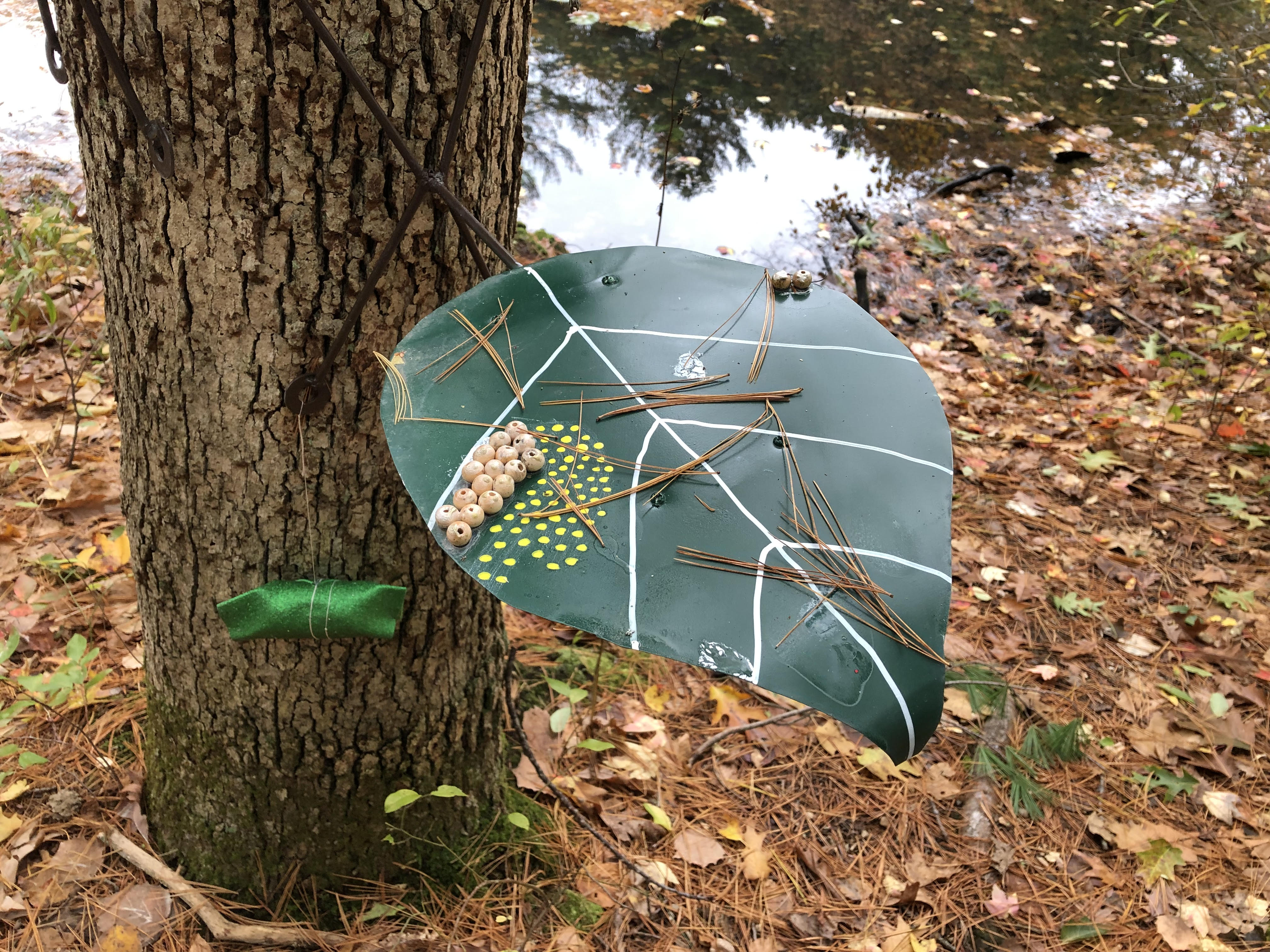
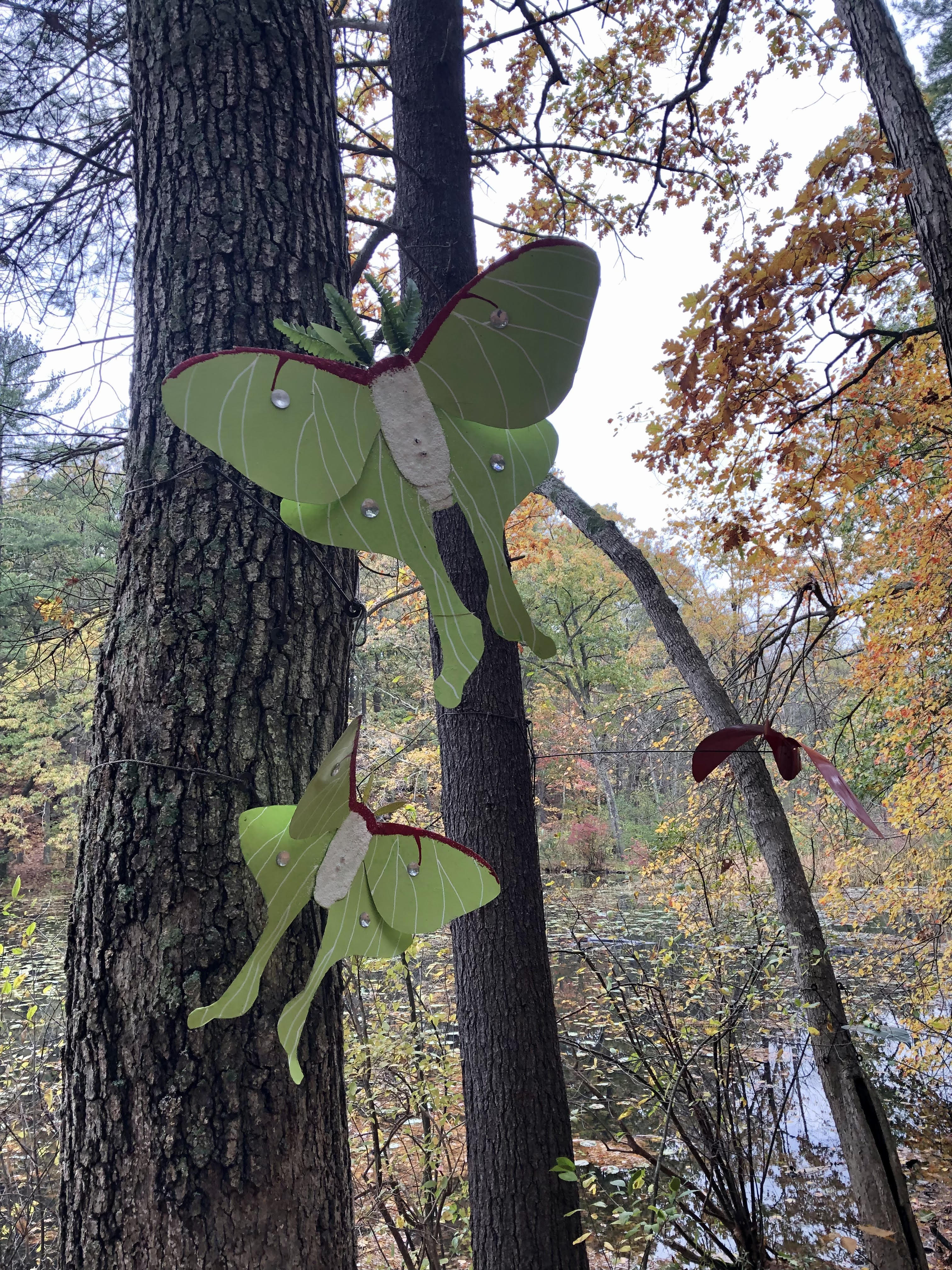
Then there’s the art center’s fabulous annual Art Ramble in the Hapgood Wright Town Forest, which I generally hold off on visiting until the first frost kills off the mosquitoes that breed in Fairyland Pond.

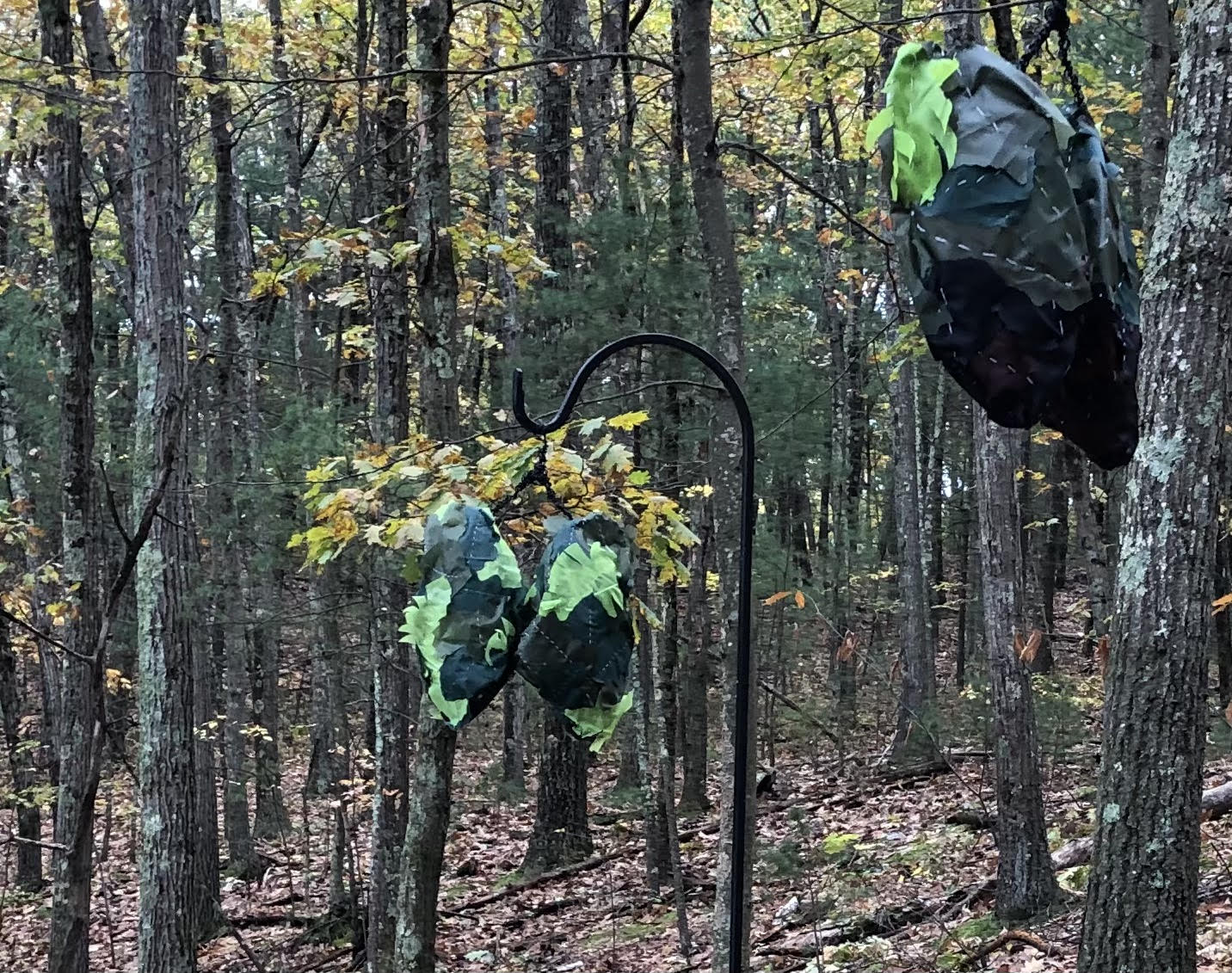
The Shibori hanging series, “Windblown,” is by Kiyomi Yatsuhashi. The beautiful Luna Moth Life Cycle is by Jude Griffin. The lungs of the forest are depicted by Barbara Ayala Rugg Diehl (BARD) in a work called “In and Out.”

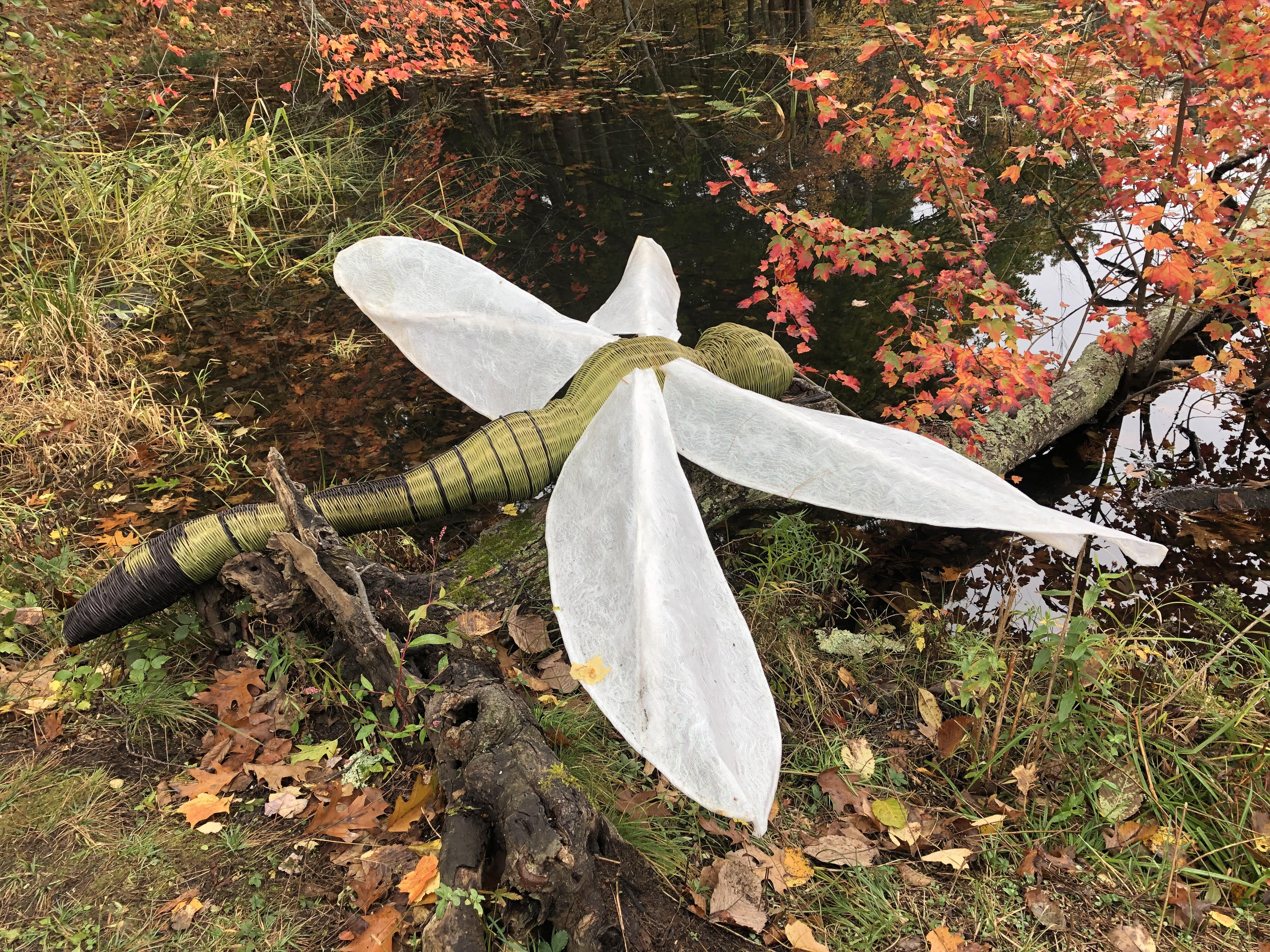
The next photo shows Lisa Nelson’s “Waves of the Aerial Sea.” And last but not least is a huge dragonfly, or “Ethereal Dreamer,” by Laurie Bogdan and Kimberley Harding.

Thanks for joining me in New England.

Read Full Post »

The Boston Marathon was in October for the first time, after missing two Aprils because of Covid.

We ourselves had to hustle a little to get to the Boston Marathon as the new technology told us Erik was running faster than expected and might reach our viewing spot before we could get there. Fortunately, we arrived with a few minutes to spare.

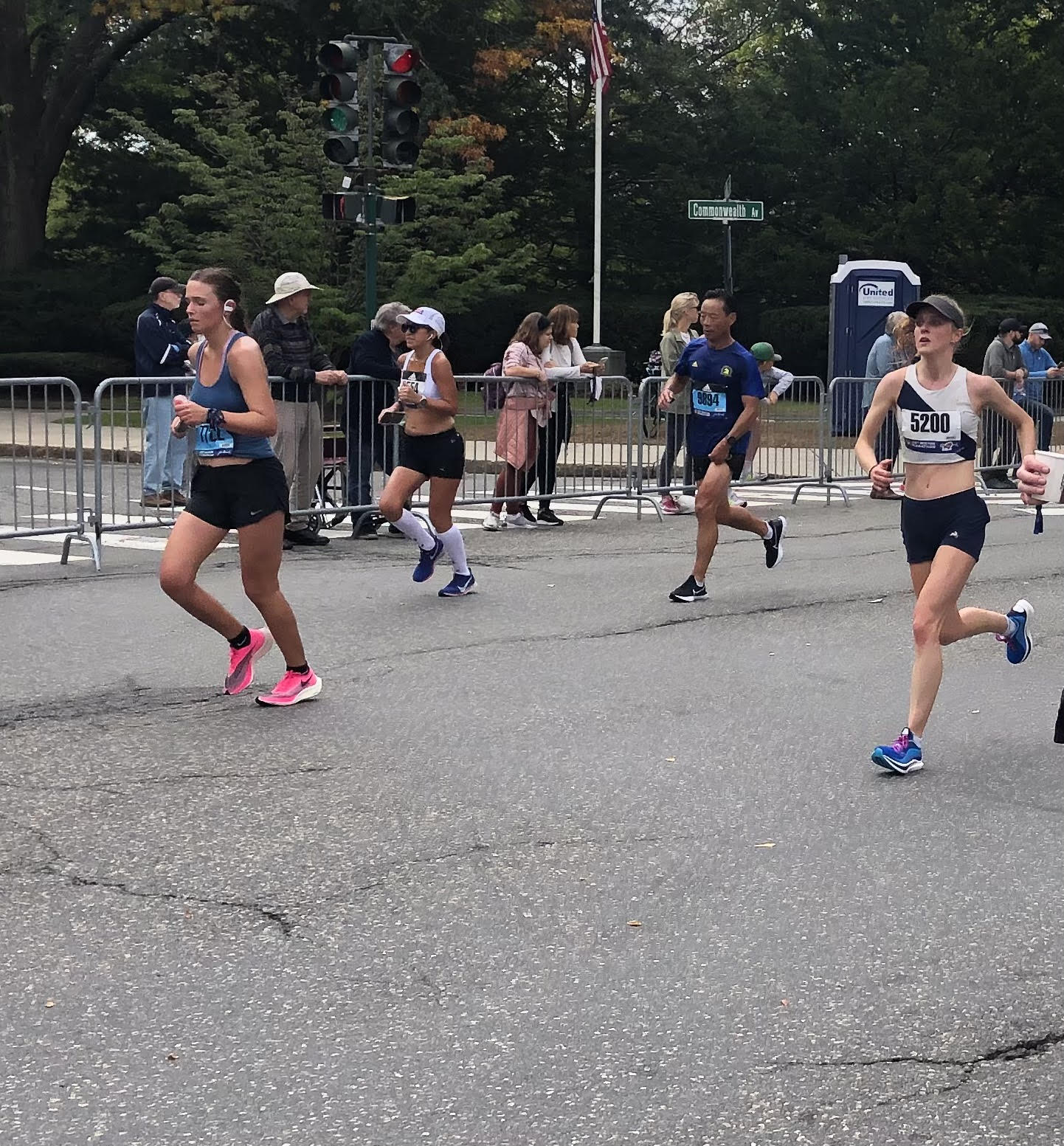
Erik’s final time was a hair over three hours. The photo above is of runners near where we stood. It was a happy day, and although runners had to be vaccinated or show a recent test result, it had a welcome feeling of maybe-life-will-get-back-to-normal-sometime. And the sun was shining.

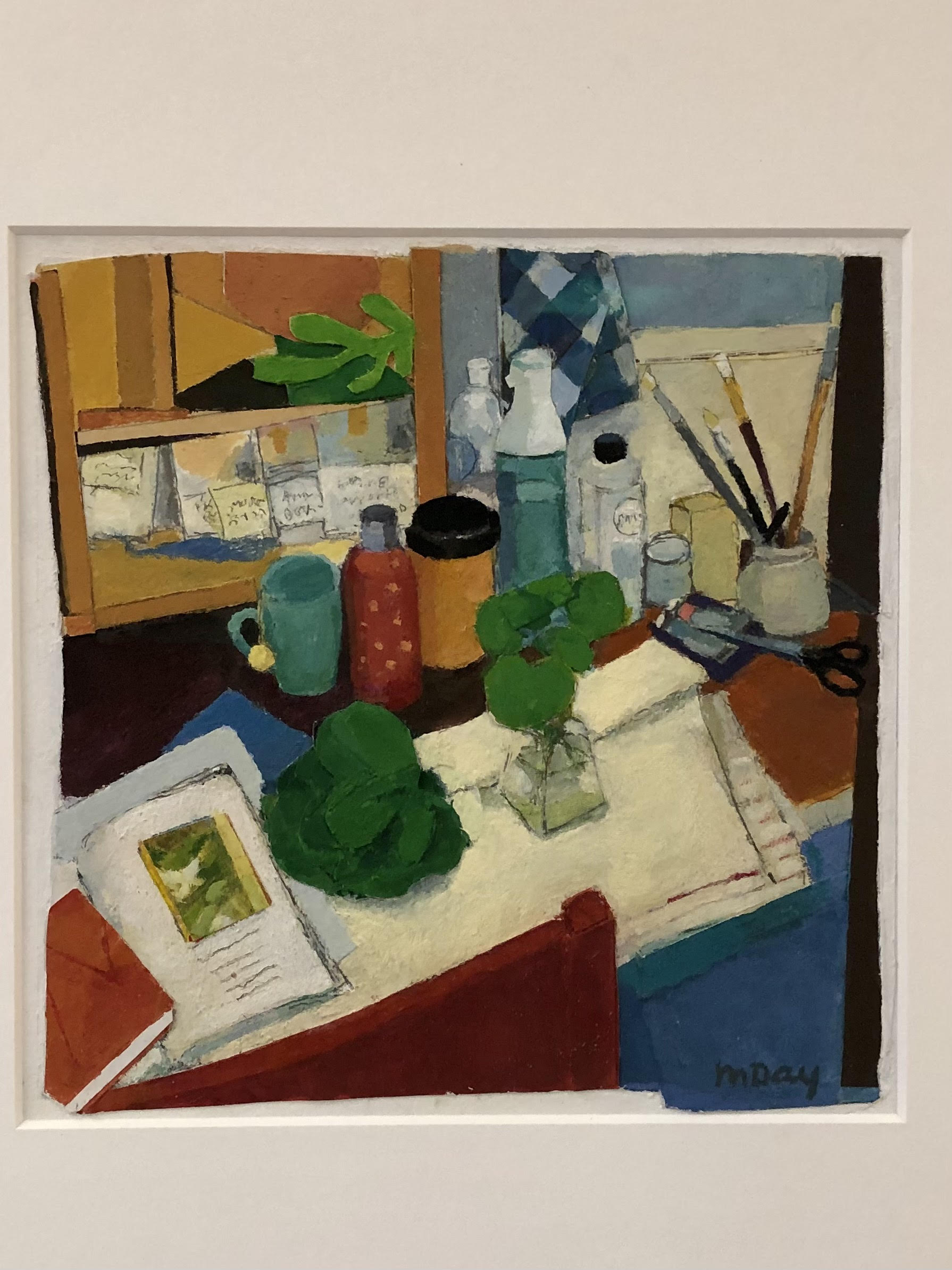
On a drizzly day, I went up to the Brush Gallery in Lowell to see Meredith‘s lovely exhibit. The artist herself came over from her studio in her rain gear, and I learned some interesting things about how she thinks about color and how she works. The first painting below was my favorite.

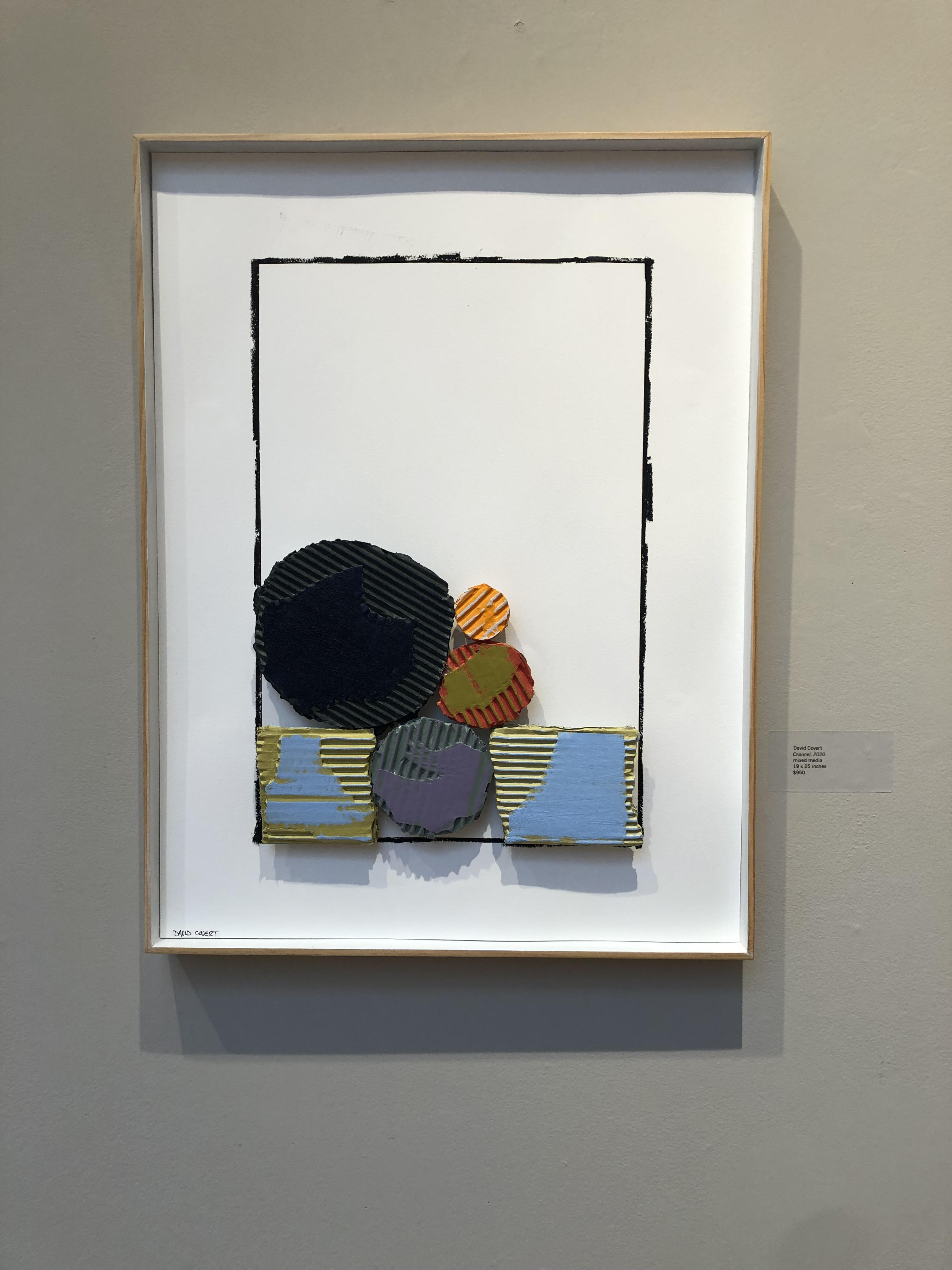
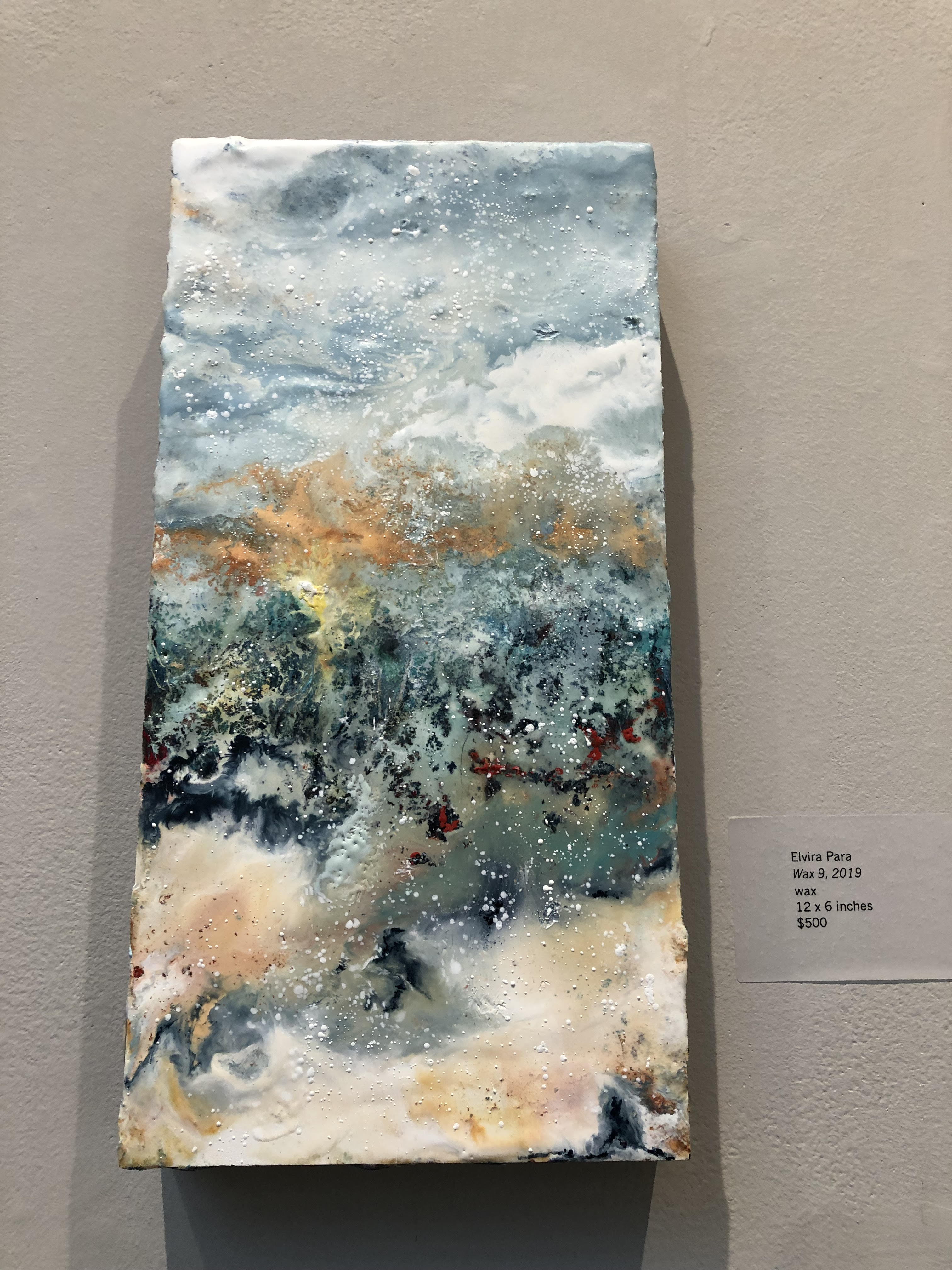
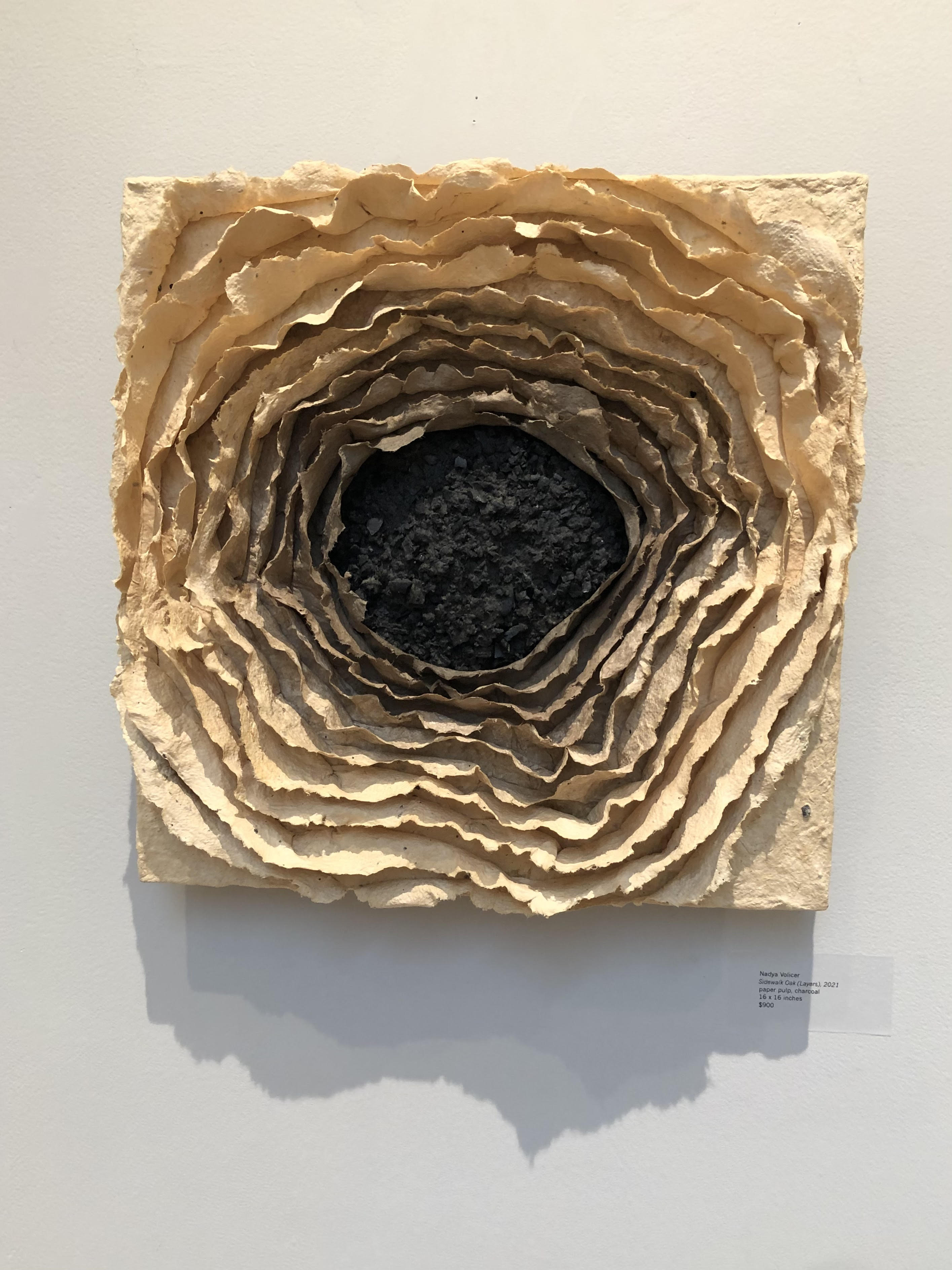
On another day, I took photos at Concord Art‘s juried show. The piece using corrugated cardboard was by David Covert. The wax art suggesting a dreamy ocean was Elvira Para’s. Nadya Volicer’s unusual sculpture was made from paper pulp and charcoal.

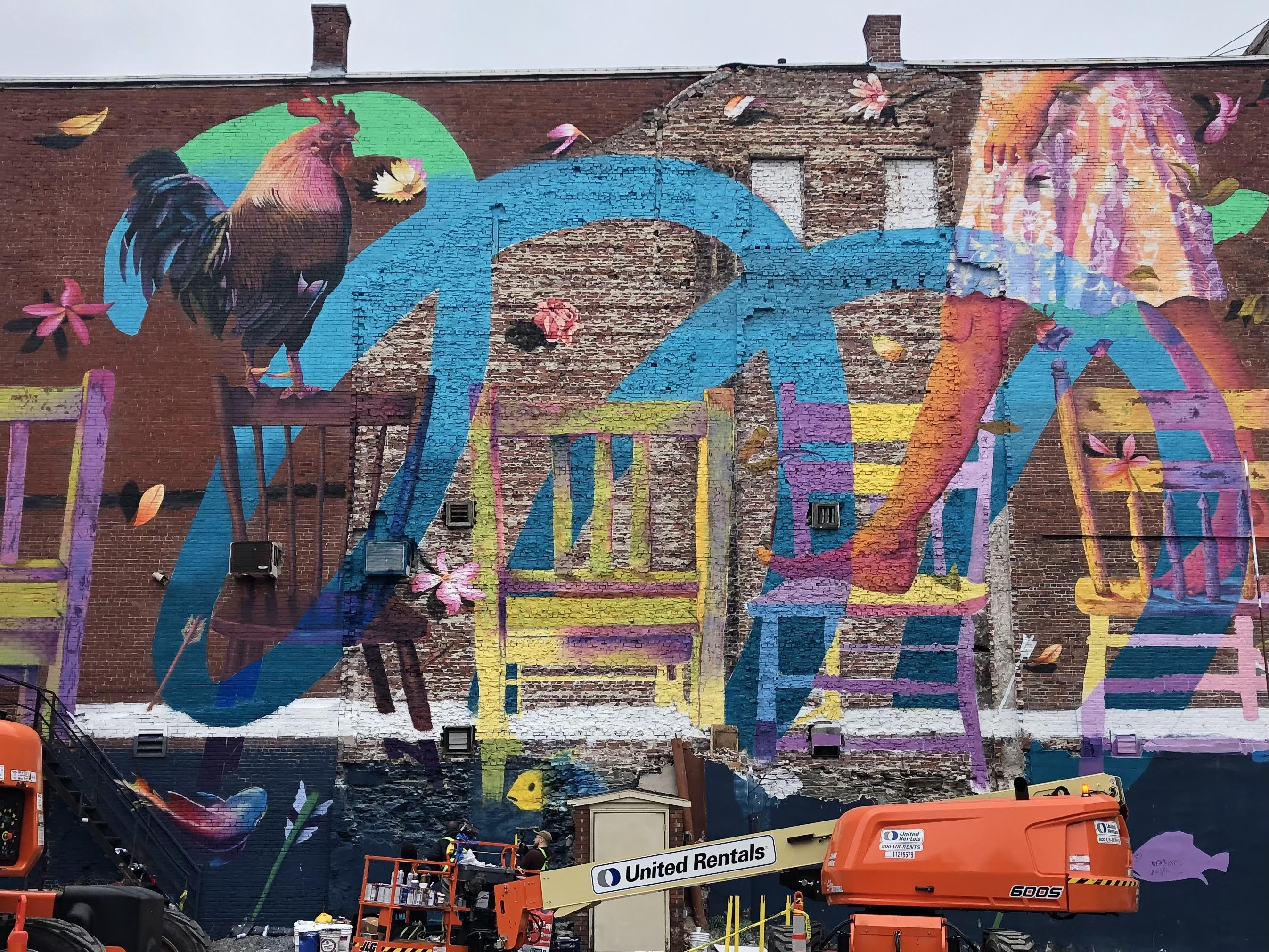
I couldn’t resist shooting an urban mural even though it wasn’t far enough along for me to understand what meaning flowers, a fish, a rooster, and a barefoot woman walking on chairs, might convey.

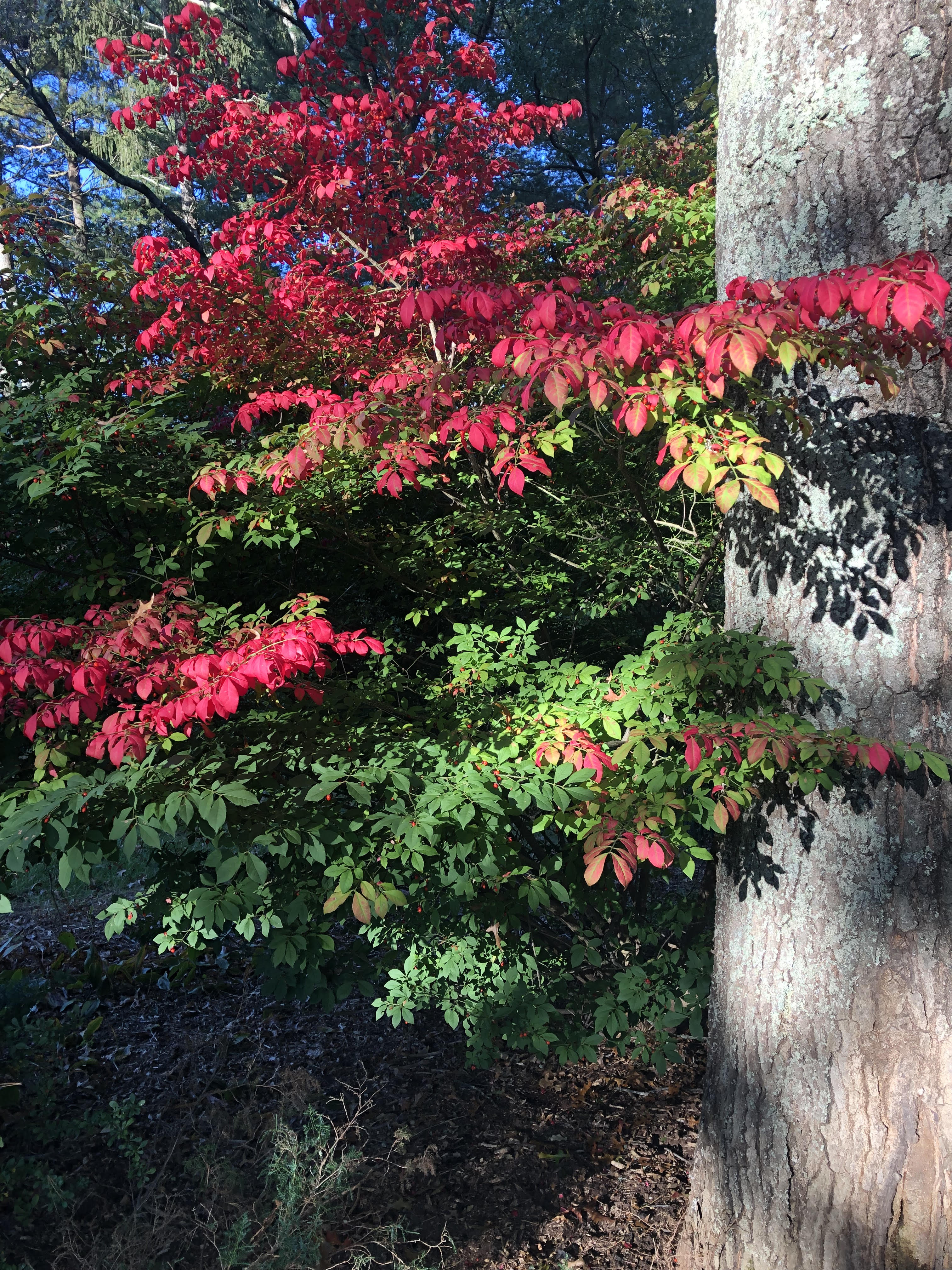
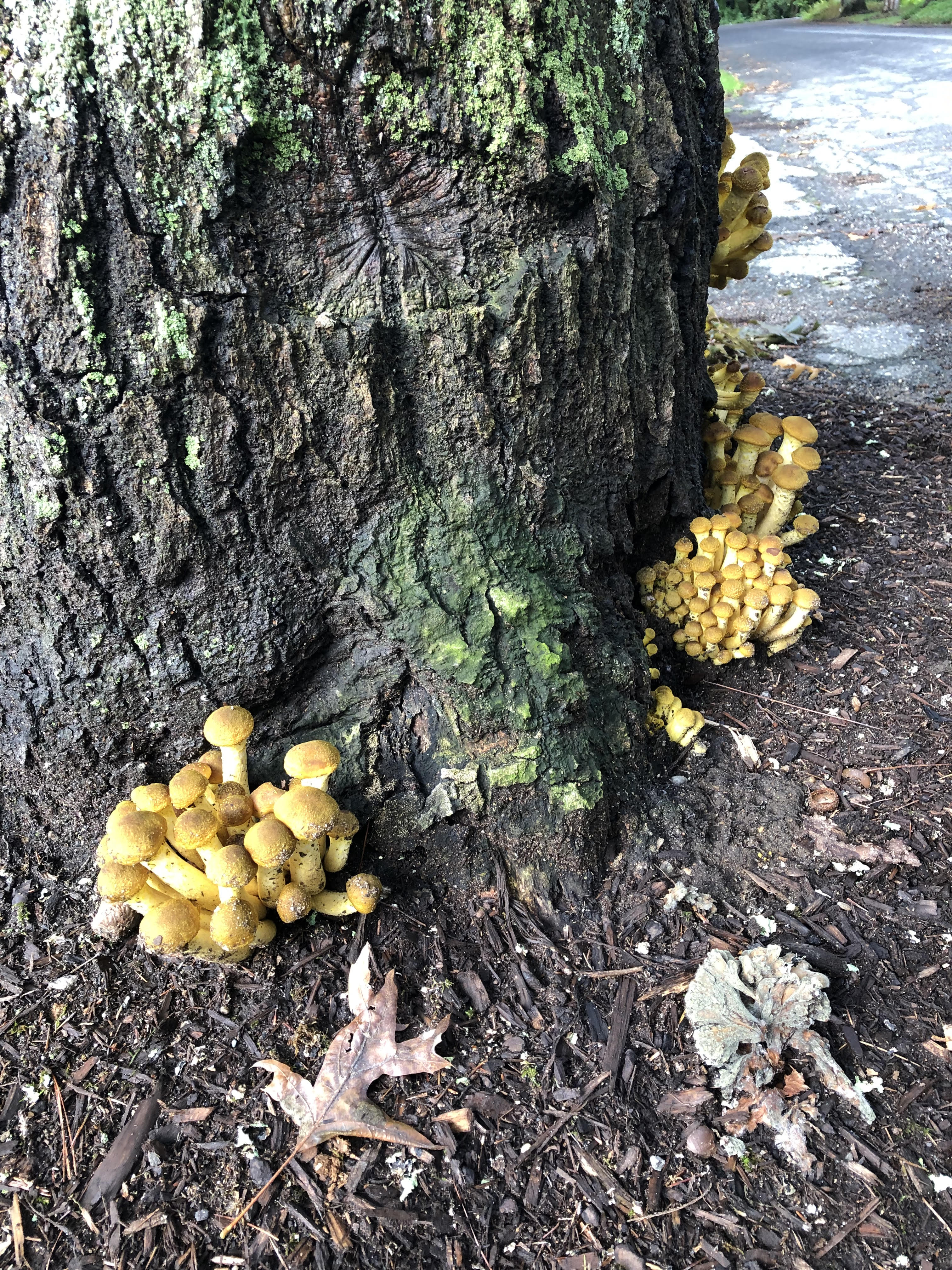
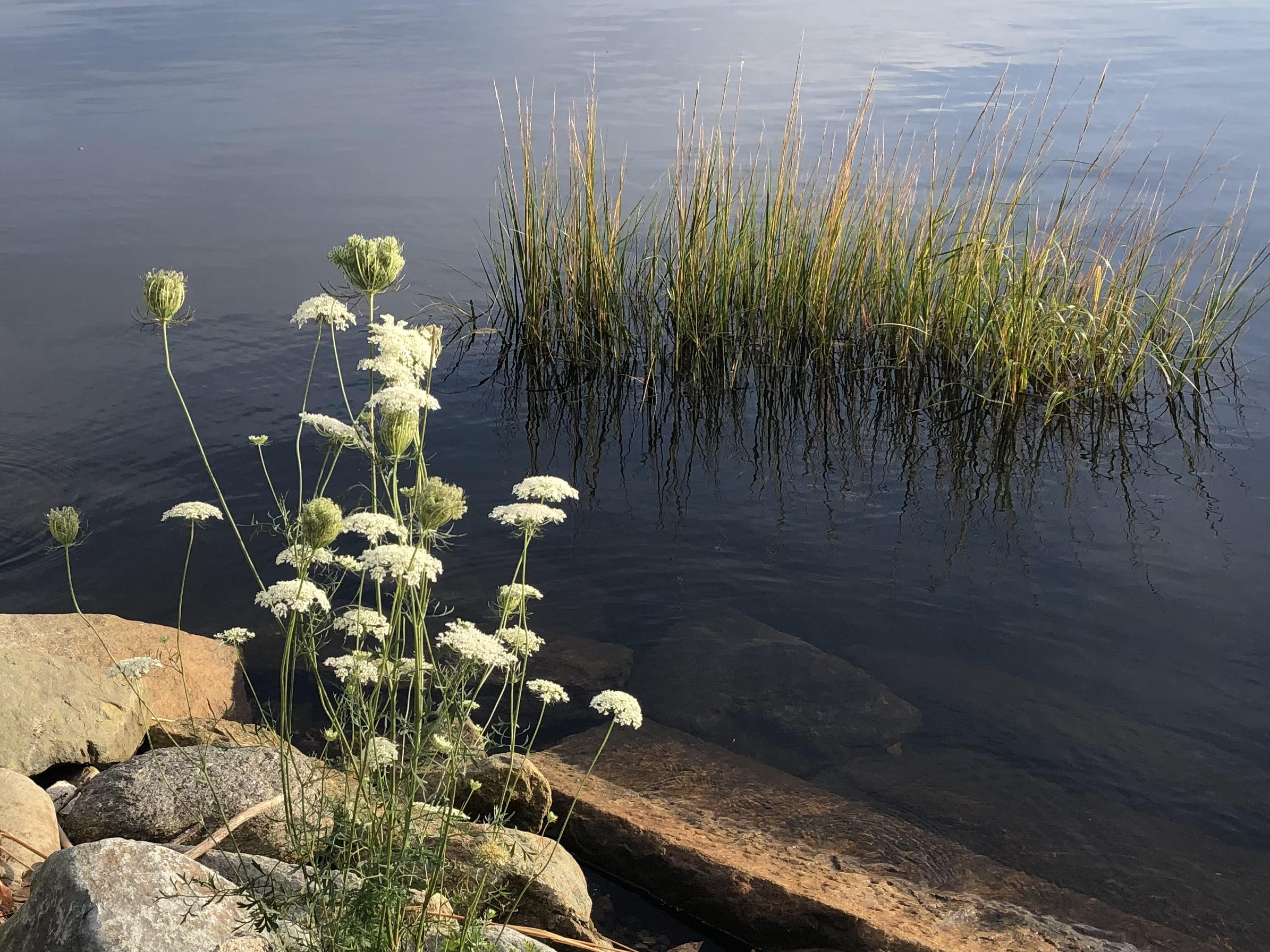
Meanwhile, nature has been making its own art, and there have been many beautiful days to enjoy it.

Read Full Post »

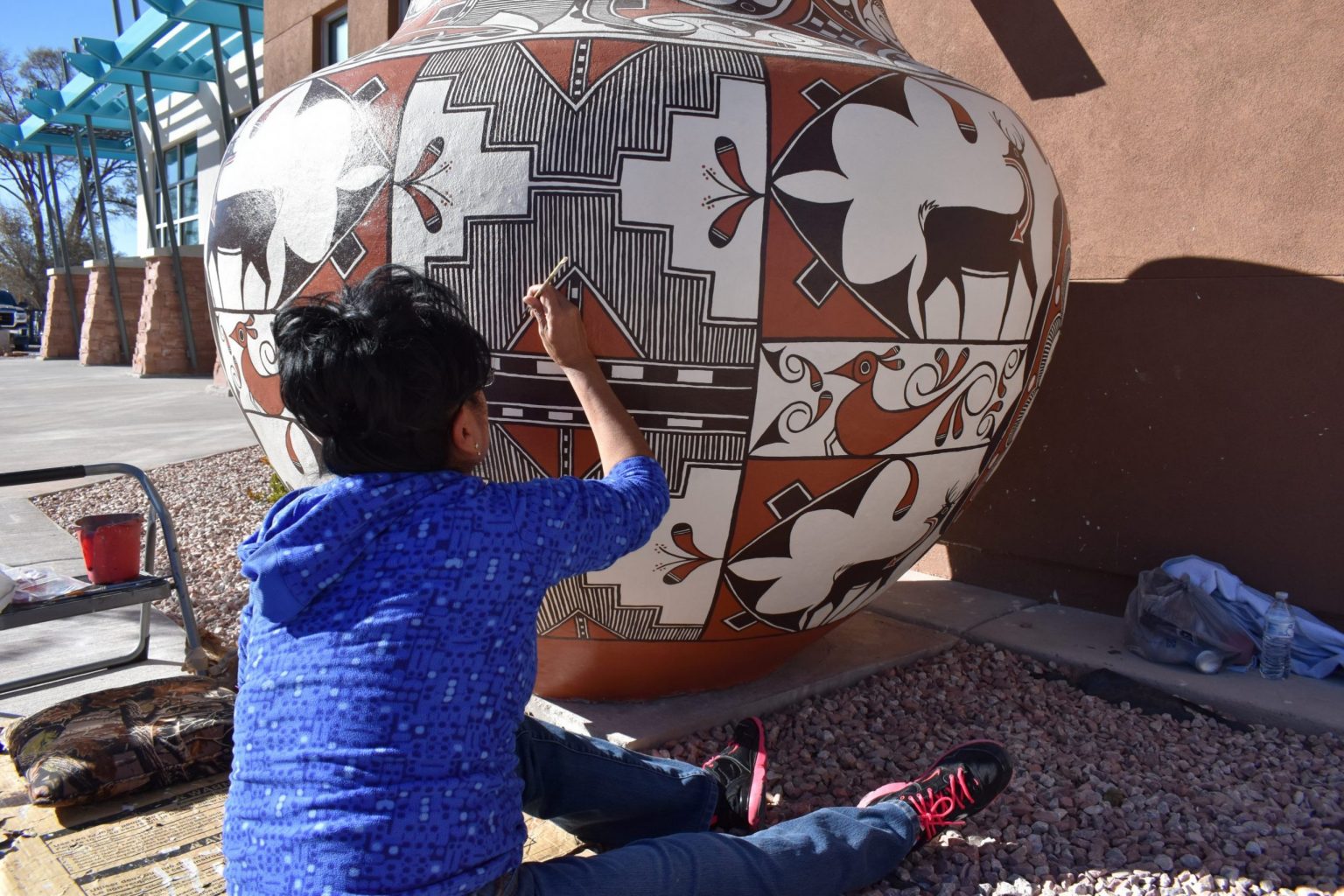
Zunis Help Design the Park

Photo: Zuni Youth Enrichment Project.
By incorporating the Zuni people into the planning, design, and execution, a unique park in New Mexico addresses health on multiple levels.

Call it the department of “Don’t tell people what they need. Ask them.” It’s a bit of wisdom that organizations and government entities proposing to do good have been trying to apply to their work for years now. Unfortunately, past failures mean they first have to overcome suspicion.

Amanda Loudin reports at Shelterforce, “Six artists reside in the Shack family home in Zuni Pueblo, New Mexico. While that many artists living under one roof is an anomaly, in the Zuni tribe there’s at least one artist living in nearly 70 percent of households, according to a study by the University of New Mexico. Art is part and parcel of the tribe’s history and culture.

“The Zuni Youth Enrichment Project (ZYEP) understands this, so when it began planning a new youth center and park in 2015, Zuni artists and community members were invited to play a central role in the design and execution of the project.

“Their opinions and their art were woven into the fabric of the process from start to finish. The end result is the 2.5-acre H’on A:wan, or ‘Of the People,’ Community Park, which officially welcomed youth and the wider tribal community in 2018.

“ZYEP is a grassroots nonprofit founded by community members with the mission of enhancing the health of the tribe’s youth, who number 2,900 of the 10,000 tribe members. Zuni households face many challenges, including systemic poverty, which affects one in two Zuni families with children. And poverty, of course, is closely linked to health.

“Daryl Shack, one of the six artists in his Zuni household, played an integral role in the youth center/park project. ‘I kind of became involved by accident,’ Shack says. ‘We had a Main Street Art Walk project underway, and I was already involved in that to help ensure the modernization included a cultural aspect to it. When I heard about the park project, I wanted to learn more.’

“Funding for the park and community center originated with ArtPlace America, a 10-year collaboration among federal agencies, foundations, and financial institutions. … By design, the projects involve artists, culture bearers, and community members in every step of the planning and implementation.

“With the grant money, ZYEP set its sights on developing a center for youth that would benefit their spiritual well-being. To ZYEP, this meant Zuni art, history, and culture needed to be integral to the project. But Zuni youth also need access to safe spaces to play and be physically active, says ZYEP Executive Director Joe Claunch.

“ ‘We were well aware of the fact that they lacked space where they could run, play, and fall down without getting injured — every surface was either concrete or desert,’ he says. ‘The park represents a green space that celebrates Zuni identity and [is a] safe place where kids and families could engage in a range of healthy activities without concern.’

“Like many kids today, the Zuni youth have access to technology, which can quickly override cultural influences and healthy traditions. ‘Kids can get stuck on technology and start practicing a sedentary lifestyle, planting the seeds for preventable diseases,’ says Claunch. …

“The original intent for the park goes back more than a decade. ‘We had a local pediatrician who heard too many times from youth that they had nothing going on in their summers,’ Claunch explains. ‘He recognized that they needed healthy spaces and places, not just activity.’ …

“On a spiritual/emotional level, [the park] is a supervised space with a positive, culturally sensitive staff in place to encourage healthy activity. ‘We provide training to our staff that focuses on the strengths of the community, the family, and the youth.’ …

“In 2014, ZYEP approached the Zuni Tribal Council about acquiring land to develop the park and community center. Together, they found a spot near the center of the village, and ZYEP leased 2.5 acres. A year later, they applied for the ArtPlace America grant. …

“Typical government-sponsored development brings with it an institutional look, says Claunch, rather than a cultural look. Think chain link fences, sometimes even topped with barbed wire, which is unwelcoming and devoid of character. The same goes to new housing developments, which are designed for the nuclear family, rather than the extended family commonly found in Zuni culture. A government-designed home will look like a typical two-to- three-bedroom home, whereas a traditional Zuni home will house three to four families living under one roof — much larger in structure with large communal spaces for family functions like meals.

Having a recent history of development that often neglected the role of Zuni culture meant that when approached by ZYEP, community members were initially skeptical about the good intentions of the project. …

“Like others in his community, Shack came to the table with a healthy dose of skepticism. ‘Usually, grants come into Zuni and the planning and models are made, the meetings are held and that’s where it ends,’ he says. ‘When the park project was directed to the artists community, I was hesitant but interested.’

“Shack’s first introduction to the project was in a large-scale meeting he attended to listen in and hear about the planning process. ‘Subsequent meetings were smaller, and that’s when I decided to sign on,’ he explains.

“From the get-go, says Claunch, ZYEP aimed to build trust in the community, and did it by engaging residents in conversation. ‘We didn’t make any promises but assured them that over time, we’d show them we were serious about having them shape decisions,’ he says. ‘The artists took on the role of advocates and cast the vision. They also took the feedback and concerns from the neighbors, often in the Zuni language. If it weren’t for the artists, we wouldn’t have gotten anywhere.’ ”

Read more about how this beautiful park came together at Shelterforce, here.

Read Full Post »

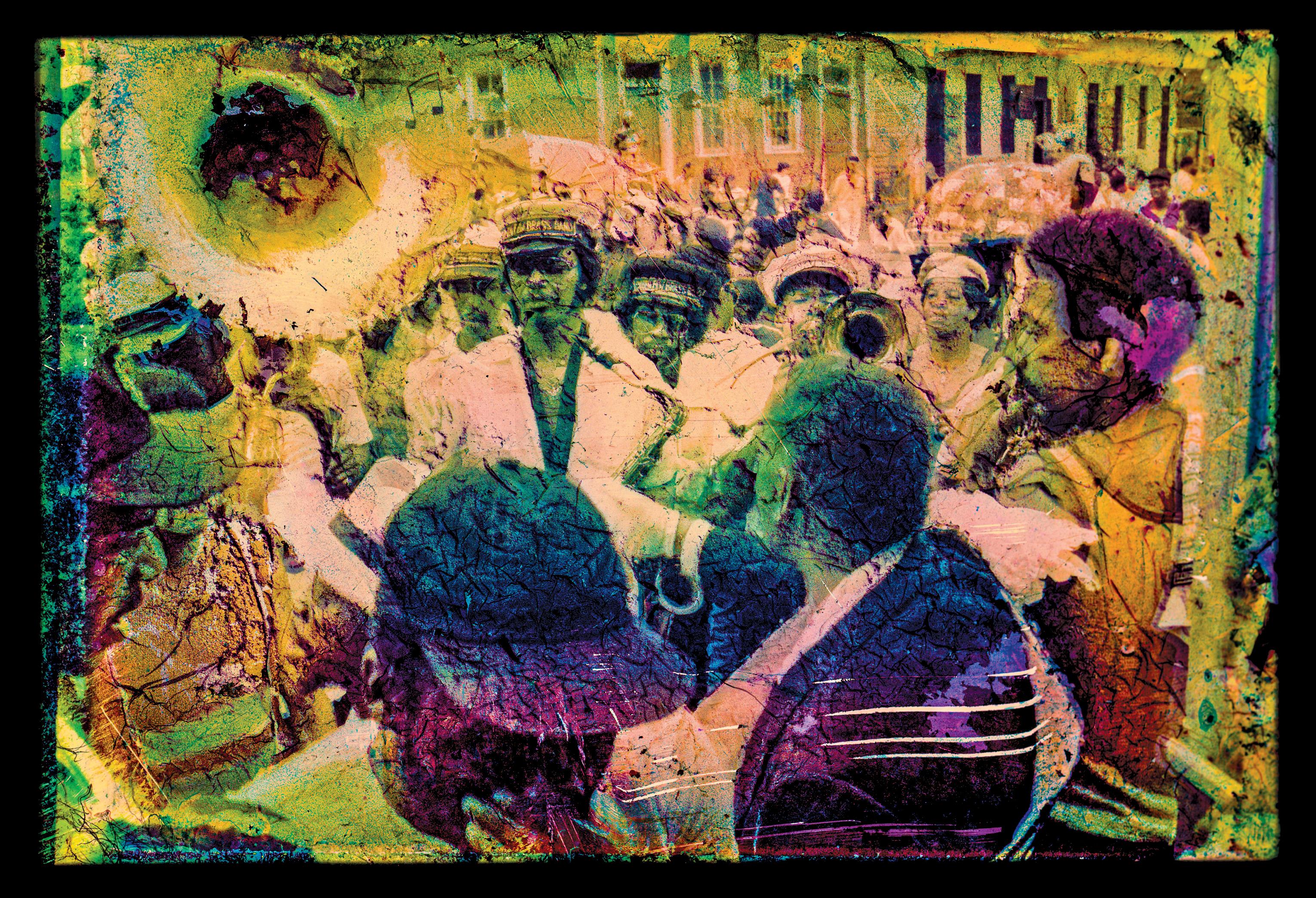
Photos: Chandra McCormick and Keith Calhoun.
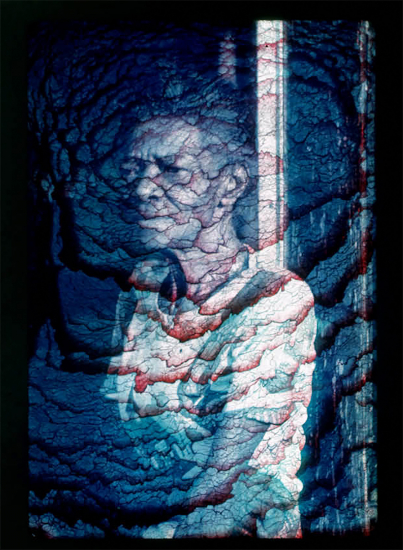
“The Sound of Our Resurrection Is Stronger Than the Silence of Death” is what McCormick and Calhoun call their picture of A Chosen Few Brass Band.

A recent article in Smithsonian magazine about the Louisiana photography duo Chandra McCormick and Keith Calhoun got me interested in learning more about them.

Reporter Amy Crawford focused on something new they were doing with old photographs: working with the Hurricane Katrina water damage to elicit the ghostly spirit of an indomitable city.

Crawford writes that in 2005, “Hurricane Katrina was bearing down on New Orleans, so Chandra McCormick and Keith Calhoun packed their photography archive — thousands of slides, negatives and prints the couple had amassed over three decades documenting African American life in Louisiana. …

“Then they drove to Houston with their two children, planning to be gone for maybe two weeks. Ten weeks later, McCormick and Calhoun returned home to…devastation. ‘All there was, was waterlogged,’ Calhoun says. ‘Imagine the smell — all that stuff had been in that mud and mold.’

“They figured they had lost everything, including the archive, but their teenage son urged them not to throw it away. They put the archive into a freezer, to prevent further deterioration. With an electronic scanner they copied and enlarged the images — at first just searching for anything recognizable. The water, heat and mold had blended colors, creating surreal patterns over ghostly scenes of brass band parades, Mardi Gras celebrations and riverside baptisms.

‘Mother Nature went way beyond my imagination as a photographer,’ Calhoun says of the otherworldly images. McCormick says, ‘We no longer consider them damaged.’

“Today McCormick and Calhoun’s altered photographs are viewed as a metaphor for the city’s resilience. Yet they’re also a memento of a community that is no longer the same. By 2019, New Orleans had lost more than a quarter of its African American population. ‘So much is vanishing now,’ Calhoun says. ‘I think this work serves as a record to validate that we once lived in this city. We were its spiritual backbone.’ ” More at the Smithsonian, here.

From the couple’s website: “Keith Calhoun and Chandra McCormick were born and raised in the lower ninth ward of New Orleans, Louisiana. As husband and wife team, they have been documenting Louisiana and its people for more than 25 years. In New Orleans, they have documented the music culture, which consists of Brass Bands, Jazz Funerals, Social and Pleasure Clubs, Benevolent Societies, and the Black Mardi Gras Indians.

“In addition to documenting New Orleans social and cultural history, Calhoun and McCormick have also covered religious and spiritual ceremonies throughout their community, as well as river baptisms in rural Louisiana. They have created several photographic series, including: Louisiana Laborers; The Dock Worker, Longshoreman, and Freight Handlers on the docks of New Orleans; Sugar Cane Field Scrappers in the river parishes along the Mississippi river; Cotton Gins, and Sweet Potato Workers in East Carrol parish of Lake Providence Louisiana.

“Calhoun and McCormick have documented the soul of New Orleans and a vanishing Louisiana [including] the displacement of African Americans after Katrina … and the cruel conditions of the Louisiana State Penitentiary at Angola, a former slave-breeding plantation named for the African nation from which ‘the most profitable’ slaves, according to slave owners, were kidnapped. …

“[Angola] is an 18,000-acre prison farm where inmates are traded like chattel among wardens of neighboring penitentiaries. Although the 13th Amendment to the United States Constitution abolished slavery in 1865, its prohibition of forced labor does not apply to convicted inmates. … Calhoun and McCormick’s work restores visibility and humanity to a population often forgotten by the public at large.”

And from the Southbound Project: “The photographic emulsion merging with mold and water sedimentation left interesting patterns and color transformations. … Sometimes the textural quality of the effects even suggests physical markings and scars of trauma. Ida Mae Strickland (1987, ca. 2010), for example, is a portrait of an elderly woman shown from the waist up, seemingly lost in thought with a furrowed brow. She appears contemplative and dignified, as one whose internal strength has carried her through the years. The water damage creates rippling patterns that appear to emanate from her head and evoke wrinkled folds of aged skin. These unintentional effects reinforce qualities of the original image. The photograph, like the original sitter, has quietly weathered the influence of time and nature but still survives.” 

Read Full Post »

Photo: Washed Ashore.
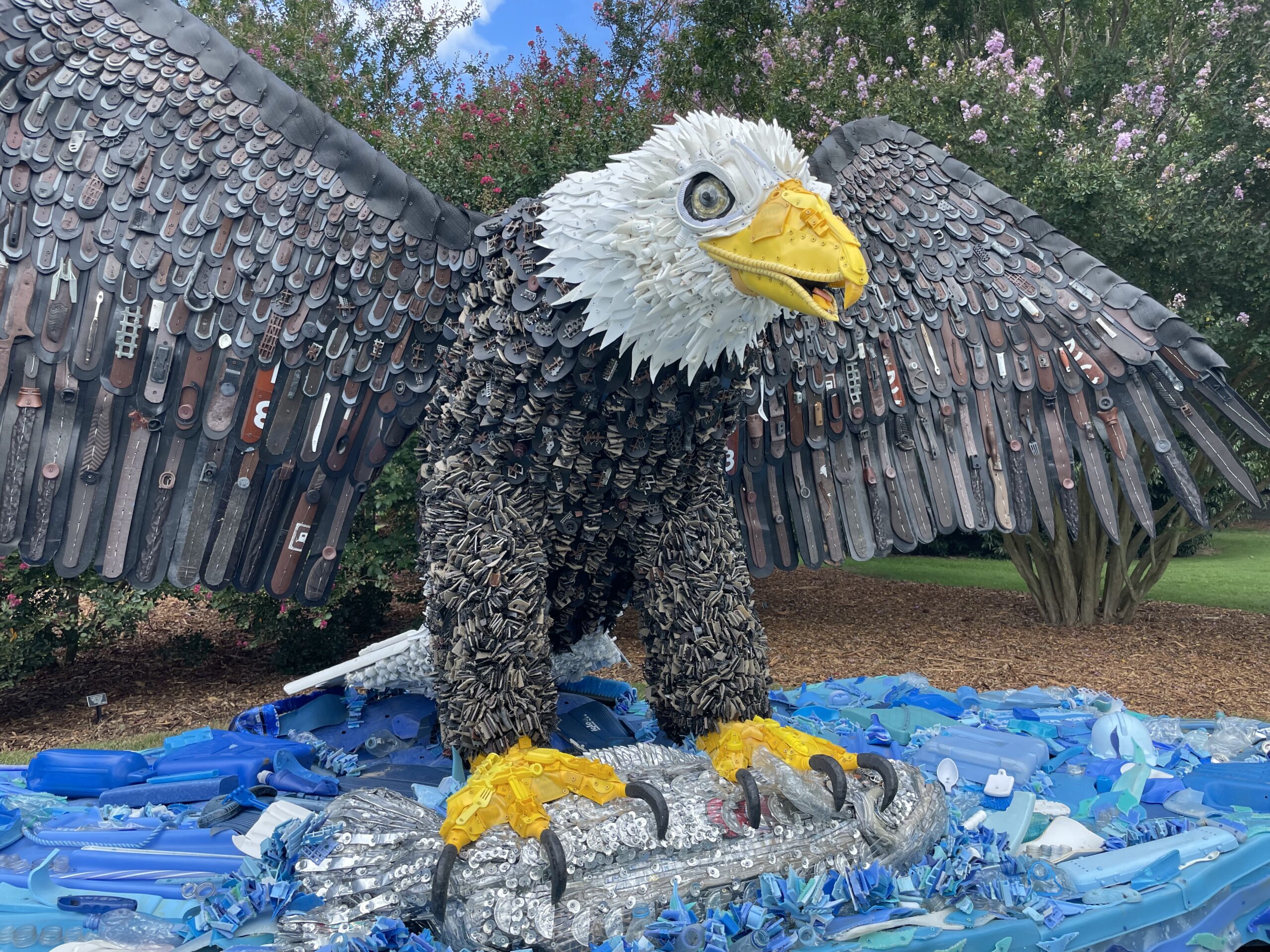
Rosa, the bald eagle, was created by Washed Ashore volunteers collaborating nationwide despite the pandemic. Washed Ashore is a nonprofit that repurposes ocean plastic to make art and raise awareness.

Having read about Washed Ashore at the New York Times before the pandemic, I wondered how these plastic-waste-fighting artists managed to keep going during lockdown. I should have known: nothing can stop them.

Founder Angela Haseltine Pozzi showed her mettle in an early March 2020 interview with Alex V. Cipolle: “Angela Haseltine Pozzi stands shoulder to shoulder with Cosmo, a six-foot-tall tufted puffin, on a cliff overlooking the blustery Oregon coast. It is January and the deadly king tides have come to Coquille Point, making the shoreline look like a churning root-beer float.

“Cosmo endures the weather just fine, as he is composed of plastic that has washed ashore — flip-flops, bottle caps, toy wheels, cigarette lighters — all mounted to a stainless-steel frame and bolted to concrete. The puffin is a sculpture from Ms. Haseltine Pozzi’s art and education nonprofit, Washed Ashore, whose tagline is ‘Art to Save the Sea.’

‘We’ve cleaned up 26 tons off the beaches, Ms. Haseltine Pozzi said, ‘which isn’t a dent in the actual pollution issue, but we’re doing something by raising awareness and waking people up.’ …

“Washed Ashore has taken those 26 tons of garbage, all debris that washed up on the Oregon coast (the majority within 100 miles of Bandon), and built 70 large-scale sculptures and counting, including Octavia the Octopus, Edward the Leatherback Turtle and Daisy the Polar Bear. …

“[The National Oceanic and Atmospheric Administration] estimates that eight million metric tons of plastic end up in the ocean each year. Marine animals become entangled in it or ingest pieces they mistake for food, such as the whale that recently washed ashore in Scotland with 220 pounds of debris in its belly — the same weight in plastic an American throws away annually.”

So having read about Haseltine Pozzi’s efforts to draw attention to this travesty through art, I wondered what happened to Washed Ashore during the pandemic. Surely, there would have been no more of Pozzi’s in-person workshops, workshops where Washed Ashore invites “the Buddhists and the Baptists, and the rednecks and the hippies, and the Republicans and the Democrats, and they all sit around the table and they all work together.”

The nonprofit’s excellent blog has that piece of the story.

“When the Covid-19 pandemic led to a national lockdown of indoor spaces in early 2020, the Washed Ashore gallery and art studios were affected much like everyone else. Volunteer activity ceased, exhibits were closed, and workshops were emptied. Washed Ashore relies heavily on a steady stream of volunteers to collect and sort debris and build parts of sculptures, accompanying our full-time staff of artists and helpers. But overnight, our doors were closed and volunteers sent home.

“Knowing the problems of plastic ocean pollution were too great to ignore, Washed Ashore looked to find a creative way to continue our mission to create ‘Art to Save the Sea’ and finding a way to still work together, but differently. …

“And so we got to work, calling on supporters and putting together a plan to unite us as the pandemic kept us all apart. [We] opened our determined efforts nationwide with a goal to work together and create a new sculpture, a symbol of unity.

“What better symbol of hope and unity for the people of the United States than a giant American Bald Eagle, the symbol of our democracy?

“The project was named ‘Come Soar With Us,’ by our Executive Director Katie Dougherty, and our team got to work putting together detailed plastic debris construction kits and instructions and mailing them out across America to over 1,550 volunteers across seven states. Their tireless participation stretched well over eight months, creating the feathers for what would be become Rosa’s impressive wingspan. …

“During a time when so much was halted, the momentum and collaboration from creating Rosa with all of our staff and volunteers was inspiring and has given our team an enormous sense of pride and accomplishment. … You can see Rosa in person at Norfolk Botanical Garden in Norfolk, Virginia, from August 21 – November 4, 2021.”

More at the Washed Ashore blog, here, and at the New York Times, here.

Read Full Post »

Photo: Cologne, Germany, police.
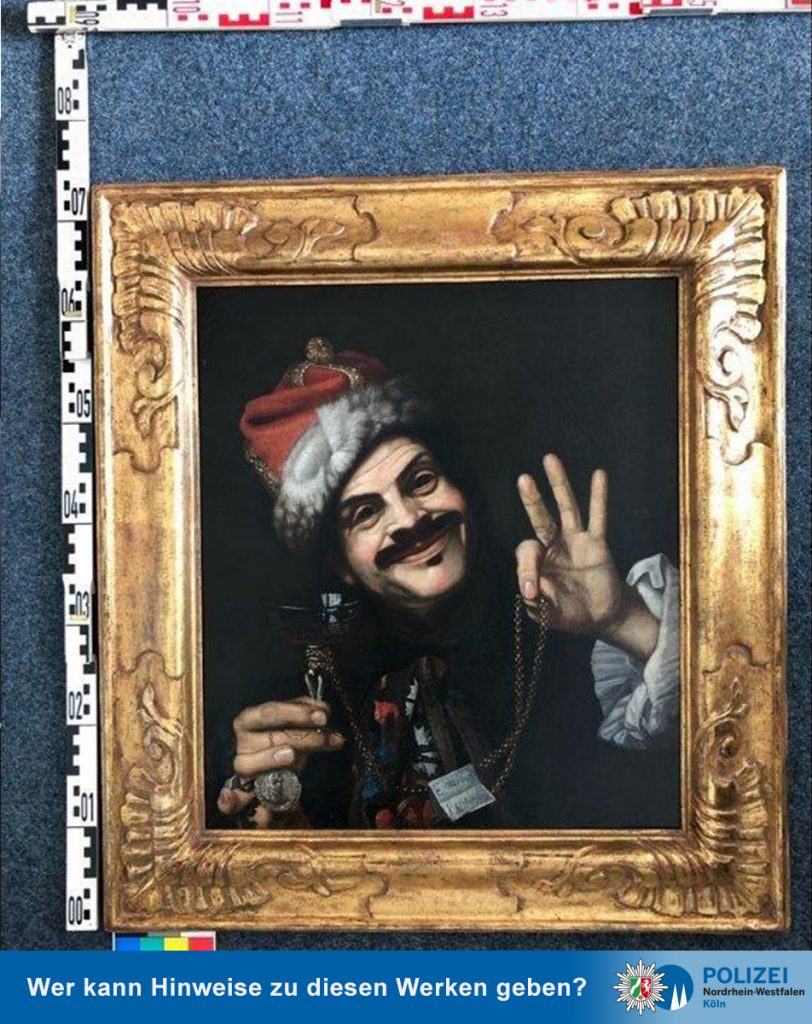
This painting by the artist Pietro Bellotti was found in a dumpster in Germany.

German dumpsters are yielding up treasures these days. In one case the rightful owners are unknown and being sought; in another, an owner realized in time that he’d left a valuable painting in an airport. (We all know how that can happen when our flight is called and we jump up. But we’re more likely to leave a sweater than a Tanguy.)

Naomi Rea writes about the unknown owners at Artnet News: “Police in Germany are appealing to the public for tips about the origins of two 17th-century paintings that mysteriously ended up in the garbage at a highway rest stop last month.

“According to authorities in the western city of Cologne, a 64-year-old man stumbled upon the two oil paintings in a dumpster at a rest stop near Ohrenbach on May 18. The man, who was taking a driving break at the stop at around 4 p.m., took the paintings with him and later turned them in to police in Cologne.

“After the paintings were examined by an expert, police concluded that they are both 17th-century originals, and have put out a public appeal to find their owner: ‘Who knows the paintings shown and / or how they got into the dumpster at the service area?’

“The first painting is a raucous self-portrait by the Italian painter Pietro Bellotti, dated to 1665. The other is a portrait of a boy by the Dutch Old Master Samuel van Hoogstraten, which has not been dated.

“The auction record for a Belloti is $190,000, achieved at the Swiss house Koller Auktionen in 2010, according to Artnet’s Price Database. There are multiple versions of the painting, and a very similar portrait, titled Self-Portrait of the Artist as Laughter, was put up for sale at Christie’s London in 2006 (estimate: $55,000–$91,000). … Other versions of the Bellotti painting are in the collection of the Uffizi Galleries in Florence, the Pinacoteca di Brera, and a third was once part of the Scheufelen Collection in Stuttgart.

“Meanwhile, works by Van Hoogstraten, who studied under Rembrandt in Amsterdam, have sold for as much as $788,000 (at Christie’s Monaco in 1993). The artist is best known for his experiments with perspective.” More at Artnet News, here.

In related news, a surrealist work turned up in another German dumpster. Check out Jesse O’Neill’s New York Post article from December.

“A surrealist painting worth $340,000 was recovered from a paper-recycling dumpster in Germany, police say.

“The valuable artwork, by French painter Yves Tanguy, was accidentally left behind by a businessman at Duesseldorf’s airport. The flier had forgotten the painting, which was packaged in cardboard, at an airport check-in counter before he boarded a flight to Tel Aviv, Israel, on Nov. 27.

“By the time the man landed in Israel, realized what he’d done and contacted police, the 16-by-24-inch masterpiece had disappeared. The mystery was solved only after the businessman’s nephew traveled to the airport from Belgium and talked with police. An inspector was able to trace the painting to a recycling dumpster used by the airport’s cleaning company.”

More at the New York Post, here. At least in that case, the owner knew where to look.

Read Full Post »

Photo: Oxia Palus and Lebenson Gallery London.
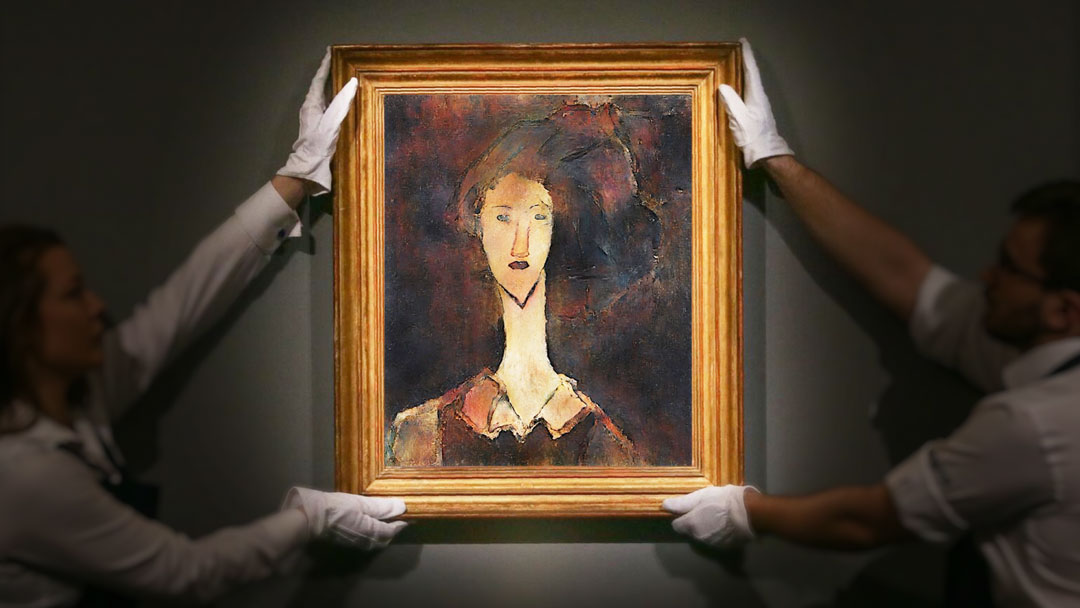
The Hidden Picture of Beatrice Hastings by Amedeo Modigliani was created by Oxia Palus using AI technology.

Nowadays, art and science work hand in hand. Consider this story about how artificial intelligence was used to reveal an unknown painting by a great master. It starts with the practice of “overpainting.”

Suzanne’s art professor overpainted because he wanted you to sense what was underneath. But at Hyperallergic, Lauren Moya Ford writes, “Artists paint over their finished canvases for many reasons — out of frustration at a failed design, because they lack the funds to buy more material, or even to spite whoever or whatever they’ve depicted.

“The latter was the case in Amedeo Modigliani’s ‘Portrait of a Girl‘ (1917), an oil painting of a sullen, seated brunette now held in the collection of the Tate. X-ray studies of the canvas conducted by the museum in 2018 revealed that the piece was originally a full-length portrait of another woman, a slender blonde with angular, elongated features. A portion of this hidden painting — now on view at Lebenson Gallery in London — was uncovered and reconstructed by two scientists using a combination of stereoscopic imaging, artificial intelligence technology, and 3D printing.

“Neuroscientist Anthony Bourached and physicist George Cann joined forces in London in January 2019 to found Oxia Palus, a scientific project that uses machine learning to reconstruct what the duo calls ‘NeoMasters,’ or artworks that have been previously hidden from view under the layers of later paintings. Their past efforts have uncovered a Blue Period nude by Picasso, a Madonna by Leonardo da Vinci, and a landscape painting by Santiago Rusiñol that was later painted over by Picasso, the artist’s friend and mentee. To discover these ‘lost’ works, Bourached and Cann apply a neural style transfer algorithm to X-rays of paintings that are suspected to have another artwork hidden below their surfaces. The technology utilizes imagery from the scan, as well as information from the artist’s other works, to reproduce colors, brushstrokes, and other distinguishing features.

“Unlike conservators or other art specialists, Bourached and Cann bring uniquely non-art areas of expertise to the pieces they analyze.

‘George’s inspiration comes from his research on the surface of Mars for the detection of life,’ Bourached explains in a recent email to Hyperallergic. …

“Who was the woman whose likeness has suddenly been unearthed more than 100 years later? She’s thought to be Modigliani’s ex-lover and muse, the English poet, writer, and literary critic Beatrice Hastings. … The two years that the couple shared an apartment in Montparnasse were creatively productive for both: Hastings published prolifically, and is known to have posed for at least 14 of Modigliani’s portraits. But their relationship was also plagued by alcohol addictions, explosive personalities, and violent confrontations. …

“It was perhaps to symbolically scorn his former lover that Modigliani painted over her portrait in 1917, but, thanks to the two London scientists, Hastings has found a way to see the light again. As she wrote in 1937, ‘Civilized woman wants something more than to be the means to a man’s life. She wants to live herself.’ ” More at Hyperallergic, here.

Who gets the last word about what an artist shows to the world? At some point, the work no longer belongs to the artist but to the public. The only way an artist gets final say, I suspect, is to have some acolyte like Jane Austen’s sister Cassandra, who burned all the novelist’s letters after her death. Cassandra thought that whatever her sister wanted done was more important than what posterity might want.

Read Full Post »

Photo: Jörg Gläscher via DesignBoom.
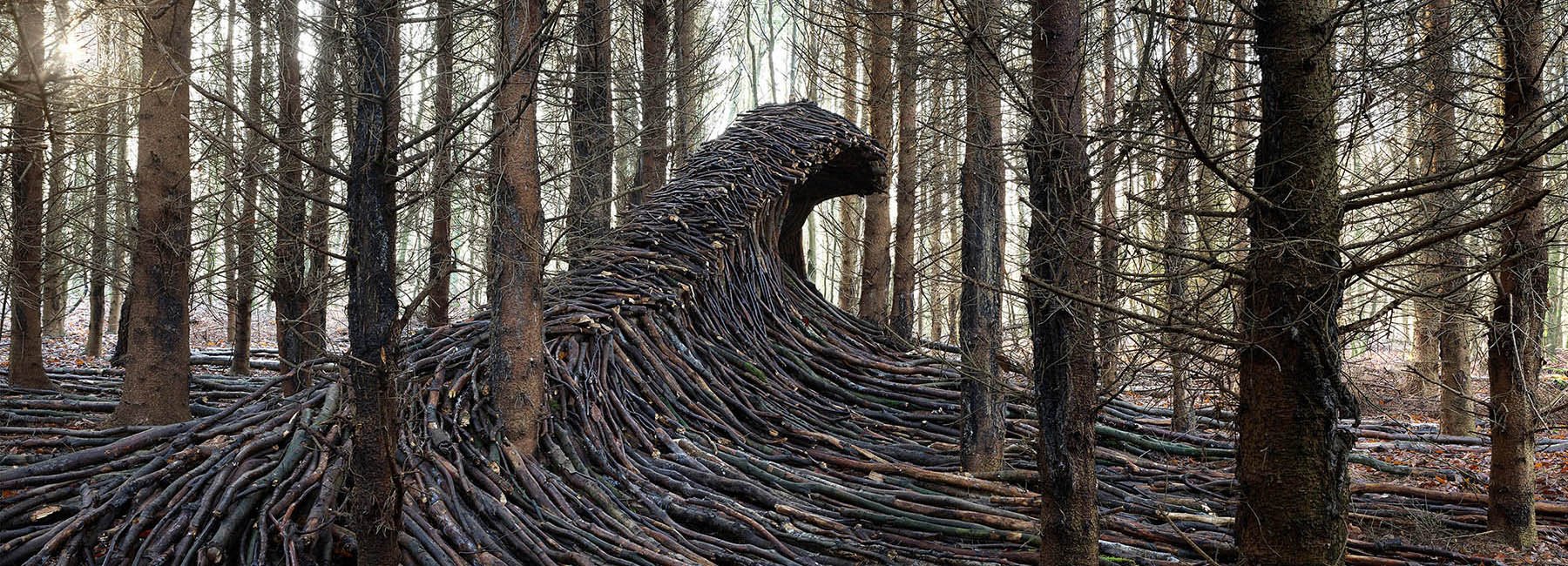
A photographer built nine massive waves of deadwood in a forest near Hamburg, Germany.

A few years ago, I blogged about seeing Patrick Dougherty’s giant stick sculptures in Salem, Mass. He was getting a lot of attention at the time, and I studied up on him at the Smithsonian.

So I was reminded of Dougherty and the beautiful possibilities of sticks when John sent me a link to an article at This Is Colossal. The German photographer Jörg Gläscher, or @joerg_glaescher on Instagram, is the artist. (Colossal was tipped off to the story at This Isn’t Happiness.)

Grace Ebert reported, “As the fear of a second wave of COVID-19 swept through Germany in the fall of 2020, photographer and artist Jörg Gläscher decided to channel his own worry into a project that felt similarly vast and domineering. ‘I was working (with the idea of) the pure power of nature, the all-destroying force, which brings one of the richest countries in the world to a completely still stand,’ he tells Colossal. …

“Between November 2020 and March 2021, Gläscher spent his days in a secluded location near Hamburg, where he gathered deadwood and constructed nine massive crests — the largest of which spans four meters high and nine meters wide — that overwhelm the forest floor in undulating layers of branches and twigs. Each iteration, which he photographed and then promptly destroyed in order to reuse the materials, overwhelms the existing landscape with pools of the formerly thriving matter.

“Gläscher’s installations are part of a larger diaristic project he began at the beginning of the pandemic. Since then, he published a few magazines to present the works that range from photography to sculpture in one place. … Find more of his multi-media projects on his site and Instagram.” Great photos here.

I like thinking about an artist pursuing a project suggesting tidal waves when, like him, we were all isolating ourselves from the tidal wave of Covid. There is something intriguing about his taking the waves apart and reconstructing them in different forms. Doesn’t coronavirus do that, too?

The Covid Art Museum on Instagram was and still is an artistic response to the pandemic. And considering that the pandemic wave hasn’t yet crested worldwide, I’m sure we’ll be seeing other, Covid-inspired artworks — not to mention, more art from sticks.

As Patrick Dougherty has said, “A stick is an imaginative object. … I think we have a kind of shadow life of our hunting and gathering past, especially in our childhood play. Because a stick — a piece of wood — is an object that has an incredible amount of vibration for us.”

Read Full Post »

Photo: Leong Leong.
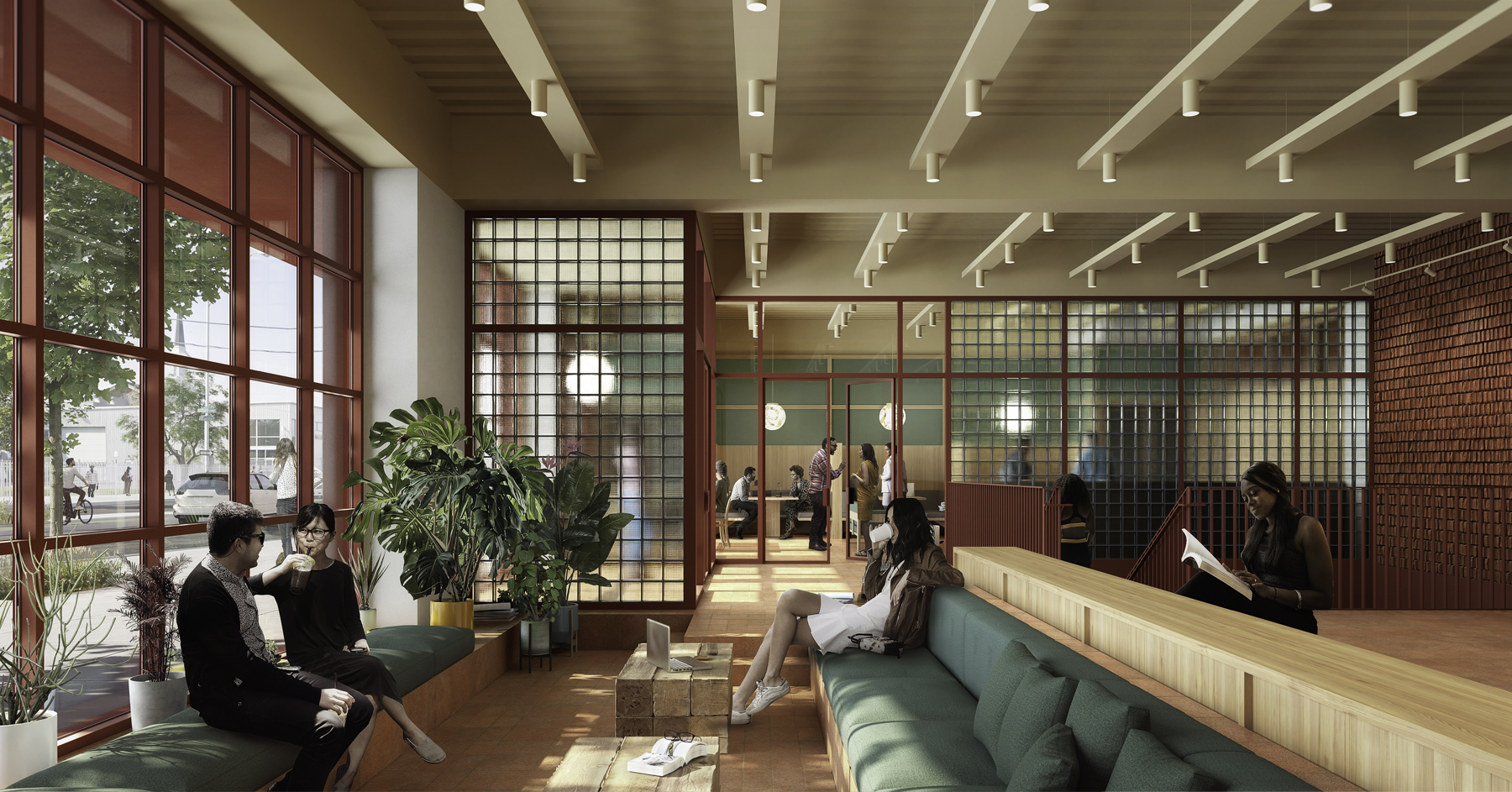
Leong Leong’s Ray Fishtown in Philadelphia is meant to surround residents with art. A Russian philanthropist is collaborating on the project.

I thought this article about including original art and artists’ studios in residential buildings was interesting. I confess, however, that the extreme wealth of the young Russian woman who is behind the concept makes me uncomfortable. She’s the daughter of an oligarch, and it’s hard for me to believe anyone makes a fortune in Russia without workers suffering. Of course, we also have guys like that.

As Taylor Dafoe reported at Artnet News, “Russian collector Dasha Zhukova, who founded Moscow’s Garage Museum of Contemporary Art, has launched a new real-estate venture with the aim of bringing residential apartments, art studios, and exhibition spaces together under one roof.

“Ray, as Zhukova’s new business is called, already has two major developments underway, in Manhattan and Philadelphia. Its website describes them as ‘vertical villages’ and notes that prices will be ‘accessible.’ …

“Mexico City-based architect Frida Escobedo, who in 2018 became the youngest architect ever commissioned to build London’s Serpentine Pavilion, will lead the design of the 21-story development Ray Harlem.

“The building’s first four floors will serve as the new home of Harlem’s historic National Black Theatre, founded in 1968 by Barbara Ann Teer, and will include spaces for performance, events, and retail. The rest of the building will feature 222 apartments, artist studios, co-working spaces, as well as communal kitchens and libraries. …

“Ray Fishtown, a 110-unit building in Philadelphia designed by the architecture firm Leong Leong, is under construction now and boasts a similar slate of amenities, including a half-dozen street-level artist studios. New York artist Rashid Johnson will create a living greenhouse in the building’s lobby while Philadelphia-based artist Michelle Lopez will add a text-based intervention on the split brick facade. Lopez will also work out of a studio at the development and become its inaugural artist in residence when it opens. …

“Designer Suzanne Demisch, who’s been recruited by Ray to work on the upcoming projects, tells Artnet News that the firm will look to work with ’emerging and established artists, designers, and architects’ who are ‘local’ and ‘forward-thinking.’

“Demisch, who’s worked with Zhukova on various projects for a decade, says the philanthropist first articulated her vision for Ray five or six years ago. … ‘She asked me if I would join her in defying the traditional boundaries of architecture and design in the residential field and [creating] more equitable access to the built spaces of the future.’  

“Zhukova seems to have taken some inspiration for Ray from the Garage Museum building, which was designed by Rem Koolhaas and has proved to be as big a draw as the programming inside, Zhukova told the Wall Street Journal. … 

“ ‘Even if [visitors] had seen all the shows that we had on, they would just stay and hang out in our lobby,’ she said. ‘They would hang out in our cafe for hours on end—just come back day after day because they wanted to be in that environment.’ 

“Each of Ray’s developments will offer its future inhabitants a grip of perks calibrated to the creative culture of their respective cities and neighborhoods, including workshops with local artists and live events sponsored by nearby arts organizations.”

More at Artnet, here, and at Ray Fishtown, here. The pandemic undoubtedly slowed the Ray timeline, but I’m going to keep an eye on it and see how it turns out. I’m especially curious how they plan to deliver the “equitable” aspect as I feel sure they’ll be able to get high-paying buyers with a concept like that.

Read Full Post »

Photo: Michelle Groskopf.
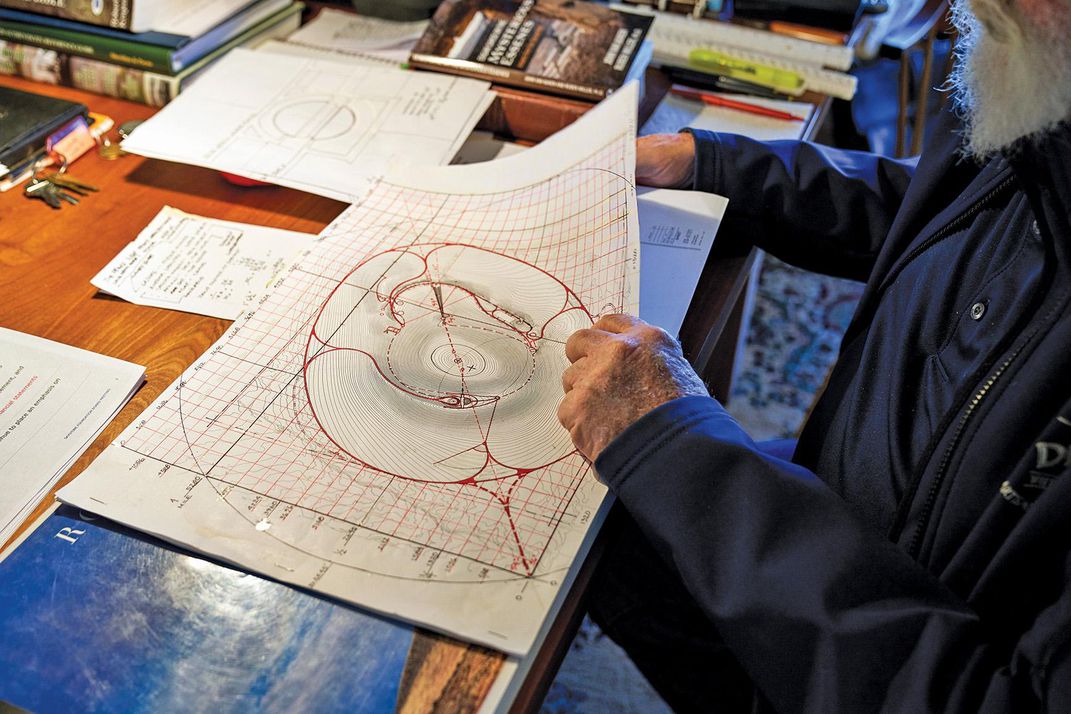
At home in Arizona, James Turrell views plans for the access road to his giant desert artwork. “Tight contour lines near the center represent the steep slope to the summit,” the
Smithsonian reports.

What is the difference between intensity and obsession, and does the latter ever benefit humanity? Read this story and be the judge. It’s about an artist in his late 70s who as a young man spent a year in jail for teaching other young men how to avoid the draft — and Vietnam. An unusual person.

At the Smithsonian magazine, Wil S. Hylton describes James Turrell’s massive art project in the desert.

“It was a cloudless day in northern Arizona,” writes Hylton, “and James Turrell wanted to show me an illusion. We climbed into his pickup truck and drove into the desert. After a few miles, he turned off the pavement to follow a dusty road; then he turned off the road and barreled across the desiccated landscape. When we reached the base of a red volcano, he shifted into four-wheel-drive. …

“The engine groaned and Turrell gripped the wheel with two hands as we climbed. Here and there we lost traction and slipped backward a few feet, but eventually we reached the top. The desert stretched for miles around, a patchwork of green and gold and brown, with the snowcapped peaks of the San Francisco mountains on the horizon.

“Turrell pointed down. ‘You see how the area right below us seems to be the lowest point?’ he asked. I followed his gaze, and it was true: The desert appeared to slope toward us from every direction, as if the volcano were sitting at the bottom of an immense bowl. ‘But it can’t be,’ Turrell said, ‘or we’d be surrounded by water. This is an illusion that Antoine de Saint-Exupéry talked about. You have to be between 500 and 600 feet above the terrain for it to happen.’ …

“Turrell, who turns 78 this year, has spent half a century challenging the conventions of art. While most of his contemporaries work with paint, clay or stone, Turrell is a sculptor of light. He will arrive at a museum with a construction crew, black out the exterior windows, and build a new structure inside — creating a labyrinth of halls and chambers, which he blasts with light in such a way that glowing shapes materialize. In some pieces, a ghostly cube will appear to hover in the middle distance. In others, a 14-foot wedge of green shimmers before your eyes. One series that Turrell calls ‘Ganzfelds’ fills the room with a neon haze. To step inside is to feel as if you are falling through a radioactive cloud. In another series, ‘Skyspaces,‘ Turrell makes a hole in the roof of a building, then winnows the edges around the opening to a sharp point. The sky above appears to flatten on the same plane as the rest of the ceiling, while supersaturated tones of light infuse the room below.

“Turrell’s work can be found in 30 countries around the world. He has produced nearly 100 Skyspaces alone. … The volcano is different. It is Turrell’s most ambitious project, but also his most personal. He has spent 45 years designing a series of tunnels and chambers inside to capture celestial light. Yet Turrell has rarely allowed anyone to visit the work in progress. Known as Roden Crater, it stands 580 feet tall and nearly two miles wide. One of the tunnels that Turrell has completed is 854 feet long.

When the moon passes overhead, its light streams down the tunnel, refracting through a six-foot-diameter lens and projecting an image of the moon onto an eight-foot-high disk of white marble below.

“The work is built to align most perfectly during the Major Lunar Standstill every 18.61 years. The next occurrence will be in April 2025. To calculate the alignment, Turrell worked closely with astronomers and astrophysicists. Because the universe is expanding, he must account for imperceptible changes in the geometry of the galaxy. He has designed the tunnel, like other features of the crater, to be most precise in about 2,000 years. Turrell’s friends sometimes joke that’s also when he’ll finish the project. …

“One thing I came to understand about Turrell was that, deep in his marrow, the crater was not just a vision but a kind of duty. The decades of struggle to gather funds, perfect the design and continue work on the project were culminating in the twilight of his life with a painful recognition that time was running out. … He had, reluctantly, shifted his focus to drafting meticulous blueprints for the crater, so that if he did not complete it, someone else could. But there was little peace in that. He seemed to be torn between the forces of obsession and mortality.

“That began to change a few years ago, when Turrell got a call from Kanye West. Like countless others, West wanted to visit the crater. But for reasons even Turrell cannot explain, he agreed to give West a private tour. Late one night, they wandered for hours through the underground chambers, staring at the stars and basking in ethereal light. Afterward, West offered to donate $10 million to the project, which Turrell, who has received many more offers than actual donations over the years, regarded as a compliment, but little more. Then the money appeared.”

Whoa!

Read the whole story at the Smithsonian, here.

Read Full Post »

« Newer Posts - Older Posts »