Feeds:
Posts
Comments

Posts Tagged ‘artists’


Photo: Heidi Gumula/DBVW Architects
After the Mercantile Block in Providence, Rhode Island, was restored, it became a hub of activity once again.

Rhode Island in general is good at preserving historic sites, offering developers monetary assistance in the form of generous tax credits. Providence in particular has a history of successful efforts to renovate properties for new uses.

At the National Trust for Historic Preservation, Jared Foretek writes about one: “When the Providence, Rhode Island nonprofit AS220 set out to purchase its third downtown building, it knew the Mercantile Block had exactly what it was looking for. Its sheer size — 50,000 square feet, four stories, and a basement — made the 1901 structure perfect for the diverse uses the artist-run organization had in mind. There was storefront space for creative businesses, office space for local nonprofits, and room for 22 live/work studios for local artists.

“Built in 1901, the building was once the hub of a bustling commercial strip in downtown Providence [and] remained a destination until the middle of the 20th century, when the Mercantile and its surrounding neighborhood fell victim to the same economic and migratory forces that ravaged urban cores around the nation.

“The building was nearly vacant when AS220 — an organization dedicated to creating artist space in Providence since 1985 — undertook a $16.9 million rehabilitation in 2008. …

“A meticulous restoration of the building’s four-story facade by DBVW Architects has helped revitalize the entire streetscape and inspired building owners to take up rehabilitations nearby. The mixed-use redevelopment has benefited the broader community as well, with affordable storefronts for local small businesses, office space for Providence-based nonprofits, and subsidized live/work studios for artists. …

“The renovation also allowed locally owned small businesses — some long-time tenants — to lease newly desirable downtown storefronts at low cost. For a restaurant like Viva Mexico!, one of just a few Latino-owned businesses in the downtown area, affordable space with good real estate is hard to come by. …

“ ‘It’s a story that a lot of communities have. Artists live in places that are semi-legal or if they’re legal, they’re underdeveloped. And as soon as spaces become viable and interesting, artists get pushed out, and low-income people get pushed out,’ said Shauna Duffy, AS220’s Managing Director. ‘So our mission is to create these spaces and create this community. And that involves having a permanent place for artists to live affordably downtown in Providence.’ ”

More.

Read Full Post »

Photo: Big Car Collaborative
The search for a housing model that benefits both artists and communities.

Low-income communities often benefit artists by providing cheap housing. And artists benefit low-income communities — at least until a tipping point comes and improved ambience spills over into gentrification. That’s when neighbors find that rents have gone too high, and the artists do, too.

Indianapolis is testing an approach to make artist and community interaction a long-term benefit for all.

Adele Peters writes at Fast Company, “For artists, the gentrification cycle in cities often goes something like this: struggling photographers or painters or writers move into an industrial neighborhood with cheaper rents and transform it. As new businesses spring up to serve these new residents, the neighborhood becomes more desirable to a wider swath of upper-middle class professionals. Eventually, rents increase so much that the artists have to move away.

“In Indianapolis, one block in the Garfield Park neighborhood south of the city’s downtown is experimenting with a different model. An arts nonprofit worked with other partners to buy and renovate vacant houses and is now offering to co-own them with artists.

“Artists will pay half the cost – one $80,000 home, for example, will sell for around $40,000. If they later move out, they’ll get their equity back, but no more; the house will be sold at the same cost to someone else, keeping the neighborhood accessible as the artists help make it more desirable.

” ‘Neither of the two sides can profit off of an inflated market value,’ says Jim Walker, executive director of Big Car Collaborative, the art and placemaking nonprofit leading the project along with the local Riley Area Development Corporation and local neighborhood associations. ‘That’s to keep us from pricing out future owners of the homes.’ …

“When Big Car bought an abandoned factory on a block in Garfield Park, converting it into a community art center that opened in 2016, the organization realized that there was a bigger opportunity in the area. The block, cut off from part of the neighborhood by a highway built in the late 1960s and early 1970s, had declined for years; roughly half of the houses were abandoned. …

“ ‘These homes were available to us below $20,000, on average, because they were owned by banks in Florida and other investors who just walked away,’ says Eric Strickland, executive director of Riley Area Development Corporation, which works on community development in and around downtown Indianapolis. …

“The Artist and Public Life Residency program is designed for artists who are particularly interested in community and placemaking. ‘What we’re really looking for, first and foremost, is leadership in trying to invest in the community, and use the talents and resources that you have to support your own neighborhood,’ says Walker. …

“The development corporation wants to encourage other developers to build new affordable housing for the area to help keep the most vulnerable people in place. …

“Big Car is working closely with neighbors, who they say have been supportive of the changes–particularly the potential for local commercial streets to gain new businesses and bringing life to vacant houses.”

More at Fast Company, here.

Photo: Big Car Collaborative

Read Full Post »

Today the public radio program Studio 360 featured a shortened version of a wonderful WNYC documentary about the year 1913. That was the year Stravinsky’s The Rite of Spring was only one of many “shocking” arts events to usher in the modern age.

From the Studio 360 website: “What a year was 1913! In an exhibition in a New York Armory, American viewers confronted Cubism and abstraction for the first time. In Vienna, the audience at a concert of atonal music by Schoenberg and others broke out into a near-riot. And in Paris, Stravinsky and Nijinsky’s new ballet The Rite of Spring burst on stage with inflammatory results.

Culture Shock 1913 tells the stories behind these and other groundbreaking events that year, and goes back to consider what led to this mad, Modernist moment.

” ‘I think in a lot of ways it was just the beginning of a century just of absolute chaos and nightmare, and as so often, the artists heard it and reflected it first,’ notes the critic Tim Page.

“WNYC’s Sara Fishko speaks with thinkers, authors, musicians, art curators, and historians about this unsettling era of sweeping change — and the not-so-subtle ways in which it mirrors our own uncertain age.

“This Studio 360 episode is an abridged version of a one-hour documentary Sara Fishko produced for WNYC.” More here.

I liked how the documentary explains that the shock was derived from artists not wanting to master and perfect what was done in the past or to replicate nature but rather to be different and to focus on structure, taking things apart and putting back again differently. Artists themselves organized the Armory Show, not curators or galleries. They went to Europe, where change was erupting like crazy, and they brought back art never seen in conservative America.

A key takeaway was that when we see something really new we often think it is ugly, as people thought the Eiffel Tower ugly. But once they look and look some more, they begin to like it.

That helps me think about some of the art Asakiyume and I saw yesterday at the Worcester Museum of Art. It sure looked ugly to me, but it’s a good idea to keep an open mind. Asakiyume sets a good example in that department.

(My mother was born in 1913. Perhaps something was in the air that year that can explain her rebellious nature.)

Photograph taken by spDuchamp/flickr
Marcel Duchamp’s NudeDescending a Staircase, No. 2, was featured in the landmark Armory Show and outraged most visitors because she wasn’t reclining like traditional nudes and she was in motion and it was hard to see her.

Read Full Post »

Michelle Aldredge runs an outstanding arts blog called Gwarlingo. Recently, she wrote about snowflake art by the identical twins who created the Big Bambú installation at the Met. (I wrote here about the second life of Big Bambú when it was done being art.)

Asks Aldredge on December 21. “What do photographs of snow have to teach us about artistic originality?

“Today is the winter solstice, the shortest day of the year, and snowflakes have been on my mind, specifically the snowflakes of Doug and Mike Starn.

“Born in New Jersey in 1961, Mike and Doug Starn have worked collaboratively in photography since the age of thirteen. …

“The Starns’ approach [to snowflakes] is partly science, but mostly art. It took the brothers years to hammer out the logistics that would allow them to capture flakes during their fleeting existence — there were microscopic lenses, plasma-emitting lights, snowstorm photo sessions. But the results speak for themselves. There is a poetic quality about their flakes.” More.

The twins called Os Gemeos, whom I wrote about here are an artistic team, too. In fact, they say, they always know what the other twin is thinking as they work on giant murals like the one they did in Dewey Square, Boston.

After seeing the musical Sideshow, I became aware that even Siamese twins may have very different personalities, but it’s intriguing to think about the close communication many twins have.

 Art: Doug + Mike Starn, from the series alleverythingthatisyou, 2006-2007.

Read Full Post »

Matadero was an old abandoned slaughterhouse in Madrid. Lately it has been “evolving into a cultural laboratory, where a new arts financing strategy is being tested.” So says Doreen Carvajal in the NY Times.

“Companies and institutions are providing financial support to supplement dwindling government arts subsidies, but with a twist: they don’t just send checks, they move in.

“Within the walled 59,000-square-foot center, there are public theaters and exhibition spaces that last year drew more than 500,000 visitors for music and art events and avant-garde plays. But five new residents are private institutions, including a designers’ association, a publishing house’s foundation and offices of Red Bull, the Austrian energy drink maker.

“They are in the compound rent-free for now, but have invested millions in the remodeling of pavilions there, as well as in programming, from art exhibitions to music festivals.

“These new partnerships are forged, out of necessity, here in Spain, where government support for culture has plunged by almost 50 percent over the last four years, a result of a lingering economic crisis that hit late in 2008.”

Some observers worry about the downsides of corporations having a big influence on what art gets shown, but haven’t the arts always had to have some help from patrons or companies?

Probably it pays just to be wary, to recognize when there is undue influence, and to push back. Certainly smaller, more experimental projects are unlikely to find a home under a Red Bull banner.

Read more at the Times, here.

Photo: Carlos Luján for The International Herald Tribune
Inside Matadero Madrid: A closer look at the arts complex.

Read Full Post »

Cate McQuaid, my favorite Boston Globe art critic, who usually covers more esoteric subjects, explains some large artsy globes seen around Boston in recent days.

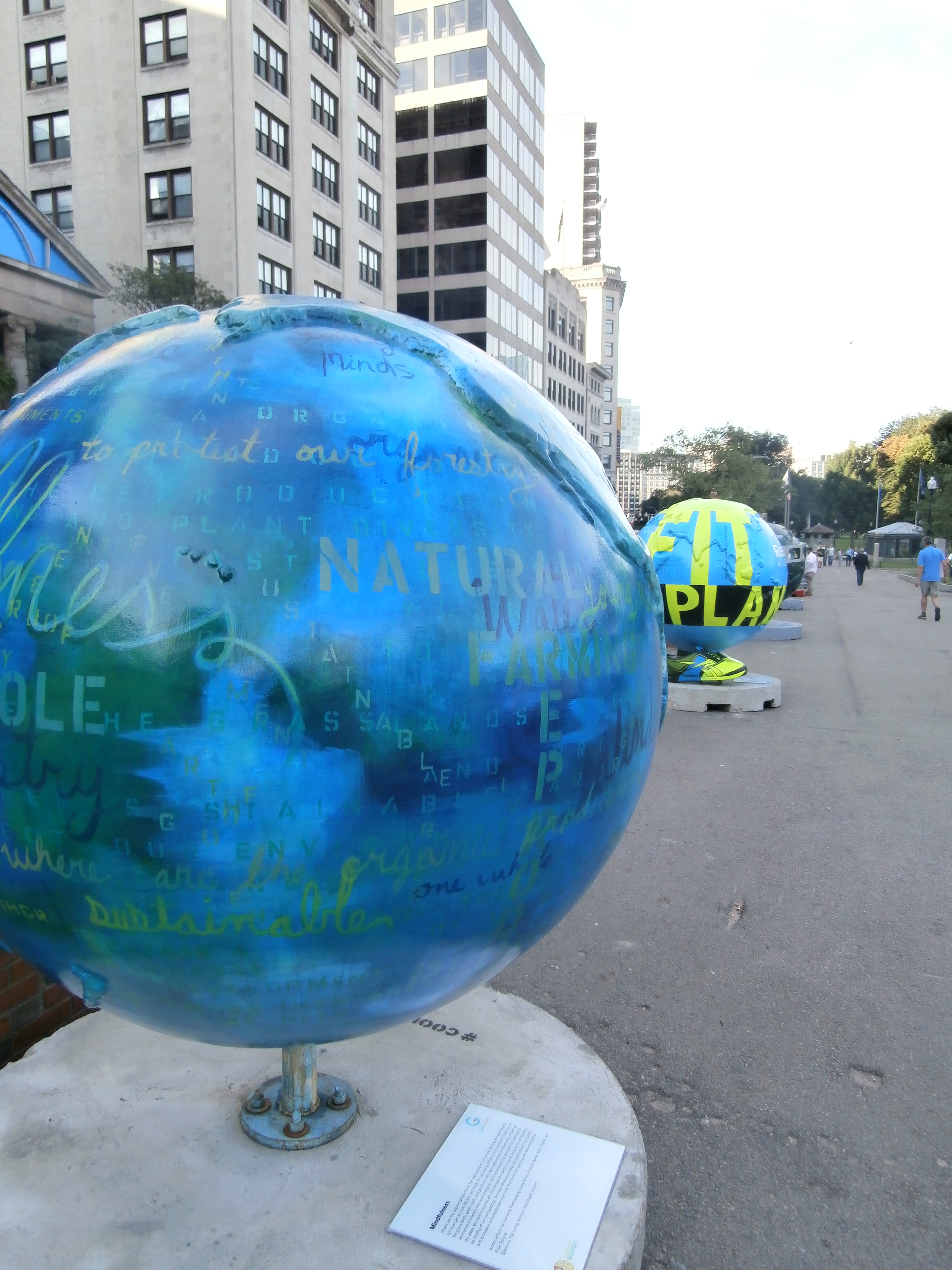
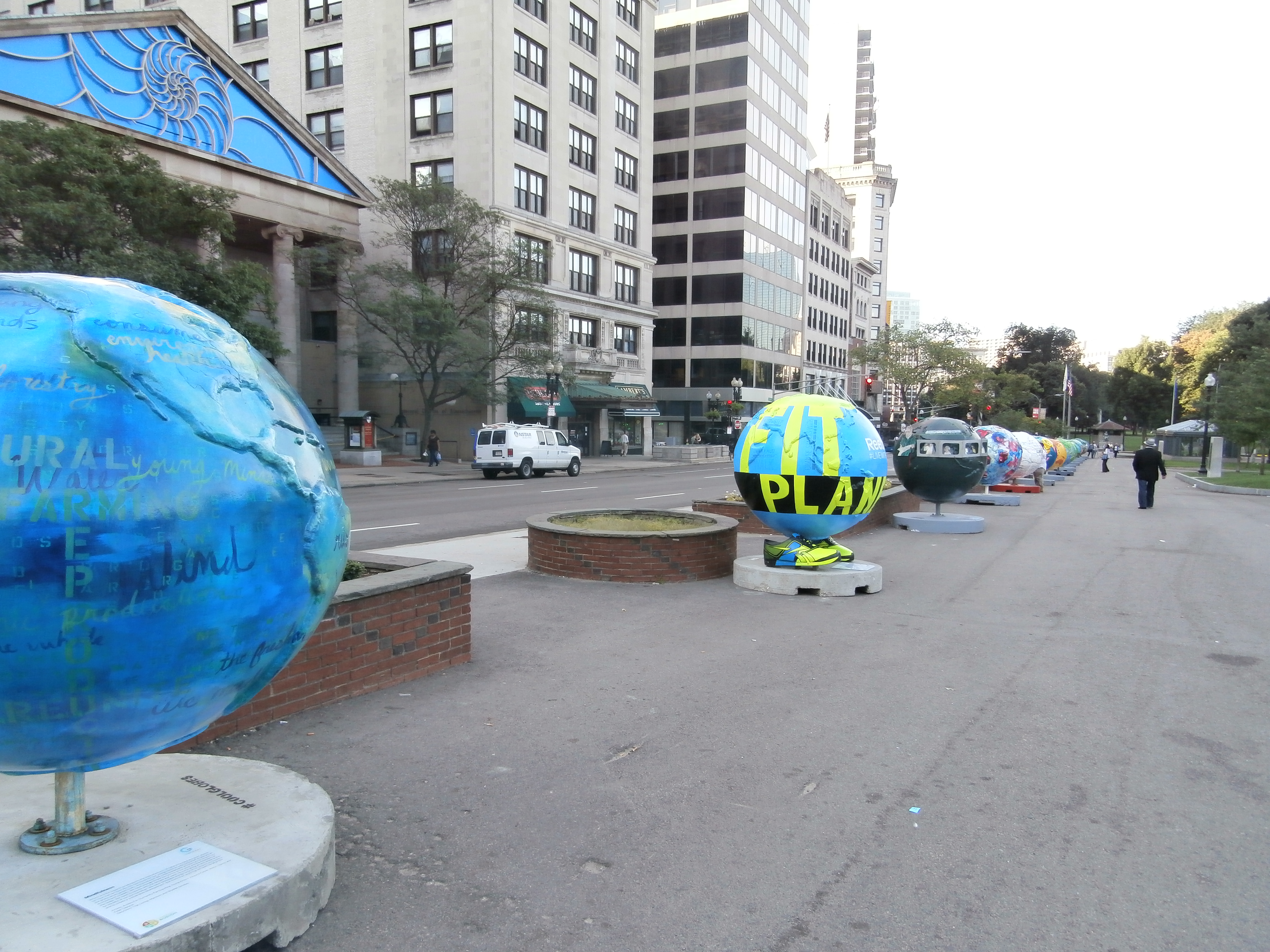
“Huge, colorful orbs line up in a row down the Tremont Street side of Boston Common. It looks like a giant might be marshaling his marbles. Get up close, and you’ll see that the spheres, each 5 feet in diameter, are globes, fancifully decorated and proffering solutions to climate change.

“ ‘Cool Globes: Hot Ideas for a Cooler Planet’ has landed in Boston. The public art project, for which artists designed globes with green strategies to contend with environmental issues, originated in Chicago in 2007 and has traveled the world.”

Environmental activist Wendy Abrams, says McQuaid, is the initiative’s founder.

“Abrams cites two inspirations for the project, the wrecked cars that Mothers Against Drunk Driving pointedly deploy in their Crash Car Program, and the painted cow sculptures that showed up in the streets of Chicago in 1999 — a public art project that prompted Boston to follow suit with painted cod.”

Read about individual artists’ Cool Globe themes, the outreach to students, and more, here.

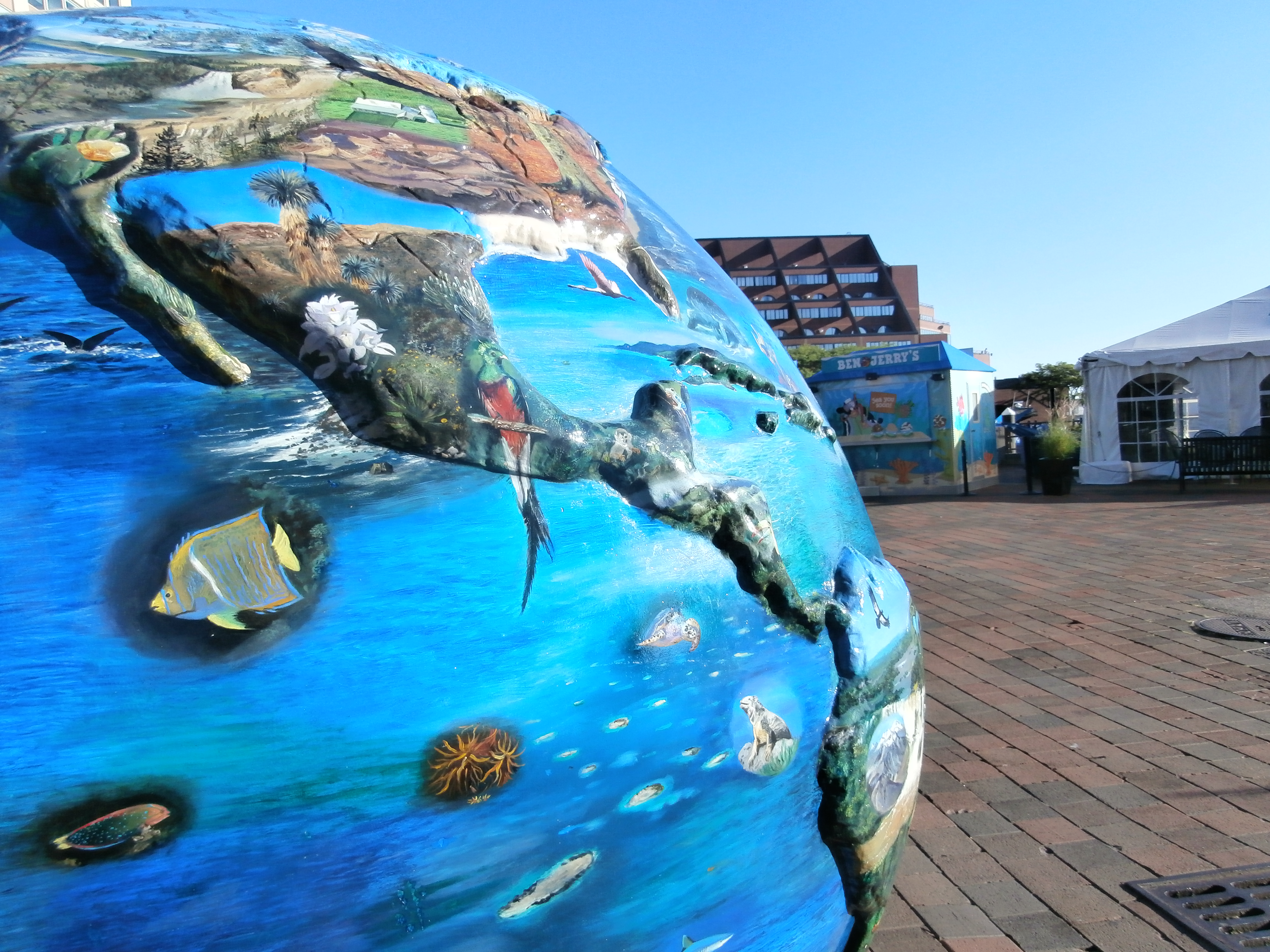
The first two photos below are near the Park Street subway station. The third is in front of the aquarium, and I am not sure if it is part of the traveling series.

cool-globes-boston

globes-for-a-coller-planet

globe-at-aquarium

Read Full Post »

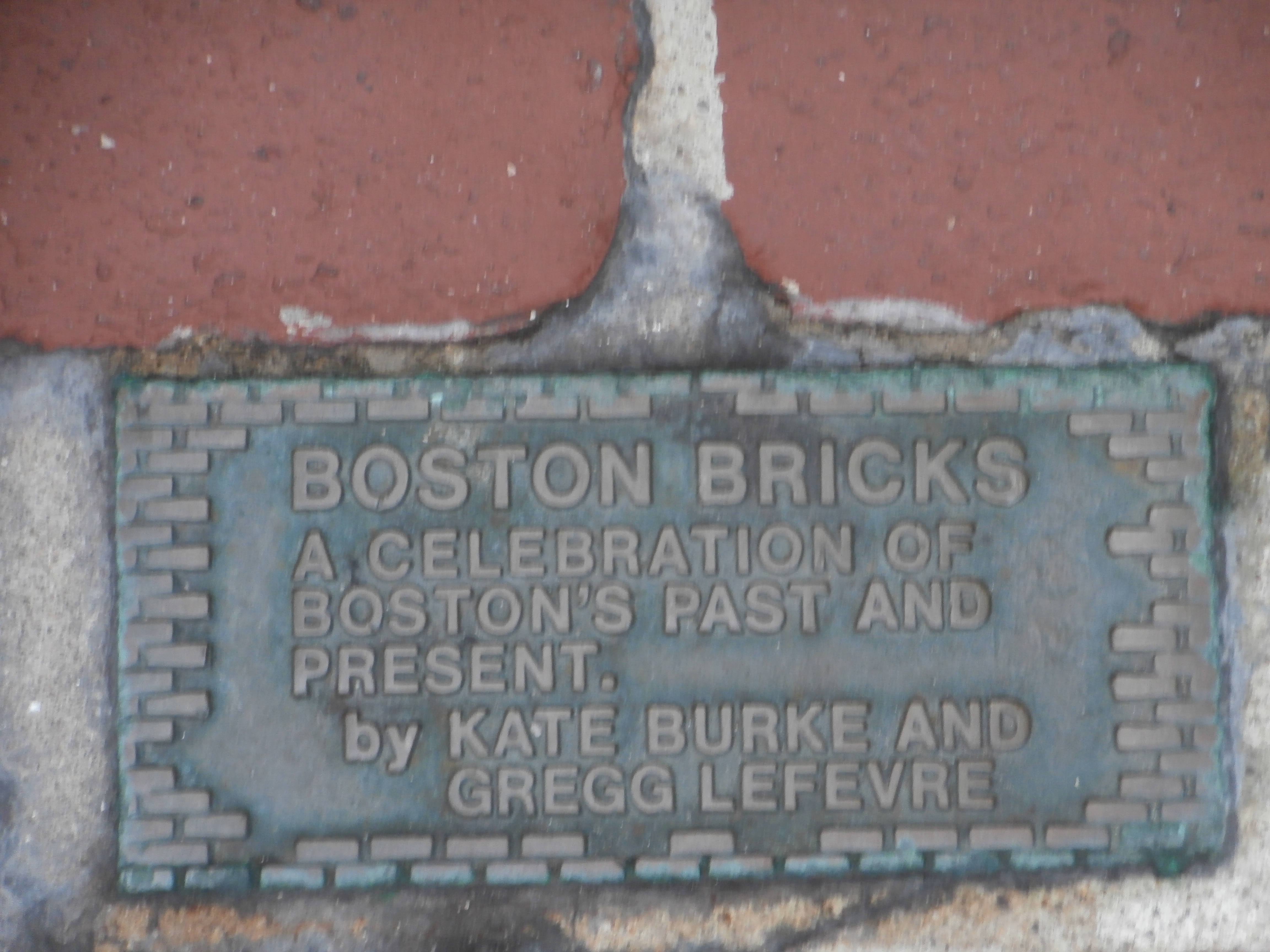
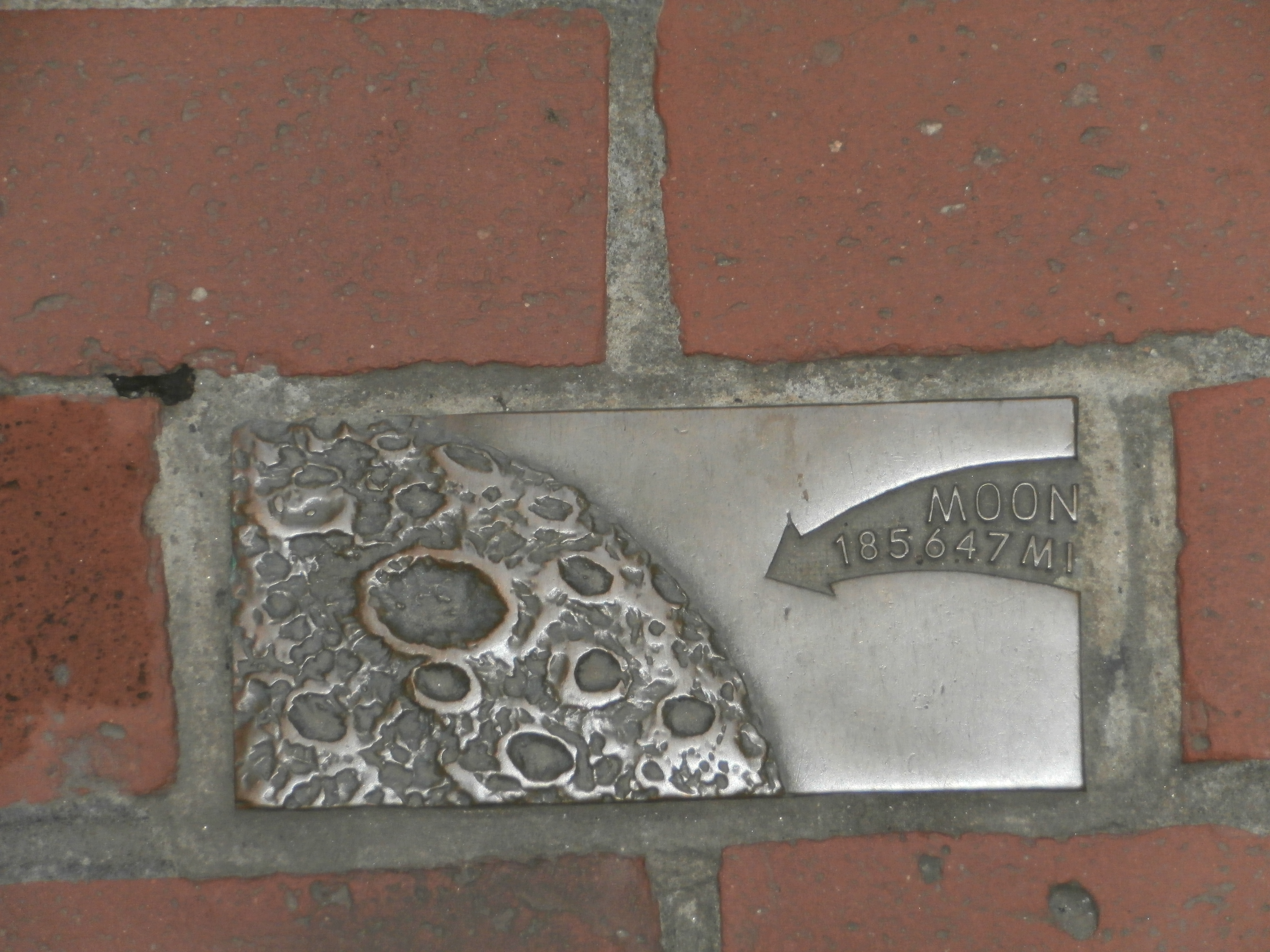
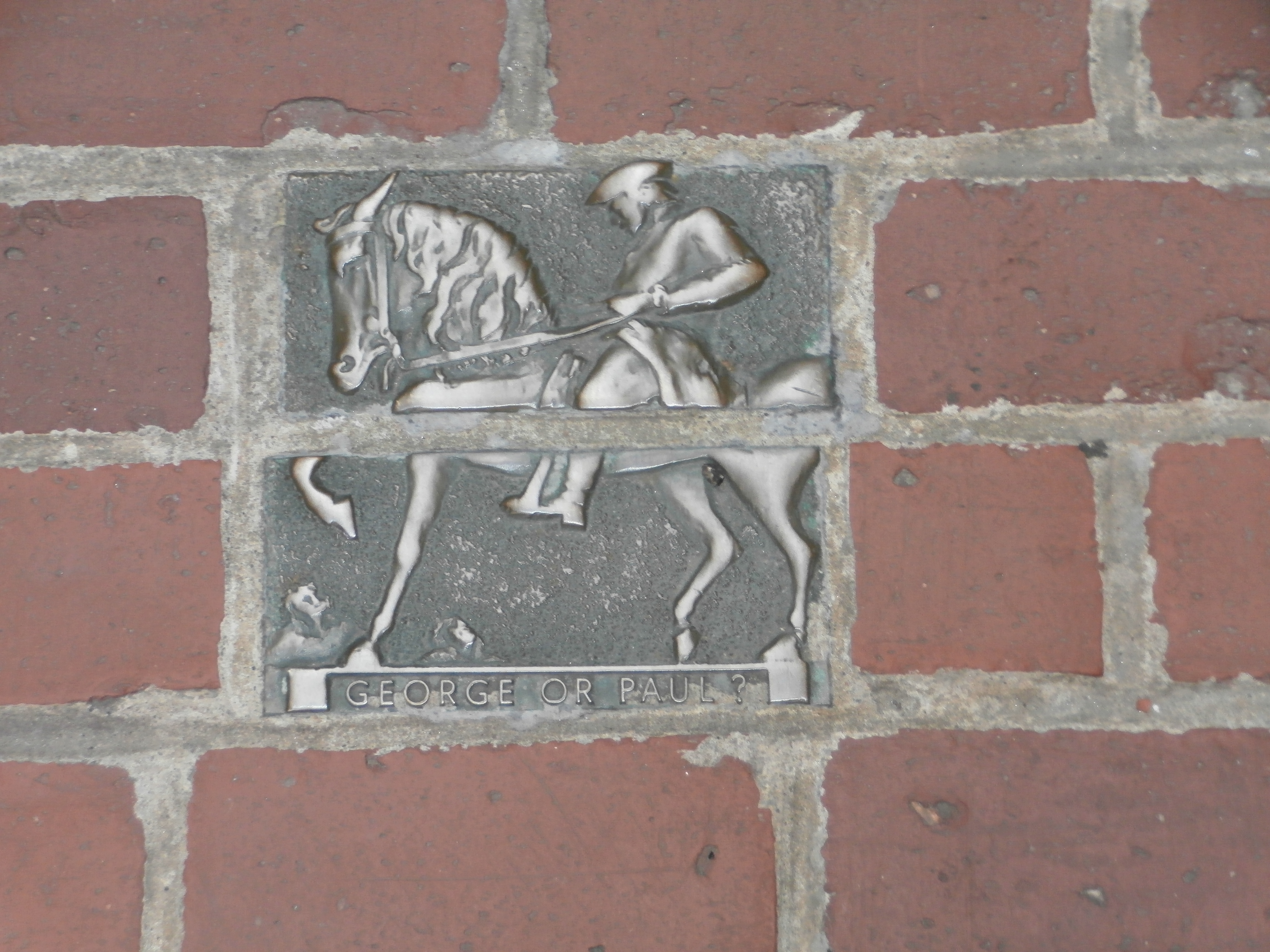
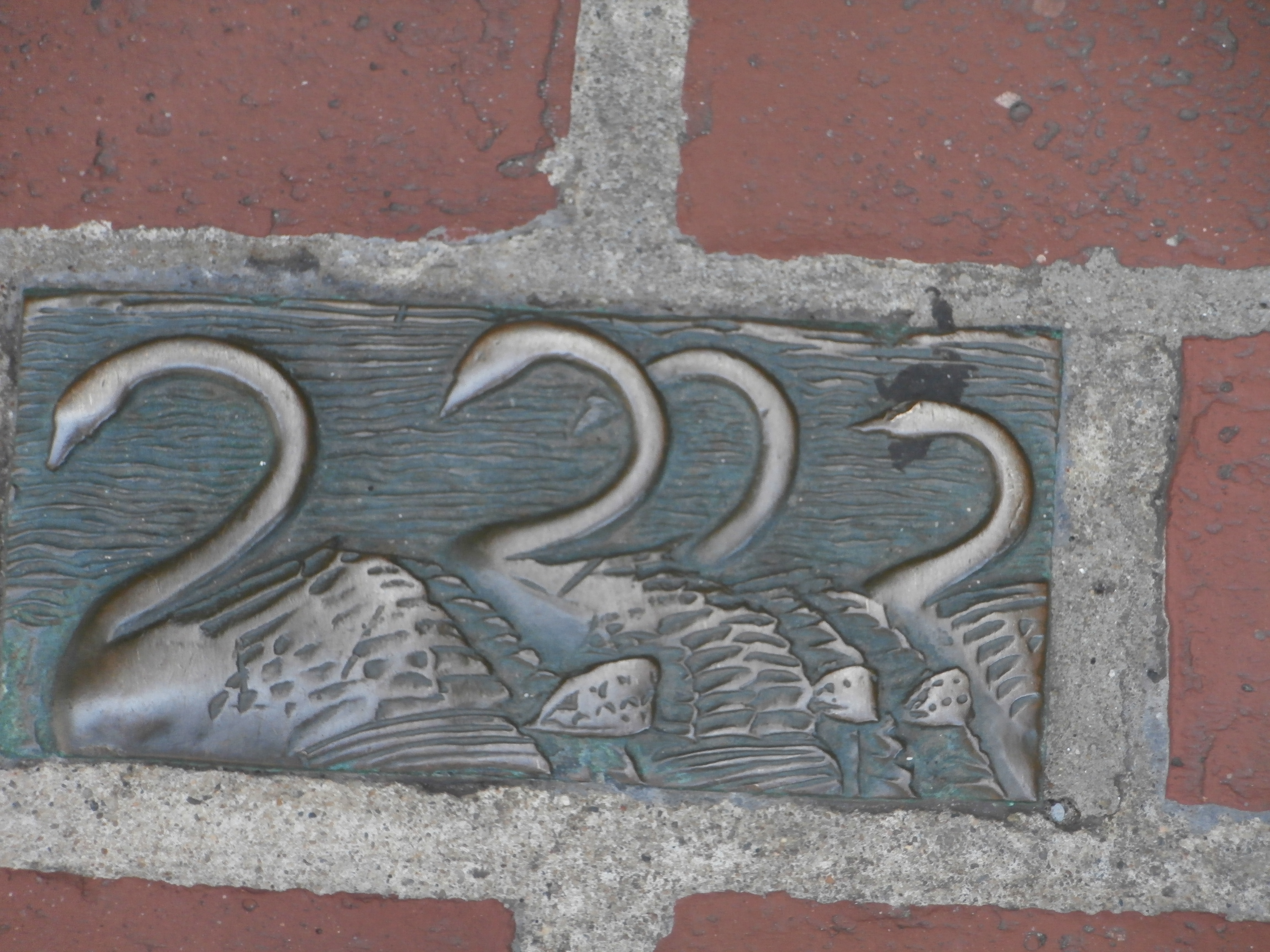
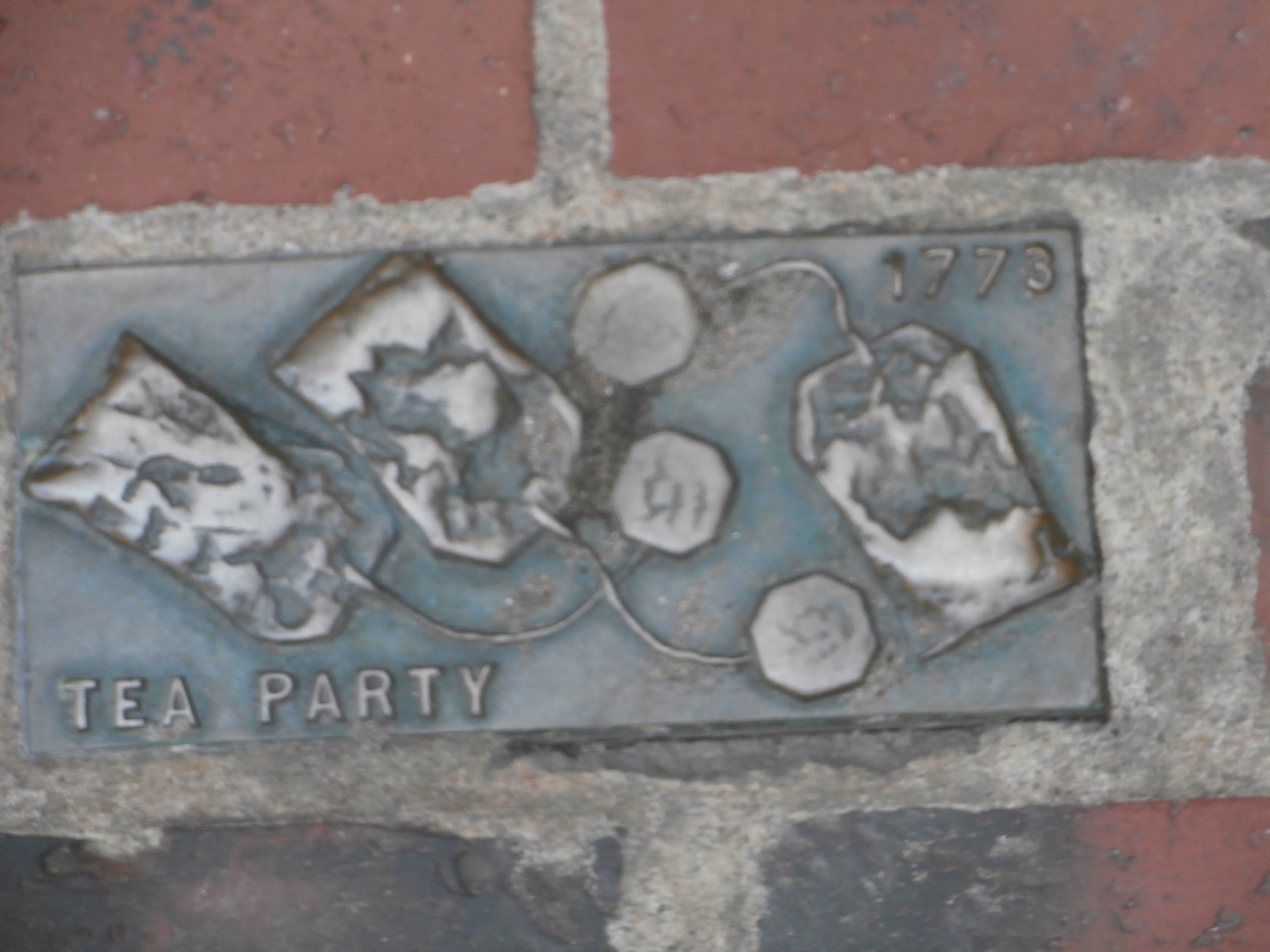
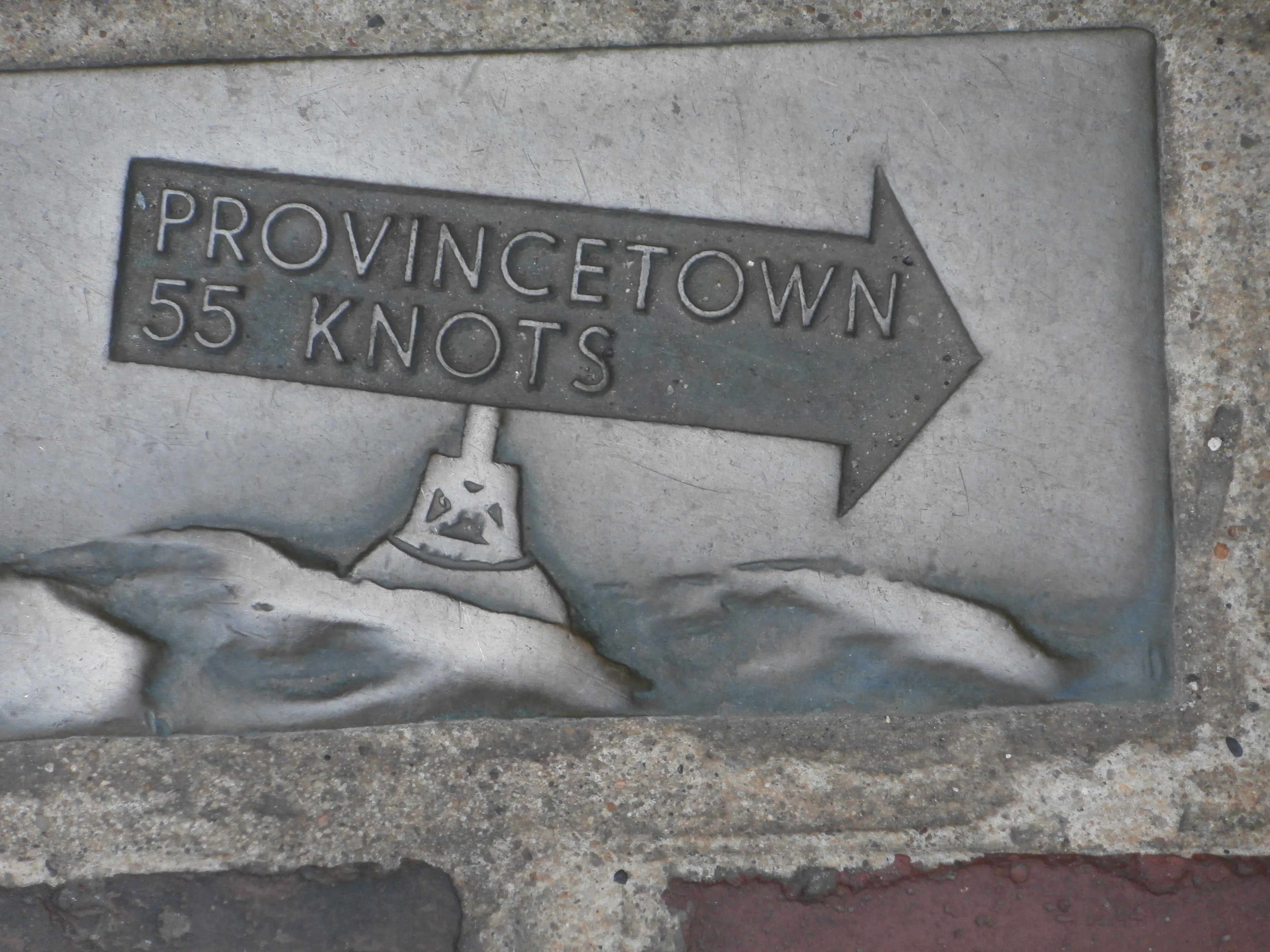
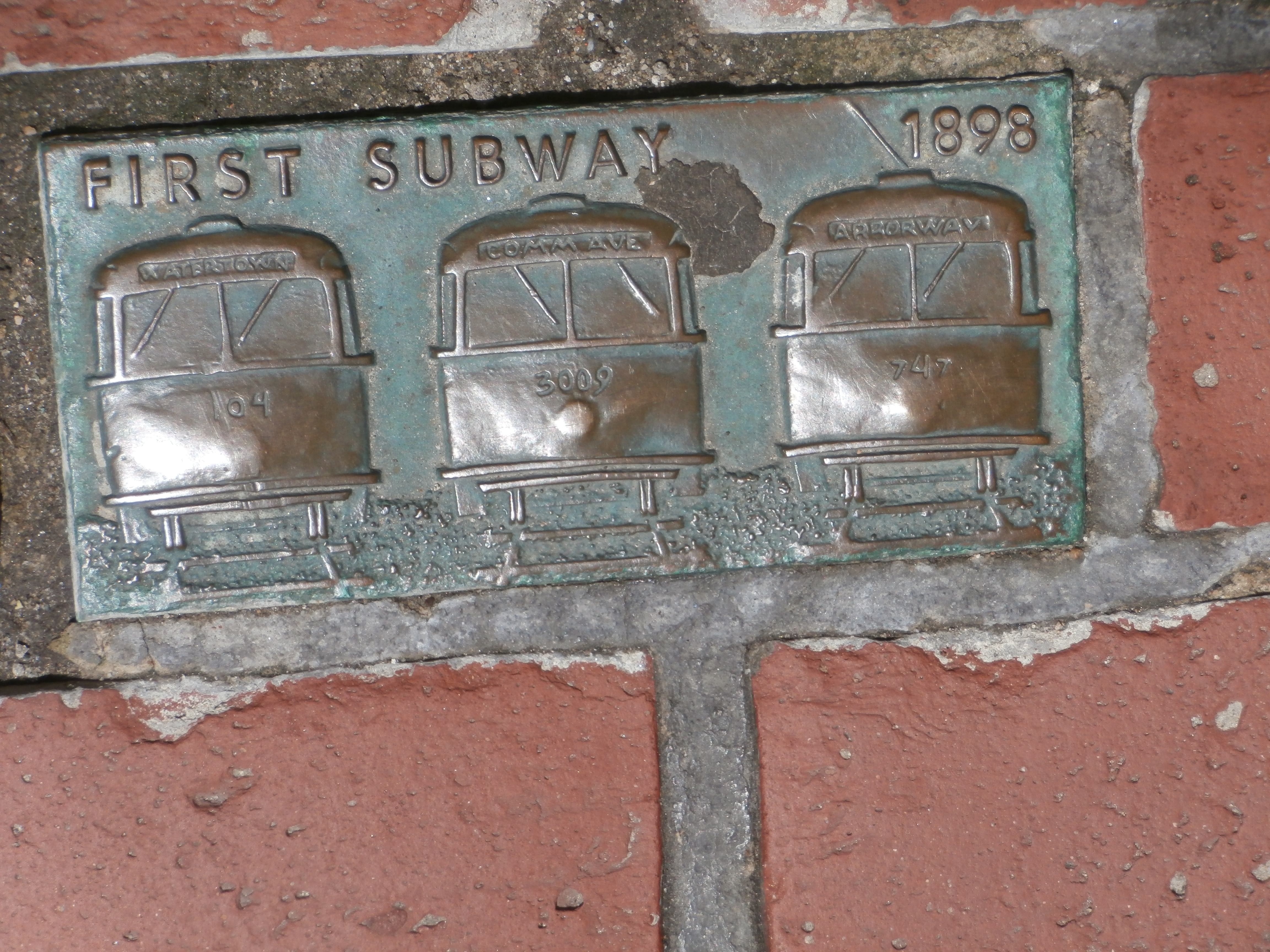
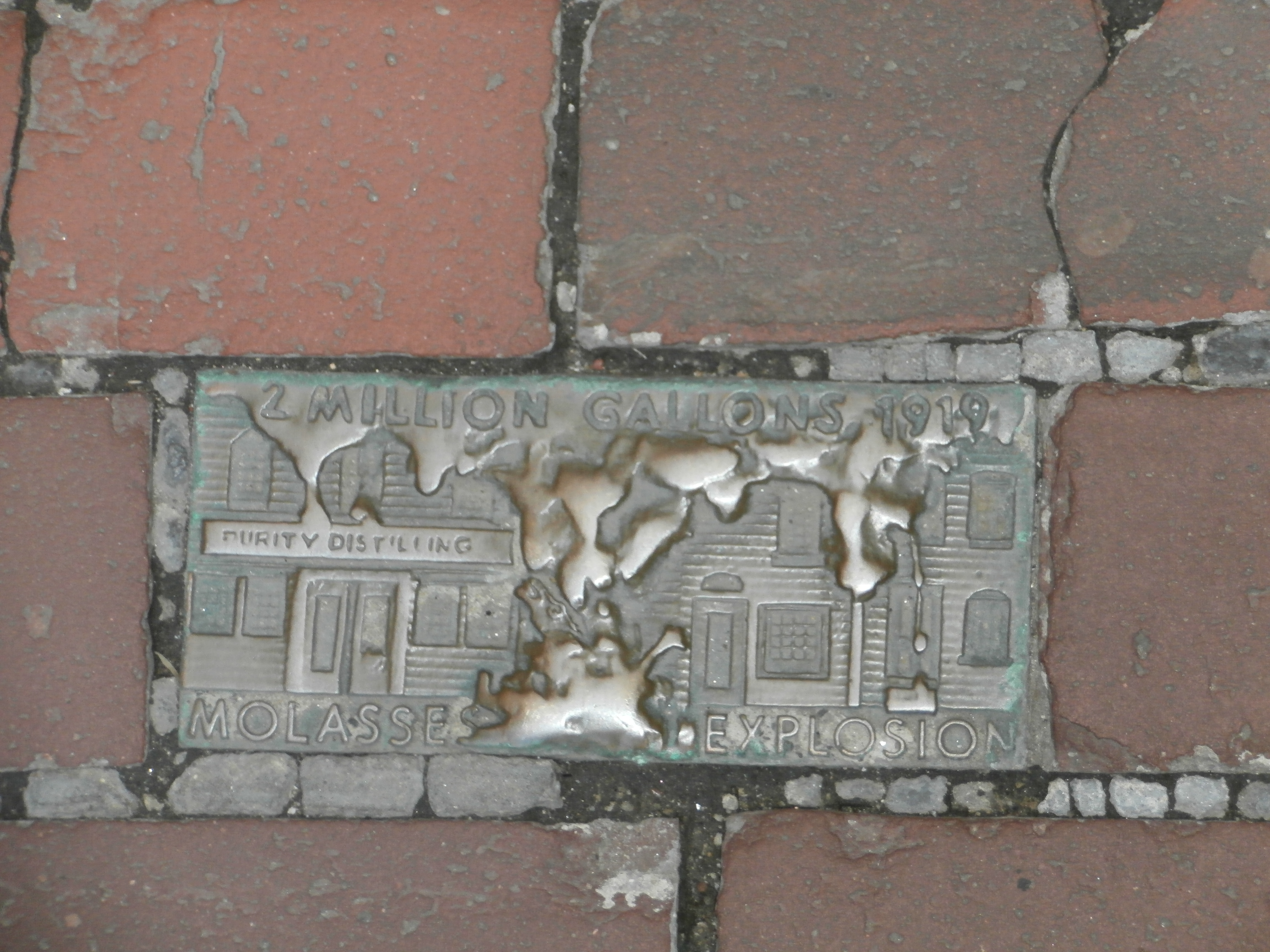
I went out at lunch this week and took pictures of a public art project I had somehow overlooked: Boston Bricks. The bronze bricks are set among ordinary bricks in a narrow alley called Winthrop Lane, not far from Downtown Crossing and Macy’s. Although the styles look very different to me, the bricks are all by Kate Burke and Gregg Lefevre.

Here are eight of them. I include the artists’ credit brick, Boston in relation to the moon, a horseman who is either Paul Revere or George Washington, swans suitable for a Boston swan boat, tea bags suitable for a Boston tea party, directions to Provincetown, America’s first subway (1898), and the Great Molasses Flood.

If you are not from the area, that last one is no joke. The molasses flood was deadly. A book about it, The Dark Tide, is available at bookstores or online.

[8/14/13 new research showing that the type of molasses added to its destructiveness.]

Boston-Bricks

boston-to-moon

horseman

swanboat-swans

Boston-tea-party-brick

knots-to-provincetown

boston-had-first-subway=1898

molasses-flood

Read Full Post »

Some artists have had an idea that spins off the “whistlestop” train tours that politicians since Lincoln have taken to connect to voters.

Randy Kennedy writes at ArtsBeat in the NY Times, “Chartered train trips tend to conjure images of flag bunting, stump speeches and glad-handing politicians.

“But a cross-country whistle-stop tour now being planned as a kind of rolling public art project by the artist Doug Aitken might give train travel considerably more cultural cachet.

“Mr. Aitken, who works in Los Angeles and whose pieces in video and film often explore speed and people in transit, has organized a three-week journey from New York to San Francisco, with 10 stops in between, called ‘Station to Station: a Nomadic Happening,’ which will include not only shows by visual artists but also music, poetry and food. …

“ ‘This really came out of a kind of restlessness, the feeling that art forms are too often segregated, music played in the same clubs and art shown in the same galleries and museums,’ Mr. Aitken said in an interview. ‘I felt like we needed to experiment with a new model.’ ’

The trip will go from September 8 to September 28. Read more to see if it will stop in your town.

Photo: Wikimedia Commons
President and Mrs. Roosevelt on a whistlestop tour.

Read Full Post »

Most street artists don’t think in terms of permanent museum collections. They don’t expect their work to be admired forever. Still, it must be a little sad to see it torn down.

Meghan alerted me, by way of twitter, to the demise of Boston’s only graffiti park, Bartlett Yard, about to be demolished.  Dig has the story.

“Rosa Parks, Mr. Miyagi, and the Incredible Hulk gaze down from the wall, their faces nearly big enough to drive a bus through. A giraffe in a space helmet floats carelessly through the light purple cosmos,” writes Dan Schneider at Dig.

“This barely begins to cover the intricate murals found at the Bartlett Yard, an 8.6-acre parcel of land just blocks away from Dudley Square in Roxbury, formerly used as a bus garage by the MBTA. Since the beginning of the year, the property’s owners have allowed an event planning group called Bartlett Events to turn half of the property into a community art space.

“In May, Bartlett Events held Mural Fest, an open call for graffiti muralists, which drew an estimated 1,000 artists and community members together in a frenzy of aerosol, transforming the Yard from a 125-year-old dilapidated bus garage into the massive public art installation.

“If you want to take in the art at Bartlett Yard, however, you’d better do it soon.

“Come this November it’ll all be torn down to begin construction of Bartlett Place, a mixed-use development of housing with—in all likelihood—no graffiti. …

“The Bartlett Bus Yard has been out of commission since the late nineties, following a community-led effort to shut it down due to concerns about bus exhaust contributing to high rates of childhood asthma in the area. Since then the Yard has been abandoned …

“With a few weekends’ worth of hard work, however, several dozen volunteers were able to clean out most of the Yard’s two main buildings and surrounding blacktop prior to opening day.”

Residents express mixed feelings about the redevelopment, which some fear could lead to the dreaded gentrification and push out lower-income people. Others think it will be good to have more variety.

In any case, it sounds like the artists want to stay around even if the art is  ephemeral.

For Jason Turgeon,  an environmental scientist and one of the founders of Bartlett Events, “the notion of trying to create a permanent graffiti museum would simply miss the point.

“ ‘I come from the Burning Man world, so I know that art doesn’t have to be here forever. Some people say, “You have to save this!” And I say “No, it’s okay. There will be more art after this.” ‘ ”

Read more at Dig.

Photo: DigBoston.com

Read Full Post »

In addition to poetry, art often brings comfort. (Artists don’t usually want to make anyone “comfortable,” which has a different connotation.)

One reason art brings comfort is that creativity generates surprises, and surprises may bring delight.

So although I’m still preoccupied with Boston, I’ll leave Boston for today and write about Cleveland.

Thank you, Mary Ann, for pointing to the Gwarlingo blog, which recently said of the art scene in Cleveland,”prepare to be surprised.”

Blogger Michelle Aldredge writes in part, “It is possible to experience the best of Cleveland culture entirely on foot. …

“According to Ann Craddock Albano, the director of The Sculpture Center in Cleveland, the 550-acre area that encompasses the Cleveland Museum of Art, the Cleveland Botanical Garden, the Museum of Contemporary Art, the Cleveland Symphony, the Cleveland Institute of Art, the Cleveland Cinematheque, Cleveland Institute of Music, and numerous university and medical facilities is the most concentrated neighborhood of world-class cultural institutions in the country. …

“The latest jewel in the Circle’s crown is Farshid Moussavi’s new building for the Museum of Contemporary Art. MOCA is Moussavi’s first museum design, and also the first American project by the Iranian architect, whose firm, Farshid Moussavi Architecture, is based in London.

“A few blocks away from MOCA, at Case Western Reserve University’s Weatherhead School of Management building, silver planes slice through red brick like paper in a windstorm. While Frank Gehry opted for flamboyance, Moussavi wisely chose a simpler, less ostentatious design for MOCA—one that is unique and engages the surrounding neighborhood.” More.

BTW, I wouldn’t mind hearing what other folks do for comfort.

Photo: Michelle Aldredge
The zigzagging stairwell is the most eye-catching feature inside the new MOCA Cleveland

Read Full Post »

When people click “like” at one of my entries, I go look at their site. Often I find that we share interests. Art is one interest.

Katie J. Anderson clicked “like” for the post “Art in the Exurbs.” I think she is an artist in Scotland.

Her WordPress blog, here, led me further, to an artists’ cooperative blog where she volunteers time. The site is the Commonty, which in Scottish law is a “common; a piece of land in which two or more persons have a common right.”

Following Ariadne’s thread from one blog to another can confuse a person. Thus, the Commonty took me to “The Stove,” which the site says emphatically is not the Commonty although TheStove’s home page also seems to be the Commonty’s.

Perhaps confusion is a hazard of a blog run by many people. I dug some more and found this: “an artists collective from SouthWest Scotland, The Stove is occupying a 3 storey building in the heart of Dumfries as the HQ for an adventure that asks useful questions about the role of a southern regional capital in contemporary Scotland.”

Which doesn’t sound that different from this: “The Commonty was formed, and is run entirely, by working creative people on a voluntary basis – we have nobody’s remit or priorities except our own.

“We are committed to the vision of Dumfries and Galloway as a region whose character is significantly shaped by the creative people and projects that are based here — we see a vital spark in the interconnections between our environment and culture, making this the place that we want to live, and a place that we are proud of.”

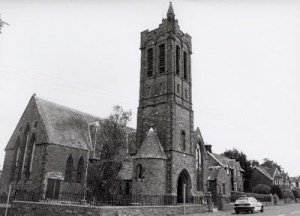
In a recent post, the Commonty notes with pride: “The Theatre Royal, Lochside Theatre, and The Stove have received funding from Creative Scotland as part of a national programme which helps organisations carry out refurbishments and purchase equipment.”

Does someone from Dumfries or Galloway want to tell me more?

Photograph of Lochside Theatre at http://thecommonty.blogspot.com/

Read Full Post »

A busy holiday here in New England with both our kids, their spouses, and the two grandsons. Every time we thought we were nearly done opening presents, one or more of us needed a nap.

The distaff side produced a chicken masala (with rice, nuts, raisins, cilantro, coconut, and chutney from Swaziland via the Servv catalog), creamed spinach, salad, and pear crumble.

Meanwhile, here’s a Christmas-y story from South America …

“In 2001, when Argentina’s economy was near collapse and property prices plummeted, UCLA art prof Fabian Wagmister bought a 15,000-square-foot abandoned warehouse in Buenos Aires. When he finally set out to clear the remaining debris from the building last year, he uncovered more than 100,000 Christmas ornaments piled in one of the back rooms.

“What to do with a trove of metallic bulbs, plastic wreaths, and bags of fake snow for a sunny Argentine Christmas?

“Re-gift them, of course,” writes Elise Hennigan at Pacific Standard.

“ ‘As artists we were immediately taken by the powerful expressive potential of the materials,’ says Wagmister.

“Now the director of the University of California, Los Angeles’s Center for Research in Engineering, Media, and Performance (REMAP), Wagmister invited a team of ten artists, researchers, and programmers from Los Angeles to distribute the ornaments to the surrounding community …

“Starting on December 15, the team invited community groups to visit the warehouse, one among many lining a historically working-class district that has seen an influx of technology companies. There, the researchers have encouraged participants to develop projects that will use the ornaments to express their identities, struggles and aspirations. On December 23, the groups took to the streets and decked the halls accordingly.” More.

 Photograph: Pacific Standard
Some of the found ornaments going up around Argentina’s capital

Read Full Post »

Loved this Wired article about an unusual artist underground in France that preserves antiquities under cover of darkness.

Jon Lackman writes that the Urban eXperiment (UX) “is sort of like an artist’s collective, but far from being avant-garde — confronting audiences by pushing the boundaries of the new — its only audience is itself. More surprising still, its work is often radically conservative, intemperate in its devotion to the old. Through meticulous infiltration, UX members have carried out shocking acts of cultural preservation and repair, with an ethos of ‘restoring those invisible parts of our patrimony that the government has abandoned or doesn’t have the means to maintain.’ …

“What has made much of this work possible is UX’s mastery, established 30 years ago and refined since, of the city’s network of underground passageways — hundreds of miles of interconnected telecom, electricity, and water tunnels, sewers, catacombs, subways, and centuries-old quarries.” Read more.

I’ve been collecting stories of people doing good by stealth. In fact, if you type the word “stealth” in the search box in the upper right-hand corner, you will find five other stealth stories I have blogged about.

Read Full Post »

ArtsJournal.com sent me to this article describing a ballerina posed on the Wall Street bull. The article suggests that one of the many tipping points that led to the Occupy movement was this image of a dancer. I like to think that the arts can spark a movement, although I think the Arab Spring played a bigger role in this case.


“When Vancouver-based Adbusters presented the idea to the world, it did so in the form of a poster that featured a dancer posed on the shoulders of the Wall Street bull statue, a foggy clamour of demonstrators behind her. The poster asked the question, ‘What is our one demand?’ Activist groups seized on it, as did the hacktivist group Anonymous, and a collective began to form. …


“To hear tell from [Vancouver-based] Adbusters founder and editor Kalle Lasn now, the question of that one demand still needs to be answered concisely and directly. But as the movement overspills Wall Street, he describes it as the most successful in the 22 years he and his magazine have been advocating ‘culture jamming.’ ” Read more. The Kalle Lasn interview is at Seattle’s Crosscuts.com  (“news of the the great nearby,” whatever that means).


As intrigued as I am that a ballerina poster could have been a tipping point for a movement, I think the question, “What is our one demand?” is even more intriguing. I would like to spin off from that and ask, “What is the one thing you want (in general, not public policies necessarily)?” Could you name the one thing? I think this is different from making a wish and blowing out candles. But maybe not. I will give it some thought myself.


Read Full Post »

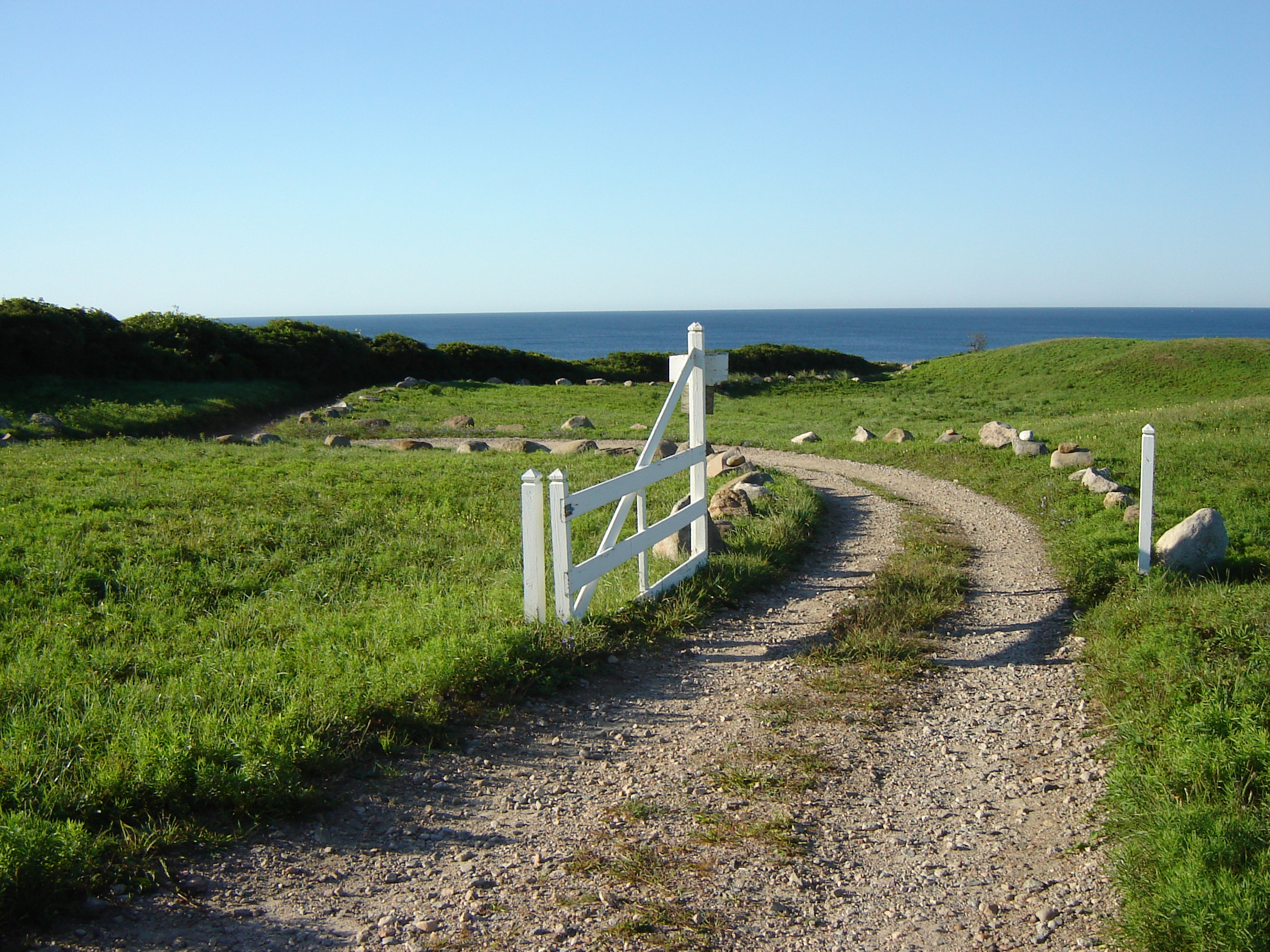
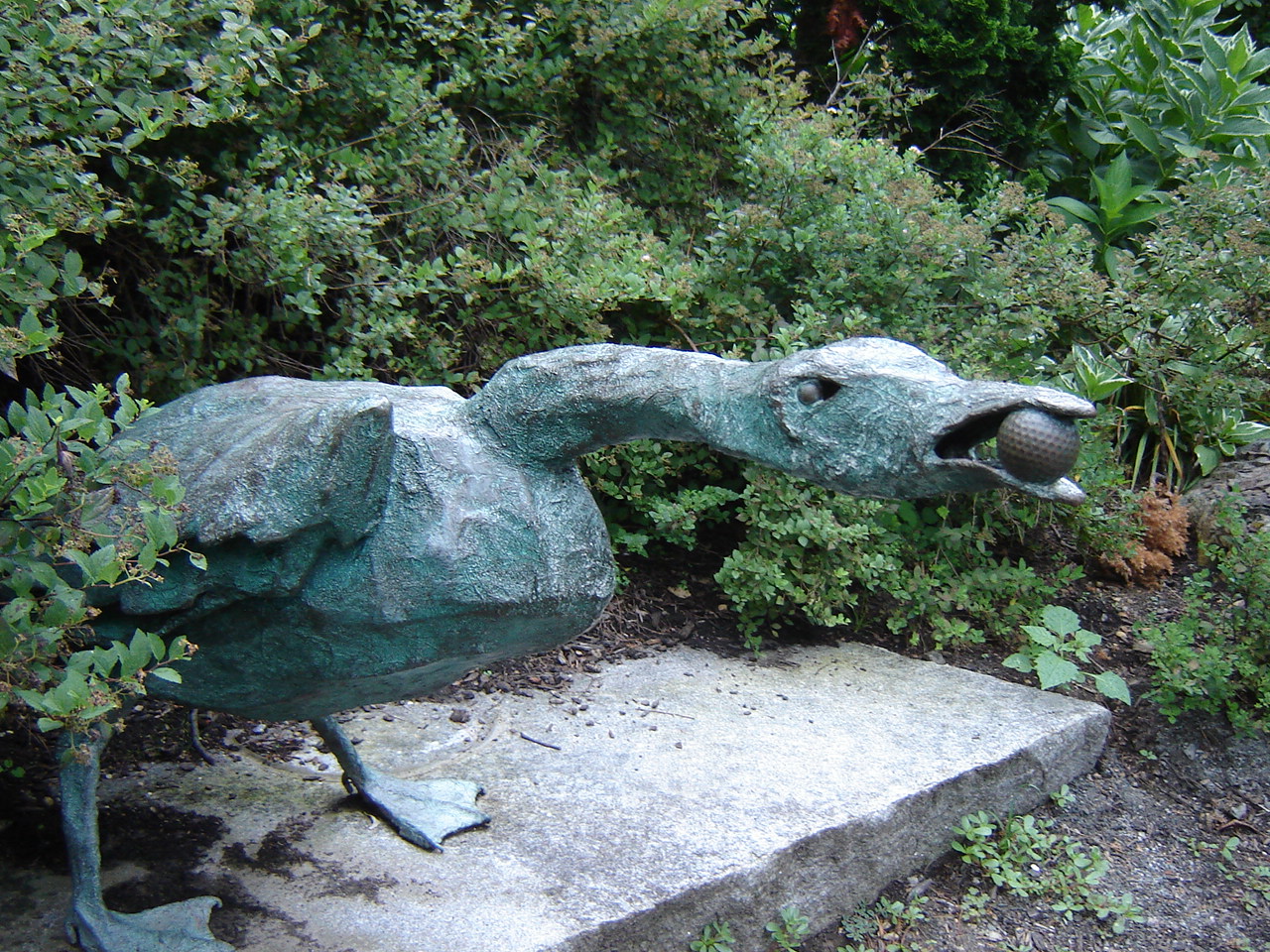
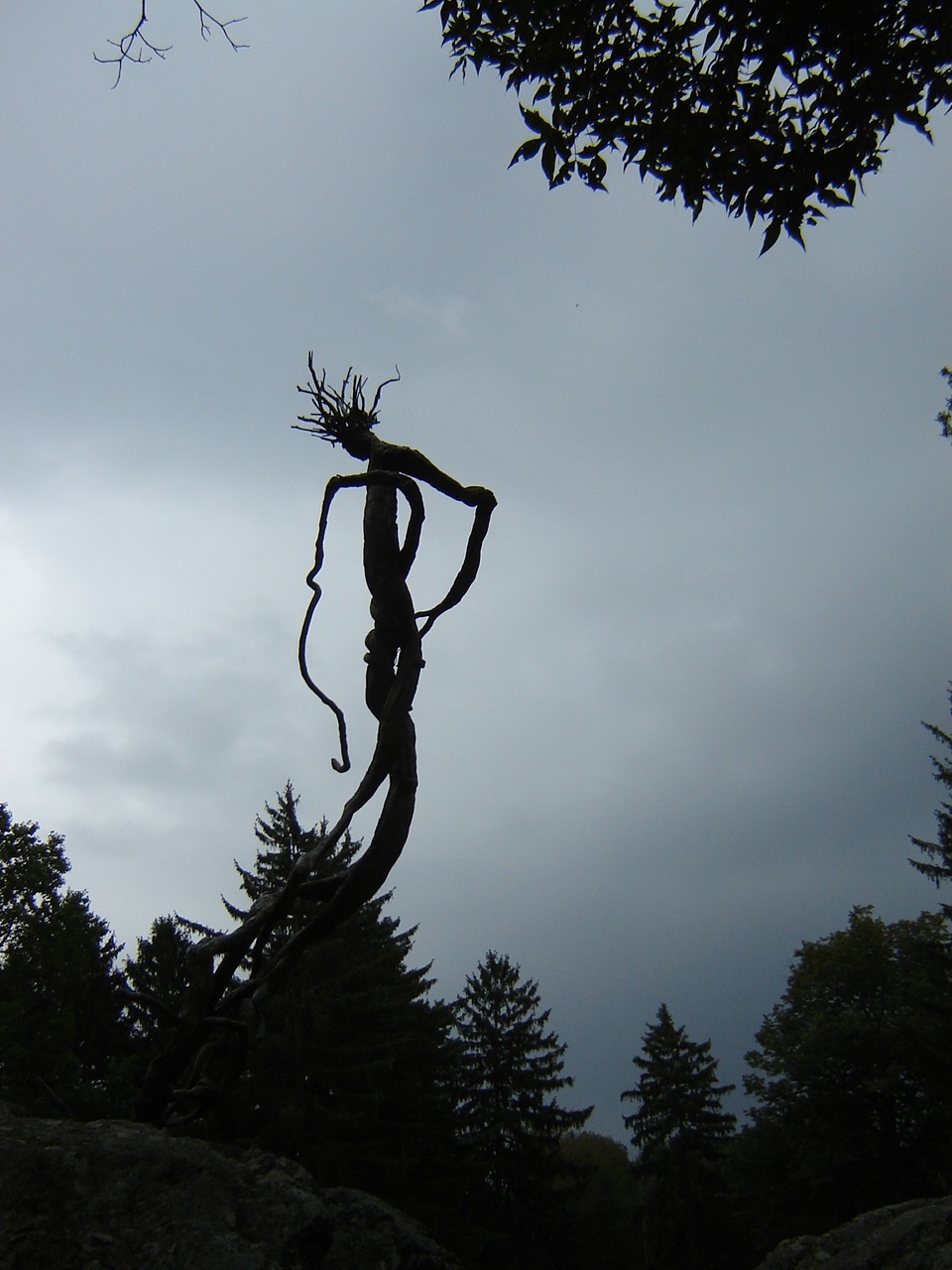
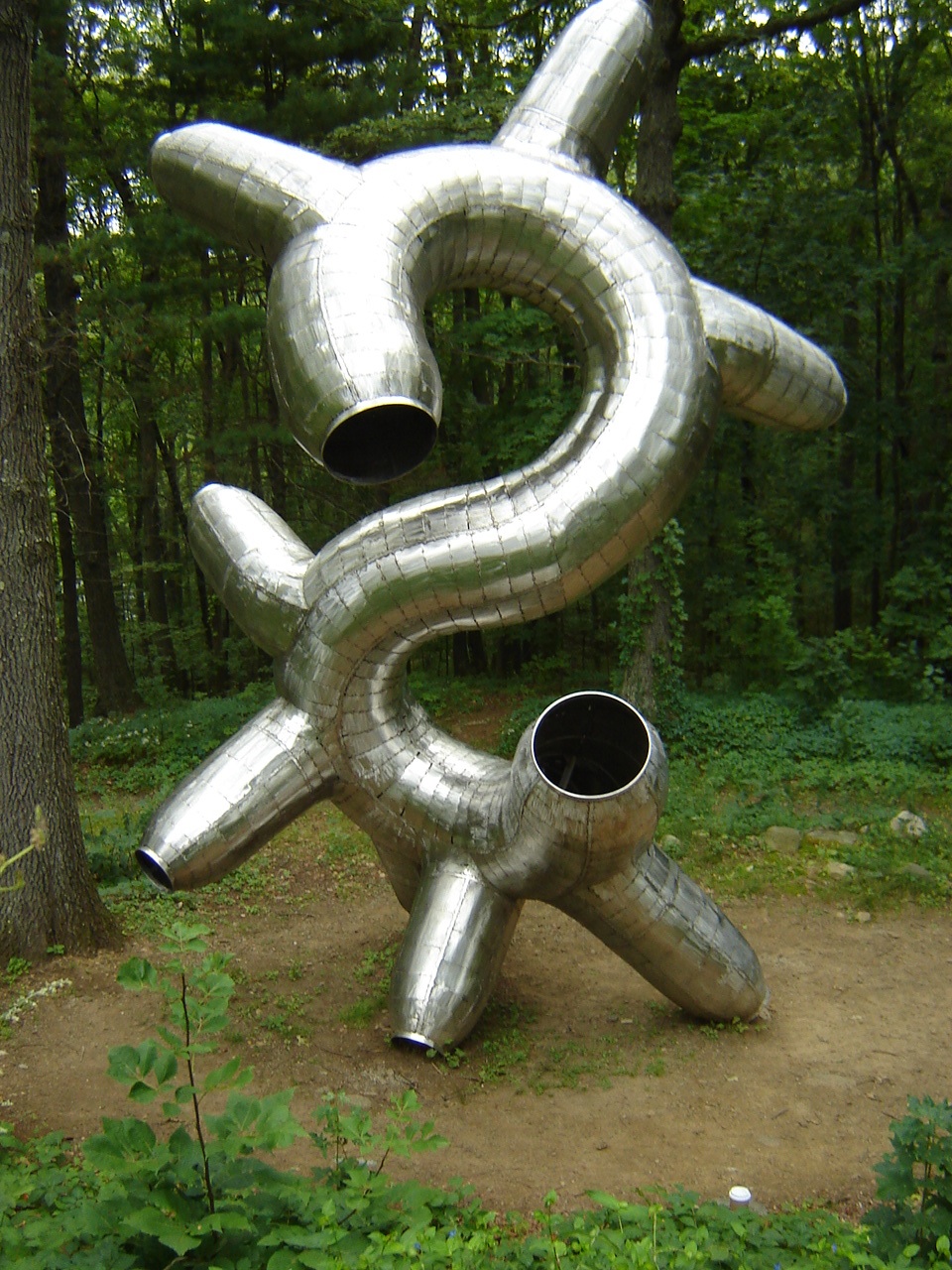
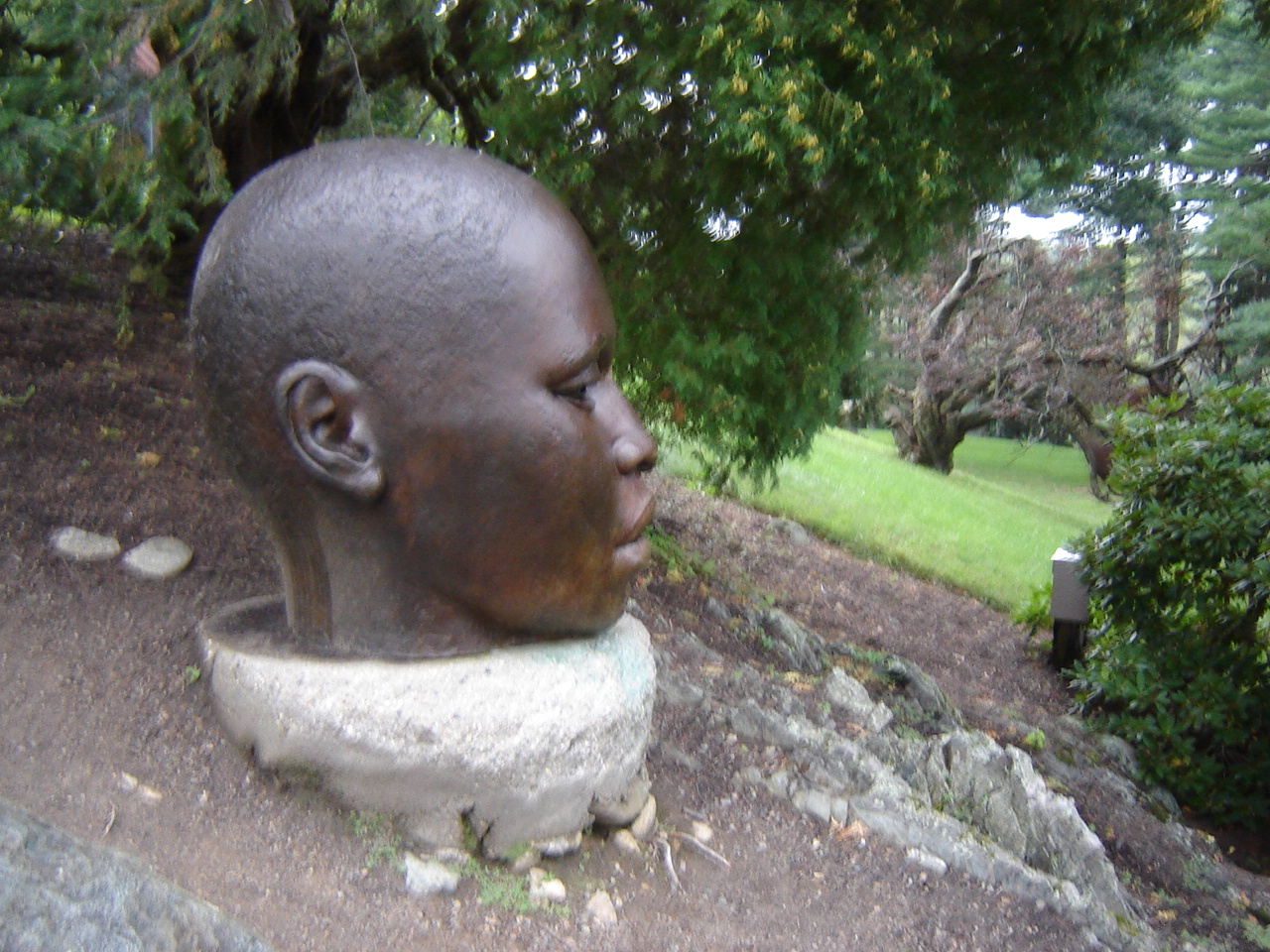
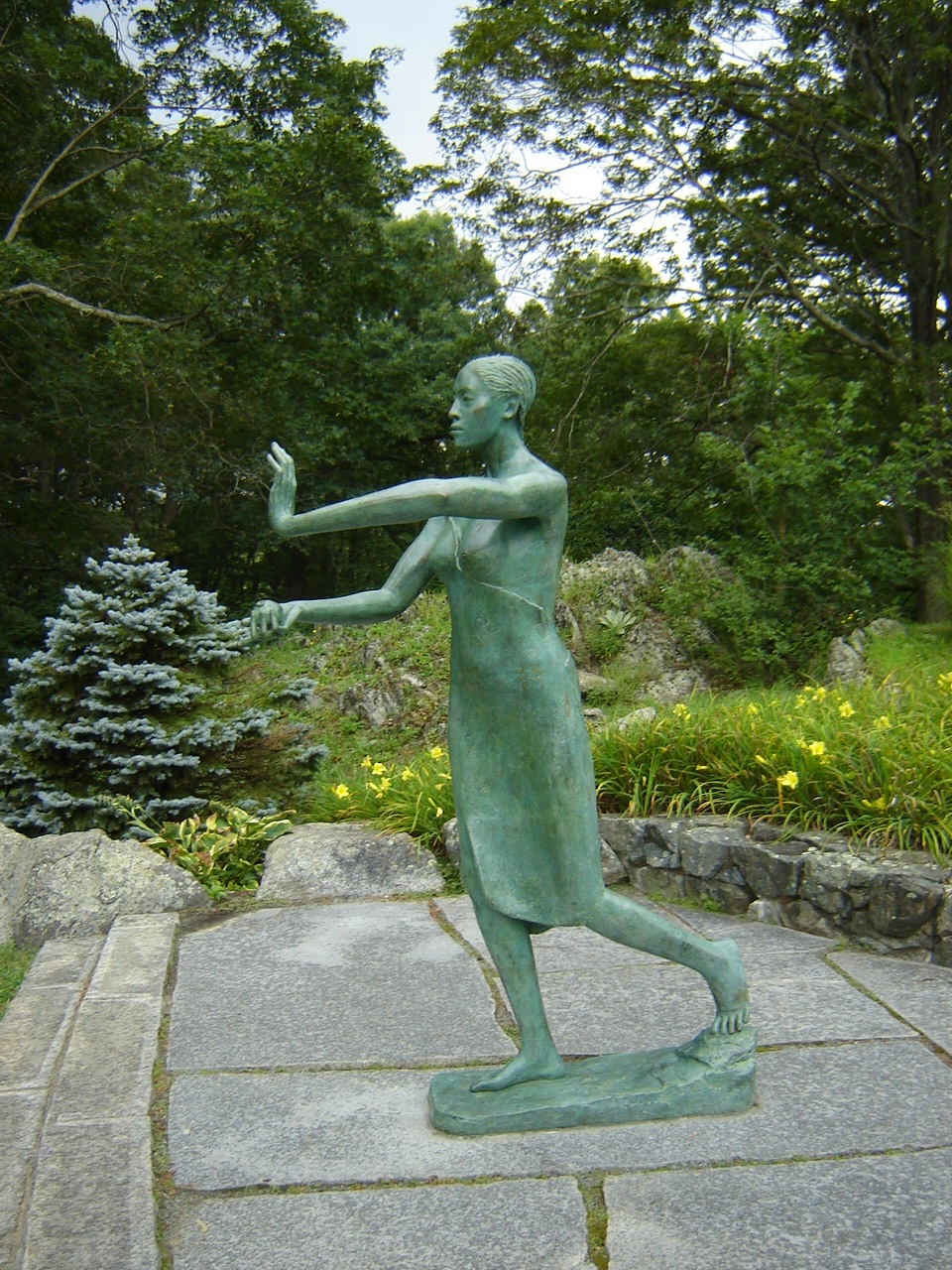
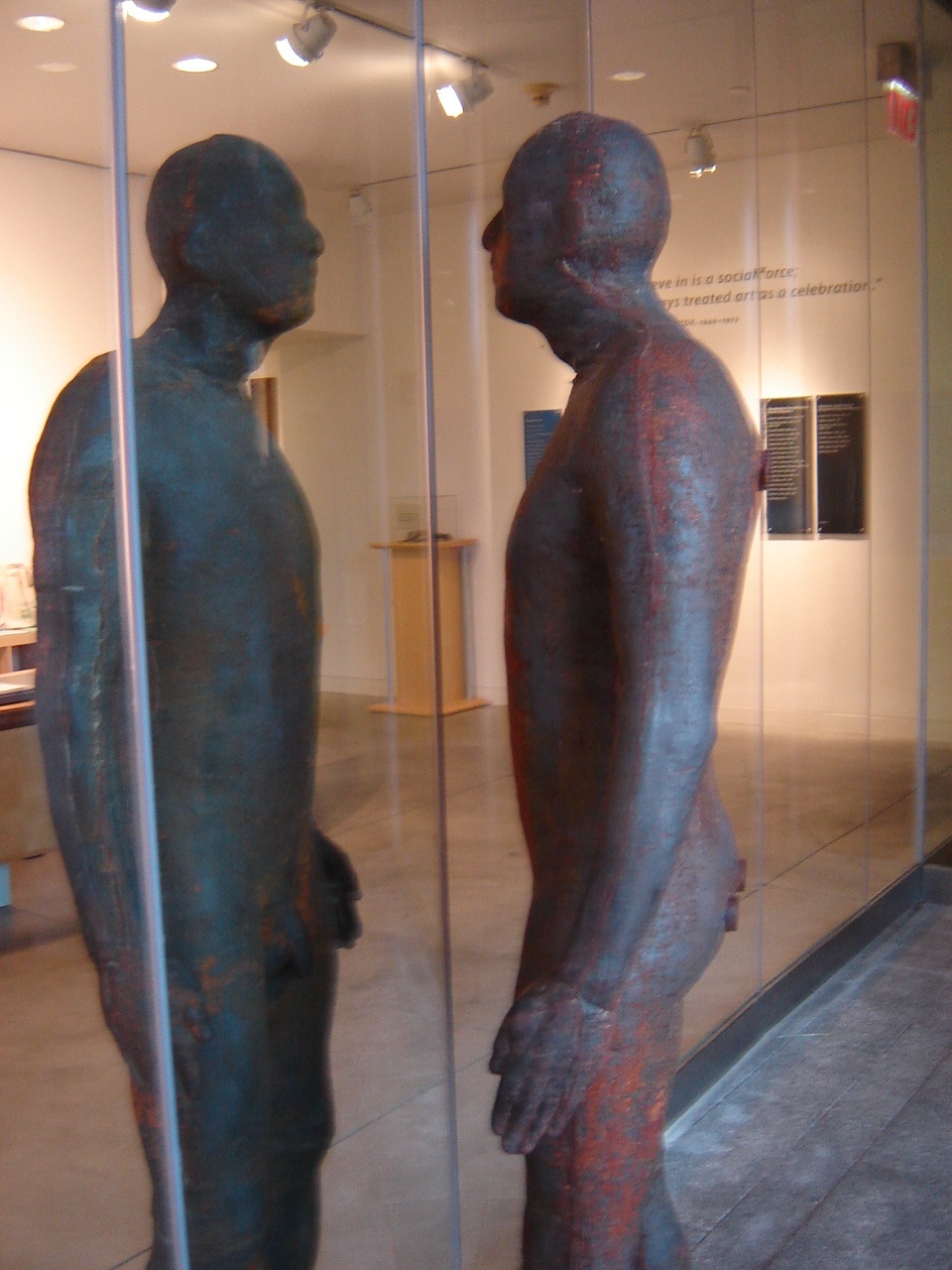
A few favorites from a rainy day at the DeCordova Museum and Sculpture Park.

We also liked the Andy Goldsworthy and the Caleb Neelon artwork.

Read Full Post »

« Newer Posts